Itineraries
Japan in 3 weeks: Tokyo, Hakone, the Alps, Kyoto and more
Three weeks is the first length of trip that lets you leave the Tokyo–Kyoto shinkansen line and still come back to it without rushing. This route uses the time twice: once through the mountains of central Japan, from Hakone over the Nakasendo to Takayama, Shirakawa-go and Kanazawa, and again beyond Kyoto, to the temples of Koyasan, Hiroshima and the art island of Naoshima. Along the way you sleep one night each in a hot-spring ryokan, a post-town inn, a thatched farmhouse and a Buddhist temple, and unpack properly only in Tokyo and Kyoto. The real decision is how many changes of bed you will accept; the plan below uses eleven, and shows where to cut.
In this guide
Find the location ↗ — opens in a new tabThe short answer
Spend 20 nights moving west from Tokyo to Osaka: four in Tokyo, four in Kyoto, and single or double nights in Hakone, the Alps, Koyasan, Hiroshima and Naoshima, flying into Haneda and home from Kansai. In between come a Hakone ryokan, the Magome–Tsumago walk after a night in Magome, two nights in Takayama, a Shirakawa-go farmhouse, two in Kanazawa, a Koyasan temple, two in Hiroshima for Miyajima, a night on Naoshima and a last one in Namba. Book the farmhouse, the temple and the Chichu ticket first, skip the nationwide rail pass and use a Kansai-Hiroshima Area Pass for the last five days.
- Suggested time
- 21 days (20 nights in 11 places)
- Route
- Tokyo 4 nights
- Hakone 1 night
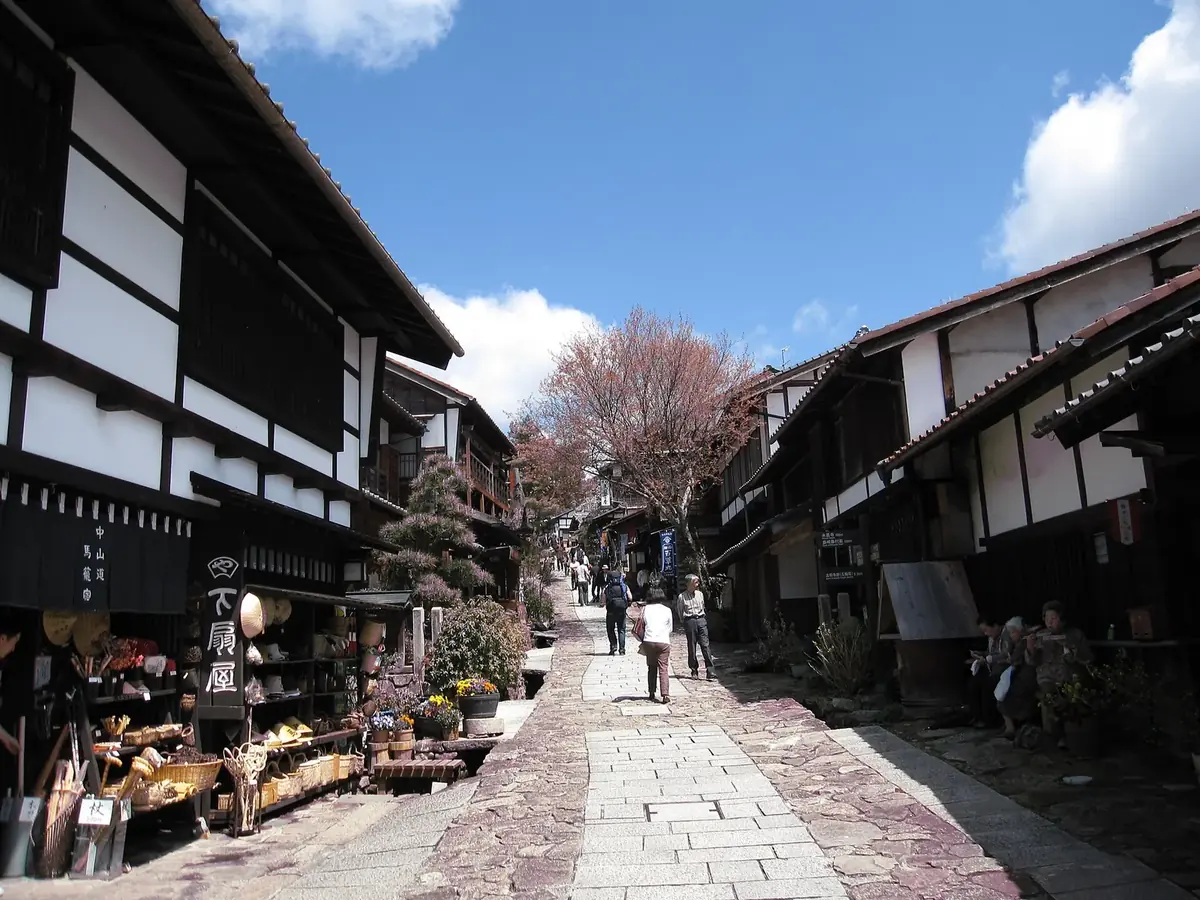
- Magome 1 night
- Takayama 2 nights
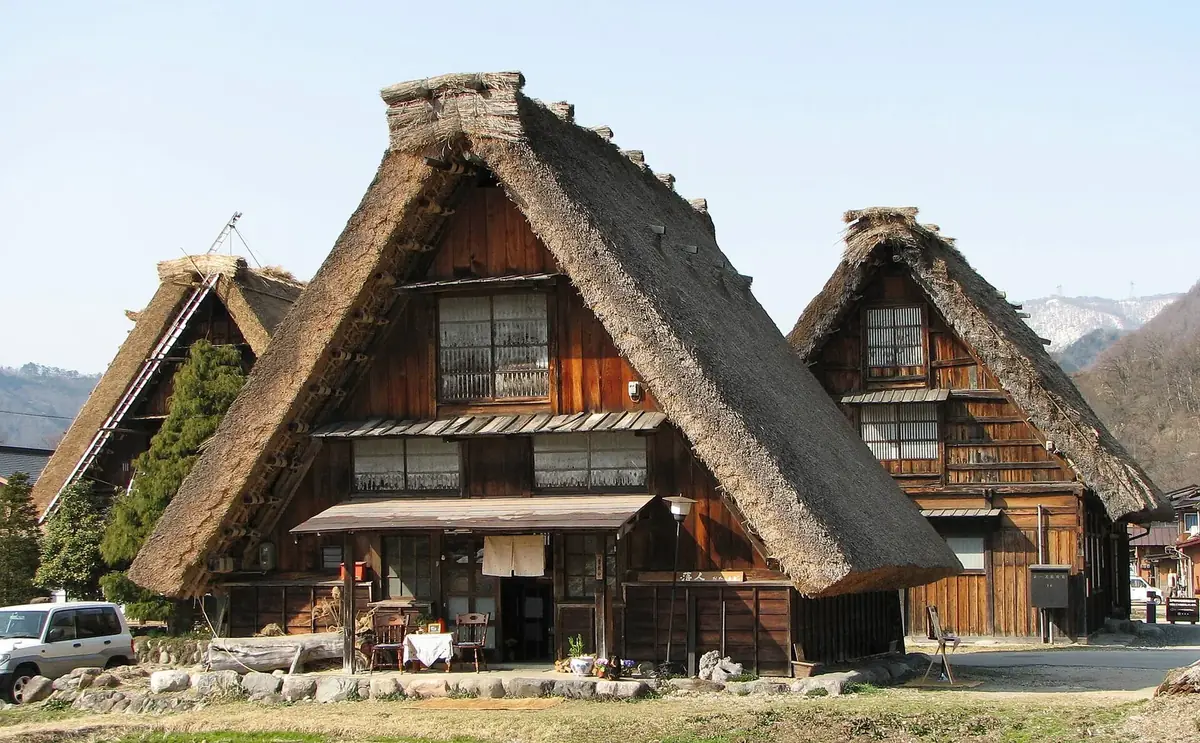
- Shirakawa-go 1 night
- Kanazawa 2 nights
- Kyoto 4 nights
- Koyasan 1 night
- Hiroshima 2 nights
- Naoshima 1 night
- Osaka 1 night
- Season and timing
- April to November, when the Magome–Tsumago luggage service and the Tsumago–Takayama bus run (both until 30 November 2026); spring and autumn suit the whole route best. In winter the Alps and Koyasan see snow, and Chichu Art Museum closes from 12 January to 19 March 2027.
- Day by day
- The 21 days at a glance ↓
The 21 days at a glance
This is an editorial plan, not a timetable. Where a day is marked 'not a Monday', swap days within that stop if your dates clash.
- Day 1
Arrive in Tokyo
Haneda, the limousine bus to Shinjuku, Shibuya Crossing or Shinjuku after dark. Night: Tokyo.
- Day 2
East Tokyo (not a Monday)
Senso-ji at opening, Ueno at midday, Yanaka at dusk. Night: Tokyo.
- Day 3
Central Tokyo
the Tsukiji Outer Market from 09:00 on an open day, the Imperial Palace East Gardens, Ginza. Night: Tokyo.
- Day 4
A day out
Kamakura by JR, or the Fuji lakes on a small-group tour. Night: Tokyo.
- Day 5
Hakone
suitcase sent to Takayama, Meiji Jingu at opening, the Romancecar to Hakone-Yumoto, up to Gora or Miyanoshita. Night: Hakone ryokan.
- Day 6
To the Kiso Valley
the ropeway and Lake Ashi early, the Hikari from Odawara to Nagoya, the Shinano to Nakatsugawa, the bus to Magome. Night: Magome.
- Day 7
The Nakasendo
bag sent to Tsumago by 11:30, the 9 km walk, the 15:00 bus to Takayama (April to November). Night: Takayama.
- Day 8
Takayama
the morning markets, Takayama Jinya at 08:45, Sanmachi's breweries and the float hall. Night: Takayama.
- Day 9
Shirakawa-go
the Nohi bus, Wada House and the viewpoint, dinner at the farmhouse. Night: Ogimachi farmhouse.
- Day 10
Kanazawa
the village at dawn, the reserved bus to Kanazawa, Omicho Market and Higashi Chaya. Night: Kanazawa.
- Day 11
Kanazawa (not a Monday)
Kenroku-en early, the castle park, the 21st Century Museum, Nagamachi. Night: Kanazawa.
- Day 12
Kyoto
the shinkansen and Thunderbird via Tsuruga, Hands Free Kyoto, Nijo Castle, Nishiki Market, Gion at dusk. Night: Kyoto.
- Day 13
Eastern Kyoto
Kiyomizu-dera at 06:00, Sannenzaka and Ninenzaka, the Philosopher's Path to Ginkaku-ji. Night: Kyoto.
- Day 14
Western Kyoto
Arashiyama before 09:00, Tenryu-ji, Ryoan-ji and Kinkaku-ji. Night: Kyoto.
- Day 15
Fushimi Inari and Nara
Inari at first light, the JR Nara Line to Nara Park, Kintetsu back. Night: Kyoto.
- Day 16
Koyasan
suitcase sent to Hiroshima, the 08:10 bus from Kyoto (to 29 November) or Nankai from Namba, Kongobu-ji and the Garan, shojin dinner. Night: temple lodging.
- Day 17
Hiroshima
the morning service and Okunoin, Nankai to Namba, the shinkansen from Shin-Osaka, the Peace Park and an evening museum slot. Night: Hiroshima.
- Day 18
Miyajima
the boat or the JR ferry, timed to the tide, and Mount Misen. Night: Hiroshima (or Miyajima).
- Day 19
Naoshima (not a Monday)
suitcase sent to Osaka, the shinkansen to Okayama, the Uno Line and ferry, Chichu on a timed ticket. Night: Naoshima.
- Day 20
Osaka
Honmura's art houses, the boat to Uno, the shinkansen to Shin-Osaka, Dotonbori after dark. Night: Osaka.
- Day 21
Home
the rapi:t from Namba to Kansai Airport.
How the three weeks fit together, and why Hakone comes first
This route runs one way, from Haneda to Kansai Airport, so book an open-jaw ticket, into Tokyo and out of Osaka. Twenty nights go into eleven beds. You unpack properly only in Tokyo and Kyoto, four nights each; Takayama, Kanazawa and Hiroshima get two; and the single nights are the ones where the night itself is the point: a hot-spring ryokan in Hakone, a post-town inn in Magome, a thatched farmhouse in Shirakawa-go, a temple at Koyasan, a room on Naoshima, and a last night in Osaka's Namba, which Nankai's rapi:t links with the airport in as little as 34 minutes.
The first night out of Tokyo goes to Hakone rather than Lake Kawaguchi because of what comes next. Odawara, the gateway to Hakone, is on the Tokaido shinkansen, so on day 6 you carry straight on west to Nagoya and the Kiso Valley; from Lake Kawaguchi you would first ride back towards Shinjuku. Hakone also gives the trip its ryokan night, and on a clear morning Mount Fuji stands over Lake Ashi.
Swap Lake Kawaguchi in for night 5 if the mountain matters more than the bath, and accept a long travel day 6; our Mount Fuji guide covers the north shore at dawn. Our 14-day itinerary covers Tokyo, Hakone, Kanazawa, Kyoto and Hiroshima at a faster pace, and the six-day Alps itinerary takes days 6–11 more slowly.
Days 1–5: Tokyo, one day out, and a Hakone ryokan
Fly into Haneda, which GO TOKYO calls by far the most convenient airport for the city; its limousine bus reaches Shinjuku in about 60 minutes. Make Shinjuku your base for all four Tokyo nights, as the Romancecar to Hakone leaves from there on day 5. Our Tokyo guide gives a first trip five nights, so fold its west side into the arrival evening, when Shibuya Crossing and Shinjuku are at their liveliest, and the morning of day 5, when Meiji Jingu opens at sunrise.
Spend day 2 in the east and day 3 in the centre, letting the closing days decide which falls when: the Tokyo National Museum in Ueno closes on Mondays, the Imperial Palace East Gardens on Mondays and Fridays, and the Tsukiji Outer Market keeps the wholesale market's closing days, which our Tokyo guide lists. Day 4 is the day out. Kamakura is the easiest: the JR Yokosuka Line takes about an hour from Tokyo Station, and its temples, shrine and Great Buddha lie along one line. If you still want the Fuji lakes, a small-group tour is the simplest way, though our day-trips guide warns that any trip from Tokyo arrives in the haziest hours.
On day 5, send your suitcase ahead to your Takayama hotel (see the luggage advice below) and travel with an overnight bag. The Romancecar takes about 80 minutes from Shinjuku to Hakone-Yumoto, with all seats reserved. As you will leave westwards from Odawara, buy a one-way ticket from Shinjuku and the Hakone Freepass that starts at Odawara, ¥6,000 for two days when we checked on 10 October 2026. Sleep in Gora or Miyanoshita, which our Hakone guide recommends for a single night.
What to eat and where to look
Gohei mochi (Magome and Shirakawa-go)
Pounded rice shaped on a skewer, brushed with sauce and grilled. The Magome tourism association describes flat, sandal-shaped cakes and round dumplings with soy- or miso-based sauces ground with walnuts, peanuts or sesame, and Visit Gifu traces the snack to mountain workers in the Tono and Hida regions.
- Where to look
- Stalls and cafés in Magome and Tsumago, where Kiso's tourism federation counts nine gohei mochi shops in Magome alone, and take-out counters in Ogimachi.
- Fit it into your day
- A snack in Magome on the evening of day 6, or before the bus on day 9 in Shirakawa-go.
The sauces may contain walnuts, peanuts or sesame, as well as soy.
Hida beef nigiri and skewers (Takayama)
Hida beef comes from black-haired Japanese cattle raised in Gifu Prefecture for at least 14 months and graded 3 to 5 for meat quality. Takayama's old town eats it as street food: thin slices on rice as nigiri, and grilled skewers.
- Where to look
- The food counters of Sanmachi; the Hida Takayama tourism association features Sakaguchiya on Kamisannomachi for Hida beef nigiri. In Shirakawa-go, take-out counters sell skewers and croquettes.
- Fit it into your day
- Lunch on day 8, between Takayama Jinya and the sake breweries.
Beef. The tourism association lists Sakaguchiya as open for lunch only and closed on Tuesdays.
Kaisen-don (Kanazawa)
Raw seafood from the Sea of Japan laid over a bowl of hot rice, which Kanazawa's tourism board calls one of the best ways to taste the local catch. The toppings follow the seasons: yellowtail and sweet shrimp in the cold months, and snow crab only in its short winter season.
- Where to look
- The restaurants in and around Omicho Market, including those in the Omicho Ichibakan building.
- Fit it into your day
- A late lunch on arrival on day 10, or breakfast at Omicho before the train on day 12.
Raw fish and shellfish; crab appears only in its winter season.
Shojin ryori and goma-dofu (Koyasan)
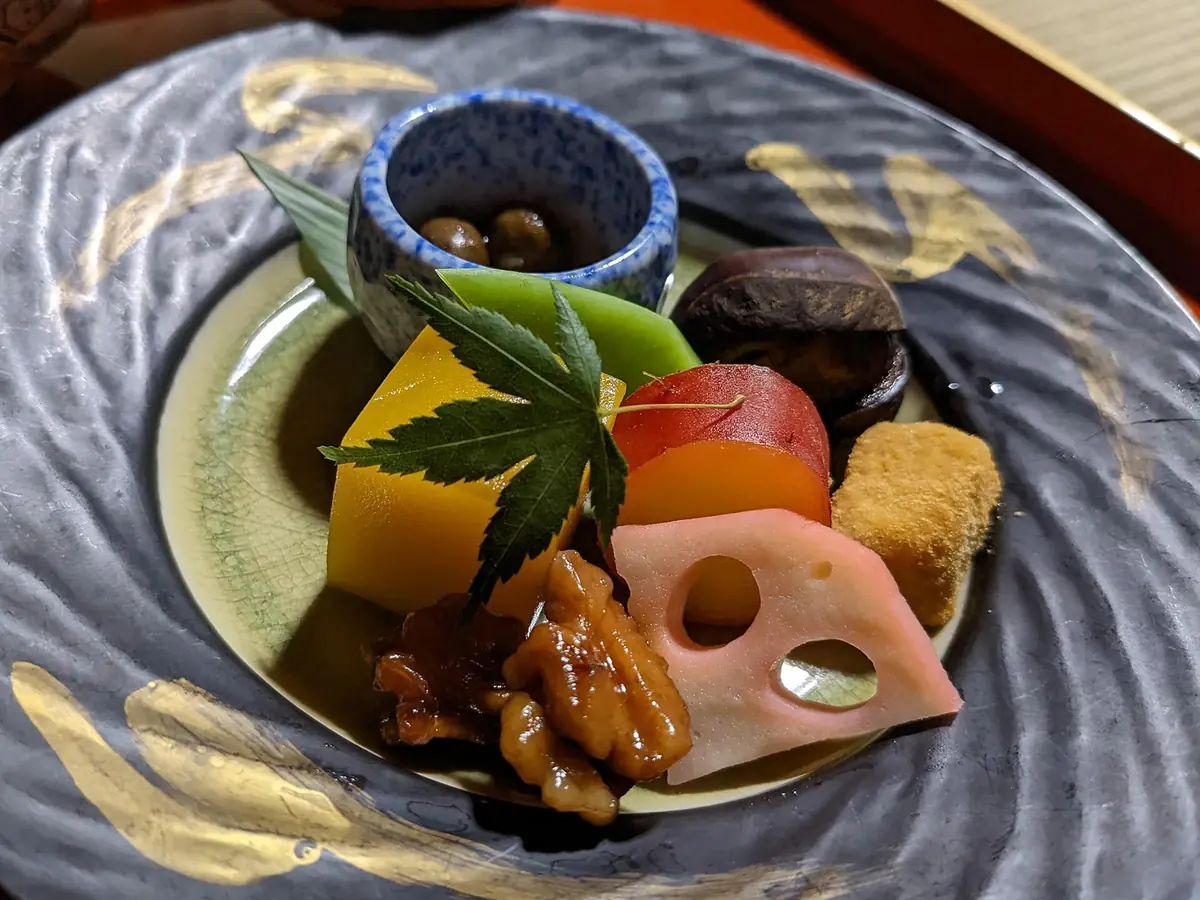
Buddhist cooking without meat or fish, built on seasonal vegetables, wild plants and soy and wheat products, and balanced, in the Koya Town Tourism Association's words, by five flavours, five colours and five cooking methods. Goma-dofu, ground white sesame set with kudzu starch, appears at almost every temple meal.
- Where to look
- Dinner and breakfast at your temple lodging; in town, the tourism association lists Maruman near Senjuin-bashi, Hanabishi and Chuo Shokudo Sanbo for shojin meals.
- Fit it into your day
- Dinner on day 16 and breakfast after the morning service on day 17.
No meat or fish, but sesame, soy and wheat gluten are staples; tell the temple about allergies when you book.
Hiroshima-style okonomiyaki
Unlike the Osaka version, where the ingredients are mixed into the batter, Hiroshima's okonomiyaki is built in layers on the griddle: a thin crepe-like batter, a heap of cabbage, pork and other fillings, and a bed of fried noodles. JNTO and the prefecture's tourism site both treat it as the city's signature dish.
- Where to look
- Okonomi-mura, 23 okonomiyaki restaurants on the second to fourth floors of Shintenchi Plaza, three minutes' walk from Hatchobori tram stop.
- Fit it into your day
- Dinner on day 17, after the museum's evening slot.
Contains wheat, egg and usually pork; do not touch the griddle in front of you.
Days 6–11: the Nakasendo, Takayama, a farmhouse night and Kanazawa
Start day 6 with the ropeway as early as you can and the boat across Lake Ashi to Moto-Hakone, then the bus down to Hakone-Yumoto and the train to Odawara. Only about one Hikari every two hours stops at Odawara on JR East's timetable, so plan around it; it reaches Nagoya in a little over an hour, and smartEX listed a reserved seat at ¥8,900. At Nagoya, change to the Shinano limited express, 50 minutes to Nakatsugawa according to JNTO, and Kitaena Kotsu's bus, about 25 minutes up to Magome. Sleep there: JNTO calls the town at sunset and sunrise, empty of visitors, a treat, and the Magome tourism association lists only eight places to stay.
Day 7 is the walk. Hand your bag in at the Magome information centre or Magome-juku BASE between 08:30 and 11:30 and collect it in Tsumago from 13:00; when we checked on 10 October 2026, Tsumago's tourism association listed the service until 30 November 2026 at ¥1,000 a bag. The 9 km to Tsumago take 2.5 to 3 hours, a short, steep climb to Magome Pass and a long, gentle descent; carry a bear bell, which you can rent at either end. Leave Tsumago on Nohi Bus's seasonal 15:00 service, which reaches Takayama at 18:00 (¥5,000, until 30 November 2026, with a web ticket bought in advance). Outside that season, take the train from Nagiso back to Nagoya and the Limited Express Hida, about 2 hours 20 minutes to Takayama.
Give Takayama two nights, so that day 8 starts at the river with the Miyagawa and Jinya-mae morning markets (from 07:00 from April to November, 08:00 in winter) and Takayama Jinya at 08:45. Spend the rest of the day in the Sanmachi lanes and their sake breweries and at the Yatai Kaikan's festival floats. If your dates touch the Takayama Festival, on 14–15 April and 9–10 October, book these nights before anything else.
On day 9, the Nohi bus reaches Shirakawa-go in about 50 minutes (¥2,800 when we checked). Arrive by early afternoon for your farmhouse inn, see Wada House and walk or ride the shuttle up to the viewpoint; day visitors may tour only between 08:00 and 17:00, so the evening belongs to residents and overnight guests. On day 10, walk the lanes before the first buses, then take a reserved bus to Kanazawa, about 1 hour 20 minutes and another ¥2,800; Hokutetsu requires a seat reservation on all its highway buses.
Kanazawa gets an afternoon and a full day. Sleep downtown in Korinbo or Katamachi, within walking distance of the garden. Give the afternoon of day 10 to Omicho Market and the Higashi Chaya teahouse district, and day 11 to Kenroku-en, free in the early morning through the Renchi-mon and Zuishinzaka gates, then the castle park, the 21st Century Museum (exhibitions closed on Mondays; the whole museum closes for renovation from 6 May 2027 to March 2028) and the Nagamachi samurai lanes.
Days 12–16: Kyoto, Fushimi Inari with Nara, and a temple night at Koyasan
Leave Kanazawa on day 12 by shinkansen to Tsuruga and the Thunderbird on to Kyoto, about 2 hours 10 minutes in all. Sleep downtown, between Shijo-Karasuma and Kawaramachi, as our where-to-stay guide recommends for three or four nights, and hand your suitcase to Hands Free Kyoto at Kyoto Station: if you complete the procedure before 14:00, it reaches your accommodation the same day. Spend the afternoon at Nijo Castle and Nishiki Market, and walk through Gion at dusk.
Our Kyoto guide divides the city into three days that start early, and two of them fit here unchanged: the east on day 13, from Kiyomizu-dera at its 06:00 opening down Sannenzaka and Ninenzaka to Yasaka Shrine, then the Philosopher's Path to Ginkaku-ji; and the west on day 14, with Arashiyama before 09:00, Tenryu-ji when it opens at 08:30, and Ryoan-ji and Kinkaku-ji in the quieter afternoon. Use trains and the subway first: the city's official guide warns that buses can take more than twice as long as route planners suggest.
Day 15 joins Fushimi Inari to Nara, which is how four nights hold both. Be at Fushimi Inari at first light, two stops from Kyoto Station on the JR Nara Line, then stay on the same line to Nara, about 45 minutes on the Miyakoji Rapid. Walk the loop from Kofuku-ji to Todai-ji's Great Buddha Hall and Kasuga Taisha that our Nara guide describes, and ride Kintetsu back from Kintetsu-Nara, about 35 minutes to Kyoto by limited express.
Day 16 is the temple night. Book it through the Koyasan Shukubo Association: a few temples can be booked instantly, and for the rest you send a request at least 14 business days ahead. When we checked on 10 October 2026, it gave ¥15,000–25,000 per person with dinner and breakfast, mostly with shared baths and toilets, and temples usually expect cash. A direct highway bus leaves Kyoto Station's Hachijo side at 08:10 and reaches Koyasan at 11:08 between April and late November; otherwise take the train to Osaka and Nankai's Limited Express Koya from Namba, about 90 minutes including the cable car. Send your suitcase from Kyoto to your Hiroshima hotel and go up with an overnight bag.
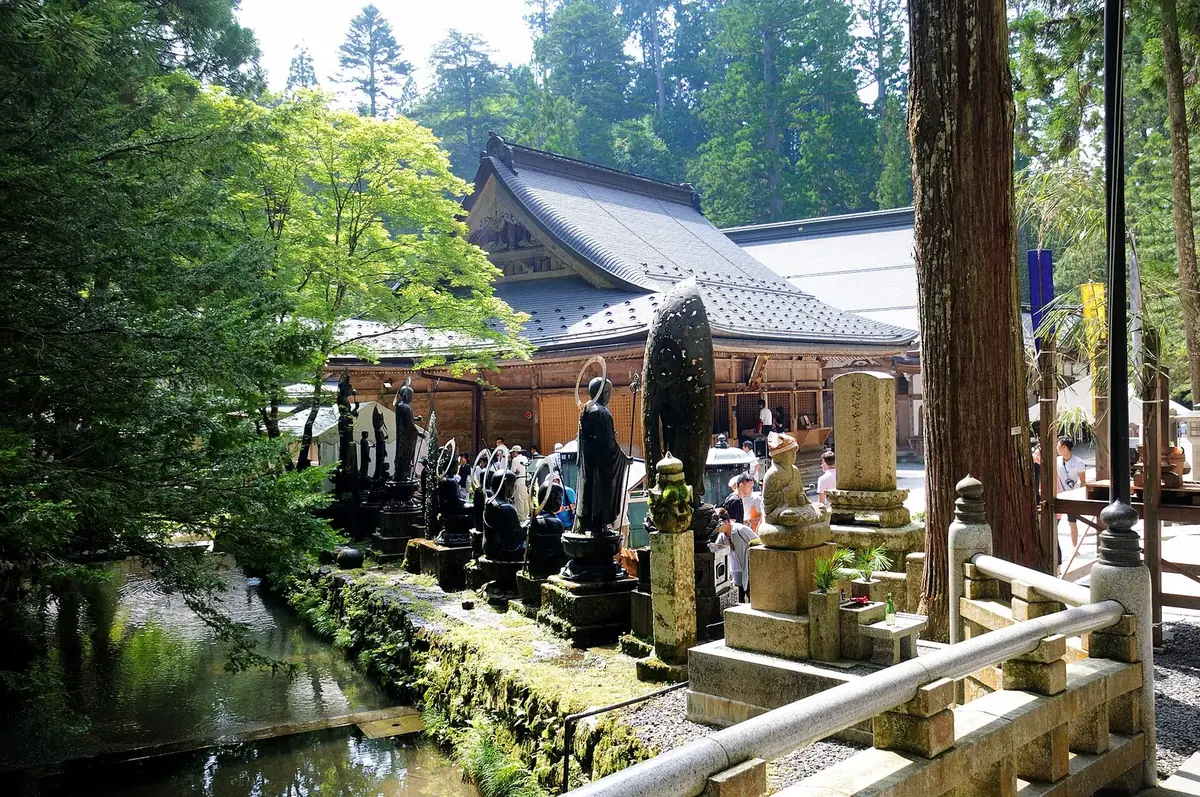
Arrive in time for Kongobu-ji and the Danjo Garan before their 16:30 last entry. Dinner is shojin ryori, the bath is shared and next morning the monks chant in the main hall. Walk the Okunoin cemetery path at dusk if your temple's curfew allows, or early the next morning; photography is banned beyond Gobyobashi bridge.
Days 17–21: Hiroshima, Miyajima, Naoshima and a last night in Osaka
On day 17, join the morning service, then ride Nankai down to Namba and the Midosuji Line to Shin-Osaka; the shinkansen reaches Hiroshima in about 1 hour 25 minutes, according to JNTO. Two nights by Hiroshima Station keep the shinkansen, the JR line to Miyajimaguchi and the trams at the door. Walk the Peace Memorial Park in the afternoon and see the museum in the quieter evening slot, from 17:30 (16:30 in winter) with an online ticket for a time slot, then eat okonomiyaki at Okonomi-mura.
Give day 18 to Miyajima, timed by the tourist association's tide table: you can walk out to the Great Torii when the level falls below 100 cm, and the shrine appears to float above 250 cm. The JR Sanyo Line runs to Miyajimaguchi in about 30 minutes, followed by a 10-minute ferry, or Aqua Net's boat from the Peace Park takes about 45 minutes. The island charges a ¥100 visitor tax, with exemptions for preschool children and, if a tax exemption certificate is submitted, visitors from schools stipulated in Article 1 of the School Education Act. To see the island after the day visitors leave, move night 18 to an inn on Miyajima, as our Miyajima guide suggests.
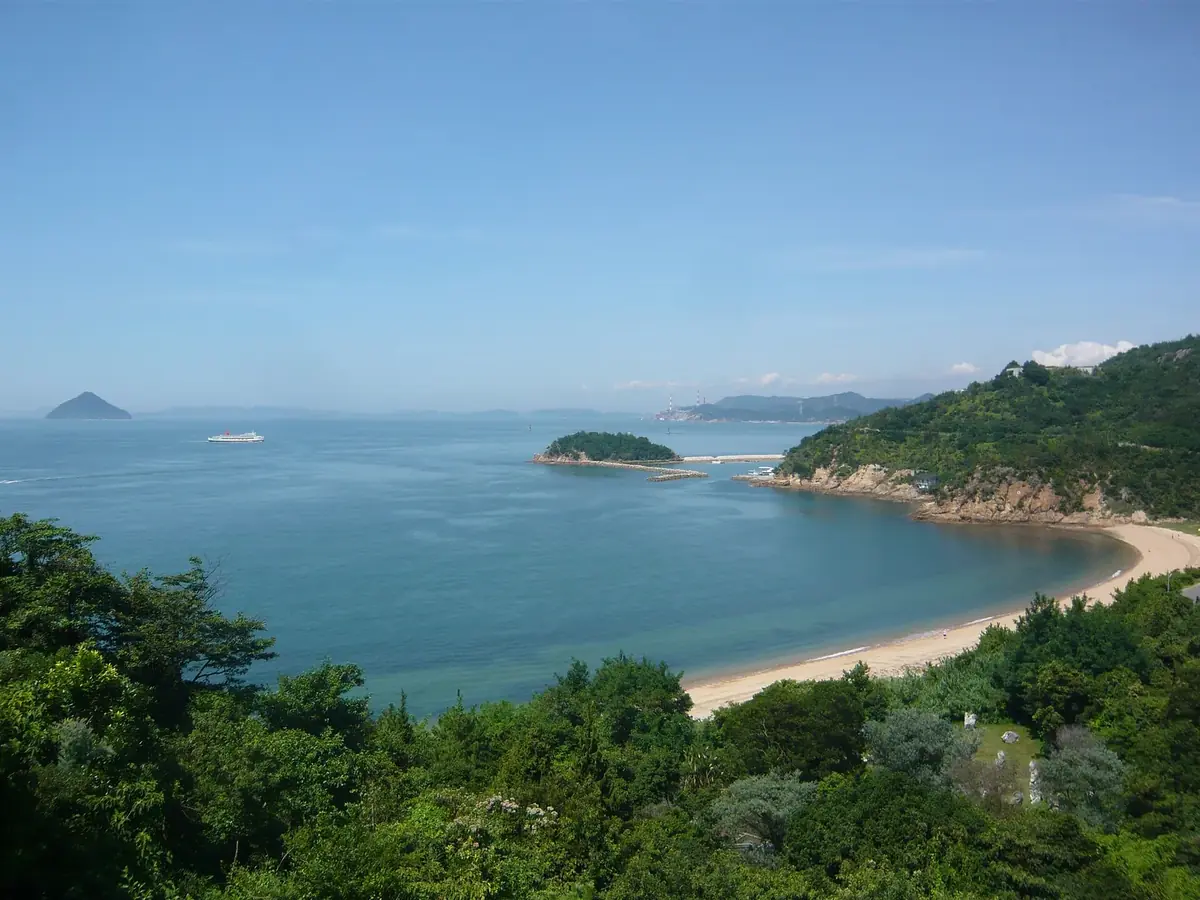
Day 19 is the detour to Naoshima, and it works only on a day the museums open: most, Chichu included, close on Mondays. Send your suitcase on to Osaka before you leave, as the museums do not allow suitcases inside. The shinkansen takes about 40 minutes to Okayama, the JR Uno Line about 50 minutes to Uno, and Shikoku Kisen's ferry about 20 minutes to Miyanoura (¥370). Book Chichu Art Museum before anything else on the island: when we checked on 10 October 2026, its timed tickets went on sale at 10:00 on the second Friday of the month, two months ahead, and nothing is sold at the door once they are gone. Give the afternoon to Chichu, the Lee Ufan Museum and Benesse House, and sleep in Miyanoura or Honmura.
On day 20, see Honmura's Art House Project in the morning (Minamidera has its own timed tickets), then take a boat back to Uno, the train to Okayama and the shinkansen to Shin-Osaka, about 50 minutes. Spend the last night in Namba, where Dotonbori's food streets begin outside the station; our Osaka guide covers the evening. On day 21, Nankai's rapi:t reaches Kansai Airport in as little as 34 minutes, so the last morning can stay unhurried.
Rail passes, advance bookings and luggage
Skip the nationwide Japan Rail Pass. Our rail pass guide's rule is that the longer passes pay only when long journeys fill the whole trip, and here they are spread out. On smartEX's Hikari fares, the biggest shinkansen rides are Odawara–Nagoya (¥8,900), Shin-Osaka–Hiroshima (¥10,220), Hiroshima–Okayama (¥5,940) and Okayama–Shin-Osaka (¥5,940), far short of the ¥50,000 7-day pass when we checked on 10 October 2026.
Buy a regional pass for the last stretch instead. JR West's Kansai-Hiroshima Area Pass, ¥17,000 for five consecutive days, covers reserved seats on the Sanyo shinkansen between Shin-Osaka and Hiroshima and the JR ferry to Miyajima. Start it on day 17, and the three shinkansen rides from Shin-Osaka to Hiroshima, Okayama and back, ¥22,100 at smartEX fares, repay it; check the pass map before relying on it for the Uno Line. Buy the other legs as you go: smartEX for the Odawara–Nagoya Hikari, and JR-WEST ONLINE TRAIN RESERVATION, from 10:00 Japan time one month ahead, for Kanazawa–Kyoto. JR Central's Takayama-Hokuriku Area Tourist Pass (¥19,800) pays only outside the Tsumago bus season, when you ride the Hida to Takayama; our Japanese Alps itinerary explains it.
Three stretches are hard work with a suitcase: Hakone and the Kiso walk (days 5–7), Koyasan (day 16) and Naoshima (day 19). JNTO notes that most major hotels can send bags on to your next hotel; ask at the front desk, confirm the delivery date and check that the next hotel accepts deliveries. That means three sends: Tokyo to Takayama on day 5, Kyoto to Hiroshima on day 16 and Hiroshima to Osaka on day 19. On the Tokaido and Sanyo shinkansen, a bag of 161–250 cm in total needs a reserved seat with an oversized-baggage area.
Book these as soon as your dates are fixed, roughly in this order:
- Shirakawa-go farmhouse (night 9): the tourist association's listings include inns that take only one or two groups a day.
- Koyasan temple (night 16): instant booking at a few temples, otherwise a request at least 14 business days ahead through the Shukubo Association.
- Chichu Art Museum (day 19): timed tickets from 10:00 on the second Friday of the month, two months ahead.
- Magome and Hakone inns (nights 5 and 6): small inns, usually with dinner included; book meals with the room.
- Reserved buses: Shirakawa-go to Kanazawa (Japan Bus Online or Hokutetsu), Tsumago to Takayama (Nohi web ticket) and the Kyoto–Koyasan bus.
- Timed entries: Nijo Castle's Honmaru-goten (from 30 days ahead), the Peace Memorial Museum's early and evening slots, and Minamidera on Naoshima.
Seasons, closing days, and how to cut or swap
The route works as written from April to November, when the Tsumago luggage service and Nohi's Tsumago–Takayama bus run (until 30 November 2026). Spring brings cherry blossom from late March in Kanazawa, around mid-April in Shirakawa-go and from late April at Koyasan, with the Takayama Festival on 14–15 April; autumn brings the festival again on 9–10 October, Shirakawa-go's colours from late October and Kenroku-en's through November.
Winter changes the plan. Takayama, Shirakawa-go and the Kiso Valley see snow and freezing temperatures from December to March, and Koyasan averages −0.3°C in January. With the Kiso luggage service and the Tsumago bus stopped, reach Takayama by train via Nagoya. On Naoshima, Chichu Art Museum closes from 12 January to 19 March 2027, and the Hakone Ropeway runs the replacement buses described above.
Eleven beds is a lot, and two changes save the most. First, sleep three nights in Takayama and walk the Nakasendo as a day trip on Nohi's bus, which leaves Takayama at 08:00, reaches Magome at 10:45 and returns from Tsumago at 15:00 (April to November). Second, stop at Shirakawa-go for a few hours on the bus from Takayama to Kanazawa instead of sleeping there, and give Kanazawa a third night. Doing both leaves nine beds.
Walkers can swap Koyasan, Naoshima and the Osaka night for the Kumano Kodo. Go to Hiroshima straight from Kyoto on day 16 for two nights, then on day 18 take the shinkansen back to Shin-Osaka and the Kuroshio to Kii-Tanabe, about 2 hours. Walk the Tanabe City Kumano Tourism Bureau's two-day route from Takijiri to Kumano Hongu Taisha on days 19 and 20, sleeping in a hot-spring village, and on day 21 ride the bus back to Kii-Tanabe and the train to Kansai Airport. Book the inns through Kumano Travel; our Kumano Kodo guide has the details.
Practical questions
Is three weeks too long for Japan?
No. Three weeks lets you leave the Tokyo–Kyoto line for the Japan Alps, Koyasan, Hiroshima and Naoshima without rushing, using 20 nights in eleven places. If eleven changes of bed sounds tiring, doing the Nakasendo as a day trip from Takayama and Shirakawa-go as a bus stopover brings it down to nine.
Is the Japan Rail Pass worth it for 3 weeks?
Not for this route. When we checked on 10 October 2026, the 21-day pass cost ¥100,000 and the 7-day pass ¥50,000, while the route's three busiest shinkansen rides in one week come to ¥22,100 on smartEX's Hikari fares. A Kansai-Hiroshima Area Pass (¥17,000 for five days) from day 17 pays for itself instead.
Should I stay in a temple at Koyasan?
Yes, for one night. A day trip from Osaka works, as Nankai puts Namba about 90 minutes away, but it misses the shojin ryori dinner, the morning service and Okunoin at dusk or dawn. Book through the Koyasan Shukubo Association, at least 14 business days ahead for request bookings.
Is Naoshima worth the detour?
Yes, if art is a reason you travel: it costs one night and two half days via Okayama and Uno. Plan around a timed Chichu Art Museum ticket and avoid Mondays, when most museums close; between 12 January and 19 March 2027, Chichu itself is closed.
Should I stay in Hakone or at Mount Fuji on a three-week trip?
On this route, Hakone: Odawara is on the shinkansen towards Nagoya and the Alps, and it gives you a ryokan night. Choose Lake Kawaguchi if seeing Fuji matters most, accepting a ride back towards Shinjuku before heading west.
When is the best time for a three-week trip to Japan?
Spring or autumn, between April and November, when the Magome–Tsumago luggage service and the Tsumago–Takayama bus both run. Avoid the rainy season from mid-June to mid-July if you can, and in winter expect snow in the Alps and at Koyasan and Chichu's closure from 12 January to 19 March 2027.
Keep planning your trip
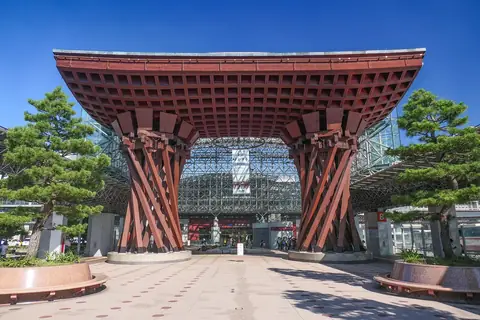
Japan in 14 days
A 14-day Japan itinerary by train: Tokyo and Kamakura, a Hakone ryokan, Kanazawa, Kyoto and Nara, Hiroshima and Miyajima, with bases, tickets and bookings.
Read the guide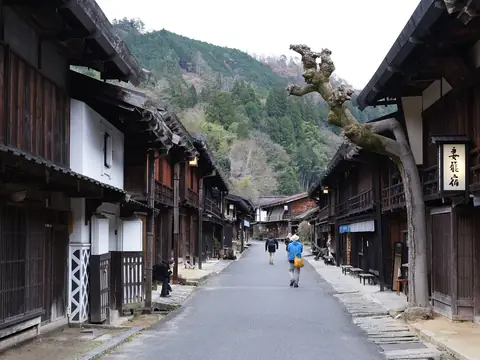
Japanese Alps in 6 days
A six-day loop from Nagoya: the Magome–Tsumago walk, two nights in Takayama, a Shirakawa-go farmhouse night and Kanazawa, plus the buses, pass and bookings.
Read the guide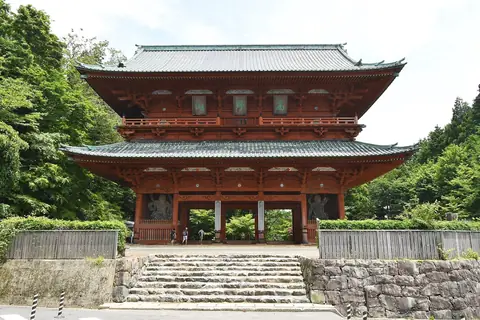
Koyasan
Why a night in a Koyasan temple beats a day trip, how to book a shukubo, what dinner and morning prayers involve, Okunoin's rules and the trip from Osaka.
Read the guide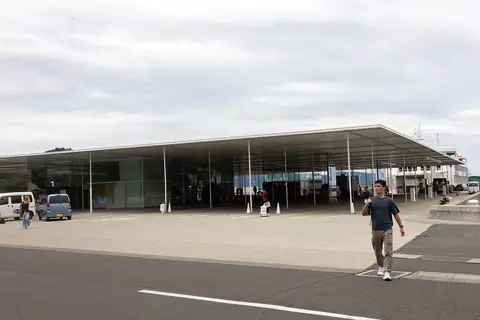
Naoshima
Whether Naoshima needs a night or a day, where to stay, how to book Chichu's timed tickets, the ferries from Uno and Takamatsu, and how to add Teshima.
Read the guide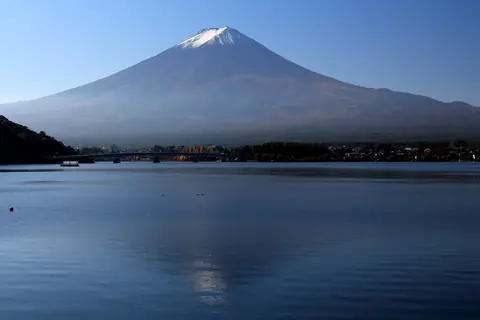
Mount Fuji
Day trip or a night at Lake Kawaguchi? Where to stay for clear morning views, the Chureito Pagoda and other viewpoints in order, and the 2026 climbing rules.
Read the guide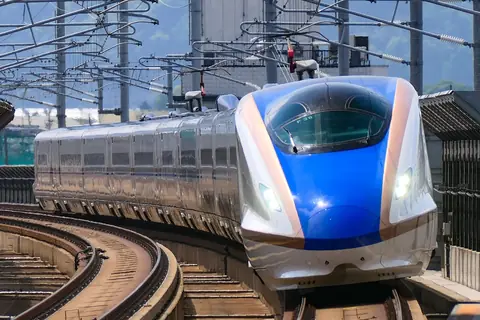
Japan Rail Pass
Whether the 7-day Japan Rail Pass pays for your route, worked out with official fares, plus Nozomi rules, regional JR passes, smartEX and how to use the pass.
Read the guideSources and checks before you travel
(55)
- JR East: Odawara station timetable, Tokaido shinkansen westbound (edition read on 26 October 2026), and Hikari 637, 641 and 645 stop lists (Japanese) ↗ — opens in a new tab
- smartEX: reserved-seat prices, Hikari and Kodama table (as of 1 April 2025, PDF) ↗ — opens in a new tab
- JAPAN RAIL PASS (official site): types and prices ↗ — opens in a new tab
- JR West: Kansai-Hiroshima Area Pass ↗ — opens in a new tab
- JR Central Tourist Pass: Takayama-Hokuriku Area Tourist Pass ↗ — opens in a new tab
- JR-WEST ONLINE TRAIN RESERVATION conditions; JR Central luggage rule ↗ — opens in a new tab
- GO TOKYO: Haneda Airport access ↗ — opens in a new tab
- Odakyu: Hakone Freepass and Romancecar ↗ — opens in a new tab
- Odakyu Hakone: Hakone Ropeway replacement buses during maintenance (PDF) ↗ — opens in a new tab
- Tsumago Tourism Association: walking the Nakasendo, and access ↗ — opens in a new tab
- JNTO: Magome-juku and Magome ↗ — opens in a new tab
- Magome Tourism Association: places to stay, Q&A and food ↗ — opens in a new tab
- Nohi Bus: Takayama–Magome–Tsumago seasonal line (Japanese) ↗ — opens in a new tab
- Nohi Bus: Takayama–Shirakawa-go–Kanazawa line; Hokutetsu highway buses ↗ — opens in a new tab
- Shirakawa-go Tourist Association and SHIRAKAWA-Going (Shirakawa Village) ↗ — opens in a new tab
- Takayama City and Hida Takayama Tourism: markets, Jinya, festival, winter and Hida beef ↗ — opens in a new tab
- Visit Kanazawa and Ishikawa Prefecture: getting to Kanazawa, Kenroku-en and the 21st Century Museum ↗ — opens in a new tab
- Kyoto City Tourism Association and Hands Free Kyoto ↗ — opens in a new tab
- Nara City Tourism Association: access and Nara Park ↗ — opens in a new tab
- Koyasan Shukubo Association: official booking request ↗ — opens in a new tab
- Wakayama Prefecture: Kyoto–Koyasan direct highway bus 2026 (PDF, Japanese) ↗ — opens in a new tab
- Kongobu-ji: admission, hours and guidance (Japanese) ↗ — opens in a new tab
- Nankai Electric Railway: access from Kansai Airport and Koyasan ↗ — opens in a new tab
- Hiroshima Peace Memorial Museum: hours, admission and crowding ↗ — opens in a new tab
- Miyajima Tourist Association: tide table; Aqua Net Hiroshima and Itsukushima Shrine access ↗ — opens in a new tab
- Naoshima Town Tourism Association: access; Shikoku Kisen Uno–Miyanoura ↗ — opens in a new tab
- Benesse Art Site Naoshima: Chichu Art Museum, online tickets and winter closures ↗ — opens in a new tab
- JNTO: luggage and storage ↗ — opens in a new tab
- Tanabe City Kumano Tourism Bureau: suggested walks, train and airport access; Kumano Travel FAQ ↗ — opens in a new tab
- Koya Town Tourism Association and Koyasan Shukubo Association: food and seasons (Japanese and English) ↗ — opens in a new tab
- Dive! Hiroshima (official prefectural tourism site): Okonomi-mura and local food ↗ — opens in a new tab
- Visit Gifu: goheimochi ↗ — opens in a new tab
- JR West Miyajima Ferry: fares and visitor-tax exemptions ↗ — opens in a new tab
- Hotel Gracery Shinjuku (official site): access ↗ — opens in a new tab
- Rakuten Travel: Hotel Gracery Shinjuku plan list ↗ — opens in a new tab
- Jalan: Onsen Hotel Gorakan (property page) ↗ — opens in a new tab
- Jalan: Onsen Hotel Gorakan rates and plans ↗ — opens in a new tab
- Tajimaya (official site) ↗ — opens in a new tab
- Magome Tourism Association: Tajimaya ↗ — opens in a new tab
- Ryokan Tanabe (official site) ↗ — opens in a new tab
- Jalan: Ryokan Tanabe rates and plans ↗ — opens in a new tab
- Jalan: Kanjya (property page) ↗ — opens in a new tab
- Jalan: Kanjya rates and plans ↗ — opens in a new tab
- Shirakawa-go Tourist Association: places to stay ↗ — opens in a new tab
- Rakuten Travel: Kanazawa Tokyu Hotel plan list ↗ — opens in a new tab
- Rakuten Travel: Kanazawa Tokyu Hotel facilities and access ↗ — opens in a new tab
- Daiwa Roynet Hotel Kyoto Shijo-Karasuma (official site) ↗ — opens in a new tab
- Rakuten Travel: Daiwa Roynet Hotel Kyoto Shijo-Karasuma plan list ↗ — opens in a new tab
- Ekoin (official site) ↗ — opens in a new tab
- Jalan: Ekoin rates and plans ↗ — opens in a new tab
- Rakuten Travel: Hotel Granvia Hiroshima plan list ↗ — opens in a new tab
- Rakuten Travel: Hotel Granvia Hiroshima facilities and access ↗ — opens in a new tab
- Rakuten Travel: Quaint House Naoshima plan list ↗ — opens in a new tab
- Cross Hotel Osaka (official site) ↗ — opens in a new tab
- Rakuten Travel: Cross Hotel Osaka plan list ↗ — opens in a new tab
Reference sources for the version dated 2 November 2026. Confirm opening times, access, transport and conditions for your travel dates.
Photo credits
(5)
A gassho-zukuri house in Ogimachi: the farmhouse night is the one to book first
Photograph: Bernard Gagnon — opens in a new tab · CC BY-SA 3.0 — opens in a new tab
Changes: Resized and converted to WebP; displayed with responsive crops. · Original photograph and licence details ↗ — opens in a new tab
Magome's main slope in spring: sleep here on night 6 and start the Nakasendo walk early
Photograph: Gryffindor — opens in a new tab · CC BY-SA 3.0 — opens in a new tab
Changes: Resized and converted to WebP; displayed with responsive crops. · Original photograph and licence details ↗ — opens in a new tab
Jizo statues by a stream at Okunoin, best walked at dusk or before breakfast
Photograph: Josep M. Gracia — opens in a new tab · CC BY-SA 4.0 — opens in a new tab
Changes: Resized and converted to WebP; displayed with responsive crops. · Original photograph and licence details ↗ — opens in a new tab
The first course of a temple dinner at Fukuchi-in on Koyasan, with no meat or fish
Photograph: Jpatokal — opens in a new tab · CC BY-SA 4.0 — opens in a new tab
Changes: Resized and converted to WebP; displayed with responsive crops. · Original photograph and licence details ↗ — opens in a new tab
The Seto Inland Sea from the museum area around Benesse House on Naoshima
Photograph: shoyanishikawa from Japan — opens in a new tab · CC BY 2.1 jp — opens in a new tab
Changes: Resized and converted to WebP; displayed with responsive crops. · Original photograph and licence details ↗ — opens in a new tab