Hiroshima
Miyajima guide: tides, the floating torii and a night on the island
Miyajima is the island of Itsukushima Shrine, whose vermilion halls are built over a tidal bay and whose Great Torii stands in the sea about 200 m in front of them. It is about 30 minutes by train from Hiroshima and then a 10-minute ferry, and the island's tourist association says most visitors sightsee for two to three hours. The catch is the tide: on a short visit you see the torii in whatever state the sea happens to be. Sleep on the island and you can see the shrine both afloat and standing on bare sand, climb Mount Misen without watching the clock and walk the lit shoreline after the day visitors have gone.
In this guide
Find the location ↗ — opens in a new tabThe short answer
Spend one night on Miyajima, at an inn near the shrine, arriving by train and ferry from Hiroshima, so you see the Great Torii at both high and low tide. Check the tourist association's tide table before fixing dates: you can walk to the torii when the level is below 100 cm, and the shrine looks afloat above 250 cm. Arrive by early afternoon, take the ropeway or a trail up Mount Misen, and stay out for the evening illuminations. With only one day in Hiroshima, or no interest in the hike, a half day works; time it for the tide you most want to see.
- Suggested time
- 1 night; a half day if time is short
- Where to stay
- An inn near the shrine, Omotesando or Momijidani on the island; Miyajimaguchi for the ferry terminals; the Peace Memorial Park area of Hiroshima for the direct boat
- Season and timing
- The Miyajima Tourist Association puts cherry blossom at its best in early April and the autumn leaves around 20 November; the ropeway needs advance reservations on set autumn dates. The tide, not the season, decides how the torii looks on the day.
A half day or a night on the island: who should do which
Miyajima's sights sit close together. JNTO puts Itsukushima Shrine about a 10-minute walk from the island's ferry pier, and the tourist association's three-hour model course takes in the shrine, Daigan-ji, the Treasure Hall, Daisho-in, the Five-storied Pagoda and Senjokaku. A half day from Hiroshima therefore covers the shrine and the town comfortably. It suits travellers with a single day in Hiroshima, anyone who does not want to climb Mount Misen and those passing through on a tight rail itinerary.
For almost everyone else, a night is better, and the main reason is the tide. On a short visit you see the Great Torii in whatever state the sea is in; stay overnight and you get two high and two low tides to choose from (see the next section). You also get Mount Misen without racing the last ropeway car down at 16:30, and the evening, when the shrine and torii are lit until 23:00. JNTO describes the island becoming 'a magical place' once the day-trippers have left on the last ferry.
On the island, the Miyajima Ryokan Association lists 22 inns, most quoting per-person rates with dinner and breakfast. Those around the ferry pier and Omotesando, the shopping street that leads to the shrine, are a few minutes' walk from the boats and the easiest choice with luggage. Inns behind the shrine and in Momijidani, the maple valley at the foot of Mount Misen, are quieter and close to the ropeway; JNTO features Iwaso, a ryokan among Momijidani's maples. On the mainland, Miyajimaguchi has both ferry terminals on its doorstep, while a hotel near Hiroshima's Peace Memorial Park puts you at the pier for the direct boat to the island. Since 1 April 2026, Hiroshima Prefecture has charged an accommodation tax of ¥200 per person per night on room rates of ¥6,000 or more.
Itsukushima Shrine and the Great Torii: timing the tide
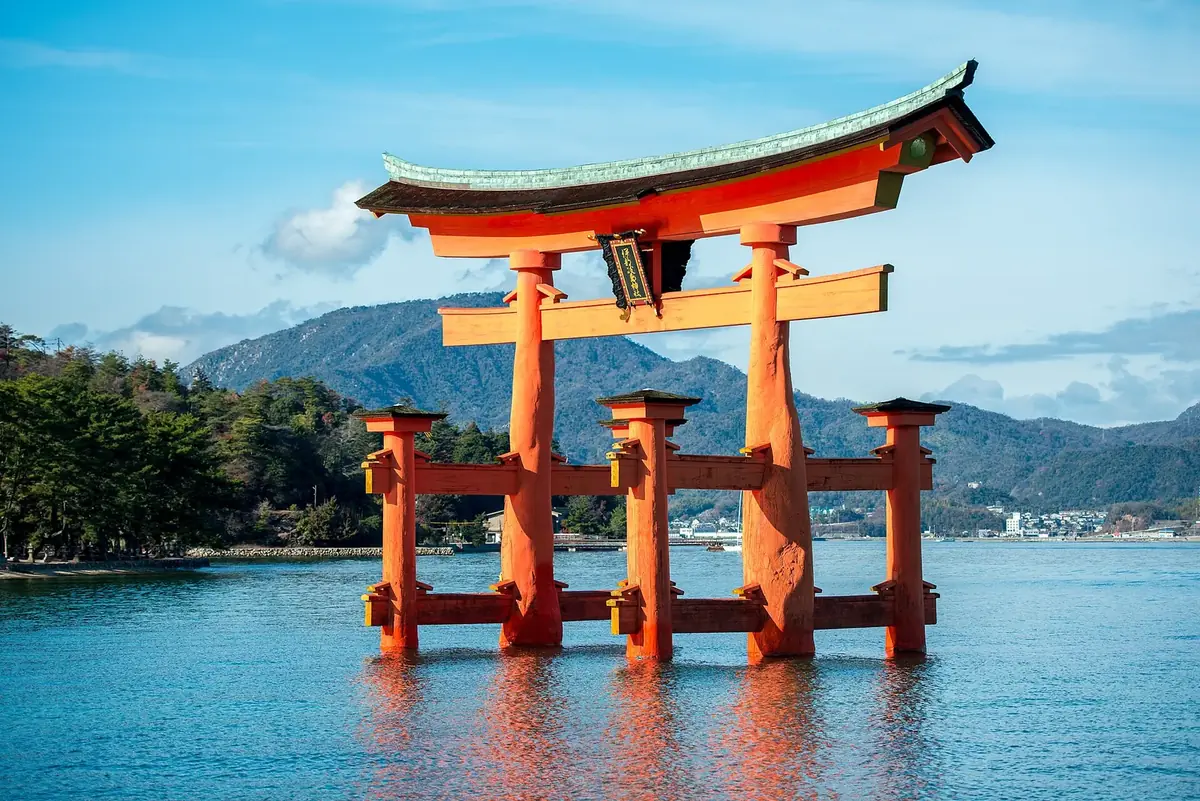
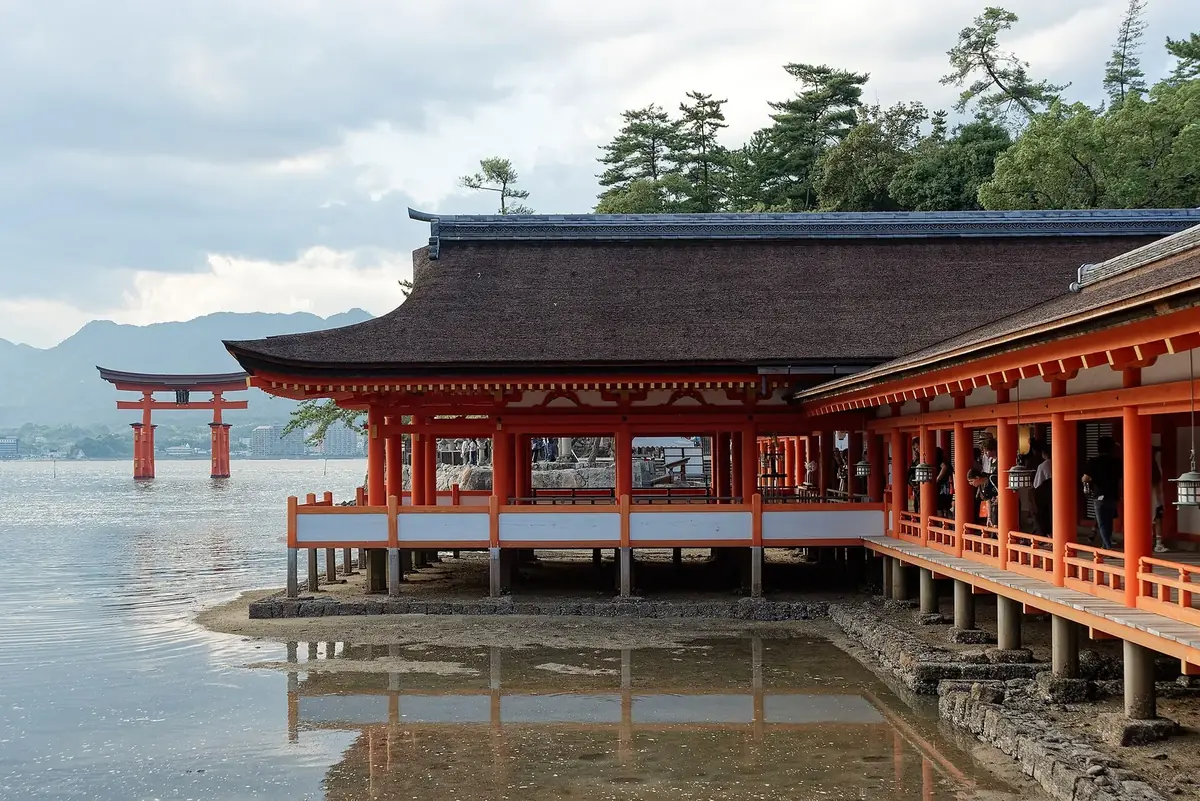
Itsukushima Shrine dates its founding to 593, and its present form to 1168, when Taira no Kiyomori rebuilt it in the shinden style of Heian-period noble houses; it became a World Heritage Site in 1996. Its halls and corridors stand over a tidal bay, and the Great Torii (O-torii), about 16.8 m tall, stands about 200 m out in front of them, held up by nothing but its own weight. The present gate, the ninth, was raised in 1875.
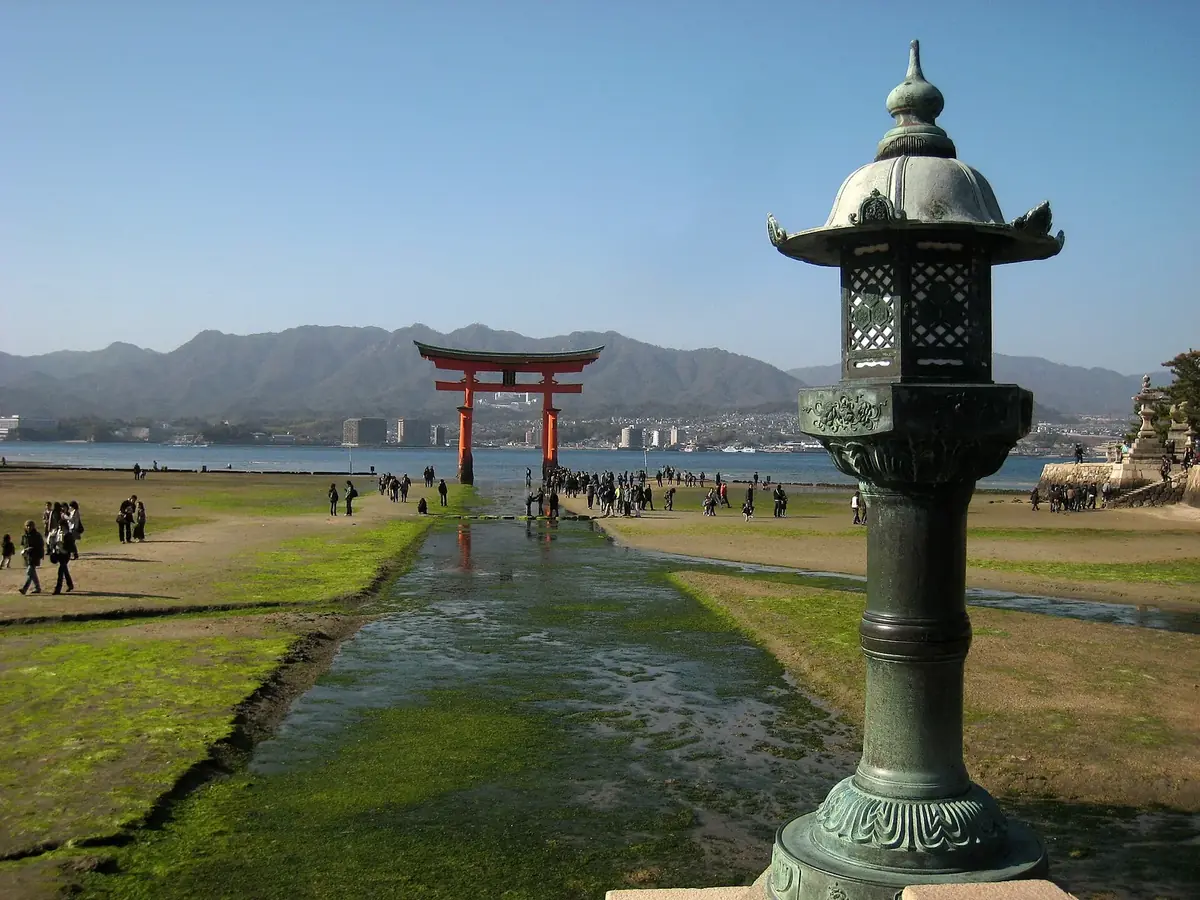
What you see depends on the water level rather than simply on the time of high or low tide. The Miyajima Tourist Association's tide table (its 'Tide Info' page) shows, for any date, the hours when you can walk out to the torii and the hours when the shrine appears to float. Its rule is that you can walk to the torii when the level falls below 100 cm, and that the shrine looks afloat when it rises above 250 cm; the figures are for Hiroshima Port, and the association expects the tide at Miyajima to turn a little earlier.
On 10 October 2026, for example, the table gave floating views from 06:45 to 11:45 and again from 19:00 to 23:00, and a walking window from 14:30 to 16:15. On other days the low tide falls only early in the morning or after dark, or never drops far enough to walk out in daylight: hours that suit overnight guests rather than day-trippers, which is the strongest reason to spend a night on the island.
At low tide, JNTO notes, the shrine's foundations and the mud flats are exposed and you can walk right up to the gate, so wear shoes you do not mind getting wet and sandy. At high tide, the closest view is from the sea: JR West Miyajima Ferry's Great Torii sailings, leaving Miyajimaguchi between 09:10 and 16:10, take the route nearest the gate.
When we checked on 10 October 2026, the shrine's site listed opening hours of 06:30–18:00 from 1 March to 14 October, 06:30–17:30 from 15 October to 30 November and from 4 January to the end of February, and 06:30–17:00 in December, with longer hours over New Year. Admission was ¥300 for adults, or ¥500 with the Treasure Hall (08:00–17:00). Senjokaku (Hokoku Shrine) charges ¥100 and is open 08:30–16:30. The corridor floorboards have gaps to relieve the pressure of the sea at high tide, and the shrine warns that high heels can catch in them.
What to eat and where to look
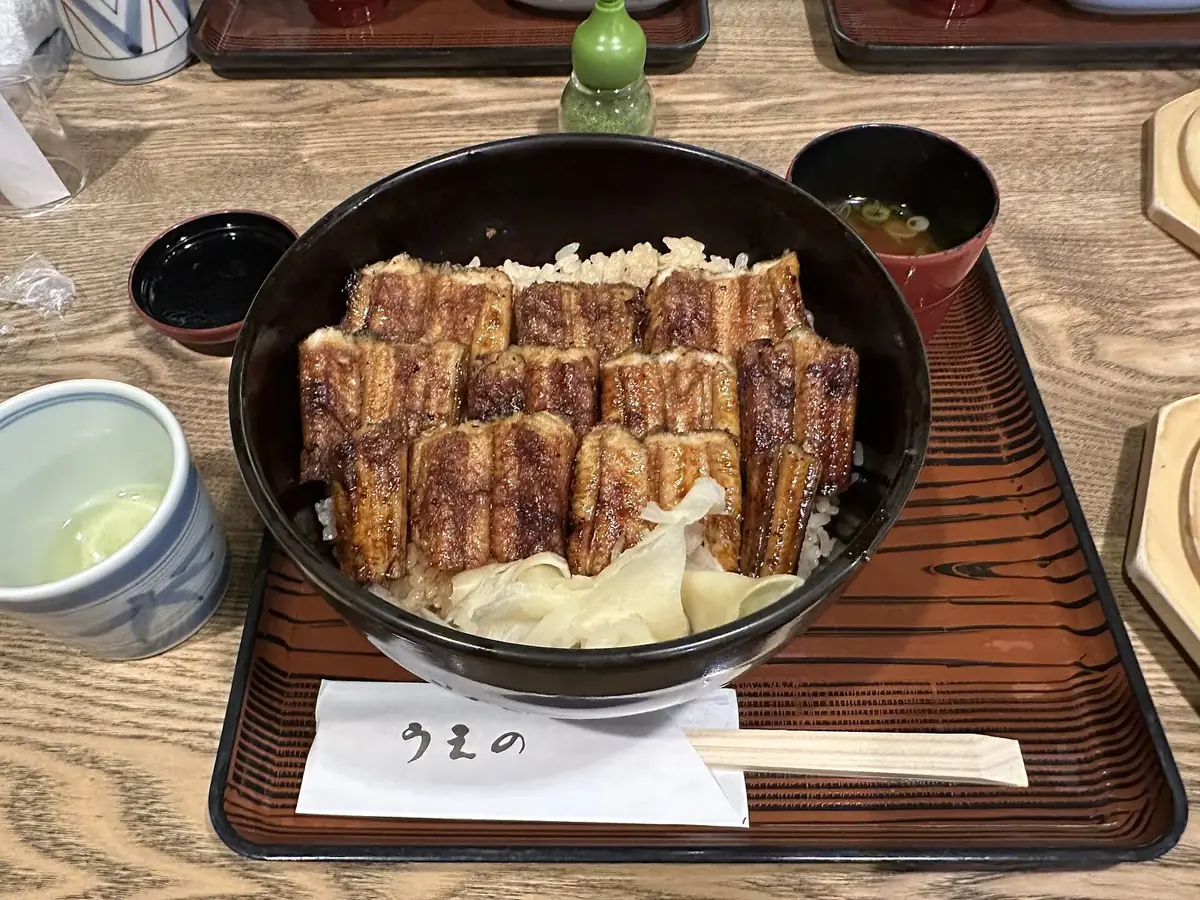
Anago-meshi (conger eel on rice)
Conger eel, grilled until glossy and laid over rice seasoned with stock from the eel's bones or soaked in its sauce. The prefecture's tourism site says the dish began as a station lunchbox at the former Miyajima Station, and that Anagomeshi Ueno has made it since 1901; the tourist association notes that each shop grills and seasons its eel differently.
- Where to look
- Anagomeshi Ueno, which the prefecture's tourism site suggests before you take the ferry, and on the island Anagomeshi Wada near the Five-storied Pagoda. Inns also serve conger eel as sushi, tempura or part of the dinner.
- Fit it into your day
- Lunch on the way over, or a boxed version for the train back.
Contains fish; the glaze is soy-based and usually contains wheat.
Grilled oysters (yaki-gaki)
The tourist association calls the waters around Miyajima ideal for oysters, fed by minerals carried down the Ota River and from the Misen forest, and Miyajima oysters are known for their size. Hiroshima produces more than 60% of Japan's oysters. On the island they come grilled in the shell, fried, raw or in okonomiyaki.
- Where to look
- Restaurants and stalls along Omotesando, between the pier and the shrine.
- Fit it into your day
- A grilled oyster or two as a snack on Omotesando; fried oysters for lunch.
Shellfish. Winter is the peak season; choose cooked oysters if you are unsure about raw ones.
Momiji manju
Maple-leaf cakes of castella-style sponge, classically filled with sweet bean paste. The tourist association says they were invented on Miyajima in the late Meiji era by the confectioner Takatsu Tsunesuke, at the request of the proprietress of the Iwaso inn, and that there are now more than 100 varieties, with chocolate, cheese and cream fillings among them.
- Where to look
- Confectioners along Omotesando, many baking them in front of you; at the Miyajima Traditional Crafts Center you can bake your own.
- Fit it into your day
- One warm from the griddle on the walk to the shrine, and a box for the train.
Contains wheat and egg; the classic filling is sweet red bean paste.
Age-momiji (fried momiji manju)
A momiji manju dipped in tempura batter and deep-fried on a stick, crisp outside and soft inside. The prefecture's tourism site singles out Momijido's freshly fried version as worth queuing for.
- Where to look
- Momijido on Miyajima, which the prefecture's tourism site features.
- Fit it into your day
- A hot snack on the walk back to the pier.
Deep-fried; contains wheat and egg.
Mount Misen: the ropeway or one of three trails
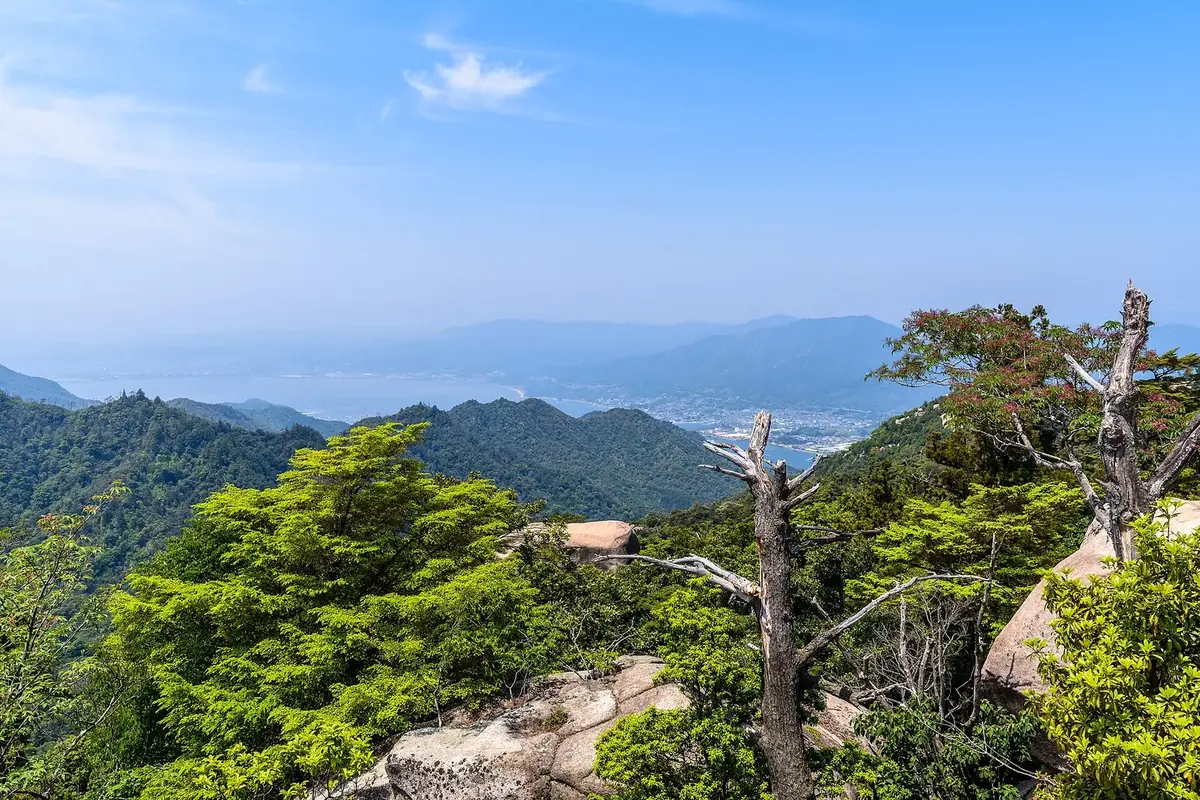
Mount Misen, 535 m, rises straight behind the shrine, and its primeval forest is part of the World Heritage site. The tourist association says Kukai (Kobo Daishi) opened the mountain for Shingon practice in 806, and the summit is a jumble of granite boulders and temple halls with views over the islands of the Seto Inland Sea. Give it at least half a day, by ropeway or on foot.
The Miyajima Ropeway starts at Momijidani Station, about 20 minutes' walk from the ferry pier according to JNTO; the operator also runs a free shuttle bus from the park entrance about every 20 minutes from around 09:50. Small gondolas climb to Kayatani, where you change to a larger car for Shishiiwa Station, and the tourist association allows about 30 minutes on foot from there to the summit, over steep slopes and stone steps. The ropeway stops in strong winds and thunderstorms and closes for maintenance twice a year, around February and July.
When we checked on 10 October 2026, the operator listed cars up from 09:00 to 16:00, the last car down at 16:30, and adult fares of ¥2,000 return or ¥1,100 one way; Momijidani Station accepts cards, IC cards and PayPay, but Shishiiwa Station takes cash only. In autumn, book ahead: on set peak days the ropeway must be reserved online, and these were then 19–22 October and every weekend in November, plus 23 November. The operator lists the reserved days for the next three months on its home page.
Three trails climb from the town, and the tourist association gives these times to the top: the Daisho-in course, 1 hour 30 minutes to 2 hours and about 2.6 km with a great many stone steps, from beside Daisho-in; the Momijidani course, around 1 hour 30 minutes up a forest path from the upper end of Momijidani Park, which JNTO calls suitable for beginners; and the Omoto course, around 2 hours from Omoto Shrine on the west side, the most rugged of the three. The association warns that walkers have had accidents after starting the Omoto course in the wrong place, that searches for lost hikers happen every year and that hornets and vipers live on the mountain; you also start from sea level, so carry water, wear proper shoes and take your rubbish home. If 535 m of climbing is too much, ride the ropeway up and walk down the Daisho-in trail, which ends at the temple.
One change for 2026: Daisho-in reports that a fire on 20 May 2026 destroyed Reikado Hall, near the summit, along with the temple's reception office on the mountain. Reikado housed the 'eternal flame' said to have burned since Kukai's training in 806, which was used to light the Flame of Peace in Hiroshima's Peace Memorial Park. Nobody was hurt and the fire did not spread to the forest. The temple plans to rebuild, and holds a prayer service for the reconstruction on the site on 20 October 2026.
Daisho-in, the town and the deer
Daisho-in, where the Daisho-in trail begins, is the island's oldest temple and dates its founding to Kukai in 806. The tourist association calls it one of the most prestigious Shingon temples in western Japan: it was Emperor Toba's prayer hall in the 12th century, and Emperor Meiji stayed there in 1885. Its halls and statues are spread over the hillside, and beneath the main hall the kaidan-meguri is a passage in total darkness, meant for quiet reflection. Since 1 April 2025, the grounds have been open from 08:00 to 17:00, and the counter for amulets and goshuin temple stamps from 08:00 to 16:00.
Between the pier and the shrine, Omotesando has more than 80 shops, according to the tourist association, selling oyster and conger-eel dishes, momiji manju and the wooden rice scoops (shakushi) the island is known for. Machiya-dori, another approach to the shrine, was the main street in the Edo period and keeps traditional townhouses alongside cafés and craft shops. Just beyond the shrine's exit, Nishimachi and the shore of Nishi-matsubara are, in the association's words, almost free of crowds. The Miyajima Traditional Crafts Center (08:30–17:00, closed on Mondays) runs sessions in rice-scoop making, Miyajima-bori carving and baking momiji manju between 09:00 and 16:00.
About 500 sika deer live on Miyajima, some 200 of them in the town, according to the tourist association. They are wild animals, and Hatsukaichi City's deer management plan, which Hiroshima Prefecture supports, rests on a ban on feeding them and strict rubbish control: deer that learned to take food from people moved into the town, and the paper and plastic they swallow can build up in their stomachs and kill them. Do not feed them, keep maps, tickets and snack bags out of reach, and give the stags a wide berth in autumn, the rutting season.
Getting there: ferries, the JR Pass and the visitor tax
Two operators cross from Miyajimaguchi in about 10 minutes. The shrine's own site gives about 30 minutes on the JR Sanyo Line from Hiroshima Station to Miyajimaguchi, or about an hour by Hiroden streetcar from Kamiyacho in central Hiroshima; JNTO puts the ferry terminal about five minutes' walk from JR Miyajimaguchi Station, and Miyajima Matsudai Kisen says its terminal is one minute from the Hiroden stop. When we checked on 10 October 2026, both ferries charged adults ¥200 one way or ¥400 return. On their regular timetables, JR West Miyajima Ferry sailed every 15 minutes through the day, from 06:25 to 22:42 from Miyajimaguchi and from 05:45 to 22:14 from the island, and Miyajima Matsudai Kisen from 07:15 to 20:35 and from 07:00 to 20:15. The Japan Rail Pass and JR West's rail passes cover the JR ferry and the JR Sanyo Line to Miyajimaguchi, but not the Matsudai ferry or the Aqua Net boats.
From central Hiroshima, Aqua Net Hiroshima's World Heritage Sea Route saves the train. It leaves from Motoyasu Pier, about 150 m south of the Atomic Bomb Dome, follows the city's rivers and crosses the bay to Miyajima in about 45 minutes. When we checked on 10 October 2026, adults paid ¥2,400 one way or ¥4,400 return, and the return ticket is valid for two days, which suits an overnight stay. That day's timetable ran from 08:30 to 17:10 from the Peace Park and from 08:40 to 17:30 from Miyajima's No. 3 Pier. Online booking closes the day before; on the day, buy at the pier with cash or a credit card (IC cards are not accepted). Very high or very low tides can cancel sailings or change the route.
Every visitor pays the Miyajima Visitor Tax on the way in. Hatsukaichi City has charged it since 1 October 2023: ¥100 per person per visit, added to your ferry ticket at the machine or counter (the JR and Matsudai IC-card gates deduct fare and tax together), or ¥500 for a whole year, paid in advance at a city office or through the city's official LINE account. Preschool children, pupils on school trips and holders of Japanese disability certificates are exempt. If you travel on a rail pass or a tour voucher, the city asks you to pay the tax separately at the ferry counter, although some passes already include it. The money goes on visitor facilities, the Misen trails and observatory, heritage conservation and eco-tourism.
The evening on the island
Itsukushima Shrine closes between 17:00 and 18:00, depending on the season, but the island does not go dark. The tourist association says the illuminations run every day from 30 minutes after sunset until 23:00, lighting the Great Torii, the shrine's main halls, the Five-storied Pagoda, the Tahoto pagoda and the stone lanterns along Nishi-matsubara; they are paused only once or twice a year for rituals or events. If you are lucky, the association says, the sun sets behind the torii while you wait for the lights. In Machiya-dori, lanterns on the eaves of shops and houses are lit after dark.
To see the lit gate from the water, Aqua Net runs a 30-minute night cruise from No. 3 Pier in a traditional roofed boat. When we checked on 10 October 2026, departures ran from 17:55 to 21:15 and cost ¥2,000 for adults, in cash only. You must book at least two hours ahead (online until 16:00 on the day), and the cruise is cancelled if nobody has booked by 17:00 the day before. At high tide, the association notes, boats can approach the gate.
Day visitors can stay for the lights as well, since the last Matsudai ferry leaves the island at 20:15 and the last JR ferry at 22:14. What overnight guests gain is the rest of the evening and the next morning. Most inns include dinner, so the evening becomes a long meal and a walk along the lit shore, and the next day starts with the shrine at 06:30. Daisho-in has also lit its autumn maples in the evenings in recent years, for an admission charge; it had not announced 2026 dates when we checked.
Seasons, festivals and the busiest days
The tourist association puts cherry blossom at its best in early April and the autumn leaves around 20 November. Momijidani Park, at the foot of Mount Misen, has about 700 maple trees according to the prefecture's tourism site. Winter is the best season for oysters, although the island's February Oyster Festival was cancelled in 2026 because not enough oysters could be secured.
Two festivals are worth planning around. Kangen-sai, the shrine's largest festival, falls on the 17th day of the sixth lunar month (30 July in 2026): boats carry the portable shrine across the bay to gagaku court music, returning to the shrine late at night. On 31 December at 18:00, Chinka-sai, a fire festival, sees local men carry huge pine torches along the shore in front of the shrine. Matsudai runs special timetables over New Year and for Kangen-sai, and JR West Miyajima Ferry has separate New Year and busy-day timetables.
One night on the island, or a half day timed to the tide
This is an editorial suggestion, not a timetable. Look up the tide for your dates first, and swap the shrine and Mount Misen between afternoon and morning if the tide suits it better.
- Day 1, late morning: JR Sanyo Line from Hiroshima to Miyajimaguchi, anago-meshi near the station, then a Great Torii sailing on the JR ferry. Leave your bags at your inn if it can hold them before check-in.
- Day 1, afternoon: the ropeway up Mount Misen (last car up at 16:00) and the Daisho-in trail down to the temple, or the shrine and the walk out to the torii if the tide is low.
- Day 1, evening: sunset by the torii, dinner at your inn, then the illuminations or the night cruise if you booked it.
- Day 2, morning: the shrine from 06:30 at the other tide, Daisho-in from 08:00, then Omotesando for momiji manju before the JR ferry back.
- As a half day: the Aqua Net boat from the Peace Park in the morning, the shrine, Omotesando and Daisho-in, then the JR ferry and train back to Hiroshima. Pick the morning or the afternoon by the tide you want.
Practical questions
Is it worth staying overnight on Miyajima?
Yes, if you can spare the night. You can see the shrine and the Great Torii at both high and low tide, climb Mount Misen without racing the last ropeway car and walk the lit shore after the day visitors leave.
When can you walk to the Miyajima torii?
When the tide level falls below 100 cm, according to the Miyajima Tourist Association, whose online tide table lists the walking times for each date. The shrine appears to float when the level is above 250 cm.
How much is the Miyajima visitor tax?
¥100 per person per visit, collected by the boat operators with your fare, or ¥500 for a year paid in advance to Hatsukaichi City. Preschool children, pupils on school trips and holders of Japanese disability certificates are exempt.
Does the JR Pass cover the Miyajima ferry?
Yes, the JR West Miyajima Ferry accepts the Japan Rail Pass and JR West's rail passes, but the Matsudai ferry and the Aqua Net boats are not covered. Pass holders still pay the ¥100 visitor tax at the ferry counter.
How long does it take to climb Mount Misen?
About 1 hour 30 minutes to 2 hours on foot from the town, depending on the trail, according to the tourist association. With the ropeway, allow about 30 minutes' walk from Shishiiwa Station to the summit.
Can you feed the deer on Miyajima?
No. Hatsukaichi City's deer management plan bans feeding, because deer that rely on people move into the town and swallow paper and plastic that can kill them.
Keep planning your trip
Hiroshima
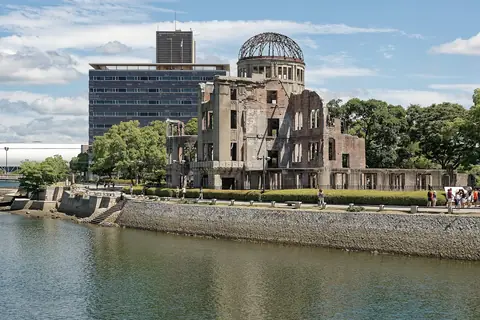
Whether Hiroshima is a day trip or one or two nights, how to book the Peace Memorial Museum, which area to sleep in and how to add Miyajima.
Read the guide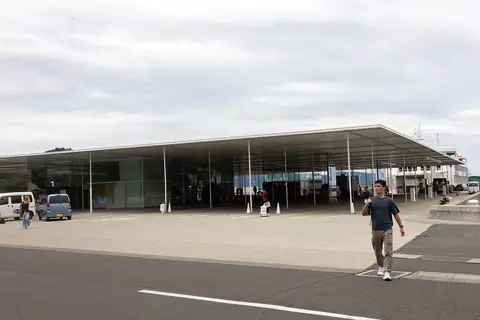
Naoshima
Whether Naoshima needs a night or a day, where to stay, how to book Chichu's timed tickets, the ferries from Uno and Takamatsu, and how to add Teshima.
Read the guide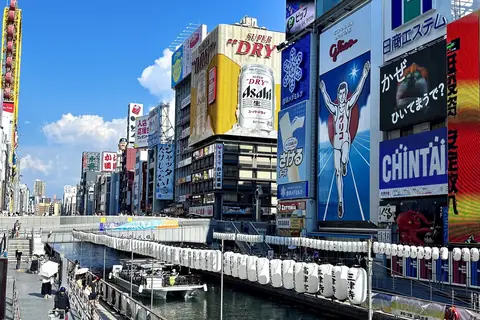
Osaka
How many nights Osaka needs, whether to base here or in Kyoto, Namba vs Umeda vs Shin-Osaka vs Tennoji, what to eat, and trains to Nara, Himeji and Koyasan.
Read the guide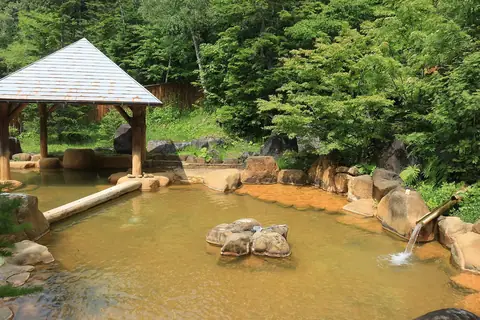
Ryokan and onsen
How a ryokan night works, what to tell the inn when booking, onsen etiquette and tattoos, private baths, and which towns on a Japan route suit a ryokan night.
Read the guide
Japan in 10 days
A first 10-day Japan route: Tokyo, a Hakone ryokan, Kyoto and Nara, Hiroshima and Miyajima, and Osaka: where to sleep each night and which rail tickets pay.
Read the guide
Japan in 14 days
A 14-day Japan itinerary by train: Tokyo and Kamakura, a Hakone ryokan, Kanazawa, Kyoto and Nara, Hiroshima and Miyajima, with bases, tickets and bookings.
Read the guideSources and checks before you travel
(16)
- Itsukushima Shrine: hours and admission ↗ — opens in a new tab
- Miyajima Tourist Association: tide table ↗ — opens in a new tab
- Miyajima Tourist Association: O-torii, Mount Misen and model courses ↗ — opens in a new tab
- Miyajima Tourist Association: illuminations, streets, deer, food and events ↗ — opens in a new tab
- Miyajima Ryokan Association: hotel list ↗ — opens in a new tab
- Hatsukaichi City: Miyajima Visitor Tax (Japanese) ↗ — opens in a new tab
- Hiroshima Prefecture: deer in the Miyajima area (Japanese) ↗ — opens in a new tab
- JR West Miyajima Ferry: fares and timetable ↗ — opens in a new tab
- Miyajima Matsudai Kisen: fares and timetable ↗ — opens in a new tab
- JR West: Kansai-Hiroshima Area Pass ↗ — opens in a new tab
- Aqua Net Hiroshima: World Heritage Sea Route and night cruise ↗ — opens in a new tab
- Miyajima Ropeway: hours, fares and reservation days ↗ — opens in a new tab
- Daisho-in (official site, Japanese) ↗ — opens in a new tab
- JNTO: Itsukushima Shrine, Mt. Misen and staying on Miyajima ↗ — opens in a new tab
- Dive! Hiroshima (official prefectural tourism site): Miyajima features ↗ — opens in a new tab
- Hiroshima Airport: public transport timetables ↗ — opens in a new tab
Reference sources for the version dated 19 October 2026. Confirm opening times, access, transport and conditions for your travel dates.
Photo credits
(6)
The Great Torii at high tide, when the gate appears to float
Photograph: JordyMeow — opens in a new tab · CC BY-SA 3.0 — opens in a new tab
Changes: Resized and converted to WebP; displayed with responsive crops. · Original photograph and licence details ↗ — opens in a new tab
The shrine's halls stand on piles over the bay; as the tide rises they appear to float
Photograph: Jakub Hałun — opens in a new tab · CC BY 4.0 — opens in a new tab
Changes: Resized and converted to WebP; displayed with responsive crops. · Original photograph and licence details ↗ — opens in a new tab
At low tide you can walk across the flats to the foot of the gate
Photograph: JoshBerglund19 — opens in a new tab · CC BY 2.0 — opens in a new tab
Changes: Resized and converted to WebP; displayed with responsive crops. · Original photograph and licence details ↗ — opens in a new tab
The view from Mount Misen, by ropeway or a 90-minute climb
Photograph: dconvertini — opens in a new tab · CC BY-SA 2.0 — opens in a new tab
Changes: Resized and converted to WebP; displayed with responsive crops. · Original photograph and licence details ↗ — opens in a new tab
Anago-meshi, the conger-eel rice that began as a Miyajima station lunchbox
Photograph: ノボホショコロトソ — opens in a new tab · CC BY 4.0 — opens in a new tab
Changes: Resized and converted to WebP; displayed with responsive crops. · Original photograph and licence details ↗ — opens in a new tab
Yuki Ikemori holding an umbrella on a rainy day at Itsukushima Shrine, with the Great Torii standing in the sea behind
Photo: Yuki Ikemori