Nara day trip or one night: trains, the park walk and the deer
Nara was Japan's capital from 710 until the court moved to Kyoto in 794, and its great temples, a shrine in an ancient forest and nearly 1,500 free-roaming deer now share one large park on the east side of the city. The park begins a few minutes' walk from Kintetsu-Nara Station, and Kyoto and Osaka are both well under an hour away by train, so Nara is easy to see as a day trip. The real question is how long to give it: a half day, a full day, or one night that lets you see Kasuga Taisha and the Great Buddha in the quiet early hours. This guide sets out who should do which, the station and trains to use, a walking loop through the park, the deer rules, and the quieter corners for the rest of your time.
In this guide
Find the location ↗ — opens in a new tabThe short answer
A full day from Kyoto or Osaka, arriving on the Kintetsu line, covers Nara Park's core; one night near Kintetsu-Nara Station or in Naramachi adds the quiet early mornings and evenings. Walk a loop from Kofuku-ji to Todai-ji's Great Buddha Hall, then Nigatsu-do and Kasuga Taisha, buying deer crackers only when you are ready to hand them out. A half day suits travellers who only want the Great Buddha and the deer. Stay the night if you want Kasuga Taisha and Todai-ji at opening time, Naramachi and the gardens unhurried, or Horyu-ji the next morning.
- Suggested time
- A full day trip; one night to see the park early and late
- Where to stay
- Kyoto or Osaka for a day trip; for a night, near Kintetsu-Nara Station or in Naramachi
- Season and timing
- Nara Park is a noted cherry blossom spot in spring and at its busiest in the autumn foliage season. Male deer turn aggressive from late summer, and mothers guard their fawns from mid-May to July.
Half day, full day or one night: who should do which
Nara's headline sights are unusually close together. Kofuku-ji, Todai-ji, Kasuga Taisha and the deer all sit in or beside Nara Park, which the city tourism association puts eight minutes on foot from Kintetsu-Nara Station, and it suggests setting aside at least half a day for the park alone. A half day is enough for the Great Buddha and the deer if Nara is squeezed between Kyoto sights. A full day lets you walk the whole loop below, add Naramachi or a garden, and still be back in Kyoto or Osaka for dinner; for most first-time visitors, that is the right choice.
One night changes the visit more than the extra hours suggest. The association recommends staying overnight to see the park in the early morning, when it is relatively quiet, and the main sights open early: Kasuga Taisha for general worship from 06:30 between March and October, and Todai-ji's Great Buddha Hall from 07:30 between April and October. Stay if you dislike crowds, want photographs without tour groups, would like to add Horyu-ji, or would rather spend the evening walking Naramachi than riding a train back.
Where to sleep follows from how you arrive. The streets around Kintetsu-Nara Station put Kofuku-ji and the park on your doorstep; Naramachi, the old commercial quarter beside the park, is about 15 minutes' walk from that station; and the city and business hotels around JR Nara Station suit JR travellers, at the cost of a 20-minute walk or a bus ride to the park. Day-trippers with luggage can use the temporary baggage drop at the Nara City Tourist Information Center in front of JR Nara Station's east exit.
A walking loop through Nara Park
Start at Kofuku-ji, about seven minutes on foot from Kintetsu-Nara Station. Its Five-storied Pagoda is under restoration, so spend your time in the National Treasure Hall; the temple's best-known treasure is a world-renowned lacquer statue of Ashura (Asura).
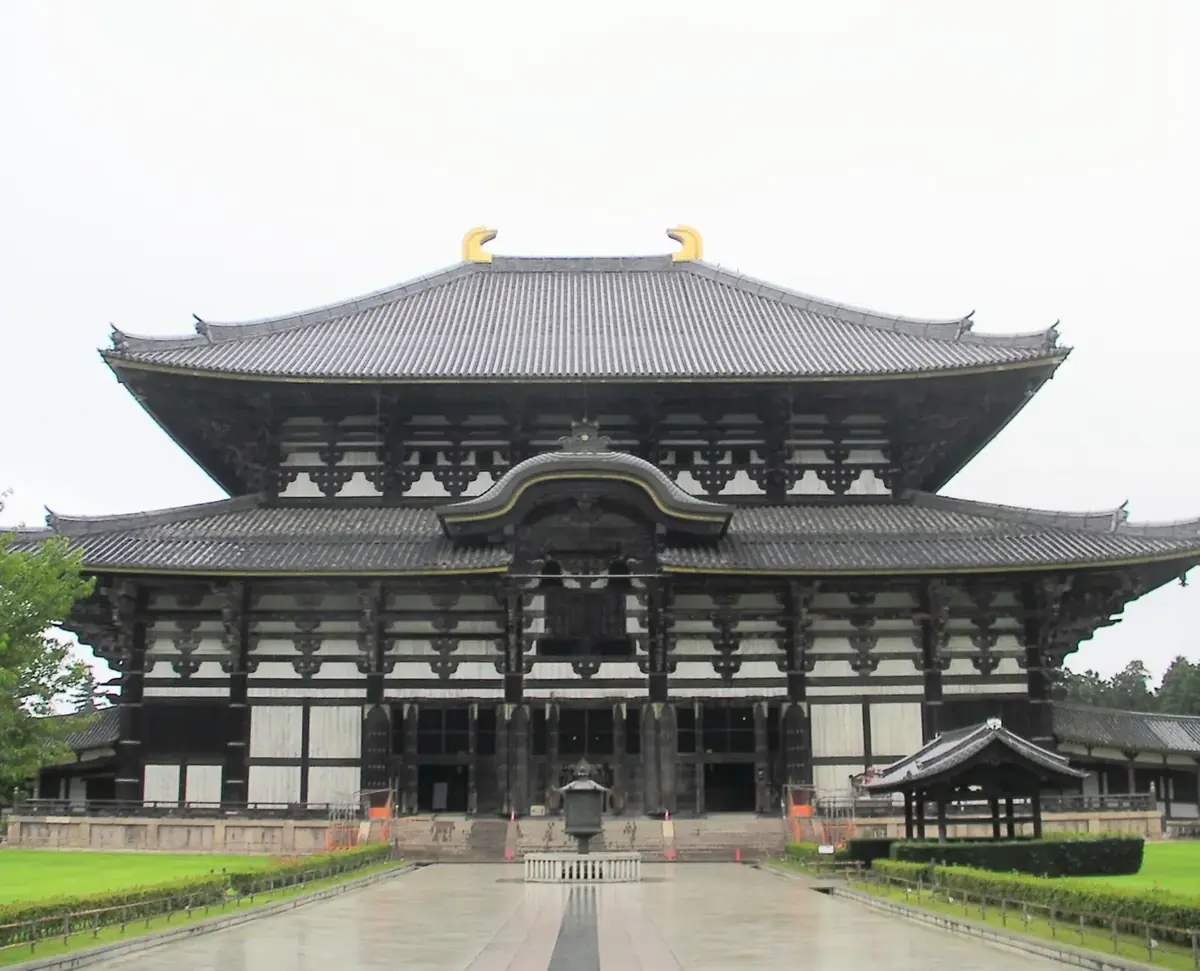
Walk on through the park to Todai-ji. Its Great Buddha (Daibutsu) is housed in the Great Buddha Hall (Daibutsuden), which the city tourism association calls the largest wooden structure in the world; the temple was badly damaged in wars in 1180 and 1567 and restored each time. When we checked on 10 October 2026, Todai-ji's site listed the hall as open 07:30–17:30 from April to October and 08:00–17:00 from November to March, with adult admission at ¥800, or ¥1,200 with the Todai-ji Museum. The association reckons even a quick tour of the whole temple takes four hours. If time is short, see the Great Buddha Hall first and then Nigatsu-do, the hall of the Shuni-e ceremony each March, which the association recommends for its sunset view to the west.
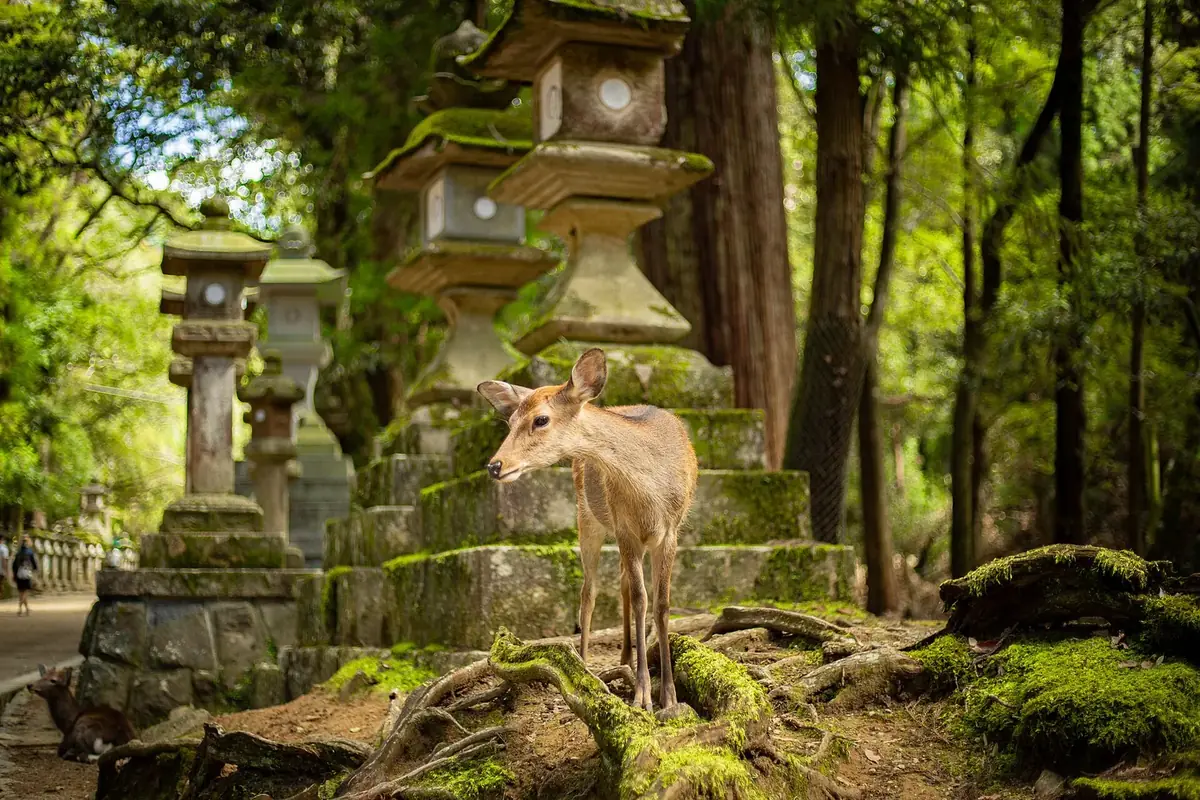
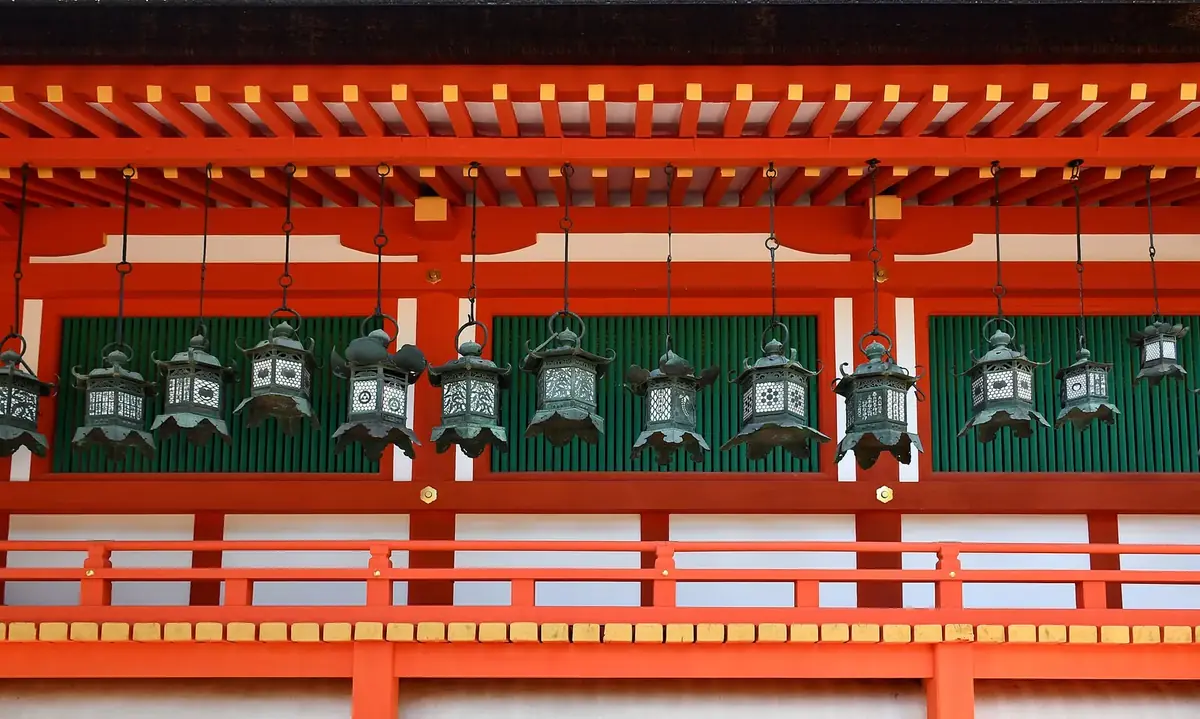
From Todai-ji, Kasuga Taisha is about 20 minutes' walk by the association's estimate. Said to have been founded in 768, the shrine's vermilion buildings are surrounded by the Kasugayama Primeval Forest, part of the World Heritage listing, and stone lanterns line its approaches. The shrine's site lists general worship from 06:30 to 17:30 between March and October and from 07:00 to 17:00 between November and February, and the inner Special Worship area of the main sanctuary from 09:00 to 16:00 for ¥700, closed on some festival days. Return along the main approach past Tobihino, the broad lawn beside it where herds of deer roam, towards the gardens or Naramachi.
What to eat and where to look
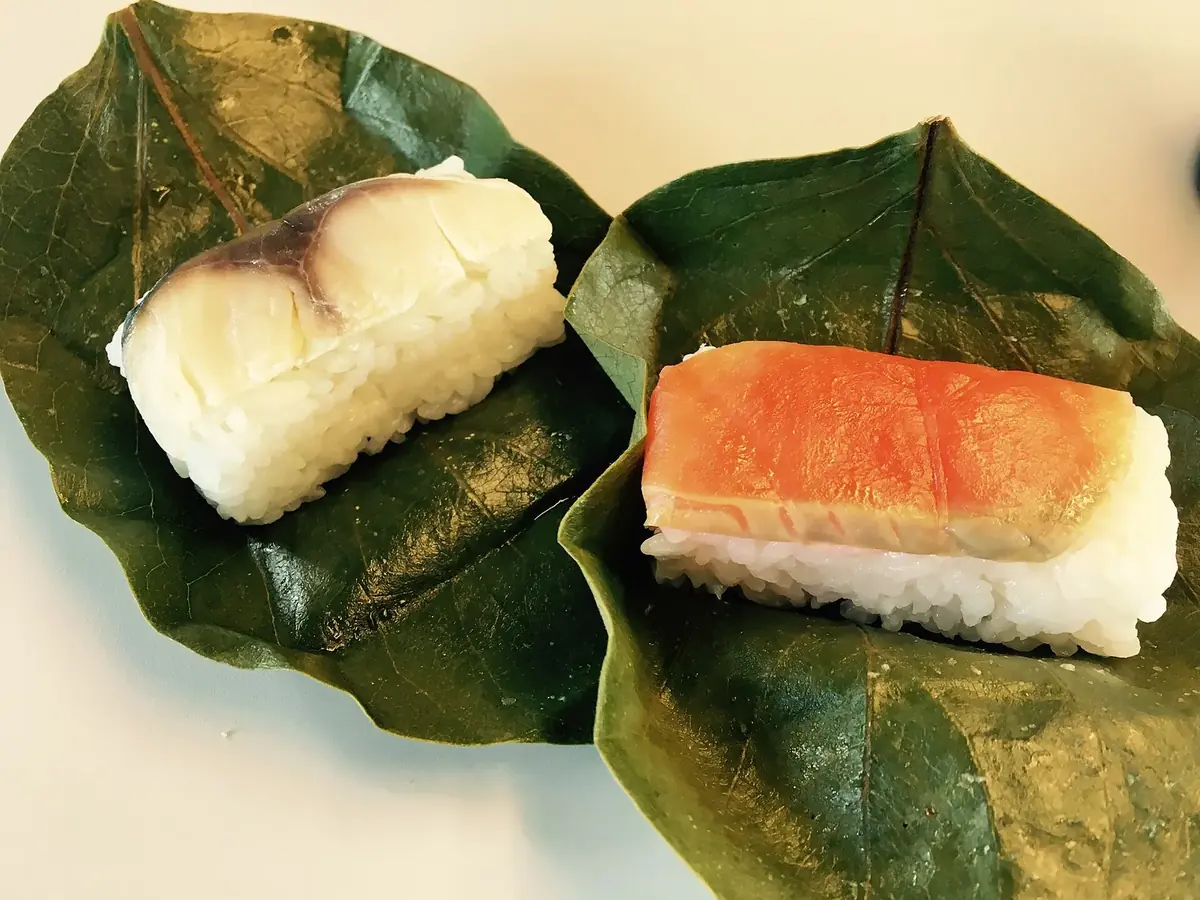
Kakinoha-zushi (persimmon-leaf sushi)
Vinegared rice topped with mackerel or salmon and wrapped in a persimmon leaf, whose subtle aroma is what makes it distinctive. It is one of the three local specialities the city tourism association tells first-time visitors to try.
- Where to look
- Specialist makers such as Hiraso, which the city tourism association names as the place where the dish became Nara's own, and teahouses around Nara Park.
- Fit it into your day
- Boxed sets keep at room temperature, so buy one for the train back to Kyoto or Osaka.
Contains fish (mackerel or salmon).
Chagayu (tea rice porridge)
Rice porridge simmered in hojicha, roasted green tea, and traditionally eaten for breakfast in Nara. Its appeal is its gentle flavour.
- Where to look
- Teahouses around Nara Park and set-meal restaurants in Naramachi; Hiraso serves a chagayu set meal.
- Fit it into your day
- A light lunch between Todai-ji and Kasuga Taisha.
Light by design; order a set meal if you need more after a morning's walking.
Nara-zuke pickles
Vegetables marinated again and again in sake lees for six months to several years, until they turn deep brown and take on a rich aroma and deep flavour.
- Where to look
- Pickle shops and souvenir shops in the city; it also turns up on the side of set meals.
- Fit it into your day
- Try a few slices with rice or chagayu before buying a packet to take home.
Made with sake lees, a by-product of sake brewing, and strongly flavoured; taste before you buy a large packet.
Kuzumochi (Yoshino kudzu sweets)
A traditional sweet of the Yoshino area of Nara Prefecture, made from the starch of the kudzu plant, with a smooth texture and a refined sweetness.
- Where to look
- Teahouses around Nara Park, which serve Yoshino kudzu sweets alongside tea.
- Fit it into your day
- An afternoon break between Kasuga Taisha and the gardens or Naramachi.
A sweet rather than a meal; ask about toppings and syrups if you have food allergies.
The deer: feeding them well and keeping your distance
The Nara Deer Preservation Foundation counted 1,465 deer in Nara Park in July 2025, 315 of them male. They are a designated natural monument, long regarded as messengers of Kasuga Taisha's deity, and they are used to people, but the foundation is clear that they remain wild animals: visitors who treat them as tame have been gored by antlers or knocked down by a charge, sometimes seriously. Do not touch them, and wash your hands if you do.
Feed them only shika-senbei, the deer crackers sold at stalls and shops around the park; the city tourism association listed a pack of ten at ¥200 in 2024, with part of the proceeds going to deer protection. Anything else, from bread to sweets, harms their health, and deer will also go for maps, leaflets and plastic bags in your hands. When a deer bows its head at you, the foundation's advice is to hand over a cracker promptly: holding one back, or pretending to have one, makes deer agitated and aggressive. Give them one at a time, and when you run out, the association suggests spreading your arms to show your hands are empty. Children are at greater risk because their eyes are level with the deer's, so feed together and keep clear of males with antlers.
Two seasons need extra care. From the end of summer, the foundation says, males become territorial and very bad-tempered, and from mid-May to July mothers turn aggressive in defence of their fawns; never approach or touch a fawn. Stalls stop selling crackers in the evening, but vending machines at the foundation's Rokuen deer sanctuary and at the rest area in Kasuga Taisha's car park sell them later.
Kintetsu or JR: which station and which train
Nara has two stations, and Kintetsu-Nara Station is the one for the park: the city tourism association puts Nara Park eight minutes' walk from it, against 20 minutes from JR Nara Station, or 5 minutes by bus from the JR station's east exit. Both lines are quick, so choose by where you start.
From Osaka, Kintetsu runs direct from Osaka-Namba Station in about 40 minutes, the obvious route from the Namba side of the city. From Osaka Station (Umeda), the city tourism association gives about 50 minutes on the JR Yamatoji Rapid to JR Nara Station, and 36 minutes from Tennoji.
From Kyoto, the association gives about 35 minutes on a Kintetsu limited express from Kintetsu Kyoto Station, which needs a surcharge on top of the fare, and about 45 minutes on the JR Miyakoji Rapid from JR Kyoto Station. There is no direct bus from Kyoto or Osaka, so rail is the way to go; if you hold a rail pass, check which company's trains it covers before choosing.
The quieter half: Naramachi, Isuien and Yoshikien
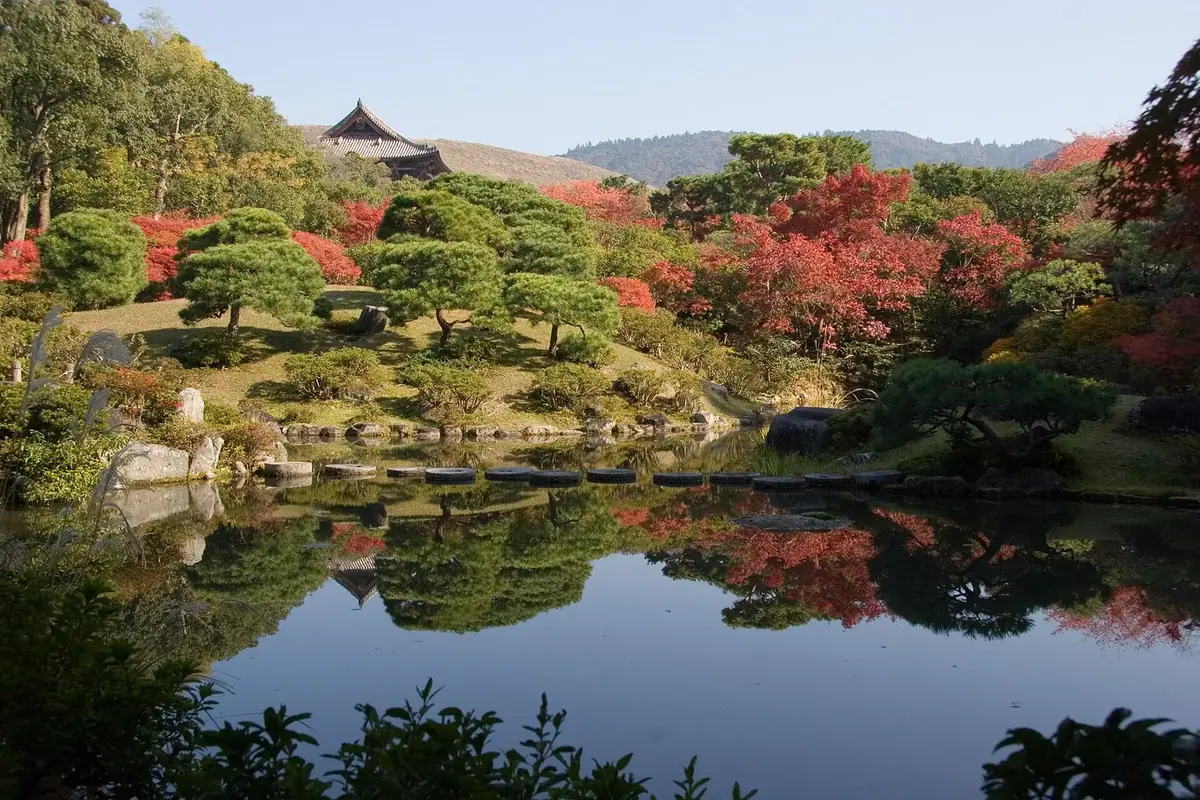
Two gardens offer a calmer hour. Isuien, about ten minutes' walk from Kofuku-ji, is designed so that Mount Wakakusa, Mount Kasuga and the roof of Todai-ji's great gate seem to belong to it, and its grounds hold the small Neiraku Museum of Eastern and Western art. When we checked on 10 October 2026, the city tourism association listed its hours as 09:30–16:30 (last entry 16:00), closed on Tuesdays and during maintenance from the end of December to mid-January and in the last third of September, with adult admission at ¥1,200 for the garden and museum. Nearby Yoshikien, built on the grounds of a Kofuku-ji sub-temple and known for its moss, was listed as free to enter, open 09:00–17:00 with last entry at 16:30.
Naramachi, beside the park, keeps houses and temples from the Edo period to the post-war years, many now cafés, shops and restaurants in restored townhouses. Look for the red migawarizaru, monkey-shaped charms hung from the eaves to take on misfortune in your place, and visit Gango-ji, a World Heritage temple whose Gokurakudo hall still uses roof tiles that came with the temple when it moved from Asuka. Mochiidono Shopping Street, said to be the oldest still trading, is lined with places to eat. The city tourism association puts Gango-ji about 15 minutes' walk from Kintetsu-Nara Station and 20 from JR Nara Station, so Naramachi fits naturally at the end of a park day, or as an evening walk if you stay.
Horyu-ji: the extra half day for history lovers
Horyu-ji, completed around 607 and commissioned by Prince Shotoku, has a five-storey pagoda counted among the world's oldest wooden buildings, an Asuka-period bronze Shaka Triad in its main hall, a modern Treasure House and, on the east side, the Yumedono (Dream Hall). Just beyond the Yumedono, Chugu-ji is known for its Miroku Bosatsu, whose enigmatic smile is often compared with the Mona Lisa's. It is outside Nara Park, so it needs its own half day; the morning after a night in Nara is the easiest time.
From Kintetsu-Nara Station, buses bound for JR Oji Station or Horyuji stop at Horyuji-mae. By rail, JR Horyuji Station is about 20 minutes' walk from the temple, or a bus ride to the Horyujimon-mae terminus. When we checked on 10 October 2026, Visit Nara, the prefecture's official guide, listed opening hours of 08:00–17:00 from 22 February to 3 November and 08:00–16:30 from 4 November to 21 February, and adult admission of ¥2,000.
Nara as a day trip, or one night with an evening in Naramachi
These are editorial suggestions, not timetables. Kintetsu's own one-day plan allows roughly 40 to 50 minutes at each of the main sights, which is a fair pace.
- Day trip, morning: train to Kintetsu-Nara Station, Kofuku-ji's National Treasure Hall, then across the park to Todai-ji's Great Buddha Hall and up to Nigatsu-do.
- Day trip, afternoon: lunch at a teahouse near the park, Kasuga Taisha, back along the lantern-lined approach with the deer, then Isuien or Yoshikien before last entry, or Naramachi, and the train home.
- One night, day 1: arrive after lunch, leave your bags, walk Naramachi and Gango-ji, see a garden, then Nigatsu-do for sunset and dinner in Naramachi.
- One night, day 2: Kasuga Taisha soon after it opens and Todai-ji's Great Buddha Hall at opening time, Kofuku-ji, then Horyu-ji or the train onwards.
Practical questions
Is one day enough for Nara?
Yes, one full day from Kyoto or Osaka covers Kofuku-ji, Todai-ji's Great Buddha Hall, Nigatsu-do, Kasuga Taisha and the deer, with time left for a garden or Naramachi. Stay one night if you want the park in the quiet early morning or plan to add Horyu-ji.
Should I take Kintetsu or JR to Nara?
Kintetsu is usually better, because Kintetsu-Nara Station is about eight minutes' walk from Nara Park, against 20 minutes from JR Nara Station. JR makes sense if you start from Osaka Station or Tennoji, travel on a JR pass, or are staying near JR Nara Station.
How long does it take to get from Kyoto to Nara?
About 35 minutes on a Kintetsu limited express from Kintetsu Kyoto Station, which charges a surcharge, or about 45 minutes on the JR Miyakoji Rapid from JR Kyoto Station. There is no direct bus.
Is it safe to feed the deer in Nara?
It is, if you follow the rules: feed only shika-senbei, hand them over promptly when a deer bows, and show your empty hands when you run out. Keep away from males from late summer and from mothers with fawns between mid-May and July, and do not touch the deer.
Is it worth staying overnight in Nara?
It is if you dislike crowds: Nara's city tourism association recommends staying to see the park early, when it is relatively quiet, and Kasuga Taisha and Todai-ji open early. A night also gives you Nigatsu-do at sunset and an evening in Naramachi.
How do I get from Nara to Horyu-ji?
From Kintetsu-Nara Station, take a bus bound for JR Oji Station or Horyuji to the Horyuji-mae stop. By rail, go to JR Horyuji Station, then walk about 20 minutes or take a bus.
Keep planning your trip
Kyoto
How many nights Kyoto needs, where to base yourself, how to group the sights into east, west and south days, and how to beat the crowds and the buses.
Read the guide
Osaka
How many nights Osaka needs, whether to base here or in Kyoto, Namba vs Umeda vs Shin-Osaka vs Tennoji, what to eat, and trains to Nara, Himeji and Koyasan.
Read the guide
Where to stay in Kyoto
Downtown or Kyoto Station? Six Kyoto areas compared by who they suit and their train lines, plus machiya rentals, ryokan, the hotel tax and Osaka as a base.
Read the guide
Koyasan
Why a night in a Koyasan temple beats a day trip, how to book a shukubo, what dinner and morning prayers involve, Okunoin's rules and the trip from Osaka.
Read the guide
Japan in 7 days
A first-trip week in Japan: three nights in Tokyo, a ryokan in Hakone and two in Kyoto with Nara, plus the trains, the tickets and where to sleep.
Read the guide
Where to stay in Osaka
Namba or Umeda? Six Osaka areas compared by who they suit, their trains, their nights and their hotels, plus airport links, the hotel tax and Osaka vs Kyoto.
Read the guideSources and checks before you travel
(15)
- Todai-ji: opening hours and admission fees ↗ — opens in a new tab
- Kasuga Taisha: general information ↗ — opens in a new tab
- Nara City Tourism Association: Nara Park ↗ — opens in a new tab
- Nara City Tourism Association: Nara for first-timers ↗ — opens in a new tab
- Nara City Tourism Association: Todaiji Temple ↗ — opens in a new tab
- Nara City Tourism Association: the deer of Nara Park ↗ — opens in a new tab
- Nara Deer Preservation Foundation: preventing injuries from deer (Japanese) ↗ — opens in a new tab
- Nara Deer Preservation Foundation: behaviour and ecology (Japanese) ↗ — opens in a new tab
- Nara City Tourism Association: Naramachi ↗ — opens in a new tab
- Nara City Tourism Association: Isui-en Garden and Neiraku Museum ↗ — opens in a new tab
- Nara City Tourism Association: Yoshiki-en Garden ↗ — opens in a new tab
- Kintetsu Railway: one-day Nara history and culture plan ↗ — opens in a new tab
- Kintetsu Railway: from Kansai International Airport ↗ — opens in a new tab
- Visit Nara (Nara Prefecture): Horyuji Temple ↗ — opens in a new tab
- Kansai Airport Transportation Enterprise: Nara limousine bus ↗ — opens in a new tab
Reference sources for the version dated 24 October 2026. Confirm opening times, access, transport and conditions for your travel dates.
Photo credits
(6)
Nara's deer roam among the park's stone lanterns, and the paths are quietest early in the morning
Photograph: Ian G Shingler — opens in a new tab · CC BY-SA 4.0 — opens in a new tab
Changes: Resized and converted to WebP; displayed with responsive crops. · Original photograph and licence details ↗ — opens in a new tab
Todai-ji's Great Buddha Hall opens at 07:30 from April to October, well before most day-trippers arrive
Photograph: ONO Masanobu — opens in a new tab · CC0 — opens in a new tab
Changes: Resized and converted to WebP; displayed with responsive crops. · Original photograph and licence details ↗ — opens in a new tab
Hanging lanterns along the vermilion corridors of Kasuga Taisha
Photograph: Gzzz — opens in a new tab · CC BY-SA 4.0 — opens in a new tab
Changes: Resized and converted to WebP; displayed with responsive crops. · Original photograph and licence details ↗ — opens in a new tab
Isuien borrows the hills and Todai-ji's great gate as its backdrop, a calm hour between temples
Photograph: Kimon Berlin ( Gribeco ) — opens in a new tab · CC BY-SA 4.0 — opens in a new tab
Changes: Resized and converted to WebP; displayed with responsive crops. · Original photograph and licence details ↗ — opens in a new tab
Kakinoha-zushi, Nara's persimmon-leaf sushi, keeps well enough to take on the train
Photograph: ZhengZhou — opens in a new tab · CC BY-SA 4.0 — opens in a new tab
Changes: Resized and converted to WebP; displayed with responsive crops. · Original photograph and licence details ↗ — opens in a new tab
The Daibutsuden, the Great Buddha Hall of Todai-ji in Nara, with visitors on the approach
Photo: Yuki Ikemori