Wakayama
Koyasan temple stay: booking a shukubo, Okunoin, getting there
Koyasan is a monastic town in a mountain basin in northern Wakayama, founded by the monk Kobo Daishi (Kukai) at the start of the Heian period as the centre of Shingon Buddhism. Of its 117 temples, 51 take overnight guests, and a night in one of these shukubo is the reason to come: a vegetarian dinner, a shared bath, the morning service in the main hall and the long cemetery path of Okunoin outside the busiest hours. From Osaka the mountain is close enough for a day trip, so the real decision is whether to stay, how to book the night and how to get up and down.
In this guide
Find the location ↗ — opens in a new tabThe short answer
Spend one night in a Koyasan temple lodging, booked through the Koyasan Shukubo Association, arriving from Osaka's Namba on Nankai's Koya Line and cable car by early afternoon. See Kongobu-ji and the Danjo Garan before they close at 17:00, check in, eat the shojin ryori dinner and walk Okunoin at dusk or early next morning around the morning service. A day trip works, as Nankai puts Namba about 90 minutes away, but it leaves no evening or early morning. Sleep near Senjuin-bashi for the sights and buses, or near Okunoin for the cemetery at quiet hours.
- Suggested time
- 1 night (2 days); a day trip from Osaka is possible but rushed
- Where to stay
- A temple lodging near Senjuin-bashi for the sights and buses, or near Okunoin for the cemetery at quiet hours; Osaka's Namba before and after
- Season and timing
- Cherry blossom from late April to early May and autumn colour in October; summer is about 10°C cooler than the valley. Winter is freezing, with snow from mid-December to February and a January average of −0.3°C.
Why one night, and where on the mountain to sleep
A day trip is possible. Nankai puts Osaka's Namba about 90 minutes from Koyasan by the Limited Express Koya and the cable car, so you can see Okunoin, the Danjo Garan and Kongobu-ji between a morning train up and an evening train down. It is a rushed day, though: the temple halls close at 17:00, and you miss what makes Koyasan different from any other temple visit, the evening and the early morning.
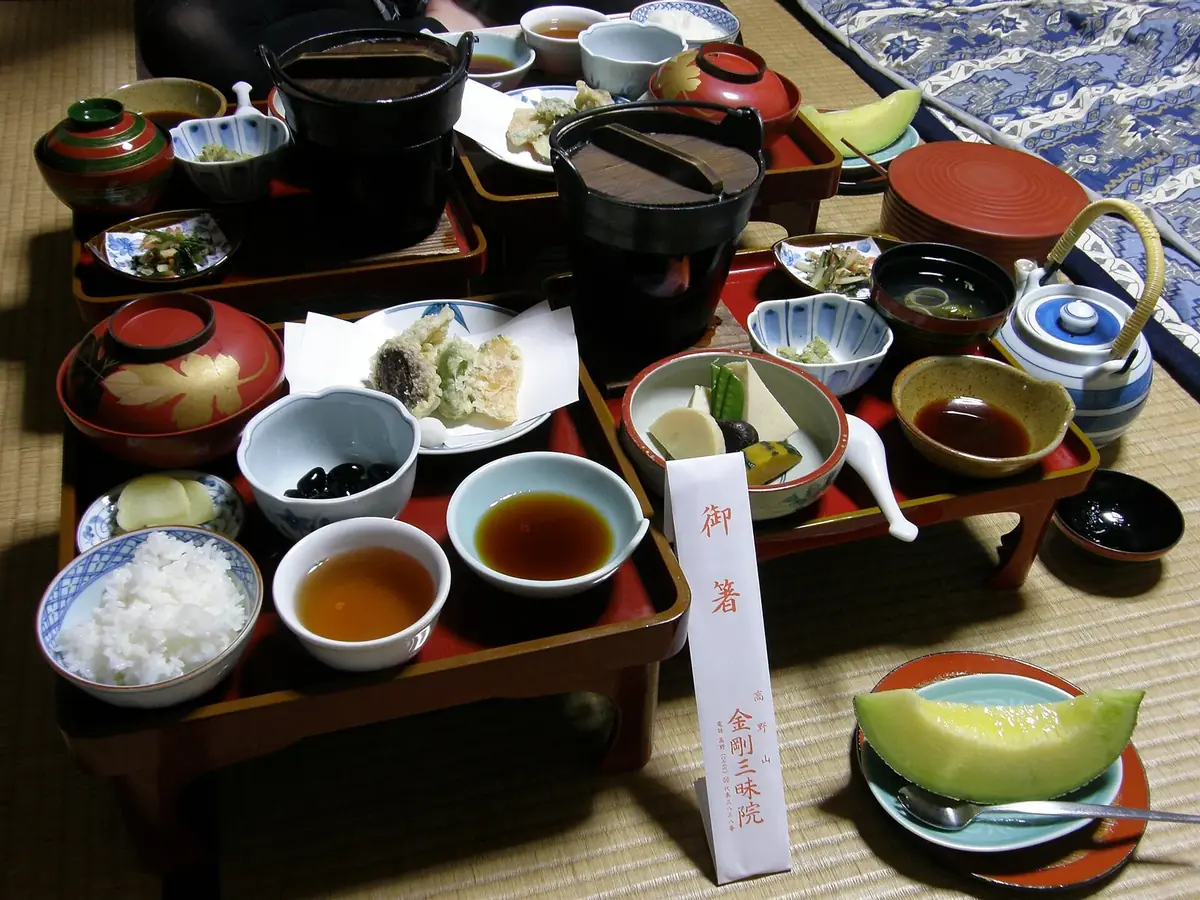
A night in a shukubo, one of the temples that take overnight guests, gives you both. You check in during the afternoon, eat a shojin ryori dinner of vegetable and soy dishes, bathe, and next morning join the service in which the monks chant in the main hall. That leaves time to walk the Okunoin cemetery in the dusk or the early morning, when the day visitors have gone or have not yet arrived, and to see the Garan and Kongobu-ji without watching the clock.
Where you sleep matters less than in a city, as the Nankai Rinkan buses link the town from end to end, but it shapes your evening. Temples around Senjuin-bashi, the central crossroads by the Shukubo Association's office, put Kongobu-ji, shops and restaurants close at hand, and both main bus routes from the station pass through. Temples towards Ichinohashi, where the Okunoin path begins, suit a walk in the cemetery at dusk or dawn. Those at the western end, near the Danjo Garan and the Daimon gate, are best placed for the Garan and a sunset at the gate, but furthest from Okunoin.
With one night, book the temple first and build the day around its check-in, which on the Shukubo Association's temple pages is usually 15:00 to 17:00 (from 14:00 at a few). Arrive early enough to see the Garan and Kongobu-ji before they close, and plan to head down after lunch the next day. If you fly out of Kansai Airport or have an early train onwards, a night in Osaka's Namba, where the Nankai trains start, makes the journey simple at either end.
Booking a shukubo, and what the night involves
Book through the Koyasan Shukubo Association, set up in 1958 by the mountain's temple lodgings and registered as a travel agency. Its official booking site offers two routes. A few temples, among them Eko-in, Fudo-in, Fugen-in and Hojo-in, can be booked instantly at live prices. For the rest, you send a booking request with your dates and budget at least 14 business days ahead; the association contacts temples for you and emails an offer, and nothing is confirmed until you approve it. You can name a preferred temple, but the association cannot guarantee it, and plans open up to about six months ahead.
Prices are set by each temple and charged per person. When we checked on 10 October 2026, the association's booking-request page gave ¥15,000–25,000 per person with dinner and breakfast for a Japanese-style room with shared bath and toilet, and ¥20,000–70,000 for a room with its own toilet or bathroom; it warns that most temples have only shared facilities. Unless you prepaid online, expect to pay at the temple in cash: Wakayama's official tourism site says shukubo normally accept only cash, and for request bookings the card you register only guarantees any cancellation fee. Some temples also serve alcohol with dinner.
The evening follows a temple rhythm. The Koya Town Tourism Association's sample stay has dinner at 18:30 and the bath at 19:30, then the morning service at 6:30 and breakfast at 7:30, though every temple sets its own times. Dinner is shojin ryori, Buddhist cooking without meat or fish. The baths are shared and separated for men and women. The yukata in your room is nightwear: Kongobu-ji asks guests to change into ordinary clothes for the morning service and not to wear yukata to the Garan or Okunoin.
Most temples on the association's list also set a curfew, usually 21:00 or 22:00, and a couple bring it forward to 17:00 or 18:00 in winter, so check it before you plan an evening walk. The morning service starts between about 5:50 and 7:00 depending on the temple and the season, and is free for guests. Some temples add a goma fire ritual, in which prayer sticks are burned before the altar: Eko-in lists one every morning, Rengejo-in an evening ritual almost every day, and several others hold theirs on the 28th of each month. Ajikan, Shingon meditation, is offered at some temples, free or for ¥1,000–3,000.
What to eat and where to look
Shojin ryori (temple cooking)
Buddhist cooking without meat or fish, built on seasonal vegetables, wild plants and soy and wheat products, and balanced, in the Koya Town Tourism Association's words, by five flavours, five colours and five cooking methods. It is what your temple serves at dinner and breakfast.
- Where to look
- Your shukubo. In town, the tourism association lists Maruman near Senjuin-bashi, with a shojin set meal at ¥2,100; Hanabishi, a Meiji-era restaurant serving shojin courses from ¥6,050 without a reservation; and Chuo Shokudo Sanbo, which supplies the temples and sells a ¥2,500 shojin bento.
- Fit it into your day
- Dinner and breakfast at the temple; a shojin set lunch in town on arrival or on a day trip.
No meat or fish, but tell the temple about allergies when you book: sesame, soy and wheat gluten are staples. Sanbo's bento can sell out, so go early.
Goma-dofu (sesame tofu)
Not tofu at all: roasted white sesame, ground and simmered with kudzu starch until it sets into a smooth, slightly sticky block. The Shukubo Association calls it the essence of shojin ryori, and it appears at almost every temple meal.
- Where to look
- At your temple; to take away, the tourism association lists Hamadaya, a maker since the early Meiji era using only Yoshino kudzu, spring water and white sesame, and Kadohama Goma-dofu Sohonpo, whose individually packed pieces keep for 60 days and whose Daimon branch serves meals.
- Fit it into your day
- Eat it at dinner; buy Kadohama's packs as a souvenir that survives the journey.
Contains sesame. Hamadaya's fresh goma-dofu needs a cool box to take home.
Koya-dofu (freeze-dried tofu)
Light, spongy freeze-dried tofu, simmered in the vegetable dishes of temple meals. The Shukubo Association says it grew out of the monks' life in Koyasan's bitter cold and is what made the mountain's name known across Japan.
- Where to look
- In the simmered dishes of temple dinners, and in the shojin set meals the tourism association lists at Maruman and Hanabishi.
- Fit it into your day
- Part of dinner at your temple.
Contains soy. Shojin cooking uses no meat or fish, so it suits vegetarians.
Karukaya-mochi
Soft rice cakes filled with smooth red bean paste and covered in roasted soybean flour (kinako). They are named after the tale of Karukaya-doshin and his son Ishidomaru, whose hall, the Karukaya-do, stands on the road to Okunoin.
- Where to look
- Shoeido, a confectioner founded in 1854, which the tourism association lists at ¥150 each or ¥950 for six.
- Fit it into your day
- An afternoon snack between the centre of town and Okunoin.
Contains soy flour and sweet bean paste.
Sake manju (Sazanami)
Steamed buns of rice-koji dough around a lightly sweet bean paste. Sazanami, founded in 1912, ferments its dough for about two days from a starter kept since the shop opened, and sells the buns only at its own shop near the Danjo Garan.
- Where to look
- Sazanami, near the Danjo Garan; the tourism association lists the buns at ¥140.
- Fit it into your day
- A snack between the Garan and the Daimon.
Made without additives, so they harden after a day; the tourism association suggests warming them briefly.
Okunoin: the cemetery path at dusk and early morning
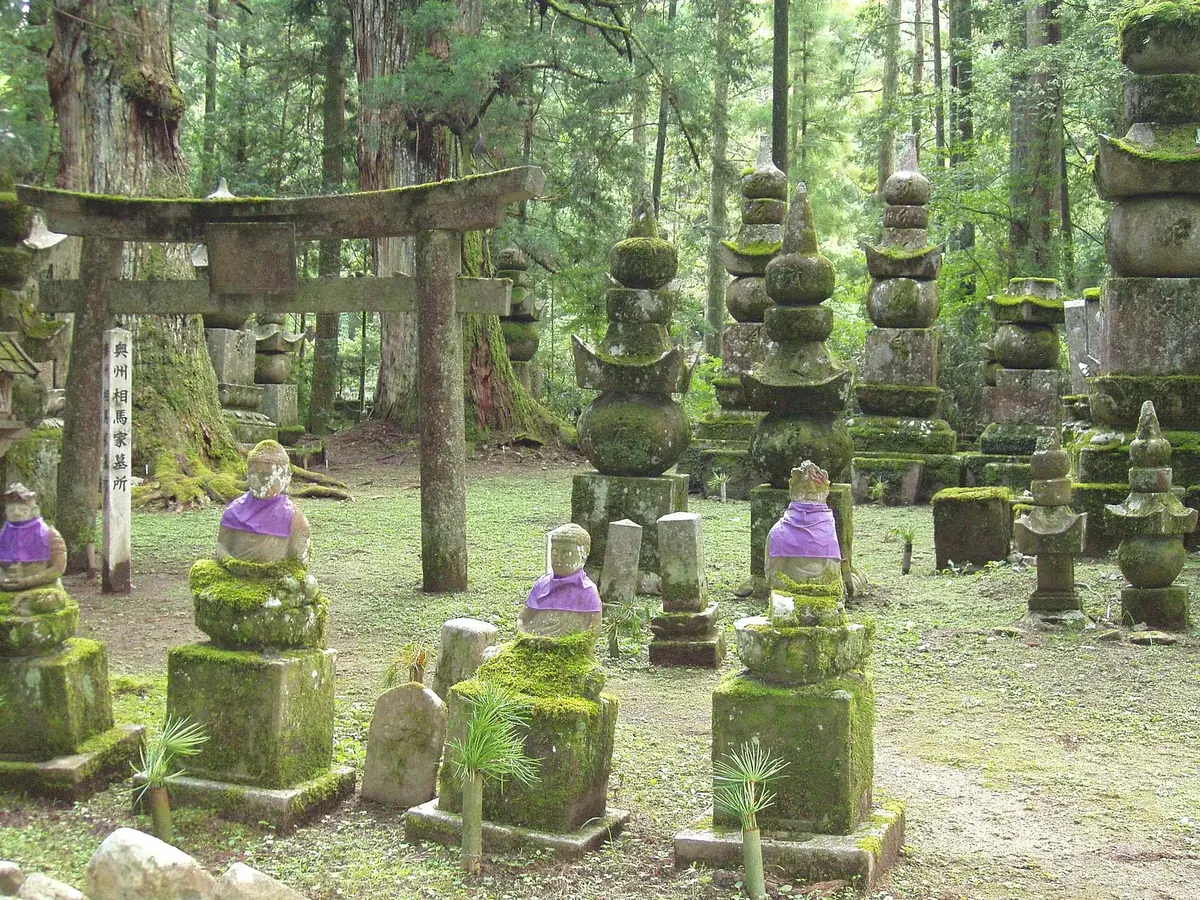
Okunoin is the heart of Koyasan. From the Ichinohashi bridge, a path of about 2 km runs under cedars several hundred years old, past more than 200,000 tombstones and memorials, from the graves of feudal lords to monuments put up by companies, to the mausoleum where Kobo Daishi is believed to remain in eternal meditation. Wakayama's tourism site calls it the holiest place on the mountain.
Near the end, Gobyobashi bridge marks the innermost precinct. Koya Town's visitor site asks you to remove your hat there, and from the bridge onwards, through the Torodo lantern hall to the mausoleum, all photography and filming is prohibited. The Torodo, where lanterns first offered in the 11th century are still kept burning, is open 06:00–17:00, with sutra services six times a day from 09:00. Since April 2026, Kongobu-ji and the Shukubo Association have asked visitors to dress modestly at Okunoin, avoiding tank tops, off-shoulder tops, miniskirts and shorts; Kongobu-ji says people in revealing clothes may be asked to cover up or not to enter.
Walk it at the ends of the day. Buses run to Ichinohashi-guchi for the full path and to Okunoin-mae, by the Nakanohashi information centre, for a shorter way in or out. If your temple's dinner time allows, walk in during the late afternoon as the light fades; the next morning the Torodo is open from 06:00, so the inner precinct fits around the morning service and breakfast. Koya Town's visitor site notes that bears are most active early and late in the day and suggests carrying a bell on morning and evening walks.
After dark, guided night walks led by licensed guides set out from the Okunoin side of town; JNTO lists one lasting about 90 minutes. Check your temple's curfew before you book: one temple's page says plainly that its guests cannot join the night tour.
Danjo Garan, Kongobu-ji and the Daimon
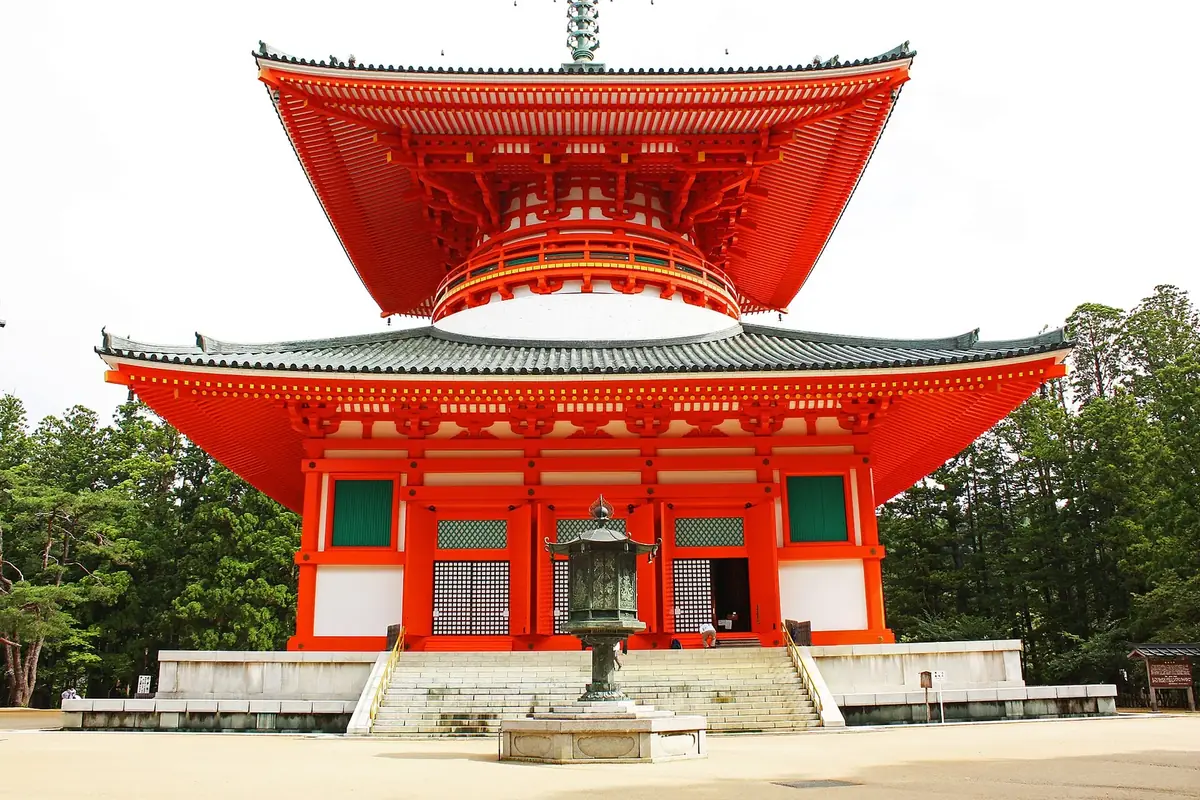
The Danjo Garan was the first site Kobo Daishi built on the mountain and remains its centre. Its vermilion Konpon Daito, a 48.5-metre pagoda that Wakayama's tourism site describes as Japan's first square two-storied pagoda, is laid out inside as a mandala, and the Kondo beside it has served as the mountain's central hall since the middle Heian period.
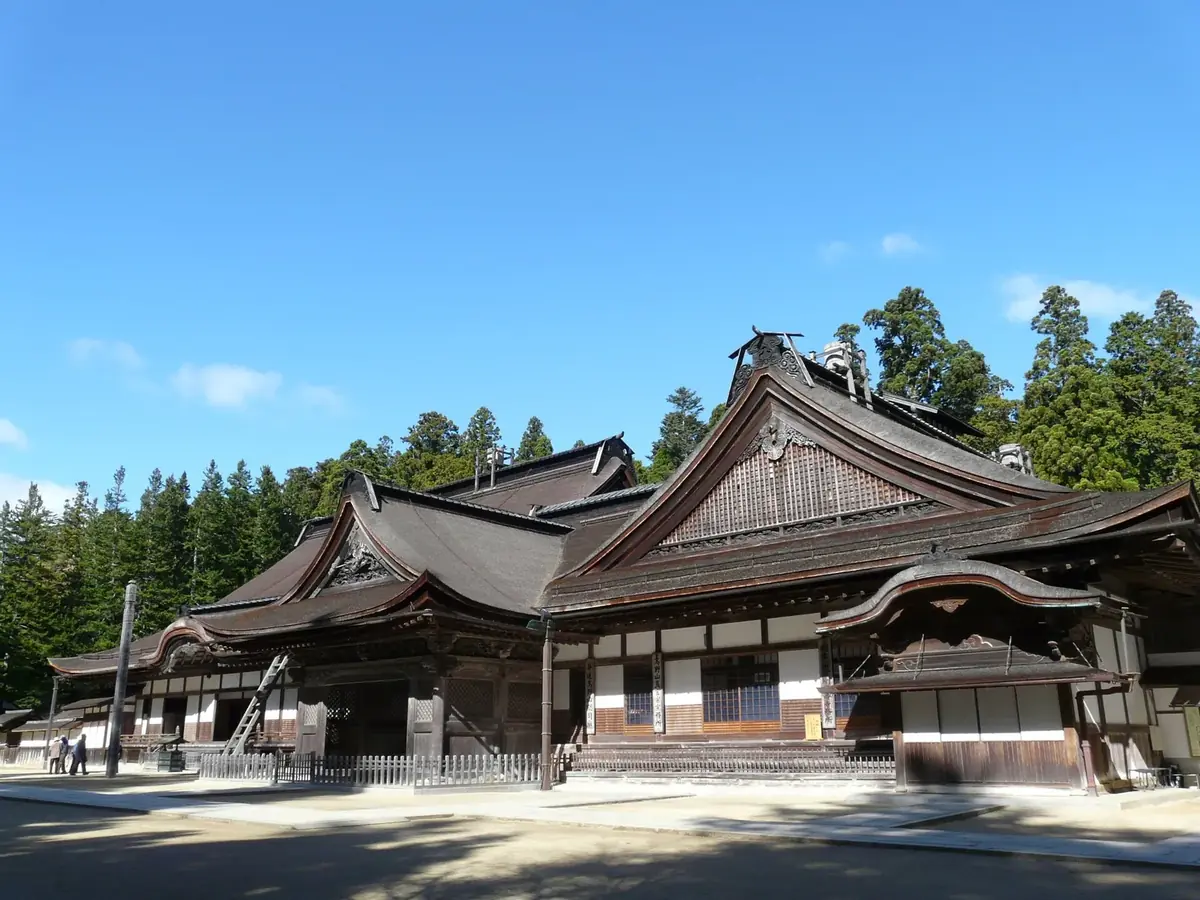
Kongobu-ji is the head temple of Koyasan Shingon Buddhism. Inside are painted sliding doors and the Banryutei, which Wakayama's tourism site calls Japan's largest rock garden. Photography is banned inside the main building, except of the Banryutei, and inside the Garan's halls.
When we checked on 10 October 2026, Kongobu-ji's fee page listed ¥1,000 for Kongobu-ji, ¥500 each for the Kondo and the Konpon Daito and ¥200 for the Tokugawa Mausoleum, with the first three open 08:30–17:00 (last entry 16:30) and the mausoleum 09:00–16:30. The ¥2,500 combined ticket covers these four plus the jukai precepts ceremony at the Daishi Kyokai, ¥1,000 on its own, so it only saves money if you join that ceremony. The Reihokan treasure museum, ¥1,300, is separate.
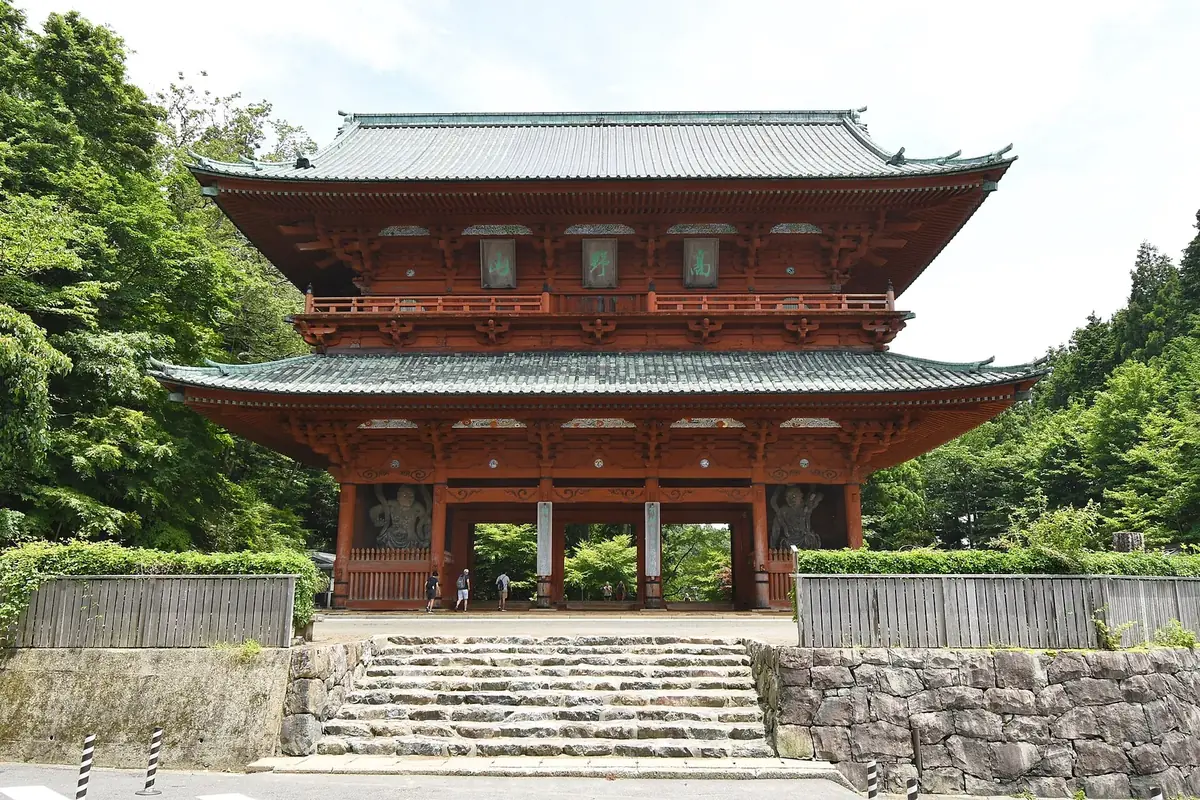
The Daimon, the 25.1-metre gate at the western edge of town, was rebuilt in 1705 and is guarded by two Edo-period statues. Wakayama's tourism site recommends it for sunsets, and it is lit up at night; buses from the station stop right by it.
Getting there: Nankai, the cable car and the World Heritage ticket
From Osaka, take the Nankai Koya Line from Namba to Gokurakubashi, change to the Koyasan Cable Car up to Koyasan Station, and ride a Nankai Rinkan bus into town. Nankai puts the whole trip at about 90 minutes on the Limited Express Koya, on which every seat is reserved; when we checked on 10 October 2026, its limited express charge from Namba was ¥1,100 on top of the fare, or ¥300 more if bought on board. It also stops at Shin-Imamiya and Tengachaya, which is useful if you arrive by JR or from the airport.
The cable car is running normally: when we checked on 10 October 2026, Nankai listed no planned closure for 2026 or 2027. A notice on its English Limited Express page about a December closure, with no year given, refers to the cable replacement of 22–24 December 2025.
Nankai's Koyasan World Heritage Digital Ticket is made for an overnight trip. It is valid for two days and covers the return train from your starting station to Koyasan Station, cable car included, unlimited Nankai Rinkan buses on the mountain (except three outlying lines) and discount coupons for the Kondo, the Konpon Daito and the Reihokan. When we checked on 10 October 2026, Nankai's price table listed ¥3,980 from Namba, or ¥4,910 with an outward seat on the Limited Express Koya. You buy it online and scan its QR code at designated gates; the limited express seat is for the outward journey only.
From Kyoto, the simplest option until 29 November 2026 is the direct highway bus run by Keihan Bus and Nankai Rinkan Bus. Wakayama Prefecture's 2026 timetable shows one bus a day, leaving Kyoto Station's Hachijo-guchi side at 08:10 and reaching Kongobu-ji-mae at 11:08, with the return leaving at 15:27; seats are reserved, and a one-way ticket costs ¥3,200 in October and November. Otherwise, take the train to Osaka and change to Nankai at Namba or at Shin-Imamiya, which the Koya Town Tourism Association suggests via the JR Osaka Loop Line. If you are heading on to the Kumano Kodo, a separate bus runs from Koyasan to Kumano Hongu Taisha until 30 November, except on Tuesdays and Wednesdays.
Getting around, cash and the mountain cold
Nankai Rinkan buses link Koyasan Station with the rest of the town. At the station, buses towards Okunoin-mae leave from stop No. 2 and run through the centre, and buses towards the Daimon leave from stop No. 3, according to the Shukubo Association's directions to its temples. Without the World Heritage ticket, Nankai Rinkan's one-day ticket costs ¥1,500, valid on the date printed rather than for 24 hours and sold only at the bus office in front of Koyasan Station; the Shukubo Association and the Koya Tourism Association also rent bicycles.
Bring enough cash. The Shukubo Association warns that most shops and lodgings do not take credit cards and that many shops close on Mondays. Koya Town's visitor site says the ATMs at the post office and at the FamilyMart convenience store usually accept foreign cards.
Koyasan is a mountain town and cold for much of the year. Japan Meteorological Agency averages for Koyasan give −0.3°C for January, with typical overnight lows of −4.0°C, and 7.5°C for November; even October averages 13.2°C. The Shukubo Association says the first snow can come in mid-December and usually lies until February. In winter the temple halls still close at 17:00 and some curfews come earlier, so plan a short afternoon of sightseeing and a long evening indoors.
One temple night: the Garan first, Okunoin the next morning
This is an editorial suggestion, not a timetable. Fit it to your temple's check-in, meal and curfew times.
- Day 1, morning: Limited Express Koya from Namba (or the highway bus from Kyoto), then the cable car and the bus to Senjuin-bashi. A shojin set lunch in town.
- Day 1, afternoon: Kongobu-ji and the Danjo Garan before the 16:30 last entry, then check in. If dinner is late enough, walk into Okunoin from Ichinohashi as the light fades.
- Day 1, evening: shojin ryori dinner and the bath, and a guided night walk in Okunoin only if your temple's curfew allows.
- Day 2, early: the morning service (and the goma ritual if your temple holds one), breakfast, then Okunoin to Gobyobashi and the Torodo early in the day.
- Day 2, late morning: the Daimon, or the Reihokan if it rains, lunch, then the bus, cable car and train back to Namba.
- Day trip only: take an early Limited Express, go straight to Okunoin by bus, then Kongobu-ji and the Garan, and catch the bus down after the halls close at 17:00.
Practical questions
Is Koyasan worth an overnight stay or just a day trip?
An overnight stay is worth it. Nankai puts Namba about 90 minutes from Koyasan, so a day trip works, but it leaves no time for the shojin ryori dinner, the morning service or Okunoin at the quiet ends of the day.
How do I book a temple stay in Koyasan?
Book through the Koyasan Shukubo Association's official site. A few temples can be booked instantly; for the rest you send a booking request at least 14 business days ahead, and the association emails an offer that you approve to confirm.
How much does a shukubo in Koyasan cost?
Each temple sets its own price per person. When we checked on 10 October 2026, the association gave ¥15,000–25,000 per person with dinner and breakfast in a room with shared bath and toilet, and ¥20,000–70,000 for a room with private facilities.
Is the Koyasan cable car running in 2026?
Yes. When we checked on 10 October 2026, Nankai listed no planned closure for 2026 or 2027; the last renewal work replaced it with buses from Hashimoto on 22–24 December 2025.
Can you take photos at Okunoin?
Along most of the cemetery path, yes, but not beyond Gobyobashi bridge: from there through the Torodo to Kobo Daishi's mausoleum, photography and filming are prohibited. Kongobu-ji also bans photography inside its main building, apart from the Banryutei rock garden, and inside the Garan's halls.
Do Koyasan temples accept credit cards?
Mostly not. Wakayama's tourism site says shukubo normally accept only cash, and the Shukubo Association says most shops do not take cards either; the ATMs at the post office and FamilyMart usually accept foreign cards.
Keep planning your trip
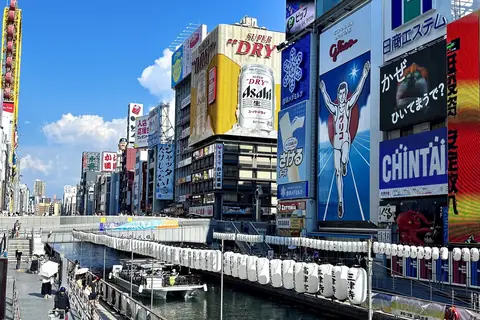
Osaka
How many nights Osaka needs, whether to base here or in Kyoto, Namba vs Umeda vs Shin-Osaka vs Tennoji, what to eat, and trains to Nara, Himeji and Koyasan.
Read the guide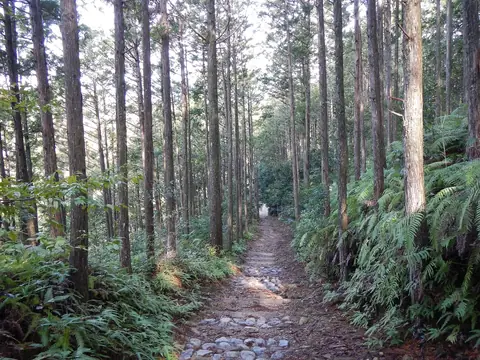
Kumano Kodo
How to hike the Kumano Kodo's Nakahechi in two to four days: official stage distances, booking inns through Kumano Travel, luggage, onsen and the Dual Pilgrim.
Read the guide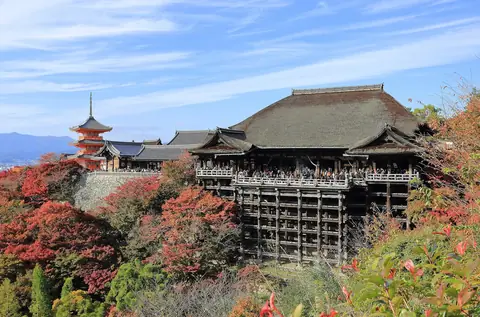
Kyoto
How many nights Kyoto needs, where to base yourself, how to group the sights into east, west and south days, and how to beat the crowds and the buses.
Read the guide
Ryokan and onsen
How a ryokan night works, what to tell the inn when booking, onsen etiquette and tattoos, private baths, and which towns on a Japan route suit a ryokan night.
Read the guide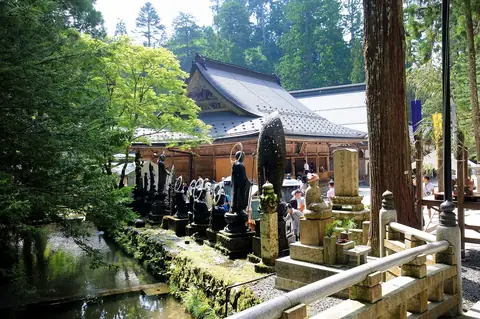
Japan in 3 weeks
A 21-day Japan itinerary in 20 nights: Tokyo, a Hakone ryokan, the Kiso walk, Takayama, a Shirakawa-go farmhouse, Kyoto, a Koyasan temple and Naoshima.
Read the guideSources and checks before you travel
(30)
- Koyasan Shukubo Association: list of temple lodgings and temple pages ↗ — opens in a new tab
- Koyasan Shukubo Association official booking site: temple stay booking request ↗ — opens in a new tab
- Koyasan Shukubo Association official booking site: FAQ ↗ — opens in a new tab
- Koyasan Shukubo Association (English site) ↗ — opens in a new tab
- Koyasan Shukubo Association: tastes and souvenirs ↗ — opens in a new tab
- Koyasan Shukubo Association: seasonal highlights ↗ — opens in a new tab
- Koyasan Shukubo Association: dress code at Okunoin from April 2026 (Japanese) ↗ — opens in a new tab
- Kongobu-ji: guidelines for worship (Japanese) ↗ — opens in a new tab
- Kongobu-ji: guide for worship (English) ↗ — opens in a new tab
- Kongobu-ji: admission fees and opening hours (Japanese) ↗ — opens in a new tab
- Kongobu-ji: places to visit on Koyasan ↗ — opens in a new tab
- Kongobu-ji: access ↗ — opens in a new tab
- Koya Town Tourism Association: staying in a shukubo (Japanese) ↗ — opens in a new tab
- Koya Town Tourism Association: food and souvenirs (Japanese) ↗ — opens in a new tab
- Koya Town Tourism Association: access (Japanese) ↗ — opens in a new tab
- Visit Koyasan (Koya Town): general rules ↗ — opens in a new tab
- Visit Koyasan (Koya Town): how to get yen ↗ — opens in a new tab
- Visit Koyasan (Koya Town): bears in Koyasan ↗ — opens in a new tab
- Visit Wakayama: Koyasan ↗ — opens in a new tab
- Visit Wakayama: Okuno-in ↗ — opens in a new tab
- Visit Wakayama: Dai-mon Gate ↗ — opens in a new tab
- Nankai Electric Railway: from Kansai-Airport Station ↗ — opens in a new tab
- Nankai Electric Railway: Limited Express Koya ↗ — opens in a new tab
- Nankai Electric Railway: Koyasan Cable Car cable replacement, 22–24 December 2025 (Japanese PDF) ↗ — opens in a new tab
- Nankai Electric Railway: Koyasan World Heritage Digital Ticket ↗ — opens in a new tab
- Nankai Electric Railway: Koyasan World Heritage Digital Ticket prices from April 2026 (PDF) ↗ — opens in a new tab
- Nankai Rinkan Bus: tickets ↗ — opens in a new tab
- Wakayama Prefecture: Kyoto–Koyasan direct highway bus 2026 (PDF, published by Koya Town) ↗ — opens in a new tab
- Japan Meteorological Agency: climate normals for Koyasan, 1991–2020 (Japanese) ↗ — opens in a new tab
- JNTO: Explore the sacred Koyasan Okuno-in by night ↗ — opens in a new tab
Reference sources for the version dated 19 October 2026. Confirm opening times, access, transport and conditions for your travel dates.
Photo credits
(6)
The Konpon Daito at the heart of the Danjo Garan; the halls close at 17:00, so see them on arrival
Photograph: Andrea Schaffer from Sydney, Australia — opens in a new tab · CC BY 2.0 — opens in a new tab
Changes: Resized and converted to WebP; displayed with responsive crops. · Original photograph and licence details ↗ — opens in a new tab
Memorials line the 2 km path through Okunoin; walk it at dusk or early in the morning
Photograph: Daderot — opens in a new tab · CC BY-SA 3.0 — opens in a new tab
Changes: Resized and converted to WebP; displayed with responsive crops. · Original photograph and licence details ↗ — opens in a new tab
Shojin ryori at Kongosanmai-in: dinner and breakfast are usually part of a shukubo stay
Photograph: Szabolcs Arany — opens in a new tab · CC BY 2.0 — opens in a new tab
Changes: Resized and converted to WebP; displayed with responsive crops. · Original photograph and licence details ↗ — opens in a new tab
The Daimon at the western edge of town, a sunset spot that is lit up after dark
Photograph: Saigen Jiro — opens in a new tab · CC0 — opens in a new tab
Changes: Resized and converted to WebP; displayed with responsive crops. · Original photograph and licence details ↗ — opens in a new tab
Kongobu-ji, head temple of Koyasan Shingon Buddhism and home of the Banryutei rock garden
Photograph: Naokijp — opens in a new tab · CC BY-SA 4.0 — opens in a new tab
Changes: Resized and converted to WebP; displayed with responsive crops. · Original photograph and licence details ↗ — opens in a new tab
Moss-covered graves and stone monuments among tall cedars beside the pilgrim path on Koyasan
Photo: Yuki Ikemori