Gifu
Shirakawa-go guide: bus stopover, day trip or a farmhouse night
Shirakawa-go is the valley of steep thatched farmhouses that most travellers pass through on the bus between Takayama and Kanazawa. Its main village, Ogimachi, is a World Heritage Site where about 500 people still live, which is why day visitors must be gone by 17:00 and fires, drones and night-time sightseeing are banned. The real decision is how long to give it: a stop of a few hours with your bags in a locker, a day trip from either city, or a night in a gassho-zukuri inn, when the village is quiet. This guide settles that first, then covers the buses, the viewpoint, the houses worth entering, the ticket-only winter light-up and Gokayama, the quieter World Heritage villages across the border in Toyama.
In this guide
Find the location ↗ — opens in a new tabThe short answer
Shirakawa-go works as a stop of a few hours on the bus between Takayama and Kanazawa, but one night in an Ogimachi farmhouse inn gives you the village after the buses leave. For a stopover, reserve the Kanazawa leg, arrive on a morning bus, leave your bags in the terminal lockers and give the village the two to three hours the tourist association suggests: Wada House, the walk or shuttle up to the viewpoint and Myozen-ji, then an afternoon bus on. For a night, book a gassho-zukuri inn well ahead. The January 2027 light-up is by advance ticket only.
- Suggested time
- A few hours (the village itself takes 2–3 hours on foot), or one night in a farmhouse inn
- Where to stay
- An Ogimachi gassho-zukuri inn for the evening and early morning; Takayama (about 50 minutes by bus) or Kanazawa (about 1 hour 20 minutes) for a stopover or day trip
- Season and timing
- Cherry blossom around mid-April, green rice fields in summer, autumn colour from late October to early November and snow from December, with the ticket-only light-up on four January evenings. Weekends, holidays and the autumn-leaf season bring the worst traffic.
A stop on the bus, a day trip or a night in the village
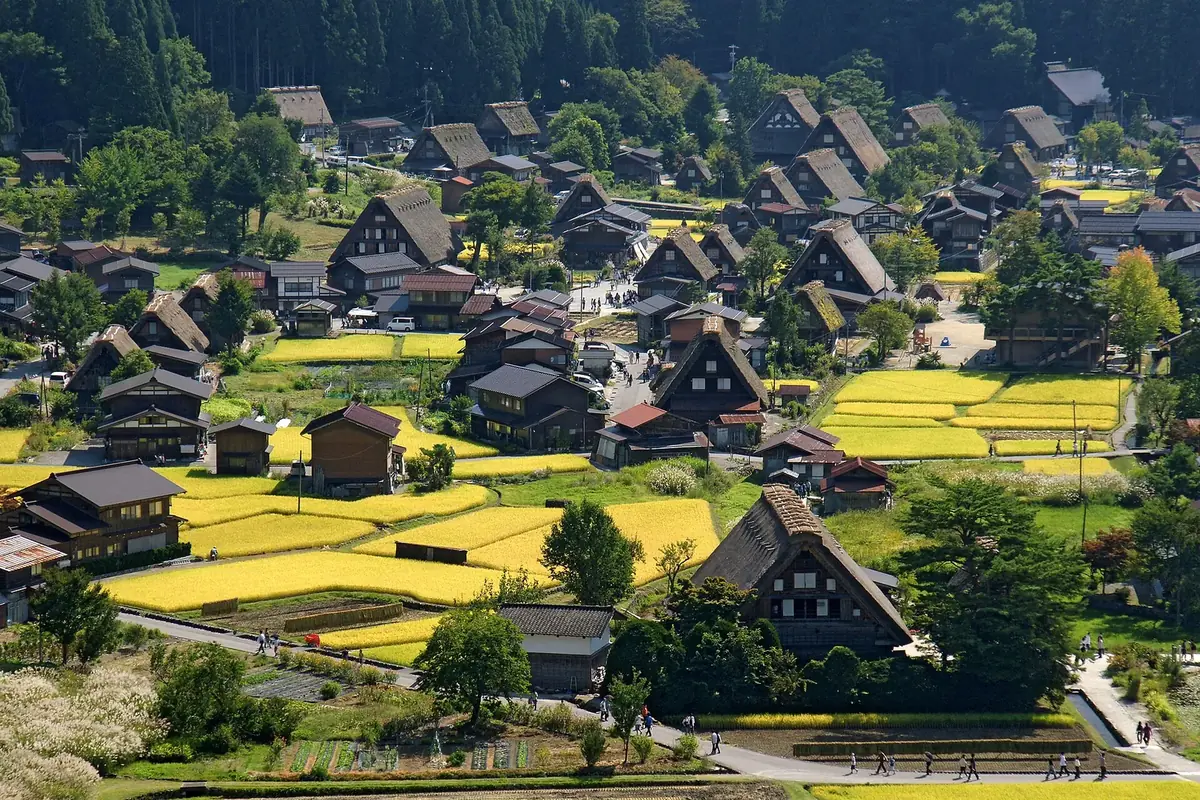
Ogimachi, the village most people mean by Shirakawa-go, keeps more than 100 thatched gassho-zukuri buildings beside the Sho River, and JNTO calls it the largest hamlet of these houses in Japan. It was inscribed as a UNESCO World Heritage Site in 1995, together with Ainokura and Suganuma in neighbouring Gokayama, and around 500 people still live in it. That shapes every visit: the village office's travel site, SHIRAKAWA-Going, says day visitors may tour only between 08:00 and 17:00, and that evenings belong to residents and to guests staying the night.
For most people travelling between Takayama and Kanazawa, a stop of a few hours on the bus is enough. The tourist association reckons the village takes two to three hours on foot; add the viewpoint and lunch, leave your bags at the bus terminal and catch an afternoon bus on. The trade-off is company: you share the lanes with everyone else who came for the day.
A night in a farmhouse inn is the other way to do it. Only overnight guests may stay in the village after dark, and the village office describes the starry sky and the early morning as a special time reserved for them. The inns are small family houses: the tourist association's listings include some that take only one or two groups a day and one that does not accept consecutive nights, so book well ahead and check meals, bathrooms and check-in times. If you would rather keep your bags in one place, sleep in Takayama, about 50 minutes away with the most buses, or in Kanazawa, about 1 hour 20 minutes away by reserved bus with the shinkansen on the doorstep.
Buses from Takayama, Kanazawa, Toyama and Nagoya
There is no railway to Shirakawa-go. Express buses from Takayama, Kanazawa, Toyama, Takaoka and Nagoya all use the Shirakawa-go Bus Terminal, a minute's walk from the village, which has a waiting room, toilets, a tourist information desk and coin lockers. Nohi Bus runs the main line from Takayama: about 50 minutes, with 16 round trips a day on its timetable, some of them reservation-only. The same buses continue to Kanazawa, Toyama and Takaoka, operated jointly with Hokutetsu (Hokuriku Railroad), Kaetsuno Bus, Toyama Chiho Railway and others. When we checked on 10 October 2026, Nohi listed one-way adult fares of ¥2,800 from Takayama to Shirakawa-go, ¥4,200 from Takayama to Kanazawa and ¥2,800 from Shirakawa-go to Kanazawa.
Book the Kanazawa side in advance. Hokutetsu says all its highway buses need a seat reservation, made online through Japan Bus Online, by phone or at its ticket centre at Kanazawa Station, and Nohi's timetable marks most of the through buses to Kanazawa and Toyama as reservation-only; only some Takayama–Shirakawa-go runs are unreserved. To stop off on the way, book the two legs separately. From Nagoya, direct buses leave the Meitetsu Bus Center and take about 2 hours 30 minutes, according to the tourist association; Toyama is about 1 hour 20 minutes away, and the Hokuriku shinkansen links Toyama with Tokyo in about 2 hours 15 minutes.
The tourist association lists coin lockers in the bus terminal, from ¥500 for small and medium bags and ¥1,000 for large ones, and a luggage room nearby; when both are full, the association holds bags itself. All three run 08:00–17:00 and only for same-day collection. Leave slack in your plans: Nohi warns that delays of two hours or more can happen because of queues for the car parks, heavy snow or expressway closures.
What to eat and where to look
Hida beef
Gifu's own brand of wagyu, which Visit Gifu suggests pairing with local sake. In Shirakawa-go it turns up on skewers and in croquettes at take-out counters, grilled with miso on a magnolia leaf, and in set meals at restaurants in gassho houses.
- Where to look
- The tourist association's listings include Kondo Store, which sells Hida beef skewers and croquettes beside a sake-tasting counter, Shiraogi for Hida beef grilled on a magnolia leaf, and Kita no Syo and Hiiragi for set meals.
- Fit it into your day
- A skewer for a quick lunch on a stopover, or a set meal if you are staying.
Contains beef. Some restaurants list the grade (A4 or A5); check the price before you order.
Hoba miso
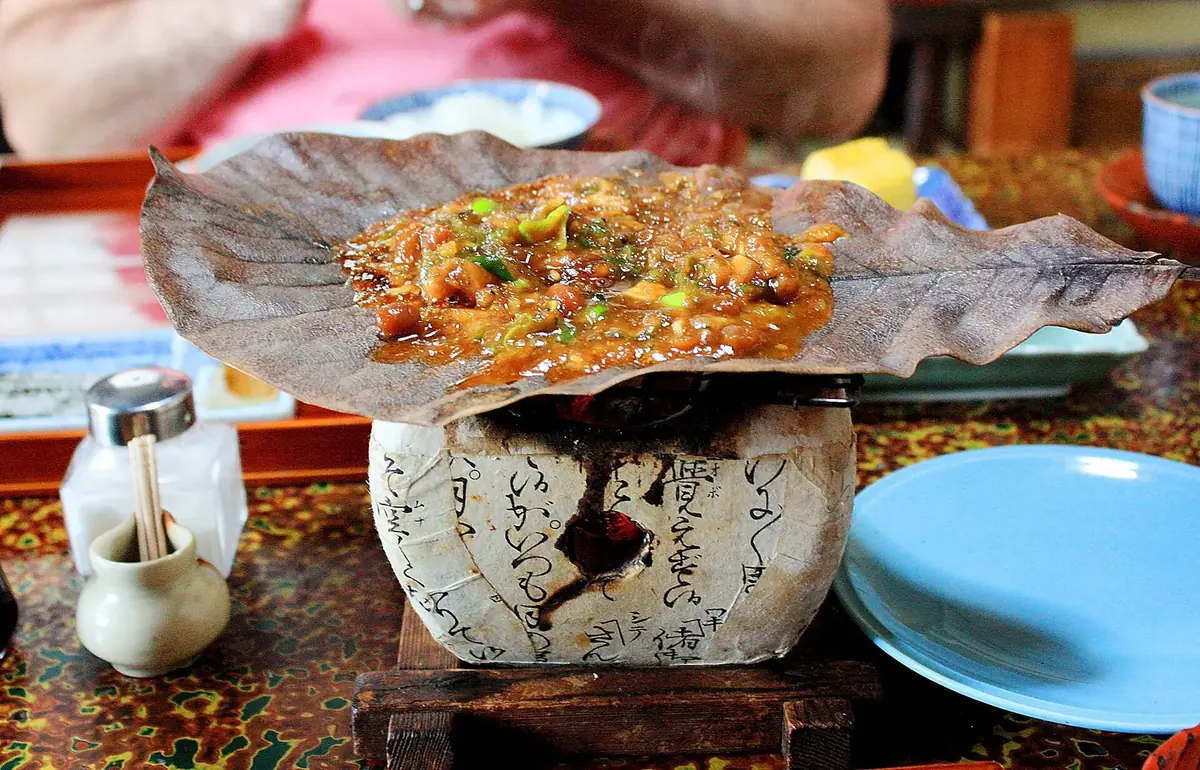
Miso cooked on a magnolia (hoba) leaf with leek and sometimes mushrooms or Hida beef. Visit Gifu calls it a common fixture on the menus of traditional inns.
- Where to look
- Breakfast or dinner at your farmhouse inn; in the village, the tourist association lists Keyaki and Kita no Syo, which makes its own magnolia miso, among the restaurants serving it.
- Fit it into your day
- Breakfast at an inn, or a warming lunch on a cold day.
Miso is made from soybeans and grain; versions with Hida beef are not vegetarian.
Gohei mochi
Pounded rice pressed onto a skewer and grilled until a sweet glaze of miso and soy sauce starts to darken. Visit Gifu traces it to mountain workers in the Tono and Hida regions; shapes vary, from flat ovals to round dumplings, and each shop has its own sauce.
- Where to look
- Take-out counters in Ogimachi; the tourist association lists Yukinko, near Wada House, for gohei mochi and dumplings.
- Fit it into your day
- A snack between the viewpoint and the bus.
Usually vegetarian, but Visit Gifu notes that sauces may include walnuts, peanuts or sesame; ask if you have an allergy.
Soba
Buckwheat noodles, made by hand at several places in the village. The tourist association's listings include soba shops and restaurants in gassho-zukuri houses that pair soba with local tofu or Hida beef.
- Where to look
- Soba Wakimoto, which makes its noodles fresh each day, Irori Restaurant (soba and grilled tofu sets) and Konjyaku, just over the suspension bridge from the car park, all appear in the tourist association's listings.
- Fit it into your day
- A quick, light lunch on a stopover.
Buckwheat is a common allergen, and the dipping sauce is usually made with fish stock.
Doburoku
A cloudy, unfiltered sake, a home brew that JNTO explains is legal to make only in a few designated zones. It is at the heart of the village's October festival, and the tourist association lists a café near Wada House that serves it.
- Where to look
- Yoze, in front of Wada House, recommends its doburoku and chestnut sweets, depending on the season; in mid-October it is poured at the Doburoku Festival.
- Fit it into your day
- A small glass in the afternoon if you are staying the night, not before a long bus ride.
Alcoholic. Not for children or anyone driving to the car parks.
Ogimachi on foot: the viewpoint, Wada House and Myozen-ji
Start with the view. Two lookouts stand side by side on the hill above the village: the municipal Ogimachi Castle Ruins Observation Deck and the privately run Shiroyama Tenshukaku observatory, attached to a café and souvenir shop. Neither can be reached by private car. Walk up the 600-metre slope, which takes about 15–20 minutes by the trail behind Wada House, or take the shuttle bus. When we checked on 10 October 2026, the tourist association listed shuttles from in front of Wada House at :00, :20 and :40 past the hour between 09:00 and 15:40, with no service in the 12:00 hour, at ¥300 each way, paid in cash on the bus. The shuttle can be suspended in bad weather or poor road conditions. Shirakawa village has also posted a notice about closing the footpath up to the Ogimachi Castle Ruins deck, so check the village website before you set off on foot, and take the shuttle if the path is shut. Gifu's tourism site adds that the Tenshukaku deck is private land, free to use but closed outside the shop's hours.
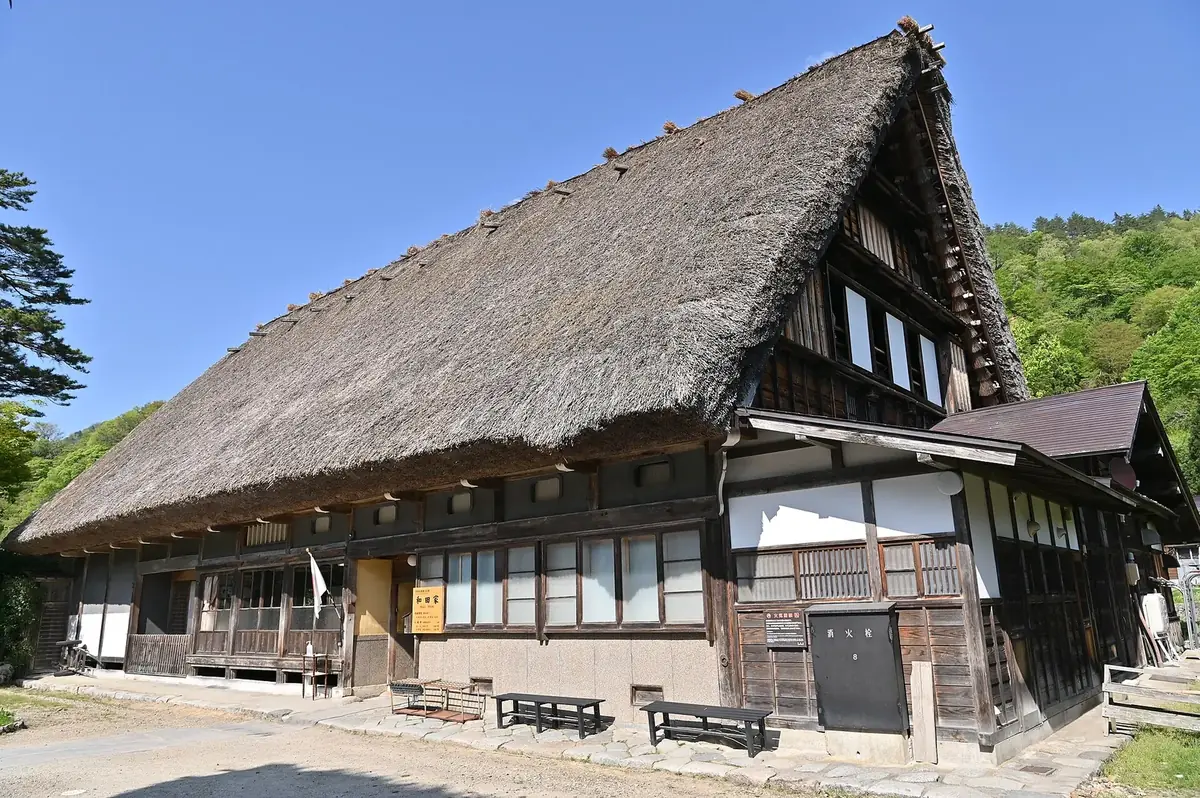
Wada House, about three minutes' walk from the bus terminal, is the largest gassho-zukuri house in Shirakawa-go and a National Important Cultural Property. In the Edo period the Wada family served as village heads and guard officials and traded silk and the raw material for gunpowder, then the village's main sources of income. The lower two floors are open, with explanations in Japanese downstairs and in English upstairs. When we checked on 10 October 2026, the tourist association listed it open 09:00–17:00, closed on irregular days, at ¥400 for adults, cash only.
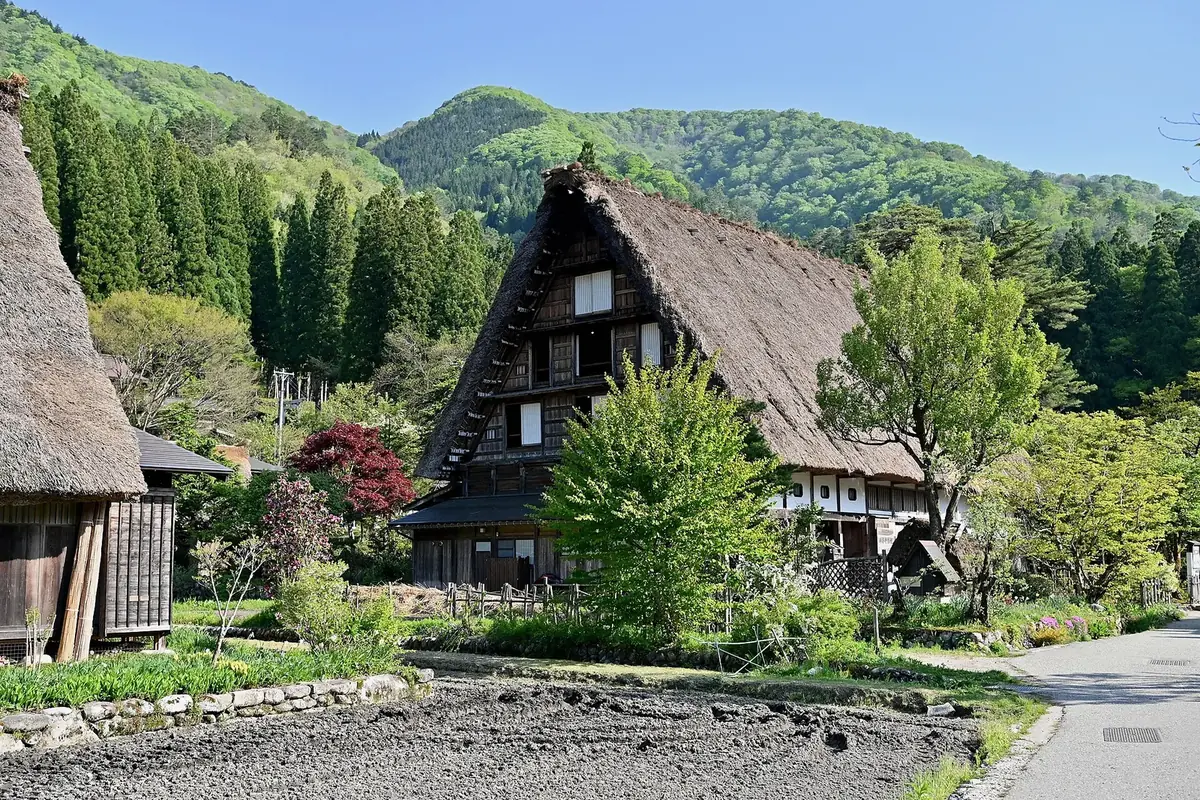
About ten minutes' walk from the terminal, Myozen-ji is the village temple; the tourist association notes that its main hall, priests' quarters and bell tower are all built in the gassho style. JNTO explains that the quarters, a former monk's residence beside the main hall, now house a museum of the temple's history.
With more time, Nagase House is the tallest of the houses, with five floors and a Buddhist altar said to be 500 years old, and Kanda House shows the roof structure and the space under the floor where gunpowder was made. The Gassho-zukuri Minkaen open-air museum gathers 25 gassho buildings, which JNTO explains were moved here from elsewhere in Shirakawa-go. When we checked on 10 October 2026, its site listed adult admission at ¥800, opening 08:40–17:00 from March to November and 09:00–16:00 from December to February, with Thursday closures from December to March. There is no charge to walk the lanes; the tourist association puts the houses open to visitors at ¥300–400 each, so carry cash.
A village where people live: the rules
Shirakawa village has about 1,500 residents and, by its own count, around 2.15 million visitors a year. The village office sums up what it asks of them in five rules: use the designated car parks; no fire of any kind, and smoking only at the designated smoking areas (three inside the village); take your rubbish home, as there are no bins; do not sightsee at night unless you are staying in the village; and do not fly drones, which are banned over the houses. The thatched roofs catch fire easily, which is why residents patrol for fire every day of the year and keep 60 water cannons ready.
Treat the houses as homes. JNTO notes that some are still private residences closed to the public, while others are open as museums; only enter those marked as open. Gokayama's official guide spells out the courtesies for its own villages, and they apply just as well here: keep out of fields and from under the eaves, leave the plants alone, step aside for residents' cars and take photographs without getting in other people's way. Drivers park across the Sho River at Seseragi Park, where a car costs ¥2,000 and, the village office says, 30% of the fee goes to preserving the village.
Winter needs real preparation. The village office's travel site advises down jackets and waterproof boots, notes that some days fall to −5°C and asks drivers to fit winter tyres from early December to late March. The tourist association rents boots at the bus terminal in winter, except during events, at ¥1,000 a day.
The winter light-up: four January evenings, by ticket only
For four evenings a year, the village is lit up under snow. The tourist association has announced the 41st light-up for 11, 17, 24 and 31 January 2027, 17:30–19:30, under a strict advance-reservation and ticket system. No tickets are sold on the day; from 15:30 a gate closes the village to anyone without one, and daytime visitors on a regular bus must arrive by 15:20. There are no regular buses back after the event, as the last ones leave between about 16:00 and 17:00, so without a car you either sleep in the village or come on a tour bus.
There are several ways to get a ticket. Rooms in the village for the light-up nights are allocated by lottery through the tourist association, with applications by email during October 2026, and these stays are, with some bus tours, the only way onto the observation deck. Bus companies in Takayama, Kanazawa, Toyama and Nagoya run special tours, with sales opening in turn for each date from 13 October; when we checked on 10 October 2026, Nohi's tours from Takayama cost ¥13,000–16,000, and only the dearest included the observation deck. The tourist association lists two online parking-sale rounds for regular vehicles: 10 September and 1 December 2026.
The organisers warn that temperatures can fall to between −10°C and 0°C and that paths may be icy, so bring insulated waterproof boots, grips and a torch. Tripods are banned on the observation deck, and the event can be cancelled if a severe cold wave disrupts transport. If the dates do not suit you, Ainokura in Gokayama holds its own lighting-up in February (see below).
Gokayama: Ainokura and Suganuma, the quieter villages
Gokayama, across the border in Toyama Prefecture, is a valley of about 40 small villages, two of which, Ainokura and Suganuma, share the World Heritage listing with Ogimachi. They are smaller and quieter, in a rural setting that JNTO contrasts with Japan's more urban heritage sites, with houses from one hundred to four hundred years old. JNTO lists Ainokura as open to visitors 08:30–17:00 every day, and Suganuma 08:00–17:00, closed over the New Year holidays.
Suganuma is the easier one to add to the main bus line: from April to November, buses between Kanazawa and Shirakawa-go stop there, though only to let passengers off on the way from Kanazawa and to pick them up towards Kanazawa. For Ainokura, use Kaetsuno Bus's World Heritage Bus, which runs from Takaoka and Shin-Takaoka stations through Gokayama, stopping at Ainokura-guchi and Suganuma, and on to Shirakawa-go; JNTO puts Shin-Takaoka to Gokayama at about an hour. Gokayama's official guide asks visitors to avoid the early morning and the hours after dusk.
Ainokura is the place for a night: Gokayama's official guide lists five gassho-zukuri inns inside the World Heritage village. On selected *mado-akari* evenings, when the village is seen by the light from its windows, visitors are welcome from 17:00 to 20:00 on 13 and 27 January 2027; the full lighting-up follows on 20 and 21 February 2027, from sunset to 20:00. With fewer buses than Shirakawa-go, plan how you arrive and leave before you book.
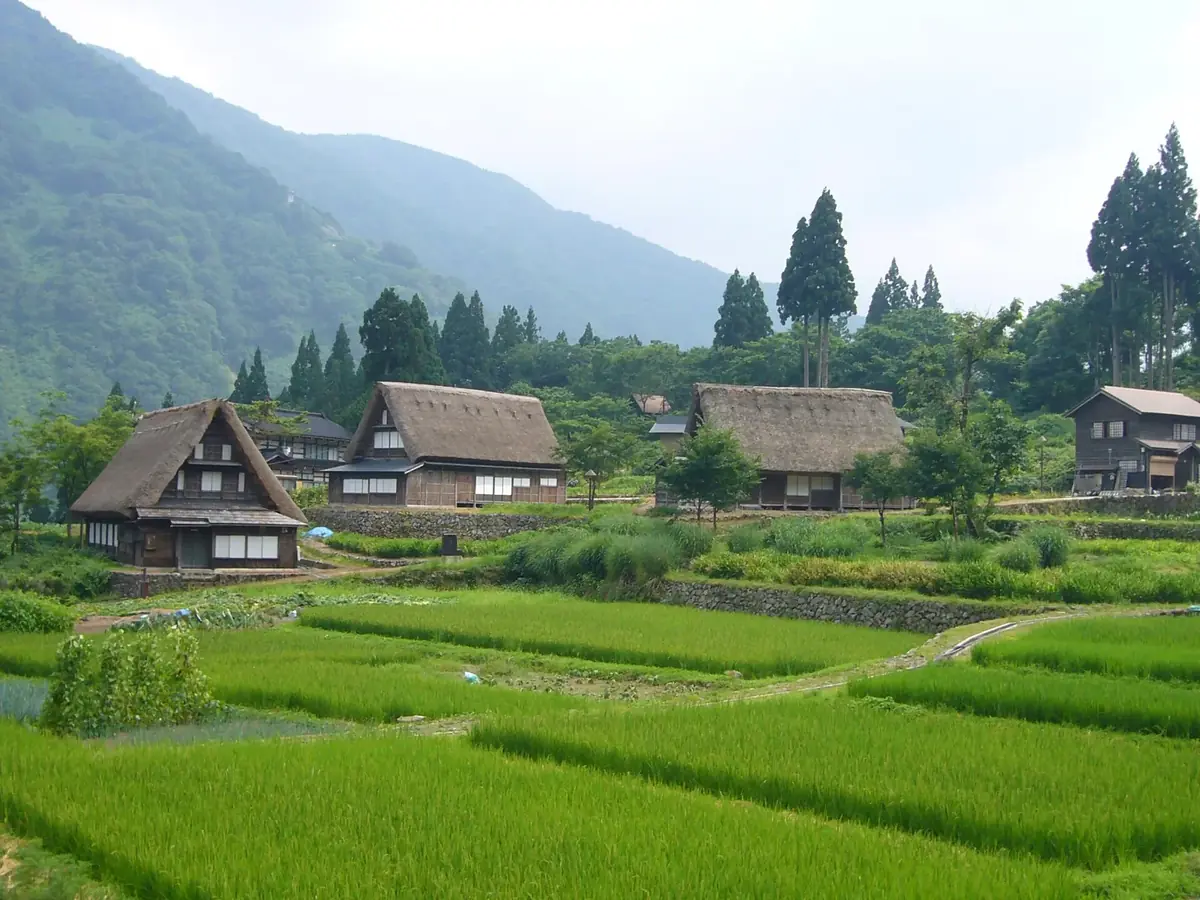
Seasons, crowds and the doburoku festival
Shirakawa-go sits about 500 m above sea level in heavy-snow country. The village office's travel site puts cherry blossom around mid-April and the autumn foliage from late October to early November, notes that snow starts in December and warns that July and August can still be unexpectedly hot.
Crowds follow the calendar. SHIRAKAWA-Going publishes a congestion forecast three months ahead and live traffic cameras; on its 'very crowded' days, the queue for the car parks can last more than two hours, and the village office says jams often begin around 10:00. Come early, by bus if you can, and keep the afternoon for somewhere nearby. From 1 December 2026, tour coaches also need a parking reservation, part of the village's efforts to ease congestion.
In mid-October, JNTO notes, the village's Doburoku Festival brings unfiltered sake and lion dances, moving between the shrines of Ogimachi, Hatogaya and Iijima over about a week; check the village's dates for your year.
A stopover on the Takayama–Kanazawa bus, or one night in the village
This is an editorial suggestion, not a timetable. Check bus times for your date and book the reserved legs.
- Stopover, Takayama to Kanazawa: when we checked on 10 October 2026, both Nohi Bus and Hokutetsu listed a bus leaving Takayama at 08:50 and reaching Shirakawa-go at 09:40, and a reserved bus leaving Shirakawa-go at 13:50 and reaching Kanazawa at 15:05. Lock your bags at the terminal, see Wada House first, ride or walk up to the viewpoint before the midday break in the shuttle, have lunch, then visit Myozen-ji on the way back to the bus.
- One night, day 1: arrive by early afternoon, leave your bags at the inn, see the houses before they close, then soak at Shirakawa-go no Yu, the natural hot spring inside the village, before dinner at your inn. Walk the lanes quietly after dark.
- One night, day 2: walk the village early, before the first buses arrive, then take the first shuttle to the viewpoint and leave on a late-morning bus to Kanazawa or Takayama.
- With half a day more: Suganuma or Ainokura in Gokayama, or the Gassho-zukuri Minkaen open-air museum.
Practical questions
Is Shirakawa-go worth an overnight stay?
Yes, if you want the village without the crowds: only overnight guests may be in Ogimachi in the evening, so a night gives you the quiet lanes and the early morning. For most travellers between Takayama and Kanazawa, a stop of a few hours on the bus covers the main sights.
How long do you need in Shirakawa-go?
The tourist association says about two to three hours to walk around the village. Allow extra time for the viewpoint and lunch, and half a day more if you also want to see Gokayama.
Do you need to book the bus to Shirakawa-go?
For Kanazawa, yes: Hokutetsu says all its highway buses need a seat reservation, and most through buses to Kanazawa and Toyama are reservation-only. Some Nohi buses between Takayama and Shirakawa-go are unreserved, but booking is safer at weekends and in the autumn-leaf season.
Can I leave luggage at Shirakawa-go?
Yes. The bus terminal has coin lockers, there is a luggage room nearby, and the tourist association holds bags when both are full; all work 08:00–17:00 for same-day collection only.
How do I get to the Shirakawa-go viewpoint?
Walk up the trail behind Wada House in about 15–20 minutes, or take the ¥300 shuttle from in front of Wada House, which ran every 20 minutes from 09:00 to 15:40 when we checked, with no service in the 12:00 hour. Private cars cannot drive up.
How can I see the Shirakawa-go light-up in 2027?
Only with a reservation made in advance: a night at a village inn through the lottery, a bus operator's tour (sales open on 13 October 2026 for the 11 January event, 19 October for 17 January, 26 October for 24 January and 2 November for 31 January) or a reserved car parking space. The event runs on 11, 17, 24 and 31 January 2027, and no tickets are sold on the day.
Keep planning your trip
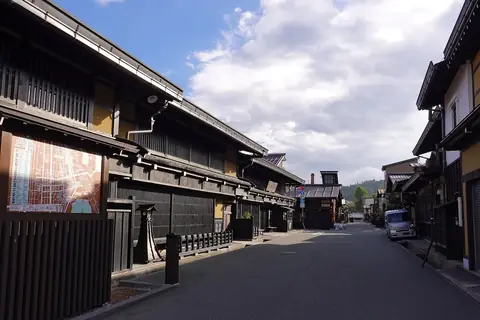
Takayama
How many nights Takayama needs, where to sleep (station, old town or Okuhida Onsen), the morning markets, festival floats and the bus to Shirakawa-go.
Read the guide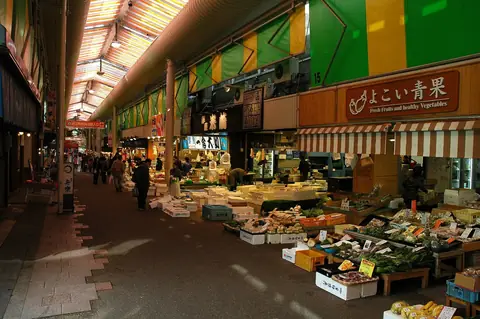
Kanazawa
Whether Kanazawa is worth the detour between Tokyo and Kyoto, how many nights to give it, where to sleep, and how to fit the garden, museums and Shirakawa-go.
Read the guide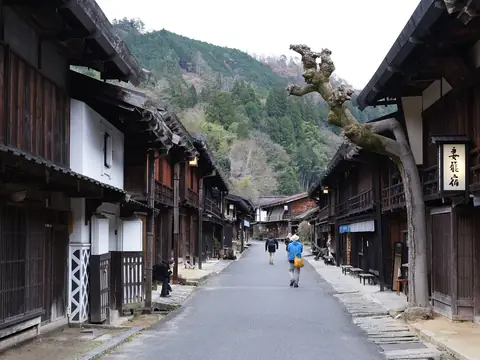
Japanese Alps in 6 days
A six-day loop from Nagoya: the Magome–Tsumago walk, two nights in Takayama, a Shirakawa-go farmhouse night and Kanazawa, plus the buses, pass and bookings.
Read the guide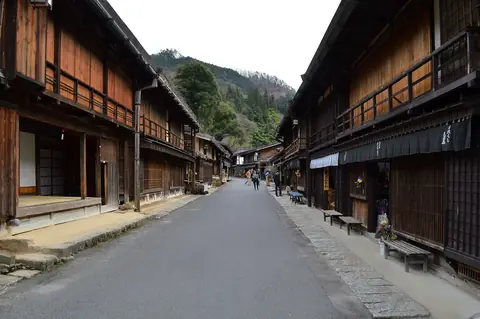
Kiso Valley
How long the Magome–Tsumago walk takes, which way to walk, sending bags ahead, trains from Nagoya, and whether to sleep in Tsumago, Magome or Narai.
Read the guide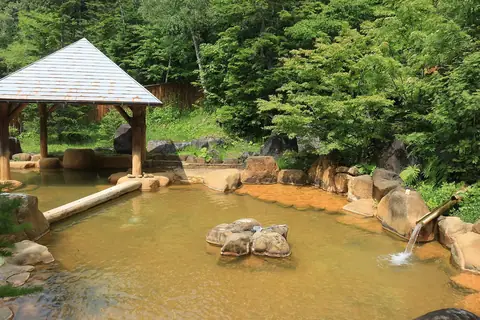
Ryokan and onsen
How a ryokan night works, what to tell the inn when booking, onsen etiquette and tattoos, private baths, and which towns on a Japan route suit a ryokan night.
Read the guideSources and checks before you travel
(25)
- Shirakawa-go Tourist Association: access ↗ — opens in a new tab
- Shirakawa-go Tourist Association: FAQ, general questions (Japanese) ↗ — opens in a new tab
- Shirakawa-go Tourist Association: Wada House ↗ — opens in a new tab
- Shirakawa-go Tourist Association: see and do ↗ — opens in a new tab
- Shirakawa-go Tourist Association: overview of the 41st Light-Up Event (2027) ↗ — opens in a new tab
- Shirakawa-go Tourist Association: Light-Up accommodation lottery (2027) ↗ — opens in a new tab
- Shirakawa-go Tourist Association: 2026 Doburoku Festival (Japanese) ↗ — opens in a new tab
- Shirakawa-go Tourist Association: eat and buy ↗ — opens in a new tab
- Shirakawa-go Tourist Association: stay ↗ — opens in a new tab
- Shirakawa Village: SHIRAKAWA-Going travel guide ↗ — opens in a new tab
- Shirakawa Village: SHIRAKAWA-Going, responsible tourism (Japanese) ↗ — opens in a new tab
- Shirakawa Village: Shirakawa-go responsible tourism (Japanese) ↗ — opens in a new tab
- Nohi Bus: Takayama–Shirakawa-go–Kanazawa/Toyama/Takaoka line ↗ — opens in a new tab
- Nohi Bus: Shirakawa-go Light-up Bus Tour 2027 ↗ — opens in a new tab
- Hokutetsu (Hokuriku Railroad): highway express to Shirakawa-go, Gokayama and Takayama ↗ — opens in a new tab
- Kaetsuno Bus: World Heritage Bus (Takaoka–Johana–Gokayama–Shirakawa-go, Japanese) ↗ — opens in a new tab
- Gifu Prefecture Tourism Federation: Shiroyama Tenshukaku observatory (Japanese) ↗ — opens in a new tab
- Shirakawa-go Gassho-zukuri Minkaen: admission and hours (Japanese) ↗ — opens in a new tab
- JNTO: Shirakawa-go ↗ — opens in a new tab
- JNTO: Gokayama ↗ — opens in a new tab
- Gokayama official travel guide: Gokayama and World Heritage ↗ — opens in a new tab
- Gokayama official travel guide: where to stay ↗ — opens in a new tab
- Gokayama official travel guide: Ainokura lighting-up events ↗ — opens in a new tab
- Visit Gifu (Gifu Prefecture Tourism Federation): food and drink ↗ — opens in a new tab
- Visit Gifu (Gifu Prefecture Tourism Federation): goheimochi ↗ — opens in a new tab
Reference sources for the version dated 24 October 2026. Confirm opening times, access, transport and conditions for your travel dates.
Photo credits
(6)
Ogimachi in early autumn, when the rice turns gold around the thatched houses
Photograph: 663highland — opens in a new tab · CC BY 2.5 — opens in a new tab
Changes: Resized and converted to WebP; displayed with responsive crops. · Original photograph and licence details ↗ — opens in a new tab
Wada House, the largest gassho-zukuri house in Shirakawa-go and the first stop for most visitors
Photograph: 小石川人晃 — opens in a new tab · CC BY-SA 4.0 — opens in a new tab
Changes: Resized and converted to WebP; displayed with responsive crops. · Original photograph and licence details ↗ — opens in a new tab
Myozen-ji's thatched priests' quarters, now a museum of the temple's history
Photograph: 小石川人晃 — opens in a new tab · CC BY-SA 4.0 — opens in a new tab
Changes: Resized and converted to WebP; displayed with responsive crops. · Original photograph and licence details ↗ — opens in a new tab
Ainokura in Gokayama, a smaller World Heritage village with farmhouse inns of its own
Photograph: minque — opens in a new tab · Public domain — opens in a new tab
Changes: Resized and converted to WebP; displayed with responsive crops. · Original photograph and licence details ↗ — opens in a new tab
Hoba miso, miso cooked on a magnolia leaf, a regular at inn breakfasts in the Hida region
Photograph: Andrea Schaffer from Sydney, Australia — opens in a new tab · CC BY 2.0 — opens in a new tab
Changes: Resized and converted to WebP; displayed with responsive crops. · Original photograph and licence details ↗ — opens in a new tab
Yuki Ikemori at the viewpoint above Shirakawa-go, with the thatched farmhouses in the valley below
Photo: Yuki Ikemori