Tokyo, Fuji and around · Tokyo
Tokyo travel guide: how many nights, where to stay and a plan by area
Tokyo is not one centre but dozens, strung along the JR Yamanote Line loop and a dense web of subway lines. The most common first-trip mistake is to treat it as a list: Senso-ji in the morning, Shibuya at lunch, the fish market in the afternoon, with long train rides in between. The city works far better by area. Give one day to the old east around Asakusa, Ueno and Yanaka, one to the centre between the Imperial Palace, Tokyo Station and Ginza, and one to the west from Meiji Jingu to Shinjuku, and the rest follows: how many nights to book, which side of the city to sleep on and what to time or book ahead.
- Suggested time
- 4–5 nights (5 on a first trip)
- Where to stay
- Shinjuku or Tokyo Station–Ginza for a first trip; Asakusa–Ueno for the east and the Narita Skyliner; Shibuya for the west
- Season and timing
- Tokyo's official tourism site describes spring (March–May) as a great season to explore and autumn as crisp and comfortable once September's heat and typhoons pass; June to mid-July is the humid rainy season, and summer heat can pass 35°C.
The short answer
Give Tokyo five nights on a first trip, four full days for the east, the centre, the west and one flexible day, and sleep in Shinjuku or near Tokyo Station. Fly into Haneda if you can, because it is far closer to the city than Narita. Start each area day early at its big sight (Senso-ji, the Tsukiji market, Meiji Jingu), keep evenings for Ginza, Shibuya or Shinjuku, and use an IC card such as Suica, on your phone or as a card, for every ride. With four nights, drop the flexible day; on a second trip, three or four nights leave room for day trips.
Five nights on a first trip, and which side of the city to sleep on
Five nights gives a first-time visitor four full days, which is what Tokyo's layout asks for: one day each for the east, the centre and the west, and a spare day for Toyosu's fish market, a sumo morning, a museum or bad weather. With four nights, drop the spare day; with three, you will be choosing between the east and the west. On a second trip, three or four nights are enough if you skip what you have seen. Each day trip to Nikko, Kamakura or Mount Fuji adds a night, as it is simpler to keep the same hotel than to move.
Sleep near a station on the JR Yamanote Line, the loop that links most of the areas in this guide, and pick the side of the loop that suits your trip. For most first-timers the answer is Shinjuku: JR, the Odakyu and Keio railways and several subway lines meet there, the Odakyu line heads for Hakone, highway buses leave from the Shinjuku Expressway Bus Terminal, and GO TOKYO calls it Tokyo's neon nightlife capital. The price is a vast, crowded station. Choose Tokyo Station or Ginza instead if you will take the shinkansen to Kyoto or the north and prefer calmer evenings than Shinjuku's; Shinjuku is 14 minutes away on the JR Chuo Line Rapid. Asakusa and Ueno suit the east and the Skyliner from Narita, and Shibuya the west. Our separate guide to where to stay in Tokyo, linked at the end of this page, compares these areas and others in detail.
Budget for Tokyo's accommodation tax, which hotels collect from guests. When we checked on 2026-10-10, the Tokyo Metropolitan Government listed ¥100 per person per night for room charges of ¥10,000 to under ¥15,000 and ¥200 from ¥15,000. For stays from 1 April 2027, the tax becomes 3% of the room charge, and stays under ¥13,000 per person per night are exempt.
Plan by area: east, centre, west and a spare day
Most first-trip sights fall into three clusters. In the east is the old downtown of Asakusa, Ueno and Yanaka. The centre runs from the Imperial Palace East Gardens past Tokyo Station to Ginza and the Tsukiji Outer Market. The west strings Meiji Jingu, Harajuku, Shibuya and Shinjuku along the Yamanote Line, with Shibuya just seven minutes from Shinjuku. Crossing between clusters takes longer (Asakusa to Shinjuku is about 35 minutes with a change), so give each cluster its own day rather than chasing sights across the map.
Then match the days to the calendar, because Tokyo's closing days do not line up. The Imperial Palace East Gardens close every Monday and Friday, and the Tokyo National Museum in Ueno closes on Mondays. The Tsukiji Outer Market follows the wholesale-market calendar: when we checked on 2026-10-10, it marked Sundays, national holidays and most Wednesdays in October and November 2026 as closing days, and Toyosu Market, the wholesale market itself, is closed on the same days. So put the centre on a Tuesday, Thursday or Saturday, keep the east off Mondays, and give the west a Monday or Friday; Meiji Jingu is open every day.
Keep the fourth day loose. It can start at 05:00, when Toyosu Market opens to visitors: the tuna auctions can be watched from the second-floor visitor walkway, or from the observation deck if your application is drawn in the lottery. teamLab Planets, the museum where you walk through water, is close by on the same Yurikamome line, runs until the end of 2027 and sells tickets for a set date and time. In January, May and September the Grand Sumo tournaments fill the Ryogoku Kokugikan, and tickets should be booked well ahead; at other times, guided visits to a stable's morning practice are sold as tours. Or spend the day out of town with our guide to day trips from Tokyo; Hakone is better with a night of its own.
Make time for the local food
What to eat and where to look
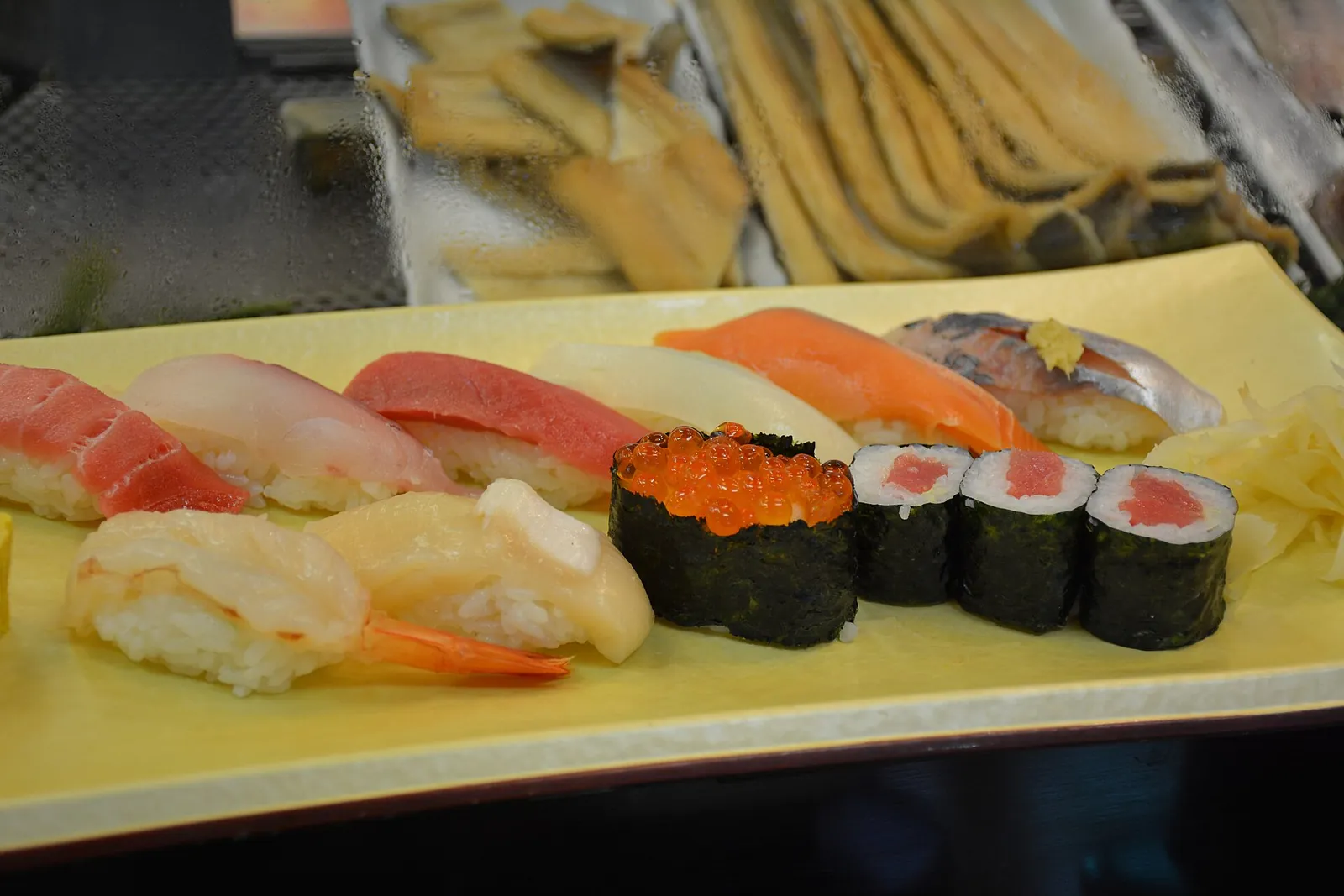
Edomae sushi
Nigiri, a hand-formed ball of vinegared rice topped with fresh or lightly seasoned fish, was invented at Edo's street stalls in the 1800s using fish from Edo Bay, which is why Tokyo's style is still called Edomae. Today it ranges from conveyor-belt plates to counter restaurants where reservations can be hard to get.
- Where to look
- The Tsukiji Outer Market's sushi shops on the centre day; counter restaurants across the city; conveyor-belt chains for a cheap first try.
- Fit it into your day
- A set menu at a counter at lunchtime, or an early breakfast at Tsukiji.
Raw fish and shellfish; tell the chef about allergies before the first piece is made.
Soba
Buckwheat noodles, Tokyo's 'fast food' since the mid-Edo period and a major local speciality ever since. They are one of the few dishes you are encouraged to slurp, which is said to bring out the aroma of the buckwheat.
- Where to look
- Soba restaurants all over the city, from quick counters to older sit-down noodle shops.
- Fit it into your day
- A light lunch between sights on any area day.
Buckwheat is a serious allergen, and the noodles often contain wheat; the dipping sauce and broth are usually made with fish stock.
Ramen
Wheat noodles in one of four main broths, shio (salt), shoyu (soy sauce), tonkotsu (pork bone) or miso, usually topped with slow-cooked pork, a soft-boiled egg, bamboo shoots and spring onion, with gyoza or fried rice on the side.
- Where to look
- Tokyo Ramen Street under Tokyo Station, the back streets around Shinjuku Station and the office district of Shimbashi.
- Fit it into your day
- A fast lunch or a late bowl after an evening out; shops are small and expect you to eat and go.
Most broths are made with pork, chicken or seafood, so ask before ordering if you avoid them.
Monjayaki
Tokyo's runny cousin of okonomiyaki: a thin flour batter mixed with shredded cabbage and other ingredients and cooked on a hot griddle. Its name is said to come from children practising writing characters in the batter with tiny spatulas.
- Where to look
- Tsukishima Monja Street, a street lined with monjayaki restaurants.
- Fit it into your day
- A casual dinner for a small group after the centre day.
Contains wheat; fillings range from meat and seafood to spicy options, so check what goes in.
Chanko-nabe
The sumo wrestlers' hot pot of meat, fish and seasonal vegetables, eaten in the stables as part of the wrestlers' diet; each stable has its own recipe.
- Where to look
- The restaurants around the Ryogoku Kokugikan sumo arena, and specialist chanko-nabe restaurants elsewhere in the city.
- Fit it into your day
- Lunch after a sumo morning, or a dinner to share in the colder months.
One pot can mix chicken, pork, fish and sometimes beef; ask what goes in if you avoid any of them.
The east: Senso-ji early, Ueno at midday, Yanaka at dusk
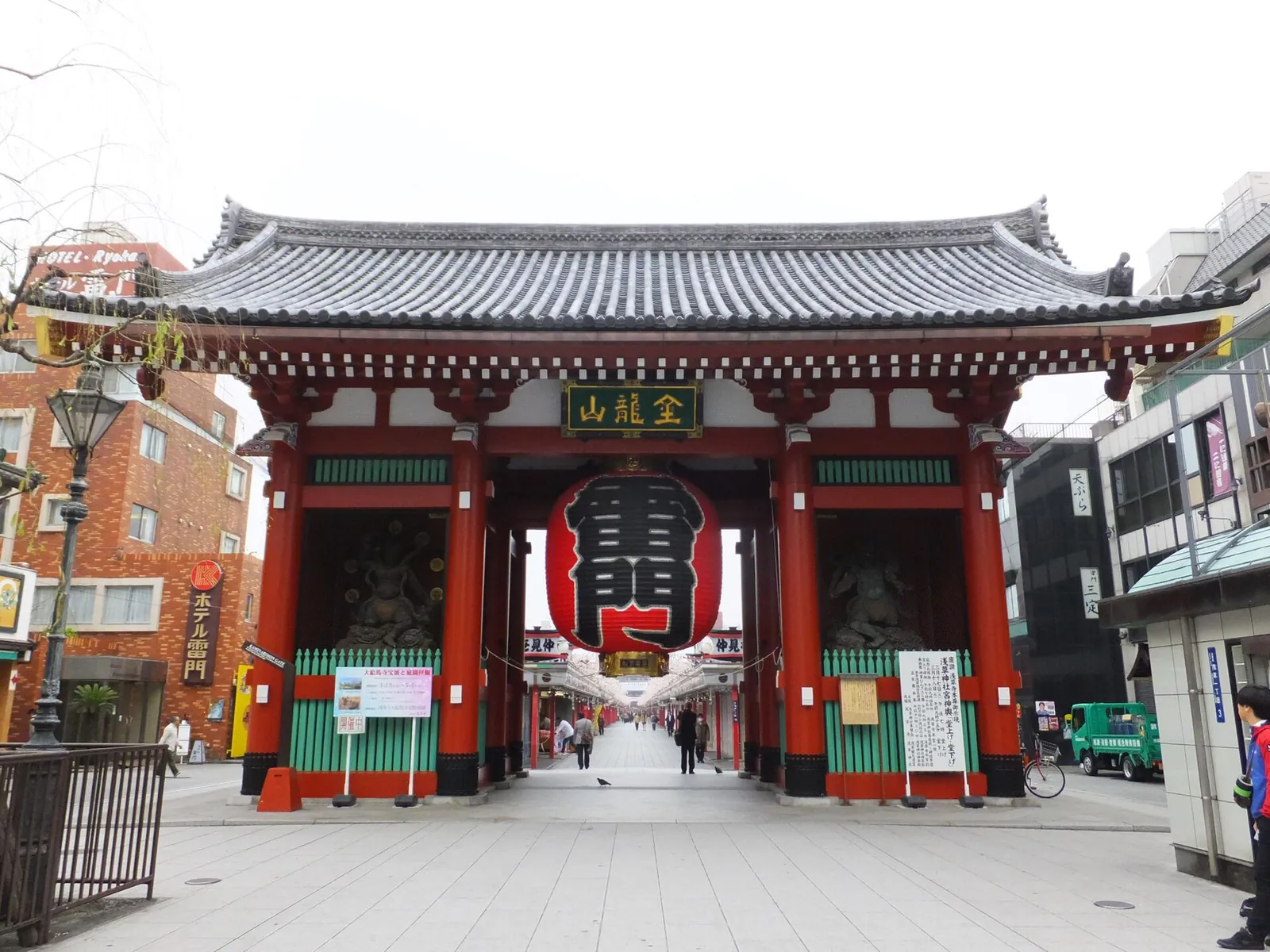
Start at Senso-ji before the crowds. Enter through the Kaminarimon, the Thunder Gate with its giant red lantern, and walk up the Nakamise shopping street to the Main Hall. When we checked on 2026-10-10, the temple's site gave the Main Hall's hours as 06:00–17:00, opening at 06:30 from October to March. If you sleep nearby, come back after dark: the Main Hall, the Five-Storied Pagoda, the Hozomon and the Kaminarimon are lit every day from sunset until about 23:00.
The Ginza Line runs from Asakusa to Ueno for the middle of the day. In Ueno, the Tokyo National Museum is ten minutes' walk from JR Ueno Station; when we checked, it listed hours of 09:30–17:00, until 20:00 on Fridays and Saturdays, adult admission of ¥1,000 and closure on Mondays, except when Monday is a national holiday.
Late in the afternoon, take the Yamanote Line to Nippori Station for Yanaka, a corner of the old downtown that escaped serious damage in wars and earthquakes. Yanaka Ginza is a 170-metre, lantern-lined street of small shops selling snacks, sweets and crafts, and the nearby steps known as Yuyake Dandan, the Sunset Steps, are the place to be as the light fades. Nippori is 12 minutes from Tokyo Station on the Yamanote Line for the ride back.
The centre: the market, the palace gardens and Ginza
Eat breakfast at the Tsukiji Outer Market, a district of food shops, wholesalers and eateries; the wholesale fish market itself has been at Toyosu since 2018. The market's official site asks visitors to give way to professional buyers, who have priority until 09:00, so arrive at about nine: public hours run from 09:00 to 14:00, after which shops keep their own hours. Leave large bags in a locker, eat inside or in front of the shop rather than while walking, ask before photographing a stall and do not touch the food.
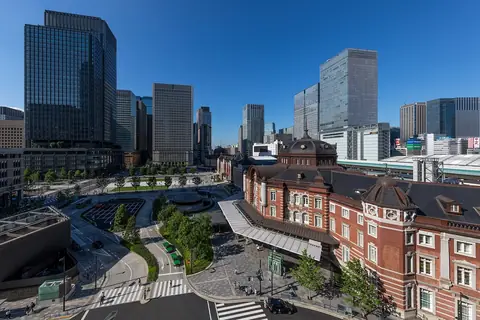
Then head to the Marunouchi side of Tokyo Station, a stone's throw from the Imperial Palace, and into the East Gardens, laid out on the old inner compounds of Edo Castle and open to the public since 1968. Entry is free. When we checked on 2026-10-10, the Imperial Household Agency listed hours of 09:00–16:30 in October and 09:00–16:00 from November to February, with last entry 30 minutes before closing, and bag checks at the entrance, so carry as little as you can. Go in by the Ote-mon gate and walk up to Tenshudai, the stone base of the castle keep.
In the afternoon, cross to Ginza, about 15 minutes' walk from Tokyo Station, for the department stores, galleries and the Kabukiza theatre. On weekends and national holidays its main street becomes a 'pedestrian paradise', closed to traffic from noon to 17:00 between October and March and until 18:00 from April to September. That makes Saturday the best centre day, provided the market calendar shows it open.
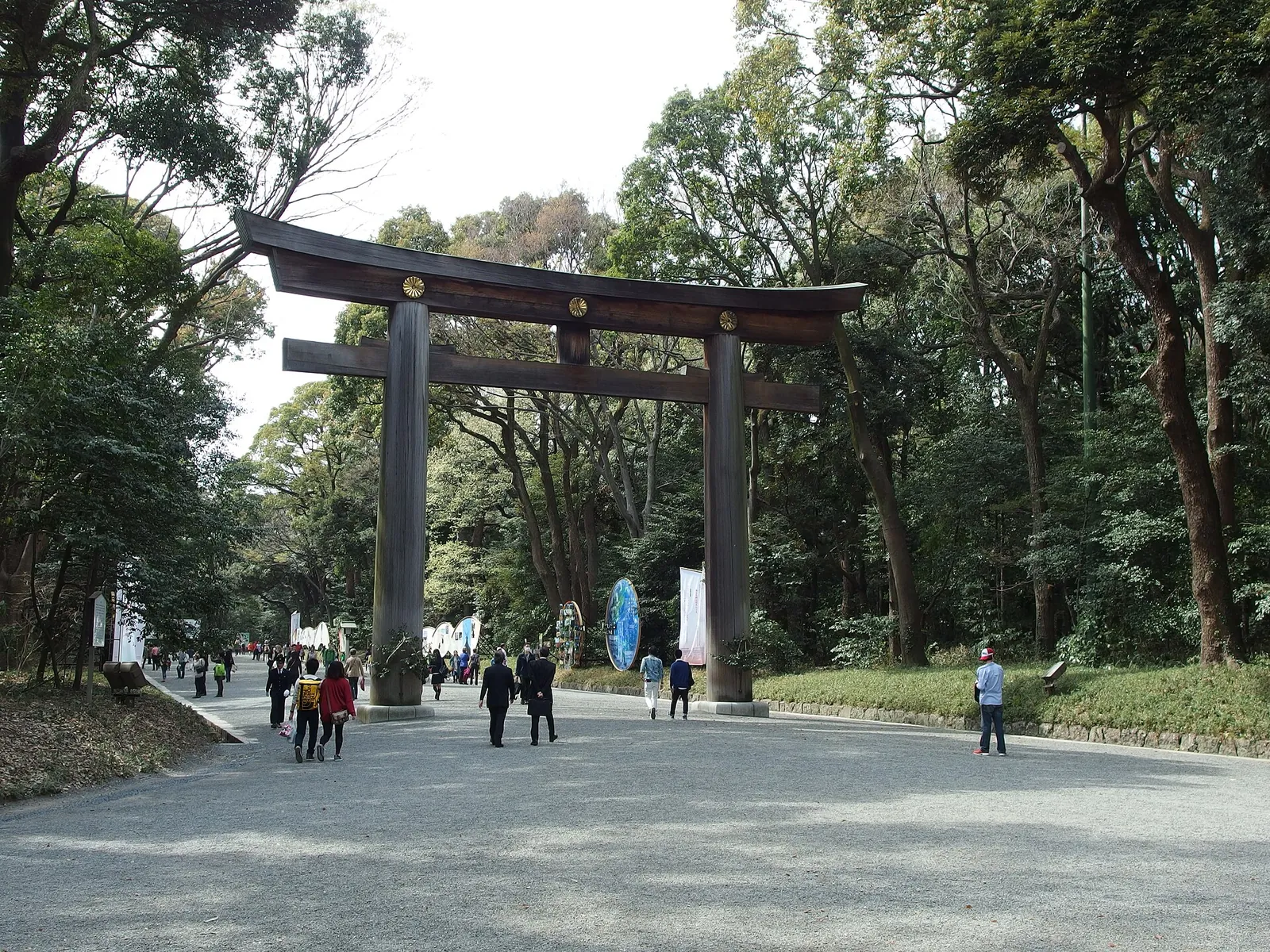
The west: Meiji Jingu, Shibuya Crossing and Shinjuku after dark
Begin at Meiji Jingu, which opens at sunrise and closes at sunset, so its hours shift through the year. When we checked on 2026-10-10, the shrine listed 05:40–16:40 for October and 06:10–16:10 for November; entry is free, though some facilities inside keep shorter hours. Go early, when the gravel approach under the trees is at its quietest, then spend the late morning in Harajuku and Omotesando, which are about 20 minutes on foot from Shibuya.
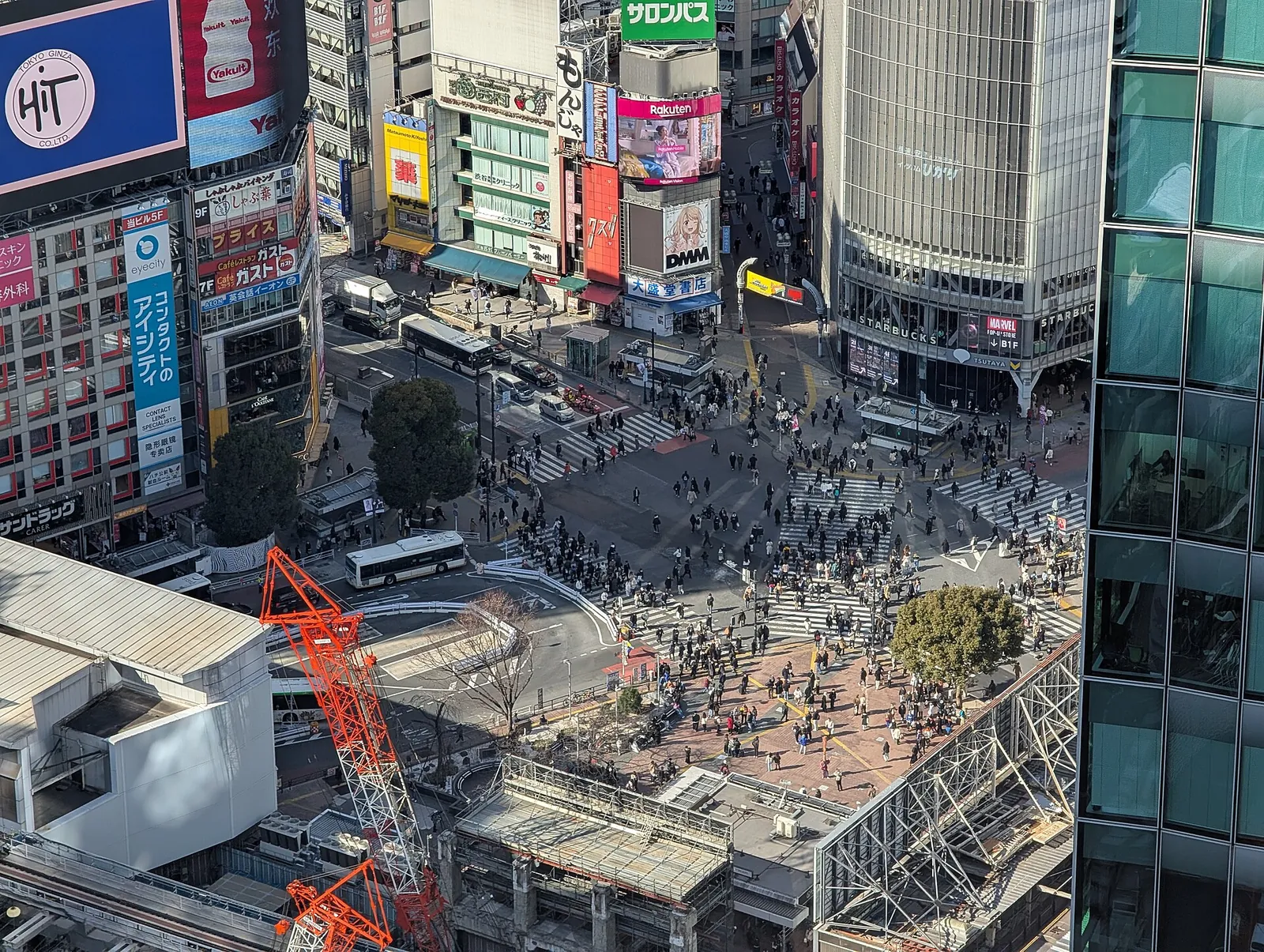
At Shibuya Crossing, the lights release a surge of people across the intersection outside the station every two minutes or so. Watch a few cycles from above, from one of the cafés or station buildings around the crossing, then cross yourself. For the full panorama, SHIBUYA SKY on top of Shibuya Scramble Square is about 230 metres up. Late afternoon into dusk shows you the crossing in daylight and under the lights in one visit.
Finish in Shinjuku, seven minutes away on the Yamanote Line. The neon streets of Kabukicho, the tiny bars of Golden Gai and the ramen shops north of the station keep going late. Watch the clock if you are staying elsewhere: public transport runs until around midnight, with last trains between 23:30 and 00:30.
Getting around: an IC card, a subway pass and the rush hours
Tokyo's trains, subways and buses are run by different companies, and an IC card saves you from buying a ticket for each ride. When we checked on 2026-10-10, GO TOKYO, the city's official tourism site, listed regular Suica cards from ¥1,000, including a ¥500 deposit, and two cards for short-term foreign visitors, Welcome Suica and Tourist PASMO, which need no deposit and can be used for 28 days. The Welcome Suica Mobile app sets up a card on your phone before or after you arrive, and the mobile Suica and PASMO apps also work. You can tap a contactless credit card on many lines, but not on JR lines, the Keisei Line or the Tokyo Monorail, so you still need an IC card for the Yamanote Line.
The Tokyo Subway Ticket gives unlimited rides on all Tokyo Metro and Toei subway lines for 24, 48 or 72 hours; GO TOKYO listed it at ¥1,000, ¥1,500 and ¥2,000 for adults. It is sold at the airports, subway stations and tourist information centres to visitors from abroad, so carry your passport. It does not cover JR lines, and the Japan Rail Pass does not cover the subway. If you buy it, plan your days around subway routes; most areas in this guide have a subway station, but Toyosu is on the Yurikamome line instead.
Avoid moving hotels or riding with suitcases in the rush hours, which GO TOKYO puts at about 07:30–09:30 and 17:30–19:30, with mornings the worst. Haneda and Narita both have counters that will send your luggage on to your hotel; it generally arrives a day later, so keep what you need for the first night.
Where meals fit: food halls, ramen counters and izakaya alleys
You can eat well in Tokyo without booking much, if you let each day's area decide the meal. Lunch is where the depachika, the basement food halls of department stores, come into their own: Japan's national tourism organisation singles out those of Isetan in Shinjuku, Daimaru next to Tokyo Station, Mitsukoshi in Nihombashi and Matsuya in Ginza for bento boxes, delicatessen dishes and sweets, and suggests going outside the lunch and dinner peaks. Before a shinkansen day trip, the GRANSTA area inside Tokyo Station sells ekiben, the station lunch boxes made for the journey.
For a quick hot meal, ramen is the city's fast food. Tokyo Ramen Street under Tokyo Station gathers several shops together, and many ramen counters take your order through a ticket machine that accepts cash. Sushi runs from conveyor-belt restaurants to small counters where the chef prepares each piece; counter set menus at lunch are the gentlest introduction.
Evenings belong to the izakaya, Japanese pubs where you order several small dishes with your drinks, and to the yokocho alleys that pack them together: Golden Gai in Shinjuku, Nonbei Yokocho beside Shibuya Station, Ebisu Yokocho and Yurakucho's Sanchoku Yokocho near Ginza. Some seat only ten people, so go in twos or threes. Expect a small appetiser, or otoshi, which comes with a modest charge in place of a cover. Bring cash, and do not tip.
A workable five-night plan
This is an editorial suggestion, not a timetable. Check the closing days above against your dates.
- Arrival evening: set up an IC card, send heavy bags on from the airport if you can, and eat near your hotel. If you have energy left, see Shibuya Crossing or Shinjuku after dark.
- Day 1 — East (not a Monday): Senso-ji at opening, the Tokyo National Museum in Ueno at midday, Yanaka Ginza and the Sunset Steps late in the afternoon, and Senso-ji lit up after dark if you are staying in Asakusa.
- Day 2 — Centre (Tuesday, Thursday or Saturday): breakfast at the Tsukiji Outer Market from 09:00, the Imperial Palace East Gardens, lunch at Tokyo Station, then Ginza, a depachika and an evening in Yurakucho's alleys.
- Day 3 — West: Meiji Jingu at opening, Harajuku and Omotesando, Shibuya Crossing in the late afternoon, then dinner and drinks in Shinjuku.
- Day 4 — Flexible: Toyosu Market from 05:00 on a market day, then teamLab Planets; a sumo tournament or morning practice; or a day trip to Nikko, Kamakura or Mount Fuji.
Practical questions
How many days do I need in Tokyo?
Five nights, giving four full days, is the right length for a first trip: one day each for the east, the centre and the west, plus a flexible day. With four nights, drop the flexible day; on a return visit, three or four nights are enough.
Where is the best area to stay in Tokyo for first-time visitors?
Shinjuku suits most first-timers, with JR, private railways and subway lines, trains towards Hakone and the busiest nightlife. Choose Tokyo Station or Ginza if you will use the shinkansen and prefer calmer nights, Asakusa or Ueno for the east and the Narita Skyliner, and Shibuya for the west.
Can tourists still get a Suica card in Tokyo?
Yes. When we checked on 2026-10-10, GO TOKYO listed regular Suica cards with a ¥500 deposit, and the Welcome Suica for short-term visitors, which needs no deposit and can be used for 28 days. You can also set one up on your phone with the Welcome Suica Mobile app.
Is the Tokyo Subway Ticket worth it?
It is worth it on days you ride the subway several times, as it covers all Tokyo Metro and Toei lines for 24, 48 or 72 hours, at ¥1,000, ¥1,500 or ¥2,000 when we checked. It does not cover JR lines such as the Yamanote Line, and you need your passport to buy it.
What time should I visit Senso-ji to avoid the crowds?
Go at opening time: the Main Hall opens at 06:00, or 06:30 from October to March. The temple buildings are also lit every evening from sunset until about 23:00.
Is it better to fly into Haneda or Narita for Tokyo?
Haneda is better if you have the choice: it is about 15 km from central Tokyo, with Keikyu trains reaching Shinagawa in 11 minutes. Narita is 50–60 km out, about an hour from Tokyo Station on the Narita Express or 41 minutes from Ueno on the Skyliner.
Sources and checks before you travel
Reference sources for the version dated 10 October 2026. Confirm opening times, access, transport and conditions for your travel dates.
- GO TOKYO (Tokyo Convention & Visitors Bureau): Cheap Tickets & IC Cards ↗ — opens in a new tab
- GO TOKYO: How to use the Tokyo subway ↗ — opens in a new tab
- GO TOKYO: Haneda Airport access ↗ — opens in a new tab
- GO TOKYO: Narita Airport access ↗ — opens in a new tab
- GO TOKYO: luggage and storage ↗ — opens in a new tab
- Keisei Electric Railway: Skyliner ↗ — opens in a new tab
- Senso-ji: illumination and Main Hall hours (Japanese) ↗ — opens in a new tab
- Meiji Jingu: opening hours and admission ↗ — opens in a new tab
- Imperial Household Agency: the East Gardens of the Imperial Palace ↗ — opens in a new tab
- Tokyo National Museum: getting here, admission and hours ↗ — opens in a new tab
- Tsukiji Outer Market (official site): calendar and visitor manners ↗ — opens in a new tab
- Tokyo Metropolitan Government: information about Toyosu Market ↗ — opens in a new tab
- teamLab Planets TOKYO (official site) ↗ — opens in a new tab
- GO TOKYO: Asakusa ↗ — opens in a new tab
- GO TOKYO: Yanaka and Nezu ↗ — opens in a new tab
- GO TOKYO: Tokyo Station and Marunouchi ↗ — opens in a new tab
- GO TOKYO: Ginza ↗ — opens in a new tab
- GO TOKYO: Shinjuku ↗ — opens in a new tab
- GO TOKYO: Shibuya ↗ — opens in a new tab
- GO TOKYO: a guide to exploring yokocho alleyways ↗ — opens in a new tab
- GO TOKYO: a guide to eating sushi in Tokyo ↗ — opens in a new tab
- GO TOKYO: Tokyo local food ↗ — opens in a new tab
- GO TOKYO: a guide to eating ramen in Tokyo ↗ — opens in a new tab
- JNTO (Japan National Tourism Organization): guide to department-store food floors ↗ — opens in a new tab
- GO TOKYO: a beginner's guide to sumo ↗ — opens in a new tab
- GO TOKYO: weather ↗ — opens in a new tab
- Tokyo Metropolitan Government: accommodation tax change (press release, Japanese) ↗ — opens in a new tab
Does this experience fit your route?
If you book one experience in Tokyo, make it a guided evening in Shinjuku's alleys, where tiny bars and handwritten menus are easier with someone who knows them. Check the age limit, the meeting point and what is included before you book.
Check dates and details on Viator ↗ — opens in a new tabAffiliate link · Book with ViatorPhoto credits
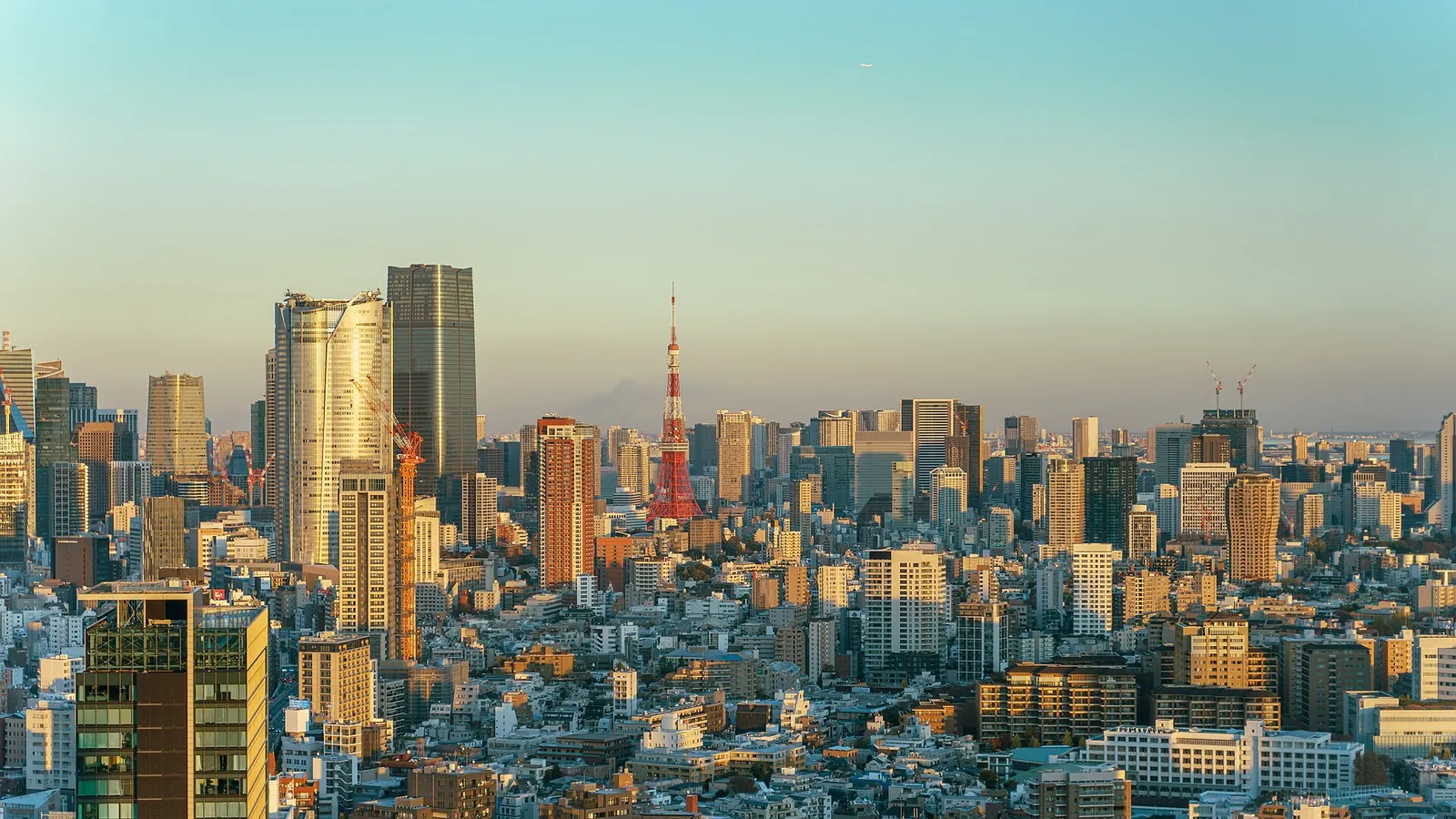
Minato's towers and Tokyo Tower at golden hour
Photograph: David Kernan — opens in a new tab · CC BY 4.0 — opens in a new tab
Changes: Resized and converted to WebP; displayed with responsive crops. · Original photograph and licence details ↗ — opens in a new tab
The Kaminarimon, gateway to Nakamise and Senso-ji; come at opening time
Photograph: Tak1701d — opens in a new tab · CC BY-SA 3.0 — opens in a new tab
Changes: Resized and converted to WebP; displayed with responsive crops. · Original photograph and licence details ↗ — opens in a new tab
Meiji Jingu's approach, quietest soon after the sunrise opening
Photograph: Guilhem Vellut from Annecy, France — opens in a new tab · CC BY 2.0 — opens in a new tab
Changes: Resized and converted to WebP; displayed with responsive crops. · Original photograph and licence details ↗ — opens in a new tab
Shibuya Crossing from above: watch a few light cycles, then cross yourself
Photograph: Syced — opens in a new tab · CC0 — opens in a new tab
Changes: Resized and converted to WebP; displayed with responsive crops. · Original photograph and licence details ↗ — opens in a new tab
A sushi set in the Tsukiji Outer Market, the classic centre-day breakfast
Photograph: Cheng-en Cheng — opens in a new tab · CC BY-SA 2.0 — opens in a new tab
Changes: Resized and converted to WebP; displayed with responsive crops. · Original photograph and licence details ↗ — opens in a new tab