Chubu · Nagano, Gifu
Kiso Valley travel guide: post towns, Nakasendo walks and food
A Kiso Valley visit can be a quiet street lined with timber buildings, a walk between old post towns or a night that lets you enjoy the town after a day’s travel. These are different experiences. Choose the one you want before trying to fit every familiar Nakasendo name into the same route.
- Suggested time
- 1–2 days for a focused valley visit
- Where to stay
- A post town or a useful rail-connected base for your chosen route
- Season and timing
- Walkable conditions depend on weather, trail status and daylight
The short answer
Allow one full day for a focused post-town visit or walk, and consider an overnight for a slower Kiso stay. Decide first between exploring a town and walking a trail section. Check the railway station, onward bus and return from the other end of the walk rather than assuming the preserved towns share one convenient station.
Choose a town visit or a trail day
Tsumago, Magome and Narai are well-known introductions to the region’s post-town heritage. A town visit gives you time for streets, small shops and a meal. A point-to-point walk asks you to commit time and energy to the route between places. Neither is automatically the more authentic choice.
If you have one day, choose the experience that fits your interest and mobility. Avoid adding several post towns simply because their names appear in the same guide. If walking is central to your trip, an overnight can leave more time for both the trail and the town instead of forcing everything between two distant train connections.
Understand the Nakasendo setting
The Nakasendo was a historic route connecting Kyoto and Edo through inland Japan. The preserved Kiso-area towns and trail sections offer an introduction to that transport history, but the entire historic route is not one short sightseeing walk.
Look for the relationship between the road, the town and its surrounding terrain. A guided explanation can add meaning to a street that otherwise becomes only a photograph. Respect residents and businesses, stay on permitted routes and check photography rules inside any building you visit.
Make time for the local food
What to eat and where to look
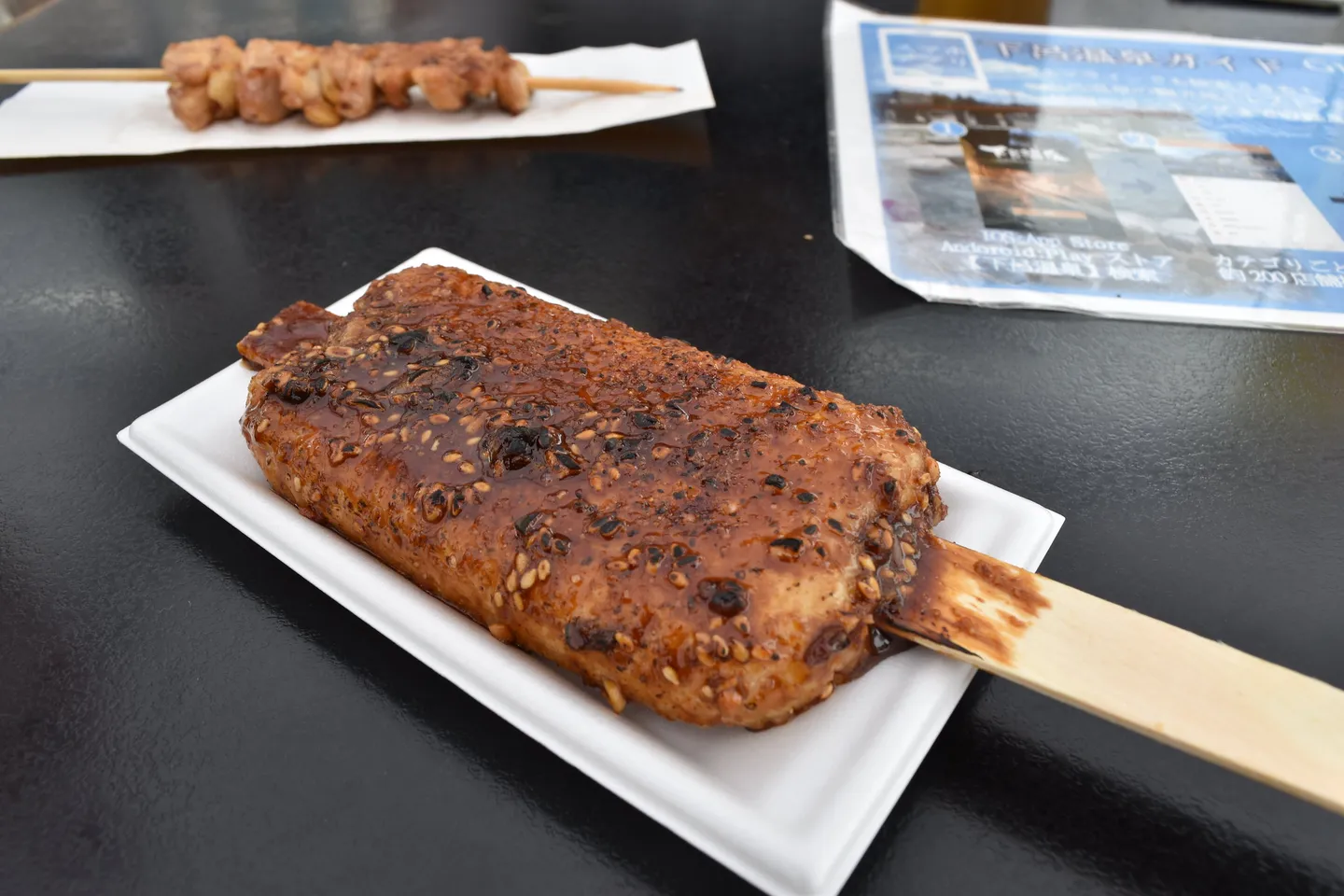
Gohei mochi
Grilled rice on a skewer with a savoury-sweet coating is a food tradition associated with Kiso and neighbouring valleys. Shapes and sauces vary between places, so compare the preparation on the menu.
- Where to look
- Small food shops and restaurants in the post towns.
- Fit it into your day
- A snack during a town visit or an addition to a meal; it is not always a substitute for a full lunch.
Soba
Buckwheat noodles fit a Nagano food stop, with serving style and accompanying ingredients varying by restaurant. Ask about the broth and toppings if you have dietary restrictions.
- Where to look
- Soba restaurants along your chosen town route, using current local listings.
- Fit it into your day
- A useful main lunch before a walk or after reaching the next town.
Sunki-zuke
This Kiso-area fermented vegetable preparation offers another way to explore the local menu. It can appear alongside a meal or in a noodle preparation, depending on the establishment and season.
- Where to look
- Restaurants and regional food sellers that identify sunki on the menu or label.
- Fit it into your day
- Try it as part of a meal without assuming every soba shop offers it.
Hoba-maki
This leaf-wrapped sweet belongs to the region’s seasonal food traditions. Ask about current availability rather than expecting a product associated with a particular season to be sold year-round.
- Where to look
- Local sweet shops and regional food listings.
- Fit it into your day
- A small food discovery for a town afternoon, with an alternative if it is out of season.
Plan the railway and the last connection
The railway serves the wider valley, with local connections needed for some post towns. Before choosing accommodation or a walking direction, check how you reach the start and leave the finish. A route that works on a map may fail if the final bus does not match your arrival.
Use the official Nakasendo guide and current operators for your chosen section. Keep larger luggage out of a trail day where possible, with any forwarding or storage arrangement checked in advance. Do not assume a seasonal luggage service operates on every date or between every pair of towns.
When a guided walk is useful
A guided Magome–Tsumago walk is worth comparing if you want historical context and help understanding the route. It does not remove the need to assess walking distance, terrain, weather and your own suitability. Read where the group meets and finishes, and whether onward transport is included.
The linked experience is a walking option, so choose it because a trail day fits your trip. If your priority is a gentle town visit or you have limited walking ability, look at the programme carefully instead of assuming that a countryside tour means vehicle transport throughout. Keep the experience’s start and end in your wider journey plan.
Build food and daylight into the day
For a town-based day, leave room for lunch and a slower walk through the streets. For a trail day, decide where you can eat before or after the route and carry what the current trail guidance permits. Small food businesses have individual hours; a shop shown in an older photograph may not be open when you arrive.
An overnight can make sense when you want dinner in the area and a less hurried start. Confirm any meal and check-in arrangements before relying on them. In wet, icy or short-day conditions, consider a town-focused alternative rather than treating completion of a planned walk as the goal.
Practical questions
Can you visit the Kiso Valley without hiking?
Yes. A focused visit to a post town can include streets, heritage and local food. Check the connection to that particular town and choose a programme suitable for your mobility.
Should you walk from Magome to Tsumago or visit Narai?
Choose a trail experience if walking is your priority, or a town-focused day if you want streets and food without a point-to-point hike. Compare access and the next stage of your journey.
Does a walking tour include transport back?
Do not assume it does. Read the meeting point, finish, inclusions and your onward connection for the exact experience and date.
Is an overnight worthwhile?
It can help you enjoy a slower visit and avoid squeezing a walk between long transfers. Confirm accommodation meal, arrival and departure arrangements before booking.
Sources and checks before you travel
Reference sources for the version dated 30 September 2026. Confirm opening times, access, transport and conditions for your travel dates.
Does this experience fit your route?
Explore related tours and experiences
Check dates and details on Viator ↗ — opens in a new tabAffiliate link · Book with ViatorPhoto credits
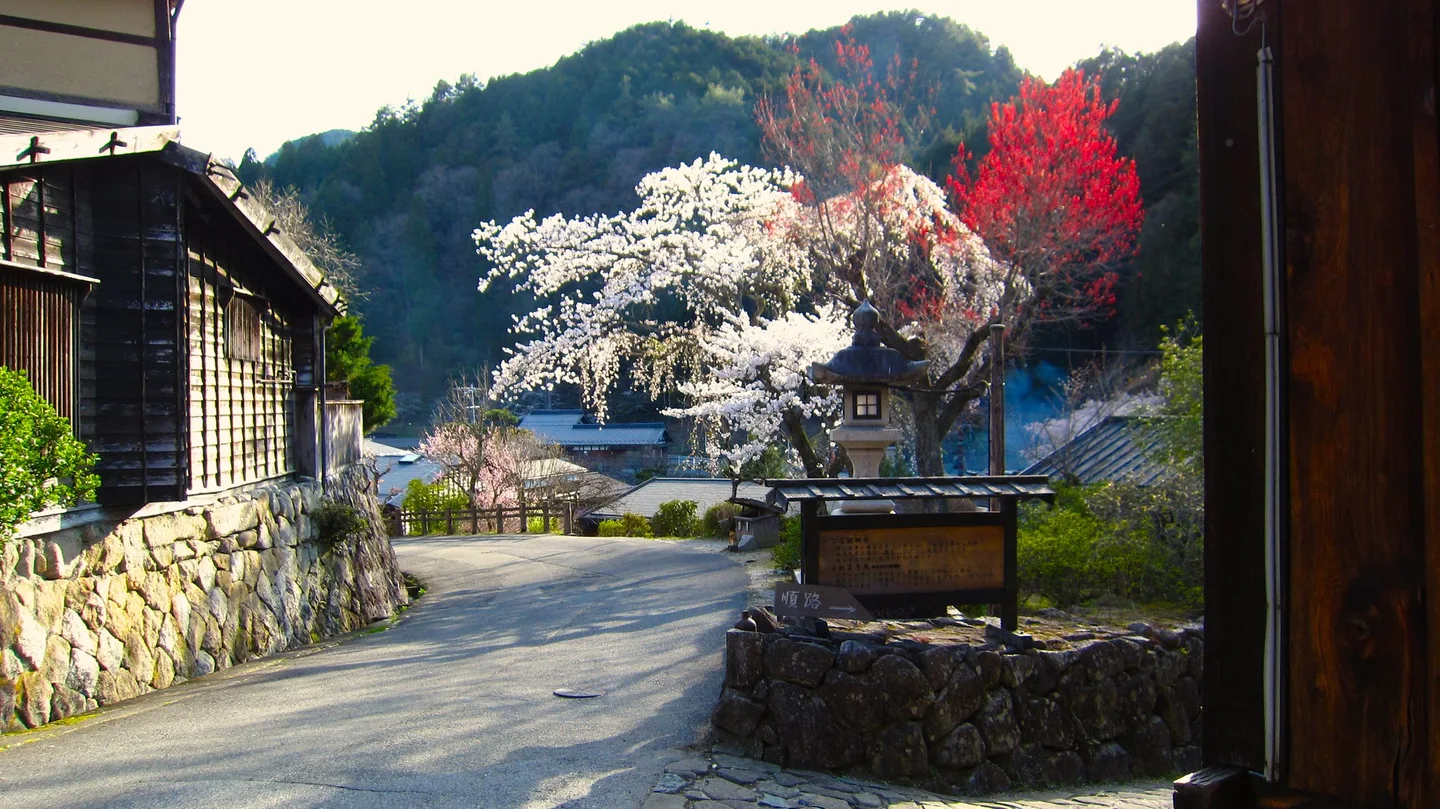
Traditional houses and flowering trees along a street in Tsumago, Kiso Valley.
Photograph: Ancient Foodlore — opens in a new tab · CC BY-SA 2.0 — opens in a new tab
Changes: Resized and converted to WebP; displayed with responsive crops. · Original photograph and licence details ↗ — opens in a new tab
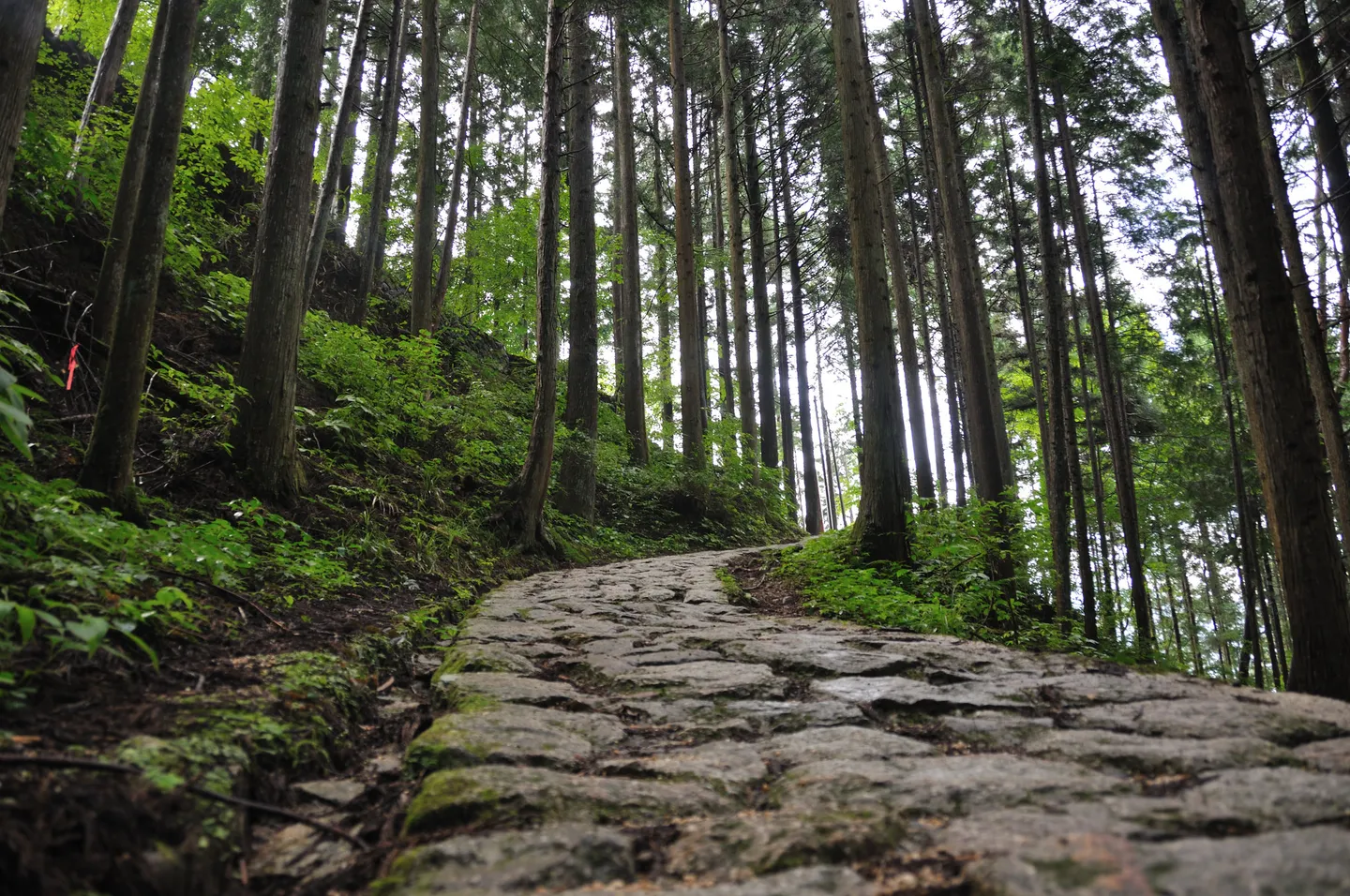
A stone-paved forest path between Magome and Tsumago in Kiso Valley.
Photograph: Carmelo en Japón — opens in a new tab · CC BY-SA 2.0 — opens in a new tab
Changes: Resized and converted to WebP; displayed with responsive crops. · Original photograph and licence details ↗ — opens in a new tab
Grilled gohei mochi on a skewer, illustrating a regional speciality.
Photograph: Syoko Matsumura — opens in a new tab · CC BY 2.0 — opens in a new tab
Changes: Resized and converted to WebP; displayed with responsive crops. · Original photograph and licence details ↗ — opens in a new tab