Kanagawa
Hakone travel guide: ryokan nights, the Hakone loop and Fuji views
Hakone is the hot-spring district most visitors reach from Tokyo: a ring of villages inside an old volcanic caldera, with Lake Ashi at one end and, on clear days, Mount Fuji beyond it. It is close enough for a day trip, which is exactly how many people miss it: a long circuit of trains, cable cars and boats, then the train back. Stay one night in a ryokan instead and Hakone becomes what it has always been, a place to bathe, eat well and see the lake early in the morning.
In this guide
Find the location ↗ — opens in a new tabThe short answer
Stay one night in Hakone, ideally at a ryokan in Gora or Miyanoshita, arriving on the Romancecar from Shinjuku or by shinkansen to Odawara. Ride the loop of mountain train, cable car, ropeway and lake boat on the first afternoon or next morning, or run it in reverse from Lake Ashi to avoid the main flow of visitors, and keep the morning for Hakone Shrine and the Fuji view. Add a second night for the museums of Gora and Sengokuhara or a better chance of clear weather. Buy the Hakone Freepass if you will ride most of the loop.
- Suggested time
- 1–2 nights
- Where to stay
- Gora or Miyanoshita for the loop; Hakone-Yumoto for the easiest arrival; Lake Ashi for quiet evenings and Fuji at dawn
- Season and timing
- Cherry blossom from late March to mid-April, hydrangeas in June, autumn foliage and pampas grass in autumn, and the clearest Fuji views in winter. Lake Ashi and Owakudani run 3–4°C cooler than Hakone-Yumoto.
One night or two, and where in Hakone to sleep
Hakone is not one town but a cluster of hot-spring villages on the slopes of an old volcano, joined by a mountain railway, a cable car, a ropeway, lake boats and buses. Seen in a day from Tokyo, it is mostly transport: about 80 minutes on the Romancecar from Shinjuku to Hakone-Yumoto, then the loop, then the journey back. One night changes that. You get an evening in the bath, dinner without watching the clock and, above all, the morning, when Lake Ashi is still and Mount Fuji may be standing over it.
Where you sleep decides how the loop feels. Hakone-Yumoto, where the Romancecar terminates, has the widest choice of inns and the station's baggage counter, but every sightseeing day starts from the bottom of the valley. Miyanoshita and Gora, higher up the Hakone Tozan line, sit in the middle of the circuit: the cable car leaves from Gora for the ropeway, and the Open-Air Museum is close by. Sengokuhara is quieter and suits a museum day, but you will rely on buses. Inns on Lake Ashi, around Moto-Hakone and Hakone-machi, give you the lake at dawn and the calmest evenings, at the price of the longest ride back to the station.
For a single night, choose Gora or Miyanoshita: ride up in the afternoon, bathe before dinner and take the ropeway early the next day. With two nights, spend one by the lake. If you are carrying suitcases, use the Hakone Baggage Delivery Service at Hakone-Yumoto Station. When we checked on 10 October 2026, Odakyu's page said bags handed in at the counter by 12:00 reach your hotel the same day, at ¥1,500 per regular bag or ¥2,500 for a large one, and on the way out they can be sent back to the station for collection between 13:30 and 18:30. It delivers only to hotels affiliated with Odakyu, so ask when you book. Hauling cases on and off the mountain train, cable car and buses is the one thing that makes Hakone hard work.
The Hakone loop: which way round, and which ticket
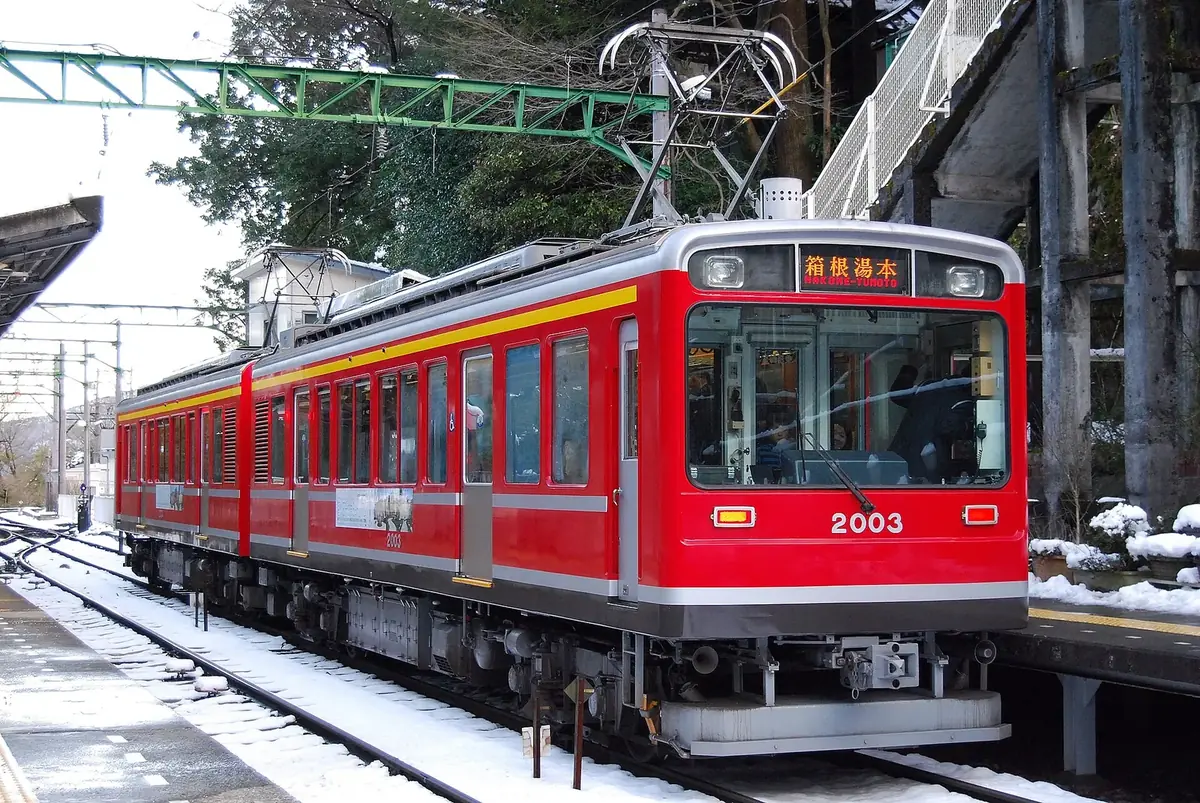
The classic circuit runs uphill from Hakone-Yumoto. The Hakone Tozan mountain train climbs to Gora in about 40 minutes, the cable car continues to Sounzan in about 10, and the Hakone Ropeway carries you over Owakudani: about 15 minutes to Owakudani, where you change gondolas, then about 30 minutes more via Ubako to Togendai on Lake Ashi. From Togendai, the Hakone Sightseeing Cruise boats, styled as pirate ships, cross the lake to Moto-Hakone and Hakone-machi in about 30 minutes, and a bus takes you back down. Hakone Navi, the transport operator's visitor site, also suggests the reverse: the bus from Hakone-Yumoto to the lake first, then the boat, ropeway, cable car and train, against the main flow of visitors.
The Hakone Freepass covers the mountain train, cable car, ropeway, boats and the buses of the operators listed on Odakyu's page; not every bus on Hakone's roads accepts it, so check the operator's name before boarding. When we checked on 10 October 2026, Odakyu listed the pass from Shinjuku at ¥7,100 for two days and ¥7,500 for three, including the train fare to Odawara and back, or ¥6,000 and ¥6,400 if you start at Odawara, which suits travellers arriving by shinkansen. A reserved Romancecar seat costs extra, ¥1,200 each way from Shinjuku. For comparison, Odakyu Hakone's fares from October 2025 put a single ropeway ride at ¥2,000 and a single lake crossing at ¥1,700, so anyone riding most of the loop comes out ahead with the pass.
If you will ride only part of the loop, you can pay as you go. Hakone Navi explains that a contactless credit card or phone can be tapped on the Tozan train, cable car, buses, ropeway and boats, and that paying this way on the ropeway and the cruise turns the fare into a one-day unlimited ticket. The ropeway operator warns of congestion on fine days in Golden Week, on three-day weekends and in the autumn-leaf season; Hakone Navi's crowd forecast is worth a look if your dates are flexible.
What to eat and where to look
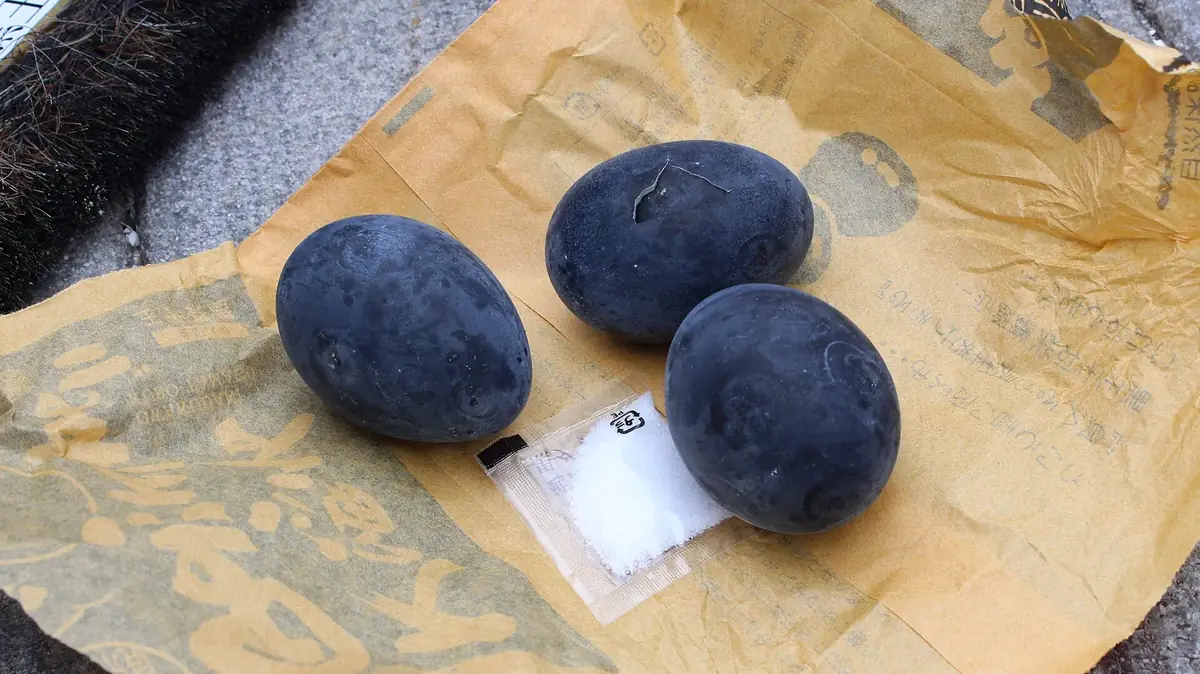
Kuro-tamago (Owakudani black eggs)
Hen's eggs boiled for an hour in 80°C hot-spring water at Owakudani, where iron and hydrogen sulphide turn the shells black. Inside, it is a plain hard-boiled egg; the fun is the place and the legend that each one adds seven years to your life.
- Where to look
- Kurotamago House at Owakudani, the only place that sells them, next to the ropeway station.
- Fit it into your day
- A snack at the halfway point of the loop.
Contains egg. They are sold in bags of several, so share them.
Yubadon (yuba rice bowl)
Yuba, the delicate skin that forms on heated soy milk, simmered and served over rice. Hakone Navi calls Naokichi's yubadon, made with Hakone water and high-quality soybeans, a must-eat in Hakone-Yumoto.
- Where to look
- Naokichi, three minutes' walk from Hakone-Yumoto Station; Hakone Navi notes long queues at weekends and footbaths to sit in while you wait.
- Fit it into your day
- Lunch on arrival in Hakone-Yumoto, before you head up the valley.
Soy-based. If you avoid fish, ask whether the broth is made with fish stock.
Shakuri-dofu (freshly scooped tofu)
Soft, warm tofu scooped straight from the tub and eaten with a splash of soy sauce. Odakyu's Hakone food guide describes it as a local speciality of Gora, made early every morning.
- Where to look
- Hakone Gindofu, a long-established handmade tofu shop a minute's walk from Gora Station.
- Fit it into your day
- A morning snack in Gora before the cable car.
Contains soy.
Kamaboko and satsuma-age (Odawara fish cakes)
Odawara, the gateway to Hakone, is known for kamaboko, a chewy steamed fish paste; satsuma-age is its deep-fried cousin. Hakone-Yumoto has a branch of the old Odawara maker Kagosei selling freshly fried fish cakes on skewers.
- Where to look
- Odawara Kagosei by Hakone-Yumoto Station; in Odawara, Suzuhiro Kamaboko Village has kamaboko-making workshops and a restaurant.
- Fit it into your day
- Street food on Hakone-Yumoto's shopping street while you wait for a train or bus.
Made from fish; some varieties contain egg or wheat.
Yumochi (Chimoto)
A soft rice-cake sweet made with glutinous rice flour, studded with finely chopped yokan bean jelly, scented with yuzu and wrapped in bamboo leaf. Odakyu describes it as a signature sweet of Hakone and Kanagawa.
- Where to look
- Chimoto, a long-established confectioner five minutes' walk from Hakone-Yumoto Station, by the Hayakawa River.
- Fit it into your day
- Buy one for the riverside walk, or a box for the train.
Sweet bean paste and rice flour; Chimoto closes on 1 January and several other days a year.
Owakudani: steam vents, black eggs and the ropeway closures of winter 2026–27
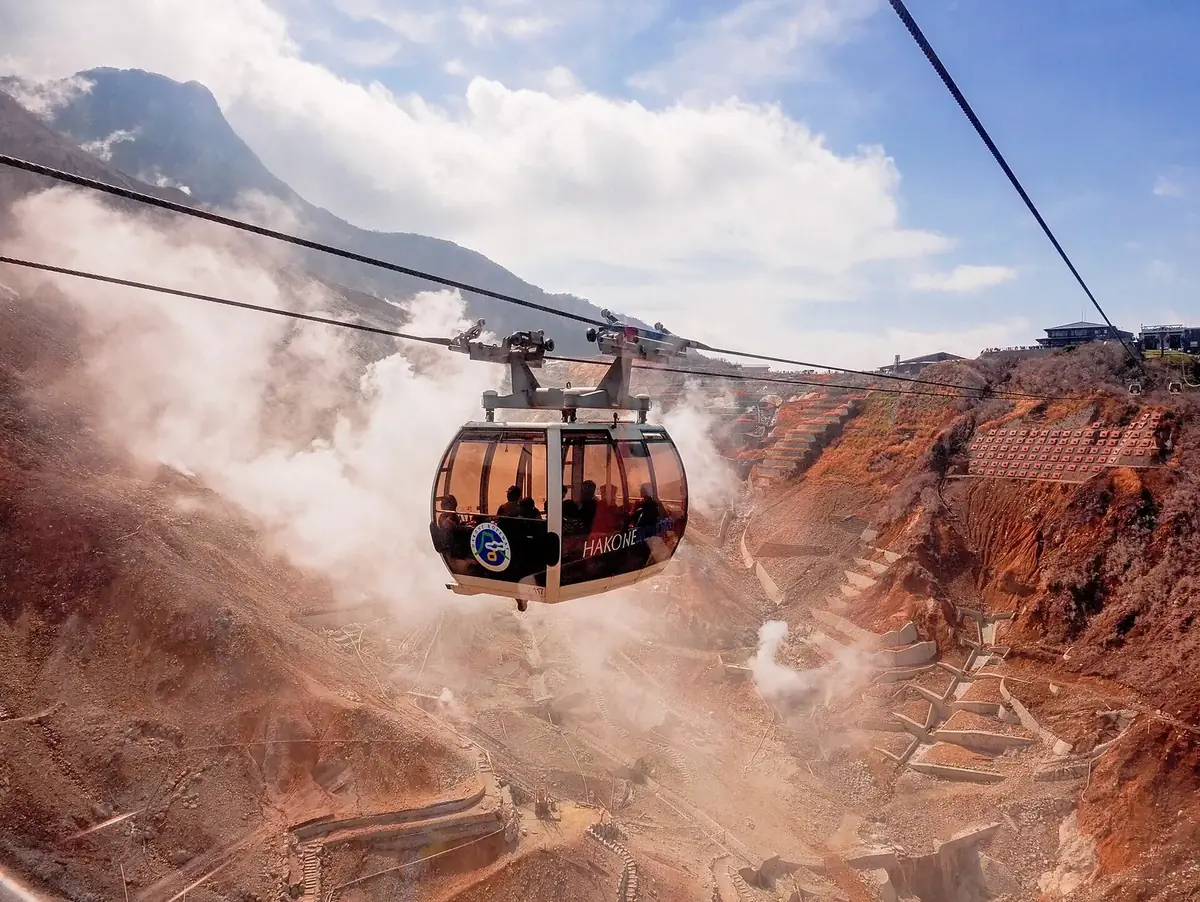
Hakone sits inside a caldera roughly 8 km wide and 12 km from north to south. The Japan Meteorological Agency describes Owakudani and Sounzan, on the north side of Mount Kamiyama, as its active fumarole zone, and explains that the last eruption of magma, about 3,200 years ago, collapsed the side of Kamiyama; the debris dammed the Haya River and gave Lake Ashi its present shape. Between Sounzan and Owakudani the ropeway passes about 130 m above the valley, directly over the steaming slopes.
Owakudani Station and its plaza reopened after a remodel on 25 April 2025, with a new observation area, Earth Valley, and a restaurant looking over the vents. The kuro-tamago are sold only at Kurotamago House here: eggs boiled for an hour in 80°C spring water, whose shells turn black as iron in the water reacts with hydrogen sulphide. Eating one is said to add seven years to your life. Because the valley is volcanically active and the ropeway stops in bad weather, check Hakone Navi's transport status on the morning you go.
Planned maintenance matters in winter 2026–27. Odakyu Hakone's notice says the Owakudani–Sounzan section will be replaced by buses from 7 to 24 December 2026, and the Togendai–Ubako–Owakudani section from 12 January to 26 February 2027. The replacement buses take about 10 and 15 minutes, run about every 15 minutes, accept the Freepass and are expected to be very crowded, so in those weeks reach Owakudani by whichever half of the ropeway is still running.
Lake Ashi, Hakone Shrine and the view of Fuji
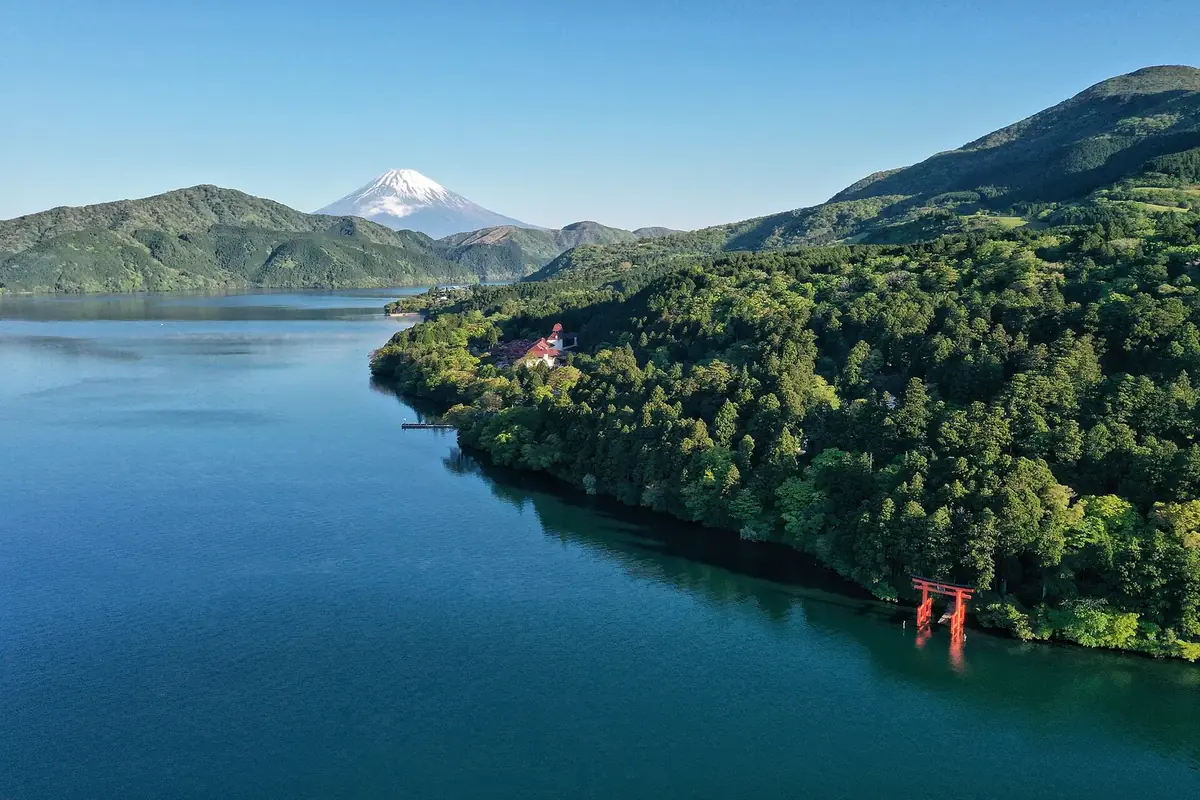
Hakone Shrine stands in the forest above Moto-Hakone. The shrine dates its founding to 757, when the monk Mangan built a sanctuary on the lakeshore, and its red Torii of Peace stands in the water below. Go early. Hakone Navi recommends Lake Ashi first thing in the morning, when the surface is still and, on a clear day, mirrors Mount Fuji; the boats from Moto-Hakone towards Togendai also pass both the torii and the mountain.
For a wider Fuji view, walk to Onshi Hakone Park, laid out on the site of a former imperial villa, whose lakeside viewpoints look across to the mountain on clear days. Hakone Navi's advice is that winter, when the air is clearest, gives the widest views. If the summit is hidden, the ropeway between Owakudani and Togendai is your second chance, as the gondolas look out over Lake Ashi towards Fuji.
Between Moto-Hakone and Hakone-machi, the Hakone Checkpoint recreates the Edo-period barrier where travellers on the Tokaido road were inspected; excavation and research allowed it to be rebuilt in its original form in 2007. Nearby, a stone-paved section of the Old Tokaido Road leads into the forest, a quiet walk if the lakefront feels busy.
Gora and Sengokuhara: a slower day of gardens and museums
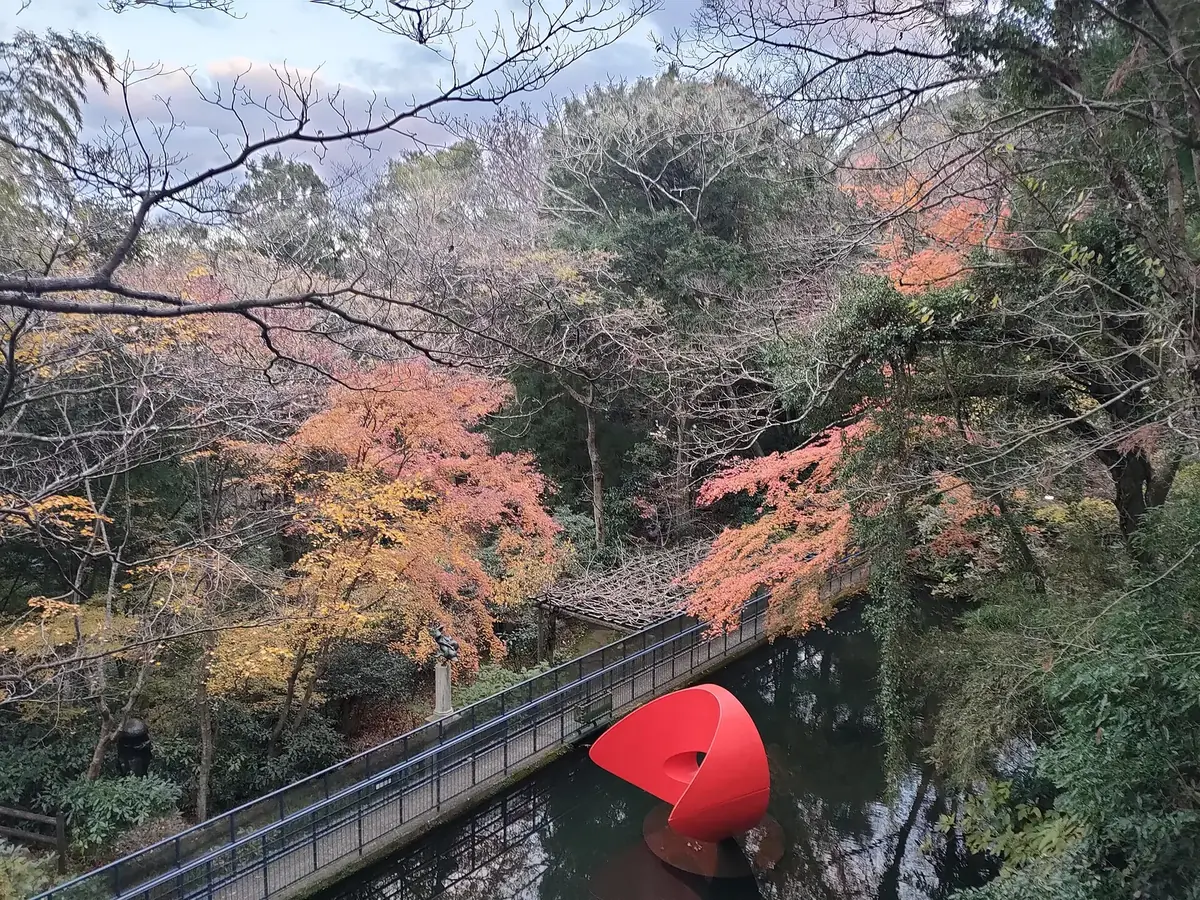
The Hakone Open-Air Museum sets sculpture across a hillside garden, with a Picasso pavilion and a footbath fed by spring water. It is a two-minute walk from Chokoku-no-Mori Station on the Hakone Tozan line, one of the stops on the way up to Gora. When we checked on 10 October 2026, the museum's site listed opening hours of 09:00–17:00 every day of the year, with last entry 30 minutes before closing.
In Gora itself, Hakone Gora Park is a formal garden known for flowers through the year; Hakone Navi counts more than ten varieties of cherry tree blooming there from early April, and its craft house runs glass-blowing and pottery sessions.
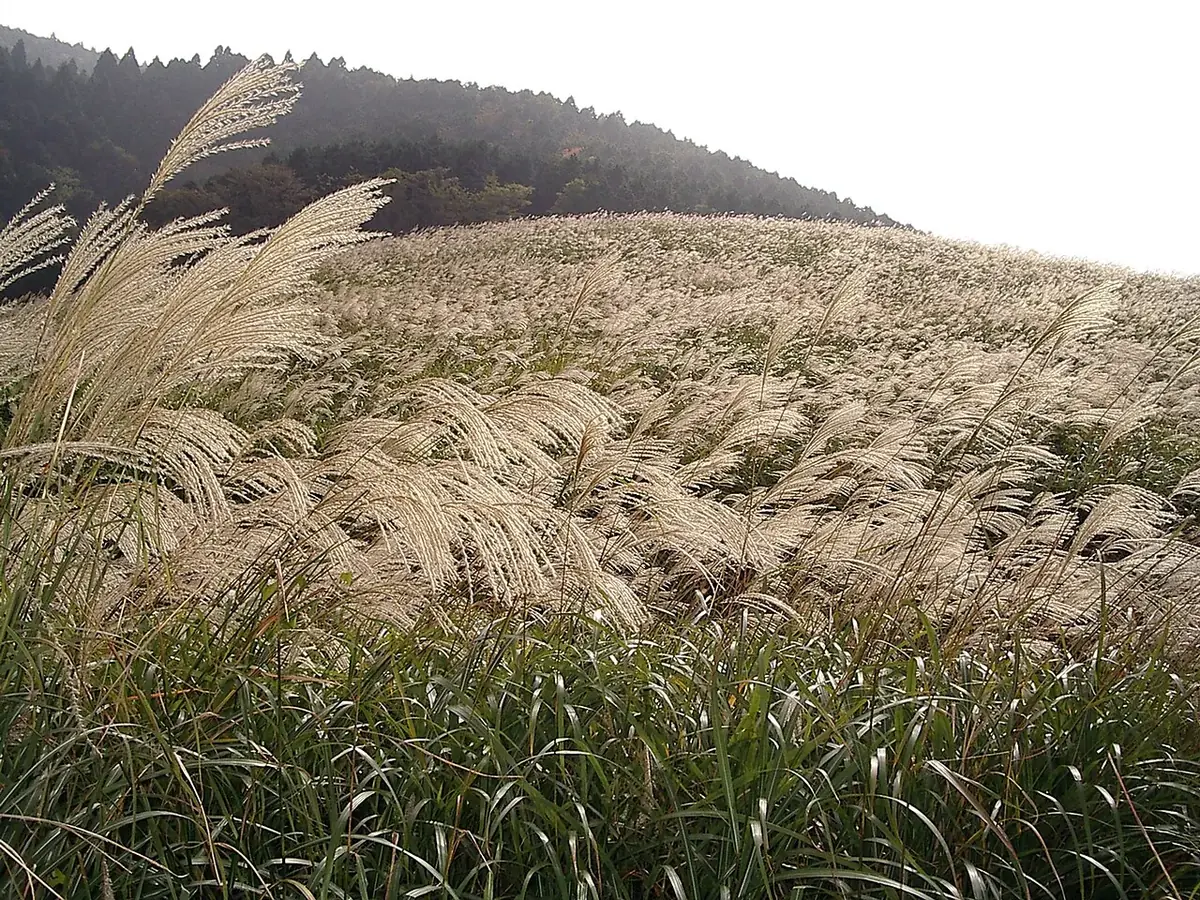
Sengokuhara, on the high ground north of the lake, is the quieter side of Hakone. Odakyu singles out its pampas-grass fields, at their best in autumn, and museums such as the Hakone Glass Forest Venetian Glass Museum. Buses link it with Hakone-Yumoto, Gora and Togendai, so it fits best on a second day rather than squeezed into the loop.
A ryokan night: baths, dinner and tattoos
Most people come to Hakone for the hot springs, and the easiest place to enjoy them is your own inn. JNTO notes that the shared baths at an inn are almost always free for overnight guests, that many places also offer private baths (*kashikiri*) that you reserve in advance or at the front desk, usually for a fee, and that some rooms come with their own en-suite hot-spring bath. When you book, check whether the rate includes dinner and breakfast, and tell the inn your arrival time.
In shared baths you go in naked, wash your whole body at the showers before getting in, keep your small towel out of the water and tie up long hair. Tattoos are handled case by case: JNTO says many onsen owners do not mind small, discreet tattoos and that skin-coloured cover seals help, but a private bath or a room with its own bath removes the question entirely, so filter for those when you book if you have tattoos.
If your hotel has no bath of its own, Hakone Navi's onsen pages list day-use facilities, from outdoor baths with views to Hakone Kowaki-en Yunessun, a hot-spring amusement park. JNTO notes that theme-park-style baths like this are the exception where you do not bathe naked.
Seasons, weather and crowds
Hakone is cooler than Tokyo. Hakone Navi gives average temperatures at Hakone-Yumoto of about 15°C in spring and autumn, 25°C in summer and 7°C in winter, with Lake Ashi and Owakudani usually 3–4°C colder. Bring a warm layer for the ropeway and the boat deck even in spring.
Each season has its draw. Cherry blossom reaches the river at Hakone-Yumoto from the last week of March, Gora Park in early April and the higher ground of Onshi Hakone Park in mid-April. Hydrangeas flower in June. Autumn brings the foliage and the Sengokuhara pampas grass, and winter the clearest air for Fuji, though in winter 2026–27 you should plan around the ropeway works between 7 December 2026 and 26 February 2027.
One night at Gora, then Owakudani and the lake, or a second night by Lake Ashi
This is an editorial suggestion, not a timetable. Check the transport status and the weather on the day.
- Day 1, morning: Romancecar from Shinjuku to Hakone-Yumoto. Leave your bags at the baggage counter before 12:00 and have yuba or soba for lunch in Yumoto.
- Day 1, afternoon: Hakone Tozan train up the valley, the Open-Air Museum, then check in at Gora or Miyanoshita and bathe before dinner.
- Day 2, morning: Cable car and ropeway as early as you can, black eggs at Owakudani, down to Togendai, and the boat to Moto-Hakone for Hakone Shrine and Onshi Hakone Park.
- Day 2, afternoon: Bus down to Hakone-Yumoto for your bags, then the Romancecar to Tokyo or the shinkansen from Odawara towards Kyoto.
- With a second night: sleep by Lake Ashi, give Sengokuhara and its museums a day, and keep the next dawn for the Fuji view.
Practical questions
Is Hakone worth an overnight stay or just a day trip?
An overnight stay is worth it. A day trip from Tokyo is mostly transport, while one night gives you a hot-spring bath, dinner at your inn and the early-morning lake, when Mount Fuji has the best chance of showing.
How many days do you need in Hakone?
One night and two days cover the loop, Owakudani, Lake Ashi and Hakone Shrine. Stay two nights if you want the Open-Air Museum, Sengokuhara and a slower pace, or a second chance at clear weather for Fuji.
Is the Hakone Freepass worth it?
Usually, if you ride most of the loop. When we checked on 10 October 2026, the two-day pass from Shinjuku cost ¥7,100 including the train to Odawara and back, while a single ropeway ride was ¥2,000 and a single lake crossing ¥1,700.
Can you see Mount Fuji from Hakone?
Yes, on clear days, from Lake Ashi, Onshi Hakone Park, the boats and the ropeway towards Togendai. Hakone Navi recommends early mornings at the lake and says winter's clear air gives the widest views.
Will the Hakone Ropeway be running during my trip?
Check before you go. Odakyu Hakone has scheduled replacement buses on the Owakudani–Sounzan section from 7 to 24 December 2026 and on the Togendai–Ubako–Owakudani section from 12 January to 26 February 2027, and the ropeway can stop in bad weather.
Can I use the onsen in Hakone if I have tattoos?
It depends on the bath. JNTO says many onsen owners overlook small tattoos and that cover seals help, but the safest choice is a ryokan with private baths or a room with its own hot-spring bath.
Keep planning your trip
Tokyo
How many nights Tokyo needs on a first or second trip, which area to sleep in, and how to split the city into east, centre and west days without zigzagging.
Read the guide
Mount Fuji
Day trip or a night at Lake Kawaguchi? Where to stay for clear morning views, the Chureito Pagoda and other viewpoints in order, and the 2026 climbing rules.
Read the guide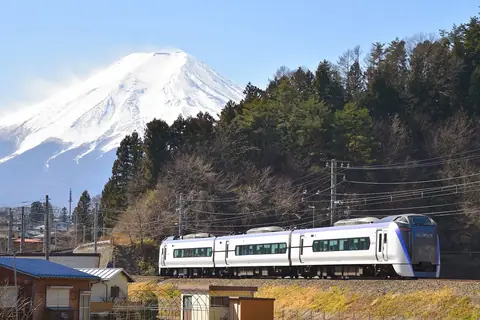
Day trips from Tokyo
Which day trips from Tokyo to take first, the train and pass for each, the season to go, which Tokyo area to sleep in and when Fuji or Hakone needs a night.
Read the guide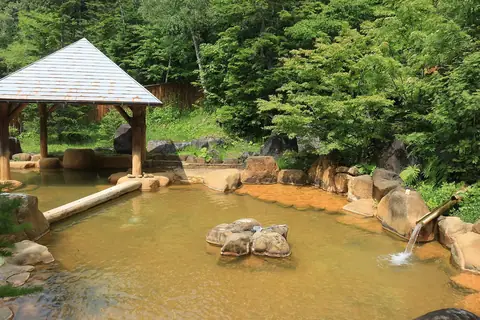
Ryokan and onsen
How a ryokan night works, what to tell the inn when booking, onsen etiquette and tattoos, private baths, and which towns on a Japan route suit a ryokan night.
Read the guide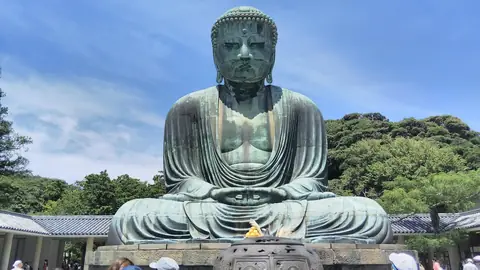
Kamakura
Which train to take to Kamakura, whether to start at Kita-Kamakura or Hase, how to add Enoshima on the Enoden and when a night in Kamakura makes sense.
Read the guide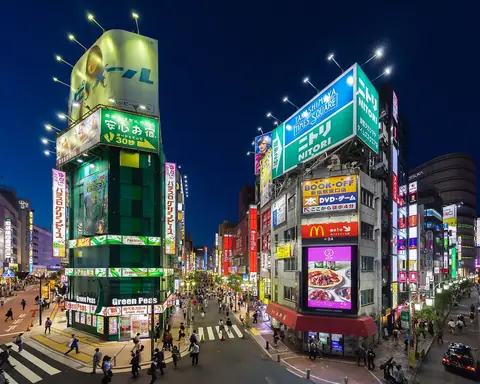
Japan in 7 days
A first-trip week in Japan: three nights in Tokyo, a ryokan in Hakone and two in Kyoto with Nara, plus the trains, the tickets and where to sleep.
Read the guideSources and checks before you travel
(23)
- Odakyu: Hakone Freepass ↗ — opens in a new tab
- Odakyu Hakone: fare amendments from 1 October 2025 (PDF) ↗ — opens in a new tab
- Odakyu Hakone: Hakone Ropeway replacement buses during maintenance (PDF) ↗ — opens in a new tab
- Hakone Navi: Hakone Ropeway ↗ — opens in a new tab
- Hakone Navi: Kurotamago House ↗ — opens in a new tab
- Hakone Navi: Owakudani Earth Valley observation area ↗ — opens in a new tab
- Hakone Navi: How to use contactless payment in the Hakone area ↗ — opens in a new tab
- Hakone Navi: reverse course to avoid the crowds ↗ — opens in a new tab
- Hakone Navi: the best views of Mt Fuji in Hakone ↗ — opens in a new tab
- Hakone Navi: cherry blossom itinerary from Lake Ashi to Gora ↗ — opens in a new tab
- Hakone Navi: before your trip ↗ — opens in a new tab
- Hakone Navi: summer in Hakone ↗ — opens in a new tab
- Odakyu: Hakone area destinations ↗ — opens in a new tab
- Odakyu: baggage services ↗ — opens in a new tab
- Odakyu: Limousine bus and Hakone Freepass ↗ — opens in a new tab
- The Hakone Open-Air Museum ↗ — opens in a new tab
- Hakone Shrine (official site, Japanese) ↗ — opens in a new tab
- Japan Meteorological Agency: Hakoneyama ↗ — opens in a new tab
- JNTO: onsen hot springs, tattoos and etiquette ↗ — opens in a new tab
- Hakone Navi: Naokichi ↗ — opens in a new tab
- Odakyu: Hakone-Yumoto food walk ↗ — opens in a new tab
- Odakyu: Hakone street food map ↗ — opens in a new tab
- Hakone Navi: Suzuhiro Kamaboko Museum ↗ — opens in a new tab
Reference sources for the version dated 16 October 2026. Confirm opening times, access, transport and conditions for your travel dates.
Photo credits
(6)
Lake Ashi, Hakone Shrine's lakeside torii and Mount Fuji on a clear day
Photograph: Charlie fong — opens in a new tab · CC BY-SA 4.0 — opens in a new tab
Changes: Resized and converted to WebP; displayed with responsive crops. · Original photograph and licence details ↗ — opens in a new tab
The ropeway crosses about 130 m above Owakudani's steam vents
Photograph: TLV and more — opens in a new tab · CC BY 2.0 — opens in a new tab
Changes: Resized and converted to WebP; displayed with responsive crops. · Original photograph and licence details ↗ — opens in a new tab
The Hakone Tozan mountain train, which climbs from Hakone-Yumoto to Gora
Photograph: toshinori baba This photo was taken with Nikon D40x — opens in a new tab · CC0 — opens in a new tab
Changes: Resized and converted to WebP; displayed with responsive crops. · Original photograph and licence details ↗ — opens in a new tab
Sculpture among autumn colour at the Hakone Open-Air Museum
Photograph: Suicasmo — opens in a new tab · CC BY-SA 4.0 — opens in a new tab
Changes: Resized and converted to WebP; displayed with responsive crops. · Original photograph and licence details ↗ — opens in a new tab
Sengokuhara's pampas-grass fields, at their best in autumn
Photograph: Jungle — opens in a new tab · CC BY-SA 3.0 — opens in a new tab
Changes: Resized and converted to WebP; displayed with responsive crops. · Original photograph and licence details ↗ — opens in a new tab
Kuro-tamago, the black eggs boiled in Owakudani's hot springs
Photograph: Jaspermatt — opens in a new tab · CC BY-SA 3.0 — opens in a new tab
Changes: Resized and converted to WebP; displayed with responsive crops. · Original photograph and licence details ↗ — opens in a new tab