Plan your trip · Japan
Japan Rail Pass: is it worth it? Official fares and cheaper options
The nationwide Japan Rail Pass gives unlimited rides on JR trains for 7, 14 or 21 days, and it is still the first thing many visitors buy. Whether it is worth it is a matter of arithmetic, not habit. JR Central and JR West sell shinkansen tickets online, JR West and JR East offer far cheaper regional passes, and the nationwide pass does not cover the fastest Nozomi trains without an extra ticket. This guide works through official fares for the common routes, so you can see which trips the pass suits, which regional pass to buy instead and how to use whichever you choose.
- Suggested time
- 7, 14 or 21 consecutive days; most trips need only a 7-day pass timed to the long-distance week
- Where to stay
- Hotels by Tokyo Station, Kyoto Station, Shin-Osaka or Hiroshima Station on the days you ride long distances
- Season and timing
- The pass is sold all year, but the official site warns that seats are hardest to reserve on 1–6 May, 7–16 August, 18–23 September and 29 December–3 January; smartEX fares rise at peak times.
The short answer
For a classic one-week Tokyo–Kyoto–Hiroshima–Tokyo loop, the 7-day Japan Rail Pass does not pay: the three shinkansen legs cost ¥45,270 online against the pass's ¥50,000. It pays once the week takes in longer legs, such as Kanazawa on the way to Kyoto, or Kyushu or Hokkaido. Time a 7-day pass to your long-distance week rather than buying 14 or 21 days, use JR West's Kansai-Hiroshima pass or JR East's Tokyo Wide Pass for one region, and otherwise book smartEX tickets online. On pass days, sleep near Tokyo Station, Kyoto Station, Shin-Osaka or Hiroshima Station.
Does the 7-day pass pay? The classic week, by the numbers
The nationwide pass is a bet that you will spend more on JR trains than it costs. When we checked on 2026-10-10, the 7-day Ordinary pass cost ¥50,000 on the official website. Price the classic first week against it: Tokyo to Kyoto, Kyoto to Hiroshima, then back to Tokyo. smartEX, the official online booking service for the Tokaido, Sanyo and Kyushu shinkansen, listed reserved seats on the fastest Nozomi trains at ¥13,970, ¥11,740 and ¥19,560 for those legs on regular-season dates, a total of ¥45,270.
So the pass loses by ¥4,730, and it is slower too: pass holders give up the Nozomi and ride the Hikari, or buy a special Nozomi ticket for each ride, which on this route adds ¥15,630. Comparing like with like does not rescue it: smartEX's Hikari prices for the same three legs come to ¥43,460. Other JR rides in the same seven days count in the pass's favour, from the Narita Express to the JR ferry to Miyajima (¥200 each way), so add up your own plan; measured against Nozomi tickets, the pass needs ¥4,730 of them to break even.
The pass pays once the week stretches across the map. Route the same loop through Kanazawa and it costs at least ¥52,200 on ordinary tickets; add Kyushu or Hokkaido and a single return trip can cost more than the pass on its own (the worked examples below give the fares). Either way the trip hangs on a few big stations, and that is where to sleep: with the hotel a short walk from the shinkansen gates, early trains, seat reservations and suitcases are far less work.
Prices, and exactly what the pass covers
When we checked on 2026-10-10, the official JAPAN RAIL PASS site listed these prices for passes bought on the site: ¥50,000 for 7 days, ¥80,000 for 14 days and ¥100,000 for 21 days in Ordinary cars, and ¥70,000, ¥110,000 and ¥140,000 for the Green (first-class) pass. Children aged 6 to 11 pay half. Exchange orders bought through travel agencies abroad cost more, ¥53,000, ¥84,000 and ¥105,000 for the Ordinary pass, so buy on the official site if you can. The days run consecutively; refunds are possible only before the first day, and the pass is not extended if trains are suspended.
The site lists what the pass covers: the trains of all six JR companies, from local trains to limited expresses and the shinkansen, including every train on the Tohoku, Hokkaido and Hokuriku shinkansen; the local routes of the JR bus companies, but not their expressway buses; the JR West Miyajima ferry, where you still pay the island's ¥100 visitor tax; and the Tokyo Monorail. Seat reservations cost nothing extra.
The exclusions matter more. No seat on a Nozomi or Mizuho is valid on the Tokaido, Sanyo and Kyushu shinkansen, reserved or not, which is a real loss on the Tokyo–Osaka line, where the site counts up to 12 Nozomi an hour. You take the Hikari, Kodama, Sakura or Tsubame instead, or buy the NOZOMI MIZUHO Ticket, sold only to pass holders, before each ride. The site lists it at ¥4,960 from Tokyo to Kyoto or Shin-Osaka, ¥6,500 from Tokyo to Hiroshima and ¥4,960 from Shin-Osaka to Hakata, the same price in any class. GranClass, private compartments and sleeping cars cost extra, and JR trains that run onto private lines, such as the through trains to Tobu-Nikko, Kawaguchiko and Izukyu-Shimoda, need a separate fare for the non-JR section.
Make time for the local food
What to eat and where to look
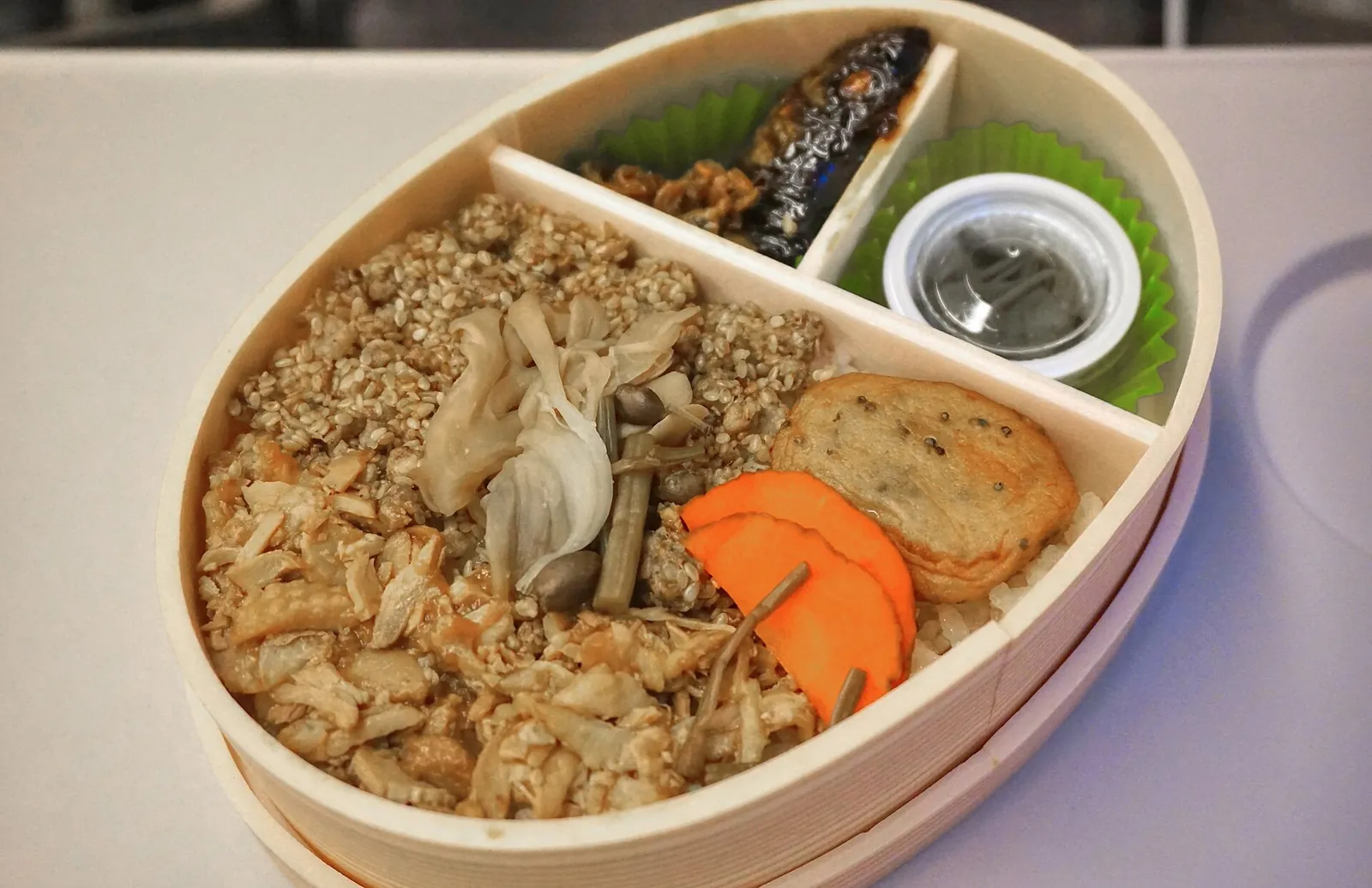
Regional ekiben at Tokyo Station
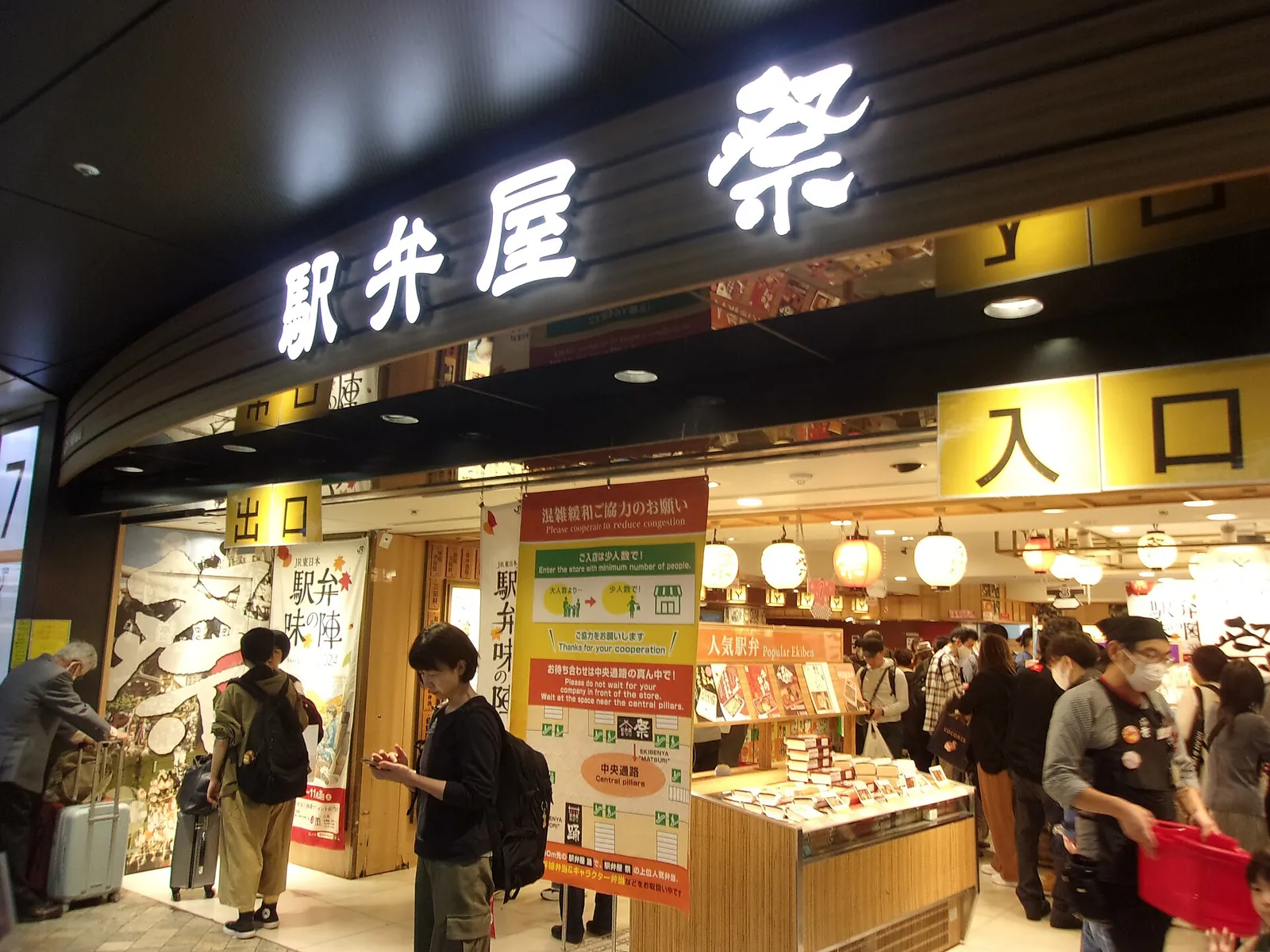
Ekiben are boxed meals made for eating on the train, usually built around local ingredients. JNTO notes that Tokyo Station gathers ekiben from all over Japan, and its Tokyo Station page counts hundreds of bento for sale near the bullet-train ticket gates. JNTO puts prices from under ¥1,000 for rice, vegetables and one main dish to around ¥3,000 for wagyu boxes.
- Where to look
- The ekiben counters near the shinkansen ticket gates at Tokyo Station; photos by the counter show what is inside each box.
- Fit it into your day
- Lunch on the first long ride out of Tokyo, bought just before you board.
Most boxes centre on beef, pork or fish. JNTO points vegetarians to Tokyo Station's Vegetable Bento, marked as free of meat, fish, egg and dairy, but gluten-free boxes are rare because soy sauce is everywhere.
Kyoto Station ekiben
Kyoto Station's boxes lean on the city's own cooking; JNTO mentions sushi wrapped in yuba (tofu skin) and peppercorn rice among the Kyoto staples you will find there. Buying one is the easiest way to taste Kyoto on a travel day.
- Where to look
- Kyoto Station, before boarding the shinkansen towards Hiroshima or Tokyo.
- Fit it into your day
- A light lunch on the run west to Hiroshima.
Yuba is made from soy; sushi boxes contain fish and vinegared rice.
Masu no sushi (Toyama trout sushi)
Preserved trout pressed over vinegared rice, wrapped in bamboo leaves and packed in a small round wooden tub, with a knife to cut it into wedges. JNTO says it is said to date from 1717, when a Toyama lord sent sushi of Jinzu River trout and rice to the shogun as tribute.
- Where to look
- Minamoto at JR Toyama Station, named by JNTO; Toyama is a Hokuriku shinkansen stop before Kanazawa.
- Fit it into your day
- Share it on the Hokuriku shinkansen between Toyama and Tokyo.
Cured trout on vinegared rice, so not for anyone avoiding raw or cured fish.
Hipparidako meshi (Nishi-Akashi octopus rice)
Rice cooked with Akashi octopus and local favourites such as bamboo shoots and shiitake mushrooms, served in a clay pot shaped like the pots used to catch octopus off Nishi-Akashi. JNTO lists it among the ekiben that double as souvenirs.
- Where to look
- Nishi-Akashi Station, the Sanyo shinkansen stop west of Shin-Kobe that JNTO links it to.
- Fit it into your day
- Lunch on the Sanyo shinkansen between Kansai and Hiroshima; keep the pot.
Contains octopus, and the clay pot adds weight to your luggage.
Worked examples: the trips the pass does pay for
Tokyo, Kanazawa, Kyoto, Hiroshima and back. JR West's own e-ticket for Tokyo to Kanazawa on the Hokuriku shinkansen cost ¥14,400 for a reserved seat on regular-season dates (prices for purchases from 14 March 2026), for a journey JR West times at 2 hours 28 minutes. From Kanazawa to Kyoto you change at Tsuruga from the shinkansen to the Thunderbird limited express; even JR West's discounted one-way ticket for that leg, sold only to foreign visitors through overseas agents, is ¥6,500. Add Kyoto–Hiroshima and Hiroshima–Tokyo and the loop costs at least ¥52,200, so a 7-day pass comes out ahead. The order fits seven days with two nights in Kanazawa, three in Kyoto and one in Hiroshima.
Kyushu is where the sums are clearest. smartEX lists Kyoto to Kagoshima-Chuo at ¥25,560 one way on the fastest trains, so the return alone, ¥51,120, is more than the 7-day pass; Tokyo to Hakata is ¥23,610. With the pass you ride the Hikari and Sakura, since the Mizuho is excluded. Hokkaido works the same way: JR Hokkaido lists Tokyo to Shin-Hakodate-Hokuto, where every seat is reserved, at ¥23,760 one way, so the return costs ¥47,520 before you add the Hokuto limited express towards Sapporo (¥9,770 from Hakodate).
Longer passes rarely change the verdict. The 14-day pass costs ¥30,000 more than the 7-day one, and a second week of city stays and short hops will not use that up: even a Kyoto–Hiroshima return is ¥23,480 on smartEX. Buy 14 or 21 days only if your long journeys are spread across the whole trip, for example Hokkaido at one end and Kyushu at the other. Otherwise start a 7-day pass on the morning of your first long journey and pay for the city days as you go.
Regional passes: Kansai-Hiroshima, Tokyo Wide and the Hokuriku passes
If most of your rail days fall in one region, a regional pass costs far less. JR West's Kansai-Hiroshima Area Pass cost ¥17,000 for five consecutive days when we checked. It covers reserved seats on the Sanyo shinkansen between Shin-Osaka and Hiroshima, the Haruka from Kansai Airport and other limited expresses in its area, JR West local and rapid trains, and the JR ferry to Miyajima. It does not cover the Tokaido shinkansen, which includes the short Kyoto–Shin-Osaka hop, so use JR's conventional trains for that leg. A Shin-Osaka–Hiroshima return on smartEX costs ¥21,500, so the pass pays for itself on that trip alone.
JR West stopped selling the Kansai Area Pass on 30 September 2026; passes bought by then stay valid for their period. For Kyoto, Osaka, Kobe and Nara on local and rapid trains, JR West's Kansai Mini Pass costs ¥3,000 for three days (the Haruka is extra). The Kansai WIDE Area Pass, ¥12,000 for five days, reaches further: the Sanyo shinkansen between Shin-Osaka and Okayama, limited expresses such as the Haruka, Kuroshio and Konotori, and excursions as far as Kinosaki Onsen, Amanohashidate, Tottori, Shirahama and Takamatsu.
Around Tokyo, JR East's JR TOKYO Wide Pass has cost ¥16,000 for three consecutive days since 14 March 2026 and is sold to holders of non-Japanese passports. JR East says it covers the shinkansen to Karuizawa, the Narita Express, the Fujikyu line to Kawaguchiko (reserved seats on Fujikyu's own Fujisan Express and Fujisan View Express cost extra), the Izu Kyuko line, and reserved seats on the Nikko, Kinugawa and SPACIA Kinugawa trains that run through from JR onto Tobu tracks; it does not cover the Tokaido shinkansen. It suits a burst of day trips from Tokyo, not a whole trip.
For the Hokuriku route, JR West's Hokuriku Arch Pass cost ¥35,000 for seven days. It covers reserved seats on the Hokuriku shinkansen between Tokyo and Tsuruga, the Thunderbird and the Haruka, JR East and JR West local trains in an area that runs from Tokyo and its airports to Kanazawa and Kansai, and the Tokyo Monorail, but not the Tokaido or Sanyo shinkansen. It suits a trip that lands in Tokyo and leaves from Kansai via Kanazawa, or the reverse. Tokyo–Kanazawa alone is ¥14,400, so add up your own legs before choosing it over the nationwide pass, which costs ¥15,000 more and adds the Tokaido and Sanyo lines.
For the Alps loop, JR Central's Takayama-Hokuriku Area Tourist Pass cost ¥19,800 for five consecutive days. It covers JR trains from Kansai Airport, Osaka and Kyoto to Tsuruga, non-reserved seats on the Hokuriku shinkansen between Tsuruga and Toyama, the line from Toyama via Takayama to Nagoya, and the highway buses linking Takayama, Shirakawa-go, Kanazawa and Toyama, which need reservations; up to six seat reservations on JR trains are free. Its routes end at Nagoya on the Takayama side, so plan a separate ticket if you return to Kyoto from there.
When ordinary tickets bought online are the better deal
Ordinary tickets win for the classic week, for trips with only a couple of long legs between Tokyo and Hiroshima, and whenever you want the Nozomi. smartEX, the online booking service of JR Central, JR West and JR Kyushu, sells Tokaido, Sanyo and Kyushu shinkansen tickets from overseas with a credit card, for up to six people at a time; you board with a QR code on your phone or a registered IC card. Some fares open a year ahead, and smartEX Service bookings can be changed free of charge before departure. Prices move with the season: the regular fare rises by ¥200 at peak times and ¥400 at the busiest, and by double that on journeys that cross from one shinkansen line to the next.
Booking early makes it cheaper. EX Hayatoku 21, for reserved Nozomi seats booked at least 21 days ahead, listed Tokyo–Kyoto at ¥12,430 and Tokyo–Hiroshima at ¥15,390 (fares from 13 March 2026). Seats are limited, the ticket cannot be changed once booked, and it is not sold over Golden Week, Obon and New Year. Booked that way, the classic week falls to ¥39,560, ¥10,440 less than the pass.
For western Japan and the Hokuriku line, JR-WEST ONLINE TRAIN RESERVATION is JR West's English booking site. It opens bookings at 10:00 Japan time one month before travel, takes up to six people per booking and also sells JR West's regional passes. For short local hops inside a region, an IC card such as ICOCA or Suica saves buying a ticket each time.
Buying, collecting and using the pass
Only foreign visitors entering Japan as a 'Temporary Visitor' can use the pass, and the status must be shown by a stamp or sticker in your passport. Automated immigration gates do not add one, so use a staffed booth or ask an officer for the stamp; without it you cannot collect the pass, even if you have paid. Buying on the official site needs your passport number and a credit card in your name, and one purchaser can add up to six companions. It is also the only way to book seats before you arrive.
Collect the pass before or during its validity at a JR ticket office, or at a reserved-seat ticket machine with a passport reader; the official list includes counters at Narita and Haneda airports and at Tokyo, Kyoto, Shin-Osaka and Hiroshima stations. To reserve a seat, scan the QR code on the pass at the machine (or enter its reservation number), type your passport number, choose the train and print the seat ticket. Machines and ticket offices run from 04:00 to 23:30 at most, with shorter hours at many stations, and a reservation already printed can be changed only at a staffed window.
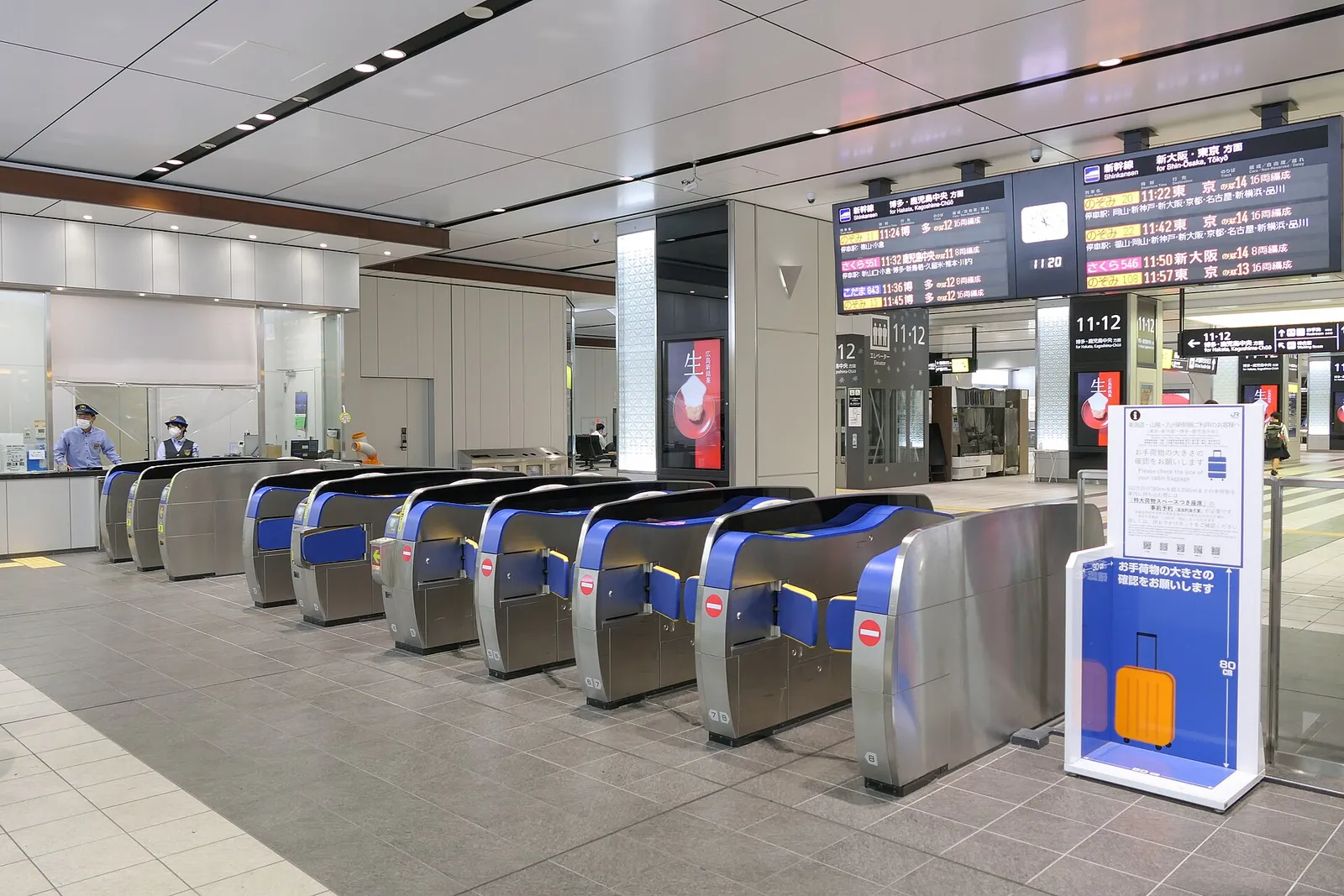
At an automatic gate, insert the pass in the ticket slot and take it back on the other side; gates marked 'IC only' will not accept it, and the Nozomi ticket on its own will not open a gate. At a staffed gate, show the pass with its validity dates visible. Carry your passport whenever you use the pass, as staff may ask for it. Book long journeys early for 1–6 May, 7–16 August, 18–23 September and 29 December–3 January, when the official site warns that seats are hardest to get.
Large suitcases: the oversized-baggage seat rule
On the Tokaido, Sanyo and Kyushu shinkansen, from Tokyo through Shin-Osaka and Hakata to Kagoshima-Chuo, any bag whose length, width and height add up to between 161 and 250 cm needs a reserved 'seat with an oversized baggage area': one of the back-row seats in some cars, with space behind it for the case. The reservation costs nothing extra, but JR Central charges ¥1,000 if you board with such a bag without one, and bags over 250 cm cannot travel at all. Non-reserved cars have no such seats. The JR Pass site applies the same rule to the Nishi Kyushu shinkansen to Nagasaki.
Bags up to 160 cm can go on the overhead rack or in the baggage area on the deck without a reservation. Pass holders book the oversized-baggage seat by asking at a ticket office or on the JAPAN RAIL PASS Reservation site; ticket buyers can choose it at the ticket machines, on smartEX or on JR-WEST ONLINE TRAIN RESERVATION. If you would rather not haul cases between hotels at all, JR Central points to same-day luggage delivery from a hotel or station to your next hotel.
A workable plan: one 7-day pass inside a two-week trip
This is an editorial suggestion, not a timetable. The fares behind it are the official figures above.
- Before you fly: buy the pass on the official site, book the long shinkansen seats (with an oversized-baggage seat if you need one) and plan to get the Temporary Visitor stamp at a staffed immigration booth.
- Tokyo days before the pass starts: collect the pass at the airport or Tokyo Station, with its first day set for your first long journey, and ride the city on an IC card.
- Pass day 1: Hokuriku shinkansen from Tokyo Station to Kanazawa (2 hours 28 minutes) for two nights.
- Pass day 3: shinkansen to Tsuruga and the Thunderbird to Kyoto; three nights near Kyoto Station or downtown.
- Pass day 6: shinkansen to Hiroshima on a Hikari, or a Nozomi with the special ticket, then the JR line and JR ferry to Miyajima; one night by Hiroshima Station.
- Pass day 7: shinkansen back to Tokyo, the last long ride the pass covers.
- Without Kanazawa: skip the nationwide pass. Book Tokyo–Kyoto and Hiroshima–Tokyo on smartEX (EX Hayatoku 21 if your dates are fixed) and use the Kansai-Hiroshima Area Pass for the Kansai and Hiroshima days.
Practical questions
Is the Japan Rail Pass worth it for a one-week trip?
Not for the classic Tokyo–Kyoto–Hiroshima–Tokyo week: on regular-season smartEX fares the three shinkansen legs cost ¥45,270, against ¥50,000 for the 7-day pass. It pays when the week includes longer legs, such as Kanazawa on the way to Kyoto, or a trip to Kyushu or Hokkaido.
How much does the Japan Rail Pass cost?
When we checked on 2026-10-10, the official site listed ¥50,000, ¥80,000 and ¥100,000 for 7, 14 and 21 days in Ordinary cars, and ¥70,000, ¥110,000 and ¥140,000 for the Green pass, bought online. Exchange orders from travel agencies abroad cost more.
Can I ride the Nozomi with a Japan Rail Pass?
Only with a separate NOZOMI MIZUHO Ticket, sold to pass holders and bought before each ride; the official site lists ¥4,960 from Tokyo to Kyoto and ¥6,500 from Tokyo to Hiroshima. Otherwise use the Hikari, Kodama, Sakura and Tsubame.
Where can I pick up the Japan Rail Pass?
At the JR ticket offices and passport-reading ticket machines listed on the official site, including Narita and Haneda airports and Tokyo, Kyoto, Shin-Osaka and Hiroshima stations. You need a Temporary Visitor stamp or sticker in your passport, which automated immigration gates do not give.
Do I need seat reservations with a Japan Rail Pass?
Not always, since non-reserved seats are covered, but reservations are free and some trains are all-reserved. If your suitcase measures 161–250 cm in total, you must reserve a seat with an oversized baggage area on the Tokaido, Sanyo and Kyushu shinkansen.
What can I use instead of the Kansai Area Pass?
JR West stopped selling it on 30 September 2026. For local trains around Kyoto, Osaka, Kobe and Nara, the Kansai Mini Pass costs ¥3,000 for three days; the Kansai WIDE Area Pass (¥12,000) and the Kansai-Hiroshima Area Pass (¥17,000), both for five days, add the Sanyo shinkansen.
Sources and checks before you travel
Reference sources for the version dated 10 October 2026. Confirm opening times, access, transport and conditions for your travel dates.
- JAPAN RAIL PASS (official site): types and prices ↗ — opens in a new tab
- JAPAN RAIL PASS: scope of validity and train accommodations ↗ — opens in a new tab
- JAPAN RAIL PASS: use of NOZOMI and MIZUHO trains ↗ — opens in a new tab
- JAPAN RAIL PASS: eligibility for use ↗ — opens in a new tab
- JAPAN RAIL PASS: purchase online ↗ — opens in a new tab
- JAPAN RAIL PASS: reserved seats, ticket gates and conditions for use ↗ — opens in a new tab
- JAPAN RAIL PASS: pick-up and exchange locations ↗ — opens in a new tab
- smartEX: smartEX Service and reserved-seat prices ↗ — opens in a new tab
- smartEX: EX Hayatoku 21 ↗ — opens in a new tab
- JR Central: Nozomi in peak periods and Shinkansen Online Reservation ↗ — opens in a new tab
- JR Central: luggage information ↗ — opens in a new tab
- JR West: Kansai-Hiroshima Area Pass ↗ — opens in a new tab
- JR West: Kansai Area Pass, Kansai Mini Pass and Kansai WIDE Area Pass ↗ — opens in a new tab
- JR West: Hokuriku Arch Pass ↗ — opens in a new tab
- JR West: HOKURIKU One-way Ticket and Hokuriku shinkansen ↗ — opens in a new tab
- JR West (JR Odekake Net): Shinkansen e-ticket prices, Hokuriku shinkansen (Japanese) ↗ — opens in a new tab
- JR West: JR-WEST ONLINE TRAIN RESERVATION conditions ↗ — opens in a new tab
- JR Central Tourist Pass: Takayama-Hokuriku Area Tourist Pass ↗ — opens in a new tab
- JR East: JR TOKYO Wide Pass ↗ — opens in a new tab
- JR Hokkaido: regular tickets and prices ↗ — opens in a new tab
- JR West Miyajima Ferry: fares ↗ — opens in a new tab
- JNTO: Narita Airport access ↗ — opens in a new tab
- JNTO: Experience Japan's local ekiben culture ↗ — opens in a new tab
- JNTO: Savour local ekiben lunchbox specialties while travelling by train ↗ — opens in a new tab
- JNTO: Tokyo Station ↗ — opens in a new tab
Does this experience fit your route?
If Kansai is your base, JR West also sells its Kansai WIDE Area Pass through Viator. Compare the price with JR West's own website and check how the pass is collected before you book.
Check dates and details on Viator ↗ — opens in a new tabAffiliate link · Book with ViatorPhoto credits
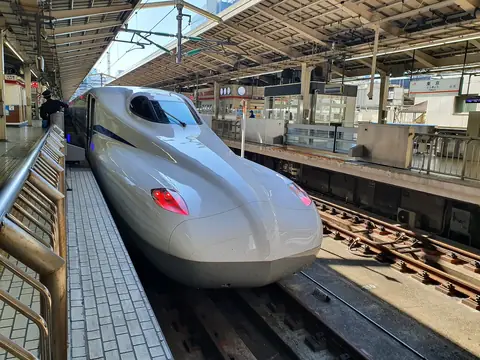
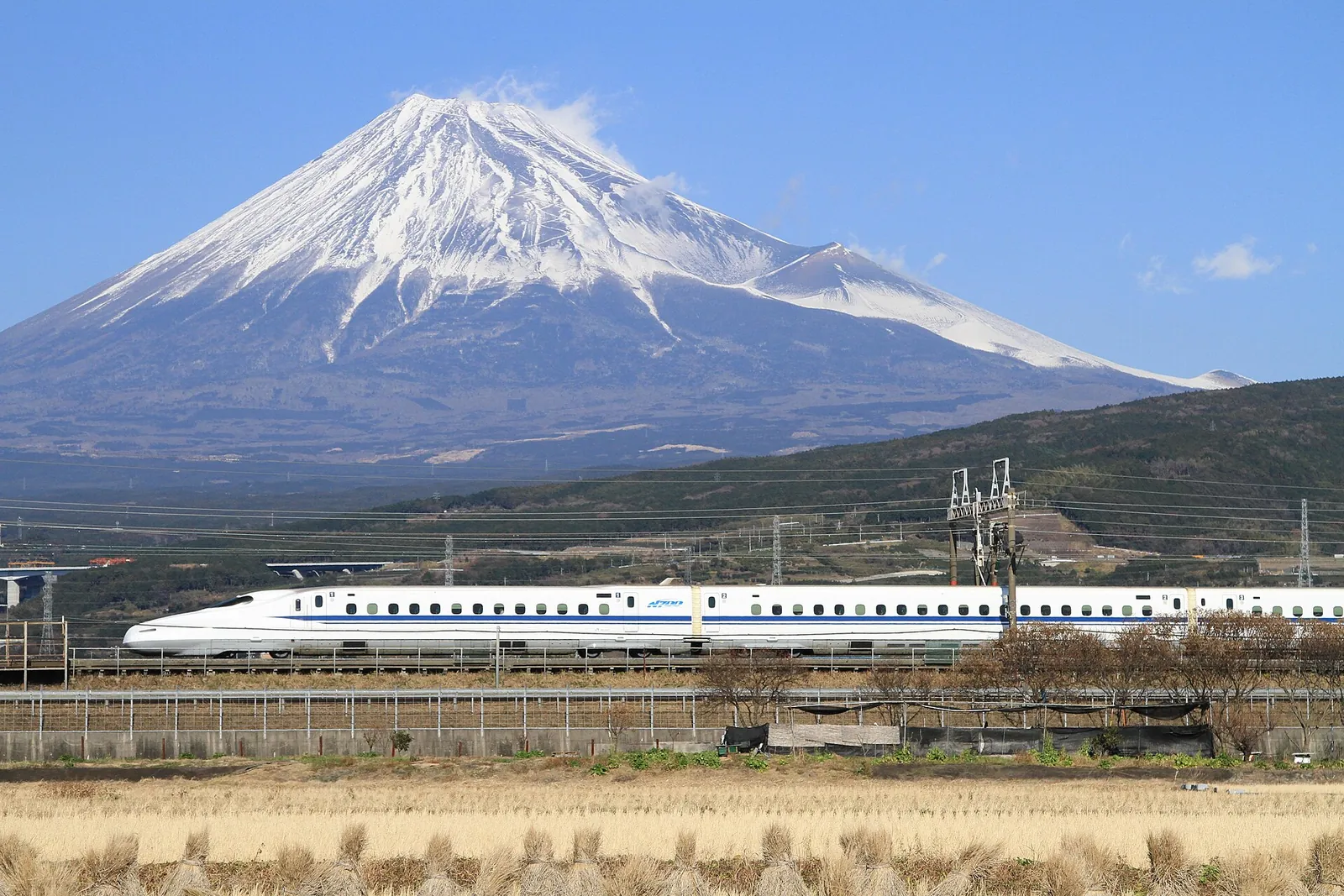
The Tokaido shinkansen below Mount Fuji: pass holders ride the Hikari, or pay extra for the Nozomi
Photograph: tansaisuketti — opens in a new tab · CC BY-SA 3.0 — opens in a new tab
Changes: Resized and converted to WebP; displayed with responsive crops. · Original photograph and licence details ↗ — opens in a new tab
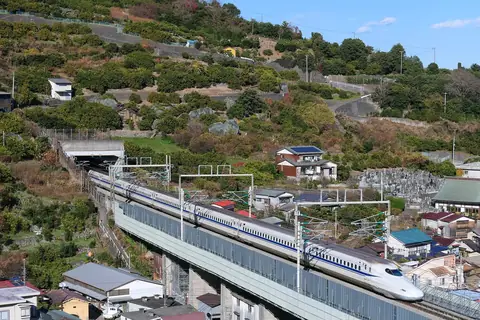
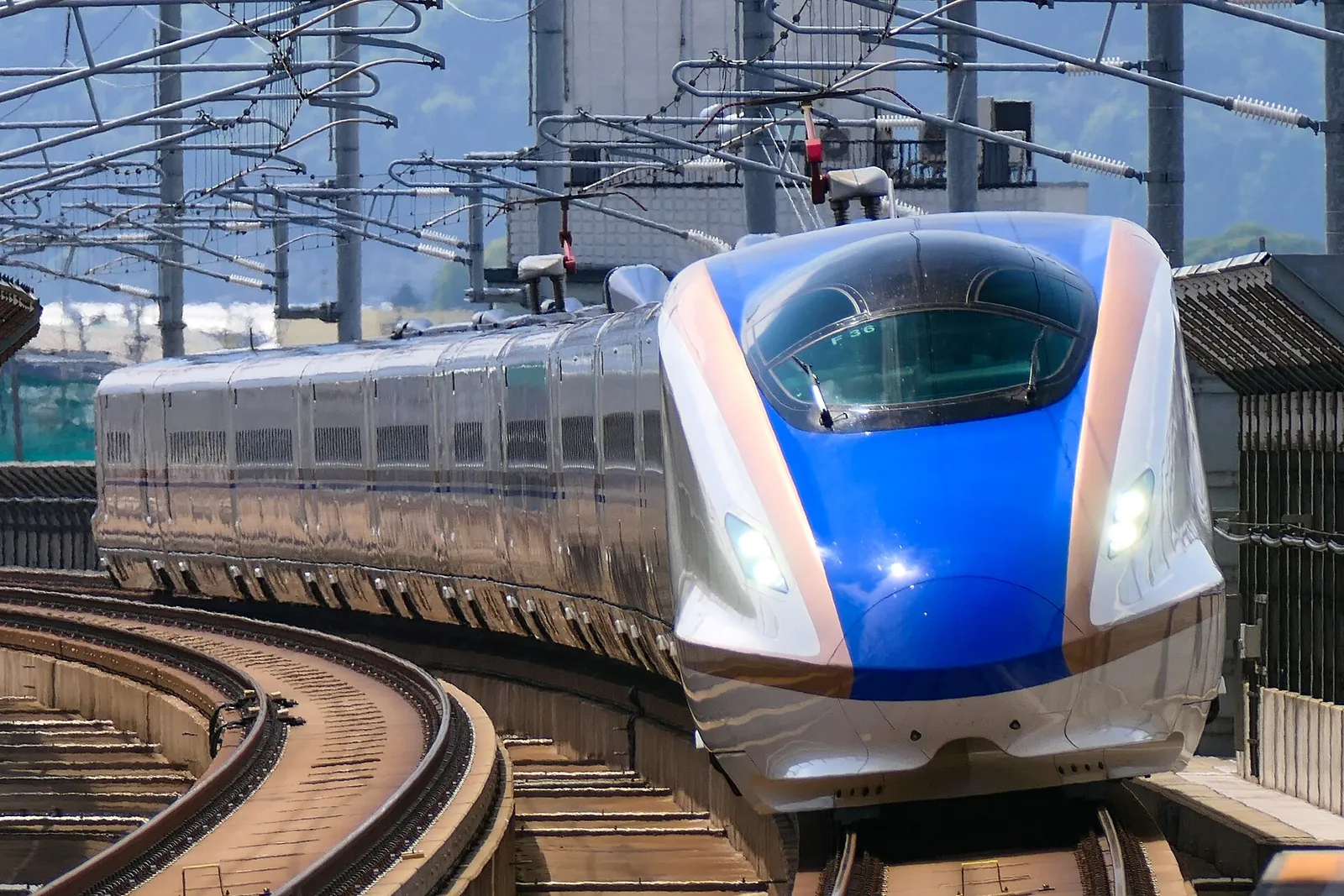
The Hokuriku shinkansen, the line that turns a Tokyo–Kanazawa–Kyoto loop into a trip worth a pass
Photograph: MaedaAkihiko — opens in a new tab · CC BY-SA 4.0 — opens in a new tab
Changes: Resized and converted to WebP; displayed with responsive crops. · Original photograph and licence details ↗ — opens in a new tab
Shinkansen gates at Hiroshima Station: insert the pass in the slot and collect it on the other side
Photograph: MaedaAkihiko — opens in a new tab · CC BY-SA 4.0 — opens in a new tab
Changes: Resized and converted to WebP; displayed with responsive crops. · Original photograph and licence details ↗ — opens in a new tab
An ekiben shop at Tokyo Station, where boxes from across Japan are sold before the train
Photograph: 電車(新幹線)でゴー! — opens in a new tab · CC0 — opens in a new tab
Changes: Resized and converted to WebP; displayed with responsive crops. · Original photograph and licence details ↗ — opens in a new tab
An Akita chicken ekiben, one of the regional boxes sold at Tokyo Station
Photograph: くろふね — opens in a new tab · CC BY-SA 4.0 — opens in a new tab
Changes: Resized and converted to WebP; displayed with responsive crops. · Original photograph and licence details ↗ — opens in a new tab