Tokyo, Fuji and around · Yamanashi
Mount Fuji travel guide: where to stay, viewpoints and climbing rules
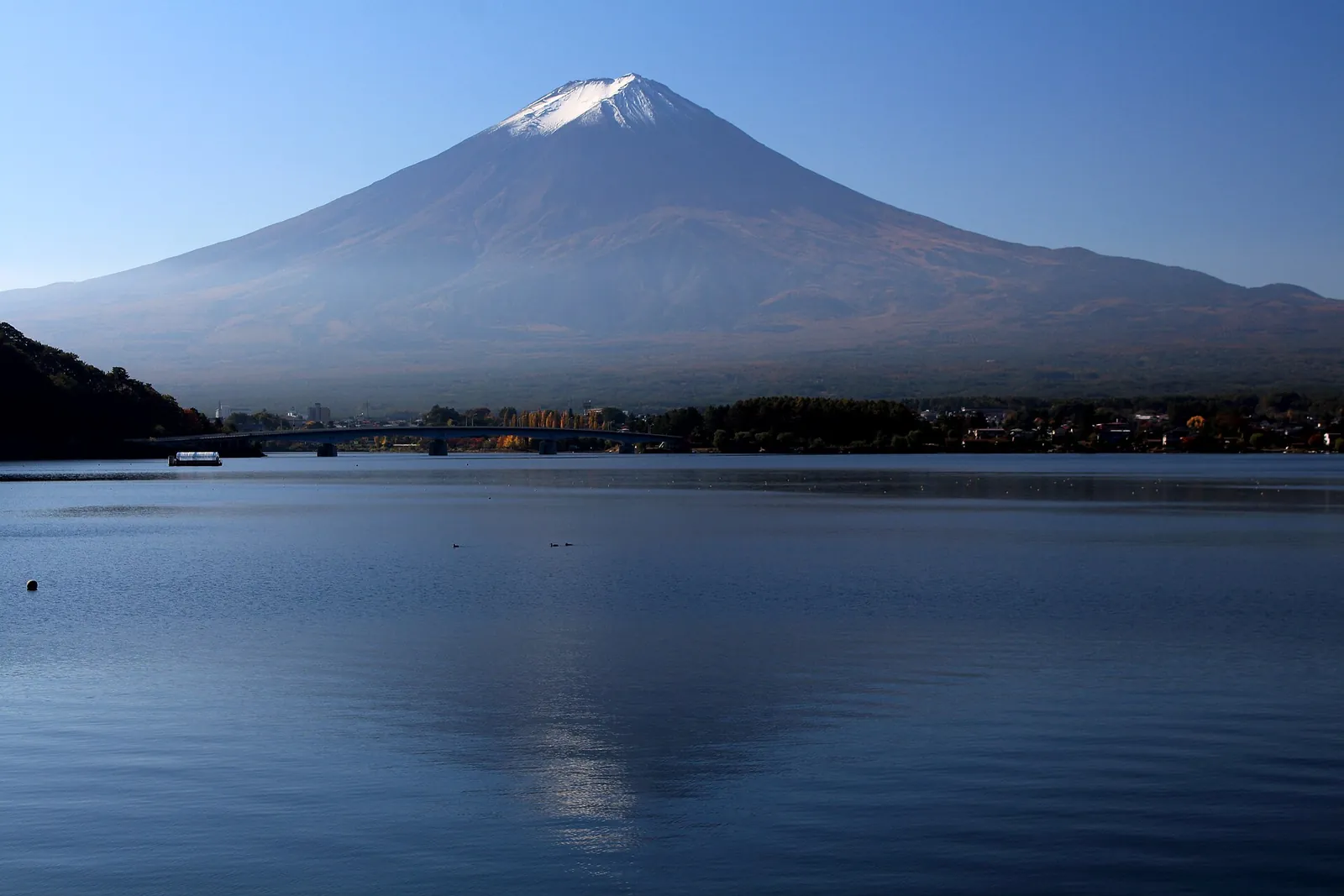
Mount Fuji is easy to reach from Tokyo and surprisingly easy to miss: on many days the summit has slipped into cloud by the time the trains and buses from Shinjuku arrive. The Fuji Five Lakes on its northern side, Lake Kawaguchi above all, are where most visitors stay and where the classic views are, from the lakeshore to the Chureito Pagoda above Fujiyoshida. The decision that shapes the trip is whether to come for the day or to sleep by the lake and be out at first light. Climbing is a separate, summer-only project with its own fee and entry rules, covered here in brief.
- Suggested time
- 1–2 nights by Lake Kawaguchi; climbers add a night in a mountain hut
- Where to stay
- Lake Kawaguchi's north shore for dawn views, or the Kawaguchiko Station area for trains and buses; Fujiyoshida for climbers
- Season and timing
- JNTO notes that Fuji is often hidden by cloud in the rainy season, from early June to mid-July, and that crisp, clear winter days give the best views from afar. In 2026 the climbing season ran from 1 July (Yoshida and Subashiri trails) or 10 July (Fujinomiya and Gotemba trails) to 10 September.
The short answer
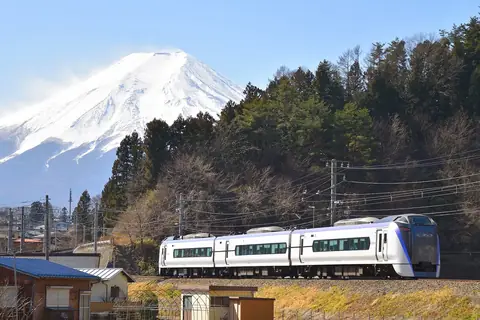
Spend at least one night at Lake Kawaguchi, on the north shore or near Kawaguchiko Station, because Mount Fuji shows best early in the morning, before day-trippers from Tokyo arrive. Come from Shinjuku on the Fuji Excursion train or a highway bus, watch the lake at dawn, then reach Chureito Pagoda and Oshino Hakkai before the crowds build. A second night gives you another sunrise if cloud wins the first. Climbing is a summer-only project: in 2026 it meant a ¥4,000 hiking fee and a mountain-hut booking to start after 14:00.
Day trip or a night by the lake: why the morning decides it
Mount Fuji does not keep office hours. Japan's national tourism organisation (JNTO) says the best views come in the morning, because haze and cloud tend to hide the mountain as the day goes on, and its own Fuji Five Lakes itinerary builds in a night by the lake so that you can be on the north side of Lake Kawaguchi early. JNTO also notes that the mountain is often hidden during the rainy season, from early June to mid-July, and that crisp, clear winter days give the best views from a distance.
A day trip works against that pattern. When we checked on 2026-10-10, Fujikyu Railway's timetable showed the first direct Fuji Excursion leaving Shinjuku at 07:30 and reaching Kawaguchiko Station at 09:28, with the last direct train back leaving Kawaguchiko at 17:41. The Fujikawaguchiko tourism federation says crowds concentrate between about 10:00 and 16:00. So a day-tripper sees the lakes in their busiest and often haziest hours, while someone who slept nearby has had the mountain at sunrise and can be at the next viewpoint before the first train pulls in.
One night is the minimum; two nights give you a second dawn if the first is cloudy. Each base suits a different trip: the north shore of Lake Kawaguchi for the view from your doorstep, the Kawaguchiko Station area for trains, buses and luggage, Fujiyoshida for climbers and the Chureito Pagoda, and Lake Yamanaka for a quieter lake with hot springs.
Lake Kawaguchi: the north shore at dawn and the lakeside loop
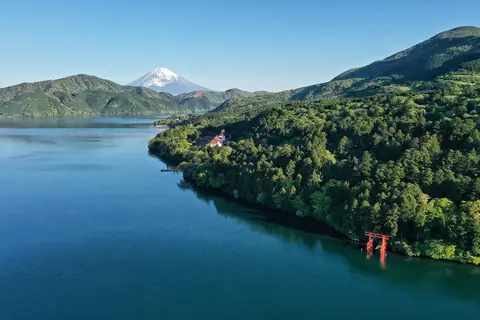
JNTO calls Lake Kawaguchi the most easily accessible of the Fuji Five Lakes, and its north shore is where the mountain rises straight across the water. Oishi Park, on the north shore, is a free lakeside park that is always open, with lavender in early summer and kochia that turns red in autumn, according to the Fujikawaguchiko tourism federation. From Kawaguchiko Station it is about 30 minutes on the Red Line sightseeing bus, so sleeping nearby or cycling out is the way to be there for sunrise.
Getting around the lake is simple. The tourism federation describes three sightseeing bus lines from Kawaguchiko Station: the Red Line, every 15 minutes along the shore with the museums, hotels and cafes; the Green Line to Lake Saiko, every 30 minutes; and the less frequent Blue Line to Lakes Shoji and Motosu. It lists a 1 Day Pass for all three lines at ¥1,500 for adults. The lake is just under 20 km around and bicycle hire near the station costs around ¥600 an hour, which makes a bike the easiest way to link the north-shore viewpoints at your own pace.
For height rather than reflections, the Mt. Fuji Panoramic Ropeway climbs Mt. Tenjo on the lake's east side for views from about 1,000 metres, JNTO says. Save it for a clear afternoon and spend the early hours by the water.
Make time for the local food
What to eat and where to look
Hoto
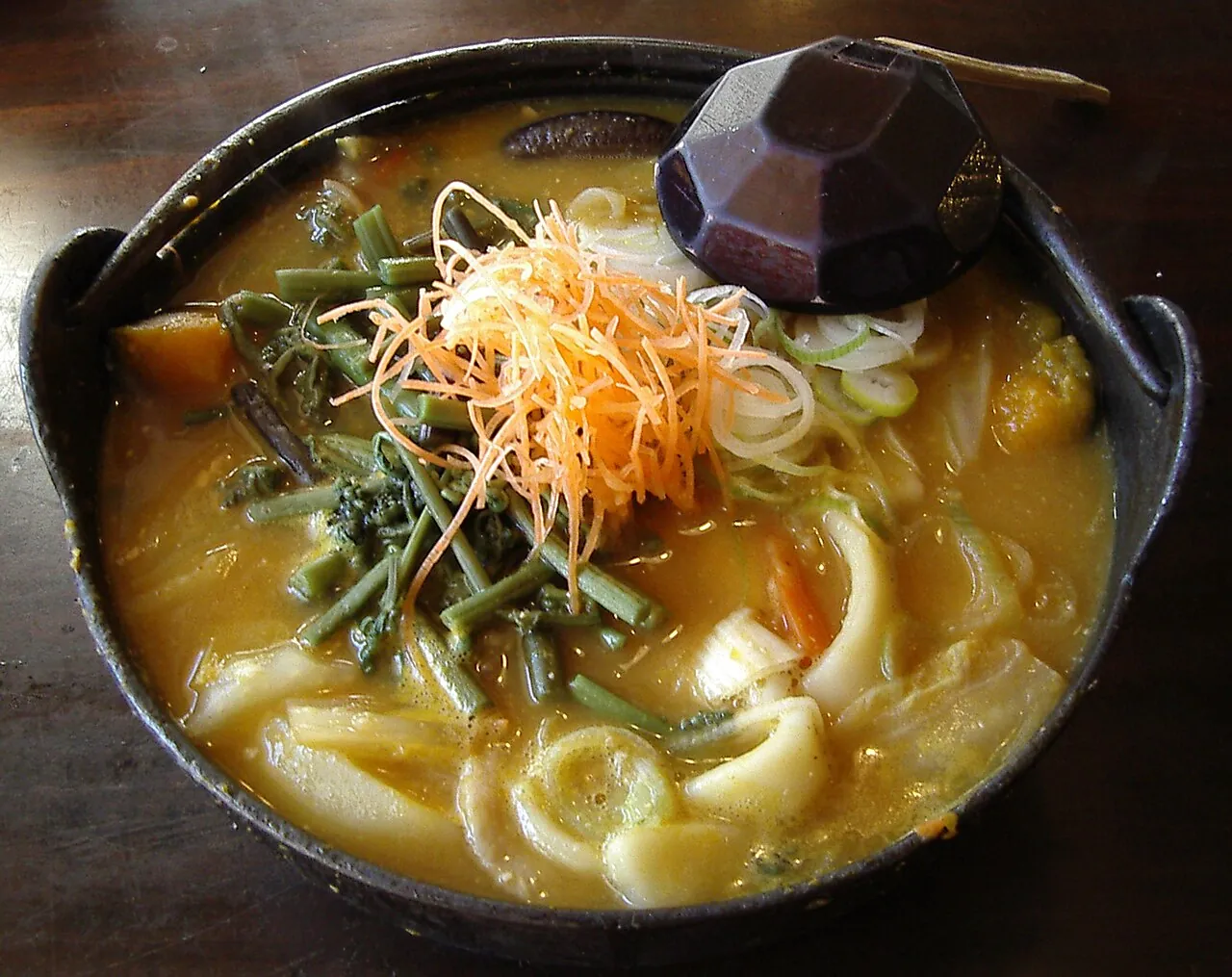
Flat wheat noodles simmered with plenty of vegetables, such as pumpkin, carrot, Chinese cabbage and mushrooms, in a thick miso broth, usually served piping hot in an individual pot. It is Yamanashi's famous local dish, and the Fujikawaguchiko tourism federation notes that many hoto restaurants look out on the mountain.
- Where to look
- Hoto restaurants around Lake Kawaguchi; each has its own broth and noodles, and some add spicy miso.
- Fit it into your day
- A warming dinner after a cold dawn on the shore, or lunch with a view on a clear day.
Contains wheat and soy (miso); ask what the broth is made with and whether meat is added if you avoid either.
Ozara
Hoto's summer form: the same thick noodles served chilled and dipped into a warm broth. The tourism federation lists it as a familiar dish in the hot months.
- Where to look
- Hoto restaurants in summer; look for 'ozara' on the menu.
- Fit it into your day
- Lunch on a hot day in July or August, before or after the 5th Station.
Contains wheat; ask what the dipping broth is made with if you avoid meat or fish.
Yoshida no udon
Fujiyoshida's specialty: very firm, chewy wheat noodles in a broth of soy sauce and miso, typically topped with boiled cabbage and horse meat simmered in a sweet soy-based sauce. The city's tourism site lists 40 udon shops on its Yoshida no Udon map.
- Where to look
- Udon shops across Fujiyoshida; the city tourism site publishes the shop map.
- Fit it into your day
- A quick lunch after the morning at Chureito Pagoda.
The usual meat topping is horse; the 'suridane' condiment on the table contains sesame, sansho pepper and chilli.
Himemasu and wakasagi
The lakes' own fish. Himemasu (kokanee) has firm, salmon-pink flesh and is in season in spring and again in winter; wakasagi (pond smelt) is a spring catch. The tourism federation lists both among Fujikawaguchiko's seasonal flavours.
- Where to look
- Restaurants and inns around the lakes in season, and the roadside stations Michi-no-Eki Katsuyama and Kawaguchiko Base, which sell local produce and have restaurants using it.
- Fit it into your day
- Part of a ryokan or inn dinner in spring or winter.
Fish; ask how it is prepared if you have allergies.
Koshu wine and Fuji craft beer
Yamanashi's Koshu wine and craft beers brewed around Lake Kawaguchi with Fuji's spring water. The tourism federation names Akafuji Wine Cellar and Kawaguchiko Wine House for tastings and bottles, and Kawaguchiko Winery for local wine.
- Where to look
- The wine cellars and wine house around Lake Kawaguchi, and the craft beers brewed around the lake.
- Fit it into your day
- A tasting on the evening you are staying, with wine at dinner.
The tourism federation suggests getting around by bus if you plan to taste; do not drive after drinking.
Chureito Pagoda, Oshino Hakkai and Lake Yamanaka: the order that works
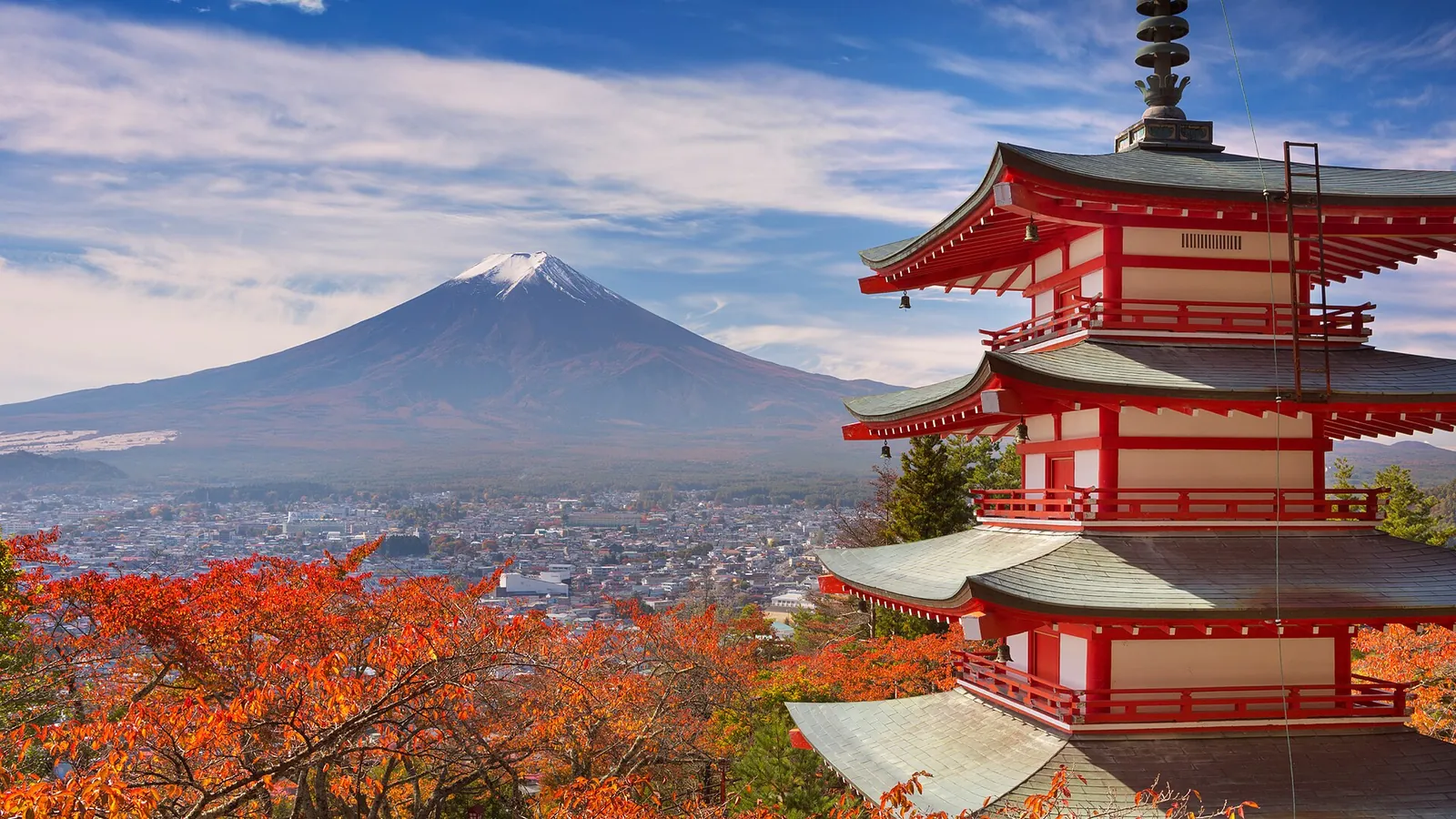
The five-storey Chureito Pagoda in Arakurayama Sengen Park, Fujiyoshida, is the classic Fuji picture: pagoda in front, the town below and the mountain behind. Fujiyoshida's tourism office puts it about 25 minutes on foot from Shimoyoshida Station on the Fujikyu line, with 398 steps up to the observation deck. The park is open 24 hours, so come straight after a dawn at the lake, while the morning light still favours the mountain.
In spring the cherry blossom here has drawn more visitors than the neighbourhood can absorb. Fujiyoshida City decided not to hold its Arakurayama Sengen Park cherry blossom festival in 2026, citing more than 10,000 visitors a day at peak bloom, one- to three-hour queues for the observation deck and trespass on private homes. It asked visitors to come by public transport, keep out of residential streets and not take photographs there without permission. The city's spot page also recommends the park for autumn colour and snow.
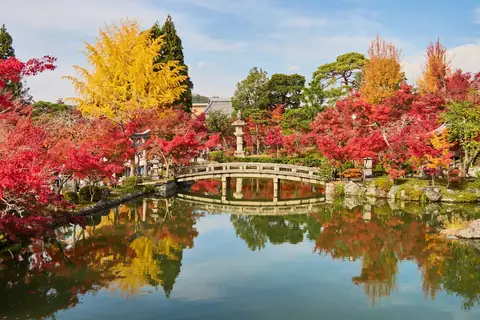
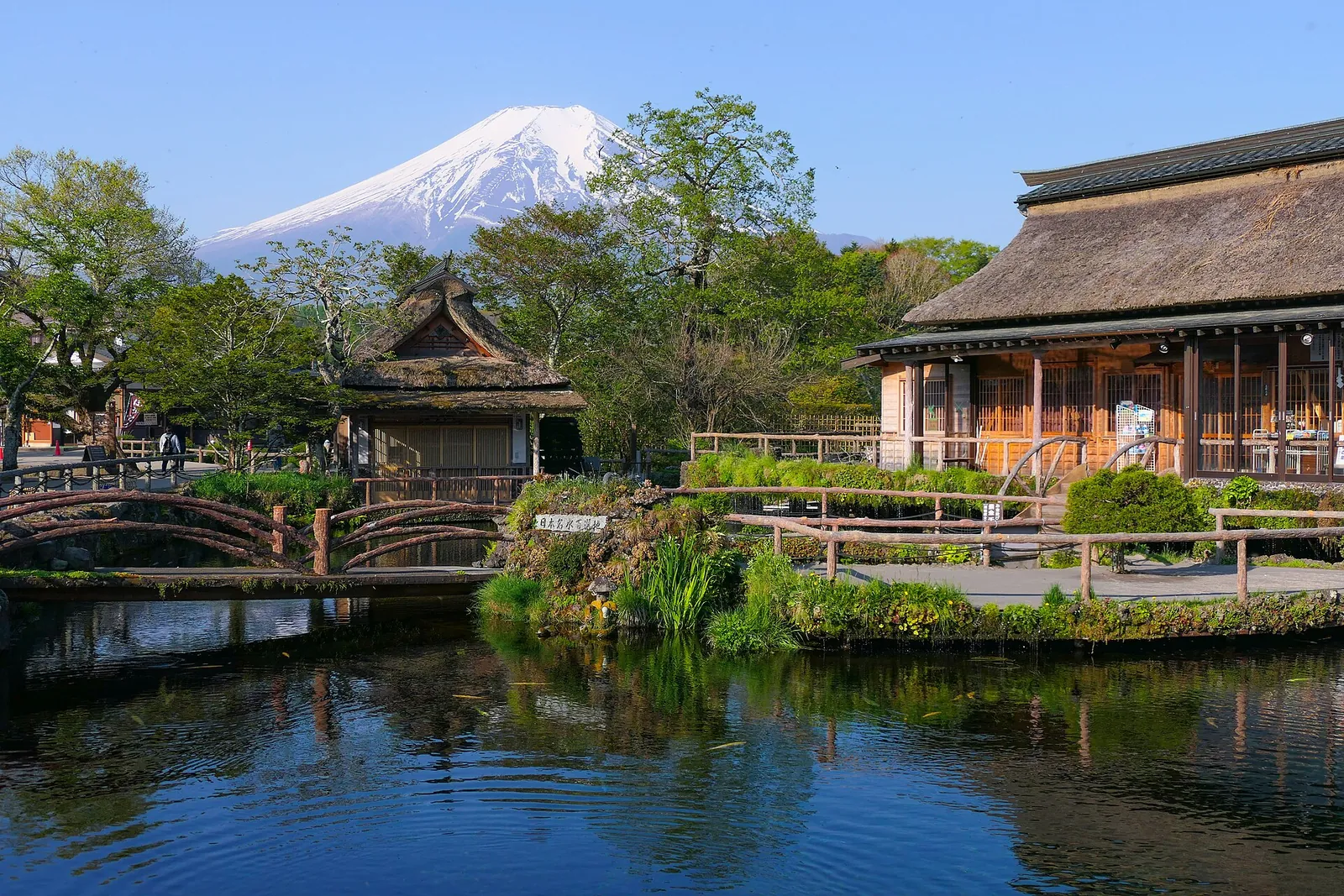
From Fujiyoshida, Oshino Hakkai makes a natural next stop: spring ponds with thatched-roof houses, waterwheels and small bridges north of the mountain, which JNTO compares to a Hokusai woodblock print, with pondside food stalls for lunch. Lake Yamanaka, the largest of the five lakes and the nearest to the mountain, rounds off the day. JNTO points to its Hana no Miyako park, with sunflowers in summer and cosmos in autumn, and to hot springs on the western shore with views of Fuji.
Taken in that order, the route follows the light: the lake at dawn, the pagoda early, the springs at midday and Yamanaka in the afternoon. JNTO notes regular and sightseeing buses from Kawaguchiko Station to the lakes, and that going on from Lake Yamanaka to the western lakes means changing at Kawaguchiko Station. If you want all four stops in one day without juggling timetables, this is the day a tour earns its price.
The 5th Station without climbing
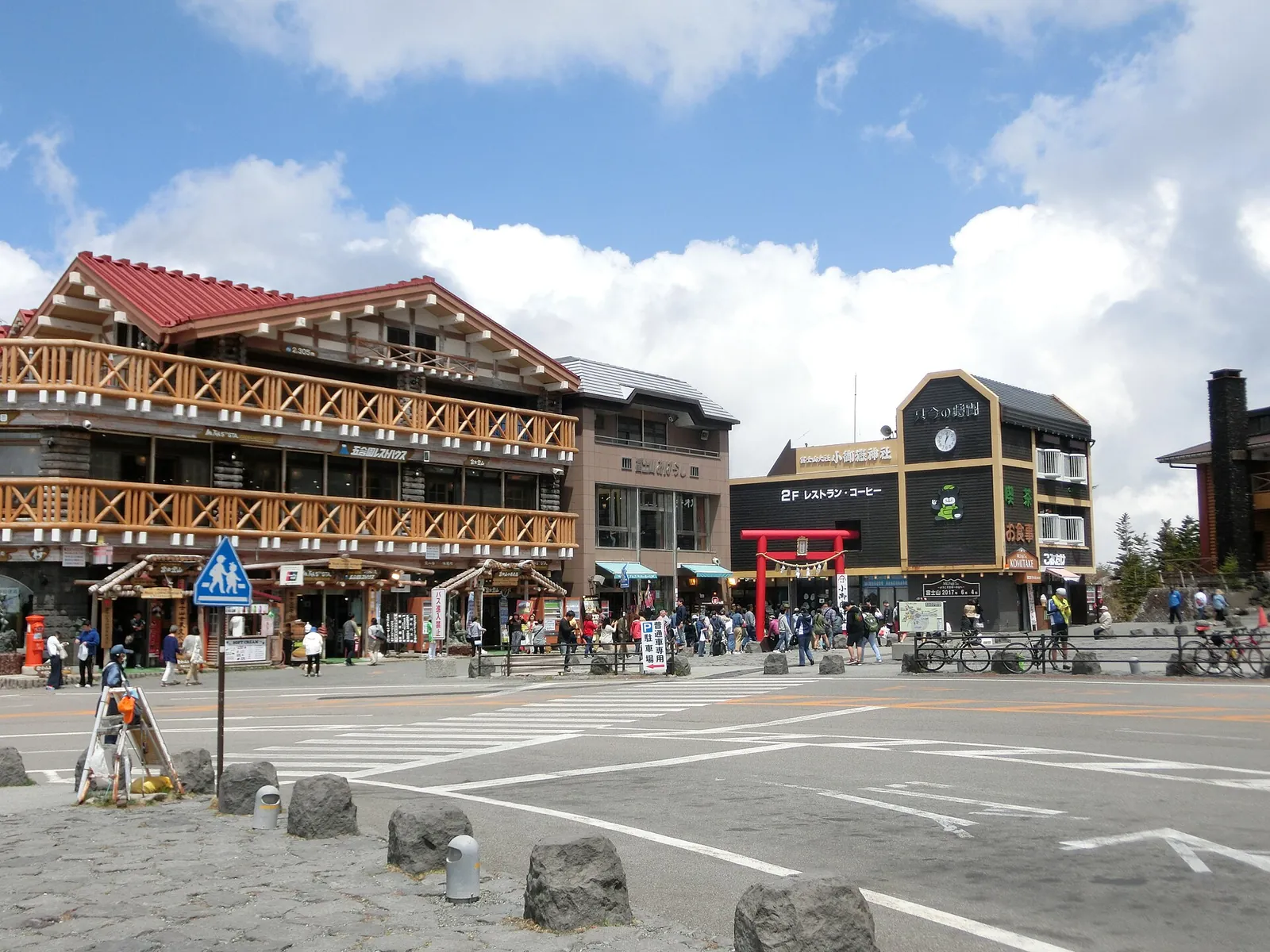
The Fuji Subaru Line toll road runs up to the Fuji Subaru Line 5th Station, where the Yoshida Trail begins and where most visitors' road ends. When we checked on 2026-10-10, the Yamanashi Road Public Corporation listed a return toll of ¥2,800 for a car, payable only in cash or with its coupon tickets (no cards or ETC), and opening hours that change by month: 03:00–18:00 in October, for example, and 09:00–16:00 from December to February. The road closes when weather or road conditions require, and its toll table has a lower rate for days when it opens only as far as the lower car parks.
In summer, private cars are banned: in 2026 the restriction ran from 18:00 on 3 July to 18:00 on 10 September, and drivers switched to shuttle buses. Without a car, Keio's highway-bus site lists a direct bus from Kawaguchiko Station to the 5th Station that needs no reservation, and Fujiyoshida's tourism office notes buses to the 5th Station from the Fujisan Station area.
You do not need the climbing fee to look around. Yamanashi Prefecture states that there is no hiking fee for walking the Ochudo trail or for sightseeing at the 5th Station outside the trail gate. Outside the climbing season all trails above the 5th Station are closed, and the official climbing site calls climbing them then extremely dangerous, so in the closed months treat the 5th Station as a viewpoint, not a trailhead.
Climbing Mount Fuji: the season, the fee and the entry rules
Climbing is a summer-only undertaking. In 2026 the Yoshida and Subashiri trails opened on 1 July and the Fujinomiya and Gotemba trails on 10 July, and all four closed on 10 September; the official site describes the season as early July to early September and warns that opening can be delayed by lingering snow. When we checked on 2026-10-10, neither prefecture had published its 2027 dates or rules. Yamanashi asks climbers not to attempt overnight 'bullet climbs' without staying in a mountain hut, and hut beds are booked directly with the huts, separately from the trail registration below.
On the Yoshida Trail (the Yamanashi side), the 2026 rules were a hiking fee of ¥4,000 per person; a gate at the 5th Station closed from 14:00 to 03:00 except to climbers booked into a mountain hut; and a cap of 4,000 climbers a day, after which people without an advance reservation are turned away. Advance reservations, paid when booking through Yamanashi's Yoshida Trail reservation system, are optional and open until the day of the climb. Cancellation fees apply from two days after payment, and cancellations for personal reasons, including delayed public transport, are not refunded. Climbers also agree to carry cold-weather clothing, separate rain gear and proper footwear, and staff may stop those who are not equipped; the prefecture advises anyone without mountain experience to go with a guide.
On the Shizuoka side (the Fujinomiya, Gotemba and Subashiri trails), the 2026 rules set the same ¥4,000 fee and required anyone starting between 14:00 and 03:00 to have a mountain-hut booking. Climbers also completed a short online course and test on rules and manners in the prefecture's Shizuoka Prefecture FUJI NAVI app. Shizuoka set no daily limit, and registration could also be done at the 5th Station, which the prefecture says takes about 30 minutes.
Getting there: the Fuji Excursion or a bus from Busta Shinjuku
The Fuji Excursion (Fuji Kaiyu) is the direct train: a limited express run through from JR East's line onto Fujikyu Railway, from Shinjuku to Kawaguchiko Station via Shimoyoshida and Fujisan Station (signed Mt. Fuji Station). When we checked on 2026-10-10, Fujikyu listed four round trips a day, with one more in some seasons, a fastest time of 1 hour 53 minutes and a one-way fare of ¥4,200 from Shinjuku to Kawaguchiko. The train has no unreserved seats, so buy your limited express ticket before you travel.
Highway buses are the cheaper option. Buses from Busta Shinjuku (the Shinjuku Expressway Bus Terminal) to Kawaguchiko Station take approximately 1 hour 45 minutes, according to Keio's Highway Buses site, and Fujikyu listed the fare at ¥2,200, or ¥2,000 when booked and paid online. Some buses continue to Fuji-Q Highland, and others serve the Lake Yamanaka area, about 2 hours 20 minutes from Shinjuku. Seats are reserved and can be booked a month ahead. Buses share the roads with everyone else, and the Fujikawaguchiko tourism federation warns of heavy traffic around the lakes at weekends and holidays in the busy seasons; Fujikyu's own pitch for the train is that it is free from traffic jams.
Once you are there, the Fujikyu line links Kawaguchiko, Fujisan and Shimoyoshida stations, and between Kawaguchiko and Fujisan stations an ordinary ticket lets you take any free seat on the Fuji Excursion. That makes the train a quick hop from the lake towards Fujiyoshida as well as the way home.
Crowds and courtesy around the lakes
Fujikawaguchiko's tourism federation says plainly that visitor numbers are straining the area. Its responsible-tourism page asks visitors to take their rubbish away with them, as there are few bins; to get around by bus or bicycle rather than car; and not to enter private land, make noise early in the morning or late at night, or fly drones without permission.
The busy periods are predictable. The federation's transport guide names early April to May (Fuji with cherry blossom), late October to mid-November (autumn leaves) and the summer holidays as the peaks, with the worst traffic at weekends and on public holidays, and suggests weekdays or early and late visits to the popular spots. If your dates fall in those weeks, the case for sleeping at the lake and setting out early is even stronger.
A workable two-night plan
This is an editorial suggestion, not a timetable. Check the forecast each evening and swap days so that your clearest morning is spent at the lake.
- Day 1 — Arrive: the Fuji Excursion or a morning bus from Shinjuku, then the lakeside by Red Line bus or hired bike, or the Panoramic Ropeway if the afternoon is clear; hoto for dinner.
- Day 2 — Dawn and the classic views: sunrise on the north shore at Oishi Park; the Fujikyu line to Shimoyoshida for Chureito Pagoda; Yoshida udon for lunch in Fujiyoshida; Oshino Hakkai in the afternoon, or the 5th Station by bus from Kawaguchiko Station.
- Day 3 — Second chance: another sunrise if day 2 was cloudy, then Lake Yamanaka or Lake Saiko before an afternoon train or bus back to Shinjuku.
- Climbers: sleep in Fujiyoshida or by the lake the night before, take the bus to the Fuji Subaru Line 5th Station, and pass the Yoshida Trail gate before 14:00 unless a hut booking lets you through later.
Practical questions
Is a day trip to Mount Fuji from Tokyo worth it?
It can be, but you arrive when the views are least reliable: the first direct train reached Kawaguchiko at 09:28 when we checked, and JNTO says haze and cloud tend to hide the mountain as the day goes on. A night by Lake Kawaguchi gives you the early-morning view and a second chance the next day.
Where should I stay to see Mount Fuji?
Stay on the north shore of Lake Kawaguchi for the view across the water at dawn, or near Kawaguchiko Station for the easiest train and bus connections. Fujiyoshida suits climbers, with buses to the 5th Station, and Lake Yamanaka suits a quieter stay with hot springs.
When is Mount Fuji most visible?
Early morning is the most reliable time, according to JNTO, which also says crisp, clear winter days give the best views from afar. The mountain is often hidden by cloud in the rainy season, from early June to mid-July.
When can you climb Mount Fuji?
Only in the summer climbing season: in 2026 it ran from 1 July on the Yoshida and Subashiri trails and from 10 July on the Fujinomiya and Gotemba trails, to 10 September on all four. Outside the season the trails above the 5th Station are closed.
How much does it cost to climb Mount Fuji?
The hiking fee was ¥4,000 per person on every trail in 2026, plus the cost of a mountain hut. On the Yoshida Trail you can prepay and reserve online, which matters because the gate closes once 4,000 climbers have passed in a day.
How do I get from Tokyo to Lake Kawaguchiko?
Take the Fuji Excursion train from Shinjuku, with a fastest time of 1 hour 53 minutes and a fare of ¥4,200 when we checked, or a highway bus from Busta Shinjuku, approximately 1 hour 45 minutes for ¥2,200. Reserve either in advance.
Sources and checks before you travel
Reference sources for the version dated 10 October 2026. Confirm opening times, access, transport and conditions for your travel dates.
- Official Website for Mt. Fuji Climbing: climbing season and facility operating periods ↗ — opens in a new tab
- Yamanashi Prefecture: Yoshida Trail notice (Official Website for Mt. Fuji Climbing) ↗ — opens in a new tab
- Shizuoka Prefecture: notice on Mt. Fuji climbing restrictions (Official Website for Mt. Fuji Climbing) ↗ — opens in a new tab
- Yamanashi Road Public Corporation: Fuji Subaru Line hours and tolls ↗ — opens in a new tab
- JNTO: the top 30 spots for viewing Mt. Fuji ↗ — opens in a new tab
- JNTO: explore the Fuji Five Lakes ↗ — opens in a new tab
- Fujikyu Railway: Fuji Excursion (Fuji Kaiyu) limited express ↗ — opens in a new tab
- Highway Buses (Keio Dentetsu Bus): Lake Kawaguchiko and Fuji-Q Highland ↗ — opens in a new tab
- Fujikyu Bus: Shinjuku Station to Kawaguchiko and the Fuji Five Lakes ↗ — opens in a new tab
- Fujikyu Bus: Haneda Airport and Shinagawa to Kawaguchiko ↗ — opens in a new tab
- Fujikawaguchiko Tourism Federation: getting around by bus and bicycle ↗ — opens in a new tab
- Fujikawaguchiko Tourism Federation: Oishi Park ↗ — opens in a new tab
- Fujikawaguchiko Tourism Federation: places to stay ↗ — opens in a new tab
- Fujikawaguchiko Tourism Federation: local food and seasonal flavours ↗ — opens in a new tab
- Fujikawaguchiko Tourism Federation: responsible tourism ↗ — opens in a new tab
- Fujiyoshida Tourist Guide: Arakurayama Sengen Park and Chureito Pagoda ↗ — opens in a new tab
- Fujiyoshida City: press release on the 2026 Arakurayama Sengen Park cherry blossom festival ↗ — opens in a new tab
- Fujiyoshida Tourist Guide: Yoshida no Udon ↗ — opens in a new tab
- Fujiyoshida Tourist Guide: accommodation in Fujiyoshida ↗ — opens in a new tab
Does this experience fit your route?
A tour from Tokyo solves the timetable puzzle if you only have a day; if you are staying by the lake, a half-day private tour from your hotel covers the viewpoints in a morning. Check pickup points, stops and cancellation terms before you book.
Check dates and details on Viator ↗ — opens in a new tabAffiliate link · Book with ViatorPhoto credits
Fuji across Lake Kawaguchi: clear views are likeliest early in the day
Photograph: Alpsdake — opens in a new tab · CC BY-SA 4.0 — opens in a new tab
Changes: Resized and converted to WebP; displayed with responsive crops. · Original photograph and licence details ↗ — opens in a new tab
Chureito Pagoda in Arakurayama Sengen Park, 398 steps above Fujiyoshida
Photograph: Dang Son — opens in a new tab · CC0 — opens in a new tab
Changes: Resized and converted to WebP; displayed with responsive crops. · Original photograph and licence details ↗ — opens in a new tab
Oshino Hakkai's spring ponds, a midday stop between Fujiyoshida and Lake Yamanaka
Photograph: MaedaAkihiko — opens in a new tab · CC BY-SA 4.0 — opens in a new tab
Changes: Resized and converted to WebP; displayed with responsive crops. · Original photograph and licence details ↗ — opens in a new tab
The Fuji Subaru Line 5th Station, where the Yoshida Trail starts and most visitors' road ends
Photograph: Abasaa — opens in a new tab · Public domain — opens in a new tab
Changes: Resized and converted to WebP; displayed with responsive crops. · Original photograph and licence details ↗ — opens in a new tab
Hoto, Yamanashi's miso noodle stew, served piping hot in its own pot
Photograph: No machine-readable author provided. Jungle assumed (based on copyright claims). — opens in a new tab · CC BY-SA 3.0 — opens in a new tab
Changes: Resized and converted to WebP; displayed with responsive crops. · Original photograph and licence details ↗ — opens in a new tab