Kansai · Osaka
Osaka travel guide: neighbourhoods, food and choosing experiences
Osaka makes a good case for staying after the evening photograph. A sizzling plate, a small counter and a walk beside the river give the city different moods. Keep the famous signs in the itinerary, but make room for neighbourhoods and meals that do not require racing from one queue to the next.
- Suggested time
- Two to three days
- Where to stay
- Namba or Umeda after comparing airport and onward routes
- Season and timing
- Year-round city break; heat and rain favour shorter outdoor blocks
The short answer
Plan two or three days in Osaka. Start with a coherent Minami day around Namba and Dotonbori, then choose castle-and-park history or Umeda and Nakanoshima for a contrasting day. Match your base to airport and onward rail connections, and spread takoyaki, okonomiyaki and other regional dishes across separate meals.
A first day around Namba and Dotonbori
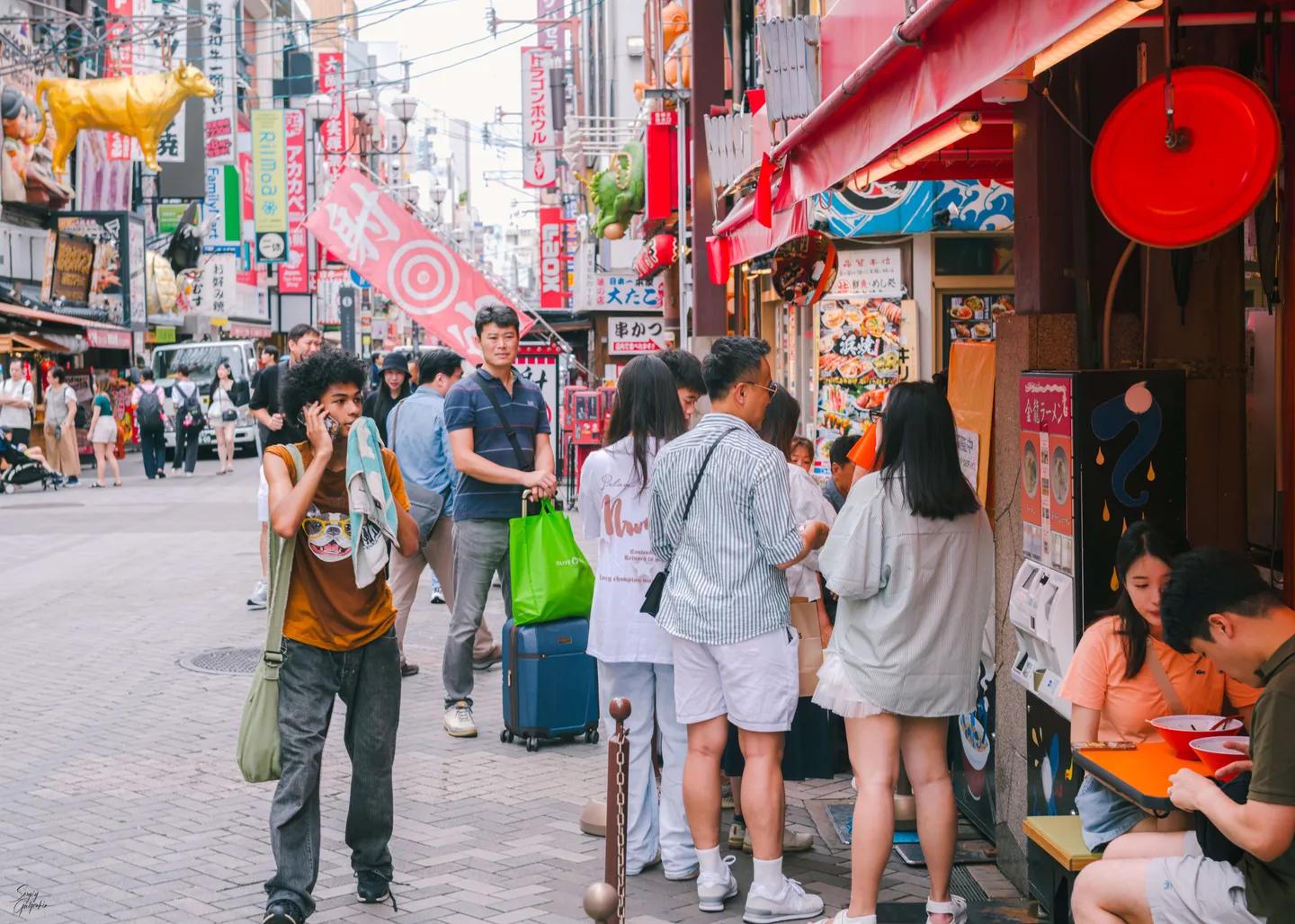
Explore connected streets in Minami rather than repeatedly crossing the city. Namba, Dotonbori and nearby shopping areas can give a first day its shape: browse, choose a meal, and return to the canal for the evening atmosphere if that interests you. A photograph is a pause within the day, not its only purpose.
Allow time to order and eat without blocking a shop entrance or busy walkway. Kuromon can be a separate food stop if it fits your appetite and route; you need not visit every market and tasting area on the same day. Check where vendors want customers to eat and dispose of packaging.
Make the second day feel different
Choose Osaka Castle Park and a specific historical visit if you want a change from shopping streets. The park and ticketed interiors are separate decisions: check what the current admission actually includes. Alternatively, build a day around Umeda and Nakanoshima, where river walks, architecture and cultural venues offer a different city rhythm.
Shinsekai is another possible southern block, particularly if you want a kushikatsu meal. Add it because its setting and food interest you, not because a checklist says all the areas must fit. An observation deck, museum or fixed-time activity needs space on both sides for transport and meals.
Make time for the local food
What to eat and where to look
Takoyaki
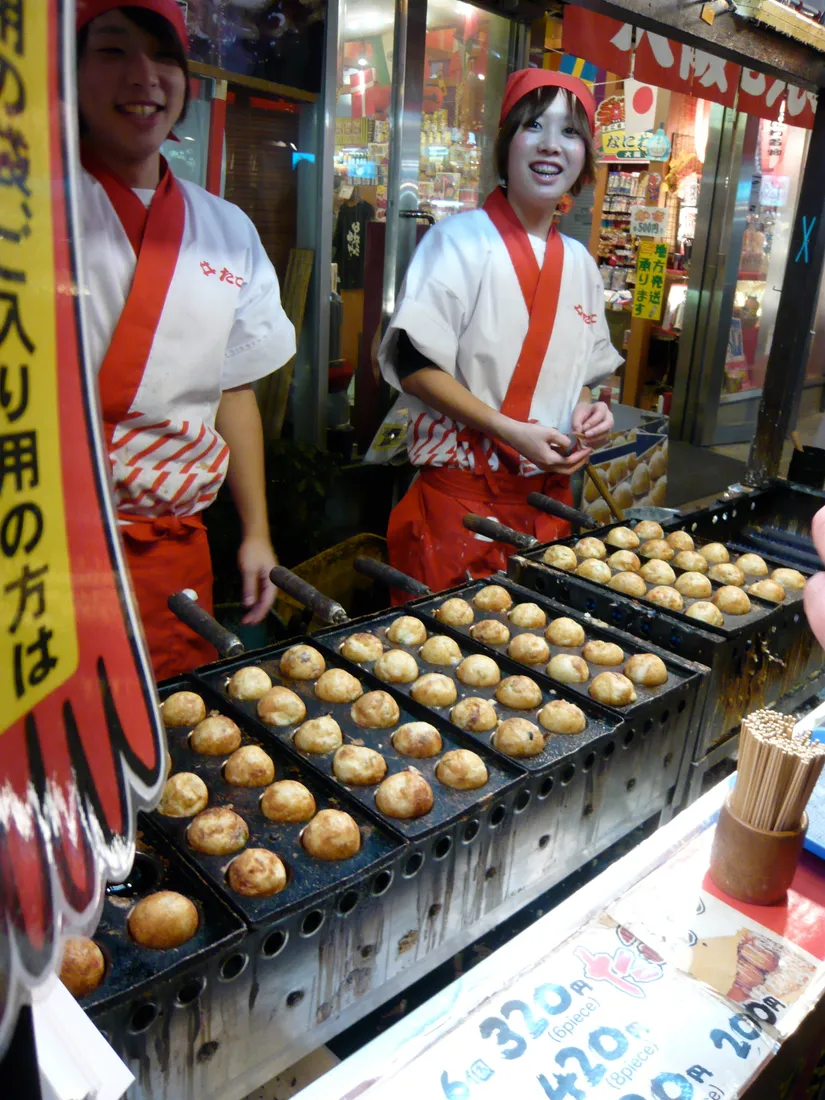
Batter balls containing octopus, with a soft centre and toppings that differ by shop. Let a freshly cooked portion cool before biting.
- Where to look
- Takoyaki shops in Namba, Dotonbori and other neighbourhoods.
- Fit it into your day
- A modest snack between nearby visits.
Batter and toppings may contain wheat, egg or fish ingredients.
Okonomiyaki
A substantial griddle-cooked dish: Osaka-style versions commonly mix cabbage and chosen fillings into the batter before cooking.
- Where to look
- Restaurants with a clear menu in Namba, Umeda or your accommodation’s neighbourhood.
- Fit it into your day
- Give it a seated dinner rather than adding it after a full tasting tour.
Check fillings, sauces and shared cooking surfaces when allergies matter.
Kushikatsu
Breaded fried skewers offered with varied meat, vegetable and other fillings; ordering a few at a time helps you choose the meal’s size.
- Where to look
- Specialist restaurants, including those in Shinsekai.
- Fit it into your day
- An evening meal with small successive orders.
Follow the restaurant’s current sauce and serving instructions.
Kitsune udon
Udon with seasoned fried tofu, where the broth is as much part of the dish as the topping.
- Where to look
- Udon restaurants showing the dish on their menu.
- Fit it into your day
- A simpler lunch between a museum and an afternoon walk.
The tofu topping does not mean the broth is vegetarian.
Try regional dishes over several meals
Osaka’s flour-based cooking gives you more than one texture to explore. Start with a small takoyaki portion, sit down for okonomiyaki at another meal, and leave a different evening for skewers or something less fried. Eating at a comfortable pace makes it easier to notice the differences instead of turning the visit into an endurance challenge.
A neighbourhood food walk may help you choose unfamiliar dishes and understand the setting. Compare the advertised route, sample sizes, drinks, dietary arrangements and walking distance. It is most useful when you want explanations and help ordering; independent dining gives more flexibility if you already know what you want. Restaurant stops and menus can change, so compare the selected product rather than expecting a universal Osaka food-tour menu.
Namba, Umeda and Shin-Osaka are different bases
Namba puts much of Minami’s evening activity nearby and serves some airport routes. Umeda offers extensive rail connections, but the stations and platforms do not all occupy one simple hall. Shin-Osaka is the Shinkansen stop; staying there is a different choice from being beside Dotonbori.
Work out the exact airport connection and the next long-distance journey before choosing a hotel. Include station corridors, exits and the walk with luggage. A centrally placed map pin does not tell you whether a transfer suits your bag, mobility or arrival time. Check the last train home before extending an evening outside your base area.
Decide how much of Kansai to include
Kyoto, Nara and Kobe can fit a longer Kansai journey, but day trips use time that could belong to Osaka. Choose them by interest: temples and gardens, a historic walking day, or another city and its food. Do not promise all three on top of two complete Osaka days.
For families or a visit centred on a large attraction, keep a dedicated day for that booking rather than adding it to a full city programme. In summer, allow cooling breaks; in wet weather, pair one reachable indoor venue with covered streets. Current opening calendars and access information matter more than an old itinerary’s exact timing.
Practical questions
Are two days enough for Osaka?
They can cover a Minami day and one contrasting area. Add time for major attractions or day trips rather than forcing those into the same two days.
Should I stay in Namba or Umeda?
Choose after comparing the airport, onward train and evening plans. Namba suits many Minami-focused stays; Umeda is a major rail area with several distinct stations.
Is Shin-Osaka the same as central Osaka?
It is the Shinkansen station and a separate base choice from Namba or Umeda. Include local transfers in your plans.
Does every food tour cater for vegetarians?
No. Compare the actual product’s dietary policy, ingredients and alternatives before booking.
Do I need to eat every specialty in Dotonbori?
No. These dishes are available in multiple neighbourhoods. Choose meals near the places you already plan to visit.
Sources and checks before you travel
Reference sources for the version dated 30 September 2026. Confirm opening times, access, transport and conditions for your travel dates.
Does this experience fit your route?
Explore related tours and experiences
Check dates and details on Viator ↗ — opens in a new tabAffiliate link · Book with ViatorPhoto credits
Visitors on a shopping street in Dotonbori, Osaka, during the day.
Photograph: Sergiy Galyonkin — opens in a new tab · CC BY-SA 2.0 — opens in a new tab
Changes: Resized and converted to WebP; displayed with responsive crops. · Original photograph and licence details ↗ — opens in a new tab
Cooks preparing takoyaki in moulded griddles in Osaka.
Photograph: WordRidden — opens in a new tab · CC BY 2.0 — opens in a new tab
Changes: Resized and converted to WebP; displayed with responsive crops. · Original photograph and licence details ↗ — opens in a new tab