Plan your trip · Vietnam
Getting around Vietnam: flights, the north–south train, buses and Grab
Vietnam is long and narrow, and the main sights are strung out along one road and one railway between Hanoi and Ho Chi Minh City. That makes the transport plan simple in outline but easy to get wrong in detail: a train that sounds romantic on paper can take more than a day, a cheap night bus can cost you a night's sleep and some safety margin, and a short private-car leg over a mountain pass can be the best day of the trip. The trick is to match each leg to the right mode rather than choosing one for the whole country.
- Suggested time
- Plan one travel day for each long leg; on a two-week trip, expect three to four flights or train journeys
- Where to stay
- Hanoi Old Quarter, Hue or Hoi An, and central Ho Chi Minh City: bases near the main airports and railway stations
- Season and timing
- Any time, but storms (normally May to November) and central-coast floods in October and November disrupt roads, rail and boats; book trains well ahead for Tet and public holidays.
The short answer
On a two-week north-to-south trip, fly the long legs (Hanoi to the central coast, and the central coast to Ho Chi Minh City), and use the train or a car for the short scenic legs in between, such as Hue to Da Nang and Hoi An. Sleep in Hanoi's Old Quarter, Hue or Hoi An, and central Ho Chi Minh City, so that each base sits close to an airport or station. Take the train for one daytime or overnight stretch if you want the experience, book it on the railway's official site (dsvn.vn), and avoid night buses if you can afford to fly. In cities, use metered taxis from the large firms or Grab and Xanh SM. Rent a motorbike only if you are an experienced rider with the right licence and insurance.
Decide by distance: fly the long legs
The Vietnam National Authority of Tourism is blunt about it: many travellers underestimate the distances and the state of the roads, and the train from Hanoi to Ho Chi Minh City can run to around 30 hours, while 16 hours from the central coast to either end is quite common. A one- or two-hour domestic flight usually makes more sense, and the tourism board says there are daily flights to all the country's main destinations. It lists Vietnam Airlines (the national carrier, with the most daily flights), Vietjet and Bamboo Airways for domestic hops.
The three main gateways are Noi Bai (HAN) in Hanoi, Tan Son Nhat (SGN) in Ho Chi Minh City and Da Nang (DAD) for the central coast. According to the tourism board, the domestic terminals at Tan Son Nhat and Da Nang are within walking distance of the international terminals, while Hanoi's domestic terminal is a short ride away. If you connect from an international arrival to a domestic flight in Hanoi, allow for that transfer.
A sensible pattern for a first trip is to fly into Hanoi and out of Ho Chi Minh City (or the other way round), with one internal flight to Da Nang or Hue for the central coast and one onward. That leaves the ground transport for the legs where it is short enough to enjoy. This is an editorial suggestion, not a timetable.
- Long legs (fly): Hanoi to Da Nang or Hue, Da Nang to Ho Chi Minh City, and any jump to the islands.
- Medium legs (train or flight): Hanoi to Hue or Dong Hoi for Phong Nha, or Nha Trang to Ho Chi Minh City; choose the train when the journey is part of the point.
- Short legs (train or car): Hue to Da Nang and Hoi An, Hue to Tho Loc and Dong Hoi, and day trips out of the big cities.
The north–south train: where it earns its place
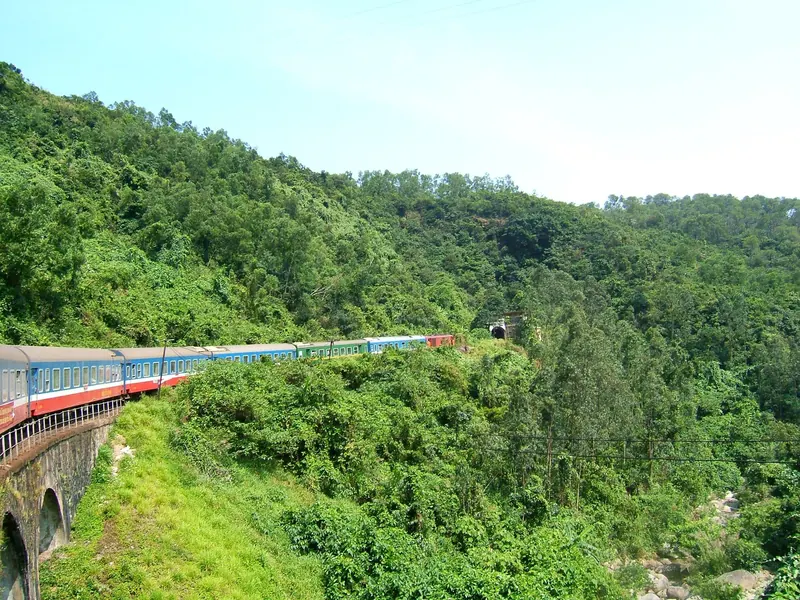
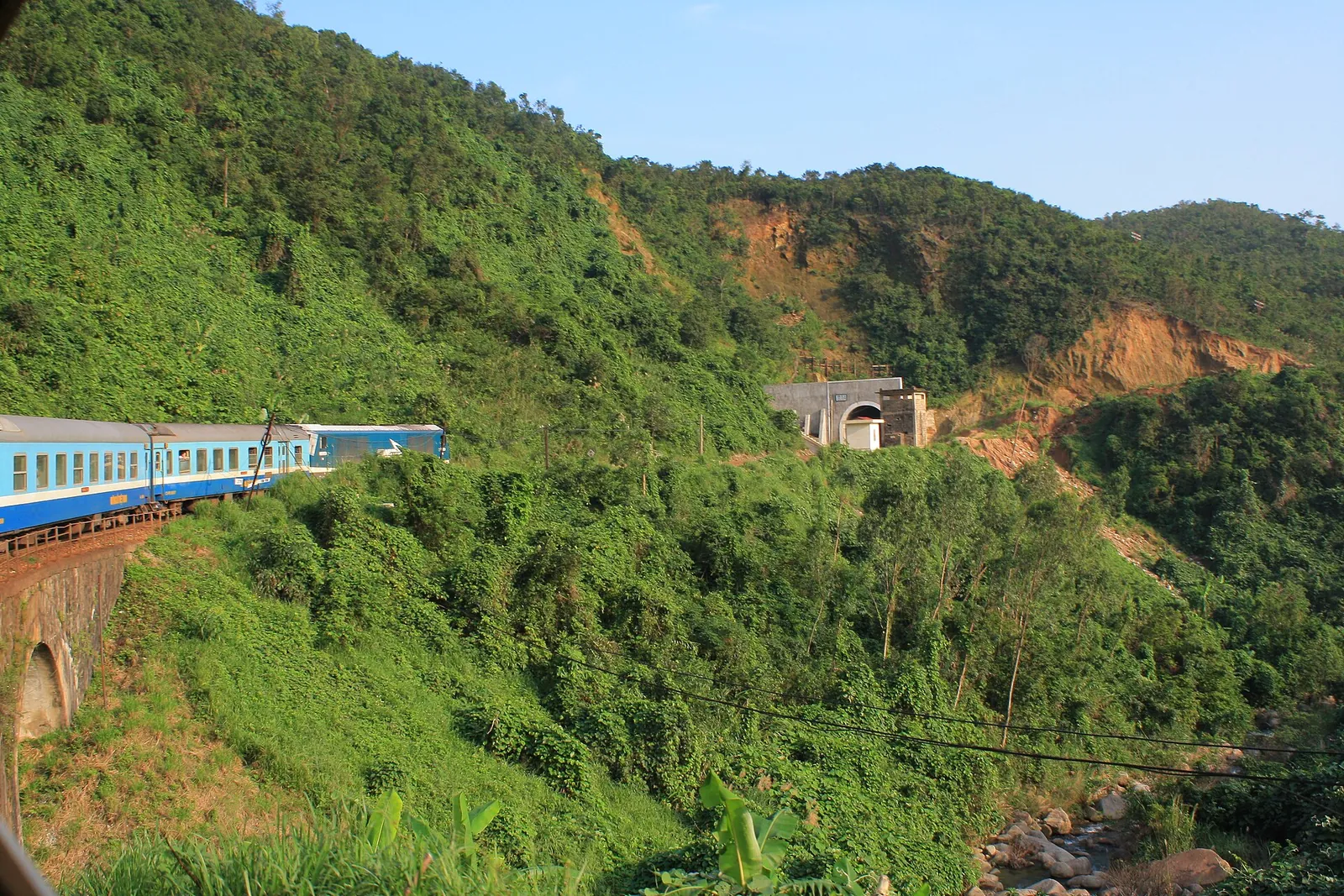
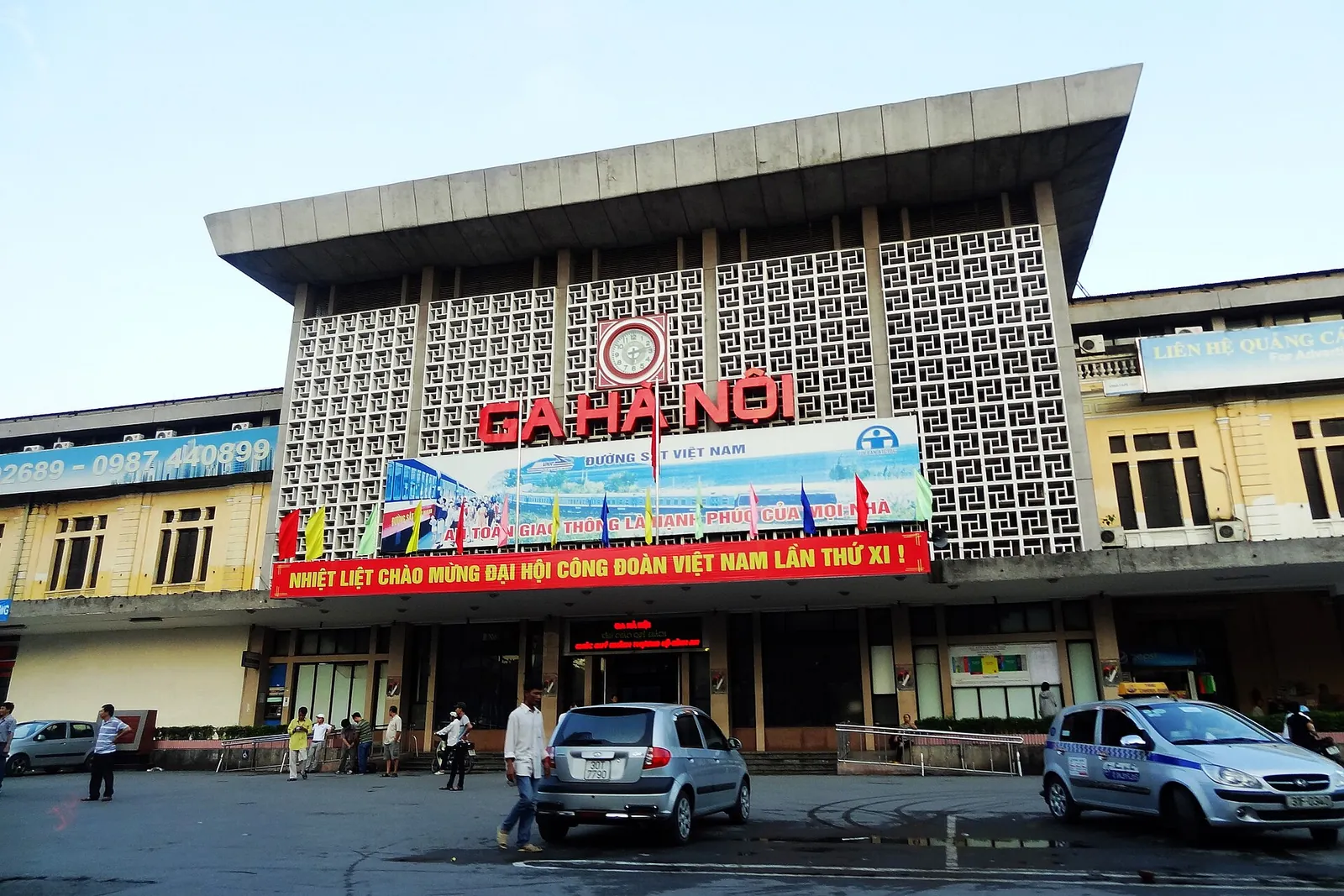
One single-track main line runs from Ho Chi Minh City to Hanoi and on towards the Chinese border, and the tourism board describes trains averaging about 40 km an hour on it. The through trains on this line are known as the Reunification Express (tàu Thống Nhất). The tourism board lists hard seats, soft seats and hard and soft sleepers, with four-berth soft-sleeper cabins the comfortable choice, and charges full fares for children over five. In Hanoi, the main station is at 120 Le Duan; in Ho Chi Minh City, Saigon Station is at 1 Nguyen Thong.
Book through the railway's official ticketing site, dsvn.vn, at a station counter or through an agency. The tourism board advises buying a few days ahead on ordinary dates and well in advance for holidays, when the faster trains and best berths go first. Tet is the extreme case: on 5 September 2026, the railway put about 300,000 north–south tickets on sale for travel between 23 January and 25 February 2027, and said it planned to run seven pairs of Reunification Express trains daily, plus two extra pairs (TN3/4 and TN5/6) between Hanoi and Ho Chi Minh City.
When we checked on 2026-10-03, the ticket site's general rules allowed an individual ticket to be exchanged at least 24 hours before departure for 20,000 dong, and refunded for 10% of the fare at least 24 hours ahead or 20% between 4 and 24 hours ahead, with different, stricter rules over Tet. Tickets bought online can be refunded online or at a station; otherwise you go to the station with the original identity document, and the name on the ticket must match it. Book in your name as it appears in your passport.
For most visitors the train is best on a shorter stretch rather than end to end. The railway runs regular local trains between Hue and Da Nang, and between Tho Loc and Hue, alongside the through services. Since late August 2026 it has also run a daily heritage train, HQ1/HQ2, on the roughly 190 km between Hue and Tho Loc via Dong Ha, My Trach and Dong Hoi (the station for Phong Nha): when we checked on 2026-10-03, Vietnam Railways listed HQ2 leaving Hue at 07:15 and reaching Tho Loc at 11:55, and HQ1 leaving Tho Loc at 13:15 and arriving in Hue at 17:25, bookable on dsvn.vn. On the overnight trains, the UK government warns of petty theft while passengers are asleep, so keep valuables on you in the berth.
Make time for the local food
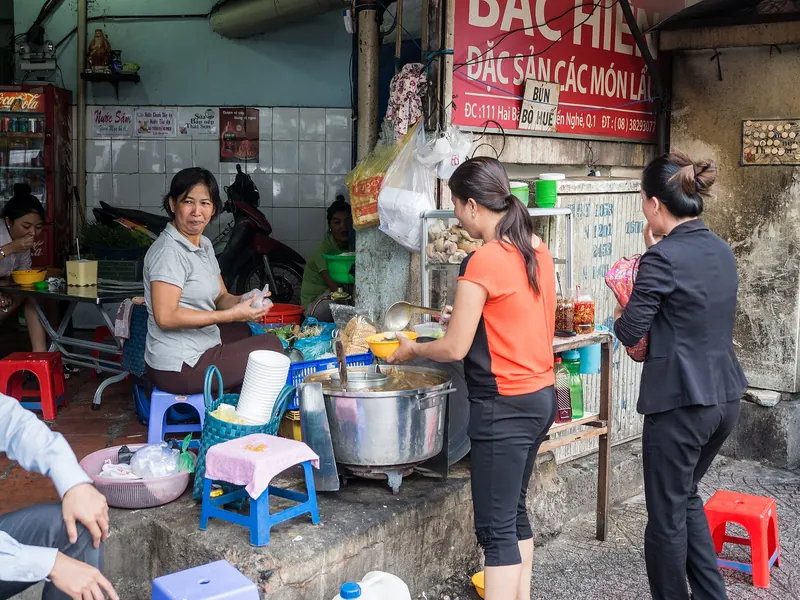
What to eat and where to look
Bánh mì
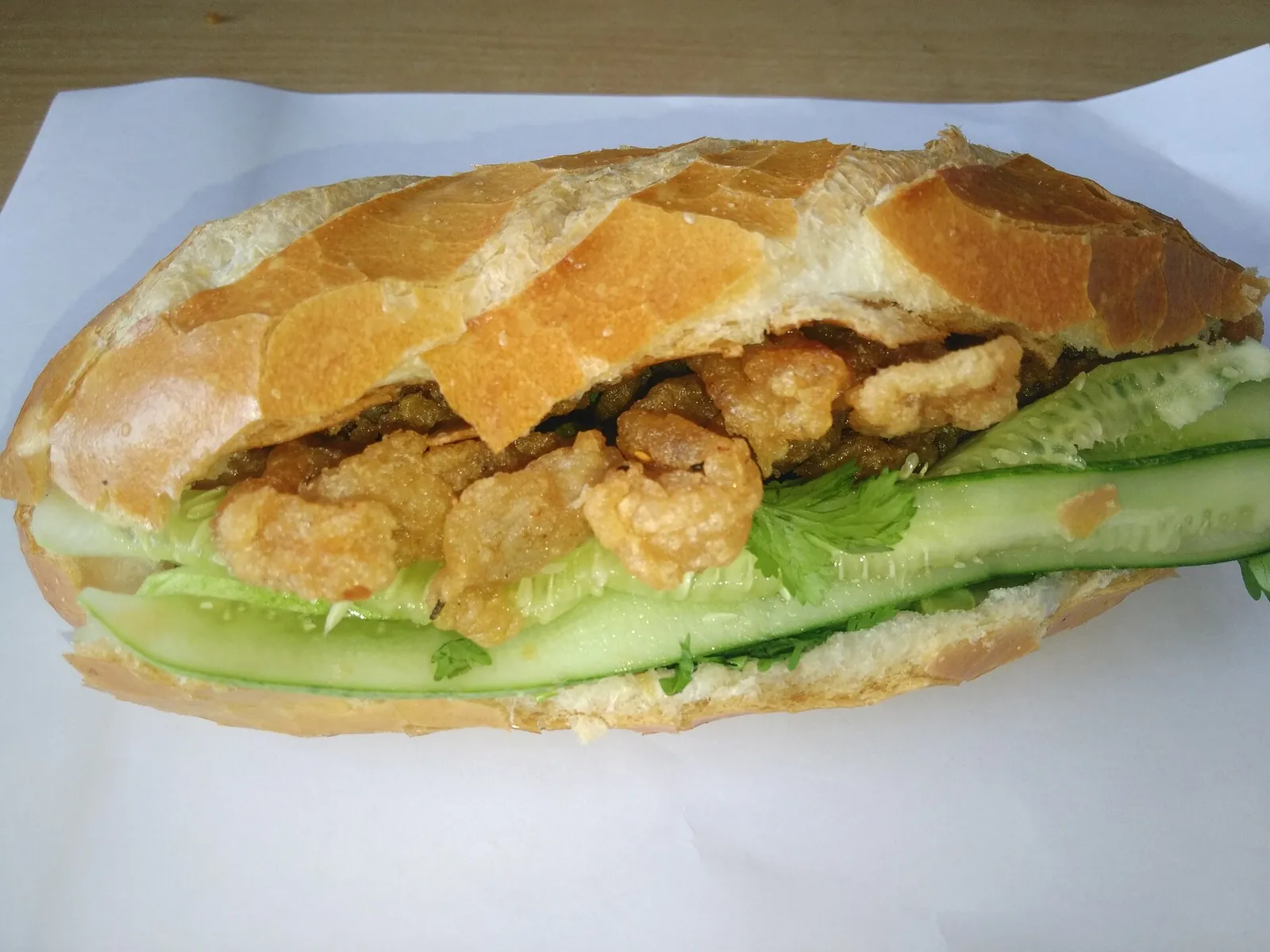
A crisp, light baguette split and filled with pâté, cold cuts or grilled pork, pickled carrot and radish, cucumber, herbs and chilli. It travels well, which makes it the obvious breakfast before an early train or bus.
- Where to look
- Bakery counters and street carts near stations, markets and busy junctions in every city, especially in Ho Chi Minh City and Hoi An.
- Fit it into your day
- Buy one or two on the way to the station or airport, and eat them within a few hours.
Usually contains pork, pâté and sometimes egg; the chilli can be very hot. Ask for a version without pâté or meat if you need it.
Xôi (sticky rice)
Steamed glutinous rice topped with mung beans, fried shallots, shredded chicken or pork floss, sold wrapped in leaves or paper. A filling, portable breakfast in the north in particular.
- Where to look
- Morning vendors on pavements and at markets in Hanoi, often gone by mid-morning.
- Fit it into your day
- Breakfast before a morning departure from Hanoi, or a snack for the day's journey.
Toppings often include pork or pork-based floss and fish sauce; check before buying if you avoid them.
Phở (rice noodle soup)
Flat rice noodles in a clear beef or chicken broth with herbs, lime and chilli. Not something to carry onto a train, but a hot bowl at a specialist shop is the best start to a long travel day.
- Where to look
- Small specialist shops serving one or two kinds of phở, busiest at breakfast; Hanoi's versions are restrained and broth-led.
- Fit it into your day
- A sit-down breakfast before an afternoon flight or train, rather than a rushed meal at the terminal.
Beef is often served rare and cooks in the broth; ask for well-done (chín) if you prefer.
Cơm tấm (broken rice)
Broken rice with grilled pork chop, shredded pork skin, a slice of steamed egg-and-pork cake and pickles, with sweet fish-sauce dressing on the side. A southern staple and a reliable meal on arrival in Ho Chi Minh City.
- Where to look
- Street-side eateries and small restaurants all over Ho Chi Minh City, open from early morning into the evening.
- Fit it into your day
- A first or last meal in the south, close to your hotel, on the day of a flight or train.
Contains pork, egg and fish sauce.
Sleeper buses: cheap, flexible and the riskiest option
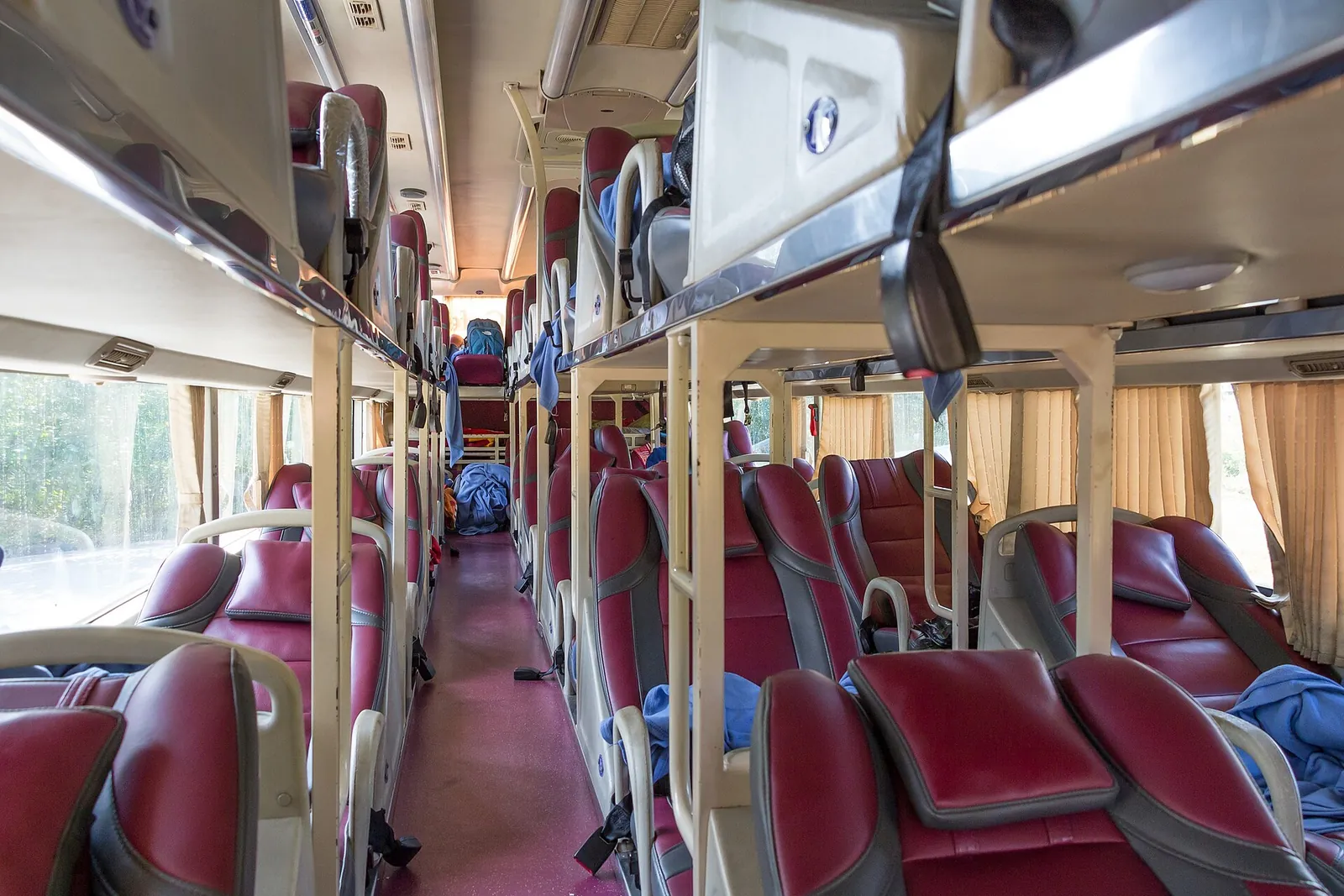
Open-tour and sleeper buses link the main stops of the classic route — Hanoi, Hue, Hoi An, Nha Trang, Da Lat, Mui Ne and Ho Chi Minh City — and the tourism board describes them as running regularly, with most vehicles fitted with berths or deep reclining seats. It recommends booking a day or two ahead, and at least two weeks ahead over Vietnamese holidays.
The trade-off is safety. The UK government's travel advice says bus and coach crashes are not uncommon and more likely at night, that vehicles are often poorly maintained, and that tired night drivers have caused fatal crashes. It also warns of petty theft on buses and of scams involving free bus transfers to hotels that were not arranged in advance.
If the budget allows, fly the overnight distances and keep buses for daytime legs of a few hours. When you do take a sleeper bus, book with an established company through your hotel or the company's own office, keep your passport and phone on your body rather than in the luggage hold, and choose a lower berth if you want to get in and out easily.
Private cars, drivers and the Hai Van Pass
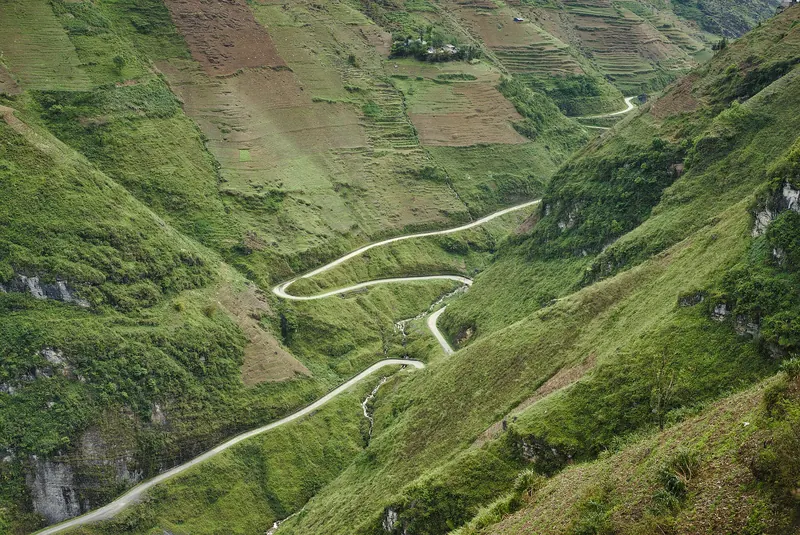
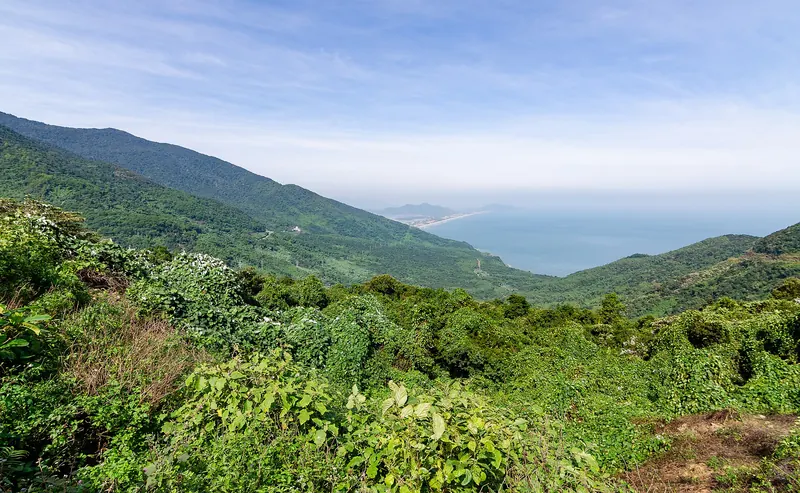
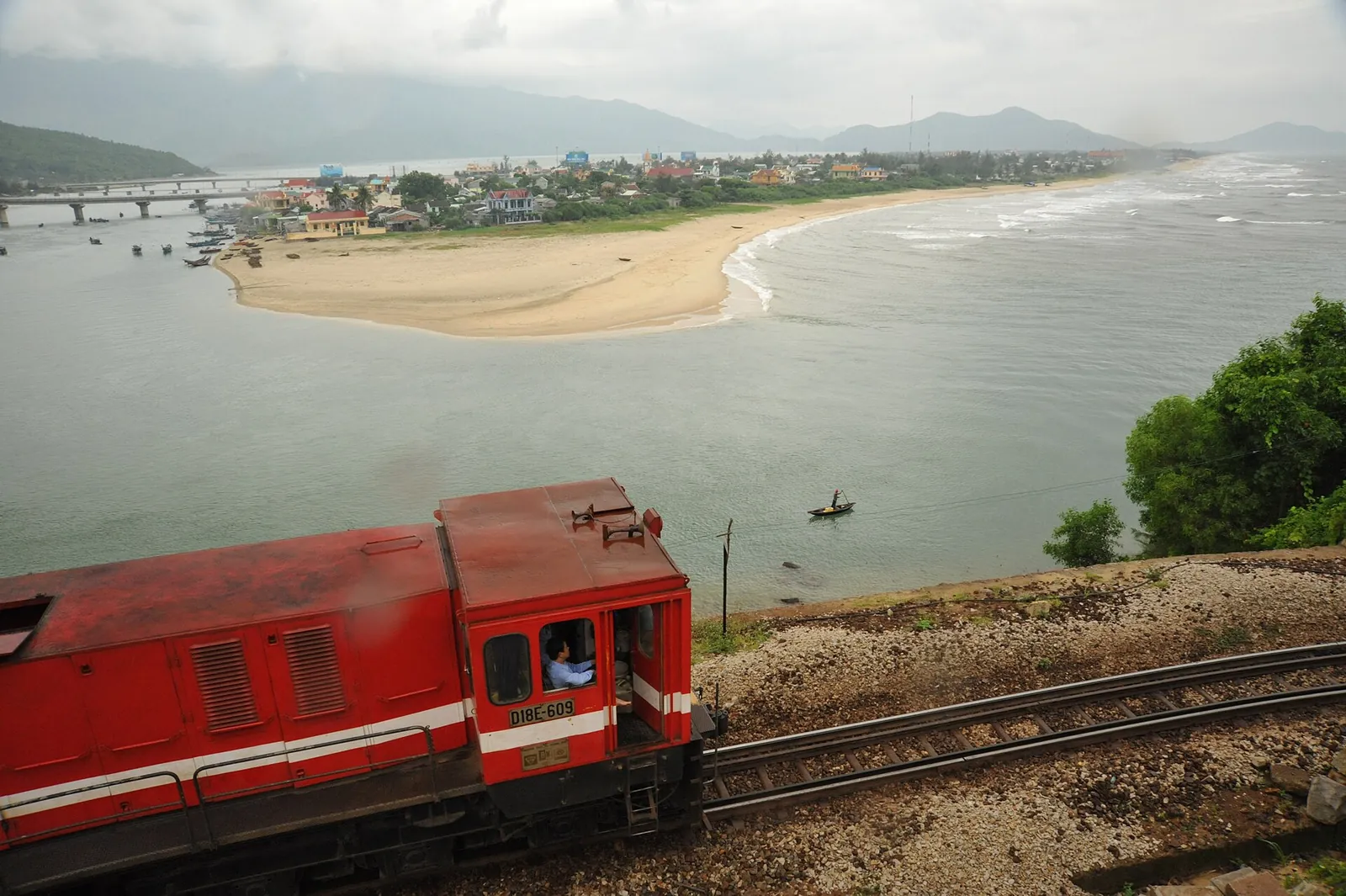
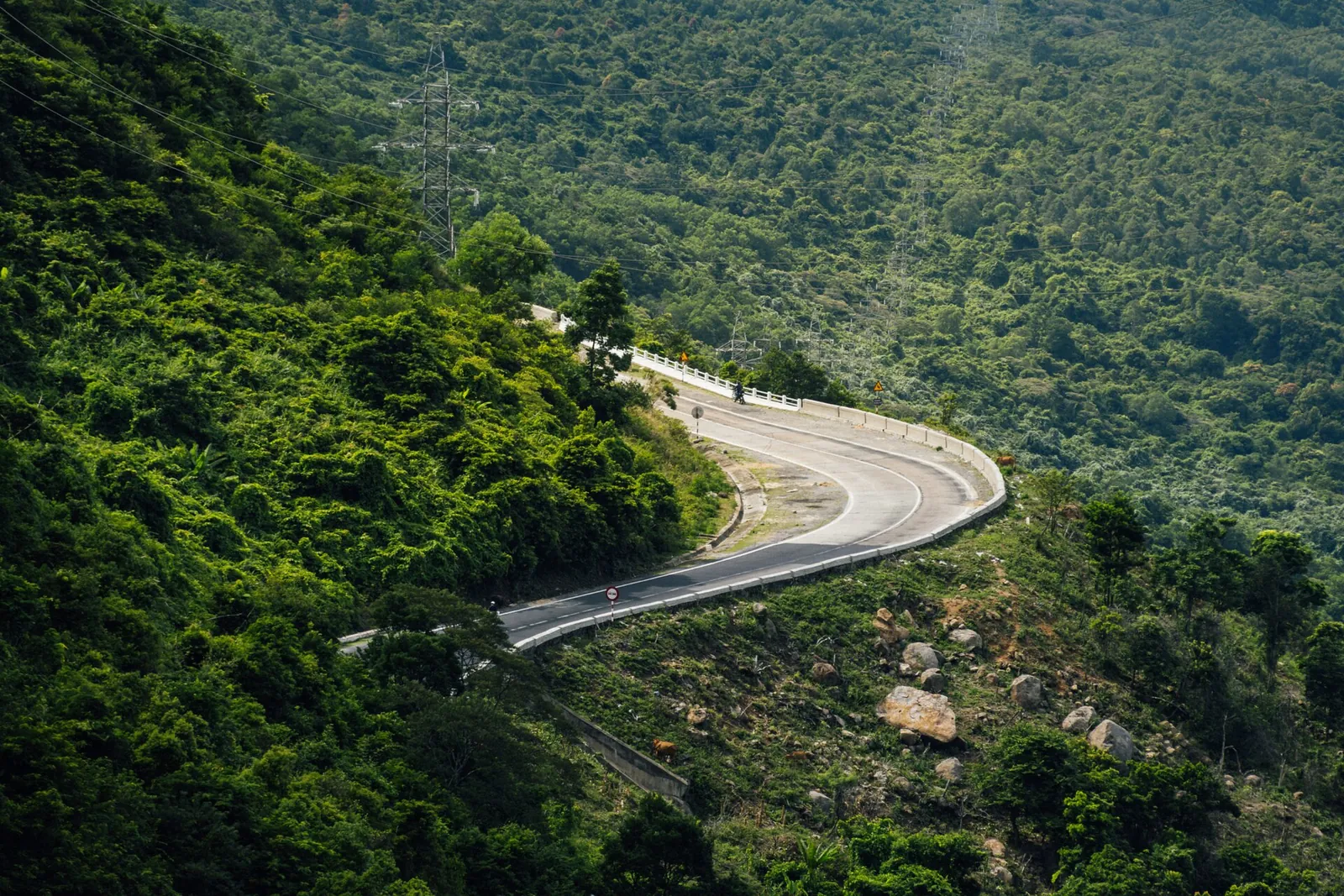
Between towns that are a few hours apart, a car with a driver is often the most comfortable answer, especially for families or with heavy luggage. The best-known example is the coast road between Hue and Hoi An over the Hai Van Pass: a private car lets you stop at the top of the pass, at Lang Co lagoon or at the beach, and it can be booked through your hotel or as a scenic transfer. The railway also runs along this stretch of coast, and the local Hue to Da Nang trains are a good alternative if you would rather not go by road.
Driving yourself is a different matter. The UK government's advice says its citizens need both the 1968 version of the International Driving Permit and their home licence to drive a car or a motorbike in Vietnam, that driving without third-party insurance is illegal, and that any alcohol in your system can lead to a fine or worse. It also notes that compliance with road laws is poor. Check the rules for your own nationality before you travel, and for most visitors a hired driver is the simpler option.
Motorbikes and bicycles
Motorbikes are Vietnam's everyday transport, and rental shops are everywhere. When we checked on 2026-10-03, the tourism board's transport page gave 150,000 to 300,000 dong a day for scooters and mopeds, and noted that shops may ask for a deposit or your passport for longer rentals. The UK government advises against handing over your passport as a guarantee, because shops can hold it against claimed damage.
The same advice says riding in Vietnam is much riskier than at home, that accidents are common, and that you should not hire a motorbike unless you are an experienced rider. Helmets are compulsory for drivers and passengers, and your travel insurance must cover riding. If you want the mountain roads of the north without riding yourself, a tour with a local rider is the safer way to do it.
In compact towns, a bicycle is often enough. The tourism board says you can reach almost everything in Hoi An and Hue by bike, and gave rental prices of about 20,000 to 30,000 dong a day when we checked.
In the cities: ride-hailing, taxis and metro
For short trips in Hanoi, Da Nang and Ho Chi Minh City, ride-hailing apps are the easiest way to avoid fare disputes. The UK government recommends pre-arranged transport or official apps such as Grab or Xanh SM, which supply licensed cars, and advises booking the full journey in the app and checking that the vehicle and driver match what the app shows. Xanh SM runs electric VinFast cars in its own cyan-green colours, which makes them easy to spot.
If you prefer a street taxi, the tourism board names Mai Linh and Vinasun as trusted firms with sealed meters, and says you can find them at the international airports. The UK advice adds that metered taxis from larger firms are generally reliable, and that hotels and restaurants can call one for you.
Hanoi now has an urban rail system: the operator lists Line 2A (Cat Linh to Ha Dong) and Line 3 (Nhon towards Hanoi Station). They are useful for some districts, but most visitors in the Old Quarter will still walk or take a car. Check the operator's map for which stations are open before you rely on it.
Weather, holidays and boats: build in slack
Storms and floods affect every mode. The UK government says tropical cyclones normally affect the eastern coast from May to November, that central Vietnam has seasonal flooding in October and November, and that floods and landslides can block roads and disrupt overland travel. The railway itself suspended its international service to China for days in August 2026 because of a storm. Do not plan a long overland leg the day before an international flight in the wet months.
Boats need the same care. The UK advice asks you to check a boat's safety record and registration, to insist on a safety briefing and a life jacket, and to think carefully about standards before an overnight cruise on Ha Long Bay; the tourism board recommends using reputable cruise companies. Over Tet and other public holidays, trains and buses fill weeks in advance, so book those legs first and the hotels around them.
Practical questions
Is it better to take the train or fly between Hanoi and Ho Chi Minh City?
Fly if time matters. The tourism board puts the train journey at around 30 hours, against a one- or two-hour flight. Take the train for a shorter stretch, such as Hue to Da Nang or an overnight leg to Hue, if you want the experience.
Where do I buy Vietnam train tickets?
On the railway's official ticketing site, dsvn.vn, at station counters or through travel agencies. Book a few days ahead on ordinary dates and well in advance for holidays; Tet 2027 tickets for the north–south line went on sale on 5 September 2026.
Are sleeper buses in Vietnam safe?
They are widely used, but the UK government warns that bus and coach crashes are not uncommon and more likely at night, and that vehicles are often poorly maintained. Prefer daytime buses or flights for long distances, and keep valuables on you.
Can I use Grab in Vietnam?
Yes. The UK government recommends official ride-hailing apps such as Grab or Xanh SM, which use licensed cars. Book the whole journey in the app and check that the car and driver match the details shown.
Do I need a licence to rent a motorbike in Vietnam?
Yes. UK advice says British visitors need the 1968 International Driving Permit together with their home licence, plus third-party insurance; check the rules for your nationality. Helmets are compulsory, and the UK advises against renting if you are not an experienced rider.
How do I get from Hue to Hoi An?
By private car over the Hai Van Pass, which allows stops on the way, or by local train from Hue to Da Nang and then a short road transfer to Hoi An.
Sources and checks before you travel
Reference sources for the version dated 3 October 2026. Confirm opening times, access, transport and conditions for your travel dates.
- Vietnam National Authority of Tourism: Transport within Vietnam ↗ — opens in a new tab
- Vietnam National Authority of Tourism: Getting to Vietnam ↗ — opens in a new tab
- Vietnam National Authority of Tourism: Health and safety ↗ — opens in a new tab
- Vietnam Railways: official ticketing site (dsvn.vn) ↗ — opens in a new tab
- Vietnam Railways: Tet 2027 north–south ticket sale (5 September 2026) ↗ — opens in a new tab
- Vietnam Railways: HQ1/HQ2 heritage train ↗ — opens in a new tab
- Vietnam Railways: travel news (cẩm nang đi tàu) ↗ — opens in a new tab
- UK FCDO travel advice: Vietnam safety and security ↗ — opens in a new tab
- Xanh SM (Green SM): official site ↗ — opens in a new tab
- Hanoi Metro: official site ↗ — opens in a new tab
Does this experience fit your route?
Moving between regions? Compare transfers and day trips with transport included, and check the pickup point and luggage rules before you book.
Check dates and details on Viator ↗ — opens in a new tabAffiliate link · Book with ViatorPhoto credits
The Reunification Express on the central stretch of the north–south line, photographed from the train
Photograph: Benjamin Vander Steen — opens in a new tab · CC BY 2.0 — opens in a new tab
Changes: Resized and converted to WebP; displayed with responsive crops. · Original photograph and licence details ↗ — opens in a new tab
A train passing Lang Co, at the foot of the Hai Van Pass between Hue and Da Nang
Photograph: Emilio Labrador — opens in a new tab · CC BY 2.0 — opens in a new tab
Changes: Resized and converted to WebP; displayed with responsive crops. · Original photograph and licence details ↗ — opens in a new tab
Hanoi Railway Station (Ga Ha Noi), the northern end of the north–south line
Photograph: Alancrh — opens in a new tab · CC BY-SA 4.0 — opens in a new tab
Changes: Resized and converted to WebP; displayed with responsive crops. · Original photograph and licence details ↗ — opens in a new tab
Inside a sleeper bus: two tiers of semi-reclined berths along the aisle
Photograph: Ilya Plekhanov — opens in a new tab · CC BY-SA 4.0 — opens in a new tab
Changes: Resized and converted to WebP; displayed with responsive crops. · Original photograph and licence details ↗ — opens in a new tab
The road over the Hai Van Pass, the classic private-car or motorbike leg between Hue and Hoi An
Photograph: Benjamin Arnold — opens in a new tab · CC BY 3.0 — opens in a new tab
Changes: Resized and converted to WebP; displayed with responsive crops. · Original photograph and licence details ↗ — opens in a new tab
Banh mi with fish cake (cha ca) from a shop in Ho Chi Minh City: easy food to carry onto a train or bus
Photograph: Phương Huy — opens in a new tab · CC BY-SA 4.0 — opens in a new tab
Changes: Resized and converted to WebP; displayed with responsive crops. · Original photograph and licence details ↗ — opens in a new tab