South Central Coast and Highlands · Lam Dong
Da Lat travel guide: lakes, coffee farms, canyoning and where to stay
Da Lat sits at about 1,500 metres (5,000 feet) in the Central Highlands, and the cool air changes how a day works. Mornings are misty and good for the market and the hills; afternoons can be warm and, in the wet months, showery; evenings turn cold enough for a jacket and a bowl of something hot from a street stall. The French built it as a hill station, and the lakes, villas, pagodas and pine slopes are best taken in a loop at a slow pace rather than ticked off.
- Suggested time
- 2–3 days
- Where to stay
- Central Da Lat between Xuan Huong Lake and the market; Tuyen Lam Lake for a quieter resort stay
- Season and timing
- Cool all year. Vietnam's tourism authority suggests a jumper from November to January and an umbrella for rain from April to November; May is its pick for a warmer stay. Persimmon season is usually late October and November.
The short answer
Give Da Lat two full days, three if you want both an outdoor day and a coffee or farm day. Spend one day in town on foot around Xuan Huong Lake, the central market and the railway station; spend the other at Datanla (for canyoning) or on Langbiang and a coffee farm below it. Sleep near the lake and the market if you will walk and eat out, or by Tuyen Lam Lake if you want pine forest and quiet and will use taxis. Fly into Lien Khuong airport, about 30 km south, or come up by road from Nha Trang, Mui Ne or Ho Chi Minh City.
Pick the lake, the market or the pines before the hotel
Most first-time visitors are best placed in the compact centre between Xuan Huong Lake and the central market. The lake paths, the market, the flower sellers, the street-food evenings and many cafés are within walking distance, which matters in a town where the evenings get cold and you will want to go back for a jacket.
The south side of the lake, around Tran Phu Street, is where the older grand hotels sit: the Dalat Palace opened in 1922, and its afternoon tea is an easy way to see the interiors without staying. Restored French-era villas on the hillsides, converted into hotels, are the romantic alternative.
Tuyen Lam Lake, south of town, is a different trip: a large reservoir encircled by pines, with resort hotels on its shores and the Truc Lam Zen monastery above it. It suits a slower stay with boat or kayak time on the water, but you will need a taxi or a booked car for meals and sightseeing in town.
A day in town: lake, market, station and pagodas
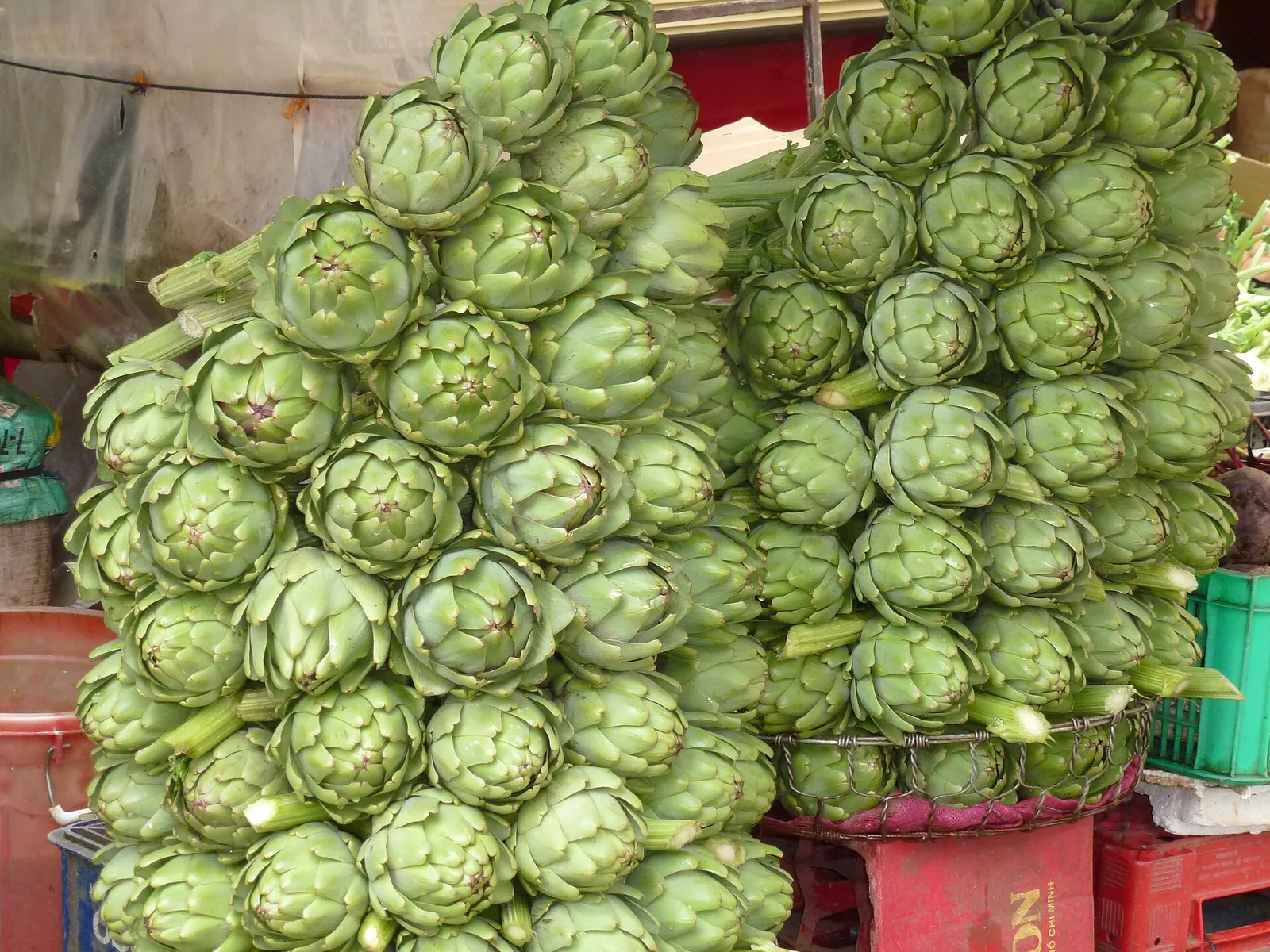
Start early at the central market, the multi-level building in the middle of town. Vietnam Tourism recommends coming in the early morning, when the stalls of fruit, vegetables and flowers are at their busiest; the upper floor has cooks serving mì Quảng and other dishes all day. It is also where to buy Da Lat's preserved fruits, candied ginger, coffee and artichoke tea to take home.
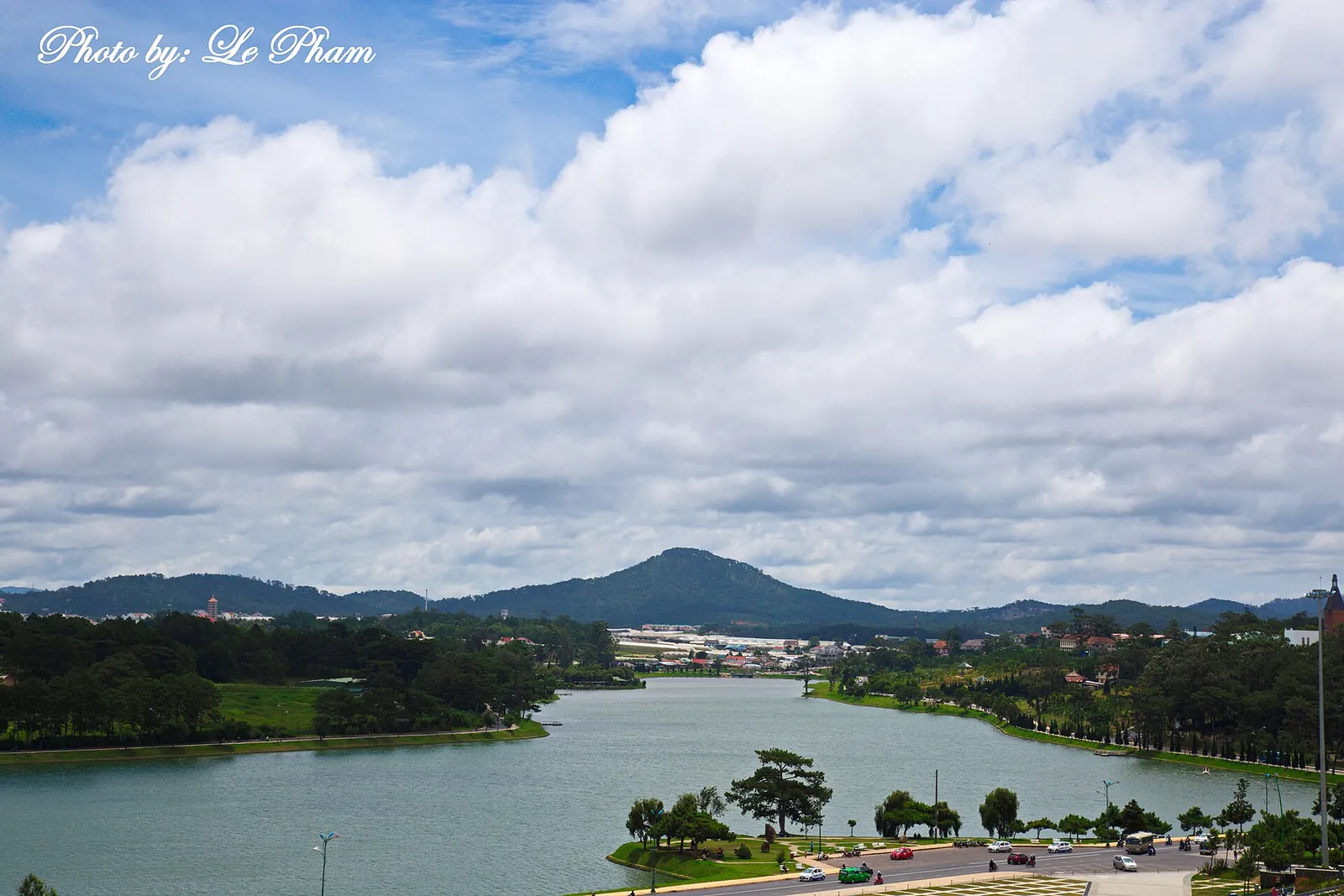
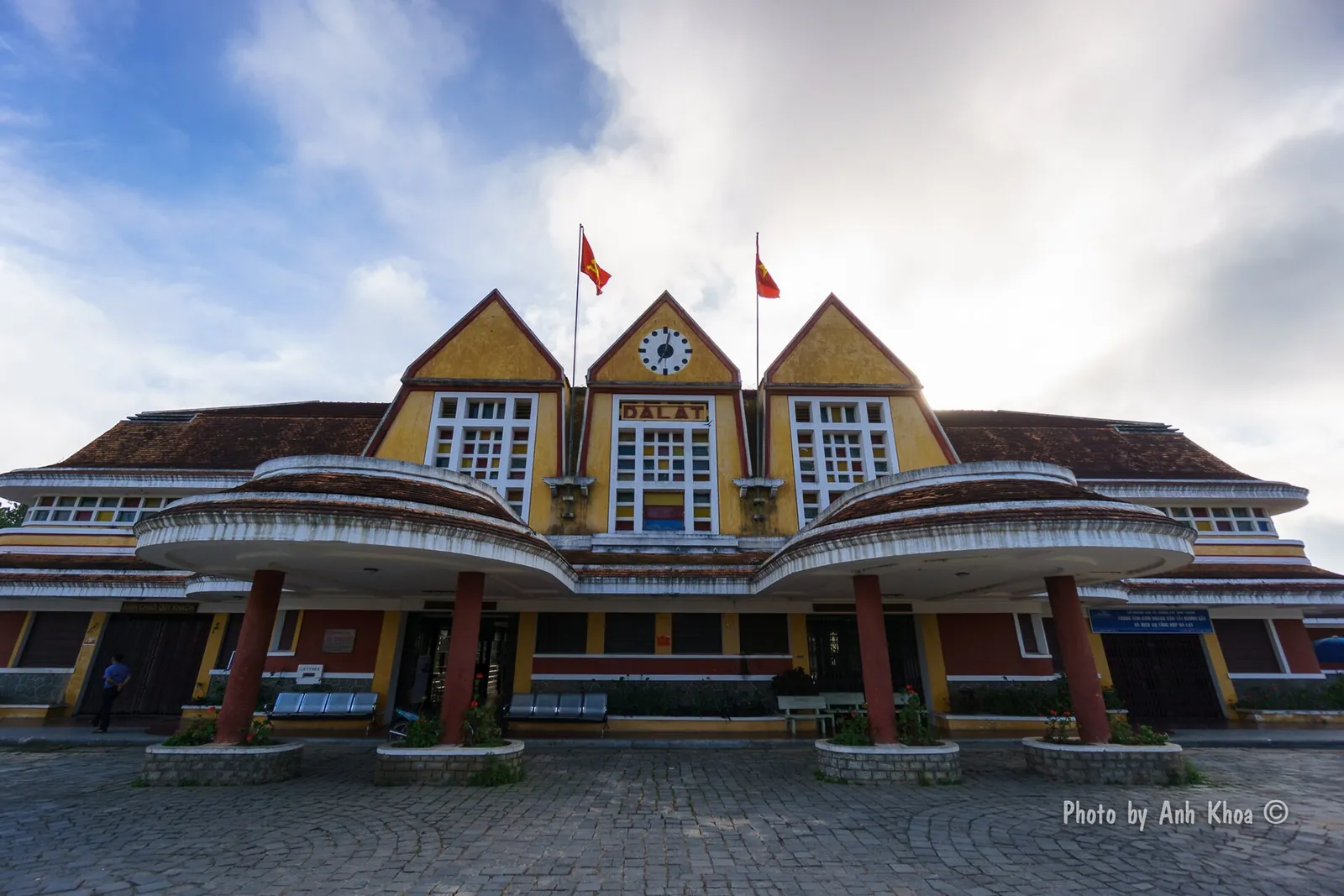
Walk the paths around Xuan Huong Lake afterwards; it is the focal point of the town, and the lakeside is where locals jog, stop for tea and pass the afternoon. East of the lake, the art-deco railway station was designed by French architects in 1932, with three peaked roofs said to echo the Langbiang mountains and an old train standing on the tracks.
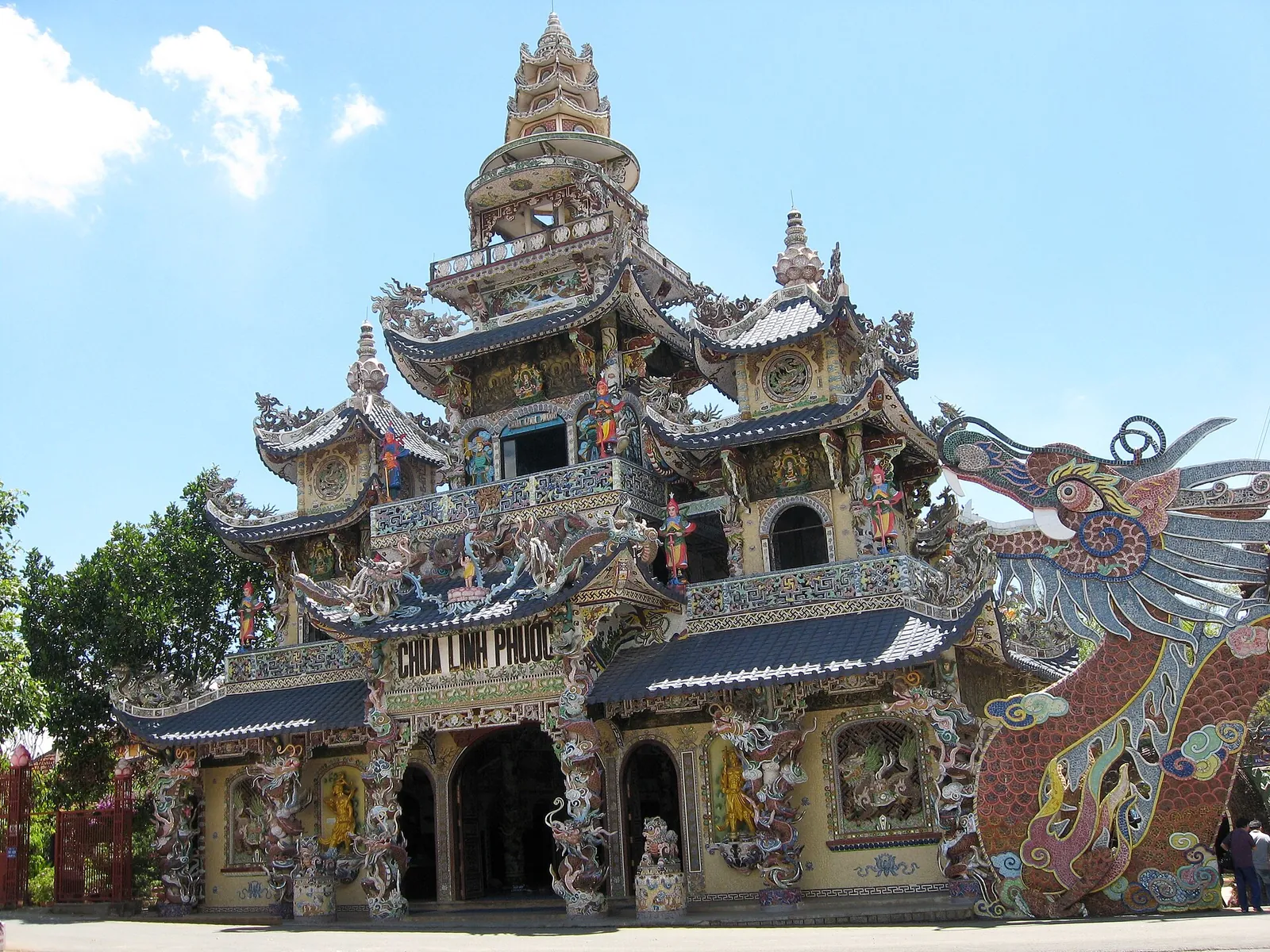
The station no longer connects to Vietnam's north–south line, but a short tourist train still runs out to Trai Mat for the mosaic-covered Linh Phuoc Pagoda. Inside town, Linh Son Pagoda on its small hill at 120 Nguyen Van Troi, dating from 1940, is far quieter. Dress modestly for both. For colonial architecture, the Domaine de Marie church and convent is the usual starting point.
- Morning: the central market at its busiest, then breakfast nearby.
- Late morning: Xuan Huong Lake on foot.
- Afternoon: the railway station and, if the train is running, Trai Mat and Linh Phuoc Pagoda; otherwise Linh Son Pagoda and Domaine de Marie.
- Evening: street-food stalls with grilled snacks, hot soy milk and sweet potatoes as the temperature drops.
Make time for the local food
What to eat and where to look
Bánh căn (grilled rice cakes with egg)
Bite-size rice cakes grilled over a charcoal brazier, usually with a quail or duck egg on top, and dunked in a spring-onion sauce. Da Lat's version grew out of central Vietnam's steamed rice cakes and is grilled for the cold climate.
- Where to look
- Breakfast stalls in the centre; Vietnam Tourism's food article points to the Hoa Binh area near the market.
- Fit it into your day
- Breakfast or an early snack before the market.
Sold mostly in the early morning; the dipping sauce usually contains fish sauce.
Bánh mì xíu mại
Unlike the cold-cut sandwich of Saigon, Da Lat's bánh mì is served hot: a grilled baguette with a bowl of pork meatballs in broth to dunk it in, plus shredded papaya and herbs.
- Where to look
- Small specialist shops and stalls in central Da Lat.
- Fit it into your day
- A warming breakfast or a late-evening snack when the temperature drops.
Pork-based; ask for chilli on the side.
Mì Quảng and Da Lat-style phở
Many Da Lat residents came from central Vietnam, so central dishes are everywhere: mì Quảng (turmeric noodles with pork and a little rich broth) and phở served with a plate of fresh herbs and crisp highland lettuce.
- Where to look
- Cooks on the upper floor of the central market serve mì Quảng all day; phở shops are spread across the centre.
- Fit it into your day
- Lunch in the market after the morning produce stalls.
Usually pork-based; ask about shrimp and peanuts if you have allergies.
Bánh bèo
Spoon-sized steamed rice-and-tapioca cakes from Huế, topped with fried shallots and crispy pork skin and dressed with a light fish sauce.
- Where to look
- Snack stalls and small shops in the centre.
- Fit it into your day
- A mid-morning or afternoon snack between sights.
Toppings usually include pork and shrimp; ask for a plain version.
Artichoke tea, Arabica coffee and dried persimmons
Da Lat's produce shows up in what you drink and take home: artichoke tea, highland Arabica from the slopes around the town, and wind-dried persimmons in the late-autumn season.
- Where to look
- The central market and its surrounding shops; coffee farms and roasteries for beans; persimmon gardens on the Mimosa Pass in season.
- Fit it into your day
- Buy on your last morning, after you know what you liked.
Check packaging and customs rules for food you carry home.
An outdoor day: Datanla canyoning, Langbiang or Bidoup
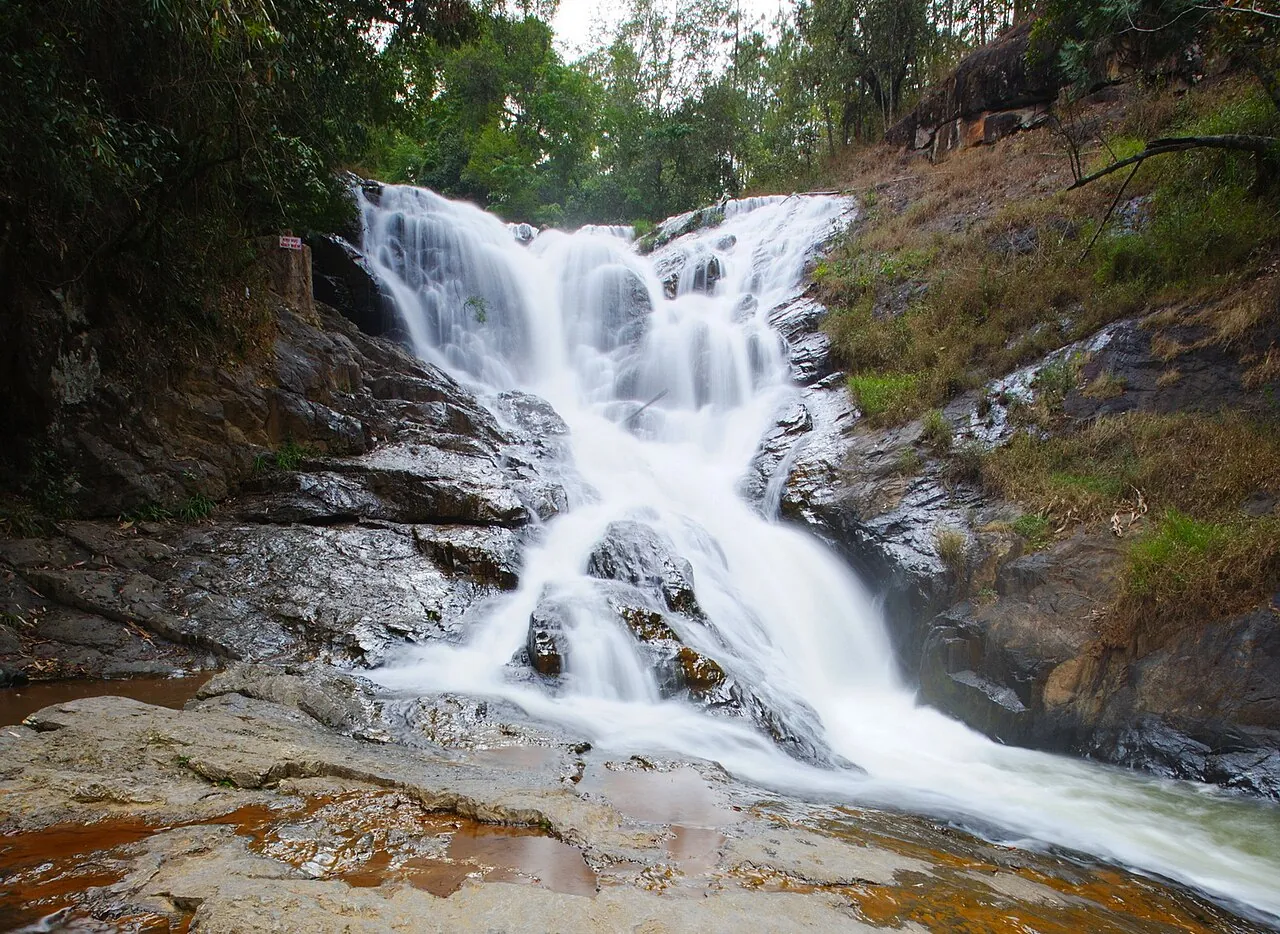
Canyoning at Datanla falls, on the edge of town, is Da Lat's best-known adventure. Vietnam Tourism describes it as a guided mix of abseiling, climbing, swimming, sliding and zip-lining that needs no previous experience, with safety checks before each obstacle. Datanla also has an alpine coaster that runs past the cascades for those who would rather stay dry. Book through an operator, and ask about group size, guide qualifications and what happens if the water is high after heavy rain.
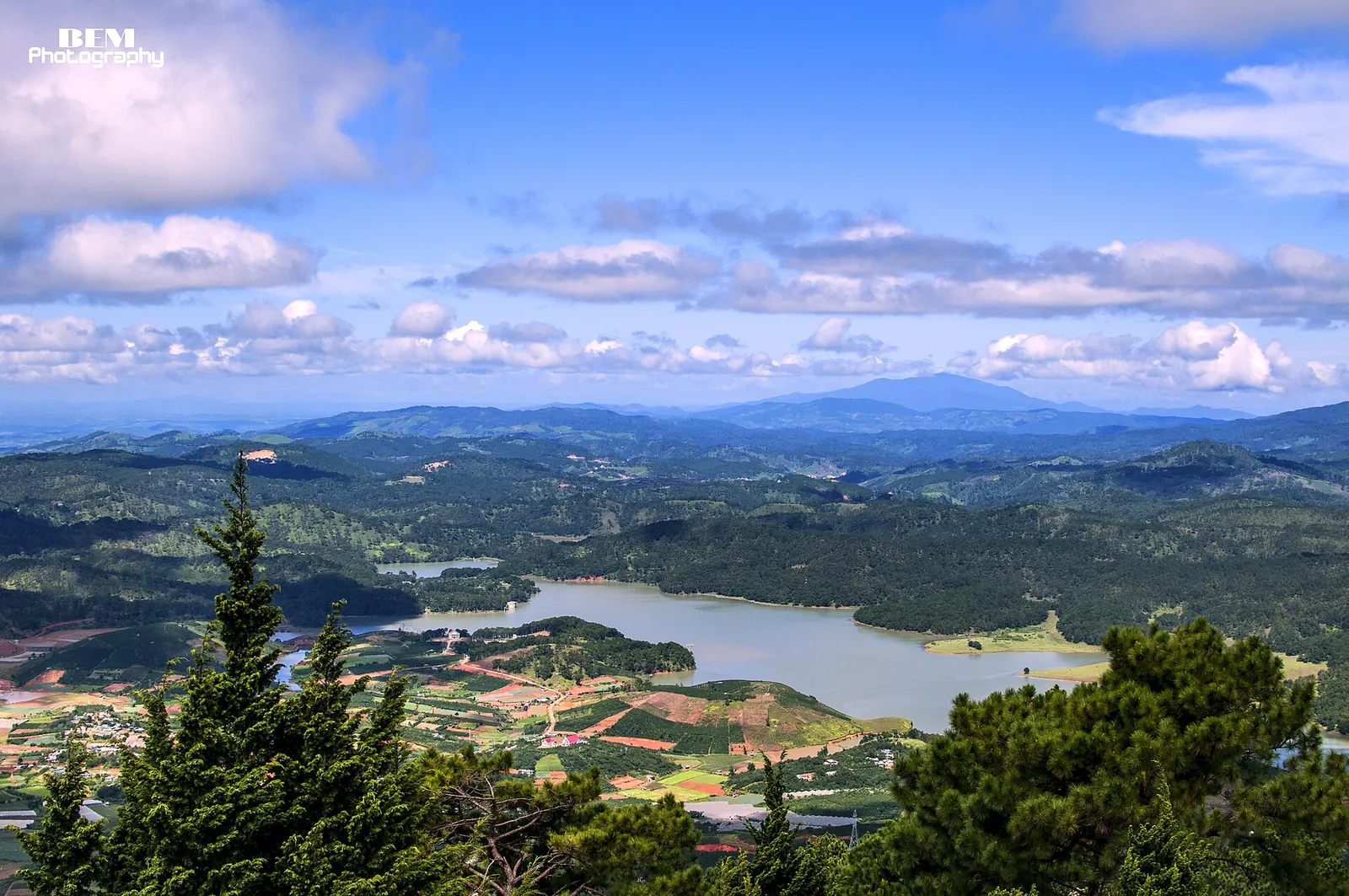
Langbiang mountain, north of town, is the other half-day or day: walk or bike up through the pines for the view back over the plateau, the greenhouses and the lakes. Below it, the K'Ho Coffee cooperative grows heirloom Arabica on the mountain's slopes, about 10 km from the city, and Vietnam Tourism describes its half-day farm workshops; contact the farm for current times and prices.
Bidoup Nui Ba National Park covers 69,662 hectares of high forest beyond Langbiang. When we checked on 2026-10-03, the park's official site listed its day routes from the visitor centre in Da Nhim, about 36 km from Da Lat, starting at 8:00 or 8:30 and finishing between 14:00 and 15:00, with transport to be registered in advance with the park's ecotourism centre. It advises long sleeves, long trousers and a windproof layer for the cold.
Farms, flowers, tea and persimmons
Da Lat supplies much of Vietnam with produce best grown at altitude, and its farms have become sights in their own right. Hydroponic greenhouses and hanging strawberry gardens are the modern version; flower villages such as Thai Phien and Van Thanh, on the edge of town, grow roses, hydrangeas, daisies and hundreds of other varieties in fields and greenhouses.
Cau Dat, south-east of the city, is tea and coffee country: rows of tea curve over the hills around a tea factory the French built in 1927. Vietnam Tourism suggests going in the late afternoon, when the light is low, and staying for a cup as the air cools.
If you are here in late October or November, follow Tran Hung Dao and Khe Sanh streets out to the Mimosa Pass, where persimmon gardens line both sides of the road and the fruit is hung to wind-dry. Wild sunflowers bloom at the same time, a local sign that autumn is ending.
Rain, cold evenings and getting around
The highland climate stays cool all year; Vietnam Tourism gives an average of roughly 15°C to 24°C. The wet months bring afternoon showers that fill the waterfalls but can cut short a motorbike ride or a canyoning trip, so put outdoor plans in the morning. Bring a jacket whatever the month.
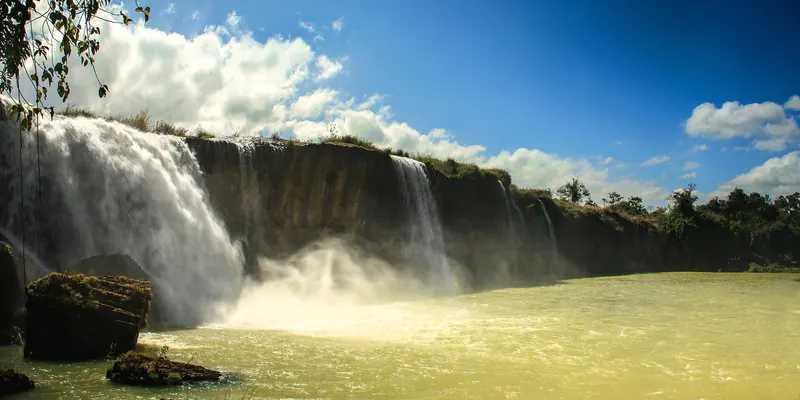
The town centre is easy on foot or by taxi. For Langbiang, Cau Dat, Tuyen Lam Lake or the falls, hire a car with a driver or join a tour unless you are a confident rider on hill roads; Elephant Falls at Nam Ban is about 30 km from town, and Pongour, known for its seven terraced rock ledges, is a longer drive again.
Linking Da Lat with the coast
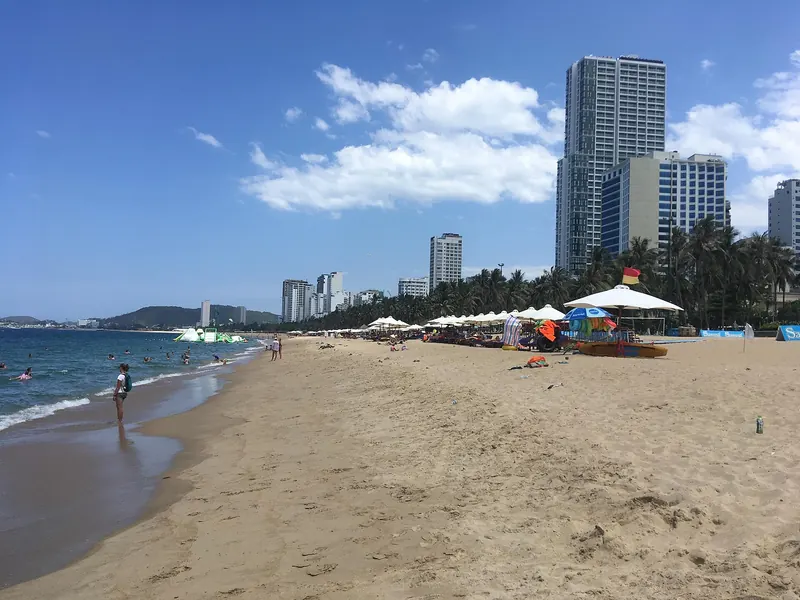
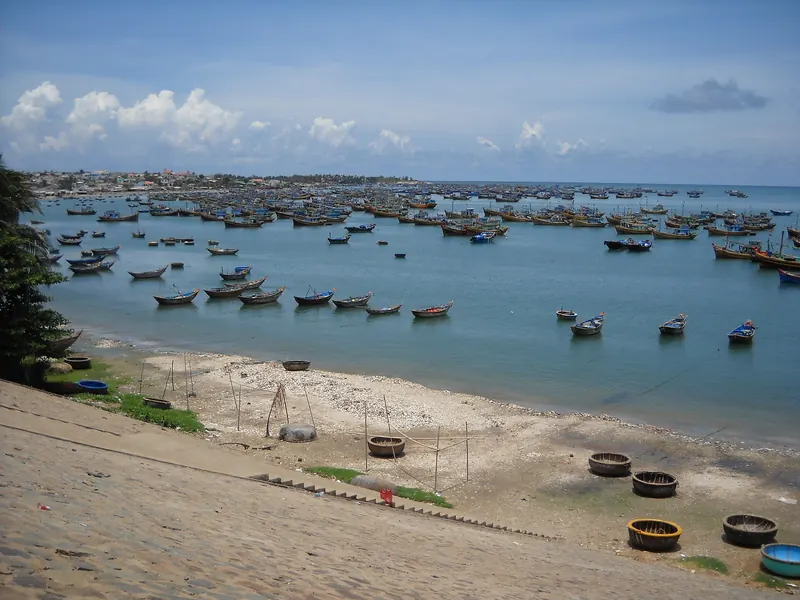
Da Lat no longer has a mainline railway, so the links are by road and air. Vietnam Tourism notes sleeper buses from Ho Chi Minh City, and that Mui Ne and Nha Trang are a few hours away by car or shuttle van. That makes Da Lat a natural cool break between beach stays on the south-central coast.
Treat the transfer as a half-day: the roads climb steeply from the lowlands, and a morning departure gives you the afternoon to settle in before the evening cold. If you are coming from Ho Chi Minh City with little time, a flight to Lien Khuong is the simpler option.
Practical questions
How many days do I need in Da Lat?
Two full days cover the lake, the market, the railway station and one outdoor trip such as Datanla or Langbiang. A third day lets you add a coffee farm, Cau Dat or a park trek without rushing.
Where should I stay in Da Lat?
Stay between Xuan Huong Lake and the central market if you want to walk to food and the main sights. Tuyen Lam Lake is quieter and greener but needs a taxi or car for almost everything.
Is canyoning in Da Lat suitable for beginners?
Vietnam Tourism says no previous experience is needed for the Datanla canyoning trips, which include abseiling, sliding and swimming with guides. You do need to be comfortable in water; ask the operator about fitness requirements and conditions after heavy rain.
Can I take a train to Da Lat?
No. Da Lat's tracks no longer connect to the north–south railway. A short tourist train runs from Da Lat station to Trai Mat for Linh Phuoc Pagoda.
How cold does Da Lat get?
It is cool all year, with averages of roughly 15°C to 24°C according to Vietnam Tourism, and evenings feel cold. Bring a jumper, especially from November to January.
How do I get from Da Lat to Nha Trang or Mui Ne?
By road: Vietnam Tourism notes that both are a few hours away by car or shuttle van. Plan the transfer as a half-day and leave in the morning.
Sources and checks before you travel
Reference sources for the version dated 3 October 2026. Confirm opening times, access, transport and conditions for your travel dates.
- Vietnam Tourism: Da Lat ↗ — opens in a new tab
- Vietnam Tourism: 8 ways to appreciate Da Lat ↗ — opens in a new tab
- Vietnam Tourism: 5 reasons to try canyoning in Da Lat ↗ — opens in a new tab
- Vietnam Tourism: Highland Escape – coffee, waterfalls and cool breezes in Da Lat ↗ — opens in a new tab
- Vietnam Tourism: Eating Da Lat with Chef Peter ↗ — opens in a new tab
- Vietnam Tourism: Agrotourism in Dalat ↗ — opens in a new tab
- Vietnam Tourism: A tour for coffee lovers in Da Lat ↗ — opens in a new tab
- Vietnam Tourism: Persimmons Garden in Da Lat ↗ — opens in a new tab
- Bidoup Nui Ba National Park (official site) ↗ — opens in a new tab
- Bidoup Nui Ba National Park: travel handbook ↗ — opens in a new tab
- K'Ho Coffee (cooperative) ↗ — opens in a new tab
- Wikipedia: Lien Khuong International Airport ↗ — opens in a new tab
Does this experience fit your route?
Compare the programme, departure point and practical requirements with your travel plans.
Check dates and details on Viator ↗ — opens in a new tabAffiliate link · Book with ViatorPhoto credits
Xuan Huong Lake, the centre of Da Lat, with the Langbiang massif beyond
Photograph: Le Anh Tuan — opens in a new tab · Public domain — opens in a new tab
Changes: Resized and converted to WebP; displayed with responsive crops. · Original photograph and licence details ↗ — opens in a new tab
Da Lat railway station, built in the 1930s; the tourist train to Trai Mat leaves from here
Photograph: Anh Khoa — opens in a new tab · CC BY-SA 2.0 — opens in a new tab
Changes: Resized and converted to WebP; displayed with responsive crops. · Original photograph and licence details ↗ — opens in a new tab
Linh Phuoc Pagoda at Trai Mat, at the end of the tourist train line from Da Lat
Photograph: Diane Selwyn — opens in a new tab · Public domain — opens in a new tab
Changes: Resized and converted to WebP; displayed with responsive crops. · Original photograph and licence details ↗ — opens in a new tab
The Da Lat plateau from the summit of Langbiang, north of the town
Photograph: Bem photography: — opens in a new tab · CC BY 2.0 — opens in a new tab
Changes: Resized and converted to WebP; displayed with responsive crops. · Original photograph and licence details ↗ — opens in a new tab
Datanla falls on the edge of Da Lat, where the canyoning trips run
Photograph: Du Tran — opens in a new tab · CC BY 2.0 — opens in a new tab
Changes: Resized and converted to WebP; displayed with responsive crops. · Original photograph and licence details ↗ — opens in a new tab
Artichokes for sale in Da Lat Market; the town also turns them into artichoke tea
Photograph: Hungda — opens in a new tab · CC BY-SA 3.0 — opens in a new tab
Changes: Resized and converted to WebP; displayed with responsive crops. · Original photograph and licence details ↗ — opens in a new tab