Itineraries · Vietnam
Vietnam in 2 weeks: Hanoi to the Mekong Delta by train, road and air
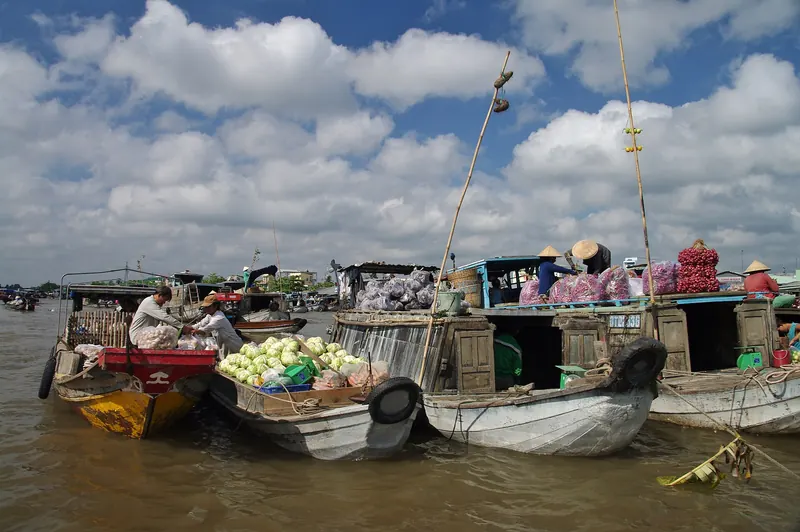
Two weeks is the shortest trip that does Vietnam from top to bottom without turning into a series of airports. The country's tourism board warns that travellers underestimate the distances: the train from Hanoi to Ho Chi Minh City can take up to 30 hours. This route solves that by riding the train only where it earns its place, from Ninh Binh down to the Phong Nha caves and on into Hue, crossing the Hai Van Pass by road, and flying just once, from Da Nang to Saigon. It ends where the delta is best, on a boat at Cai Rang before the sun is up.
- Suggested time
- 14 days (13 nights)
- Where to stay
- Hanoi Old Quarter (2 nights), Tam Coc, Ninh Binh (2), Phong Nha (2), Hue south bank (2), Hoi An Old Town edge (2), Ho Chi Minh City District 1 (2), Ninh Kieu, Can Tho (1)
- Season and timing
- February to April is the best window for the whole line. The tourism board calls March to May the best weather countrywide, puts Hue at its best from February to the end of April, picks March for Hoi An and April to June for Phong Nha, and the south is dry from December to April. Avoid October to December for this route: Hue usually floods from October, Hoi An gets a lot of rain and small floods from September to November, and Phong Nha's rainy season runs from October to December. Around Tet (5 to 8 February 2027 are the holiday days), trains and flights are at their fullest.
The short answer
Plan 14 days and 13 nights in seven bases: Hanoi's Old Quarter (2 nights), Tam Coc in Ninh Binh (2), Phong Nha town or Bong Lai (2), Hue's south bank (2), the edge of Hoi An's Old Town (2), District 1 in Ho Chi Minh City (2) and the Ninh Kieu waterfront in Can Tho (1). Fly into Hanoi (HAN) and out of Ho Chi Minh City. Go to Ninh Binh by road, take a southbound SE train from Ninh Binh to Dong Hoi for Phong Nha, ride the HQ1 heritage train from Tho Loc to Hue, cross the Hai Van Pass by car to Hoi An, and take the one domestic flight from Da Nang to Saigon. Go between February and April; from October to December the central leg is the one that breaks.
Why this order, and where the two weeks go
Vietnam is about as long as a country can be on a two-week holiday, and the national tourism board is direct about it: many travellers underestimate the distances and the roads, train rides from Hanoi to Ho Chi Minh City can run up to 30 hours, and 16 hours from the centre to either end is common. Its advice is to fly the long legs. This route takes that advice once, for the jump from Da Nang to Saigon, and otherwise keeps you on the ground, because the north and centre are where the overland journeys are the point.
The order runs north to south. You fly into Hanoi, go two hours by road to Ninh Binh, then catch a southbound train: on the operator's own route list, every through SE train from Hanoi to Saigon stops at both Ninh Binh and Dong Hoi, the gateway to the Phong Nha caves. From Phong Nha, the new HQ1 heritage train runs down the coast to Hue. Hue to Hoi An is a day over the Hai Van Pass by car, the flight leaves from Da Nang, and Can Tho is four hours from Saigon by bus. No leg needs a backtrack.
Thirteen nights split into seven bases, and that is already the limit. Each move costs half a day, so the plan builds in two nights almost everywhere and keeps one travel day as just that. Can Tho gets a single night, which is the minimum that puts you on the river at dawn. If you want a night on Ha Long Bay, Sa Pa or a beach, you need three weeks, not two: our 21-day route adds them.
Days 1–4: Hanoi and two nights in Ninh Binh
Land at Noi Bai, which the tourism board places about 27 kilometres from downtown Hanoi, about an hour from the city centre; the orange 86 Express Bus runs from the airport through central Hanoi to the railway station, or take a taxi to the Old Quarter. Spend arrival evening around Hoan Kiem Lake, the red Huc Bridge and Ngoc Son Temple; on weekends the roads around the lake close to vehicles, and after dark Hang Dao street turns into a night market, according to the national tourism site.
Day two is the old capital. When we checked on 2026-10-03, the Temple of Literature's official site listed a standard ticket of 70,000 dong. The Ho Chi Minh Mausoleum is closed for maintenance from 4 September to 2 November 2026 and reopens on 3 November, Tuoi Tre reported from the Mausoleum Command's notice; before then, see Ba Dinh Square from outside. Keep the afternoon for the Old Quarter on foot.
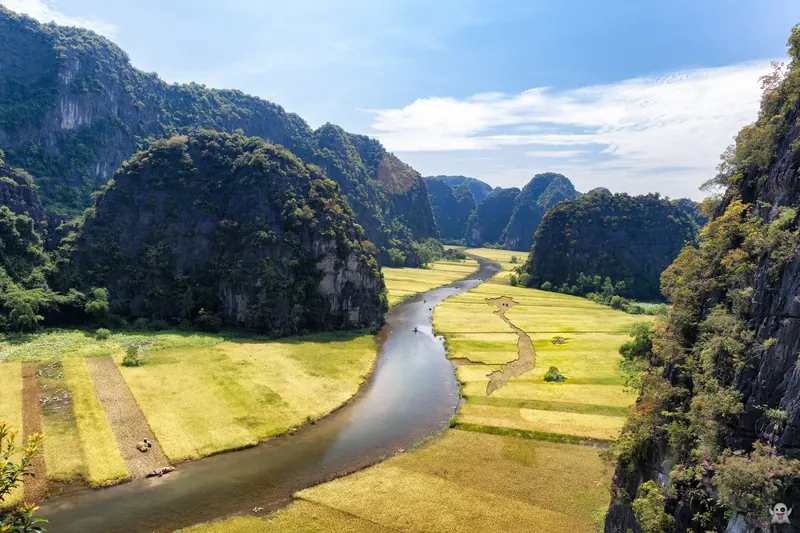
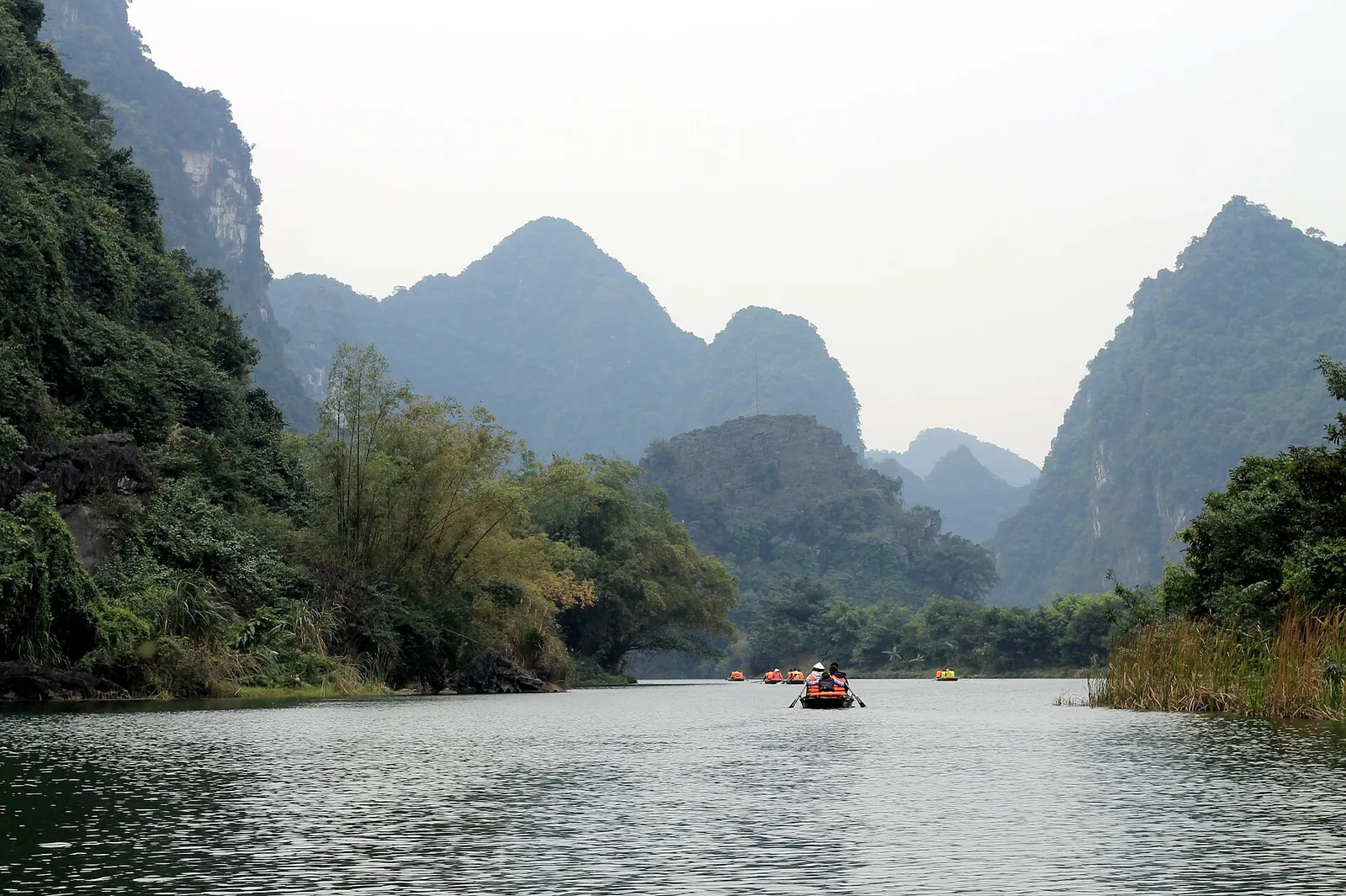
On day three, leave for Ninh Binh, which the tourism board puts just two hours from Hanoi; it describes buses, vans that drop off in Tam Coc and private cars as the quickest option. Sleep in Tam Coc, take the river boat through the rice fields in the afternoon and climb the 500 steps of Hang Mua before sunset. Day four is for Trang An: be at the pier early, before the day-trip groups from Hanoi, and pack water and a snack, because the tourism board says each boat trip lasts two to three hours. Spend the afternoon at the temples of Hoa Lu, the seat of Vietnam's first feudal dynasty. Our Ninh Binh guide compares the boat routes.
Make time for the local food
What to eat and where to look
Com chay and de tai chanh (Ninh Binh)
The national tourism site names these as Ninh Binh's signature dishes: com chay is a fried rice crust eaten as a snack or dipped into a warm stew, and de tai chanh is goat meat lightly cured in lemon juice with chillies, lime leaves and sesame seeds.
- Where to look
- Local restaurants around Tam Coc, Trang An and Hoa Lu; look for 'thịt dê' (goat) on the sign.
- Fit it into your day
- Dinner on day three or four in Tam Coc, ordered to share.
De tai chanh is only lightly cured, not fully cooked; ask for a cooked goat dish if you prefer.
Bun bo Hue (Hue beef and pork noodle soup)
A rice noodle soup that, as the national tourism site points out, uses pork hocks, trotters and blood cubes as well as beef brisket, seasoned with garlic, shallots, paprika, shrimp paste, lemongrass and lime. Heartier than pho, and the dish to eat in the city that gave it its name.
- Where to look
- Small specialist noodle shops across the city; look for 'bún bò' on the sign.
- Fit it into your day
- Breakfast on day eight, before the Imperial City.
Contains shrimp paste and congealed pork blood; ask for it without blood if you prefer, and taste before adding chilli.
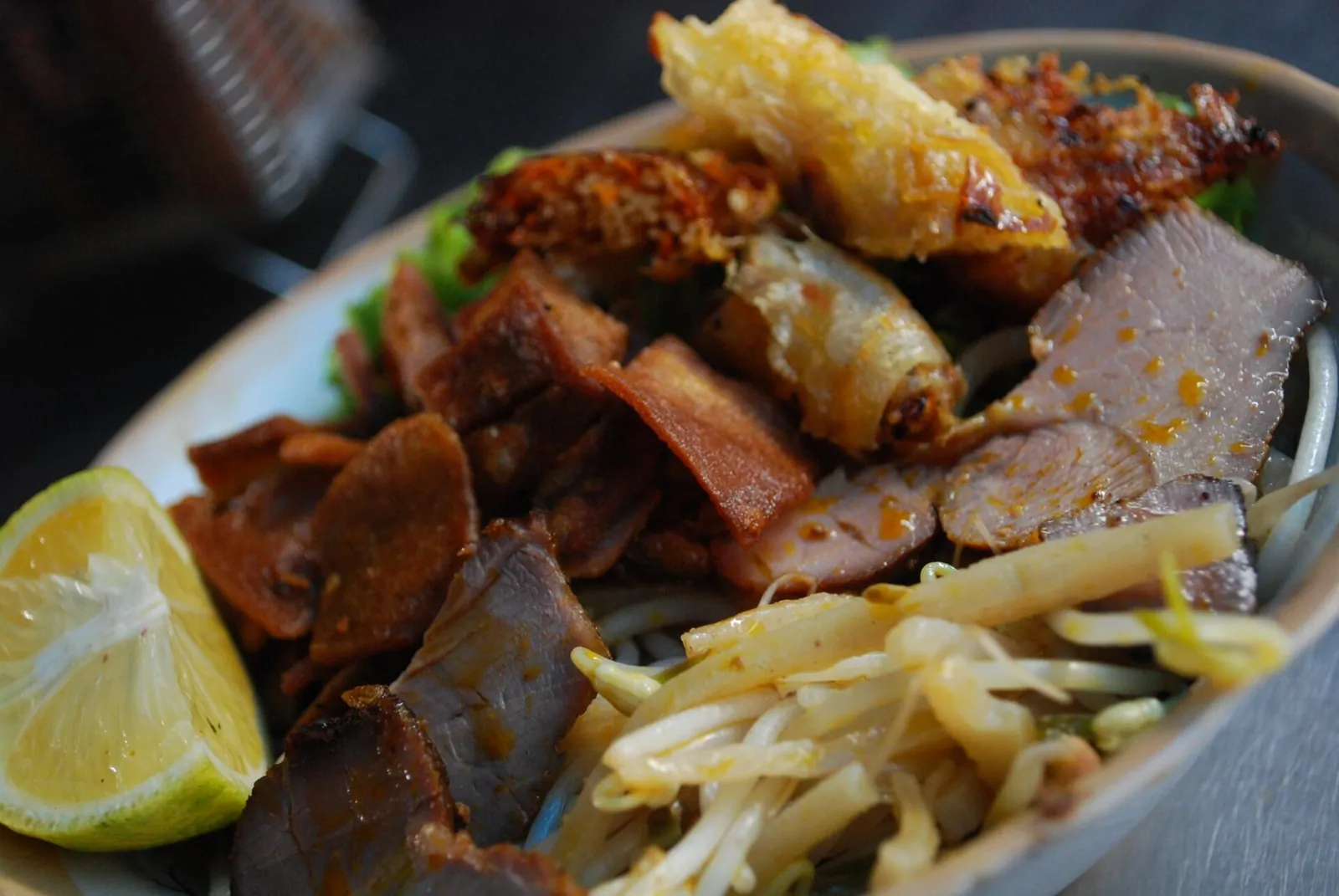
Cao lau and white rose dumplings (Hoi An)
The national tourism site names cao lau, hoanh thanh and white rose dumplings as Hoi An's three quintessential dishes, and the Hoi An heritage centre lists cao lau among the town's best-known specialities. White rose dumplings (banh vac) are translucent rice-flour wrappers around shrimp and pork, topped with fried shallots.
- Where to look
- Old Town eateries and the stalls of Hoi An Market by the river.
- Fit it into your day
- Cao lau for lunch on day ten after My Son, white rose dumplings with dinner before the lanterns.
Both contain pork; the dumplings also contain shrimp.
Com tam (broken rice, Saigon)
The national tourism site calls broken rice the go-to breakfast in Ho Chi Minh City and one of the few dishes that originated there: made from broken grains that, in the old days, farmers could not sell and kept for themselves.
- Where to look
- Pavement com tam stalls and small shops in District 1 and District 3, from early morning.
- Fit it into your day
- Breakfast on day twelve before the Independence Palace opens.
Plates usually come with fish sauce; ask for chilli on the side.
Hu tieu on the river (Can Tho)
The tourism board's Can Tho page makes a point of it: taste hu tieu, the southern noodle soup, on a boat at the floating market.
- Where to look
- Breakfast boats among the wholesale boats at Cai Rang; ask your boat driver to pull alongside one.
- Fit it into your day
- Breakfast on day fourteen, on the water.
Eat light and drink bottled water before the long road back to Saigon.
Days 5–7: the train south and two nights at Phong Nha
Day five is a travel day, and the train makes it a good one. On the operator's route list, all the southbound through trains from SE1 to SE11 call at Ninh Binh and Dong Hoi; departure times differ, so choose one on the Vietnam Railways site, dsvn.vn, and book as soon as your dates are fixed. From Dong Hoi the tourism board calls a local metered taxi the easiest transfer, and Oxalis, the cave operator, puts Phong Nha about 45 kilometres west of the city. Sleep in Phong Nha town near the boat wharf, or among the farmstays of Bong Lai Valley if you will have a driver or a bicycle.
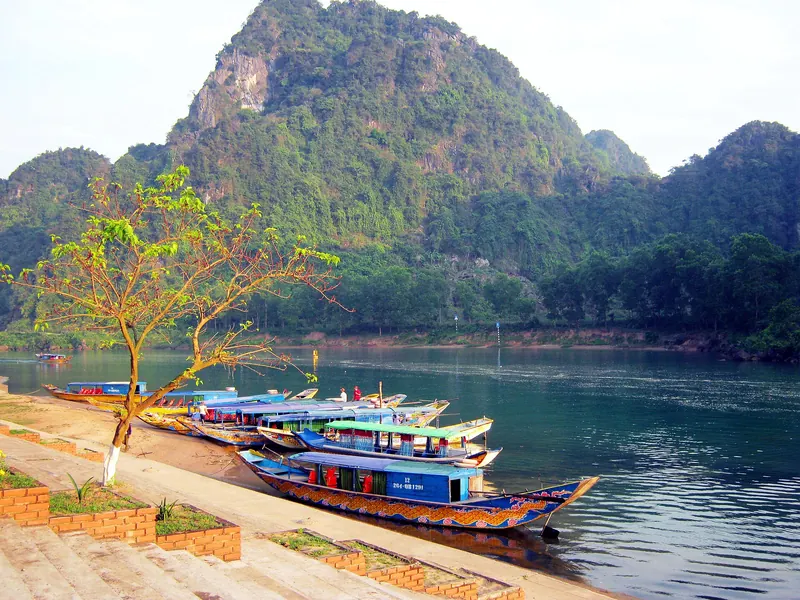
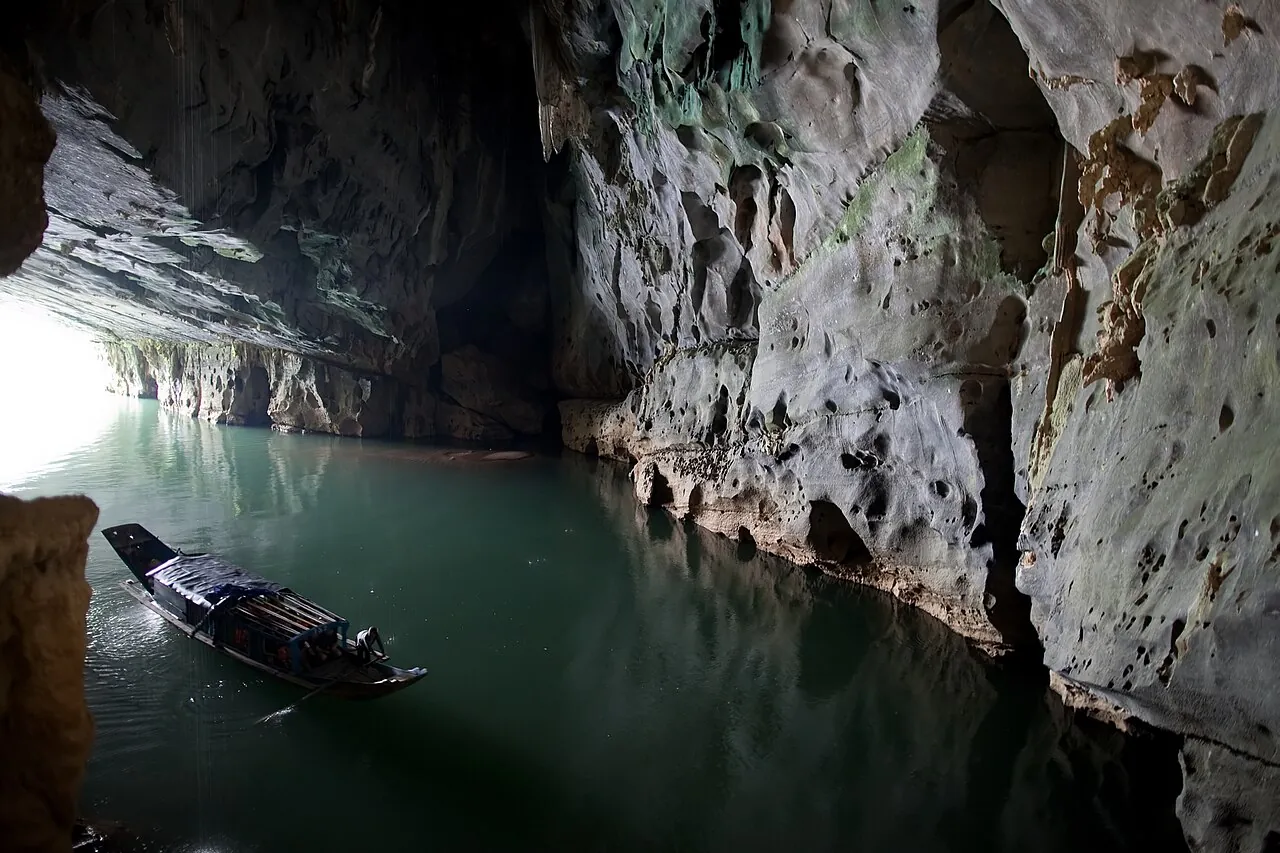
Day six is the cave day. Phong Nha Cave starts with a boat: about 30 minutes up the Son River, then the engine is cut and the boat is paddled along some 1,200 metres of underground river before you walk two dry chambers on the way out. When we checked on 2026-10-03, the national park listed it at 150,000 dong per person plus 700,000 dong per return boat for up to 12 passengers, open daily from 7:15 to 16:30 in summer and 7:30 to 15:45 in winter; the boat is priced per boat, so share it. In the afternoon, take a car to Paradise Cave, where a 1-kilometre wooden walkway leads through chambers the park says reach 150 metres wide; the park listed adults at 270,000 dong including the electric buggy.
On day seven, take the slow road to the station. Vietnam Railways began a daily heritage train, HQ1/HQ2, between Hue and Tho Loc in late August 2026, and its booking site calls Tho Loc the gateway to Phong Nha-Ke Bang. When we checked on 2026-10-03, the railway listed HQ1 leaving Tho Loc at 13:15 and reaching Hue at 17:25, with stops at Dong Hoi, My Trach and Dong Ha. Spend the morning cycling in Bong Lai, arrange the car to Tho Loc with your hotel, and arrive in Hue in time for dinner. If the HQ1 does not suit your dates, the SE trains also run from Dong Hoi to Hue.
Days 8–10: Hue, the Hai Van Pass and Hoi An
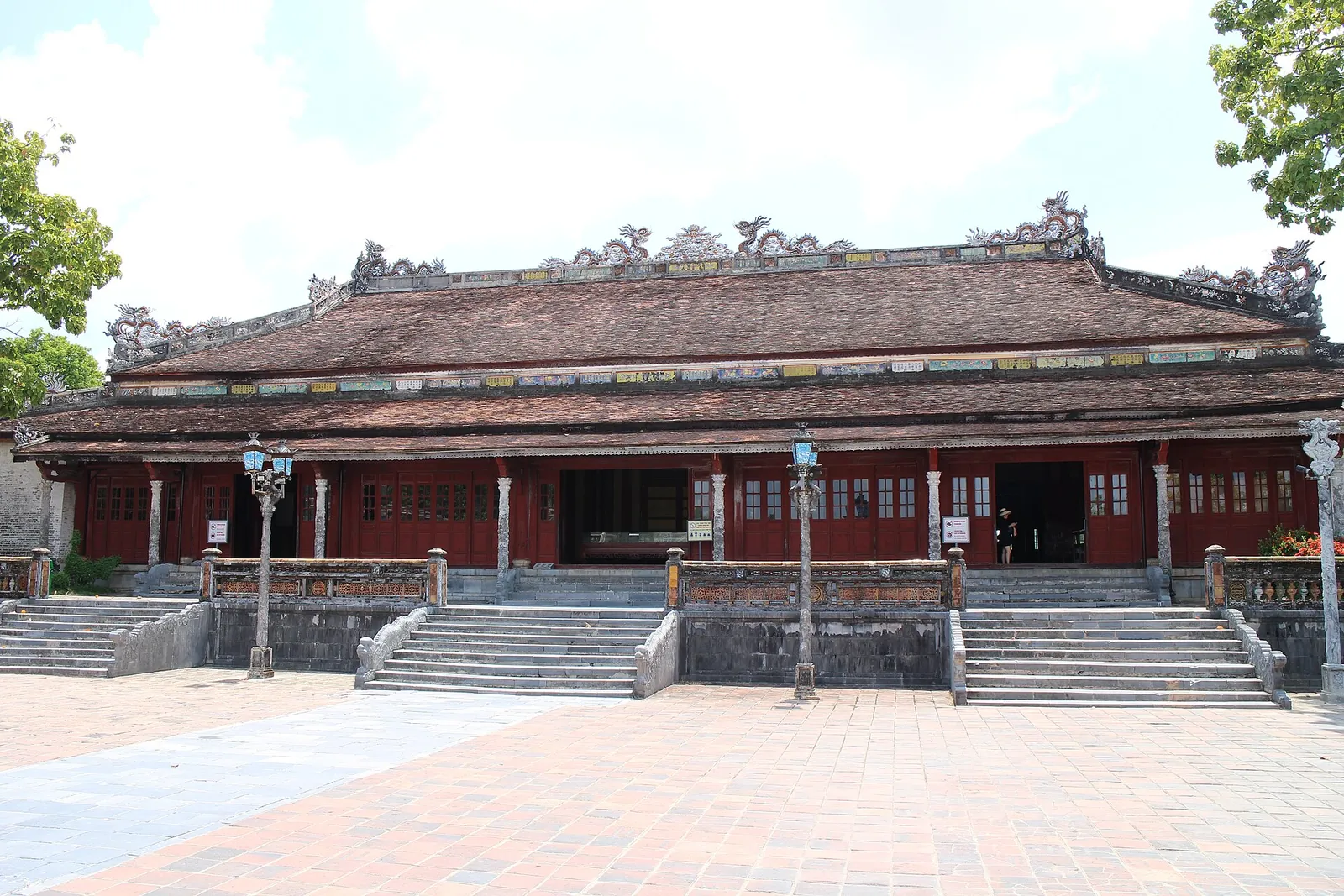
Give Hue its one full day to the Imperial City in the morning and two royal tombs in the afternoon. When we checked on 2026-10-03, the Visit Hue ticket table listed the Imperial City at 200,000 dong for adults and three-site tickets combining it with two of the tombs of Tu Duc, Minh Mang and Khai Dinh from 420,000 dong. Sleep on the south bank near Le Loi Street, where most restaurants are, and book a car for the tombs; our Hue guide explains which to choose.
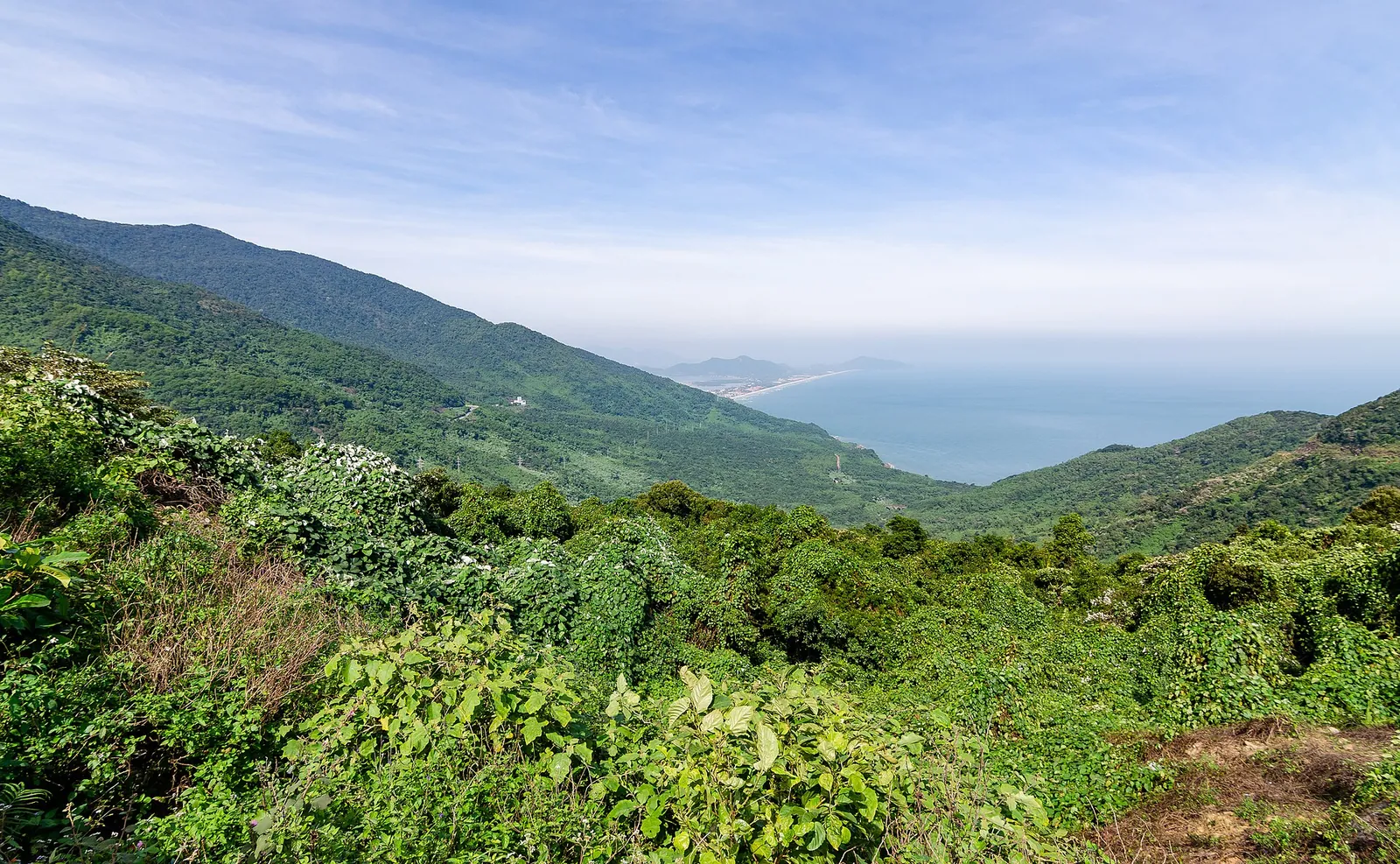
Day nine is the road south, and it is a sightseeing day in itself. The tourism board describes the Hue–Hoi An route as about 150 kilometres without detours, with the Hai Van Pass, about 20 kilometres of jungle-covered mountains dropping into the sea, a Nguyen-era lookout post at the top, Lang Co at the foot of the pass for a seafood lunch by its lagoon, and the Marble Mountains just outside Da Nang. Hire a car with a driver so you can stop where you like, and arrive in Hoi An in the late afternoon. Ride a motorbike only if you are experienced on Vietnamese mountain roads.
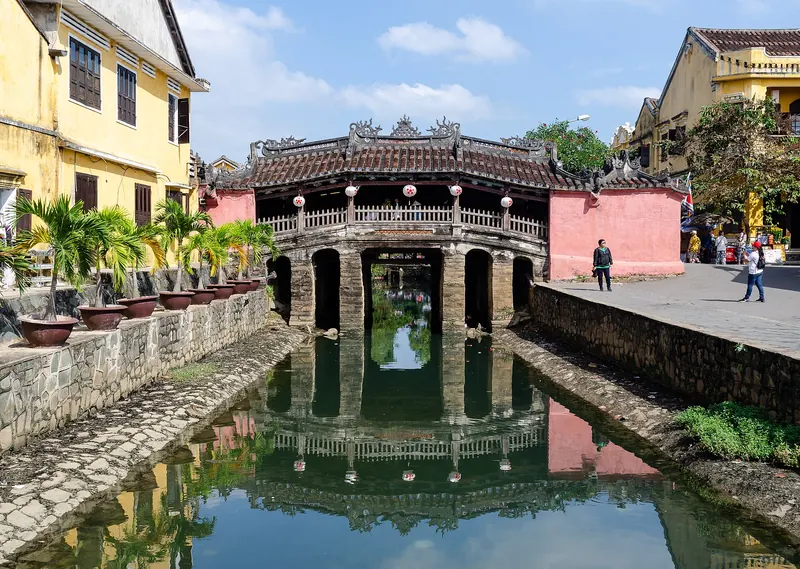
Day ten is Hoi An. Start at My Son Sanctuary, the Cham temple valley the tourism board places 40 kilometres from Hoi An, with structures dating from the 7th to the 13th century; go early, before the heat. Come back for the Old Town in the afternoon. When we checked on 2026-10-03, the Hoi An World Heritage Conservation Centre's ticket page listed 80,000-dong and 120,000-dong tickets, each covering a set number of heritage sites, and asked visitors to keep the stub for going in and out of the Old Town. Stay for the lanterns along the Thu Bon after dark.
Days 11–14: the flight south, Saigon and the Mekong Delta
Use the morning of day eleven for a bicycle ride out into the countryside around Hoi An, then go to Da Nang International Airport. The tourism board puts it 29 kilometres from the Ancient Town, a 50-minute drive, and says there are daily flights to all the country's top destinations. You arrive at Tan Son Nhat, about eight kilometres from the centre of Ho Chi Minh City, where the drive in can take 50 minutes or more in traffic. Sleep in the old District 1.
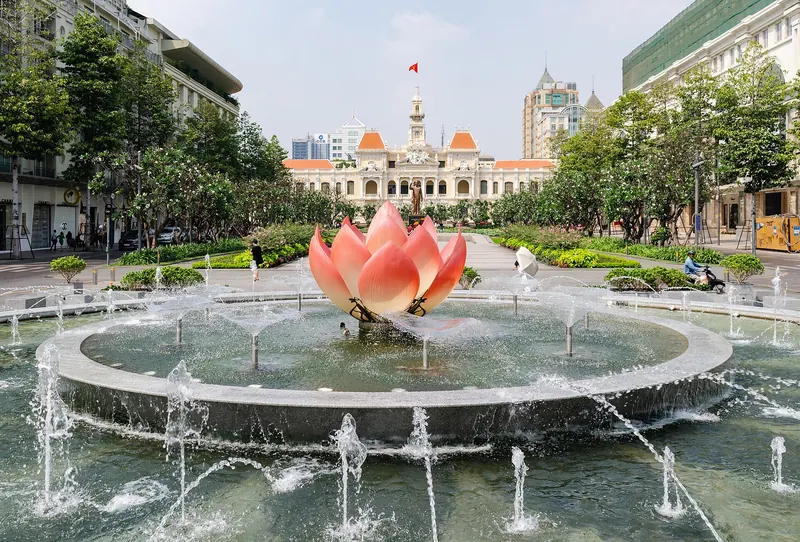
Day twelve is Saigon on foot. Start at the cathedral and the Central Post Office, then the Independence Palace: when we checked on 2026-10-03, its official site listed opening from 7:00 to 18:00 and an adult ticket of 80,000 dong. Give the afternoon to the War Remnants Museum or to the old Chinese quarter of Cho Lon, and the evening to Nguyen Hue, the pedestrian boulevard down to the river. Our Ho Chi Minh City guide has the full three-day version.
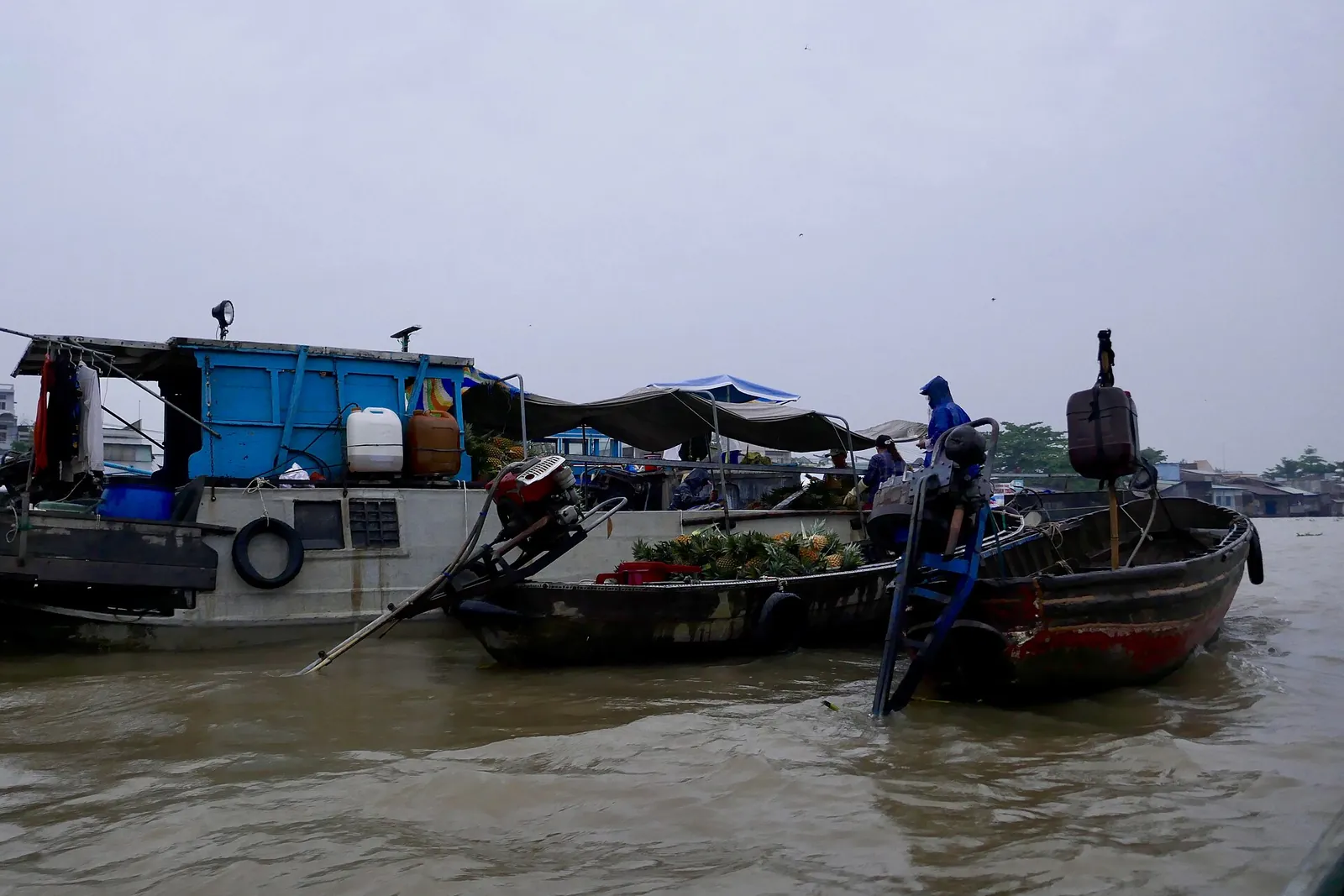
On day thirteen, travel to Can Tho. The tourism board describes a four-hour bus journey from Ho Chi Minh City to a terminal four kilometres outside town; sleep on the Ninh Kieu waterfront and book tomorrow's boat at the wharf in the evening. On day fourteen, step onto a boat at Ninh Kieu wharf at about 5:00: the tourism board advises being on the water by 5:00 or 5:30, because by 8:00 the heat rises and the vendors pack up at Cai Rang. Eat hu tieu on the boat, be back by mid-morning and take the road back to Saigon for an evening flight home.
The fourteen days at a glance
This is an editorial plan, not a timetable. Check train times on dsvn.vn, opening days and the weather before each move, and keep the long legs out of the last 24 hours before your international flight.
- Day 1 — Arrive in Hanoi: Noi Bai to the Old Quarter, Hoan Kiem Lake at dusk. Night: Hanoi.
- Day 2 — Old Hanoi: the Temple of Literature, Ba Dinh Square, an afternoon in the Old Quarter. Night: Hanoi.
- Day 3 — To Ninh Binh: two hours by road, the Tam Coc boat, Hang Mua before sunset. Night: Tam Coc.
- Day 4 — Trang An and Hoa Lu: an early boat, then the old capital's temples. Night: Tam Coc.
- Day 5 — Train south: a southbound SE train from Ninh Binh to Dong Hoi, then a taxi about 45 km to Phong Nha. Night: Phong Nha.
- Day 6 — Caves: Phong Nha Cave by boat in the morning, Paradise Cave in the afternoon. Night: Phong Nha.
- Day 7 — Heritage train: a slow morning in Bong Lai, HQ1 from Tho Loc at 13:15 to Hue (17:25, as listed on 2026-10-03). Night: Hue.
- Day 8 — Hue: the Imperial City, two royal tombs, dinner on the south bank. Night: Hue.
- Day 9 — Hai Van Pass: by car via Lang Co and the Marble Mountains to Hoi An. Night: Hoi An.
- Day 10 — My Son and the Old Town: the Cham temples early, heritage houses and lanterns later. Night: Hoi An.
- Day 11 — Fly south: a morning bicycle ride, Da Nang to Ho Chi Minh City by air. Night: Saigon.
- Day 12 — Saigon: the colonial core, the Independence Palace, Cho Lon or the War Remnants Museum. Night: Saigon.
- Day 13 — To the delta: about four hours by bus to Can Tho, the Ninh Kieu riverfront. Night: Can Tho.
- Day 14 — Cai Rang and home: on the water by 5:00, back to Saigon by road for an evening flight.
Weather, Tet and the airport change in Saigon
One season cannot suit the whole route, so plan around the weakest link, which is the centre. The tourism board says Hue's rains come in August and can last through January, with flooding usually from October to late in the year; Hoi An sees a lot of rain and a few small floods from September to November; and Phong Nha's rainy season runs from October to December and is prone to flooding. In the south, the wet season from May to November brings a dependable afternoon downpour rather than lost days. From late December to March, Hanoi can be surprisingly cold, with lows around 10 degrees. That leaves February to April as the sweet spot, with March for Hoi An and spring for Hue.
Tet, the Lunar New Year, is the busiest travel period of the year. Vietnam Railways opened sales on 5 September 2026 for its Tet 2027 trains, covering travel from 23 January to 25 February 2027, with 5 to 8 February 2027 as the holiday days themselves. If your trip overlaps, book trains and the Da Nang flight early.
Check which Saigon airport your flight home uses. VnExpress reported on 29 July 2026 that the Civil Aviation Authority of Vietnam had agreed for Long Thanh International Airport, in Dong Nai, to start commercial operation on 1 December 2026, with airlines choosing whether to move international flights there at first; from 28 March 2027 all long-haul international flights to and from Europe, the Americas, Oceania, Africa, the Middle East and South and Central Asia are due to move to Long Thanh. It is further from Can Tho than Tan Son Nhat, so if your ticket names Long Thanh, allow extra time on day fourteen or add a night in Saigon.
Check the entry rules for your own passport before you book. When we checked on 2026-10-03, the UK government's travel advice said British citizens could visit Vietnam without a visa for up to 45 days for tourism or business; other nationalities have different rules.
Practical questions
Is two weeks enough to see Vietnam from north to south?
Enough for one line through the country, not for every highlight. This route covers Hanoi, Ninh Binh, Phong Nha, Hue, Hoi An, Saigon and the Mekong Delta in seven bases and flies only once. Ha Long Bay, Sa Pa and the beaches need a third week; our 21-day route adds them.
Should I take the train or fly between Hanoi and Hoi An?
Mix them. The tourism board warns that the full Hanoi to Ho Chi Minh City train can take up to 30 hours, so this plan uses the train only from Ninh Binh to Dong Hoi and from Tho Loc to Hue, drives the Hai Van Pass, and flies the long jump from Da Nang to Saigon. Book trains on dsvn.vn in your passport name.
Can I skip Phong Nha?
Yes. If caves do not interest you, or you travel from October to December when the tourism board says Phong Nha's rainy season and floods come, take an SE train from Ninh Binh straight to Hue and give the two extra nights to Hoi An or Saigon.
Is one night in Can Tho enough?
It is the minimum. Cai Rang is at its best before 8:00, so you have to sleep in Can Tho to be on a boat at about 5:00; a same-day trip from Saigon arrives too late. Add a second night if you want the canals and orchards at an easy pace, or if your flight home is in the morning.
What is the best month for this route?
February to April. The tourism board calls March to May the best weather countrywide and February to April Hue's best months, and the south is dry from December to April. Avoid October to December, when floods hit Hue, Hoi An and Phong Nha, and plan early if you overlap with Tet (holiday days 5 to 8 February 2027).
Can I do the route in reverse?
Yes: fly into Ho Chi Minh City and out of Hanoi, start with Can Tho and finish in Ninh Binh and Hanoi. Check the HQ2 heritage train, which runs from Hue to Tho Loc in the morning (07:15 to 11:55 as listed on 2026-10-03), and swap the Phong Nha days so you arrive on it.
Sources and checks before you travel
Reference sources for the version dated 3 October 2026. Confirm opening times, access, transport and conditions for your travel dates.
- Vietnam National Authority of Tourism: transport within Vietnam ↗ — opens in a new tab
- Railway Transport Joint Stock Company: train routes ↗ — opens in a new tab
- Vietnam Railways: HQ1/HQ2 heritage train launch ↗ — opens in a new tab
- Vietnam Railways: Hue – Phong Nha heritage train booking site ↗ — opens in a new tab
- Vietnam Railways: Tet 2027 ticket sale (5 September 2026) ↗ — opens in a new tab
- Vietnam National Authority of Tourism: weather and climate in Vietnam ↗ — opens in a new tab
- Vietnam National Authority of Tourism: a traveller's guide to Vietnam's airports ↗ — opens in a new tab
- Vietnam National Authority of Tourism: explore the Old Quarter your way ↗ — opens in a new tab
- Temple of Literature – Quoc Tu Giam (official site) ↗ — opens in a new tab
- Tuoi Tre: Ho Chi Minh Mausoleum closed for maintenance from 4 September 2026 ↗ — opens in a new tab
- Vietnam National Authority of Tourism: a perfect day in Ninh Binh ↗ — opens in a new tab
- Vietnam National Authority of Tourism: 10 must-do activities in Ninh Binh ↗ — opens in a new tab
- Vietnam National Authority of Tourism: Phong Nha ↗ — opens in a new tab
- Oxalis Adventure: arrival and departure guide ↗ — opens in a new tab
- Phong Nha-Ke Bang National Park: Phong Nha Cave ↗ — opens in a new tab
- Phong Nha-Ke Bang National Park: Paradise Cave ↗ — opens in a new tab
- Vietnam National Authority of Tourism: Hue ↗ — opens in a new tab
- Visit Hue (Hue Department of Culture, Sports and Tourism): heritage ticket prices ↗ — opens in a new tab
- Vietnam National Authority of Tourism: motorbiking Hoi An to Hue over the Hai Van Pass ↗ — opens in a new tab
- Vietnam National Authority of Tourism: Hoi An ↗ — opens in a new tab
- Hoi An World Heritage Conservation Centre: Old Town ticket information ↗ — opens in a new tab
- Hoi An World Heritage Conservation Centre: Hoi An dishes to try ↗ — opens in a new tab
- Vietnam National Authority of Tourism: Hue's best to eat ↗ — opens in a new tab
- Independence Palace (official site) ↗ — opens in a new tab
- Vietnam National Authority of Tourism: eating like a local in Ho Chi Minh City ↗ — opens in a new tab
- Vietnam National Authority of Tourism: Can Tho ↗ — opens in a new tab
- Vietnam National Authority of Tourism: the Mekong Delta's floating markets ↗ — opens in a new tab
- VnExpress: Long Thanh airport operating roadmap in three phases (29 July 2026) ↗ — opens in a new tab
- UK FCDO travel advice: Vietnam entry requirements ↗ — opens in a new tab
Does this experience fit your route?
The Hai Van Pass drive and the dawn boat at Cai Rang are the two bookings that shape this trip. Compare stops, start times and return times before you choose.
Check dates and details on Viator ↗ — opens in a new tabAffiliate link · Book with ViatorPhoto credits
The Hai Van Pass above Lang Co, the coastal road between Hue and Hoi An
Photograph: Steffen Schmitz — opens in a new tab · CC BY-SA 4.0 — opens in a new tab
Changes: Resized and converted to WebP; displayed with responsive crops. · Original photograph and licence details ↗ — opens in a new tab
The river entrance of Phong Nha Cave in Phong Nha-Ke Bang National Park
Photograph: [Tycho] talk , http://shansov.net — opens in a new tab · CC BY-SA 3.0 — opens in a new tab
Changes: Resized and converted to WebP; displayed with responsive crops. · Original photograph and licence details ↗ — opens in a new tab
A boat route through the karsts of Ninh Binh
Photograph: Lishuilynn — opens in a new tab · CC BY-SA 4.0 — opens in a new tab
Changes: Resized and converted to WebP; displayed with responsive crops. · Original photograph and licence details ↗ — opens in a new tab
A hall in the Imperial City of Hue
Photograph: Suicasmo — opens in a new tab · CC BY-SA 4.0 — opens in a new tab
Changes: Resized and converted to WebP; displayed with responsive crops. · Original photograph and licence details ↗ — opens in a new tab
Boats at the Cai Rang floating market near Can Tho
Photograph: Isabell Schulz — opens in a new tab · CC BY-SA 2.0 — opens in a new tab
Changes: Resized and converted to WebP; displayed with responsive crops. · Original photograph and licence details ↗ — opens in a new tab
Cao lau with spring rolls, a Hoi An noodle dish
Photograph: avlxyz — opens in a new tab · CC BY-SA 2.0 — opens in a new tab
Changes: Resized and converted to WebP; displayed with responsive crops. · Original photograph and licence details ↗ — opens in a new tab