Ho Chi Minh City and the Southeast · Ho Chi Minh City
Ho Chi Minh City travel guide: days, districts, food and day trips
Ho Chi Minh City, still called Saigon by most of the people who live there, is Vietnam's economic heart and a city that rewards walking more than its traffic suggests. The colonial core of the old District 1 (the cathedral, the post office, the Opera House and Nguyen Hue boulevard) sits within a short walk of the Independence Palace, the War Remnants Museum and Ben Thanh Market. Further out, Cho Lon's Chinese markets and temples, the riverside cafes of Thao Dien and the evening seafood streets of District 4 each need their own half-day. Plan the city by area and by time of day, and keep the Cu Chi Tunnels and the Mekong Delta for separate days.
- Suggested time
- 3 days (2 at minimum), plus a day for Cu Chi and an overnight for the Mekong Delta
- Where to stay
- Old District 1 for a first visit; District 3 for quieter streets near the centre; Thao Dien for a longer riverside stay
- Season and timing
- The city is warm all year. The national tourism site notes heatwaves in April and May, a wet season from May to November with a dependable afternoon downpour, and slightly cooler weather in December and January. December to April is the dry half of the year.
The short answer
Give Saigon three full days on a first visit: one for the colonial core and the Independence Palace on foot, one for the War Remnants Museum, Ben Thanh Market and Cho Lon, and one for a food-led day with a river trip or a museum you missed. Two days is the honest minimum. Sleep in the old District 1 for a first visit, in District 3 for leafier streets a short ride from the centre, or in Thao Dien for a quieter riverside stay. Walk the centre, use ride-hailing apps or taxis for longer hops, and the new metro for the east side of the city. Add one day for the Cu Chi Tunnels, and treat the Mekong Delta floating markets as an overnight trip to Can Tho rather than a rushed day.
Choose your area before your hotel
Since Vietnam's 2025 administrative reform, which also merged Ho Chi Minh City with Binh Duong and Ba Ria – Vung Tau provinces, official addresses give a ward and the city without the old district numbers: the Independence Palace now lists itself in Ben Thanh Ward. Hotel listings, maps and the national tourism site still use the familiar district names, so this guide does too.
The old District 1 is the obvious first base. The cathedral, the post office, the Opera House, Nguyen Hue boulevard, Ben Thanh Market and the Independence Palace are all within walking distance of one another, and the national tourism site's own list of city hotels is concentrated around Dong Khoi Street, Lam Son Square and the riverfront. The trade-off is noise and traffic. Check the walk from the hotel to the places you most want to see, and from late October 2026 also check how close it is to the Ben Thanh construction site described in the transport section below.
District 3, west of the centre, is where the War Remnants Museum, Tao Dan Park and Tan Dinh Market are, and it has calmer, tree-lined streets a short taxi ride from District 1. Thao Dien, on the far bank of the Saigon River, is known for riverside cafes and international restaurants, and Saigon Waterbus has a stop there with boats to Bach Dang pier in the centre. It suits a longer stay or a return visit, but most sightseeing days will start with a ride into town.
The colonial core and the Independence Palace: a walking day
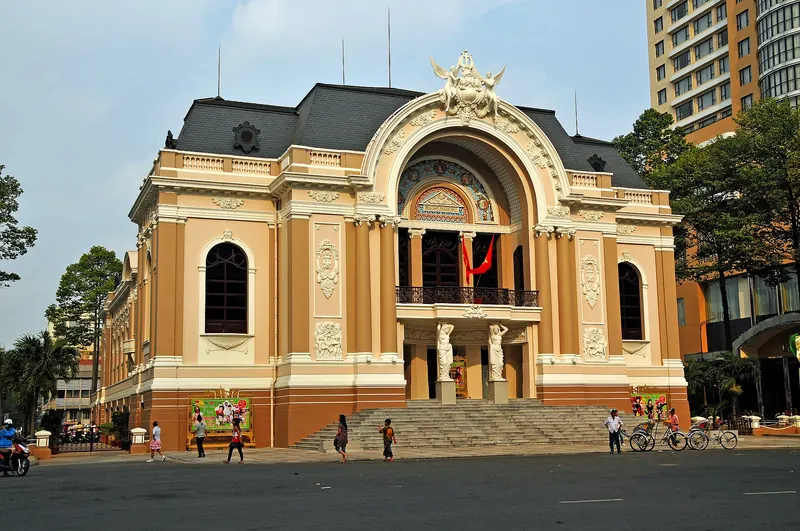
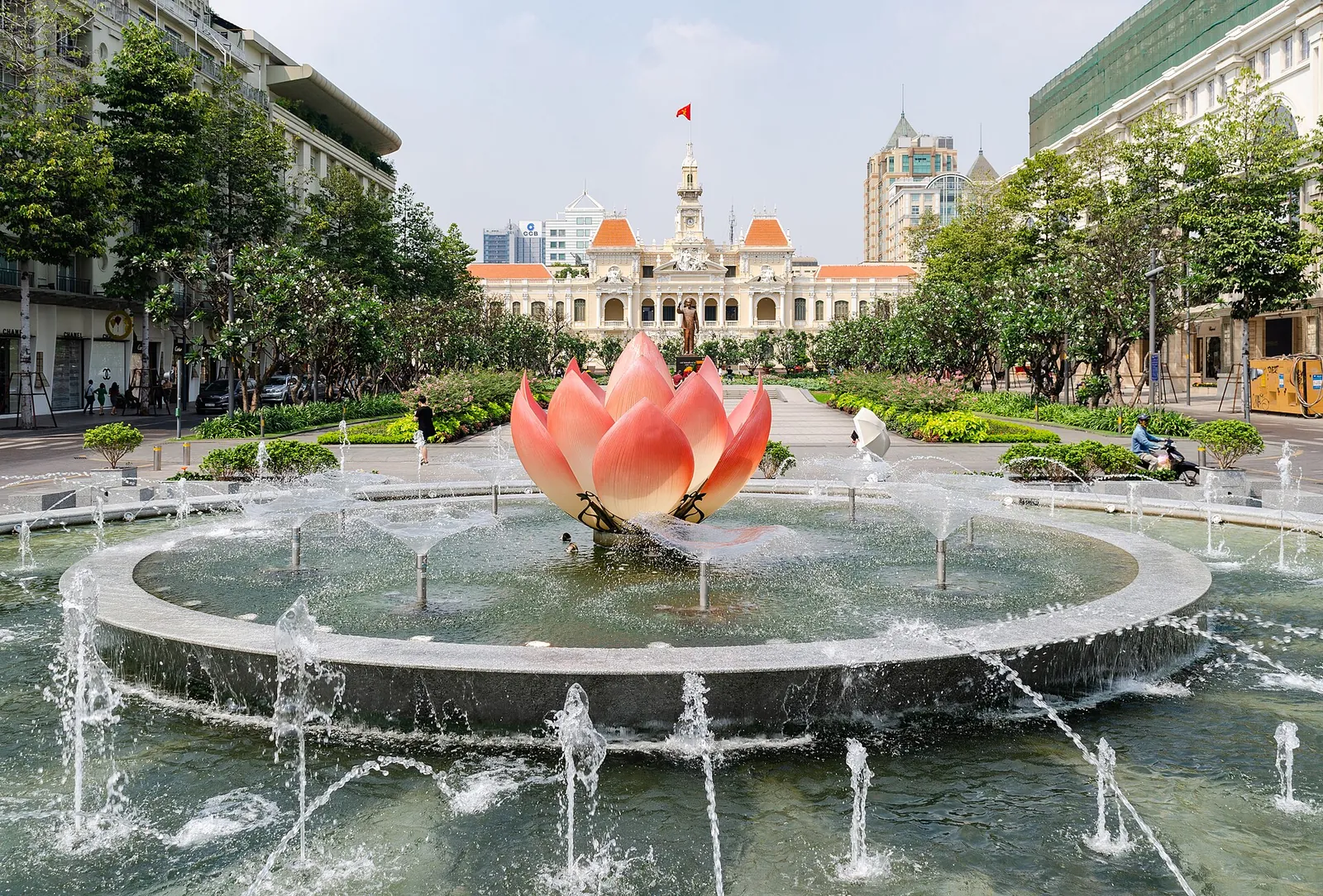
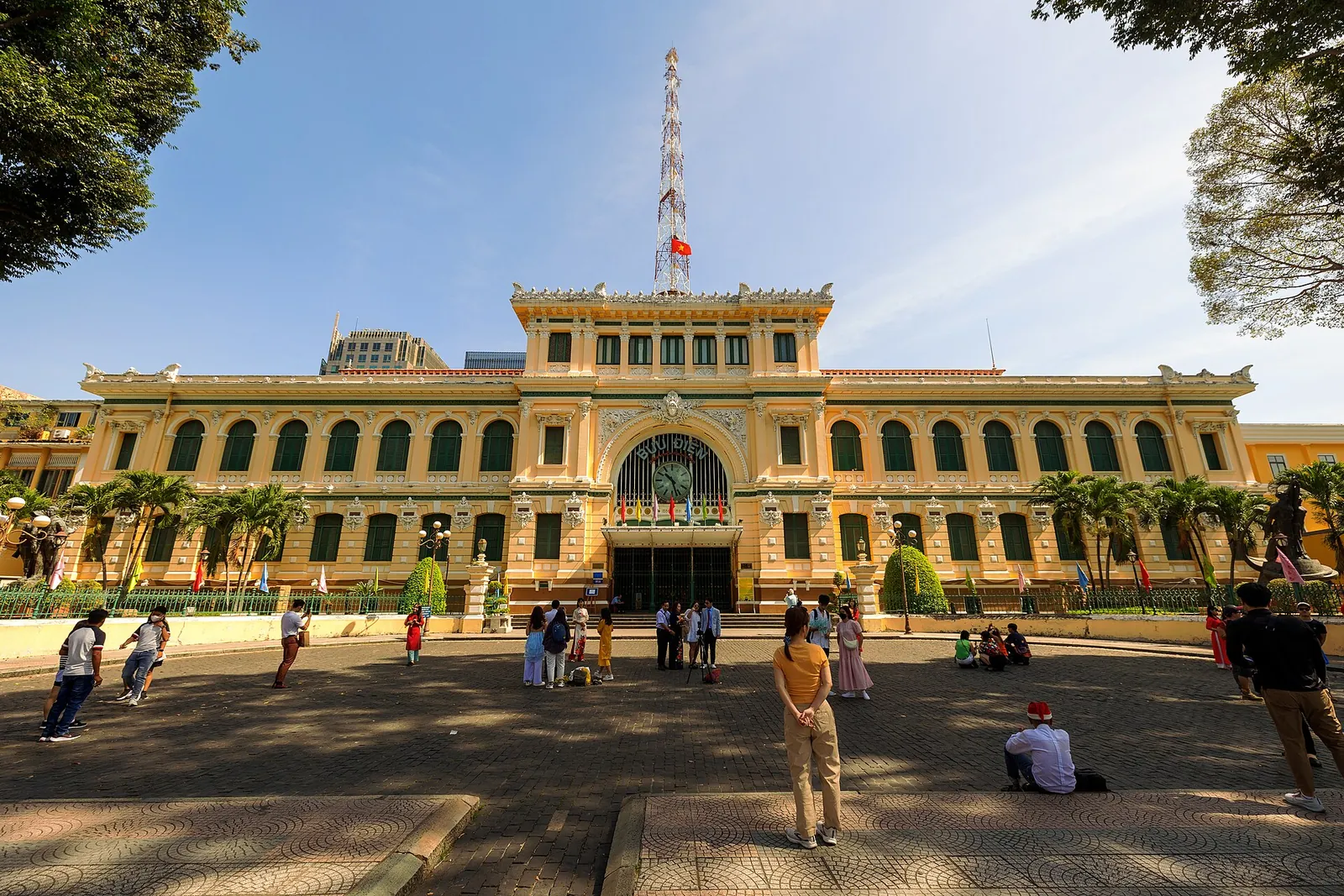
Start early at the twin-towered Notre Dame Cathedral (the Cathedral Basilica of the Immaculate Conception), completed in 1880, and the Saigon Central Post Office opposite it, whose hall keeps its old wooden phone booths and historic wall maps and is still a working post office. The cathedral has been under restoration since 2017, so check whether the interior is open before planning around it. From there, walk down Dong Khoi Street, the city's main shopping street, to the Opera House, then cut across to Nguyen Hue, the pedestrian boulevard that runs from the City Hall building down to the Bach Dang riverfront. City Hall is not open to the public, but the boulevard in front of it is at its liveliest around sundown.
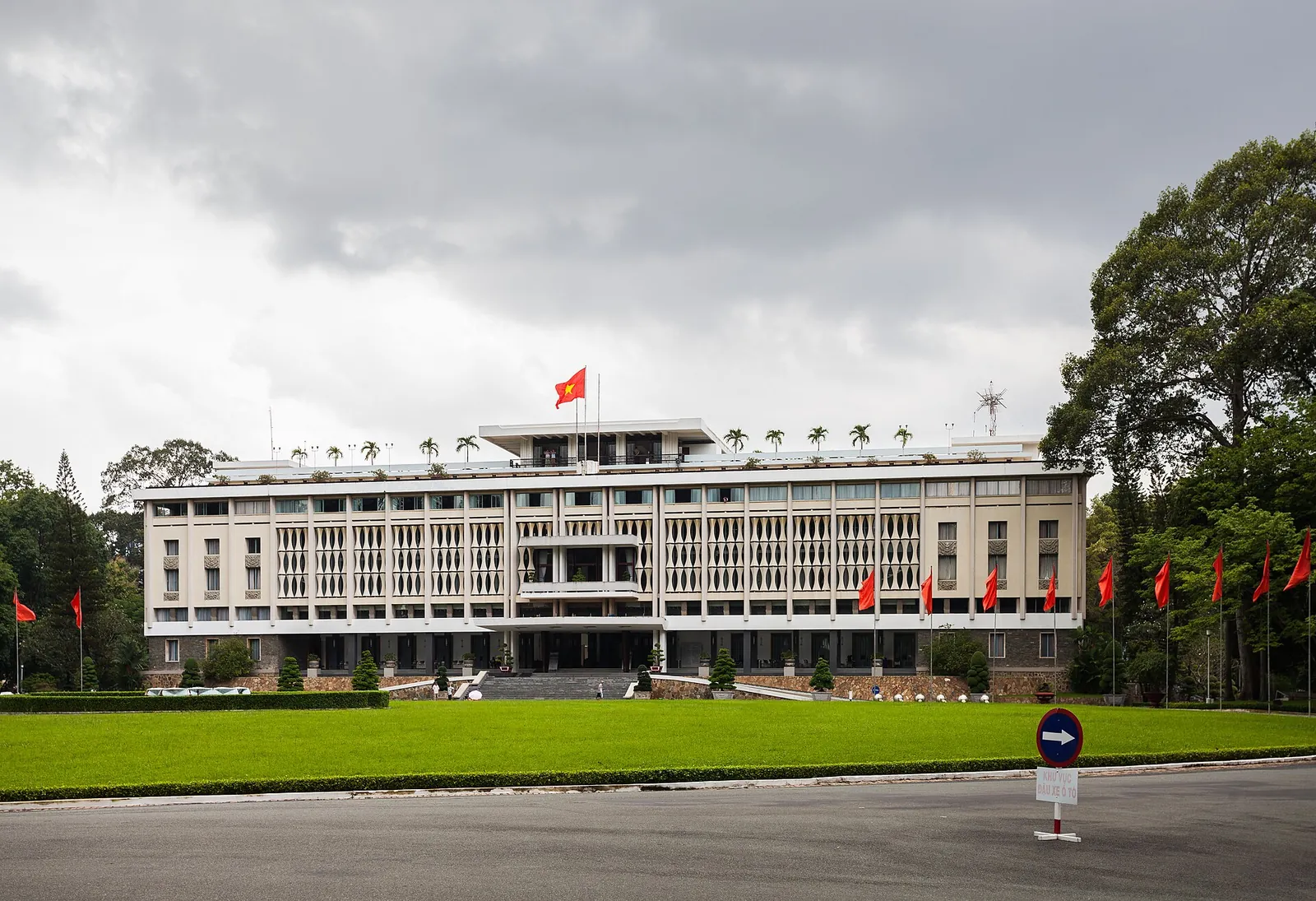
Give the late morning to the Independence Palace, also called the Reunification Palace, built on the site of the French Norodom Palace and designed by the architect Ngo Viet Thu as the residence and office of the President of South Vietnam. Do not miss the command centre and war rooms in the basement. When we checked on 2026-10-03, the palace's official site listed opening every day including public holidays from 7:00 to 18:00, with adult tickets at 80,000 VND, 40,000 VND for students and seniors and 20,000 VND for children aged 6 to under 16. The entrances are at 135 Nam Ky Khoi Nghia and 106 Nguyen Du.
In the afternoon, the national tourism site points to the old apartment and office blocks at 42 Nguyen Hue and 22 Ly Tu Trong, now filled with small cafes and shops. If you prefer art to shopping, the Fine Arts Museum at 97A Duc Chinh and the History Museum at 2 Nguyen Binh Khiem, in a 1929 building, are both in the old District 1.
Make time for the local food
What to eat and where to look
Com tam (broken rice)
Broken grains of rice topped with a grilled, honey-glazed pork chop, often with pork skin, a pork patty or a fried egg, pickles and a bowl of sweet fish sauce. The national tourism site calls it one of the few dishes that originated in Ho Chi Minh City and the city's go-to breakfast.
- Where to look
- Neighbourhood com tam shops in every district; look for a charcoal grill at the front.
- Fit it into your day
- Breakfast before a museum morning, though it is served all day.
Pork-based, and the sauce contains fish sauce; ask for chicken or egg if you avoid pork.
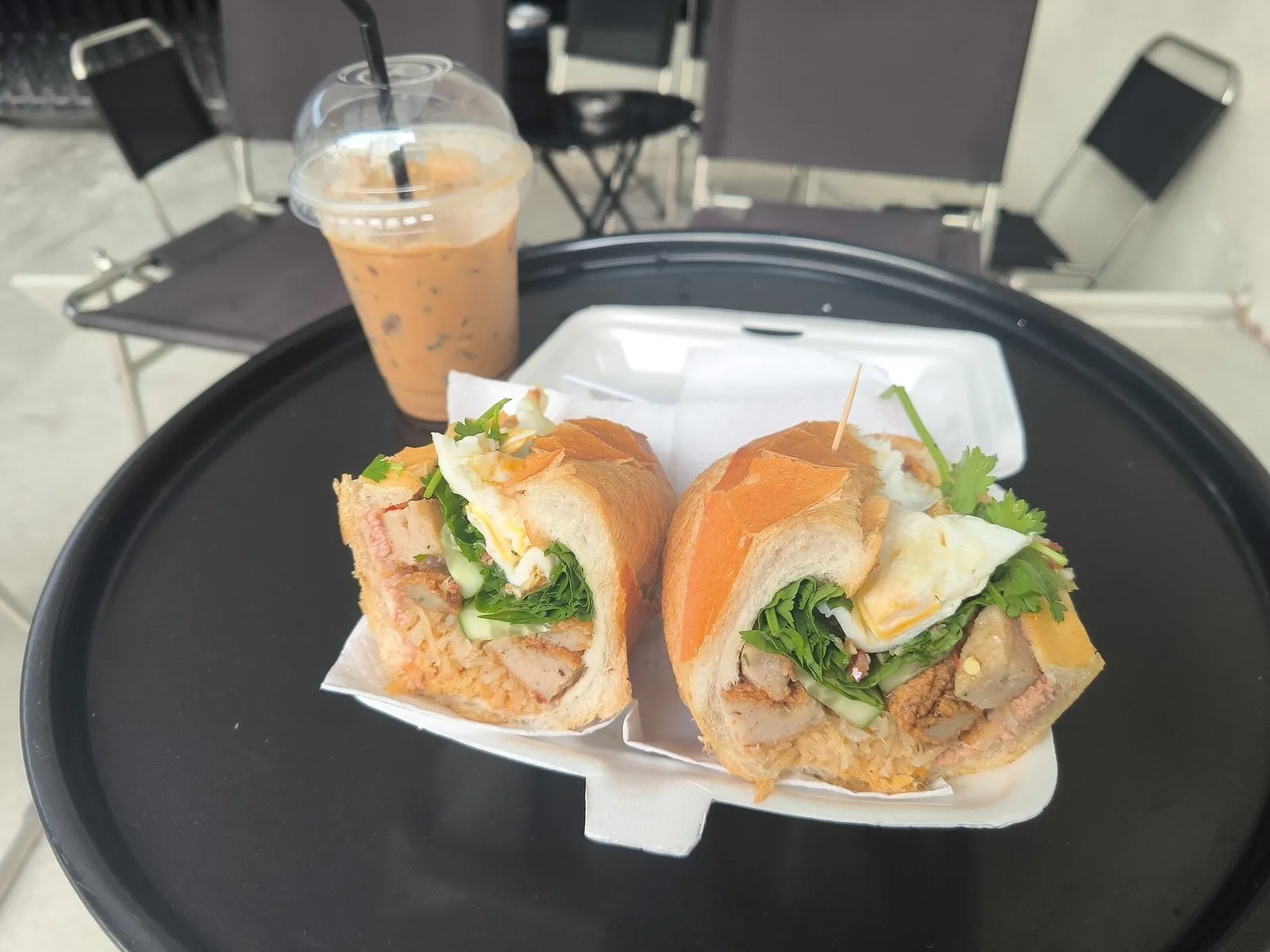
Banh mi
A crisp baguette filled, in the Saigon version, with char siu pork, homemade pâté, butter, pickled papaya and chilli. The national tourism site lists a long run of local variations, from fish cake and shredded chicken to grilled beef.
- Where to look
- Long-established bakeries and street carts across the old District 1; Ben Thanh Market's food stalls also make them.
- Fit it into your day
- A quick lunch or a snack between sights; one large banh mi is a meal.
Pâté and cold cuts are standard; ask for a version without them if you prefer.
Hu tieu Nam Vang (Phnom Penh-style noodle soup)
Thin rice noodles in a pork-bone broth with prawn, minced pork, offal, quail eggs and fried garlic. The dish has Chinese, Cambodian and Vietnamese roots, and the city also serves the sweeter, chewier hu tieu Sa Dec from the Mekong Delta.
- Where to look
- Noodle shops and small carts all over the city, and in Cho Lon.
- Fit it into your day
- A hot breakfast or a light late-night bowl.
Often contains pork intestines; ask for it without offal if you prefer.
Oc (snails and shellfish)
Platters of sea snails, cockles, razor clams and other shellfish, stir-fried with butter and garlic, grilled with salt and chilli or simmered in coconut milk. Restaurants lay the day's catch out in baskets for you to choose from.
- Where to look
- Vinh Khanh Street in District 4, which the national tourism site says comes to life around 6 pm, and the canal-side restaurants along Nhieu Loc – Thi Nghe.
- Fit it into your day
- Dinner with a group: order several small plates to share.
Shellfish allergy; check prices before you order, as seafood is often priced by weight.
Goi cuon (fresh spring rolls)
Rice paper wrapped around lettuce, herbs, rice noodles, steamed pork and prawn, served with a thick fermented dipping sauce that gives the simple roll its character.
- Where to look
- Street vendors and snack stalls around the city; often sold alongside other light dishes.
- Fit it into your day
- An afternoon snack after a museum or a market.
Raw herbs and vegetables; the dipping sauce may contain peanuts.
The War Remnants Museum, Ben Thanh and Cho Lon
The War Remnants Museum at 28 Vo Van Tan is the visit most people remember from Saigon, and the hardest. Its photographs of the war and of the effects of Agent Orange are graphic; the courtyard holds aircraft, tanks and bombs. Allow two to three hours and leave the rest of the morning light. When we checked on 2026-10-03, the museum's official site listed opening every day, including holidays, from 7:30 to 17:30 with the ticket desk closing at 17:00, and a standard ticket of 60,000 VND for visitors aged 16 and over (30,000 VND for seniors from 60 and some other groups).
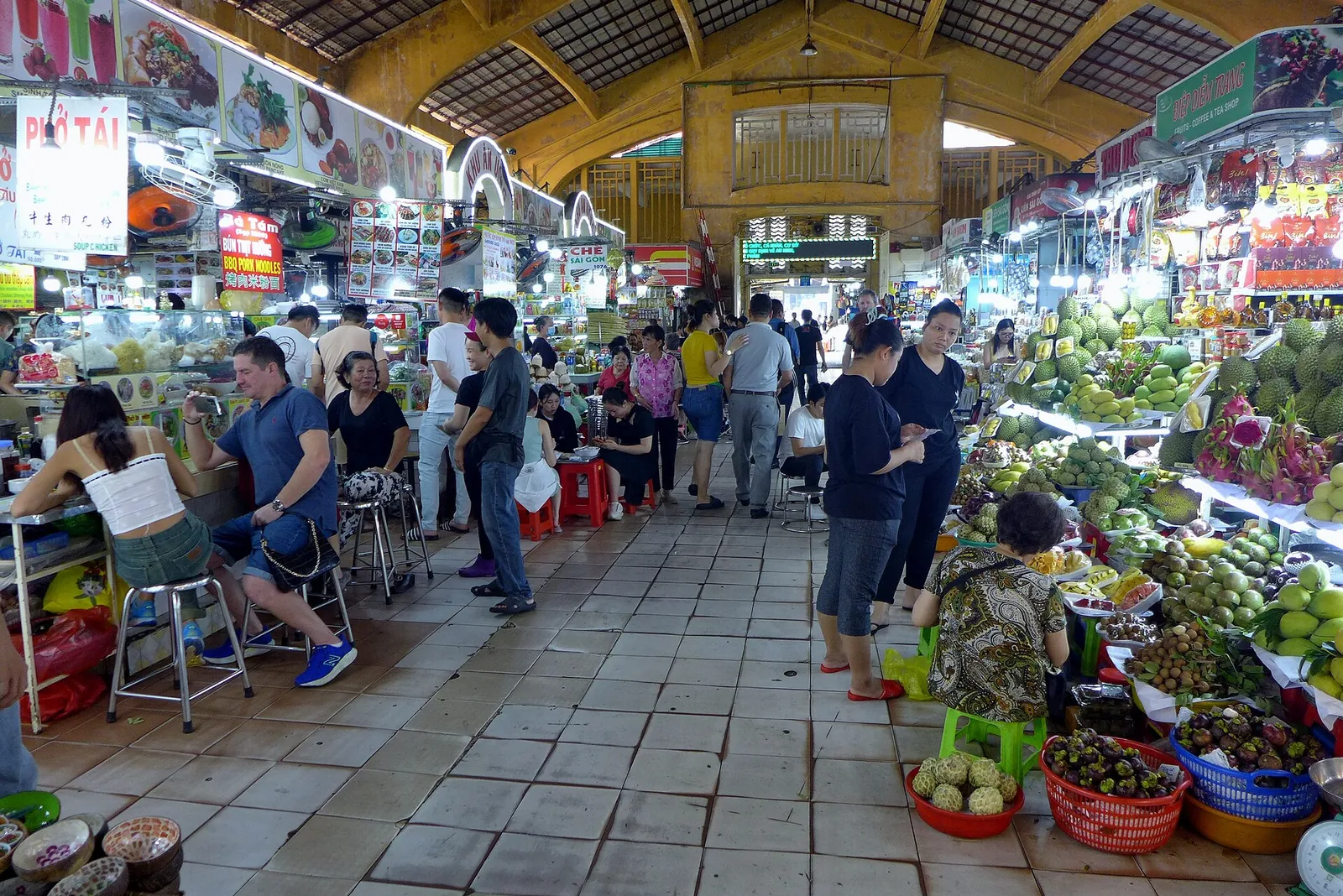
Ben Thanh Market, under its clock tower in the centre, is a matrix of aisles selling fresh produce, coffee, lacquerware and conical hats, with food stalls at the far end of the hall cooking banh xeo and assembling banh mi. Treat it as a place for a first look and a quick lunch; compare prices before you buy souvenirs.
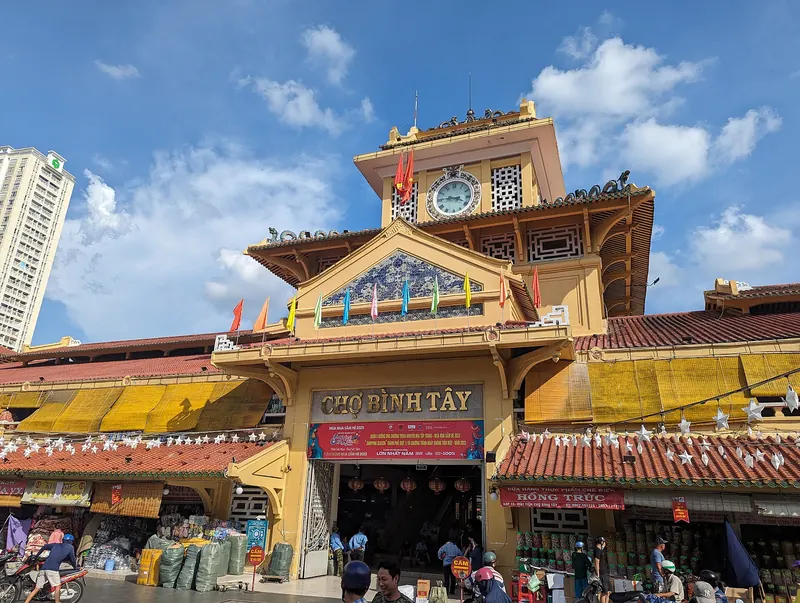
For the afternoon, take a taxi or a ride-hailing car west to Cho Lon, the old Chinese quarter, which the national tourism site recommends exploring on foot. Head for Binh Tay Market, a huge wholesale trading hall, and the Thien Hau Pagoda, an atmospheric temple to the goddess of the sea. Cho Lon is the subject of its own guide on this site.
Getting around: walking, the metro, the river and the ride home
Within the old District 1, walking is usually quickest. For anything further, the national tourism site notes that taxis are everywhere and that ride-hailing apps such as Grab work well once you have a Vietnamese SIM card; agree any cyclo or motorbike fare before you set off.
Metro Line 1 (Ben Thanh – Suoi Tien) opened at the end of 2024 and runs for almost 20 km from the centre to the eastern edge of the city, with three underground stations in the centre. VnExpress, reporting the operator HURC1's National Day timetable in August 2026, said trains would run from 5:00 to 23:00 that day, an hour longer than usual; check the operator's app for current hours. The line is most useful for the east side of the city; it does not serve the airport, Cho Lon or Cu Chi.
Expect disruption around Ben Thanh station from the second half of October 2026. The city's urban railway authority told VnExpress on 3 October 2026 that it will fence off part of the area to build Metro Line 2, closing a section of Pham Hong Thai Street along September 23 Park and changing traffic on nearby streets; the work is planned in stages over more than three years. Leave extra time for taxis around Ben Thanh Market.
On the water, Saigon Waterbus runs from Bach Dang pier at the river end of Nguyen Hue, with stops listed on its official site at Thu Thiem, Ba Son (beside the Ba Son metro station), Binh An, Thao Dien, Thanh Da and Linh Dong. It is a slow, pleasant way to see the city from the river and to reach Thao Dien; check the timetable and book on the operator's site.
Cu Chi Tunnels and the Mekong Delta: separate trips, not side trips
The Cu Chi Tunnels lie about 70 km northwest of the city centre: a network of tunnels, bunkers and underground kitchens and meeting rooms dug from 1946 and used through the war. There are two separate sites, Ben Duoc and Ben Dinh, which VnExpress's July 2026 guide puts 13 km apart; most visitors choose one. Plan a half-day at least, more with traffic, and wear clothes that can get dirty. The tunnels are narrow and low, so anyone with claustrophobia should stay above ground. The Cu Chi guide on this site covers the two sites in detail.
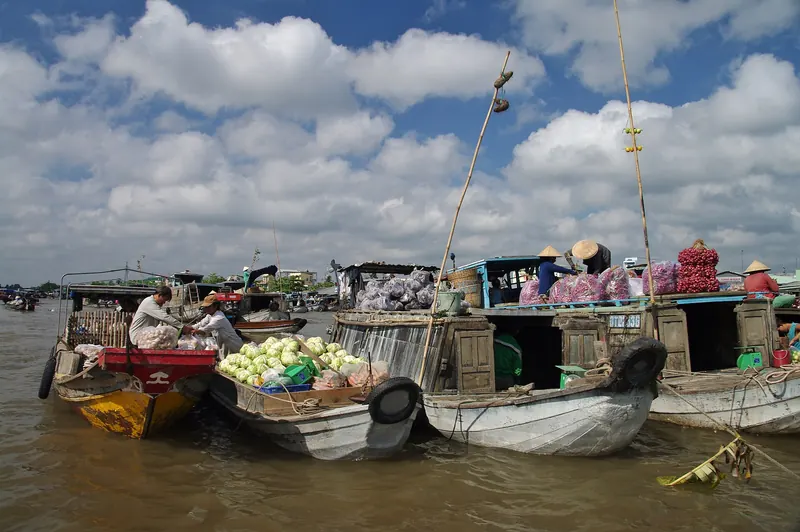
The Mekong Delta is a different matter. The national tourism site puts Can Tho about four hours from Ho Chi Minh City by bus, and boats to the Cai Rang floating market leave Ninh Kieu wharf around 5:00 in the morning. A same-day trip from Saigon cannot reach Cai Rang at its busiest; if the floating markets matter to you, sleep at least one night in Can Tho. If you do book a day tour from the city, compare the hours on the road with the time on the water.
A workable three-day route
This is an editorial suggestion, not a timetable. Check opening days for each place you choose.
- Day 1 — The colonial core: the cathedral and post office early, Dong Khoi and the Opera House, the Independence Palace before lunch, then Nguyen Hue and the riverfront at sundown.
- Day 2 — History and markets: the War Remnants Museum at opening time, lunch at Ben Thanh Market, then Cho Lon's Binh Tay Market and Thien Hau Pagoda in the afternoon.
- Day 3 — Saigon by appetite: com tam for breakfast, Tao Dan Park and Tan Dinh Market in the morning, a museum or the waterbus to Thao Dien in the afternoon, and Vinh Khanh Street in District 4 for dinner.
- Day 4 (optional): the Cu Chi Tunnels, or an overnight trip to Can Tho for the Mekong Delta.
Practical questions
How many days should I spend in Ho Chi Minh City?
Three full days cover the colonial core and the Independence Palace, the War Remnants Museum and Cho Lon, and a slower food-led day. Two days is the minimum. Add a day for the Cu Chi Tunnels and at least one night in Can Tho if you want the Mekong Delta's floating markets.
Which area is best to stay in?
The old District 1 for a first visit, since most central sights are within walking distance. District 3 is quieter and close to the War Remnants Museum. Thao Dien suits a longer, slower stay by the river but needs a ride into the centre most days.
Is it Saigon or Ho Chi Minh City?
Both. Ho Chi Minh City is the official name and the one you will see on tickets and official addresses; Saigon is still widely used in everyday speech and in names such as the Saigon Central Post Office and Saigon Waterbus.
Can I do the Cu Chi Tunnels and the Mekong Delta in one day?
Not sensibly. Cu Chi is about 70 km northwest of the centre, and Can Tho, for the Cai Rang floating market, is about four hours by bus to the southwest. Do Cu Chi as a day or half-day trip, and the delta as an overnight.
Is the War Remnants Museum suitable for children?
Its photographs of war casualties and Agent Orange are graphic. Look at the exhibition descriptions on the museum's site first and decide which galleries to skip. Allow two to three hours.
Which airport do I fly into?
Tan Son Nhat (SGN), about 8 km from the centre. From 1 December 2026, airlines may also start moving international flights to the new Long Thanh International Airport in Dong Nai, so check which airport your ticket names before you book a transfer.
Sources and checks before you travel
Reference sources for the version dated 3 October 2026. Confirm opening times, access, transport and conditions for your travel dates.
- Vietnam Tourism: Ho Chi Minh City ↗ — opens in a new tab
- Vietnam Tourism: 7 must-see attractions in HCMC ↗ — opens in a new tab
- Vietnam Tourism: 10 tourist spots not to be missed in Ho Chi Minh City ↗ — opens in a new tab
- Vietnam Tourism: the perfect weekend in HCMC ↗ — opens in a new tab
- Vietnam Tourism: eating like a local in Ho Chi Minh City ↗ — opens in a new tab
- Vietnam Tourism: explore delicious dishes in Ho Chi Minh City ↗ — opens in a new tab
- Vietnam Tourism: weather and climate in Vietnam ↗ — opens in a new tab
- Vietnam Tourism: Vietnam's new provincial system ↗ — opens in a new tab
- Independence Palace (official site) ↗ — opens in a new tab
- War Remnants Museum (official site): visit ↗ — opens in a new tab
- Saigon Waterbus (operator) ↗ — opens in a new tab
- Vietnam Tourism: a traveller's guide to Vietnam's airports ↗ — opens in a new tab
- VnExpress: Bamboo Airways begins operating at Tan Son Nhat's T3 (18 August 2025) ↗ — opens in a new tab
- VnExpress: Long Thanh airport operating roadmap in three phases (29 July 2026) ↗ — opens in a new tab
- VnExpress: Metro Line 1 extra trains and free rides on National Day (30 August 2026) ↗ — opens in a new tab
- VnExpress: part of Ben Thanh station area to be fenced for Metro Line 2 (3 October 2026) ↗ — opens in a new tab
- VnExpress: Notre Dame Cathedral lit for Christmas (7 December 2025) ↗ — opens in a new tab
- VnExpress: Cu Chi Tunnels travel guide (10 July 2026) ↗ — opens in a new tab
- Vietnam Tourism: Can Tho ↗ — opens in a new tab
- Vietnam Tourism: the Mekong Delta's floating markets ↗ — opens in a new tab
Does this experience fit your route?
A guided evening food tour is the easiest way to try many Saigon dishes in one go, and a guided trip is the simplest way to reach Cu Chi. Compare the start time, the pick-up area and what is included before you book.
Browse relevant experiences on Viator ↗ — opens in a new tabAffiliate link · Book with ViatorPhoto credits
Nguyen Hue boulevard and the City Hall building in the old District 1
Photograph: Steffen Schmitz ( more photos ) — opens in a new tab · CC BY-SA 4.0 — opens in a new tab
Changes: Resized and converted to WebP; displayed with responsive crops. · Original photograph and licence details ↗ — opens in a new tab
The Saigon Central Post Office, opposite Notre Dame Cathedral
Photograph: Kevin Rutherford — opens in a new tab · CC BY-SA 2.0 — opens in a new tab
Changes: Resized and converted to WebP; displayed with responsive crops. · Original photograph and licence details ↗ — opens in a new tab
The Independence (Reunification) Palace seen across its lawn
Photograph: Diego Delso — opens in a new tab · CC BY-SA 3.0 — opens in a new tab
Changes: Resized and converted to WebP; displayed with responsive crops. · Original photograph and licence details ↗ — opens in a new tab
Inside Ben Thanh Market in the city centre
Photograph: Bahnfrend — opens in a new tab · CC BY-SA 4.0 — opens in a new tab
Changes: Resized and converted to WebP; displayed with responsive crops. · Original photograph and licence details ↗ — opens in a new tab
Banh mi and iced coffee in Saigon
Photograph: 源義信 — opens in a new tab · CC BY 4.0 — opens in a new tab
Changes: Resized and converted to WebP; displayed with responsive crops. · Original photograph and licence details ↗ — opens in a new tab
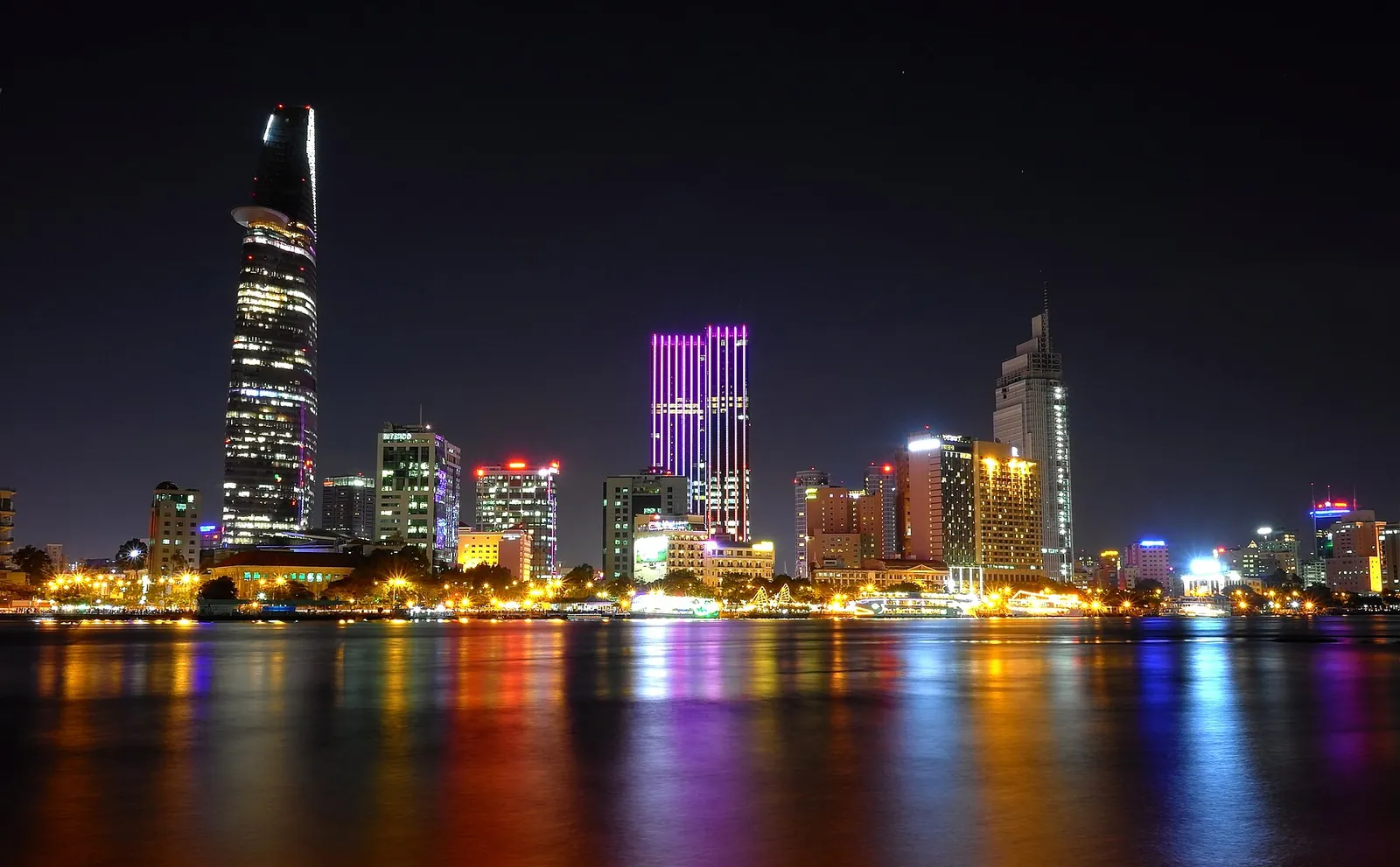
The riverfront skyline of central Saigon after dark
Photograph: Phi Phi Hoang — opens in a new tab · CC BY 2.0 — opens in a new tab
Changes: Resized and converted to WebP; displayed with responsive crops. · Original photograph and licence details ↗ — opens in a new tab