Central Vietnam · Da Nang
Da Nang travel guide: My Khe Beach, Marble Mountains and Son Tra
Da Nang is the easiest base on Vietnam's central coast: the airport sits about 3 km from the city centre, a long public beach runs down the east side of town, and Hoi An, the Hai Van Pass and Ba Na Hills are all within a drive. The city works best when you split each day between the coast and the riverside centre — the beach early, a pagoda or museum before the heat, and the Han River in the evening — rather than treating it as a resort strip or a stopover.
- Suggested time
- 2–3 nights, or 4–5 as a base for central Vietnam
- Where to stay
- My Khe Beach (An Thuong and the Son Tra side) for the sea; Hai Chau on the Han River for the centre
- Season and timing
- Vietnam Tourism names March to May and September to October as the best months; June to August is drier with a calm, clear sea; November to February is the rainy season, with long rains and grey skies.
The short answer
Give Da Nang two or three nights on its own, or make it a four- to five-night base for central Vietnam with day trips to Hoi An, the Hai Van Pass or Ba Na Hills. Sleep near My Khe Beach if the sea is the point of the trip, or on the Han River in Hai Chau for the Cham Museum, markets and evening walks. Spend one morning at the Marble Mountains from opening time, one on the Son Tra Peninsula and Linh Ung Pagoda, and keep a Friday, Saturday or Sunday night free for the Dragon Bridge.
Beach or river: choose your side of the city first
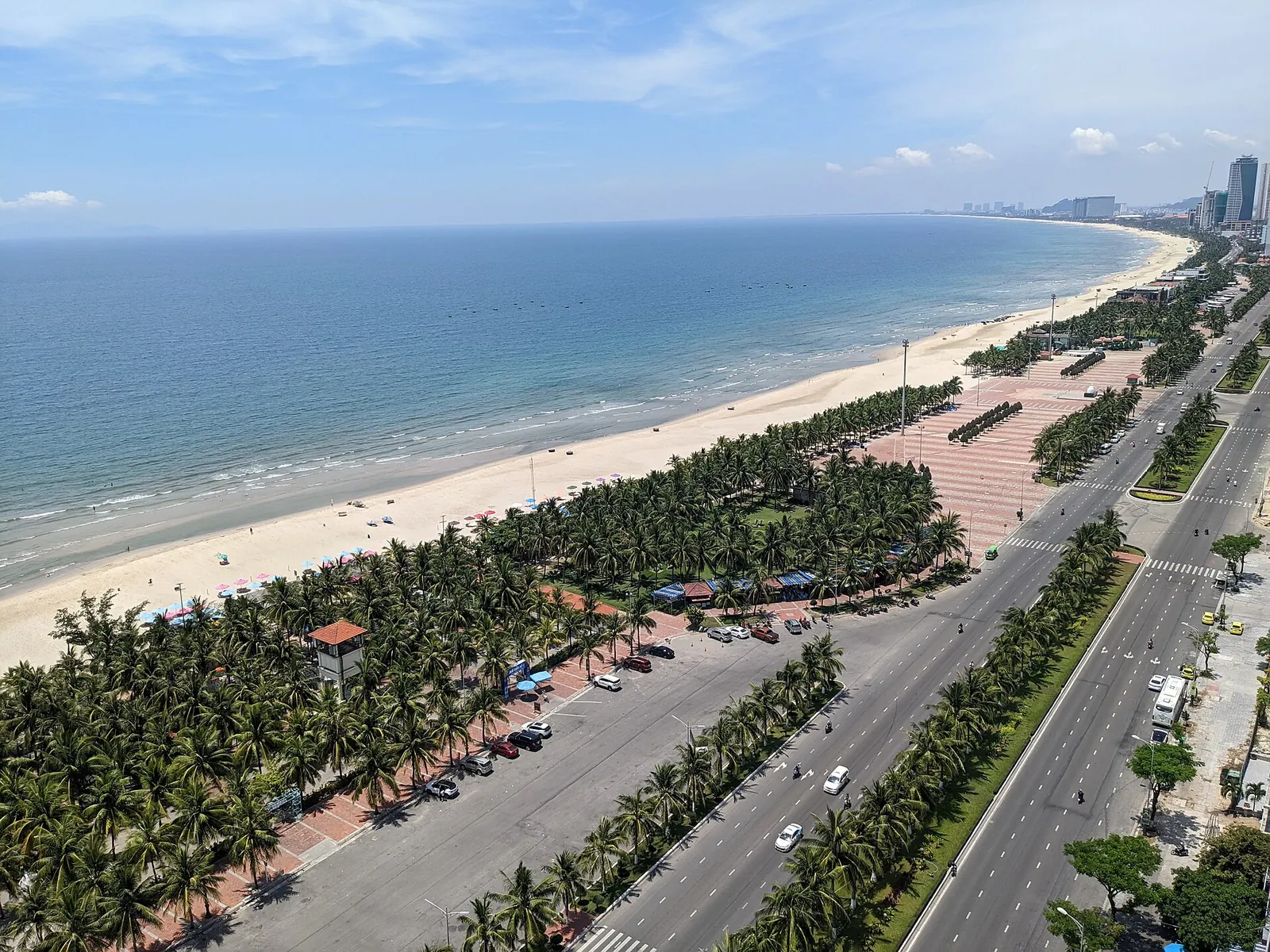
Da Nang is split by the Han River. On the east bank, the coast road runs along My Khe Beach, which the city's tourism portal places about 2 km from the centre, with Pham Van Dong, My An and Non Nuoc beaches continuing south towards the Marble Mountains. Staying here puts the sea outside the door and the Son Tra Peninsula a short ride north. My An beach links to the An Thuong tourist street, where the city portal places food and drink, massage and evening events; most of the large resorts sit further south along the coast towards Non Nuoc.
On the west bank, Hai Chau is the working city centre: Bach Dang Street along the river, the Cham Museum by the Dragon Bridge, the pink Da Nang Cathedral and the markets. It is the better base for a short city stay, for food and for a late walk by the water, and it is the side nearest the airport. Vietnam Tourism counts seven bridges over the water, and taxis and ride-hailing apps are easy to find, so the choice is about what you want outside the hotel in the morning, not about being cut off.
My Khe Beach and the Han River, morning and evening
Vietnam Tourism's advice is to set an alarm at least once: early in the morning the beach belongs to residents, with fishermen selling the catch, football and volleyball games, joggers and swimmers. Late afternoon is the other busy window, when locals come down to swim before sunset and the seafood restaurants across the road start filling. In the middle of the day the sand is quiet and hot; that is the time for a museum or a long lunch.
When we checked on 2026-10-03, the Da Nang tourism portal said the city's government lifeguard team works from 4:30 to 19:00 daily. Swim where lifeguards are posted and inside those hours, and treat the sea with respect in the rainy months, when Vietnam Tourism describes the weather from November to February as long rains and moody skies.
In the evening, cross to the west bank. Vietnam Tourism suggests starting where Bach Dang Street meets the Han River Bridge just before sunset and walking south along the water, past colonial and modern buildings, cafés and marble sculptures. The walk ends naturally at the Dragon Bridge, which is the point to time your evening around (see below).
Make time for the local food
What to eat and where to look
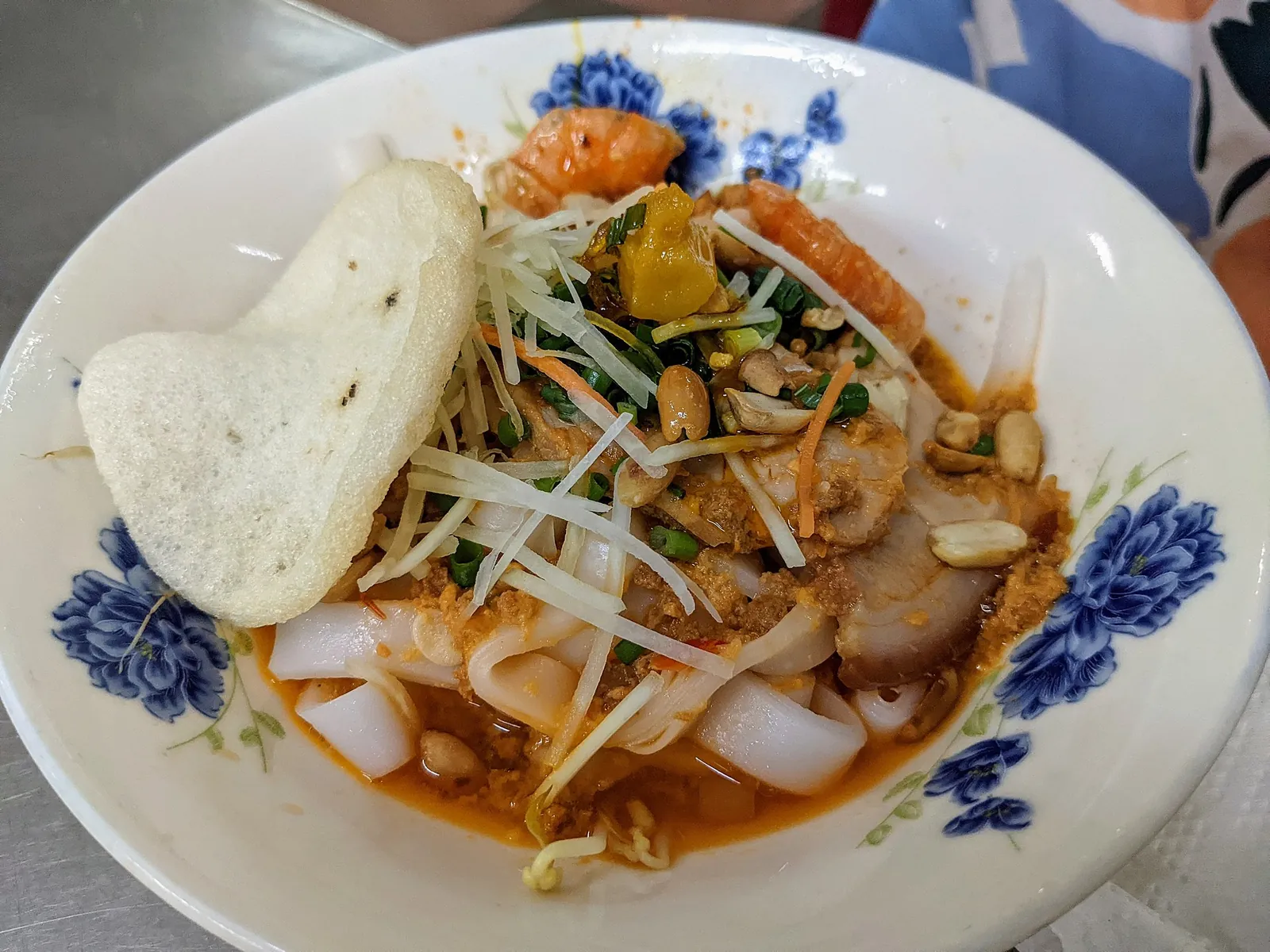
Mi Quang (Quang-style noodles)
Wide rice noodles with pork, shrimp, quail eggs, peanuts and fresh herbs, served with only a ladle of rich, turmeric-coloured broth and a rice cracker to crumble over. Vietnam Tourism calls it Da Nang's must-try dish.
- Where to look
- Small noodle shops and street kitchens all over the city; look for a sign that says mi Quang and a steady stream of local customers at lunchtime.
- Fit it into your day
- A filling lunch after the Marble Mountains or before the Cham Museum.
Usually contains pork, shrimp and peanuts; there is no fixed recipe, so ask what goes into the bowl.
Banh trang cuon thit heo (pork and rice paper rolls)
Thin slices of boiled pork belly served with raw lettuce, herbs, cucumber and banana blossom, rice noodles and rice paper, which you roll yourself at the table and dip in mam nem, a thick sauce of fermented anchovies with pineapple, chilli and garlic.
- Where to look
- Specialist restaurants in Hai Chau and Thanh Khe; Vietnam Tourism names Quan Ba Mua and Quan Dai Loc as the best known.
- Fit it into your day
- A shared lunch or early dinner; order one set per two people and add other dishes.
Mam nem is very pungent and contains fish; ask for ordinary fish sauce if you are unsure.
Bun cha ca (fish-cake noodle soup)
Rice noodles in a light broth of fish bones, pumpkin, pineapple, tomato and cabbage, topped with peppery fish cake made from local fish. Vietnam Tourism lists it among the city's favourite dishes.
- Where to look
- Noodle shops in the city centre that specialise in it; the sign will say bun cha ca.
- Fit it into your day
- Vietnam Tourism suggests it for lunch; it is light enough for a hot day.
Fish-based throughout; season with lime, chilli and shallot vinegar to taste.
Seafood from the tanks
Clams in lemongrass broth, crab with tamarind and grilled oysters with spring onions are the kind of simple preparations Vietnam Tourism recommends at the beach restaurants, where seafood is chosen live from tanks and priced by weight.
- Where to look
- Seafood halls along the coast road behind My Khe and the other east-bank beaches.
- Fit it into your day
- One evening meal after a sunset swim; arrive hungry and order a few dishes to share.
Prices are by weight: confirm the weight and price of each item before it goes into the kitchen.
Kem bo (avocado ice cream)
Blended avocado layered with coconut ice cream and topped with toasted coconut or jackfruit flakes — a favourite cold snack in Da Nang, according to Vietnam Tourism.
- Where to look
- Vietnam Tourism points to a stall inside Bac My An market, on the east side of the city.
- Fit it into your day
- An afternoon break on a hot day between the beach and the hotel.
Sweet and rich; dairy and coconut.
Marble Mountains: go at opening time
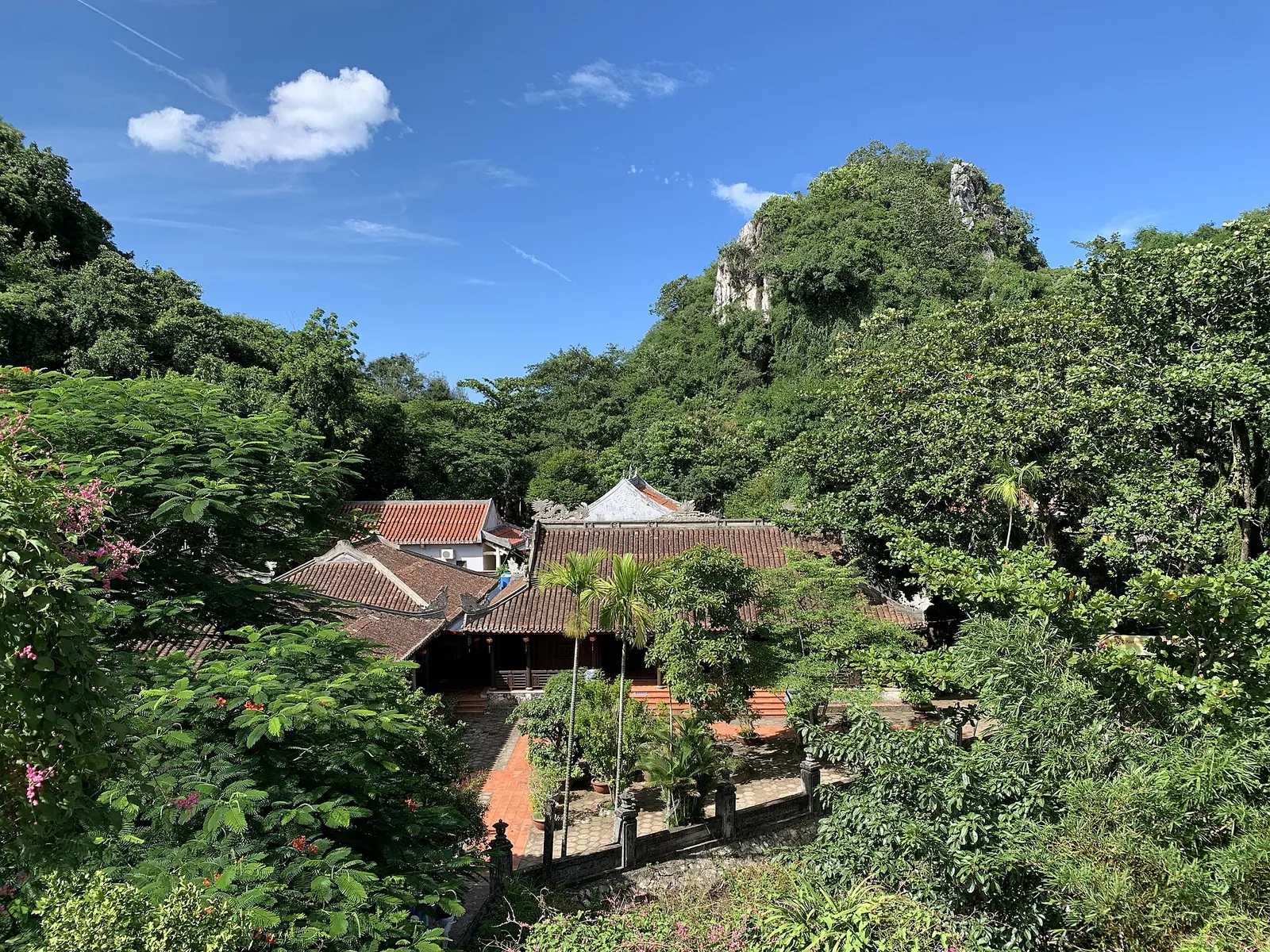
The Marble Mountains (Ngu Hanh Son) are a cluster of limestone and marble outcrops named after the five elements, about 8 km south-east of the centre according to the city portal, on the road towards Hoi An. Most visitors climb Thuy Son (Water Mountain), whose stone steps lead to Tam Thai and Linh Ung pagodas, the Xa Loi Tower and a series of caves. Huyen Khong, the largest cave, is lit by shafts of daylight through its broken roof and holds a large stone Buddha and shrines; Am Phu Cave, on the south side, has its own ticket.
When we checked on 2026-10-03, the city tourism portal listed tickets for Thuy Son at 40,000 VND for adults and 10,000 VND for students, with the lift at 15,000 VND one way or 30,000 VND return, and Am Phu Cave at 20,000 VND for adults. Vietnam Tourism lists opening from 7:00 to 17:30. Allow at least two hours.
Come at 7:00. Vietnam Tourism recommends the early morning, when the steps are cool and the paths and pagodas are quiet before the crowds of later in the day. Wear comfortable walking shoes for the stone steps, bring a hat and water, dress modestly, and remove shoes and hats before entering pagodas. Linh Ung Pagoda's gate on Thuy Son faces the sweep of Non Nuoc beach, and the lookouts give panoramic views over the coast. The Marble Mountains fit neatly on the way to Hoi An, so it is sensible to combine them with a transfer or an afternoon in the old town.
Son Tra Peninsula and Linh Ung Pagoda
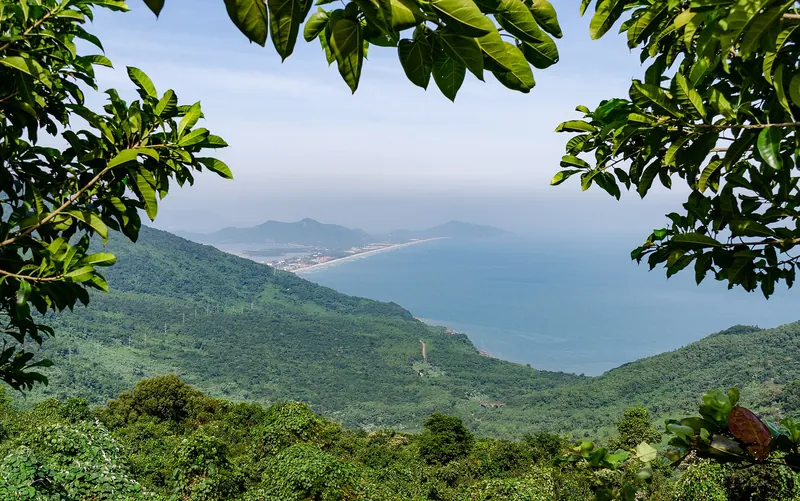
The forested Son Tra Peninsula closes the bay to the north-east, about 10 km from the centre. The city portal describes it as 15 km long, rising to 696 m, with around 4,370 hectares of primary forest and nearly 300 endangered red-shanked douc langurs. Vietnam Tourism suggests binoculars and an unhurried day of wildlife spotting; from the higher roads you look back over the crescent of the city, the Marble Mountains and the Hai Van Pass.
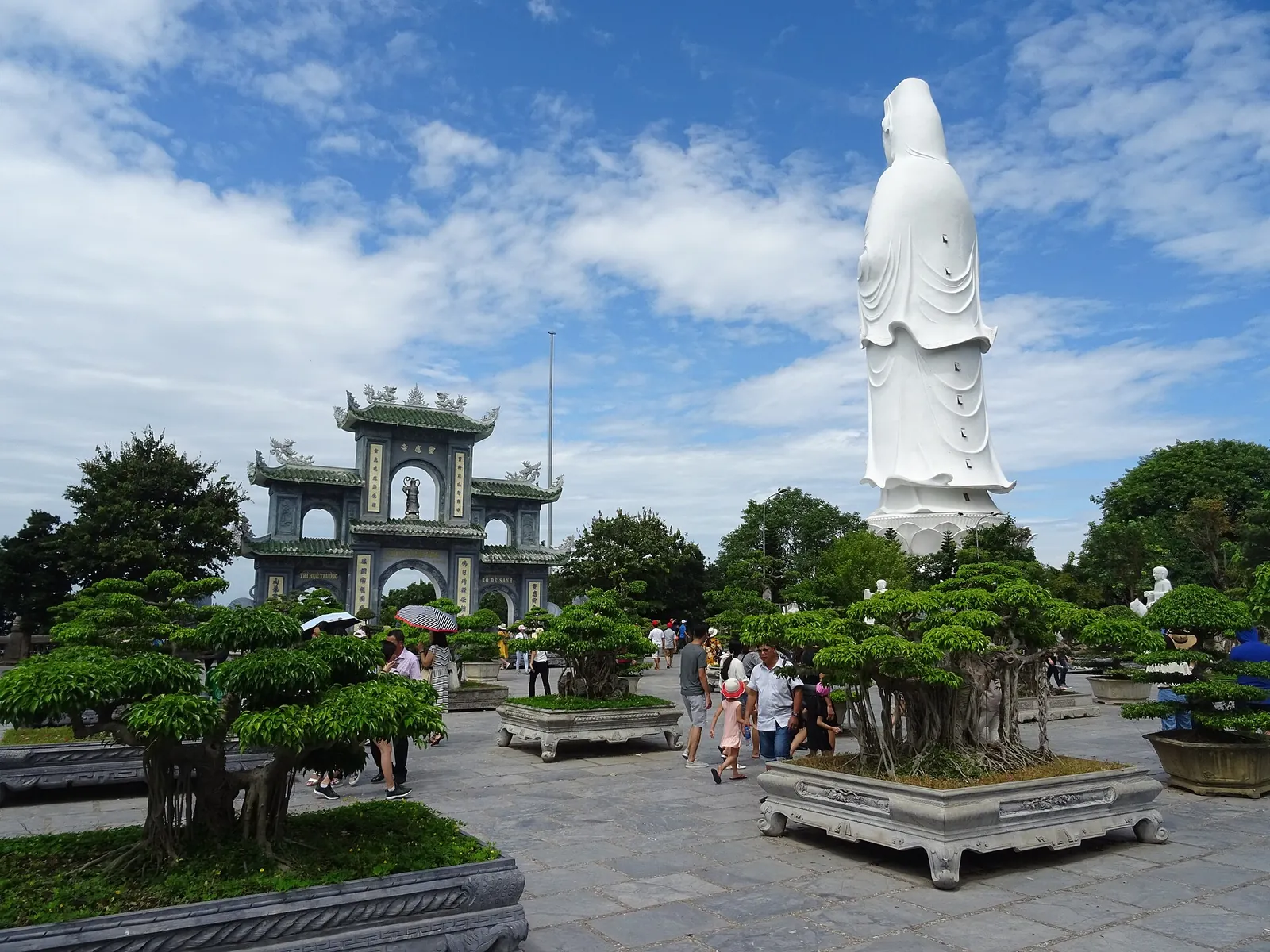
Linh Ung Pagoda at Bai But is the landmark you see from the beach: a 20-hectare pagoda complex begun in 2004 and inaugurated in 2010, according to the city portal. Its white statue of Avalokiteshvara, the Lady Buddha, stands 67 m high facing the sea; both the portal and Vietnam Tourism describe it as the tallest in Vietnam. Behind the gate, a courtyard of bonsai trees and statues of the eighteen arhats leads to the main hall. It is a working pagoda, so cover shoulders and knees. Vietnam Tourism's three-day plan combines it with a ride around the peninsula's coastal road; if you are not confident on a motorbike on steep, winding roads, go by car or with a guide.
Below the hills, the peninsula's beaches — Bai Bac, Bai Rang, Bai Nam, Tien Sa and others — are quieter than My Khe and are where the city portal places coral diving and boat trips.
The Cham Museum and the Dragon Bridge
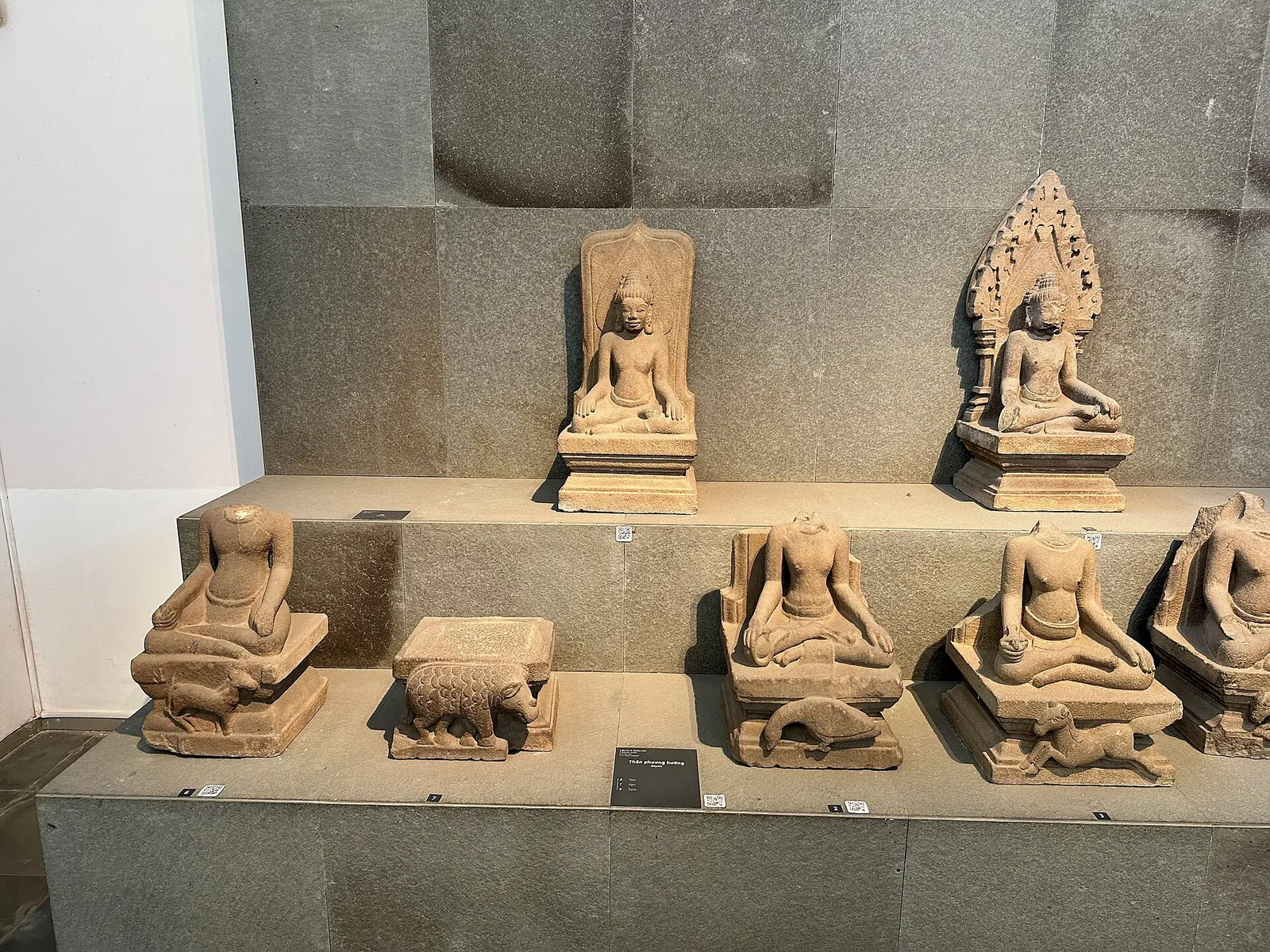
The Da Nang Museum of Cham Sculpture, on the river at 2 Thang 9 Street, holds the most representative collection of sculpture from the Champa kingdom, gathered from My Son, Tra Kieu, Dong Duong, Thap Mam and other sites along the central coast. The first building, designed in the style of Cham temples, opened in 1919. It is the best preparation for a trip to My Son, and an hour or two here is a good use of the midday heat. When we checked on 2026-10-03, the city portal listed opening from 7:30 to 11:00 and 13:00 to 17:00, closed on Mondays, and a ticket price of 60,000 VND.
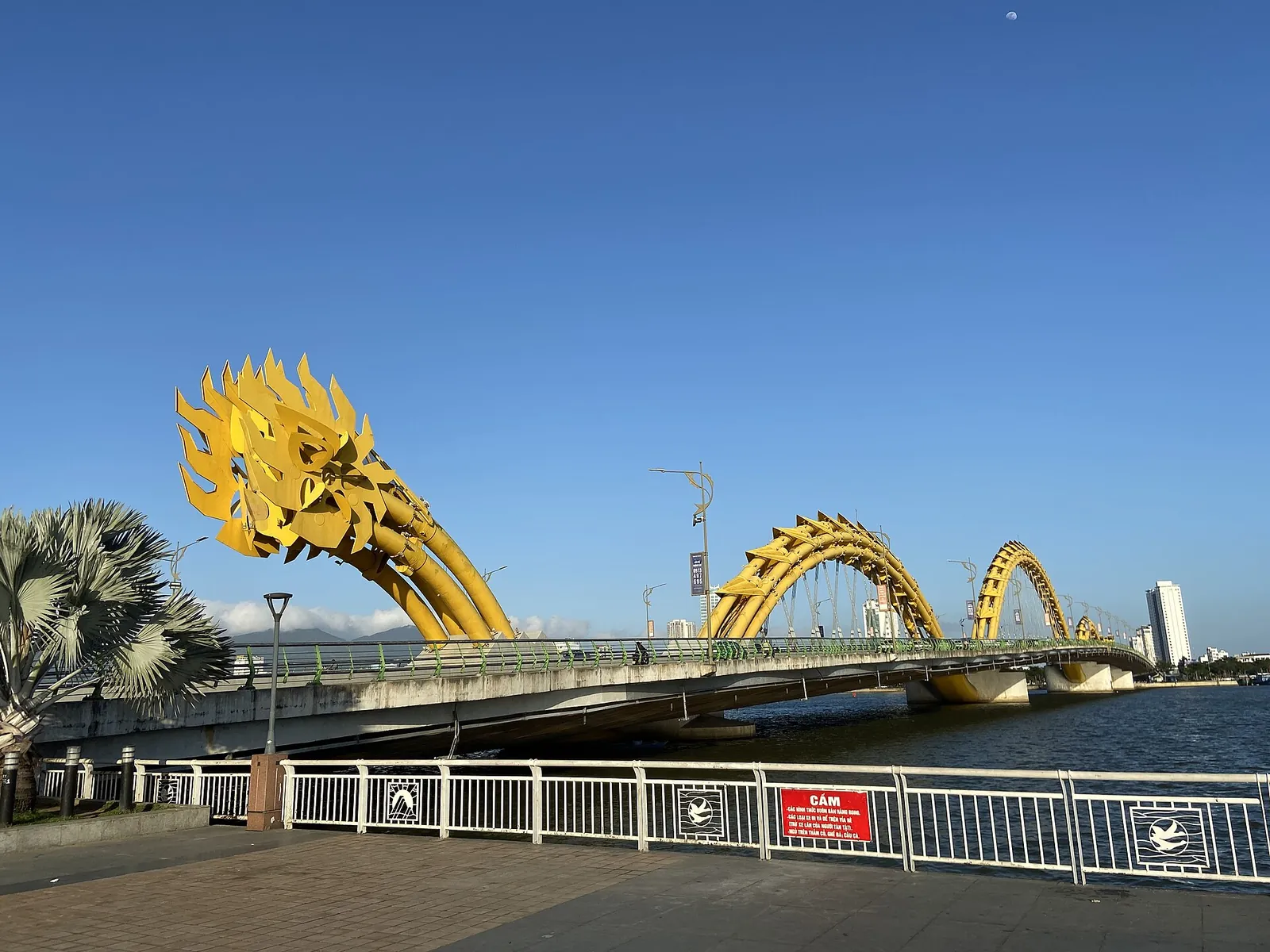
The Dragon Bridge (Cau Rong), a few minutes' walk away, is 666 m long and opened in 2013. When we checked on 2026-10-03, the city portal said the dragon's head breathes fire and then water at 21:00 every Friday, Saturday, Sunday and on holidays — about two minutes of fire followed by three of water. Vietnam Tourism suggests watching from the bridge itself, from a café on Tran Hung Dao Street on the east bank, or from the Son Tra night market below; arrive early for a place. The portal publishes separate schedules at Tet and around the fireworks festival, so check the latest notice if your date is a holiday.
A three-day plan, with day trips if you have more time
This is an editorial suggestion, not a timetable. Check opening days, especially Mondays for the Cham Museum.
- Day 1 — Marble Mountains and the river: Thuy Son at 7:00, coffee and mi Quang for lunch, the Cham Museum after lunch, then the Bach Dang riverside walk at sunset.
- Day 2 — Sea and Son Tra: My Khe Beach at dawn, Linh Ung Pagoda and the Son Tra coastal road in the morning, a rest in the heat, then a seafood dinner by the beach.
- Day 3 — Hoi An or Hai Van: Hoi An, about 45 minutes away according to Vietnam Tourism, for the old town in the evening; or the Hai Van Pass to the north. On a Friday to Sunday, finish at the Dragon Bridge at 21:00.
- Extra days: Ba Na Hills (about 40 minutes west by road), My Son Sanctuary or the Cham Islands, each as a separate day.
Day trips: Hai Van Pass, Ba Na Hills and Hoi An
The Hai Van Pass starts about 20 km north of downtown and climbs for some 20–21 km to around 500 m, where the Hai Van Gate, rebuilt under Emperor Minh Mang in 1826 and restored in 2024, stands on the old boundary between Da Nang and Hue. The city portal notes that the views over Da Nang Bay, Son Tra and Lang Co are best on clear days. Vietnam Tourism describes the road as ideal by motorbike and adds that you can also cycle it or take the train. If you are heading on to Hue anyway, crossing the pass on the transfer is better than doing it twice.
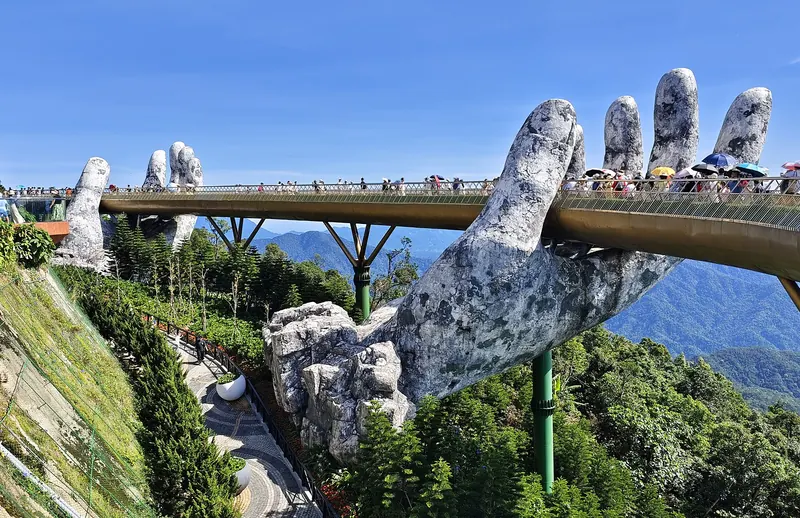
Ba Na Hills, a mountain resort and theme park with cable cars and the Golden Bridge, is around a 40-minute drive west, according to Vietnam Tourism, which advises buying tickets in advance to skip the queues; the entry includes the cable car up and down. Treat it as a full day out. Hoi An is close enough for an evening visit, but its lanterns and old houses reward at least one night there; see our Hoi An guide.
Practical questions
How many days do I need in Da Nang?
Two or three nights cover the beach, the Marble Mountains, Son Tra and the Cham Museum without rushing. Stay four or five nights if you want to use Da Nang as a base for Hoi An, the Hai Van Pass, Ba Na Hills or My Son.
Should I stay in Da Nang or Hoi An?
Stay in Da Nang for the long city beach, the airport and quick access to Son Tra and the Hai Van Pass; stay in Hoi An for the old town in the evening and the countryside. Many travellers split their nights between the two. Vietnam Tourism puts the drive between them at about 45 minutes.
When does the Dragon Bridge breathe fire?
When we checked on 2026-10-03, the Da Nang tourism portal listed the fire-and-water show at 21:00 every Friday, Saturday, Sunday and on holidays. Schedules change at Tet and on fireworks festival nights, so check the latest notice.
How long does a visit to the Marble Mountains take?
Vietnam Tourism suggests at least two hours. Arrive at 7:00 for cooler steps and fewer people, and wear shoes with good grip. The lift saves part of the climb on Thuy Son but needs a separate ticket.
When is the best time to visit Da Nang?
Vietnam Tourism names March to May and September to October as the best months and June to August as the time of little rain and calm, clear sea. November to February is the rainy season.
How far is the airport from the beach?
Da Nang International Airport is about 3 km from the city centre, according to the city tourism portal. My Khe is on the other side of the Han River, so a taxi or ride-hailing car is a short trip to either side of town.
Sources and checks before you travel
Reference sources for the version dated 3 October 2026. Confirm opening times, access, transport and conditions for your travel dates.
- Vietnam Tourism: Da Nang ↗ — opens in a new tab
- Vietnam Tourism: a walk around Marble Mountains ↗ — opens in a new tab
- Danang Fantasticity (Da Nang tourism portal): the Marble Mountains ↗ — opens in a new tab
- Danang Fantasticity: the Son Tra Peninsula ↗ — opens in a new tab
- Danang Fantasticity: Linh Ung Pagoda – Bai But ↗ — opens in a new tab
- Danang Fantasticity: Linh Ung Pagoda ↗ — opens in a new tab
- Danang Fantasticity: Da Nang beaches ↗ — opens in a new tab
- Danang Fantasticity: Da Nang Museum of Cham Sculpture ↗ — opens in a new tab
- Danang Fantasticity: the Dragon Show ↗ — opens in a new tab
- Danang Fantasticity: Hai Van Pass ↗ — opens in a new tab
- Danang Fantasticity: guide for visitors arriving at Da Nang International Airport ↗ — opens in a new tab
- Vietnam Tourism: must-do Da Nang, an insider list ↗ — opens in a new tab
- Vietnam Tourism: 3 perfect days in Danang ↗ — opens in a new tab
- Vietnam Tourism: must-visit places in Da Nang ↗ — opens in a new tab
- Vietnam Tourism: a foodie's guide to Da Nang ↗ — opens in a new tab
- Vietnam Tourism: Da Nang's special pork rolls ↗ — opens in a new tab
- Danang Fantasticity: about Da Nang City ↗ — opens in a new tab
Does this experience fit your route?
Compare the programme, departure point and practical requirements with your travel plans.
Check dates and details on Viator ↗ — opens in a new tabAffiliate link · Book with ViatorPhoto credits
My Khe Beach seen from above: the sand, the beachfront park and the coast road run side by side along the city's east shore.
Photograph: Jpatokal — opens in a new tab · CC BY-SA 4.0 — opens in a new tab
Changes: Resized and converted to WebP; displayed with responsive crops. · Original photograph and licence details ↗ — opens in a new tab
A temple complex on Thuy Son, the most visited of the Marble Mountains, reached by stone steps or a lift.
Photograph: Chainwit. — opens in a new tab · CC BY 4.0 — opens in a new tab
Changes: Resized and converted to WebP; displayed with responsive crops. · Original photograph and licence details ↗ — opens in a new tab
Dragon Bridge across the Han River; on Friday to Sunday nights and holidays the dragon's head breathes fire and water.
Photograph: Kuroczynski — opens in a new tab · CC BY-SA 4.0 — opens in a new tab
Changes: Resized and converted to WebP; displayed with responsive crops. · Original photograph and licence details ↗ — opens in a new tab
Linh Ung Pagoda at Bai But on the Son Tra Peninsula, with its Lady Buddha statue looking out over the bay.
Photograph: Christophe95 — opens in a new tab · CC BY-SA 4.0 — opens in a new tab
Changes: Resized and converted to WebP; displayed with responsive crops. · Original photograph and licence details ↗ — opens in a new tab
Mi Quang with pork and shrimp in Da Nang: little broth, plenty of toppings and a rice cracker to break over the bowl.
Photograph: Jpatokal — opens in a new tab · CC BY-SA 4.0 — opens in a new tab
Changes: Resized and converted to WebP; displayed with responsive crops. · Original photograph and licence details ↗ — opens in a new tab
Cham sculptures of Vedic deities from about the 9th to 11th centuries, in the Museum of Cham Sculpture by the Han River.
Photograph: Ms Sarah Welch — opens in a new tab · CC0 — opens in a new tab
Changes: Resized and converted to WebP; displayed with responsive crops. · Original photograph and licence details ↗ — opens in a new tab