Plan your trip · Vietnam
Best time to visit Vietnam: north, central coast and south by month
Vietnam stretches from the Chinese border in the north to the Gulf of Thailand in the south, and it does not have one weather pattern. The north has a real winter, the central coast takes its heaviest rain and storms late in the year, and the south is hot all year with a simple dry and wet season. That is why one region can be at its best while another is flooded or wrapped in cold fog, and why the right month depends on which part of the country you put first.
- Suggested time
- About two weeks for north, centre and south; 5–7 days for one region
- Where to stay
- Hanoi, Hoi An or Hue, and Ho Chi Minh City
- Season and timing
- March to May for the whole country; September to November for the north; February or March to August for the central coast; December to April for the south.
The short answer
If you want the whole north-to-south route in one trip, aim for March to May: the official tourism board calls it the best weather countrywide, though April and May can be very hot. Allow about two weeks, sleeping in Hanoi, Hoi An (or Hue) and Ho Chi Minh City, and fly the long legs. From September to November, favour the north and the south and keep the central coast short and flexible, because storms and floods hit Hue and Hoi An then. From December to February, the south and Phu Quoc are at their best while Hanoi and Sapa are cold and misty. In June to August, central beaches are hot and dry while the north is in its rainy season.
Why one month cannot suit the whole country
The Vietnam National Authority of Tourism describes a country with both tropical and temperate zones. Its own summary is that March to May offers the best weather countrywide, while there is always some part of Vietnam with good conditions. In practice, the three regions behave like three different destinations.
The north (Hanoi, Ha Long Bay, Sapa) has a cool to cold, misty winter from December to March, warm and clear weather from April, a hot, humid and rainy summer from June to August, and clear, cooler autumn days from September to November. The central coast (Hue, Hoi An, Da Nang) has a late rainy season: the official guide gives September to February for Hue and September to January for Hoi An, with floods possible from September to November. The south (Ho Chi Minh City, the Mekong Delta) is hot all year, dry and sunny from December to April and wet from May to November, when afternoon downpours usually last a few hours.
The UK government's travel advice puts the same pattern in risk terms: rain from June to September in the north and the south, and from October to December in central Vietnam, with seasonal flooding in October and November in the centre. It also notes that tropical cyclones affect the eastern coast, normally from May to November, but can happen at other times. Use those overlaps to plan, then decide which region matters most to you.
The north: Hanoi, Ha Long Bay and Sapa
For Hanoi, the official guide suggests April to June or September to December. From September to November it describes temperatures around 25 degrees and sunny skies; June brings high heat and humidity, and the rainy season runs from June to August. From late December until March, Hanoi is surprisingly cold, with lows of around 10 degrees, so pack a warm layer even if the rest of the trip is tropical.
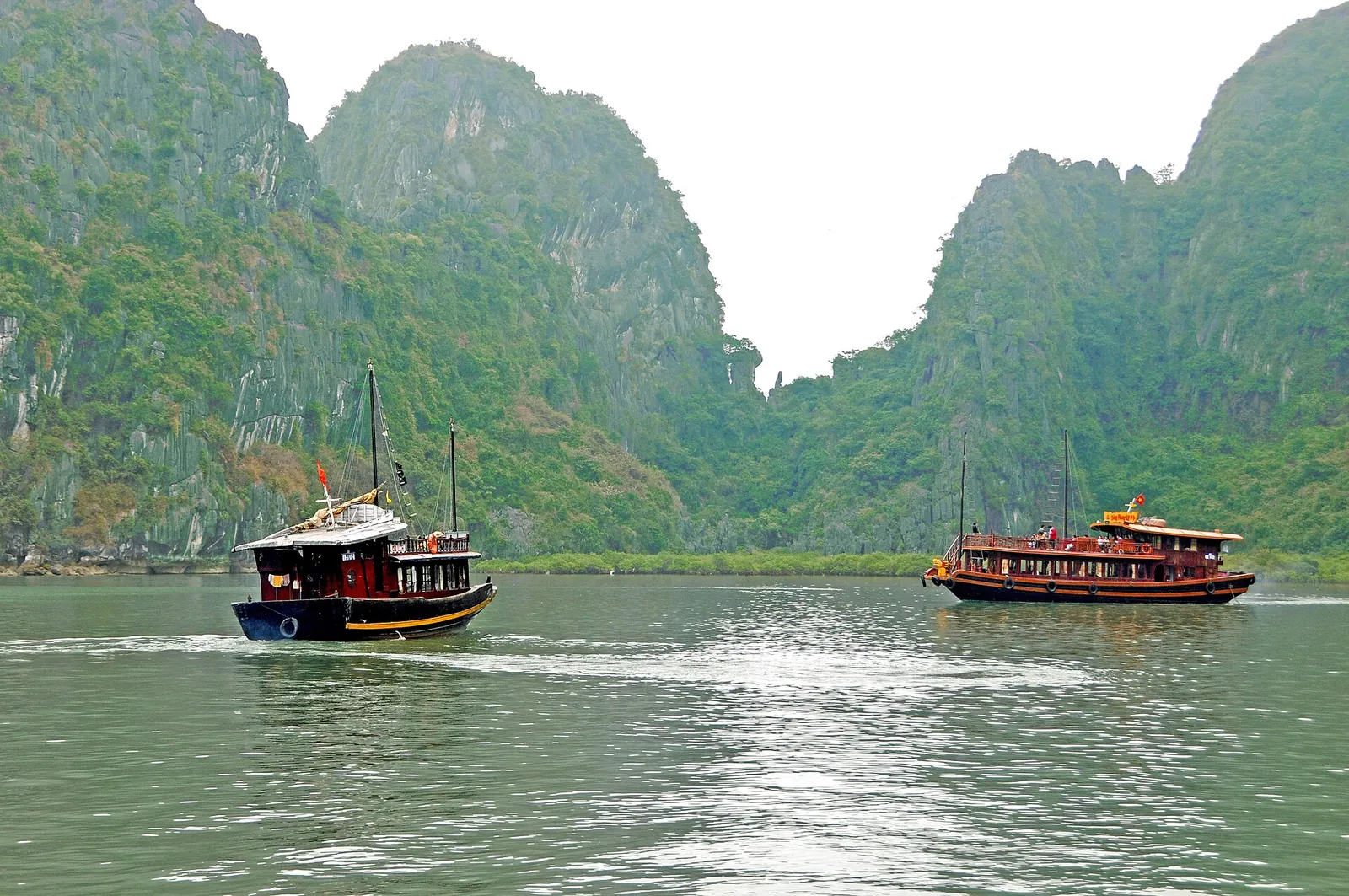
Ha Long Bay follows the same rhythm. The guide recommends April to June or September to November for sunnier skies; at other times heavy rain or thick mist is common, and tropical storms can sometimes cancel cruises. A misty winter cruise has its own atmosphere among the karsts, but January can be cold on deck. If a cruise is the reason you are going north, keep a spare day in Hanoi so a cancellation does not break the trip.
In the mountains around Sapa, the winter is colder still: the guide mentions occasional snowfall in January and hotels with heated blankets. It singles out late April, with flowers and clear skies, and early October, when the terraced rice fields turn golden before the harvest. Summer, June to August, is the stormy season there.
Make time for the local food
What to eat and where to look
Phở (rice noodle soup)
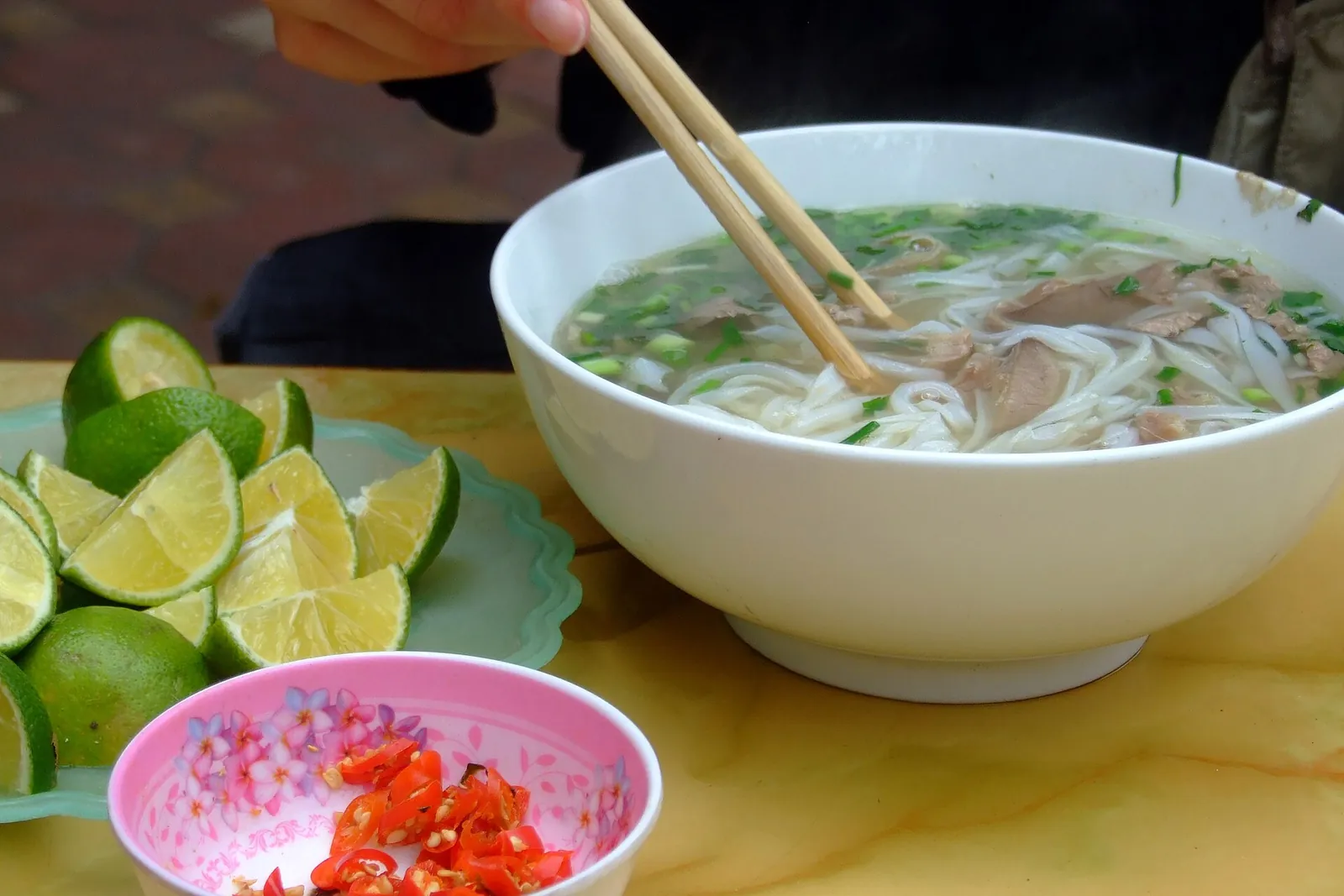
Flat rice noodles in a clear beef or chicken broth with herbs, lime and chilli on the side. Hanoi's versions are restrained and broth-led, and a hot bowl is most welcome on the city's cold, misty winter mornings.
- Where to look
- Specialist phở shops in Hanoi that serve one or two versions and little else, busiest at breakfast.
- Fit it into your day
- Breakfast before a day of walking in Hanoi, especially from December to March.
Beef is often served rare and cooks in the broth; ask for well-done (chín) if you prefer.
Bún chả
Grilled pork patties and slices served in a sweet-sour dipping broth with rice vermicelli and a basket of herbs, a Hanoi lunch dish.
- Where to look
- Small shops with a charcoal grill at the door in Hanoi's Old Quarter and surrounding districts.
- Fit it into your day
- Lunch in Hanoi; it is traditionally a midday dish, so go earlier rather than later.
Contains pork and fish sauce; the fried spring rolls often served alongside contain shellfish or pork.
Cao lầu
Hoi An's own noodle dish: firm, chewy noodles with sliced pork, crisp croutons, herbs and a little rich sauce rather than a soup.
- Where to look
- Family restaurants and market stalls in and around Hoi An's Ancient Town.
- Fit it into your day
- Lunch between the Ancient Town and an afternoon on the river or the beach; on wet autumn days, a good reason to sit out a shower.
Contains pork and soy; ask before ordering if you avoid either.
Bánh xèo
Crisp rice-flour pancakes coloured with turmeric and filled with prawns, pork and bean sprouts, wrapped in leaves and herbs and dipped in fish sauce. Southern versions are large and thin.
- Where to look
- Evening eateries in Ho Chi Minh City and market towns in the Mekong Delta.
- Fit it into your day
- Dinner after a morning boat trip in the delta, or a shared dish on a rainy-season evening in the city.
Contains shellfish and fish sauce.
The central coast: Hue, Hoi An, Da Nang and Phong Nha
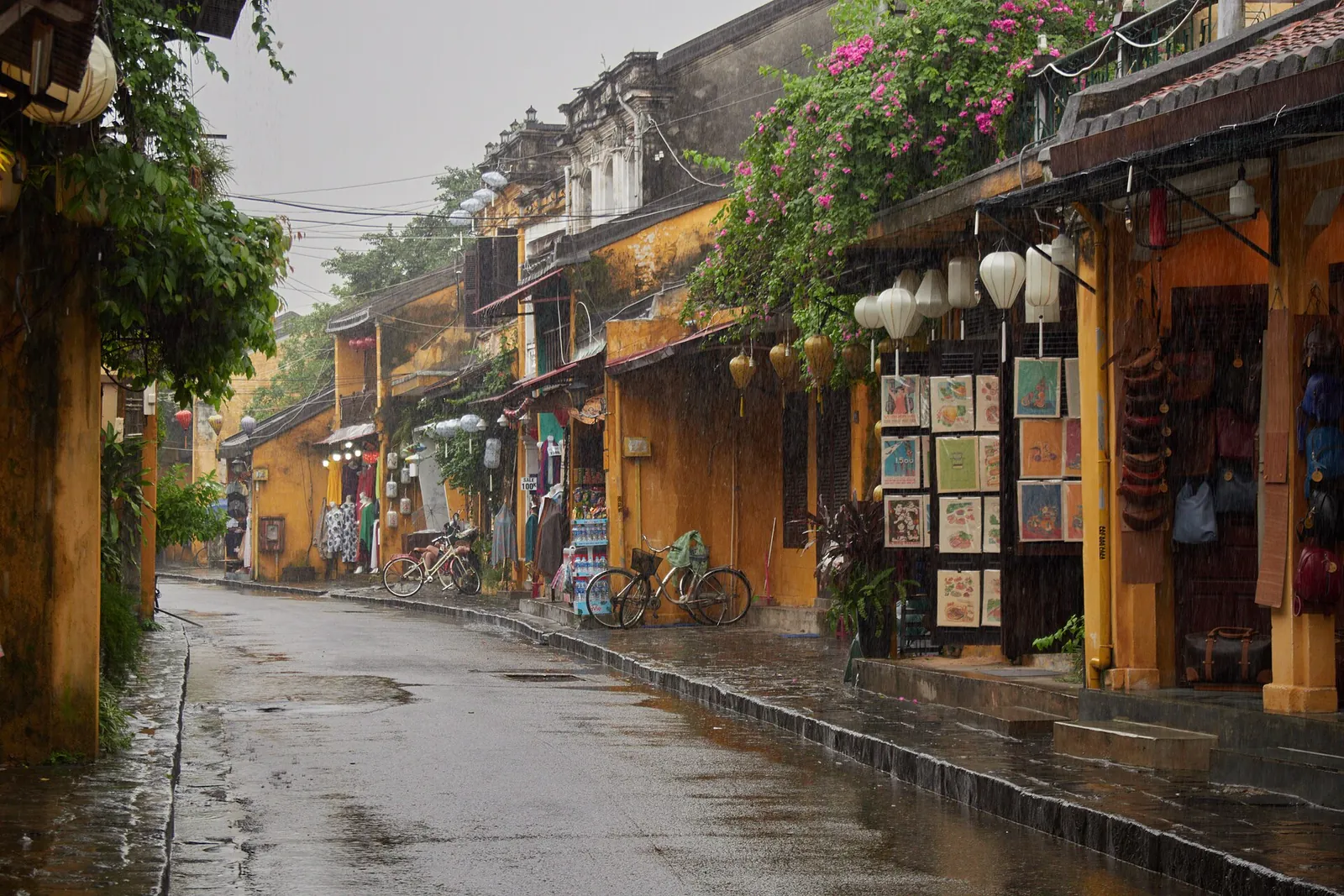
The centre is the region where timing matters most. In Hue, the official guide lists September to February as cool, rainy and cloudy, with occasional flooding from September to November, and March to August as warm, sunny and dry; July is described as perfect beach weather, with highs of 35 degrees. Hoi An is similar: rainy and cool from September to January, warm to hot and sunny from February to August, with a lot of rain and some small floods from September to November. The guide picks March as an excellent month for Hoi An.
Further south on the coast, Nha Trang has the shortest rainy season in the country, according to the same guide, with some monsoon rain between September and December. Up in the highlands, Da Lat works the other way round: rainy from April to October and dry with clear skies from November, with cool air all year.
If caves are on your list, check the season before you book flights. Phong Nha-Ke Bang cave expeditions are run on a fixed calendar: the licensed operator Oxalis says its Son Doong expedition runs only from January to the end of August and closes from September because of the weather. Its FAQ suggests April to August for warm weather and swimming, and November to March for cooler trekking with occasional cold spells.
The south: Ho Chi Minh City, the Mekong Delta and Phu Quoc
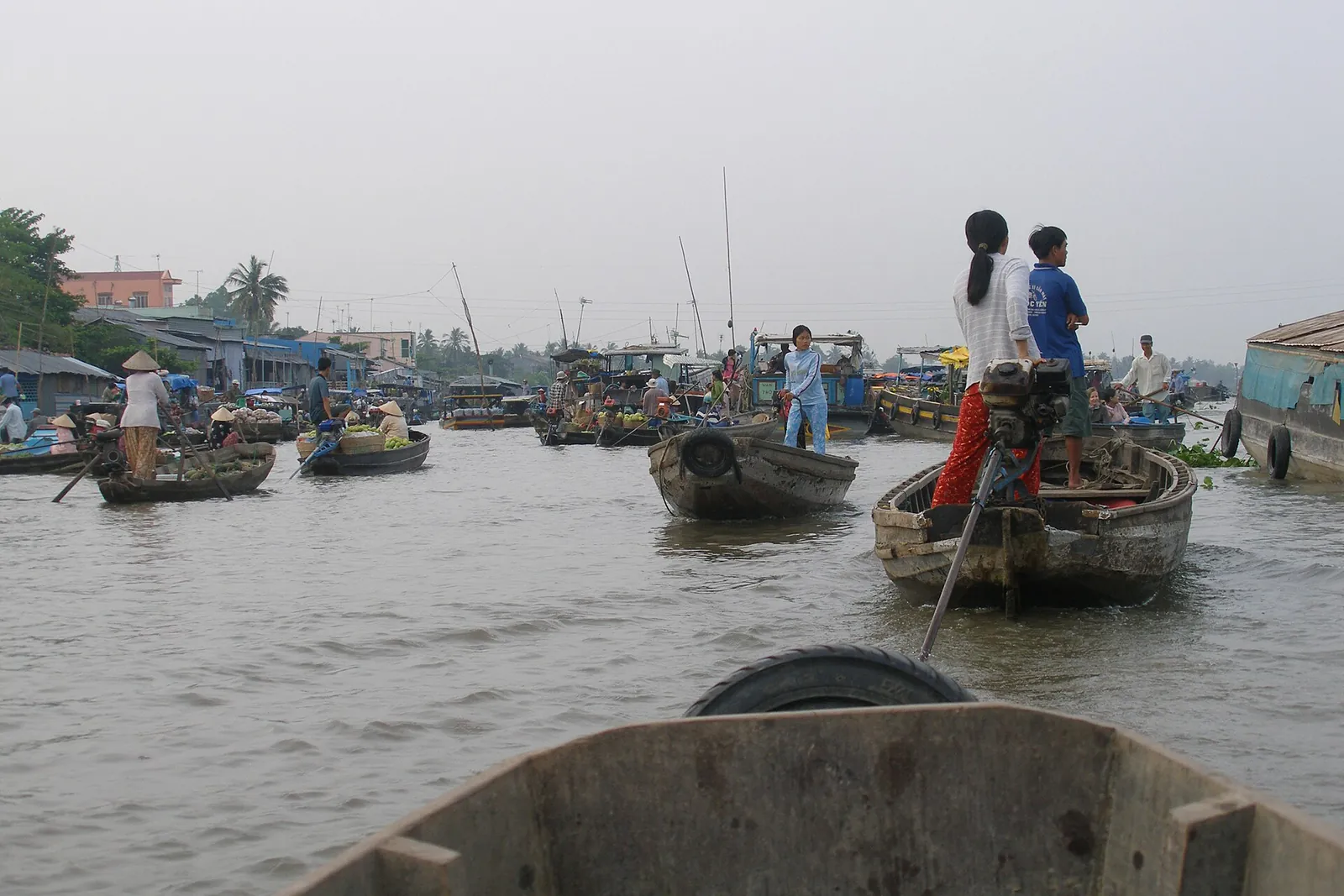
Southern Vietnam is the easiest region to fit into any calendar. The official guide describes Ho Chi Minh City as either hot and dry or hot and rainy, with temperatures normally around 30 degrees. From December to April skies are clear; from May to November a dependable afternoon downpour arrives, usually for a few hours, so plan sightseeing and boat trips in the morning and keep the afternoon flexible.
The Mekong Delta shares that pattern. The UK government's advice notes that seasonal flooding is common in the delta regions, so check local conditions before a homestay or a long boat day in the wet months.
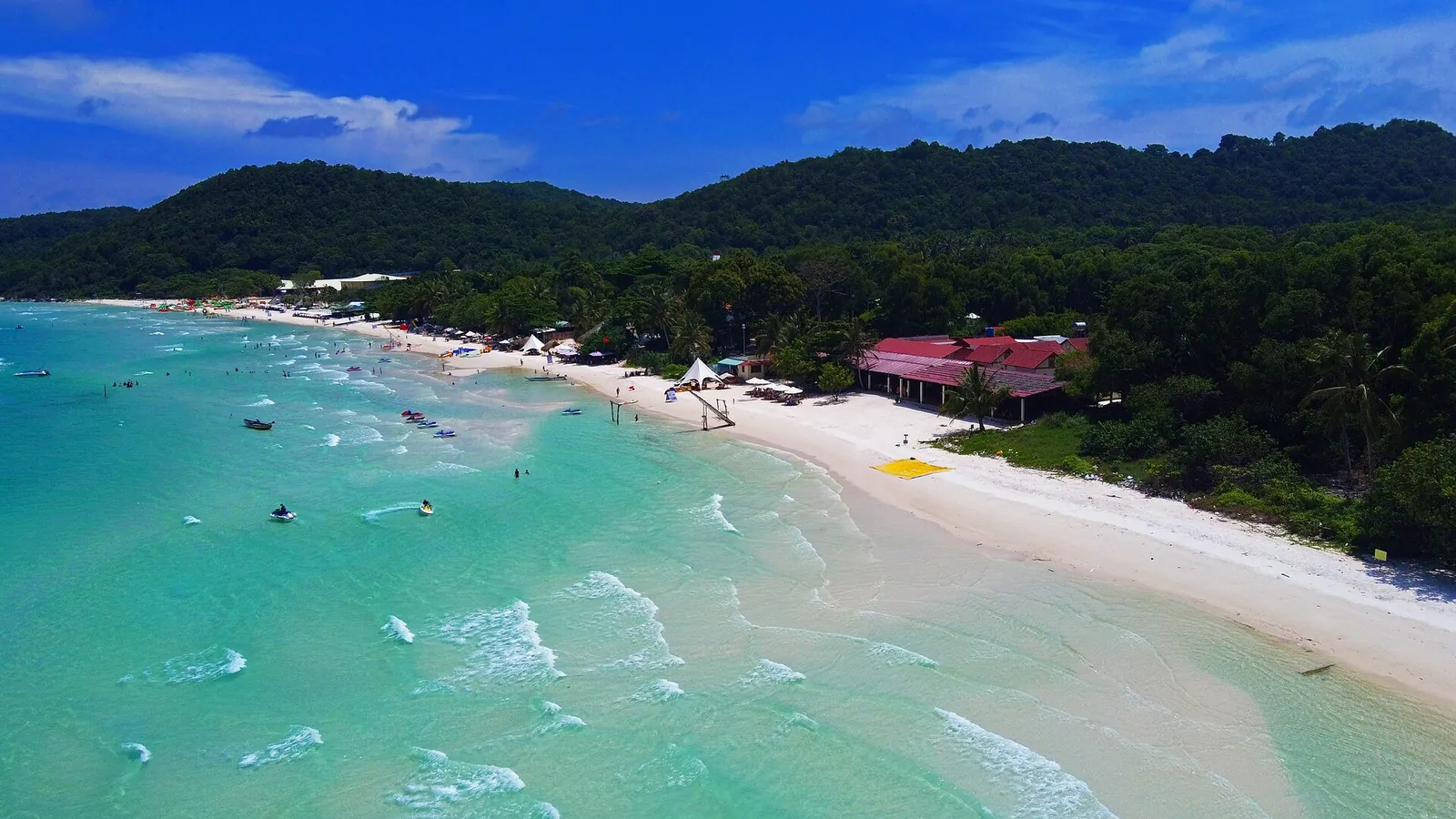
Phu Quoc has its own timetable. The official guide says the island is clear, hot and sunny from October to June and advises avoiding July to September, when storms can make ferries dangerous and the beaches less inviting. December and January are described as the island at its best, which makes Phu Quoc a good warm end to a winter trip that starts in a cold Hanoi.
Matching a north-to-south route to the month
Most first trips link Hanoi, the central coast and Ho Chi Minh City. The official transport guide notes that the train from Hanoi to Ho Chi Minh City can take up to 30 hours and that a one- or two-hour domestic flight often makes more sense, so the season decides which region gets the most days rather than whether you can see all three. This is an editorial summary of the official climate guide, not a forecast.
- March to May: the best all-round window. Hanoi is warming up, Hoi An and Hue are dry, the south is sunny. Expect real heat by April and May, and start days early.
- June to August: the central coast is hot and dry, with good beach weather around Hue and Hoi An. The north is hot, humid and rainy, and the south has afternoon showers. Phu Quoc is in its stormy season from July.
- September to November: the north is at its clearest and coolest, and Sapa's terraces turn golden in early October. The central coast has heavy rain, storms and flood risk, so keep Hue and Hoi An short and book flexible rooms. The south is still wet until November.
- December to February: the south and Phu Quoc are dry and sunny. Hanoi, Ha Long Bay and Sapa are cold and often misty, and Hue stays cool and rainy until February. Tet usually falls in January or February.
Typhoons, floods and holidays: what to check before you travel
Storms are the main reason to keep the central coast flexible between September and November, but the UK advice is clear that the cyclone season normally runs from May to November along the eastern coast. It recommends monitoring the National Centre for Hydro-Meteorological Forecasting and the Japan Meteorological Agency, following local authorities' instructions, and being ready to change plans at short notice. Flooding can block roads and landslides can close mountain routes, so do not schedule a long overland transfer the day before an international flight in the wet months.
Holidays change a trip as much as the weather. The official tourism site calls Tet, the Lunar New Year, Vietnam's largest festival; it falls on the first day of the lunar calendar, usually in January or February. Many people travel home, and the official FAQ warns that many businesses close during the festivities, while the transport guide advises booking train tickets well in advance for holidays and peak times. The Mid-Autumn Festival on the 15th day of the eighth lunar month, between September and October, is a gentler reason to time a visit, especially in Hoi An's Ancient Town, which the tourism board recommends for its lanterns on the river.
Practical questions
What is the best month to visit Vietnam?
For a trip that covers the north, the centre and the south, March to May works best; the official tourism board calls it the best weather countrywide. April and May can be very hot, so March or early April is the most comfortable compromise.
When is typhoon season in Vietnam?
The UK government's travel advice says tropical cyclones normally affect the eastern coast from May to November, though they can happen at other times. The central coast also has seasonal flooding in October and November, so keep plans for Hue and Hoi An flexible then.
Is Hanoi cold in winter?
Yes. The official guide describes late December to March as surprisingly cold, with lows of around 10 degrees, and Sapa can see occasional snow in January. Bring a warm jacket even if the rest of your trip is in the tropical south.
When is the rainy season in Ho Chi Minh City?
From May to November, according to the official guide, with a dependable afternoon downpour that usually lasts a few hours. December to April is dry and sunny.
Is it worth visiting Vietnam during Tet?
It can be memorable, but plan for closures and crowded transport. The official FAQ warns that many businesses close during the festivities, and trains fill up, so book long journeys well in advance or travel just after the holiday.
When can I visit Son Doong cave?
The licensed operator Oxalis runs the Son Doong expedition only from January to the end of August; it closes from September because of the weather.
Sources and checks before you travel
Reference sources for the version dated 3 October 2026. Confirm opening times, access, transport and conditions for your travel dates.
- Vietnam National Authority of Tourism: Weather and climate in Vietnam ↗ — opens in a new tab
- Vietnam National Authority of Tourism: Frequently asked questions ↗ — opens in a new tab
- Vietnam National Authority of Tourism: Top 10 festivals and holidays in Vietnam ↗ — opens in a new tab
- Vietnam National Authority of Tourism: Transport within Vietnam ↗ — opens in a new tab
- Vietnam National Authority of Tourism: Getting to Vietnam ↗ — opens in a new tab
- Vietnam National Authority of Tourism: Health and safety ↗ — opens in a new tab
- UK FCDO travel advice: Vietnam safety and security ↗ — opens in a new tab
- Oxalis Adventure: Son Doong cave expedition ↗ — opens in a new tab
- Oxalis Adventure: FAQ ↗ — opens in a new tab
Does this experience fit your route?
Planning around the seasons? Compare Ha Long cruises, Hoi An river trips and Mekong Delta tours, and check each operator's weather policy before you book.
Check dates and details on Viator ↗ — opens in a new tabAffiliate link · Book with ViatorPhoto credits
Bai Sao on Phu Quoc: the island's dry, sunny season runs from October to June.
Photograph: [//commons.wikimedia.org/wiki/User:Trantuonglam Trantuonglam] — opens in a new tab · CC BY-SA 4.0 — opens in a new tab
Changes: Resized and converted to WebP; displayed with responsive crops. · Original photograph and licence details ↗ — opens in a new tab
Ha Long Bay: April to June and September to November give the best chance of clear skies.
Photograph: Dennis G. Jarvis — opens in a new tab · CC BY-SA 2.0 — opens in a new tab
Changes: Resized and converted to WebP; displayed with responsive crops. · Original photograph and licence details ↗ — opens in a new tab
Hoi An Ancient Town after rain: the central coast's wet season runs from September to January.
Photograph: lumoplank — opens in a new tab · CC0 — opens in a new tab
Changes: Resized and converted to WebP; displayed with responsive crops. · Original photograph and licence details ↗ — opens in a new tab
Cai Rang floating market near Can Tho: in the south, plan boat trips for the morning.
Photograph: Vyacheslav Argenberg — opens in a new tab · CC BY 4.0 — opens in a new tab
Changes: Resized and converted to WebP; displayed with responsive crops. · Original photograph and licence details ↗ — opens in a new tab
Phở bò in Hanoi's Cau Giay district, a warming breakfast in the northern winter.
Photograph: Codename5281 — opens in a new tab · CC BY-SA 3.0 — opens in a new tab
Changes: Resized and converted to WebP; displayed with responsive crops. · Original photograph and licence details ↗ — opens in a new tab