Plan your trip · Vietnam
Vietnam by train: the best stretches, sleeper berths and the Sa Pa line
Vietnam's railway is one long single line from Ho Chi Minh City to Hanoi, with branches to Lao Cai on the Chinese border, Hai Phong and a few coastal towns. It is slow, and end to end it takes longer than most visitors expect, but on the right stretch it is the most relaxed way to move: the coast between Hue and Da Nang, the new heritage train north of Hue, and the overnight run from Hanoi to Lao Cai that saves a day on the way to Sa Pa. The trick is to choose stretches rather than the whole line, and to book the berth you want early.
- Suggested time
- Plan train legs of 2–3 hours by day or one night in a sleeper; the full Hanoi–Ho Chi Minh City run takes about 30 hours or more
- Where to stay
- Hanoi Old Quarter, central Hue and Da Nang; Sa Pa town for the Lao Cai line
- Season and timing
- Trains run all year. Book weeks ahead for Tet (late January to February in 2027) and public holidays; on the central coast, storms and floods from September to November can disrupt services.
The short answer
Use the train for three or four legs, not the full 1,700-odd km run: Hue to Da Nang along the coast, Hue to Tho Loc for Phong Nha on the daytime heritage train, an overnight sleeper from Hanoi to Lao Cai for Sa Pa, and, if you have the time, one night between Hanoi and Hue or Nha Trang and Ho Chi Minh City. Fly the longest jumps. Sleep near Hanoi Station in the Old Quarter, in central Hue and in Da Nang. Book on the railway's official site, dsvn.vn, in your passport name, as soon as your dates are fixed, and well ahead for Tet and other holidays.
Ride the stretches, not the whole line
The Vietnam National Authority of Tourism describes a single network of about 2,600 km run by Vietnam Railways, with trains averaging about 40 km an hour. Its own advice is blunt: the train from Hanoi to Ho Chi Minh City can take up to 30 hours, and 16 hours from the central coast to either end is common, so a one- or two-hour domestic flight often makes more sense for the long jumps. The same page notes that much of the track dates from the colonial era and is being renovated, so check before you go.
That does not make the train a bad idea; it means picking where it earns its place. The best stretches are short enough to enjoy by daylight or long enough to replace a hotel night. Hue to Da Nang follows the coast around the Hai Van headland. The Hue to Tho Loc heritage train links Hue with the Phong Nha caves in an afternoon. The Hanoi to Lao Cai sleeper gets you to the mountains for breakfast. And one night between Hanoi and Hue, or Nha Trang and Ho Chi Minh City, turns a travel day into a night's sleep.
One thing the map does not show: the main line does not go to Hoi An. The operator's route list has no station of that name: south of Da Nang the trains call at places such as Tra Kieu, Tam Ky and Quang Ngai, so for Hoi An you leave the train in Da Nang and continue by road.
- Worth it by day: Hue – Da Nang (the HĐ coastal trains), Hue – Tho Loc (HQ1/HQ2 heritage train), Hanoi – Hai Phong (about three hours, according to the tourism board).
- Worth it overnight: Hanoi – Lao Cai for Sa Pa; Hanoi – Dong Hoi or Hue and Nha Trang – Ho Chi Minh City, if you pick an evening departure on dsvn.vn.
- Usually better flown: Hanoi – Da Nang, Da Nang – Ho Chi Minh City, and the full north–south run unless the journey is the point.
The central coast: Hue to Da Nang and the heritage train to Phong Nha
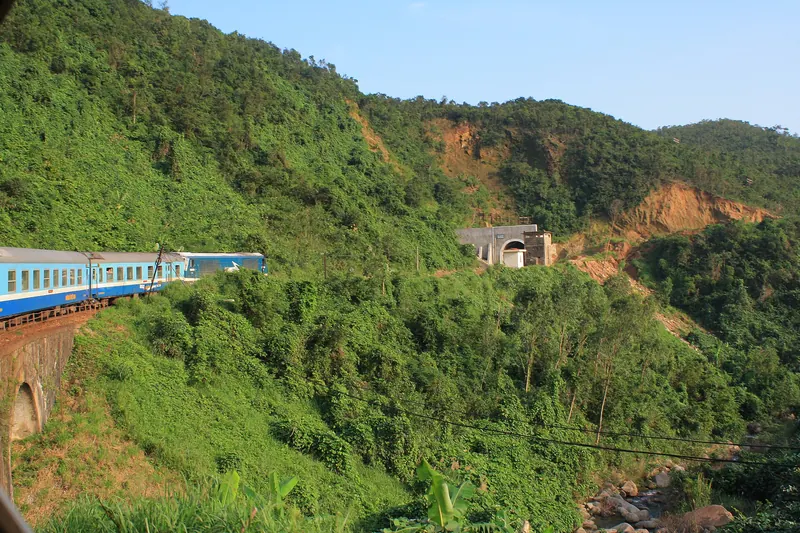
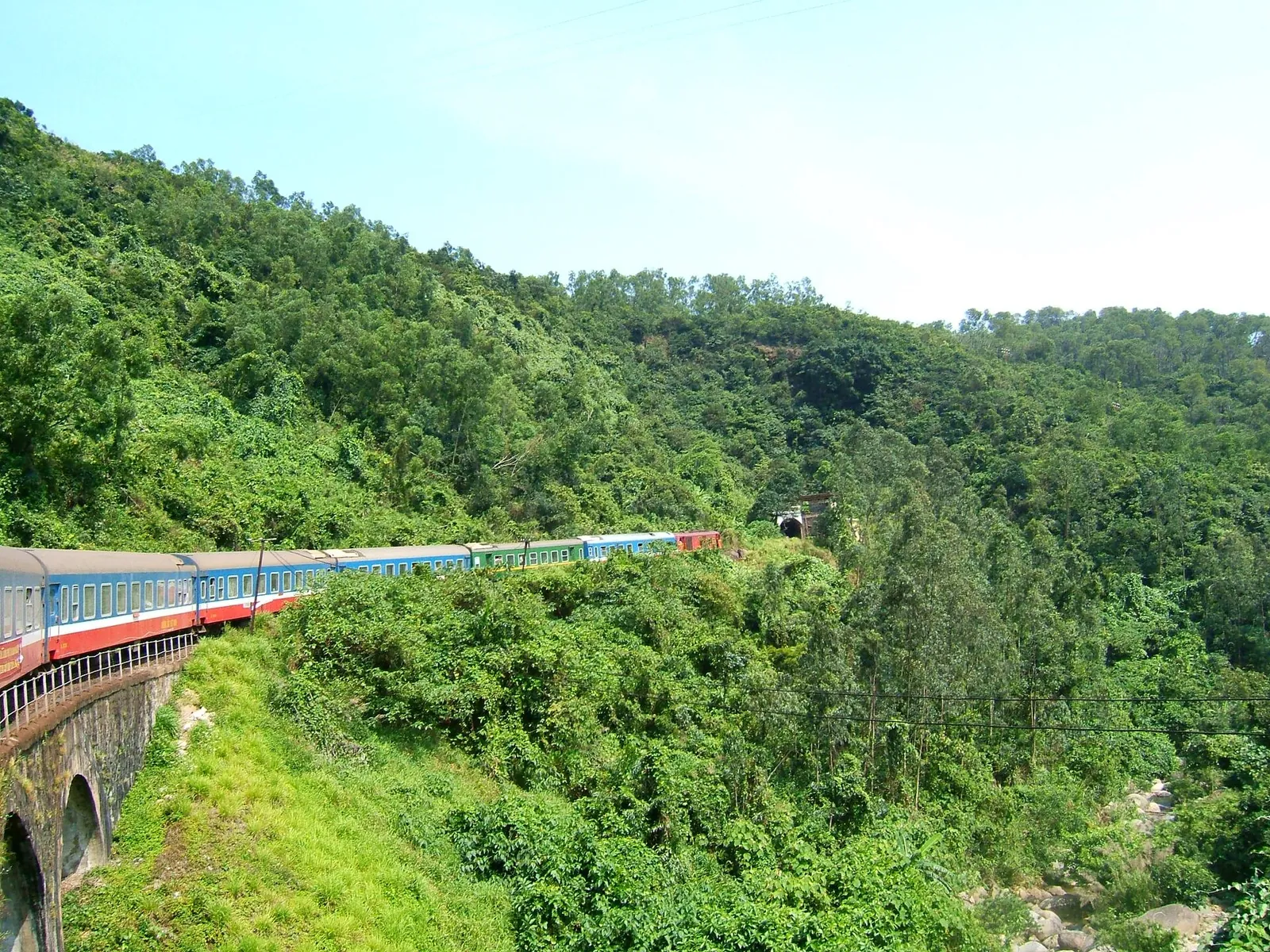
Between Hue and Da Nang the railway runs close to the sea, through forest and tunnels around the Hai Van headland; the tourism board's railway feature describes jungle rising around the train on this stretch. Besides the through SE trains, the operator lists two pairs of local trains, HĐ1/HĐ2 and HĐ3/HĐ4, marketed as "Connecting Central Heritage", with Lang Co as the only intermediate stop. The tourism board says they pause at Lang Co for about ten minutes so passengers can see the bay, and it advises checking the exact timetable on the railway's website, because it changes. From Da Nang station, continue to Hoi An by car.
North of Hue, Vietnam Railways began running a daily heritage train, HQ1/HQ2, in late August 2026. It covers about 189 km between Hue and Tho Loc, which the railway's own booking site calls the gateway to Phong Nha-Ke Bang National Park, with stops at Dong Ha, My Trach and Dong Hoi. When we checked on 2026-10-03, the railway listed HQ2 leaving Hue at 07:15 and arriving at Tho Loc at 11:55, and HQ1 leaving Tho Loc at 13:15 and reaching Hue at 17:25, a journey of 4 hours 10 minutes. The train has swivelling seats, a 24-seat VIP car, a culture car with Hue folk music and a food car serving Hue cakes; tickets are sold on dsvn.vn and on the train's own booking site. The launch offers it advertised differed between its pages, so check the current fare when you book.
This is the stretch where the weather matters most. The UK government's travel advice warns of seasonal flooding in central Vietnam in October and November and of tropical storms along the coast, normally from May to November. If you book a train in those months, keep the following day loose rather than connecting to a flight.
Make time for the local food
What to eat and where to look
Bánh mì
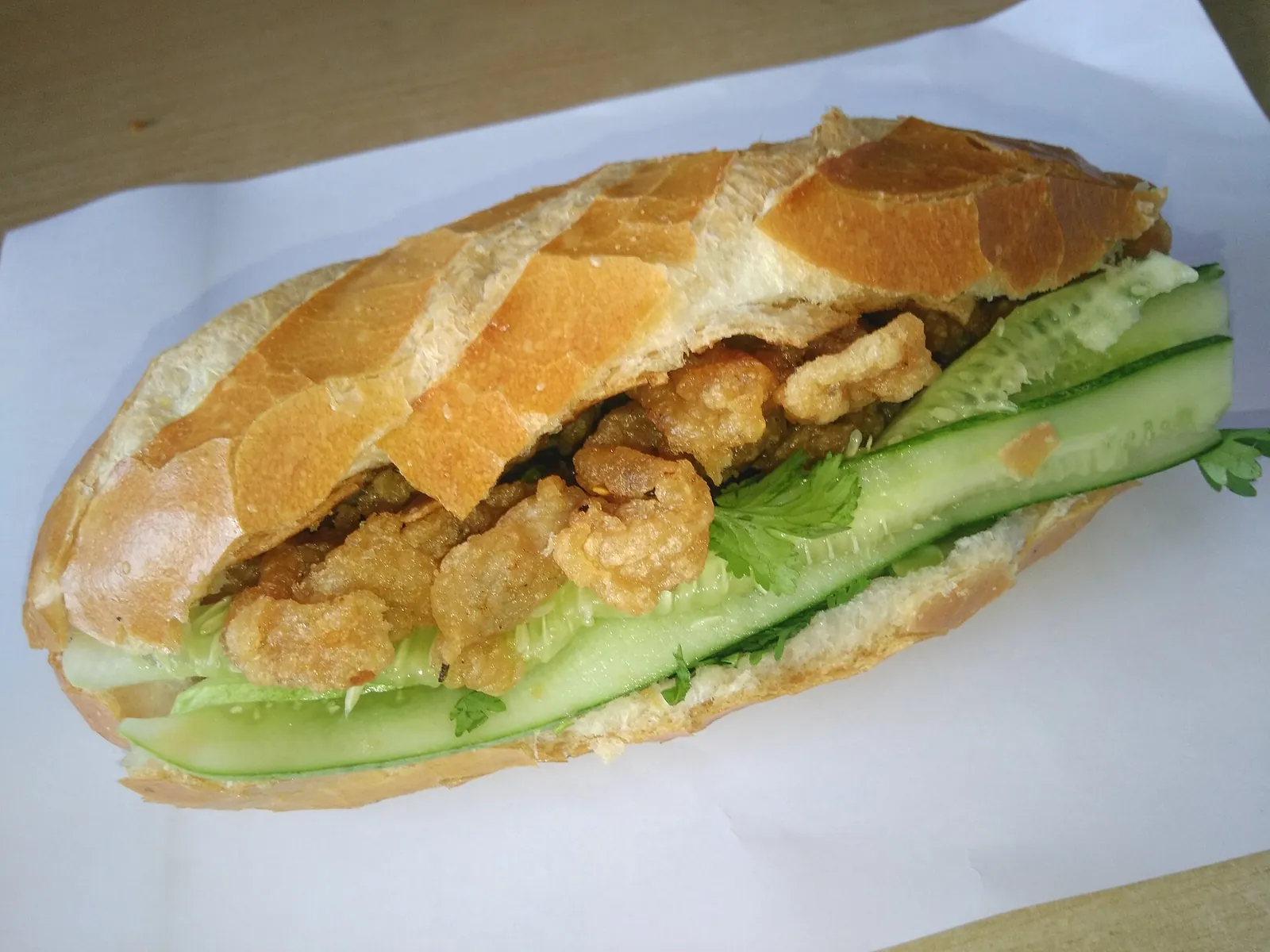
A crisp baguette filled with pâté, cold cuts, grilled meat or fried fish cake, pickled vegetables, herbs and chilli. It travels well and is the easiest thing to carry onto a train for the evening.
- Where to look
- Bakeries and street carts near your hotel or around the station before departure.
- Fit it into your day
- Buy one or two before an evening train and keep them for dinner on board.
Usually contains pork and pâté; ask for egg or tofu if you avoid meat.
Bánh bột lọc
Small, chewy tapioca dumplings wrapped in banana leaf with shrimp and pork, a Hue speciality. The heritage train's food car lists it among the Hue dishes it serves.
- Where to look
- Hue's markets and cake shops, and the food car on the HQ1/HQ2 heritage train.
- Fit it into your day
- A light lunch before or on the Hue – Tho Loc journey.
Contains shrimp and pork, and is usually served with fish sauce.
Phở
Rice noodles in a clear beef or chicken broth, with herbs and lime. In Hanoi it is breakfast, which makes it the obvious meal after arriving on a night train.
- Where to look
- Specialist phở shops around the Old Quarter and near Hanoi Station on Le Duan.
- Fit it into your day
- Breakfast after an early arrival, or a hot bowl before an evening departure to Lao Cai.
Beef is often served rare and cooks in the broth; ask for it well done (chín) if you prefer.
Cơm tấm (broken rice)
Broken rice with grilled pork, a slice of steamed egg and pork loaf, pickles and a sweet fish-sauce dip. It is a southern everyday plate and an easy meal before or after the train in Ho Chi Minh City.
- Where to look
- Rice shops across Ho Chi Minh City, including the streets around Saigon Station in District 3.
- Fit it into your day
- Lunch before an afternoon train to Nha Trang or Phan Thiet, or breakfast after arriving.
Contains pork and fish sauce.
Hanoi to Lao Cai: the night train for Sa Pa
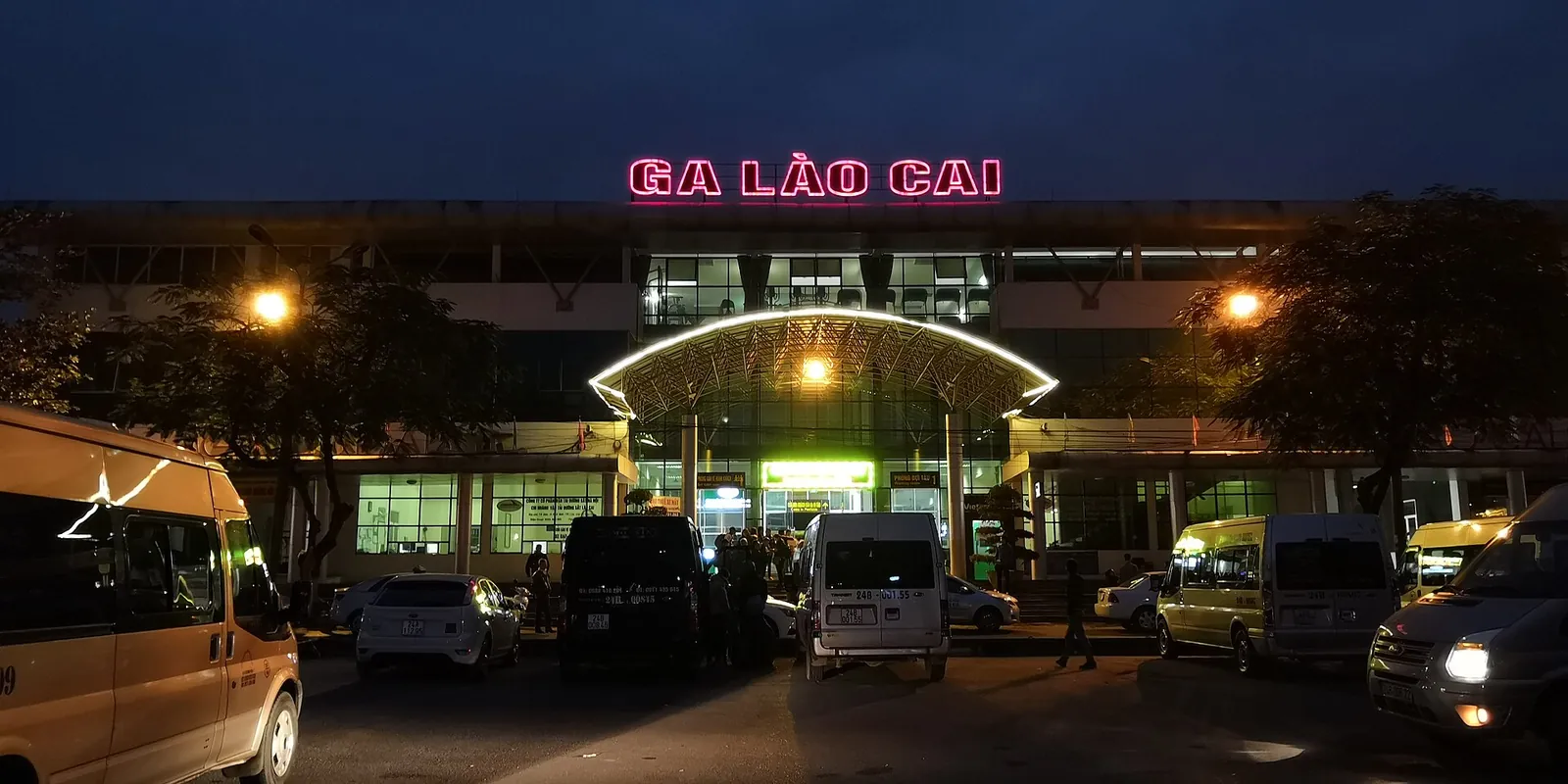
There is no railway to Sa Pa itself. The trains run from Hanoi to Lao Cai, the provincial town by the Chinese border, and the tourism board says overnight trains are the most popular way to make the trip, with transfer vans finishing the journey up the mountain. Its Sa Pa feature describes the night train as about eight hours to Lao Cai, followed by a ride of about an hour to Sa Pa town. The alternative is a limousine van or bus from central Hanoi, which takes five to six hours and drops you in Sa Pa itself.
On the operator's route list, the regular trains are SP3 and SP7 from Hanoi and SP4 and SP8 back, calling at stations such as Yen Bai, Bao Ha and Pho Lu; check the timetable on dsvn.vn for current departure times. The tourism board also mentions private tourist sleeping cars on several key routes. Whichever you choose, the berth is a bed, not a night's sleep in a hotel: plan an easy first morning in Sa Pa.
Read the rules before you buy, because this line has its own. When we checked on 2026-10-03, the operator's 2026 fare policy said an individual Hanoi – Lao Cai ticket can be exchanged only more than 72 hours before departure, for 20,000 dong, and that refunds cost 10% of the fare more than 72 hours ahead, 20% between 24 and 72 hours, 30% between 4 and 24 hours, and are not possible within 4 hours of departure. The same policy offered 15% off a return ticket on trains SP2, SP4 and SP8. If your Sa Pa dates are not fixed, a van is the more flexible booking.
Seats, berths and booking on dsvn.vn
The tourism board lists four classes on the Reunification Express: hard seat, soft seat, hard sleeper and soft sleeper, and suggests soft seats and four-berth cabins for more comfort; four-berth cabins come with simple bedding. It adds that every carriage has Western and squat toilets at both ends. For a night journey, the four-berth soft sleeper is the one to aim for; for a two- or three-hour daytime hop, an air-conditioned soft seat is enough.
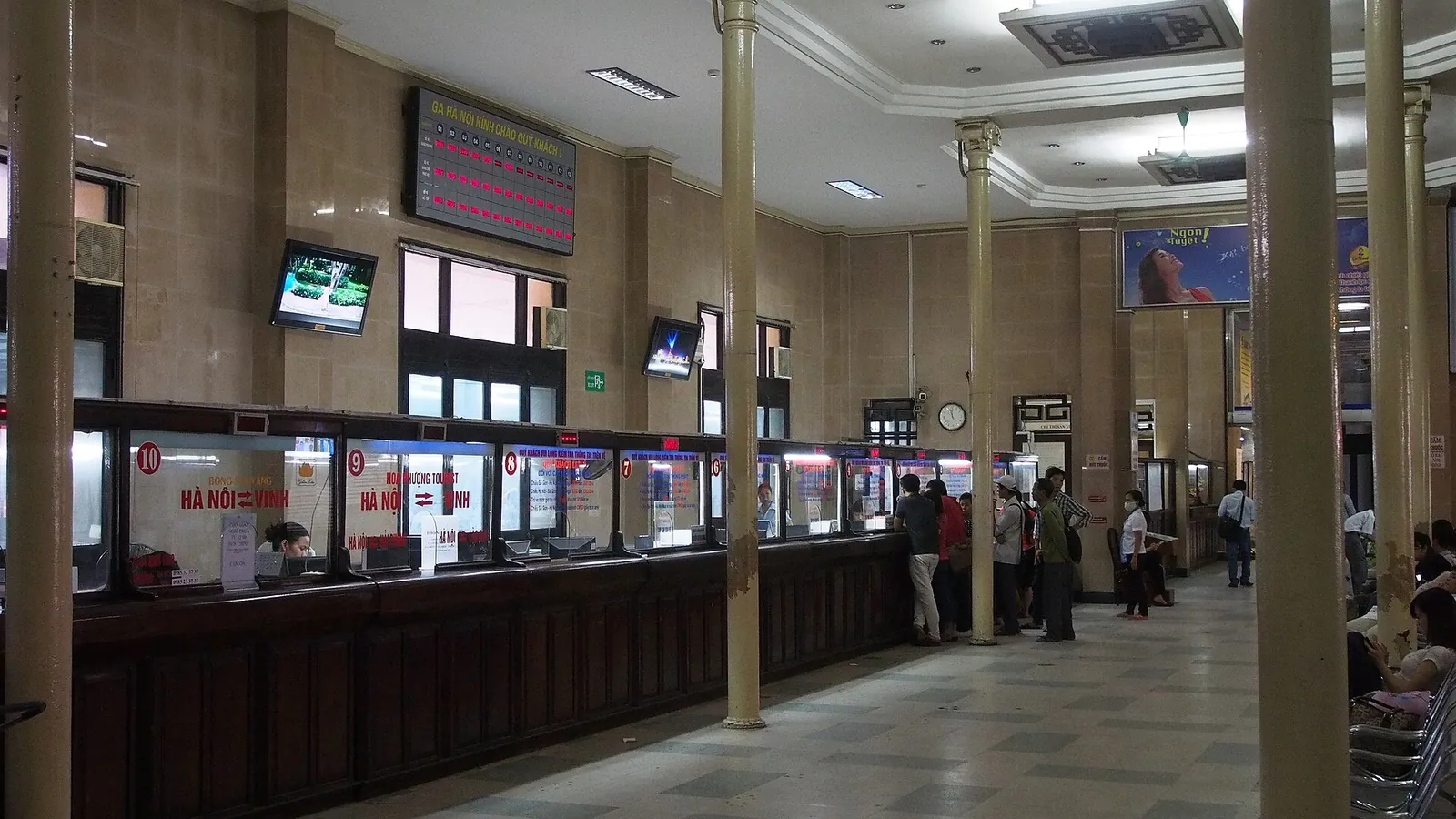
Tickets are sold at station counters, through agencies and on the railway's official site, dsvn.vn, which has an English version and its own app. Book in your name as it appears in your passport: when you exchange a ticket at a station, the name on the ticket must match the identity document you show. The tourism board advises buying a few days ahead on ordinary dates and well in advance for holidays, when the faster trains and best berths go first.
Since 15 May 2026, Vietnam Railways says individual tickets paid online can be exchanged on dsvn.vn without going to the station: once per ticket, at least 24 hours before departure, keeping the same passenger and the same stations, with a one-time code sent by text or email. When we checked on 2026-10-03, the general rules (outside Tet, and apart from the Lao Cai and Hai Phong lines) were an exchange fee of 20,000 dong per ticket at least 24 hours before departure, and a refund fee of 10% of the fare at least 24 hours ahead or 20% between 4 and 24 hours ahead, with no refunds within 4 hours. A ticket refunded after an exchange costs 30%. For questions about schedules and refunds, the railway's customer lines are 1900 0109 for the north and 1900 1520 for the south.
The through trains: which ones stop where
The long-distance trains between Hanoi and Saigon carry SE numbers, with odd numbers heading south and even numbers heading north. On the operator's route list they all stop at Vinh, Dong Hoi, Hue, Da Nang, Quang Ngai, Dieu Tri (for Quy Nhon) and Nha Trang, but the smaller stops vary from train to train, so check the station you need before choosing a departure. Shorter trains fill the gaps: SE17 to SE20 between Hanoi and Da Nang, SE21/SE22 between Da Nang and Saigon, SE29/SE30 to Quy Nhon itself, SNT trains to Nha Trang and SPT trains to Phan Thiet for Mui Ne.
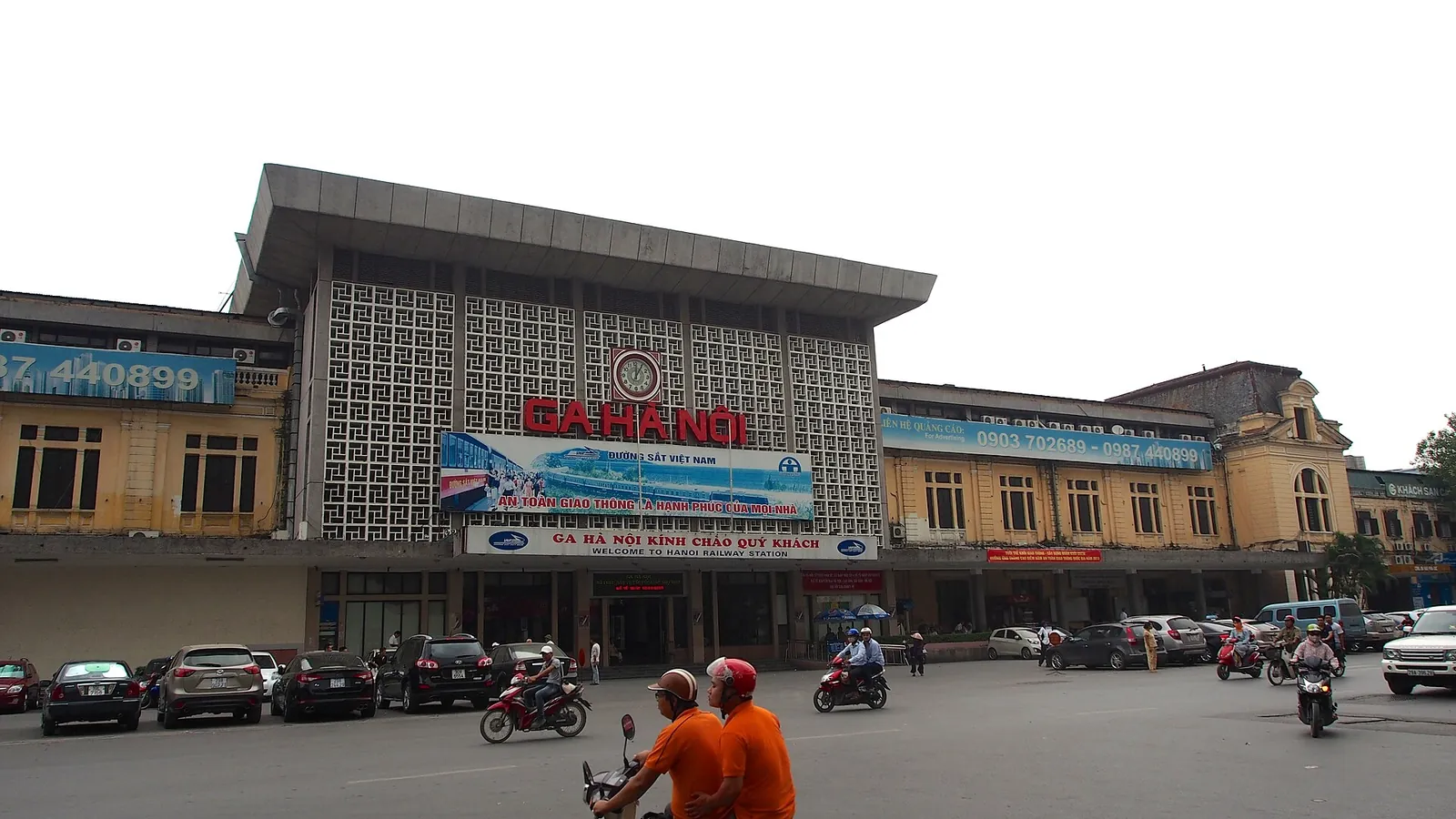
In Hanoi the main station is at 120 Le Duan, a short ride from the Old Quarter; in Ho Chi Minh City, Saigon Station is at 1 Nguyen Thong in District 3, according to the tourism board. Over Tet, everything is busier and stricter. Vietnam Railways opened sales on 5 September 2026 for about 300,000 north–south tickets for travel between 23 January and 25 February 2027, with seven pairs of Reunification Express trains a day plus two extra pairs, TN3/4 and TN5/6, and it publishes separate, tougher exchange and refund rules for the holiday period.
- Ninh Binh: a stop on every southbound SE train from Hanoi, useful if you want to skip the road trip.
- Phong Nha: Dong Hoi on the SE trains, or Tho Loc on the HQ heritage train from Hue.
- Hoi An: no station; get off at Da Nang.
- Mui Ne: the SPT trains from Saigon to Phan Thiet, then by road.
Comfort, safety and a luxury option
Overnight trains are safe, but the UK government's travel advice warns of petty theft on trains, particularly while passengers are asleep. Keep your passport, phone and cash on you or under your pillow, and lock the cabin door if you have one. Bring food and water for the evening.
If you want the train for its own sake, The Vietage by Anantara is a private carriage attached to regular trains. Its website describes daily journeys between Da Nang, Quy Nhon and Nha Trang, with six private booths for 12 passengers, meals and drinks included, and sleeper booths on the Quy Nhon to Da Nang journey. It is a different product from a railway berth: book it directly and check what the fare includes.
Practical questions
How long does the train take from Hanoi to Ho Chi Minh City?
The tourism board says the journey can take up to 30 hours, and one of its features calls it about two nights. Trains average about 40 km an hour, so most visitors fly the full distance and use the train for shorter stretches.
Is there a train to Hoi An or Sa Pa?
No. For Hoi An, take the train to Da Nang and continue by road. For Sa Pa, take the train from Hanoi to Lao Cai, then a van or taxi up the mountain; the tourism board puts that ride at about an hour.
How do I book Vietnamese train tickets?
On the railway's official site, dsvn.vn (which has an English version and an app), at station counters or through agencies. Book in your passport name, and as early as you can for holidays, when the best berths go first.
Which class should I choose for a night train?
A four-berth soft-sleeper cabin. The tourism board recommends four-berth cabins for comfort; they come with simple bedding. For short daytime trips, a soft seat is enough.
Can I change or refund a train ticket?
Yes, with fees. When we checked on 2026-10-03, individual tickets could be exchanged at least 24 hours before departure for 20,000 dong, online if you paid online, and refunds cost 10% or 20% of the fare depending on how early you cancel. The Lao Cai line has stricter rules, and Tet has its own.
Is the Hue to Da Nang train worth it?
Yes, if you want to see the coast without a road transfer. The HĐ trains stop at Lang Co for about ten minutes, according to the tourism board. If you want to stop at the top of the Hai Van Pass, go by car instead.
Sources and checks before you travel
Reference sources for the version dated 3 October 2026. Confirm opening times, access, transport and conditions for your travel dates.
- Vietnam National Authority of Tourism: Transport within Vietnam ↗ — opens in a new tab
- Vietnam National Authority of Tourism: Vietnam railway, an incredible train journey ↗ — opens in a new tab
- Vietnam National Authority of Tourism: Sapa ↗ — opens in a new tab
- Vietnam National Authority of Tourism: Sapa for sustainable travellers ↗ — opens in a new tab
- Vietnam National Authority of Tourism: Hanoi to Hai Phong by train ↗ — opens in a new tab
- Railway Transport Joint Stock Company: train routes (các tuyến tàu) ↗ — opens in a new tab
- Railway Transport Joint Stock Company: 2026 fare policy and exchange/refund rules ↗ — opens in a new tab
- Vietnam Railways: HQ1/HQ2 heritage train launch (22 August 2026) ↗ — opens in a new tab
- Vietnam Railways: Hue – Phong Nha heritage train booking site ↗ — opens in a new tab
- Vietnam Railways: online exchanges and refunds from 15 May 2026 ↗ — opens in a new tab
- Vietnam Railways: Tet 2027 ticket sale (5 September 2026) ↗ — opens in a new tab
- Vietnam Railways: customer service lines ↗ — opens in a new tab
- Vietnam Railways: official ticketing site ↗ — opens in a new tab
- The Vietage by Anantara ↗ — opens in a new tab
- UK FCDO travel advice: Vietnam safety and security ↗ — opens in a new tab
- Vietnam National Authority of Tourism: Health and safety ↗ — opens in a new tab
Does this experience fit your route?
Pair the train with a day on foot or by car: a Sa Pa valley trek after the night train, or the Hai Van Pass by road to Hoi An. Check start times against your train before you book.
Check dates and details on Viator ↗ — opens in a new tabAffiliate link · Book with ViatorPhoto credits
The north–south railway in the forested hills of the Hai Van Pass between Hue and Da Nang
Photograph: Viethavvh at Vietnamese Wikipedia — opens in a new tab · Public domain — opens in a new tab
Changes: Resized and converted to WebP; displayed with responsive crops. · Original photograph and licence details ↗ — opens in a new tab
Hanoi Railway Station on Le Duan Street, the starting point for trains south and to Lao Cai
Photograph: Clay Gilliland — opens in a new tab · CC BY-SA 2.0 — opens in a new tab
Changes: Resized and converted to WebP; displayed with responsive crops. · Original photograph and licence details ↗ — opens in a new tab
Lao Cai station at night, where the trains from Hanoi end and transfers leave for Sa Pa
Photograph: Yhxc57082 — opens in a new tab · CC BY-SA 4.0 — opens in a new tab
Changes: Resized and converted to WebP; displayed with responsive crops. · Original photograph and licence details ↗ — opens in a new tab
Ticket counters in the hall at Hanoi Railway Station
Photograph: Clay Gilliland — opens in a new tab · CC BY-SA 2.0 — opens in a new tab
Changes: Resized and converted to WebP; displayed with responsive crops. · Original photograph and licence details ↗ — opens in a new tab
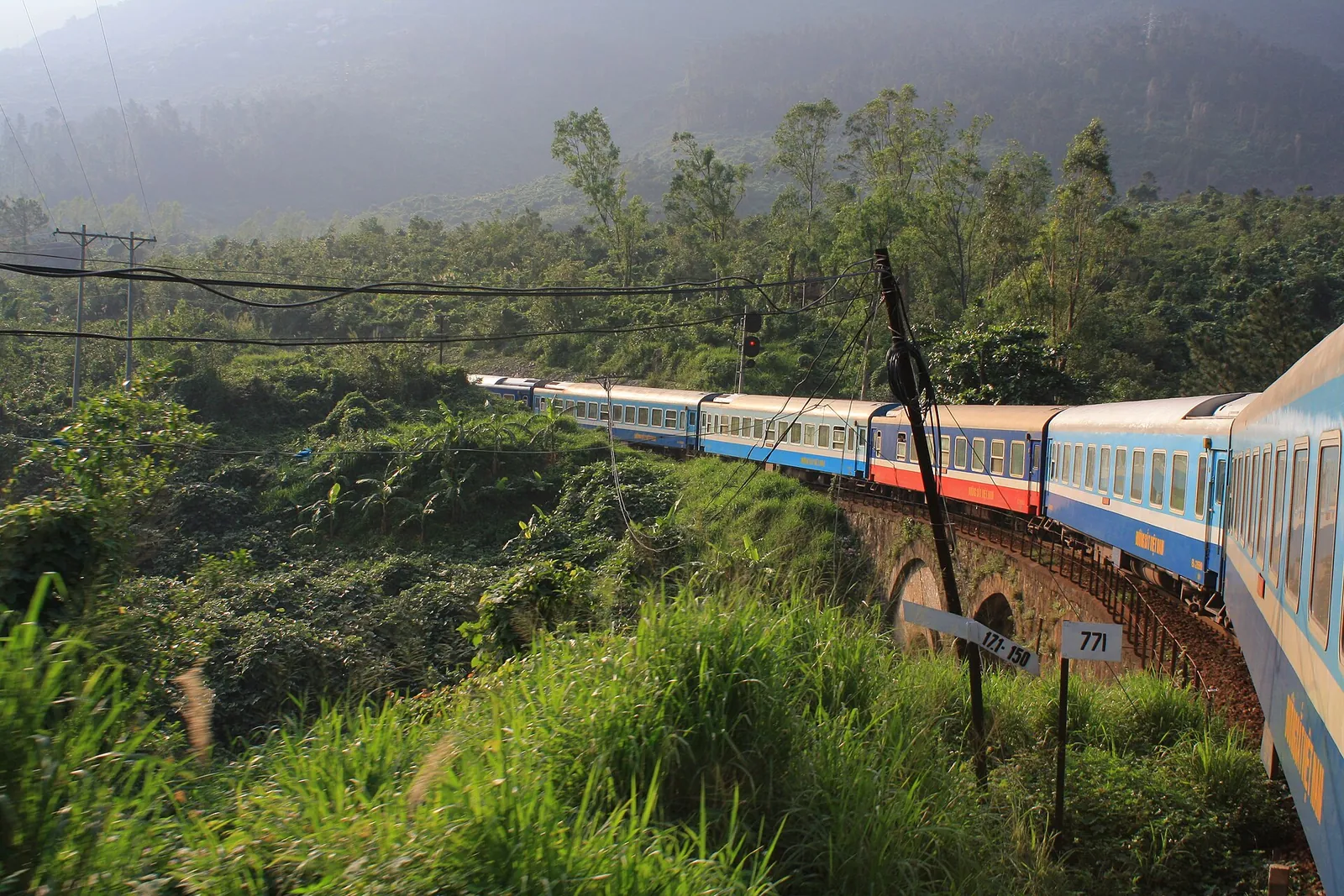
A Reunification Express train winding through the hills of central Vietnam
Photograph: Benjamin Vander Steen — opens in a new tab · CC BY 2.0 — opens in a new tab
Changes: Resized and converted to WebP; displayed with responsive crops. · Original photograph and licence details ↗ — opens in a new tab
Bánh mì with fish cake from a shop in District 3, Ho Chi Minh City, an easy meal to take on a train
Photograph: Phương Huy — opens in a new tab · CC BY-SA 4.0 — opens in a new tab
Changes: Resized and converted to WebP; displayed with responsive crops. · Original photograph and licence details ↗ — opens in a new tab