South Central Coast and Highlands · Khanh Hoa
Nha Trang travel guide: city beach, bay islands, Po Nagar and seafood
Nha Trang is Vietnam's big beach city: a long public beach runs in front of the centre, a bay of islands sits offshore, and the airport at Cam Ranh is about an hour away by road. It rewards a little planning. The city beach is busy and built-up, the clear water and coral are out on the islands, and the most interesting history — the Cham temple of Po Nagar — stands on a hill above the river mouth. Treat Nha Trang as a base with three parts: the sea in the morning, the islands for one full day, and the city's temples, mud baths and seafood in between.
- Suggested time
- 3–4 nights, or 5 with a second boat day or a trip up the coast
- Where to stay
- The Tran Phu beachfront in central Nha Trang; island or Ninh Van Bay resorts for a stay-put holiday
- Season and timing
- Khanh Hoa's tourism department says the rainy season falls between September and December and brings over 75% of the year's rain, though in Nha Trang city it lasts about two months; Vietnam Tourism notes that Nha Trang gets the most sunshine in the country. Plan island days for the drier months.
The short answer
Give Nha Trang three or four nights, or five if you want a second day on the water or a trip up the coast. Sleep on or just behind the Tran Phu beachfront if you want to walk to restaurants and the city beach; choose an island or Ninh Van Bay resort only if you plan to stay put. Book one full day in Nha Trang Bay for Hon Mun and the other islands, visit the Po Nagar towers early in the morning, keep an afternoon for a mud bath, and plan your boat days for the drier months outside the September–December rains. From Cam Ranh airport, allow 45–60 minutes by road.
Choose your base: beachfront city, island or quiet bay
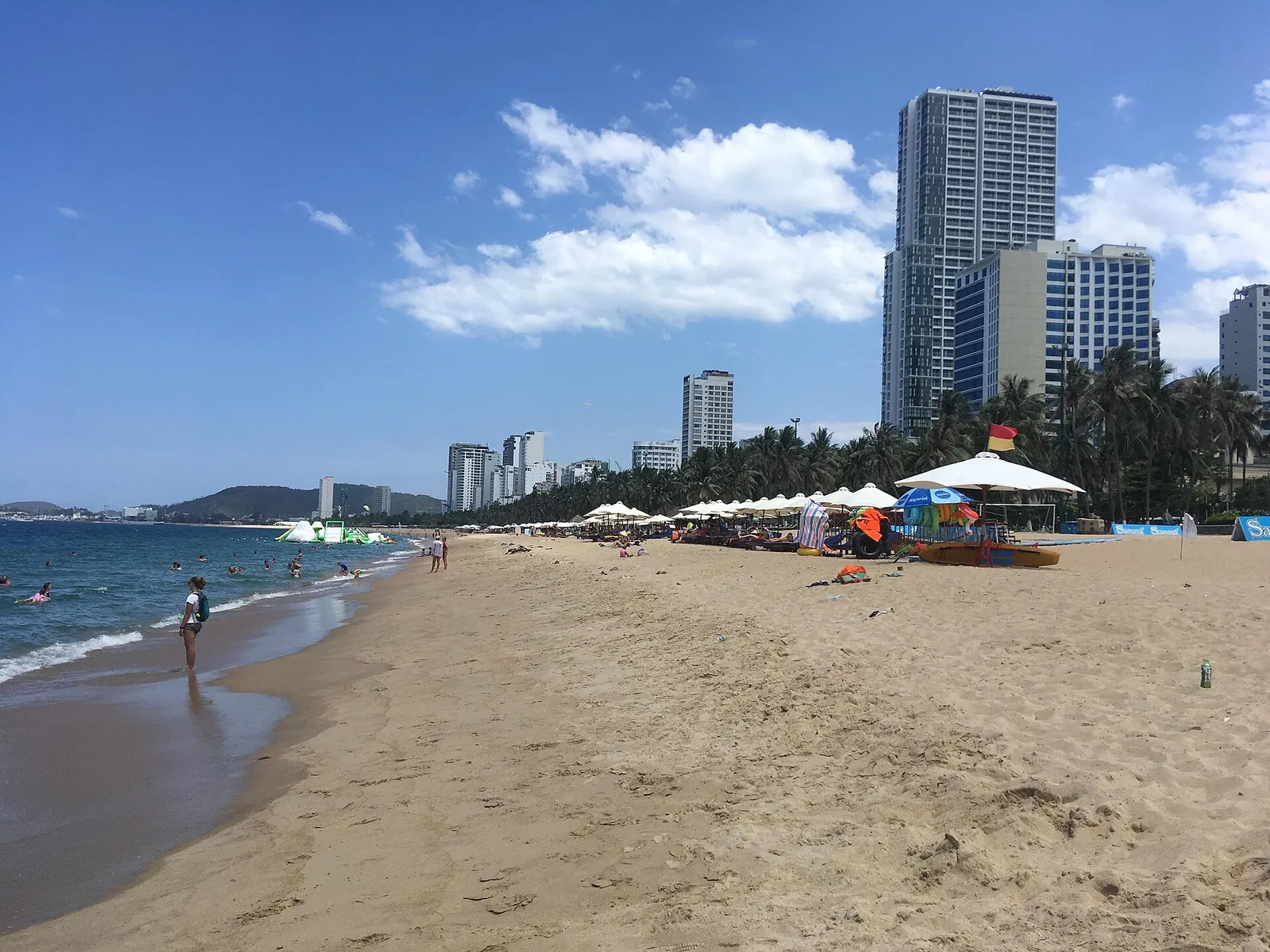
Most travellers should stay in the centre, along or just behind Tran Phu, the boulevard that runs beside the main beach. Vietnam Tourism describes this beach as a seven-kilometre stretch of sand lined with palms, beach bars and seafood restaurants, and most of the city's big hotels have Tran Phu addresses. From here you can walk to dinner, reach Po Nagar or the boat harbour by a short taxi ride. The trade-off is noise and traffic on the boulevard, so a room a street or two back is often more restful than one facing the road.
Beyond the centre, the choice is about how much you want to move. The resorts on Hon Tre, the island facing the city, sit next to the VinWonders amusement and water park and are reached across the bay; Vietnam Tourism points families towards them. Ninh Van Bay, on a peninsula to the north, is reached by a 20-minute speedboat ride from the city according to Vietnam Tourism and is a place to stay put rather than a base for sightseeing. Further south, the coast between Nha Trang and Cam Ranh Airport is lined with newer resorts — closer to the airport, but a drive from the city's restaurants.
If you want a simpler side of the coast, the fishing village of Ninh Van has developed small-scale community tourism with homestays, morning market visits, cycling and snorkelling; Khanh Hoa's tourism portal reports that the province recognised its potential for community tourism in October 2023.
The city beach, and the beaches out of town
The main beach is for swimming early, watersports and people-watching rather than seclusion. Vietnam Tourism lists parasailing, kite-surfing, paddle-boarding and jet skis along the beach, and the loungers fill up during the day. Go first thing in the morning for a swim before the heat, then leave the sand for the middle of the day.
For quieter water, Vietnam Tourism suggests Long Beach, a few kilometres south of the city, with shallow water and local restaurants serving just-caught seafood, and — for a full day trip — Doc Let, about 60 km north, which it calls one of the most picturesque stretches of coastline in Vietnam. Dai Lanh beach, further up the coast, is another option it mentions for travellers with their own transport.
Weather matters more than the choice of beach. Khanh Hoa's tourism department gives an annual average of 2,380 hours of sunshine and places the rainy season between September and December; outside those months the sea is generally the better bet for swimming and boat trips. Swim where others are swimming and stay out of the water when the flags or lifeguards say so.
Make time for the local food
What to eat and where to look
Bun ca (fish noodle soup, Ninh Hoa style)
Rice noodles in a clear broth made from fish, served with a plate of lettuce, shredded banana blossom, bean sprouts, herbs and cucumber, with lime and chilli to taste. Khanh Hoa's tourism portal describes the Ninh Hoa version, bun la ca dam, as a simple dish famous for its clean, clear broth.
- Where to look
- Noodle shops in the centre; the provincial portal names Bun canh ca dam Ba Thua at 10A Phan Chu Trinh and Bun ca min – Bun ca Ninh Hoa at 170 Bach Dang.
- Fit it into your day
- Breakfast before a boat trip, or a light lunch on a temple morning.
Fish-based throughout; season with lime and chilli to taste.
Nem nuong Ninh Hoa (grilled pork rolls)
Minced pork, seasoned and grilled over charcoal, cut into strips and rolled at the table in rice paper with fresh and sour greens, rice noodles and a crisp fried rice-paper stick, then dipped in a thick, slightly sweet sauce of fish sauce, garlic, chilli and ground peanuts. The provincial portal calls it one of Khanh Hoa's signature dishes.
- Where to look
- Specialist nem shops; the portal names Nem Dang Van Quyen at 16A Lan Ong and 02–04 Phan Boi Chau in the centre.
- Fit it into your day
- A shared lunch or early dinner; order a set and add other dishes.
Pork and peanuts in the dipping sauce; ask for it on the side if you have an allergy.
Banh xeo muc (squid pancakes)
Small crisp pancakes filled with squid or shrimp. As Khanh Hoa's tourism portal explains, central-coast banh xeo are cooked in small moulds rather than a large pan, as in the south, and eaten with lettuce, herbs and a sweet-sour fish-sauce dip.
- Where to look
- The portal names Banh xeo Co Tam at 6 Thap Ba street, near Po Nagar, and stalls in the lane at 172 Bach Dang.
- Fit it into your day
- A snack or light dinner after Po Nagar; order a few per person.
Contains seafood; squid fillings are softer than shrimp, which stay crisper.
Seafood, including Binh Ba lobster
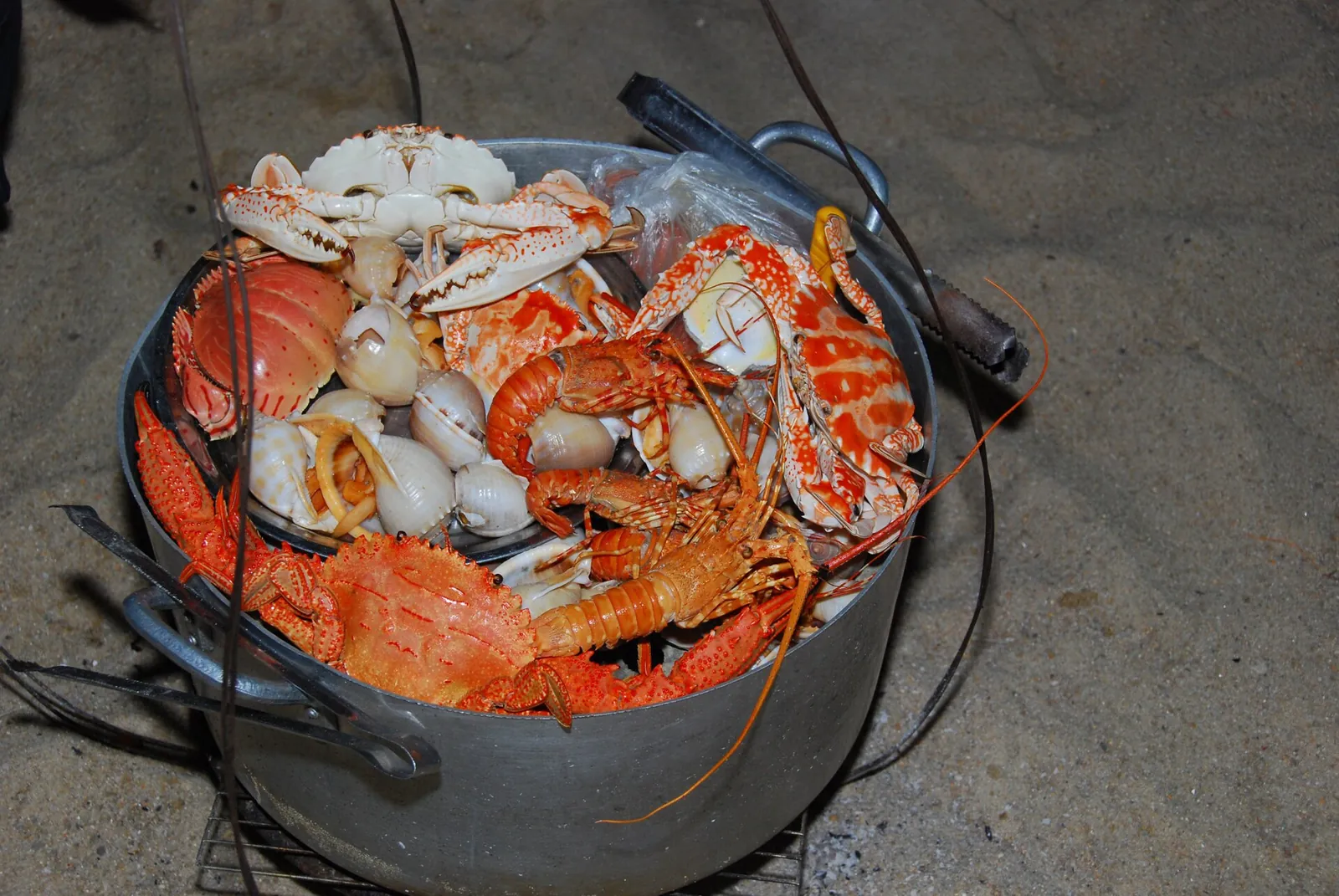
Vietnam Tourism calls Nha Trang the seafood capital of Vietnam, supplied by the waters off the Khanh Hoa coast. The provincial portal singles out blue-spotted lobster from Binh Ba, an island at the mouth of Cam Ranh Bay, and lobster porridge as a local speciality.
- Where to look
- Seafood restaurants around the centre and the beach road, and the local restaurants at Long Beach south of the city that Vietnam Tourism mentions.
- Fit it into your day
- One evening feast; order a few dishes to share rather than one large shellfish.
Seafood is usually priced by weight: confirm the weight and price of each item before it is cooked.
Yen sao (swiftlet's nest)
Khanh Hoa is the country's main source of edible swiftlet's nests, harvested from island cliffs such as those of Hon Noi; the provincial portal puts the province's harvest at more than two tonnes a year. It is served as a sweet soup (che yen) or sold as a gift.
- Where to look
- Dessert shops and specialty stores in the centre.
- Fit it into your day
- A small bowl of che yen as an afternoon dessert.
Genuine nest is expensive; buy from established shops and ask the price before ordering.
Nha Trang Bay: one full day on the islands
Vietnam Tourism counts 19 islands and islets in the bay, and a day on the water is the main reason to come. The most important stop is Hon Mun, about 15 km east of the mainland. According to Khanh Hoa's tourism portal, it became Vietnam's first marine protected area in 2001; its reserve covers about 38 km² of islands and 122 km² of sea and holds more than 1,500 marine species, including some 350 species of coral. You see it by snorkelling, by scuba diving or from a glass-bottom boat; the island takes its name from the dark, ebony-like rock on its western side, while swiftlets nest in the cliffs on the east.
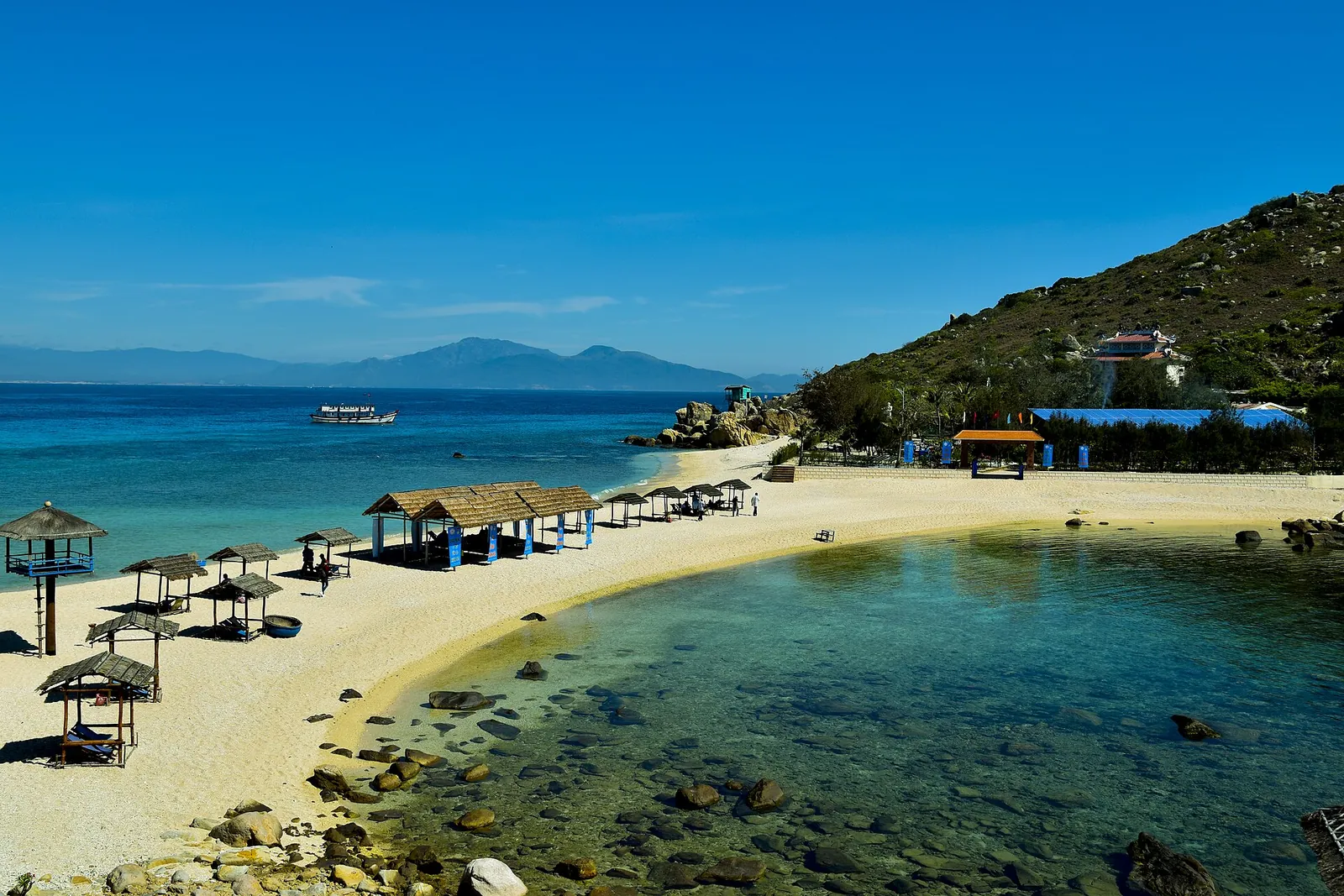
Other common stops are Hon Noi (Yen Island), which Vietnam Tourism describes as home to thousands of swiftlets, with sheer cliffs, inland forest and a twin beach, and the so-called Monkey Island. VinWonders on Hon Tre is a separate day: an amusement park and water park reached by cable car, best for families who want rides rather than reef.
There are three ways to do it, all described by Vietnam Tourism: a group tour to three islands with snorkelling and a beach lunch; a chartered speedboat to choose your own beaches and eat at a floating seafood restaurant; or a jet-ski tour to remote beaches. Whatever you book, ask which islands are included, whether marine-park fees are in the price, what snorkelling gear and life jackets are provided, and what happens if the sea is rough. The provincial portal lists the passenger port at Cau Da, 5 Tran Phu, at the southern end of the beach road.
Po Nagar, Long Son Pagoda and the city's landmarks
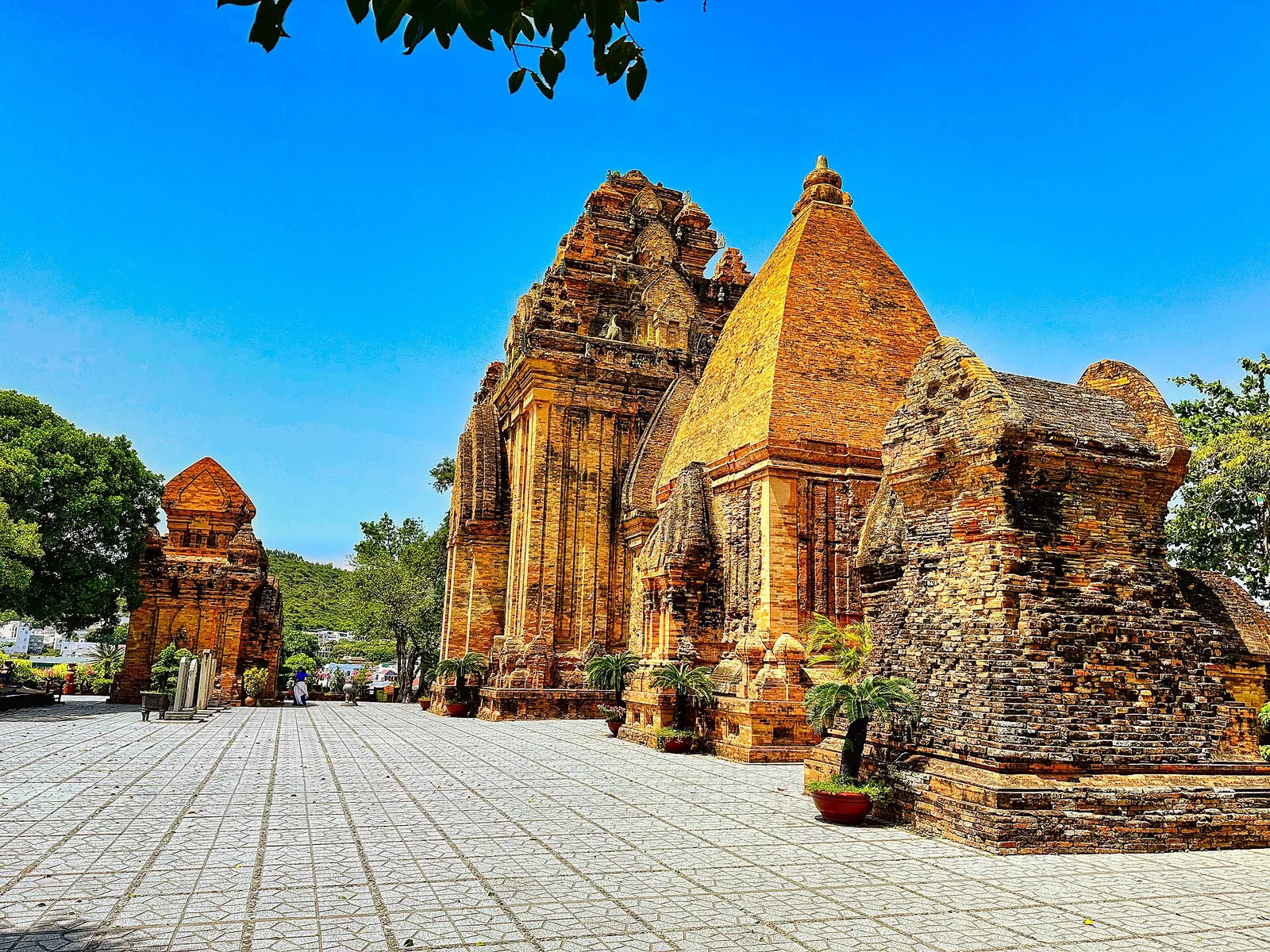
The Po Nagar Cham Towers (Thap Ba Ponagar), which Vietnam Tourism dates to the 8th century and calls a must-see, are the city's essential sight: a temple complex built by the Cham people. The red-brick towers stand on a low hill above the mouth of the river, with a view over the bridges and the estuary full of fishing boats. Vietnam Tourism's weekend plan suggests coming early in the morning to walk the grounds, step inside the towers and visit the small museum before the crowds. It is a working place of worship: cover shoulders and knees and take off your shoes where asked.
The temple is dedicated to the goddess Thien Y A Na, credited in local legend with founding the land and teaching people to grow rice. The Thap Ba Festival, which Khanh Hoa's tourism department calls the largest in the region, takes place every year from the 20th to the 23rd day of the third lunar month at the towers, with the ritual changing of the goddess's clothes and bathing of her statue, followed by Bong dances and offering-flower dances in front of the main temple. If your dates fall then, expect crowds and plan around them.
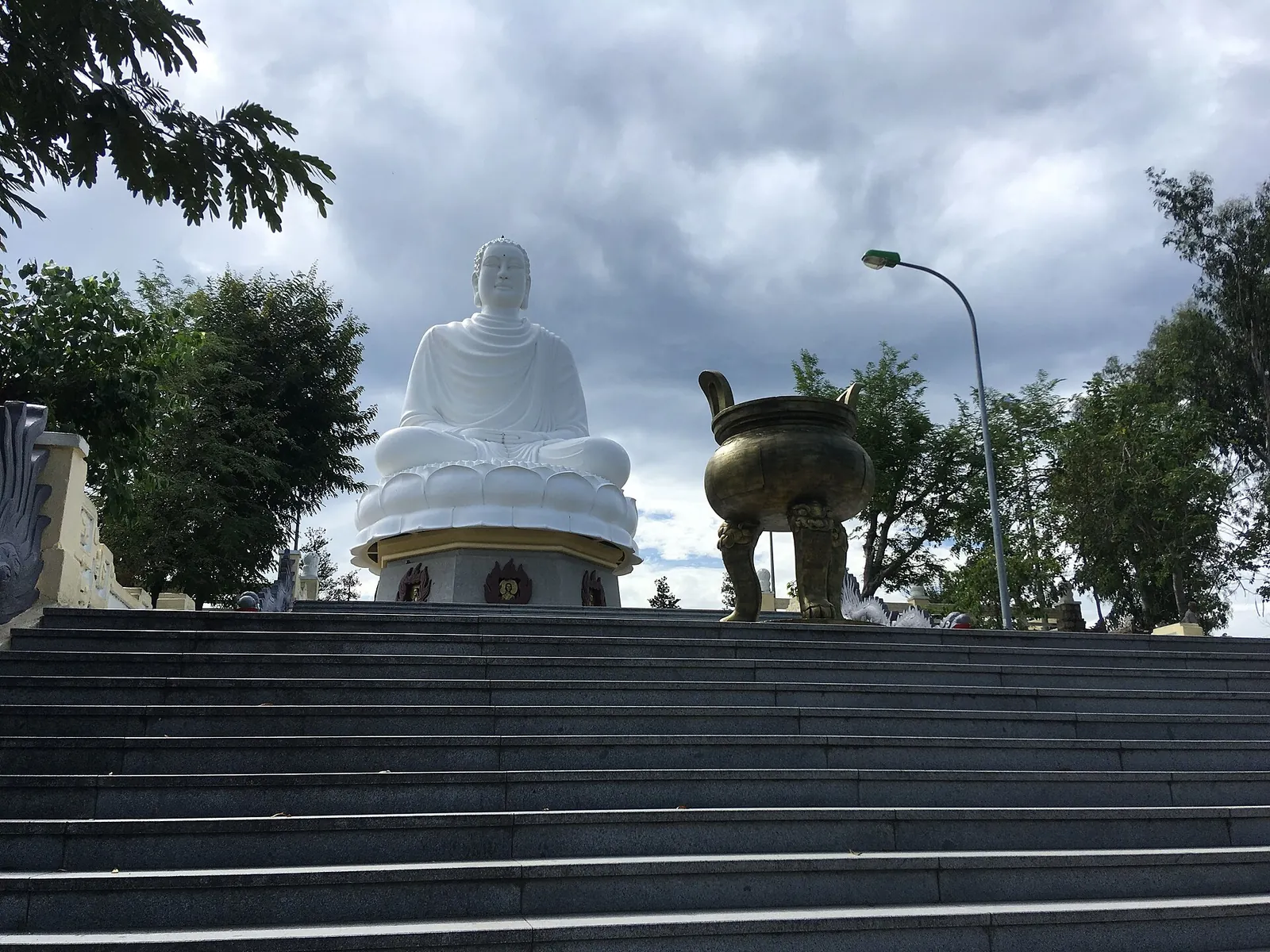
In the centre, Long Son Pagoda sits at the foot of a hill crowned by a white seated Buddha that Vietnam Tourism gives as 78 feet (about 24 m) tall, looking out over the city. Nha Trang Cathedral is known for its French-style stained glass and columns, and the Oceanographic Museum of Vietnam explains the bay's marine life and the city's roots in fishing and aquaculture — a good stop the day before an island trip.
Mud baths and hot springs
Nha Trang's best-known wellness habit is a soak in warm mineral mud followed by hot mineral water. Vietnam Tourism places these facilities in the hills just north of the city and names I-Resort as the most popular, with mud baths that usually last about 20 minutes, mineral pools, a waterfall shower, changing areas, a restaurant and private rooms for groups. For more privacy, it describes open-air mud-bath rooms at the spa of the Amiana Resort, at the far end of the city's coastline.
A mud bath works well as a slow afternoon after a morning at Po Nagar. Bring a swimsuit you do not mind staining and check what is included in the entry before you go.
A three-day plan
This is an editorial suggestion, not a timetable. Keep the boat day flexible so you can move it if the sea is rough.
- Day 1 — Temples and the city: Po Nagar at opening time, coffee, then Long Son Pagoda and the cathedral; a long seafood lunch, a rest, and the beach in the late afternoon.
- Day 2 — The bay: a full day on the islands with Hon Mun for snorkelling or diving; the Oceanographic Museum the afternoon before, if you have time.
- Day 3 — Mud and the coast: a morning swim, then the mud baths north of the city in the afternoon, and dinner of fish noodles or nem nuong in town.
- Extra days: Doc Let beach or Ninh Van in the north, a second boat day, or VinWonders with children.
Getting there and onward along the coast
Nha Trang is served by Cam Ranh International Airport to the south of the city (see below), by trains on the north–south line, which stop at Nha Trang station, and by buses. Vietnam Tourism notes that buses are easy from Da Lat, Hoi An and other neighbouring destinations, and that taxis are widely available in the city. Within Nha Trang, a taxi or a guided motorbike tour is the easiest way to link Po Nagar, the mud baths and the beach.
Nha Trang combines naturally with the cool hill town of Da Lat inland and with the quieter beach towns along the south-central coast. Khanh Hoa's tourism department also notes that the climate on Hon Ba mountain, about 30 km from Nha Trang, is similar to Da Lat's — a reminder that the hills behind the coast are much cooler than the beach.
Practical questions
How many days do I need in Nha Trang?
Three or four nights cover one full day on the islands, Po Nagar and the city sights, a mud bath and some beach time. Add a night for a second boat day or for Doc Let or Ninh Van to the north.
Where should I stay in Nha Trang?
On or just behind the Tran Phu beachfront for walkable restaurants, the city beach and easy taxis to Po Nagar and the harbour. Island and Ninh Van Bay resorts suit a stay-put holiday; the coast towards Cam Ranh is closer to the airport but far from the city's restaurants.
When is the best time to visit Nha Trang?
Khanh Hoa's tourism department places the rainy season between September and December, when most of the year's rain falls. Outside those months the weather is more reliable for island trips; Vietnam Tourism notes that Nha Trang gets the most sunshine in the country.
How do I get from Cam Ranh airport to Nha Trang?
When we checked on 2026-10-03, the airport's website listed bus route 18 into the city, taking 50–60 minutes, fixed-fare taxis and Green and Smart Mobility (GSM) cars from the international terminal, and private cars taking 45–60 minutes. Confirm the fare before you set off.
Is Hon Mun worth visiting?
Yes, if you want to see coral. Khanh Hoa's tourism portal describes Hon Mun as Vietnam's first marine protected area, set up in 2001, with more than 1,500 marine species. You can snorkel, dive or use a glass-bottom boat; check that the tour includes time in the water there.
When is the Po Nagar festival?
The Thap Ba Festival is held at the Po Nagar towers every year from the 20th to the 23rd day of the third lunar month, according to Khanh Hoa's tourism department. Convert the lunar dates for your year before you plan.
Sources and checks before you travel
Reference sources for the version dated 3 October 2026. Confirm opening times, access, transport and conditions for your travel dates.
- Vietnam Tourism: Nha Trang ↗ — opens in a new tab
- Vietnam Tourism: 7 reasons to visit Nha Trang ↗ — opens in a new tab
- Vietnam Tourism: the perfect weekend in Nha Trang ↗ — opens in a new tab
- Vietnam Tourism: Nha Trang's best wellness experiences ↗ — opens in a new tab
- Khanh Hoa Tourism Portal: Hon Mun ↗ — opens in a new tab
- Khanh Hoa Tourism Portal: climate ↗ — opens in a new tab
- Khanh Hoa Tourism Portal: festivals in Khanh Hoa ↗ — opens in a new tab
- Khanh Hoa Tourism Portal: discovering Ninh Van ↗ — opens in a new tab
- Khanh Hoa Tourism Portal: waterway station ↗ — opens in a new tab
- Khanh Hoa Tourism Portal: bun la ca dam ↗ — opens in a new tab
- Khanh Hoa Tourism Portal: nem Ninh Hoa ↗ — opens in a new tab
- Khanh Hoa Tourism Portal: Nha Trang specialities ↗ — opens in a new tab
- Khanh Hoa Tourism Portal: banh xeo Nha Trang ↗ — opens in a new tab
- Cam Ranh International Terminal: transport ↗ — opens in a new tab
Photo credits
Nha Trang's city beach runs along Tran Phu, with hotels and towers directly behind the sand.
Photograph: Christophe95 — opens in a new tab · CC BY-SA 4.0 — opens in a new tab
Changes: Resized and converted to WebP; displayed with responsive crops. · Original photograph and licence details ↗ — opens in a new tab
The Po Nagar Cham towers, built by the Cham people, stand on a hill above the river mouth.
Photograph: Ms Sarah Welch — opens in a new tab · CC0 — opens in a new tab
Changes: Resized and converted to WebP; displayed with responsive crops. · Original photograph and licence details ↗ — opens in a new tab
Hon Noi, one of the islands of Nha Trang Bay, with a sheltered beach and clear water.
Photograph: Minh Duc Ly — opens in a new tab · Public domain — opens in a new tab
Changes: Resized and converted to WebP; displayed with responsive crops. · Original photograph and licence details ↗ — opens in a new tab
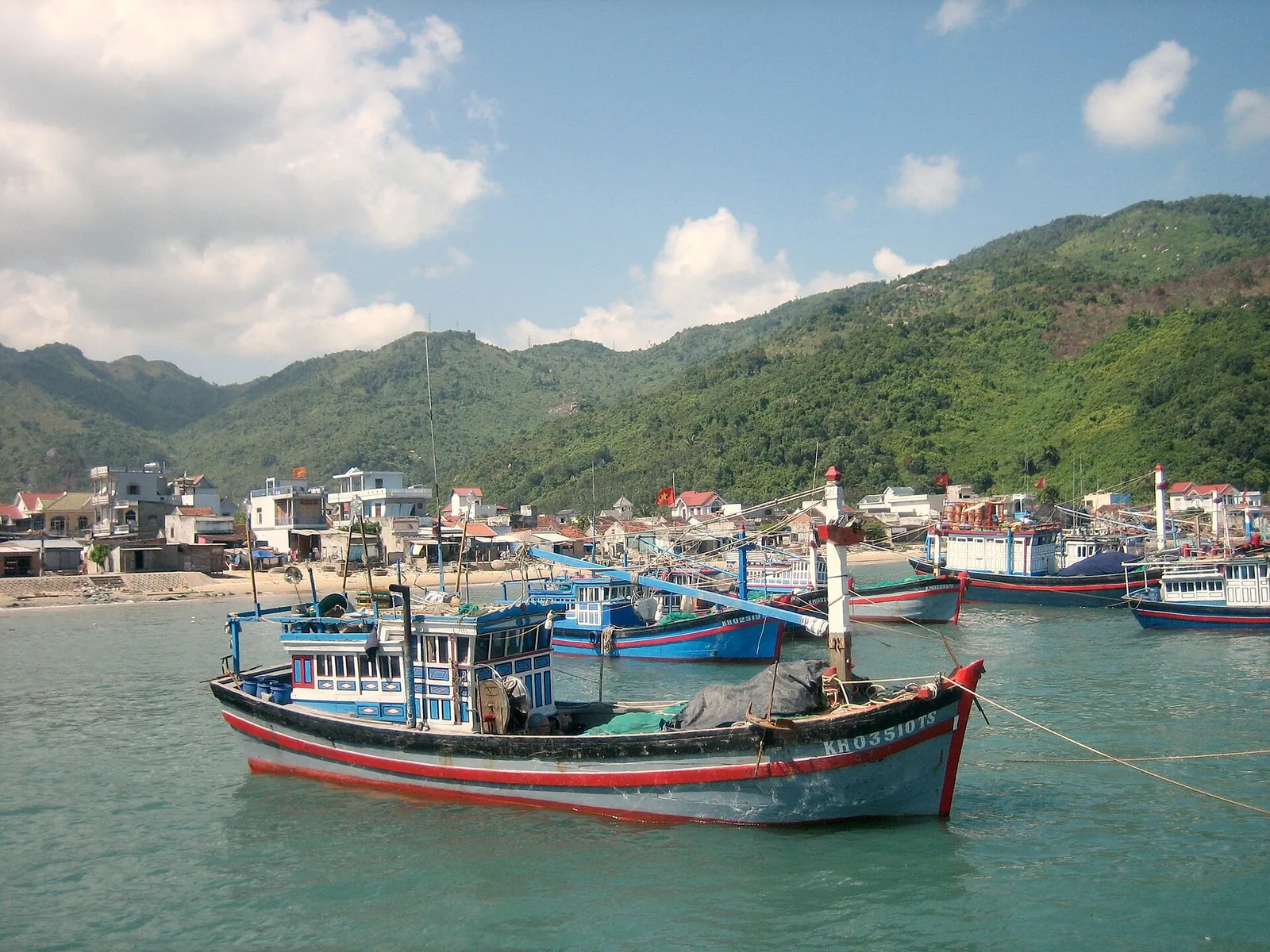
Fishing boats on Nha Trang Bay, whose waters supply the city's seafood restaurants.
Photograph: Prince Roy — opens in a new tab · CC BY 2.0 — opens in a new tab
Changes: Resized and converted to WebP; displayed with responsive crops. · Original photograph and licence details ↗ — opens in a new tab
The white seated Buddha above Long Son Pagoda looks out over the city.
Photograph: Christophe95 — opens in a new tab · CC BY-SA 4.0 — opens in a new tab
Changes: Resized and converted to WebP; displayed with responsive crops. · Original photograph and licence details ↗ — opens in a new tab
A seafood pot of crab, lobster and shellfish in Loc Tho, central Nha Trang.
Photograph: jetsun — opens in a new tab · CC BY-SA 3.0 — opens in a new tab
Changes: Resized and converted to WebP; displayed with responsive crops. · Original photograph and licence details ↗ — opens in a new tab