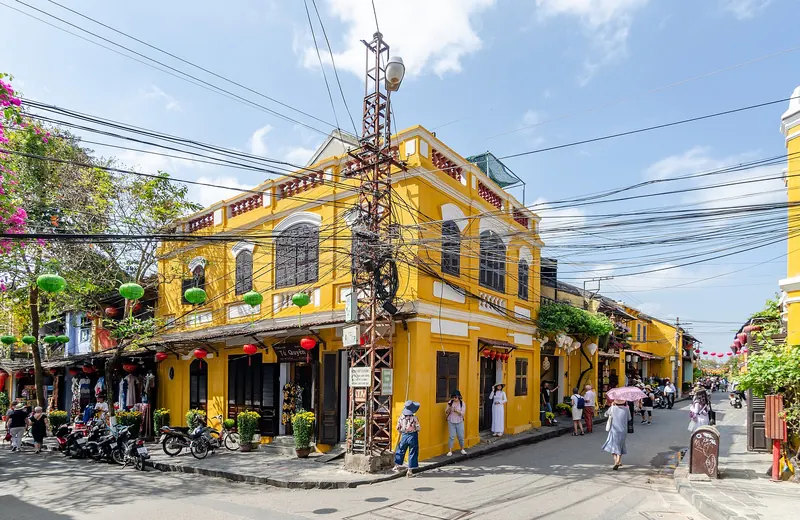
Plan your trip · Vietnam
What to eat in Vietnam: pho, banh mi, com tam and how to order
Most visitors arrive knowing two Vietnamese dishes, phở and bánh mì, and leave having eaten twenty. The food is regional, the best of it is cooked on the pavement by people who make one or two things all day, and the meal times are earlier and stricter than in many countries. Learn how a stall works, when it is open and what the jars on the table are for, and you can eat well anywhere from Hanoi to the Mekong Delta without a reservation or a menu in English.
- Suggested time
- A whole trip; allow at least one full day of eating in each of Hanoi, Hoi An or Hue, and Ho Chi Minh City
- Where to stay
- Hanoi Old Quarter, Hoi An Ancient Town and District 1 in Ho Chi Minh City
- Season and timing
- Street food is served all year. Hanoi's hot noodle soups are at their best in the cold, misty months from late December to March; in the south, plan evening stall meals around the May to November afternoon downpours.
The short answer
Plan your eating around three bases rather than a list of restaurants: Hanoi for phở, bún chả and the northern noodle soups, Hoi An or Hue for the spicier central dishes, and Ho Chi Minh City for cơm tấm, bánh mì and hủ tiếu. Give each at least one full day of eating. Eat when Vietnamese people do: noodles soon after sunrise, lunch between about 11:30 and 1 pm, dinner from about 6 to 8 pm. At a stall, order at the front, sit where you like, eat first and pay the cook on your way out. If you are nervous on the first night, take a guided street-food walk, then go back alone the next morning.
Vietnamese food is regional: plan by base, not by dish
The national tourism board sums up the country's cooking in one line: northern food is known for its simplicity, the dishes of central Vietnam are generous in spice and quantity, and southerners like to add sugar. Many dishes travel the length of the country, but many more stay in the place they come from, so the best way to eat widely is to give each region its own days rather than chase every famous name from one city.
Hanoi is the place for phở bò, bún chả at lunchtime, bánh cuốn (steamed rice rolls) at breakfast and the city's sour, tomato-based snail and crab noodle soups. Hue and Hoi An bring the central coast's heat and their own specialities: bún bò Huế, the bite-sized steamed bánh bèo, cao lầu, which the official guide says can only be found in Hoi An, and mì Quảng from the former Quang Nam province. Ho Chi Minh City collects recipes from all over the country; the tourism board's own advice is that if you have only one day there, spend it eating, starting with cơm tấm at breakfast.
Sleep in the middle of the action. In Hanoi's Old Quarter, Hoi An's Ancient Town and District 1 in Ho Chi Minh City, the breakfast stalls are a few minutes' walk away, so you can be at the noodle pot early, before the best options sell out, and walk home after dinner instead of looking for a ride.
How to order at a street stall
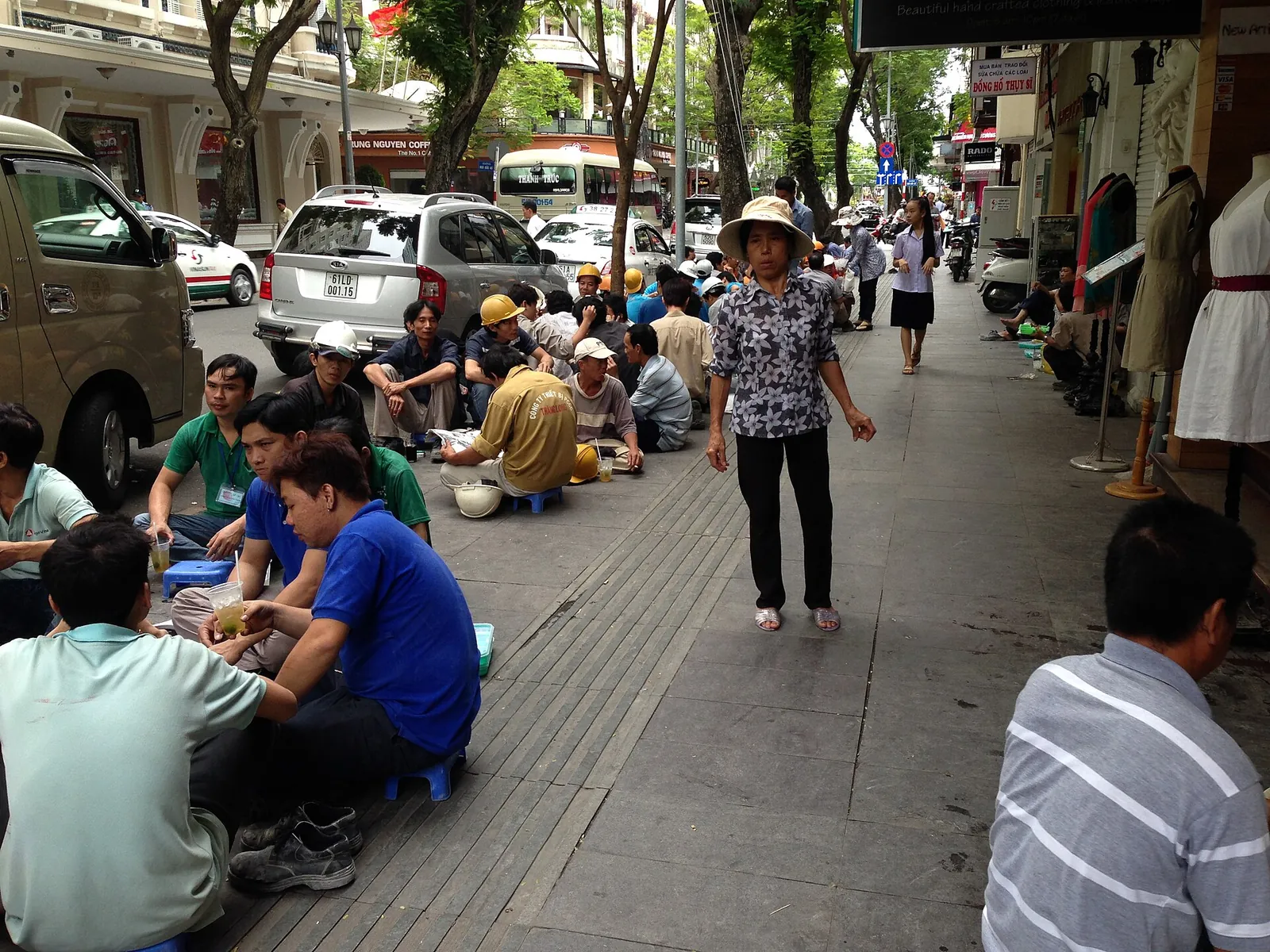
Eat when locals eat. The tourism board's beginner's guide is blunt about this: everything goes quiet once mealtimes are over, and it can be hard to find a good meal in between. Go out just after sunrise for hot noodles, rice porridge or sticky rice; the streets around markets are the best breakfast hunting grounds. Lunch stalls work from about 11:30 am to 1 pm, and this is the time for cơm bình dân, a choose-it-yourself counter of family-style dishes heaped on rice. From about 5 pm, stools come out on the pavement, and 6 to 8 pm is the busy window for hotpots, grilled seafood and barbecue.
Pick the stall with your eyes. The same guide gives a three-point check: is the set-up clean and organised, do the ingredients look fresh, and are local customers eating or waiting? Many stalls make only two or three dishes, so there is often no menu at all. Point, or ask for whatever the next table is having.
Order at the front, then sit. Place your order with the cook, choose any free table or stool and wait. Wiping your chopsticks or spoon with a napkin before eating is normal. Squeezed limes, herb stems and used napkins go in the bin under the table, and at busy times strangers may share your table; a smile is all that is expected. When you finish, lay your chopsticks together across the top of the bowl.
Pay at the end. The rule is eat first, pay later. At small stalls you ask the total and pay the cook on the way out; sometimes a server comes over and adds up what you ate in their head. A written bill is unusual for street food, but you can ask for one.
- Em ơi! — the polite call that brings a server to your table, anywhere in Vietnam.
- Một suất (one serving) or một cái này (one of these) — for pointing at what you want.
- Không thịt (no meat) and ăn chay (vegetarian food).
- Trà đá — iced green tea, served at stalls in place of water; trà nóng is hot tea.
- Bao nhiêu tiền? — how much is it?; tính tiền — the bill, please.
- Ngon quá! — very delicious.
Make time for the local food
What to eat and where to look
Phở bò (Hanoi-style beef noodle soup)
Flat rice noodles in a clear, spiced beef broth with slivers of medium-rare beef, dressed only with lime and bird's eye chilli in the northern style. The southern phở Nam has a cloudier broth and comes with a plate of herbs and bean sprouts.
- Where to look
- Specialist phở shops in Hanoi that serve one or two versions and nothing else, busiest at breakfast; in Ho Chi Minh City, look for the southern style.
- Fit it into your day
- Breakfast, ideally soon after the shop opens; a hot bowl is especially welcome on Hanoi's cold winter mornings.
The beef is often served rare and cooks in the broth; ask for well-done (chín) if you prefer. Chicken phở (phở gà) is the alternative.
Bánh mì
A light, crisp Vietnamese baguette spread with pâté and butter or margarine and filled with pork, pickled vegetables, coriander, cucumber and chilli. Fillings and sauces vary by city and by stall.
- Where to look
- Bakery counters and street carts across the country; Ho Chi Minh City and Hoi An each have well-known shops with queues.
- Fit it into your day
- A breakfast on the move or a light lunch between sights; buy it to take away and eat it while it is still crisp.
Usually contains pork and pâté, and chilli by default; ask for it without chilli if needed.
Cơm tấm (broken rice)
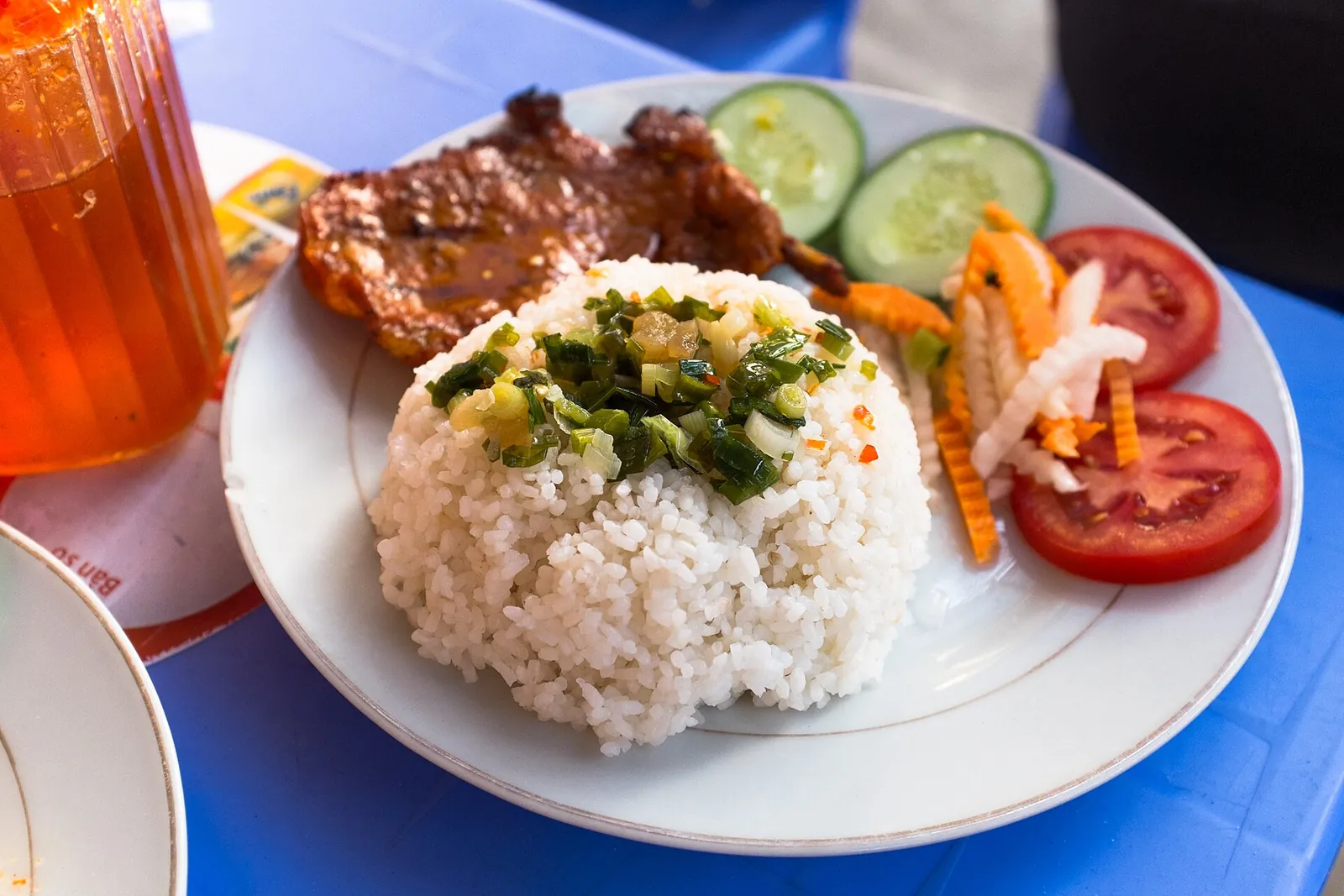
Ho Chi Minh City's own rice plate: broken rice grains with a caramelised grilled pork chop, often a fried egg, green onion oil, pickles and sweet fish-sauce dressing.
- Where to look
- Cơm tấm stalls on almost every street in Ho Chi Minh City; the tourism board's advice is that the one closest to you will likely be just as good.
- Fit it into your day
- Breakfast, as locals eat it, though most stalls serve it for any meal.
Contains pork and fish sauce; the crushed pork rinds and fried shallots on top are easy to ask for without.
Bún chả
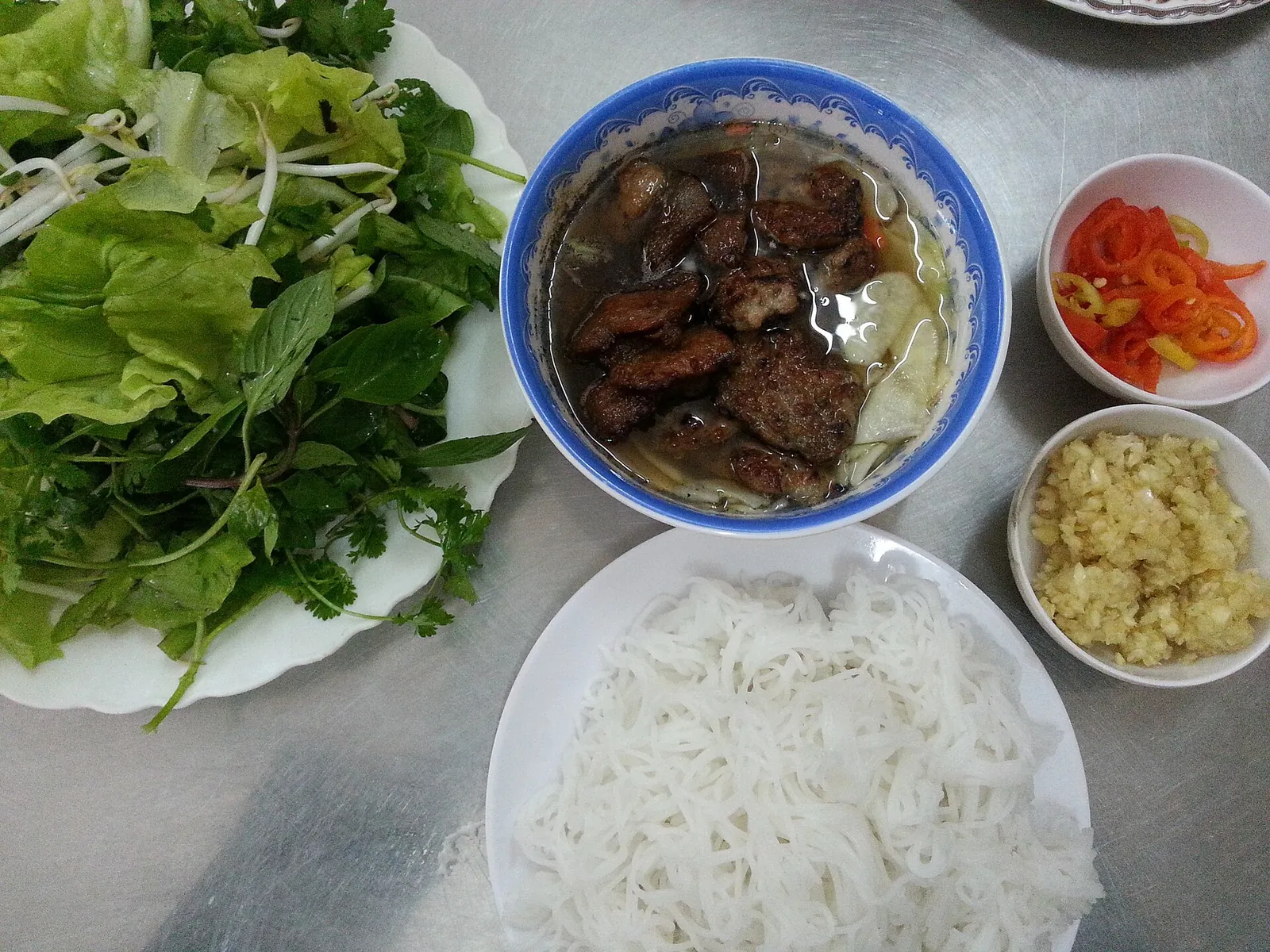
Grilled pork patties and pork belly in a sweet-sour, fish-sauce-based broth, eaten with cold rice vermicelli and a pile of fresh herbs. A Hanoi lunch dish.
- Where to look
- Small shops with a charcoal grill at the door in Hanoi's Old Quarter and surrounding districts.
- Fit it into your day
- Lunch in Hanoi; the grills are lit around midday, so go earlier rather than later.
Contains pork and fish sauce; the fried crab spring rolls often ordered alongside contain shellfish.
Bún bò Huế
Round rice noodles in a red, lemongrass-scented beef broth, with beef shank and often a soft pork sausage. Spicier than phở.
- Where to look
- Noodle shops in Hue and across the central coast; you will also see it in the big cities.
- Fit it into your day
- Breakfast or lunch on a day in Hue, before or after the citadel.
Spicy, and the broth usually contains shrimp paste as well as pork and beef bones.
Cao lầu
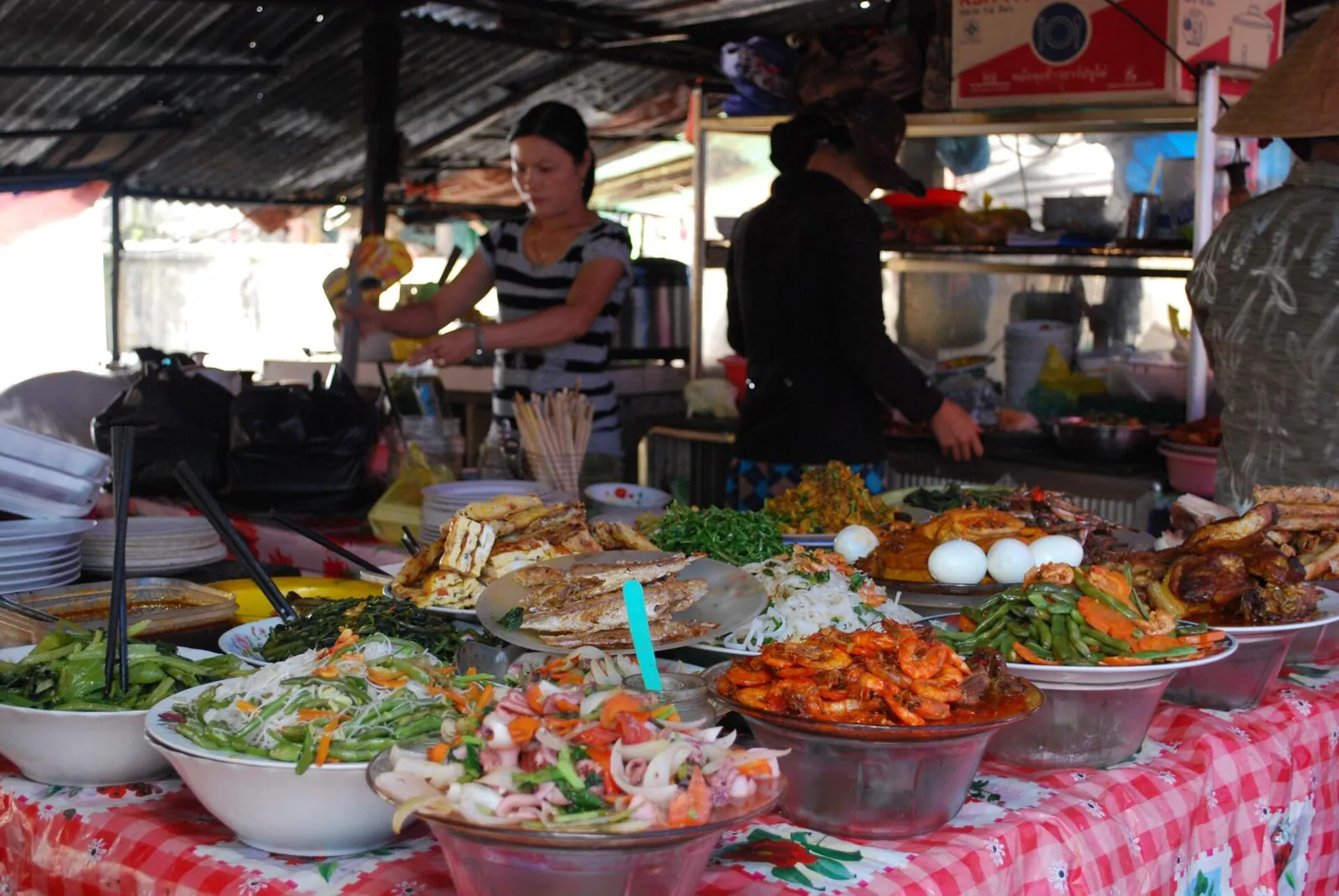
Hoi An's own noodle dish: thick, chewy noodles with sliced barbecued pork, bean sprouts, leafy herbs and crisp pork crackling, moistened with a savoury, lemongrass-scented sauce rather than a full soup.
- Where to look
- Market stalls and family restaurants in and around Hoi An's Ancient Town; the official guide says real cao lầu can only be found in Hoi An.
- Fit it into your day
- Lunch in Hoi An, between a morning in the Ancient Town and an afternoon on the river or the beach.
Contains pork and soy; ask before ordering if you avoid either.
Phở, bánh mì and cơm tấm: how they differ from the versions abroad
Phở is the name of the noodle, not just the soup: flat rice noodles, in a beef stock usually perfumed with star anise, clove and cinnamon, topped with slivers of medium-rare beef (phở bò) or boiled chicken (phở gà). The tourism board distinguishes two main styles. Phở Hanoi, the northern original, has a clear broth and comes dressed only with a squeeze of lime and slices of bird's eye chilli. Phở Nam, the southern version, has a cloudier broth and arrives with a bouquet of fresh herbs, bean sprouts, basil and mint. If the phở you know comes with a heaped side plate of sprouts and basil, it is closer to the southern style. In Vietnam phở is above all a breakfast dish, so go in the morning, when the pots are full and the shops are busy.
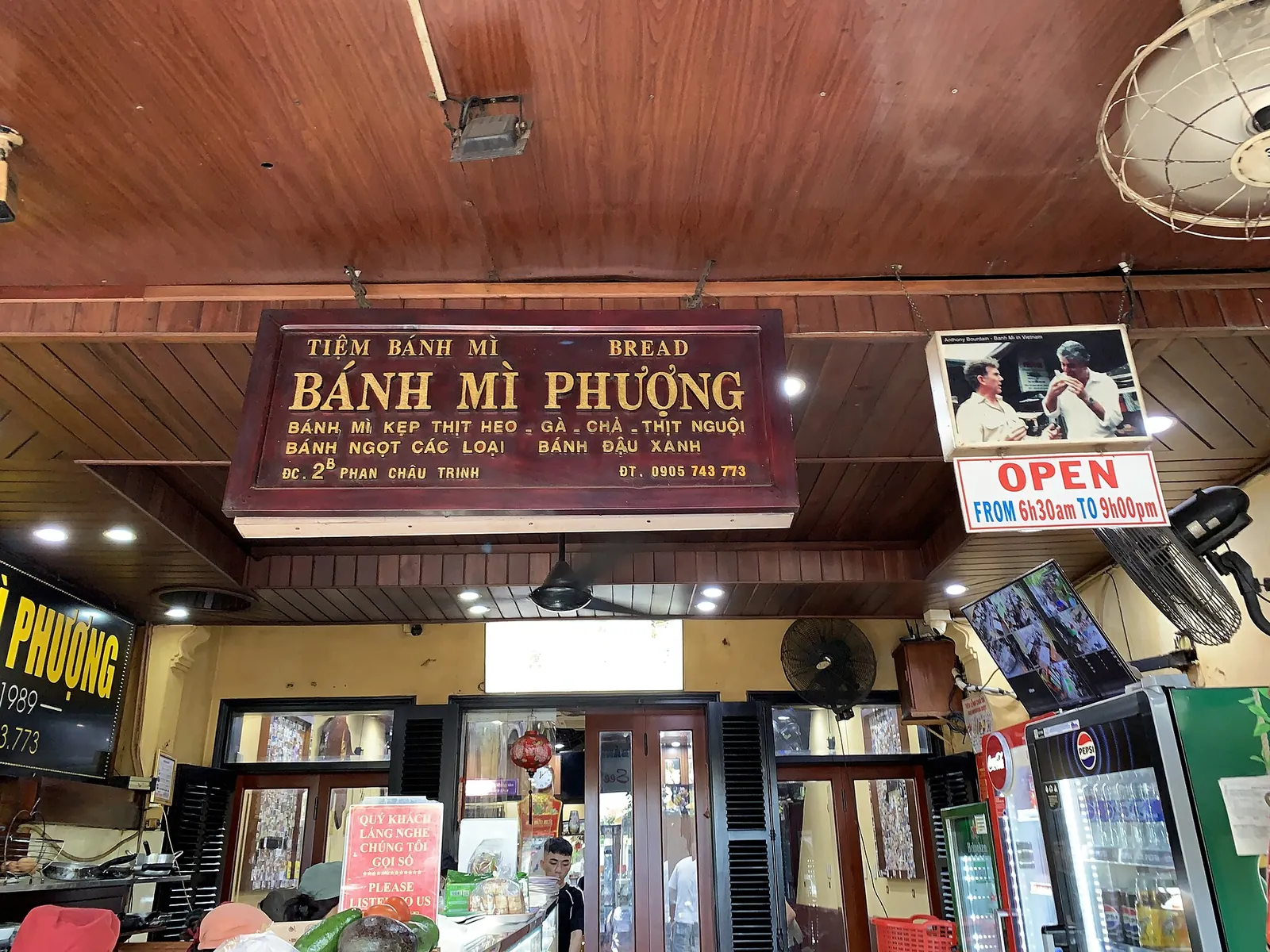
Bánh mì is the baguette the French brought, turned into something entirely Vietnamese. The official description is pâté and margarine spread on the soft, chewy inside, then pickled vegetables, coriander, pork, pork floss and cucumber. Every region has its own twist: in Ho Chi Minh City the tourism board describes char siu pork, homemade pâté, soft butter, pickled papaya and hot chillies, and singles out Hoi An's Bánh Mì Phượng as one of the stalls travellers already know. Expect a light, crackly roll rather than a dense sandwich loaf, and expect chilli unless you say otherwise.
Cơm tấm, broken rice, is the dish visitors are least likely to know before they arrive, and it is one of the few dishes the tourism board says originated in Ho Chi Minh City. Farmers once ate the fractured grains they could not sell; today it is the city's go-to breakfast and an any-time meal. The classic plate, cơm tấm sườn nướng ốp la, is a caramelised grilled pork chop and a fried egg on broken rice, with green onion oil, pickled carrot and daikon, cucumber and tomato. The step newcomers miss is the sauce: pour the sweet fish-sauce dressing (nước chấm) generously over everything on the plate.
Noodles beyond phở
Vietnam eats noodles at breakfast, lunch and dinner, and knowing the four main types makes any menu easier to read. The tourism board's noodle guide lists phở (flat rice noodles), bún (thin, round, soft rice vermicelli), miến (clear glass noodles) and mì (yellow wheat or egg noodles, as in the wonton soup mì vằn thắn). Soups are seasoned at the table with lime, chilli and herbs, so taste before adding anything.
Bún chả is Hanoi's lunch: grilled pork patties and pork belly in a fish-sauce-based broth, with cold bún and a pile of herbs on the side. Scoop small bundles of noodles into the broth and rotate between noodles, pork and greens. Bún bò Huế is the central coast's answer to phở: a red, lemongrass-scented beef broth over round noodles, often with tender beef shank and a soft pork sausage. Mì Quảng uses only a ladleful of turmeric-tinted broth, more salad than soup, eaten with herbs, banana flower and toasted sesame rice crackers; look for it in Da Nang and Hoi An. Hủ tiếu Nam Vang, the standard southern street noodle, comes with soup (nước) or dry (khô), with pork, shrimp, liver and a quail egg in a lightly sweet, peppery broth.
Some dishes are tied to one place. Cao lầu, with its firm, udon-like noodles, pork and crisp crackling, is a Hoi An dish, and bánh đa đỏ, brown rice noodles with crab and tomato or fish and dill broth, comes from Hai Phong on the northern coast. Order them where they come from.
The table: herbs, sauces and something to drink
The jars on the table are there for you to finish the dish to your own taste. Expect light fish sauce, garlic and chilli in vinegar, sometimes a jam-like chilli paste, fresh chilli, limes or calamansi, and occasionally a pungent shrimp paste. With noodle dishes a basket of herbs and leaves — mint, coriander, basil, lettuce — comes free; fold them into the broth. Vietnamese cooks season with a few drops of fish sauce where you might expect soy sauce, and rolls come with their own dipping sauce, from tamarind to sweet-and-salty fish sauce to peanut. If you are unsure which goes with what, ask; the official guide notes that servers are happy to show you.
For drinks, trà đá, iced green tea, is the default at stalls across the country. Cà phê sữa đá is strong drip-filter robusta with condensed milk and lots of ice. Nước mía, sugarcane juice pressed in front of you, is often served with calamansi. In northern beer halls you will be handed bia hơi, a fresh, unpasteurised draught beer to drink with peanuts and fried snacks. For something sweet, look for chè, served hot or cold as a pudding or dessert soup of beans, jellies, fruit and coconut milk.
Eating safely, and eating without meat
The tourism board's health page describes Vietnamese street food as generally quite safe, with the usual traveller's precautions: drink bottled water, avoid ice in rural areas, and choose places with a high turnover of customers and food cooked fresh. Its advice for an upset stomach is rehydration salts and plenty of fluids, and medical attention if the problem persists. A busy stall with a hot wok or a simmering pot is usually a better bet than a quiet one with food that has been sitting out.
Vegetarians can eat well but should say so clearly, because fish sauce, shrimp paste and pork crackling turn up in dishes that look meat-free. Learn ăn chay (vegetarian food) and không thịt (no meat), and look for dishes that are vegetarian by design, such as the banana-flower salad nộm hoa chuối, which the official dish guide notes can be served without meat. If you have a serious allergy, the health page recommends carrying a doctor's letter describing the condition; a written card in Vietnamese naming the ingredient is worth carrying too.
If you want a sit-down meal as well, the Michelin Guide arrived in Vietnam in 2023, covering Hanoi and Ho Chi Minh City; the tourism board's report on that first selection noted 29 Bib Gourmand places recognised for good food at moderate prices. Use it as a supplement to the stalls, not a replacement.
Practical questions
Is street food in Vietnam safe to eat?
The national tourism board describes it as generally quite safe. Choose busy stalls with a high turnover and freshly cooked food, drink bottled water and avoid ice in rural areas.
What is the difference between phở in Hanoi and phở in Ho Chi Minh City?
Northern phở Hanoi has a clear broth and is dressed only with lime and chilli. The southern phở Nam has a cloudier broth and comes with fresh herbs, bean sprouts, basil and mint on the side.
When should I eat phở in Vietnam?
In the morning. The tourism board describes phở as a dish Vietnamese people eat for breakfast, and its street-food guide advises eating when locals do, because stalls go quiet once mealtimes are over.
Do I pay before or after eating at a street stall?
After. Order at the front, sit where you like, eat, then ask the total and pay the cook on the way out. Written bills are uncommon at small stalls, but you can ask for one.
What is cơm tấm?
Broken rice, a dish from Ho Chi Minh City: broken rice grains with a grilled pork chop, often a fried egg, pickles and a sweet fish-sauce dressing poured over the top. It is the city's classic breakfast.
Is Vietnam easy for vegetarians?
It is possible, but say so clearly: fish sauce and shrimp paste are in many dishes that look meat-free. Learn the words ăn chay (vegetarian food) and không thịt (no meat).
Sources and checks before you travel
Reference sources for the version dated 3 October 2026. Confirm opening times, access, transport and conditions for your travel dates.
- Vietnam National Authority of Tourism: A beginner's guide to Vietnamese street food ↗ — opens in a new tab
- Vietnam National Authority of Tourism: 21 must-try Vietnamese dishes ↗ — opens in a new tab
- Vietnam National Authority of Tourism: Eating like a local in Ho Chi Minh City ↗ — opens in a new tab
- Vietnam National Authority of Tourism: A foodie guide to Vietnam's noodles ↗ — opens in a new tab
- Vietnam National Authority of Tourism: Ha Noi food guide: the best street food dishes to sample ↗ — opens in a new tab
- Vietnam National Authority of Tourism: Must-try noodles in Vietnam ↗ — opens in a new tab
- Vietnam National Authority of Tourism: Cool off: 7 delightful Vietnamese drinks ↗ — opens in a new tab
- Vietnam National Authority of Tourism: Health and safety ↗ — opens in a new tab
- Vietnam National Authority of Tourism: Vietnamese phrases ↗ — opens in a new tab
- Vietnam National Authority of Tourism: MICHELIN Guide Hanoi and Ho Chi Minh City ↗ — opens in a new tab
- Vietnam National Authority of Tourism: Weather and climate in Vietnam ↗ — opens in a new tab
- Vietnam National Authority of Tourism: Getting to Vietnam ↗ — opens in a new tab
- Noi Bai International Airport: public transportation ↗ — opens in a new tab
Does this experience fit your route?
New to Vietnamese street food? A guided first evening in Hanoi or Hoi An shows you how stalls work; check the number of tastings and the dietary options before you book.
Check dates and details on Viator ↗ — opens in a new tabAffiliate link · Book with ViatorPhoto credits
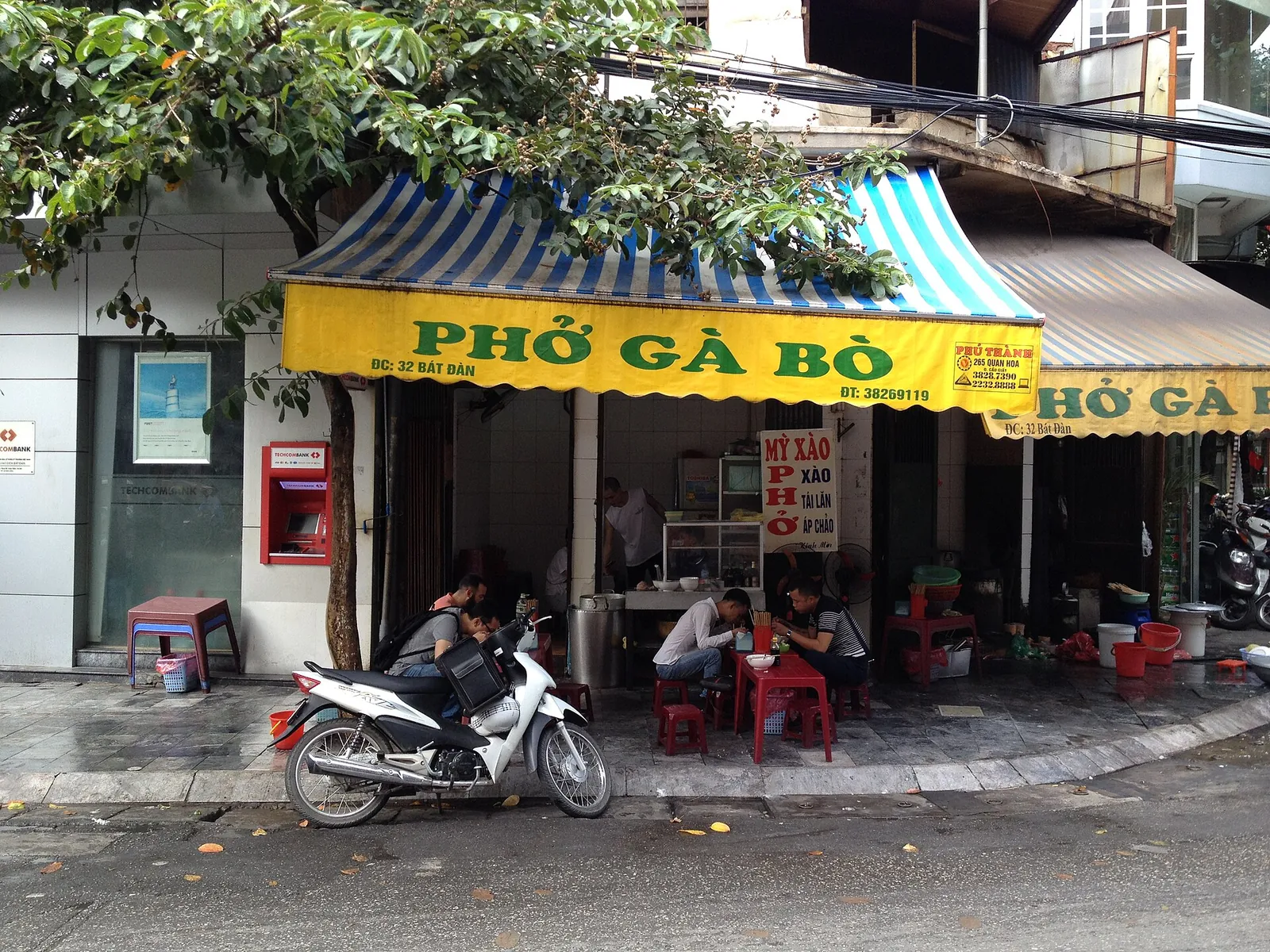
A phở gà and phở bò shop on Bát Đàn street in Hanoi's Old Quarter
Photograph: Phan Minh Tuấn — opens in a new tab · CC BY-SA 4.0 — opens in a new tab
Changes: Resized and converted to WebP; displayed with responsive crops. · Original photograph and licence details ↗ — opens in a new tab
Bún chả on Thụy Khuê street, Hanoi: dip the noodles and herbs into the bowl of grilled pork and broth
Photograph: Viethavvh — opens in a new tab · CC BY-SA 4.0 — opens in a new tab
Changes: Resized and converted to WebP; displayed with responsive crops. · Original photograph and licence details ↗ — opens in a new tab
Bánh Mì Phượng, one of Hoi An's best-known bánh mì shops
Photograph: Chainwit. — opens in a new tab · CC BY 4.0 — opens in a new tab
Changes: Resized and converted to WebP; displayed with responsive crops. · Original photograph and licence details ↗ — opens in a new tab
Cơm tấm with grilled pork in Da Nang
Photograph: Christopher Crouzet — opens in a new tab · CC BY-SA 4.0 — opens in a new tab
Changes: Resized and converted to WebP; displayed with responsive crops. · Original photograph and licence details ↗ — opens in a new tab
Lunch on the pavement in Ho Chi Minh City
Photograph: RG72 — opens in a new tab · CC BY-SA 4.0 — opens in a new tab
Changes: Resized and converted to WebP; displayed with responsive crops. · Original photograph and licence details ↗ — opens in a new tab
A cao lầu and rice stall at Hoi An's market
Photograph: avlxyz — opens in a new tab · CC BY-SA 2.0 — opens in a new tab
Changes: Resized and converted to WebP; displayed with responsive crops. · Original photograph and licence details ↗ — opens in a new tab