Central Vietnam · Hue
Hue travel guide: Imperial City, royal tombs, food and where to stay
Hue was the capital of the Nguyen emperors, and the city they left behind is spread out: a walled Citadel on the north bank of the Perfume River, a ring of royal tombs in the hills upriver, pagodas and garden houses along the water, and a food culture that grew up around the court. None of it is far, but it does not fit into a single day trip from Da Nang without losing most of what makes Hue worth the detour. Plan it as two or three unhurried days, split between the Citadel, the tombs and the city's own kitchens. Since 1 January 2025 Hue has been a centrally run city in its own right, replacing the former Thua Thien Hue province.
- Suggested time
- 2–3 days
- Where to stay
- The south bank around Le Loi Street for restaurants and transport; the Citadel area for early walks to the Imperial City
- Season and timing
- The national tourism site calls February to the end of April the best months; June and July are very hot, the rains arrive in August and can last into January, and flooding is common from October to the end of the year.
The short answer
Give Hue two full days, or three if you want the garden houses, the lagoon or a slow food day. Spend one morning in the Imperial City and the afternoon at two royal tombs; spend the second day on Thien Mu Pagoda, Kim Long and the river, with lunch and dinner built around Hue dishes. Sleep on the south bank near Le Loi Street for restaurants and easy taxis, or inside or beside the Citadel if you want to walk to the Imperial City early. Arrive by train or by air at Phu Bai, and leave for Hoi An by car over the Hai Van Pass or by the Hue–Da Nang heritage train.
North bank or south bank: choose your side of the river
The Perfume River divides Hue into two quite different halves. The north bank holds the Citadel, the walled imperial city of the Nguyen dynasty, with the Imperial City at its centre and quiet residential streets, lakes and ponds inside the outer walls. The national tourism site suggests starting your first morning on these streets by bicycle or cyclo, past Tinh Tam Lake and the ponds where pink lotus flowers bloom from April to July, before entering the Imperial City. Staying inside or just beside the Citadel walls lets you do that on foot, before the heat; the trade-off is fewer restaurants open late and a taxi or a bridge walk for dinner.
The south bank is the modern centre. Le Loi Street runs along the river past the older hotels the tourism site lists, including the art deco La Residence and the Saigon Morin, and the national tourism site points architecture lovers to the same street for its French-era buildings and the crimson Quoc Hoc High School. This side has most of the restaurants, cafés and hotels at every level, and it is the easier base if you plan to hire cars for the tombs or leave early for the train. Either way, check the walk to the river and to the bridge you will use most: Hue is spread out enough that the wrong street adds a taxi to every outing.
The Imperial City: one long morning, with a guide if you can
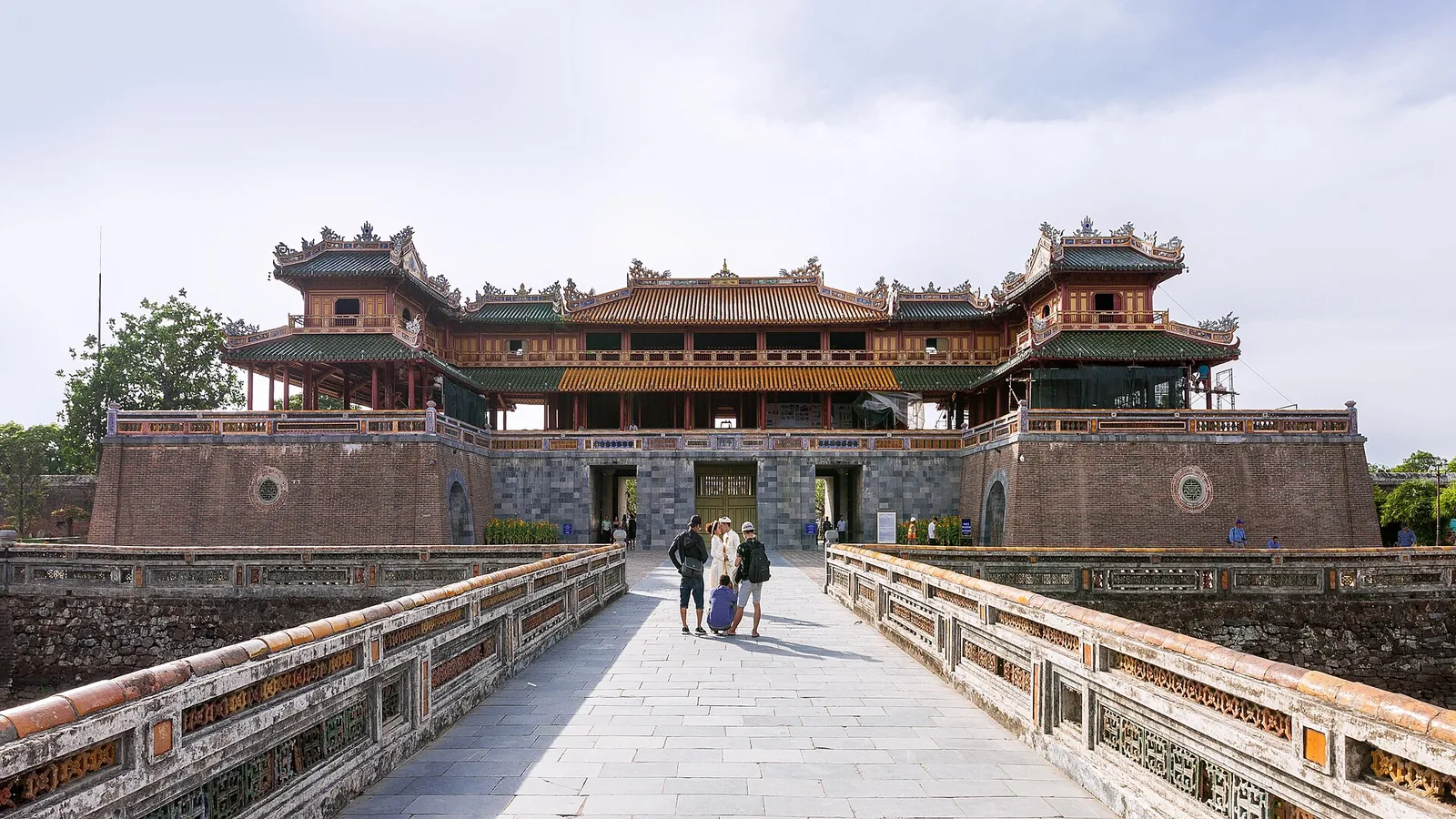
You enter the Imperial City through the Ngo Mon (Meridian) Gate, and inside is a walled area of tree-lined avenues, courtyards, ponds and restored halls that the national tourism site says takes around two hours to explore. It also says you will get much more out of it with a guide; ask your hotel to arrange one to meet you at the gate. Go early: the courtyards are open and the stone paving holds the heat by late morning.
When we checked on 2026-10-03, the Hue Department of Culture, Sports and Tourism's Visit Hue site listed the Imperial City at 200,000 VND for adults and 40,000 VND for children, in a price table it said was updated in December 2023. The same table listed combined tickets for the Imperial City plus two of the tombs of Minh Mang, Tu Duc and Khai Dinh from 420,000 VND, and all four sites from 530,000 VND. Tickets are sold at the sites and on the Hue Monuments Conservation Centre's e-ticket site; check current prices and opening times there before you go, as we could not load the conservation centre's own pages.
Come back in the late afternoon if you have the energy. The national tourism site describes the open ground in front of the Ngo Mon Gate filling with children flying kites and teenagers on skateboards, and the lights coming on around the gate as the sky fades.
Make time for the local food
What to eat and where to look
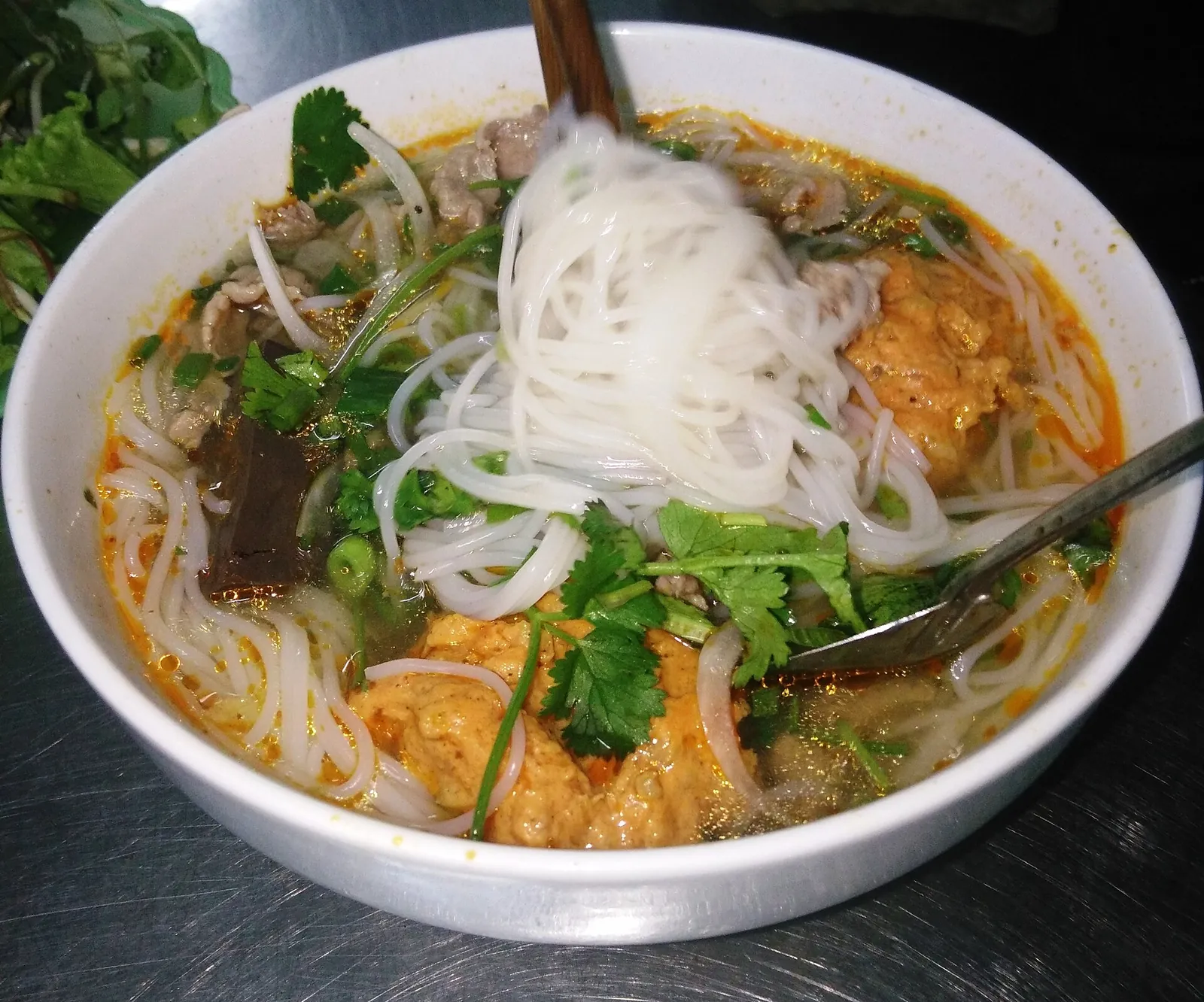
Bun bo Hue (Hue beef noodle soup)
Round rice noodles in a lemongrass-scented broth with beef brisket and pork — hock, trotter, loin and cubes of congealed blood — seasoned with shrimp paste, garlic, shallots and chilli, and finished with herbs and lime. It is the city's best-known dish and much heartier than pho.
- Where to look
- Noodle shops across the city; the national tourism site points to the streets of the old Chinese quarter around Chi Lang for a bowl.
- Fit it into your day
- A breakfast or early lunch before a tomb afternoon.
Contains pork, blood and shrimp paste and is often spicy; ask for it without the blood cubes if you prefer.
Banh beo, banh nam and banh bot loc (steamed rice cakes)
Hue's small court-style cakes. Banh beo are coin-sized rice cakes steamed in little saucers and topped with dried shrimp, pork crackling and scallion oil; banh nam are flat rice dumplings with shrimp folded into banana leaf; banh bot loc are chewy, translucent tapioca dumplings with pork and shrimp inside.
- Where to look
- Specialist cake shops and family eateries, including around the An Dinh Palace and in the Kim Long area.
- Fit it into your day
- Order several kinds to share as a light lunch, with a few drops of sweetened fish sauce on each.
Most contain shrimp and pork; the dipping sauce is fish sauce.
Com hen (baby mussel rice)
Rice tossed with tiny river mussels, herbs, bean sprouts, roasted peanuts, crisp pork skin and pungent shrimp sauce — a dish with humble origins, made from the shellfish caught around Hen Island.
- Where to look
- Stalls on Hen Island across Ung Binh Bridge, where both com hen and bun hen (the noodle version) are served.
- Fit it into your day
- A quick, spicy snack on an afternoon walk across the island.
Shellfish and strong shrimp sauce; very spicy unless you ask for less chilli.
Banh khoai (crispy Hue pancake)
A pan-fried crêpe coloured yellow with turmeric and filled with shrimp, quail egg, bean sprouts and pork belly. In Hue it comes with a salad of fig, star fruit and cucumber and a thick dipping sauce of peanuts and pork liver.
- Where to look
- Pancake shops in the Kim Long area and around the city.
- Fit it into your day
- A late lunch or early dinner after Thien Mu and Kim Long.
Fried and rich; contains egg, shellfish, peanuts and pork liver.
Nem lui and bun thit nuong (grilled pork)
Nem lui is marinated minced pork grilled on skewers and rolled in rice paper with herbs, green banana and pineapple; bun thit nuong is cold rice vermicelli with charcoal-grilled pork, herbs and pickles, dressed with fish sauce or Hue's peanut sauce.
- Where to look
- Street vendors and most local restaurants serve nem lui; bun thit nuong is a common lunch dish.
- Fit it into your day
- A lighter meal on a hot day, or the centre of a shared dinner.
The peanut-based sauce is a problem for nut allergies; ask for fish sauce instead.
Royal tombs: pick two or three, not all seven
Seven Nguyen emperors are buried in the hills and river valleys around Hue, and the tombs are reached by car, motorbike, bicycle or boat along the Perfume River. The national tourism site's advice is to choose two or three and give them time rather than trying to see them all, and that is the right call: each is a walled landscape of gates, courtyards, ponds and pavilions rather than a single monument.
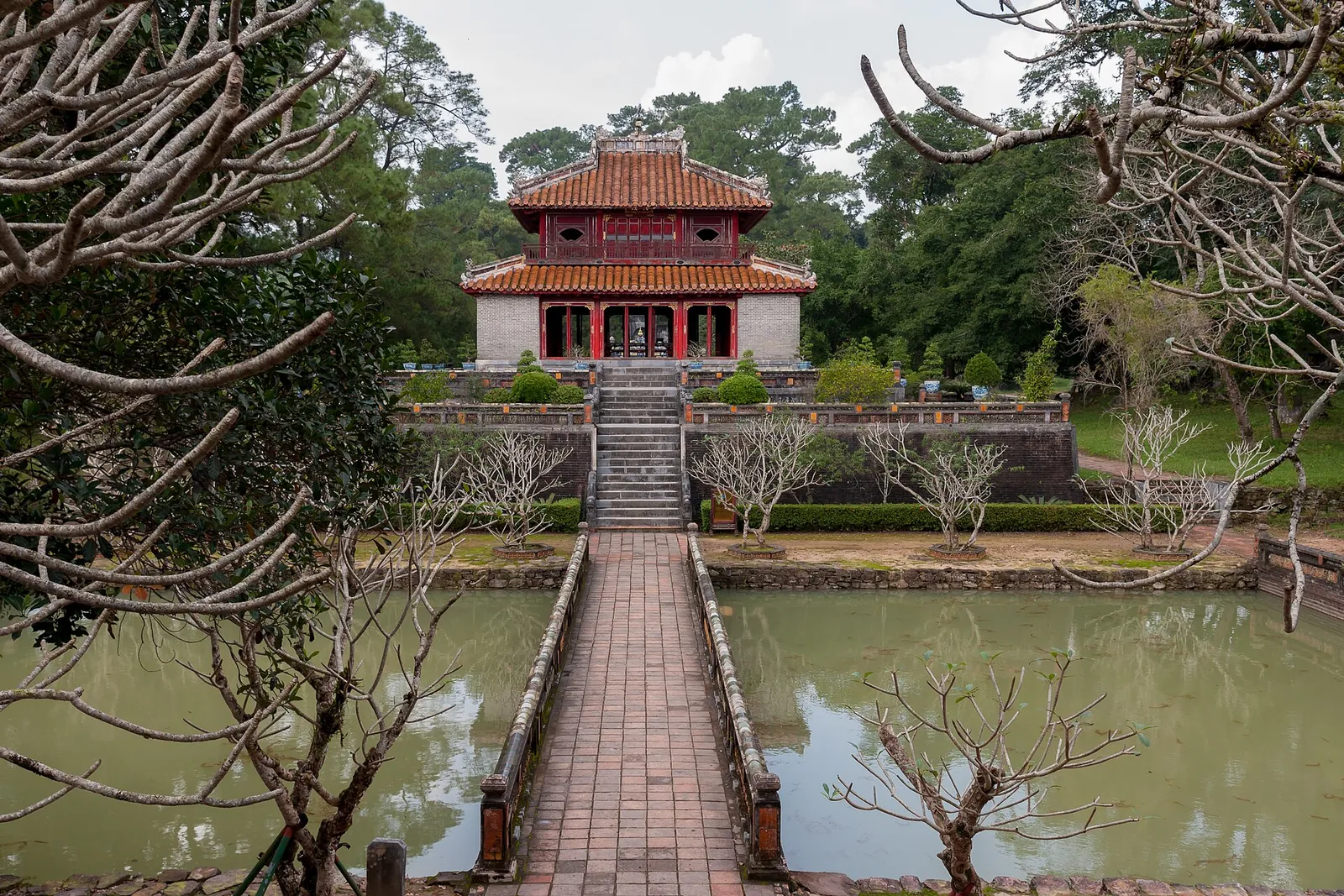
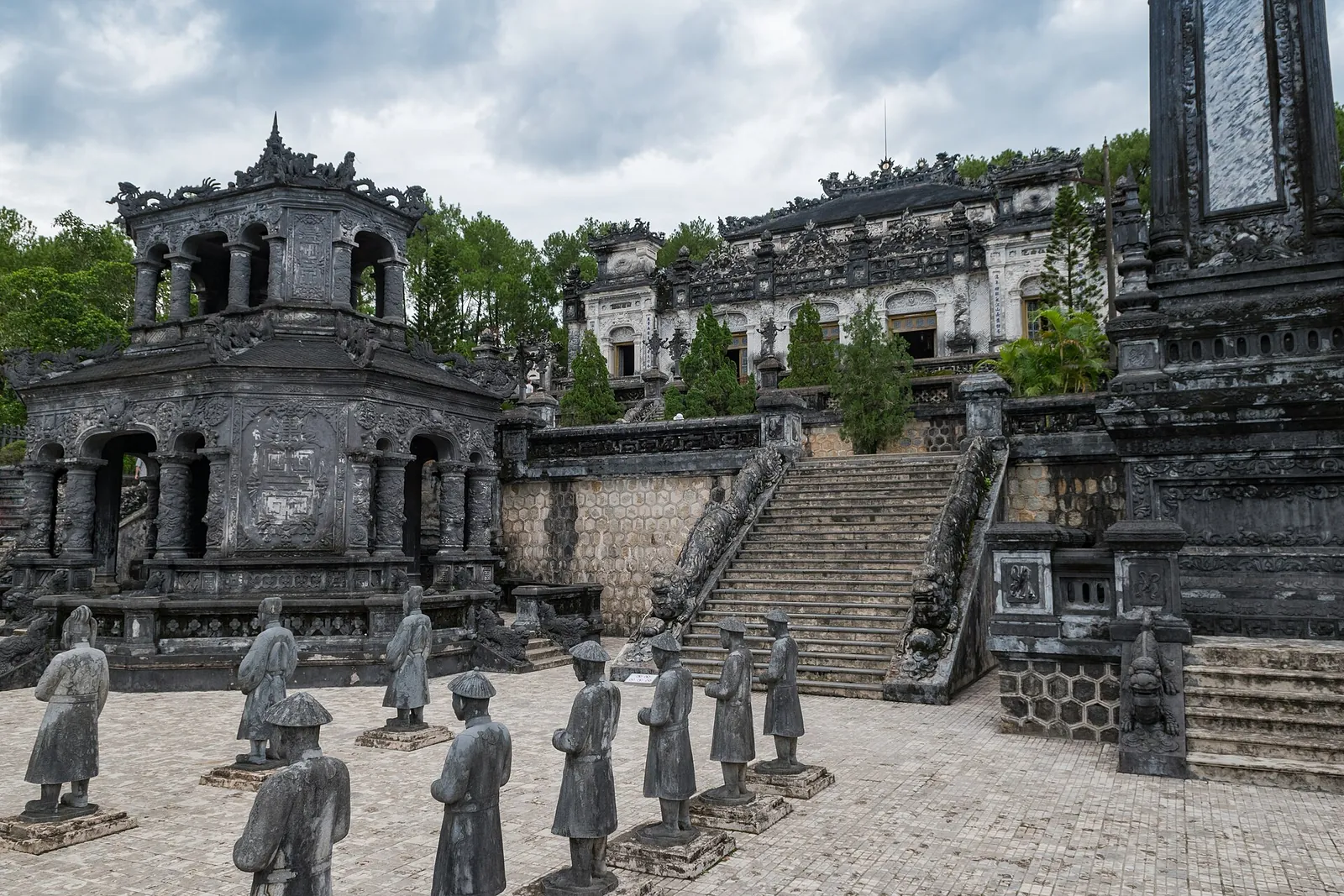
The three most visited each show a different side of the dynasty. Minh Mang's tomb is large and strictly ordered, laid out along an axis of gates and bridges over a lake. Tu Duc, a poet-emperor, built a landscaped tomb that blends into its gardens and water. Khai Dinh's tomb, on a steep hillside, mixes Eastern and Western styles in dark stone and is the one that splits opinion. If you want quiet, the tourism site says you will probably have Gia Long, Thieu Tri, Duc Duc and Dong Khanh largely to yourself; Gia Long's, the oldest, is also the most remote. When we checked on 2026-10-03, the Visit Hue price table listed Minh Mang, Tu Duc, Khai Dinh and Gia Long at 150,000 VND each for adults, Dong Khanh at 100,000 VND and Thieu Tri at 50,000 VND.
Practically, a half day by car covers two of the big three, and the combined ticket makes sense if you are also visiting the Imperial City. The Visit Hue table also lists a two-tomb ticket for Tu Duc and Dong Khanh, useful if you want one famous tomb and one quieter one. Wear shoes for uneven stone steps, carry water, and if you add Nam Giao Esplanade or Tu Hieu Pagoda on the way back, as the tourism site suggests, you will have seen far more than the standard circuit.
Thien Mu, Kim Long and the river
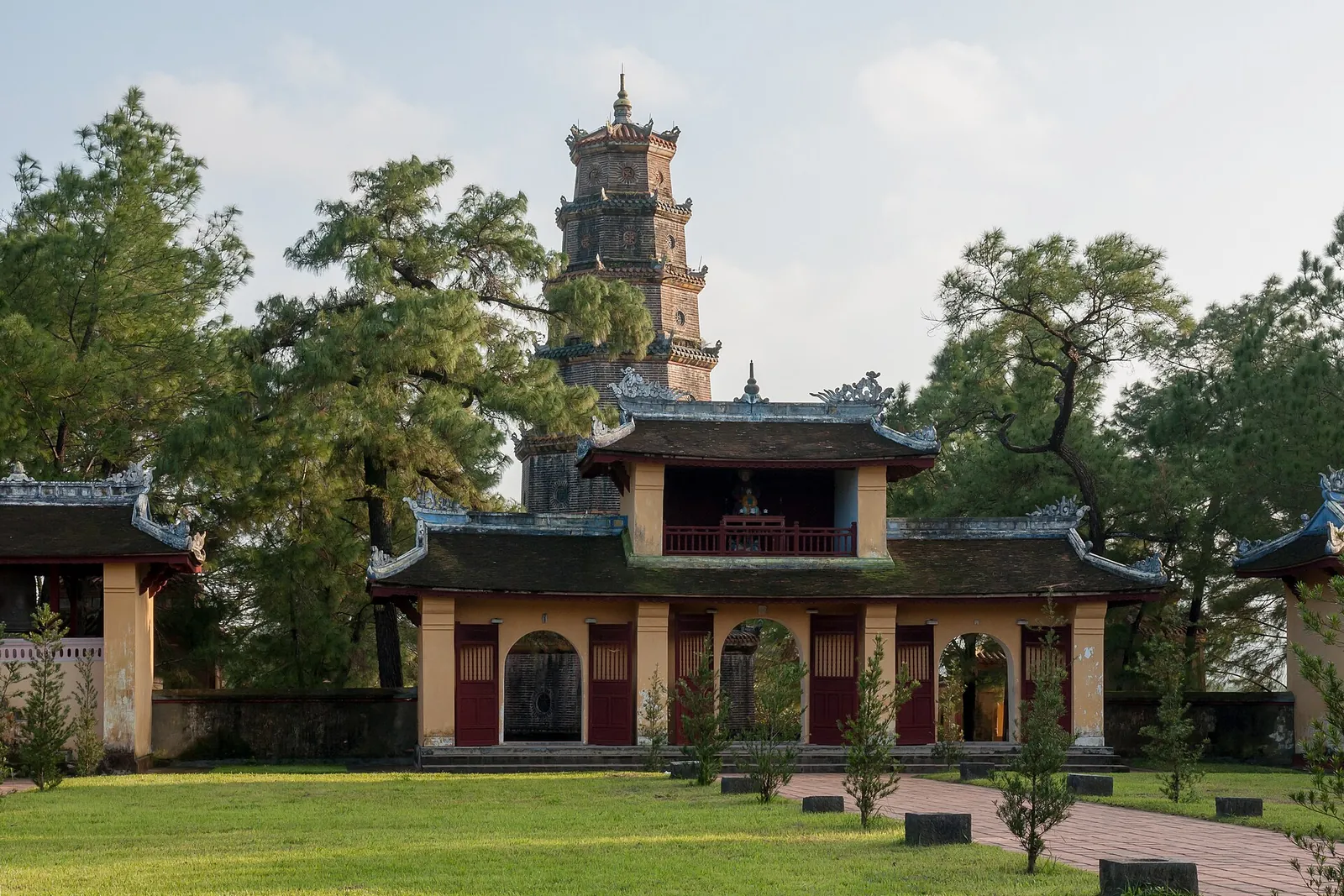
Thien Mu Pagoda, with its seven-tiered tower above the north bank of the Perfume River, is one of Hue's most recognisable landmarks outside the Citadel. The national tourism site recommends arriving in the late afternoon, when the crowds have gone and the sun sets behind the hills across the river. It is an active pagoda: dress modestly and keep your voice down in the halls.
Combine it with Kim Long, the garden-house district along the same bank. The tourism site suggests exploring on foot, by bicycle or by cyclo, looking for the signposted historic garden houses, some ticketed and some simply old homes open to visitors. It is the gentlest side of Hue and works well after a morning at the tombs or a visit to the An Dinh Palace, a late-Nguyen royal residence.
For a quieter Buddhist counterpart, Tu Hieu is the monastery where, the tourism site notes, Thich Nhat Hanh spent his years as a novice monk. Respect that it is a working monastery, not an attraction.
Eating in Hue: plan meals, not just sights
Hue's cooking is reason enough to give the city an extra day, and the national tourism site goes as far as to say that you can find Hue food elsewhere in Vietnam but it never tastes quite the same. The city has two strands: the dainty steamed rice cakes and dumplings that trace their style to the court, and robust street dishes such as bun bo Hue and com hen.
Plan for it. Make one lunch a tray of small steamed cakes — banh beo, banh nam and banh bot loc — rather than one big plate; take an afternoon for Hen Island across Ung Binh Bridge, where stalls serve com hen and bun hen made with the tiny mussels caught around the island; and spend an evening in the streets around Chi Lang and Bach Dang, the old Chinese quarter, where the tourism site points to shophouses, temples and afternoon snacks. Dong Ba Market is the place to see the produce and a good first stop for snacks.
Hue to Hoi An: over the Hai Van Pass or along the coast by train
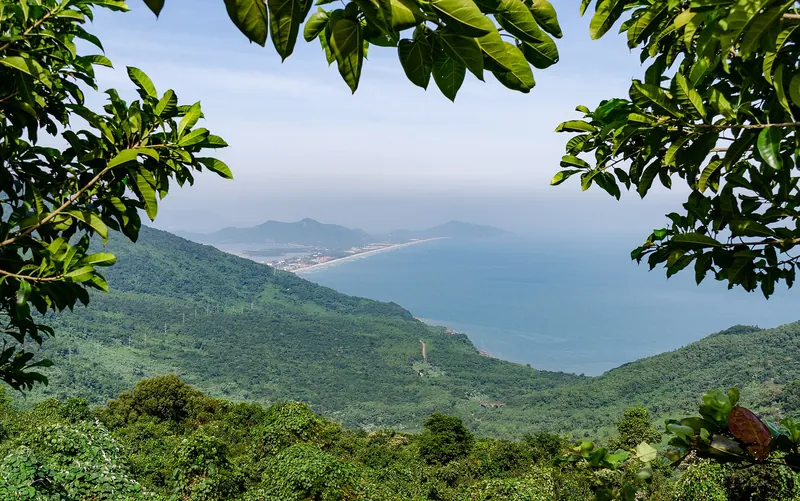
Most visitors continue south to Hoi An, and how you make that trip matters more than it seems. By road, the route crosses the Hai Van Pass, where forested mountains drop into the sea. The national tourism site describes the pass itself as about 20 kilometres, with the remains of a Nguyen-era lookout post at the top and Lang Co, at the foot of the pass on the Hue side, as a good stop for a seafood lunch beside its lagoon. Its Hoi An–Hue route with stops at the Marble Mountains, Da Nang, the pass, Lang Co and Tam Giang Lagoon is about 150 kilometres and a full day. A private car with a driver lets you make those stops; ride a motorbike only if you are experienced with Vietnamese traffic and mountain roads.
The alternative is the railway. The national tourism site describes a dedicated Hue–Da Nang tourist service, "Connecting Central Heritage", with two pairs of trains numbered HD1/2 and HD3/4, which stop at Lang Co station for about ten minutes for passengers to see the bay. Check the exact timetable on Vietnam Railways' website before planning around it; from Da Nang you continue to Hoi An by road. Hoi An also has bus and shuttle-van connections from Hue.
Whichever you choose, treat it as a travel day, not a sightseeing day in Hue.
A workable two- or three-day plan
This is an editorial suggestion, not a timetable. Check opening times and ticket prices for each site before you go.
- Day 1 — Citadel and tombs: the Citadel streets and the Imperial City in the morning, a long lunch and rest, then two royal tombs by car in the afternoon; the Ngo Mon Gate at dusk if you still have energy.
- Day 2 — River and food: a slow breakfast, Kim Long's garden houses or An Dinh Palace, a steamed-cake lunch, and Thien Mu Pagoda for the late afternoon; dinner on the south bank.
- Day 3 (optional): Hen Island and the Chinese quarter, Dong Ba Market, a bicycle ride to the Thanh Toan tile-roofed bridge, or the coast at Thuan An beyond Tam Giang Lagoon.
- Onward: a full day to Hoi An over the Hai Van Pass by car, or the heritage train to Da Nang.
Practical questions
How many days do I need in Hue?
Two full days cover the Imperial City, two royal tombs, Thien Mu Pagoda and a proper taste of Hue food. A third day adds the garden houses, Hen Island, the lagoon or a bicycle ride without rushing. A day trip from Da Nang or Hoi An is possible but leaves little time beyond the Imperial City and one tomb.
Which royal tombs should I visit?
For a first visit, choose two or three of Minh Mang, Tu Duc and Khai Dinh — ordered and grand, landscaped and poetic, and hillside East-meets-West respectively. For fewer people, the national tourism site suggests Gia Long, Thieu Tri, Duc Duc or Dong Khanh.
Is there a combined ticket for the Imperial City and the tombs?
Yes. When we checked on 2026-10-03, the Visit Hue price table listed three-site tickets for the Imperial City plus two of Minh Mang, Tu Duc and Khai Dinh from 420,000 VND, and a four-site ticket from 530,000 VND. Prices may change; check at the ticket office or on the conservation centre's e-ticket site.
Should I stay inside the Citadel or on the south bank?
Stay inside or beside the Citadel if walking to the Imperial City early matters most. Stay on the south bank near Le Loi Street for more restaurants, hotel choice and easier car pick-ups for the tombs and the onward journey.
How do I get from Hue to Hoi An?
By car over the Hai Van Pass, ideally with stops at the top, at Lang Co and in Da Nang — the national tourism site's route is about 150 kilometres and a full day. Or take the Hue–Da Nang heritage train, which pauses at Lang Co, and continue to Hoi An by road. Buses and shuttle vans also run.
When is the best time to visit Hue?
The national tourism site calls February to April Hue's best months. June and July are very hot, and the rainy season runs from August into January, with flooding usually between October and the end of the year. In the wet months, keep a spare day and check local updates before travelling.
Sources and checks before you travel
Reference sources for the version dated 3 October 2026. Confirm opening times, access, transport and conditions for your travel dates.
- Vietnam Tourism: Hue ↗ — opens in a new tab
- Vietnam Tourism: 3 days in Hue for culture seekers ↗ — opens in a new tab
- Vietnam Tourism: how to eat like a local in Hue ↗ — opens in a new tab
- Vietnam Tourism: Hue's best to eat, from the palace to the street ↗ — opens in a new tab
- Visit Hue (Hue Department of Culture, Sports and Tourism): ticket prices for heritage sites ↗ — opens in a new tab
- Vietnam Tourism: motorbiking Hoi An to Hue over the Hai Van Pass ↗ — opens in a new tab
- Vietnam Tourism: Vietnam railway, an incredible train journey ↗ — opens in a new tab
- Vietnam Tourism: transport within Vietnam ↗ — opens in a new tab
- Vietnam Tourism: Hoi An ↗ — opens in a new tab
- Vietnamese Government portal: Hue established as a centrally run city from 1 January 2025 ↗ — opens in a new tab
Does this experience fit your route?
A car over the Hai Van Pass is the most scenic way to leave Hue for Hoi An. Check the stops, the luggage allowance and the drop-off point before you book.
Check dates and details on Viator ↗ — opens in a new tabAffiliate link · Book with ViatorPhoto credits
The Ngo Mon (Meridian) Gate, the main entrance to the Imperial City in Hue
Photograph: This Photo was taken by Supanut Arunoprayote . Feel free to use any of my images, but please mention me as the author and may send me a message. (สามารถใช้ภาพได้อิสระ แต่กรุณาใส่เครดิตผู้ถ่ายและอาจส่ง ข้อความบอกกล่าวด้วย ) Please do not upload an updated image here without consultation with the Author. The author would like to make corrections only at his own source. This ensures that the changes are preserved. Please if you think that any changes should be required, please inform the author. Otherwise you can upload a new image with a new name. Please use one of the templates derivative or extract . — opens in a new tab · CC BY 4.0 — opens in a new tab
Changes: Resized and converted to WebP; displayed with responsive crops. · Original photograph and licence details ↗ — opens in a new tab
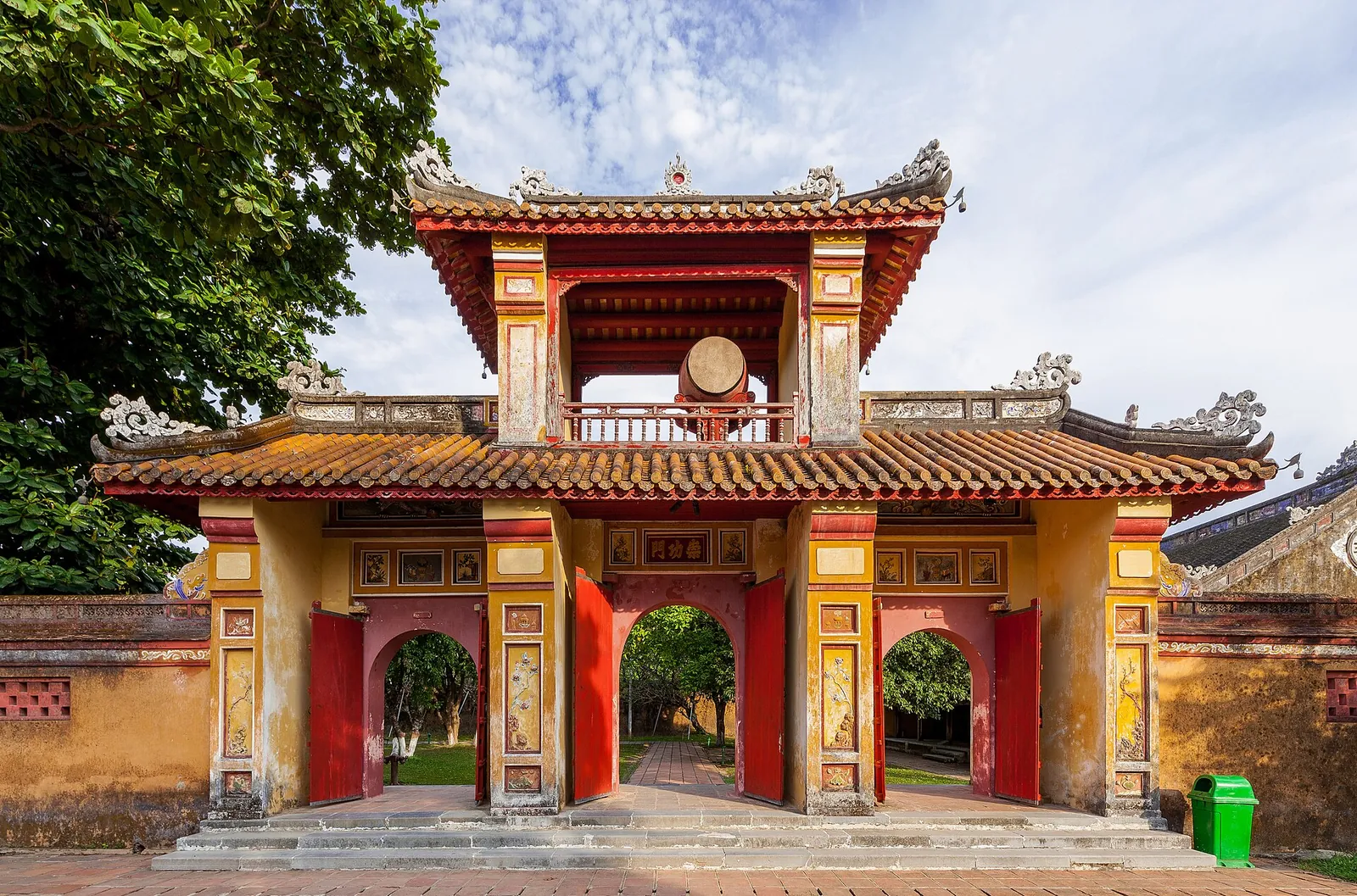
One of the restored gates inside the Imperial City, Hue
Photograph: This Photo was taken by Supanut Arunoprayote . Feel free to use any of my images, but please mention me as the author and may send me a message. (สามารถใช้ภาพได้อิสระ แต่กรุณาใส่เครดิตผู้ถ่ายและอาจส่ง ข้อความบอกกล่าวด้วย ) Please do not upload an updated image here without consultation with the Author. The author would like to make corrections only at his own source. This ensures that the changes are preserved. Please if you think that any changes should be required, please inform the author. Otherwise you can upload a new image with a new name. Please use one of the templates derivative or extract . — opens in a new tab · CC BY 4.0 — opens in a new tab
Changes: Resized and converted to WebP; displayed with responsive crops. · Original photograph and licence details ↗ — opens in a new tab
Thien Mu Pagoda, on the north bank of the Perfume River in Hue
Photograph: CEphoto, Uwe Aranas — opens in a new tab · CC BY-SA 3.0 — opens in a new tab
Changes: Resized and converted to WebP; displayed with responsive crops. · Original photograph and licence details ↗ — opens in a new tab
The approach across the lake at the tomb of Emperor Minh Mang, outside Hue
Photograph: CEphoto, Uwe Aranas — opens in a new tab · CC BY-SA 3.0 — opens in a new tab
Changes: Resized and converted to WebP; displayed with responsive crops. · Original photograph and licence details ↗ — opens in a new tab
The courtyard of stone mandarins at the tomb of Emperor Khai Dinh, Hue
Photograph: dronepicr — opens in a new tab · CC BY 2.0 — opens in a new tab
Changes: Resized and converted to WebP; displayed with responsive crops. · Original photograph and licence details ↗ — opens in a new tab
Bun bo Hue, the beef and pork rice-noodle soup named after the city
Photograph: Phương Huy ( thảo luận ) — opens in a new tab · Public domain — opens in a new tab
Changes: Resized and converted to WebP; displayed with responsive crops. · Original photograph and licence details ↗ — opens in a new tab