Northern Mountains · Lao Cai
Sa Pa guide: Muong Hoa valley treks, Fansipan and when to see the rice
Sa Pa town sits at about 1,600 metres in the Hoang Lien Son range, at the head of the Muong Hoa valley, and it is busier and more built-up than most photographs suggest. The reason to come is what lies below and around it: rice terraces still farmed by Hmong, Dao, Giay and other communities, village paths along the Muong Hoa river, and Fansipan, the highest peak in Indochina, above it all. Plan the trip around getting out of town, and around the few weeks when the rice is at its best.
- Suggested time
- 2–3 nights
- Where to stay
- Sa Pa town for the first night and the cable car; a Ta Van or Muong Hoa valley homestay or lodge for the terraces
- Season and timing
- September and October for the terraces at their best (the gold peaks around mid-September), April and May for settled weather, June to August warm and green, November to March cold. Fansipan's summit is 7–10°C colder than town.
The short answer
Give Sa Pa two nights at the very least, and three if you want both a valley trek and Fansipan. Spend one night in town for arrival, the market and the cable car, and at least one in a homestay or lodge in the Muong Hoa valley around Ta Van, where the terraces start at the door. Walk the valley villages with a local guide; Cat Cat and Ta Phin can be visited without one. Come from mid-August to September for green-to-gold rice, or in April and May for clearer skies, and avoid Vietnamese weekends and holidays if you can.
Town or valley: decide where you sleep first
Sa Pa town — officially Sa Pa ward of Lao Cai province since the 2025 reorganisation — is where the buses and limousine vans stop, where the Muong Hoa mountain train leaves for the Fansipan cable car, and where most hotels, restaurants and the market are. It is convenient, steep and, at weekends and on Vietnamese holidays, crowded. One night here is useful; a whole stay here means seeing the terraces mainly from a car window.
The Muong Hoa valley below town is the alternative. Ta Van commune alone had 174 accommodation businesses, according to a September 2026 report in the provincial newspaper, from family homestays in the villages to lodges with views over the terraces; visitor numbers there peak in July and August. A Black Hmong guide interviewed by the national tourism site lives about twenty minutes from town by motorbike but two hours on foot, which is the scale to keep in mind: valley lodgings are close by road but a different world on foot. Sleeping down there means walking the paths in the early morning, before the day-trippers arrive.
If you want a pool and a restaurant, choose one of the ridge-top lodges; if you want to eat with a family and hear how the village lives, choose a homestay. Ask before booking whether the place can be reached by car in the rain, and whether dinner is included.
Walking the Muong Hoa valley and the nearer villages
Vietnam's national tourism site describes Sa Pa as offering some of the country's best trekking, and singles out Cat Cat and Ta Phin as villages that can be seen without a guide. Cat Cat is run as a ticketed attraction: the provincial tourism portal's 2024 price list showed 150,000 VND per adult, so check the current price at the gate. Ta Phin, a drive from town, is known for Red Dao herbal baths made from forest leaves and bark.
For the Muong Hoa valley itself — the terraces of Lao Chai, Ta Van and Hau Thao along the river — go with a local guide. A guide knows the paths through the working fields and can change the route when rain makes them slippery. The national tourism site recommends choosing a locally owned company that follows sustainable practices, and agreeing the balance between walking and village time with your guide before you set off. Overnight treks usually begin at the market to buy food, and lunch is often cooked over an open fire.
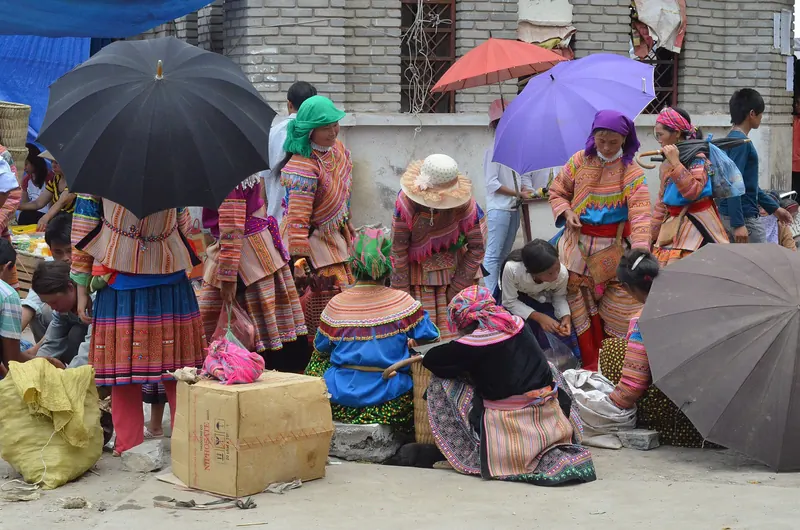
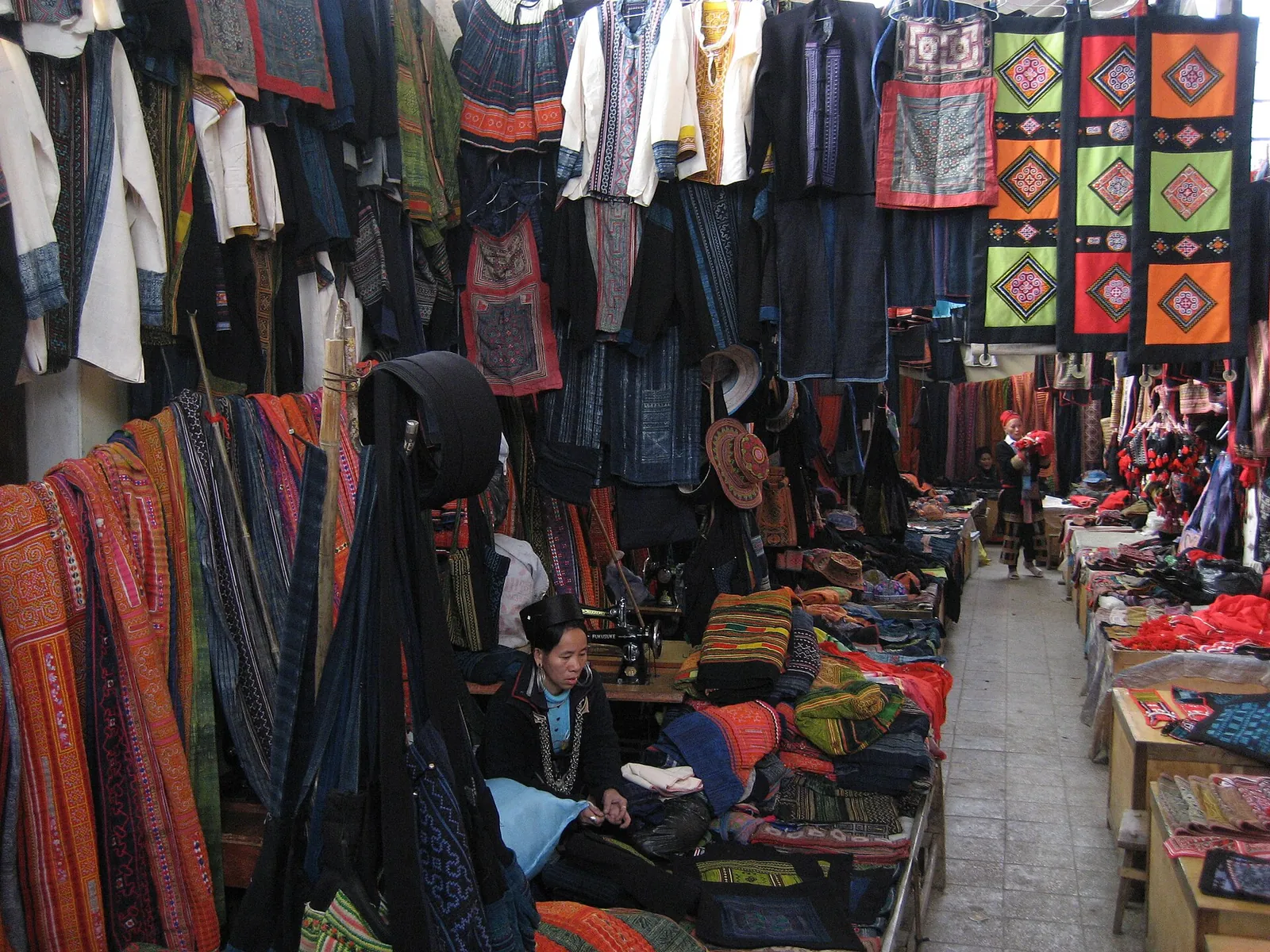
Walk in shoes with grip, carry rain gear in every season and expect to be offered handicrafts along the way. The same Hmong guide suggests buying textiles at the back of the Sa Pa market and upstairs, where local women sell, and asking how long a piece took to make before you agree a price.
Make time for the local food
What to eat and where to look
Rainbow trout and sturgeon (ca hoi, ca tam)
Cold-water trout and sturgeon are Sa Pa's best-known ingredients. The national tourism site describes trout in a hot and sour soup with tomato and pineapple, grilled with spices and rolled in rice paper with cucumber and herbs, and sturgeon marinated in turmeric and honey, grilled and wrapped with greens.
- Where to look
- Restaurants in Sa Pa town, the valley lodges, and the restaurants of the Fansipan complex, whose buffet and noodle soups use local trout and sturgeon.
- Fit it into your day
- A hotpot is a dinner to share after a cold day; order it for the table rather than one each.
Ask how the fish is priced and how much one hotpot serves before ordering.
Chayote shoots with garlic and fresh tofu (rau su su, dau phu)
Sa Pa's everyday greens: tender chayote shoots stir-fried with garlic, often alongside tofu that local families make fresh each morning. Simple, but this is what the valley actually eats.
- Where to look
- Almost any local restaurant in town, and on the table at most homestays.
- Fit it into your day
- Order a plate with any meal; it is the easiest vegetable dish for travellers who avoid unusual meats.
Usually seasoned with fish sauce or meat stock; ask if you need it vegetarian.
Smoked buffalo meat (thit trau gac bep)
Strips of buffalo meat cured above the kitchen fire, a staple of the mountain communities that the national tourism site lists alongside herbs, vegetables and river fish as what ethnic families mainly eat.
- Where to look
- Market stalls and specialty shops in Sa Pa town, and restaurants serving mountain dishes.
- Fit it into your day
- Try a small portion with drinks in the evening, or buy a packet for the train home.
Quite chewy; if you buy it to take away, check that the packet is sealed and labelled.
A homestay or trek meal
On guided treks, lunch is often cooked over an open fire with food bought at the market that morning, and homestays serve family-style dinners. A Hmong guide quoted by the national tourism site calls this the best way to try Sa Pa food.
- Where to look
- Your homestay in Ta Van or the Muong Hoa valley, or a trek that includes a village lunch.
- Fit it into your day
- Make dinner on your valley night part of the stay; check when booking whether it is included.
Tell your host or guide about allergies and dietary needs when you book, since the food is bought before you set off.
Fansipan: cable car, mountain train or a two-day climb
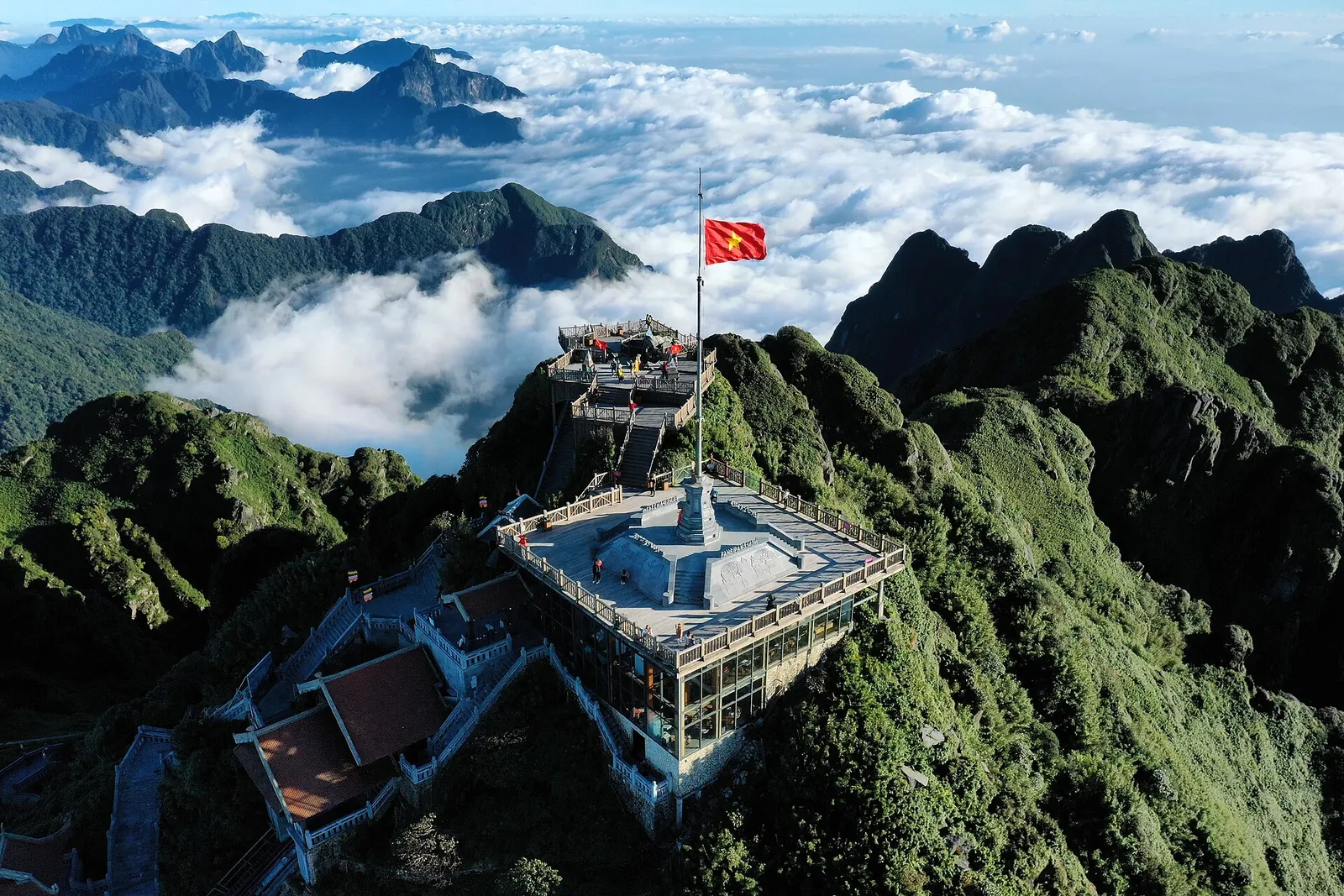
Fansipan rises to 3,143 metres above town. The easy way up starts at Hoang Lien station, next to the Hotel de la Coupole, with a five-minute ride on the Muong Hoa mountain train to the cable-car station; the cable car then crosses the valley to the top station in about 15 to 20 minutes, and a final flight of steps or a short funicular reaches the summit marker, past a large complex of pagodas and a bronze Buddha. The national tourism site lists the cable cars as running from 7:30am to 5:30pm daily. When we checked on 2026-10-03, the operator's June 2026 guide listed a return cable-car ticket at 850,000 VND for adults and 550,000 VND for children between 1 m and 1.4 m tall, with combination tickets for the mountain trains and a buffet costing more.
Go early on a clear morning; the operator says the sea of clouds is most frequent from September to November, especially after rain, and that the summit is 7–10°C colder than Sa Pa, so bring a warm layer even in summer. On a day of thick cloud you may see nothing at all from the top.
Climbing Fansipan on foot is a serious mountain trek through Hoang Lien National Park, not a walk from town. The usual route starts at Tram Ton, above 1,900 metres, and the round trip is more than 20 km, normally over two days and one night. The provincial newspaper reported in April 2026 that trekkers must register and be permitted, go with a licensed tour operator and guide, and never climb on their own.
When the rice terraces are worth the trip
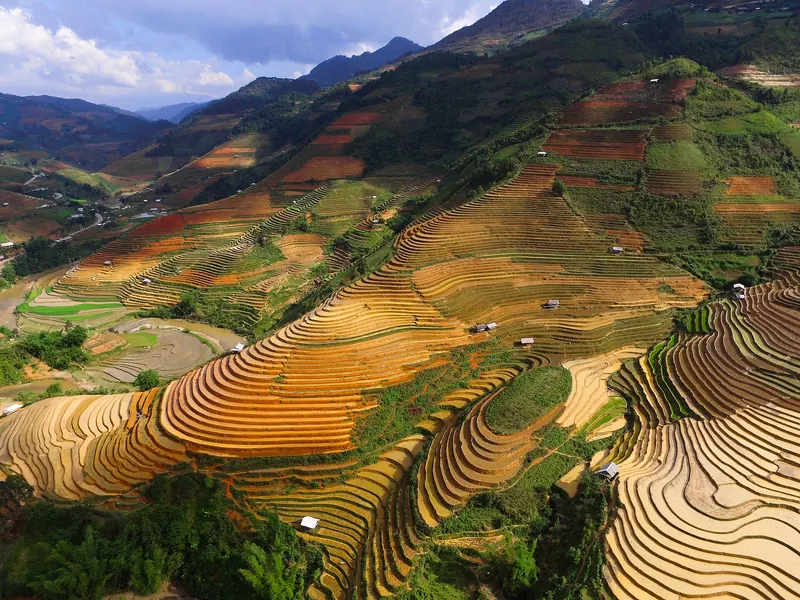
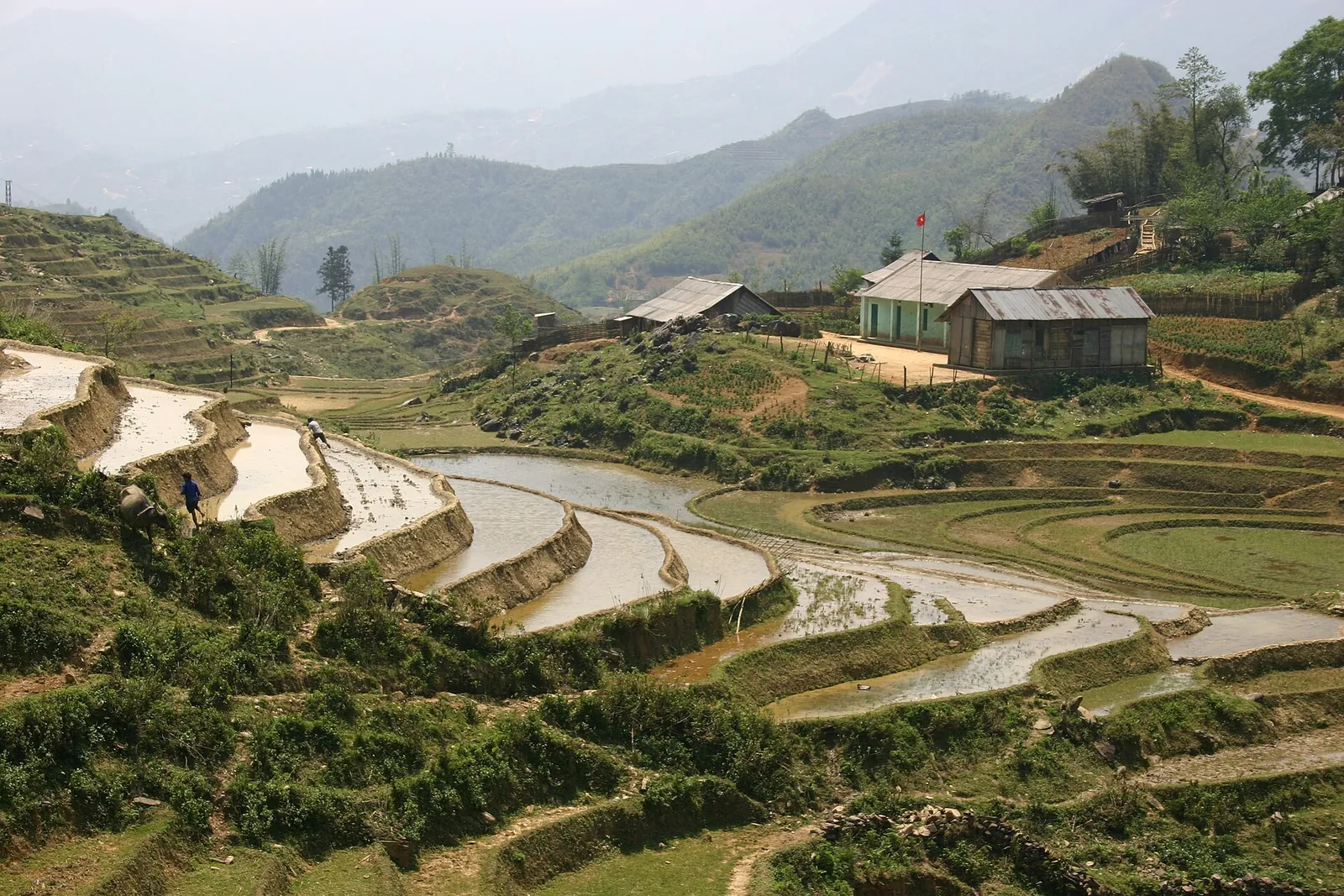
The terraces change completely through the year. The national tourism site calls September and October the most splendid months, and its rice-terrace guide says clear skies and the best views usually come from mid-August to early September, just before harvest. Lao Cai's provincial tourism portal describes green rice until the end of August and ripe, golden rice around mid-September. If you are planning for a particular colour, check recent photographs from the valley shortly before you travel, because the harvest moves by a week or two from year to year.
April and May bring clearer, more settled weather, and June to August is warm and green. From November to March it is chilly, and you come for the mountains and the villages rather than the rice. Cloud can close in at any time of year, so leave a spare half-day for Fansipan.
Crowds follow the seasons and the calendar: Ta Van's busiest months are July and August, and Sa Pa town fills up at weekends and on public holidays. A midweek stay in late August or September is the best compromise between the harvest colours and space on the paths.
Getting there from Hanoi
There is no airport in Sa Pa. From Hanoi, the national tourism site describes two main options: limousine vans and buses from central Hanoi, which take about five to six hours and drop you in Sa Pa town, and the overnight train of about eight hours to Lao Cai, followed by a ride of about an hour up the mountain. From town, take a taxi to homestays and lodges in the valleys.
The train lets you arrive in the morning without losing a day, but a night in a sleeper berth is not the same as a night in bed; plan an easy first day. Vans are simpler and stop in the centre. Book the return in advance for weekends and holidays, and check the operator's current timetable, since neither schedules nor fares are fixed from season to season.
A three-night plan
This is an editorial suggestion, not a timetable. Swap the days around to put Fansipan on the clearest morning.
- Day 1 — Arrive in town: check in, walk to the market, and visit Cat Cat in the late afternoon if you have the energy.
- Day 2 — Fansipan: the mountain train and cable car at opening time, then lunch back in town and a transfer down to your valley homestay or lodge.
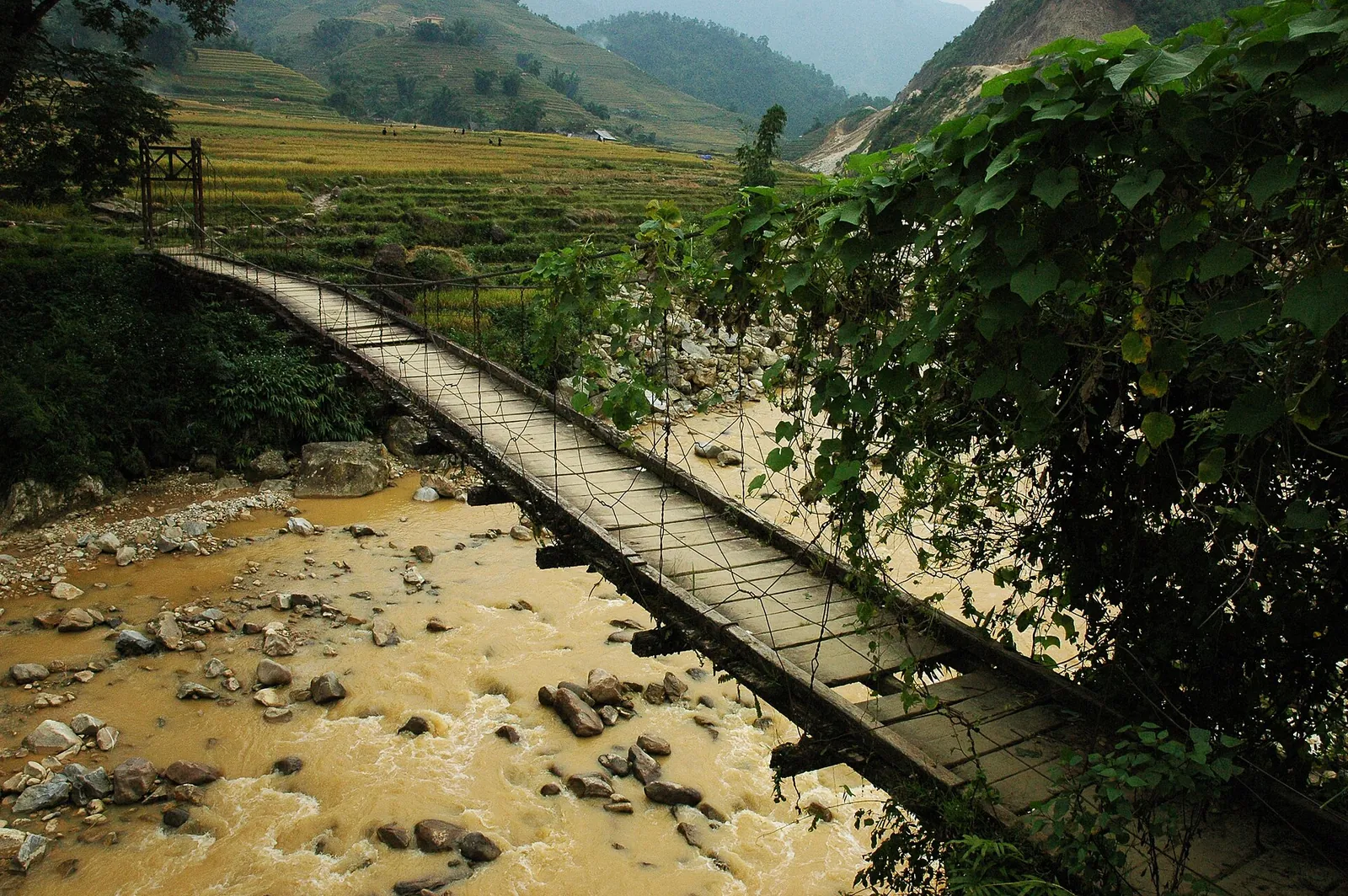
- Day 3 — Muong Hoa valley: a guided walk through the terraces around Lao Chai, Ta Van and Hau Thao, with lunch in a village and a second night in the valley.
- Day 4 — Ta Phin or a market: a herbal bath in Ta Phin, or on a Sunday the small morning market at Muong Hum, then the van or night train back towards Hanoi. Bac Ha's Sunday market, about three hours away by road, deserves its own trip.
Practical questions
How many days do I need in Sa Pa?
Two nights are the minimum to see more than the town; three let you do Fansipan, a guided valley trek and a night in a homestay without rushing. The journey from Hanoi takes most of a day or a night each way, so do not count travel days as sightseeing days.
Do I need a guide to trek around Sa Pa?
Not for Cat Cat or Ta Phin, which the national tourism site says can be visited on your own. For the Muong Hoa valley paths a local guide is strongly advisable, and for a Fansipan climb a registered operator, permit and licensed guide are required.
When are the rice terraces golden?
Usually around mid-September, after green rice through August, according to Lao Cai's provincial tourism portal; the national tourism site recommends mid-August to early September for clear views before the harvest. The timing shifts a little each year, so check recent photos before you go.
How much is the Fansipan cable car?
When we checked on 2026-10-03, the operator's June 2026 guide listed a return ticket at 850,000 VND for adults and 550,000 VND for children between 1 m and 1.4 m tall. Combination tickets with the mountain trains or a buffet cost more.
Should I take the night train or a bus from Hanoi?
The overnight train to Lao Cai takes about eight hours plus an hour by road; limousine vans and buses take about five to six hours and stop in Sa Pa town. The train saves daylight; the van is simpler and drops you in the centre.
Is Sa Pa worth visiting in winter?
Yes, if you come for the mountains and the villages rather than the rice. The national tourism site warns of chilly weather from November to March, and the operator says Fansipan's summit is 7–10°C colder than town, so pack proper warm clothes.
Sources and checks before you travel
Reference sources for the version dated 3 October 2026. Confirm opening times, access, transport and conditions for your travel dates.
- Vietnam Tourism: Sapa ↗ — opens in a new tab
- Vietnam Tourism: Sapa for sustainable travellers ↗ — opens in a new tab
- Vietnam Tourism: Why Fansipan is a must-do in Sapa ↗ — opens in a new tab
- Sun World: Sun World Fansipan Legend visitor guide (June 2026) ↗ — opens in a new tab
- Vietnam Tourism: Where to see Vietnam's rice terraces ↗ — opens in a new tab
- Lao Cai provincial tourism portal: Sa Pa sightseeing prices (2024) ↗ — opens in a new tab
- Bao Lao Cai: 300 trekkers climb Fansipan overnight (April 2026) ↗ — opens in a new tab
- Bao Lao Cai: community tourism and new livelihoods in Ta Van (September 2026) ↗ — opens in a new tab
- Bao Lao Cai: digital kiosks and public wifi in Sa Pa (September 2026) ↗ — opens in a new tab
- Vietnam Tourism: My Sapa – Ly Thy Ker ↗ — opens in a new tab
- Vietnam Tourism: 5 reasons to choose Topas Ecolodge ↗ — opens in a new tab
- Vietnam Tourism: a traveller's guide to Vietnam's airports ↗ — opens in a new tab
Does this experience fit your route?
A guided walk is the easiest way into the Muong Hoa valley. Check the distance, the start point and what happens if it rains before you book.
Check dates and details on Viator ↗ — opens in a new tabAffiliate link · Book with ViatorPhoto credits
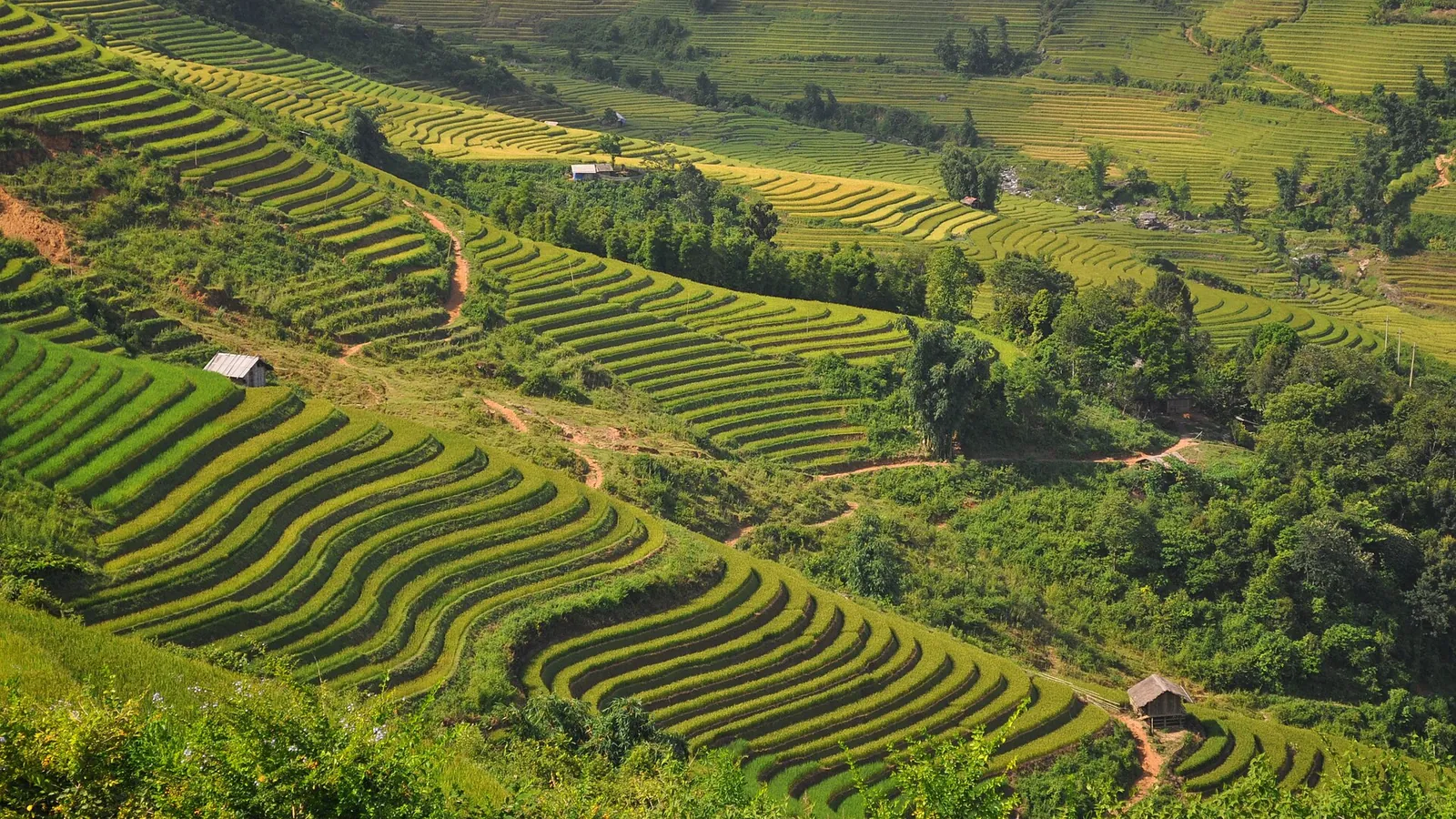
Rice terraces on the slopes around Sa Pa, turning from green to gold
Photograph: David McKelvey — opens in a new tab · CC BY 2.0 — opens in a new tab
Changes: Resized and converted to WebP; displayed with responsive crops. · Original photograph and licence details ↗ — opens in a new tab
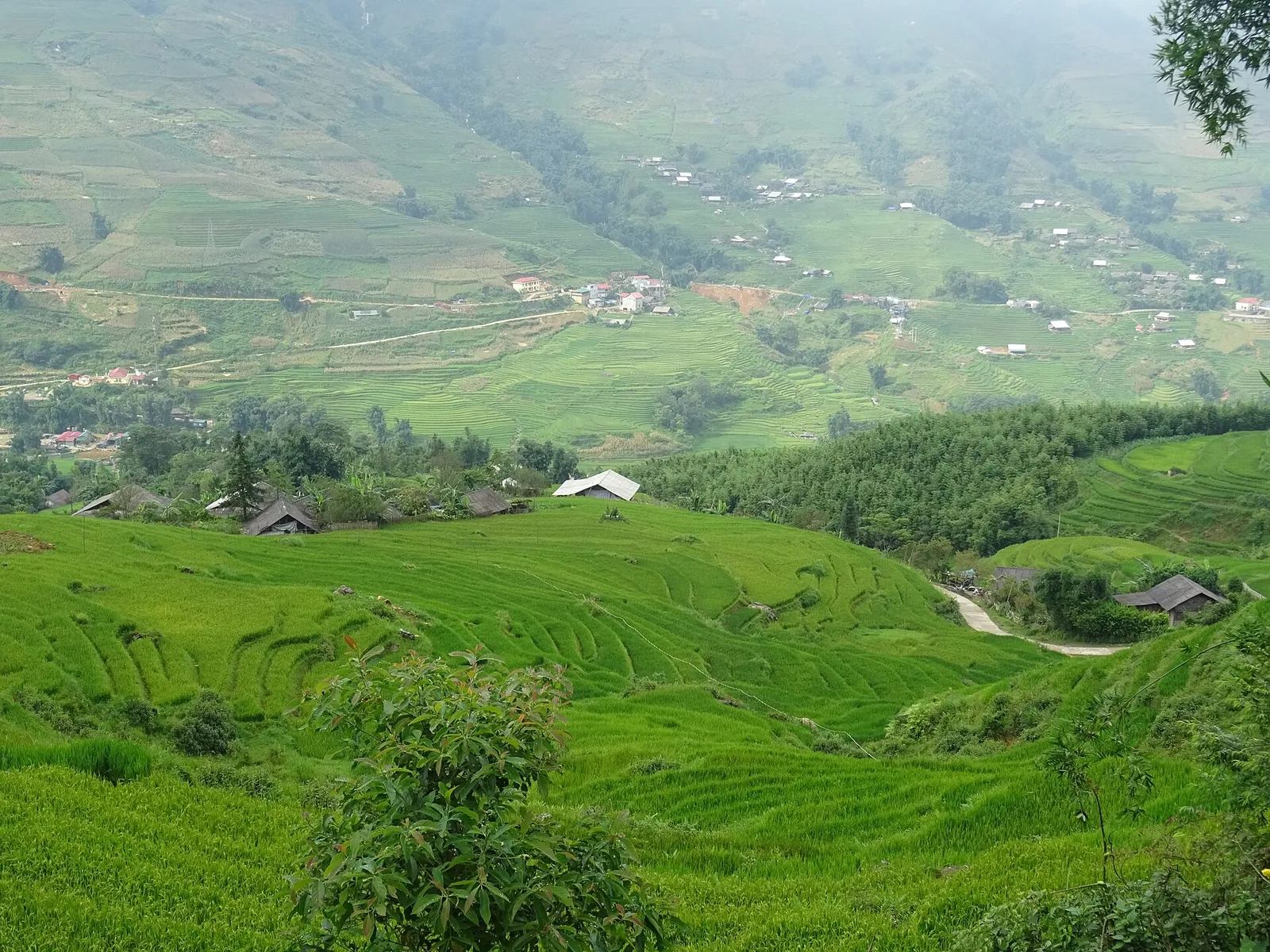
Hau Thao seen from Ta Van across the Muong Hoa valley
Photograph: Christophe95 — opens in a new tab · CC BY-SA 4.0 — opens in a new tab
Changes: Resized and converted to WebP; displayed with responsive crops. · Original photograph and licence details ↗ — opens in a new tab
The summit of Fansipan, 3,143 metres, above the clouds
Photograph: Vivu Vietnam — opens in a new tab · CC BY-SA 4.0 — opens in a new tab
Changes: Resized and converted to WebP; displayed with responsive crops. · Original photograph and licence details ↗ — opens in a new tab
Terraces near Sa Pa filled with water in April, before planting
Photograph: Pierredh — opens in a new tab · CC BY-SA 3.0 — opens in a new tab
Changes: Resized and converted to WebP; displayed with responsive crops. · Original photograph and licence details ↗ — opens in a new tab
A footbridge on the valley trail between Lao Chai and Ta Van
Photograph: Lori_NY — opens in a new tab · CC BY-SA 2.0 — opens in a new tab
Changes: Resized and converted to WebP; displayed with responsive crops. · Original photograph and licence details ↗ — opens in a new tab
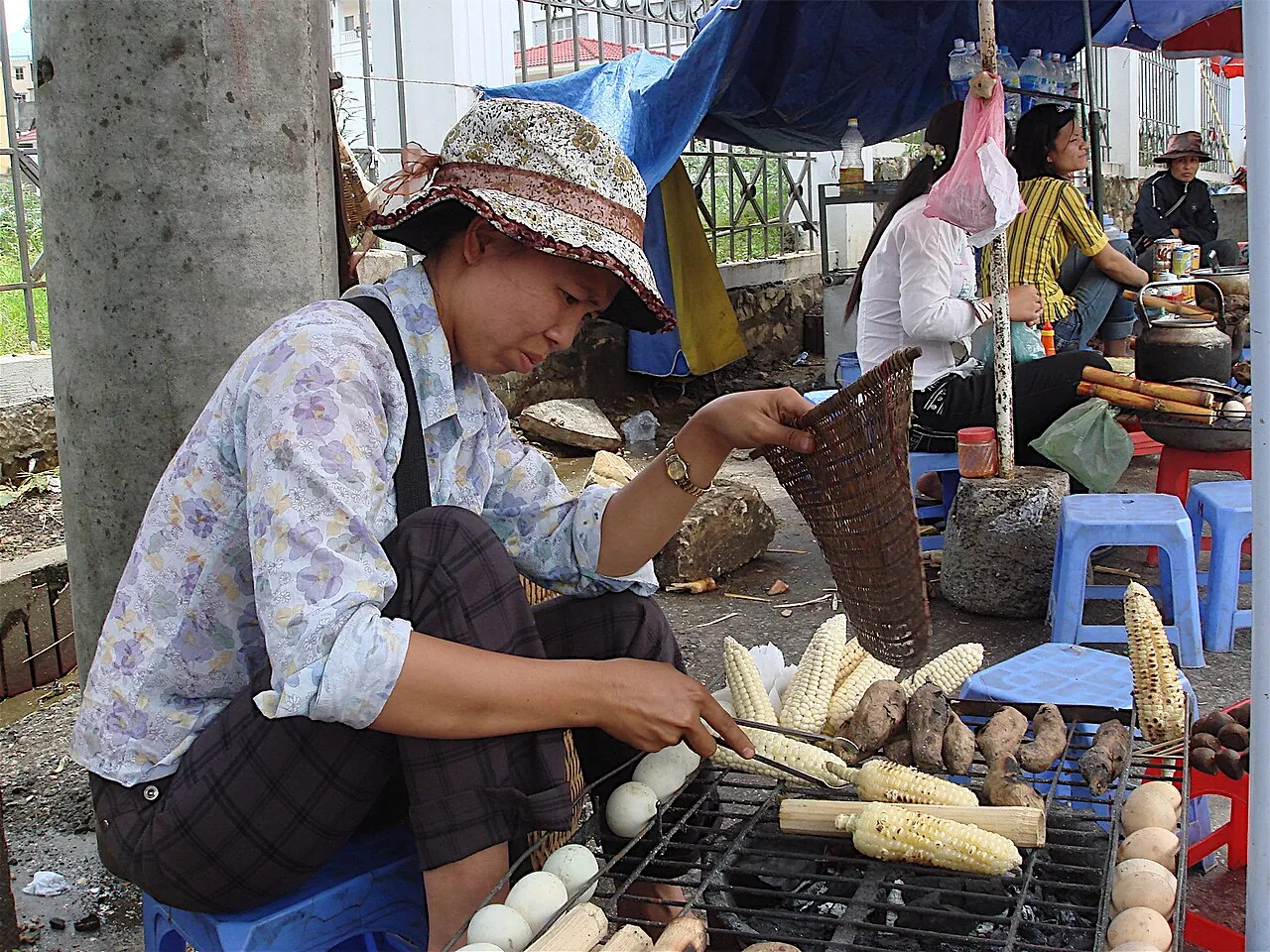
Grilled corn and sweet potatoes at a street stall in Sa Pa
Photograph: Célestine M.C. Leroy — opens in a new tab · CC BY-SA 2.0 — opens in a new tab
Changes: Resized and converted to WebP; displayed with responsive crops. · Original photograph and licence details ↗ — opens in a new tab
Textile stalls at the Sa Pa market
Photograph: Arian Zwegers — opens in a new tab · CC BY 2.0 — opens in a new tab
Changes: Resized and converted to WebP; displayed with responsive crops. · Original photograph and licence details ↗ — opens in a new tab