Central Vietnam · Quang Tri
Phong Nha travel guide: which caves to choose, how long, how to get there
Phong Nha-Ke Bang is a national park of limestone mountains and rainforest whose caves range from a boat ride along an underground river to a six-day expedition through what the park calls the largest natural cave in the world. The surveys quoted by the park's management board have recorded 472 caves with more than 259 kilometres of passages. The decision that shapes your trip is not which cave is most famous but which level of effort you want: an easy show cave, a muddy day of ziplines and swimming, or a guided trek with nights in the jungle. The base for all of it is Phong Nha, a small town on the Son River about 45 kilometres from Dong Hoi, the nearest city with an airport and a railway station. Older maps and signs place it in Quang Binh province; it is now part of Quang Tri.
- Suggested time
- 2–3 days; 4–7 days with an expedition
- Where to stay
- Phong Nha town on the Son River, or a farmstay in the countryside around Bong Lai Valley
- Season and timing
- The national tourism site calls April to June the best months; July to September is hot, the rains and floods usually come from October to December, and December to February can be cold. Many adventure caves close in the wet season, and Son Doong runs only from January to August.
The short answer
Give Phong Nha two full days for the two classic show caves, Phong Nha Cave by boat and Paradise Cave on its boardwalk, plus a river, cycling or swimming afternoon. Add a third day for a guided day adventure, or book an overnight trek such as Hang En weeks ahead and allow an extra night on either side. Sleep in Phong Nha town or the farmstays around Bong Lai Valley rather than in Dong Hoi. Arrive by train or plane at Dong Hoi and take a taxi or a pre-booked transfer for the 45 kilometres, or take a night bus that stops in Phong Nha itself.
Decide your effort level before you book anything
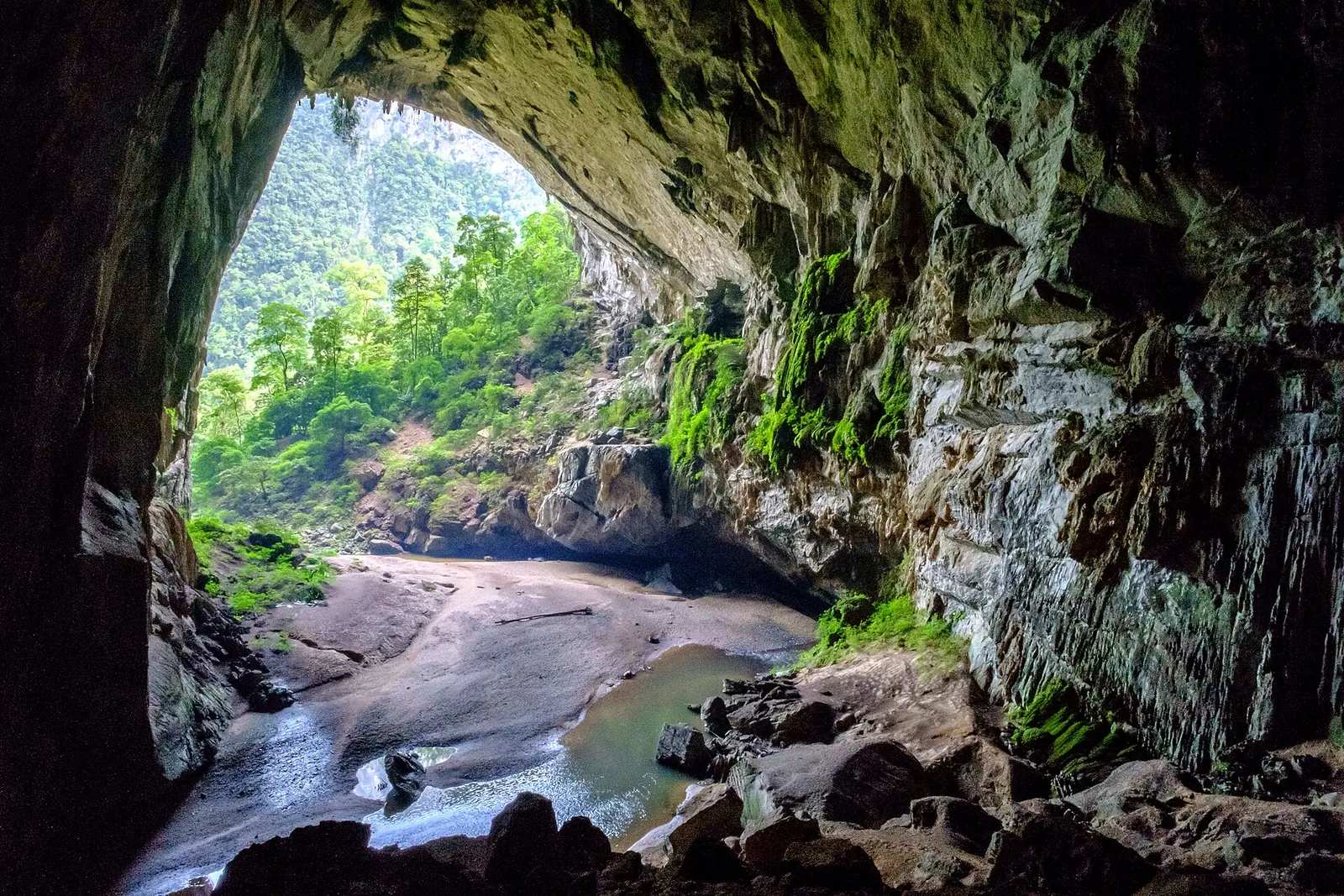
The park's caves fall into three groups, and mixing them up is the most common planning mistake. The show caves — Phong Nha Cave, Tien Son Cave and Paradise Cave — are open daily with tickets at the gate, have lit paths or boats, and suit families and anyone in ordinary shoes. The day adventures — the Chay River and Dark Cave (Hang Toi) site, the 4.5-kilometre Phong Nha Cave trip, the 7-kilometre Paradise Cave trek and Oxalis's Tu Lan and Hang Tien day trips — need you to get wet, muddy or both. The expeditions — Hang En, Hang Va and Nuoc Nut, the multi-day Tu Lan routes and Son Doong — are guided treks with camping, limited places and a season.
The national tourism site notes that the authorities restrict access to the larger caves for conservation, and that certain companies hold exclusive rights to take visitors into particular caves. The park's own pages list Oxalis Adventure as the operator for Son Doong, Hang En and Hang Va. In practice that means the big names are booked with one company, often well ahead, while the show caves can be fitted in on the day.
If you have two days, do one show cave each morning and keep the afternoons for the countryside. If you have three or more, add one adventure day. Plan an expedition first and build the rest of the trip around its fixed departure date.
Phong Nha Cave and Tien Son: the boat trip on the Son River
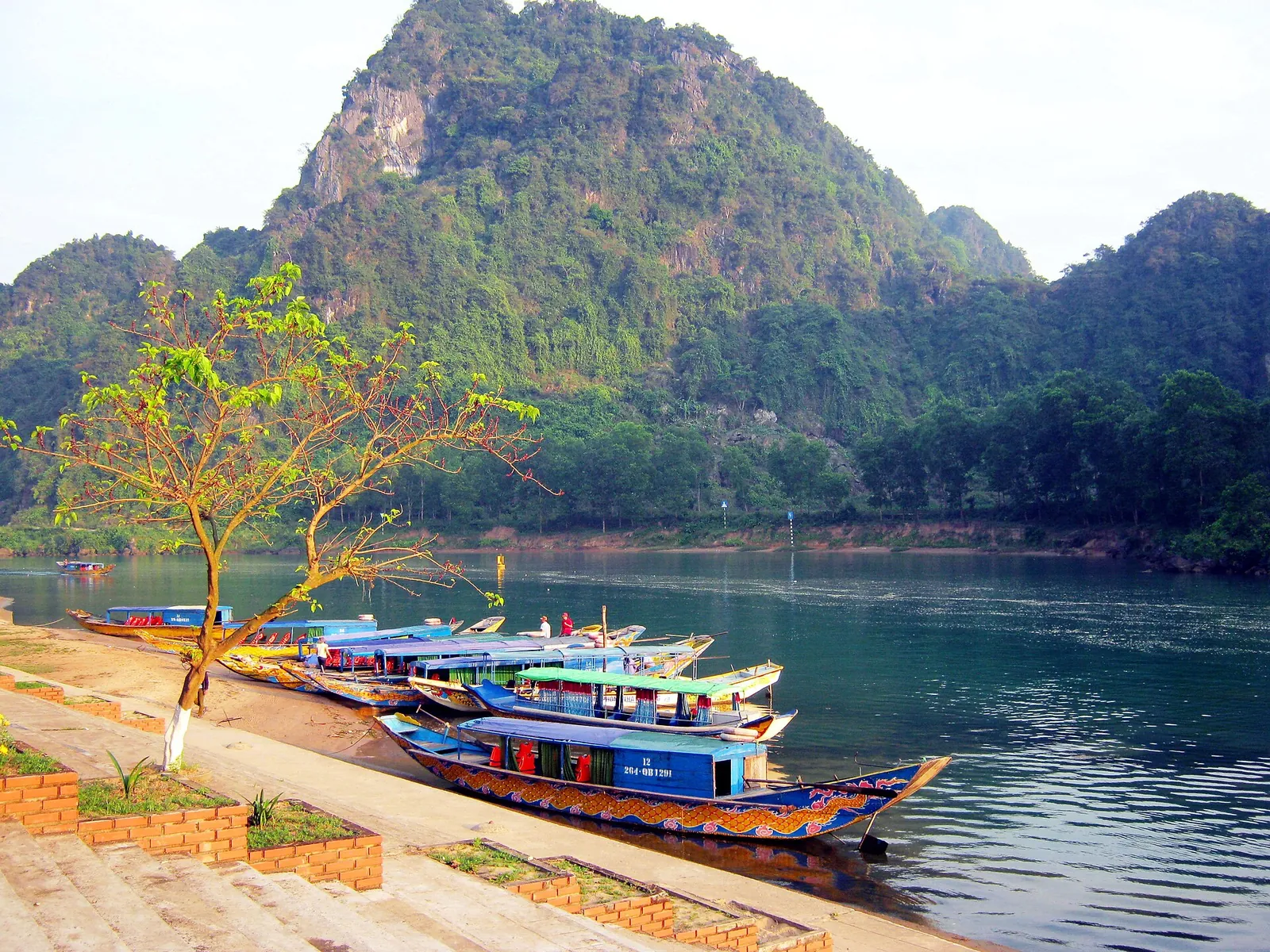
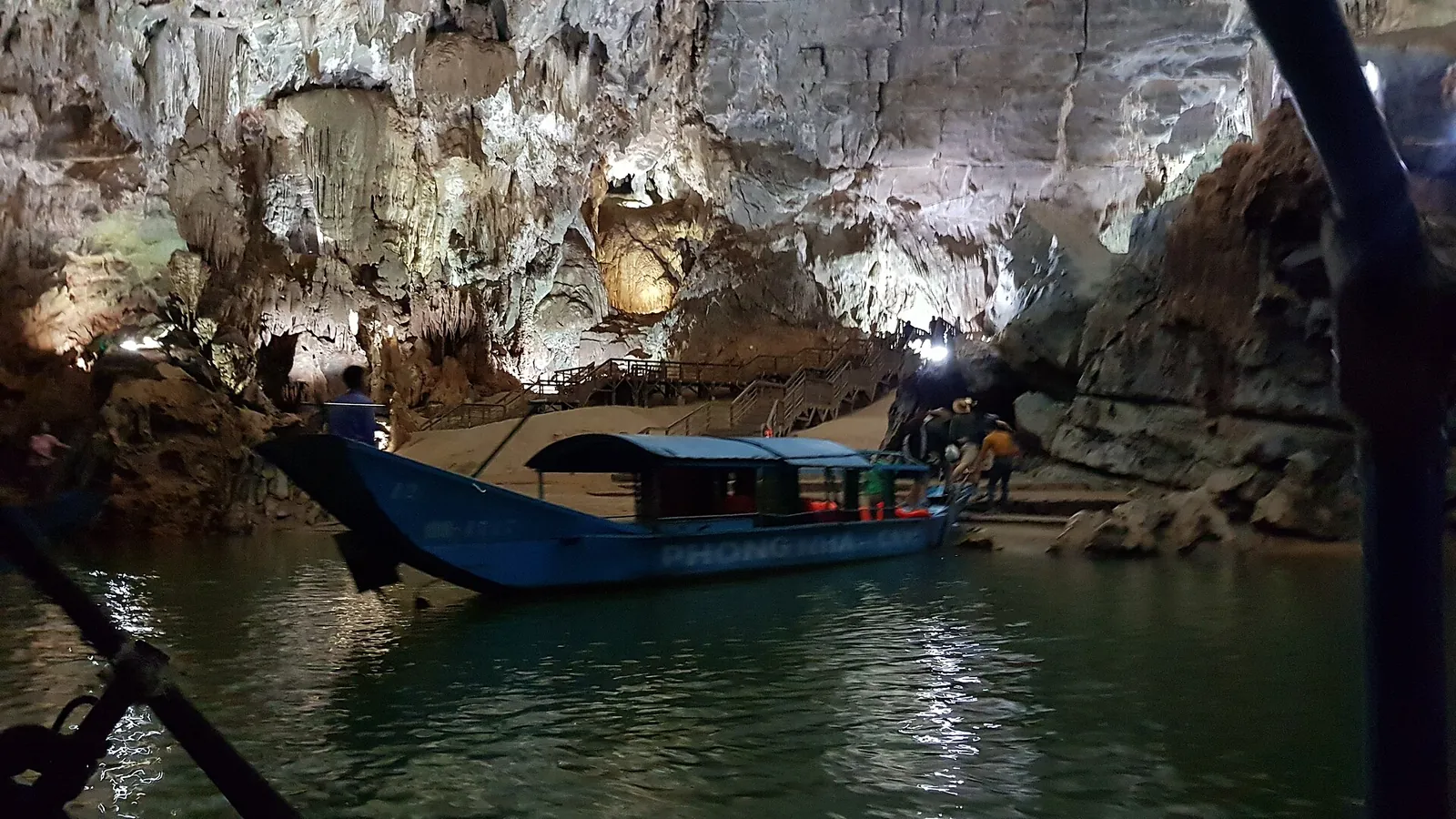
Phong Nha Cave is the park's original attraction, and the visit starts on the water. From the tourism centre in Phong Nha town, boats travel about 30 minutes along the Son River to the cave mouth, where the engine is cut and the boat is paddled along roughly 1,200 metres of the underground river. On the way back you walk the dry chambers known as Hang Tien and Hang Cung Dinh on composite walkways. The park's page puts the whole visit at about two and a half hours. The river runs blue-green in the dry season and turns red-brown in the rains.
When we checked on 2026-10-03, the national park's site listed Phong Nha Cave at 150,000 VND per person, plus a boat at 700,000 VND per boat for the return trip with up to 12 passengers, or 750,000 VND if the boat also waits for Tien Son Cave. Tien Son, a dry cave about 100 metres higher up the mountain, was listed at 80,000 VND and is reached by nearly 600 steps from the landing. The same pages listed daily opening from 7:15 to 16:30 in summer and 7:30 to 15:45 in winter, and English-speaking guides at 400,000 VND for one cave or 500,000 VND for both.
The boat price is per boat, not per person, so it costs much less shared. Ask at your guesthouse whether other travellers are going the same morning. If you want more than the standard visit, the park also runs a 4.5-kilometre Phong Nha Cave trip by kayak and on foot, with a swim in an underground lake; when we checked it was listed at 1,700,000 VND per person, for groups of three to 20, and children only from the age of ten.
Make time for the local food
What to eat and where to look
Grilled chicken with peanut sauce in Bong Lai
The dish that has made a farm restaurant in Bong Lai Valley famous: grilled chicken served with a homemade peanut sauce. The national tourism site describes it as the only thing on the menu at the place known as the Pub with Cold Beer.
- Where to look
- Bong Lai Valley, on the cycling loop off the Ho Chi Minh Road; the national tourism site also mentions getting there by boat.
- Fit it into your day
- A long lunch in the middle of a cycling day, with a swim or a viewpoint afterwards.
Contains peanuts; it is a bike or boat ride out of town, so check it is open before you set off.
Stream shrimp, stream fish and hill chicken
Country food from the forest streams and villages: small freshwater shrimp (tom khe), stream fish and local free-range chicken. The national park lists them among the rustic dishes served on woven trays at Nuoc Mooc.
- Where to look
- The food stalls at Nuoc Mooc eco-trail, and family-run restaurants and homestay kitchens around Phong Nha.
- Fit it into your day
- Lunch after a morning in Paradise Cave and before an afternoon swim at Nuoc Mooc.
Freshwater shrimp are shellfish; ask how fish and chicken are cooked if you are avoiding chilli or fish sauce.
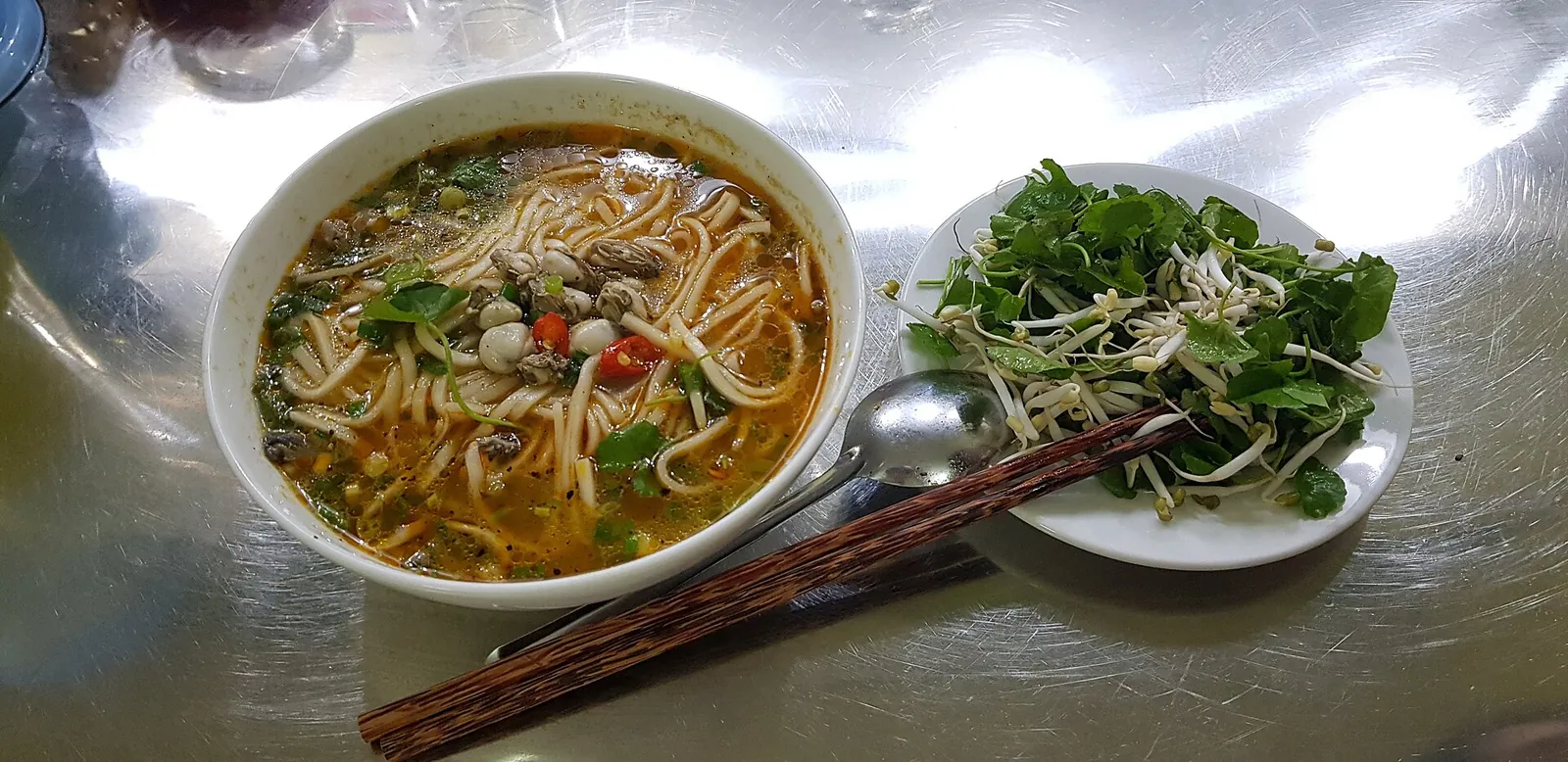
Chao canh (Dong Hoi noodle soup)
A noodle soup the provincial tourism portal names among Dong Hoi's specialities, alongside banh xeo and banh loc. In Dong Hoi it is served with toppings such as oysters, with herbs on the side.
- Where to look
- Noodle and breakfast shops in Dong Hoi, the city where you arrive by train or plane.
- Fit it into your day
- Breakfast after the overnight train, or a meal before your transfer to Phong Nha.
The seafood versions contain shellfish; the broth is usually seasoned with fish sauce.
Xoi chien trung (fried sticky rice with egg)
Sticky rice spread across the pan, covered in beaten egg and fried until crisp, then topped with pork floss. The provincial tourism portal describes it as Dong Hoi's late-night favourite, sold by restaurants that also specialise in chicken dishes.
- Where to look
- Evening and late-night eateries in Dong Hoi.
- Fit it into your day
- A supper if you spend a night in Dong Hoi before an early flight or train.
Fried and filling; contains egg and pork.
Canh ca duoi xuong rong (stingray and cactus soup)
A sour soup from the coast of the old Quang Binh province, made with stingray and the young pads of the cactus that grows on the coastal sand dunes, cooked with tamarind and okra and finished with herbs. The provincial portal calls it one of the area's best-known specialities.
- Where to look
- Seafood restaurants in Dong Hoi rather than in Phong Nha.
- Fit it into your day
- Share it at a seafood dinner in Dong Hoi on your arrival or departure day.
Fish dish; the cactus gives a pleasantly bitter taste that not everyone expects.
Paradise Cave and the wet-and-muddy day out
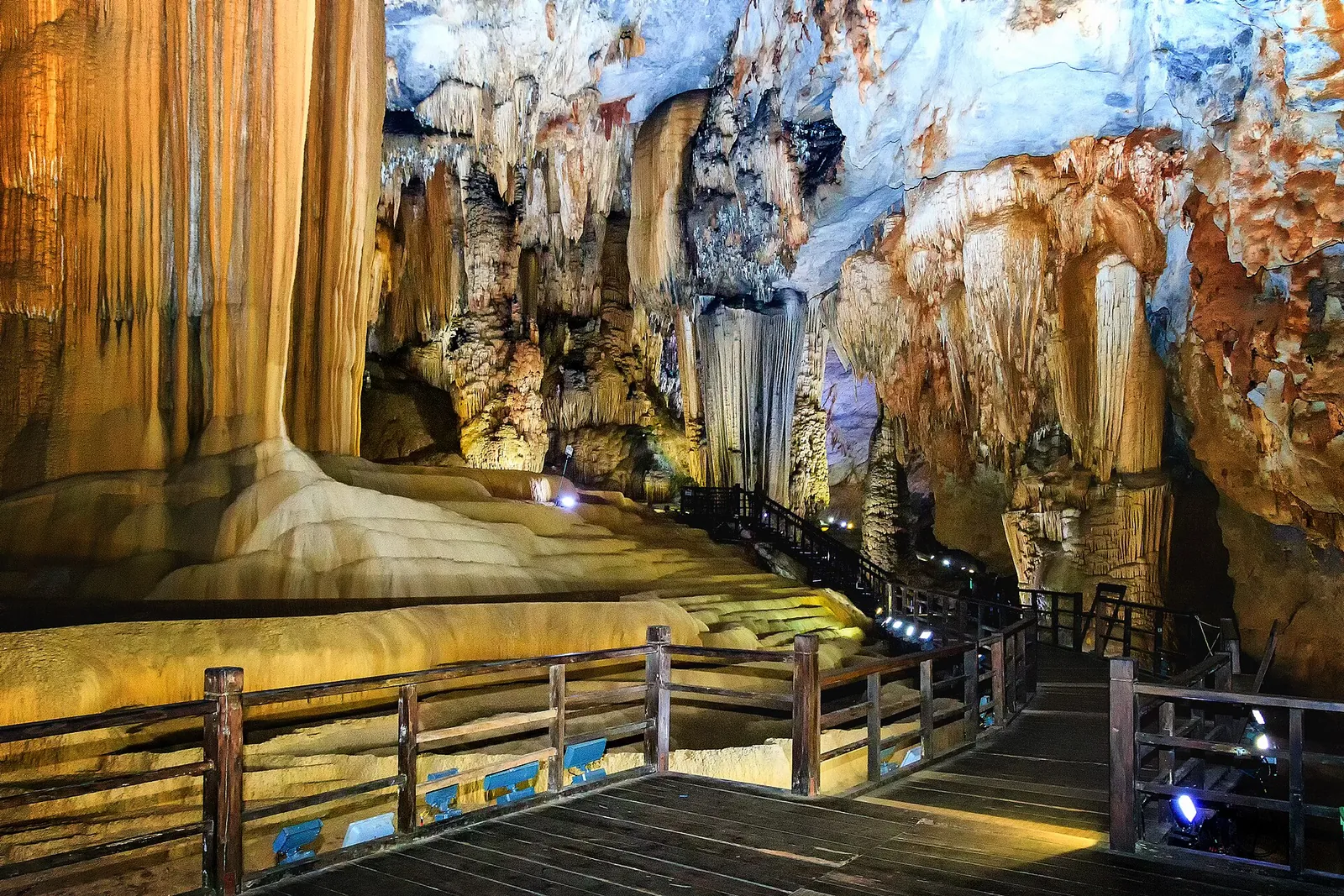
Paradise Cave (Thien Duong) is a dry cave of extraordinary scale: the park's page gives a length of 31.4 kilometres and chambers up to 150 metres wide. Visitors see the first kilometre on a wooden staircase walkway, after a 1.6-kilometre ride by electric buggy or a walk under the forest and a 500-metre climb to the entrance. When we checked on 2026-10-03, the park listed adult tickets at 270,000 VND including the buggy, 145,000 VND for children between 1.1 and 1.3 metres tall and free entry below 1.1 metres. It lies at Km 16 on the western branch of the Ho Chi Minh Road, so you need a car, motorbike or tour to get there. A guided 7-kilometre trek deeper into the cave, with a short kayak crossing, was listed at 2,000,000 VND per person for a day, with a minimum of two people.
The Chay River and Dark Cave site is the opposite: few formations, lots of activity. The park describes a 400-metre zipline across the river to the cave entrance, a mud bath inside the cave, then kayaking, swimming and water games on the river. When we checked, the full package with the cave and mud bath was listed at 450,000 VND for adults, with cheaper packages that leave out the cave. The listed hours were 7:45 to 16:30 in summer and 8:00 to 15:30 in winter; the mud bath needs a height of at least 1.1 metres and the long zipline a weight above 40 kilograms. Bring swimwear, a towel and a change of clothes, and leave valuables behind.
Nuoc Mooc, about 20 minutes by car from Phong Nha Cave, is the gentle option: a spring-fed stream in the forest where the park says the water stays at around 16–18°C even in summer. A sightseeing-only ticket was listed at 80,000 VND, with packages that add kayaks and swimming areas. It makes an easy afternoon after a morning in one of the caves.
Expeditions: Hang En, Hang Va, Tu Lan and Son Doong
These are guided treks, not cave visits, and they come with fitness, age and season rules. The park's pages describe them as follows; check the operator's current conditions before you plan around them.
Oxalis's own FAQ says you need basic swimming skills for any Tu Lan, Hang Va or Hang Ba tour, but not for Hang En, the one-day Hang Tien trek or Son Doong. Life jackets are compulsory, and when the temperature drops below 18°C in winter, guides use boats or rafts instead of swimming. The cave floor on all of them is uneven, with boulders and climbs. Tu Lan tours start from the operator's base in Tan Hoa village, which its day-tour page puts 70 kilometres from Phong Nha, so expect an early pick-up.
- Hang En (2 days, 1 night): a 25-kilometre trek across the Rao Thuong stream and through the Bru-Van Kieu village of Ban Doong, with a night camped on a sandy beach inside the cave. Oxalis rates it 3 out of 6, runs it from December to mid-September for up to 16 people aged 16 to 70, and the park listed it at 8,800,000 VND per person when we checked.
- Hang Va and Nuoc Nut (2 days, 1 night): about 15 kilometres of jungle trekking, rope work and wading to rare cone-shaped stalagmites in calcite pools; January to August only, up to 10 people aged 16 to 70, listed at 9,200,000 VND.
- Tu Lan cave system (1 to 5 days): swimming through river caves, crawling through dry ones and camping by rock pools; there are one-day and family versions, and the national tourism site notes that parts of Kong: Skull Island were filmed in the area.
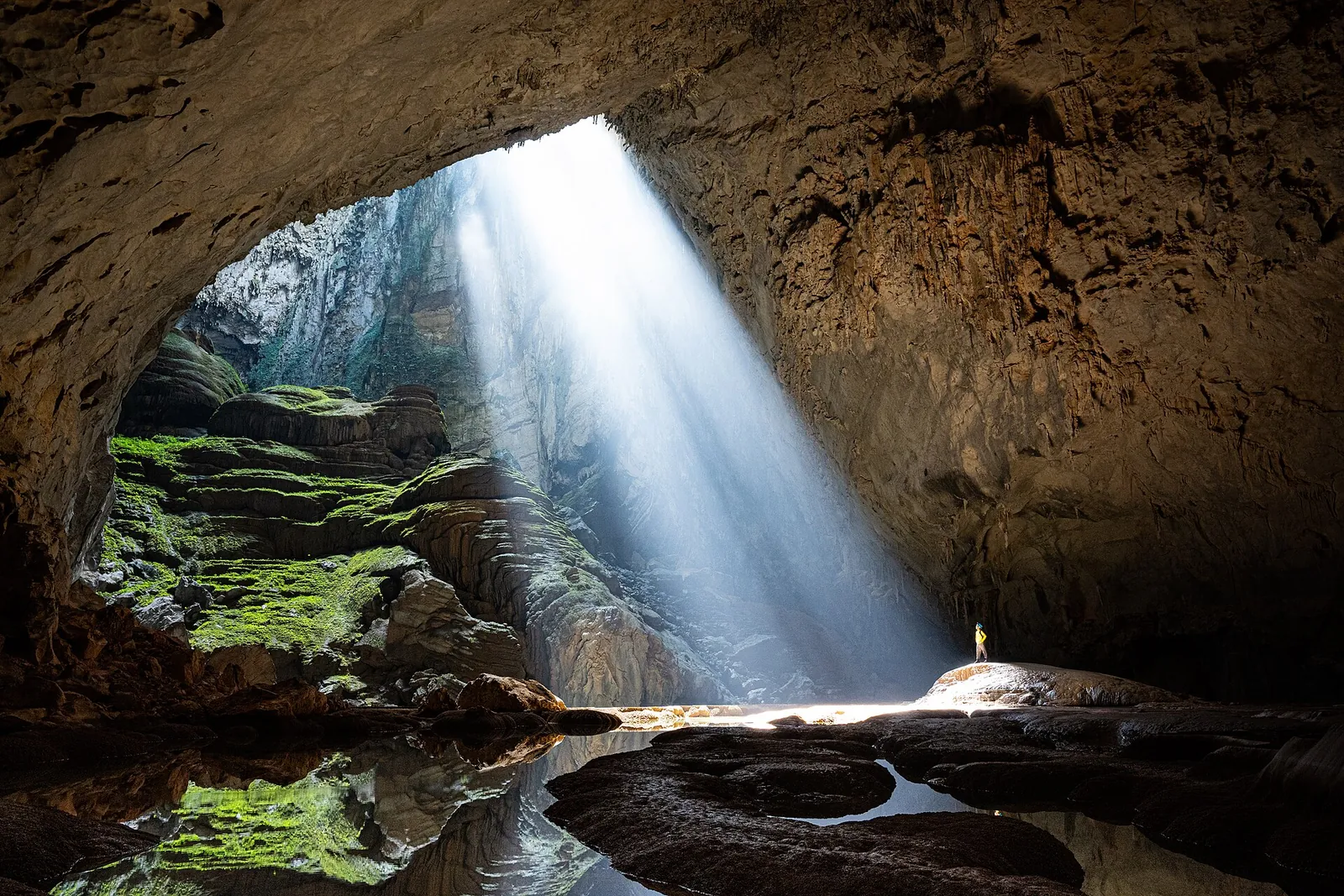
- Son Doong (6 days, 5 nights): four days of trekking and nights camped inside the world's largest cave, including a supported climb up the 90-metre wall known as the Great Wall of Vietnam. The park says it runs from January to August, in groups of up to 10, with places limited to 1,000 guests a year; the listed price was 79,500,000 VND per person.
Bong Lai, the river and the slow side of Phong Nha
Leave at least one afternoon for the countryside. The national tourism site recommends cycling the 15-kilometre Bong Lai Valley loop off the Ho Chi Minh Road, past farms, viewpoints and swimming holes, and many hotels lend bicycles for rides around town. The best routes ford rivers and streams, so wear shoes that can get wet. A motorbike with a driver is the easier option if you are not used to Vietnamese roads.
The Son River itself is worth an hour. The tourism site mentions kayak rentals for independent trips on the river near town, and kayak tours as a quieter way to approach Phong Nha Cave. For the forest rather than the caves, it points to guided hikes, night walks for wildlife and visits to the park's animal rescue work; the national park also lists a botanical garden among its eco-tourism sites.
History is never far away. The park's tourism pages list the Road 20 Quyet Thang memorial, including the Tam Co cave, and the Commander Cave on the Truong Son (Ho Chi Minh) Trail among their sites, reminders that these roads were part of the wartime supply route. Pair them with a visit to the DMZ further south in Quang Tri.
Getting there: Dong Hoi by train or plane, or the night bus
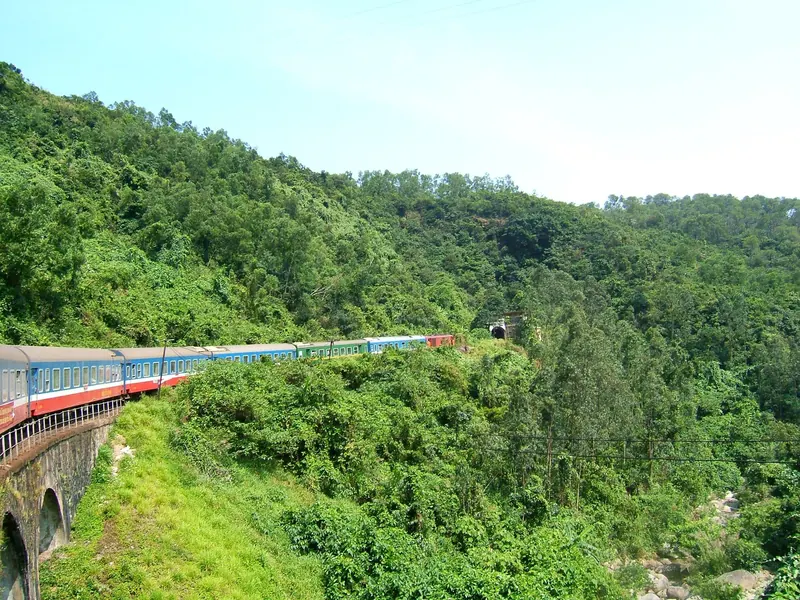
Dong Hoi is the gateway. It is a stop on the main Hanoi–Ho Chi Minh City railway, with Hue and Da Nang to the south and Ninh Binh to the north, and has domestic flights from Hanoi and Ho Chi Minh City. Oxalis's arrival guide puts the Hanoi–Dong Hoi flight at about 1 hour 5 minutes and says Phong Nha is about 45 kilometres west of Dong Hoi. From the airport or station, the national tourism site calls a metered taxi the easiest transfer; local buses also run between Dong Hoi and Phong Nha, but their terminals are a few kilometres from the station and airport.
The overnight train lets you arrive without losing a day. Oxalis advises against arriving by train on the morning of a one-day tour, because train times cannot be guaranteed: arrive the evening before. Check times and book on the Vietnam Railways website (dsvn.vn), and see our Vietnam trains guide for the wider network.
By road, Oxalis says most bus companies now stop in Phong Nha itself, which saves the change in Dong Hoi, and that night buses leave Hanoi in the early evening. The national tourism site also mentions daily buses to Phong Nha from Hue and Da Nang. Bus companies, times and fares change; book through your hotel or the company the day before and confirm where it stops.
Practical questions
How many days do I need in Phong Nha?
Two full days cover Phong Nha Cave, Paradise Cave and an afternoon in the countryside or at Nuoc Mooc. Three days let you add a day adventure such as Dark Cave or a Tu Lan day trip. Expeditions add two to six days, plus a night before and after.
Which cave should I choose if I only have one day?
Paradise Cave for sheer scale on an easy walkway, or Phong Nha Cave if you want the boat trip along the Son River and the underground river. Both are open daily with tickets at the gate; you can fit one in the morning and Nuoc Mooc or Bong Lai in the afternoon.
Can I visit Son Doong?
Only on Oxalis Adventure's six-day expedition, which the national park says runs from January to August with places limited to 1,000 guests a year, in groups of up to ten. It requires good fitness and trekking experience. If it is out of reach, consider the two-day Hang En trek: Hang En is where Son Doong expeditions camp on their first night.
Do I need to be able to swim?
Not for the show caves, Hang En, the one-day Hang Tien trek or Son Doong. Oxalis says basic swimming skills are needed for its Tu Lan, Hang Va and Hang Ba tours, with life jackets compulsory. The Dark Cave site involves water activities, and the 4.5-kilometre Phong Nha Cave trip includes a swim.
When is the best time to visit Phong Nha?
The national tourism site recommends April to June. July to September is hot; October to December brings rain and possible floods, when many caves are inaccessible; December to February can be cold. Son Doong and Hang Va run January to August, and Hang En from December to mid-September.
How do I get from Dong Hoi to Phong Nha?
By taxi or a transfer booked through your hotel or tour operator, about 45 kilometres; or by local bus, which leaves from terminals a few kilometres from the station and airport. Many night buses from Hanoi stop in Phong Nha itself.
Sources and checks before you travel
Reference sources for the version dated 3 October 2026. Confirm opening times, access, transport and conditions for your travel dates.
- Phong Nha-Ke Bang National Park: tourism in the park ↗ — opens in a new tab
- Phong Nha-Ke Bang National Park: Phong Nha Cave ↗ — opens in a new tab
- Phong Nha-Ke Bang National Park: Tien Son Cave ↗ — opens in a new tab
- Phong Nha-Ke Bang National Park: 4.5 km Phong Nha Cave trip ↗ — opens in a new tab
- Phong Nha-Ke Bang National Park: Paradise Cave ↗ — opens in a new tab
- Phong Nha-Ke Bang National Park: Chay River and Dark Cave ↗ — opens in a new tab
- Phong Nha-Ke Bang National Park: Nuoc Mooc eco-trail ↗ — opens in a new tab
- Phong Nha-Ke Bang National Park: Son Doong expedition ↗ — opens in a new tab
- Phong Nha-Ke Bang National Park: Hang En ↗ — opens in a new tab
- Phong Nha-Ke Bang National Park: Hang Va and Nuoc Nut ↗ — opens in a new tab
- Phong Nha-Ke Bang National Park: tourist routes and sites ↗ — opens in a new tab
- Vietnam Tourism: Phong Nha ↗ — opens in a new tab
- Vietnam Tourism: a complete guide to Phong Nha ↗ — opens in a new tab
- Vietnam Tourism: exploring inside the Tu Lan caves ↗ — opens in a new tab
- Oxalis Adventure: FAQ ↗ — opens in a new tab
- Oxalis Adventure: arrival and departure guide ↗ — opens in a new tab
- Oxalis Adventure: Tu Lan one-day experience ↗ — opens in a new tab
- Quang Tri tourism portal: Dong Hoi cuisine ↗ — opens in a new tab
- Quang Tri tourism portal: stingray and cactus soup ↗ — opens in a new tab
Does this experience fit your route?
The show caves need no tour: buy tickets at the gate and share a boat. For Son Doong, Hang En or Hang Va, book directly with the licensed operator well ahead and plan the rest of your trip around the departure date.
Browse relevant experiences on Viator ↗ — opens in a new tabAffiliate link · Book with ViatorPhoto credits
Tour boats wait on the Son River at the Phong Nha wharf, where the boat trip to Phong Nha Cave begins.
Photograph: Bùi Thụy Đào Nguyên — opens in a new tab · CC BY-SA 3.0 — opens in a new tab
Changes: Resized and converted to WebP; displayed with responsive crops. · Original photograph and licence details ↗ — opens in a new tab
Inside Phong Nha Cave, visitors travel along the underground river by boat.
Photograph: Andre Hospers — opens in a new tab · CC BY 4.0 — opens in a new tab
Changes: Resized and converted to WebP; displayed with responsive crops. · Original photograph and licence details ↗ — opens in a new tab
The wooden walkway through the first kilometre of Paradise Cave (Thien Duong Cave).
Photograph: Bùi Thụy Đào Nguyên — opens in a new tab · CC BY-SA 4.0 — opens in a new tab
Changes: Resized and converted to WebP; displayed with responsive crops. · Original photograph and licence details ↗ — opens in a new tab
One of Hang En's entrances, reached on a two-day trek in Phong Nha-Ke Bang National Park.
Photograph: Jérémie B. — opens in a new tab · CC BY-SA 4.0 — opens in a new tab
Changes: Resized and converted to WebP; displayed with responsive crops. · Original photograph and licence details ↗ — opens in a new tab
A winter sunbeam at the first doline in Son Doong, the cave reached only on a multi-day expedition.
Photograph: Trantuanviet — opens in a new tab · CC BY-SA 4.0 — opens in a new tab
Changes: Resized and converted to WebP; displayed with responsive crops. · Original photograph and licence details ↗ — opens in a new tab
Chao canh with oysters in Dong Hoi, the city on the coast that serves as Phong Nha's gateway.
Photograph: Nhân Quảng — opens in a new tab · CC BY-SA 4.0 — opens in a new tab
Changes: Resized and converted to WebP; displayed with responsive crops. · Original photograph and licence details ↗ — opens in a new tab