Hanoi and the Northeast · Phu Tho
Tam Dao travel guide: the cool French hill station near Hanoi
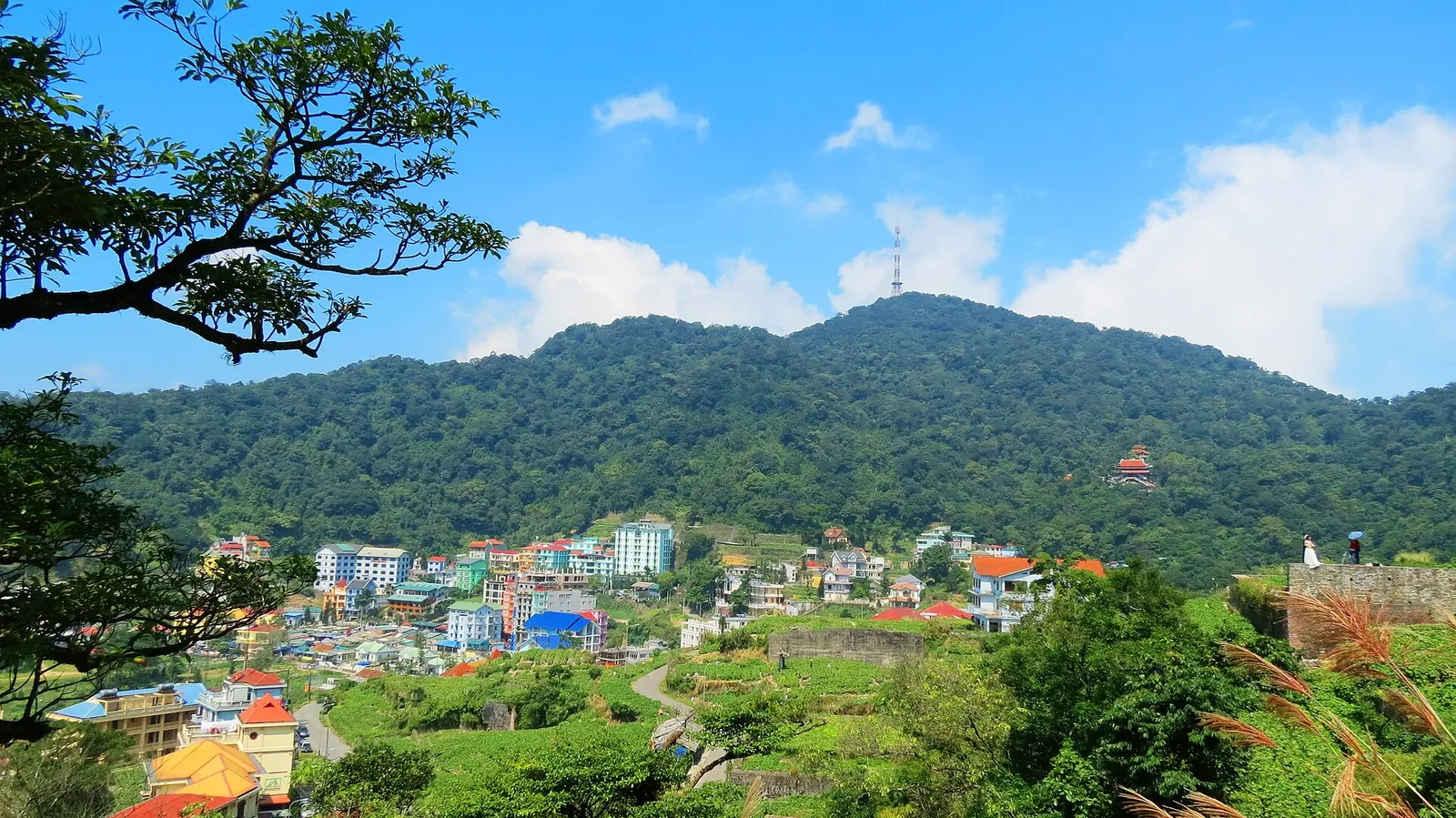
Tam Dao is the hill station Hanoi escapes to when the Red River Delta turns hot and sticky. The French built it in the early twentieth century at about 930 metres, in a narrow saddle of the Tam Dao range, and today it is a small, steep town of hotels, cafés and a Gothic stone church, surrounded on all sides by one of northern Vietnam's largest national parks. People come for the cooler air, the clouds that pour over the ridge in the early morning and plates of stir-fried chayote, not for a list of monuments. On the far side of the mountains, the Tay Thien relic site adds pagodas, Mother Goddess temples and a cable car into the forest.
- Suggested time
- 1–2 nights; a long day trip from Hanoi is possible but misses the mornings and evenings
- Where to stay
- Tam Dao town (the old hill station); Vinh Yen in the plain or Dai Lai Lake for larger hotels and resorts
- Season and timing
- Tam Dao's appeal is summer: it is typically 4–6°C cooler than the delta, and its average daily temperature in June and July is about 23°C. Summer is also the wettest time, with heavy rain and mist. Winter (December to February) is cold and often clouded in; spring brings the Tay Thien festival on the 15th day of the second lunar month.
The short answer
Spend one or two nights. Sleep in Tam Dao town itself, so that you are there in the early morning and the evening, when the hill station is at its best, and come on a weekday if you can: Vietnamese visitors fill the town from Friday night to Sunday in summer. Walk the town, the stone church and the Silver Waterfall on day one; get up early for the clouds and add a guided forest walk or a separate trip to Tay Thien on day two. The town is roughly 85 km from Hanoi, the last 20 km on a winding mountain road, so a car with driver or a guided tour from Hanoi is the easiest way to go.
A night above the heat: how to plan Tam Dao
Tam Dao works as a short break, not a sightseeing marathon. The tourism office of Phu Tho province says the town is typically 4–6°C cooler than the plains, and the climate table for the Tam Dao weather station (at 897 m) gives an average daily temperature of about 23°C in June and July, when Hanoi is at its hottest. That is the whole point of coming: a cool evening, a jumper at night and damp, clean mountain air.
The catch is that half of northern Vietnam has the same idea. A Vietnam tourism information site notes that Tam Dao is busiest from Friday night to Sunday, when hotels and restaurants fill up and prices rise. Come midweek if you can; if you must come at a weekend, book your room before you leave Hanoi.
Stay in the old hill-station town itself. Its hotels and guesthouses cluster on the slopes around the central square, so almost everything is within walking distance, even if the walks are steep. Staying the night is what makes Tam Dao worth the drive: the province's tourism office suggests getting up around 5 am, walking the quiet lanes while the clouds roll down into the valley and waiting until the cafés open at about 7–8 am.
Names on maps have changed recently. Since July 2025, the former Tam Dao town, together with Hop Chau, Ho Son and Minh Quang, has formed the new Tam Dao commune, and the old Vinh Phuc province is now part of Phu Tho province. Booking sites and older guidebooks may still say Vinh Phuc.
The old French town and the stone church
According to an article published by Vietnam's Ministry of Culture, Sports and Tourism, a delegation from the Governor-General of French Indochina went looking for a summer resort in the Tam Dao range in 1904, chose a site at 930 m, and work on the hill station began in 1906. In its heyday it had 143 stone-built villas, with walls 60–120 cm thick and roof slate brought from Toulouse and Marseille. Most of the colonial town was destroyed in 1946, when local people applied a scorched-earth policy during the war of resistance against the French, so do not expect a preserved colonial quarter: what you see today is a modern resort town with a few old villas and ruins between the hotels.
The landmark that survives is the stone church (Nha tho da), set on a high bank above the central square. Phu Tho's official tourism site explains that it began in 1906 as a thatched stilt house and was rebuilt in stone in the Gothic style in 1937. It stands on two levels on a 10 m base, with stairs on either side leading up to a terrace from which you look over the square, the roofs and the mountains. It is lit up at night, and it is still a working church for the local parish, so be quiet if a service is on.
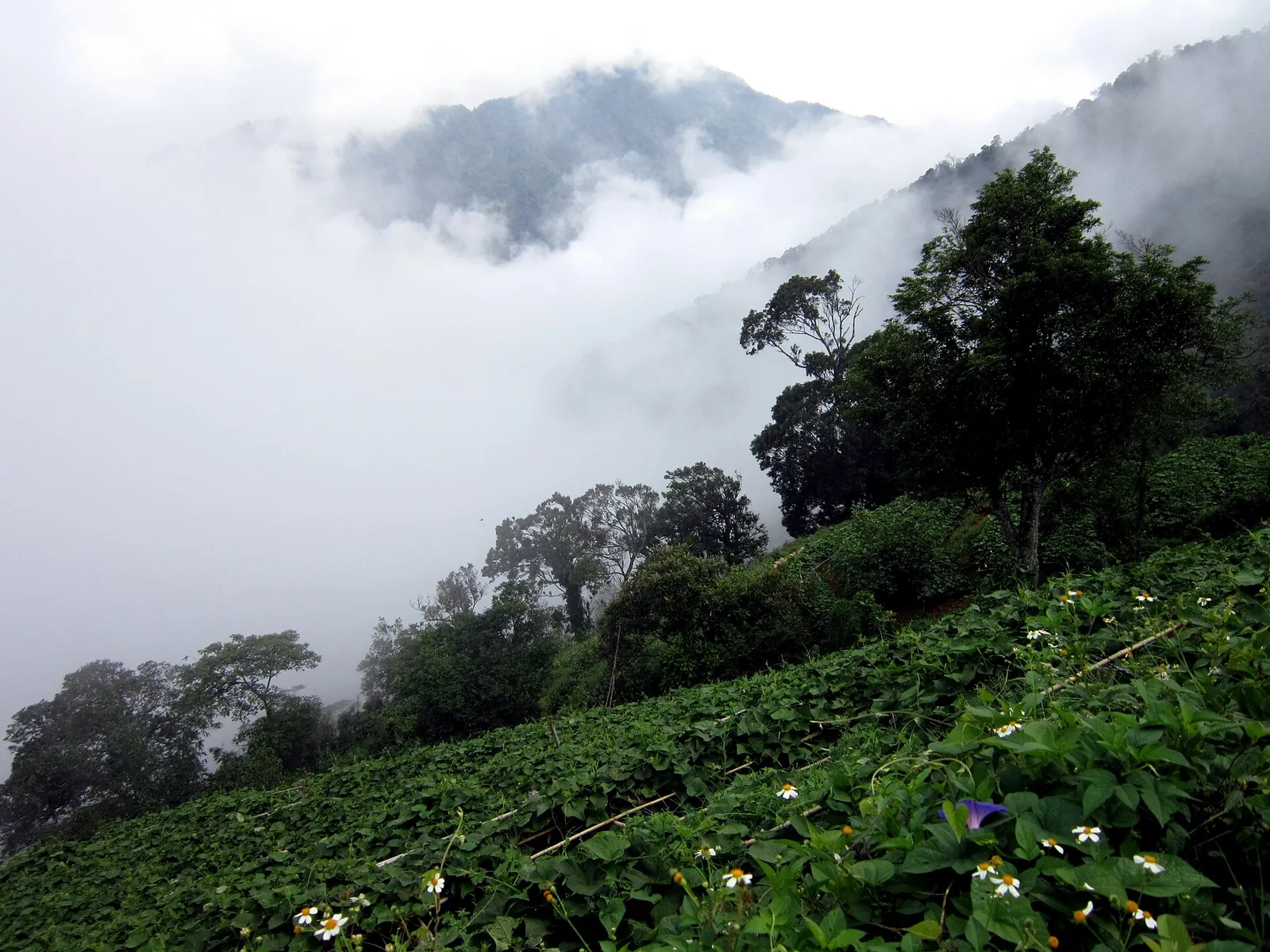
Around the town you will see trellises and terraces of chayote (su su), the vegetable Tam Dao is known for. The same Ministry article describes farmers picking around five tonnes a day and visitors taking baskets of it home, and it is on almost every menu in town.
Make time for the local food
What to eat and where to look
Chayote shoots and chayote (su su)
Tam Dao's signature vegetable. Phu Tho's tourism office describes the young shoots as crisp and naturally sweet; a common way to eat both the shoots and the fruit is simply stir-fried with garlic.
- Where to look
- Every restaurant in the hill-station town; you will see the vines on trellises and terraces all around.
- Fit it into your day
- Order a plate with every meal — it is the obvious side to grilled or boiled chicken.
Cheap and light, but ask whether it is cooked with lard if you are vegetarian.
Hill chicken and local pork (ga doi, lon ban)
Hill chicken and local pork, with forest vegetables, are the mountain dishes Phu Tho's tourism office associates with Tam Dao, and the usual meats on a dinner menu in town.
- Where to look
- Family restaurants around the central square and in the hotels.
- Fit it into your day
- Share a whole chicken or a pork dish between two or three people at dinner.
Ask the price and the weight before the chicken is cooked; avoid anything sold as wild game (thit rung).
Dam Vac small fish (tep dau Dam Vac)
Small freshwater fish, about 5–7 cm long, from Dam Vac lake in Vinh Yen, in the plain below the mountains. The province's tourism office describes them fried crisp, braised with ginger and chilli, or cooked in a sour soup.
- Where to look
- Restaurants in Vinh Yen; ask for 'tep dau Dam Vac'.
- Fit it into your day
- A rice lunch on the way up or down the mountain if you stop in Vinh Yen.
Eaten whole with the small bones; a local speciality, so not every restaurant has it.
Lap Thach fermented fish (ca thinh Lap Thach)
Carp-family fish salted and packed into earthenware jars between layers of roasted corn or rice powder to ferment, then grilled over charcoal or slowly fried, according to Phu Tho's tourism office.
- Where to look
- Restaurants that serve specialities of the former Vinh Phuc province; it comes from Lap Thach, in the former Vinh Phuc province.
- Fit it into your day
- A small dish to share with rice, not a main course.
Strong, sour and salty; it is a fermented product, so try a little first.
Clouds, waterfall and viewpoints
The province's tourism office lists the main stops around the town: Tam Dao National Park, the Silver Waterfall (Thac Bac), the old church, the central square, the TV tower, Rung Rinh peak, the Cloud Bridge (Cau May), the Sky Gate (Cong Troi) and the night market. They are close together and most can be seen in a day on foot, but the town is built on steep slopes, so wear shoes with grip — paths and steps are slippery after rain and in the mist.
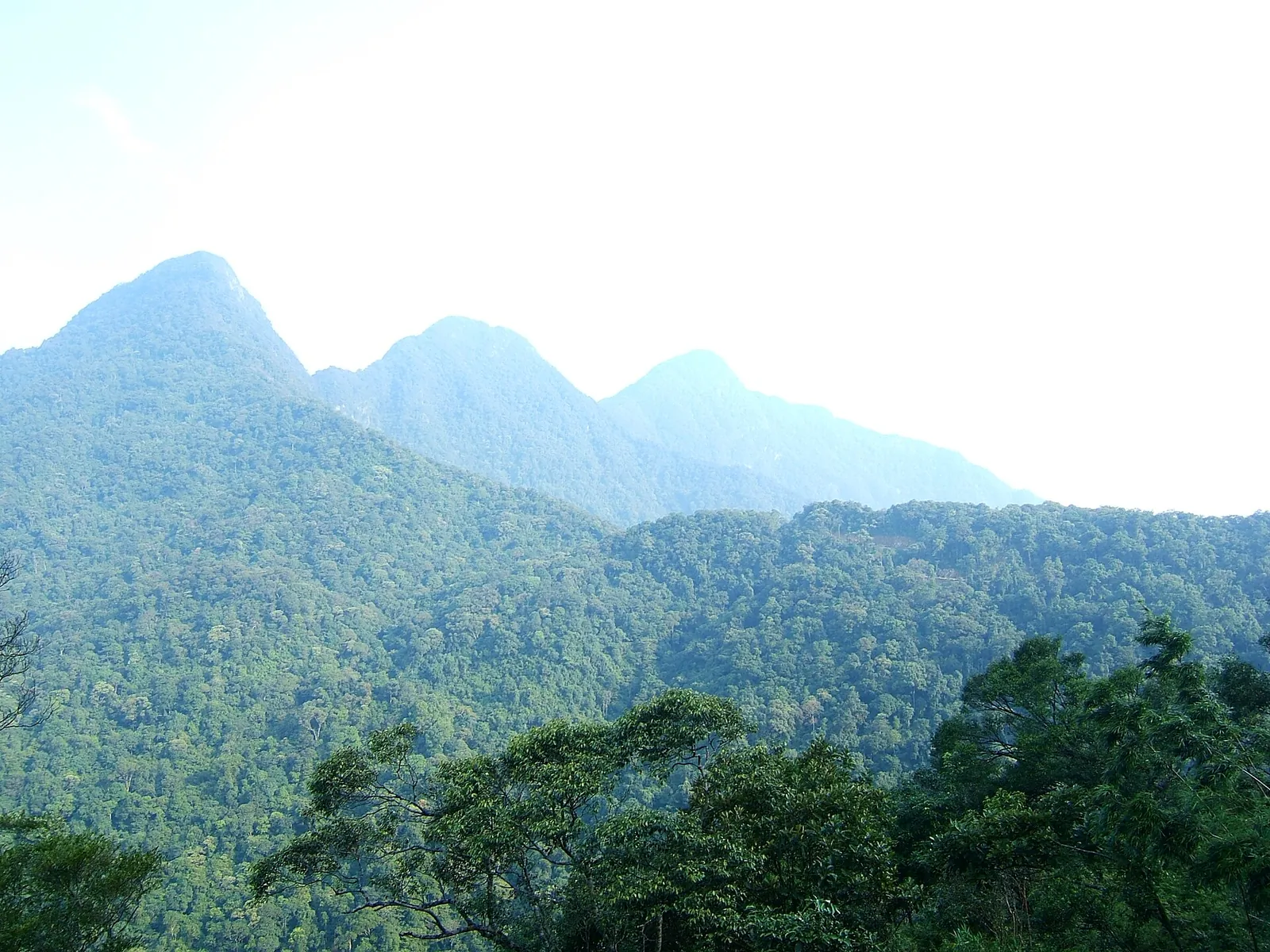
The town is named after the range's three peaks. Wikipedia's article on the national park gives them as Thien Thi (1,375 m), Thach Ban (1,388 m) and Phu Nghia (1,300 m), with the highest summit, Tam Dao North, at 1,592 m. The TV tower stands on a summit above the town.
Clouds are never guaranteed. Phu Tho's tourism office is candid about this: some mornings the valley fills with a sea of cloud, some mornings there is only thin mist, and some are completely clear. If you are only coming for the clouds, plan two mornings rather than one.
For longer hikes into the forest, ask your hotel to arrange a local guide. Some trails see few walkers, mist can close in quickly and the national park is large.
Tam Dao National Park: forests and wildlife
The hill station sits in the middle of Tam Dao National Park, established in 1996 from a conservation forest created in 1977. VietNamNet puts its area at 36,883 hectares, more than 23,000 of them forested, along a range that runs 80 km from northwest to southeast. The Tam Dao range has more than 20 peaks over 1,000 m.
Wikipedia's summary of the research records over 2,000 plant species in the park, 42 of them found nowhere else, with subtropical evergreen forest and conifers above about 800–1,000 m and pine plantations dating from the French period. Several insects are named after the park, and it is known for rare reptiles and amphibians, among them the newt Paramesotriton deloustali.
One practical point: the same article notes guidebook reports of restaurants serving endangered species. Do not order wild meat ('thit rung' or anything described as forest game) in Tam Dao. Stick to the farmed hill chicken, pork and vegetables described below.
Tay Thien: Mother Goddess temples and a Truc Lam monastery
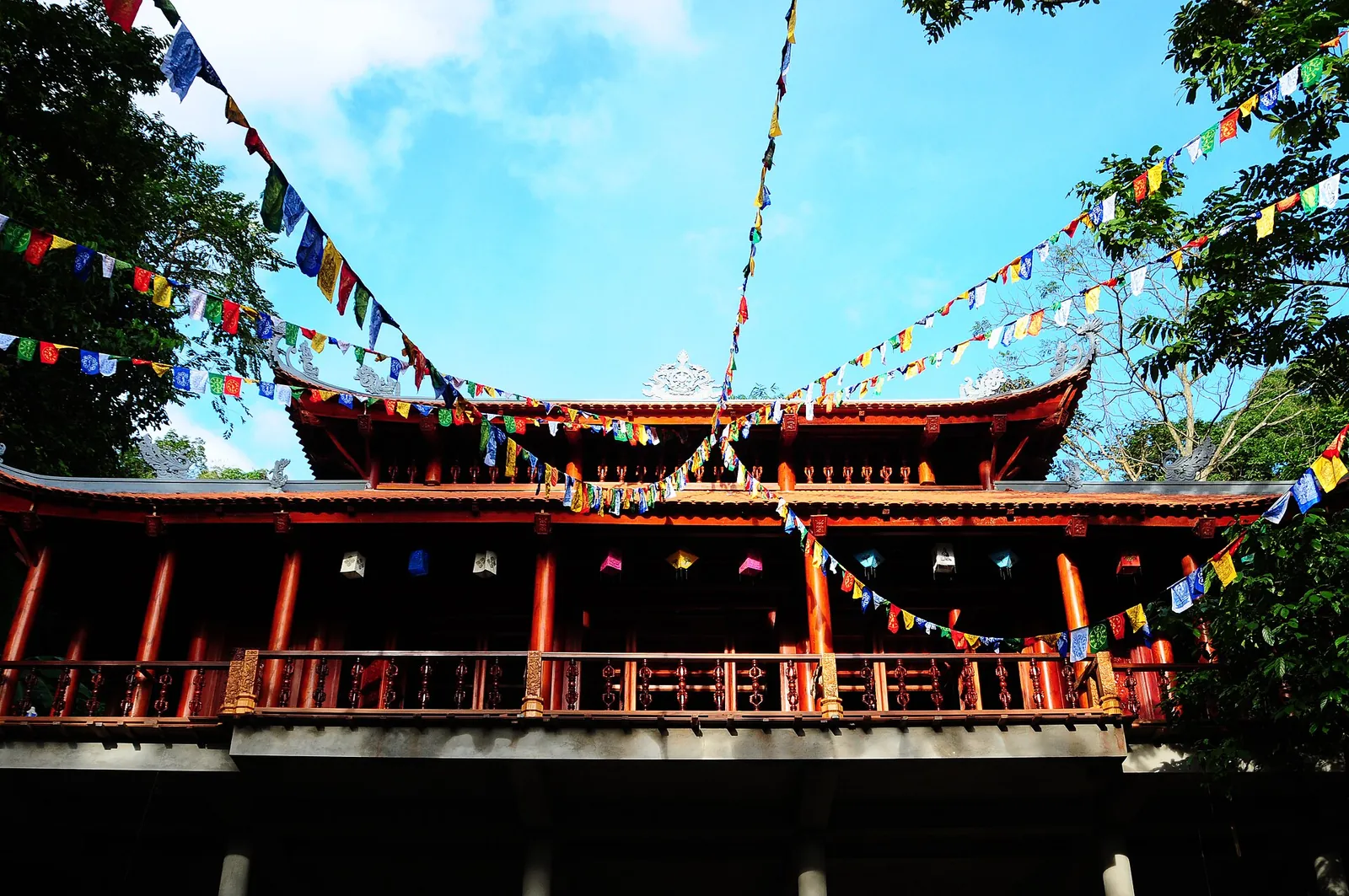
Tay Thien is the second, quite different reason to visit the Tam Dao mountains. It is a religious complex of more than 100 hectares inside the national park, with forest, streams, waterfalls and dozens of temples and pagodas, and it is recognised as a special national relic site. It is reached by its own road on another side of the range, so treat it as a separate trip rather than a walk from the hill station.
The site is dedicated to the National Mother of Tay Thien, Lang Thi Tieu. According to Phu Tho's provincial newspaper, she was a native of Dong Lo, in today's Dai Dinh commune, and a consort of the seventh Hung King, honoured for teaching people to grow rice, raise silkworms and weave silk. Buddhism and Mother Goddess worship meet here: the Truc Lam Tay Thien monastery, next to the old Tay Thien pagoda, is described by the province as one of the three largest Truc Lam monasteries in Vietnam, alongside those at Da Lat and Yen Tu. The newer Great Mandala Stupa rises 37 m at the centre of the site.
A cable car climbs through the forest towards the upper temples, sparing you a long climb on foot. The Tay Thien festival opens every year on the 15th day of the second lunar month; in 2026 it ran from 2 to 4 April. It draws huge crowds of pilgrims, so come on another day if you want quiet paths.
Getting there and a workable two days
Tam Dao town is roughly 85 km northwest of central Hanoi. The last 20 km is a narrow road that climbs from the plain in hairpin bends. Most international visitors come by car with driver, taxi or a guided tour from Hanoi; if you hire a driver, agree whether they will stay overnight and when you will return. We could not confirm a direct public bus to the hill station from an operator's page, so no bus details are given here. This is an editorial suggestion, not a timetable.
- Day one: leave Hanoi in the morning to arrive before lunch; walk to the stone church and the central square, then the Silver Waterfall in the afternoon; dinner of chayote and hill chicken in town, and a stroll around the night market.
- Day two, early: be out by 5–6 am for the clouds over the valley, then coffee once the cafés open.
- Day two, late morning: a guided forest walk arranged through your hotel, or drive round to Tay Thien and take the cable car up to the temples.
- Afternoon: back down the mountain road to Hanoi, ideally before the evening rush.
- Weekends: if you cannot avoid Friday to Sunday in summer, book ahead and expect crowds at the church and viewpoints.
Practical questions
How far is Tam Dao from Hanoi?
Roughly 85 km northwest of central Hanoi. The last 20 km is a winding mountain road up from the plain; most visitors go by car with driver or on a tour.
Is Tam Dao worth an overnight stay?
Yes. The cool evenings, the empty lanes at dawn and the chance of clouds over the valley are the reasons to go, and you only get them if you stay the night. A day trip shows you the church and the waterfall but little else.
How much cooler is Tam Dao than Hanoi?
Phu Tho's tourism office says the town is typically 4–6°C cooler than the plains. The average daily temperature in June and July at the Tam Dao weather station is about 23°C. Bring a jumper for the evening even in summer.
Is Tam Dao in Vinh Phuc or Phu Tho province?
Both names are in use. Since July 2025, the former Vinh Phuc province has been part of Phu Tho province, and the old Tam Dao town is part of the new Tam Dao commune.
Can I visit Tay Thien and Tam Dao on the same trip?
Yes, but plan them as two separate outings. Tay Thien is a large religious complex on another side of the range, reached by its own road, with a cable car to the upper temples. Avoid the festival days around the 15th day of the second lunar month if you dislike crowds.
When is the best time to go?
Summer (June to August) is when the cool air matters most, but it is also the wettest season and the busiest at weekends. Weekdays from late spring to autumn are the most comfortable; winter is cold and often in cloud.
Sources and checks before you travel
Reference sources for the version dated 3 October 2026. Confirm opening times, access, transport and conditions for your travel dates.
- Ministry of Culture, Sports and Tourism: Hill station blend of old, new ↗ — opens in a new tab
- Phu Tho official tourism site: Tam Dao stone church ↗ — opens in a new tab
- Phu Tho official tourism site: cool summer destinations 2026 ↗ — opens in a new tab
- Phu Tho official tourism site: Tam Dao before 7 am ↗ — opens in a new tab
- Phu Tho official tourism site: destinations for the 2 September holiday 2026 ↗ — opens in a new tab
- Phu Tho official tourism site: famous spiritual destinations ↗ — opens in a new tab
- Phu Tho official tourism site: Phu Tho specialities ↗ — opens in a new tab
- Phu Tho official tourism site: Dam Vac small fish ↗ — opens in a new tab
- Phu Tho official tourism site: Men Men village in Tam Dao ↗ — opens in a new tab
- Bao Phu Tho: Tay Thien Festival – a spiritual and cultural rendezvous ↗ — opens in a new tab
- Bao Phu Tho: Luring steps in Tay Thien ↗ — opens in a new tab
- VietNamNet: 11 special national relic sites recognised ↗ — opens in a new tab
- VietNamNet: Magical beauty of Tam Dao National Park ↗ — opens in a new tab
- Wikipedia: Tam Dao National Park ↗ — opens in a new tab
- Tien Phong: the new Tam Dao commune in Phu Tho ↗ — opens in a new tab
- Vietnam Tourism Information: Tam Dao – the attraction from the familiar name ↗ — opens in a new tab
- Vietnam Tourism: a traveller's guide to Vietnam's airports ↗ — opens in a new tab
Does this experience fit your route?
A guided day from Hanoi takes care of the mountain road and shows you the church, the waterfall and the viewpoints. If you would rather stay the night, book the hotel in Tam Dao itself and use a tour or driver only for the transfer.
Check dates and details on Viator ↗ — opens in a new tabAffiliate link · Book with ViatorPhoto credits
Tam Dao town spreads over the slopes of the range, with the forested ridge of the national park rising behind it.
Photograph: Phuongcacanh — opens in a new tab · CC BY 3.0 — opens in a new tab
Changes: Resized and converted to WebP; displayed with responsive crops. · Original photograph and licence details ↗ — opens in a new tab
The Tam Dao range takes its name, 'three islands', from the peaks that rise above the clouds and the plain.
Photograph: Viethavvh — opens in a new tab · Public domain — opens in a new tab
Changes: Resized and converted to WebP; displayed with responsive crops. · Original photograph and licence details ↗ — opens in a new tab
Chayote (su su) grows on terraces and trellises around Tam Dao; its young shoots are the town's best-known dish.
Photograph: Bùi Thụy Đào Nguyên — opens in a new tab · CC BY-SA 3.0 — opens in a new tab
Changes: Resized and converted to WebP; displayed with responsive crops. · Original photograph and licence details ↗ — opens in a new tab
The ancestors' hall at Tay Thien, the Buddhist and Mother Goddess complex in the Tam Dao mountains.
Photograph: Nguyen Tam — opens in a new tab · CC BY-SA 3.0 — opens in a new tab
Changes: Resized and converted to WebP; displayed with responsive crops. · Original photograph and licence details ↗ — opens in a new tab
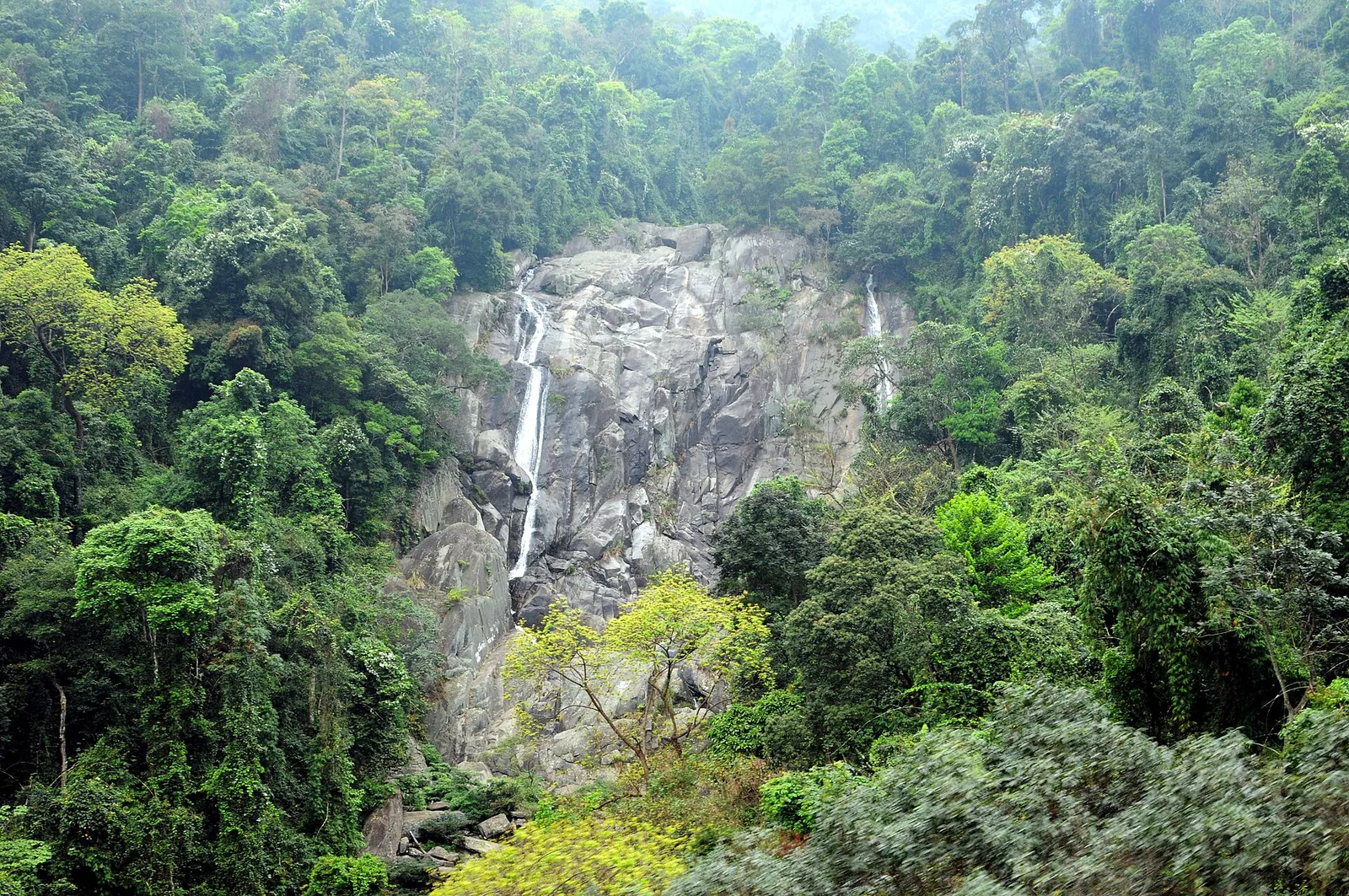
A waterfall in the forest at Tay Thien, a relic site that lies inside Tam Dao National Park.
Photograph: Nguyen Tam — opens in a new tab · CC BY-SA 3.0 — opens in a new tab
Changes: Resized and converted to WebP; displayed with responsive crops. · Original photograph and licence details ↗ — opens in a new tab