Plan your trip · South Korea
Getting around South Korea: KTX, express buses, flights and ferries
South Korea is compact and its transport is built around a few hubs, so the real planning question is not whether you can get somewhere but which network to use for each leg. High-speed trains run the main corridors out of Seoul, express and intercity buses fill in the towns the railway skips, domestic flights matter mainly for Jeju, and ferries are the only way to most of the country's islands. A rental car earns its place in a few specific areas rather than for the whole trip. This guide sets out how the pieces connect, using what the Korea Tourism Organization (VisitKorea) and the operators listed when we checked on 2026-10-03.
- Suggested time
- Plan on one transfer per day at most; Seoul to Busan is a half-day move by train or bus
- Where to stay
- Seoul Station or the Express Bus Terminal area in Seoul; Busan Station in Busan; Jeju City near the airport for Jeju
- Season and timing
- All year; book popular trains early for weekends and the summer holidays, and keep ferry days flexible because sailings depend on the weather
The short answer
For a first trip, use trains for the long legs and buses for the gaps: the KTX or SRT for Seoul to Busan, Gyeongju, Gangneung, Pohang, Yeosu or Mokpo, then an express or intercity bus for towns off the high-speed lines. Fly only to Jeju (most often from Gimpo or Gimhae) or when you need to skip a full day of overland travel. Take a ferry for Jeju if you want to bring a car or travel overnight, and for Ulleungdo and the smaller islands, where there is no alternative. Rent a car on Jeju or for rural mountain and coastal areas, not for Seoul or Busan. Sleep near Seoul Station or the Express Bus Terminal in Seoul and near Busan Station in Busan so that departure days start with a short walk, and carry a Tmoney or similar transport card from day one.
Pick the network for each leg, not one pass for the whole trip
Most of Korea's long-distance travel radiates from Seoul. VisitKorea describes three main rail corridors: the Gyeongbu Line (447.1 km) from Seoul to Busan via Daejeon, with Gyeongju just off it; the Honam Line from Seodaejeon to Mokpo via Iksan, Jeongeup and Gwangju-Songjeong; and the Gangneung Line from Cheongnyangni in Seoul to Gangneung on the east coast. If your route follows those corridors, the train is usually the simplest choice.
Buses take over where the high-speed lines stop. VisitKorea's bus guide lists express routes from Seoul to places such as Sokcho, Tongyeong, Geoje, Damyang, Wando and Taean, many of which have no fast train. Flights matter mostly for Jeju, which every operating domestic airport connects to. Ferries are the only practical link to most islands; VisitKorea counts over 3,000 of them.
A practical rule: if a city has a KTX or SRT station, start by checking the train; if it does not, check the express bus from Seoul or the nearest big city; if the destination is Jeju, compare a flight with an overnight ferry; and if you need several rural stops in a day, that is when a car or a tourist taxi starts to make sense.
Trains: KTX, SRT, KTX-Eum and the slower lines
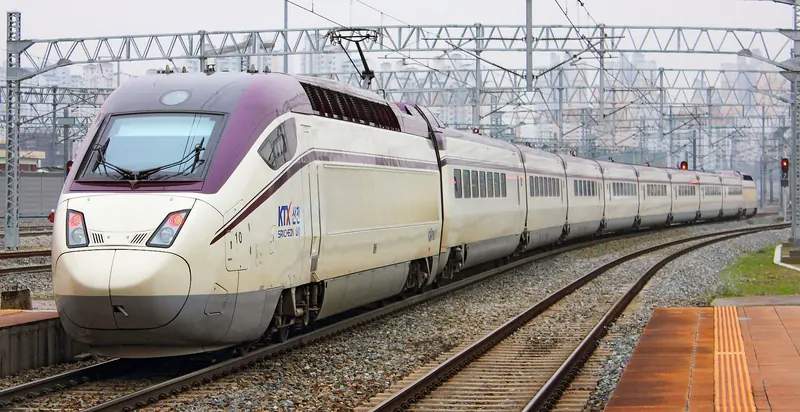
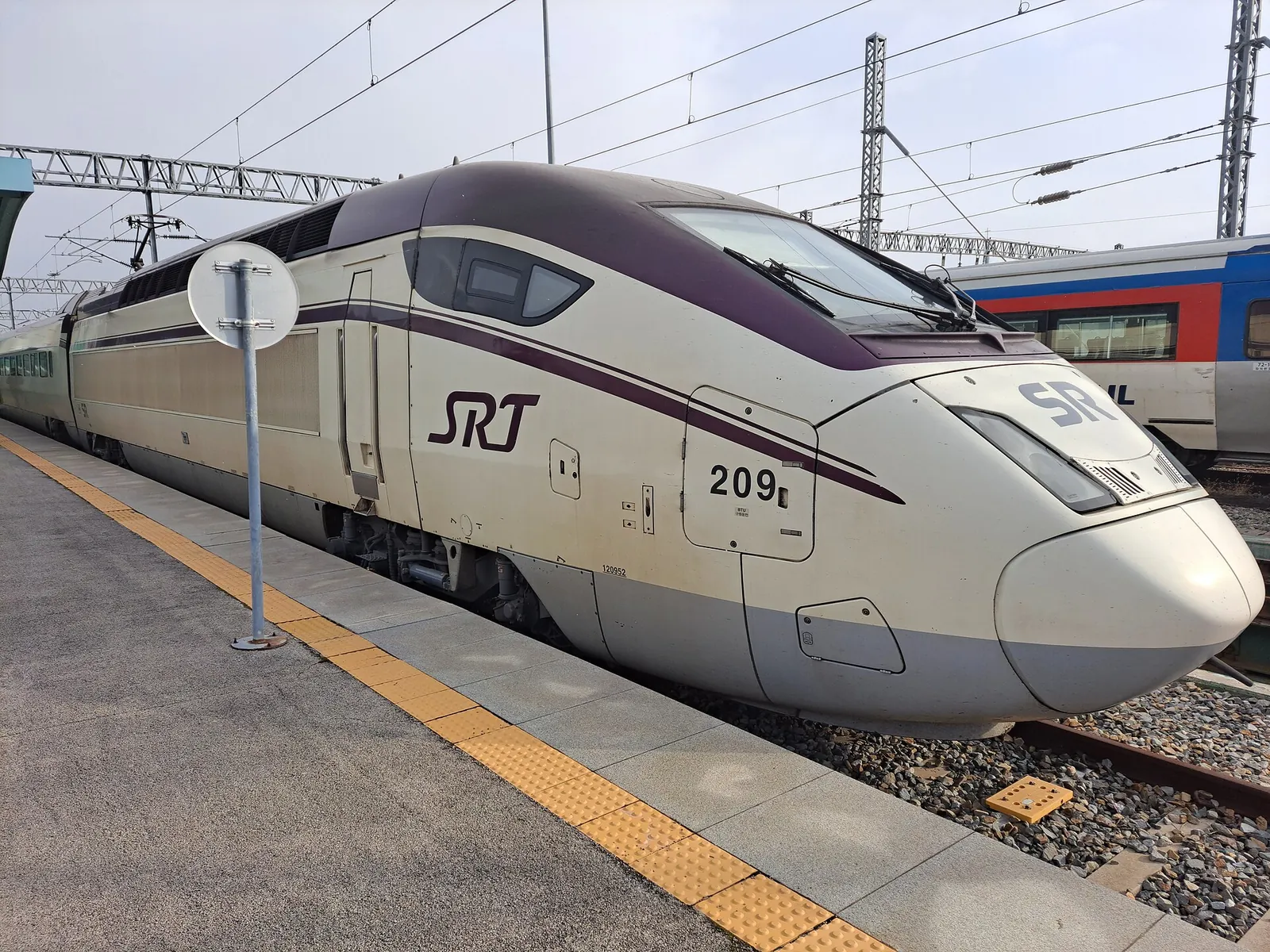
VisitKorea's train guide (last updated 7 August 2026) lists the KTX as the main high-speed service, leaving from Seoul, Yongsan and Cheongnyangni stations for Busan, Pohang, Mokpo, Yeosu, Gangneung and Donghae, Andong and other cities. The SRT is a separate high-speed operator that leaves from Suseo Station in southeast Seoul for Busan or Mokpo. Conventional ITX-Saemaeul and Mugunghwa trains stop at the smaller stations the KTX passes, and the ITX-Cheongchun runs from Yongsan to Chuncheon.
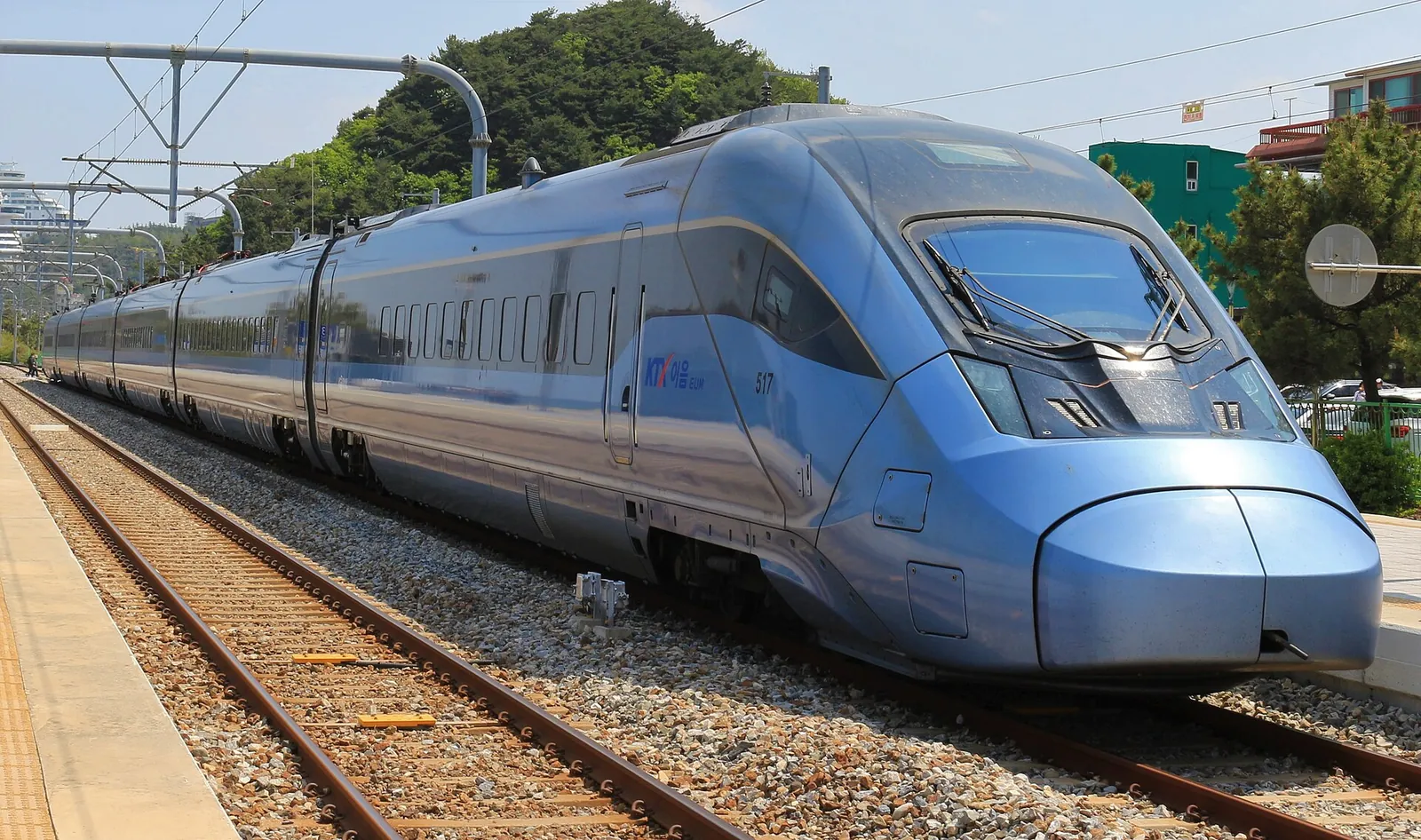
Journey times depend on the train and the station. VisitKorea's Busan guide gives about 2 hours 30 minutes by SRT from Suseo and about 3 hours 20 minutes by KTX from Seoul Station to Busan Station, and about 4 hours by KTX-Eum from Seoul Station to Busan's Bujeon Station. On the east coast, VisitKorea reports that the Donghae Line KTX-Eum has run the whole line since 30 December 2025, linking Bujeon and Gangneung in about 3 hours 50 minutes with three trains a day in each direction, so book that route early.
When we checked on 2026-10-03, VisitKorea said tickets can usually be bought from one month ahead, from 07:00, until 20 minutes before departure (or right up to departure in the apps), at station offices and kiosks, on the KORAIL website and app, and through Naver and KakaoT. Online, you can choose your seat. Korail's English customer centre is listed at +82-1599-7777, from 08:00 to 20:00 daily.
The Korail Pass is sold only to international visitors and covers Korail trains, including the KTX, for a set number of days. VisitKorea notes that it does not cover the SRT, subways or temporary tourist trains, and its pages describe the day options differently, so check the current choices on Korail's own site and compare them with point-to-point fares for your actual route before buying. If your trip is Seoul–Busan and back with a few short city hops, a pass may not pay for itself.
Make time for the local food
What to eat and where to look
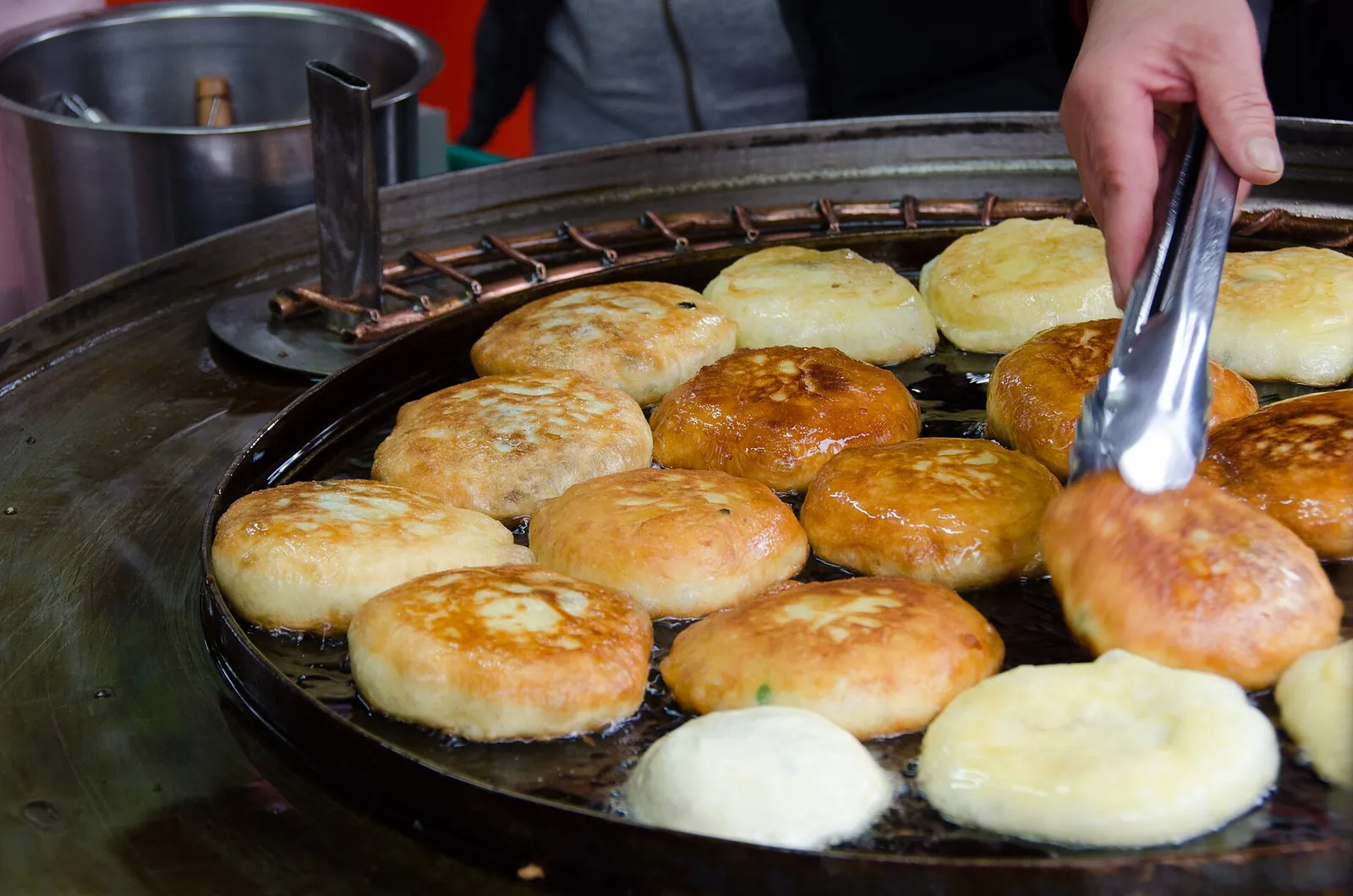
Hotteok (sweet filled pancake)
A chewy, griddle-fried pancake filled with brown sugar, often with nuts or seeds. VisitKorea names it among the snacks sold at expressway rest stops, and it is just as common at street stalls near stations and markets.
- Where to look
- Snack counters at expressway service areas on long bus or car journeys, and street stalls around markets and big stations.
- Fit it into your day
- A warm snack during a rest-stop break on a long bus ride; it does not replace lunch.
The sugar filling is very hot straight off the griddle; let it cool before biting.
Sotteok sotteok (sausage and rice cake skewer)
Alternating pieces of sausage and rice cake (tteok) on a skewer, grilled or fried and brushed with a sweet-spicy sauce. VisitKorea describes it as a classic expressway rest-stop snack.
- Where to look
- Snack stands at hyugeso (expressway service areas) during the scheduled stop on express and intercity bus routes.
- Fit it into your day
- Something quick to eat during a short bus stop; keep an eye on the time, because the bus will not wait long.
Contains processed meat, and the sauce is usually mildly spicy.
Potato corndog
A battered sausage on a stick coated in diced potato before frying, usually finished with sugar and ketchup or mustard. VisitKorea lists it with the snacks people look for at rest stops.
- Where to look
- Rest-stop snack counters and street-food stalls in busy shopping streets and near terminals.
- Fit it into your day
- A filling snack between a morning train and a late lunch at your destination.
Deep-fried and often sugared; contains wheat and processed meat, and some versions contain cheese.
Express and intercity buses: where the railway stops
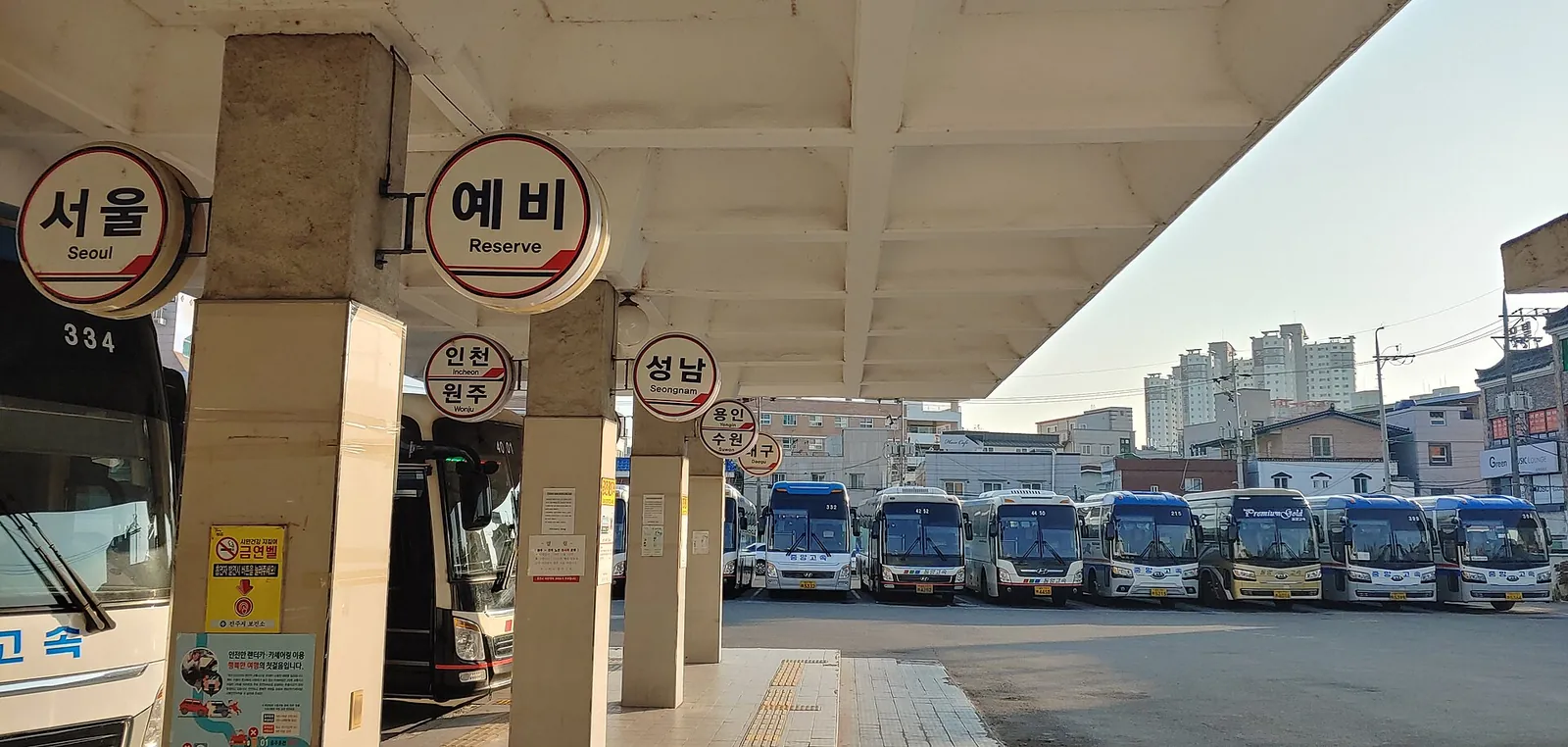
Korea's long-distance buses come in two kinds. Express buses run on expressways without stopping in towns along the way; intercity buses use expressways and national roads and make intermediate stops, which is why they reach far more small towns. Both have standard and more spacious premium or luxury seating, and both charge more for late-night departures. VisitKorea notes there are no toilets on board; longer routes stop at expressway service areas (hyugeso).
In Seoul the terminal matters as much as the bus. VisitKorea lists Seoul Express Bus Terminal and Central City (both at Express Bus Terminal Station, subway Lines 3, 7 and 9) for most express routes, with Central City handling most of the Jeolla region, Seoul Nambu Terminal (Line 3) for intercity routes, and Dong Seoul Terminal (Gangbyeon Station, Line 2) for both, especially towards Gangwon and the east. Terminals in the same city can be far apart, so check the departure terminal on your ticket. VisitKorea gives about 4 hours by express bus from Seoul Express Bus Terminal to Busan Central Bus Terminal.
Book express buses on kobus.co.kr and intercity buses on txbus.t-money.co.kr or bustago.or.kr (all with English), through Klook or Hanpass, or at terminal kiosks and counters. Depending on how you booked, you may need to print the ticket at the departure terminal. Check the platform on the screen in the waiting area and board five to ten minutes before departure.
- Choose the bus for towns without a KTX station, for routes where the train needs a change, or when trains on a holiday weekend are sold out.
- Choose the train when the destination has a KTX or SRT station on the same corridor; it avoids road traffic, which VisitKorea warns is heavy on east-coast roads in the peak summer season.
Domestic flights: mainly for Jeju
VisitKorea's domestic flights page (last updated 19 June 2026) counts ten airlines on domestic routes and describes Gimpo–Jeju as the busiest air route in the world. Gimpo, Seoul's domestic airport, also flies to Gimhae (Busan), Ulsan, Yeosu, Pohang Gyeongju, Gwangju and Sacheon. Most other regional airports, including Cheongju, Daegu, Yangyang, Gunsan and Wonju, fly only to Jeju. The same page notes that Muan International Airport is closed until 24 December 2026.
On mainland routes, compare door-to-door times: the transfer to the airport and check-in often cancel out the shorter flight. Where it does help is Jeju, and combining an arrival in Busan with a flight to Jeju avoids going back to Seoul. Gimpo is about 23 minutes from Seoul Station on the AREX all-stop train, according to VisitKorea, and Gimhae connects with Busan's metro via the Busan–Gimhae Light Rail.
If you land at Incheon and want to go straight to Busan, VisitKorea gives two routes: a bus to Gimpo (about 33 minutes) and a one-hour flight to Gimhae, or a bus to Gwangmyeong Station (about 50 minutes) and the KTX to Busan Station (about 2 hours 40 minutes). Leave a generous margin between landing and any domestic departure.
Ferries to Jeju and the islands
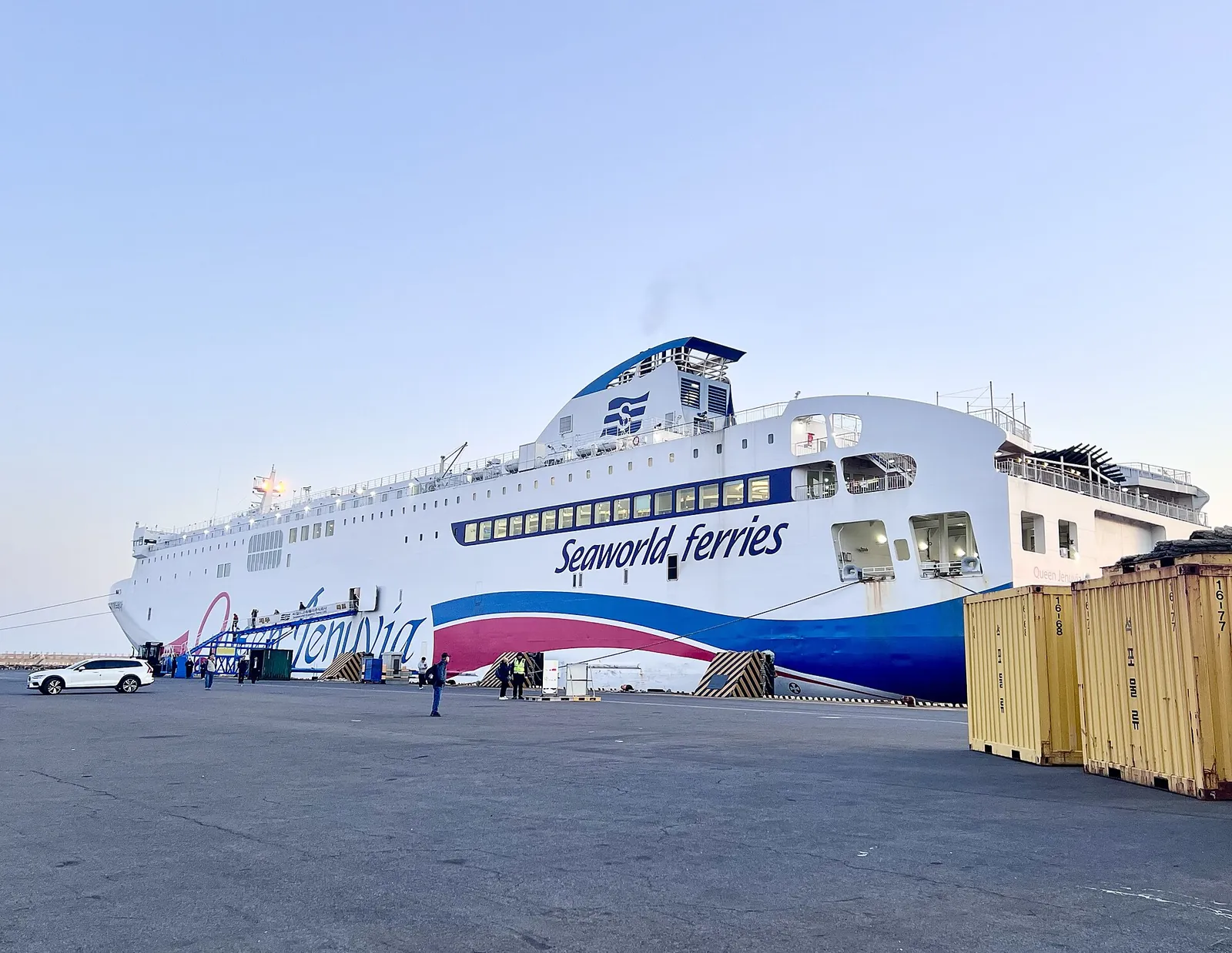
VisitKorea lists Jeju ferries from Incheon, Mokpo, Goheung (Nokdong), Yeosu, Wando, Jindo and Samcheonpo. Some carry cars and motorcycles, and the overnight sailings have sleeping cabins. Its Jeju page was last updated in June 2025, so treat its timetable as out of date and check sailings with the operator before you plan around them. A passport or ID is required to board, and at Yeosu and Wando check-in closes ten minutes before departure.
For a mainland trip that ends on Jeju, a ferry from the south coast is a good alternative to backtracking to an airport: Mokpo port is about 15 minutes by city bus from Mokpo Station, and Yeosu's Expo terminal is about seven minutes on foot from Yeosu EXPO Station. Note that Incheon's coastal passenger terminal for Jeju and the islands is separate from the Incheon International Ferry Terminal used by ferries to China.
For other islands, the mainland port is usually reached by KTX plus a local bus or taxi: VisitKorea mentions, for example, ships to Ulleungdo from Mukho Port near Donghae, which has a KTX station. Sailings are weather-dependent everywhere, so do not book an island crossing on the day before an international flight. VisitKorea points to the Korea Shipping Association's site for routes and port information.
International ferries also arrive in Korea: VisitKorea lists services from Osaka, Fukuoka and Shimonoseki to Busan's international terminal, which is about 10 to 15 minutes on foot from Busan Station.
When a rental car is worth it, and how to rent one
VisitKorea says that without traffic you can drive from Seoul to Busan in about four hours, and that a car is most useful for small towns, islands and mountain areas with infrequent public transport. That makes it a good fit for Jeju, the east coast and the mountain parks of Gangwon, or a Jeolla countryside loop. In Seoul and Busan, the subway, buses and taxis are easier than driving and parking.
Rental rules, as VisitKorea listed them when we checked on 2026-10-03: short-term visitors can rent with an international driving permit, must be over 21 and must show a passport; some companies also ask for your home licence, and you pay by credit card in the driver's name. The UK government's travel advice says British drivers need both the 1949-convention international driving permit and their UK licence in the car, and that the permit cannot be bought once you are in Korea.
Google Maps navigation does not work in Korea, VisitKorea notes; use Naver Map (English, Chinese, Japanese) or Kakao Map (English). Traffic drives on the right. If your car has no Hi-pass toll device, avoid the blue Hi-pass lanes at toll gates; if you enter one by mistake, note the gate name and explain at the exit. Check what the rental insurance covers, especially damage to the rental car itself, which is not always included. The UK advice also warns that police tend to hold drivers responsible in accidents with pedestrians or cyclists, and that the drink-driving limit is less than half of England's.
Transport cards, taxis and the last mile
Buy a rechargeable transport card early. VisitKorea lists Tmoney and EZL, sold and topped up at convenience stores nationwide, and WOWPASS, a card for foreign visitors that is bought with a passport and can be topped up with foreign currency at its kiosks. Tmoney and EZL work on subways and city buses across the country and, according to VisitKorea, on express and intercity buses, taxis and trains too, with transfer discounts between buses and subways.
Seoul's Climate Card short-term pass gives unlimited rides on Seoul subways and buses for one to seven days. VisitKorea notes that from 1 October 2026 it is limited to use within Seoul, and that it can be bought and loaded only with cash or a Korean-issued card. Do not rely on it for other cities.
Taxis are metered and you do not need to tip. VisitKorea mentions k.ride, Kakao Mobility's app for foreign visitors, which accepts overseas credit cards, and Uber Taxi. Late-night surcharges usually apply from 22:00 to 04:00. The UK advice notes that many drivers speak little English, so have your destination written in Korean. Where buses are thin, VisitKorea also lists tourist taxis (in Seoul, Gangneung and Jeju, among others), city tour buses, and on-demand shuttles such as Busan's TABARA and the C-Tour Bus that runs from June 2026 between Cheongju Airport, Osong KTX station, Gongju and Buyeo.
Practical questions
Is it better to take the train or the bus from Seoul to Busan?
The train is faster: VisitKorea gives about 2 hours 30 minutes by SRT from Suseo and about 3 hours 20 minutes by KTX from Seoul Station, against about 4 hours by express bus. Choose the bus if trains are sold out or if it leaves from a terminal closer to your hotel.
What is the difference between the KTX and the SRT?
Both are high-speed trains on the Seoul–Busan corridor, but they are run by different operators from different Seoul stations: the KTX from Seoul, Yongsan and Cheongnyangni, and the SRT from Suseo. The Korail Pass does not cover the SRT.
Is the Korail Pass worth it?
Only if you take several long train journeys within its validity. Price your actual route with point-to-point tickets first, remember that it does not cover the SRT or subways, and check the current pass options on Korail's site.
Can I use Google Maps to drive in Korea?
Not for turn-by-turn navigation. VisitKorea notes that Google Maps navigation is not available in Korea and recommends Naver Map or Kakao Map, which have English versions.
Do I need an international driving permit to rent a car in Korea?
Yes. VisitKorea lists an international driving permit, a minimum age of 21, your passport and a credit card in the driver's name, and some companies also ask for your home licence. The UK government says British drivers need the 1949-convention permit and their UK licence.
Should I fly or take the ferry to Jeju?
Fly if time matters: Jeju has flights from Gimpo, Gimhae and most other domestic airports. Take a ferry if you want to bring a car, enjoy an overnight crossing or end a south-coast trip at Mokpo, Wando or Yeosu. Carry your passport or ID, and check the operator's current timetable.
Which transport card should I buy?
A Tmoney, EZL or WOWPASS card works across the country on subways and city buses, and VisitKorea says Tmoney and EZL also work on express and intercity buses, taxis and trains. Seoul's Climate Card is limited to Seoul from 1 October 2026.
Sources and checks before you travel
Reference sources for the version dated 3 October 2026. Confirm opening times, access, transport and conditions for your travel dates.
- VisitKorea: Train ↗ — opens in a new tab
- VisitKorea: Express bus and intercity bus ↗ — opens in a new tab
- VisitKorea: Busan travel guide 2026 ↗ — opens in a new tab
- VisitKorea: East coast train trip by KTX-Eum ↗ — opens in a new tab
- VisitKorea: Domestic flights ↗ — opens in a new tab
- VisitKorea: Airport transportation guide ↗ — opens in a new tab
- VisitKorea: Getting to Jeju Island ↗ — opens in a new tab
- VisitKorea: International ferry terminals ↗ — opens in a new tab
- VisitKorea: Driving in Korea ↗ — opens in a new tab
- VisitKorea: Transportation cards ↗ — opens in a new tab
- VisitKorea: Taxi ↗ — opens in a new tab
- VisitKorea: Unique transportation ↗ — opens in a new tab
- UK FCDO travel advice: South Korea safety and security ↗ — opens in a new tab
Photo credits
A KTX-Eum train at Jeongdongjin Station on Korea's east coast.
Photograph: Rsa — opens in a new tab · CC BY-SA 3.0 — opens in a new tab
Changes: Resized and converted to WebP; displayed with responsive crops. · Original photograph and licence details ↗ — opens in a new tab
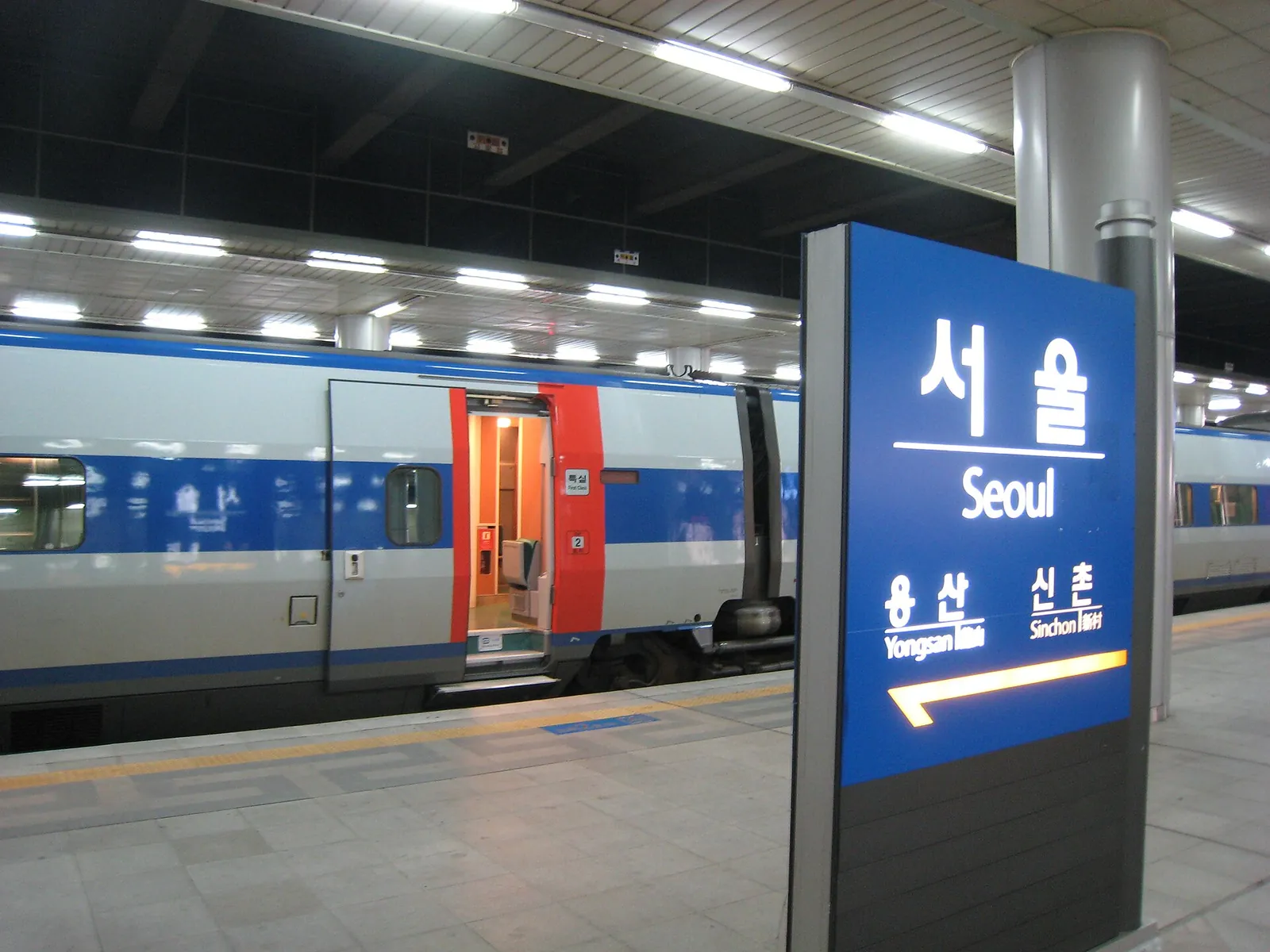
A KTX at Seoul Station, the starting point of the Gyeongbu Line to Busan.
Photograph: Syced — opens in a new tab · CC0 — opens in a new tab
Changes: Resized and converted to WebP; displayed with responsive crops. · Original photograph and licence details ↗ — opens in a new tab
An SRT high-speed train; SRT services start from Suseo Station in southeast Seoul.
Photograph: Hajoon0102 — opens in a new tab · CC BY-SA 4.0 — opens in a new tab
Changes: Resized and converted to WebP; displayed with responsive crops. · Original photograph and licence details ↗ — opens in a new tab
Express buses lined up at Jinju Express Bus Terminal, one of the regional cities served from Seoul.
Photograph: Asfreeas — opens in a new tab · CC BY-SA 4.0 — opens in a new tab
Changes: Resized and converted to WebP; displayed with responsive crops. · Original photograph and licence details ↗ — opens in a new tab
The Mokpo–Jeju car ferry Queen Jenuvia at the Port of Jeju.
Photograph: Sharon Hahn Darlin — opens in a new tab · CC BY 4.0 — opens in a new tab
Changes: Resized and converted to WebP; displayed with responsive crops. · Original photograph and licence details ↗ — opens in a new tab
Hotteok, sweet filled pancakes, a snack sold at street stalls and expressway rest stops.
Photograph: Sandra Vallaure — opens in a new tab · CC BY 2.0 — opens in a new tab
Changes: Resized and converted to WebP; displayed with responsive crops. · Original photograph and licence details ↗ — opens in a new tab