Busan and South Gyeongsang · Busan
Busan travel guide: beaches, Gamcheon, markets and where to stay
Busan is a long, hilly port city strung out along the sea, and the sights you came for sit at opposite ends of it. The old port around Nampo-dong holds Jagalchi fish market, Gukje Market and Yongdusan Park; the hillside villages of Gamcheon and Huinnyeoul and the cliffs of Taejongdae lie just west and south of it; Haeundae, Gwangalli and the seaside temple of Haedong Yonggungsa are on the east coast, an hour or more away by public transport. A good Busan trip gives each side its own day instead of crossing the city twice between breakfast and dinner.
- Suggested time
- 3–4 days
- Where to stay
- Haeundae for the beaches and east coast; Nampo-dong or Busan Station for the old port and trains; Seomyeon for a central subway hub
- Season and timing
- VisitKorea describes Busan's weather as mild year-round. The beaches have an official swimming season in summer (Haeundae's ran from 21 June to 14 September in 2025), and October brings the Busan International Film Festival, 6–11 October in 2026, when Haeundae hotels fill early.
The short answer
Give a first visit three full days: one for the old port (Jagalchi, Gukje Market, BIFF Square and Busan Tower) with Gamcheon Culture Village in the morning, one for the east coast (Haedong Yonggungsa, the Blueline Park coastal train, Haeundae and Dongbaekseom), and one for Yeongdo's Taejongdae and Huinnyeoul village with an evening on Gwangalli Beach. Sleep in Haeundae if the beaches and the east coast matter most, in Nampo-dong or near Busan Station for the markets and the KTX, or in Seomyeon for the most central subway connections. Add a fourth day for Gyeongju, Ulsan or Beomeosa Temple.
Pick a side of the city before you pick a hotel
Busan's two halves feel like different trips. The old port, in Jung-gu around Nampo-dong, is markets, steep lanes, ferries and the post-war history of a city that took in refugees from across the country during the Korean War. The east coast, in Haeundae-gu and Suyeong-gu, is beaches, high-rise hotels, cafés and coastal walks. VisitKorea's airport guide puts Haeundae Blueline Park about 90 minutes from Gimhae Airport by public transport and Jagalchi and Gukje markets about 60; the two halves are far enough apart that each deserves its own day.
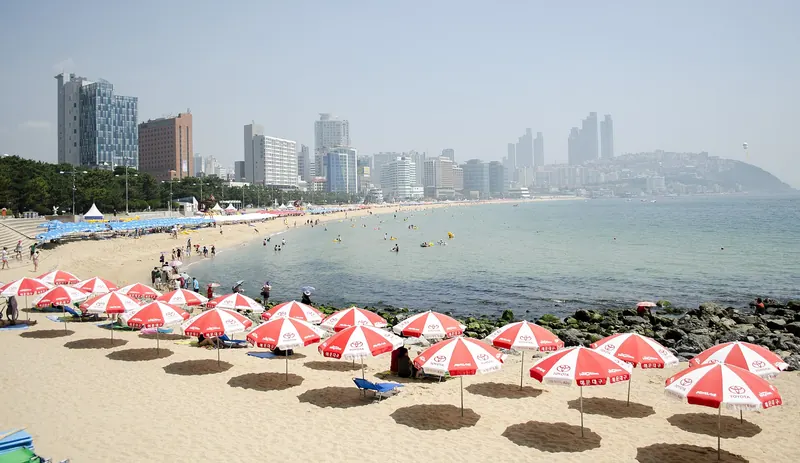
Haeundae is the obvious base for a beach-centred trip: hotels of every level line the 1.5-kilometre beach, Haeundae Station on Line 2 is about five minutes' walk from the sand, and the Blueline Park coastal train, Dongbaekseom and the road to Haedong Yonggungsa are all close. Nampo-dong and the streets around Busan Station suit travellers arriving by KTX and spending their days in the markets; VisitKorea notes that Nampo-dong, Gukje Market and Jagalchi Market are about 15 minutes from Busan Station.
Seomyeon, where Busan Metro Lines 1 and 2 meet, is the compromise: less scenic, but one line runs to the old port and the other to the beaches. Gwangalli, between the two, is the base for travellers who want the lit-up Gwangandaegyo Bridge outside their window and seafood restaurants on the doorstep. Whichever you choose, check the walk from the hotel to the nearest station before you book: Busan is hilly, and a cheap room halfway up a slope is a daily climb.
The old port: Jagalchi, Gukje Market and Yongdusan
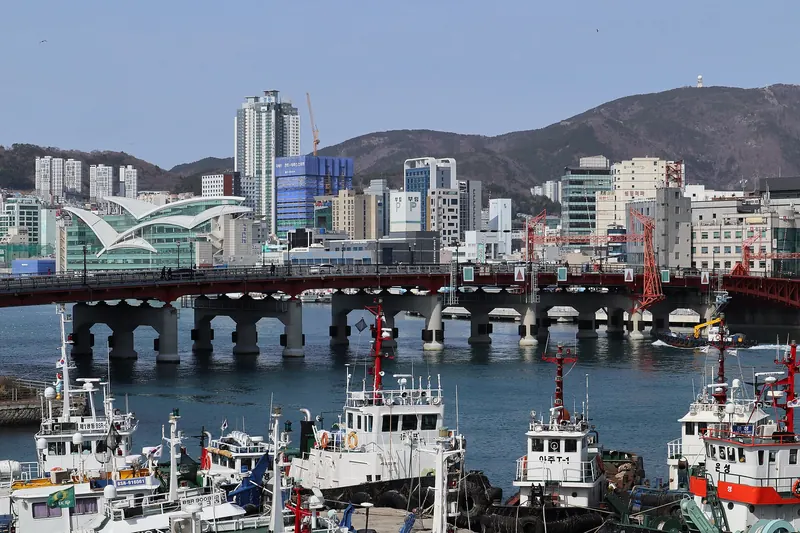
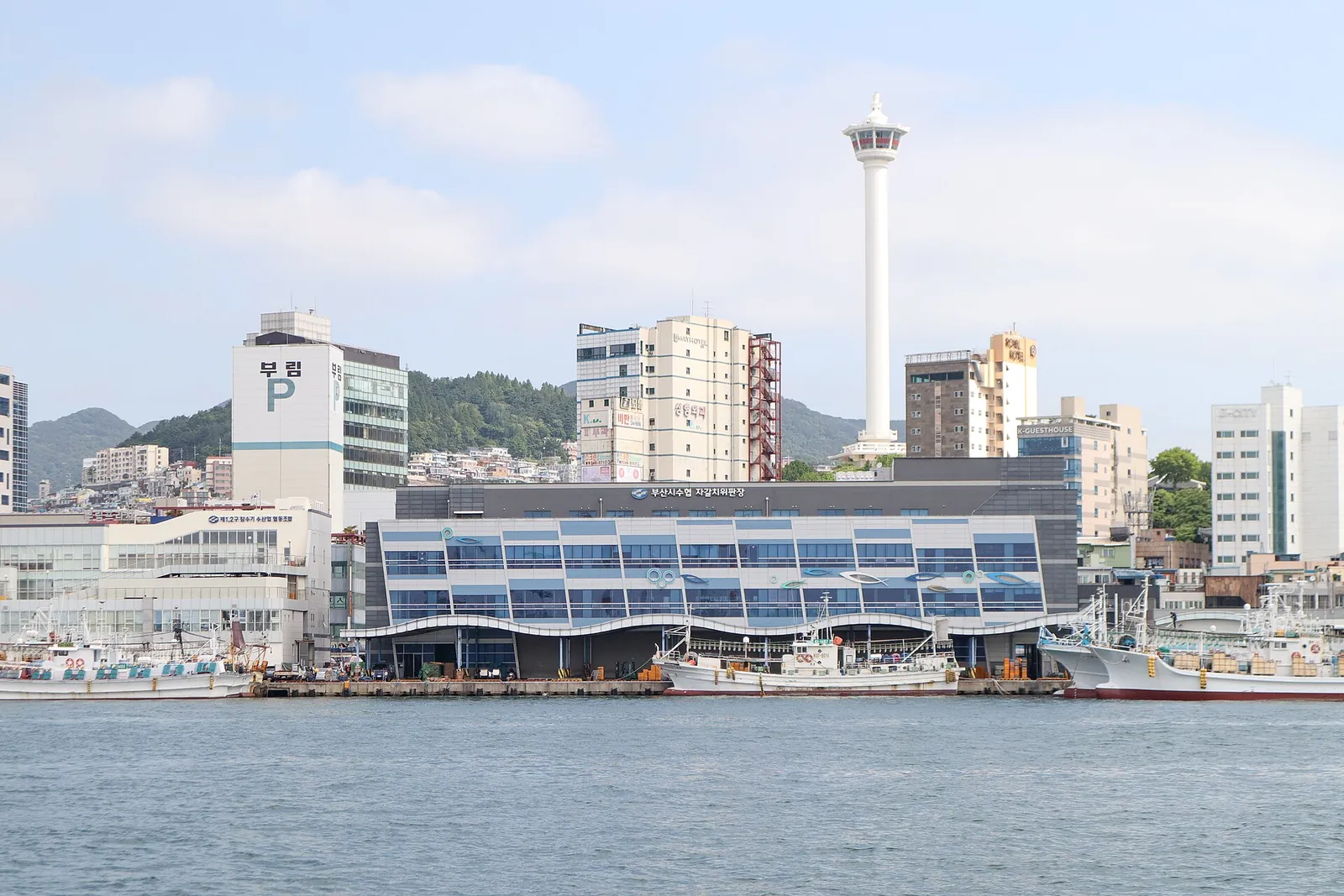
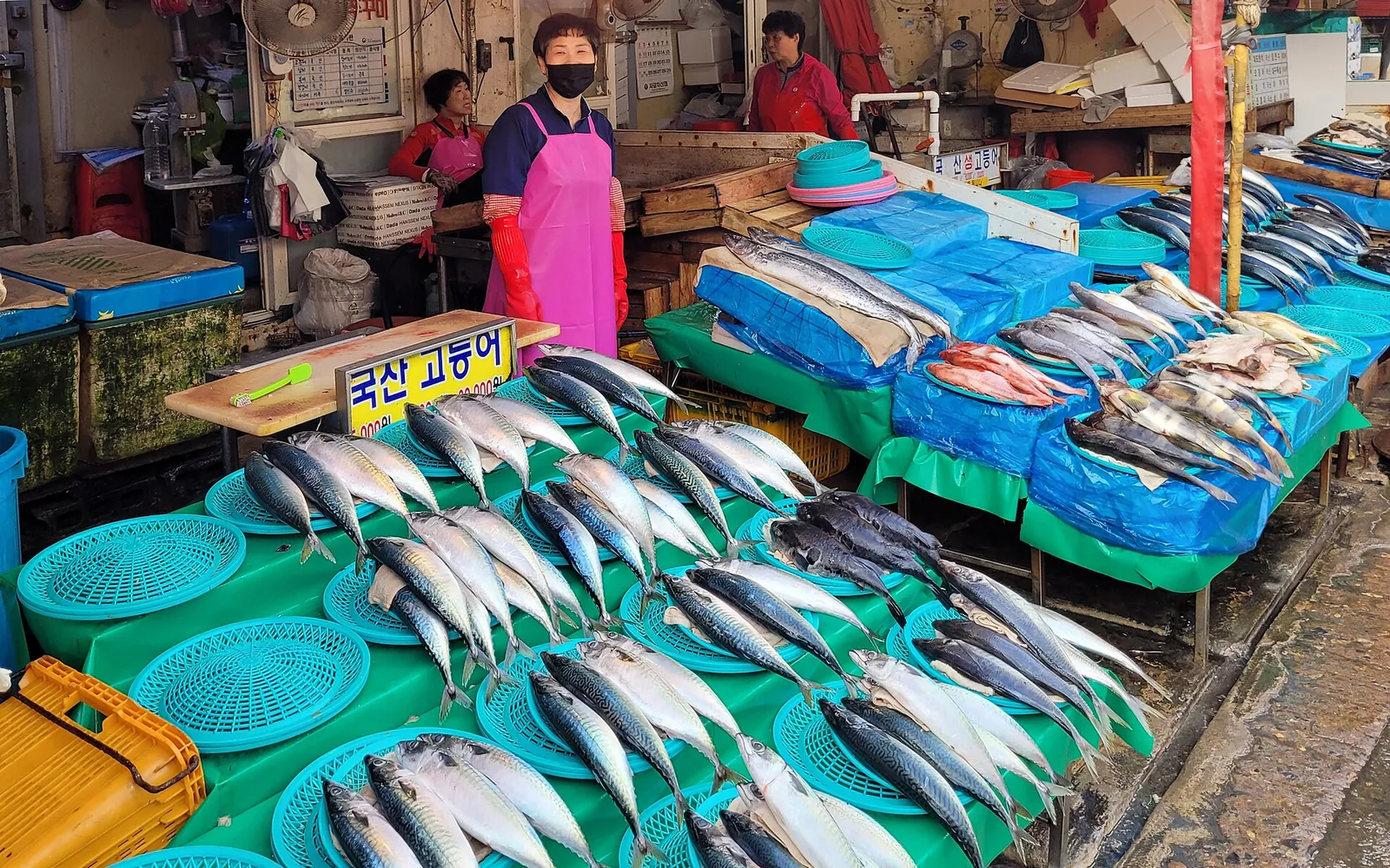
Jagalchi Market, on the waterfront in Jung-gu, is one of Korea's largest seafood markets, selling live and dried fish, and VisitKorea notes that most of the sellers are women, known as the Jagalchi ajumeoni. The way to use it is as a meal: pick live fish and seafood on the ground floor, then take it upstairs to be served as sliced raw fish or grilled. When we checked on 2026-10-03, VisitKorea listed the market as open from 5:00 to 22:00 and closed on the first and third Tuesdays of the month.
Gukje Market, close by in the same district, grew from the stalls of refugees who settled in Busan after the Korean War and is one of the country's largest markets, a maze of alleys divided into sections for food, second-hand goods, vintage clothing and household goods. VisitKorea listed it at 9:00 to 20:00, varying by shop, and closed on Sundays; its food street, known for Chungmu gimbap, milmyeon, dwaeji gukbap and bibim dangmyeon eaten on stools beside the stalls, was listed as closed on the first and third Sundays of each month. Between the two, BIFF Square, a 428-metre street of cinemas renamed for the first Busan International Film Festival in 1996, now mixes cinemas with shops and leisure spots.
Yongdusan Park sits above Nampo-dong, reached by a set of escalators from the shopping streets, with views of Busan Port and Yeongdo. The 120-metre Busan Tower stands in the park; when we checked, VisitKorea listed it as open from 10:00 to 22:00 (last entry 21:30) at 12,000 won for adults. Go late in the day so the market lunch comes first and the harbour lights come last.
Make time for the local food
What to eat and where to look
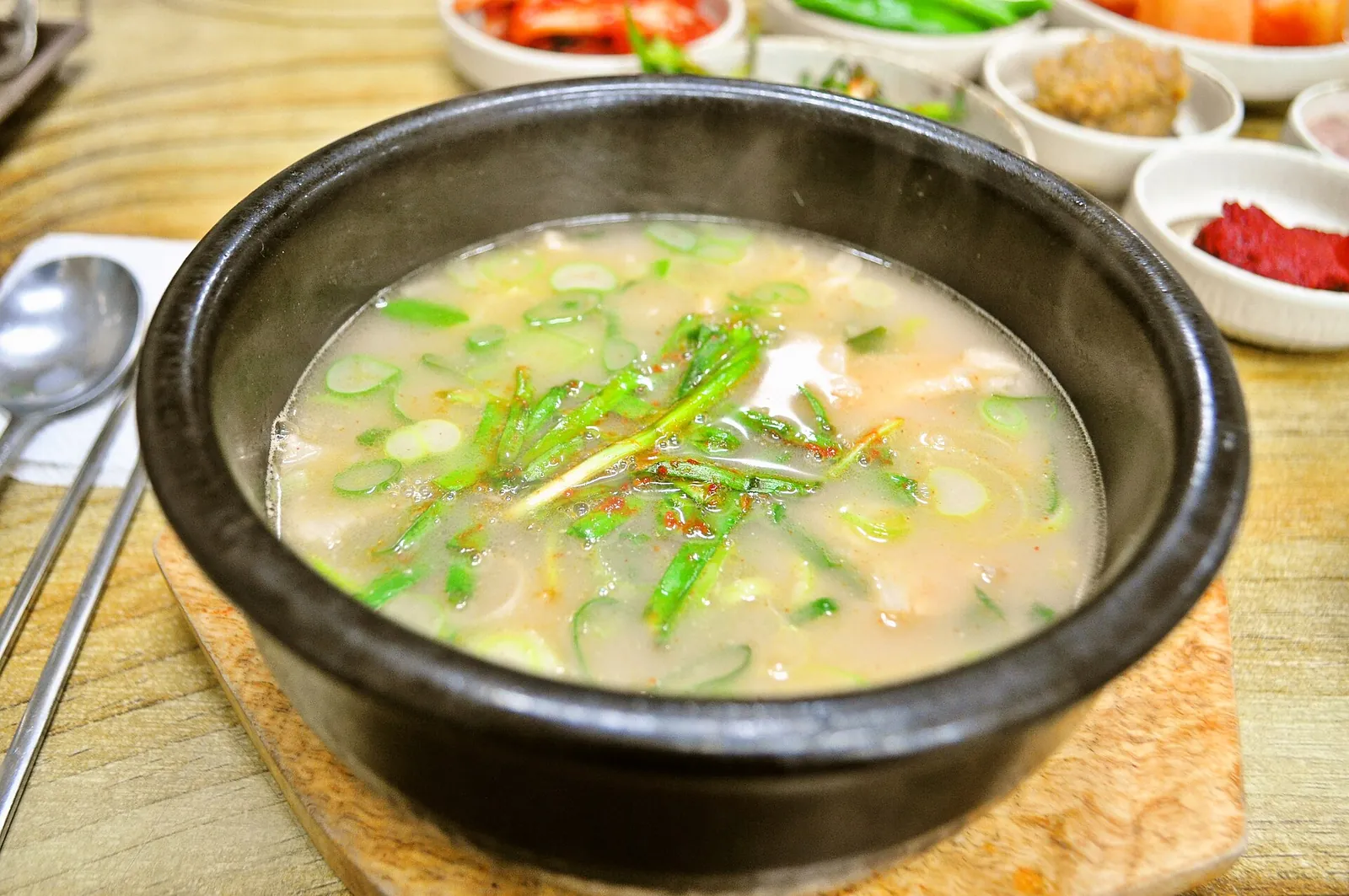
Dwaeji gukbap (pork and rice soup)
Pork and rice soup, which VisitKorea calls Busan's representative local dish; gukbap (rice soup) has long been the meal Koreans turn to when they need to eat quickly.
- Where to look
- Gukbap restaurants across the city, and the Gukje Market food street in Nampo-dong.
- Fit it into your day
- A hot, filling breakfast or lunch before a hillside day at Gamcheon or Taejongdae.
Pork-based; ask what cuts go in if you prefer to avoid offal.
Milmyeon (Busan wheat noodles)
Cold noodles made from wheat flour and starch in a chilled broth of beef, pork or chicken bones. VisitKorea traces the dish to the Korean War, when it was made with flour provided through US aid.
- Where to look
- Milmyeon specialists around the city and the stalls of Gukje Market's food street.
- Fit it into your day
- A light lunch on a warm day; VisitKorea describes it as mainly a summer dish.
The broth is made from beef, pork or chicken bones; ask before ordering if you avoid meat.
Eomuk (Busan fishcake)
Ground fish shaped into skewers, sheets and croquettes. Busan is known for its fishcake-making tradition and for a high fish content, with fillings such as squid, cheese and sweet potato.
- Where to look
- Market stalls in Bupyeong (Kkangtong) Market, where VisitKorea recommends eomuk and fried fishcake 'hot bars', and fishcake shops for take-away boxes.
- Fit it into your day
- A snack while walking the markets, or a packed box for the KTX home.
Contains fish and often wheat and egg; fillings may include cheese or seafood.
Raw fish and grilled seafood at Jagalchi
The Jagalchi way: choose live fish or shellfish from the ground-floor stalls, then have it sliced as hoe (raw fish) or grilled in the restaurants upstairs. VisitKorea also suggests kkomjangeo, grilled sea eel.
- Where to look
- Jagalchi Market on the Nampo-dong waterfront.
- Fit it into your day
- Make it the main lunch of the old-port day, with time to choose rather than a rushed stop.
Ask for the total, including the upstairs preparation, before the fish is cut; the market closes on the first and third Tuesdays.
Ssiat hotteok (seed-filled griddle cake)
A griddle cake with a sugar and seed filling, one of the Busan favourites VisitKorea lists for the Gukje Market food alleys.
- Where to look
- Street stalls around Gukje Market and BIFF Square.
- Fit it into your day
- An afternoon snack between the markets and Yongdusan Park.
The sugar filling can be very hot straight off the griddle; contains seeds and wheat.
Gamcheon and Huinnyeoul: villages where people live
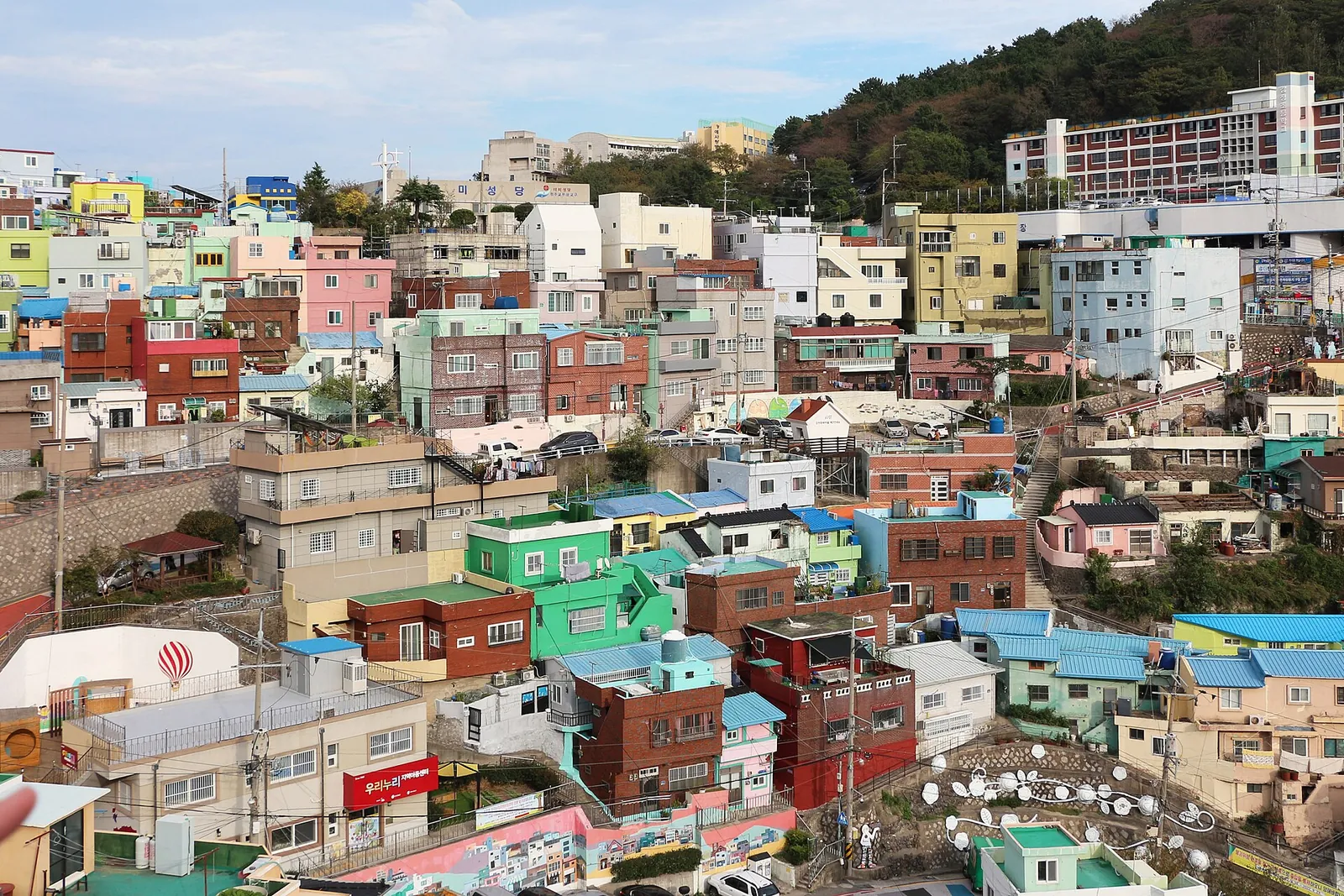
Gamcheon Culture Village grew from homes that Korean War refugees built in tiers up a coastal hillside in Saha-gu; today its alleys are painted with murals and dotted with sculptures by residents, and the Little Prince and Desert Fox sculpture is one of the most popular photo spots. Entry is free, but it is a residential neighbourhood under special management. VisitKorea's August 2026 notice lists visiting hours in the residential areas as 9:00 to 18:00, asks visitors not to talk loudly, look into houses or photograph residents without permission, requires groups of ten or more to buy a group map, and restricts tourist vehicles, including taxis, inside the village. Go in the morning and be out of the lanes by six.
Huinnyeoul Culture Village, on the cliffs of Yeongdo facing the open sea, is the quieter counterpart: old houses on a coastal lane remodelled in December 2011 into an arts village, with ocean-view cafés and mural-lined alleys. It sits on the same island as Taejongdae, so the two make one easy day.
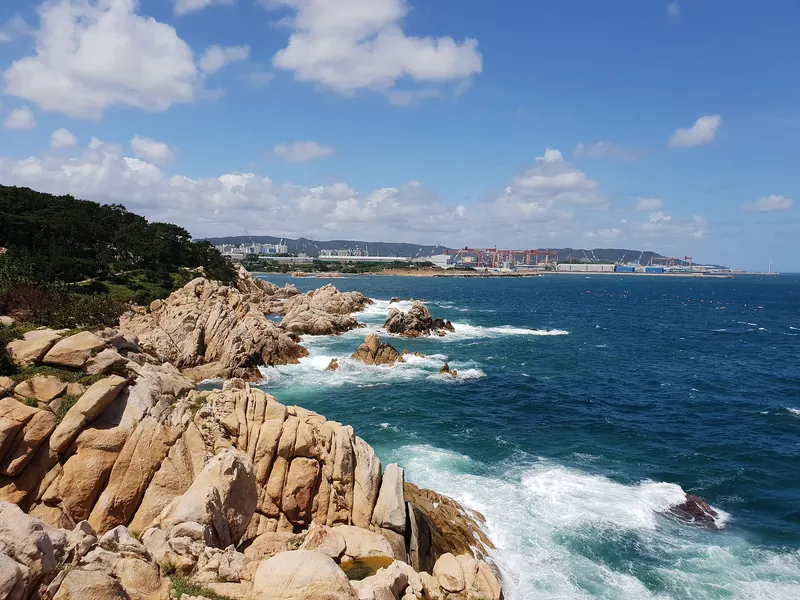
Taejongdae, at Yeongdo's southern tip, is a national geopark of sea cliffs, caves and forest paths. When we checked, VisitKorea listed the park as open from 4:00 to midnight from March to October (5:00 from November to February), with facilities closing at 20:00. The Danubi road train that loops to the observatory cost 4,000 won return for adults and does not run on Mondays; entry to the park itself is free and the forest paths can be walked.
The east coast: the seaside temple, the coastal train and Haeundae
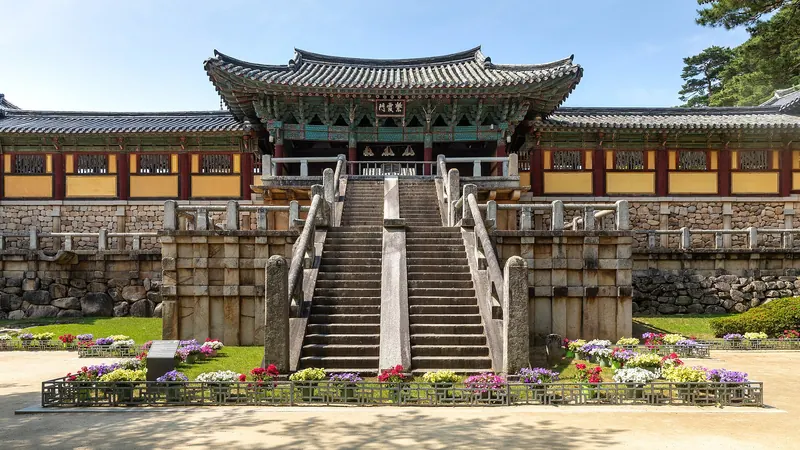
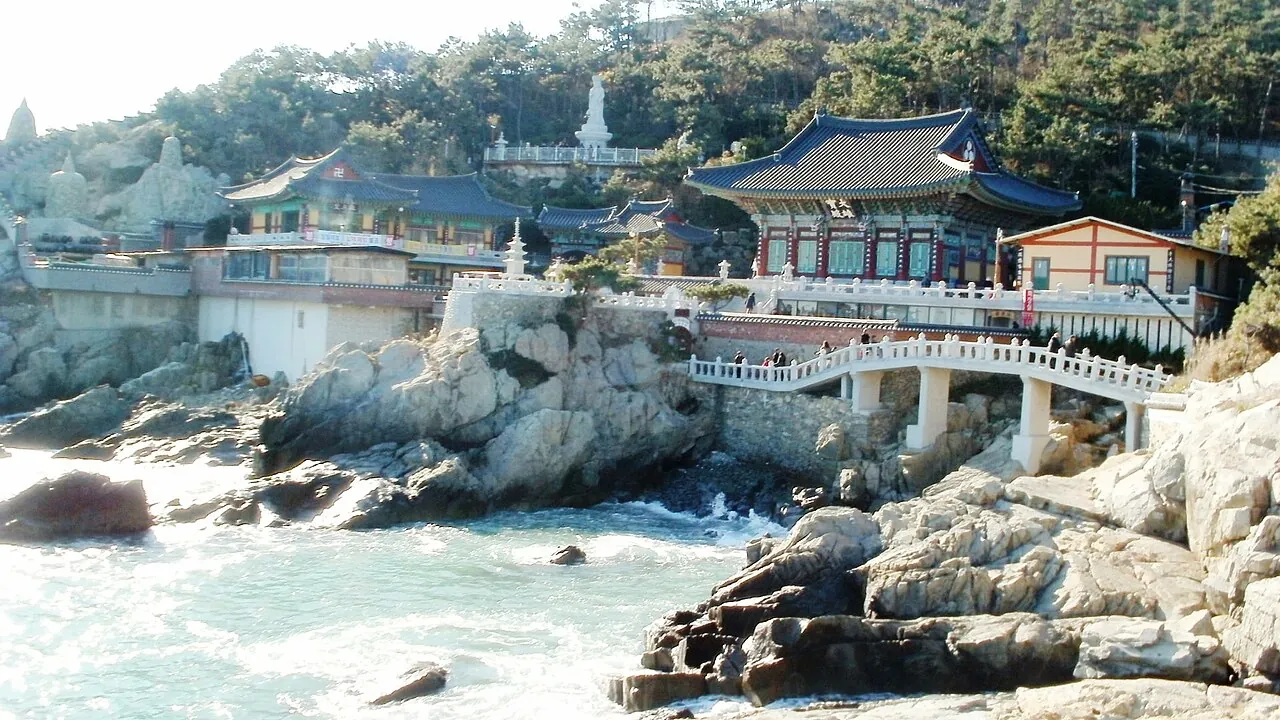
Haedong Yonggungsa is one of the few Korean temples built on the shoreline rather than in the mountains, in Gijang-gun north-east of Haeundae. VisitKorea dates its founding to 1376, by the Goryeo-era teacher Naong; it was destroyed in the Imjin War and rebuilt from the 1930s. When we checked on 2026-10-03, it was listed as open from 4:30 to 19:20 with last entry at 18:50, free of charge. The early opening makes it the natural first stop of the east-coast day.
Haeundae Blueline Park reuses 4.8 kilometres of the old Donghae Nambu Line between Mipo, Cheongsapo and Songjeong. The Beach Train runs the full stretch; the four-seat Sky Capsule runs 2 kilometres between Mipo and Cheongsapo, 7 to 10 metres above the sea. VisitKorea listed October hours of 9:00 to 18:30 and 9:00 to 18:00 from November to February; check the operator's current timetable before you go.
Finish at Haeundae Beach and walk around Dongbaekseom, the former island at its western end. A path circles it past the Choi Chi-won monument, the mermaid statue and the Nurimaru APEC House, with views along the coast to Gwangandaegyo Bridge and Oryukdo; camellias flower there from winter into spring.
Gwangalli at night and the festival calendar
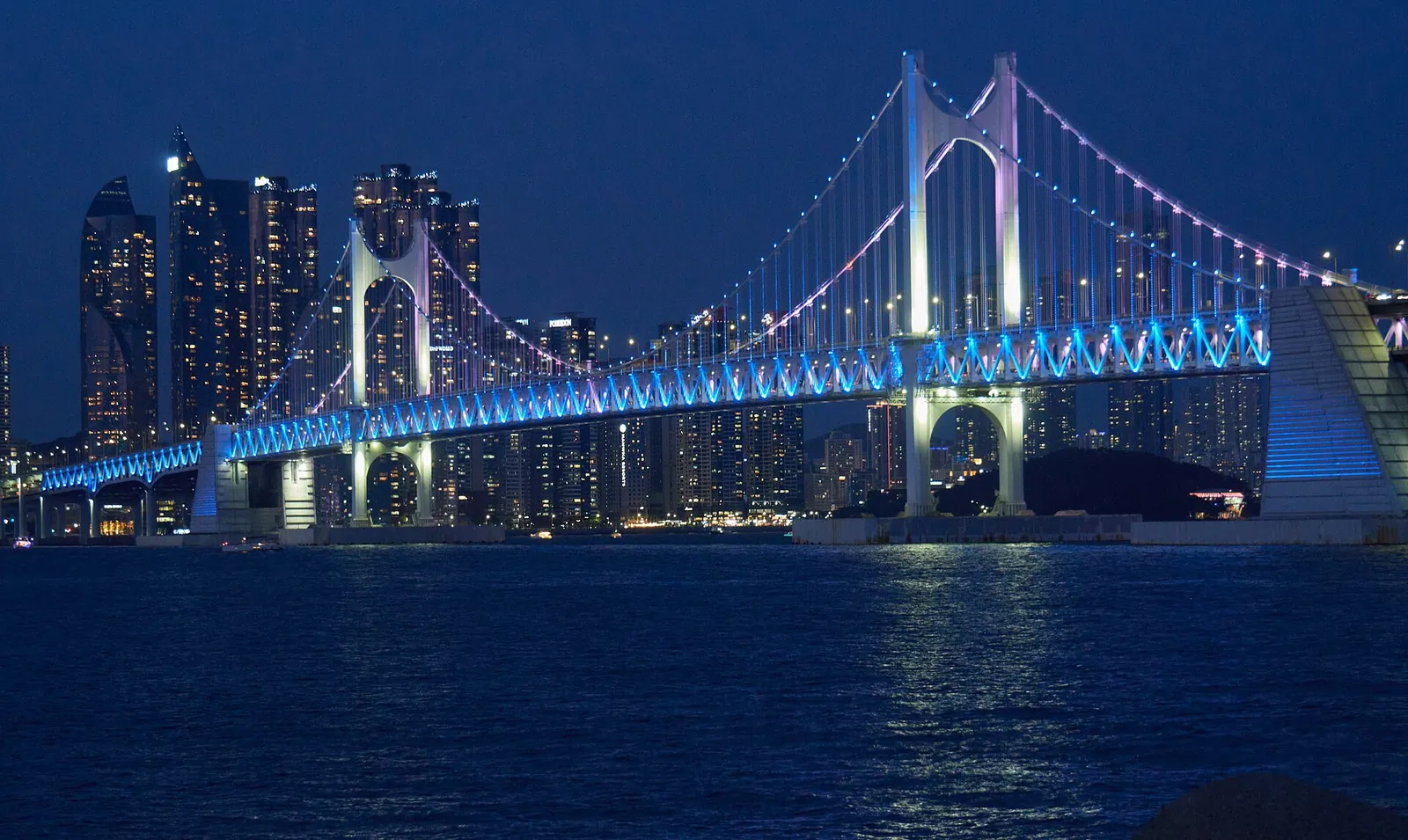
Gwangalli Beach, west of Haeundae, is 1.4 kilometres of fine sand facing Gwangandaegyo Bridge, about ten minutes' walk from Gwangan Station on Line 2. Come after dark, when the bridge is lit, and eat in the seafood restaurants behind the beach. VisitKorea's 2025 beach guide lists the Gwangalli drone light show on Saturdays only, at 17:00 and 21:00 from October to February and at 20:00 and 22:00 from March to September; check the current schedule before you plan a night around it, and expect large crowds.
October is Busan's busiest cultural month. VisitKorea's 2026 autumn festival guide lists the Busan International Film Festival, Asia's largest, in Haeundae from 6 to 11 October, with the Busan Cinema Center hosting the opening and closing ceremonies, and the Busan International Rock Festival at Samnak Eco Park from 2 to 4 October. Book Haeundae rooms well ahead for festival week, or stay in Seomyeon and travel in.
Getting in and getting around
From Seoul, the KTX on the Gyeongbu Line runs from Seoul Station to Busan Station and the SRT from Suseo in southern Seoul. VisitKorea's guides give journey times of between about 2 hours 30 minutes and 3 hours 20 minutes depending on the train; express buses from Seoul Express Bus Terminal take about four hours. Busan Station is on Metro Line 1, the line that also serves the old port.
Inside the city, the metro does most of the work: Line 1 for Busan Station and the old port, Line 2 for Seomyeon, Gwangalli and Haeundae, with the two meeting at Seomyeon. The rechargeable Busan Pass, in 24- and 48-hour or entry-based versions, covers admission to many attractions; compare it against the sights you will actually visit before buying.
A workable three-day route
This is an editorial suggestion, not a timetable. Check closing days for each place you choose, especially the market Tuesdays and Sundays.
- Day 1 — Old port: Gamcheon Culture Village after 9:00, then a seafood lunch at Jagalchi, Gukje Market and BIFF Square in the afternoon, and Busan Tower at dusk.
- Day 2 — East coast: Haedong Yonggungsa early, the Blueline Park coastal train from Songjeong or Mipo, then Haeundae Beach and the Dongbaekseom path in the late afternoon.
- Day 3 — Yeongdo and Gwangalli: Taejongdae's cliffs in the morning, Huinnyeoul village and a café by the sea, then dinner at Gwangalli under the lit bridge.
- Day 4 (optional): a day trip to Gyeongju or Ulsan, or Beomeosa Temple on Geumjeongsan in the city's north.
Day trips: Gyeongju, Ulsan and Beomeosa
Gyeongju, the Silla capital, is the classic addition and deserves a full day or a night of its own; VisitKorea lists an intercity bus from Gimhae Airport to Gyeongju Intercity Bus Terminal at about an hour. Ulsan is closer than most visitors expect: VisitKorea gives about 40 minutes by KTX-Eum from Bujeon Station to Taehwagang Station, or about 80 minutes on the Donghae Line metro, for the Taehwagang National Garden and the UNESCO-listed whale petroglyphs along the Bangucheon Stream.
Without leaving the city, Beomeosa, founded in 678 under the Silla dynasty on the slopes of Geumjeongsan in the north, is a mountain temple to set against the seaside one at Yonggungsa. VisitKorea listed it as open from 8:00 to 17:00 with free entry, and it offers templestays for travellers who want to stay overnight.
Practical questions
How many days do I need in Busan?
Three full days cover the old port and Gamcheon, the east coast with Haedong Yonggungsa, and Yeongdo with an evening at Gwangalli. Add a fourth for Gyeongju, Ulsan or Beomeosa. The old port and the east coast are at opposite ends of the city, so do not try to fit both into one day.
Should I stay in Haeundae or Nampo-dong?
Stay in Haeundae if the beaches, the Blueline Park train and Haedong Yonggungsa are your priority. Stay in Nampo-dong or near Busan Station if you are arriving by KTX and want the markets, Gamcheon and Yeongdo close by. Seomyeon, where Lines 1 and 2 meet, is the central compromise.
Can I visit Gamcheon Culture Village in the evening?
No. Under the village's special management rules, the residential areas are open to visitors from 9:00 to 18:00. Taxis and other tourist vehicles are restricted inside the village, groups of ten or more must buy a group map, and residents ask for quiet and no photos of their homes without permission.
How do I get from Seoul to Busan?
Take the KTX from Seoul Station or the SRT from Suseo to Busan Station; VisitKorea's guides give between about two and a half hours and three hours 20 minutes depending on the train. Express buses take about four hours. Arriving at Incheon, you can also connect to a domestic flight from Gimpo to Gimhae.
When is the best time to see Haedong Yonggungsa?
Early. When we checked, the temple opened at 4:30 and the last entry was at 18:50, with no admission fee. Put it first on the east-coast day and continue to the Blueline Park and Haeundae afterwards.
Is October a good time to visit Busan?
Yes, but plan around the Busan International Film Festival, listed for 6–11 October 2026 in Haeundae. It brings red-carpet events and screenings, and also fills hotels near the beach, so book early or stay in Seomyeon.
Sources and checks before you travel
Reference sources for the version dated 3 October 2026. Confirm opening times, access, transport and conditions for your travel dates.
- VisitKorea: Busan Gamcheon Culture Village ↗ — opens in a new tab
- VisitKorea: travel etiquette at Gamcheon Culture Village (August 2026) ↗ — opens in a new tab
- VisitKorea: Haedong Yonggungsa Temple ↗ — opens in a new tab
- VisitKorea: Jagalchi Market ↗ — opens in a new tab
- VisitKorea: Gukje Market and Gukje Market Food Street ↗ — opens in a new tab
- VisitKorea: Yongdusan Park, Busan Tower and BIFF Square ↗ — opens in a new tab
- VisitKorea: Taejongdae Cliffed Coast and Huinnyeoul Culture Village ↗ — opens in a new tab
- VisitKorea: Haeundae Blueline Park ↗ — opens in a new tab
- VisitKorea: Haeundae Beach, Dongbaekseom and Gwangalli Beach ↗ — opens in a new tab
- VisitKorea: best summer beach destinations ↗ — opens in a new tab
- VisitKorea: Korea Beyond Seoul, Gimhae International Airport ↗ — opens in a new tab
- VisitKorea: Feel the Sea, Enjoy the City — discover Busan ↗ — opens in a new tab
- VisitKorea: BTS World Tour in Busan travel guide ↗ — opens in a new tab
- VisitKorea: Korea's top autumn festivals in 2026 ↗ — opens in a new tab
- VisitKorea: Busan fishcake ↗ — opens in a new tab
- VisitKorea: Busan Beomeosa Temple ↗ — opens in a new tab
- VisitKorea: excellent Korean guesthouses, part 2 ↗ — opens in a new tab
- VisitKorea: Gyeongju Reimagined ↗ — opens in a new tab
Photo credits
Gamcheon Culture Village, the hillside neighbourhood built by Korean War refugees in Saha-gu
Photograph: Bernard Gagnon — opens in a new tab · CC0 — opens in a new tab
Changes: Resized and converted to WebP; displayed with responsive crops. · Original photograph and licence details ↗ — opens in a new tab
Haedong Yonggungsa, the seaside temple on the Gijang coast north-east of Haeundae
Photograph: Anna L Martin — opens in a new tab · CC BY 2.0 — opens in a new tab
Changes: Resized and converted to WebP; displayed with responsive crops. · Original photograph and licence details ↗ — opens in a new tab
Jagalchi Market on the Nampo-dong waterfront, with Busan Tower in Yongdusan Park behind
Photograph: Mobius6 — opens in a new tab · CC BY-SA 4.0 — opens in a new tab
Changes: Resized and converted to WebP; displayed with responsive crops. · Original photograph and licence details ↗ — opens in a new tab
Fish stalls at Jagalchi Market, one of Korea's largest seafood markets
Photograph: Bernard Gagnon — opens in a new tab · CC0 — opens in a new tab
Changes: Resized and converted to WebP; displayed with responsive crops. · Original photograph and licence details ↗ — opens in a new tab
Gwangandaegyo Bridge after dark, seen from Gwangalli Beach
Photograph: lumoplank — opens in a new tab · CC0 — opens in a new tab
Changes: Resized and converted to WebP; displayed with responsive crops. · Original photograph and licence details ↗ — opens in a new tab
Dwaeji gukbap, the pork and rice soup VisitKorea calls Busan's representative dish
Photograph: Tmannya — opens in a new tab · CC BY-SA 3.0 — opens in a new tab
Changes: Resized and converted to WebP; displayed with responsive crops. · Original photograph and licence details ↗ — opens in a new tab