Plan your trip · South Korea
First trip to South Korea: how many days, which bases, and Jeju or not
Most first trips to South Korea are built on one line: Seoul in the north-west, Busan on the south-east coast, and the Gyeongbu railway between them, with Gyeongju, the old Silla capital, sitting just off the route near Busan. The real decisions are how many nights each city gets, whether to fly to Jeju or leave it for another visit, and how to avoid losing time to airport transfers, closed palaces, holiday crowds and map apps that do not work the way they do at home.
- Suggested time
- 7 days for Seoul, Busan and Gyeongju; 10 days to add Jeju
- Where to stay
- Seoul (Myeongdong or Jongno) and Busan (Haeundae or near Busan Station); Jeju City and Seogwipo if you add the island
- Season and timing
- Spring (March to May) and autumn (September to November) are the mild seasons VisitKorea recommends for sightseeing on foot; expect the rainy season from late June to late July and possible typhoons from June to October.
The short answer
Allow at least a week, and plan around two bases rather than five. With 7 days, sleep four nights in Seoul and three in Busan, and visit Gyeongju as a day trip by KTX from Busan, about 30 minutes each way according to VisitKorea. With 10 days, keep Seoul and Busan and add three nights on Jeju, split between the north and the south coast if you can; fly there from Busan's Gimhae airport and fly back to Seoul for your departure. Do not try to see Jeju as a day trip. Use the KTX for Seoul to Busan, buy tickets as soon as sales open a month ahead, carry a transport card from the first day, and use Naver Map or Kakao Map rather than Google Maps for directions.
How many days, and how many beds
A first visit works best with fewer moves. Every change of base costs a morning of packing, checking out, getting to the station and finding the next hotel, and in Korea the sights you came for are in the cities, not on the train. Two bases in a week, or three in ten days, leaves time to actually see them.
Seven days: four nights in Seoul and three in Busan. Seoul has more than enough for three full days: the palaces and Bukchon, the markets and Namsan, the riverside or a hike. In Busan, give a day to the old port and the markets, a day to the east coast around Haeundae, and use the third for Gyeongju. Gyeongju is on the high-speed line: VisitKorea gives about two hours by KTX from Seoul Station and about 30 minutes from Busan Station, so you can either stop there for a night on the way south or treat it as a day trip from Busan without moving your bags.
Ten days: keep the same spine and add three nights on Jeju. If you prefer history to beaches, spend two of the extra nights in Gyeongju instead and leave Jeju for a later trip. Fourteen days lets you do both without rushing, or add a slower region such as Jeonju or the east coast. Our 7-day and 10-day itineraries lay out these routes day by day.
Seoul first, then south by KTX
Long-haul flights land at Incheon, an hour west of central Seoul, so the capital is the natural place to start. VisitKorea's 2026 Busan guide puts the KTX from Seoul Station to Busan Station at about three hours on the Gyeongbu Line, and the SRT from Suseo Station in southern Seoul at about two and a half hours. An express bus from Seoul Express Bus Terminal takes about four hours. The train is the better choice for most people: the Gyeongbu Line is the busiest route in the country, and VisitKorea notes that it also serves Daejeon and Gyeongju.
According to VisitKorea, train tickets usually go on sale a month before departure at 07:00, on the KORAIL website and app, at ticket offices and machines. Book the Seoul to Busan leg as soon as your dates are fixed, especially for a Friday, a Sunday or a holiday weekend. If you are considering a Korail Pass (sold to international visitors as a 2-, 3-, 4- or 5-day flexible pass used within ten days), remember that it does not cover the SRT, so a hotel near Suseo makes little sense with a pass. With only one or two long train journeys, single tickets are usually simpler.
The return question is easier than it looks. If you are flying home via another Asian hub, you may not need to go back to Seoul at all: VisitKorea says Gimhae International Airport in Busan has non-stop international flights to 46 cities in 14 countries and regions, including Japan, China, Vietnam, the Philippines and Taiwan. Check whether an open-jaw ticket, into Incheon and out of Gimhae, costs about the same as a return; it saves a three-hour train ride back to the capital.
Make time for the local food
What to eat and where to look
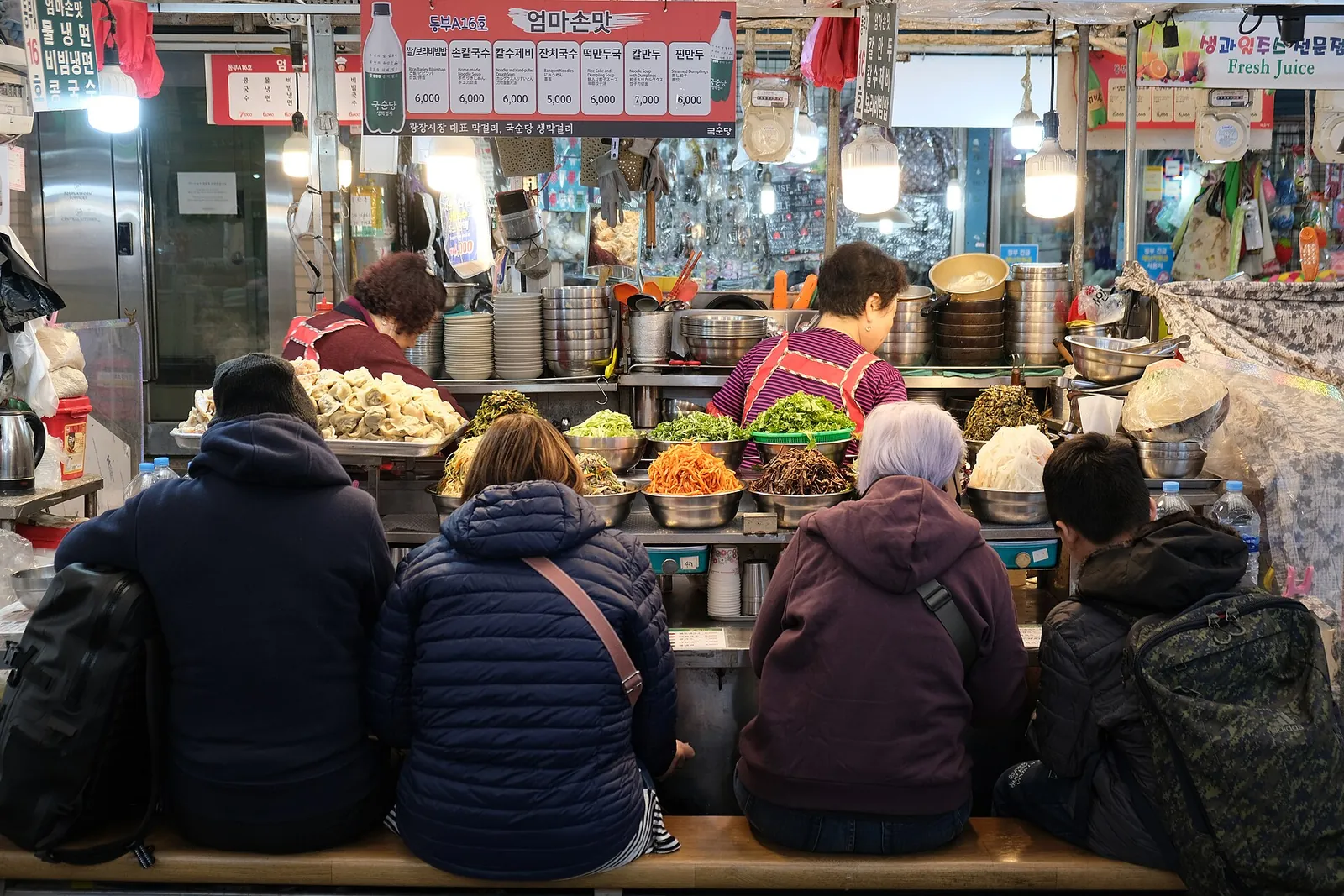
Bindaetteok and mayak gimbap at Gwangjang Market (Seoul)
Crisp mung bean pancakes fried to order and small, finger-sized rolls of seaweed rice, the two classics of Seoul's best-known market food alley. VisitSeoul also lists yukhoe (seasoned raw beef), sundae (Korean sausage) and assorted savoury pancakes among the market's favourites.
- Where to look
- The food alley of Gwangjang Market in Jongno, near Jongno 5-ga Station on Line 1. When we checked on 2026-10-03, VisitSeoul listed the food alley as open daily from 09:00 to 23:00.
- Fit it into your day
- An early dinner on your first or second evening in Seoul, sharing a few plates at a counter stall rather than one big meal.
Yukhoe is raw beef; pancakes are fried in shared oil, and many fillings contain pork or seafood.
Dwaeji gukbap (Busan pork and rice soup)
VisitKorea calls dwaeji gukbap Busan's representative local dish: a milky pork-bone broth with sliced pork, served with rice, the kind of quick, filling meal gukbap has always been in Korea.
- Where to look
- Specialist gukbap restaurants around Busan Station, Seomyeon and the old port, which usually serve little else.
- Fit it into your day
- A hot lunch or a late meal on the day you arrive in Busan by KTX, or breakfast before a day trip to Gyeongju.
Pork-based; side dishes and dipping sauces often contain fermented shrimp.
Busan milmyeon (cold wheat noodles)
Busan's cold noodles, made with wheat flour and starch and served in a cold broth based on beef, pork or chicken bones. VisitKorea traces them to the Korean War, when the city was a refuge and the noodles were made with flour from US aid.
- Where to look
- Noodle restaurants across Busan and the food alleys of Gukje Market near Nampo-dong.
- Fit it into your day
- Lunch on a hot day in Busan; VisitKorea notes it is eaten mainly in summer.
The broth is meat-based, and the sauce is often spicy; ask for it on the side.
Jeju black pork (heukdwaeji)
Jeju's signature meat, grilled at the table or served as dombegogi: steamed black pork sliced on a wooden board in front of you, a dish VisitKorea describes as a Jeju specialty.
- Where to look
- Black-pork barbecue restaurants in Jeju City and Seogwipo, and the night market at Dongmun Traditional Market in Jeju City.
- Fit it into your day
- Dinner on your first evening on Jeju, after the flight from Busan or Seoul.
Pork, usually served with salty dipping sauces; not an option if you avoid pork.
Should you add Jeju?
Jeju is a volcanic island off the south coast, listed by UNESCO as a World Natural Heritage Site, and it is a different trip from Seoul and Busan: coast, craters, forests and walking trails rather than palaces and markets. It is also an island you reach by air. VisitKorea says most travellers fly from Gimpo in Seoul or Gimhae in Busan, about an hour from the Seoul area, and that the Gimpo to Jeju route is the busiest in the world. Ferries from ports such as Mokpo, Yeosu and Wando take from about two and a half hours to an overnight sailing on VisitKorea's timetables, some with sleeping cabins; they make sense if you want to bring a car or enjoy the crossing, not to save time.
Add Jeju if you have ten days or more and want nature and sea after the cities. Give it at least three nights. The sights are spread around a large island: VisitKorea gives taxi times from the airport of about 40 minutes to Aewol or Hamdeok, 50 minutes to the Jungmun resort area and 80 minutes to Seongsan Ilchulbong on the east coast. Buses run from the airport to Jeju City, Seogwipo, the main beaches and Jungmun, but VisitKorea notes that a rental car is more convenient for the west coast and the inland areas.
Leave Jeju out of a seven-day trip. One night there means two flights and two airport transfers for a single full day, and you will spend it choosing between the east and the west coast. In a week, Gyeongju gives you more for less travel.
Fit Jeju into the route rather than around it: go south from Seoul by train, fly from Gimhae to Jeju, and then fly from Jeju to Gimpo or Incheon at the end. VisitKorea lists flights from Jeju to both Seoul airports, so the last flight of the holiday can bring you back to Incheon for your departure, if the timing works.
Arrival day: what actually happens after you land
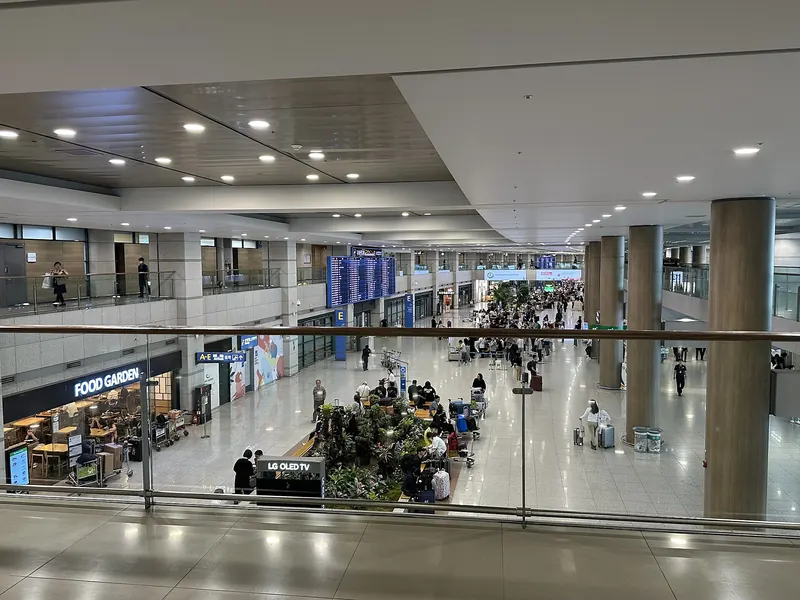
Do not count the arrival day as a sightseeing day. When we checked on 2026-10-03, VisitKorea's airport guide listed the non-stop AREX Express Train from Incheon to Seoul Station at about 43 minutes from Terminal 1 and 51 minutes from Terminal 2, and the all-stop train, which also calls at Hongik University Station for Hongdae, at about 59 and 66 minutes. Add immigration, baggage and the walk to the platform, and an afternoon arrival becomes an evening check-in.
Airport limousine buses run to many parts of Seoul and to other regions, but VisitKorea says they accept neither cash nor transport cards: buy a ticket at the counter or machine first. Most public transport from the airport into central Seoul finishes at around 23:30, after which night buses marked N serve a few hubs such as Gangnam Express Bus Terminal and Dongdaemun (DDP). If your flight lands late, book a hotel you can reach on one of those routes, or near the AREX line.
Buy a transport card on the first evening. VisitKorea lists Tmoney and EZL cards at convenience stores nationwide, WOWPASS, which works as a prepaid payment card as well, and the Seoul-only Climate Card for unlimited buses and subway over one to seven days. Our money guide compares them. Check entry rules before you book: Korea's K-ETA temporary exemption for many nationalities has been extended to 31 December 2026, according to the Ministry of Justice's K-ETA site, but it does not apply to every country, and our entry guide explains what to do after that date.
The mistakes that waste a day
Most of these come up on almost every first trip. Each is easy to avoid if you know about it before you go.
- Relying on Google Maps. VisitKorea warns that Google Maps navigation does not work in Korea. Download Naver Map, which VisitKorea describes as Korea's most widely used map, with walking and public-transport routes, or Kakao Map, and test them before you land.
- Turning up at a closed palace. The Royal Palaces and Tombs Center lists Gyeongbokgung and Jongmyo as closed on Tuesdays, and Changdeokgung, Deoksugung and Changgyeonggung on Mondays. Put Gyeongbokgung on a Monday or Wednesday rather than your first Tuesday.
- Booking the KTX late, or over a holiday. Seollal (the Lunar New Year, typically in February) and Chuseok (usually in September or October) are three-day holidays when families gather; VisitKorea notes that at Seollal many Koreans return to their home towns. Book trains as soon as sales open, or avoid long journeys on those days.
- Too many one-night stops. Seoul, Gyeongju, Busan, Jeju and back in seven days looks efficient on a map and feels like a week of check-outs. Drop a stop instead.
- Planning a day trip to Jeju. It is a flight each way plus long transfers on the island. Give it three nights or keep it for the next trip.
- Driving in the cities. VisitKorea recommends the subway over taxis or a rental car in Seoul and Busan. If you do rent a car on Jeju, you need an international driving permit, must be over 21, and pay with a credit card in the driver's name.
When to go for a first trip
VisitKorea recommends spring (March to May) and autumn (September to November) for sightseeing on foot, when the temperature is moderate; autumn averages around 15 °C. It warns that chilly weather often lasts until mid-March, that the rainy season usually runs from the end of June to the end of July, that several typhoons can arrive between June and October, and that winter is cold enough to need thick outerwear at all times.
Prices matter too. VisitKorea's budget guide names July to August and December to January as peak seasons for flights, and notes that most accommodation is cheaper on weekdays than at weekends, so a Sunday-to-Thursday stay in a popular city can stretch the budget. For month-by-month detail, including blossom and foliage timing, see our guide to the best time to visit South Korea.
Practical questions
How many days do I need for a first trip to South Korea?
A week is enough for Seoul, Busan and a day in Gyeongju at a comfortable pace. With ten days you can add three nights on Jeju; with two weeks you can add Jeju and a slower region as well.
Is it better to start in Seoul or Busan?
Start in Seoul if you land at Incheon, as most long-haul flights do, and travel south by KTX. If your flight home connects through another Asian hub, check flights from Busan's Gimhae airport, which has non-stop international routes to Japan, China, Southeast Asia and Taiwan, so you do not have to return to Seoul.
Is Jeju worth it on a first trip?
Yes, if you have ten days or more and want coast and nature after the cities. Give it at least three nights and fly from Busan or Seoul. On a seven-day trip, Gyeongju is a better use of the time.
How long is the train from Seoul to Busan?
VisitKorea's Busan guide gives about three hours by KTX from Seoul Station, and about two and a half hours by SRT from Suseo Station. Tickets usually go on sale a month in advance at 07:00.
Does Google Maps work in Korea?
Not for navigation. VisitKorea recommends Naver Map or Kakao Map instead; Naver Map has walking and public-transport directions and is available in English.
Should I buy a Korail Pass for a first trip?
Only if you will take several long train journeys in a few days. A Seoul to Busan trip with a Gyeongju stop is usually simpler with single tickets, and the pass does not cover the SRT.
Sources and checks before you travel
Reference sources for the version dated 3 October 2026. Confirm opening times, access, transport and conditions for your travel dates.
- VisitKorea (Korea Tourism Organization): Airport transportation guide ↗ — opens in a new tab
- VisitKorea: Train ↗ — opens in a new tab
- VisitKorea: BTS World Tour in Busan travel guide (2026) ↗ — opens in a new tab
- VisitKorea: Feel the Sea, Enjoy the City — discover Busan ↗ — opens in a new tab
- VisitKorea: Gyeongju Reimagined ↗ — opens in a new tab
- VisitKorea: Explore Beyond Seoul at SONO Hotels & Resorts ↗ — opens in a new tab
- VisitKorea: Korea Beyond Seoul, Gimhae International Airport ↗ — opens in a new tab
- VisitKorea: Getting to Jeju Island ↗ — opens in a new tab
- VisitKorea: Domestic flights ↗ — opens in a new tab
- VisitKorea: Fly to Jeju International Airport ↗ — opens in a new tab
- VisitKorea: Jeju Island, a Picturesque Paradise ↗ — opens in a new tab
- VisitKorea: Driving in Korea ↗ — opens in a new tab
- VisitKorea: Helpful apps and resources ↗ — opens in a new tab
- VisitKorea: Transportation cards ↗ — opens in a new tab
- VisitKorea: Essential guide for first-timers (climate) ↗ — opens in a new tab
- VisitKorea: Traveling in Korea on a budget ↗ — opens in a new tab
- VisitKorea: Three major traditional Korean holidays ↗ — opens in a new tab
- Royal Palaces and Tombs Center: opening hours and closing days ↗ — opens in a new tab
- VisitSeoul: Gwangjang Market ↗ — opens in a new tab
- Ministry of Justice, K-ETA: extension of the temporary exemption ↗ — opens in a new tab
Photo credits
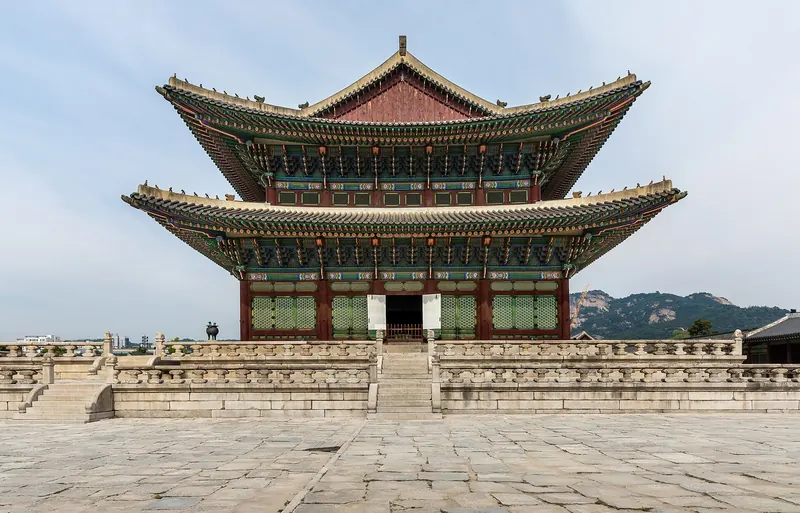
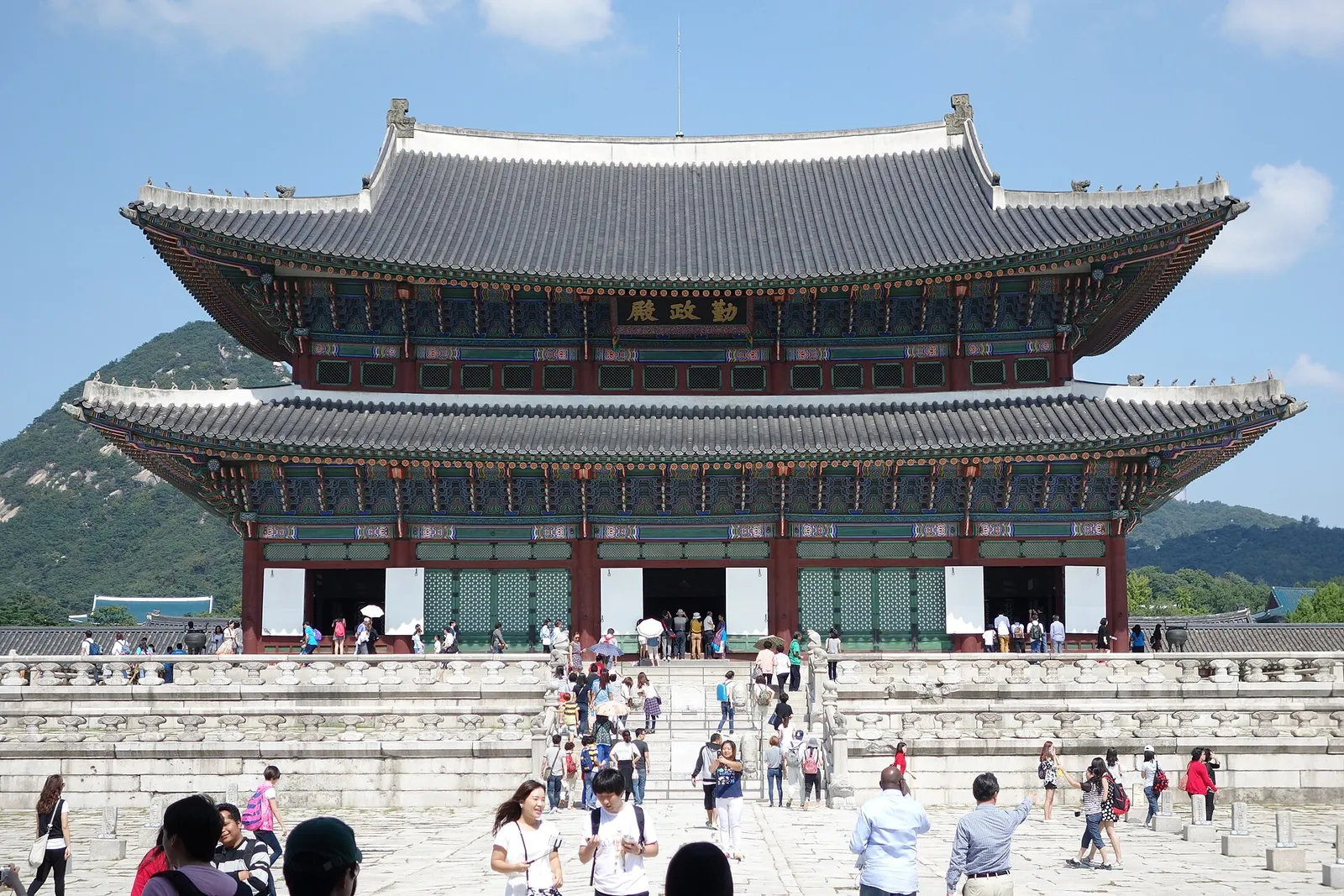
Geunjeongjeon throne hall at Gyeongbokgung, the first stop of most first trips to Seoul
Photograph: Spike — opens in a new tab · CC BY-SA 4.0 — opens in a new tab
Changes: Resized and converted to WebP; displayed with responsive crops. · Original photograph and licence details ↗ — opens in a new tab
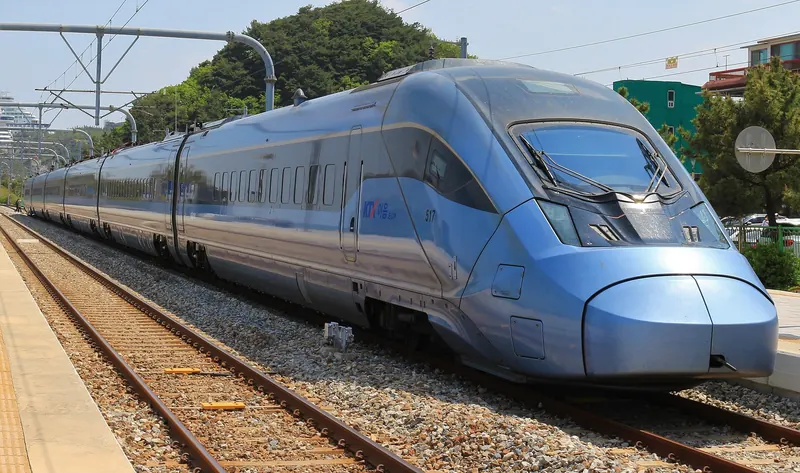
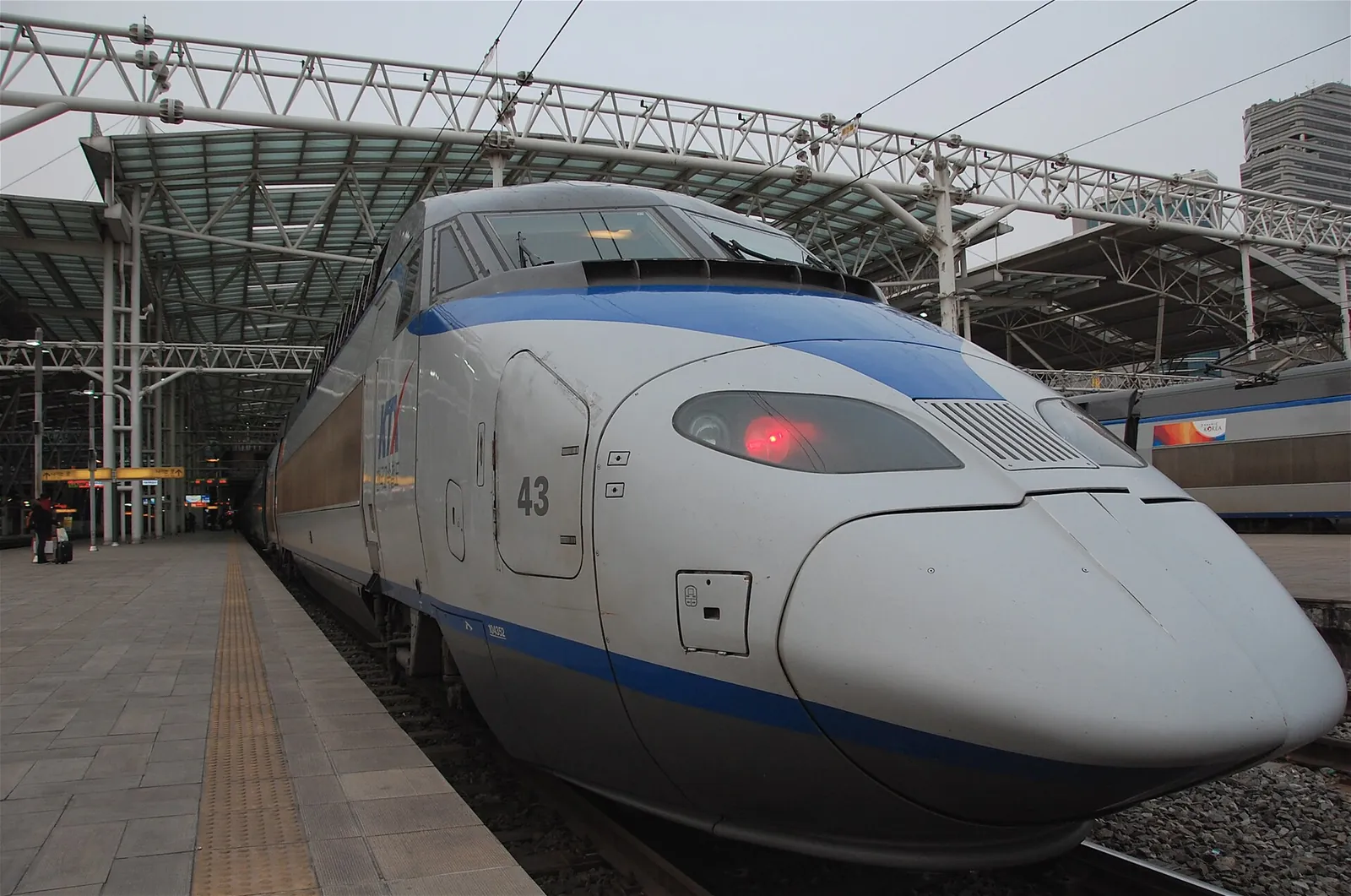
A KTX train at Seoul Station, where the Gyeongbu Line south to Busan begins
Photograph: LWYang — opens in a new tab · CC BY 2.0 — opens in a new tab
Changes: Resized and converted to WebP; displayed with responsive crops. · Original photograph and licence details ↗ — opens in a new tab
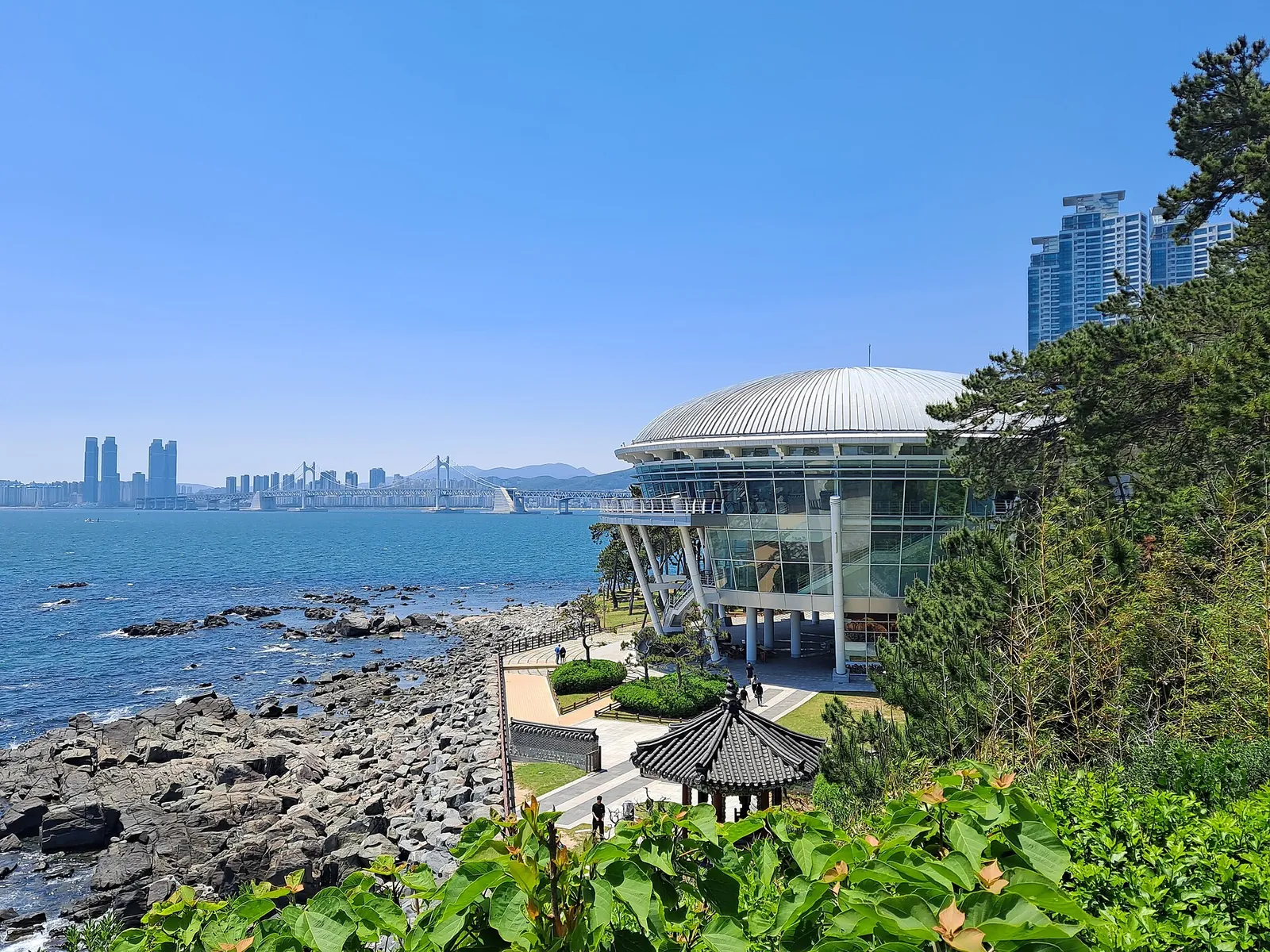
Dongbaekseom at the western end of Haeundae, Busan
Photograph: Brit in Seoul — opens in a new tab · CC BY-SA 4.0 — opens in a new tab
Changes: Resized and converted to WebP; displayed with responsive crops. · Original photograph and licence details ↗ — opens in a new tab
A food stall counter in Gwangjang Market, Seoul
Photograph: kallerna — opens in a new tab · CC BY-SA 4.0 — opens in a new tab
Changes: Resized and converted to WebP; displayed with responsive crops. · Original photograph and licence details ↗ — opens in a new tab
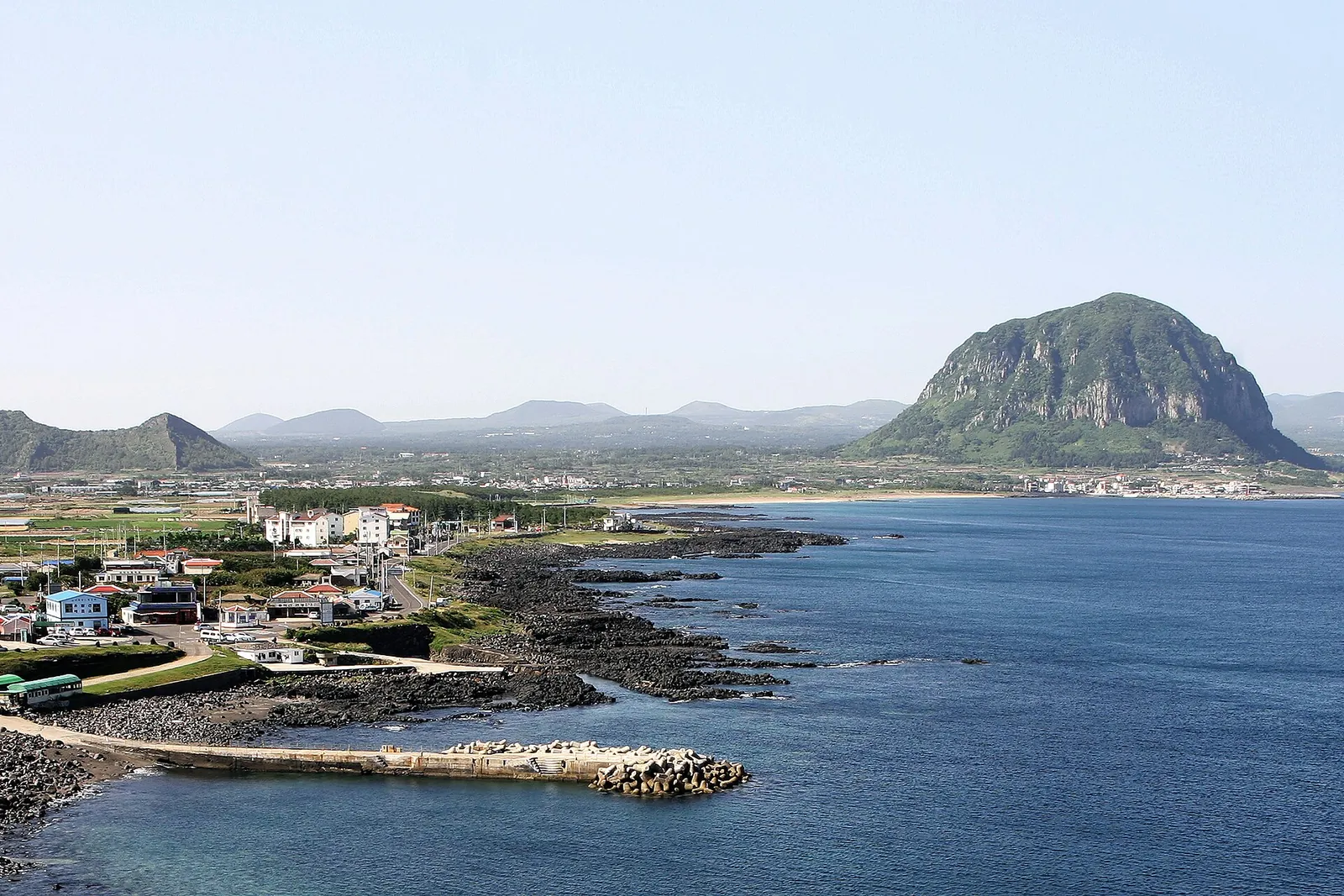
Sanbangsan and the Sagye coast on Jeju's south-west shore, seen from Jeju Olle Trail Route 10
Photograph: Jeju Olle Foundation — opens in a new tab · CC BY-SA 4.0 — opens in a new tab
Changes: Resized and converted to WebP; displayed with responsive crops. · Original photograph and licence details ↗ — opens in a new tab