Itineraries · South Korea
South Korea in 10 days: Seoul, Jeonju, Gyeongju, Busan and Jeju
Ten days is enough to see South Korea's classic loop without spending the trip on trains, provided you accept two things: Seoul gets three nights rather than five, and Jeju is the finale, not a separate holiday. The route runs south from the capital to Jeonju for a night in a hanok and a market dinner, east to Gyeongju for the tombs and temples of the Silla kingdom, down to Busan for the port and the sea, and then across by air to Jeju. Every leg but one is a direct train or flight, and the direct trains take between about 30 minutes and 1 hour 40 minutes.
- Suggested time
- 10 days (9 nights)
- Where to stay
- Seoul 3 nights (Jongno or Seoul Station); Jeonju 1 night (hanok village); Gyeongju 1 night (Hwangnam-dong); Busan 2 nights (Nampo-dong); Jeju 2 nights (Jeju City)
- Season and timing
- VisitKorea recommends spring (March to May) and autumn (September to November) for travel on foot, which suits a route of palaces, hanok lanes and temple paths. The rainy season usually runs from the end of June to the end of July, and several typhoons can arrive between June and October; with a flight and a ferry in the last days, keep the Jeju part flexible in that period.
The short answer
Sleep three nights in Seoul (Jongno or near Seoul Station), one in a hanok guesthouse in Jeonju, one near Daereungwon in Gyeongju, two in Busan (Nampo-dong) and two in Jeju City, then fly out on day 10. Use the KTX from Yongsan to Jeonju, a connecting train or bus across to Gyeongju (the one leg without a direct high-speed train), the KTX from Gyeongju to Busan, and a domestic flight from Gimhae to Jeju. Book the Changdeokgung Secret Garden and your trains as soon as sales open, avoid Seoul's palaces on their closing days, and try to land Jeonju on a Friday or Saturday for the night market.
The shape of the route: five stops, nine beds
The order matters more than the list. Long-haul flights land at Incheon, so Seoul comes first and absorbs the jet lag. Jeonju is a short hop south by KTX, Gyeongju is on the Seoul–Busan high-speed line, Busan Station is about 30 minutes from Gyeongju by KTX according to VisitKorea, and Gimhae airport in Busan has domestic flights to Jeju. Going in this direction you never backtrack, and you end on the island instead of starting the trip with a flight.
Seoul, 3 nights. Two full days for the palaces, Bukchon and the markets, after an arrival day. Stay in Jongno, within walking distance of Gyeongbokgung, Changdeokgung and Gwangjang Market, or around Seoul Station, where the AREX airport train ends. For the Jeonju train you will leave from Yongsan Station, which VisitKorea describes as the starting point of the Honam Line.
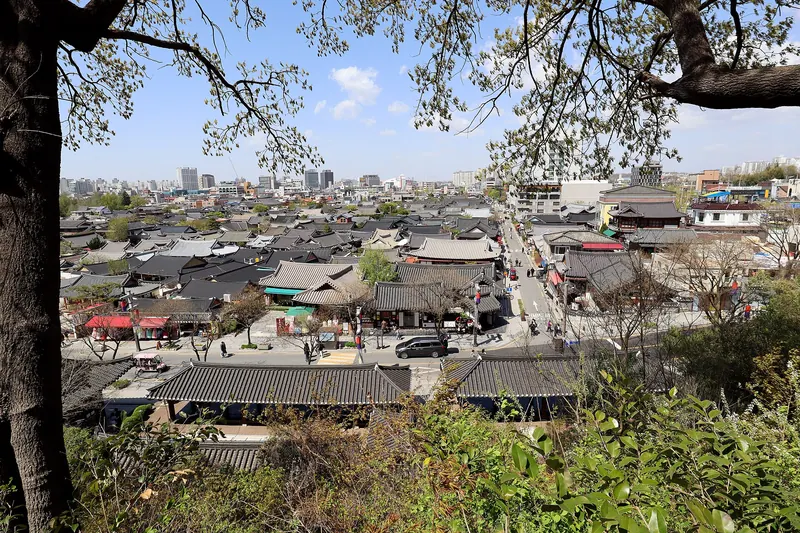
Jeonju, 1 night. Sleep inside the hanok village. VisitKorea counts around 700 hanok buildings there, and the evening and early morning are the point of staying: the lanes after the day visitors leave, a market dinner, and bean sprout soup for breakfast.
Gyeongju, 1 night. A hanok stay or small hotel around Hwangnam-dong, next to Daereungwon, lets you walk to the tombs and the lit-up sights after dark. Our Gyeongju guide recommends two nights; this route keeps one by doing the centre on the afternoon you arrive and Bulguksa the next morning.
Busan, 2 nights, in Nampo-dong near Jagalchi and Gukje markets, and Jeju, 2 nights in Jeju City, close to the airport and Dongmun Market. Changing beds five times in ten days is the price of this route; if that sounds like too much, drop Jeonju and give the night to Gyeongju, or drop Jeju and give two more to Busan.
Days 1–3: Seoul around the palace closing days
Day 1: arrive. VisitKorea lists the non-stop AREX Express Train from Incheon to Seoul Station at about 43 minutes from Terminal 1 and 51 minutes from Terminal 2, and the all-stop train at about 59 and 66 minutes. After immigration and baggage, an afternoon arrival becomes an evening check-in, so treat the first day as a walk and dinner near the hotel. Buy a rechargeable transport card at a convenience store that evening.
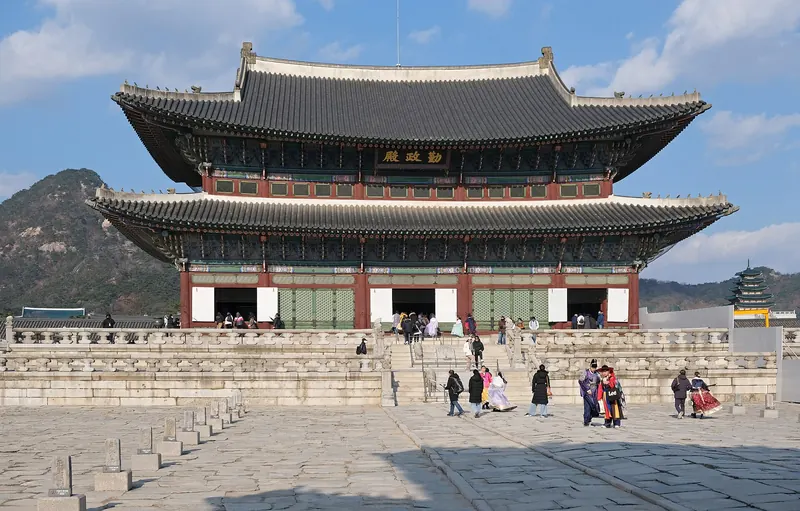
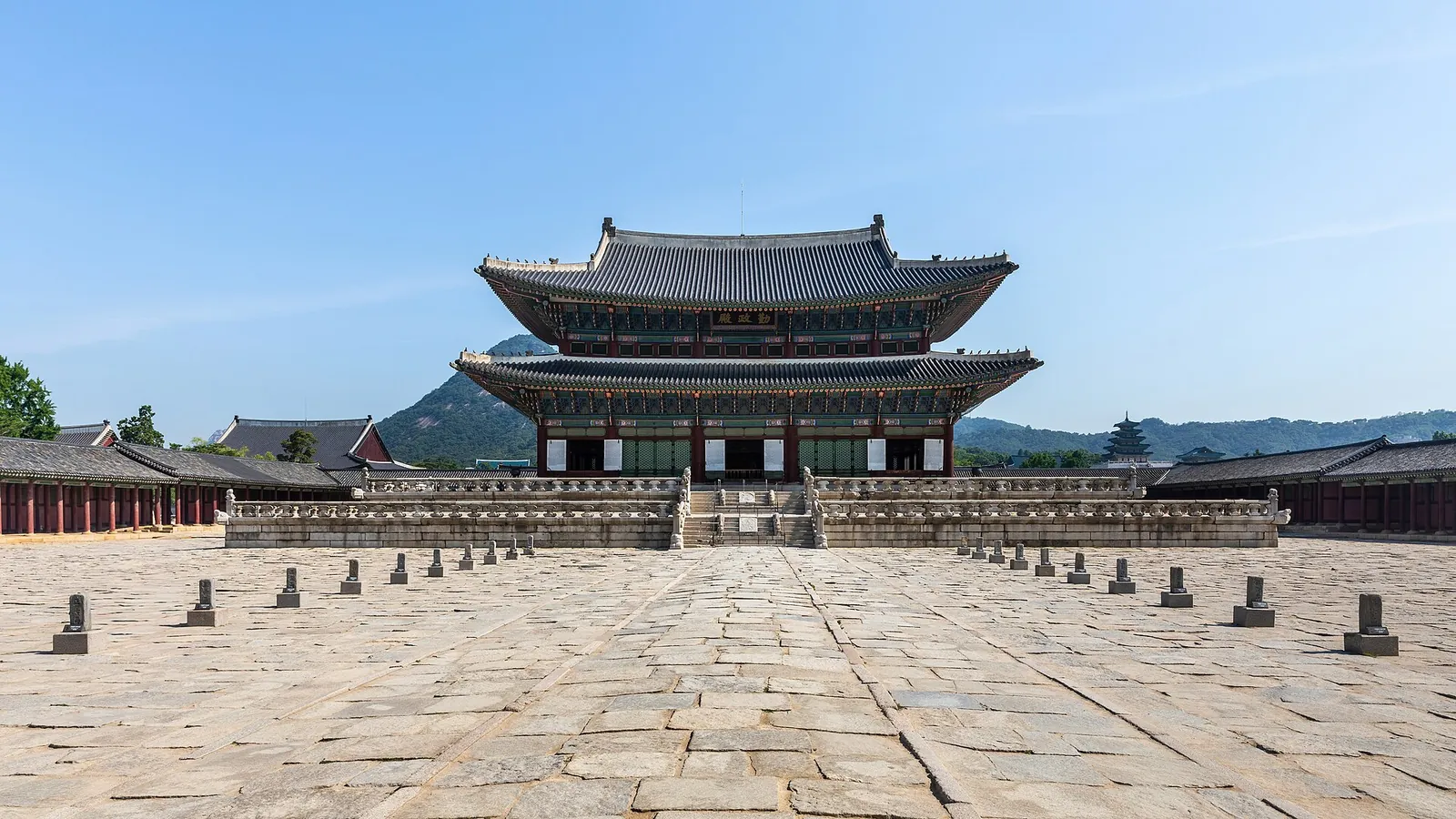
Day 2: Gyeongbokgung and Bukchon. VisitSeoul lists Gyeongbokgung as closed every Tuesday (when a public holiday falls on that day, the palace opens and closes on the next working day instead), and visitors wearing a complete hanbok enter free. Built in 1395, it is the largest of Seoul's five palaces, according to VisitKorea. Walk east afterwards into Bukchon, which has been a special management area since November 2024: VisitSeoul lists visiting hours of 10:00 to 17:00, with tourists not allowed in the restricted lanes outside them, and asks visitors to keep noise down in a residential neighbourhood.
Day 3: Changdeokgung, its Secret Garden and Gwangjang Market. Changdeokgung is closed on Mondays. Its rear garden, the Huwon or Secret Garden, takes up about sixty percent of the palace around the Buyongji pond, VisitSeoul notes, and is visited by reservation through the palaces' integrated reservation service, so book the slot before you fly and build the morning around it. End at Gwangjang Market by Jongno 5-ga Station (Line 1, exit 8): when we checked on 2026-10-03, VisitSeoul listed the food alley as open daily from 09:00 to 23:00, while the rest of the market closes on Sundays.
If day 2 or 3 lands on the wrong weekday, swap them. Arriving on a Monday, do Gyeongbokgung first; on a Sunday arrival, put Gyeongbokgung on Monday and Changdeokgung on Tuesday. Our Seoul guide and Seoul in 5 days cover Namsan, the city wall and the day trips this route leaves out.
Make time for the local food
What to eat and where to look
Bindae-tteok (mung bean pancake) at Gwangjang Market
A thick, crisp-edged pancake of ground mung beans, the first dish VisitSeoul names among Gwangjang Market's favourite foods, along with mayak gimbap, sundae and yukhoe (beef tartare).
- Where to look
- The food alley of Gwangjang Market, by Jongno 5-ga Station exit 8.
- Fit it into your day
- Dinner on day 3 after Changdeokgung: share one pancake and try one or two other stalls.
Fried in plenty of oil; yukhoe is raw beef. The non-food part of the market closes on Sundays.
Jeonju bibimbap
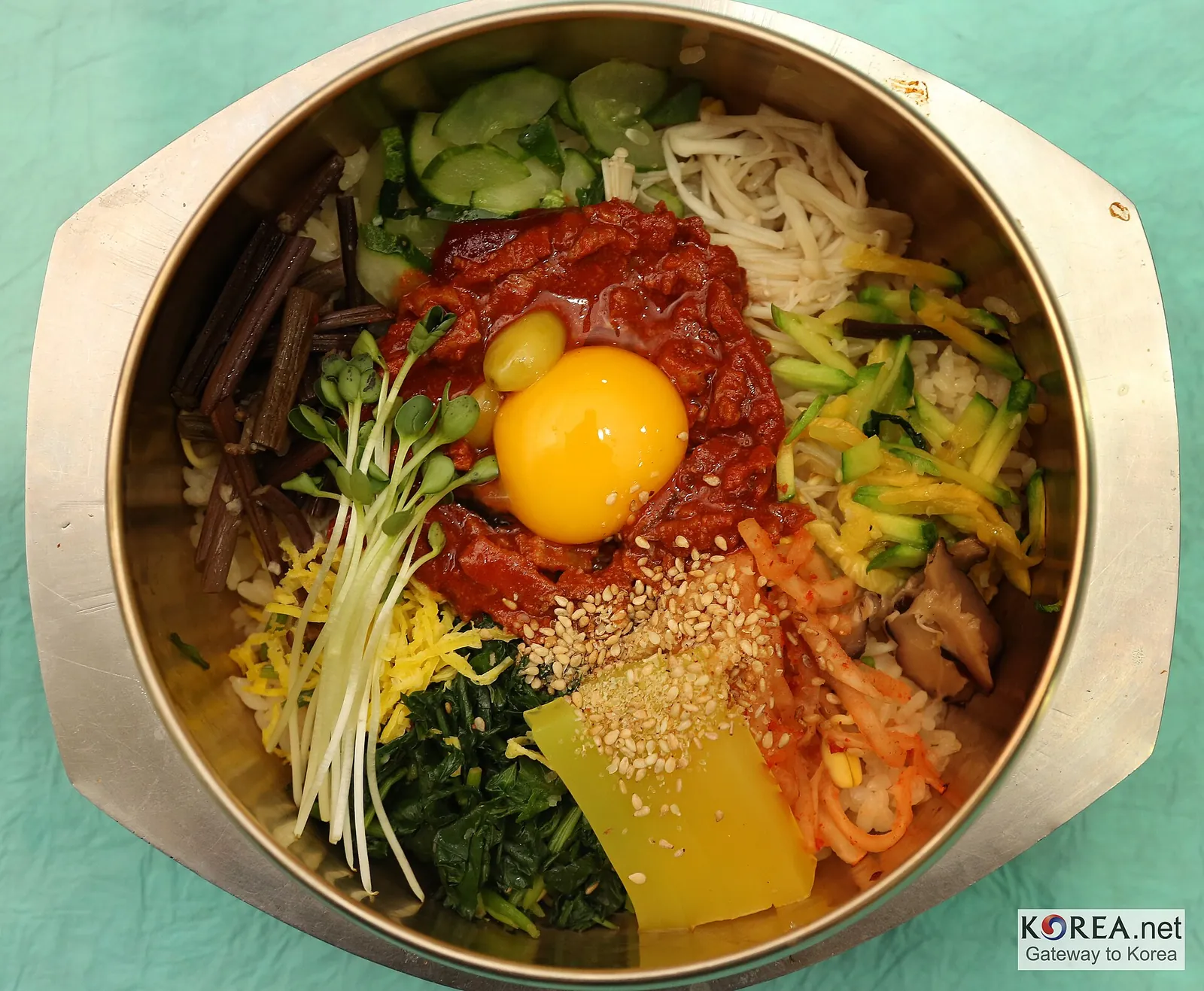
Rice topped with individually seasoned vegetables such as bean sprouts, bracken and spinach, with hwangpomuk, mung bean jelly coloured yellow with gardenia seeds, and mixed with red chilli paste. Jeonju is Korea's first UNESCO City of Gastronomy, VisitKorea notes.
- Where to look
- Bibimbap restaurants in and around the hanok village.
- Fit it into your day
- Lunch on day 4, soon after you arrive from Seoul.
Often contains beef and a raw egg yolk; ask for less chilli paste if you prefer it mild.
Kongnamul gukbap (bean sprout and rice soup)
Jeonju's breakfast: rice and bean sprouts in a light broth. VisitKorea describes the Nambu Market style, in which hot broth is poured over the rice repeatedly to warm it and a soft-poached egg is served on the side.
- Where to look
- Soup restaurants in and around Nambu Market, next to the Daybreak Market.
- Fit it into your day
- Breakfast on day 5, after the Daybreak Market and before the journey to Gyeongju.
Served very hot; the soft-poached egg comes on the side and can be added to the soup or eaten alone.
Ssambap and hwangnam-ppang in Gyeongju
Ssambap is rice with fresh leaves for wrapping, substantial side dishes such as fish and meat, and doenjang jjigae made with homemade soybean paste. Hwangnam-ppang, a small pastry filled with red beans, was created in Hwangnam-dong in 1939, according to VisitKorea.
- Where to look
- Gyeongju Ssambap Street, around Daereungwon; hwangnam-ppang shops in Hwangnam-dong.
- Fit it into your day
- Ssambap for dinner on day 5; hwangnam-ppang as a snack for the train to Busan.
A large set meal with many side dishes; ask what goes into the stew if you avoid meat or fish.
Raw fish at Jagalchi and dwaeji gukbap
At Jagalchi Market you pick live fish and seafood on the first floor and have it served upstairs as sliced raw fish or grilled. Dwaeji gukbap, pork and rice soup, is the dish VisitKorea calls Busan's representative local food; milmyeon, cold wheat noodles, dates from the Korean War.
- Where to look
- Jagalchi Market for seafood; Gukje Market's food stalls and Busan's soup restaurants for gukbap and milmyeon.
- Fit it into your day
- Seafood dinner on day 6, a bowl of gukbap or milmyeon for lunch on day 7.
Confirm prices before you buy; Jagalchi closes on the first and third Tuesdays.
Jeju black pork
Black pork, thickly sliced and grilled at the table, is the island's best-known meat. Dombegogi is freshly steamed black pork sliced on a wooden board in front of you.
- Where to look
- Black pork restaurants in Jeju City; snacks such as black pork kimchi rolls at the Dongmun night market.
- Fit it into your day
- Dinner on day 8 or 9, after the flight or the east-coast day.
A long, sit-down barbecue meal of pork; plan it for an evening rather than between sights.
Days 4–5: Jeonju for the night, then across to Gyeongju
Day 4: KTX to Jeonju. Visit Jeonju, the city's tourism site, gives about 1 hour 40 minutes by KTX from Seoul and advises searching from Yongsan, which has far more Jeonju trains than Seoul Station. It warns that KTX seats to Jeonju sell out at weekends, on holidays and during festivals, and that at the station often only standing tickets remain. The station is some way from the village: VisitKorea lists city bus 119 from the Jeonju Station (Cheotmajung-gil) stop to Nambu Market, then a ten-minute walk, about 38 minutes in all; with luggage, a taxi is simpler.
In the afternoon, walk the village. Gyeonggijeon Shrine, founded in 1410 to hold the portrait of King Taejo, founder of the Joseon dynasty, is the centrepiece; when we checked on 2026-10-03, VisitKorea listed it as open 09:00–19:00 in September and October and 09:00–18:00 from November to February, with adult tickets (ages 25–64) at 3,000 won. Jeondong Catholic Cathedral is close by, and Omokdae, one of the three old sites the village grew up around, is the place to be as the lights come on.
Dinner depends on the day. VisitKorea lists Nambu Market's night market on Fridays and Saturdays only, from 17:00 to 24:00, and warns that many stalls close after 23:00 once they sell out. On other days, eat at a makgeolli house, where the kettle of rice wine arrives with a table of side dishes. If you can move the whole route by a day or two to put Jeonju on a Friday or Saturday, do it.
Day 5: morning market, then Gyeongju. VisitKorea lists the riverside Daybreak Market by Nambu Market daily from 04:00 to 09:00, between Ssajeon and Maegok bridges on the Jeonjucheon stream; walk through it and have kongnamul gukbap for breakfast. Then cross the country. This is the one leg without a direct high-speed train. On SR's route map, the Jeolla line through Jeonju and the Gyeongbu line through Gyeongju (shown as Singyeongju) branch at Osong, so by rail you head north to Osong and change for a train south-east; check the connection on KORAIL's site or app, and compare it with intercity buses on txbus.t-money.co.kr. We could not find an official journey time for this leg, so leave a full half-day for it and do not plan anything in Gyeongju before mid-afternoon.
Day 5 afternoon and evening: Gyeongju's centre. With luggage, a taxi from Gyeongju Station to your guesthouse is simplest. Then walk: Daereungwon, the walled park of 23 Silla tombs, where Cheonmachong is the one you can enter; Cheomseongdae, the observatory built under Queen Seondeok (r. 632–647); and, after dark, Donggung Palace and Wolji Pond, whose rebuilt pavilions reflected in the water are the classic Gyeongju night view. When we checked on 2026-10-03, VisitKorea listed Daereungwon at 09:00–22:00 with free grounds and Cheonmachong at 3,000 won for adults, Cheomseongdae as free and open to 22:00 in summer and 21:00 in winter, and Wolji Pond at 09:00–22:00 (last admission 21:30) for 3,000 won. Eat ssambap, a set of rice, leaf wraps and side dishes, on the street of ssambap restaurants around Daereungwon.
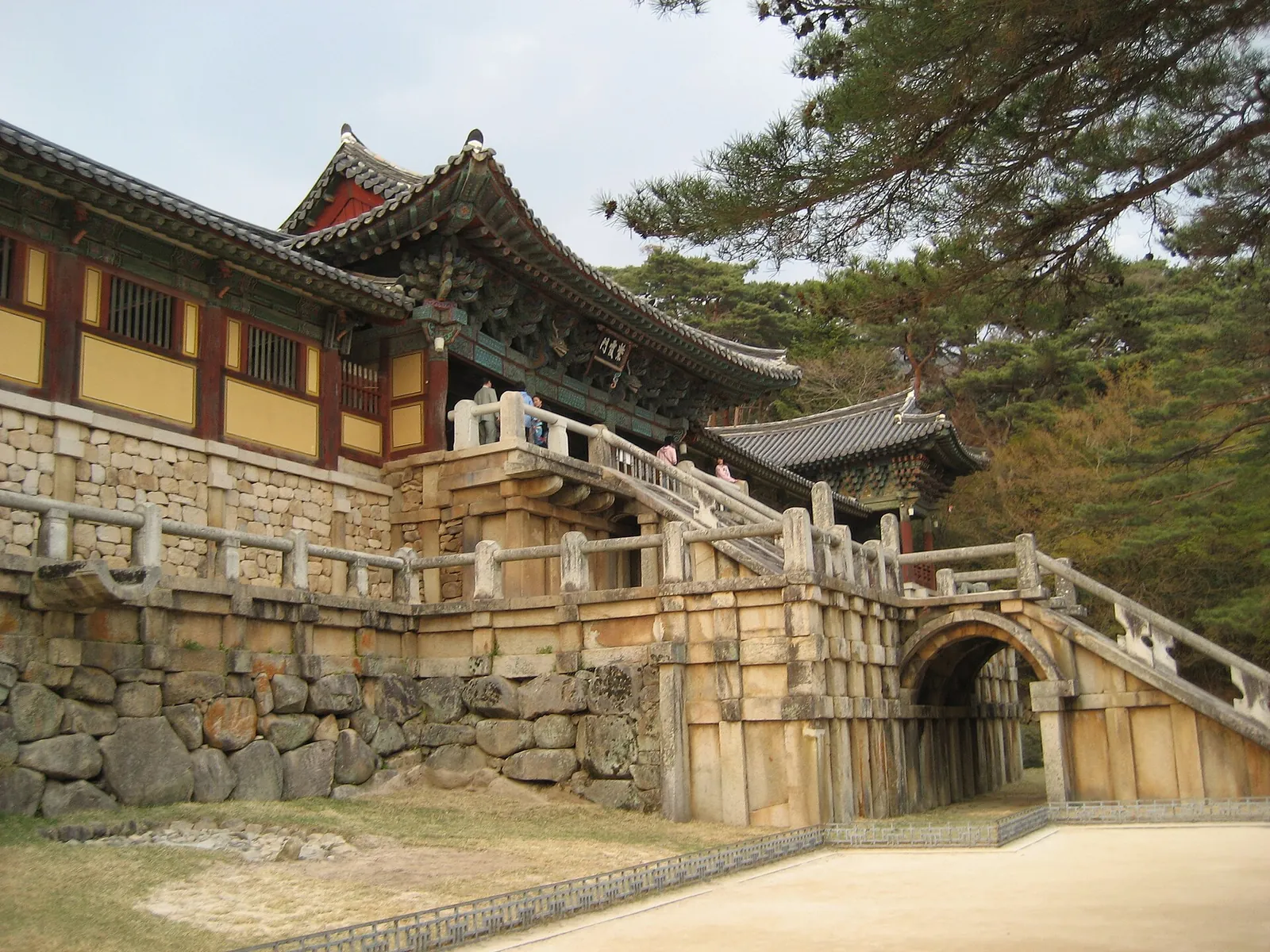
Days 6–7: Bulguksa in the morning, Busan by the evening
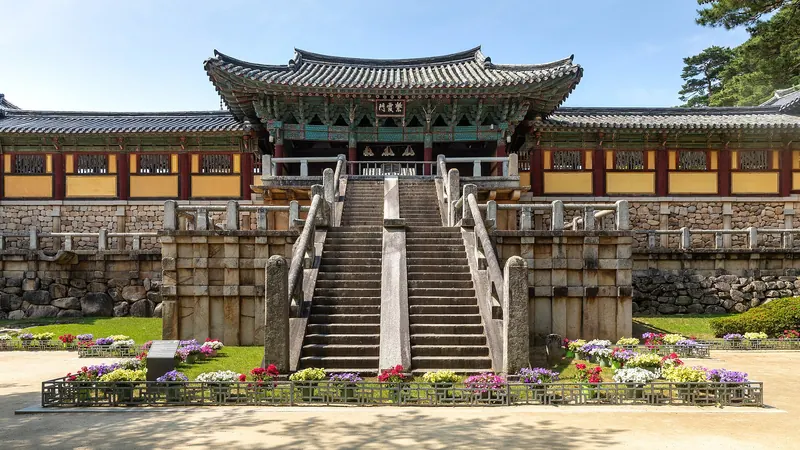
Day 6: Bulguksa and Seokguram. Bulguksa, rebuilt in 751 by Kim Dae-seong, was listed by UNESCO in December 1995 together with Seokguram Grotto, higher up Tohamsan. When we checked on 2026-10-03, VisitKorea listed Bulguksa as open 09:00–18:00 (exit by 19:00) and free, and gave city bus 10 from Gyeongju Express Bus Terminal to the temple. Its temple feature says shuttle buses run from Bulguksa to Seokguram about every hour, taking 20 minutes. VisitKorea's own listings disagree on Seokguram's hours, so check seokguram.org on the day. Pick up hwangnam-ppang, the red-bean pastry created in Hwangnam-dong in 1939, before you leave.
In the afternoon, take the KTX from Gyeongju Station to Busan Station, about 30 minutes according to VisitKorea; book it once you know when you will be back from Tohamsan. Busan Station is on Metro Line 1, and Nampo-dong, Gukje Market and Jagalchi Market are about 15 minutes away. Have dinner at Jagalchi, Korea's largest seafood market: choose live fish and seafood on the first floor and have it served upstairs as sliced raw fish or grilled. When we checked, VisitKorea listed the market as open 05:00–22:00 and closed on the first and third Tuesdays of the month.
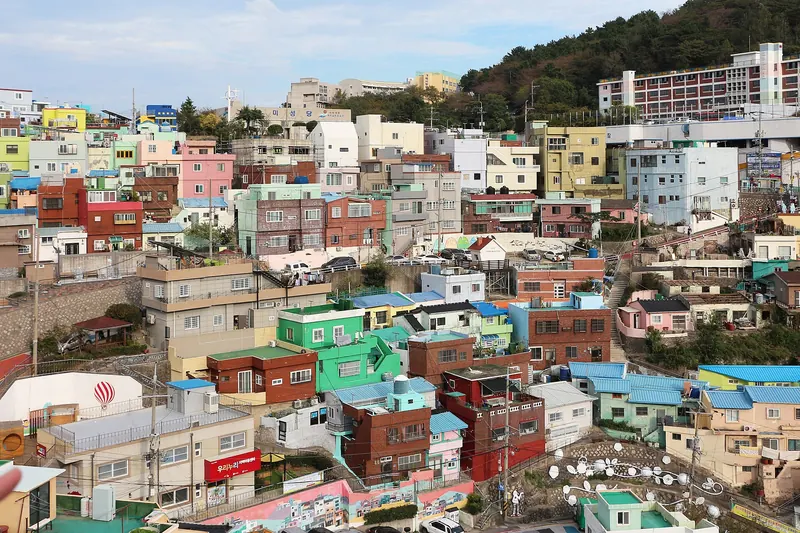
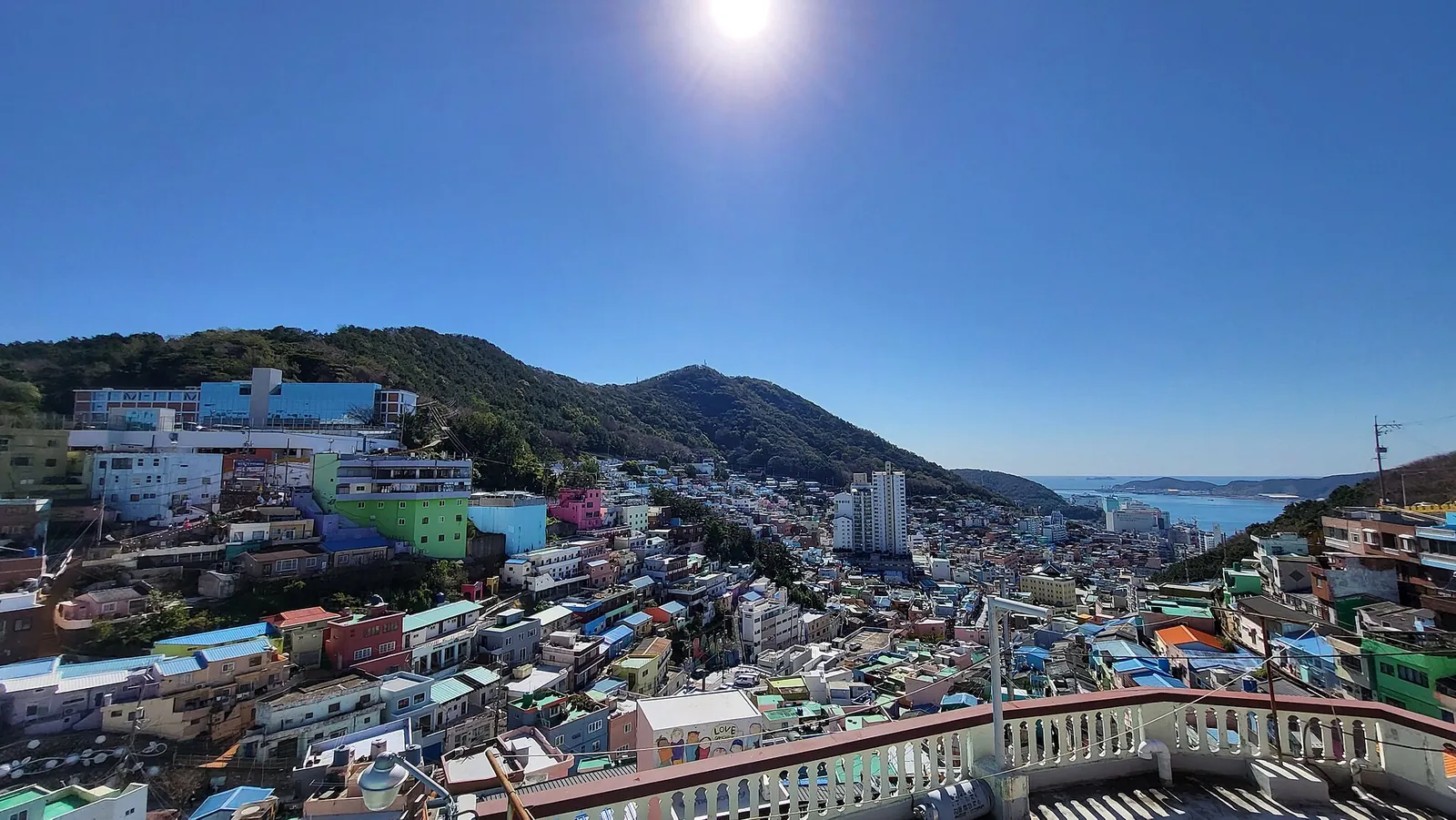
Day 7: Busan, one full day. Start at Gamcheon Culture Village, the hillside of refugee-built houses in Saha-gu. It is a residential special management zone: VisitKorea's notice lists visiting hours of 09:00 to 18:00, asks visitors to respect residents' daily lives, and restricts tourist vehicles, including taxis, inside the village. Come back down for Gukje Market, which grew from the stalls of refugees after the Korean War, and a lunch of dwaeji gukbap or milmyeon.
In the afternoon, choose one coast rather than both. Haedong Yonggungsa, the seaside temple first built in 1376, is listed by VisitKorea as open 04:30–19:20 (last admission 18:50) and free; VisitKorea's directions are blue bus 139 or red bus 1001 from exit 1 of OSIRIA Station on the Donghae Line, then a 15-minute walk. Or stay on the old-port side for Yeongdo and Taejongdae; our Busan guide covers both halves of the city in detail.
Days 8–10: Jeju, the east coast and the way home
Day 8: fly to Jeju. VisitKorea lists Gimhae's domestic routes as Gimpo and Jeju. Gimhae is on the Busan–Gimhae Light Rail, which you join at Sasang on Metro Line 2; VisitKorea gives about 40 minutes by taxi from the airport to Seomyeon. Jeju International Airport is within Jeju City, which is why the island nights here are in the city: check in, and spend the evening at Dongmun Traditional Market, the island's largest, where VisitKorea says the area around Gate 8 becomes a night market every evening.
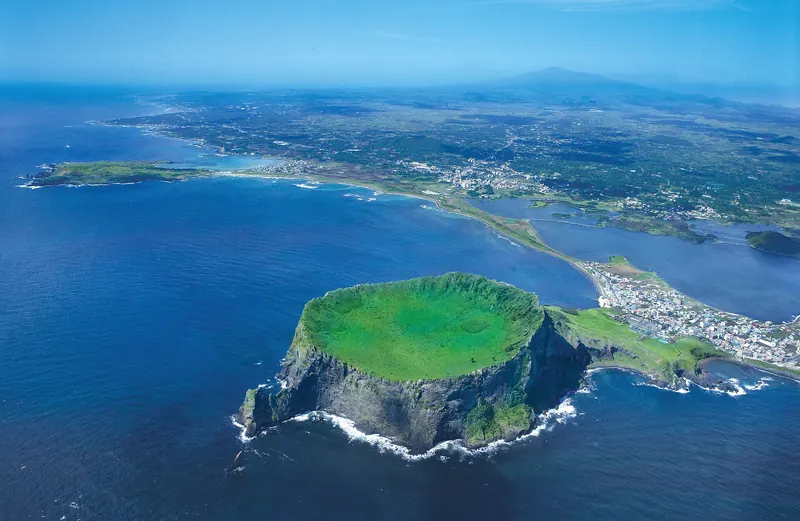
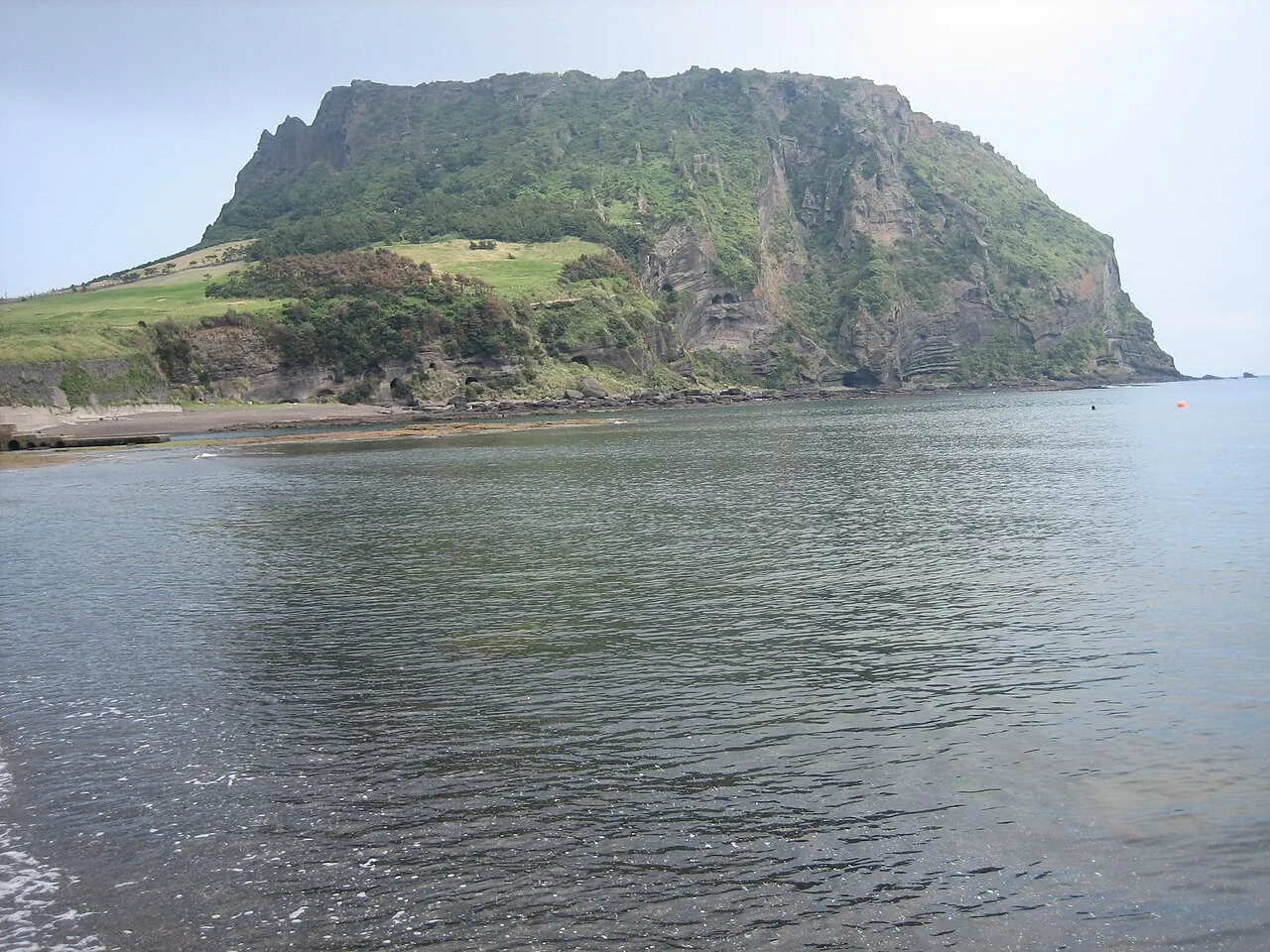
Day 9: Seongsan Ilchulbong and Udo. With only one full day on Jeju, take the east coast. Seongsan Ilchulbong, a tuff cone formed by an underwater eruption about 5,000 years ago, has a summit about 30 minutes' walk up, with a crater about 600 metres across, according to VisitKorea. From Seongsan Port the ferry to Udo, Jeju's largest offshore island, takes about 15 minutes, and a 17-kilometre loop takes two to three hours by electric bike. VisitKorea gives taxi times of about 80 minutes from the airport to Seongsan Ilchulbong; city buses to Seongsan leave from Gates 1 and 2 outside the airport. Ferries depend on the weather, so check before you set out, and stop at Hamdeok Beach on the way back if there is light left. A car makes this day easier: rentals need an international driving permit, a minimum age of 21 and a credit card in the driver's name, VisitKorea says.
Day 10: fly out. VisitKorea's Jeju airport guide lists non-stop international flights to 23 cities as of July 2026, among them destinations in China, Japan, Taiwan, Hong Kong and Singapore. If your long-haul flight leaves from Incheon, VisitKorea lists flights from Jeju to both Incheon and Gimpo. Book the Jeju flight as part of the same ticket if you can, or leave a wide margin, and never schedule the Udo ferry or a hike on this morning.
Two nights is a taste of Jeju, not the island: Hallasan, the south coast at Seogwipo and the west are left for another trip. Our Jeju guide recommends four to six nights; if the island is the reason you are coming, take a night each from Seoul and Busan.
The ten days at a glance
This is an editorial suggestion, not a timetable. Check each site's closing day and each train or flight for your dates.
- Day 1 — Arrive in Seoul: AREX from Incheon, transport card, dinner near the hotel.
- Day 2 — Gyeongbokgung and Bukchon (not Tuesday): the palace in the morning, Bukchon between 10:00 and 17:00.
- Day 3 — Changdeokgung and Gwangjang (not Monday): booked Secret Garden slot, dinner in the Gwangjang food alley.
- Day 4 — Jeonju: KTX from Yongsan, Gyeonggijeon in the afternoon, Omokdae at dusk, night market (Friday or Saturday) or a makgeolli house.
- Day 5 — Jeonju to Gyeongju: Daybreak Market and bean sprout soup, the cross-country train or bus, Daereungwon, Cheomseongdae and Wolji Pond after dark.
- Day 6 — Bulguksa, then Busan: bus 10 and the Seokguram shuttle, KTX to Busan in the afternoon, dinner at Jagalchi (not the first or third Tuesday).
- Day 7 — Busan: Gamcheon after 9:00, Gukje Market for lunch, Haedong Yonggungsa or Yeongdo in the afternoon.
- Day 8 — Fly to Jeju: light rail to Gimhae, flight to Jeju, Dongmun night market.
- Day 9 — Jeju's east coast: Seongsan Ilchulbong, the Udo ferry, Hamdeok Beach.
- Day 10 — Departure: an international flight from Jeju, or a domestic flight to Incheon or Gimpo with a wide margin.
Practical questions
Is 10 days enough for Seoul, Busan and Jeju?
Yes, if you accept short stops. This route gives Seoul three nights, Jeonju and Gyeongju one each, Busan two and Jeju two. Our Jeju guide recommends four to six nights on the island; if Jeju matters most, drop Jeonju and take a night from Seoul.
How do I get from Jeonju to Gyeongju?
There is no direct high-speed train between them. On SR's route map the lines through Jeonju and through Gyeongju branch at Osong, so the rail option is a train north to Osong and a change there; compare it on KORAIL's site with intercity buses on txbus.t-money.co.kr. Allow half a day.
Do I need a Korail Pass for this route?
Probably not. The route has only three train legs: Seoul to Jeonju, Jeonju to Gyeongju and Gyeongju to Busan. VisitKorea says the pass does not cover the SRT, and that tickets usually go on sale a month ahead at 07:00. Price your three legs on KORAIL's site before deciding.
Which days of the week should I avoid?
Gyeongbokgung closes on Tuesdays and Changdeokgung on Mondays. Gwangjang Market (except the food alley) closes on Sundays, and Jagalchi on the first and third Tuesdays of the month. Jeonju's Nambu night market runs only on Fridays and Saturdays.
What should I book before I travel?
The Changdeokgung Secret Garden slot, the KTX to Jeonju (it sells out at weekends and on holidays, Visit Jeonju says), the flight from Gimhae to Jeju and your departure flight. If you want a hanok room on a Friday or Saturday night in Jeonju, book that early as well.
Can I fly home from Jeju or Busan instead of going back to Incheon?
Possibly. VisitKorea lists non-stop international flights from Jeju to 23 cities and from Gimhae to 46 cities in 14 countries and regions, mostly in Asia. If you are flying long-haul, a Jeju–Incheon flight connects with the main international airport.
Sources and checks before you travel
Reference sources for the version dated 3 October 2026. Confirm opening times, access, transport and conditions for your travel dates.
- VisitKorea: Incheon, Gimhae and Jeju airport transport ↗ — opens in a new tab
- VisitKorea: domestic flights ↗ — opens in a new tab
- VisitKorea: Jeju airport and island guide ↗ — opens in a new tab
- VisitKorea: Busan airport and city guide ↗ — opens in a new tab
- VisitKorea: travelling by train ↗ — opens in a new tab
- SR: SRT route map ↗ — opens in a new tab
- Visit Jeonju: getting to Jeonju ↗ — opens in a new tab
- VisitKorea: Jeonju bus directions ↗ — opens in a new tab
- VisitKorea: Jeonju Hanok Village ↗ — opens in a new tab
- VisitKorea: Gyeonggijeon Shrine ↗ — opens in a new tab
- VisitKorea: Nambu Market night market ↗ — opens in a new tab
- VisitKorea: food walk in Jeonju ↗ — opens in a new tab
- VisitKorea: Gyeongju travel feature ↗ — opens in a new tab
- VisitKorea: SONO Hotels feature (train times) ↗ — opens in a new tab
- VisitKorea: Cheonmachong (Daereungwon) ↗ — opens in a new tab
- VisitKorea: Daereungwon Ancient Tomb Complex ↗ — opens in a new tab
- VisitKorea: Cheomseongdae ↗ — opens in a new tab
- VisitKorea: Donggung Palace and Wolji Pond ↗ — opens in a new tab
- VisitKorea: Bulguksa ↗ — opens in a new tab
- VisitKorea: Bulguksa and Seokguram feature ↗ — opens in a new tab
- VisitKorea: temples feature ↗ — opens in a new tab
- VisitKorea: Seokguram Grotto ↗ — opens in a new tab
- VisitKorea: Gyeongju Ssambap Street ↗ — opens in a new tab
- VisitKorea: Hwangnambbang ↗ — opens in a new tab
- VisitKorea: Jagalchi Market ↗ — opens in a new tab
- VisitKorea: Gukje Market ↗ — opens in a new tab
- VisitKorea: Gamcheon Culture Village ↗ — opens in a new tab
- VisitKorea: Busan fishcake feature ↗ — opens in a new tab
- VisitKorea: Gamcheon Culture Village notice ↗ — opens in a new tab
- VisitKorea: Haedong Yonggungsa ↗ — opens in a new tab
- VisitKorea: Busan travel guide ↗ — opens in a new tab
- VisitKorea: Busan concert-season guide ↗ — opens in a new tab
- VisitKorea: Jeju food and travel ↗ — opens in a new tab
- VisitKorea: grilled black pork ↗ — opens in a new tab
- VisitKorea: renting a car ↗ — opens in a new tab
- VisitKorea: Gyeongbokgung Palace ↗ — opens in a new tab
- VisitSeoul: Gyeongbokgung Palace ↗ — opens in a new tab
- VisitSeoul: Changdeokgung Palace ↗ — opens in a new tab
- VisitSeoul: Bukchon Hanok Village ↗ — opens in a new tab
- VisitSeoul: Gwangjang Market ↗ — opens in a new tab
- VisitKorea: weather and seasons ↗ — opens in a new tab
Does this experience fit your route?
A guided palace morning in Seoul or a Busan day tour saves the most planning on this route. Check the day of the week, what admission is included and the pick-up point before you book.
Check dates and details on Viator ↗ — opens in a new tabAffiliate link · Book with ViatorPhoto credits
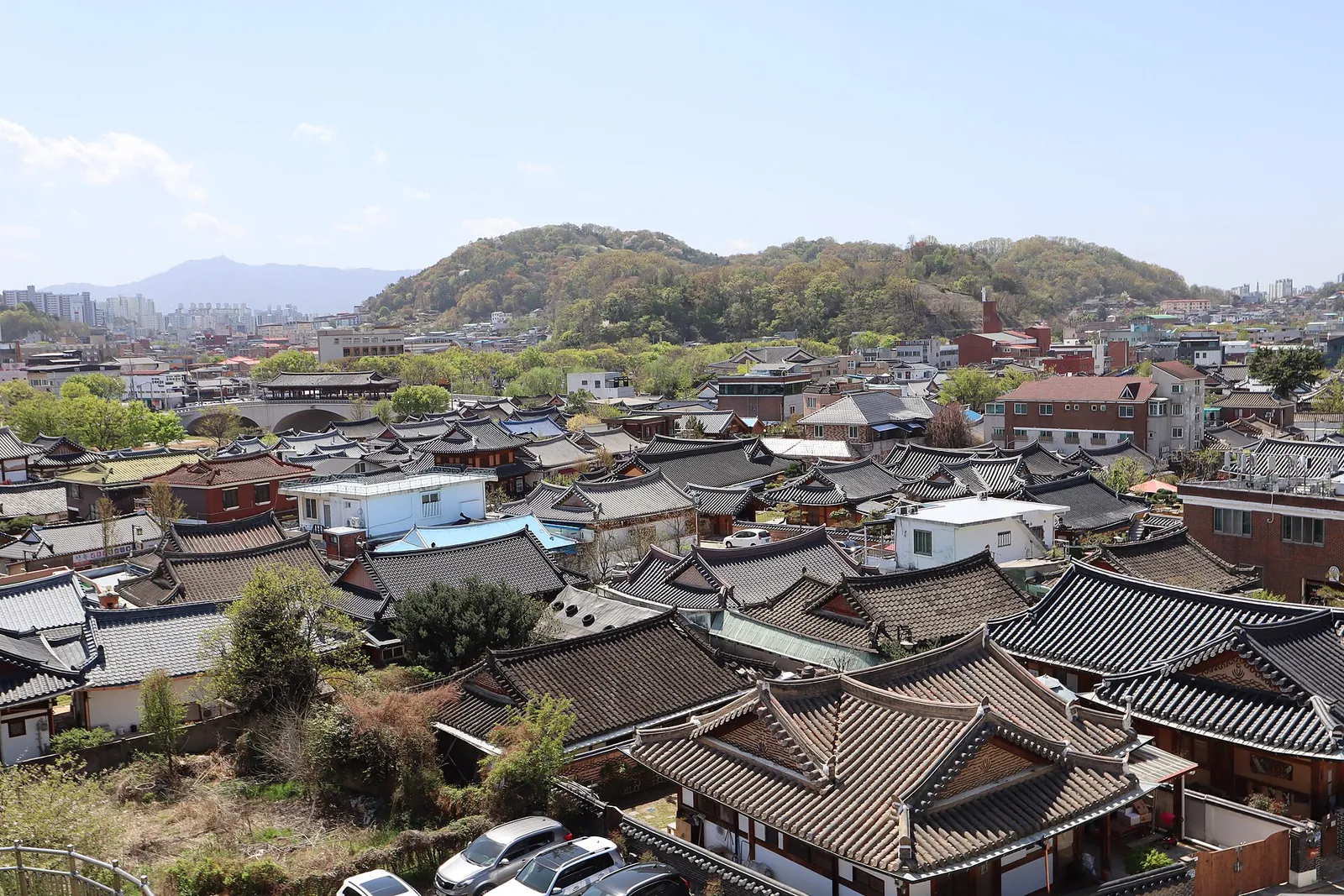
The rooftops of Jeonju Hanok Village, the route's one-night hanok stop between Seoul and Gyeongju
Photograph: Mobius6 — opens in a new tab · CC BY-SA 4.0 — opens in a new tab
Changes: Resized and converted to WebP; displayed with responsive crops. · Original photograph and licence details ↗ — opens in a new tab
Geunjeongjeon, the throne hall of Gyeongbokgung, on the first Seoul palace day
Photograph: Basile Morin — opens in a new tab · CC BY-SA 4.0 — opens in a new tab
Changes: Resized and converted to WebP; displayed with responsive crops. · Original photograph and licence details ↗ — opens in a new tab
The stone stairways and terraces of Bulguksa on Tohamsan, the morning stop before the train to Busan
Photograph: Tae Hoon Kang — opens in a new tab · CC BY 2.0 — opens in a new tab
Changes: Resized and converted to WebP; displayed with responsive crops. · Original photograph and licence details ↗ — opens in a new tab
Gamcheon Culture Village in Busan, a residential hillside to visit between 9:00 and 18:00
Photograph: VaneTrz20 — opens in a new tab · CC0 — opens in a new tab
Changes: Resized and converted to WebP; displayed with responsive crops. · Original photograph and licence details ↗ — opens in a new tab
Seongsan Ilchulbong on Jeju's east coast, the main sight of the Jeju day
Photograph: K7567 — opens in a new tab · CC BY-SA 3.0 — opens in a new tab
Changes: Resized and converted to WebP; displayed with responsive crops. · Original photograph and licence details ↗ — opens in a new tab
Bibimbap in a brass bowl, the way Jeonju serves it, on the day 4 lunch
Photograph: Korea.net / Korean Culture and Information Service (Jeon Han) — opens in a new tab · CC BY-SA 2.0 — opens in a new tab
Changes: Resized and converted to WebP; displayed with responsive crops. · Original photograph and licence details ↗ — opens in a new tab