Plan your trip · South Korea
Where to stay in South Korea: hanok, guesthouses, pensions and best areas
South Korea gives you more kinds of bed than most countries: international hotels, plain city motels, guesthouses with dormitories, traditional hanok houses where you may sleep on the floor, and pensions, private holiday houses that usually come with a barbecue. The type matters, but in Seoul, Busan and Jeju the neighbourhood matters more. A well-placed room near the right subway line or bus stop saves an hour a day; a beautiful room on the wrong side of the city costs it.
- Suggested time
- Typical first trip: 3–5 nights in Seoul, 2–3 in Busan, 3–4 on Jeju
- Where to stay
- Myeongdong, Jongno or Hongdae in Seoul; Haeundae, Gwangalli or Seomyeon in Busan; Jeju City plus Seogwipo or Jungmun on Jeju
- Season and timing
- Book furthest ahead for pensions and small hanok stays with few rooms: VisitKorea notes that popular pensions can take months to reserve.
The short answer
On a first trip, sleep in a hotel or guesthouse near a subway station in Seoul (Myeongdong or Jongno for the palaces, Hongdae if you want the airport train at the door and late evenings), then by the beach in Busan (Haeundae or Gwangalli) or near Seomyeon for the metro, and split Jeju between Jeju City and Seogwipo or Jungmun rather than staying in one place. Book one or two nights in a hanok, in Seoul's Bukchon or in Jeonju or Gyeongju, as an experience rather than a base. Keep pensions for countryside, coast or island stays where you have a car or a group.
Hotel, motel, guesthouse, hanok or pension: what each one is
The Korea Tourism Organization's own guide to accommodation lists the full range, from five-star international chains and Korean hotel brands to business hotels, motels, guesthouses, hanok, pensions and glamping. Each suits a different kind of night, and many trips use three or four of them.
Hotels run from five-star international and Korean brands to plain business hotels, and are the easy choice in the big cities and resort areas. Motels, sometimes called love motels in English-language guides, are described by VisitKorea as the most cost-effective option: many are downtown, some new ones have hotel-standard bedding and whirlpool baths, and some carry the word 'hotel' in their name, so read the property type and the reviews rather than the name.
Guesthouses are the cheaper option VisitKorea recommends for younger and solo travellers, with dormitories, one- and two-person rooms and some female-only guesthouses. Hanok stays put you in a traditional wooden house with a courtyard; pensions are private holiday houses or villas, often with a barbecue terrace, a pool or a private sauna. The sections below take each one in turn.
Seoul: choose the subway line before the room
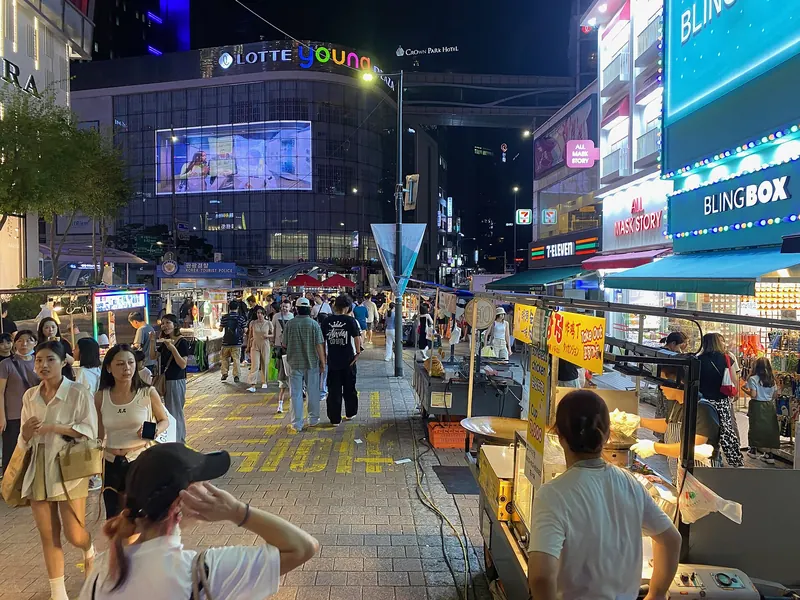
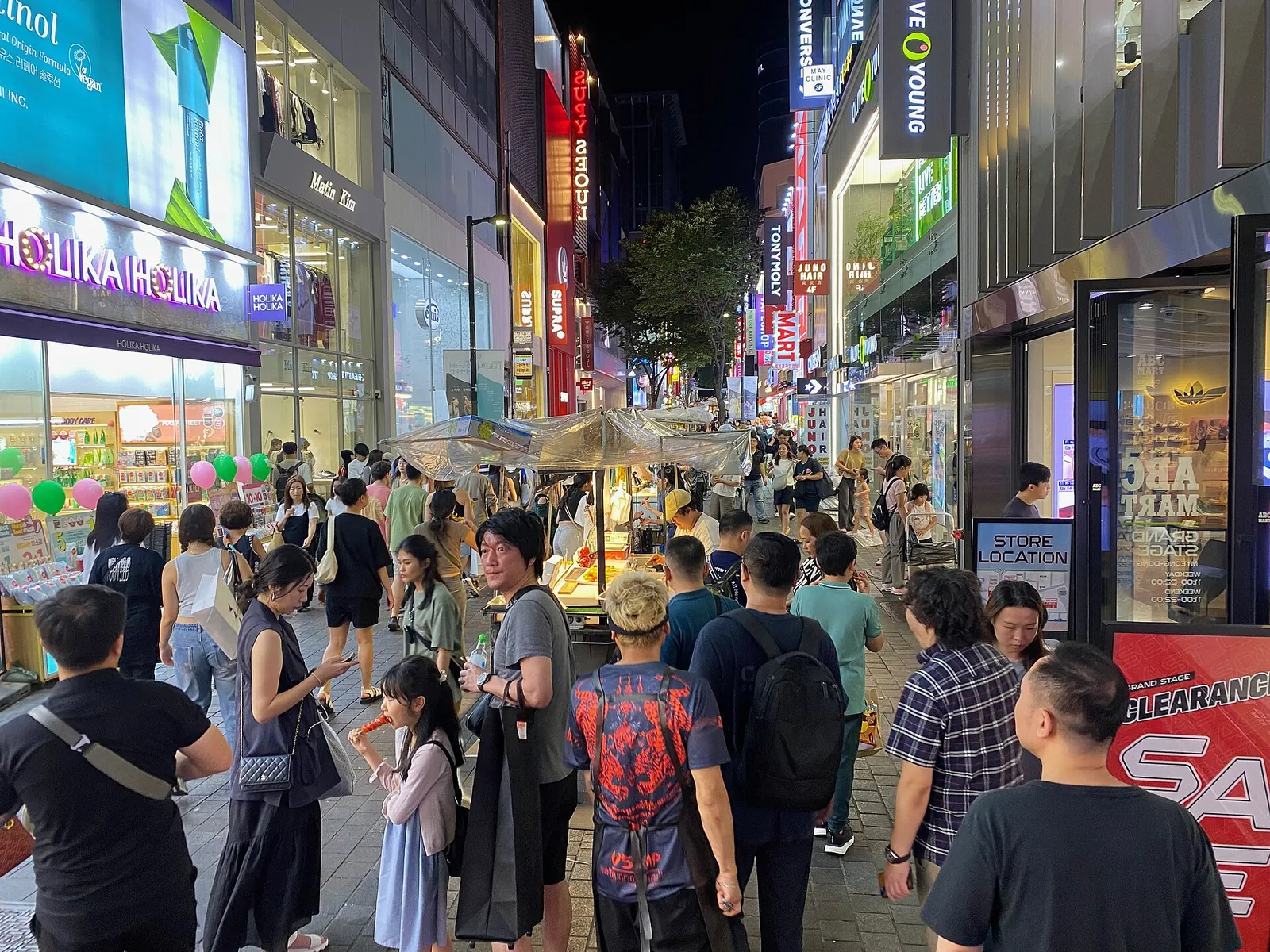
Seoul is large, and the official tourism site's own accommodation listing is filtered by area: Gwanghwamun, Myeongdong, Dongdaemun, Hongdae, Itaewon, Yeouido, Gangnam, Jamsil and Seongsu. For a first visit, three of those do most of the work. Myeongdong is the most central base, in the historic centre that VisitSeoul groups with Jongno, with Line 4 two stops from Seoul Station, where the AREX express from the airport ends. Jongno, including the Gwanghwamun and Insadong side, puts you within walking distance of Gyeongbokgung, Changdeokgung and Bukchon. Hongdae is the guesthouse district, which VisitSeoul describes as a hub of youth culture and street performances, and VisitKorea points out that Hongik University Station is on the AREX line from the airport.
If the airport train decides your base, know which train you are taking. When we checked on 2026-10-03, VisitKorea listed the AREX express from Incheon Terminal 1 to Seoul Station at about 43 minutes (about 51 minutes from Terminal 2), non-stop; the all-stop train calls at Hongik University and takes about 59 minutes from Terminal 1. VisitKorea also notes that most public transport from the airport into central Seoul stops at around 23:30, after which night buses marked 'N' run to a few hubs. If your flight lands late, a hotel near one of those hubs, or near Seoul Station, is worth more than a nicer room across the river.
Gangnam and Samseong-dong, south of the Han River, are major shopping and entertainment hubs that VisitSeoul says stay lively at night, but they add a long subway ride to every palace day. Choose them if your plans are mostly south of the river, not for a sightseeing first trip.
Seoul also has a city scheme for rentals in residential buildings. The Seoul Tourism Organization's Seoul Stay site lists accommodation registered with each district office under the 'Urban Stay' and 'Hanok Stay' categories, with filters by area. If you want an apartment-style stay, starting from a registered listing avoids the uncertainty of an unregistered flat.
Make time for the local food
What to eat and where to look
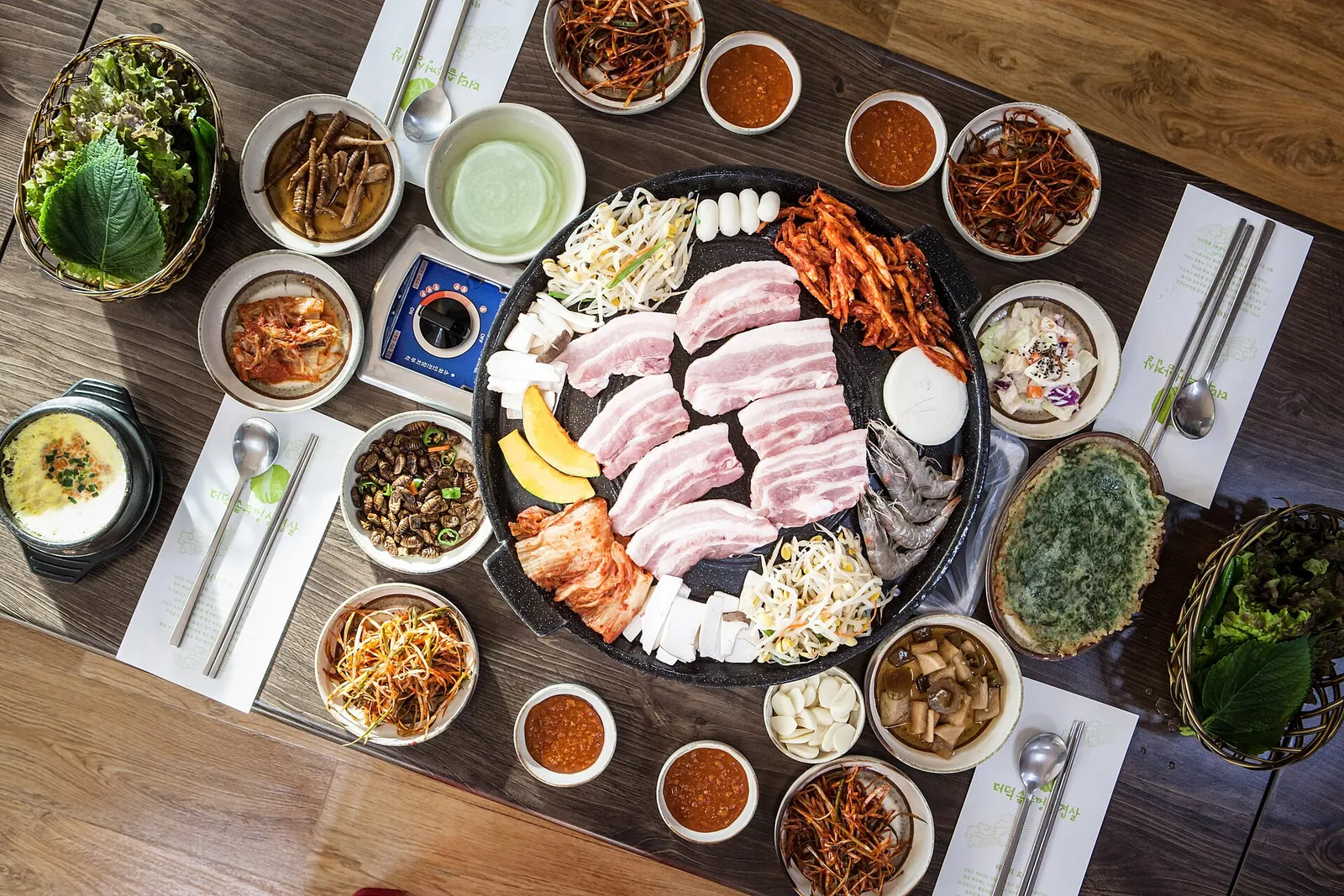
Samgyeopsal on the pension barbecue
Thick slices of pork belly grilled at the table or on a terrace grill and eaten wrapped in lettuce with garlic, ssamjang paste and kimchi. VisitKorea notes that most Koreans grill samgyeopsal when they stay in a pension, which is half the reason pensions exist.
- Where to look
- Pension terraces; buy meat and vegetables at a supermarket or market on the way, or ask whether the pension prepares a barbecue set.
- Fit it into your day
- Dinner on the first night of a pension stay, especially on the coast or on Jeju.
Not every pension allows barbecues or provides equipment; confirm when you book, and check the fee for charcoal or gas.
Dwaeji gukbap (Busan pork and rice soup)
A milky pork-bone broth with sliced pork, served with rice and seasonings to add at the table. VisitKorea calls it Busan's representative local dish, and it is the classic quick, filling meal before an early train or after a late arrival.
- Where to look
- Specialist gukbap restaurants across Busan, including around Seomyeon and Busan Station.
- Fit it into your day
- Breakfast or lunch on a travel day in Busan.
Contains pork; the dipping sauce often contains salted shrimp.
Dongmun Market night-market food (Jeju City)
VisitKorea describes the night market around Gate 8 of Jeju's Dongmun Traditional Market selling street food such as black pork kimchi rolls and abalone gimbap, a good reason to make Jeju City one of your island bases.
- Where to look
- Dongmun Traditional Market in Jeju City, around Gate 8 in the evening.
- Fit it into your day
- Dinner on an arrival evening in Jeju City, after a short taxi or bus ride from the airport.
Stalls are busiest at peak dinner time; pork and seafood dominate.
Guesthouse breakfast
The simple self-service breakfast many Korean guesthouses include: bread or toast, jam, coffee and other drinks, available during set hours. It is not a feast, but it covers an early start.
- Where to look
- Your guesthouse's kitchen or lounge; check the listing for whether breakfast is included and at what times.
- Fit it into your day
- Before a full sightseeing day, then a proper Korean lunch in town.
Hours are fixed and short in some guesthouses; if you leave before they start, a convenience store is the fallback.
Temple meals at a templestay
Templestay programmes include meals at fixed times as part of temple life; at Haeinsa, the schedule listed dinner on arrival and breakfast after the pre-dawn programme.
- Where to look
- Included in the programme at the temple you book through the Templestay site.
- Fit it into your day
- Dinner and breakfast during a one-night templestay.
Meals follow the temple's timetable and rules; tell the temple about allergies when you book.
Hanok stays: one or two nights in a traditional house
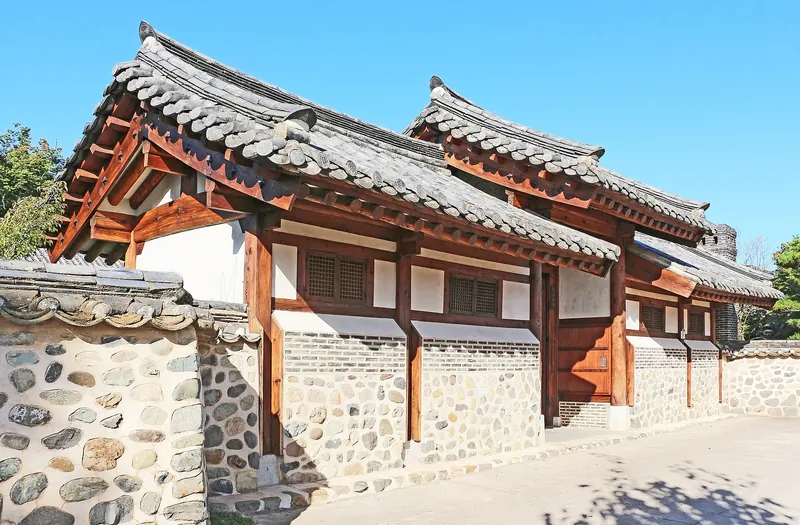
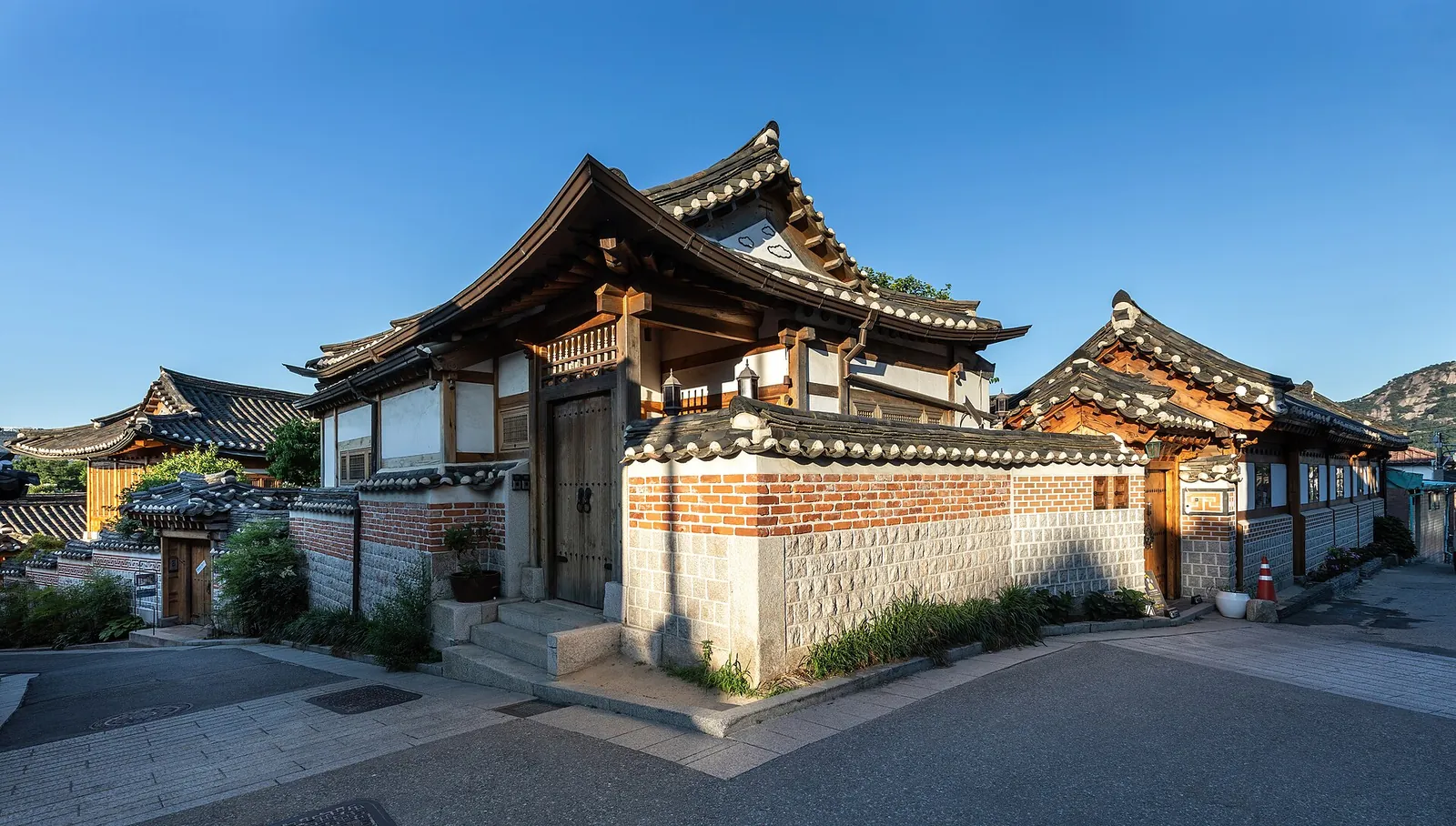
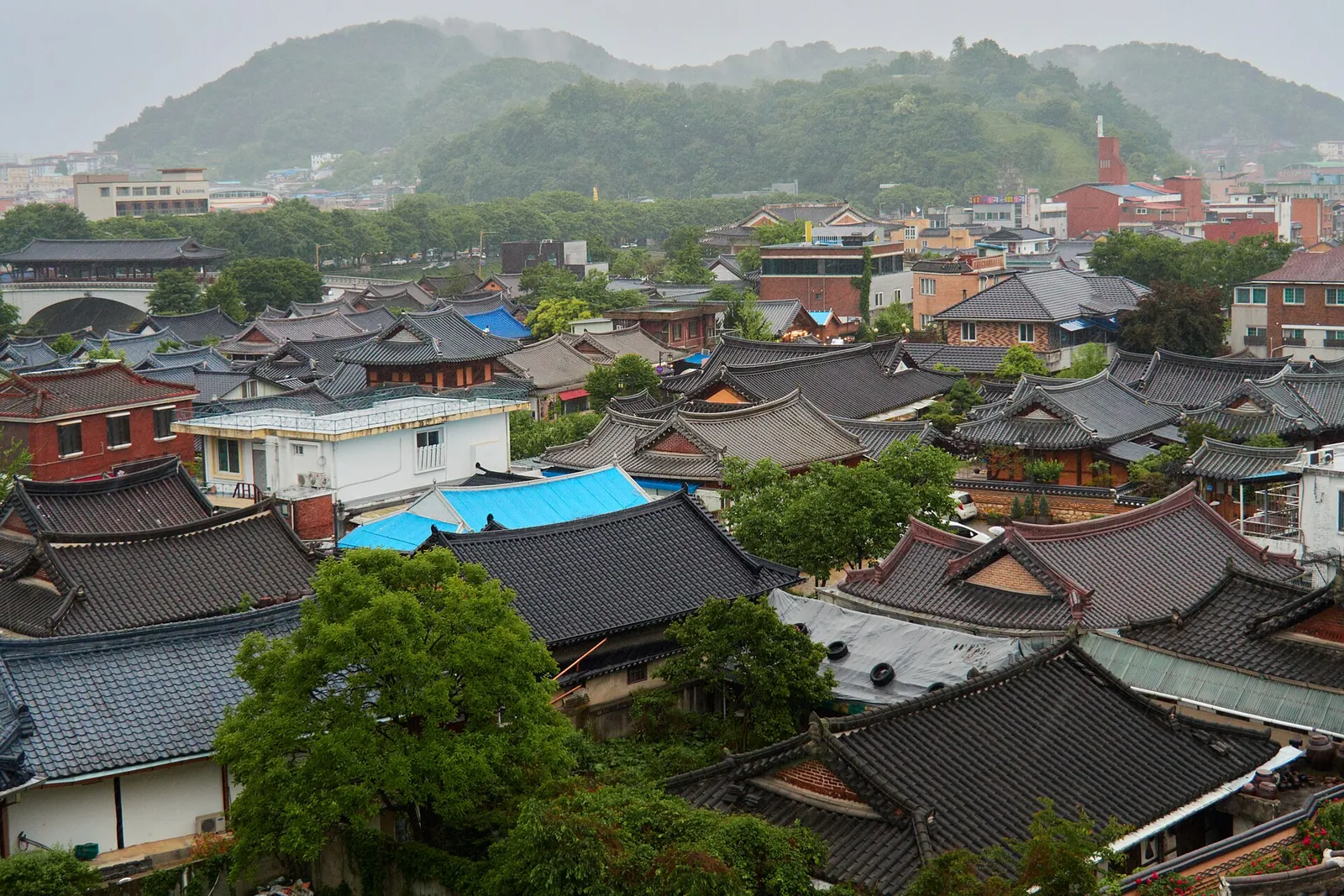
VisitKorea names three classic places to sleep in a hanok: Bukchon Hanok Village in Seoul, between the palaces; Jeonju Hanok Village, which it calls the country's largest traditional hanok village; and the area around Hwangnidan-gil in Gyeongju, which VisitKorea calls the most visited area of a city it describes as a 'roofless museum'. Many smaller hanok stays are scattered through the countryside, and VisitKorea's own features show many of them taking bookings through Naver Booking or Airbnb rather than the large hotel sites.
Know what you are booking. VisitKorea warns that many hanok use mats and quilts on the floor instead of beds, so look for rooms listed with a bed if you need one; that some do not have every modern convenience, so check the bathroom and heating before you pay; that the houses are wooden, so be careful with anything that burns; and that some buildings are designated cultural properties.
In Bukchon, remember that it is a residential neighbourhood first. When we checked on 2026-10-03, VisitSeoul said that Bukchon had been designated a special management area, with tourist visits to the restricted 'red zone' lanes limited to 10:00–17:00, and asked visitors to keep noise down, especially around Gahoe-dong. If your hanok is inside that area, ask the host how late check-in and luggage arrival work.
Busan: beach, metro hub or old port
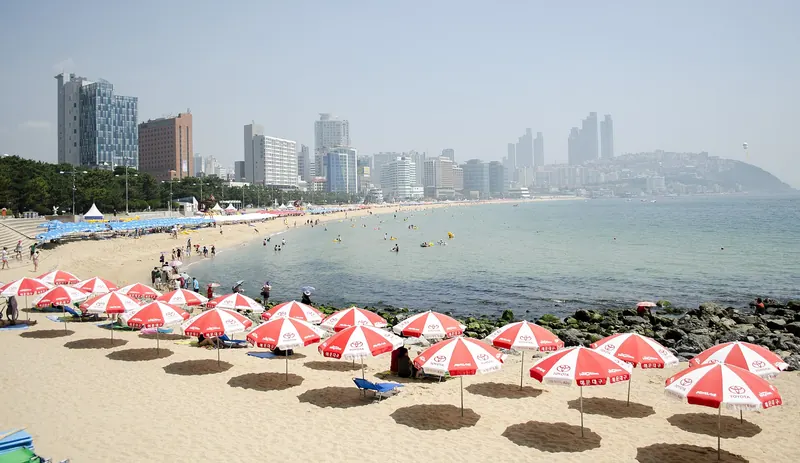
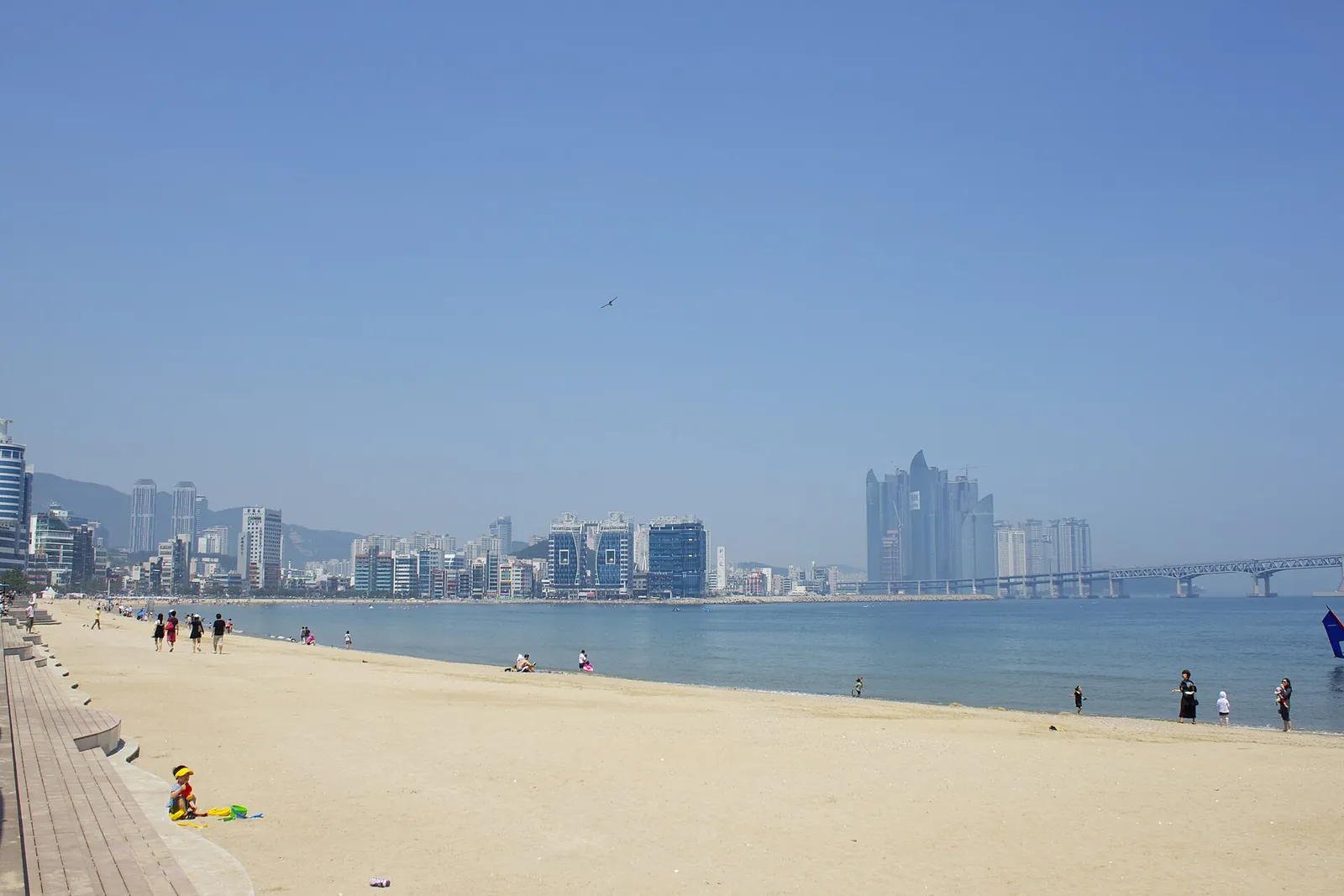
Busan's beach districts are where most visitors want to wake up, and VisitKorea lists both Haeundae and Gwangalli among the best areas for guesthouses. Haeundae, the city's most famous beach, has accommodation of every kind, from luxury hotels to private guesthouses, around its roughly 1.5 km of sand. Gwangalli, just to the west, is lined with restaurants and cafés and looks straight at the lit-up Gwangandaegyo Bridge, so it suits people whose evenings matter most. Seomyeon, where Metro Lines 1 and 2 cross, is the practical base for moving around the whole city, and the area around Busan Station on Line 1 suits a short stay or an early KTX.
Your arrival route matters here too. When we checked on 2026-10-03, VisitKorea gave about 30 minutes from Gimhae International Airport to Seomyeon by light rail and metro, about 50 minutes to Gwangalli and about 70 minutes to Haeundae; airport limousine buses run on Seomyeon–Bujeon and Haeundae–Gijang routes, with tickets bought in advance at the counter rather than with cash or a transport card. Arriving by train from Seoul, you reach Busan Station, a metro ride with a change away from the beaches, so weigh a beach view against an early departure.
Jeju: two bases rather than one
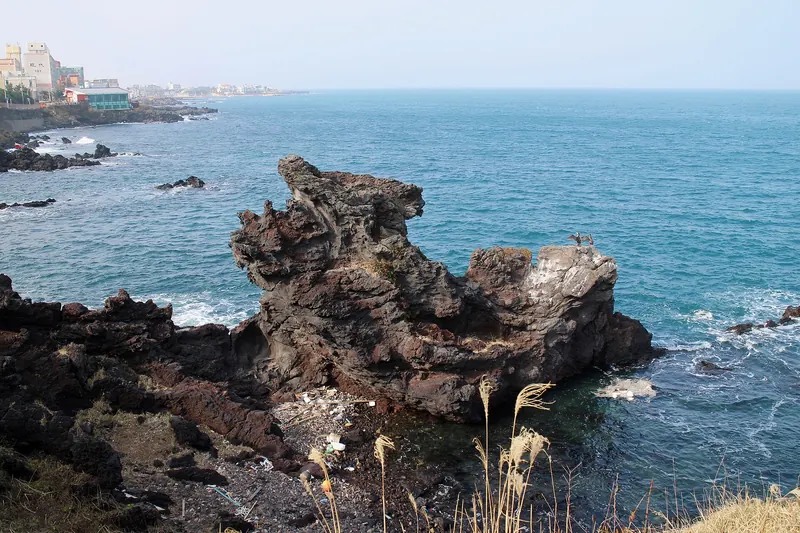
Jeju is bigger than it looks on a map, and its sights are spread around the coast. VisitKorea's airport guide puts the main attractions about 1 to 1.5 hours from Jeju International Airport by public transport, and its taxi estimates run from about 40 minutes to Aewol or Hamdeok to about 80 minutes to Seongsan Ilchulbong. Sleeping in one place means repeating those journeys every day.
A practical split is two or three nights in Jeju City, the northern city around the airport, with Dongmun Market (the island's largest traditional market, with a night market by Gate 8) and the Jeju City Bus Terminal, where the east-coast bus 201 starts; then two nights in Seogwipo or the Jungmun resort area on the south coast. Airport limousine buses 600 and 601 run to the Jungmun Tourist Complex from outside Gate 5, paid by transport card only. East-coast villages such as Hamdeok and Seongsan work by bus, using the airport express bus 101 and the slower 201, which VisitKorea says runs at intervals of 30 to 80 minutes.
If you want a pension, a villa or a quiet village stay away from the coastal bus routes, plan how you will move: VisitKorea suggests a rental car may be more convenient for the west coast around Aewol and Hyeopjae and for the inland areas. Without a car, check the walk from the nearest bus stop on a map before you book.
Guesthouses, pensions and templestays: the details to check
Guesthouses: VisitKorea notes that some host barbecue or club-style parties while others are quiet, so read the description if you want sleep. Most serve a simple self-service breakfast of bread and coffee at set hours; bathrooms may be private or shared; and many have no parking.
Pensions: they range from simple houses to pool villas, 'jjimjilbang' pensions with a private sauna and kids' pensions with play facilities. Most guests grill samgyeopsal on the terrace, and some pensions rent barbecue equipment or prepare a full meal, but not all allow barbecues. Some do not accept children or pets, and breakfast may be free, paid or absent: check all three before you book.
Templestays: for one night in a Buddhist temple, book through the Jogye Order's Templestay site, which lists each temple's programme, schedule, rooms and rules. As an example, when we checked on 2026-10-03, Haeinsa's weekend programme listed check-in at 15:00, an evening meal, a pre-dawn start, breakfast and check-out late the next morning, asked guests to observe noble silence and to bring their own towel and toiletries, and gave a refund scale that fell from 100% three days before to nothing on the day.
Practical questions
What is the best area to stay in Seoul for a first visit?
Myeongdong is the most central, with Line 4 to Seoul Station and the airport train. Jongno puts the palaces and Bukchon within walking distance. Hongdae suits travellers who want guesthouses, nightlife and the all-stop airport train at the station.
Are Korean motels safe and suitable for tourists?
VisitKorea describes motels as the most cost-effective accommodation in Korea, many of them downtown and some with hotel-standard bedding and whirlpool baths. Quality varies widely, and some use the word 'hotel' in their name, so check recent reviews and photos of the actual room.
Do you sleep on the floor in a hanok?
Often, yes. VisitKorea notes that many hanok use mats and quilts on the floor rather than beds, but many modern hanok stays now offer rooms with beds. Look for a room listed with a bed if you need one, and check the bathroom arrangement.
What is a pension in Korea?
A private holiday house or villa, usually outside the city centres, often with a barbecue terrace and sometimes a pool or private sauna. VisitKorea notes that popular pensions can take months to book and that some do not accept children or pets.
Should I stay in one place on Jeju?
Usually not. VisitKorea puts the main sights about 1 to 1.5 hours from the airport by public transport, so splitting your nights between Jeju City and Seogwipo or Jungmun cuts the daily travel. VisitKorea suggests a rental car for the west coast and inland areas.
Where should I stay in Busan?
Haeundae or Gwangalli if you want the beach, Seomyeon for metro connections across the city, and the Busan Station area for early trains. VisitKorea gives about 30 minutes from Gimhae Airport to Seomyeon and about 70 minutes to Haeundae by rail.
Sources and checks before you travel
Reference sources for the version dated 3 October 2026. Confirm opening times, access, transport and conditions for your travel dates.
- VisitKorea (Korea Tourism Organization): Accommodations in Korea ↗ — opens in a new tab
- VisitKorea: Hanok Accommodations ↗ — opens in a new tab
- VisitKorea: Guesthouses ↗ — opens in a new tab
- VisitKorea: Pensions ↗ — opens in a new tab
- VisitKorea: From the Airport to the City ↗ — opens in a new tab
- VisitKorea: Fly to Jeju International Airport ↗ — opens in a new tab
- VisitKorea: Jeju's east coast itinerary by city bus ↗ — opens in a new tab
- VisitKorea: Jeju travel guide ↗ — opens in a new tab
- VisitKorea: Busan travel feature ↗ — opens in a new tab
- VisitKorea: Haeundae Beach and Gwangalli Beach ↗ — opens in a new tab
- VisitKorea: Busan city guide ↗ — opens in a new tab
- VisitKorea: Introduction to Excellent Korean Guesthouse Accommodations, Part 2 ↗ — opens in a new tab
- VisitSeoul: About Seoul ↗ — opens in a new tab
- VisitSeoul (Seoul Tourism Organization): Accommodation ↗ — opens in a new tab
- VisitSeoul: Seoul Stay ↗ — opens in a new tab
- VisitSeoul: Bukchon Hanok Village ↗ — opens in a new tab
- Templestay (Jogye Order of Korean Buddhism): Haeinsa Tripitaka Koreana Pilgrimage programme ↗ — opens in a new tab
- Wikipedia: Seoul Subway Line 4 ↗ — opens in a new tab
Does this experience fit your route?
Settled on your bases? Compare walking tours and day trips that start close to where you are sleeping in Seoul and Busan, and check each pick-up point before you book.
Check dates and details on Viator ↗ — opens in a new tabAffiliate link · Book with ViatorPhoto credits
Hanok houses in Bukchon, Seoul, where some homes operate as hanok stays
Photograph: Basile Morin — opens in a new tab · CC BY-SA 4.0 — opens in a new tab
Changes: Resized and converted to WebP; displayed with responsive crops. · Original photograph and licence details ↗ — opens in a new tab
Jeonju Hanok Village, which VisitKorea calls the country's largest traditional hanok village
Photograph: lumoplank — opens in a new tab · CC0 — opens in a new tab
Changes: Resized and converted to WebP; displayed with responsive crops. · Original photograph and licence details ↗ — opens in a new tab
Gwangalli Beach, one of Busan's two main beach bases
Photograph: Chelsea Hicks — opens in a new tab · CC BY 2.0 — opens in a new tab
Changes: Resized and converted to WebP; displayed with responsive crops. · Original photograph and licence details ↗ — opens in a new tab
Evening street-food stalls in Myeongdong, Seoul's most central base
Photograph: Sgroey — opens in a new tab · CC BY-SA 4.0 — opens in a new tab
Changes: Resized and converted to WebP; displayed with responsive crops. · Original photograph and licence details ↗ — opens in a new tab
Samgyeopsal, the pork-belly barbecue most Koreans grill on a pension stay
Photograph: 이동원 — opens in a new tab · CC0 — opens in a new tab
Changes: Resized and converted to WebP; displayed with responsive crops. · Original photograph and licence details ↗ — opens in a new tab