Gangwon · Gangwon State
Sokcho and Seoraksan: bus from Seoul, cable car, trails and food
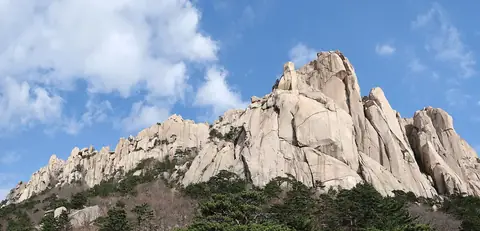
Sokcho is a fishing port on the East Sea with a granite range for a back garden. Seoraksan rises behind the town in ridges, waterfalls and the rock towers of Ulsanbawi. Its highest peak, Daecheongbong at 1,708 m, is the third highest in South Korea. In town there is a covered market of fried chicken and raw fish, a refugee village reached by a ferry that passengers pull along a wire, and a lighthouse over the sea. It is a bus ride from Seoul, so the decisions are how many nights to book, which Seoraksan day to choose and what the park's gates and closures allow.
- Suggested time
- 2 nights (3 days) in Sokcho
- Where to stay
- Sokcho, by the market and the Intercity Bus Terminal for a first visit; Sokcho Beach, the park gate at Seorak-dong or Daepohang suit other plans
- Season and timing
- The cable car is open all year. Seoraksan's upper trails close for forest-fire prevention in spring and again in autumn; the dates are in the trail section below. Autumn colour starts on the high ridges in early October, and VisitKorea's 2026 forecast put the peak around 25 October. Heavy rain, flash floods and landslides are possible from June to September. Sokcho Beach is at its busiest in July and August.
The short answer
Book two nights in Sokcho, based by the market and the Intercity Bus Terminal: one day for Seoraksan, one for the town, and the bus back to Seoul on day 3. If you plan a night in a Seoraksan shelter, reserve it first on the national park reservation system, because the four shelters hold only 8 to 80 people each; otherwise buy the Seoul bus ticket first, an express ticket from Seoul Express Bus Terminal or an intercity ticket from Dong Seoul Terminal, and book rooms early for the October foliage weekends. Park entry is free. The two prices to plan around are the Seorak Cable Car at KRW 16,000 return for an adult, sold only at the station on the day, and the city bus to the park at KRW 1,530 by transport card or KRW 1,700 in cash (checked on 18 October 2026).
Getting to Sokcho: the bus from Seoul and the ride to the park
Express and intercity buses are the usual way from Seoul to Sokcho. Both Seoul Express Bus Terminal (Express Bus Terminal Station, Lines 3, 7 and 9) and Dong Seoul Terminal (Gangbyeon Station, Line 2) serve Sokcho, and express and intercity buses often use different terminals, so check the terminal on your ticket. Express tickets are sold at kobus.co.kr and intercity tickets at txbus.t-money.co.kr. Check the bus operator's timetable and fare for your date before choosing between Seoul Express Bus Terminal and Dong Seoul Terminal. The transport guide explains the terminals and how to buy a ticket.
Sokcho has two long-distance terminals. The Intercity Bus Terminal is a 5-minute walk from the Tourist & Fishery Market and the Express Bus Terminal a 15-minute walk. The Intercity Bus Terminal stands next to the Dongmyeong Live Fish Center. The Express Bus Terminal is within walking distance of Sokcho Beach. An intercity ticket takes you to the first and an express ticket to the second.
City bus 7 or 7-1 runs from the Intercity Bus Terminal to the park. The stops run from the old fire station past the Express Bus Terminal, the Seoraksan entrance and the park information office to the Seoraksan car park at the terminus, and the stop for the trails is Seoraksan Sogongwon Park. On weekdays Sokcho's timetable lists first departures from the operators' depots from 06:30 and last departures to 20:35; check the interval and the ride time for your day on Sokcho's bus information system. Sokcho's bus information system lists the adult city fare as KRW 1,530 by transport card and KRW 1,700 in cash; T-money and other prepaid cards work, and a card gives one free transfer within 90 minutes, though not onto the same route number.
Sokcho has no train station, so the rail route is the KTX to Gangneung and a bus north. Korail gives 1 hour 49 minutes for its fastest KTX from Seoul to Gangneung. Check the bus operator's timetable and fare for the Sokcho to Gangneung leg before you travel. Tickets go on sale 2 months before departure for foreign passengers (this changed from 1 month on 1 October 2026). The Gangneung guide covers the station and the town. VisitKorea says a bus terminal near Sokcho Port runs buses to Seoul, Gangneung and other cities.
Most visitors land at Incheon and cross Seoul to a bus terminal. Yangyang International Airport (YNY) is the nearest airport, and VisitKorea lists its flights as routes to Jeju; intercity buses run from it to Sokcho and Gangneung, and a taxi to Sokcho takes about 30 minutes.
Where to sleep: the market, the beach, the park gate or Daepohang
Sokcho works as the base because the park is one city bus away and the town has the food and the evening. Four areas suit different plans, and the where-to-stay guide compares the types of stay across the country.
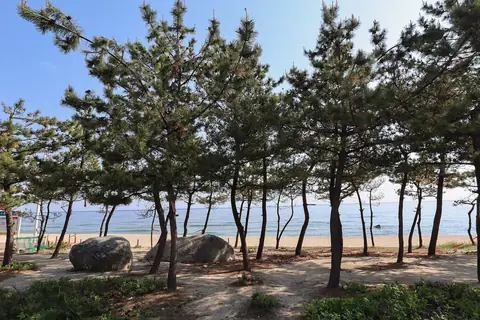
Around the market and the terminals is the practical choice for a first visit. The Tourist & Fishery Market is a 5-minute walk from the Intercity Bus Terminal. The Dongmyeong Live Fish Center, Yeonggeumjeong Pavilion, the lighthouse observatory and Deungdae Beach lie near the terminal, so dinner and the morning bus to the park are both on foot. Sokcho Beach is the alternative for a sea view: the Express Bus Terminal is within walking distance, and the beach has restaurants and a pine forest with a small park behind it.
Seorak-dong, at the park gate, makes sense only for a first-light start: the gate times in the trail section below show why, and a night at the gate saves the ride to the park. The Osaek trailhead for the shortest route up Daecheongbong lies in South Seorak, away from the Sogongwon side.
Daepohang is the harbour at the southernmost point of Sokcho and is known for quality fish. It suits a stay by the water for readers who would rather eat fish at the harbour than shop at the market, and our 14-day itinerary sleeps there. From the terminals it is a ride across town, so the market base is simpler when you arrive by bus and leave early for the park.
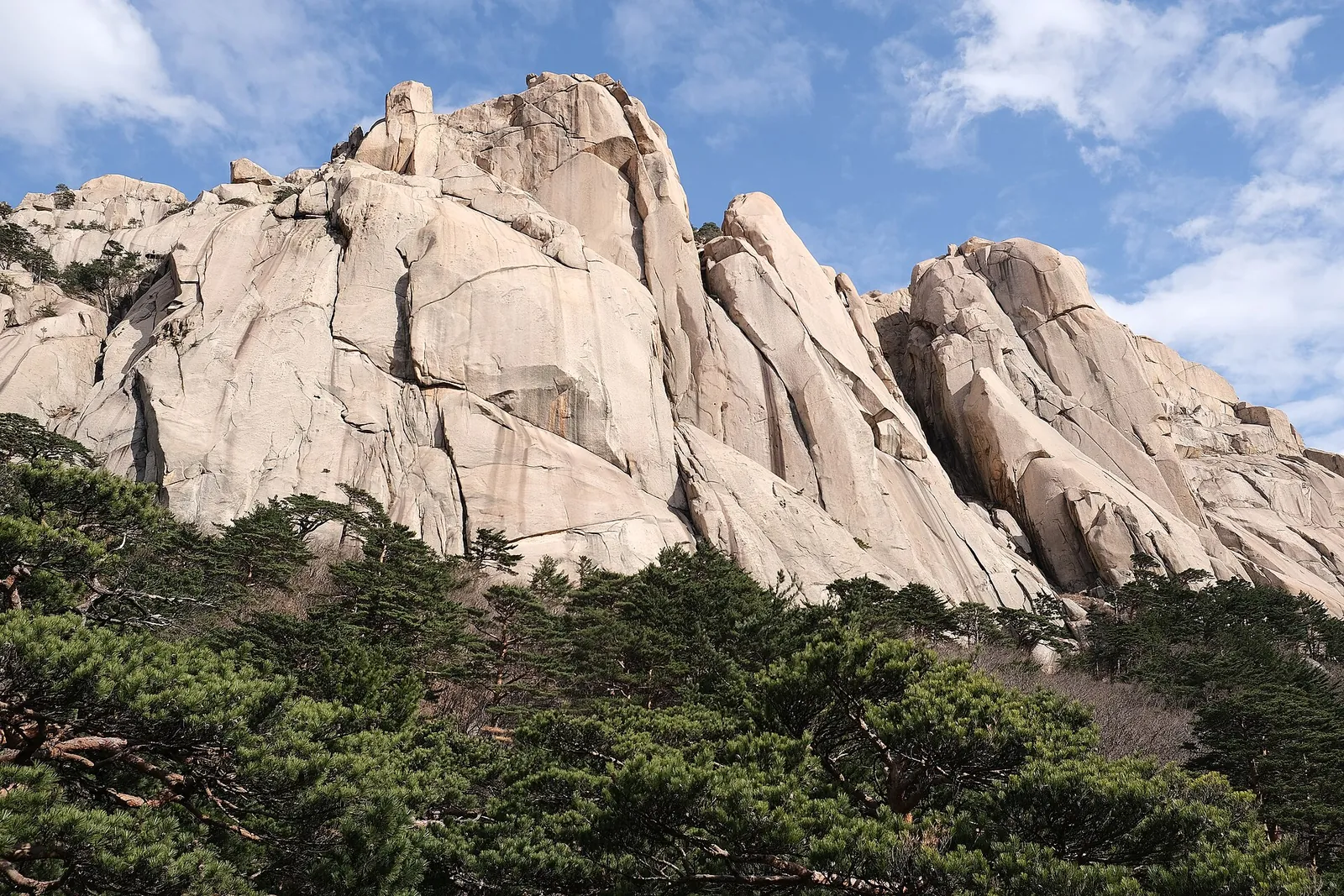
Seoraksan at a glance: Ulsanbawi, Biseondae, Biryong Falls and Daecheongbong
Seoraksan is a granite range on the East Sea coast and Korea's first UNESCO Biosphere Reserve. It divides into Inner Seorak, South Seorak and Outer Seorak; this guide covers Outer Seorak, the part reached from Sokcho, and the Osaek ascent from South Seorak, and leaves Inner Seorak out. The walks and the cable car in this guide start at Sogongwon Park, 1055 Seoraksan-ro, near the end of the city bus line. South Korea's national parks do not charge an entry fee; you pay only for facilities such as parking, camping and cable cars, and some temples inside parks charge their own admission.
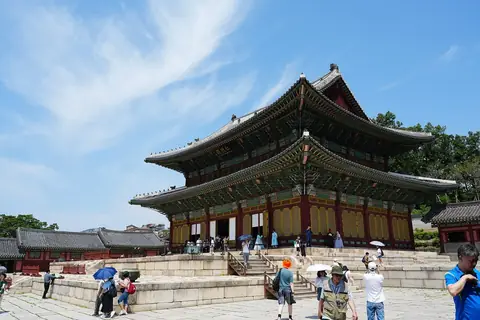
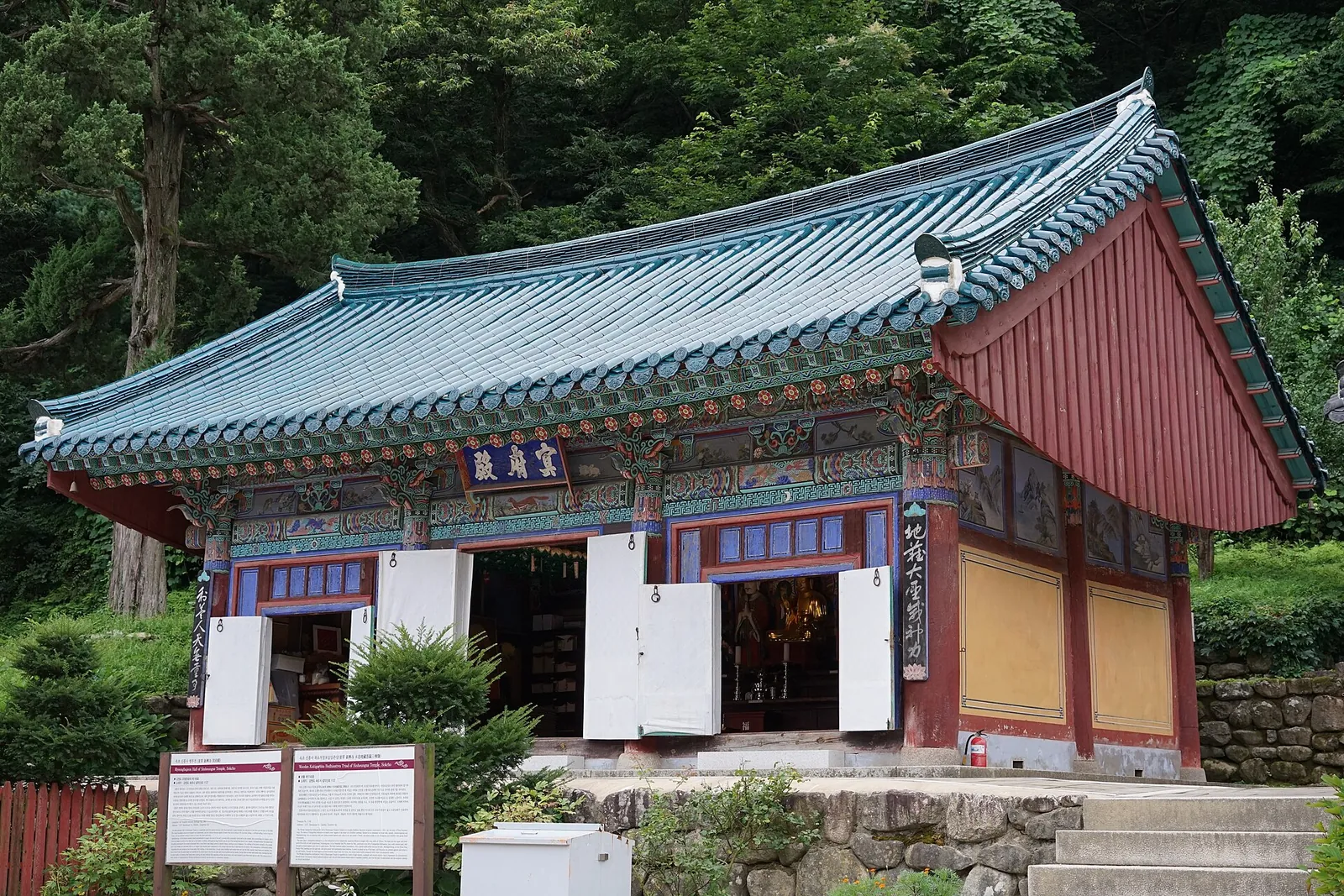
Sinheungsa, on the way in, is a Jogye Order temple founded as Hyangseongsa by the monk Jajang in AD 652. Its grounds hold Geungnakbojeon Hall, a wooden building from the mid-Joseon period, and a three-storey stone pagoda from the first temple, and the temple runs a templestay. VisitKorea lists admission as free.
Beyond the temple the forest path to Heundeulbawi, the "wobbling rock" that visitors try to push, is gentle. The path from there to Ulsanbawi is rather steep, and the view from the top is worth the effort. Ulsanbawi is a ridge of six massive granite peaks that VisitKorea lists at 900 m above sea level, and its name comes from the way they spread out like a fence. Choose the day by time and fitness:
- Half a day, any fitness: the Seorak Cable Car to Gwongeumseong, described in the next section.
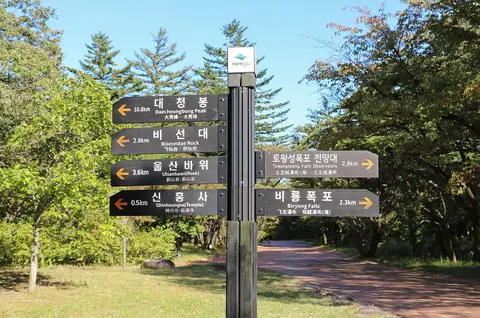
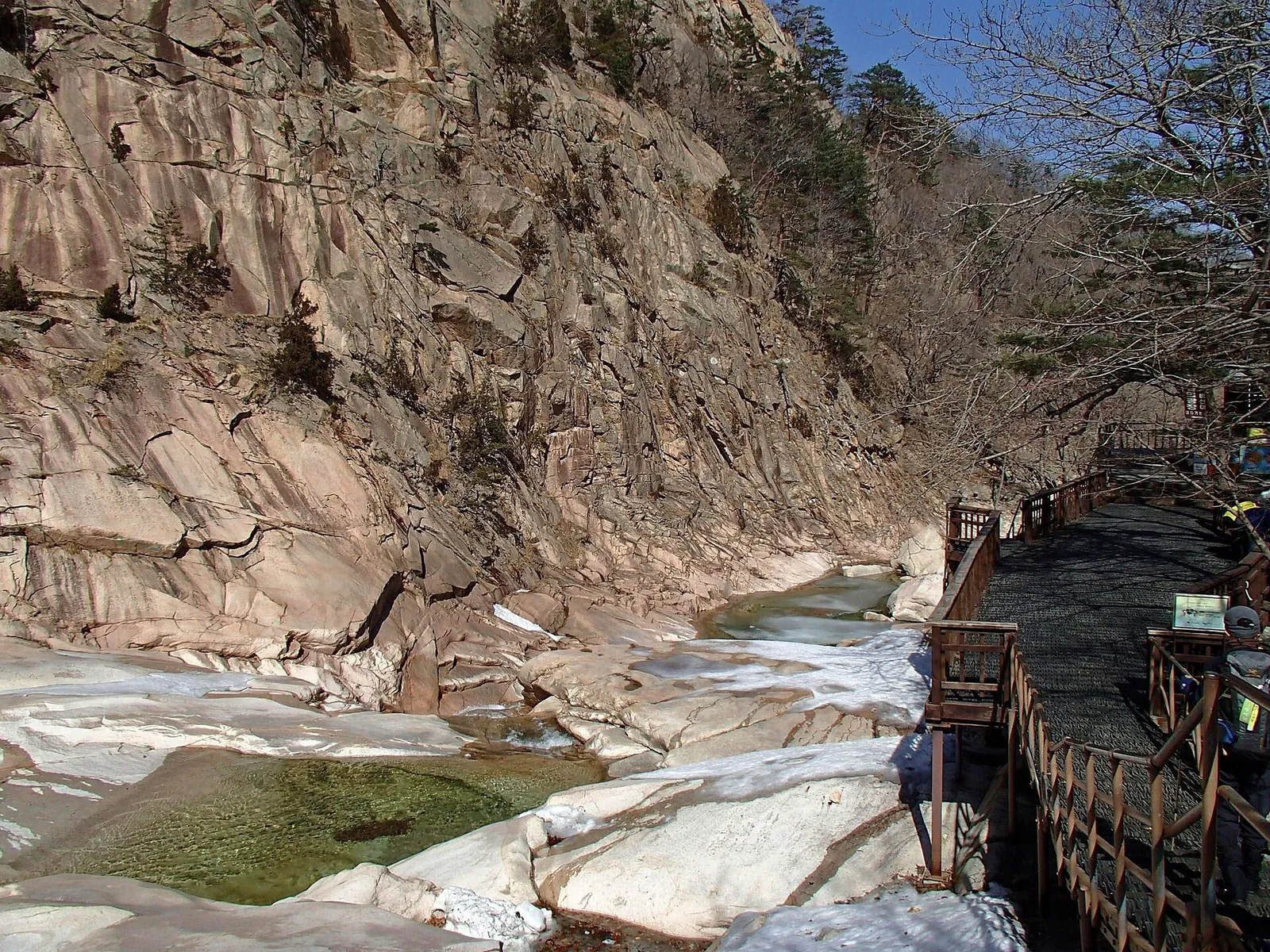
- An easy valley walk: Sogongwon to the Geumganggul cave by Waseondae and Biseondae, which KNPS lists at 3.6 km and 2 hours and rates easy. Biseondae is a large rock in Cheonbuldong Valley, set against a rocky wall; after rain a small waterfall runs down it, and its name recalls a hermit said to have flown up to heaven from the spot. Geumganggul is a cave of 23 square metres about 600 m above sea level with a seated stone Buddha inside, and the way up crosses a few bridges and steep concrete stairs to a view over Cheonbuldong Valley. Another easy walk goes from Sogongwon to Yukdam Falls, Biryong Falls and the Towangseong Falls viewpoint, which KNPS lists at 2.8 km and 1 hour 30 minutes one way. Biryong Falls drop 16 m into a clear pond with a wooden viewing deck, and the last 400 m up to the Towangseong viewpoint are very steep.
- One morning, reasonably fit: Ulsanbawi by Sinheungsa, Heundeulbawi and the Gyejoam hermitage, which KNPS lists at 3.8 km and 2 hours and rates medium. VisitKorea gives about two hours each way, or 7.6 km and 4 hours for the loop back to Sogongwon.
- One hard day: Osaek, Seorak Falls and Daecheongbong, which KNPS lists at 5 km and 4 hours from the trailhead to the summit and rates hard. The section on Daecheongbong below covers the gate and the trailhead.
- Two days with a shelter night: KNPS lists Sogongwon, Biseondae, Huiungak, Daecheongbong and Osaek (16 km, 10 hours 40 minutes) as a course of one night and two days.
The Seorak Cable Car to Gwongeumseong
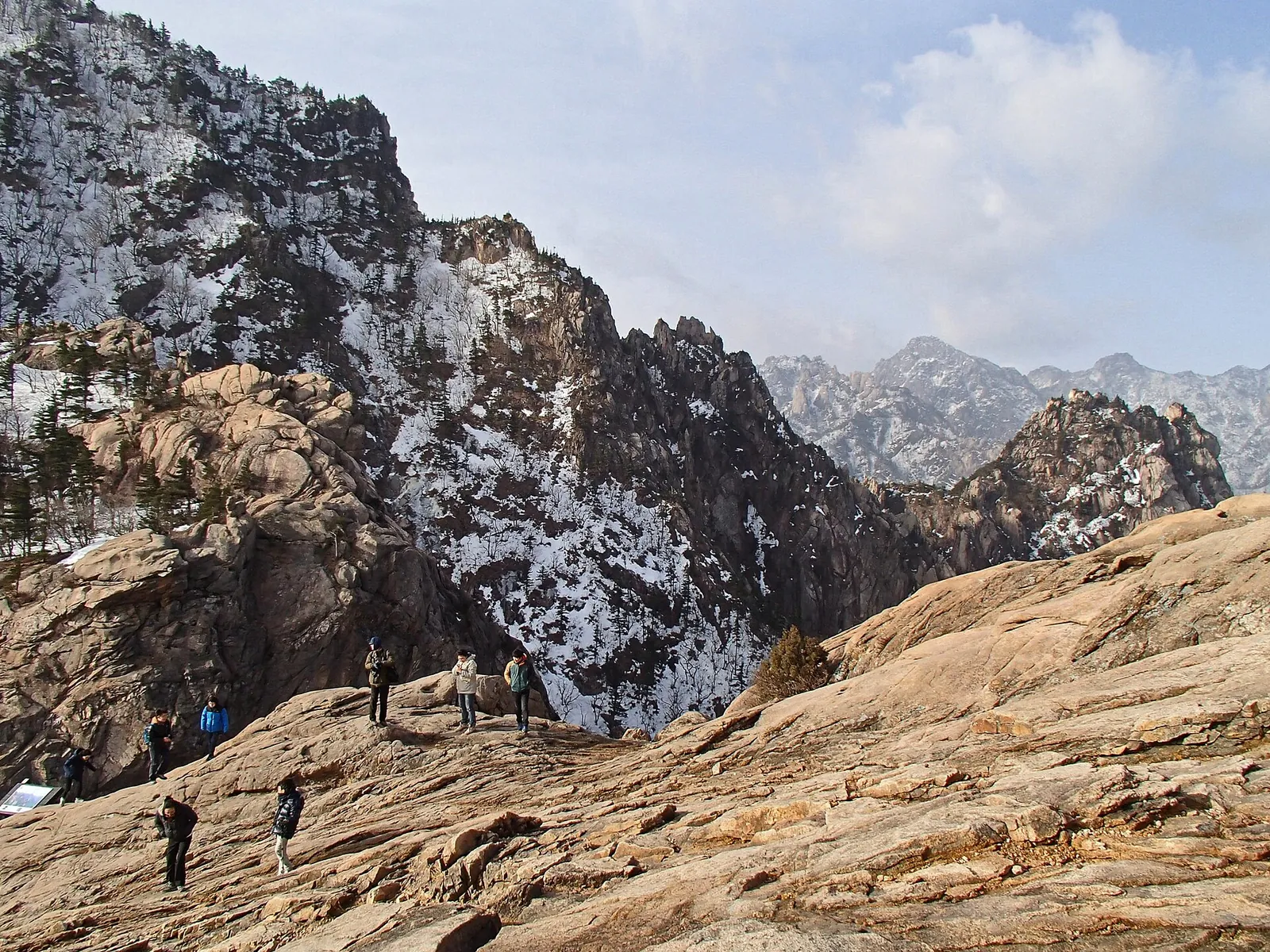
The Seorak Cable Car (also written Seoraksan Cable Car) climbs from Sogongwon along the Outer Seorak ridge to Gwongeumseong, covering 1,128 m in about 5 minutes and arriving 699 m above sea level, according to the operator. Gwongeumseong is the site of a Goryeo-dynasty stone fortress. From the cabin you see Ulsanbawi and the Manmulsang rocks, and the operator lists views from the top over the rock ridge to Ulsanbawi, the East Sea and the centre of Sokcho. The Allak hermitage, which dates to the Silla dynasty, and a pine tree that has survived for hundreds of years stand just below the fortress.
There is no path down, so the operator sells return tickets only and you come back by cable car. Tickets are sold at the station on the day, with no advance booking, because wind and weather change the service. An adult (middle-school age and over) pays KRW 16,000 return, a child from 37 months to primary-school age pays KRW 12,000, and a child under 36 months rides free; fares include VAT (checked on 18 October 2026). The operator limits its discounted fares, for veterans, disability-card holders, people aged 65 and over and Sokcho residents, to domestic visitors, so foreign visitors pay the standard fare.
Operating hours change with the season and the weather, and the operator posts each day's hours and the running status at the top of its website; its posting for 19 and 20 October 2026 showed 08:30 to 17:00. Check the operator's website for the time the ticket office opens on your day. Your ticket carries a boarding time, and you go to the second-floor platform 5 minutes before it. Cabins leave every 10 to 15 minutes when it is quiet and every 5 minutes when it is busy, and if you take the last car you have only a short time at the top. A ticket is refunded in full until 10 minutes before the boarding time; after that, a refund or a new boarding time costs 20% of the fare. If the service stops for strong wind or bad weather, unused tickets are refunded in full. A live camera view from the top, provided by the national park service, is on the operator's website.
The station is a 5-minute walk from the park entrance. It has no car park of its own, and drivers use the paid car park at Sinheungsa, which VisitKorea lists at KRW 4,000 for a small vehicle for the day in the low season and KRW 5,000 in the high season. Wheelchairs board by the lift to the second-floor platform, and strollers stay in free storage outside. The cabins have no heating or air conditioning. Weekends, public holidays and the foliage season are crowded, and the operator calls most weekends busy, so buy your ticket early in the day and walk to Biseondae or Biryong Falls while you wait for your boarding time.
Trail gates, closures, weather and autumn colour
The Korea National Park Service (KNPS) runs an entry-time system: each trail has an opening time and a cut-off after which nobody may start. KNPS closes Seoraksan's trails when the Korea Meteorological Administration issues a weather advisory or warning or the weather is comparably bad. It posts the status of each park on its closure-information page. The Seoraksan office answers questions on +82-33-801-0900. Heavy rain, flash floods and landslides are possible from June to September, and travel is limited during warnings. Follow the signs and closures, and cover your skin against ticks and mites on wooded paths, because the German foreign office names scrub typhus as a risk on country walks in the warm season. Our health and safety guide explains the mountain rules for the whole country. In the cold months carry crampons; the Huiungak shelter sells them at KRW 10,000 for the plain type and KRW 28,000 for the chain type.
Seoraksan's upper trails also close for forest-fire prevention. In spring 2026 the Seoraksan office announced a closure from 4 March to 15 May. For the autumn, KNPS's shelter pages list 15 November to 15 December 2026 as a closure in which the shelters cannot be used. VisitKorea's hiking guide gives the usual closure of the upper trails from Biseondae to Daecheongbong as mid-November to mid-December, while the paths from the Sogongwon entrance to Biseondae stay open. The park announces the dates each year, so check its notices before you book a summit day.
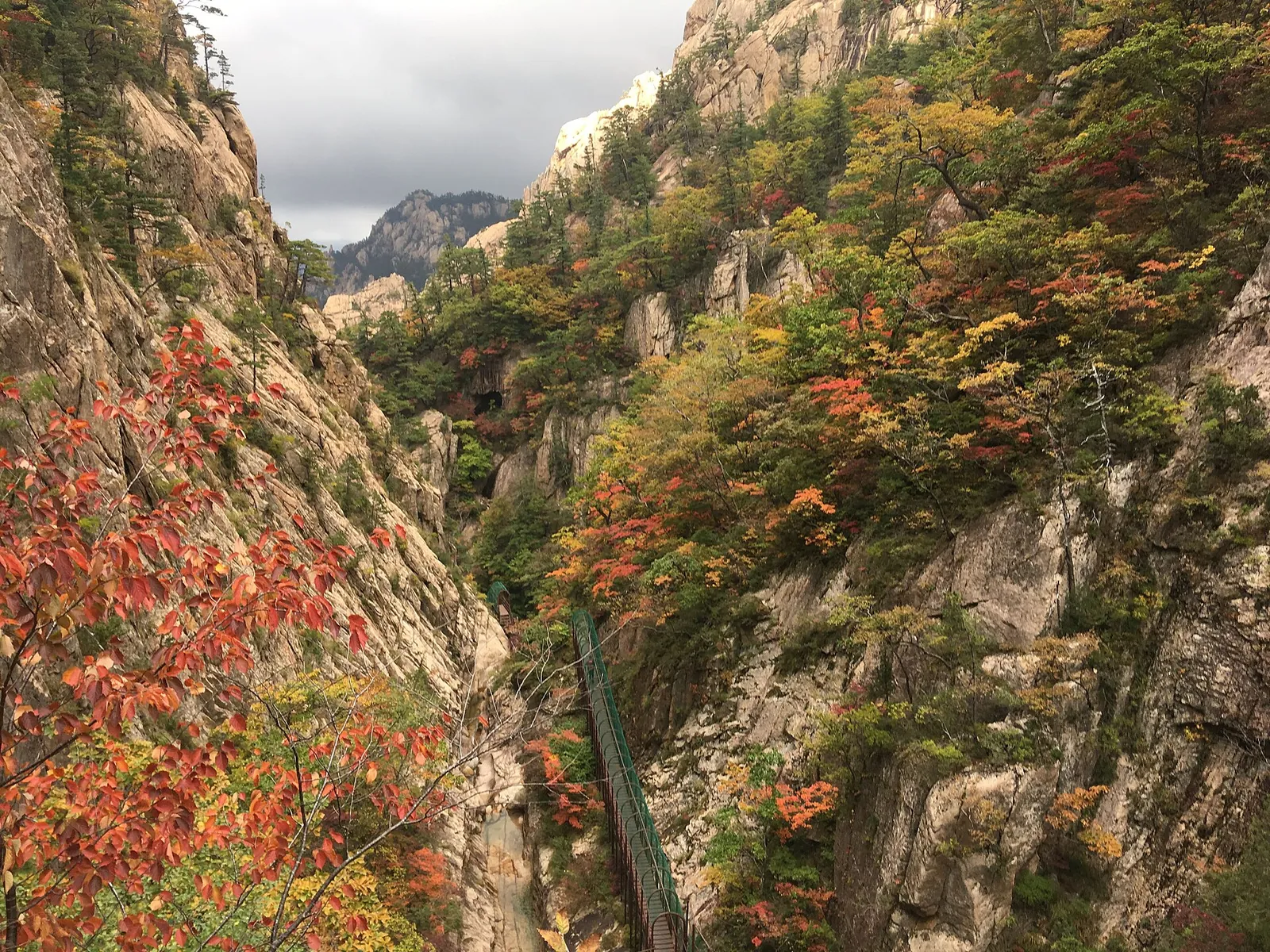
Autumn colour reaches Seoraksan before the rest of the country. VisitKorea's 2026 foliage forecast, credited to the weather company Weatheri, expected the first leaves on 3 October and the peak around 25 October, and it adds that the actual dates depend on the weather. The Gangwon Regional Meteorological Administration says its website shows how far the colour has come on Seoraksan, Odaesan and Chiaksan in four stages with photos. Weekdays are quieter than weekends and public holidays, and the best time guide covers the foliage season across the country.
KNPS's gates for the walks in this guide follow, with summer meaning April to October and winter November to March.
- Sogongwon trails (Ulsanbawi, Biryong Falls, Biseondae, Gwongeumseong): no entry from sunset until two hours before sunrise.
- Biseondae to the Geumganggul cave: 03:00 to 14:00 in summer, 04:00 to 14:00 in winter.
- Osaek towards Daecheongbong: 03:00 to 12:00 in summer, 04:00 to 11:00 in winter.
Daecheongbong and a night in a shelter
Daecheongbong stands at 1,708 m and ranks as the third highest peak in Korea. From the summit you look over the Gongnyongneungseon Ridge and Ulsanbawi. The shortest course to the summit that KNPS lists starts at Osaek: it gives Osaek, Seorak Falls and Daecheongbong as 5 km and 4 hours from the trailhead to the summit, and rates it hard. The trailhead is the South Seorak visitor centre at 801 Seorak-ro in Yangyang County, on the far side of the range from Sogongwon, with a car park at Osaek-ri nearby. The Osaek gate times are in the trail section above, and the cut-off applies only to starting, so plan the descent as well. Only choose the Osaek summit hike after arranging transport to the trailhead and a confirmed return after your descent; otherwise keep to the Sogongwon-based walks in this guide.
The long routes need a night in a shelter. The reservation system of the Korea National Park Service, at reservation.knps.or.kr, which has an English view, lists four shelters for Seoraksan: Socheong with 50 places, Huiungak with 80, Suryeomdong with 16 and Yangpok with 8. A night is listed at KRW 20,000 on weekday nights, which are Sunday to Thursday except the eve of a public holiday, and at KRW 30,000 on Fridays, Saturdays and the eve of a public holiday and in the periods of concentrated demand, 1 July to 31 August and 1 October to 15 November. KNPS's reservation policy puts shelters under its lottery system, with applications starting on the first day of every even-numbered month and a waiting list of 10% of capacity, and leftover places are sold first come, first served; the system's notice board posts each round. If the online sign-up does not accept your details, call KNPS's booking line, 1670-9201, on weekdays from 09:00 to 18:00. The shelters are closed during the autumn fire-prevention closure described above.
A shelter booking extends the entry cut-off at some gates by one or two hours, and KNPS's entry-time table lists each. Check-in is 15:00 to 19:00 from April to October and 15:00 to 18:00 from November to March, and a booking is cancelled automatically after 19:00 on the day. A KNPS notice of 15 December 2022 says that nobody without a reservation may stay, that bivouacking is banned throughout the national parks, that blankets are not rented and sleeping bags are not sold, and that the shelters sell only instant rice and water as food, so bring bedding, side dishes, utensils and a burner.
Refunds follow KNPS's schedule: a cancellation three days or more before the date is refunded in full, later cancellations lose 10% to 30%, and an unused booking is not refunded. When a weather warning closes the trails, the Seoraksan office cancels the shelter bookings and refunds them in full.
Sokcho town: the market, Abai Village, the lighthouse and the lake
Sokcho Tourist & Fishery Market is the town's biggest draw, and VisitKorea's market feature says more than 19 million people visited in 2022. A canopy lets people shop in the rain. Fish is the freshest thing on sale, from dried and salted to live, and a raw fish counter in the basement shows fish swimming in tanks; an aisle of restaurants serves fried food such as king shrimp and squid. The best-known snack is dakgangjeong, glazed fried chicken bites. Opening hours vary by shop.
Abai Village sits across the channel at the mouth of Cheongchoho Lake. Refugees from Hamgyeong-do in North Korea settled it during the Korean War, and "abai" is a Hamgyeong dialect word for a friendly old man. Old shacks without gates remain, murals recall the lost hometown, and an alley of cafés and restaurants serves refugee dishes. The way across is the gaetbae, a barge without an engine that passengers pull along a steel wire with a hook; it crosses the channel in about 5 minutes, and VisitKorea's 2023 market feature lists 05:00 to 23:00 in summer and 05:30 to 22:30 in winter, with a KRW 500 coin as the fare. The Sokcho Museum, at 16 Sinheung 2-gil and a separate stop from the village, reproduces the Cheongho-dong alley where the refugees settled. It is open from 09:00 to 18:00 from March to October and from 09:00 to 17:00 from November to February, closed on Mondays and 1 January, and charges individual adults KRW 2,000, teenagers KRW 1,500 and children KRW 700; visitors aged 65 and over and children aged 6 and under enter free.
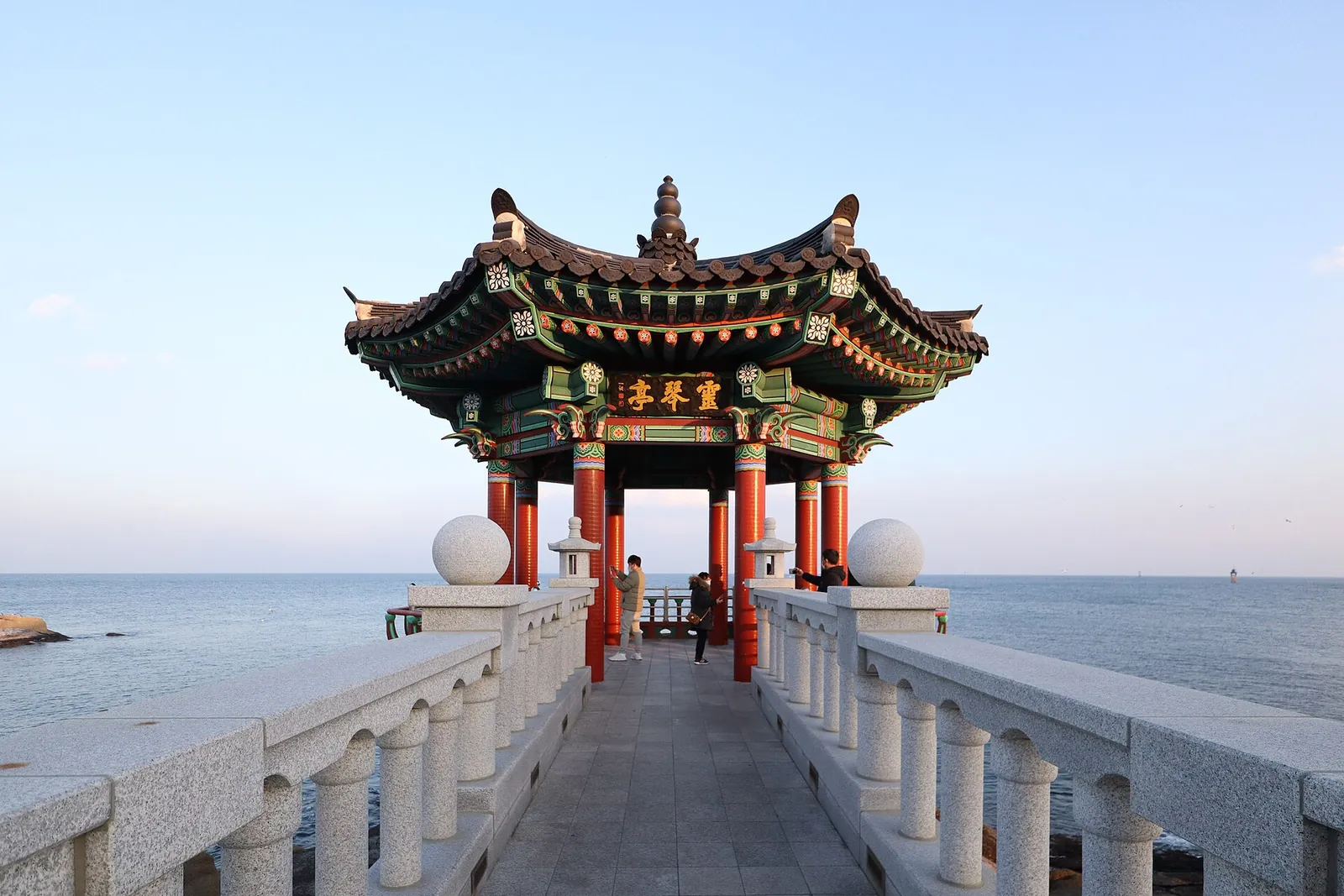
By the lighthouse, Yeonggeumjeong is a rocky shore whose name compares the sound of the waves to a geomungo, a six-string zither. A bridge crosses the rocks to a pavilion facing the East Sea, and VisitKorea's 2023 market feature lists it as open around the clock. Above it, the Sokcho Lighthouse Observatory, built in 1957 and still working, is No. 1 of Sokcho's Eight Sights. A wooden deck path winds through bamboo to a view of the sea, Cheongchoho Lake and Seoraksan. Entry is free, from 09:00 to 17:00, and the outdoor area stays open until 18:00.
Cheongchoho Lake is a lagoon with a 5 km shore in the middle of town. Cheongchojeong Pavilion stands on a 75 m bridge and is called Sokcho's finest night-view spot by VisitKorea, and illuminated paths run along the water. The Sokcho Expo Tower, 73.4 m high and a landmark of the 1999 Gangwon International Travel Expo, takes up to 100 visitors at a time to a platform with a view of the town, the East Sea, Ulsanbawi and Daecheongbong. VisitKorea lists it as open from 11:00 to 21:00 on weekdays and from 09:00 to 22:00 at weekends. Check the current ticket price at the tower before you go.
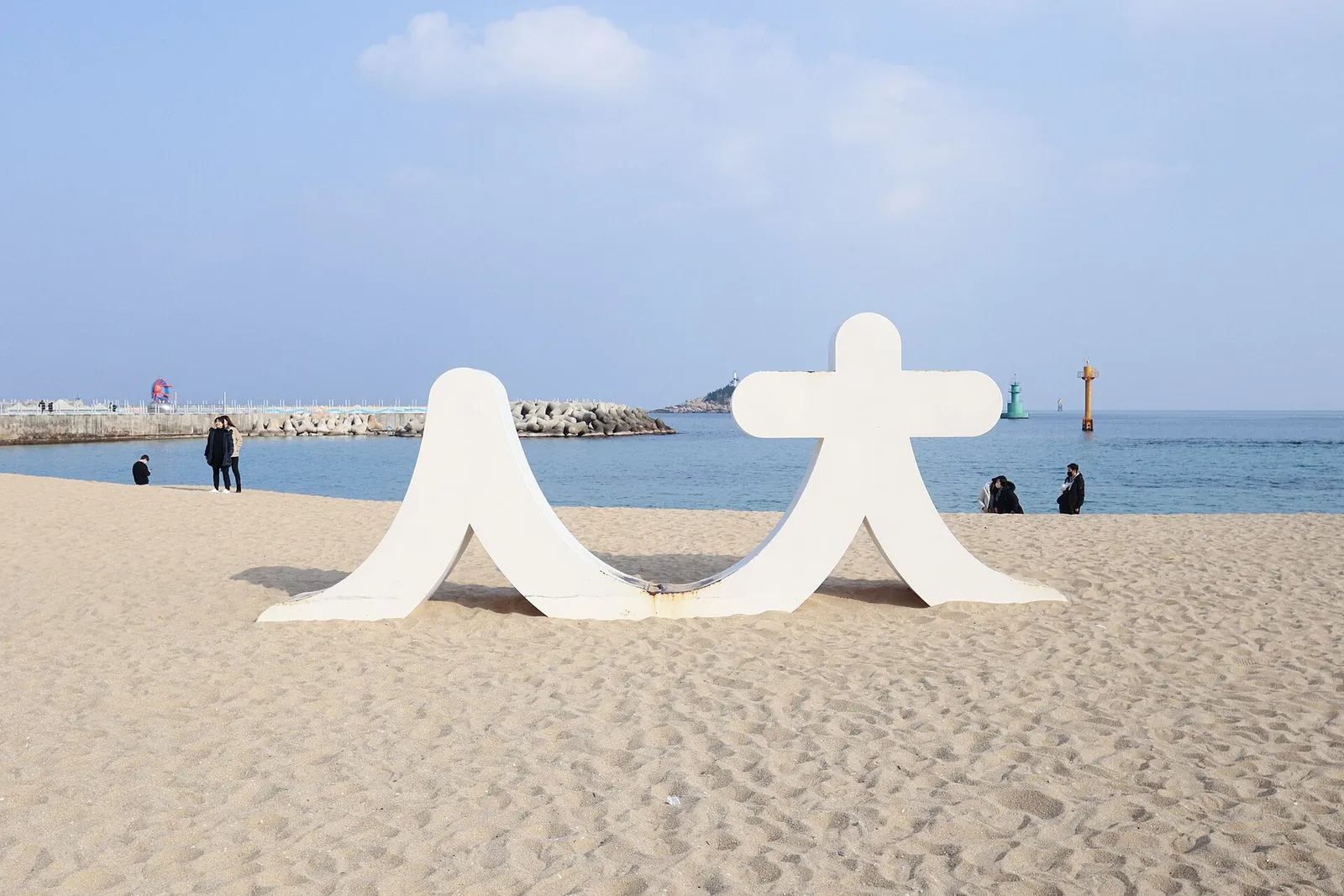
Sokcho Beach opened in 1976 and is one of Korea's representative beaches, with clear, shallow water and a gentle slope. In July and August it is so full that there is nowhere to walk. Sculptures stand along the sand, among them a large compass, and a pine forest with a small park lies behind.
Beyond Sokcho: Naksansa, hot springs and day tours
Naksansa Temple, south of Sokcho in Yangyang, is the usual half-day trip. Founded in 671 by the monk Uisang, it looks over the East Sea and holds a 16 m statue of the Avalokitesvara Bodhisattva. The Uisangdae pavilion stands on a seaside cliff on the way to Hongnyeonam Hermitage; it was built in 1925 to honour Uisang, and VisitKorea lists it as free and open from 06:00 to 18:00 in summer and from 06:00 to 17:00 in winter. City bus 9 or 9-1 runs from Sokcho towards Yangyang, and the city's fare table lists KRW 2,240 in cash and KRW 2,070 by card for the Sokcho to Yangyang route. Check the ride time for your day on Sokcho's bus information system.
After the mountain, the Cheoksan Hot Springs Zone in Sokcho has baths that look towards snow-capped Seoraksan in winter. It is a 10-minute drive from the mountain and open 24 hours, with fees that vary by facility. Gangneung is the next stop down the coast.
Check where a day tour goes before you pay. France Diplomatie advises against the demilitarised zone (DMZ) on the border with North Korea except for a compelling reason, and the UK Foreign Office asks visitors in the DMZ area to exercise caution and follow the local authorities, so AsiaVela does not cover DMZ tours or the Joint Security Area. Other governments may draw a wider line, and the situation can change with little notice, so check your own government's travel advice before you book.
A two-night plan and what it costs
The plan below prices what this guide covers for two adults on two nights in Sokcho (checked on 18 October 2026). Rooms are in the where-to-stay guide.
- Day 1: Morning bus from Seoul. Dakgangjeong for lunch at the market, then Yeonggeumjeong and the lighthouse observatory, and ojingeo sundae for supper.
- Day 2: City bus 7 or 7-1 to Sogongwon. Buy the cable car ticket on arrival, then walk Ulsanbawi by Sinheungsa (7.6 km, 4 hours for the loop, inside the gate times) or the Biseondae valley while you wait for your boarding time, and ride up to Gwongeumseong. Mulhoe by Cheongchoho Lake for supper.
- Day 3: The gaetbae to Abai Village for sundae and cold noodles, and the reproduced refugee alley at the Sokcho Museum. Bus to Seoul in the afternoon.
- Sights and local transport, for two adults: the cable car KRW 32,000, the Sokcho Museum KRW 4,000, the gaetbae KRW 2,000 (a KRW 500 coin each for the crossing there and back) and four city bus rides to and from Sogongwon KRW 6,120 by transport card: KRW 44,120. Park entry, Sinheungsa, the lighthouse observatory and the beach are free.
- Not included: the room, the bus fares to and from Seoul (the booking sites show them by date), meals, the Expo Tower and parking.
Make time for the local food
What to eat and where to look
Dakgangjeong (glazed fried chicken)
Bite-sized fried chicken tossed in a sweet, spicy sauce with nuts, which VisitKorea says was first made in Gangwon, where many poultry farms are found, and tastes better as it cools.
- Where to look
- The chicken stalls of Sokcho Tourist & Fishery Market, 4 Jungangsijang-ro 6-gil (hours vary by shop).
- Fit it into your day
- Lunch on arrival on day 1, or a snack after the mountain on day 2.
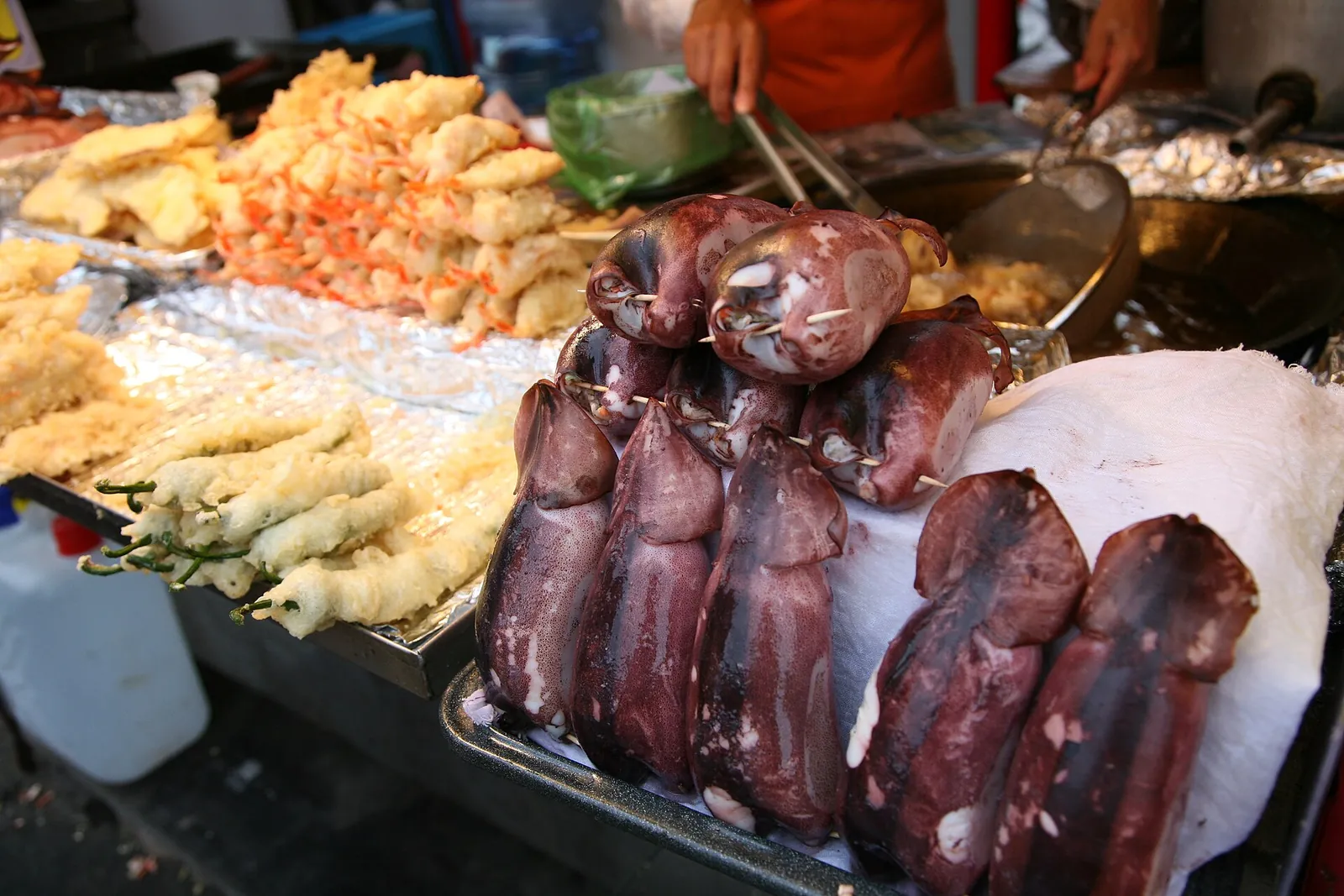
Ojingeo sundae (stuffed squid)
A squid stuffed with beef and vegetables, a Sokcho speciality that sits beside Abai sundae on the market's list of local dishes.
- Where to look
- The stalls of Sokcho Tourist & Fishery Market, 4 Jungangsijang-ro 6-gil (hours vary by shop), or Chungchosoo Mul Hoe, 12-36 Expo-ro, by Cheongchoho Lake (10:00 to 20:50, open all year).
- Fit it into your day
- Supper on day 1.
Abai sundae (blood sausage with sweet rice)
Pork intestine stuffed with blood and sweet rice and steamed, a Hamgyeong-do dish brought south by Korean War refugees.
- Where to look
- Dancheon Sikdang, 17 Abaimaeul-gil in Abai Village, run by the third generation of its family (08:30 to 19:00, with a break from 15:30 to 16:00).
- Fit it into your day
- Lunch on day 3, after the gaetbae crossing.
Myeongtae hoe naengmyeon (cold noodles with raw pollack)
Cold buckwheat noodles topped with raw pollack, one of the Hamheung-style dishes that refugees from Hamgyeong-do brought to Abai Village.
- Where to look
- Dancheon Sikdang in Abai Village also lists it on its menu (08:30 to 19:00, with a break from 15:30 to 16:00).
- Fit it into your day
- Order it with the sundae at lunch on day 3.
Mulhoe (cold raw fish soup)
Sliced raw fish served in a cold, tangy soup. Chungchosoo's version, haejeon mul hoe, adds abalone, sea cucumber and sea squirt to a broth blended from beef bone stock and aged sauces.
- Where to look
- Chungchosoo Mul Hoe, 12-36 Expo-ro, by Cheongchoho Lake, known for its haejeon mul hoe (10:00 to 20:50, open all year).
- Fit it into your day
- Supper on day 2, after the mountain.
Raw fish and shellfish are common allergens, so ask what is in a mixed plate before you order.
Practical questions
How many nights do I need in Sokcho for Seoraksan?
Two nights work well: one day on Seoraksan with the cable car or a walk such as Ulsanbawi, and one day for the market, Abai Village and the lighthouse. A climb of Daecheongbong or a night in a shelter adds a day.
How long does the bus from Seoul to Sokcho take?
Both Seoul Express Bus Terminal and Dong Seoul Terminal serve Sokcho. Check the bus operator's timetable and fare for your date before choosing between Seoul Express Bus Terminal and Dong Seoul Terminal.
How much is the Seoraksan cable car, and can I book it ahead?
No, the operator sells tickets only at the station on the day. An adult (middle-school age and over) pays KRW 16,000 return and a child from 37 months to primary-school age pays KRW 12,000; children under 36 months ride free (checked on 18 October 2026). Hours change with the season and the weather and are posted on the operator's website each day.
Is Seoraksan free to enter, and do I need to book a trail?
Entry to the national park is free. Shelter nights must be reserved on the national park reservation system, every trail has a gate time, and KNPS closes trails in weather warnings.
When is the autumn colour on Seoraksan?
VisitKorea's 2026 forecast expected the first leaves on 3 October and the peak around 25 October, with the actual dates depending on the weather. The Gangwon Regional Meteorological Administration shows the stage of the colour on its website.
Can I climb Daecheongbong in a day?
Yes, from Osaek, but only after arranging transport to the trailhead and a confirmed return after your descent; otherwise keep to the Sogongwon-based walks in this guide. KNPS lists the course from the trailhead to the summit at 5 km and 4 hours and rates it hard, so start at the gate and plan the descent as well. The gate times and the autumn closure are in the trail section above.
How do I get from Sokcho to Seoraksan, and what does it cost?
City bus 7 or 7-1 runs from the Intercity Bus Terminal to the Seoraksan Sogongwon Park stop. The adult fare is KRW 1,530 by transport card and KRW 1,700 in cash (checked on 18 October 2026), and the cable car station is a 5-minute walk from the park entrance. Check the ride time for your day on Sokcho's bus information system.
Sources and checks before you travel
Reference sources for the version dated 18 October 2026. Confirm opening times, access, transport and conditions for your travel dates.
- Korea National Park Service: entry times for Seoraksan trails (Korean) ↗ — opens in a new tab
- Korea National Park Service: Seoraksan closure information (Korean) ↗ — opens in a new tab
- Seoraksan office notice: spring 2026 closure periods (Korean) ↗ — opens in a new tab
- KNPS Ulsanbawi course: Sogongwon, Sinheungsa, Heundeulbawi, Gyejoam, Ulsanbawi (Korean) ↗ — opens in a new tab
- KNPS course: Sogongwon, Waseondae, Biseondae, Geumganggul (Korean) ↗ — opens in a new tab
- KNPS course: Sogongwon, Yukdam Falls, Biryong Falls, Towangseong Falls viewpoint (Korean) ↗ — opens in a new tab
- KNPS course: Osaek, Seorak Falls, Daecheongbong (Korean) ↗ — opens in a new tab
- KNPS course: Sogongwon, Biseondae, Huiungak, Daecheongbong, Osaek (Korean) ↗ — opens in a new tab
- KNPS reservation system: Huiungak shelter (Korean) ↗ — opens in a new tab
- KNPS reservation system: Socheong shelter (Korean) ↗ — opens in a new tab
- KNPS reservation system: Yangpok shelter (Korean) ↗ — opens in a new tab
- KNPS notice: Seoraksan shelter rules, 15 December 2022 (Korean) ↗ — opens in a new tab
- KNPS reservation system: reservation and refund policy (Korean) ↗ — opens in a new tab
- KNPS: national park entry fee abolished (Korean) ↗ — opens in a new tab
- Seorak Cable Car (operator): fares, rules and directions (Korean) ↗ — opens in a new tab
- Seorak Cable Car (operator): home page (Korean) ↗ — opens in a new tab
- VisitKorea: Seoraksan National Park (Outer Seorak) ↗ — opens in a new tab
- VisitKorea: best hiking trails in Korea's national parks ↗ — opens in a new tab
- VisitKorea: Seoraksan Ulsanbawi Rock ↗ — opens in a new tab
- VisitKorea: Seoraksan Cable Car ↗ — opens in a new tab
- VisitKorea: Sinheungsa Temple ↗ — opens in a new tab
- VisitKorea: 2026 fall foliage forecast ↗ — opens in a new tab
- Gangwon Regional Meteorological Administration: Seoraksan and Odaesan foliage notice (Korean) ↗ — opens in a new tab
- VisitKorea: express and intercity buses ↗ — opens in a new tab
- VisitKorea: Sokcho Tourism and Fisheries Market (2023 feature) ↗ — opens in a new tab
- VisitKorea: Abai Village ferry (gaetbae) ↗ — opens in a new tab
- VisitKorea: Dancheon Sikdang ↗ — opens in a new tab
- VisitKorea: Chungchosoo Mul Hoe ↗ — opens in a new tab
- VisitKorea: Dongmyeong Live Fish Center ↗ — opens in a new tab
- VisitKorea: Sokcho Lighthouse Observatory ↗ — opens in a new tab
- VisitKorea: Sokcho Museum ↗ — opens in a new tab
- VisitKorea: Cheongchoho Lake ↗ — opens in a new tab
- VisitKorea: Sokcho Expo Tower ↗ — opens in a new tab
- VisitKorea: Sokcho Beach ↗ — opens in a new tab
- VisitKorea: Daepohang Port ↗ — opens in a new tab
- Korail: KTX 18th anniversary release (31 March 2022) ↗ — opens in a new tab
- Korail press release of 8 October 2026 (Korean) ↗ — opens in a new tab
- UK Foreign Office: South Korea safety and security ↗ — opens in a new tab
- German Foreign Office: South Korea security (German) ↗ — opens in a new tab
- France Diplomatie: South Korea security (French) ↗ — opens in a new tab
- Sokcho Bus Information System: fares and operators (Korean) ↗ — opens in a new tab
- VisitKorea: airport transportation guide (Yangyang International Airport) ↗ — opens in a new tab
- VisitKorea: Geumganggul Cave ↗ — opens in a new tab
- VisitKorea: Biseondae Rock ↗ — opens in a new tab
- VisitKorea: Biryongpokpo Falls ↗ — opens in a new tab
- Korea National Park Service: a route to the famous waterfalls of Seoraksan ↗ — opens in a new tab
- VisitKorea: Uisangdae Pavilion at Naksansa ↗ — opens in a new tab
- VisitKorea: Cheoksan Hot Springs Zone ↗ — opens in a new tab
- VisitKorea: Naksansa Temple ↗ — opens in a new tab
- VisitKorea: 100 must-visit tourist spots ↗ — opens in a new tab
- VisitKorea: domestic flights ↗ — opens in a new tab
- VisitKorea: Seoraksan Daecheongbong Peak ↗ — opens in a new tab
- Sokcho Bus Information System: timetable (Korean) ↗ — opens in a new tab
- Seorak Cable Car (operator): daily running data (Korean) ↗ — opens in a new tab
Does this experience fit your route?
If you want a shelter night, book it first on the national park reservation system before the dates fill. Then buy the bus ticket from Seoul, a bed in Sokcho for two nights, and the cable car ticket at the station early on the day you go up.
Check dates and details on Viator ↗ — opens in a new tabAffiliate link · Book with ViatorPhoto credits
Ulsanbawi, the granite ridge in Seoraksan National Park.
Photograph: kallerna — opens in a new tab · CC BY-SA 4.0 — opens in a new tab
Changes: Resized and converted to WebP; displayed with responsive crops. · Original photograph and licence details ↗ — opens in a new tab
A hall of Sinheungsa temple, Seoraksan.
Photograph: De-Shao Liu ( Terry850324 ) — opens in a new tab · CC BY-SA 4.0 — opens in a new tab
Changes: Resized and converted to WebP; displayed with responsive crops. · Original photograph and licence details ↗ — opens in a new tab
The Biseondae trail beside the stream in Seoraksan National Park, in winter.
Photograph: Lcarrion88 — opens in a new tab · CC BY-SA 4.0 — opens in a new tab
Changes: Resized and converted to WebP; displayed with responsive crops. · Original photograph and licence details ↗ — opens in a new tab
Autumn colour in a rocky valley of Seoraksan National Park.
Photograph: Christophe95 — opens in a new tab · CC BY-SA 4.0 — opens in a new tab
Changes: Resized and converted to WebP; displayed with responsive crops. · Original photograph and licence details ↗ — opens in a new tab
A sculpture on the sand of Sokcho Beach.
Photograph: Mobius6 — opens in a new tab · CC BY-SA 4.0 — opens in a new tab
Changes: Resized and converted to WebP; displayed with responsive crops. · Original photograph and licence details ↗ — opens in a new tab
Yeonggeumjeong Pavilion at the end of its bridge, Sokcho.
Photograph: Mobius6 — opens in a new tab · CC BY-SA 4.0 — opens in a new tab
Changes: Resized and converted to WebP; displayed with responsive crops. · Original photograph and licence details ↗ — opens in a new tab
The rock summit at Gwongeumseong, Seoraksan National Park, in winter.
Photograph: Lcarrion88 — opens in a new tab · CC BY-SA 4.0 — opens in a new tab
Changes: Resized and converted to WebP; displayed with responsive crops. · Original photograph and licence details ↗ — opens in a new tab
Ojingeo sundae (stuffed squid) and fried snacks on a stall at Daepo Port, Sokcho.
Photograph: by Junho Jung at Flickr from South Korea — opens in a new tab · CC BY-SA 3.0 — opens in a new tab
Changes: Resized and converted to WebP; displayed with responsive crops. · Original photograph and licence details ↗ — opens in a new tab