Plan your trip · South Korea
South Korea entry: K-ETA, visa-free stays and the e-Arrival card
South Korea's entry rules have three layers that are easy to mix up. Most Western and many Asian passports can enter without a visa, but visa-free travellers are normally required to hold a K-ETA, an online travel authorisation, before they board. Citizens of 22 countries and regions, including the United States, the United Kingdom, Japan and Australia, are temporarily exempt from that K-ETA until 31 December 2026, and anyone without a K-ETA then fills in an arrival card, which can now be submitted online as an e-Arrival card. This guide sets out what the Ministry of Justice and the Korea Tourism Organization said when we checked on 2026-10-03, and the checks to make before you book. It is a planning aid, not a ruling on your passport: confirm your own case on the official sites shortly before you fly.
- Suggested time
- Apply for a K-ETA at least 72 hours before boarding; the e-Arrival card opens three days before landing
- Where to stay
- Seoul Station or central Seoul after landing at Incheon
- Season and timing
- All year; if you travel from January 2027, check whether the K-ETA exemption has been renewed before booking
The short answer
Start with your passport. If your country is on the K-ETA list at k-eta.go.kr, you can visit without a visa for the period shown there (90 days for most of Europe, the US and Australia; six months for Canada; 30 days for some countries). If you are on the temporary exemption list and land on or before 31 December 2026, you need no K-ETA: just submit the free e-Arrival card online within three days before landing, or fill in the paper card on arrival. If you arrive later, or your country is on the K-ETA list but not exempt, apply for the K-ETA only on the official site or app at least 72 hours before boarding; it then covers repeat visits for three years and replaces the arrival card. If your country is not on the list, you need a visa through a Korean embassy or the Korea Visa Portal. Most visitors land at Incheon (ICN) and spend the first night near Seoul Station or in central Seoul.
Visa-free, K-ETA or visa: which group you are in
The Korea Tourism Organization's VisitKorea site sets out the basic rule: foreign visitors need a valid passport and a Korean visa, unless their country has a visa waiver arrangement with Korea. Travellers who are visa-exempt must obtain a K-ETA (Korea Electronic Travel Authorization) before they board a plane or ship to Korea, unless their country is on the current temporary exemption list. So there are really three groups: visa-free with a K-ETA, visa-free and temporarily exempt from the K-ETA, and visa required.
The K-ETA site run by the Ministry of Justice lists every country whose citizens can apply, with the visa-free stay for each. When we checked on 2026-10-03 it showed, among others, 90 days for the United States, the United Kingdom, Germany, France, Italy, Spain, Japan, Australia, Singapore, Thailand, Taiwan and Hong Kong, three months for the Netherlands, Belgium, Switzerland, New Zealand, Malaysia and Mexico, six months for Canada and 30 days for countries such as South Africa, Saudi Arabia and Bahrain. Russia and Kazakhstan have rolling limits within 180 days. The stay is per entry; the K-ETA's own three-year validity does not extend it.
If your passport does not appear on that list, plan on a visa. VisitKorea points to embassies and the Korea Visa Portal (visa.go.kr) and lists single-entry, double-entry (six months) and multiple-entry visas (one, three or five years). Several large Asian countries, including the Philippines, Vietnam, Indonesia, India and China, were not on the K-ETA list when we checked, so travellers from those countries should start with the Visa Portal or the nearest Korean consulate, not with the K-ETA site.
The UK government's travel advice adds two conditions that apply in practice to most visa-free visitors: you must have an onward or return ticket, and you may not work, including as a teacher, while visiting visa-free. For a stay of up to 90 days as a tourist, it says a British passport must be valid beyond the date you leave Korea.
The K-ETA exemption until 31 December 2026
To support tourism, Korea has waived the K-ETA for 22 countries and regions. In a notice dated 23 December 2025, the Ministry of Justice extended the waiver by one more year, from 1 January to 31 December 2026 (Korea time). VisitKorea lists the countries and regions covered: Japan, Taiwan, Hong Kong, Singapore and Macau; the United States (including Guam) and Canada; the United Kingdom, Germany, France, Italy, the Netherlands, Spain, Poland, Sweden, Finland, Norway, Belgium, Denmark and Austria; and Australia and New Zealand. The UK advice confirms the same end date for British travellers.
The end date is the planning point. When we checked on 2026-10-03, no further extension had been announced on the K-ETA notice board, so if you will arrive in Korea on or after 1 January 2027, check the notice board again before booking and be ready to apply for a K-ETA. The ministry says that when you scan your passport during the K-ETA application, a pop-up tells you whether you are exempt, which is a quick way to settle it for your own passport.
Being exempt does not stop you applying. The notice says exempt travellers may still apply, and pay the fee, if they want the K-ETA's benefits, chiefly skipping the arrival card. K-ETAs already issued stay valid until they expire, and fees already paid are not refunded.
- Exempt and arriving by 31 December 2026: no K-ETA needed; submit an e-Arrival card or a paper arrival card.
- Exempt but arriving from 1 January 2027: check the K-ETA notice board for a renewal; otherwise apply for a K-ETA.
- On the K-ETA list but not exempt (for example Brazil, Malaysia, Thailand or the UAE when we checked): a K-ETA is required before boarding.
- Not on the K-ETA list: apply for a visa.
Make time for the local food
What to eat and where to look
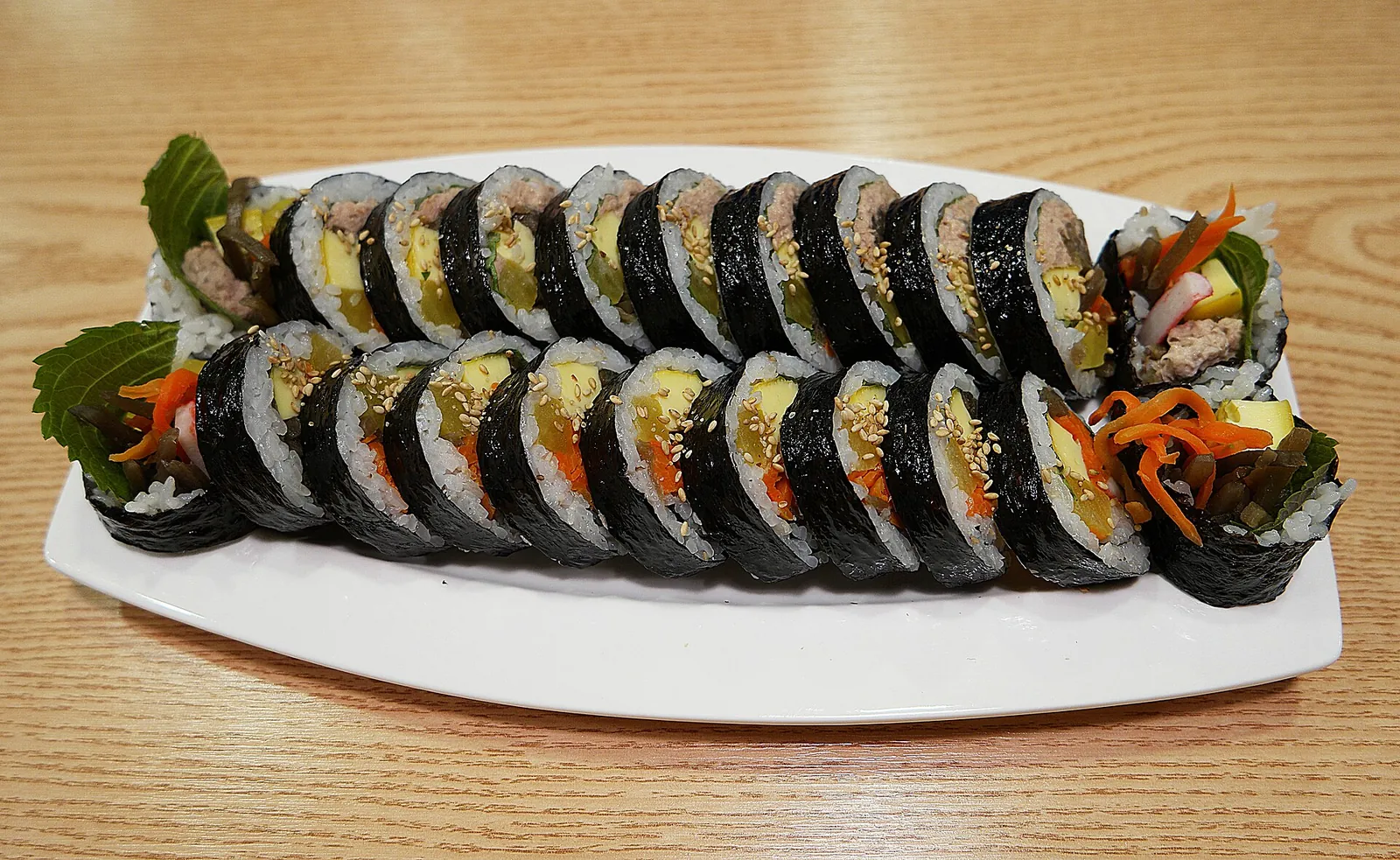
Gimbap
Rice and fillings such as egg, pickled radish, spinach, carrot and ham or tuna, rolled in seaweed and sliced. It is cheap, portable and easy to eat after a long flight, before you have worked out the neighbourhood.
- Where to look
- Gimbap chains and small snack restaurants around Seoul Station and in central Seoul, and the chilled shelves of convenience stores.
- Fit it into your day
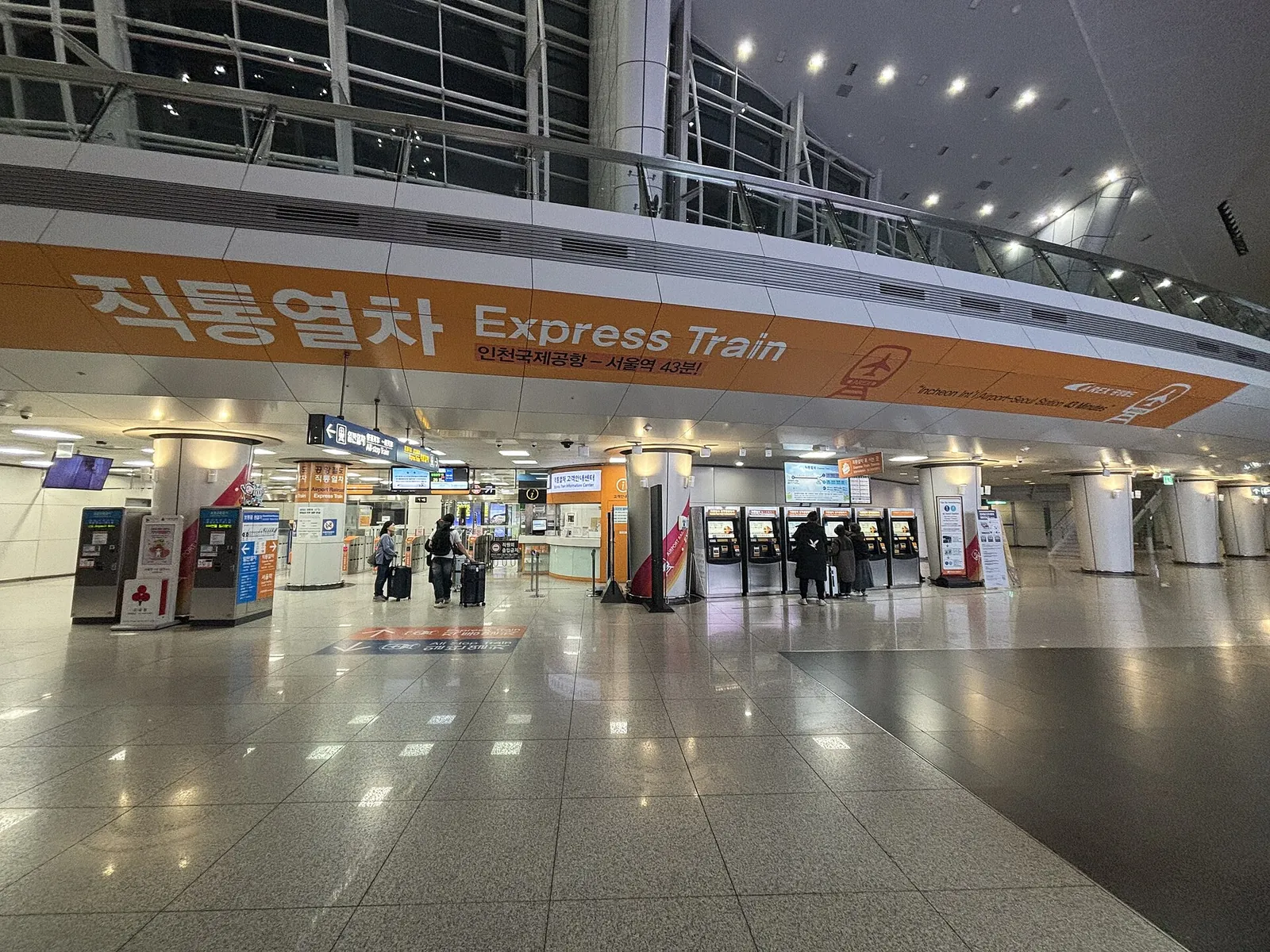
- A first meal on arrival day, or a roll for the AREX train into the city.
Often contains ham, fish cake or egg; ask for vegetable gimbap (yachae gimbap) if you avoid meat or fish.
Mandu (dumplings)
Steamed, boiled or pan-fried dumplings filled with pork, tofu, glass noodles and vegetables, often with a kimchi version. A plate of steamed mandu is a gentle, filling first dinner when you are still jet-lagged.
- Where to look
- Dumpling shops with steaming baskets at the door in traditional markets and residential streets of Seoul.
- Fit it into your day
- Dinner on the first evening, close to your hotel.
Most fillings contain pork; kimchi mandu can be spicy.
Kalguksu (knife-cut noodle soup)
Hand-cut wheat noodles in a broth made from anchovy, clams or chicken, served with kimchi on the side. It is a warming, mild lunch that does not ask much of a tired stomach.
- Where to look
- Noodle restaurants in Seoul's markets and office districts, busiest at lunchtime.
- Fit it into your day
- Lunch on your first full day, between sorting out a transport card and starting sightseeing.
Clam versions contain shellfish; the side kimchi is spicy.
Applying for the K-ETA safely
Apply only on www.k-eta.go.kr or the official K-ETA mobile app. The site warns about look-alike and agency sites that charge high fees, and the ministry states that it has appointed no official agents. When we checked on 2026-10-03, the official site listed the fee as KRW 10,000 (about US$7–8) plus a 3% online payment charge, not refundable if the application is refused.
The ministry says screening is normally done within 72 hours but can take longer, applications are processed in order and there is no express service. Apply as soon as your dates are fixed, and in any case before boarding: applying after boarding, or once already in Korea, can lead to refusal or an entry restriction. When we checked, the site also announced a full shutdown of the K-ETA service from 18:00 on 8 October to 02:30 on 9 October 2026 (Korea time), and an earlier notice warned that confirmation emails to Gmail, and sometimes to Outlook or Hotmail addresses, could be delayed, so it suggested using another email provider.
An approved K-ETA is valid for three years, or until your passport expires if that is sooner, and can be used for several trips, but each stay is still limited to your country's visa-free period. It is not a visa and does not guarantee entry: the immigration officer decides at the border. You must apply again if you get a new passport, and if your travel details change (dates, address in Korea, flight), update them on the site's travel information page.
Some travellers do not need a K-ETA at all. The official FAQ lists, among others, visa holders and registered foreign residents, children aged 17 or under and adults aged 65 or over on the day of arrival, holders of an APEC Business Travel Card, crew, cruise passengers and transit passengers. A transit passenger who decides to enter Korea, or needs to pass immigration to collect checked bags, must have a K-ETA in advance. K-ETA also applies to flights straight to Jeju: the ministry extended it to Jeju in September 2022 for visa-waiver nationalities. Jeju has a separate visa-free category for some other nationalities, listed on the Visa Portal, so check it there if you plan to fly only to the island.
The e-Arrival card: who files it and when
Korea's arrival card can now be submitted online at www.e-arrivalcard.go.kr, run by the Ministry of Justice. When we checked on 2026-10-03, the site said the e-Arrival card is free, can be filed from three days before arrival (counted in Korea time) and has the same validity as the paper card, which is still available. VisitKorea's example: if you arrive on 31 January, the earliest you can submit is 29 January.
Who needs it is the part people get wrong. The site lists Korean visa holders and K-ETA-exempt travellers, which includes citizens of the temporarily exempt countries and travellers under 17 or over 65, among those who must declare. K-ETA holders do not (unless they enter on a visa), and nor do holders of a Korean residence card or an electronic group visa. In other words, a US or UK traveller relying on the 2026 exemption files an arrival card; a traveller who holds a K-ETA does not.
The form asks for your passport (you can upload a photo of the data page), an email address, your arrival date and flight number, where you will stay, and optionally your departure date and flight. One person can file for up to nine people on a phone, and group organisers up to 1,000 on a computer; someone aged 14 or younger cannot be the lead declarant. You receive an issue number by email and can save a PDF, but you do not need to show it at immigration. You can correct the stay details before immigration, although the arrival date can only be changed within three days of the first submission. A submission lapses 72 hours after filing, or once you have passed immigration, so file a new one for each trip.
- The e-Arrival card is separate from the K-ETA, and it is free: a site asking you to pay for an arrival card is not the official one.
- File it from the airport at home or during a layover if your flight is less than three days away.
- Keep the address of your first hotel to hand; you need it for both the K-ETA and the arrival card.
At the border: fingerprints, customs and Q-Code
VisitKorea says every foreign visitor aged 17 or over is fingerprinted (both index fingers) and photographed on arrival, at any airport or port. Remove sunglasses and hats and stay off the phone at the desk. Once your biometrics are registered, the automated Smart Entry gates can be used on later visits, and at some airports also on departure for visa-waiver and short-stay visitors.
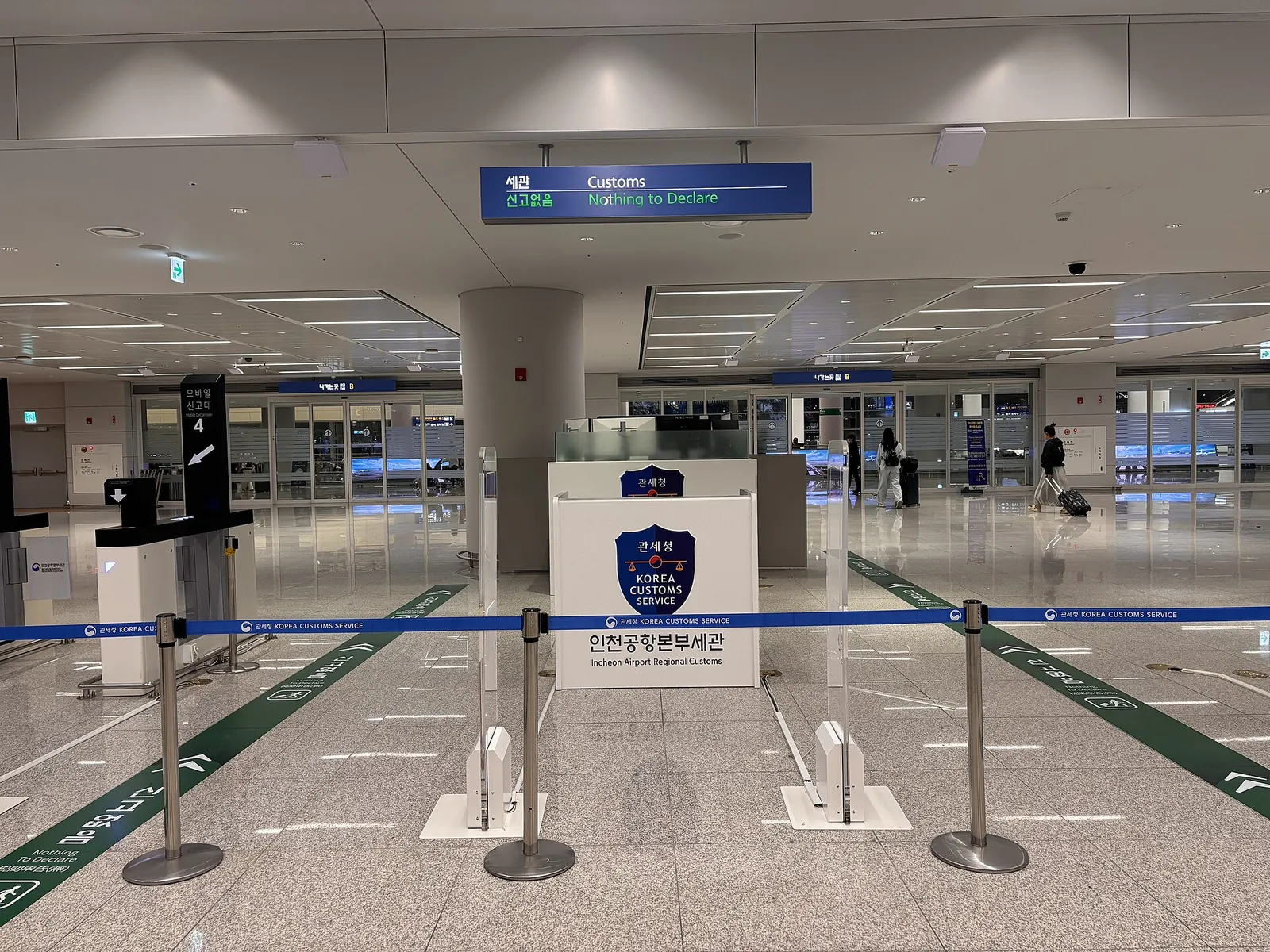
For customs, travellers with nothing to declare no longer fill in a form, a change VisitKorea dates to 1 May 2023. If you do have goods to declare, one form per family is enough, and since 1 August 2023 you can submit it in advance through the Korea Customs Declaration for Travelers app or the website m.customs.go.kr/tms at airports and seaports nationwide, then scan the QR code at the goods-to-declare gate. When we checked, VisitKorea listed the duty-free allowance as goods worth up to US$800 in total, alcohol up to US$400 (two bottles, two litres), 200 cigarettes and 100 ml of perfume, with no alcohol or tobacco allowance for travellers aged 19 and under.
The health questionnaire only applies to some travellers. If you arrive from, or have travelled through, an area Korea designates as a Quarantine Inspection Required Area, you either register in advance on Q-Code (qcode.kdca.go.kr, open from seven days before arrival) or fill in a paper questionnaire. The UK advice says the UK was designated a Quarantine Inspection Required Area, so British travellers with symptoms must submit one, and that failing to complete a required health screening can bring a fine of up to KRW 10 million. The list changes frequently, so check it in the week before you fly.
A pre-departure checklist
Entry rules for Korea are simple once you know your group, but the details move: the K-ETA exemption has been extended a year at a time, the arrival card moved online and customs forms disappeared for travellers with nothing to declare within the last few years. Use this order in the weeks before you fly, and if anything in your case is unclear, the Immigration Contact Center answers on +82-1345 from abroad (1345 within Korea); VisitKorea lists weekday hours of 09:00 to 22:00, with English available throughout.
- Check your passport: valid beyond your departure date for a short visit, and the same passport you will use to check in, since the K-ETA and boarding pass must match its number.
- Look up your country on the K-ETA list and note your visa-free stay.
- Decide whether you need a K-ETA (not exempt, or arriving from 2027) or a visa (country not listed).
- Apply for a K-ETA at least 72 hours before boarding, only on k-eta.go.kr or the official app, and keep the approval email.
- No K-ETA? Submit the e-Arrival card within three days before landing, or fill in the paper card on the plane.
- Have an onward or return ticket and your first night's address ready.
- Check whether your departure country is a Quarantine Inspection Required Area; if so, register on Q-Code.
- Know the duty-free limits; if you are over them, file a customs declaration in the app.
Practical questions
Do I need a K-ETA for South Korea in 2026?
Not if you hold a passport from one of the 22 countries and regions on the temporary exemption list, including the US, Canada, the UK, Germany, France, Japan, Australia and New Zealand, and you arrive by 31 December 2026. Other visa-free nationalities need a K-ETA before boarding. Travellers aged 17 or under or 65 or over on arrival are also exempt.
Will the K-ETA exemption be extended into 2027?
When we checked on 2026-10-03, no extension beyond 31 December 2026 had been announced on the official K-ETA notice board. The last extension was announced on 23 December 2025, only days before the old end date, so check k-eta.go.kr shortly before you book a trip for 2027.
How much does the K-ETA cost and how long does it take?
When we checked on 2026-10-03, the official site listed KRW 10,000 (about US$7–8) plus a 3% online payment fee, not refundable. Approval normally comes within 72 hours but can take longer, and there is no express option. Agencies charging more are not official.
Do I need an arrival card if I have a K-ETA?
No. K-ETA holders are exempt from the arrival card, unless they enter Korea on a visa. Travellers without a K-ETA, including those relying on the temporary exemption, submit an e-Arrival card online within three days before arrival or fill in a paper card.
Is the e-Arrival card free?
Yes. The official site, e-arrivalcard.go.kr, says it is free. It can be filed from three days before arrival in Korea time and lapses 72 hours after submission or once you pass immigration.
How long can I stay in South Korea without a visa?
It depends on your nationality. When we checked the K-ETA country list on 2026-10-03, it showed 90 days for the US, the UK, Japan and Australia, three months for several EU countries and New Zealand, six months for Canada and 30 days for some others. The K-ETA's three-year validity does not extend that stay.
Do I need to fill in a customs form?
Only if you have something to declare. Since 1 May 2023, travellers with nothing to declare skip the form; if you do need one, you can submit it in the Korea Customs Declaration for Travelers app before landing.
Sources and checks before you travel
Reference sources for the version dated 3 October 2026. Confirm opening times, access, transport and conditions for your travel dates.
- Ministry of Justice, K-ETA: application guide ↗ — opens in a new tab
- Ministry of Justice, K-ETA: eligible countries and visa-free stay periods ↗ — opens in a new tab
- Ministry of Justice, K-ETA: notice on the extension of the temporary exemption ↗ — opens in a new tab
- Ministry of Justice, K-ETA: FAQ (Q57, Q47, Q49) ↗ — opens in a new tab
- Ministry of Justice, K-ETA: system shutdown notice ↗ — opens in a new tab
- Ministry of Justice, K-ETA: email delivery delay notice ↗ — opens in a new tab
- Ministry of Justice, K-ETA: unofficial websites warning ↗ — opens in a new tab
- Ministry of Justice, K-ETA: K-ETA applied to Jeju from 1 September 2022 ↗ — opens in a new tab
- Ministry of Justice: e-Arrival card guide ↗ — opens in a new tab
- Ministry of Justice: e-Arrival card, who must declare ↗ — opens in a new tab
- Ministry of Justice: e-Arrival card declaration procedure ↗ — opens in a new tab
- Korea Tourism Organization (VisitKorea): Visa and travel requirements ↗ — opens in a new tab
- Korea Tourism Organization (VisitKorea): Immigration ↗ — opens in a new tab
- UK FCDO travel advice: South Korea entry requirements ↗ — opens in a new tab
- VisitSeoul: getting from the airport to Seoul ↗ — opens in a new tab
Photo credits
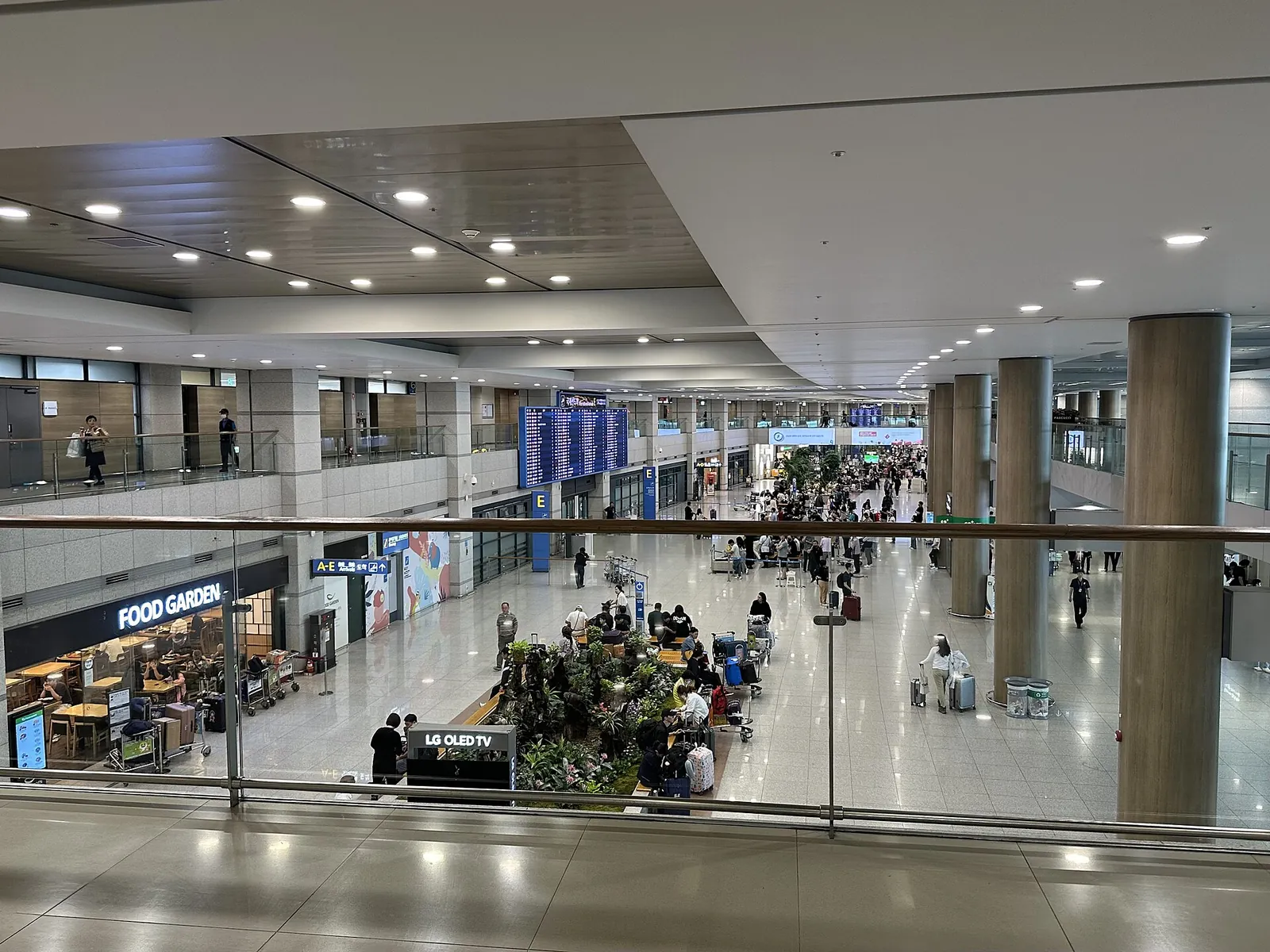
The arrivals area of Incheon International Airport Terminal 1, where most long-haul visitors to South Korea first land.
Photograph: ノボホショコロトソ — opens in a new tab · CC BY 4.0 — opens in a new tab
Changes: Resized and converted to WebP; displayed with responsive crops. · Original photograph and licence details ↗ — opens in a new tab
The customs area at Incheon International Airport: travellers with nothing to declare no longer fill in a paper form.
Photograph: Choikwangmo25 — opens in a new tab · CC0 — opens in a new tab
Changes: Resized and converted to WebP; displayed with responsive crops. · Original photograph and licence details ↗ — opens in a new tab
The AREX concourse at Incheon Airport Terminal 1, the rail link to Gimpo Airport and Seoul Station.
Photograph: MNXANL — opens in a new tab · CC BY-SA 4.0 — opens in a new tab
Changes: Resized and converted to WebP; displayed with responsive crops. · Original photograph and licence details ↗ — opens in a new tab
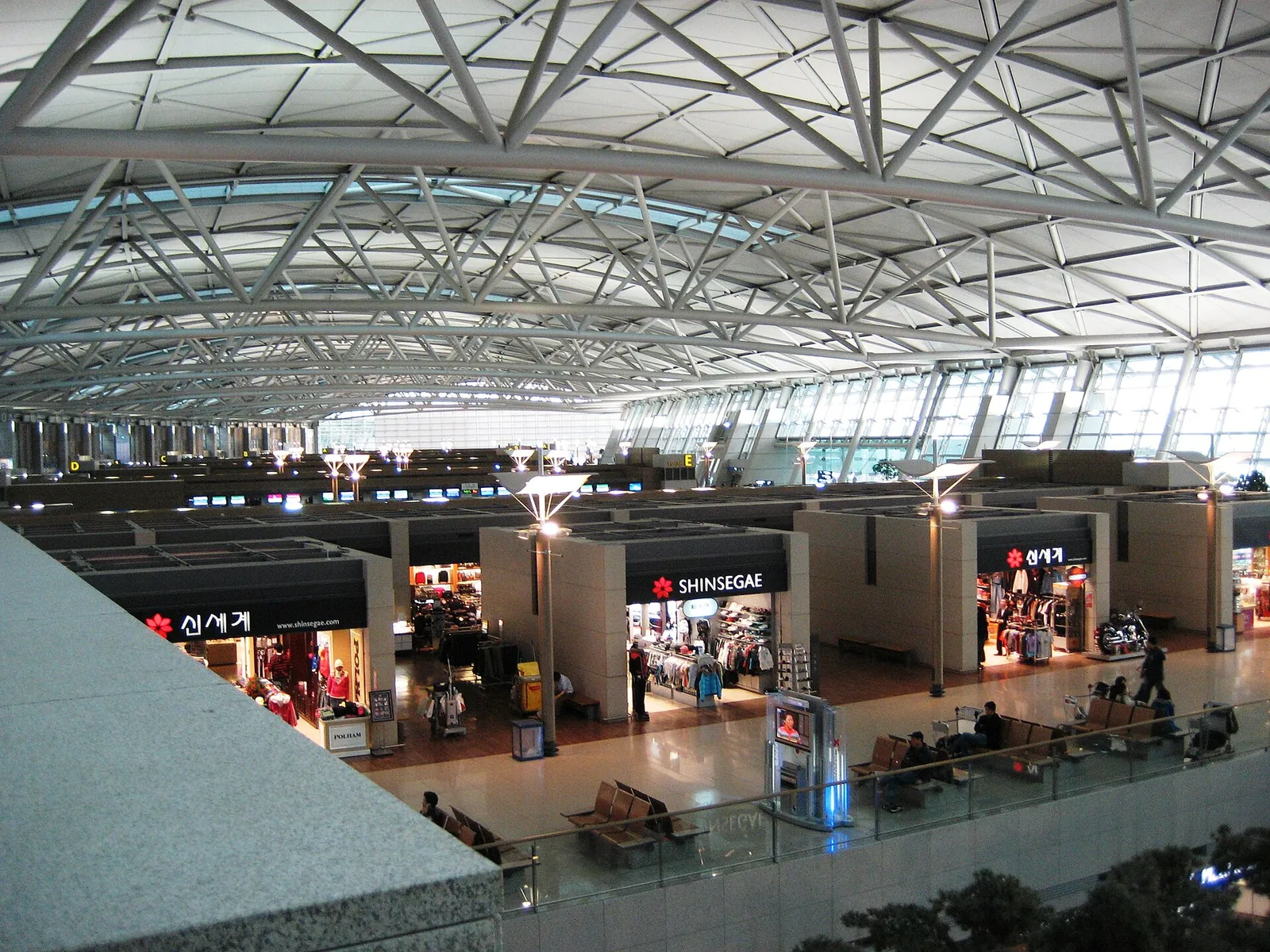
The departure level at Incheon International Airport.
Photograph: Kanchi1979 — opens in a new tab · CC BY 2.5 — opens in a new tab
Changes: Resized and converted to WebP; displayed with responsive crops. · Original photograph and licence details ↗ — opens in a new tab
Gimbap, rice and vegetables rolled in seaweed: an easy first meal after landing in Korea.
Photograph: Lisy_ — opens in a new tab · CC0 — opens in a new tab
Changes: Resized and converted to WebP; displayed with responsive crops. · Original photograph and licence details ↗ — opens in a new tab