Gangwon · Gangwon State
Gangneung travel guide: Gyeongpo, Anmok coffee street and Chodang tofu
Gangneung is the end of the KTX line from Seoul on Gangwon's East Sea coast, and it is two trips in one. Along the shore, Gyeongpo Beach, the lagoon of Gyeongpoho behind it and the café strip at Anmok are what most visitors come for. A few kilometres inland, Ojukheon and Seongyojang are among the best-kept Joseon-era houses in the country. In between sits Chodang, a pine-shaded village of tofu restaurants that makes the obvious lunch stop. Everything that matters lies within a short taxi ride of the station, so the real decision is how to split your days between the sea and the old houses.
- Suggested time
- 2 nights; 3 with Jeongdongjin or Jumunjin
- Where to stay
- Gyeongpo or Anmok for the beach; near Gangneung Station for train connections and the old town
- Season and timing
- July and August are beach season: VisitKorea lists 10 July to 23 August 2026 as the swimming period at Anmok and Gangmun beaches. Spring brings cherry blossom around Gyeongpoho Lake; VisitKorea's 2026 forecast put Gangneung's blossoms around 1 April. The Gangneung Coffee Festival runs from 21 to 25 October 2026. Winter is quiet, cold and clear, the season for migratory birds on Gyeongpoho and sunrise on the beaches.
The short answer
Give Gangneung two nights. Spend one day on the Gyeongpo side: Gyeongpodae Pavilion and the lake in the morning, soft tofu in Chodang for lunch, the beach in the afternoon and coffee at Anmok at the end of the day. Spend the other day inland at Ojukheon and Seongyojang, with lunch at Jungang Market. Add a half-day at Jeongdongjin or Jumunjin only if you have a third night. Stay near Gyeongpo or Anmok for the sea, or near Gangneung Station if you are moving on by train. Arrive by KTX from Seoul, which VisitKorea puts at about two hours, and use taxis or city buses for the short hops in town.
Sea side or old town: how Gangneung fits together
Gangneung's sights fall into two clusters that are easy to keep apart. The coast runs from Anmok Beach in the south, past Gangmun and Gyeongpo, with Gyeongpoho Lake behind the dunes and Chodang Dubu Village just inland. The old houses — Ojukheon and Seongyojang — sit between the lake and the city centre, while Jungang Market and the station are in town. VisitKorea puts Gyeongpo Beach about 6 km from downtown Gangneung and 1 km from Gyeongpodae Pavilion, and gives a taxi ride of about 10 minutes from the station or bus terminal to Gyeongpo, and about 15 minutes to Anmok.
That makes two full days the right length. One day covers the lake, the beach and the coffee street at an easy pace. The other covers the two old houses, which are close to each other, and the market. A day trip from Seoul is possible on the KTX, but it leaves no time for an evening by the sea, which is when Gangneung is at its best.
Choose your base by what you will do most. Hotels around Gyeongpo and Anmok put you on the sand and the café strip, with evening walks on the beach. Staying near Gangneung Station is better for an early train, for Jungang Market and for moving on along the coast. Jeongdongjin, 14 minutes south by KTX-Eum according to VisitKorea's route map, works as a separate night if you want to be at the sea for sunrise.
Gyeongpo: the pavilion, the lake and the beach
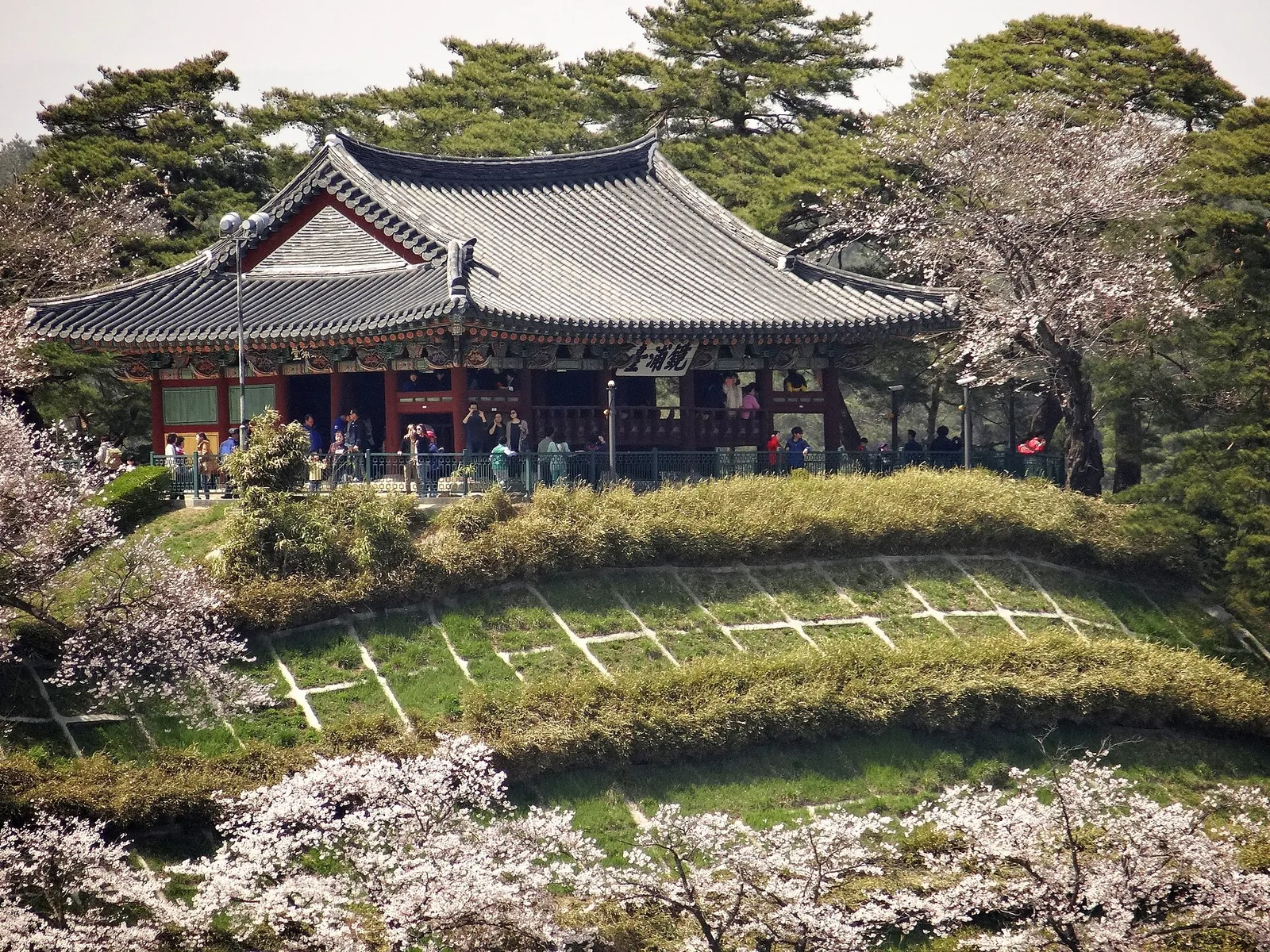
Start at Gyeongpodae Pavilion, on a small hill on the north side of Gyeongpoho Lake. VisitKorea says it was first built in 1326 and moved to its present site in 1508; inside hang poems and calligraphy by Joseon scholars, including King Sukjong and Yulgok Yi I. It is famous for the moon reflected on the lake, and VisitKorea lists it as open 24 hours with free entry. From there, the shore of Gyeongpoho is a flat circuit for walking or cycling. VisitKorea describes it as a natural lagoon connected to the sea, a protected area where fishing is banned and migratory birds arrive in winter.
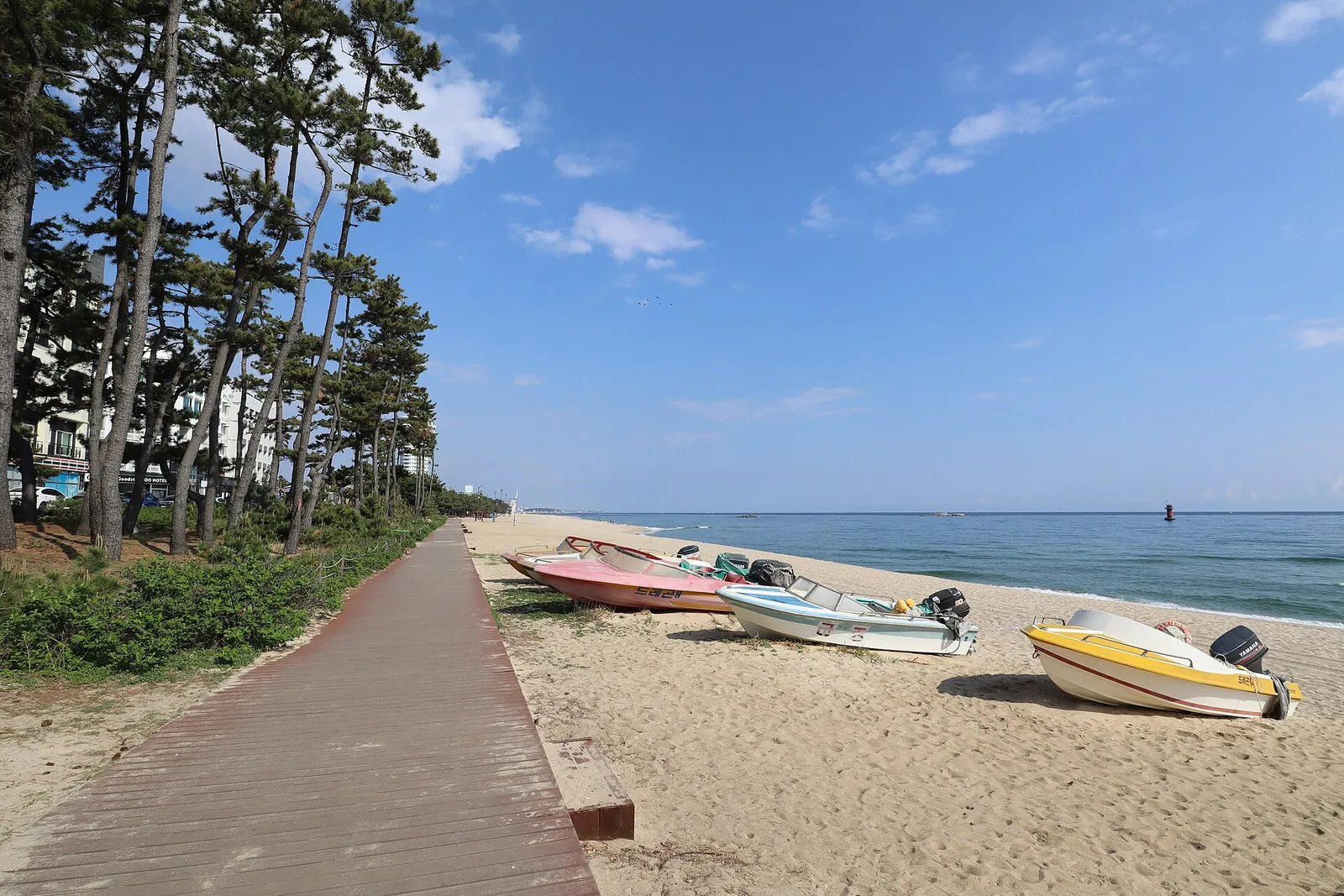
Gyeongpo Beach is the sand bank between the lake and the sea, about 1.8 km long, with shallow water and a pine forest behind it. VisitKorea calls it the largest beach on the east coast, and it has a deck path through the pines. Outside swimming season it is a place to walk rather than swim. In July and August it fills up, so book rooms early for those weeks.
The area forms Gyeongpo Provincial Park, which VisitKorea lists as free and open all the time but subject to sudden closure in bad weather. ARTE Museum Valley Gangneung, an immersive digital art exhibition by the lake, is the usual indoor fallback on a wet day. When we checked on 2026-10-03, VisitKorea listed it as open 10:00–20:00 (last entry 19:00) with an adult exhibition ticket at 17,000 won.
Make time for the local food
What to eat and where to look
Chodang sundubu (soft tofu)
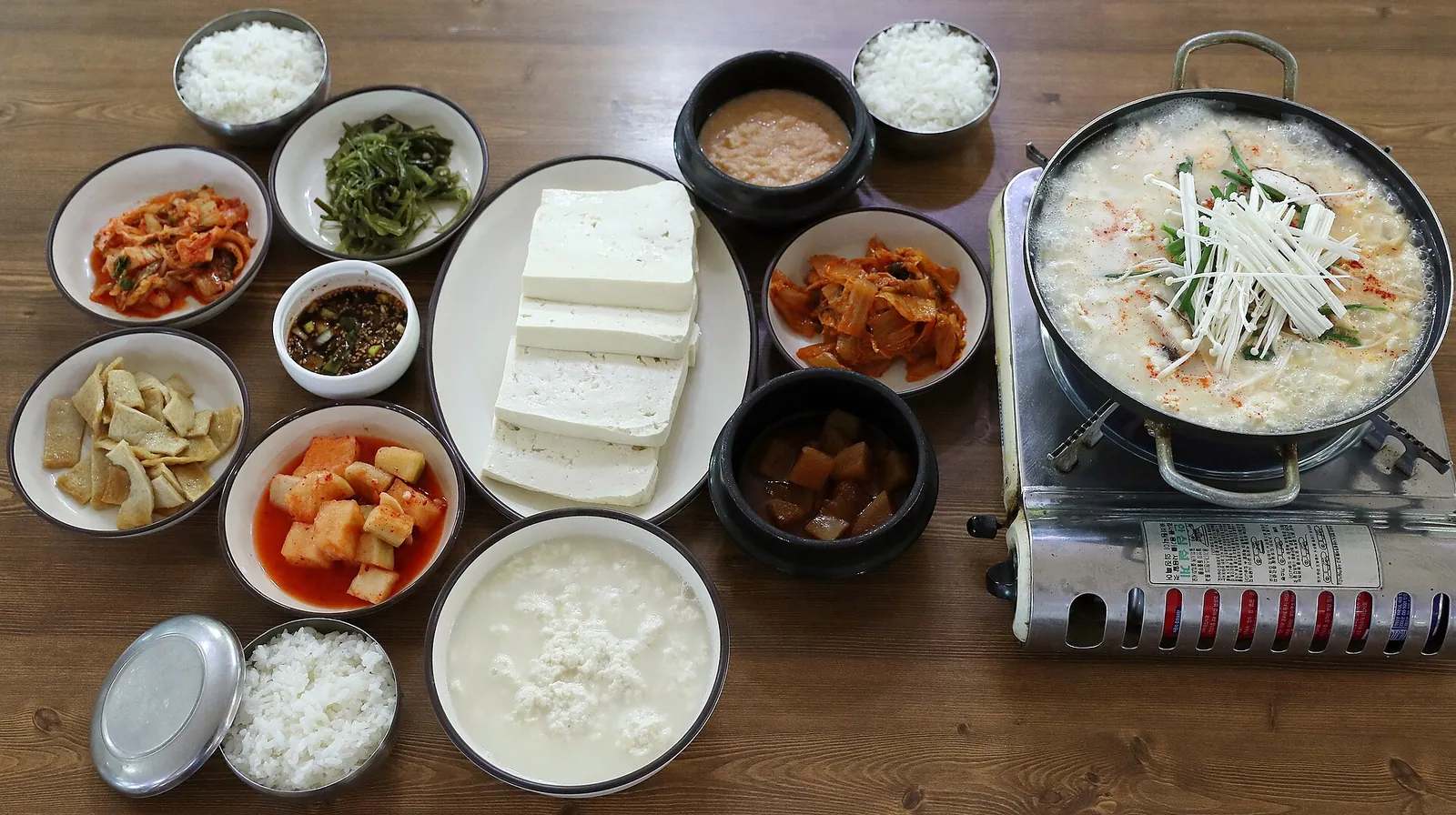
Gangneung's signature dish: tofu curdled with East Sea seawater and served soft and unpressed, with a mild, nutty taste. VisitKorea notes that the restaurants in Chodang make their own, and that the area also serves a spicy version with clams.
- Where to look
- Chodang Dubu Village, just south of Gyeongpo Beach. Chodang Halmeoni Sundubu, at 77 Chodangsundubu-gil, began as a small tofu shop in 1979, according to VisitKorea.
- Fit it into your day
- Lunch on your Gyeongpo day. Order the plain white version first to taste the tofu, then try the spicy one if you are sharing.
Many restaurants open early and close by early evening, and some have a weekly closing day — VisitKorea lists Chodang Halmeoni Sundubu as closed on Wednesdays. The spicy stews usually contain seafood.
Gamja ongsimi (potato dumpling soup)
A local Gangneung dish of grated potato mixed with starch, rolled into chewy balls and cooked in broth; it also comes with noodles as ongsimi kalguksu.
- Where to look
- Jungang Market and the old town. VisitKorea lists Gangneung Gamja Ongsim, at 171 Toseong-ro, which has served it since the 1980s.
- Fit it into your day
- A light lunch on your old-town day, between Ojukheon and the market.
Specialist shops can close early when they run out — VisitKorea lists Gangneung Gamja Ongsim as open 10:30–16:00 and closed on Thursdays.
Jang kalguksu (spicy noodle soup)
A spicy bowl of kalguksu (knife-cut noodles), one of the local specialities VisitKorea recommends alongside Chodang tofu and potato dumplings.
- Where to look
- Gangneung Jungang Market and the streets around it in the town centre.
- Fit it into your day
- A filling, inexpensive lunch on a market visit, or a warming meal on a cold day.
It is spicy, and kalguksu noodles are made from wheat.
Hoe (sliced raw fish) and East Sea seafood
Fresh fish and squid from the East Sea, served raw or cooked. VisitKorea lists squid, mackerel, pollack and crab among the specialities at Jumunjin.
- Where to look
- The hoe centre and stalls at Jumunjin Fish Market, and seafood restaurants near Jumunjin Port; Jungang Market in town also sells fresh and dried fish.
- Fit it into your day
- A seafood lunch on the day you go north to Jumunjin, choosing your fish and having it prepared.
Seafood is priced by weight and season; agree the price and preparation charge before the fish is cut.
Coffee at Anmok
Not a dish, but the reason many Koreans come to Gangneung. VisitKorea notes that almost every café in the area roasts its own beans, and the coffee street runs along Anmok Beach.
- Where to look
- Gangneung Coffee Street, along Anmok Beach.
- Fit it into your day
- An afternoon break after the beach, with a sea view.
Weekend afternoons and the October coffee festival are crowded; go earlier in the day for a window seat.
Ojukheon and Seongyojang: two Joseon houses
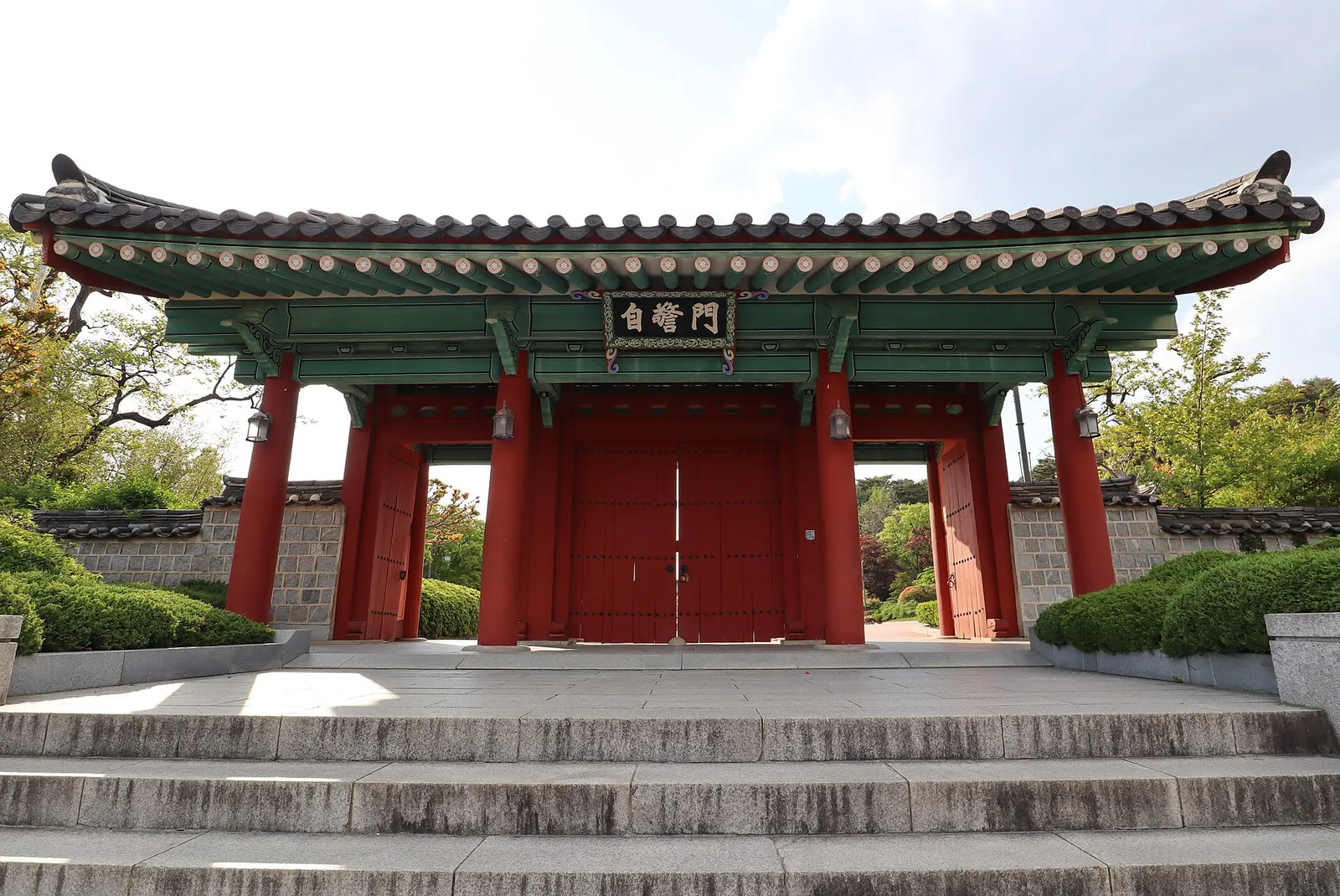
Ojukheon is where the Confucian scholar Yi I (pen name Yulgok) was born to Sin Saimdang. VisitKorea says the house dates from the early Joseon period and was designated a Treasure in 1963, and that it is one of the oldest preserved houses in Korea. Mongryongsil, the room where Yulgok was born, stands alongside the family shrine Munseongsa, the men's quarters, the Yulgok Memorial Hall and the Gangneung Municipal Museum on the same grounds. When we checked on 2026-10-03, VisitKorea listed it as open every day 09:00–18:00, with last admission at 17:00, and adult admission at 3,000 won. Allow about an hour, more if you visit the museum.
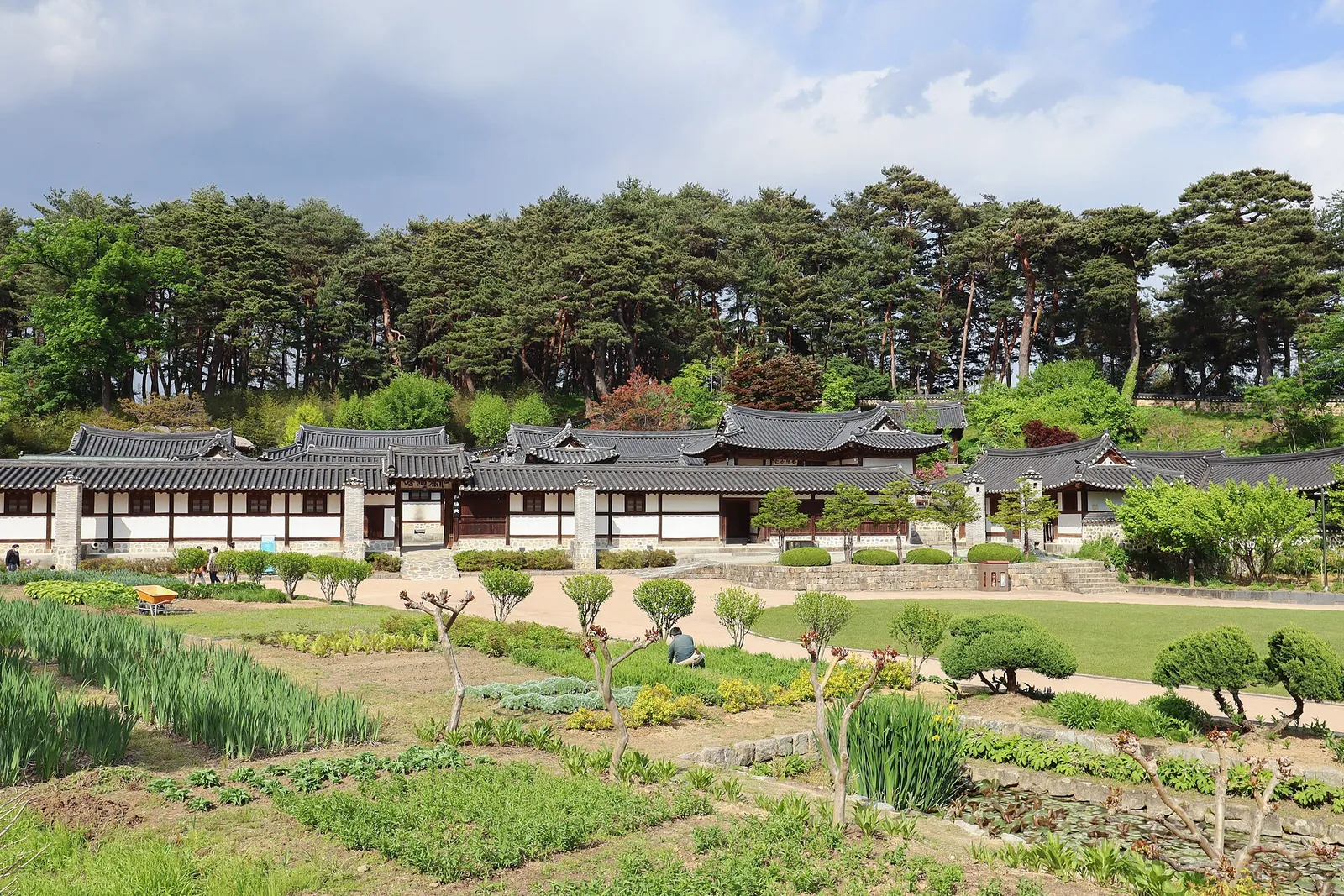
Seongyojang, near Gyeongpoho Lake, was the home of Lee Nae-beon (1703–1781) and his family. VisitKorea explains that *seon* means boat: the lake once reached the front of the house, so you could arrive by water. It is a large upper-class compound with a lotus pond and the Hwallaejeong Pavilion, and it was designated National Folklore Cultural Heritage in 1967. When we checked on 2026-10-03, VisitKorea listed hours of 09:00–18:00 from March to October and 09:00–17:00 from November to February, and an adult fee of 5,000 won. It also offers traditional culture programmes, booked through the house's own website (www.knsgj.net).
The two houses are a short taxi ride apart and make a calm half-day. Combine them with lunch at Jungang Market in town or with a tofu lunch in Chodang. For the city's other living tradition, the Gangneung Danoje Festival, held around the fifth day of the fifth lunar month (usually June), was inscribed by UNESCO as Intangible Cultural Heritage in 2005. The free Gangneung Dano Culture Center explains it all year.
Anmok coffee street and Chodang
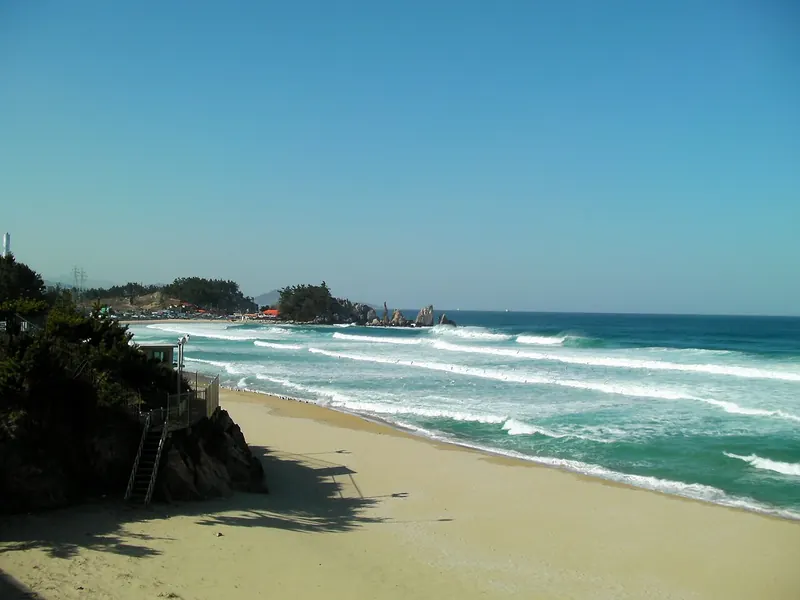
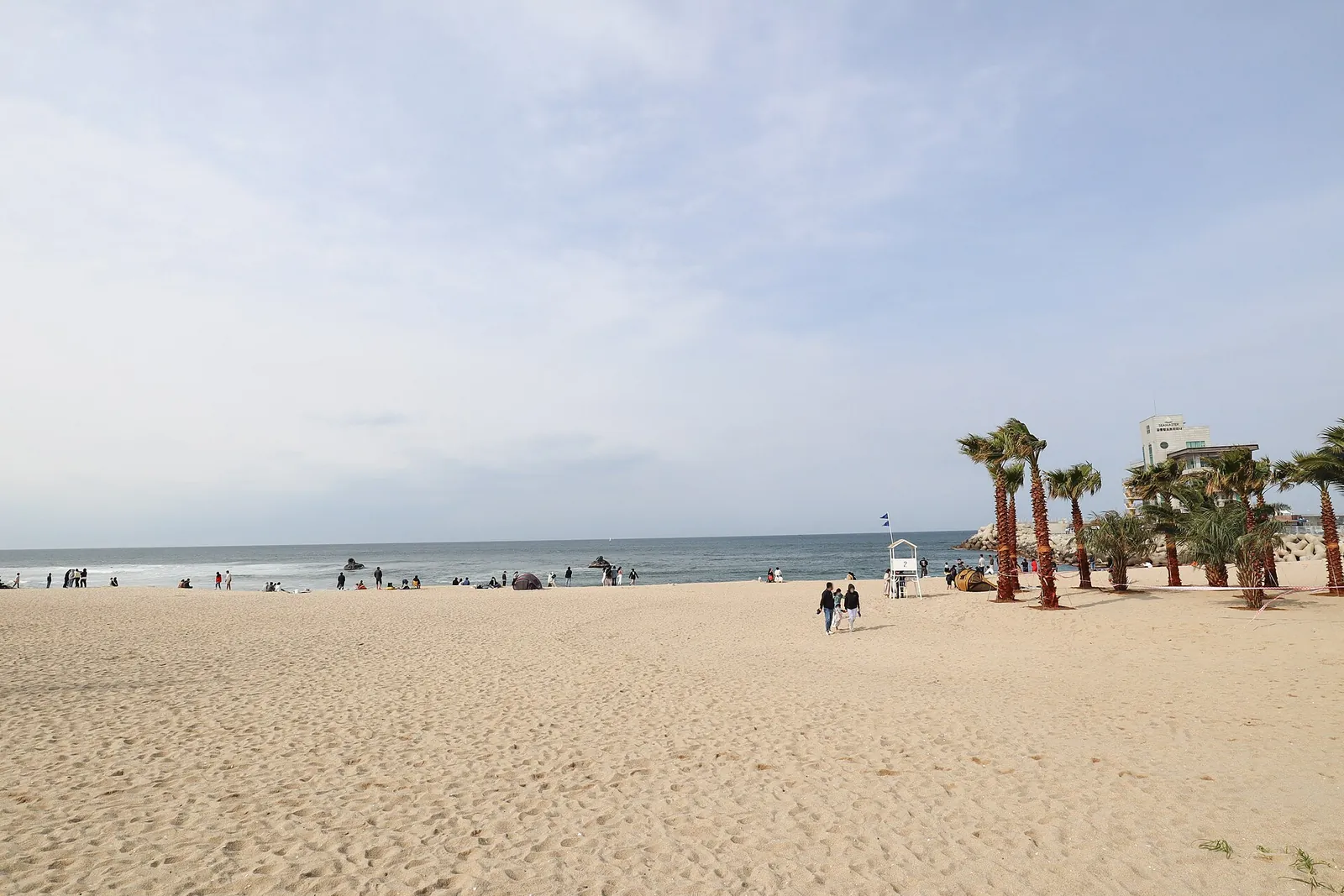
Anmok Beach is a 500-metre stretch of sand beside a small fishing port, and the road behind it is Gangneung Coffee Street. VisitKorea traces it to the roadside coffee vending machines that lined the beach from the 1980s; today it is a row of local cafés and chains facing the sea, and VisitKorea notes that almost every café in the area roasts its own beans. Come late in the afternoon for a cup and a walk on the sand, rather than making a special trip at midday. VisitKorea lists city buses 300-1, 223-1, 225-1 and 314-1 from Gangneung Station to Anmok, about 15 minutes.
The Gangneung Coffee Festival is the city's big autumn event. When we checked on 2026-10-03, VisitKorea listed the 2026 festival for 21 to 25 October, 10:00 to 20:00, on Coffee Street and at venues around the city, with some events charging fees (www.coffeefestival.net). Expect Anmok to be crowded on those days.
Chodang Dubu Village, just south of Gyeongpo Beach, is a cluster of tofu restaurants under the pines. VisitKorea says the tofu is made with East Sea salt water, which gives it its soft texture. The village takes its name from Heo Yeop (pen name Chodang), whose children, the writer Heo Gyun and the poet Heo Nanseolheon, are remembered at a reconstructed hanok on their family's house site. A tofu lunch here, then a walk across to Gyeongpoho, is the most natural link between the old Gangneung and the beach.
Getting there and getting around
The KTX Gangneung Line runs from Seoul (Seoul Station and Cheongnyangni) to Gangneung Station; VisitKorea gives the line as 237.7 km long and the journey as about two hours from Seoul Station. Express and intercity buses run from Seoul Express Bus Terminal and Dong Seoul Terminal, according to VisitKorea's bus guide. Since 30 December 2025 the Donghae Line KTX-Eum has linked Gangneung with Busan's Bujeon Station along the coast in about 3 hours 50 minutes; VisitKorea lists six services a day, three in each direction, so book ahead.
In town, taxis are the quickest way to make the 10- to 15-minute hops between the station, Gyeongpo, Anmok and the old houses. City buses cover the main routes. VisitKorea also describes the Gangwon Tourist Taxi for Foreigners, which operates in Gangneung with a driver who speaks your language or with translation. When we checked on 2026-10-03, VisitKorea listed a three-hour minimum, 20,000 won paid by the user, hours of 09:00–17:30, a maximum of four passengers and a passport requirement. For Gangneung, it must be booked online at least a day ahead.
Gangneung links inland by KTX to Pyeongchang and south by KTX-Eum to Donghae and Samcheok, while Yangyang and Sokcho lie up the coast to the north. See the related guides below for a longer route along the coast.
A third day: Jeongdongjin or Jumunjin
Jeongdongjin, south of the city centre, is known for its station right by the beach; VisitKorea calls it one of the stations closest to the sea in the world, and the beach is a famous sunrise spot. The Jeongdongsimgok Badabuchae Trail follows 2.86 km of coastal marine terrace — a Natural Monument, says VisitKorea — from the Jeongdongjin end to Simgok Port. It was once used only for military patrols. When we checked on 2026-10-03, VisitKorea listed hours of 09:00–17:30 from April to October and 09:00–16:30 from November to March, with last entry an hour before closing. It also notes the trail closes in storms and other hazards, so check before you go.
Jumunjin, in the north of the city, is a working fishing town. VisitKorea describes Jumunjin Port as home to over 350 fishing boats, and Jumunjin Fish Market, founded in 1936, as the largest seafood market on the east coast, with a dried-fish section and a raw-fish (hoe) centre. Go for a seafood lunch, not a whole day.
Pick one of the two. Jeongdongjin suits a sunrise and a cliff walk; Jumunjin suits a seafood lunch. Both are easy to add on the way to Samcheok or Sokcho rather than as a return trip from Gangneung.
- Day 1 — Gyeongpo side: Gyeongpodae Pavilion and the lake shore in the morning, Chodang tofu for lunch, Gyeongpo Beach in the afternoon, Anmok for coffee and sunset.
- Day 2 — Old Gangneung: Ojukheon at opening time, Seongyojang, then lunch and a wander at Jungang Market.
- Day 3 (optional): Jeongdongjin for sunrise and the Badabuchae Trail, or Jumunjin for the fish market, then continue along the coast.
Practical questions
How many days do I need in Gangneung?
Two nights cover the coast (Gyeongpo, Chodang and Anmok) and the old houses (Ojukheon and Seongyojang) at an easy pace. Add a third night for Jeongdongjin or Jumunjin.
Can I visit Gangneung as a day trip from Seoul?
Yes. VisitKorea gives the KTX journey from Seoul Station as about two hours, so a day trip is possible. You will have time for one side of the city only, though, and miss the evening by the sea; one night is the minimum we would suggest.
Where should I stay in Gangneung?
Near Gyeongpo or Anmok if the beach and cafés are the point of your trip; near Gangneung Station if you are travelling on by train, want the market or arrive late.
How do I get from Gangneung Station to the beach?
VisitKorea gives about 10 minutes by taxi to Gyeongpo and about 15 minutes to Anmok. City buses 300-1, 223-1, 225-1 and 314-1 also run from the station to Anmok in about 15 minutes.
When is the Gangneung Coffee Festival?
VisitKorea listed the 2026 festival for 21 to 25 October, on Coffee Street at Anmok and at venues across the city. Check www.coffeefestival.net for the programme.
Is Ojukheon worth visiting?
Yes, if you are interested in Korean history: it is the birthplace of the scholar Yulgok Yi I and one of the oldest preserved houses in Korea. Allow about an hour, and pair it with Seongyojang nearby.
Sources and checks before you travel
Reference sources for the version dated 3 October 2026. Confirm opening times, access, transport and conditions for your travel dates.
- VisitKorea: Gangneung Gyeongpo Beach ↗ — opens in a new tab
- VisitKorea: Gyeongpodae Pavilion ↗ — opens in a new tab
- VisitKorea: Gyeongpoho Lake ↗ — opens in a new tab
- VisitKorea: Gyeongpo Provincial Park ↗ — opens in a new tab
- VisitKorea: Best Summer Beach Destinations ↗ — opens in a new tab
- VisitKorea: Ojukheon House ↗ — opens in a new tab
- VisitKorea: Ojukheon House & Municipal Museum ↗ — opens in a new tab
- VisitKorea: Seongyojang House ↗ — opens in a new tab
- VisitKorea: Gangneung Coffee Street ↗ — opens in a new tab
- VisitKorea: Anmokhaebyeon Beach ↗ — opens in a new tab
- VisitKorea: Gangneung Coffee Festival ↗ — opens in a new tab
- VisitKorea: Chodang Dubu Village ↗ — opens in a new tab
- VisitKorea: Chodang Soft Bean Curd ↗ — opens in a new tab
- VisitKorea: Chodang Halmeoni Sundubu ↗ — opens in a new tab
- VisitKorea: Long-lasting Restaurants to Visit in Winter ↗ — opens in a new tab
- VisitKorea: Gangneung Gamja Ongsim ↗ — opens in a new tab
- VisitKorea: East Coast Train Trip by KTX-Eum ↗ — opens in a new tab
- VisitKorea: Gangneung Jungang Market ↗ — opens in a new tab
- VisitKorea: Jumunjin Fish Market ↗ — opens in a new tab
- VisitKorea: Jumunjin Port ↗ — opens in a new tab
- VisitKorea: Jeongdongjinhaebyeon Beach ↗ — opens in a new tab
- VisitKorea: Jeongdongsimgok Badabuchae Trail ↗ — opens in a new tab
- VisitKorea: ARTE Museum Valley Gangneung ↗ — opens in a new tab
- VisitKorea: Gangneung Dano Culture Center ↗ — opens in a new tab
- VisitKorea: Three Major Traditional Korean Holidays ↗ — opens in a new tab
- VisitKorea: Tourist Taxi for Foreigners ↗ — opens in a new tab
- VisitKorea: Train ↗ — opens in a new tab
- VisitKorea: Express Bus & Intercity Bus ↗ — opens in a new tab
- VisitKorea: Airport Transportation Guide ↗ — opens in a new tab
- VisitKorea: 2026 Cherry Blossom Forecast ↗ — opens in a new tab
Does this experience fit your route?
Gangneung is easy on your own by KTX and taxi. A guided day from Seoul makes sense only if you want everything arranged — check that it really stops in Gangneung before you book.
Browse relevant experiences on Viator ↗ — opens in a new tabAffiliate link · Book with ViatorPhoto credits
The pine-forest boardwalk along Gyeongpo Beach, Gangneung
Photograph: Mobius6 — opens in a new tab · CC BY-SA 4.0 — opens in a new tab
Changes: Resized and converted to WebP; displayed with responsive crops. · Original photograph and licence details ↗ — opens in a new tab
Gyeongpodae Pavilion, on its hill above Gyeongpoho Lake, in cherry-blossom season
Photograph: Scroozle — opens in a new tab · CC BY-SA 3.0 — opens in a new tab
Changes: Resized and converted to WebP; displayed with responsive crops. · Original photograph and licence details ↗ — opens in a new tab
A gate in the grounds of Ojukheon, the birthplace of the scholar Yulgok Yi I
Photograph: Mobius6 — opens in a new tab · CC BY-SA 4.0 — opens in a new tab
Changes: Resized and converted to WebP; displayed with responsive crops. · Original photograph and licence details ↗ — opens in a new tab
Anmok Beach, the sand in front of Gangneung's coffee street
Photograph: Mobius6 — opens in a new tab · CC BY-SA 4.0 — opens in a new tab
Changes: Resized and converted to WebP; displayed with responsive crops. · Original photograph and licence details ↗ — opens in a new tab
A soft-tofu meal in Chodang Dubu Village
Photograph: Republic of Korea from Seoul, Republic of Korea — opens in a new tab · CC BY-SA 2.0 — opens in a new tab
Changes: Resized and converted to WebP; displayed with responsive crops. · Original photograph and licence details ↗ — opens in a new tab
Seongyojang, a Joseon-era noble house near Gyeongpoho Lake
Photograph: Mobius6 — opens in a new tab · CC BY-SA 4.0 — opens in a new tab
Changes: Resized and converted to WebP; displayed with responsive crops. · Original photograph and licence details ↗ — opens in a new tab