Daegu and North Gyeongsang · Gyeongsangbuk-do
Andong and Hahoe Village: buses, hanok night and mask dance
Hahoe is a living village inside a bend of the Nakdonggang River, where descendants of the Ryu clan of Pungsan still make up most of the residents and a mask-dance drama performed for around 800 years is still staged. Andong, the inland city 50 minutes away by bus, adds Confucian academies, a long wooden footbridge and a food culture built on chicken, mackerel and ancestral-rite meals. The journey is the hard part, because Hahoe sits outside the city and the buses thin out in the evening. The question for most visitors is whether to see it on a long day from Seoul or to sleep in the village and have its lanes and its river almost to yourself once the day visitors have gone.
- Suggested time
- 2 days, 1 night (a long day trip from Seoul is possible)
- Where to stay
- A hanok guesthouse inside Hahoe Village for the night; central Andong near the Old Market if you add Dosanseowon and Bongjeongsa
- Season and timing
- Hahoe is open all year, with shorter hours from October to March. The Hahoe fireworks, Seonyu Julbul Nori, are held on select Saturday evenings in May and from August to October, and the Andong Maskdance Festival ran from 24 September to 4 October in 2026, with each year's dates announced by its organiser.
The short answer
Book one night in a hanok guesthouse inside Hahoe Village, with two days in the area: arrive by KTX-Eum from Seoul (about 1 hour 50 minutes to 2 hours 30 minutes, depending on the train) or Busan (about 1 hour 40 minutes), take bus 210 out to Hahoe, see the 14:00 mask dance and the lanes, and visit Byeongsanseowon the next morning. Reserve the room and the train seats first, because KTX-Eum seats go on sale 2 months ahead for foreign passengers, and our where-to-stay guide explains hanok rooms. Hahoe Village costs KRW 5,000 for an adult and bus 210 from Andong costs KRW 1,500 a ride (both checked on 17 October 2026). Check the fare and departure time for your chosen KTX-Eum in KORAIL+ before booking.
Where to sleep: a hanok in Hahoe or a room in Andong
Hahoe is about 50 minutes by bus from the city, and that distance decides where to sleep. VisitKorea's Andong guide says a day trip works if you focus on Hahoe Village, Byeongsanseowon and Woryeonggyo Bridge, and that an overnight stay is the better choice if you also want Dosanseowon, Bongjeongsa and Manhyujeong Pavilion, because the sights are spread over a wide area. A night in the village itself changes the visit more: VisitKorea writes of the hanok hotel at Hahoe that its true charm emerges after the day-trippers leave, when the village settles into the quiet of a traditional hanok village at night.
Lodging in Hahoe means a minbak, a family-run room in a historic house, many of them yangban clan homes with thatched or tiled roofs. The village publishes the houses' telephone numbers and advises booking by telephone in advance, in the peak season and also outside it if you want a room in a traditional yangban house. There is no restaurant inside the village and cooking is banned there, so ask your minbak about dinner when you book: some of the village's minbak list a dinner and a breakfast, and the village's restaurants stand by the car park.
Central Andong is the practical choice if you arrive late, leave on an early train or plan a second day at Dosanseowon and Bongjeongsa. Trains stop at Andong Station, about 20 minutes by bus from the Old Market, where the jjimdak alley is; Andong Station and the bus terminal share one boarding point for buses 210 and Express 2. The former Andong Station in town is now Modi684, a cultural venue, and buses 112 and 610 to Woryeonggyo and Manhyujeong leave from the stop in front of it. The Gyeongsangbuk-do tourist information centre at 122-30 Gyeongdong-ro is open from 09:00 to 18:00 with English-speaking staff. For the difference between a hanok, a hotel and a guesthouse in Korea, see the where-to-stay guide.
Getting to Andong: the KTX-Eum, the express bus and the bus to Hahoe
The KTX-Eum, Korail's train on the Jungang Line, is the simplest way in. VisitKorea gives about 1 hour 50 minutes from Seoul Station, Cheongnyangni Station or Sangbong Station to Andong Station, and about 1 hour 40 minutes from Bujeon, Sinhaeundae, Centum or Gijang station in Busan. When we checked on 17 October 2026, the city's tourism site listed ten KTX-Eum a day in each direction between Seoul and Andong, with journey times of about 1 hour 50 minutes to 2 hours 30 minutes, the longer ones for trains that call at every station, and with the last train from Andong to Seoul leaving at 21:07. Check the fare and departure time for your chosen KTX-Eum in KORAIL+ before booking.
Tickets go on sale 2 months before departure for foreign passengers, and you can choose your seat when you book online. You can also buy at a station ticket office or a ticket machine, and for help in English you can call the Korail customer centre on +82-1599-7777 (08:00 to 20:00 daily). Seats on busy trains, such as weekends, holidays and festival periods, can sell out, and a ticket bought on the day may be for a standing place only. Our transport guide explains Korail booking and the Korail Pass.
The express bus is the alternative. Dong Seoul Terminal (Gangbyeon Station, Line 2) serves Andong, and Andong city lists about 3 hours, with 33 departures a day from 05:30 to 22:00. The city's tourism site lists a deluxe fare from Dong Seoul of KRW 24,400. From Daegu, buses from Dongdaegu Terminal take about 1 hour 20 minutes at a deluxe fare of KRW 12,200, and a Mugunghwa train from Dongdaegu Station takes about 1 hour 20 minutes, according to VisitKorea. You can buy bus tickets at the terminal with cash, credit card or mobile payment; Kobus (kobus.co.kr) sells express-bus tickets and TxBus (txbus.t-money.co.kr) intercity tickets.
From Gyeongju, Andong city lists four buses a day, from 09:50 to 19:50, taking about 1 hour 40 minutes, so a morning bus from Gyeongju (see our Gyeongju guide) gets you to Andong for a late lunch. From Busan, the KTX-Eum from Bujeon Station is the way in; check the stops and departure times of your train in KORAIL+ before booking.
Hahoe is the next leg. Bus 210 leaves from the stop opposite the Kyobo Life building in the town centre and runs to Hahoe Village. The ride takes about 50 minutes and the fare is KRW 1,500; with a transport card, a change of bus within one hour is free. The village's timetable for bus 210 (checked on 17 October 2026, in force since 21 March 2022) lists 13 buses a day from Andong between 06:30 and 18:20, and 13 from Hahoe between about 07:30 and 19:10; the last three from Hahoe leave at 17:00, 18:20 and 19:10. The ticket office (+82-54-840-3801) can confirm the day's buses. Express 2, Pungcheon 2 and the Hahoe shuttle, a trolley that costs nothing, also serve the village; the ticket office can tell you where it runs. The car parks are at the village entrance, and a 1 km path of about 15 minutes' walk leads from the car park to the village itself. No taxi fare to Hahoe is published; call taxis operate in the Andong area, and the city lists two Pungsan taxi numbers, +82-54-856-4430 and +82-54-858-3488.
Hahoe Village: the lanes, Buyongdae and the mask dance
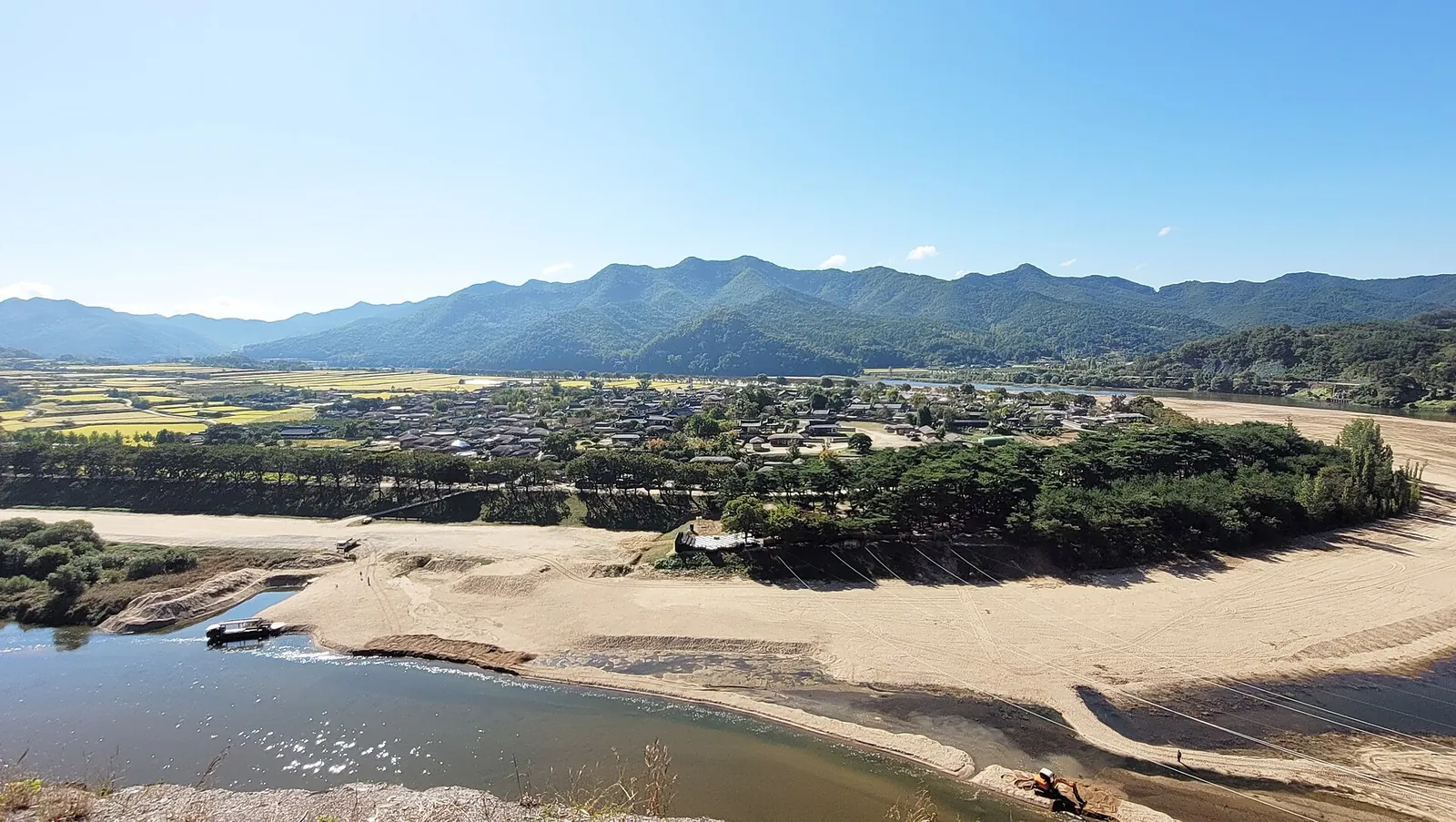
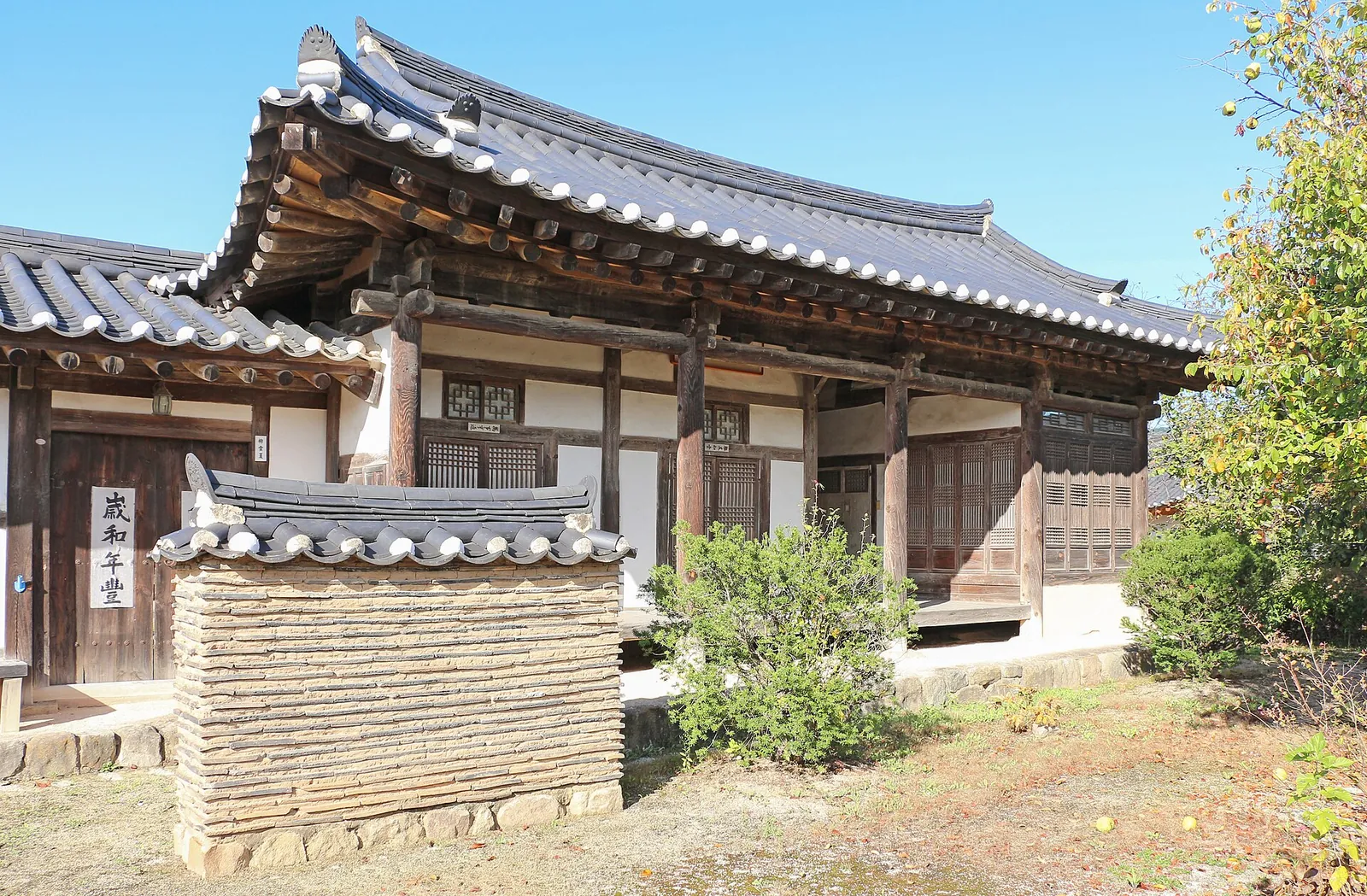
The village takes its name from the Nakdonggang, which curves around it in a broad sweep. VisitKorea describes it as home to the descendants of the Ryu clan of Pungsan, who still make up 70 per cent of the villagers, and says it was designated a National Folklore Cultural Heritage in 1984. In July 2010 UNESCO inscribed it as one of the Historic Villages of Korea, together with Yangdong in Gyeongju, which our Gyeongju guide describes. Tile-roofed clan houses and thatched cottages line the lanes, and people still live in them: the village asks guests to show consideration for the residents, so treat every house as private. Yangjindang, the head house of the Pungsan Ryu clan, is a Treasure, and Mansongjeong, the pine grove on the riverside sandbank to the north-west, is Natural Monument number 473; the village says the grove was planted with 10,000 pines. Walk it in this order: Yangjindang, then Chunghyodang, then out to the pine grove at Mansongjeong along the river, where you can see Buyongdae across the water. The village's FAQ puts a visit at 2 to 4 hours, because the houses are more numerous than they look, and at about 4 hours if you stay for the mask dance, which is why a night in the village suits it.
The house to look for is Chunghyodang, the home of Ryu Seong-ryong (1542-1607), the chief state councillor during the Japanese invasions of the 1590s, who wrote the Jingbirok, a record of the war that is a national treasure. Its small museum, Yeongmogak, is open from 09:00 to 18:00 all year, according to the city's table. The Hahoe Mask Museum, near the entrance, shows Hahoe masks with masks from around the world in five permanent halls and one special hall, and offers mask-wearing activities. It is free, open 09:30 to 18:00 and closed on 1 January and on the days of Seollal and Chuseok. The Hahoe masks themselves are a National Treasure and, the village says, the oldest surviving masks in Korea; eleven survive.
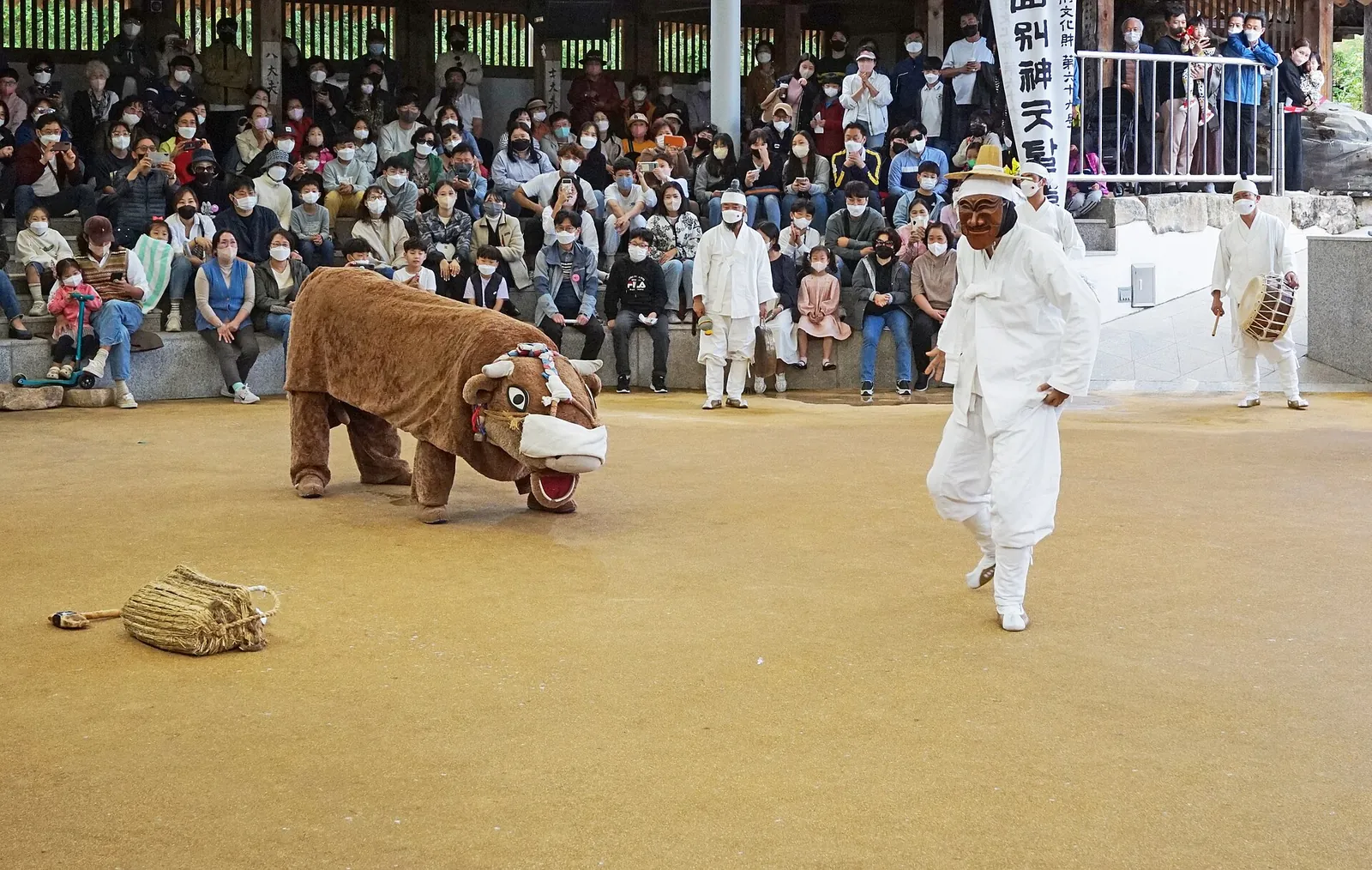
Hahoe Byeolsingut Tallori, the village's mask-dance drama, has been performed for around 800 years, VisitKorea says, and entered UNESCO's Intangible Cultural Heritage list in 2022. It has eight chapters, and its comedy of monks, butchers and aristocrats mocks the hypocrisy of the Joseon upper class. The regular show at the Hahoe Village Mask Dance Theater, 3-15 Hahoejongga-gil, is on Tuesday to Sunday at 14:00 from March to December and on weekends only in January and February; it lasts about an hour and is free. The Andong Maskdance Festival, which stages Korean and foreign mask dances at the old Andong Station, the Mask Dance Park, the old town and Hahoe Village, is a separate event. Dates change each year; the festival's organiser, the Korea Foundation for Cultures and Ethics, announces them at maskdance.com, and the 2026 festival ran from 24 September to 4 October.
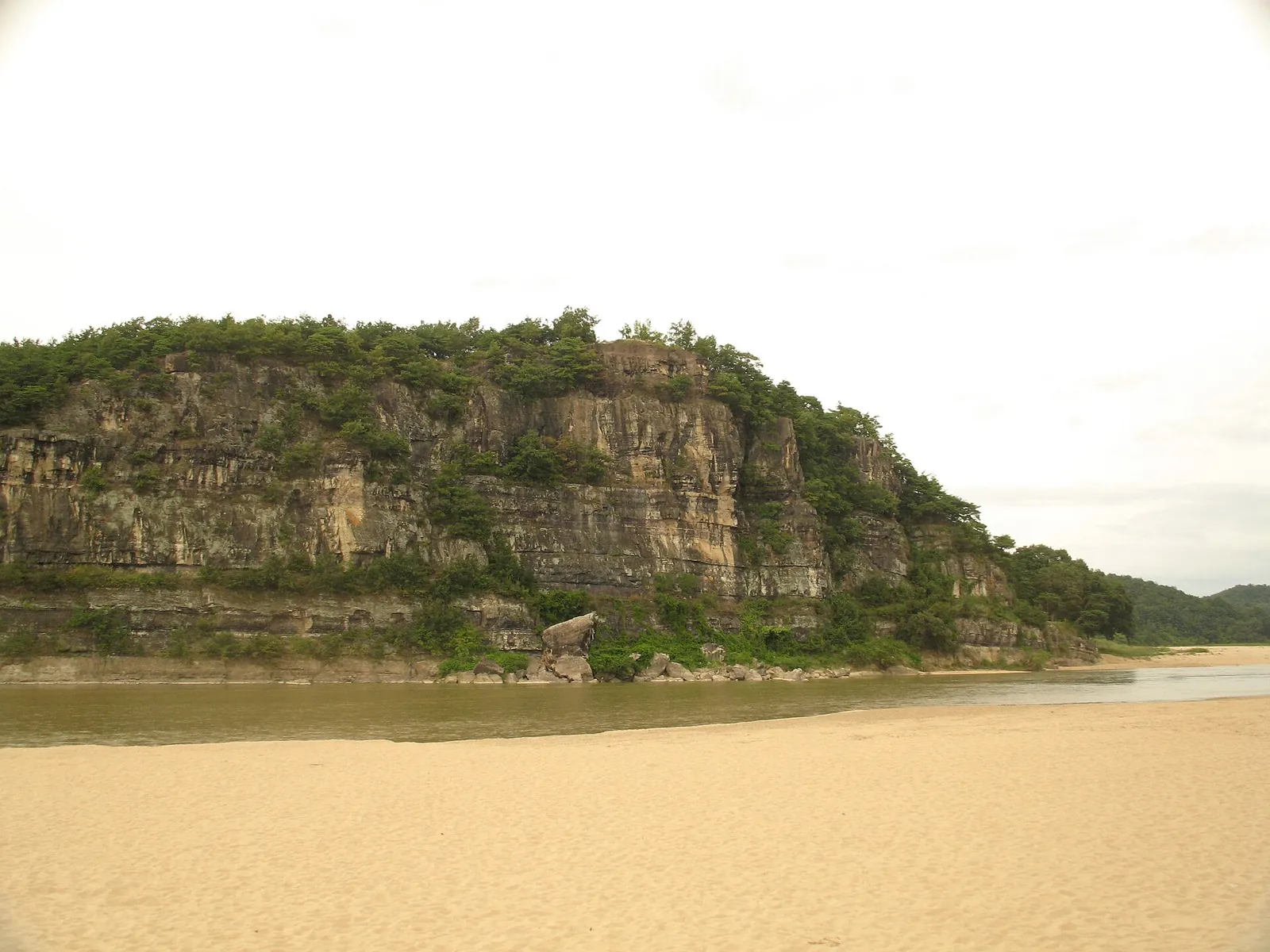
Buyongdae is the cliff across the river, about 64 metres high, where the Taebaek Mountains end. From the top the village below looks like a lotus flower floating on the water, which is the origin of its old name, Buyong. The cliff is open all year and has a car park. The road to it leaves the village and crosses the river by Gwangdeok Bridge, so from the village you need a taxi or your own car; no bus is listed for it. Confirm whether the boat to Buyongdae is running with the village ticket office (+82-54-840-3801) before relying on it; otherwise take the road route by taxi or car. On select Saturday evenings the cliff also hosts Hahoe Seonyu Julbul Nori, a traditional fireworks display in which glowing embers rain down from ropes stretched over the river. VisitKorea says it is held ten times a year, on select Saturdays in May and from August to October, and that a limited number of same-day tickets (300) go on sale from 13:00 at the Hahoe ticket office. The village's notice says tickets are sold on the provincial booking site Gyeongbuk Bwayaji, that booking for each evening opens one month before it, and that event questions go to the Hahoe Village Preservation Society (+82-54-853-0109). Check the ticket price on the Gyeongbuk Bwayaji booking page.
For tickets, the village's fee notice (checked on 17 October 2026) lists KRW 5,000 for adults aged 19 to 64, KRW 2,500 for teenagers aged 13 to 18 and uniformed service members, and KRW 1,500 for children aged 7 to 12; groups of 30 or more pay KRW 4,000, KRW 2,000 and KRW 1,200. Children aged 6 and under enter free with a guardian, Korean citizens aged 65 and over enter free, and residents of Andong and Yecheon pay reduced fees. Entry is free on 1 January and on the days of Seollal and Chuseok. Parking, the mask museum and the shuttle bus are free, and electric carts have been banned inside the village since 17 August 2021. VisitKorea gives the hours as 09:00 to 18:00 from April to September (last admission 17:30) and 09:00 to 17:00 from October to March (last admission 16:30), open all year. The tourist information desk inside the village, staffed by volunteers and heritage interpreters, is open from 10:00 to 17:00. Free guided commentary in English, Japanese and Chinese can be booked in advance on Andong's tourism site for Hahoe and, in English only, for Dosanseowon.
Byeongsanseowon and the walk along the river
Byeongsanseowon is the reason to stay beyond the village. This Confucian academy was renamed Byeongsanseowon in 1614 and recognised by the king in 1863; its lecture hall dates from a reconstruction in 1921, and it was designated a Historic Site in 1978. Its setting is the point: the Nakdonggang runs in front and Hwasan Mountain rises behind, an arrangement that Korean geomancy considered ideal, which VisitKorea calls baesanimsu. Sitting on the floor of the lecture hall, Ipgyodang, you can watch the river and the mountain unfold between the pillars of Mandaeru pavilion, whose 36 pillars the village says were left in their natural shape, and a grove of 120 crape myrtles behind the hall flowers red from summer to early autumn. The academy holds its Hyangsarye ritual in March and September. VisitKorea lists it among the nine Korean Neo-Confucian academies (seowon) recognised by UNESCO, and the village includes it in Hahoe's World Heritage property zone because of its link to Ryu Seong-ryong.
Bus 210 serves both Hahoe and Byeongsanseowon. The buses that leave Andong at 08:20, 11:00 and 14:05 carry on to the academy; the ticket office (+82-54-840-3801) can give the time they pass Hahoe. They leave the academy at about 09:30, 12:25 and 15:30, pass Hahoe at 09:45, 12:40 and 15:45, and take about 50 minutes more to reach Andong. Andong city's tourism site also lists a 4 km riverside walk between Hahoe Village and the academy along a forested path, which the village's FAQ puts at 1 hour 15 minutes on foot, or 10 minutes by car on an unpaved, dusty road; it makes a morning of it if you slept in the village. Heavy rain, flash floods and landslides are possible from June to September, and the Korea Meteorological Administration issues warnings; follow closures and local instructions before you walk beside the river. The academy is open 09:00 to 18:00 from March to October and 09:00 to 17:00 from November to February, according to Andong city, and takes about 30 minutes to see. It has its own tourist information centre, where you can check the entry fee.
Andong town: the folk museum, Woryeonggyo and the old market
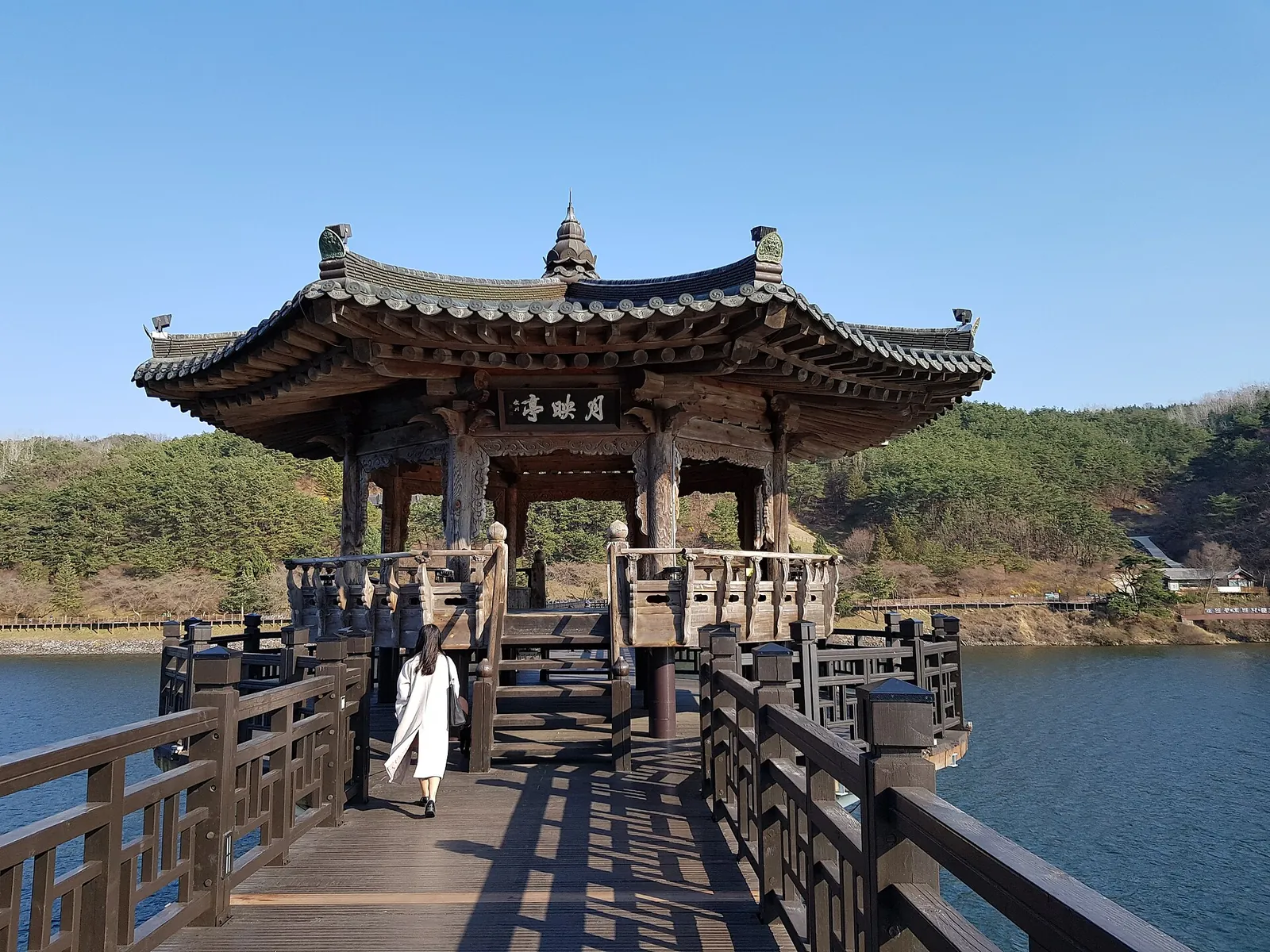
Woryeonggyo is a wooden footbridge across the Nakdonggang, 387 metres long and 3.6 metres wide, which Andong's tourism site calls the longest wooden pedestrian bridge in Korea. Its design echoes a pair of hemp shoes, from a legend of a wife who made a pair of hemp shoes from her hair after her husband's death. It is open round the clock, free, and lit automatically at sunset; bus 112 goes there from the stop in front of the old Andong Station. A walk from the Andong Folk Museum to the bridge is a pleasant way to spend the end of the day: the museum is free, open 09:00 to 17:30 all year, and its outdoor exhibits include a magpie-hole house and a natural ice store.
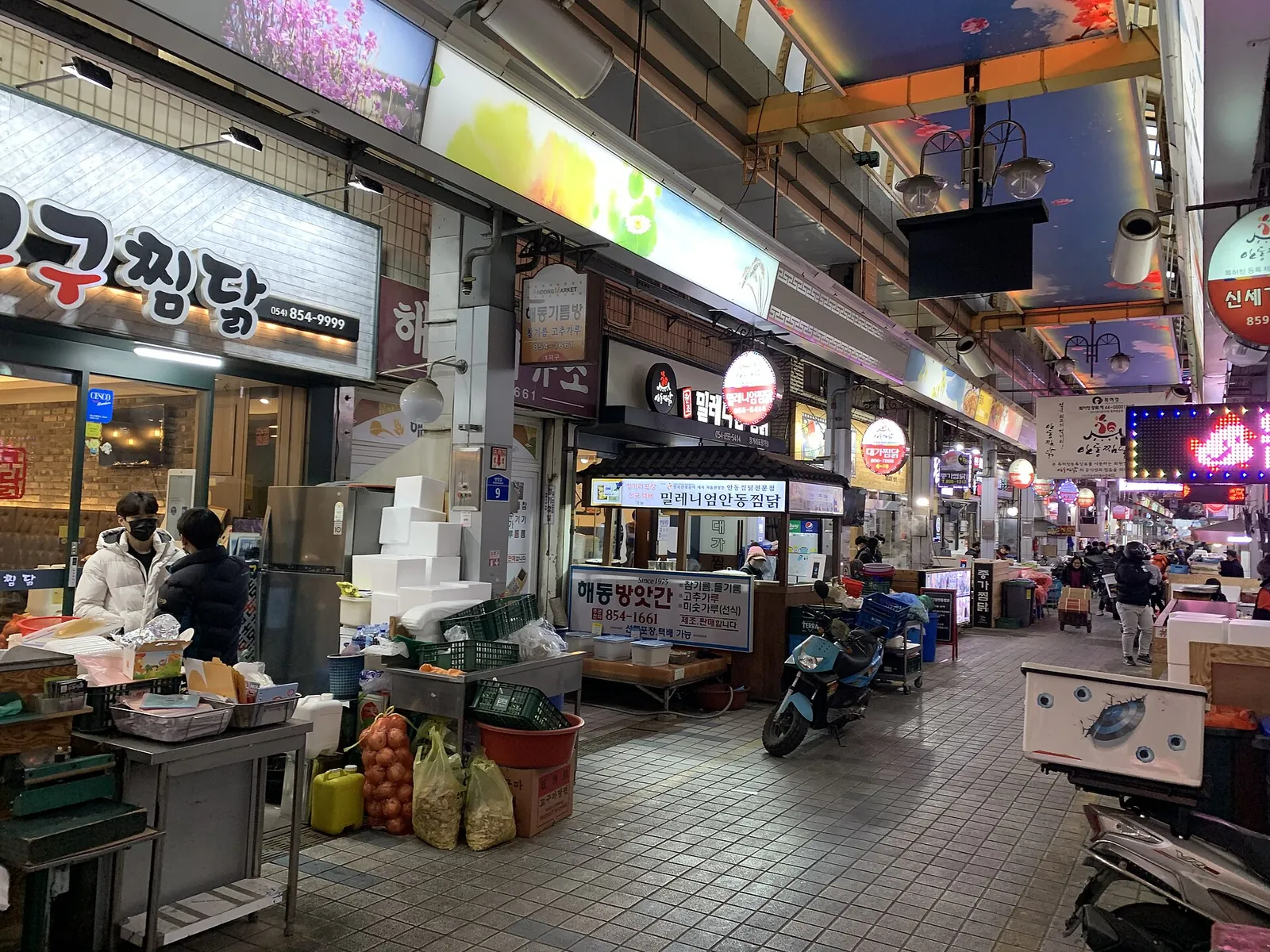
The Old Market is where Andong jjimdak was born. VisitKorea says that a chicken alley has existed there since the 1970s, and that when seasoned spicy chicken became popular merchants took the seasoning of braised galbi and cooked it with glass noodles and vegetables. The alley is now Jjimdak Street, with some 30 restaurants according to VisitKorea, which says it draws over 20,000 tourists on weekends. Right beside it, the city says, is a barley-rice alley that has served hearty set meals for over 50 years. The Imcheonggak house, at 63 Imcheonggak-gil by the river, is the birthplace of Seokju Lee Sang-ryong, first Prime Minister of the Provisional Government in Shanghai, according to Andong's tourism site. Look for Gunjajeong, the house's annexed pavilion, with an autograph of the Confucian scholar Lee Hwang hanging outside.
Dosanseowon, Bongjeongsa and the other sights are reached by bus from the same few stops in the centre. The city's Korean page lists bus 512 to Dosanseowon from the stop in front of the Kyobo Life building, and bus 310 to Bongjeongsa from the stop opposite it. From Andong Station and the bus terminal, the city lists the first bus as 06:10 for Express 3 to Dosanseowon and 07:20 for Express 2 or bus 310 to Bongjeongsa; no official page gives the later departures or the distances, so ask the tourist information centre for the day's times. The fare is KRW 1,500 a ride.
Make time for the local food
What to eat and where to look
Andong jjimdak (braised chicken)
Chicken, glass noodles and vegetables braised in a sweet, savoury and mildly spicy soy-based sauce. VisitKorea traces it to the chicken alley of the Old Market, and the city's tourism site says the chicken is braised for about 10 minutes over high heat, then simmered in soy sauce with carrots, potatoes and onions.
- Where to look
- Jjimdak Street in Andong Old Market (58-15 Beonyeong 1-gil, 08:30 to 22:00), with over 30 restaurants; the city lists a price of around KRW 32,000 a dish.
- Fit it into your day
- Lunch or dinner for two or three people in the town centre, because it is normally cooked as a whole chicken.
The sauce is soy-based and mildly spicy, and the dish is not served as a single portion, so a solo traveller should order another dish.
Heotjesabap (ancestral-rite meal)
The dishes of a Confucian ancestral-rite table, served as rice with vegetables and savoury pancakes (jeon) piled on top. Andong's tourism site says it grew from the custom of sharing the food offered at the rite, eumbok, and that it recreates the rite's dishes.
- Where to look
- Heotjesabap Kkachi Gumeongjip, 203 Seokju-ro, near Woryeonggyo (11:00 to 20:00; closed on the days of Seollal and Chuseok, according to VisitKorea).
- Fit it into your day
- Dinner after the walk to Woryeonggyo.
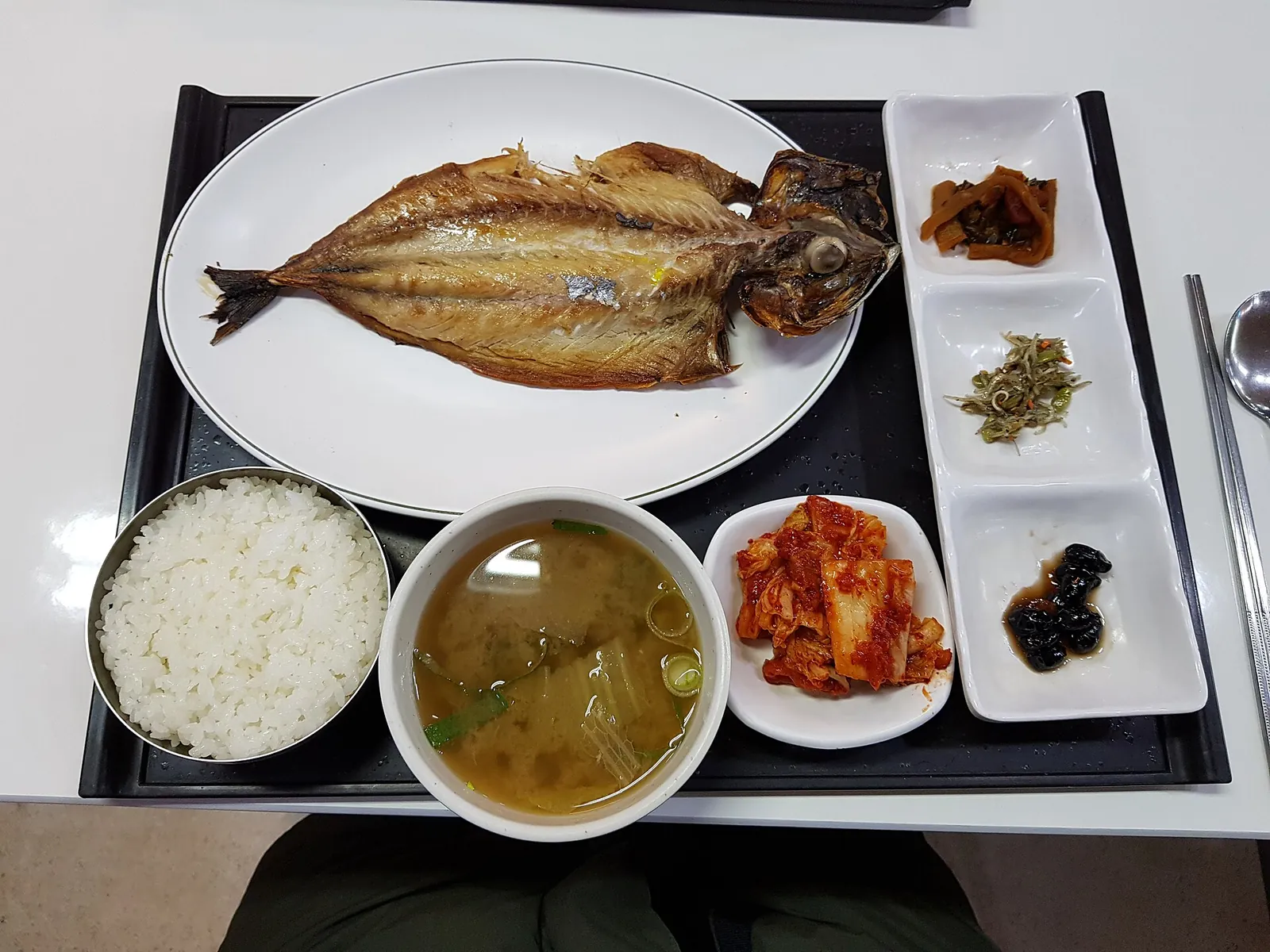
Andong gangodeungeo (salted mackerel)
Mackerel salted to survive the journey inland from Yeongdeok on the coast, which took more than a day before modern transport. Grilled or stewed, it has a mild, salty taste that goes with rice and side dishes.
- Where to look
- Iljik Sikdang, 676 Gyeongdong-ro, in front of the old Andong Station, with a grilled or stewed mackerel set.
- Fit it into your day
- A breakfast or an easy lunch before the train; VisitKorea notes that many restaurants serve the mackerel set for a single diner.
Andong Hanwoo galbi (marinated beef ribs)
Andong-style galbi, made to order from Hanwoo beef with soy sauce, garlic and fruit juice, grilled and often followed by a soybean-paste stew. The city says one portion is 200 g including the bone, so three portions between two people is enough.
- Where to look
- Galbi Alley in central Andong; VisitKorea lists Ujeong Sutbul Galbi at 10 Eumsigui-gil.
- Fit it into your day
- Dinner in town.
Andong soju
A traditional spirit distilled from grain, listed by the city's tourism site at 45 per cent alcohol; VisitKorea describes it as over 40 per cent.
- Where to look
- Restaurants across the city; the Andong Soju and Traditional Foods Museum is open 10:00 to 17:00 all year, according to the city.
- Fit it into your day
- A small glass with dinner.
Dosanseowon, Bongjeongsa and the festivals
Dosanseowon is tied to the scholar Toegye Yi Hwang. VisitKorea says its lecture hall, Dosanseodang, built in 1561 and designed by Yi Hwang himself, is the oldest building in the complex; the academy that his followers built in his honour was completed in 1576, six years after his death. The adult fee is KRW 2,000 and teenagers and children pay KRW 1,000, according to VisitKorea; it is open 09:00 to 18:00 from February to October and 09:00 to 17:00 from November to January, according to Andong city, and takes about 30 minutes to see. Express 3 and bus 512 go there. Free guided commentary in English is available at Dosanseowon if you book in advance. VisitKorea lists it among the nine Korean Neo-Confucian academies (seowon) recognised by UNESCO.
Bongjeongsa, one of the seven Buddhist mountain monasteries (Sansa) that UNESCO recognised, holds Geungnakjeon Hall, which VisitKorea calls Korea's oldest surviving wooden building, along with Daeungjeon Hall, a mural behind the main altar and a wooden seated statue of Avalokitesvara. Entry is free, according to Andong's admission list. The city lists opening hours of 07:00 to 19:00 from March to October and 08:00 to 17:00 from November to February, and Express 2 and bus 310 go there. Manhyujeong Pavilion, reached by bus 610, is known for the narrow wooden bridge in the drama *Mr. Sunshine*.
The seasons shape the trip. Hahoe is open all year, and the city's tables show shorter winter hours at its sights. The two events to plan around are the Andong Maskdance Festival, whose dates its organiser announces each year, and the fireworks on select Saturdays in May and from August to October. For rain and the other seasons, see our guide to the best time to visit South Korea.
A day trip and a one-night plan
A day trip from Seoul covers Hahoe, the mask dance and the Old Market if you take an early KTX-Eum; a night in Hahoe adds Byeongsanseowon and the village after dark. Neither plan includes Dosanseowon or Bongjeongsa, which need a second night in town.
- Day trip from Seoul: an early KTX-Eum to Andong Station, bus 210 from the terminal to Hahoe (about 50 minutes), the village and the Mask Museum, the 14:00 mask dance (Tuesday to Sunday, weekends only in January and February), then bus 210 back from Hahoe at 17:00 or 18:20 (the last is 19:10), an early jjimdak dinner in the Old Market, the bus to the station (about 20 minutes) and the last KTX-Eum to Seoul (listed at 21:07).
- Day 1 of the one-night plan: KTX-Eum to Andong, lunch at the Old Market's jjimdak alley, bus 210 to Hahoe, the 14:00 mask dance, the lanes and Chunghyodang, dinner arranged with the minbak and a night in a hanok. Buyongdae is a taxi ride from the village, so add it only if you have a taxi number from your host.
- Day 2: the 1 hour 15 minute walk by the river to Byeongsanseowon, then bus 210 from the academy at about 12:25 back to Andong, heotjesabap near Woryeonggyo and the KTX-Eum home. Add a second night in town for Dosanseowon and Bongjeongsa.
What one night in Hahoe costs for two
This follows the one-night plan for two adults, with prices checked on 17 October 2026. Rooms are in our where-to-stay guide.
- Hahoe Village admission, two adults at KRW 5,000: KRW 10,000.
- Bus 210, four rides (Andong to Hahoe on day 1 and the academy to Andong on day 2, for two) at KRW 1,500: KRW 6,000.
- Lunch, one dish of Andong jjimdak on Jjimdak Street at around KRW 32,000 (the city's listed price, for two to three people): KRW 32,000.
- Total: about KRW 48,000 for two.
- Not included: the KTX-Eum fare, a room, dinner and breakfast in Hahoe, all other meals and drinks, Dosanseowon, a taxi and the Julbul Nori fireworks ticket. A day trip uses three bus rides each, KRW 9,000 for two.
Practical questions
Is a day trip to Andong and Hahoe enough?
A day trip works if you focus on Hahoe Village, Byeongsanseowon and Woryeonggyo Bridge, according to VisitKorea. If you also want Dosanseowon, Bongjeongsa and Manhyujeong, which are spread over a wide area, VisitKorea says an overnight stay is better. A night in Hahoe also lets you see the village after the day visitors have gone.
How do I get from Seoul to Andong?
Take the KTX-Eum from Seoul Station, Cheongnyangni Station or Sangbong Station to Andong Station, about 1 hour 50 minutes according to VisitKorea; the city's tourism site lists ten trains a day each way, taking about 1 hour 50 minutes to 2 hours 30 minutes, with the last train back to Seoul at 21:07. Check the fare and departure time for your chosen KTX-Eum in KORAIL+ before booking. The express bus from Dong Seoul Terminal takes about 3 hours, according to Andong city, which lists 33 departures a day from 05:30 to 22:00.
How do I get from Andong to Hahoe Village?
Take bus 210 from the stop opposite the Kyobo Life building in the town centre or from the bus terminal; the ride takes about 50 minutes and costs KRW 1,500. The village's page lists 13 buses a day from Andong between 06:30 and 18:20 and 13 from Hahoe between about 07:30 and 19:10, so the last bus back leaves Hahoe at 19:10. Express 2, Pungcheon 2 and the free Hahoe shuttle also serve the village.
How much does Hahoe Village cost?
When we checked on 17 October 2026, the village's fee notice listed KRW 5,000 for adults aged 19 to 64, KRW 2,500 for teenagers aged 13 to 18 and uniformed service members, and KRW 1,500 for children aged 7 to 12. Children aged 6 and under enter free with a guardian, Korean citizens aged 65 and over are free, and entry is free on 1 January and on the days of Seollal and Chuseok. Parking, the mask museum and the shuttle bus are free.
When is the Hahoe mask dance performed?
The regular performance at the Hahoe Village Mask Dance Theater is on Tuesday to Sunday at 14:00 from March to December and on weekends only in January and February; it lasts about an hour and is free. The Andong Maskdance Festival is separate: dates change each year and its organiser announces them at maskdance.com.
Can I stay overnight inside Hahoe Village?
Yes. Hahoe has a hanok hotel with a thatched annex inside the village, and the village lists its minbak, family-run rooms in historic houses. The village advises booking by telephone in advance, in the peak season and also outside it for a traditional yangban house. Our where-to-stay guide covers hanok rooms.
Sources and checks before you travel
Reference sources for the version dated 18 October 2026. Confirm opening times, access, transport and conditions for your travel dates.
- VisitKorea: Andong Travel Guide (column updated May 2026) ↗ — opens in a new tab
- VisitKorea: Andong Hahoe Village ↗ — opens in a new tab
- VisitKorea: Byeongsanseowon Confucian Academy ↗ — opens in a new tab
- VisitKorea: Hahoe Byeolsingut Tallori ↗ — opens in a new tab
- VisitKorea: Hahoe Mask Museum ↗ — opens in a new tab
- VisitKorea: Buyongdae Cliff ↗ — opens in a new tab
- VisitKorea: Woryeonggyo Bridge ↗ — opens in a new tab
- VisitKorea: Dosanseowon Confucian Academy ↗ — opens in a new tab
- VisitKorea: Andong Market Jjimdak Alley ↗ — opens in a new tab
- VisitKorea: Heotjesabap Kkachi Gumeongjip ↗ — opens in a new tab
- VisitKorea: Byeongsanseowon in the Andong Old Market feature ↗ — opens in a new tab
- VisitKorea: Andong Maskdance Festival ↗ — opens in a new tab
- Andong Maskdance Festival: official site (Korean) ↗ — opens in a new tab
- Andong City: directions and bus schedule ↗ — opens in a new tab
- Andong Tourism: Getting to Andong by Train ↗ — opens in a new tab
- Andong Tourism: Getting to Andong by Bus ↗ — opens in a new tab
- Andong Tourism: Admission Fee ↗ — opens in a new tab
- Andong Tourism: Viewing Hours ↗ — opens in a new tab
- Andong Tourism: Tourist Information Centers ↗ — opens in a new tab
- Andong Tourism: Cultural Tourism Interpreter Guide ↗ — opens in a new tab
- Andong Tourism: Local Food ↗ — opens in a new tab
- Andong Tourism: Food Street ↗ — opens in a new tab
- Andong Tourism: Stamp Tour ↗ — opens in a new tab
- Andong Tourism: Special Theme ↗ — opens in a new tab
- Andong Tourism: buses to the main sights (Korean) ↗ — opens in a new tab
- Andong Tourism: viewing hours (Korean) ↗ — opens in a new tab
- Hahoe Village: information centre and fee notice (Korean) ↗ — opens in a new tab
- Hahoe Village: Hahoe Byeolsingut Tallori (Korean) ↗ — opens in a new tab
- Hahoe Village: visitor message (Korean) ↗ — opens in a new tab
- Hahoe Village: Jingbirok (Korean) ↗ — opens in a new tab
- Andong City: Tasty Andong food guide, September 2021 ↗ — opens in a new tab
- VisitKorea: Train ↗ — opens in a new tab
- Korail: foreign-passenger booking window, 8 October 2026 ↗ — opens in a new tab
- VisitKorea: Express and intercity buses ↗ — opens in a new tab
- Jeonju City: KTX to Jeonju ↗ — opens in a new tab
- Hahoe Village: greeting (Korean) ↗ — opens in a new tab
- Germany, Federal Foreign Office: South Korea travel and safety advice (German) ↗ — opens in a new tab
- UK Foreign Office: South Korea safety and security ↗ — opens in a new tab
- AREX: Express Train (Korean) ↗ — opens in a new tab
- Hahoe Village: notices, 2026 Julbul Nori booking and electric-cart ban (Korean) ↗ — opens in a new tab
- Hahoe Village: FAQ on Buyongdae (Korean) ↗ — opens in a new tab
- Hahoe Village: FAQ on Byeongsanseowon (Korean) ↗ — opens in a new tab
- Hahoe Village: Yangjindang (Korean) ↗ — opens in a new tab
- Hahoe Village: Mansongjeong (Korean) ↗ — opens in a new tab
- VisitKorea: Bongjeongsa Temple ↗ — opens in a new tab
- Hahoe Village: FAQ on the walk from the car park (Korean) ↗ — opens in a new tab
- Hahoe Village: FAQ on visiting time (Korean) ↗ — opens in a new tab
- Hahoe Village: FAQ on restaurants (Korean) ↗ — opens in a new tab
- Hahoe Village: FAQ on parking (Korean) ↗ — opens in a new tab
- Hahoe Village: minbak list (Korean) ↗ — opens in a new tab
- VisitKorea: Ujeong Sutbul Galbi ↗ — opens in a new tab
- VisitKorea: Imcheonggak House ↗ — opens in a new tab
Photo credits
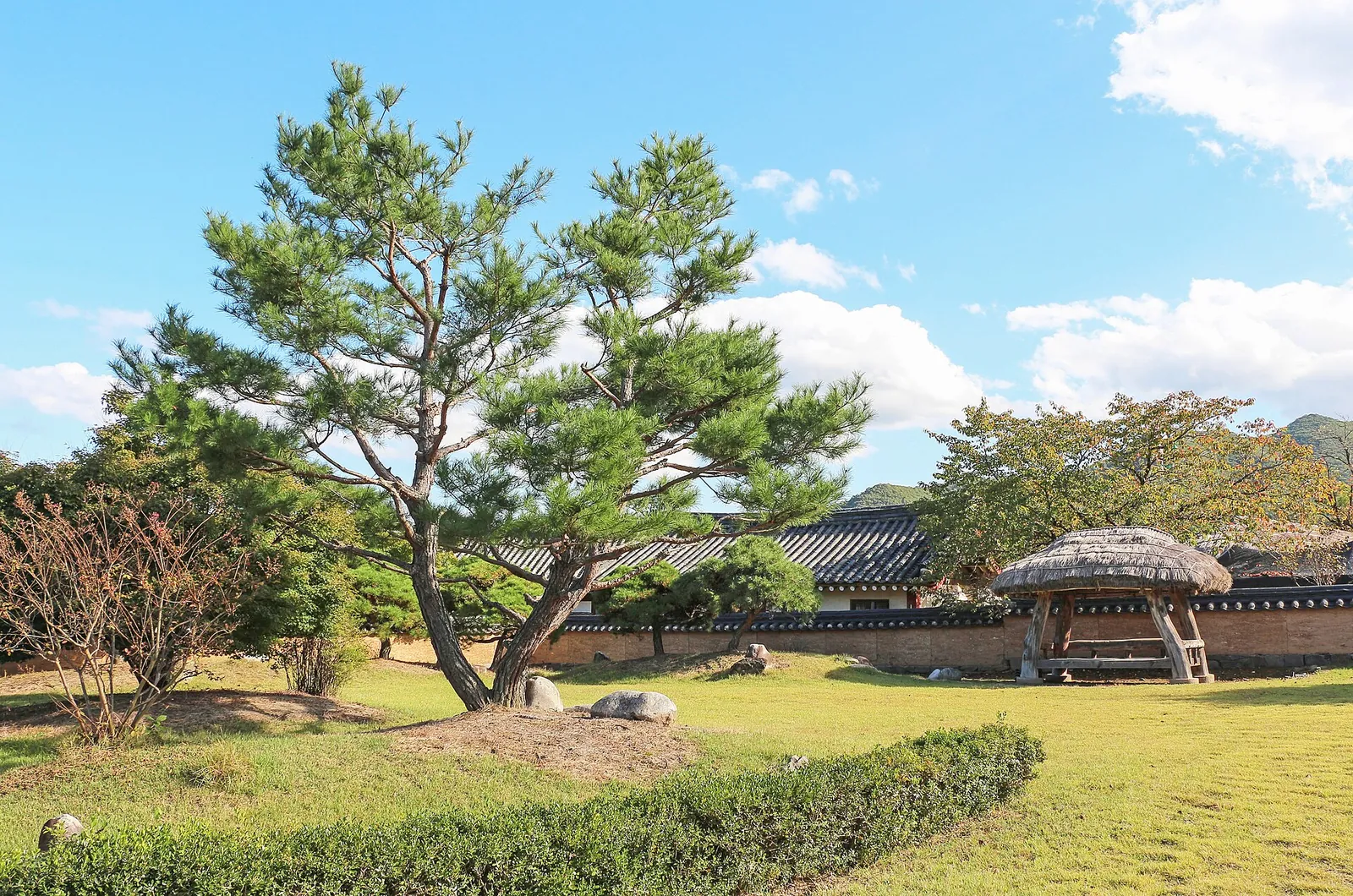
A pine tree on a lawn in Hahoe Village, with tiled and thatched roofs behind it.
Photograph: Bernard Gagnon — opens in a new tab · CC0 — opens in a new tab
Changes: Resized and converted to WebP; displayed with responsive crops. · Original photograph and licence details ↗ — opens in a new tab
The Nakdonggang River beside Hahoe Village, with a sandbank in front, the village among trees and hills beyond.
Photograph: Bernard Gagnon — opens in a new tab · CC0 — opens in a new tab
Changes: Resized and converted to WebP; displayed with responsive crops. · Original photograph and licence details ↗ — opens in a new tab
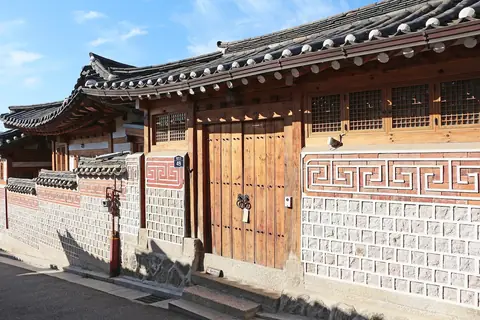
A tile-roofed hanok house in Hahoe Village, with a wooden veranda and a low wall of stone and clay.
Photograph: Bernard Gagnon — opens in a new tab · CC0 — opens in a new tab
Changes: Resized and converted to WebP; displayed with responsive crops. · Original photograph and licence details ↗ — opens in a new tab
The pavilion on the wooden Woryeonggyo footbridge in Andong, with a lake and wooded hills behind it.
Photograph: Christian Bolz — opens in a new tab · CC BY-SA 4.0 — opens in a new tab
Changes: Resized and converted to WebP; displayed with responsive crops. · Original photograph and licence details ↗ — opens in a new tab
A scene from the Hahoe Byeolsingut Tallori mask-dance drama, performed in front of an audience.
Photograph: Bernard Gagnon — opens in a new tab · CC0 — opens in a new tab
Changes: Resized and converted to WebP; displayed with responsive crops. · Original photograph and licence details ↗ — opens in a new tab
A grilled Andong salted mackerel (gangodeungeo) set meal with rice, soup, kimchi and side dishes, served at the Andong Service Area.
Photograph: 아라 — opens in a new tab · CC BY-SA 4.0 — opens in a new tab
Changes: Resized and converted to WebP; displayed with responsive crops. · Original photograph and licence details ↗ — opens in a new tab
The covered lane of the jjimdak alley in Andong Old Market, with restaurant signs along both sides.
Photograph: Jjw — opens in a new tab · CC BY-SA 4.0 — opens in a new tab
Changes: Resized and converted to WebP; displayed with responsive crops. · Original photograph and licence details ↗ — opens in a new tab
The wooded rock face of Buyongdae rising above a sandy bank of the Nakdonggang River across from Hahoe Village.
Photograph: Minyoung Choi — opens in a new tab · CC BY-SA 2.0 — opens in a new tab
Changes: Resized and converted to WebP; displayed with responsive crops. · Original photograph and licence details ↗ — opens in a new tab