Seoul and the Capital Area · Seoul
Seoul travel guide: how many days, where to stay and how to plan it
Seoul is a city of hills and districts rather than one centre. The Joseon palaces, Bukchon's hanok lanes and the old markets cluster north of the Hangang River, Namsan rises in the middle with the city wall running along its ridges, and Gangnam's business and shopping streets spread out to the south. The subway joins all of it, so a good Seoul trip is mostly about grouping sights that share a line and knowing which palace is closed on which day.
- Suggested time
- 4–5 days
- Where to stay
- Jongno or Myeongdong for the palaces and markets; Hongdae or Gangnam for nightlife and the south bank
- Season and timing
- Spring starts in March with cherry blossoms; summer is long, hot and humid with monsoon rain in June and July; autumn, September to November, is the most pleasant; winter is very cold. Gyeongbokgung's hours are shortest from November to February.
The short answer
Give a first visit four full days: one for Gyeongbokgung, Bukchon and Changdeokgung, one for Namsan, the markets and the city wall, one for the Hangang River and the south bank or a hike at Bukhansan, and one for a day trip to Suwon's Hwaseong Fortress. Sleep near a subway station in Jongno for the palaces, in Myeongdong for the most central all-rounder, or in Hongdae or Gangnam if nightlife or the south bank matters more. Use a transport card on the subway and buses, and plan around the palace closing days: Monday at Changdeokgung, Tuesday at Gyeongbokgung.
Choose a subway line, not just a district
Jongno, the old royal centre, puts you closest to the palaces. Anguk station on Line 3 is the stop for both Bukchon Hanok Village and Changdeokgung, Gyeongbokgung station on the same line serves the main palace, and Gwangjang Market is by Jongno 5-ga station on Line 1. It suits travellers who want to start at the palace gates when they open and walk most of the day.
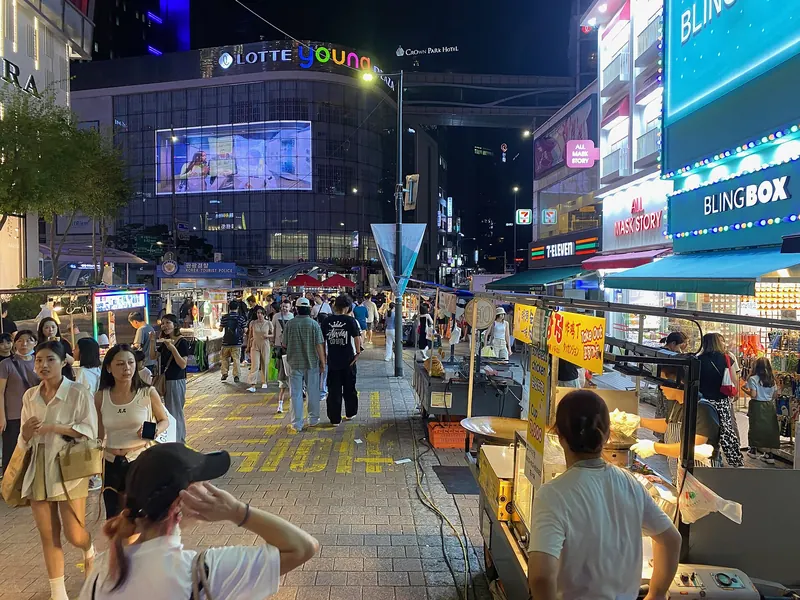
Myeongdong, on Line 4 like Hoehyeon station for Namdaemun Market, is the most central all-round base: street stalls, fashion and cosmetics shops at the door, with Namsan and its cable car next to it. It is busy and commercial in the evenings, which is either the point or the drawback.
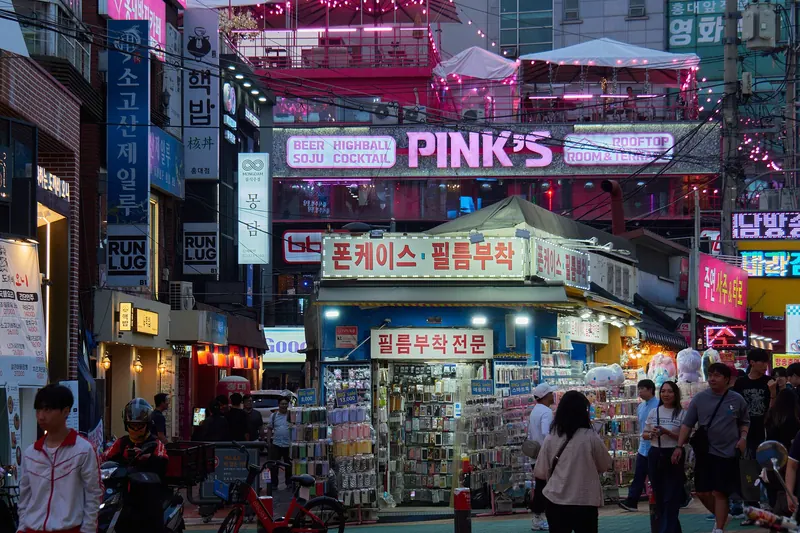
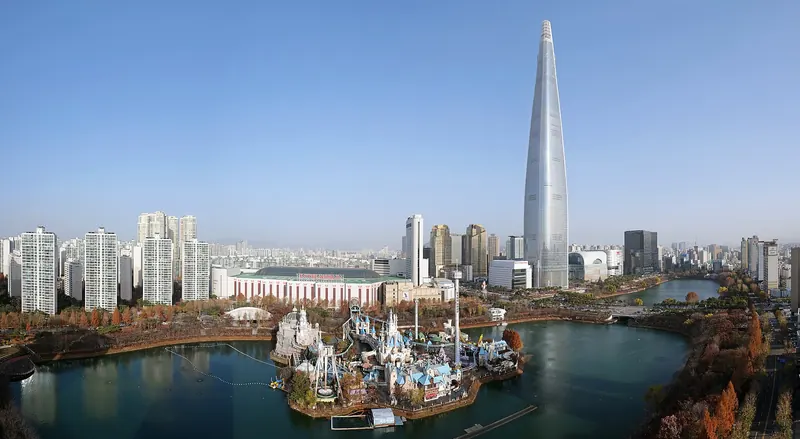
Hongdae, in Mapo-gu, is known for youth culture, street performances, bars and clubs. Gangnam, south of the Hangang River, covers the shopping and entertainment streets around Gangnam Station and Samseong-dong, which stay busy late, and express buses to Suwon leave from outside Gangnam station. Both add travel time to the palaces, so compare the exact station and the line before booking: a hotel one transfer from your main sights saves more time than a cheaper one two transfers away.
The palaces: plan around Monday and Tuesday
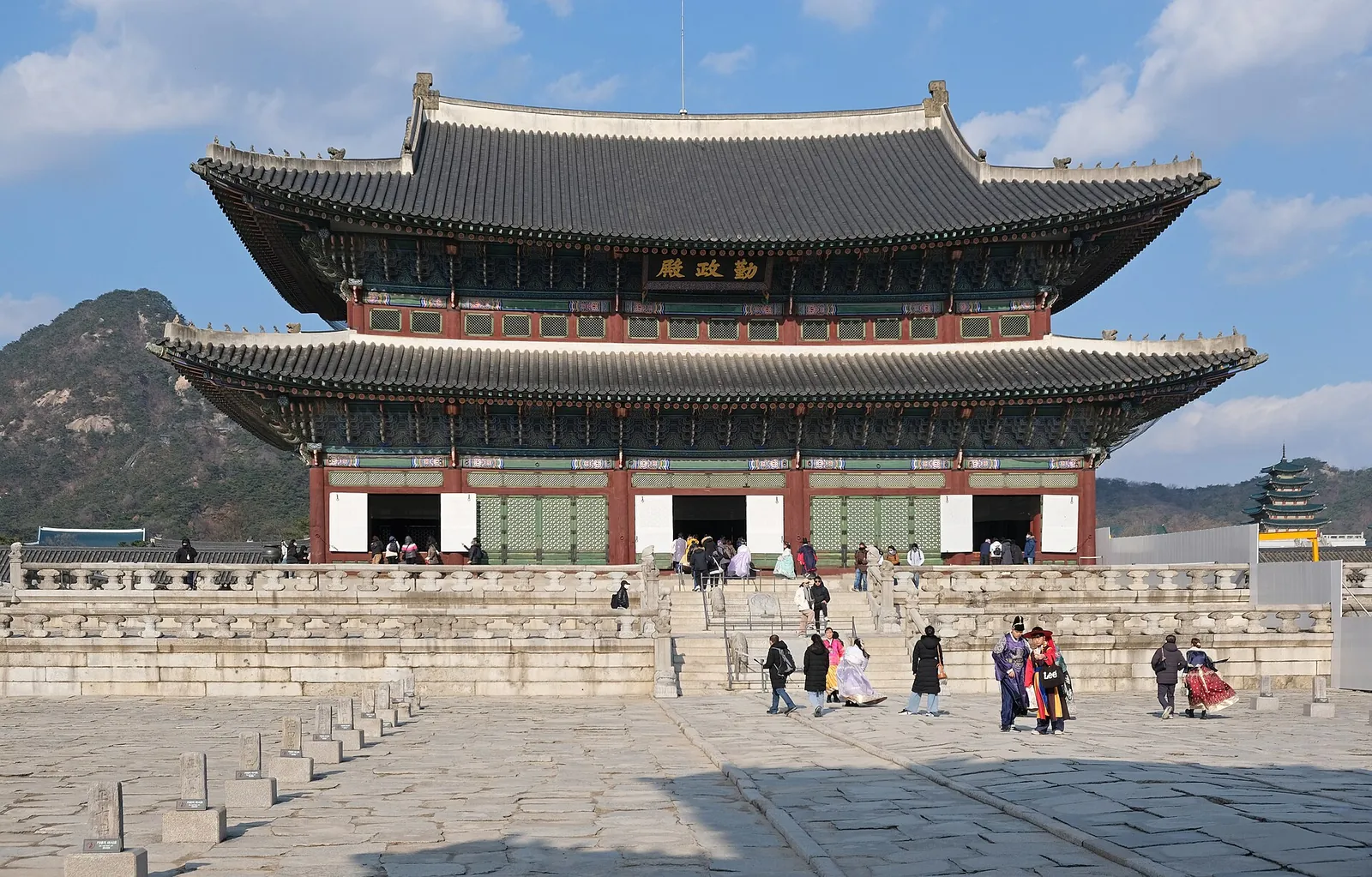
Gyeongbokgung was the first and largest palace of the Joseon dynasty, founded in 1395 with Bugaksan behind it; Changdeokgung, built in 1405 as a secondary palace, is the palace inscribed on the UNESCO World Heritage List and served as the main royal residence for about 270 years. They are a short walk apart, but not on the same closing day. The Royal Palaces and Tombs Center lists Gyeongbokgung and Jongmyo as closed on Tuesdays and Changdeokgung, Deoksugung and Changgyeonggung as closed on Mondays; when a closing day falls on a public holiday, the palace opens and closes the next working day instead.
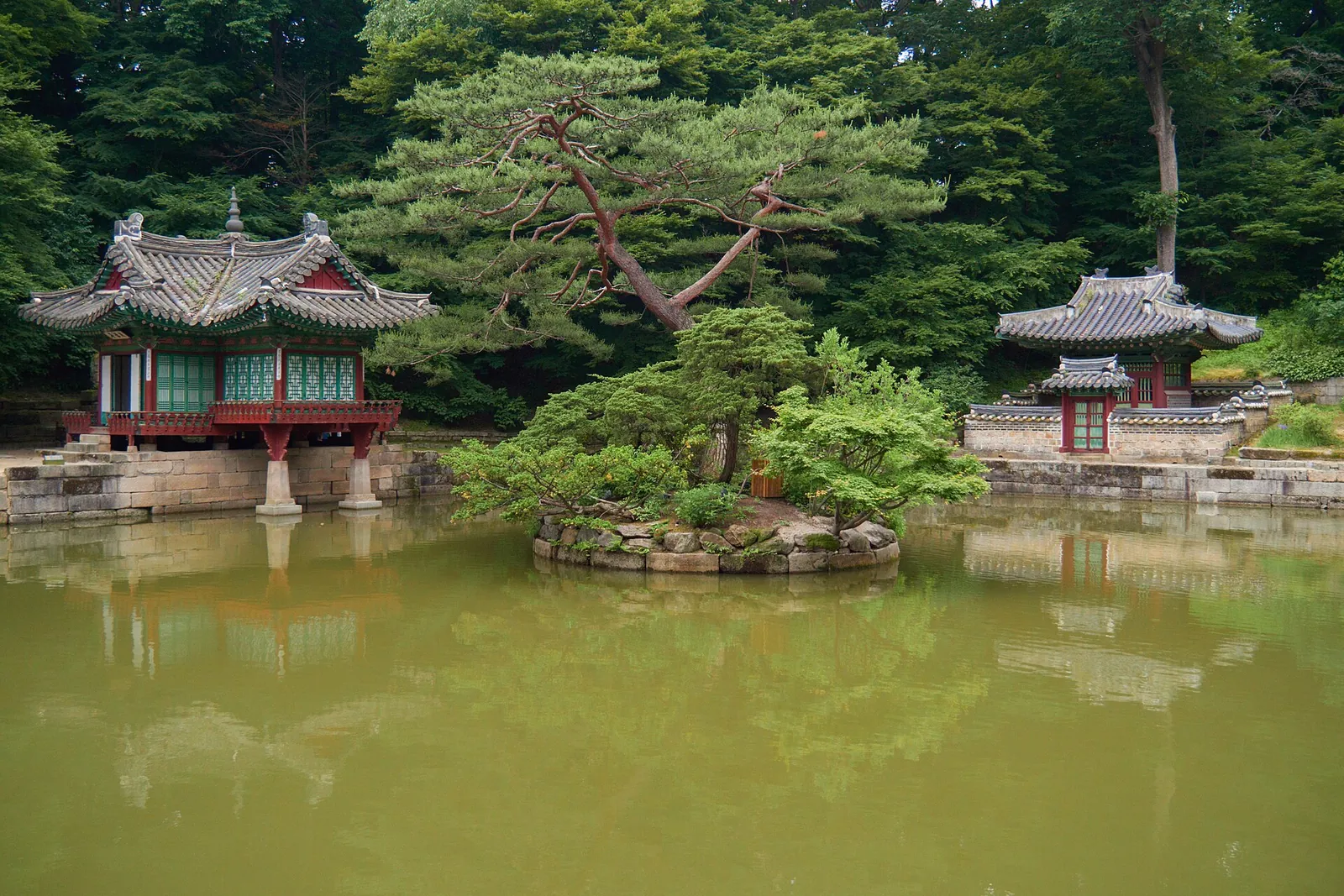
When we checked on 2026-10-03, the official site listed Gyeongbokgung's hours as 9:00 to 18:00 from March to May and in September and October, 9:00 to 18:30 in summer and 9:00 to 17:00 from November to February, with last entry an hour before closing. Admission for foreign visitors aged 19 to 64 was 3,000 won at both Gyeongbokgung and Changdeokgung. Changdeokgung's rear garden, the Huwon, is a separate ticketed visit at 5,000 won for adults, bought on top of the palace ticket and bookable through the centre's integrated reservation service.
Visitors in a complete hanbok enter the palaces free. The official guidelines require both a top (jeogori) and a skirt or trousers; a hanbok top over jeans, or hanbok trousers with a T-shirt, does not count. Two dates matter in autumn 2026: the centre's notice of 30 September lists normal opening during the Royal Culture Festival from 7 to 11 October, and free entry to Gyeongbokgung during the Korea Grand Festival from 29 October to 15 November, except on Tuesdays.
Do not try to do everything in one day. Gyeongbokgung, with the National Palace Museum and the National Folk Museum on its grounds, takes a full morning; Changdeokgung and the Huwon fill an afternoon. VisitSeoul lists free English guided tours of Gyeongbokgung at 11:00, 13:30 and 15:30 except on Tuesdays.
Make time for the local food
What to eat and where to look
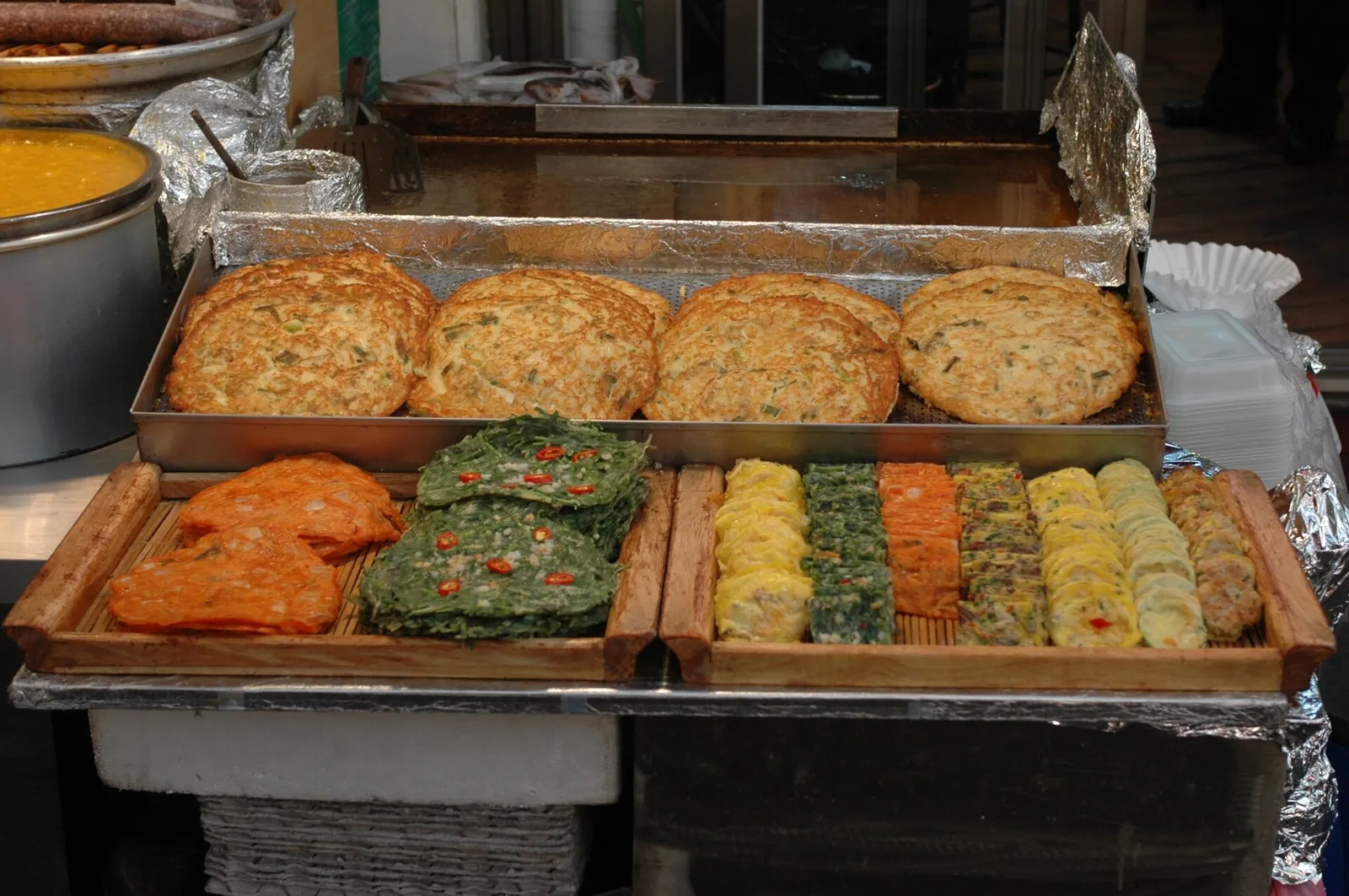
Bindaetteok (mung bean pancake)
A thick, crisp-edged pancake of ground mung beans fried in oil, often with pork, kimchi or bean sprouts mixed in. It is the dish most closely tied to Gwangjang Market, where you can watch it being ground and fried.
- Where to look
- The pancake stalls in Gwangjang Market's food alley, near Jongno 5-ga station.
- Fit it into your day
- Share one between two as the first course of a market dinner, then move on to other stalls.
Fried in plenty of oil and often contains pork; ask before ordering if you need a meat-free version.
Mayak gimbap
Small, finger-sized rolls of rice and vegetables wrapped in seaweed, served with a mustard and soy dipping sauce. The name, roughly 'addictive gimbap', comes from how easy they are to keep eating.
- Where to look
- Gwangjang Market, where VisitSeoul names it among the market's best-known foods.
- Fit it into your day
- A light snack while you walk the market, or a takeaway for the next morning's palace visit.
Usually contains egg and sometimes fish cake or ham; the mustard sauce is hot.
Tteokbokki
Chewy rice cakes simmered in a sweet and spicy red chilli sauce, often with fish cake and boiled egg. Sindang-dong, east of the old centre, has a cluster of specialist restaurants that has been known for the dish since the 1970s.
- Where to look
- Market stalls across the city, or the specialist restaurants of Sindang-dong Tteokbokki Town for a sit-down version.
- Fit it into your day
- An afternoon snack from a stall, or a shared pan for dinner in Sindang-dong with fried rice to finish.
Spicy by default and the sauce can contain fish-based stock; ask for a milder version if you need one.
Kalguksu (knife-cut noodle soup)
Fresh wheat noodles cut by hand and served in a hot broth, often chicken-based. Myeongdong Kyoja, one of the restaurants VisitSeoul recommends, is known for a savoury chicken-broth version.
- Where to look
- Myeongdong, near Myeongdong station on Line 4, and noodle restaurants around the markets.
- Fit it into your day
- A warming lunch between Namdaemun Market and Namsan, especially in autumn and winter.
Contains wheat; broths are usually meat-based.
Yukhoe (seasoned raw beef)
Strips of raw beef seasoned with sesame oil and soy, usually served with pear and topped with an egg yolk. It is one of the dishes VisitSeoul lists among Gwangjang Market's favourites.
- Where to look
- The yukhoe specialist restaurants in and around Gwangjang Market.
- Fit it into your day
- Part of a shared market dinner alongside bindaetteok and a drink of makgeolli.
Raw beef and raw egg; skip it if you are pregnant or have a weakened immune system.
Markets as meals: Gwangjang, Namdaemun and Tongin
Gwangjang Market, by Jongno 5-ga station, is the easiest market to make into a meal. It opened in the early 20th century, and its food alley is known for bindaetteok (mung bean pancakes), mayak gimbap, sundae, yukhoe and tteokbokki. When we checked on 2026-10-03, VisitSeoul listed the food alley as open daily from 9:00 to 23:00, while the clothing market closes on Sundays; the second floor has hanbok and vintage clothing shops.
Namdaemun Market, around the old South Gate at Hoehyeon station on Line 4, is Korea's largest traditional market and mostly a wholesale one, so it is better for a walk and a snack than a sit-down meal; it is closed on Sundays. Tongin Market, near the west side of Gyeongbokgung, runs a lunchbox café where you buy tokens and fill a tray from participating stalls. VisitSeoul lists the café as closed on Mondays and on the third Sunday of the month, so it fits a palace day best from Wednesday to Saturday.
Bukchon: inside the visiting hours, and quietly
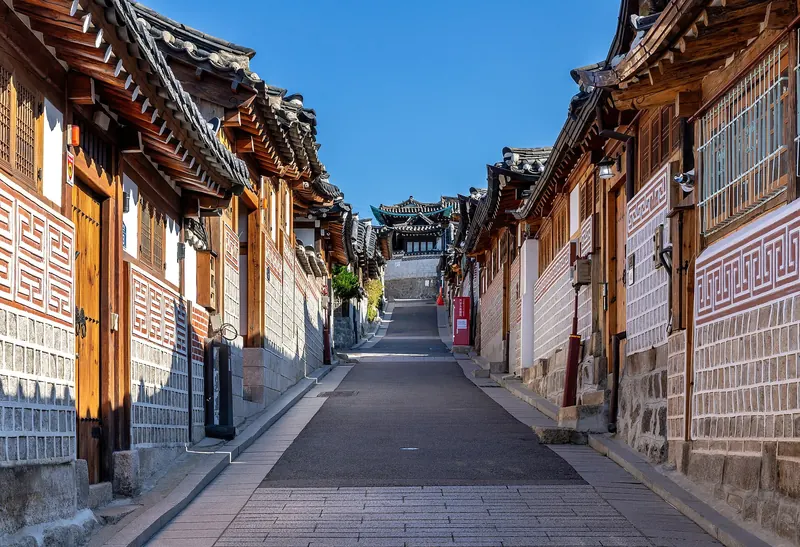
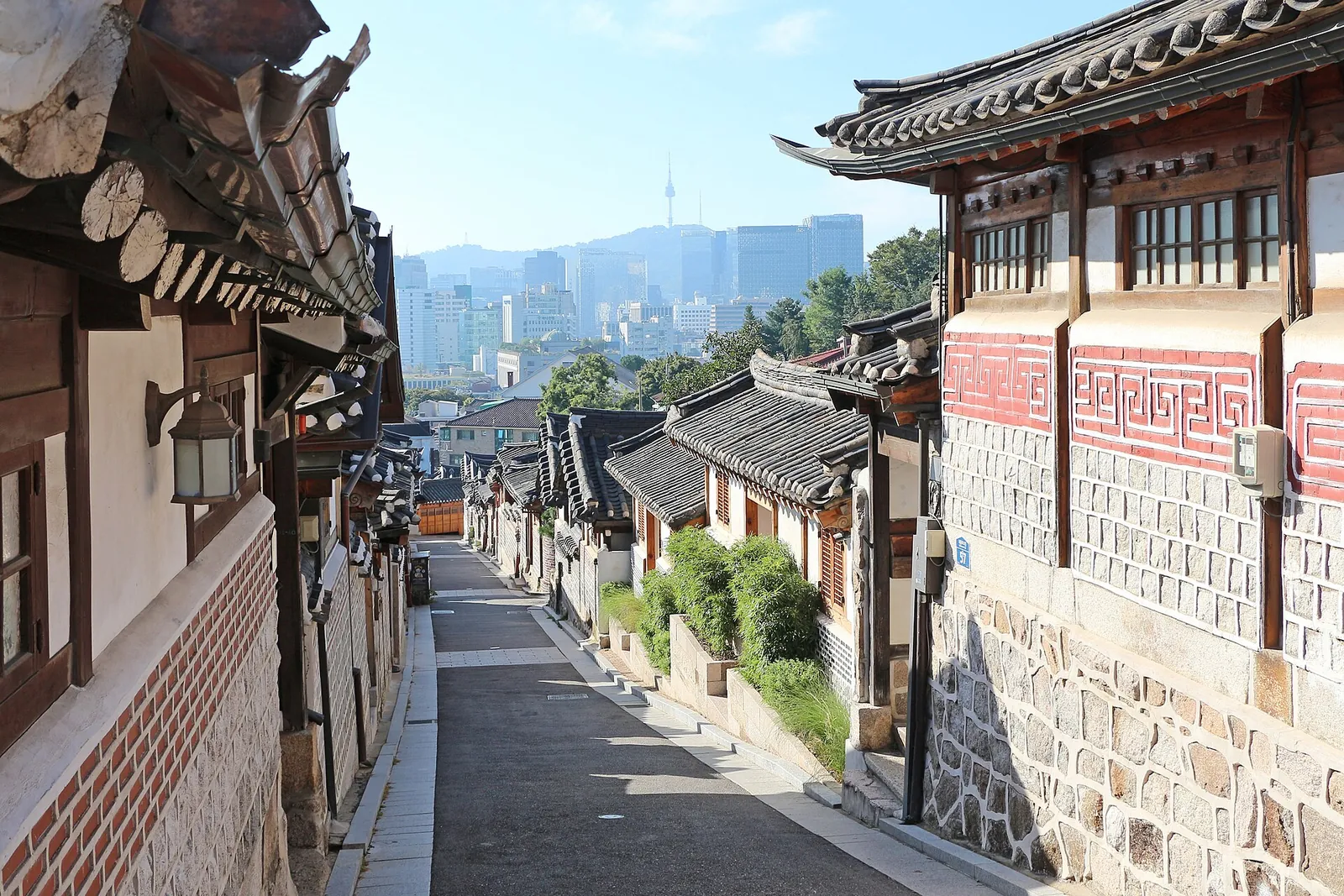
Bukchon Hanok Village, between Gyeongbokgung and Changdeokgung, is a residential neighbourhood, not a museum. Since November 2024 the core lanes have been a designated special management area: VisitSeoul lists visiting hours of 10:00 to 17:00, with tourists not permitted in the restricted area between 17:00 and 10:00 the next morning.
Residents ask visitors to keep their voices down, especially around Gahoe-dong 31, keep groups to ten or fewer, use no loudspeakers and never photograph inside a house even when the door is open. The easiest approach is from Anguk station, exit 3. Walk it between the two palaces at midday rather than at dawn or dusk.
Hills in the city: Namsan, the city wall and Bukhansan
Namsan Seoul Tower stands 236.7 metres tall on the 262-metre summit of Namsan. When we checked on 2026-10-03, VisitSeoul listed the observatory at 29,000 won for adults, opening hours of 10:00 to 22:30 on weekdays and to 23:00 at weekends, and the cable car from 10:00 to 23:00 at 15,000 won return for adults. You can also walk up through Namsan Park instead of taking the cable car.
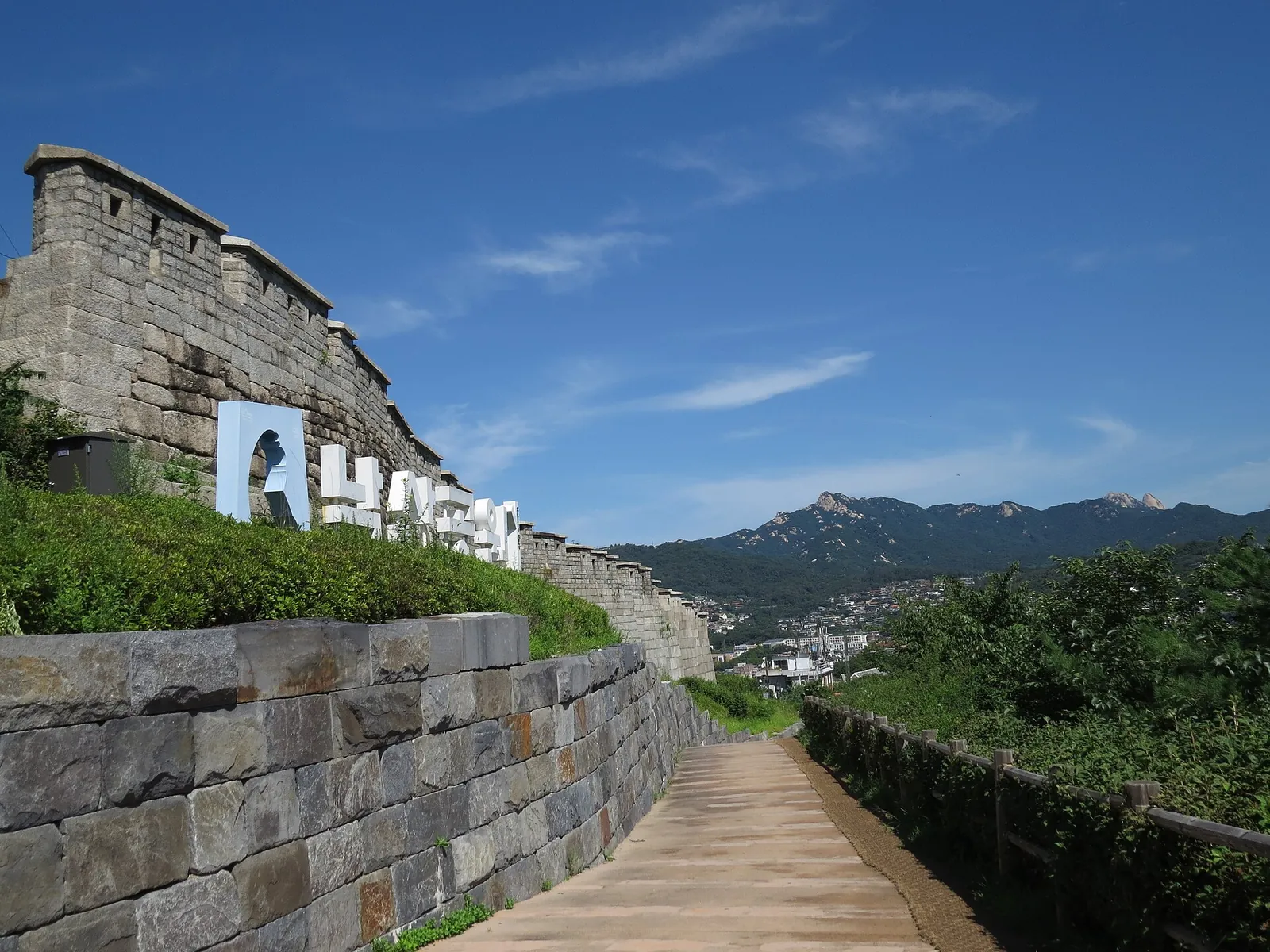
Hanyangdoseong, the Seoul City Wall, was first built in 1396 and runs for 18.6 kilometres along Bugaksan, Naksan, Namsan and Inwangsan. Six of its eight gates survive. The Naksan section, reached from Dongdaemun station, is the easiest to add to an evening; the Bugaksan and Inwangsan sections cross mountains and need more time.
Bukhansan National Park is the only national park in the Seoul metropolitan area, a ridge of granite peaks — Baegunbong, Insubong and Mangyeongbong — with streams, temples and hermitages. VisitSeoul lists free admission and earlier last-entry times in winter than in summer. Seoul's Hiking Tourism Centers at Bukhansan, Bugaksan and Gwanaksan help international visitors choose a trail and rent gear; use them, start early and carry water, because many routes are steep, rugged tracks.
Getting around: subway first, transfer card always
The subway is the quickest way across Seoul, and buses fill the gaps. Use a rechargeable transport card rather than single tickets: VisitSeoul notes that you get a fare discount when you transfer within 30 minutes of getting off (within an hour between 21:00 and 7:00), but only if you tap the card on the reader when you get off. Taxis are easy to find on the street and near the main sights.
Plan each day around one or two neighbouring areas. Gyeongbokgung to Myeongdong is easy; Gyeongbokgung to Gangnam and back again in the same afternoon is not.
A workable four-day split
This is an editorial suggestion, not a timetable. Check closing days and reservation needs for each place you choose.
- Day 1 — Palaces and Bukchon (not Monday or Tuesday): Gyeongbokgung at 9:00, Bukchon between the palaces after 10:00, Changdeokgung and the Huwon in the afternoon, dinner at Gwangjang Market.
- Day 2 — Markets and Namsan: Namdaemun Market in the morning, Myeongdong for lunch, then up Namsan on foot or by cable car for the evening view.
- Day 3 — Nature or the south bank: a morning hike at Bukhansan with help from the Hiking Tourism Center, or the Hangang River parks and Gangnam, followed by an evening in Hongdae or on the Naksan section of the city wall.
- Day 4 — Suwon: Hwaseong Fortress and Hwaseong Haenggung as a full day out of the city.
- Day 5 (optional): Jongmyo Shrine (check the guided-entry days), Deoksugung, or a slow last day near your hotel.
The first day trip: Suwon's Hwaseong Fortress
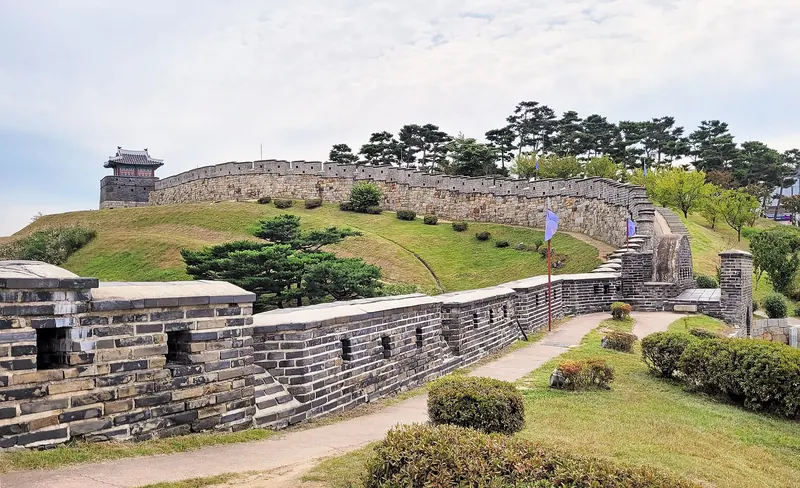
Suwon's Hwaseong Fortress was built between 1794 and 1796 for King Jeongjo and was inscribed as a UNESCO World Heritage Site in 1997. Its walls run for 5,744 metres around the old town, flat in the east and climbing Paldalsan in the west, so walking the full circuit and seeing Hwaseong Haenggung inside the walls takes most of a day.
The Suwon Cultural Foundation's directions are simple from central Seoul: subway Line 1 to Suwon station, then bus 11, 13 or 13-4 from near exit 4 to the Hwaseong Haenggung stop. From the south bank, red express bus 3000 runs from near Gangnam station exit 5 to Paldalmun, and bus 1007 from Jamsil station exit 6. Leave the evening free; the return trip is long enough that a second sightseeing stop rarely fits.
Practical questions
How many days do I need in Seoul?
Four full days cover the palaces and Bukchon, the markets and Namsan, a hike or the south bank, and a day trip to Suwon at a comfortable pace. Add a fifth for Jongmyo, Deoksugung or a slow day. Arrival and departure days are shortened by the airport journey.
Which area of Seoul is best for a first visit?
Jongno if the palaces and Bukchon are your priority, Myeongdong if you want the most central base with shopping and food at the door, Hongdae for nightlife, Gangnam for the south bank. Choose by the subway line: a hotel near Anguk, Gyeongbokgung or Myeongdong station keeps most first-trip sights one ride away.
Which days are the Seoul palaces closed?
Gyeongbokgung and Jongmyo are closed on Tuesdays; Changdeokgung, Deoksugung and Changgyeonggung are closed on Mondays. If a closing day falls on a public holiday, the palace opens and closes on the next non-holiday instead. Check the Royal Palaces and Tombs Center site before you go.
Can I enter the palaces free in a hanbok?
Yes, if you wear a complete hanbok: a jeogori top together with a hanbok skirt or trousers. A hanbok top with jeans, or a T-shirt with hanbok trousers, is not accepted for free entry under the official guidelines.
How do I get from Incheon Airport to central Seoul?
The AREX airport railway runs to Seoul Station. VisitSeoul describes the all-stop train as taking about 60 minutes and the non-stop express about 40 minutes. Airport buses serve many districts and hotels, and taxis leave from outside the arrivals hall.
Is Suwon an easy day trip from Seoul?
Yes. Take subway Line 1 to Suwon station and a local bus to Hwaseong Haenggung, or an express bus from Gangnam or Jamsil. Plan a full day: the fortress walls alone run for almost six kilometres.
Sources and checks before you travel
Reference sources for the version dated 3 October 2026. Confirm opening times, access, transport and conditions for your travel dates.
- Royal Palaces and Tombs Center: opening hours and closing days ↗ — opens in a new tab
- Royal Palaces and Tombs Center: admission fees ↗ — opens in a new tab
- Royal Palaces and Tombs Center: free admission in hanbok ↗ — opens in a new tab
- Royal Palaces and Tombs Center: Gyeongbokgung operation in October and November 2026 ↗ — opens in a new tab
- Royal Palaces and Tombs Center: Gyeongbokgung and Changdeokgung history (English) ↗ — opens in a new tab
- VisitSeoul: Gyeongbokgung Palace ↗ — opens in a new tab
- VisitSeoul: Changdeokgung Palace ↗ — opens in a new tab
- VisitSeoul: Bukchon Hanok Village ↗ — opens in a new tab
- VisitSeoul: Gwangjang Market ↗ — opens in a new tab
- VisitSeoul: Namdaemun Market and Tongin Market ↗ — opens in a new tab
- VisitSeoul: Namsan Seoul Tower ↗ — opens in a new tab
- VisitSeoul: Hanyangdoseong (Seoul City Wall) ↗ — opens in a new tab
- VisitSeoul: Bukhansan National Park and Seoul Hiking Tourism ↗ — opens in a new tab
- VisitSeoul: Sindang-dong Tteokbokki Town and Myeongdong Kyoja ↗ — opens in a new tab
- VisitSeoul: getting from the airport to Seoul ↗ — opens in a new tab
- VisitSeoul: transportation ↗ — opens in a new tab
- VisitSeoul: About Seoul ↗ — opens in a new tab
- Seoul Metropolitan Government: four seasons in Seoul ↗ — opens in a new tab
- Suwon Cultural Foundation: Hwaseong Fortress and directions ↗ — opens in a new tab
Does this experience fit your route?
A guided morning at Gyeongbokgung or an evening at Gwangjang Market is the easiest way into Seoul's history and food. Check the day of the week, what admission is included and the dietary options before you book.
Check dates and details on Viator ↗ — opens in a new tabAffiliate link · Book with ViatorPhoto credits
Geunjeongjeon, the throne hall at the heart of Gyeongbokgung, the first and largest Joseon palace in Seoul
Photograph: kallerna — opens in a new tab · CC BY-SA 4.0 — opens in a new tab
Changes: Resized and converted to WebP; displayed with responsive crops. · Original photograph and licence details ↗ — opens in a new tab
Bukchon's hanok lanes sit between the two main palaces; Namsan Seoul Tower rises on the skyline beyond
Photograph: Bgag — opens in a new tab · CC0 — opens in a new tab
Changes: Resized and converted to WebP; displayed with responsive crops. · Original photograph and licence details ↗ — opens in a new tab
Bindaetteok and other jeon on display at a stall in Gwangjang Market's food alley
Photograph: Pfc. Bo Park, 2ID PAO, US Army — opens in a new tab · Public domain — opens in a new tab
Changes: Resized and converted to WebP; displayed with responsive crops. · Original photograph and licence details ↗ — opens in a new tab
Buyongji Pond in Changdeokgung's Huwon, the rear garden visited on a separate ticket
Photograph: lumoplank — opens in a new tab · CC0 — opens in a new tab
Changes: Resized and converted to WebP; displayed with responsive crops. · Original photograph and licence details ↗ — opens in a new tab
The Naksan section of Hanyangdoseong, the Seoul City Wall, near Dongdaemun
Photograph: Rtflakfizer — opens in a new tab · CC BY-SA 4.0 — opens in a new tab
Changes: Resized and converted to WebP; displayed with responsive crops. · Original photograph and licence details ↗ — opens in a new tab