Seoul
Myeongdong and Namsan, Seoul: a central base with tower and market
Myeongdong is the part of Seoul where the shopping lanes, a Gothic cathedral and the foot of the hill below N Seoul Tower sit within a short walk of one another, with Namdaemun Market and Deoksugung Palace close by. That makes it an easy base for a first visit, and it also makes it one of the busiest districts in the city. This guide covers the lanes, the street-food stalls and the tax-refund rules, three ways up Namsan and what the observatory costs, the beacon mound and city wall on the ridge, Namsangol Hanok Village, the market and the gate it is named after, the palace guard ceremony, the retro alleys of Euljiro, the Seoullo 7017 walkway and the airport train to Seoul Station.
In this guide
Find the location ↗ — opens in a new tabThe short answer
Plan one long day for Myeongdong, Namsan, Namdaemun Market and Deoksugung, and a second for Euljiro and Seoullo 7017; as a base the district suits three or four nights in Seoul, in a room around Myeongdong Station on Line 4 or at Hoehyeon beside Namdaemun Market. Book the room first with our where-to-stay guide, then fit the sights around the closing days: Deoksugung and Sungnyemun close on Mondays, and Namdaemun Market closes on Sundays. The two prices to plan around, checked on 17 October 2026, are KRW 29,000 for an adult ticket to the N Seoul Tower observatory and KRW 15,000 for an adult round trip on the Namsan cable car; Deoksugung costs KRW 1,000.
- Suggested time
- 1 long day, or 2 with Euljiro and Seoullo 7017; a base for 3-4 nights in Seoul
- Where to stay
- Myeongdong, or Hoehyeon beside Namdaemun Market; Euljiro or Seoul Station as alternatives
- Season and timing
- Namsan is worth most on a clear day. The cherry-blossom path from Namsan Library to N Seoul Tower fills with bloom in spring, and the Namsan Southern Walking Path, lined with Oriental plane trees, is known for its autumn colour. The UK government gives the typhoon season as June to November and the summer rains as usually June and July, and the Namsan cable car may stop in bad weather. Myeongdong fills with Japanese and Chinese visitors during Golden Week, the week-long spring holiday in Japan and China.
Why Myeongdong works as a base, and which side to choose
Myeongdong's strength is position. Subway Line 4 serves Myeongdong Station, Hoehyeon Station beside Namdaemun Market, and Seoul Station, where the airport train arrives, and Euljiro 1-ga Station on Line 2 is a short walk from the north side of the shopping lanes.
No part of the district is quiet. VisitSeoul puts Myeongdong's daytime population at 1.5 to 2 million, so ask for a higher floor or a room on a side street rather than on the main shopping lane. Myeongdong itself puts the lanes, the cathedral and the foot of Namsan on your doorstep. Hoehyeon is the choice for the market and for Seoul Station on the same subway line, and the market around it is also busy at night, because retailers from across the country shop there after dark. Euljiro has office towers by day and, around Euljiro 3-ga, a pub alley by night, and Seoul Station suits an early train or the airport run.
Rooms and rates for the Seoul districts are compared in our where-to-stay guide.
Myeongdong's lanes, cosmetics shops and the cathedral
Myeongdong is Seoul's shopping district: street stalls beside retail outlets selling everything from high fashion to casual clothes, and many Korean cosmetics stores. The shops and stalls sit along Myeongdong-gil and the lanes that branch off it, such as Myeongdong 8-gil and Myeongdong 10-gil. VisitKorea names Lotte Department Store and Shinsegae Department Store among the major shopping malls here, and VisitSeoul adds the Myeongdong Underground Shopping Center for K-pop items and souvenirs. The lanes are reached from Myeongdong Station on Line 4, exits 5 to 10, and each cosmetics shop and stall sets its own closing time, so come in the morning for room to walk and after dark for the stalls. Seoul's red-uniformed tourist guides, called Red Angels, work in Myeongdong and can recommend restaurants, shops and sights. Banks open from 09:00 to 16:00 on weekdays; outside those hours, use a currency-exchange booth with the "Certified" sign and avoid uncertified booths. The Myeong-dong Tourist Information Center, run by the Seoul Metropolitan Government, stands in the annex of the Hana Financial Group building at 66 Euljiro, a few minutes' walk from Euljiro 1-ga Station exit 5, and is open daily from 09:00 to 18:00, closed on Lunar New Year and Chuseok days.
The food stalls lining both sides of the main street sell skewers, deep-fried tornado potatoes, japchae, kimchi-wrapped pork belly and takoyaki, with tanghulu, crepes, fruit juice and ice cream for dessert, according to VisitSeoul. Stalls set their own hours and prices, so carry some cash as well as a card. Some snacks are spicy and many are made with flour, egg or seafood, so ask before you order if you avoid spice or have an allergy.
Myeongdong Nanta Theatre, at 26 Myeongdong-gil, stages Nanta, a comic non-verbal show set in a kitchen to the rhythm of samulnori, the traditional Korean percussion quartet. VisitKorea says the 386-seat theatre stands inside the UNESCO Building and gives three shows every day of the year; Myeongdong Station exit 6 and Euljiro 1-ga Station exits 5 and 6 are the nearest exits, and the show's website is nanta.co.kr.
Shops with a "Tax Refund" or "Tax Free" sign refund the tax on purchases of KRW 15,000 or more per receipt. Show your passport at the till and keep the refund receipt. The goods must be new, you must leave Korea within three months of buying them, and you must be a non-Korean citizen staying less than six months. Where a shop offers an immediate refund, the tax comes off on the spot for a single payment under KRW 1,000,000, up to KRW 5,000,000 over the whole trip, and downtown refund booths accept receipts of up to KRW 6,000,000 each, only for their own company. Our first-trip guide covers claiming at the airport.
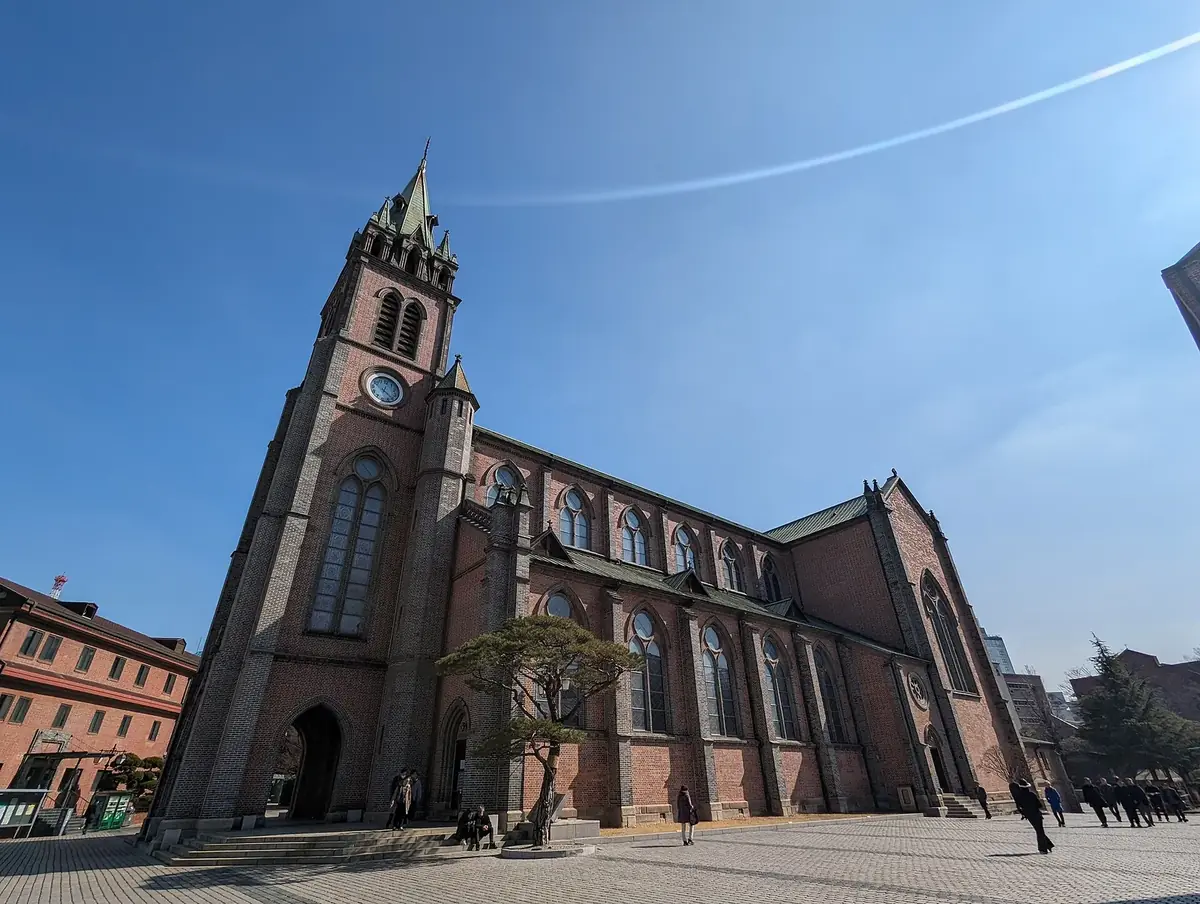
Not far from the lanes stands Myeongdong Cathedral, the first Roman Catholic parish church in Korea and the country's first Gothic building, designated Historic Site No. 285. It was built between 1892 and 1898 in brick rather than the stone of most Gothic churches, with high ceilings and arches between the inner pillars. A small sanctuary on the basement floor holds the remains of nine saints and martyrs, and the garden behind the church, Seongmo Dongsan, has pipe organ music at lunchtime. VisitSeoul lists it as open Tuesday to Saturday from 09:00 to 19:00 and on Sunday from 07:00 to 21:00, closed on Mondays, with Myeongdong Station exit 8 the nearest exit. Visitors may not enter during mass, only at the hours set for touring, so visit on a weekday or on a Sunday afternoon rather than on a Sunday morning.
Up Namsan to N Seoul Tower: cable car, bus 01A or a walk
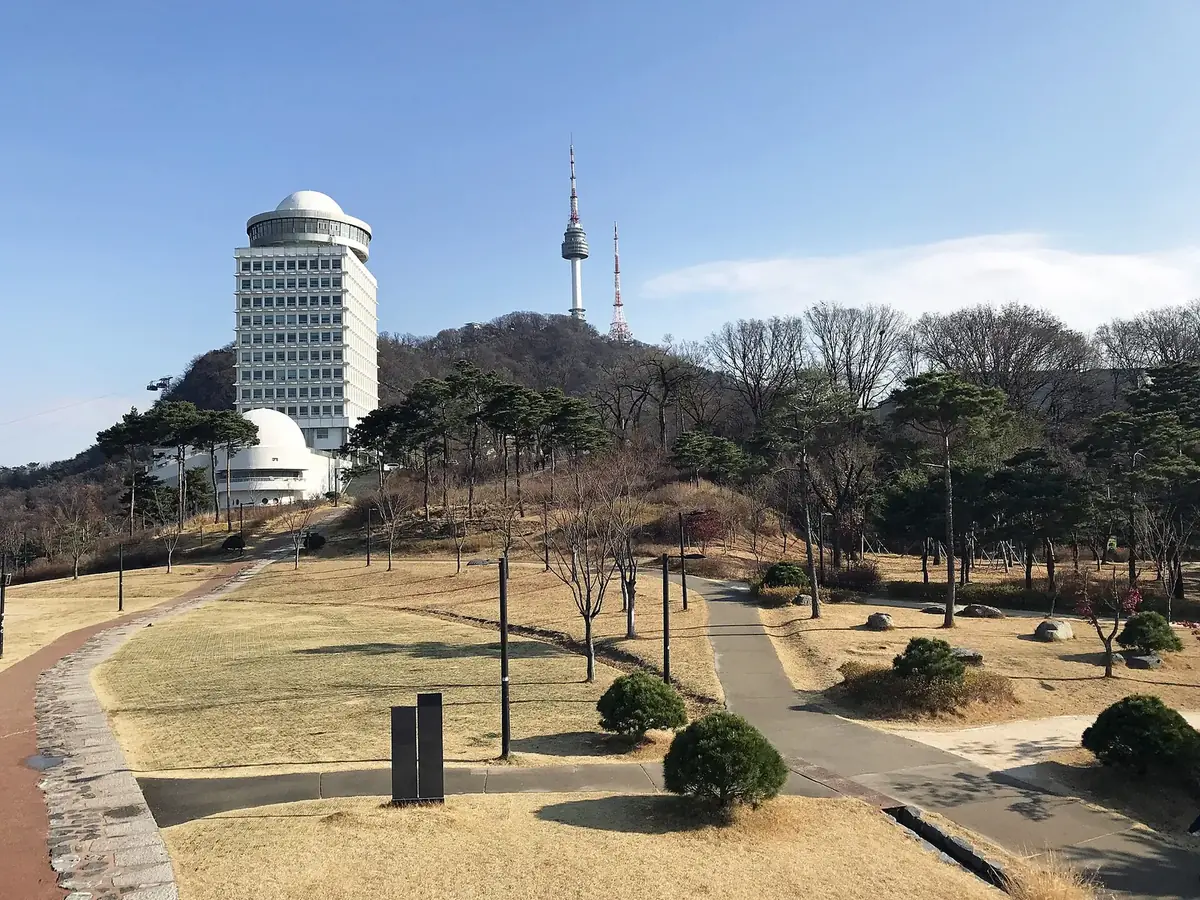
Namsan Park is the largest civic park in Seoul and free to enter, and it holds the Patriot Ahn Jung-geun Memorial Hall, the cable car and the tower. N Seoul Tower itself was built in 1969 as Korea's first integrated transmission tower for television and radio broadcasts.
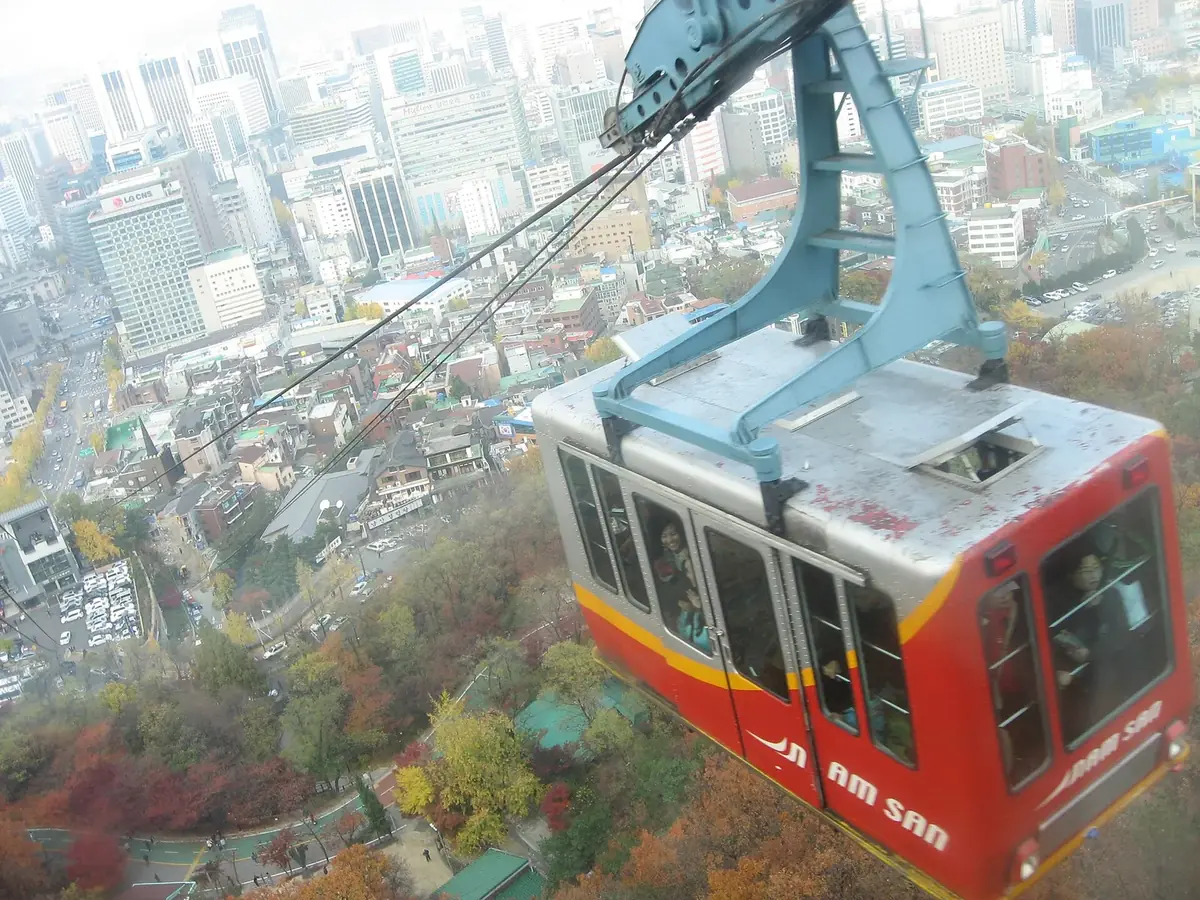
The quickest way up from Myeongdong is the Namsan Cable Car. The tower operator's directions say to walk straight on from Myeongdong Station exit 5 to the Hoehyeon intersection, turn left and walk uphill to the Namsan Oreumi lift, which carries you to the cable car station; allow about 15 minutes. The Seoul Metropolitan Government describes the Oreumi as an outdoor slanted elevator that is free to ride. It runs from 09:00 to 23:00 but stops from 09:00 to 14:00 every Monday for maintenance. The cable car covers roughly 600 m in about three minutes, in cabins for up to 48 people. It runs from 10:00 to 23:00 every day of the year, the last ticket is sold 30 minutes before closing, and it may stop in bad weather. The ticket office is on the first floor of the lower station.
VisitSeoul lists the round trip at KRW 15,000 for adults and KRW 11,500 for children, and at KRW 11,500 for adults aged 65 and over and for people with disabilities. A one-way ticket costs KRW 12,000 for adults and KRW 9,000 for children, so you can ride up and walk down. Seoul announced on 2 December 2025 that a gondola from Myeongdong Station to the summit, taking five minutes, is planned for completion by 2027.
Circular buses 01A and 01B also climb to the tower. They run in one direction only, take transport cards but not cash, and run daily from 06:30 to 23:00; 01A comes every 6 to 9 minutes and 01B every 15 to 18 minutes. The operator lists Chungmuro Station exit 2 (about 15 minutes) and Dongguk University Station exit 6 (about 10 minutes) as the subway links. Check the current fare for the 01A and 01B before you ride. Private cars cannot drive to the summit: the operator restricts general vehicles to protect the local ecology and asks drivers to leave the car at a nearby car park.
On foot, the operator gives about 40 minutes up the stair path from the Samsoon-i steps, beside the Seoul Education Research and Information Institute, to the Palgakjeong pavilion, about 30 minutes from Namsan Library, and 30 to 40 minutes from the National Theater of Korea depending on the route. VisitSeoul describes the Namsan Dulle-gil as five themed courses, free and open every day of the year; its North Circular Road is flat and closed to vehicles and bicycles.
The observatory sits about 400 m above sea level and gives a 360-degree view across Seoul; the operator's audio guide names the main sights through the windows, and after dark the city lights form a star-like shape around Yongsan-daero. The operator adds a roof terrace on the second floor and digital telescopes, and the cable car operator recommends going from sunset into the night skyline. The operator's English page lists it as open 365 days a year, from 10:00 to 22:30 on weekdays and from 10:00 to 23:00 at weekends and on holidays.
When we checked on 17 October 2026, the same page listed admission at KRW 29,000 for adults aged 13 and over and KRW 23,000 for children aged 3 to 12 and visitors aged 65 and over; children under 36 months need no ticket, limited to one child per caretaker.
The summit is also where the Namsan beacon mound (Bongsudae) stands near the Palgakjeong pavilion, rebuilt in 1993 and designated Seoul Monument number 14. VisitSeoul lists a free re-enactment of the Joseon beacon-lighting there around noon from Tuesday to Sunday. The Seoul City Wall, Hanyangdoseong, runs along the Namsan ridge, and VisitSeoul describes a two-hour route from Dongguk University Station exit 6 through Jangchungdan Park along the wall to the National Theater, then to the beacon mound, the tower and the Ahn Jung-geun Memorial Hall.
Outside the paid observatory, the cable car operator's site points to the love-lock fence and the Palgakjeong pavilion at the summit, and neither needs the observatory ticket. Choose the view for a clear evening: AirKorea publishes a real-time air-quality index, and a hazy day flattens the skyline.
At the northern foot of Namsan, Namsangol Hanok Village gathers five Joseon-era hanok moved from other parts of the city. VisitKorea says the houses once belonged to Joseon aristocrats and officials, and that the village also has a traditional garden with a pavilion and a time capsule plaza, where a capsule buried in 1994 for Seoul's 600th anniversary is due to be reopened in 2394. VisitSeoul lists it as free, open from 09:00 to 21:00 from April to October and from 09:00 to 20:00 from November to March, and closed on Mondays; Chungmuro Station exit 4 on Lines 3 and 4 is the nearest exit, and the circular buses start at the Toegyero 3-ga Hanok Village stop.
Namdaemun Market and Sungnyemun Gate
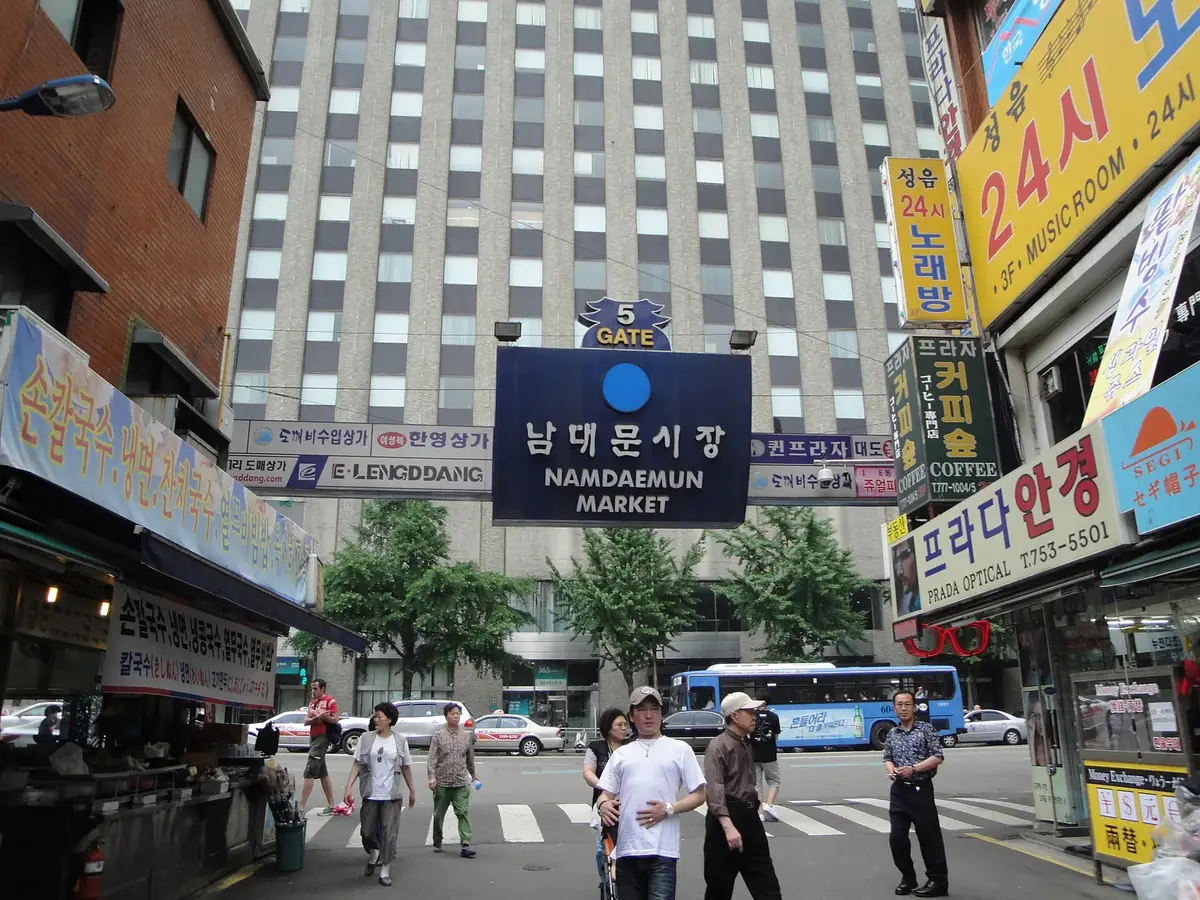
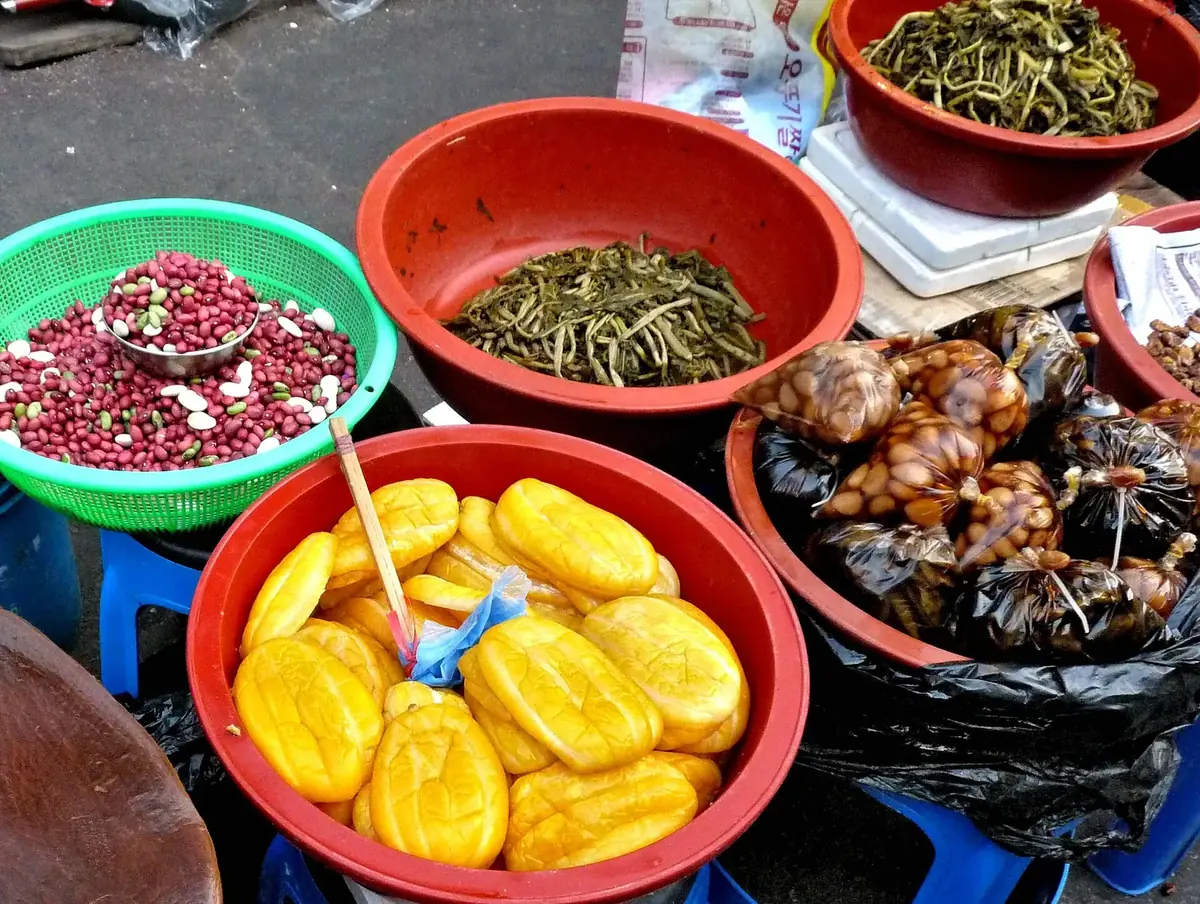
VisitSeoul calls Namdaemun the largest traditional market in Korea, with more than 10,000 stores along the streets around Namdaemun, the main southern gate of the old city wall. The market began under King Taejong, when the government built shops around the gate and rented them to traders. The market association counts about 10,172 shops and around 300,000 visitors a day, and says it sells some 1,700 kinds of goods, from clothing, kitchenware and accessories to food and farm produce. It is a wholesale market: VisitSeoul says retailers from across the country come at night and local shoppers by day.
Hoehyeon Station exit 7 is the nearest exit to the market. The market association says opening hours differ from shop to shop, and VisitKorea lists Sunday as the closing day, so go on a weekday or a Saturday. VisitKorea also describes a lounge for foreign visitors at Gate 2 with tourist information and luggage storage. The free Bank of Korea Money Museum, in the former central bank building at 39 Namdaemun-ro, is also close to Hoehyeon Station exit 7; it holds more than 20,000 banknotes, coins and tokens in four exhibition halls, opens from 10:00 to 17:00 (last admission 16:40) and closes on Mondays, Lunar New Year and Chuseok.
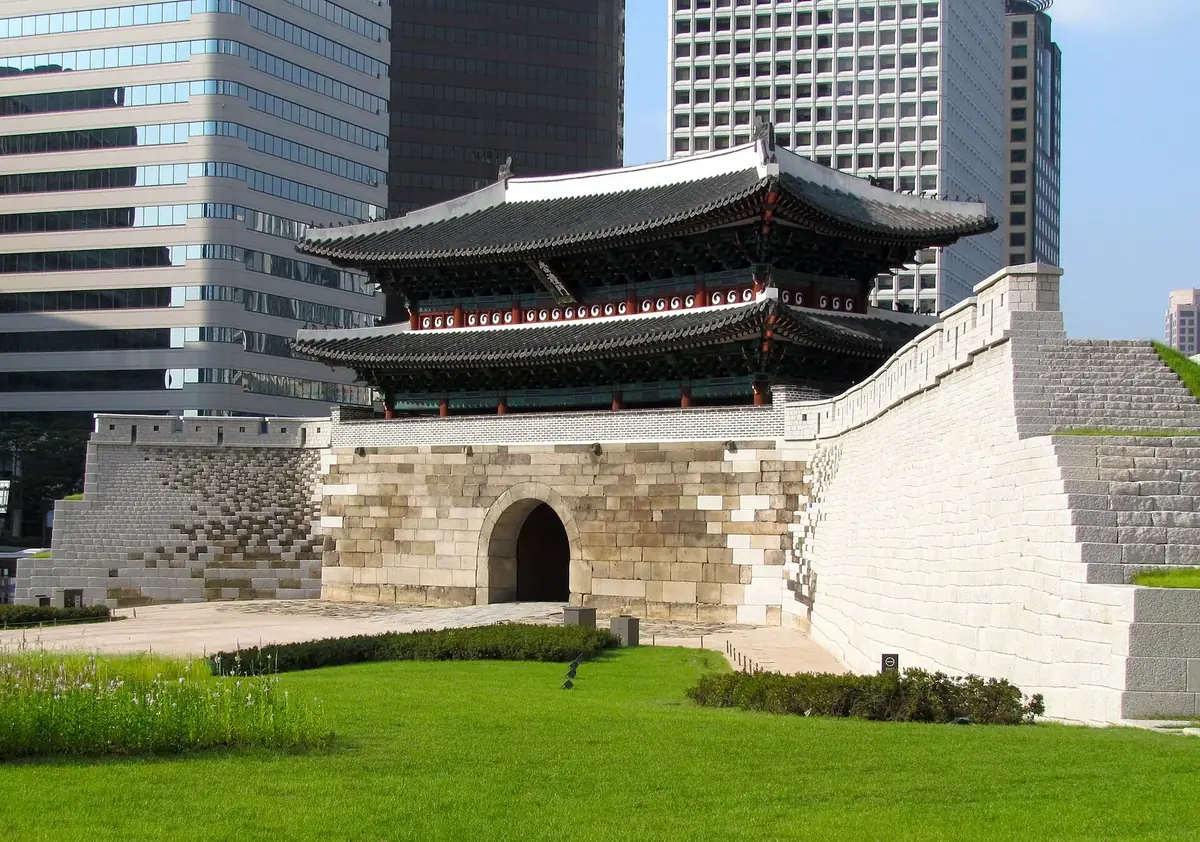
Sungnyemun, the southern gate of the Hanyangdoseong city wall, was begun in 1396 and completed in 1398 and is a two-storey wooden tower on a stone base with an arched gateway. It suffered major damage in an arson fire on 10 February 2008 and was restored in 2013. The Korea Heritage Service lists it as open from 09:00 to 18:00 (last entry 17:55), free of charge, and closed on Mondays; when Monday falls on a public holiday it opens and the next non-holiday day becomes the closing day.
Deoksugung, the guard ceremony and the Anglican cathedral
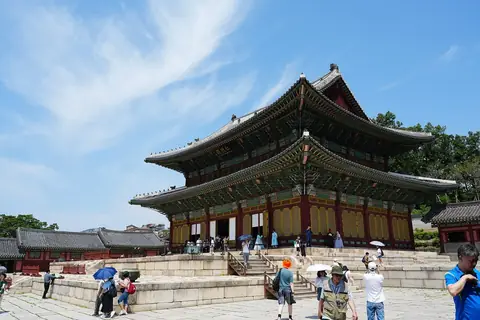
Deoksugung began as a temporary palace after the Japanese invasion of 1592 left Seoul's palaces badly damaged. It was named Gyeongungung in 1611, became the imperial court when Emperor Gojong proclaimed the Korean Empire in 1897, and took the name Deoksugung in 1907. Its Western-style buildings, among them the Seokjojeon, completed in 1910, stand beside traditional halls.
Deoksugung stands beside City Hall Station exit 1 (Lines 1 and 2). When we checked on 17 October 2026, the Korea Heritage Service listed it as open from 09:00 to 21:00 with last entry at 20:00, and closed on Mondays. Foreign adults aged 19 to 64 pay KRW 1,000, groups of ten or more pay KRW 800, and entry is free for foreign visitors aged 18 and under or 65 and over (bring a passport) and for anyone in hanbok. The Seokjojeon is entered by advance online booking with a guide, from 09:30 to 17:30, with the last tour at 16:30, and the art museum needs its own ticket. Its notices also listed a closure of the Dondeokjeon to visitors that applied from 13 October to 1 November 2026, and work on the outer wall from 21 September to 19 November 2026; check them before you go. Our Jongno and Bukchon guide covers the other palaces and the combined palace ticket.
The Seoul Royal Guard-Changing Ceremony takes place in front of Daehanmun, the main gate. Seoul's ceremony site lists it at 11:00 and 14:00 every day except Monday, says it may be cancelled in bad weather, and says times and events are reduced until the work on the Daehanmun platform is finished. A guard-duty ceremony in front of the gate runs from 10:00 to 15:30 on the same days. Public demonstrations are common in South Korea and foreign nationals may not take part in political activities, so avoid rallies and large crowds; our health and safety guide has the details.
The Seoul Metropolitan Government lists Seoul Cathedral of the Anglican Church of Korea at 15 Sejong-daero 21-gil, a lane off the avenue on which Deoksugung stands. It was built between 1922 and 1926 in granite and red brick in the Romanesque style, and is open Monday to Saturday from 11:00 to 16:00 and closed on Sundays.
Euljiro's retro alleys and the Seoullo 7017 walkway
Walk east from Euljiro 1-ga Station and the city changes: VisitSeoul describes Euljiro 2-ga as modern and surrounded by office buildings, while Euljiro 3-ga keeps the look of old Seoul, with old buildings plastered in signboards. After the Korean War, hardware retailers clustered here, and the district became known as a handyman's paradise. Coming out of Euljiro 3-ga Station exits 2 or 3 you reach a tile and pottery street of about 80 shops, and hardware shops line about 350 m between the Supyogyo and Gwansugyo bridges over the Cheonggyecheon stream; the printing alley lies in Inhyeon-dong.
The newer name is Hipjiro, from the cafés and bars that opened behind plain doors between the workshops. Nogari Alley began in 1980 with a pub that served dried young pollack (nogari) and was designated a Seoul Future Heritage site in 2015; VisitSeoul calls it an ordinary alley by day and a pub-filled alley by night. The Susanna Apron bakery cafe on the way towards Euljiro 4-ga Station is open daily from 07:00 to 22:00.
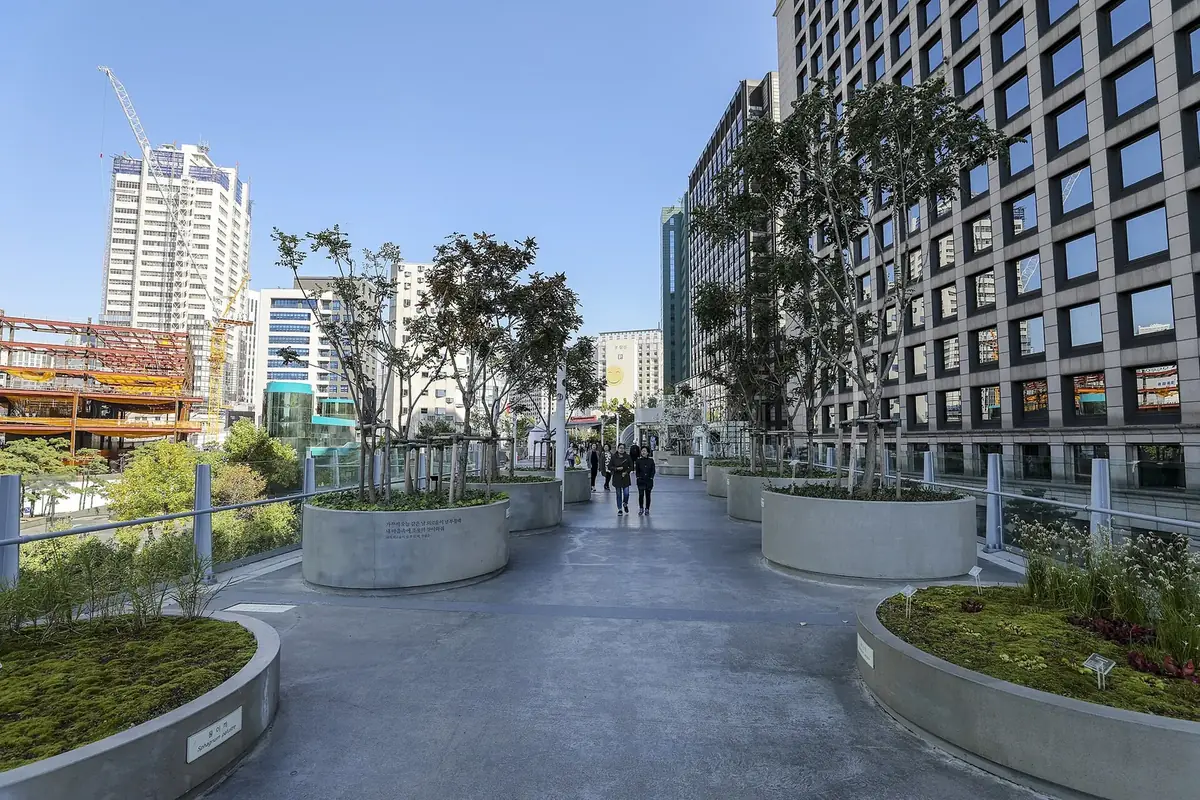
Seoullo 7017 is a pedestrian walkway on a former highway overpass beside Seoul Station. Its name nods to the road's opening in 1970 and its rebirth as a sky garden in 2017, and 17 pedestrian paths lead down to the neighbourhoods around it. It is free and open 24 hours a day all year, entered from 432 Cheongpa-ro, a short walk from Seoul Station exit 7.
One day or two: a route around the closing days
The order matters more than the distances, because several places close on different days. Namdaemun Market is closed on Sundays, Deoksugung and Sungnyemun on Mondays, Myeongdong Cathedral, the Bank of Korea Money Museum and Namsangol Hanok Village on Mondays, while Namsan, the lanes, Euljiro and Seoullo 7017 are open every day.
- Tuesday to Saturday, one long day: start at Hoehyeon exit 7 for Namdaemun Market and Sungnyemun, walk to Deoksugung for the 11:00 or 14:00 guard ceremony, spend the afternoon on the Myeongdong lanes and the cathedral, then take the cable car up for the tower on a clear evening and eat in Myeongdong.
- Sunday: Namdaemun Market is closed, so begin at Deoksugung for the 11:00 guard ceremony, walk on to the lanes, visit the cathedral in the afternoon rather than during morning mass, and keep the cable car for the evening.
- Monday: use the morning for Namdaemun Market, the lanes, Euljiro and Seoullo 7017, and go up Namsan in the afternoon or evening, because the Oreumi is stopped until 14:00; leave the palace, the gate, the cathedral, the Money Museum and Namsangol for another day.
- A second day: spend the morning in the Euljiro alleys, eat cold buckwheat noodles at Neungrado, and finish at dusk on Seoullo 7017 before Seoul Station.
What to eat and where to look
Kalguksu (knife-cut noodle soup)
Wheat noodles made fresh from flour dough, soft and chewy, in a savoury chicken broth. VisitSeoul recommends Myeongdong Kyoja for it.
- Where to look
- Myeongdong Kyoja, 29 Myeongdong 10-gil (open daily 10:30-21:00), a few minutes' walk from Myeongdong Station exit 8.
- Fit it into your day
- Lunch between the cathedral and the shopping lanes.
Braised hairtail (galchi-jorim)
Hairtail braised in a spicy, savoury sauce. VisitSeoul says the Namdaemun alley took shape around 1988 and that its restaurants use hairtail from Yeosu, Mokpo, Busan and Jeju, each with its own recipe. It is spicy; VisitSeoul suggests choosing a restaurant that also serves grilled fish if that is a problem.
- Where to look
- The Namdaemun Galchi-jorim Alley off Namdaemun Market-gil (hours 03:00-21:00, varying by restaurant), a few minutes' walk from Hoehyeon Station exit 5.
- Fit it into your day
- Lunch on the market morning, shared with rice and side dishes.
Oxtail soup (kkori gomtang)
A clear, long-simmered oxtail broth. The Namdaemun Market association names Eunho Sikdang and Jinju-jip among the market's long-established oxtail soup houses, and VisitSeoul says Eunho Sikdang has kept the same taste through three generations.
- Where to look
- Eunho Sikdang, inside Namdaemun Market, near Hoehyeon Station exit 7.
- Fit it into your day
- A warming late breakfast before the market stalls get busy.
Pork cutlet (donkkaseu)
A breaded, fried pork cutlet, the dish of the restaurants at the foot of Namsan. VisitSeoul describes a pork cutlet street beside the cable car platform with about ten restaurants in a row, each with its own specialty.
- Where to look
- Wonjo Namsan Wangdonkkaseu, Myeongdong Branch, 21 Myeongdong 7-gil (open 11:00-22:00), or the row of cutlet restaurants beside the cable car platform on Sopa-ro.
- Fit it into your day
- Lunch before the cable car, or a meal after coming down.
Pyongyang naengmyeon (cold buckwheat noodles)
Noodles made in-house from 100% buckwheat, served in a broth made from grade 1++ Korean beef, according to the restaurant's VisitSeoul listing.
- Where to look
- Neungrado Myeongdong Branch (open daily 11:00-21:30, last order 20:30), about a five-minute walk from Myeongdong Station and Euljiro 1-ga Station.
- Fit it into your day
- Dinner after the Euljiro alleys, or a light lunch on a warm day.
Arriving and getting around: the airport train and the subway
AREX has two services between Incheon Airport and Seoul Station. The non-stop Express Train takes about 43 minutes from Terminal 1 and about 51 minutes from Terminal 2; the all-stop train takes about 59 minutes from Terminal 1 and about 66 minutes from Terminal 2 (some all-stop trains take 2 to 6 minutes longer). The Express Train costs KRW 13,000 for an adult and KRW 9,500 for a child aged 6 to 12. You buy a ticket before boarding at the Express Train customer centres (Seoul Station basement 2, and the transport centres on basement 1 of each terminal). The all-stop train costs KRW 4,750 from Seoul Station to Terminal 1 and KRW 5,350 to Terminal 2 with a prepaid or postpaid transport card. Most public transport from the airport to central Seoul stops running around 23:30, and night buses need a ticket bought in advance. From Seoul Station, Line 4 serves Hoehyeon and Myeongdong. Airport limousine buses run from Incheon Airport to many parts of Korea; you must buy the ticket first, because cash and transport cards are not accepted on board, and the ticket booths and airport.kr list the route and fare for each stop. For luggage, Seoul Metro's T-Luggage service delivers bags between subway stations and the airport on the same day, and Myeongdong Station has a manned counter inside exits 1, 9 and 10 on basement 1.
On the way out, the City Airport Terminal on basement 2 of the Seoul Station airport railroad checks you in and drops your bag for same-day international flights from Incheon, from 05:20 to 19:00, with departure immigration from 05:30 to 19:00. It is open only to Express Train customers, the airlines accepted vary, and check-in closes three hours before a Terminal 1 flight and three hours 20 minutes before a Terminal 2 flight. On the weekday and holiday timetables the first Express Train leaves Terminal 1 at 05:24 and the last at 22:48, and the first leaves Seoul Station at 06:00 and the last at 23:00; validate your ticket and follow the signs to the Express Train platform, and check AREX's current timetable for your departure. KTX trains and airport buses are covered in our transport guide.
Seoul's subway runs from about 05:30 to midnight, and the Seoul Metropolitan Government lists the adult base fare at KRW 1,550 with a transport card and KRW 1,650 for a single-ride ticket (checked on 17 October 2026). A Tmoney card is a reloadable prepaid card without an account; you buy and load it at convenience stores across the country (GS25, CU, 7-Eleven and others) and at the information centres in Seoul subway stations on Lines 1 to 8. A Tmoney card costs KRW 3,000 to KRW 5,000 depending on the design; you can reload it at the ticket machines in subway stations, up to a balance of KRW 500,000.
Practical questions
Is Myeongdong a good area to stay on a first visit to Seoul?
Yes, if you want to walk to the shopping lanes, the cathedral, Namsan's cable car and Namdaemun Market, and to reach Seoul Station by Line 4. It is crowded, so ask for a higher floor or a side street; Hoehyeon is the alternative beside the market.
How do I get from Incheon Airport to Myeongdong?
Take AREX to Seoul Station: the Express Train takes about 43 minutes from Terminal 1 or 51 from Terminal 2 and costs KRW 13,000, and the all-stop train takes 59 or 66 minutes and costs KRW 4,750 or KRW 5,350 with a transport card. From Seoul Station, Line 4 serves Hoehyeon and Myeongdong.
How much does it cost to go up N Seoul Tower?
The operator's page lists the observatory at KRW 29,000 for adults and KRW 23,000 for children aged 3 to 12 and visitors aged 65 and over. The Namsan cable car is KRW 15,000 round trip for adults according to VisitSeoul, or KRW 12,000 one way for adults; the walk up costs nothing.
Which days are Namdaemun Market and Deoksugung closed?
VisitKorea lists Namdaemun Market as closed on Sundays, with hours set shop by shop. Deoksugung and Sungnyemun close on Mondays, and the guard ceremony does not run on Mondays.
Can I get a tax refund on shopping in Myeongdong?
Yes, at shops with a Tax Refund or Tax Free sign, for purchases of at least KRW 15,000 per receipt that leave Korea within three months. Show your passport at the till, and confirm the goods with customs at the departure airport for a refund claimed later.
Is there a free way up Namsan?
Yes. Namsan Park is free to enter and the Dulle-gil paths are free, so walking up from Namsan Library or the National Theater of Korea costs nothing; the observatory ticket, the cable car and the circular buses are the paid parts.
Keep planning your trip
Seoul
Three nights in Seoul: where to sleep, palace and museum hours and fees, the airport train, the subway, Inwangsan, five dishes and the costs for two.
Read the guide
Jongno and Bukchon (Seoul)
Jongno's palaces and Jongmyo: hours, closing days, the KRW 6,000 combined ticket, Secret Garden booking, Bukchon's visiting hours and where to sleep.
Read the guide
Hongdae and Mapo (Seoul)
Hongdae suits a first or last night: the airport train, busking, Yeonnam's rail park, Mangwon Market, Gongdeok's jokbal alley and World Cup Park.
Read the guide
Where to stay in South Korea
Which area to sleep in for Seoul, Busan, Gyeongju, Jeonju, Jeju and more, what hanok and templestays are like, room choices and rates from hotels' own pages.
Read the guide
South Korea in 5 days
Five days and four nights in Seoul: palaces, Hongdae, Namsan and a Suwon day trip by Line 1, with airport trains, fares and an all-in budget for two.
Read the guide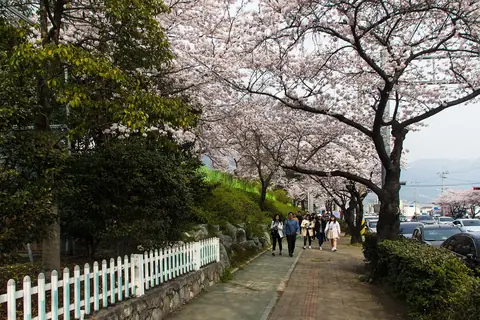
Best time to visit South Korea
Cherry blossom from late March to mid-April, autumn colour from early October on Seoraksan: which month to book, rains, typhoons and holidays that fill trains.
Read the guideSources and checks before you travel
(53)
- VisitSeoul: Myeongdong shopping street ↗ — opens in a new tab
- VisitSeoul: Myeong-dong Tourist Information Center ↗ — opens in a new tab
- VisitSeoul: Myeongdong Cathedral ↗ — opens in a new tab
- VisitSeoul: Myeongdong Kyoja ↗ — opens in a new tab
- VisitSeoul: Neungrado Myeongdong Branch ↗ — opens in a new tab
- VisitSeoul: Namdaemun Market ↗ — opens in a new tab
- VisitSeoul: Namdaemun Galchi-jorim Alley ↗ — opens in a new tab
- Namdaemun Market association: market introduction ↗ — opens in a new tab
- VisitKorea: Namdaemun Market ↗ — opens in a new tab
- Korea Heritage Service: palace opening hours and closing days ↗ — opens in a new tab
- Korea Heritage Service: palace admission fees ↗ — opens in a new tab
- Korea Heritage Service: Deoksugung page and notices ↗ — opens in a new tab
- Korea Heritage Service: Deoksugung and its history ↗ — opens in a new tab
- Korea Heritage Service: Sungnyemun Gate and its history ↗ — opens in a new tab
- Seoul Royal Guard-Changing Ceremony: programme ↗ — opens in a new tab
- Seoul Metropolitan Government: Seoul Cathedral of the Anglican Church of Korea ↗ — opens in a new tab
- VisitSeoul: Euljiro 3-ga and Hipjiro ↗ — opens in a new tab
- VisitSeoul: Seoullo 7017 ↗ — opens in a new tab
- VisitSeoul: Namsan Park ↗ — opens in a new tab
- VisitSeoul: Namsan Dulle-gil ↗ — opens in a new tab
- YTN Seoul Tower: cable car directions ↗ — opens in a new tab
- YTN Seoul Tower: bus directions ↗ — opens in a new tab
- YTN Seoul Tower: walking routes ↗ — opens in a new tab
- Namsan Cable Car: operator site ↗ — opens in a new tab
- N Seoul Tower: hours ↗ — opens in a new tab
- N Seoul Tower: admission ↗ — opens in a new tab
- N Seoul Tower: observatory ↗ — opens in a new tab
- AirKorea: real-time air quality ↗ — opens in a new tab
- VisitKorea: duty free and tax refunds ↗ — opens in a new tab
- AREX: Express Train ↗ — opens in a new tab
- AREX: all-stop fares ↗ — opens in a new tab
- Incheon Airport: City Airport Terminal at Seoul Station ↗ — opens in a new tab
- VisitKorea: airport transport ↗ — opens in a new tab
- VisitKorea: Tmoney card ↗ — opens in a new tab
- Seoul Metropolitan Government: subway fares ↗ — opens in a new tab
- UK government: safety and security in South Korea ↗ — opens in a new tab
- VisitSeoul: Myeongdong editors pick ↗ — opens in a new tab
- VisitSeoul: money ↗ — opens in a new tab
- VisitSeoul: Namsangol Hanok Village ↗ — opens in a new tab
- VisitSeoul: Namsan Beacon Mound Lighting Ceremony ↗ — opens in a new tab
- VisitSeoul: Namsan beacon lighting programme ↗ — opens in a new tab
- VisitSeoul: Namsan City Wall course ↗ — opens in a new tab
- Seoul Metropolitan Government: Namsan Revitalization Plan ↗ — opens in a new tab
- Seoul Metropolitan Government: Namsan in April ↗ — opens in a new tab
- Incheon Airport: airport railroad guide and T-Luggage ↗ — opens in a new tab
- VisitSeoul: Namsan Cable Car ↗ — opens in a new tab
- Seoul Metropolitan Government: Namsan Ormi ↗ — opens in a new tab
- VisitKorea: Myeongdong Nanta Theatre ↗ — opens in a new tab
- VisitSeoul: Bank of Korea Money Museum ↗ — opens in a new tab
- VisitKorea: Namsangol Hanok Village ↗ — opens in a new tab
- VisitKorea: Wonjo Namsan Wangdonkkaseu, Myeongdong ↗ — opens in a new tab
- VisitSeoul: Namsan night tour ↗ — opens in a new tab
- VisitSeoul: Seoul Tourist Information Center ↗ — opens in a new tab
Reference sources for the version dated 2 November 2026. Confirm opening times, access, transport and conditions for your travel dates.
Photo credits
(7)
The brick Gothic spire and facade of Myeongdong Cathedral
Photograph: Sean Young (@assanges) — opens in a new tab · CC BY 4.0 — opens in a new tab
Changes: Resized and converted to WebP; displayed with responsive crops. · Original photograph and licence details ↗ — opens in a new tab
A red Namsan cable car cabin above the rooftops of central Seoul
Photograph: Andrew Bell — opens in a new tab · CC BY 2.0 — opens in a new tab
Changes: Resized and converted to WebP; displayed with responsive crops. · Original photograph and licence details ↗ — opens in a new tab
N Seoul Tower rising above the trees of Namsan Park
Photograph: FLASHPACKER TRAVELGUIDE — opens in a new tab · CC BY-SA 2.0 — opens in a new tab
Changes: Resized and converted to WebP; displayed with responsive crops. · Original photograph and licence details ↗ — opens in a new tab
Sungnyemun, the gate of the old city wall, with office towers behind it
Photograph: DoulosCore — opens in a new tab · CC BY-SA 3.0 — opens in a new tab
Changes: Resized and converted to WebP; displayed with responsive crops. · Original photograph and licence details ↗ — opens in a new tab
The Namdaemun Market gate sign and the shop signs beside it
Photograph: User:CaliforniaAliBaba — opens in a new tab · CC BY-SA 3.0 — opens in a new tab
Changes: Resized and converted to WebP; displayed with responsive crops. · Original photograph and licence details ↗ — opens in a new tab
Beans, namul, pickled garlic and pickled melon (jangajji) in bowls at Namdaemun Market
Photograph: Grete Howard at Flickr — opens in a new tab · CC BY 3.0 — opens in a new tab
Changes: Resized and converted to WebP; displayed with responsive crops. · Original photograph and licence details ↗ — opens in a new tab
The planted walkway of Seoullo 7017 with office buildings beside it
Photograph: bryan... — opens in a new tab · CC BY-SA 2.0 — opens in a new tab
Changes: Resized and converted to WebP; displayed with responsive crops. · Original photograph and licence details ↗ — opens in a new tab