Plan your trip · South Korea
Best time to visit South Korea: blossom, monsoon, foliage and snow
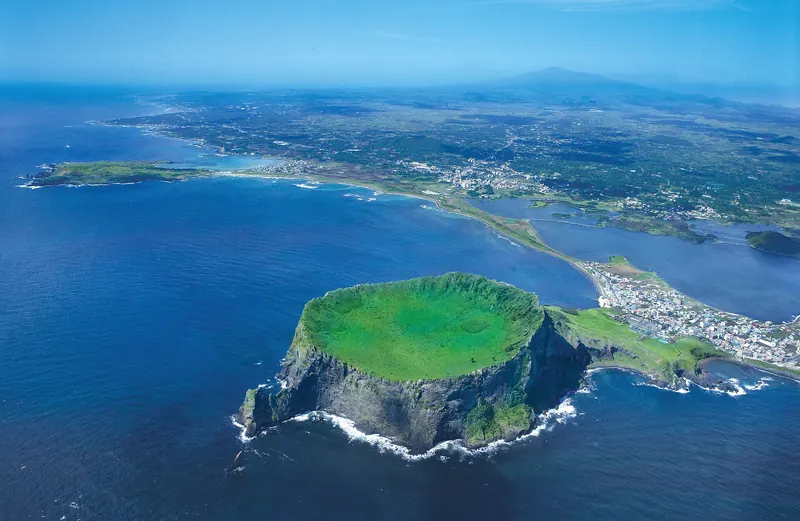
South Korea is a small country with four very distinct seasons, and the season changes the trip far more than the region does. VisitKorea describes clear, mild springs and autumns, a hot and humid summer and a cold, dry winter, and outside the islands the temperatures do not vary much from city to city. The real choice is what you want to see: blossom moving north from Jeju and Busan in late March, beaches and mountain valleys in summer, red maples spreading south from Seoraksan in October, or snow on palace roofs and ski slopes in winter. This guide explains each season, where to put the days in each one, and which weeks need extra planning because of rain, typhoons or national holidays.
- Suggested time
- 7–10 days for Seoul, Gyeongju and Busan; add 3 days for Jeju
- Where to stay
- Seoul and Busan, with Jeju or Sokcho as seasonal extras
- Season and timing
- April and mid-October to early November are best; June to August for beaches; December to February for snow and skiing.
The short answer
For a first trip, go in April or from mid-October to early November. Both are the mild walking seasons VisitKorea recommends, and both have a clear spectacle: cherry blossom in spring and foliage in autumn. Allow 7 to 10 days, sleep in Seoul and Busan and link them by KTX on the Gyeongbu Line, adding Gyeongju on the way; add Jeju by a domestic flight from Gimpo if you have three more days. In spring, start in the south and move north with the blossom. In autumn, do the reverse and start with Seoraksan in the north-east. From late June to late July expect the rainy season, and from June to October keep an eye on typhoon warnings. In winter, the cold is serious, but it is the season for skiing in Gangwon State and for quiet, snowy palaces in Seoul.
Four seasons in a small country
VisitKorea, the Korea Tourism Organization's official site, describes Korea as a mid-latitude country with a temperate climate and four distinct seasons: clear and mild weather in spring and autumn, hot and humid summers and cold, dry winters. It also notes that, apart from the islands, temperatures do not differ much between regions. The yearly average runs from about 7°C at Daegwallyeong in the Gangwon mountains to about 15°C in Busan, August is the hottest month and January the coldest.
The monthly averages on the same page show how wide the swing is. In Seoul, the average high is around 30°C in August, and the average low is −5.5°C in January. Busan, on the south coast, is milder in winter: its January average low is just below freezing (−0.1°C) and its average high 8.2°C. So one wardrobe will not cover a year in Korea, but within one season you can move between Seoul, Gyeongju and Busan without changing your plans for the weather.
For travelling on foot, VisitKorea recommends spring (March to May) and autumn (September to November). Summer (June to August) suits beaches and water activities, and winter (December to February) is for snowy mountains, hot springs and skiing. Its weather advice adds one caution for every season: patterns have been changing with climate change, so check the real-time forecast during your trip and be ready for unexpected rain or extreme heat.
Spring: follow the cherry blossom north
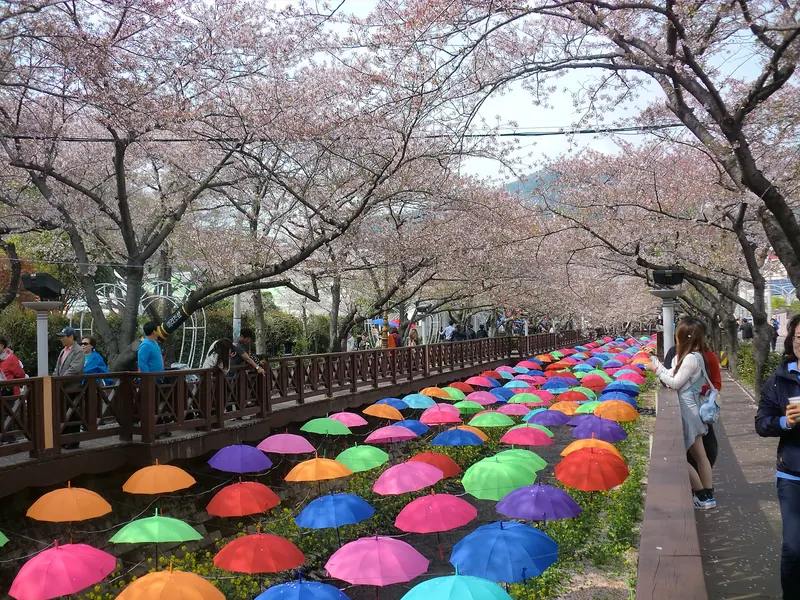
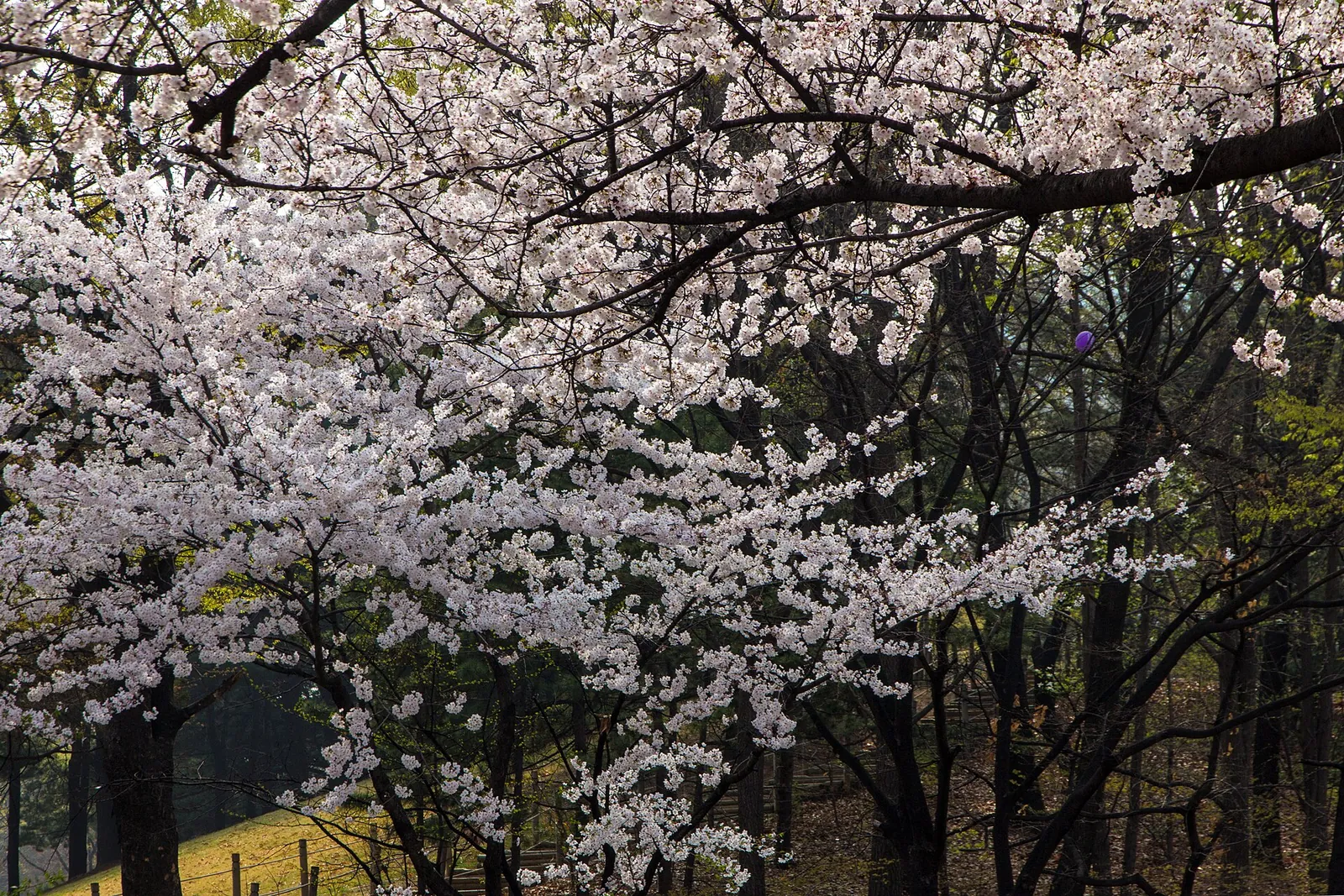
Spring is the flower season: forsythia, cherry blossom, azalea and later roses. The blossom moves up the peninsula from south to north, which gives you a natural route. VisitKorea's 2026 cherry blossom forecast, credited to the forecaster Weather i, gave first blooms on Jeju and in Busan around 25 March, Jeonju and Gyeongju around 28 March, Gangneung around 1 April, Seoul around 3 April and Incheon around 7 April. Peak bloom comes about a week after the first flowers, so the forecast put full bloom in Jeju after 1 April and in Seoul around 10 April.
Those are one year's dates, and VisitKorea notes that actual dates depend on the weather; the 2026 forecast was published on 26 February. If your dates are fixed, the safest plan is to spread the trip: Busan or Gyeongju at the end of March, then Seoul in the first half of April. If you can only be in one place, check the new forecast before booking: in 2026 it put Seoul's peak around 10 April.
Two spring cautions. VisitKorea warns that chilly weather often continues until mid-March, so bring a proper jacket for early spring. The Seoul Metropolitan Government adds that temperatures can drop sharply after dark, that the air can be very dry and that spring brings yellow dust, for which it suggests sunglasses and a mask. Keep outdoor plans flexible on hazy days.
Make time for the local food
What to eat and where to look
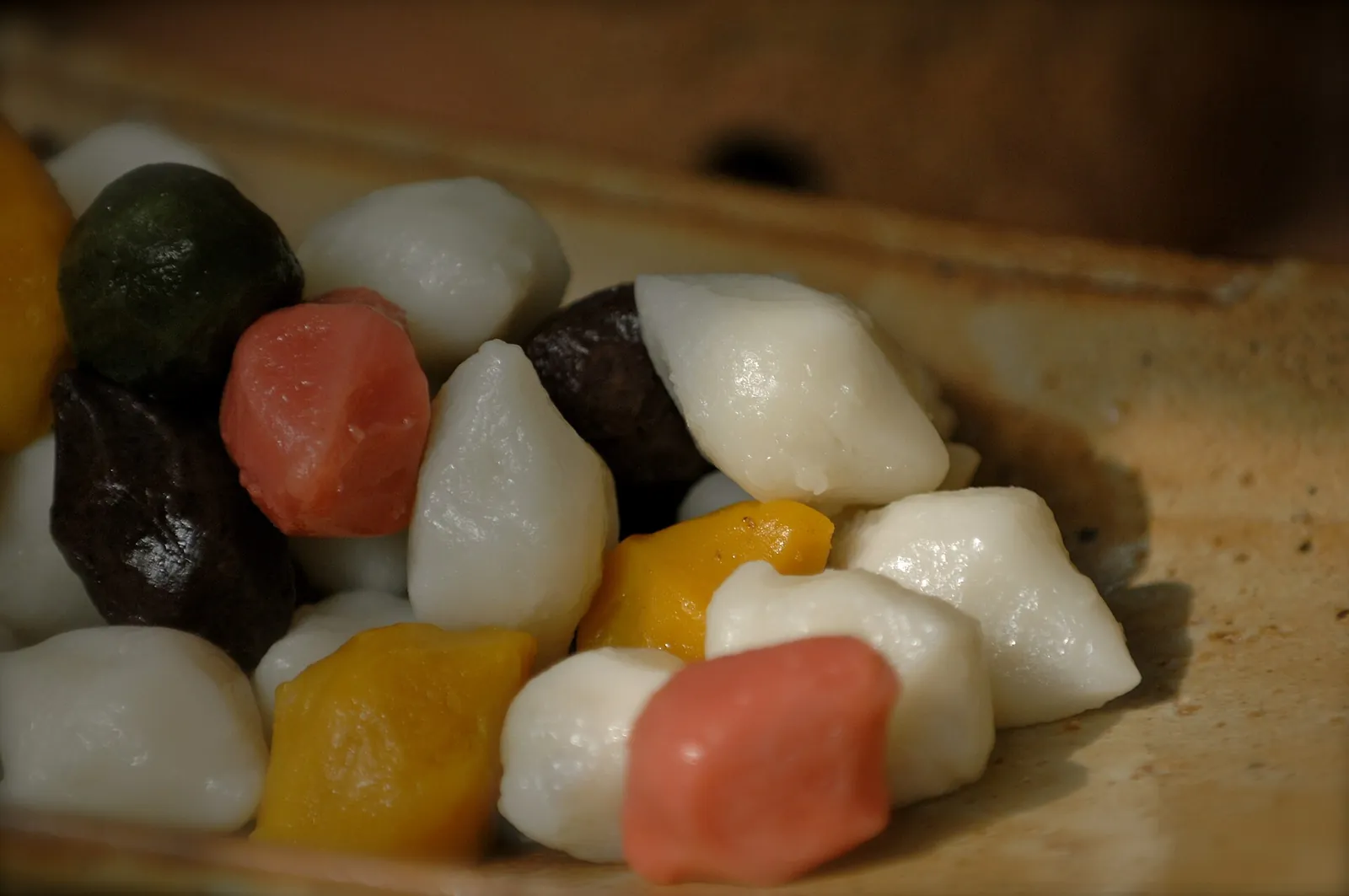
Songpyeon (Chuseok rice cakes)
Small half-moon rice cakes filled with red beans, beans or sesame seeds and steamed, the food VisitKorea names first among Chuseok dishes. Families make them for the autumn holiday alongside japchae, seasoned greens and jeon.
- Where to look
- Rice-cake shops (tteokjip) and traditional markets in the days before Chuseok, when they are sold in boxes and trays.
- Fit it into your day
- A snack or dessert during an autumn trip, especially in the week of Chuseok.
Fillings vary; ask if you avoid sesame or beans. Sold fresh and best eaten the same day.
Tteokguk (rice-cake soup)
Sliced rice cakes in a clear broth, which VisitKorea describes as the bowl families share on Seollal. It is equally welcome as a warming meal on any cold winter day.
- Where to look
- Korean home-style restaurants and soup shops; menus often list it as tteokguk or tteok-manduguk (with dumplings).
- Fit it into your day
- Lunch on a cold winter day in Seoul between palaces and markets.
Broth is usually beef-based; ask before ordering if you are vegetarian.
Naengmyeon and milmyeon (cold noodles)
Thin noodles in an ice-cold, tangy broth or with a spicy sauce. Naengmyeon uses buckwheat and is the classic summer dish in Seoul; Busan's milmyeon is a wheat-noodle version of the same idea.
- Where to look
- Specialist noodle restaurants in Seoul and milmyeon shops in Busan, busiest at lunchtime in July and August.
- Fit it into your day
- Lunch in the heat of a summer afternoon, before going back out in the evening.
The broth is often beef-based and the noodles are long: staff may offer scissors to cut them.
Jeon (savoury pancakes)
Pan-fried pancakes of vegetables, seafood or meat in batter. Jeon is one of the holiday foods VisitKorea lists for Chuseok, and a plate with makgeolli is a classic order on a rainy day.
- Where to look
- Market food stalls and jeon restaurants in traditional markets; ask for haemul pajeon for seafood and spring onion.
- Fit it into your day
- A shared plate on a wet rainy-season evening or after an autumn hike.
Seafood versions contain shellfish; batters contain wheat and egg.
Summer: rainy season, heat and beaches
Summer is hot and partly wet. VisitKorea says the season overlaps with the rainy season, so if you visit from the end of June to the end of July you should check the forecast in advance, and that several typhoons pass between June and October. The hottest and most humid stretch is from the end of July through August, when it advises watching for typhoon and heavy-rain advisories before and during the trip. The Seoul government describes the capital's summer as long, hot and humid, interrupted by monsoon rain in June and July, and somewhat quieter than usual because many Koreans go away on holiday.
The upside is the coast. Korea is surrounded by sea on three sides, and VisitKorea counts around 280 beaches; they are open all year but become livelier from mid-June, when they are run with a focus on safety and cleanliness. Each beach sets its own swimming period: in 2025 VisitKorea listed 21 June to 14 September for Haeundae in Busan, 1 July to 31 August for Gwangalli, and from late June or early July to mid- or late August for Gyeongpo in Gangneung and Sokcho Beach. Check the current year's dates before planning a beach week.
A practical summer plan: keep a Seoul stay to palaces in the morning and museums or markets in the heat of the afternoon, then spend the second half of the trip on the coast in Busan or Gangneung. Book flexible rooms and transport around any typhoon warning. Boat trips are the first thing to go: on Jeju, for example, VisitKorea notes that the Seogwipo cruise does not sail during typhoon warnings.
Autumn: foliage from Seoraksan to Hallasan, and festival season
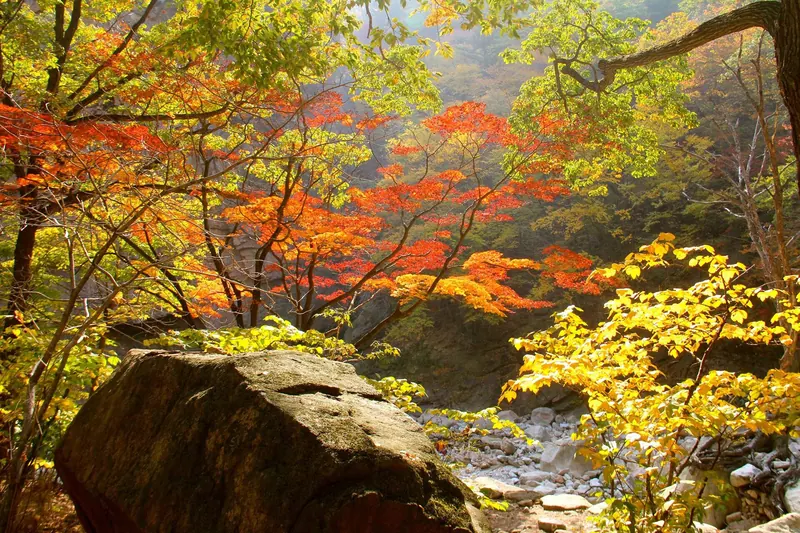
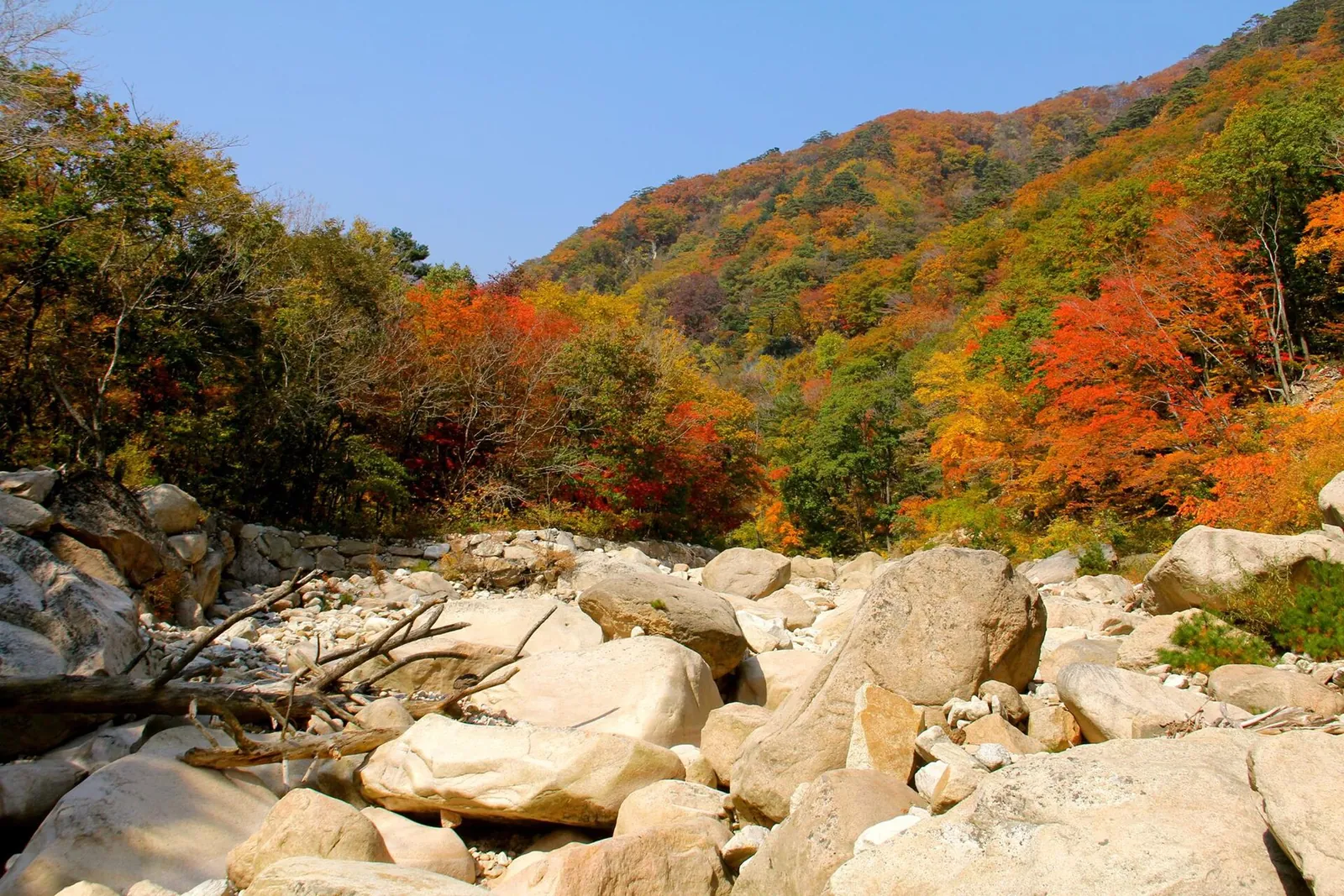
VisitKorea calls autumn a beautiful season even without special events, with average temperatures around 15°C. The foliage moves the opposite way to the blossom, from the high north-east down to the south and Jeju. Its 2026 foliage forecast (credited to Weatheri) gave the first colour on Seoraksan on 3 October, then Bukhansan on 23 October, Jirisan on 28 October and Hallasan on 31 October, with peak foliage across the country from mid-October to early November: Seoraksan around 25 October, Bukhansan around 4 November, Jirisan around 5 November, Naejangsan around 11 November and Hallasan around 13 November.
That gives a simple route for a two-week autumn trip: Sokcho and Seoraksan in the third or fourth week of October, then Seoul, where VisitKorea names Gyeongbokgung, Seoul Forest, Olympic Park and N Seoul Tower among the foliage spots, and the south in early to mid-November: VisitKorea names Bulguksa in Gyeongju among its foliage spots, and Naejangsan was forecast to peak around 11 November. VisitKorea warns that the Seoraksan cable car is crowded at weekends, on public holidays and in the foliage season, so do the famous hikes and rides on a weekday and plan ahead. On Seoraksan, VisitKorea also notes that many upper trail sections close during the forest-fire prevention periods, so check the Korea National Park Service before planning a summit hike.
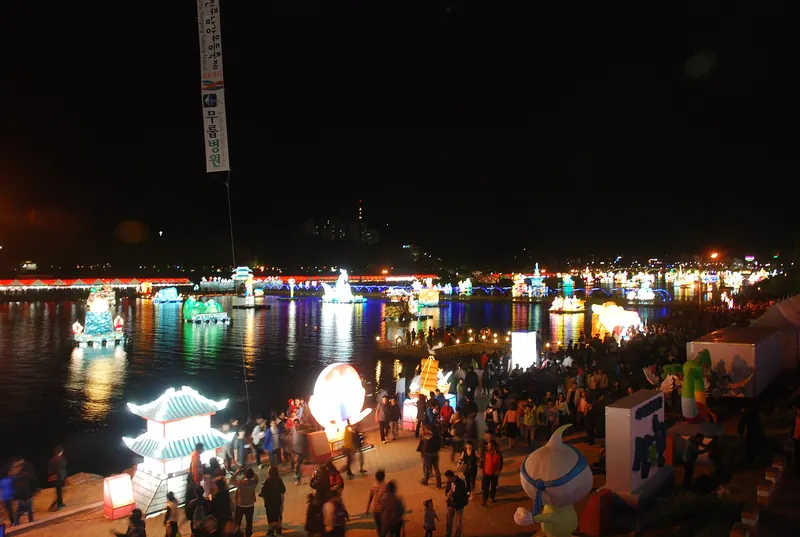
Autumn is also the busiest festival season. VisitKorea's 2026 list included the Andong Maskdance Festival (24 September to 4 October), the Suwon Hwaseong Festival (4 to 11 October), the Jinju Namgang Yudeung (lantern) Festival (3 to 18 October), the Busan International Film Festival (6 to 15 October) and the Gangneung Coffee Festival (21 to 25 October). Festival weeks fill local hotels, so book early if a festival falls on your dates, and expect each year's dates to move.
Winter: cold, clear and good for skiing
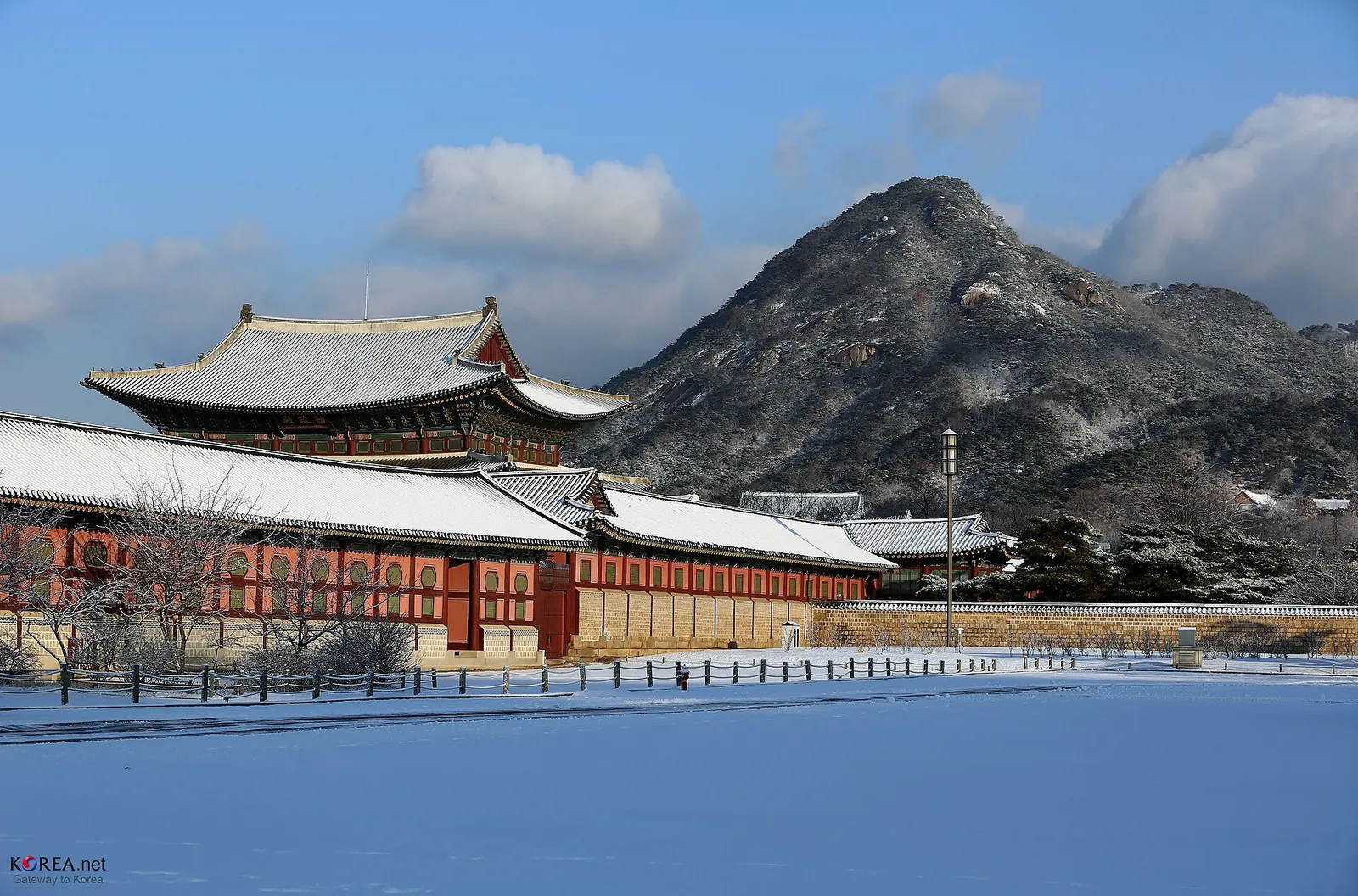
Korean winters are cold. VisitKorea gives an average winter temperature of 0 to 1°C, often falling well below zero, and explains that the northerly wind from Siberia brings intense cold, so pack thick outerwear and be ready for cold waves. The Seoul government describes strong winds, icy air and short days in the capital.
It is still a good season if you plan for it. Snowy mountain walks, hot springs, ondol-heated rooms and warm soups are the winter pleasures VisitKorea highlights, and Myeongdong's Christmas decorations and street food are the Seoul government's winter suggestion. For skiing, Gangwon State is the main area: VisitKorea describes it as known for heavy snowfall, lists Mona Yongpyong in Pyeongchang as Korea's first and largest ski resort, with 28 slopes and 14 lifts, and says that from December to February, the peak ski season, accommodation and shuttle buses should be reserved in advance. Opening dates and slopes depend on snow and weather, so check each resort's official site.
If you dislike the cold, put more of a winter trip in Busan, which has the mildest winter of the three cities in VisitKorea's table, and keep Seoul for indoor sights, markets and evenings.
Seollal and Chuseok: the two holidays to plan around
The national holidays change a trip as much as the weather. VisitKorea explains that Seollal, the Lunar New Year, falls on the first day of the lunar calendar and typically in February, and Chuseok, Korean Thanksgiving, on the 15th day of the eighth lunar month, usually in September or October. Each holiday period lasts three consecutive days, and many Koreans travel back to their hometowns, so expect busy long-distance trains, buses and domestic flights around those days and book early.
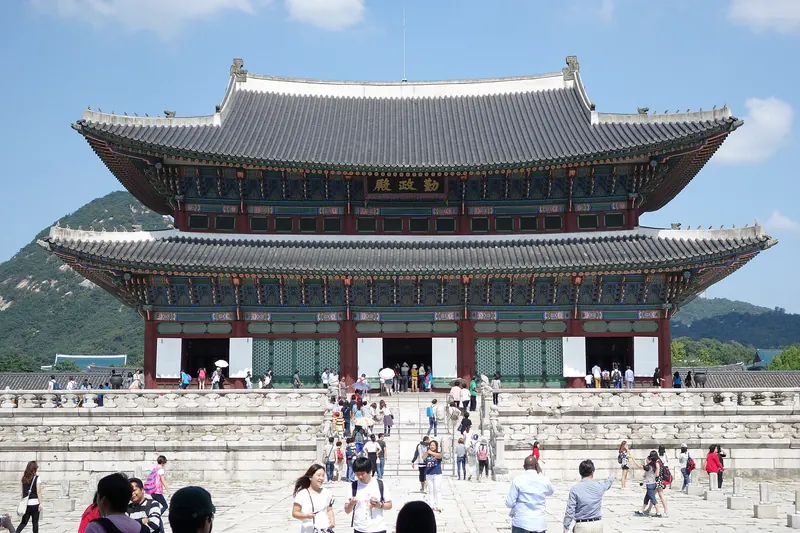
There is a benefit for visitors who stay put: VisitKorea says palaces, museums and folk villages hold holiday events and that many royal palaces offer free admission during the Seollal and Chuseok holidays. A holiday week spent in Seoul, with the long-distance travel done before or after it, can work well. The other traditional date worth knowing is Dano, on the fifth day of the fifth lunar month and usually in June, celebrated above all at the Gangneung Danoje Festival, which is on UNESCO's Intangible Cultural Heritage list.
South Korea month by month
This is an editorial summary of the official climate guide and the 2026 forecasts above, not a weather forecast. Exact blossom, foliage and festival dates move every year.
- January and February: the coldest months; skiing in Gangwon State, snowy palaces in Seoul, milder days in Busan. Seollal usually falls in February.
- March: chilly until mid-month; first cherry blossom on Jeju and in Busan towards the end of the month.
- April: blossom in Gyeongju, Gangneung and then Seoul; the best all-round month for a first trip, with cool evenings and some yellow-dust days.
- May: warm, green and still comfortable for walking before the summer humidity.
- June: beaches open from mid-June; the rainy season usually starts towards the end of the month; Dano usually falls in June.
- July and August: rain until late July, then the hottest, most humid weeks; the beach and holiday season; watch typhoon warnings.
- September: still warm, with typhoons possible; Chuseok usually falls in September or October.
- October: foliage begins on Seoraksan early in the month and peaks there late in the month; the main festival month.
- November: foliage peaks in the centre and south (Bukhansan, Jirisan, Naejangsan) and on Hallasan; days shorten and nights get cold.
- December: winter sets in; the ski season starts and Seoul turns to Christmas lights and warm street food.
Practical questions
What is the best month to visit South Korea?
April and mid-October to early November. VisitKorea recommends spring (March to May) and autumn (September to November) for travelling on foot, and these weeks add cherry blossom or foliage to the mild weather.
When does the cherry blossom bloom in Korea?
It moves from south to north. VisitKorea's 2026 forecast gave first blooms on Jeju and in Busan around 25 March and in Seoul around 3 April, with full bloom about a week later. Dates change every year; the 2026 forecast was published on 26 February.
When is the rainy season in South Korea?
VisitKorea advises checking the forecast if you visit from the end of June to the end of July, the rainy season, and notes that several typhoons can pass between June and October.
When is the autumn foliage at its best?
VisitKorea's 2026 forecast put peak foliage across the country from mid-October to early November: Seoraksan around 25 October, Bukhansan near Seoul around 4 November, and Naejangsan and Hallasan in mid-November.
Is winter a good time to visit Korea?
Yes, if you pack for real cold. The average winter temperature is 0 to 1°C and often lower, but it is the season for skiing in Gangwon State, hot springs and quiet, snowy palaces. Busan has milder winters than Seoul.
Should I avoid Chuseok and Seollal?
Not necessarily. Many Koreans travel to their hometowns, so long-distance transport is busy, but many royal palaces offer free admission during the holidays. Stay in one city for the holiday days and travel before or after them.
Sources and checks before you travel
Reference sources for the version dated 3 October 2026. Confirm opening times, access, transport and conditions for your travel dates.
- VisitKorea (Korea Tourism Organization): Climate ↗ — opens in a new tab
- VisitKorea: 2026 Cherry Blossom Forecast ↗ — opens in a new tab
- VisitKorea: 2026 Fall Foliage Forecast ↗ — opens in a new tab
- VisitKorea: Korea's TOP 14 Autumn Festivals in 2026 ↗ — opens in a new tab
- VisitKorea: Three Major Traditional Korean Holidays: Seollal, Dano, and Chuseok ↗ — opens in a new tab
- VisitKorea: Best Summer Beach Destinations ↗ — opens in a new tab
- VisitKorea: 12 Ski Resorts to Spend an Exciting Winter in Korea ↗ — opens in a new tab
- Seoul Metropolitan Government: Four seasons in Seoul and climate ↗ — opens in a new tab
- VisitKorea: Best hiking trails in Korea's national parks ↗ — opens in a new tab
- VisitKorea: Seogwipo New Paradise Cruise ↗ — opens in a new tab
- VisitKorea: Airport Transportation Guide ↗ — opens in a new tab
- VisitKorea: Train ↗ — opens in a new tab
- VisitKorea: Jeju Island, a Picturesque Paradise for a Peaceful Retreat ↗ — opens in a new tab
Photo credits
Seoraksan in October, where Korea's foliage season begins
Photograph: Joycekim77 — opens in a new tab · CC BY-SA 3.0 — opens in a new tab
Changes: Resized and converted to WebP; displayed with responsive crops. · Original photograph and licence details ↗ — opens in a new tab
Cherry blossom in Yeouido Park, Seoul, in early April
Photograph: Alexey Komarov — opens in a new tab · CC BY 3.0 — opens in a new tab
Changes: Resized and converted to WebP; displayed with responsive crops. · Original photograph and licence details ↗ — opens in a new tab
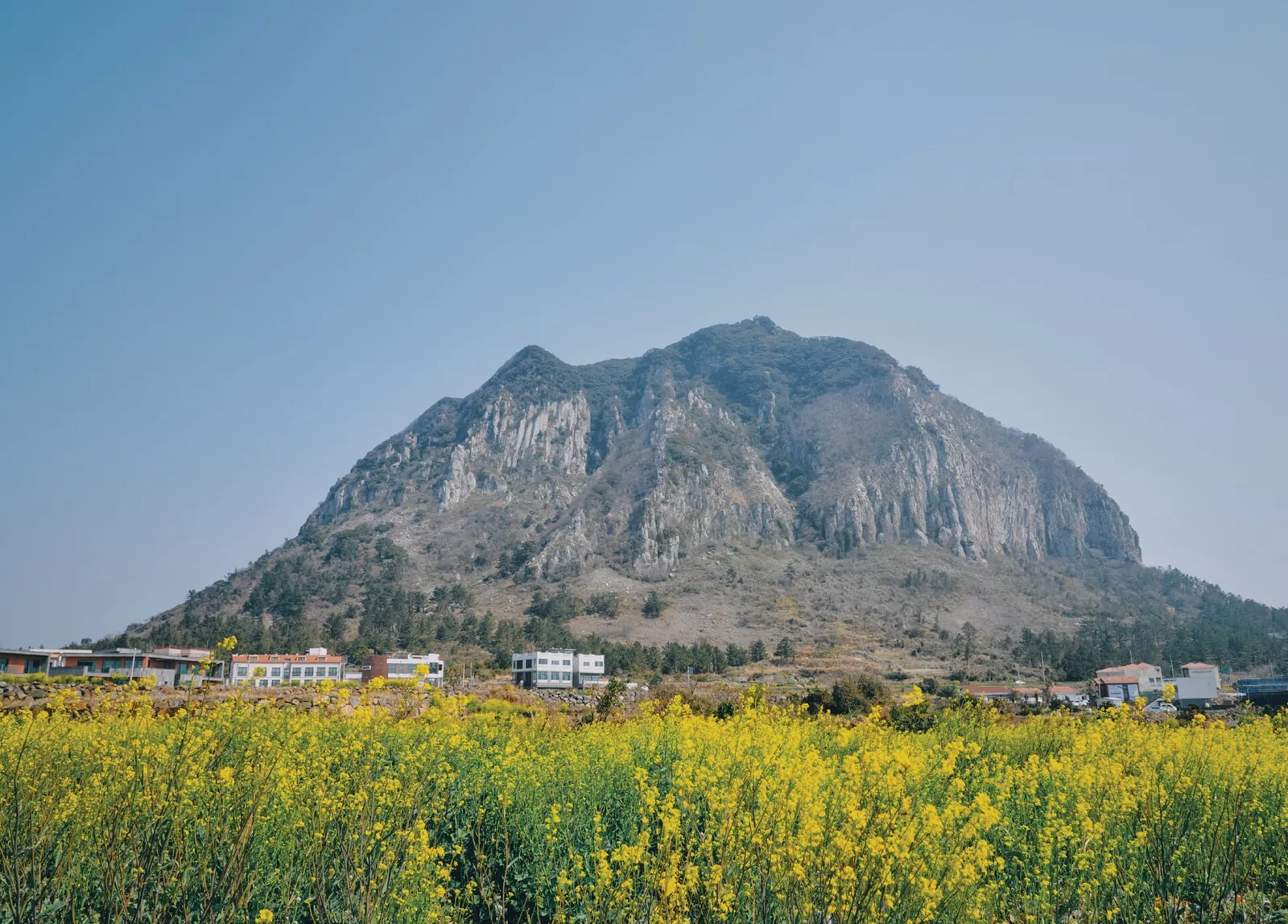
Canola flowers below Sanbangsan on Jeju Olle Trail Route 10
Photograph: Jeju Olle Foundation — opens in a new tab · CC BY-SA 4.0 — opens in a new tab
Changes: Resized and converted to WebP; displayed with responsive crops. · Original photograph and licence details ↗ — opens in a new tab
Snow at Gyeongbokgung Palace, Seoul, in December
Photograph: Korea.net / Korean Culture and Information Service (Jeon Han) — opens in a new tab · CC BY-SA 2.0 — opens in a new tab
Changes: Resized and converted to WebP; displayed with responsive crops. · Original photograph and licence details ↗ — opens in a new tab
Songpyeon, the half-moon rice cakes made for Chuseok
Photograph: USAG- Humphreys — opens in a new tab · CC BY 2.0 — opens in a new tab
Changes: Resized and converted to WebP; displayed with responsive crops. · Original photograph and licence details ↗ — opens in a new tab