Plan your trip · South Korea
Regional food in South Korea: what to eat where, city by city
Many of Korea's best-known dishes carry a place name, and the name is not decoration. Jeonju bibimbap, Chuncheon dakgalbi, Andong jjimdak, Chungmu gimbap from Tongyeong and Chodang tofu from Gangneung are each tied to a city, a market alley or a street of restaurants that grew up around one dish. Some go back to royal kitchens, others to post-war hardship, refugee settlements or a market that had to reinvent itself. This guide sorts them by region so you can decide which cities to sleep in, which to visit for one meal, and where a market is the real attraction.
- Suggested time
- 10–14 days for four food regions; at least two nights per base
- Where to stay
- Seoul, Jeonju, Busan and Jeju City
- Season and timing
- All year. Busan's milmyeon is mainly a summer dish; hot soups such as dwaeji gukbap and kongnamul gukbap are at their best on cold mornings.
The short answer
For a food-led first trip, allow 10 to 14 days and sleep in four bases: Seoul (one or two nights at the start, with Gwangjang Market), Jeonju (two nights in or near the hanok village, for bibimbap, bean sprout soup at Nambu Market and the makgeolli houses), Busan (two or three nights in Nampo-dong, for Jagalchi, Gukje Market, dwaeji gukbap and milmyeon) and Jeju City (two or three nights, for black pork and Dongmun Market). Move between the mainland cities by KTX and fly to Jeju. Chuncheon works as a long day or one night from Seoul, and Andong or Daegu fit between Seoul and Busan if you have extra days. With only a week, pick two regions rather than a dish in every city.
Plan by region, not by dish
Korea's regional specialities are easy to find in Seoul in some form, but the versions that made them famous are cooked in the places they come from, often on one street. The Korea Tourism Organization (VisitKorea) describes Chuncheon's 150-metre dakgalbi alley, Andong's Jjimdak Alley in the Old Market with some 30 restaurants, Gwangju's Street of Duck Stew and Daegu's Anjirang Gopchang Alley. Go to these streets for a meal rather than a sight; for several of them, VisitKorea notes that hours vary by restaurant.
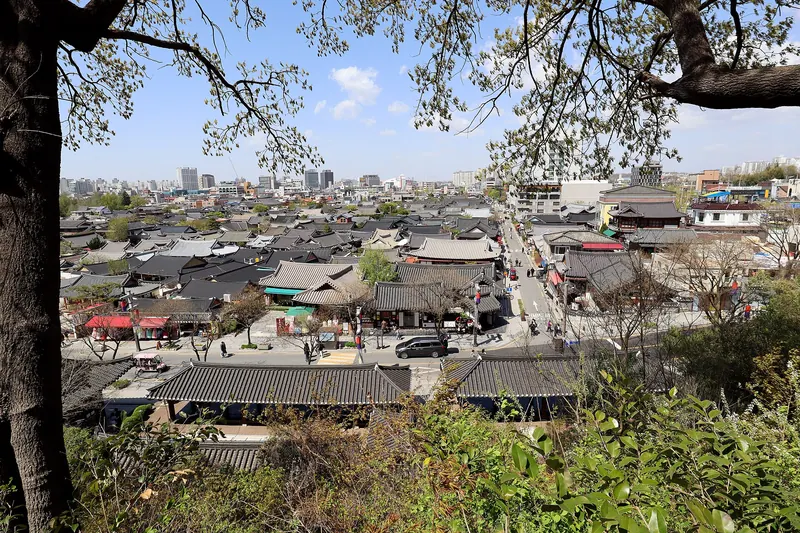
The practical way to build a food trip is to choose three or four cities you would sleep in anyway and eat around them. Jeonju is the strongest single stop: VisitKorea calls it Korea's first UNESCO Creative City of Gastronomy. Busan gives you port and market food. Jeju is a separate flight and a separate cuisine built on black pork and the sea. Seoul, where most international flights land, has Gwangjang Market, whose food alley the official Seoul tourism site lists for bindae-tteok (mung bean pancake), mayak gimbap, yukhoe (beef tartare) and sundae.
Leave room between meals. A day built on three famous dishes in three different neighbourhoods tends to become a day of queues and taxis; one market, one specialist restaurant and a walk in between is usually more rewarding.
Jeolla: Jeonju and Gwangju, the generous table
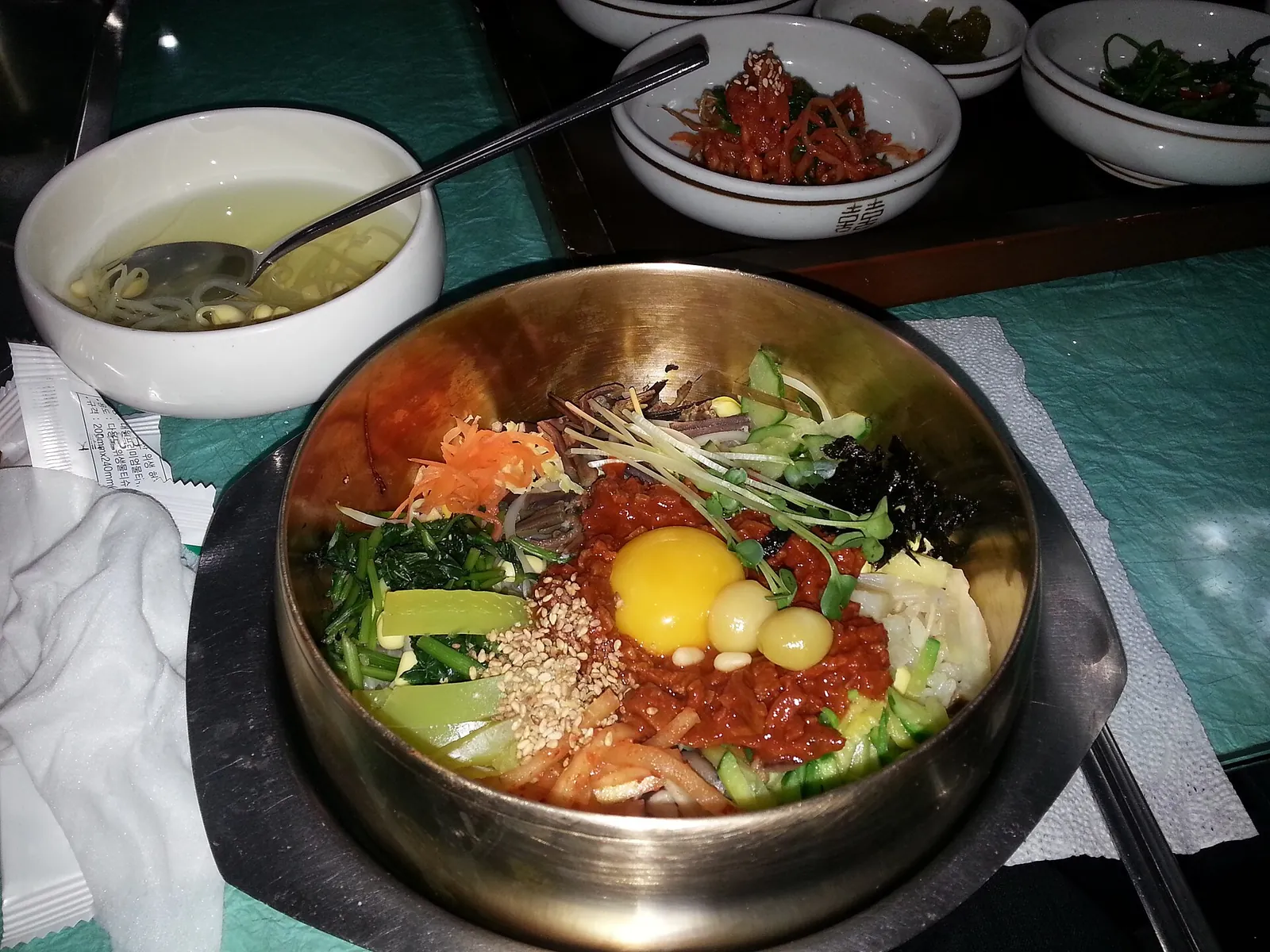
Jeonju bibimbap, as VisitKorea describes it, is warm rice topped with individually seasoned vegetables such as bean sprouts, bracken and spinach, beef and yellow mung bean jelly, arranged in a circle and mixed with red chilli paste. The city's other signature dishes on the same official page are hanjeongsik, the full Korean table d'hôte, and kongnamul gukbap, bean sprout and rice soup. Jeonju even has a 'Nambu Market style' of the soup: hot broth is poured over the rice repeatedly to warm it (the toryeom method) and a soft-poached egg comes on the side. VisitKorea notes that Hyundaiok's Nambu Market branch opens at 6:00 and that the market has many 24-hour soup restaurants.
Plan Jeonju around evenings as much as lunches. Nambu Market's night market runs on Friday and Saturday evenings until midnight on Pungnammun 2-gil, though many stalls close after 23:00 when they run out of food, according to VisitKorea's report from September 2026. In the city's Makgeolli Alley, a kettle of makgeolli (rice wine) arrives with a spread of side dishes, which VisitKorea calls a must-try local experience.
Gwangju, under two hours from Seoul by KTX according to VisitKorea, is the gateway to Namdo cuisine, the cooking of the Jeolla region: Namdo hanjeongsik, Mudeungsan barley rice and Gwangju tteokgalbi, minced beef short rib grilled as patties, once a royal-court dish. Further afield in the same region, the official guide names Yeosu's marinated crab and Mokpo's nakjitangtangi (chopped live octopus). Gwangju's Street of Duck Stew in Buk-gu dates back to the 1970s, when a duck farmer began selling ori-tang with water parsley and perilla seeds.
Make time for the local food
What to eat and where to look
Jeonju bibimbap
Warm rice topped with separately seasoned vegetables such as bean sprouts, bracken and spinach, beef and yellow mung bean jelly, arranged in a circle and mixed with red chilli paste at the table.
- Where to look
- Long-established bibimbap restaurants around Jeonju Hanok Village and the old town; our Jeonju guide names several.
- Fit it into your day
- Lunch on your first full day in Jeonju, leaving the evening for Makgeolli Alley and the next morning for bean sprout soup at Nambu Market.
Beef and egg are standard and the chilli paste is mixed in; ask before ordering if you avoid meat or spice, and see our vegetarian guide.
Dwaeji gukbap (Busan pork and rice soup)
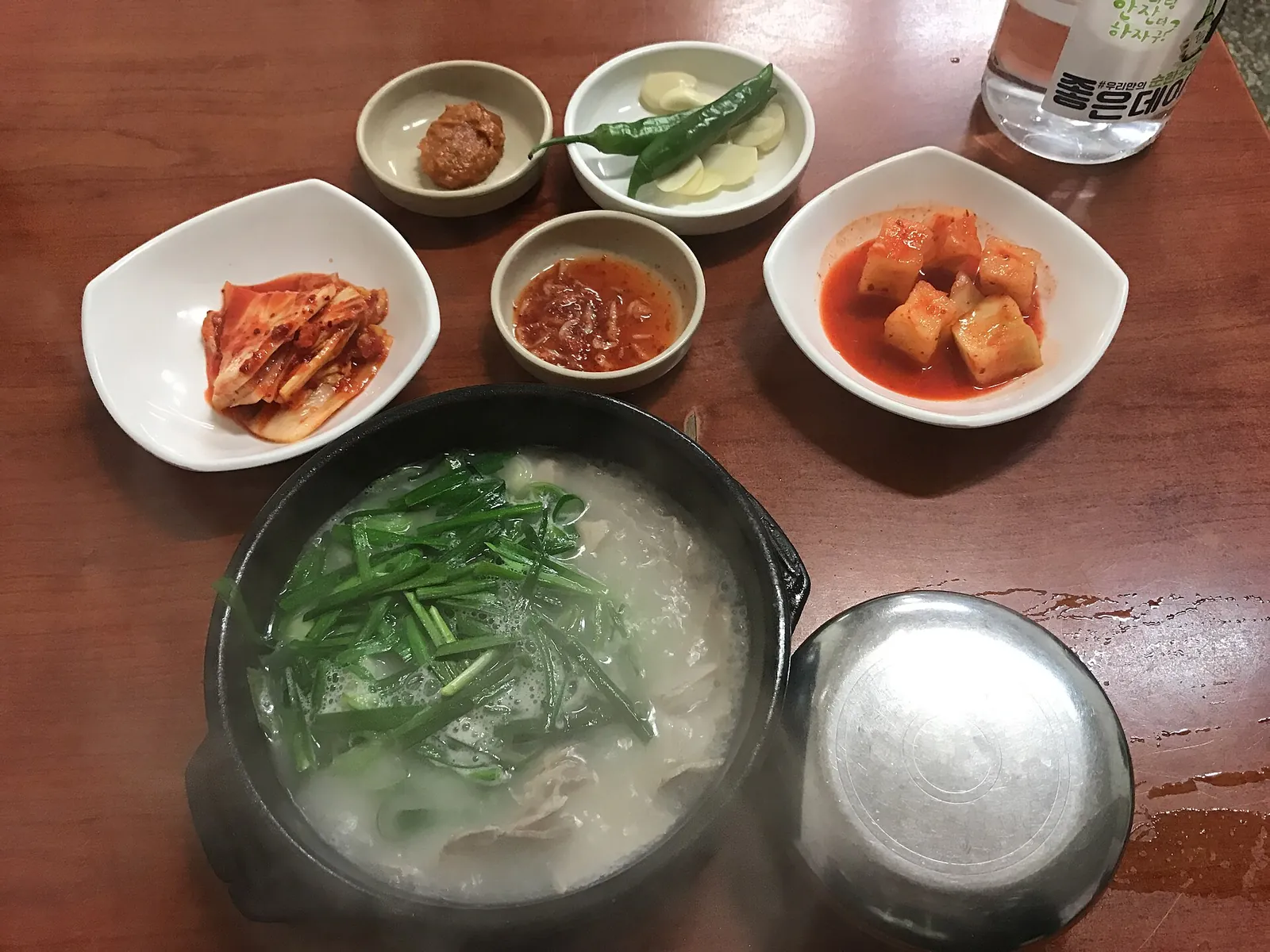
Pork and rice soup, which VisitKorea calls Busan's representative local dish. Gukbap, rice in soup, is the meal Koreans have long turned to when they need to eat quickly.
- Where to look
- Gukbap restaurants across Busan, and the stalls of Gukje Market Food Street in Nampo-dong.
- Fit it into your day
- Breakfast or a late supper in Busan, especially in winter; pair a market day with a bowl at Gukje Market.
Pork-based throughout. Gukje Market Food Street was listed as closed on the first and third Sundays of the month.
Milmyeon (Busan wheat noodles)
Wheat-flour and starch noodles in a cold beef, pork or chicken bone broth, created during the Korean War with flour supplied through US aid. Busan's summer noodle.
- Where to look
- Milmyeon specialists around Busan and the stalls of Gukje Market Food Street.
- Fit it into your day
- Lunch on a hot day in Busan, between Jagalchi and the hillside neighbourhoods.
The broth is made from meat bones, so it is not vegetarian; noodles are usually served with chilli seasoning on top.
Chuncheon dakgalbi
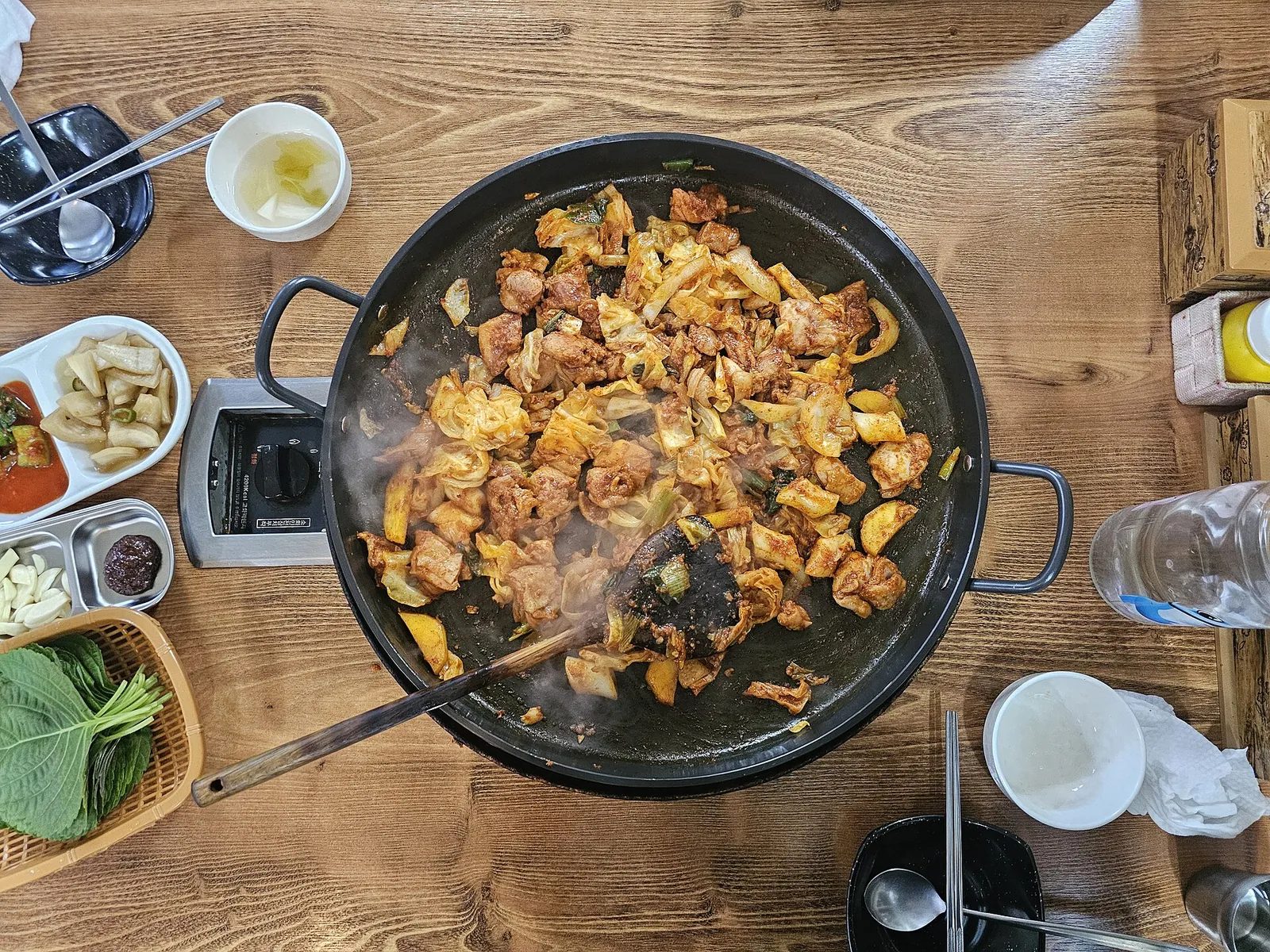
Chicken marinated in red chilli paste and stir-fried with cabbage, sweet potato, onion, spring onion and rice cake sticks, eaten wrapped in lettuce and perilla leaves. Chuncheon also serves an older charcoal-grilled version.
- Where to look
- Dakgalbi Alley in Chuncheon's Myeong-dong, the 150-metre street of restaurants that serves both the griddle and the charcoal versions.
- Fit it into your day
- Lunch on a day trip from Seoul by ITX-Cheongchun, followed by makguksu if you still have room.
Spicy; hours vary by restaurant, according to the official listing.
Jeju black pork and dombegogi
Jeju's black pork is grilled in thick, juicy slices; dombegogi is the same pork steamed and sliced on a wooden board, tender with a chewy layer of fat.
- Where to look
- Black pork restaurants in Jeju City and Seogwipo; gogi-guksu (pork noodle soup) shops for a lighter meal.
- Fit it into your day
- Dinner on your first evening in Jeju City, with Dongmun Market for snacks the next day.
Pork throughout, including the broth of gogi-guksu; Jeju's seafood dishes are the alternative.
Andong jjimdak
Chicken braised with galbi-style seasoning, glass noodles and vegetables, sweet and spicy, served in generous portions. A modern dish that grew out of Andong Old Market's chicken alley.
- Where to look
- Jjimdak Alley in Andong Old Market, where VisitKorea counts some 30 restaurants.
- Fit it into your day
- Lunch or dinner on an Andong stop between Seoul and Busan, with heotjesabap as the traditional alternative.
Soy-based seasoning and often chilli; VisitKorea describes the portions as generous, so it suits sharing.
Busan and the south coast: port and post-war food
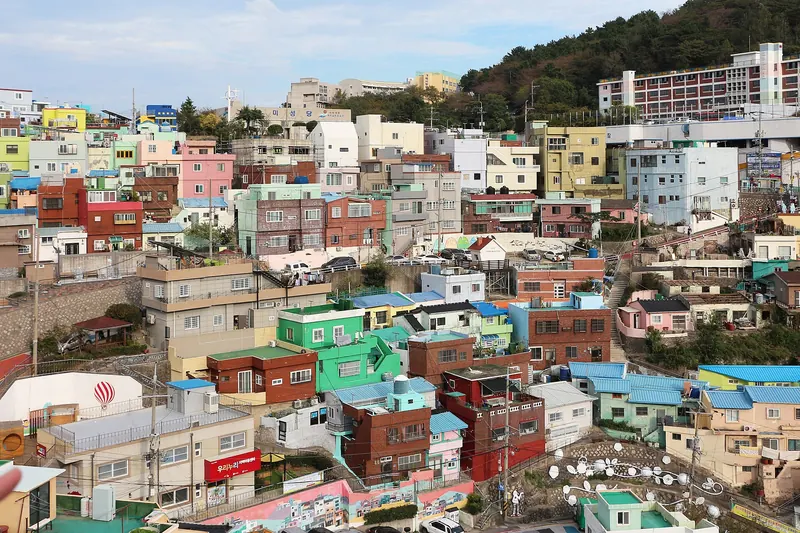
Busan's food story is tied to the Korean War, when the city filled with refugees. VisitKorea explains that milmyeon, wheat noodles in a cold beef, pork or chicken bone broth, was created with flour supplied through US aid and is eaten mainly in summer. Dwaeji gukbap, pork and rice soup, is described as the city's representative local dish, and eomuk (fishcake) is a long-standing Busan tradition, with shops such as Samjin Amook that will package fishcakes as gifts.
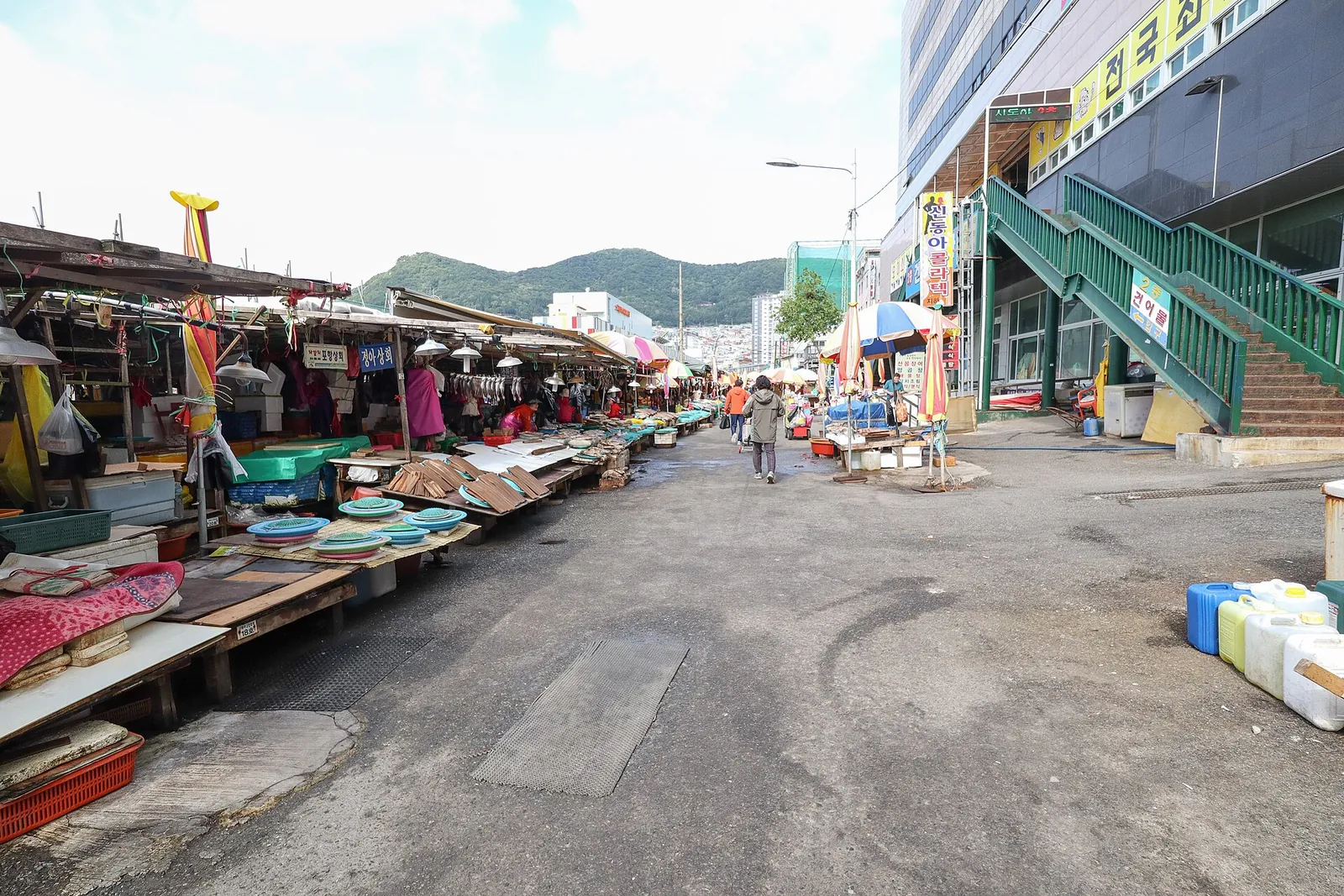
The markets are where to start. At Jagalchi Market on the Nampo-dong waterfront, you choose live fish and seafood on the first floor and have it served upstairs as sliced raw fish or grilled. When we checked on 2026-10-03, VisitKorea listed the market's hours as 05:00 to 22:00, closed on the first and third Tuesdays of the month. Nearby, Gukje Market Food Street serves milmyeon, dwaeji gukbap, Chungmu gimbap, tteokbokki, sundae and Busan's bibim dangmyeon (spicy glass noodles) to diners on small stools by the stalls; its official listing gave the first and third Sundays as closing days. Avoid putting both closures on your one Busan day.
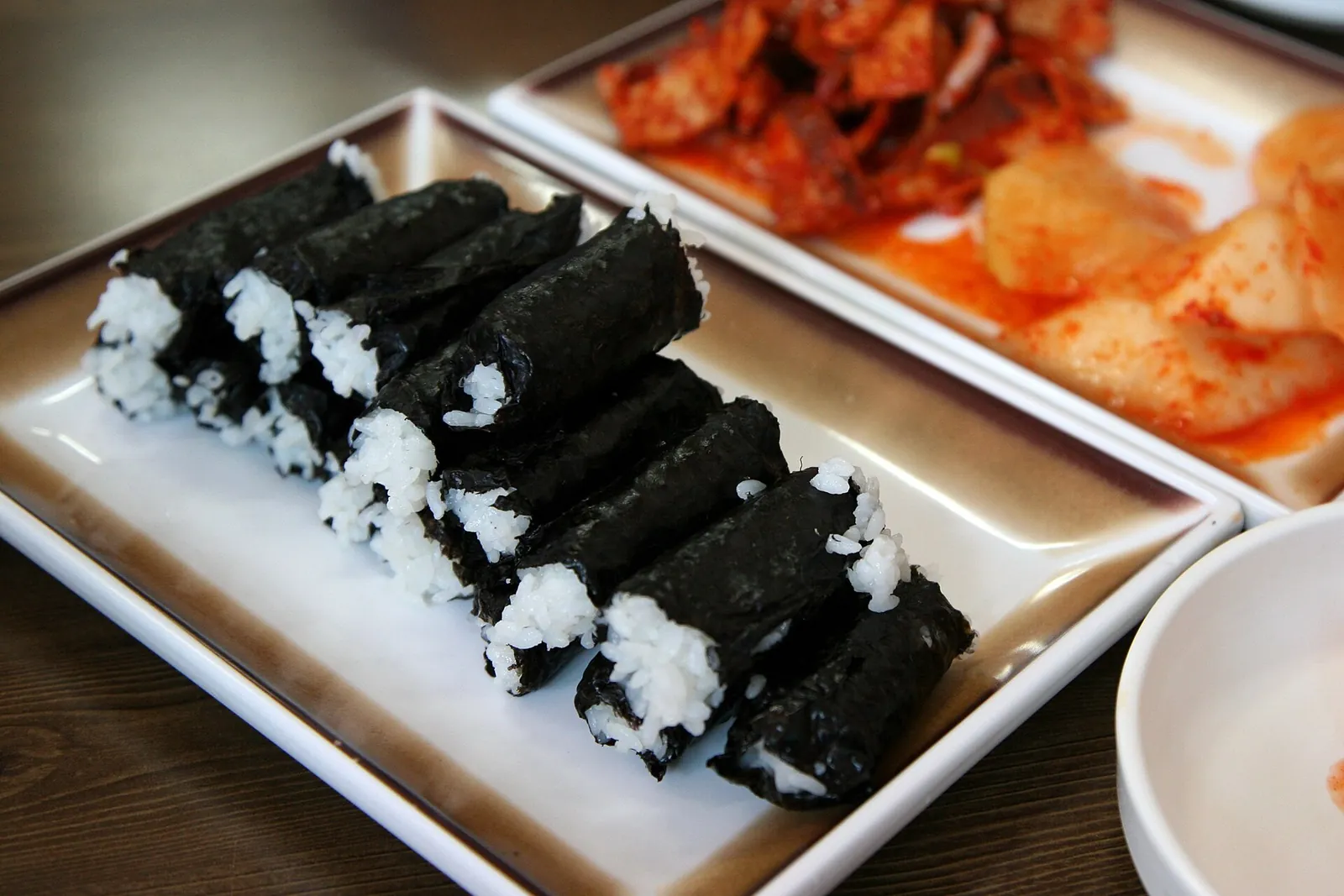
Tongyeong, west along the coast, is the home of Chungmu gimbap: finger-sized rolls of plain rice in seaweed, with no filling and no sesame oil, eaten with spicy radish kimchi and squid salad. VisitKorea traces it to sailors who packed rice and side dishes separately so they kept at sea. If you are not going to Tongyeong, Gukje Market's food street serves it in Busan.
Gangwon: Chuncheon, Gangneung and Sokcho
Chuncheon dakgalbi began, according to VisitKorea, in the 1960s, when people marinated chicken instead of pork and grilled it over charcoal like ribs; vegetables such as cabbage and onion were later added and the dish moved to an iron griddle. Restaurants opened one by one on a backstreet of Myeong-dong in the 1970s and 1980s, forming the 150-metre Dakgalbi Alley, which serves both the charcoal and the griddle versions. The other local dish is makguksu, coarse buckwheat noodles served in chilled kimchi or dongchimi broth or dry with seasonings; the dedicated Makguksu Street is in Cheonjeon-ri, Sinbuk-eup, near Soyangho Lake. The ITX-Cheongchun runs from Yongsan Station in Seoul to Chuncheon, which makes the city a realistic long day trip.
On the east coast, Gangneung's Chodang Tofu Village, just south of Gyeongpo Beach, makes soft tofu by coagulating soybean liquid with East Sea seawater; the soft, unpressed curd is sold as Chodang sundubu. Further north, Sokcho's Abai Village was settled by war refugees from the north, and its restaurants serve abai sundae (pork intestine stuffed with blood and sweet rice, then steamed), ojingeo sundae (stuffed squid) and myeongtae hoe naengmyeon, cold noodles under spicy raw pollack, a dish VisitKorea traces to displaced people from Hamheung.
Gyeongsang inland: Andong, Daegu and Suwon on the way
Andong jjimdak is a modern dish with an old-town setting. VisitKorea explains that the chicken alley in Andong Old Market, trading since the 1970s, reinvented itself as spicy chicken became popular: chicken braised with galbi-style seasoning, glass noodles and vegetables. The street is now called Jjimdak Alley. Andong is also known for heotjesabap, a muted-coloured rice dish with vegetables and jeon (savoury pancakes), served at restaurants such as Heotjesabap Kkachi Gumeongjip.
Daegu is a city of food alleys. The official guide singles out grilled makchang (pork intestines), spicy jjimgalbi (braised beef short ribs) and kaljebi noodle soup. Dongin-dong's jjimgalbi uses plenty of red chilli powder and garlic instead of the usual soy sauce, and VisitKorea suggests finishing with fried rice made in the leftover sauce. Anjirang Gopchang Alley, about 500 metres of offal restaurants, started with one restaurant in 1979 and was named one of the country's top five food streets by the Ministry of Culture, Sports and Tourism in 2012.
Closer to Seoul, Suwon wanggalbi is jumbo beef short rib seasoned simply with salt. VisitKorea links the style to the city's former slaughterhouse, which made galbi easy to buy at good prices, so Suwon's fortress and a galbi dinner make a natural day out from the capital.
Jeju: black pork, cutlassfish and the market
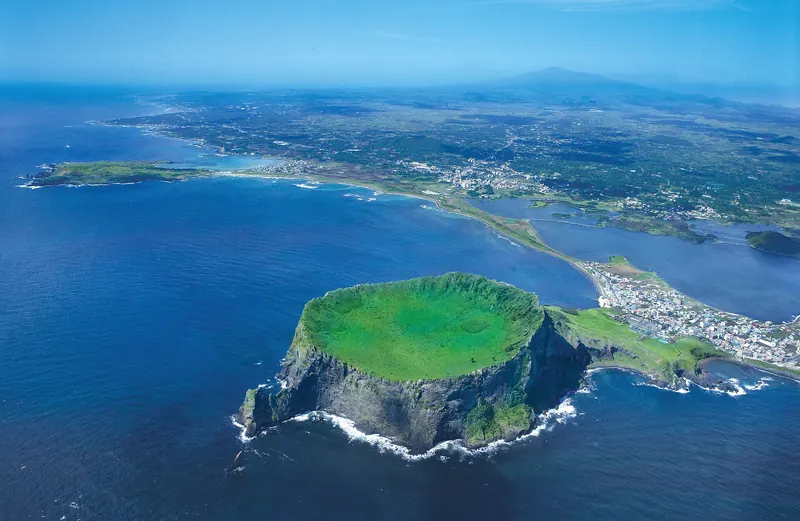
Jeju's cooking is its own. VisitKorea's Jeju guide lists galchiguk (cutlassfish soup with pumpkin and cabbage), sea urchin seaweed soup and okdomgui (grilled red tilefish) from the sea, and from the land Jeju black pork, hallabong citrus and gogi-guksu, noodles in a rich pork broth topped with sliced boiled pork. Black pork is grilled in thick slices; dombegogi is freshly steamed black pork sliced on a wooden board at the table. Omegitteok is a millet rice cake rolled in bean powder or mashed red bean.
Base yourself in Jeju City for the first nights: Dongmun Market and plenty of black pork restaurants are in the city, and you can continue to Seogwipo on the south coast if you go round the island. VisitKorea notes that Jeju has domestic flights from Seoul (Gimpo), Busan (Gimhae), Gwangju, Daegu and other cities, so Jeju can be the last stop of a mainland food route rather than a separate trip.
A food route that works, and what to check
This is an editorial suggestion, not a timetable. The journey times are VisitKorea's approximate figures.
- Seoul, 1–2 nights: Gwangjang Market for bindae-tteok and mayak gimbap. When we checked on 2026-10-03, Visit Seoul listed the food alley as open daily from 09:00 to 23:00, at Jongno 5-ga Station, exit 8. Add Chuncheon as a day trip on the ITX-Cheongchun if dakgalbi is high on your list.
- Jeonju, 2 nights: bibimbap at lunch, the makgeolli houses in the evening, and kongnamul gukbap at Nambu Market for breakfast. Arrive on a Friday or Saturday for the night market.
- Gwangju, optional 1 night: tteokgalbi and Namdo hanjeongsik, under two hours from Seoul by KTX.
- Busan, 2–3 nights: Jagalchi, Gukje Market Food Street, dwaeji gukbap and milmyeon. The KTX from Seoul Station to Busan takes about three hours. Check the first-and-third-Tuesday (Jagalchi) and first-and-third-Sunday (Gukje food street) closures.
- Jeju City, 2–3 nights: fly from Gimhae; black pork, gogi-guksu and Dongmun Market, then Seogwipo on the south coast if you have time.
- Extra days: Andong for jjimdak and heotjesabap, or Daegu for jjimgalbi and makchang, between Seoul and Busan; Gangneung and Sokcho as an east-coast loop.
Practical questions
Which Korean city is best for food?
If you choose one, choose Jeonju: VisitKorea calls it Korea's first UNESCO Creative City of Gastronomy, and it combines bibimbap, hanjeongsik, bean sprout soup at Nambu Market and the makgeolli houses in one walkable city. Busan is the best choice for seafood and market food.
Where should I eat Busan's dwaeji gukbap and milmyeon?
Both are served at specialist restaurants across Busan and at Gukje Market Food Street in Nampo-dong, which the official listing says closes on the first and third Sundays of the month. Milmyeon is mainly eaten in summer.
Can I try Chuncheon dakgalbi as a day trip from Seoul?
Yes. The ITX-Cheongchun runs from Yongsan Station to Chuncheon, and the Dakgalbi Alley is on a backstreet of Myeong-dong in the city centre. Add makguksu, Chuncheon's buckwheat noodles, if you have time to reach Makguksu Street near Soyangho Lake.
What should I eat on Jeju?
Black pork, grilled or steamed and sliced as dombegogi; gogi-guksu, pork noodle soup; galchiguk, cutlassfish soup; okdomgui, grilled red tilefish; hallabong citrus; and omegitteok, millet rice cakes. Dongmun Market in Jeju City is the easiest place to try several snacks at once.
Is Seoul's Gwangjang Market worth it?
For a first taste of market food, yes, but keep it to one or two dishes. When we checked on 2026-10-03, the official Seoul tourism site listed the food alley as open daily from 09:00 to 23:00 and named bindae-tteok, mayak gimbap, yukhoe and sundae as favourites. It is crowded, so check prices before you sit.
How many days do I need for a food trip in Korea?
About 10 to 14 days covers Seoul, Jeonju, Busan and Jeju with two nights or more in each. With a week, choose two regions, for example Seoul and Jeonju, or Busan and Jeju.
Sources and checks before you travel
Reference sources for the version dated 3 October 2026. Confirm opening times, access, transport and conditions for your travel dates.
- VisitKorea: Jeonju, a Slow City of Hanok and Serenity ↗ — opens in a new tab
- VisitKorea: Jeonju Bibimbap ↗ — opens in a new tab
- VisitKorea: Jeonju Nambu Market all-day trip (September 2026) ↗ — opens in a new tab
- VisitKorea: Gwangju and Jeollanam-do ↗ — opens in a new tab
- VisitKorea: Tteokgalbi ↗ — opens in a new tab
- VisitKorea: Street of Duck Stew, Gwangju ↗ — opens in a new tab
- VisitKorea: Feel the Sea, Enjoy the City: Busan ↗ — opens in a new tab
- VisitKorea: Busan travel guide ↗ — opens in a new tab
- VisitKorea: Busan fishcake ↗ — opens in a new tab
- VisitKorea: Jagalchi Market ↗ — opens in a new tab
- VisitKorea: Gukje Market Food Street ↗ — opens in a new tab
- VisitKorea: Chungmu gimbap ↗ — opens in a new tab
- VisitKorea: Ttungbo Halmae Gimbap, Tongyeong ↗ — opens in a new tab
- VisitKorea: Chuncheon Dakgalbi Alley ↗ — opens in a new tab
- VisitKorea: Chuncheon dakgalbi ↗ — opens in a new tab
- VisitKorea: Chuncheon Makguksu Street ↗ — opens in a new tab
- VisitKorea: Train travel in Korea ↗ — opens in a new tab
- VisitKorea: Chodang Tofu Village, Gangneung ↗ — opens in a new tab
- VisitKorea: Chodang soft tofu ↗ — opens in a new tab
- VisitKorea: Dancheon Sikdang, Sokcho ↗ — opens in a new tab
- VisitKorea: Myeongtae hoe naengmyeon ↗ — opens in a new tab
- VisitKorea: Andong Jjimdak Alley ↗ — opens in a new tab
- VisitKorea: Heotjesabap Kkachi Gumeongjip, Andong ↗ — opens in a new tab
- VisitKorea: Daegu and Gyeongsangbuk-do guide ↗ — opens in a new tab
- VisitKorea: Daegu Dongin-dong jjimgalbi ↗ — opens in a new tab
- VisitKorea: Anjirang Gopchang Alley ↗ — opens in a new tab
- VisitKorea: Suwon wanggalbi ↗ — opens in a new tab
- VisitKorea: Jeju travel guide ↗ — opens in a new tab
- VisitKorea: Grilled black pork ↗ — opens in a new tab
- VisitKorea: Jeju pork noodles (gogi-guksu) ↗ — opens in a new tab
- VisitKorea: Dombegogi ↗ — opens in a new tab
- VisitKorea: Transportation from the airports ↗ — opens in a new tab
- Visit Seoul (Seoul Tourism Organization): Gwangjang Market ↗ — opens in a new tab
Photo credits
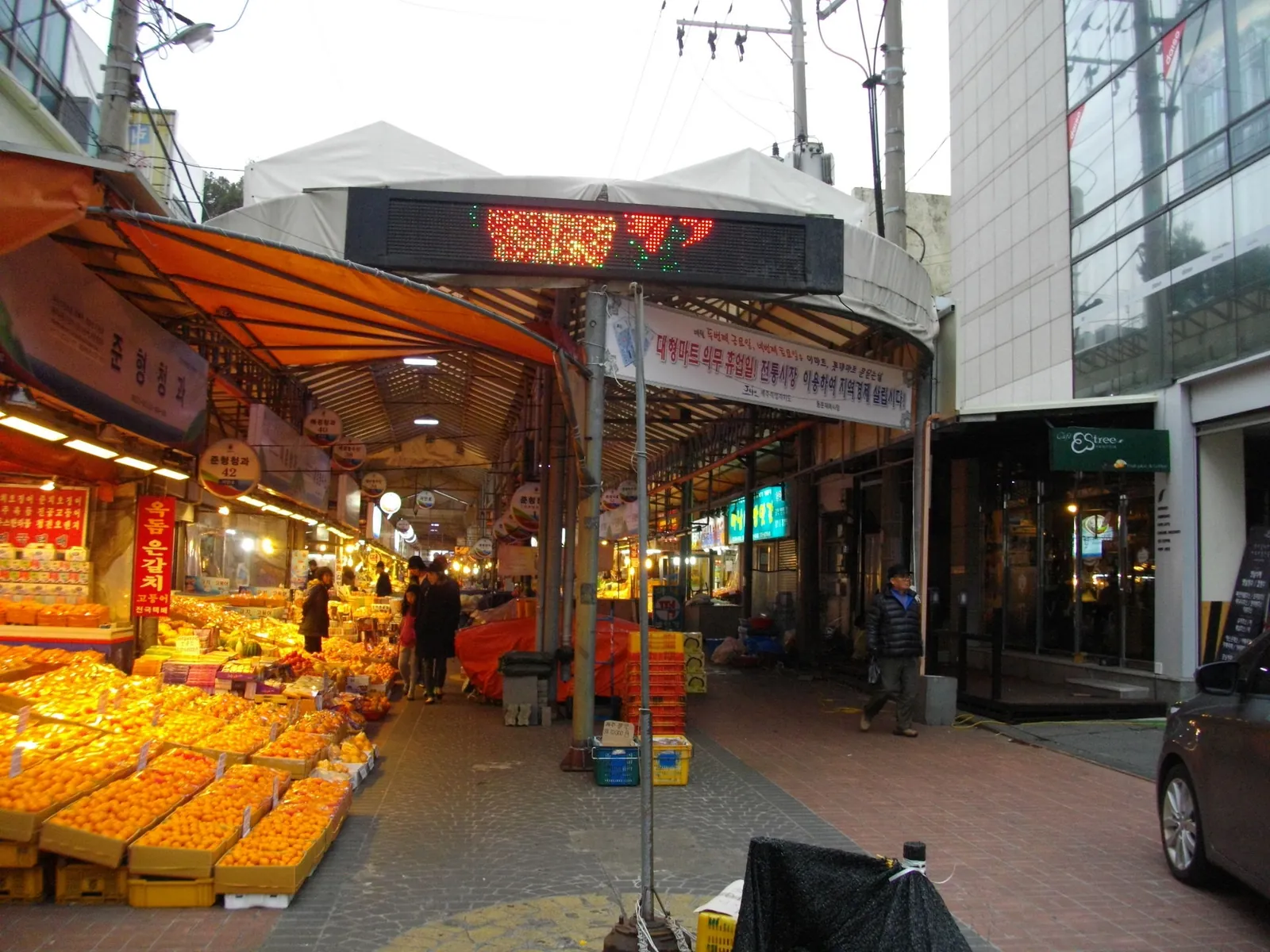
Tangerine stalls at Dongmun Market, Jeju City's main traditional market
Photograph: Abasaa — opens in a new tab · Public domain — opens in a new tab
Changes: Resized and converted to WebP; displayed with responsive crops. · Original photograph and licence details ↗ — opens in a new tab
Street stalls outside Jagalchi Market on Busan's Nampo-dong waterfront
Photograph: Mobius6 — opens in a new tab · CC BY-SA 4.0 — opens in a new tab
Changes: Resized and converted to WebP; displayed with responsive crops. · Original photograph and licence details ↗ — opens in a new tab
Chungmu gimbap, Tongyeong's unfilled rolls served with radish kimchi and squid
Photograph: by Junho Jung at Flickr from South Korea — opens in a new tab · CC BY 3.0 — opens in a new tab
Changes: Resized and converted to WebP; displayed with responsive crops. · Original photograph and licence details ↗ — opens in a new tab
Jeonju bibimbap served in a brass bowl
Photograph: Frankhöffner — opens in a new tab · CC BY-SA 3.0 — opens in a new tab
Changes: Resized and converted to WebP; displayed with responsive crops. · Original photograph and licence details ↗ — opens in a new tab
Dwaeji gukbap, the pork and rice soup Busan calls its own
Photograph: chomjong — opens in a new tab · CC BY 2.0 — opens in a new tab
Changes: Resized and converted to WebP; displayed with responsive crops. · Original photograph and licence details ↗ — opens in a new tab
Dakgalbi stir-fried on an iron griddle at the table
Photograph: Sadopaul — opens in a new tab · CC BY 4.0 — opens in a new tab
Changes: Resized and converted to WebP; displayed with responsive crops. · Original photograph and licence details ↗ — opens in a new tab