Jeolla · Jeonbuk State
Jeonju travel guide: hanok village, bibimbap and the night market
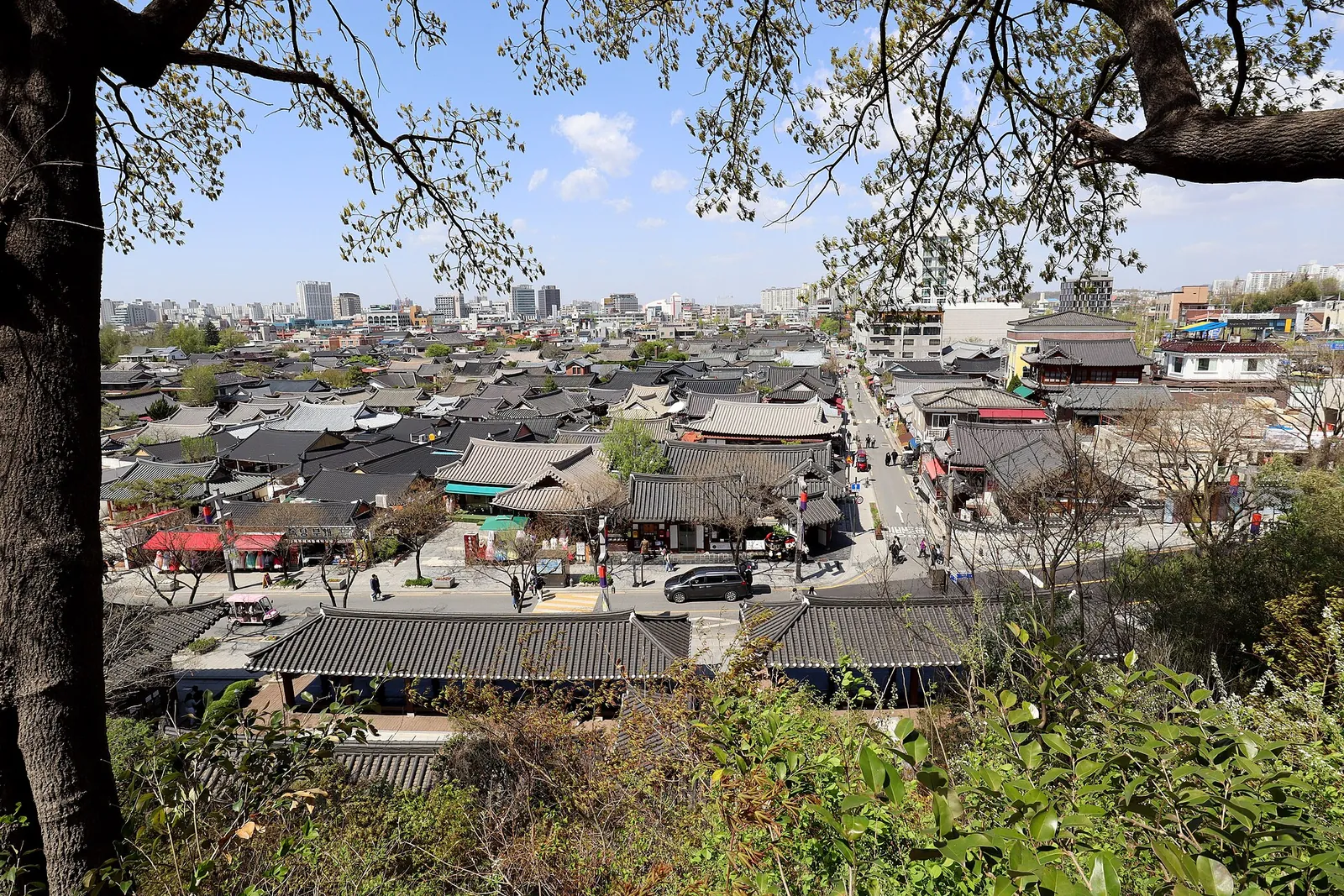
Jeonju is where the Joseon dynasty traces its roots: Gyeonggijeon Shrine holds the portrait of its founder, King Taejo, and around it about 700 tiled-roof houses form what VisitKorea calls Korea's largest hanok village and the only one in the middle of a city. It is also Korea's first UNESCO City of Gastronomy, and its food is spread across the day, from bean sprout soup at dawn to bibimbap at lunch and a kettle of makgeolli in the evening. That is why the KTX from Seoul, about 1 hour 40 minutes, is better used for an overnight stay than a round trip.
- Suggested time
- 1 night; 2 nights for the markets and a slower pace
- Where to stay
- A hanok stay inside Jeonju Hanok Village; downtown around Gaeksa for hotels; Jeonju Station area for early trains
- Season and timing
- Autumn is festival season: VisitKorea listed the Jeonju Bibimbap Festival for 2–4 October 2026, and the city's night programmes at Deokjin Park run on Fridays and Saturdays until 14 November 2026. The hyanggyo's 400-year-old ginkgo turns gold in autumn. Nambu Market's night market runs only on Fridays and Saturdays all year.
The short answer
Stay one night, ideally a Friday or Saturday, and two if you want the markets, the museums and a slower pace. Sleep in a hanok guesthouse inside the village, or downtown near Gaeksa if you prefer a standard hotel room. Take the KTX from Yongsan to Jeonju, then a city bus or taxi to the village. Spend the afternoon at Gyeonggijeon, Jeondong Cathedral and the hyanggyo, climb Omokdae for the view at dusk, eat at Nambu Market's night market or a makgeolli house, and have bean sprout soup for breakfast before the train back.
Why Jeonju deserves a night, not a day trip
A day trip from Seoul works on paper: Visit Jeonju, the city's tourism site, gives about 1 hour 40 minutes by KTX, and the main sights of the hanok village are within walking distance of each other. The trouble is what you would miss. Nambu Market's night market opens at 17:00 and runs to midnight, and only on Fridays and Saturdays. The village is lit with cheongsa chorong lanterns after dark, and the best view over its roofs is from Omokdae at sunset. Jeonju's makgeolli houses are an evening meal, not a quick drink. And the city's most typical breakfast, bean sprout and rice soup, is served from early morning in and around the market, next to a farmers' market that starts at 4:00 and is gone by 9:00.
So plan Jeonju around one evening and the following morning. If you can only manage a weekday, you still get the lanterns, Omokdae and a makgeolli dinner, but not the night market.
For the night itself, the obvious choice is a hanok guesthouse in the village. VisitKorea's autumn feature lists stays ranging from budget rooms to houses you rent whole, among them Pungnamheon near Gyeonggijeon, a building from 1933, and Hanok Moryeon on Hyanggyo-gil. Some hanok rooms are ondol rooms, with heated floors and bedding laid on the floor; check whether your room has a bed and a private bathroom if that matters to you. If you would rather have a standard hotel, look downtown around Gaeksa, a walk from the village, or near Jeonju Station for an early train.
The hanok village: shrine, cathedral, school and a hill
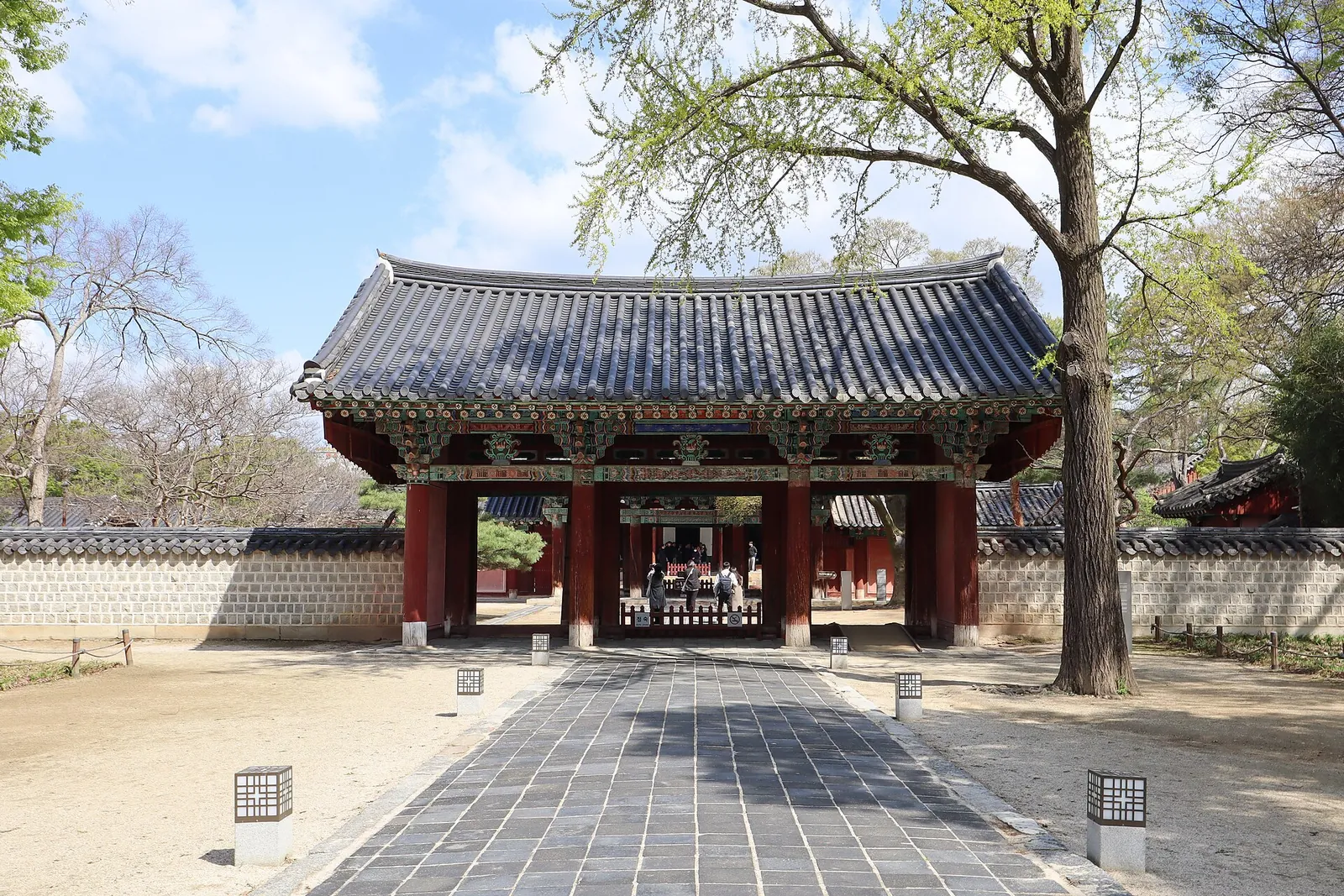
The village grew up in the early 1900s around three older sites, Gyeonggijeon Shrine, Omokdae and the Jeonjuhyanggyo Confucian school, and VisitKorea lists it as free to enter and open all year. The streets themselves are the attraction, but the four places below give the walk its shape.
Gyeonggijeon Shrine was founded in 1410 to hold the portrait of King Taejo, the founder of Joseon; it was damaged in the Imjin War and restored in 1614. The Royal Portrait Museum inside the grounds shows King Taejo's portrait alongside those of six later kings, with no separate ticket. When we checked on 3 October 2026, VisitKorea listed the shrine as open 9:00 to 19:00 in September and October and 9:00 to 18:00 from November to February, with last admission an hour before closing. The listed adult ticket (ages 25–64) was 3,000 won, with free entry on the last Wednesday of the month and for visitors aged 65 and over. The bamboo grove inside is the photographers' favourite spot.
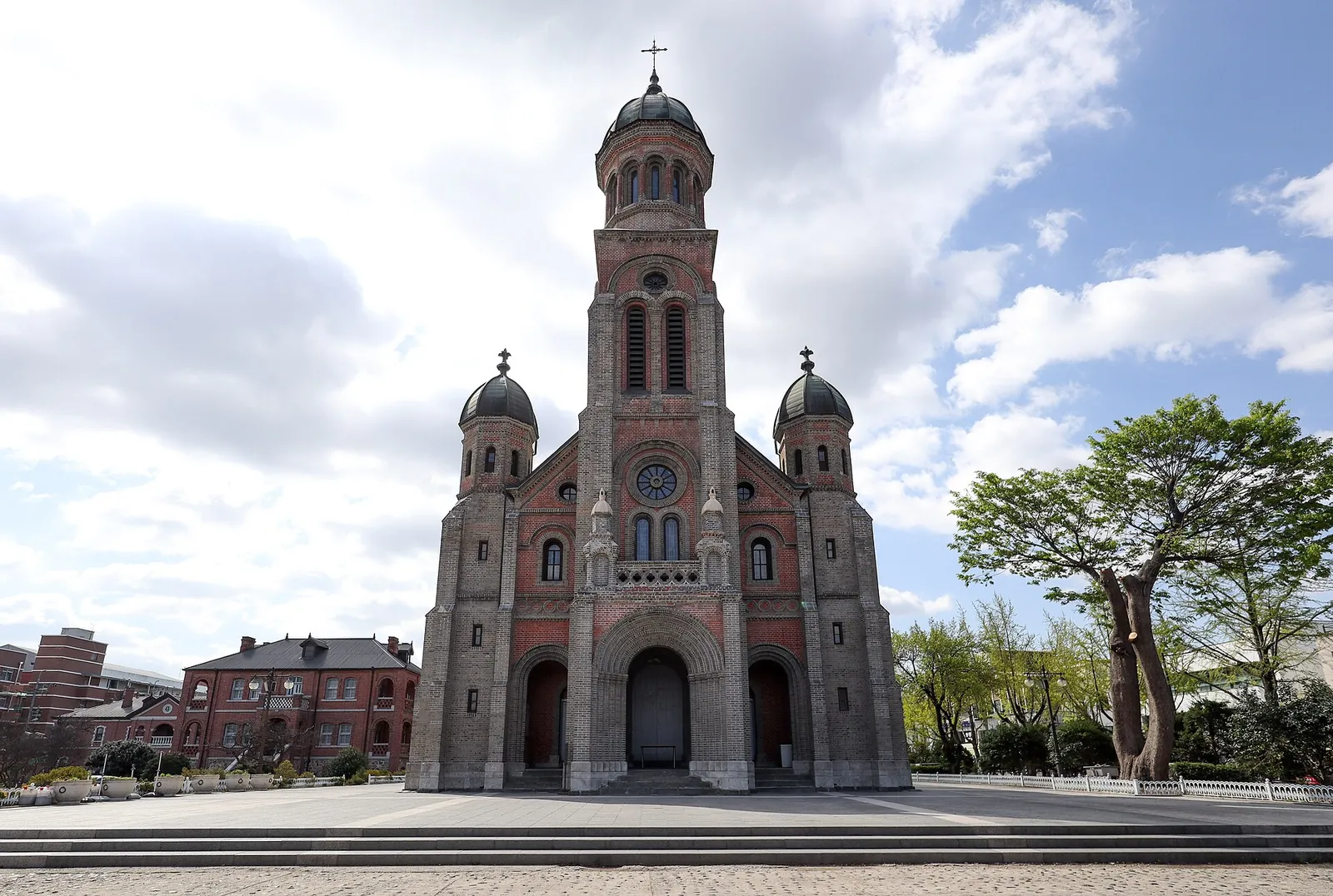
Jeondong Catholic Cathedral stands across Taejo-ro, a red-brick Romanesque church with Byzantine-style towers, built between 1908 and 1914 on the site where Korean Catholics were executed during the Joseon period. VisitKorea notes that some of its bricks came from Jeonju's old city wall after it was torn down. It is a working church: VisitKorea's food-walk feature gave visiting hours of 9:00 to 17:00, with no visits during Mass.
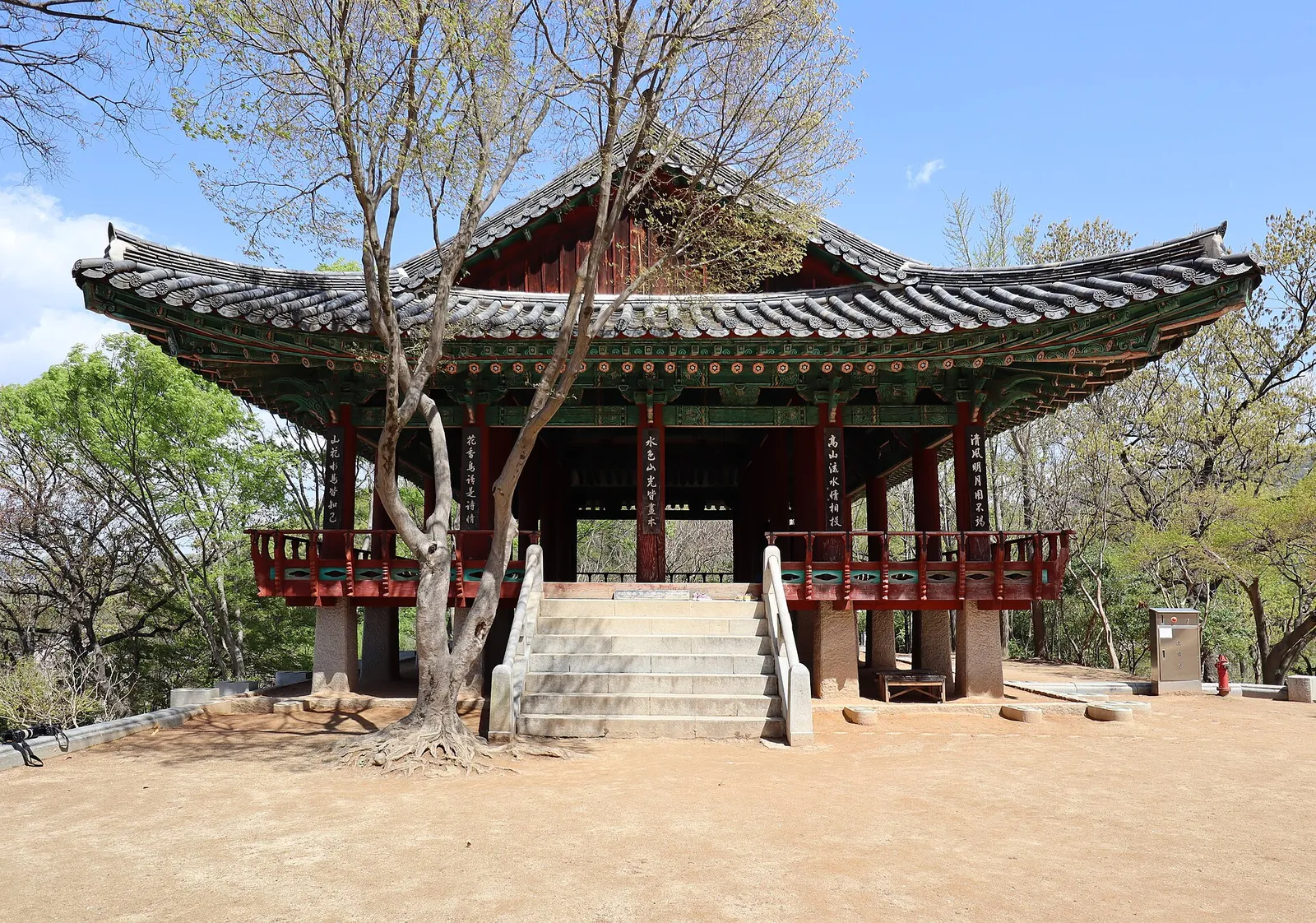
Walk east along Hyanggyo-gil to Jeonjuhyanggyo, a Joseon-era Confucian school whose 400-year-old ginkgo is at its best in autumn; VisitKorea listed it as free, closed on Mondays. End the day by climbing Omokdae, the hill where Yi Seong-gye, the future King Taejo, is said to have celebrated a victory over Japanese raiders in 1380. From the pavilion you look down over the village roofs with the modern city behind, and the view is at its best as the lights come on. Jaman Mural Village, where VisitKorea counts more than 40 painted houses, is across the road on a steep slope.
VisitKorea's guide to the village mentions coin lockers that take two 500-won coins, with change available at the tourist information centre opposite Omokdae, which is useful if you arrive before your room is ready.
Make time for the local food
What to eat and where to look
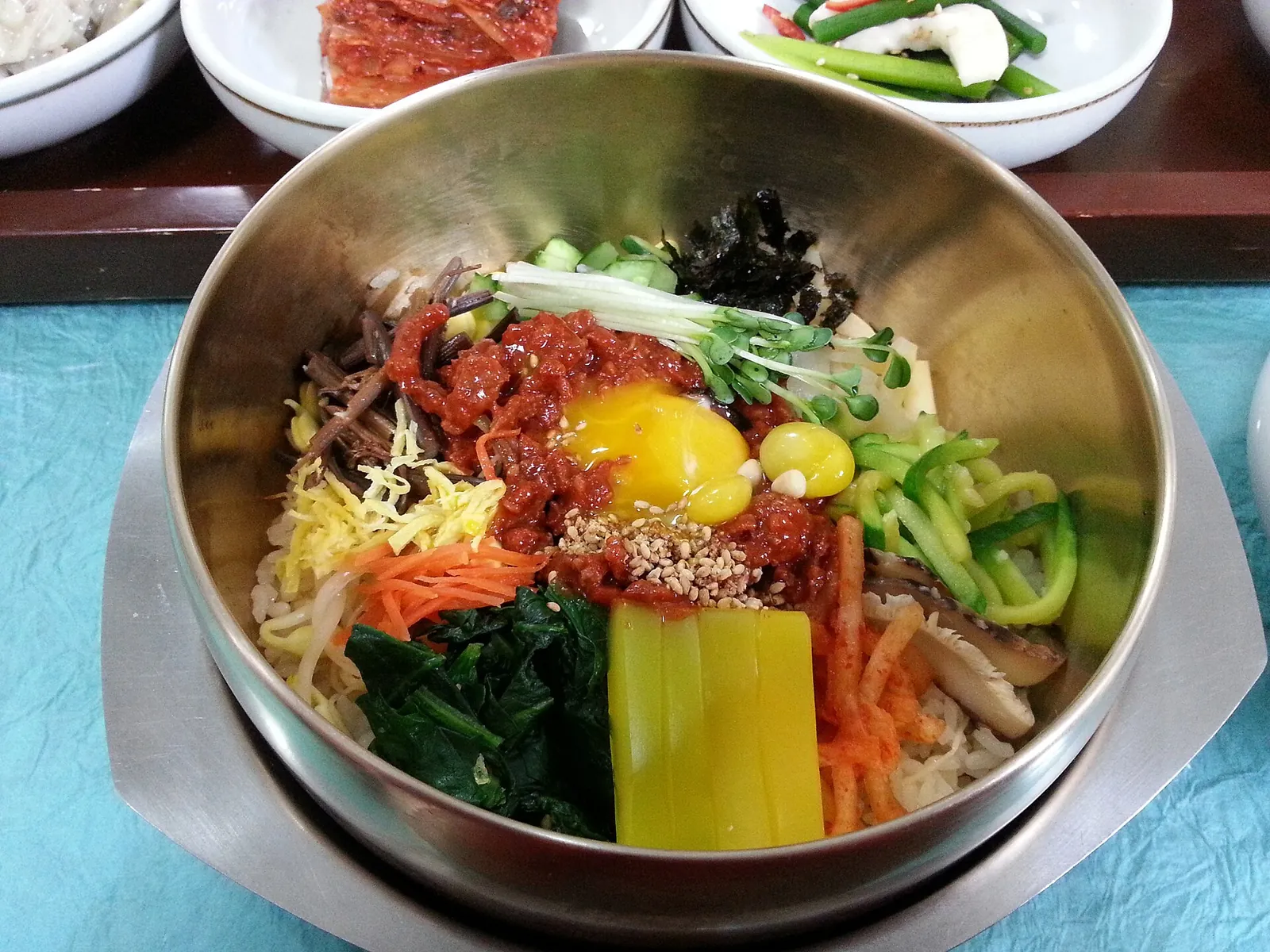
Jeonju bibimbap
Rice topped with individually seasoned vegetables such as bean sprouts, bracken and spinach, with beef and yellow mung bean jelly (hwangpomuk), arranged in a circle and mixed with red chilli paste. Visit Jeonju adds that the rice is traditionally cooked in beef bone broth, and it is traditionally served in a brass bowl.
- Where to look
- Long-established bibimbap restaurants around the hanok village and the old town. Visit Jeonju highlights Gajok Hoegwan, opened in 1979 by the city's first designated food master, Gogung and Seongmidang; VisitKorea notes that Hankookjib on Eojin-gil, open since 1952, is said to be where Jeonju bibimbap began.
- Fit it into your day
- Make it lunch on arrival day; most restaurants serve it with side dishes and a bean sprout soup, so it is a full meal.
The classic version includes beef, sometimes raw (yukhoe); ask for it without meat or cooked if you prefer. Some restaurants close for a mid-afternoon break.
Kongnamul gukbap (bean sprout and rice soup)
A light, slightly spicy soup of rice and Jeonju bean sprouts. VisitKorea explains that the Jeonju way serves the poached egg separately rather than cracked into the soup, and the Nambu Market style warms the rice by pouring hot broth over it repeatedly (toryeom).
- Where to look
- Soup restaurants in Nambu Market, some open 24 hours, including Hyundaiok's market branch, which VisitKorea says opens at 6:00. Jeonju Waengi Kongnamul Gukbap at 88 Dongmun-gil, which serves only this dish, was listed by VisitKorea as open 7:00 to 21:00.
- Fit it into your day
- Breakfast after a night out, or after the Daybreak Market. Try it with a cup of moju, the sweet, low-alcohol drink of makgeolli boiled with medicinal herbs.
VisitKorea describes Waengi's broth as made with anchovy and seafood, so do not assume it is vegetarian; moju contains a little alcohol.
Makgeolli with a table of side dishes
Jeonju's makgeolli houses serve rice wine by the kettle, and the table fills with side dishes that make it a dinner rather than a drink.
- Where to look
- Samcheon-dong Makgeolli Street, the 200-metre row of makgeolli houses on Geomasan-ro in Wansan-gu.
- Fit it into your day
- Go as a group for dinner and treat it as the main meal of the evening; take a taxi there and back.
Hours vary by house, and side dishes and prices differ from place to place; check what a kettle includes when you order.
Pisundae and night market snacks
Pisundae, a blood sausage, is one of the two market foods VisitKorea singles out for Nambu Market, along with bean sprout soup. At the weekend night market, VisitKorea's writer also found grilled octopus skewers and stir-fried chicken feet alongside more traditional dishes such as mung bean pancakes.
- Where to look
- Nambu Market: restaurants inside the market for pisundae; the night market stalls on Pungnammun 2-gil on Friday and Saturday evenings.
- Fit it into your day
- Buy several small dishes, find a seat at the tables in the street and share.
Pisundae contains pork blood and is often served with offal. Many night market stalls close after 23:00 once they sell out.
Jeonju choco pie
A handmade chocolate-coated cake filled with strawberry jam and cream, the city's best-known souvenir. VisitKorea traces it to PNB Bakery, which opened as Pungnyeon Bakery in 1951.
- Where to look
- PNB's main branch at 180 Paldal-ro, a short walk from the hanok village, and its branches inside the village.
- Fit it into your day
- An afternoon snack with coffee, or a box to take home.
Contains walnuts, according to VisitKorea's description, as well as dairy and wheat.
Nambu Market after dark and before dawn
Nambu Market sits just outside Pungnammun, the old south gate of the walled city, a short walk from the hanok village. It became a public market in 1905 on the site of a Joseon-era market and, according to VisitKorea, has about 800 shops. In March 2026 it was the only market in the Honam region selected for the government's second round of K-Tourism Markets.
When we checked on 3 October 2026, VisitKorea listed the night market on Fridays and Saturdays from 17:00 to 24:00. A 100-metre stretch of Pungnammun 2-gil is closed to cars and set with tables in the middle of the road, so you buy from the stalls and sit down to share. VisitKorea's writer warns that many stalls close after 23:00 once they sell out, so arrive early for anything specific.
Upstairs, the Youth Mall on the second floor of Building 6 has around 20 small cafés, bars, craft shops and restaurants run by young owners; Visit Jeonju's page gives hours of 11:00 to 23:00, closed on Mondays, varying by shop. Then, from 4:00 to 9:00 every day, farmers set up the Daybreak Market (also called the Dokkaebi or goblin market) along Jeonjucheon stream in front of the market, between Ssajeon and Maegok bridges. If you are staying the night, a walk through it followed by bean sprout soup is the best start to a Jeonju morning.
Makgeolli houses, gamaek and other evenings
Jeonju's makgeolli houses work differently from a bar: you order a kettle of makgeolli and the table fills with side dishes, which is why VisitKorea treats Makgeolli Alley as a must-try evening. The best-known cluster is Samcheon-dong Makgeolli Street, a 200-metre row of makgeolli houses on Geomasan-ro in Wansan-gu, many dating from the 1990s and now designated Jeonju Future Heritage. It is a residential district outside the old centre, so take a taxi from the hanok village and back; hours vary by house.
Closer to the centre, Gaengnidan Street (locally called Gaeksa Street, after the Joseon-era state guesthouse at its entrance) is downtown Jeonju's young district of cafés and restaurants. In the evening it is the place for gamaek, Jeonju's habit of drinking beer at corner shops with dried pollack, rolled omelette and peanuts.
If you want to understand what you are drinking, the Jeonju Traditional Liquor Museum on Hanji-gil in the hanok village shows how home-brewed liquor is made and runs hands-on brewing sessions by reservation; VisitKorea listed it as closed on Mondays.
Jeonju is also a designated night-tourism city. When we checked on 3 October 2026, Visit Jeonju's 2026 programme listed a free street pub and an artists' flea market at Deokjin Park on Fridays and Saturdays until 14 November, an outdoor film-and-food evening in the hanok village on Fridays and Saturdays until 28 November, and a gugak dinner show at the Wanpanbon Culture Center on selected dates. Schedules change, so check the city's page for your dates.
Getting there and getting around
From Seoul, the KTX is the quickest option. Visit Jeonju gives about 1 hour 40 minutes and advises searching from Yongsan Station, which has far more KTX departures to Jeonju than Seoul Station. From Gangnam, it notes that only two SRT trains a day run direct from Suseo; otherwise take the SRT to Iksan and change for the 15–20-minute train to Jeonju. KTX seats to Jeonju sell out at weekends, on holidays and during festivals, so book ahead through KORAIL's English site or app.
Express buses run from Seoul's Central City Terminal to Jeonju Express Bus Terminal, about 2 hours 40 minutes according to VisitKorea. From Incheon Airport there is a direct airport bus to Jeonju (VisitKorea gives about 3 hours 10 minutes), which avoids Seoul altogether if Jeonju is your first stop.
Jeonju Station is some way from the hanok village. VisitKorea's directions for a guesthouse in Gyo-dong list city bus 119 from the Jeonju Station (Cheotmajung-gil) stop to the Nambu Market stop, then a ten-minute walk; from the intercity bus terminal it lists bus 5001 or 999. A taxi is simpler with luggage. Inside the village, walk: the sights are close together. Visit Jeonju also lists a free shuttle bus that loops from Hanok Village Public Parking Lot No. 4 via Jaman Mural Village and Taejo-ro, with 16 runs on weekdays and more frequent service at weekends.
A workable 24 hours
This is an editorial suggestion, not a timetable. It assumes you arrive around midday on a Friday or Saturday; check opening days before you go, since the hyanggyo and the liquor museum close on Mondays.
- Midday: KTX to Jeonju, drop your bags at your hanok stay, then a Jeonju bibimbap lunch near the village.
- Afternoon: Gyeonggijeon Shrine and the Royal Portrait Museum, Jeondong Cathedral across the road, then east along Hyanggyo-gil to the Confucian school.
- Sunset: climb Omokdae for the view over the roofs as the lanterns come on.
- Evening: Nambu Market's night market and the Youth Mall upstairs, or a taxi to Samcheon-dong for a makgeolli dinner.
- Next morning: the Daybreak Market along Jeonjucheon before 9:00, bean sprout and rice soup for breakfast, then Jaman Mural Village or a museum before the train.
Practical questions
Is Jeonju worth a day trip from Seoul?
It is possible, since the KTX takes about 1 hour 40 minutes, but you would miss the evening, which is when Jeonju is at its best: the lantern-lit village, the view from Omokdae, makgeolli houses and, on Fridays and Saturdays, the night market. One night is the better plan.
When is the Nambu Market night market open?
When we checked on 3 October 2026, VisitKorea listed it on Fridays and Saturdays from 17:00 to midnight. Many stalls close after 23:00 once they sell out, so go early.
Where should I stay in Jeonju?
In a hanok guesthouse inside the hanok village for the experience and evening walks; some rooms are ondol rooms with bedding on a heated floor. Downtown around Gaeksa suits travellers who want a standard hotel room, and the Jeonju Station area suits an early train.
How do I get from Jeonju Station to the hanok village?
VisitKorea lists city bus 119 from the Jeonju Station (Cheotmajung-gil) stop to the Nambu Market stop, followed by a ten-minute walk. A taxi is easier with luggage.
Can I go straight from Incheon Airport to Jeonju?
Yes. Airport buses run directly to Jeonju from Incheon Airport; Visit Jeonju gives platforms 12–13 outside the Terminal 1 arrival hall and platform 8 in the Terminal 2 transportation centre. VisitKorea gives about 3 hours 10 minutes for the journey.
How much is Gyeonggijeon Shrine?
When we checked on 3 October 2026, VisitKorea listed 3,000 won for adults aged 25–64, with free entry on the last Wednesday of each month and for visitors aged 65 and over. The ticket also covers the Royal Portrait Museum inside the grounds.
Sources and checks before you travel
Reference sources for the version dated 3 October 2026. Confirm opening times, access, transport and conditions for your travel dates.
- VisitKorea: Jeonju Hanok Village [Slow City] ↗ — opens in a new tab
- VisitKorea: Jeonju, a Slow City of Hanok and Serenity ↗ — opens in a new tab
- VisitKorea: Gyeonggijeon Shrine ↗ — opens in a new tab
- VisitKorea: Royal Portrait Museum ↗ — opens in a new tab
- VisitKorea: Jeonju Jeondong Catholic Cathedral ↗ — opens in a new tab
- VisitKorea: Jeonjuhyanggyo Local Confucian School ↗ — opens in a new tab
- VisitKorea: Omokdae and Imokdae Historic Sites ↗ — opens in a new tab
- VisitKorea: Gaengnidan Street food walk (October 2023) ↗ — opens in a new tab
- VisitKorea: Jeonju Nambu Traditional Market ↗ — opens in a new tab
- VisitKorea: An All-Day Adventure at Jeonju Nambu Market (23 September 2026) ↗ — opens in a new tab
- VisitKorea: Samcheon 2(i)-dong Makgeolli Street ↗ — opens in a new tab
- VisitKorea: Jeonju Bibimbap (Korean food guide) ↗ — opens in a new tab
- VisitKorea: Jeonju Bibimbap Festival ↗ — opens in a new tab
- VisitKorea: Jeonju Waengi Kongnamul Gukbap ↗ — opens in a new tab
- VisitKorea: A Fall Trip to Jeonju ↗ — opens in a new tab
- VisitKorea: Long-lasting Restaurants to Visit in Winter ↗ — opens in a new tab
- VisitKorea: Excellent Korean Guesthouse Accommodations, Part 2 ↗ — opens in a new tab
- VisitKorea: Jeonju Traditional Liquor Museum ↗ — opens in a new tab
- VisitKorea: Jeonju Hanok Village (lockers and souvenirs) ↗ — opens in a new tab
- VisitKorea: Domestic flights ↗ — opens in a new tab
- Visit Jeonju (Jeonju City): Getting to Jeonju ↗ — opens in a new tab
- Visit Jeonju (Jeonju City): Night Tourism 2026 ↗ — opens in a new tab
- Visit Jeonju (Jeonju City): Daybreak Market ↗ — opens in a new tab
- Visit Jeonju (Jeonju City): Youth Mall ↗ — opens in a new tab
- Visit Jeonju (Jeonju City): Bibimbap ↗ — opens in a new tab
- Visit Jeonju (Jeonju City): Shuttle Bus ↗ — opens in a new tab
- UNESCO Creative Cities Network: Jeonju ↗ — opens in a new tab
Does this experience fit your route?
Jeonju is easy on your own by KTX and on foot, and its best hours are in the evening. If you only have one day and want transport arranged from Seoul, check how long a guided trip actually spends in the hanok village.
Browse relevant experiences on Viator ↗ — opens in a new tabAffiliate link · Book with ViatorPhoto credits
The tiled roofs of Jeonju Hanok Village seen from the slope above it, with the modern city on the skyline
Photograph: Mobius6 — opens in a new tab · CC BY-SA 4.0 — opens in a new tab
Changes: Resized and converted to WebP; displayed with responsive crops. · Original photograph and licence details ↗ — opens in a new tab
Jeondong Catholic Cathedral, completed in 1914, faces Gyeonggijeon Shrine across Taejo-ro
Photograph: Mobius6 — opens in a new tab · CC BY-SA 4.0 — opens in a new tab
Changes: Resized and converted to WebP; displayed with responsive crops. · Original photograph and licence details ↗ — opens in a new tab
The inner gate of Gyeonggijeon Shrine, which holds the portrait of King Taejo
Photograph: Mobius6 — opens in a new tab · CC BY-SA 4.0 — opens in a new tab
Changes: Resized and converted to WebP; displayed with responsive crops. · Original photograph and licence details ↗ — opens in a new tab
Bibimbap served in a brass bowl at a restaurant in Jeonju, with strips of yellow mung bean jelly
Photograph: Douglas Paul Perkins — opens in a new tab · CC BY 3.0 — opens in a new tab
Changes: Resized and converted to WebP; displayed with responsive crops. · Original photograph and licence details ↗ — opens in a new tab
Omokdae, the hilltop pavilion where Yi Seong-gye is said to have celebrated a victory in 1380
Photograph: Mobius6 — opens in a new tab · CC BY-SA 4.0 — opens in a new tab
Changes: Resized and converted to WebP; displayed with responsive crops. · Original photograph and licence details ↗ — opens in a new tab