Daegu and North Gyeongsang · North Gyeongsang
Gyeongju travel guide: Silla tombs, Bulguksa, Seokguram and cycling
Gyeongju was the capital of the Silla kingdom, which VisitKorea dates from 57 BC to AD 935, and the city still lives among its kings. Grass-covered royal tombs rise between low-rise streets, a 7th-century stone observatory stands in a field next to them, and on the slopes of Tohamsan, east of town, Bulguksa Temple and Seokguram Grotto were among Korea's first UNESCO World Heritage listings in 1995. What makes Gyeongju easy is that the historic core is flat and compact enough to cycle, while the big sights outside it need a bus or taxi. Plan the trip around that split.
- Suggested time
- 2 nights; 3 for Yangdong Village, Namsan or the coast
- Where to stay
- A hanok stay around Hwangnam-dong (Daereungwon and Hwangnidan Street); Bomun Tourist Complex for resort hotels; the Bulguksa area for an early start on Tohamsan
- Season and timing
- Spring and autumn are the peak seasons. VisitKorea's 2026 forecast put the first cherry blossoms in Gyeongju around 28 March, and it singles out Bomun Lake and Bulguksa for blossom in April. Bulguksa is on its list of autumn-foliage destinations, with peak colour across Korea expected from mid-October to early November 2026. Daereungwon, Cheomseongdae, Wolji Pond and Woljeonggyo stay open into the evening all year, so summer heat can be avoided by sightseeing late.
The short answer
Stay two nights. Sleep in a hanok guesthouse near Daereungwon and Hwangnidan Street if you want to walk to the tombs and the lit-up sights at night, or at Bomun Lake if you want a resort hotel and a car. Take the KTX to Gyeongju Station (about two hours from Seoul Station and about 30 minutes from Busan Station, according to VisitKorea). Spend day one in the centre, on foot or by rented bike: Daereungwon and Cheonmachong, Cheomseongdae, Gyerim Forest, Gyochon village and the Gyeongju National Museum, then Donggung Palace and Wolji Pond and Woljeonggyo Bridge after dark. Give day two to Bulguksa and Seokguram on Tohamsan, which are a bus ride from town; with a third day, add Yangdong Village, Namsan or the coast at the Tomb of King Munmu.
Two halves of one city: the old centre and Tohamsan
It is tempting to see Gyeongju in a day from Busan or Daegu, but that means rushing between two areas that do not connect well. VisitKorea's description of the Gyeongju Historic Area, a UNESCO listing since 2000, explains why there is so much to see: it is split into five zones, from the Buddhist rock carvings of Namsan to the palace grounds of Wolseong, the tumuli of Daereungwon, the Hwangnyongsa temple site and a mountain fortress. The tombs, the observatory, the palace pond and the national museum sit close together in the flat centre of town. Bulguksa and Seokguram, the other UNESCO site, are on Tohamsan to the south-east, and VisitKorea's resort listing for Bomun puts Bulguksa about 15 minutes away by car.
So split the trip. Give the centre a full day and its evening, when the tombs, Cheomseongdae, Wolji Pond and Woljeonggyo are lit and open late, and give Tohamsan the morning of the next day. Two nights let you do both without going back and forth.
Where you sleep follows from that. Around Hwangnam-dong, between Daereungwon and Hwangnidan Street, VisitKorea's accommodation listings include several small hanok stays near Daereungwon and Cheomseongdae, which is the best base without a car. Bomun Tourist Complex, built around Bomunho Lake about 10 kilometres east of downtown, is where the big resort hotels are; it suits drivers and families, but you will need taxis or buses to the centre at night. The Bulguksa area has hanok guesthouses such as Bulguksa Hanok Dongodang, listed by VisitKorea, for an early start at the temple, and both Bulguksa and Seokguram run templestays if you want to sleep inside a temple.
Day one: tombs, observatory and a bike
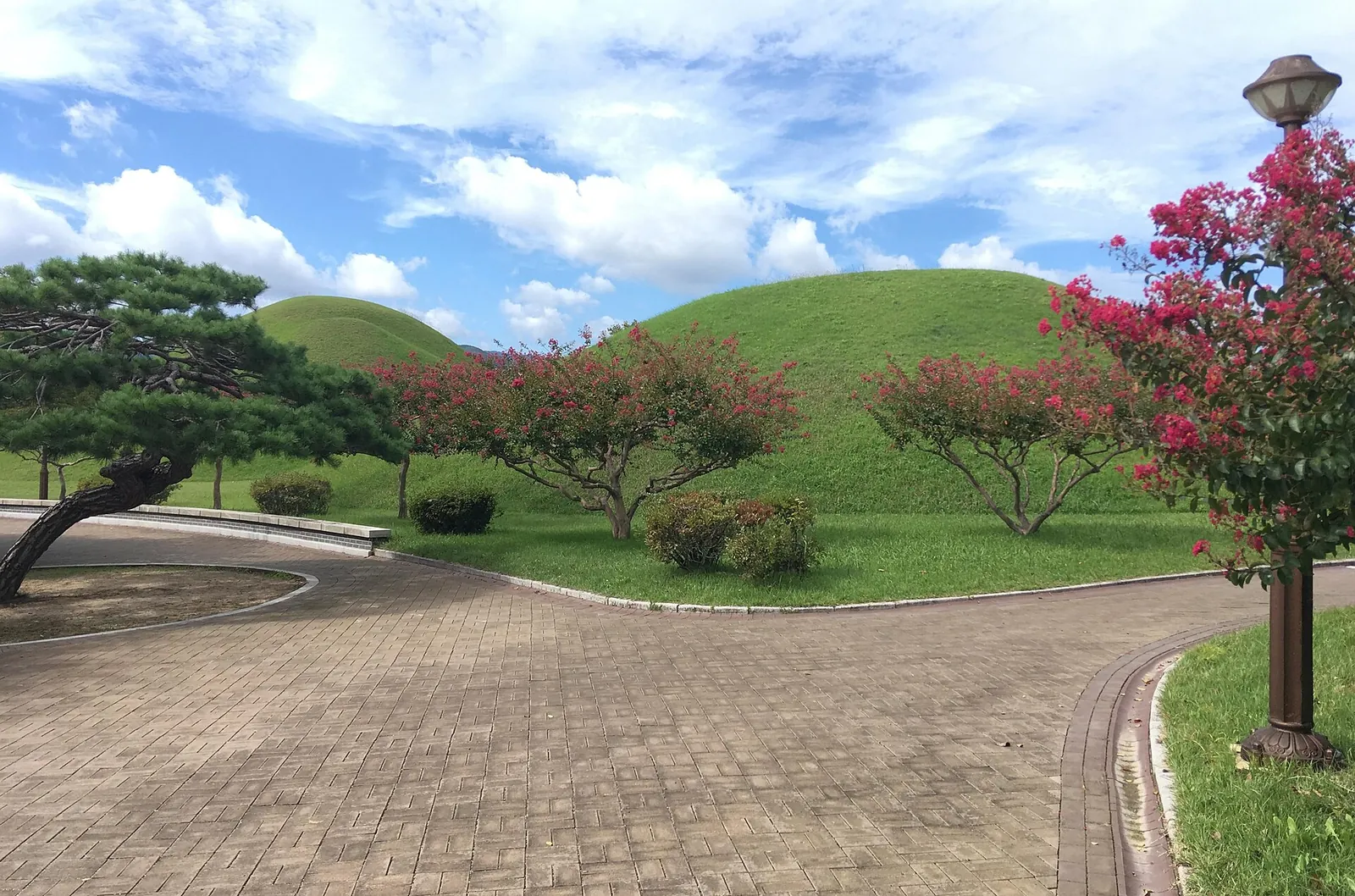
Start at Daereungwon, the walled park of 23 large and small Silla tombs in Hwangnam-dong. Inside, Cheonmachong is the only tomb you can enter. VisitKorea's listing says it was excavated in 1973, stands 12.7 metres high and 50 metres across, and takes its name from a saddle flap painted with a heavenly horse; the gold crown found inside, the largest and most elaborate excavated in Korea, is now in the Gyeongju National Museum. When we checked on 3 October 2026, VisitKorea listed Daereungwon as open 09:00–22:00 every day, the grounds as free and Cheonmachong at 3,000 won for adults, with last admission at 21:30. Older VisitKorea features list an adult ticket for the complex as a whole, so check at the gate.
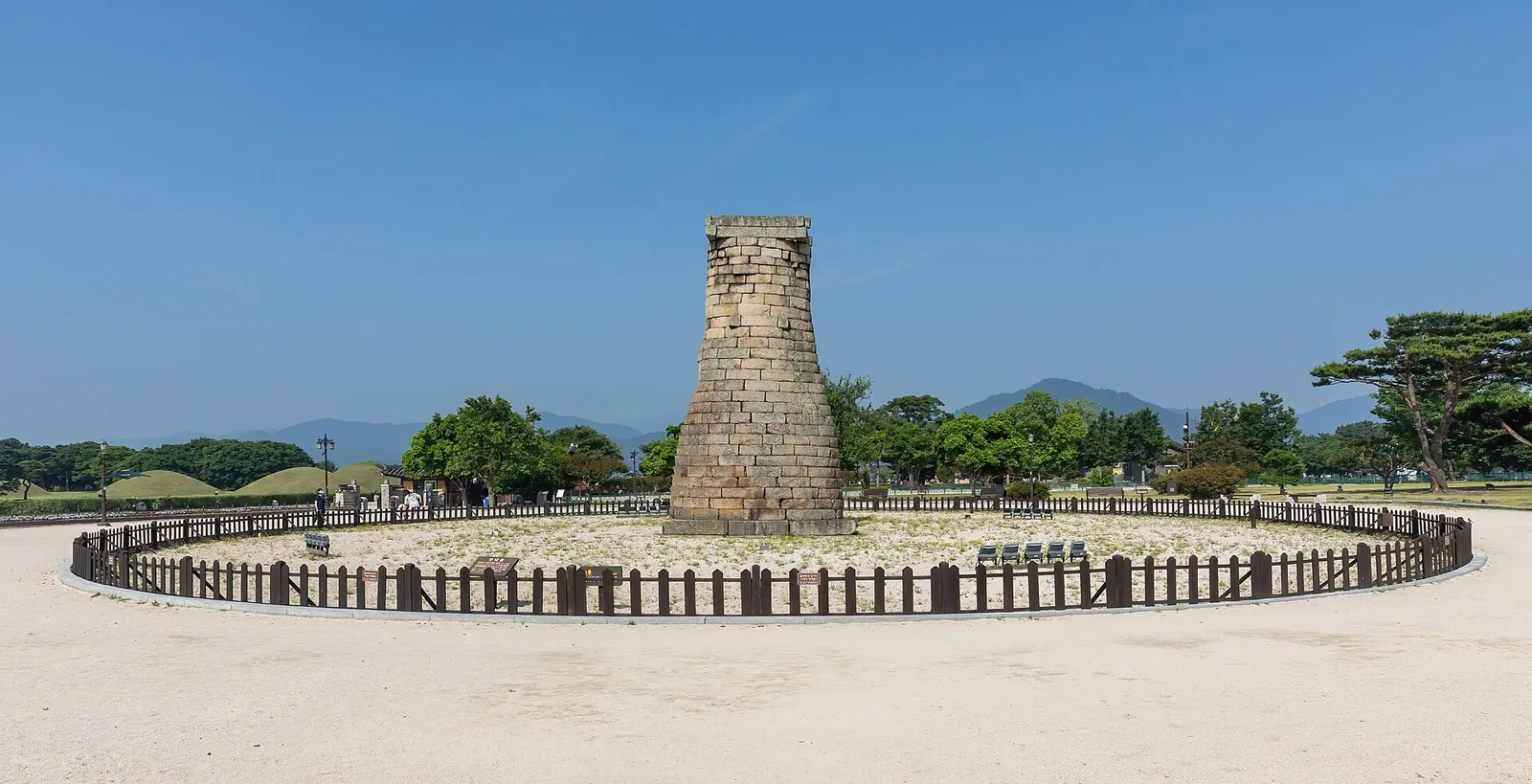
From the main gate, Cheomseongdae is a two-minute walk. It was built under Queen Seondeok (r. 632–647), is about 9 metres tall and, by tradition, is made of 365 stones, one for each day of the year. It is free and, according to VisitKorea, open 09:00–22:00 in summer and 09:00–21:00 in winter, so it is worth seeing twice: once in daylight and once lit up. A path continues past Gyerim Forest, the grove of old zelkovas and willows where legend says the founder of the Gyeongju Kim clan was found in a golden box, to Gyochon Traditional Village, home of the wealthy Choi clan and of Gyodong Beopju liquor, and to the nearby Gyeongjuhyanggyo Confucian school.
The flat centre is made for a bicycle. VisitKorea's bike route starts at the rental shops near Daereungwon, where bikes are hired by the hour at prices that vary by shop, and runs to the Five Royal Tombs, the Hwangnyongsa Temple History and Culture Hall next to the site of what was once the city's great temple, and the Gyeongju National Museum. Bikes are not allowed in the museum's outdoor area, so lock up at the entrance.
The museum is the place to understand what came out of the tombs. When we checked on 3 October 2026, VisitKorea listed it as free (you collect a free ticket; special exhibitions may charge), open 10:00–18:00 on weekdays and 10:00–19:00 at weekends and on public holidays, with late opening to 21:00 on Saturdays and the last Wednesday of the month from March to December, and closed on New Year's Day, Seollal, Chuseok and the first Monday of March and November. The Sacred Bell of Great King Seongdeok hangs in the grounds. If you are short of time, VisitKorea's writer suggests the Silla History and Silla Art halls.
Make time for the local food
What to eat and where to look
Ssambap (leaf wraps with rice)
A set meal of rice with a basket of fresh leaves for wrapping, many side dishes, grilled or stir-fried meat or fish and a pot of doenjang jjigae made with homemade soybean paste. VisitKorea describes a whole Ssambap Street around Daereungwon.
- Where to look
- The restaurants of Ssambap Street around Daereungwon. VisitKorea lists Ipungnyeo Guro Ssambap at 155 Cheomseong-ro, near Cheomseongdae, whose set comes with spicy stir-fried pork and about ten kinds of leaves, open 09:00–20:30.
- Fit it into your day
- Lunch between Daereungwon and the museum on day one; it is a big meal, so it works for two people or more.
Most sets include pork and fish-based side dishes; ask what comes with the set if you avoid meat.
Hwangnam-ppang and chalbori-ppang
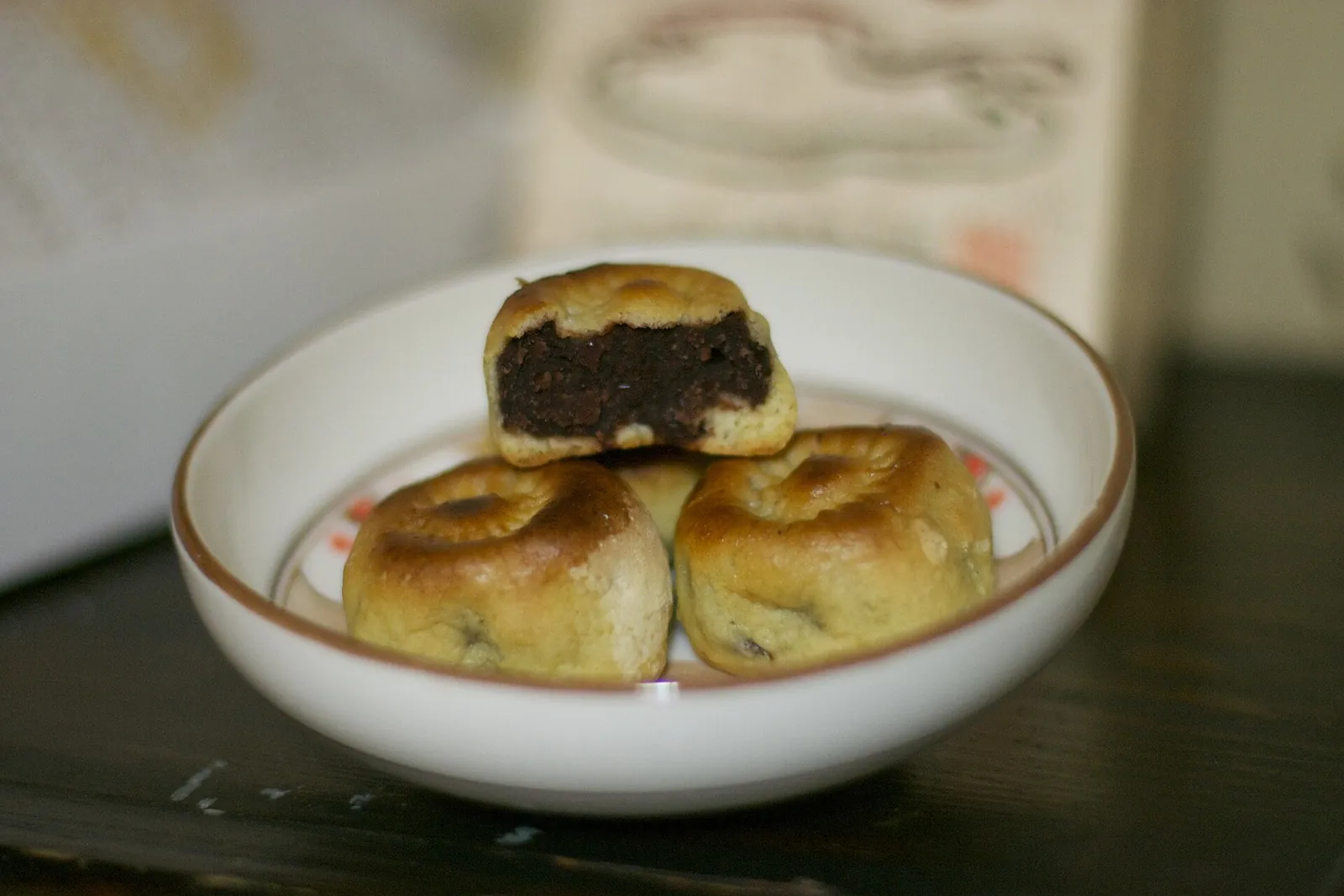
Gyeongju's two famous sweets. Hwangnam-ppang, a small round pastry filled with red bean paste and stamped with a comb pattern, was created in Hwangnam-dong in 1939 by Choi Yeong-hwa, according to VisitKorea. Chalbori-ppang is a chewy barley pancake sandwich, and chalbori-tteok its rice-cake version.
- Where to look
- Hwangnambbang's shop at 783 Taejong-ro, listed by VisitKorea as open 08:00–22:00; Cheonnyeonae on Hwangnidan Street at 67 Cheomseong-ro for barley bread, listed as open 09:00–20:00 and closed on Tuesdays.
- Fit it into your day
- An afternoon snack on the walk, or a box to take home on the train.
Very sweet; Cheonnyeonae notes that supply may be limited, so buy earlier in the day.
Market lunches at Seongdong and Jungang
Gyeongju's traditional markets are the cheapest way to eat well. VisitKorea's Gyeongju feature recommends Seongdong Market for its Korean-style buffets with more than ten side dishes and street food such as gimbap and sundae, and Jungang Market for deep-fried shrimp, octopus skewers and fried chicken.
- Where to look
- Seongdong Market and Jungang Market in downtown Gyeongju.
- Fit it into your day
- A quick lunch on arrival or before a train or bus.
Sundae is a blood sausage; buffet dishes are not labelled in English.
Gyodong Beopju
A traditional rice liquor brewed by the Choi family of Gyochon village and listed by VisitKorea as an important intangible cultural asset.
- Where to look
- Gyochon Traditional Village, where the Choi clan house is open to visitors.
- Fit it into your day
- Buy a bottle while walking through Gyochon on day one, for the evening.
It is a strong liquor; do not drink and cycle.
After dark: Wolji Pond and Woljeonggyo
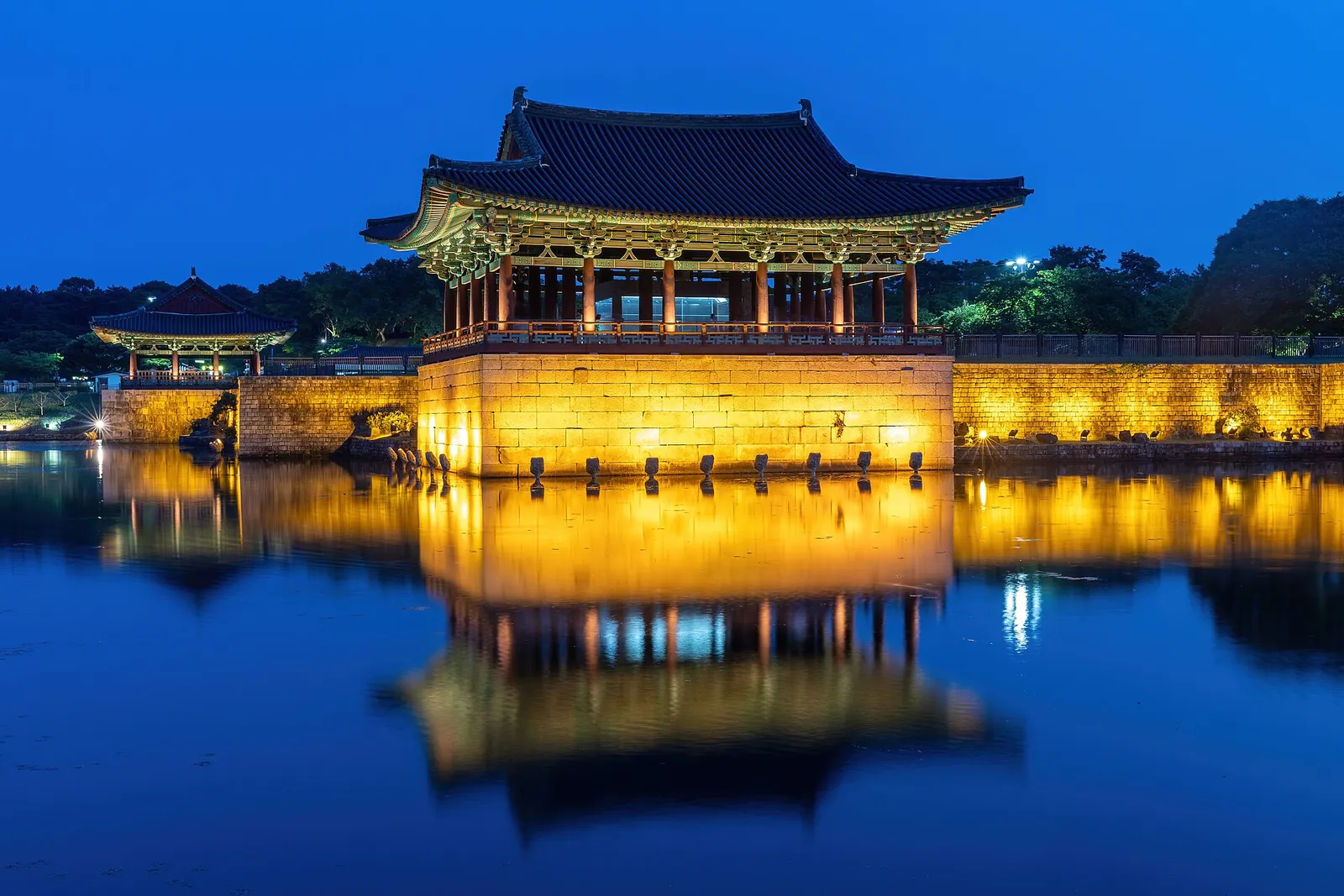
Gyeongju is at its best in the evening, when the main sights in the centre are lit. Donggung Palace and Wolji Pond was the crown prince's palace and a royal banquet hall; VisitKorea dates the pond to 674, under King Munmu, and explains that it was long called Anapji until pottery inscribed 'Wolji' was excavated in the 1980s. The rebuilt pavilions reflected in the water are the classic Gyeongju night photograph, and they are busy at sunset. When we checked on 3 October 2026, VisitKorea listed it as open 09:00–22:00, with last ticketing and admission at 21:30, and 3,000 won for adults.
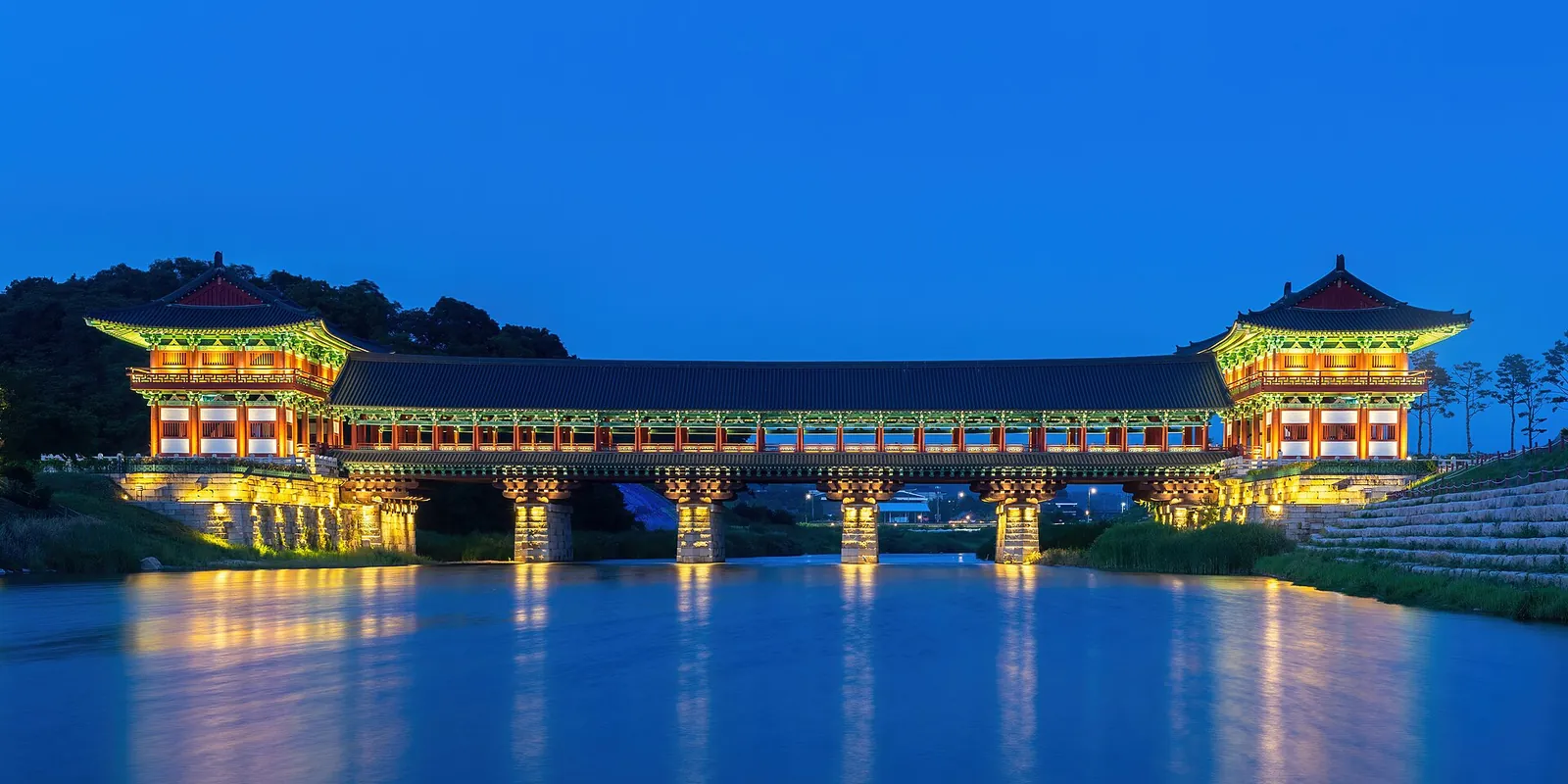
Woljeonggyo Bridge crosses the Namcheon stream south of the old palace. VisitKorea says the original was built in 760 to link Wolseong with Namsan, and that the reconstruction finished in April 2018 is the largest wooden bridge in Korea, about 61 metres long. It is free and listed as open 09:00–22:00. From there, Gyochon village and the hyanggyo are a short walk back towards the centre.
Hwangnidan Street, the old main street of Hwangnam-dong along Poseok-ro, is where the evening ends. VisitKorea describes it as a strip of cafés, restaurants, photo studios and shops in renovated hanok, right next to Daereungwon and Cheomseongdae; hours vary by shop. Hanbok rental shops are found throughout the centre, and VisitKorea notes that visitors in hanbok get free entry to Donggung and Wolji Pond, Daereungwon and several royal tombs during the Seollal and Chuseok holidays.
Day two: Bulguksa and Seokguram on Tohamsan
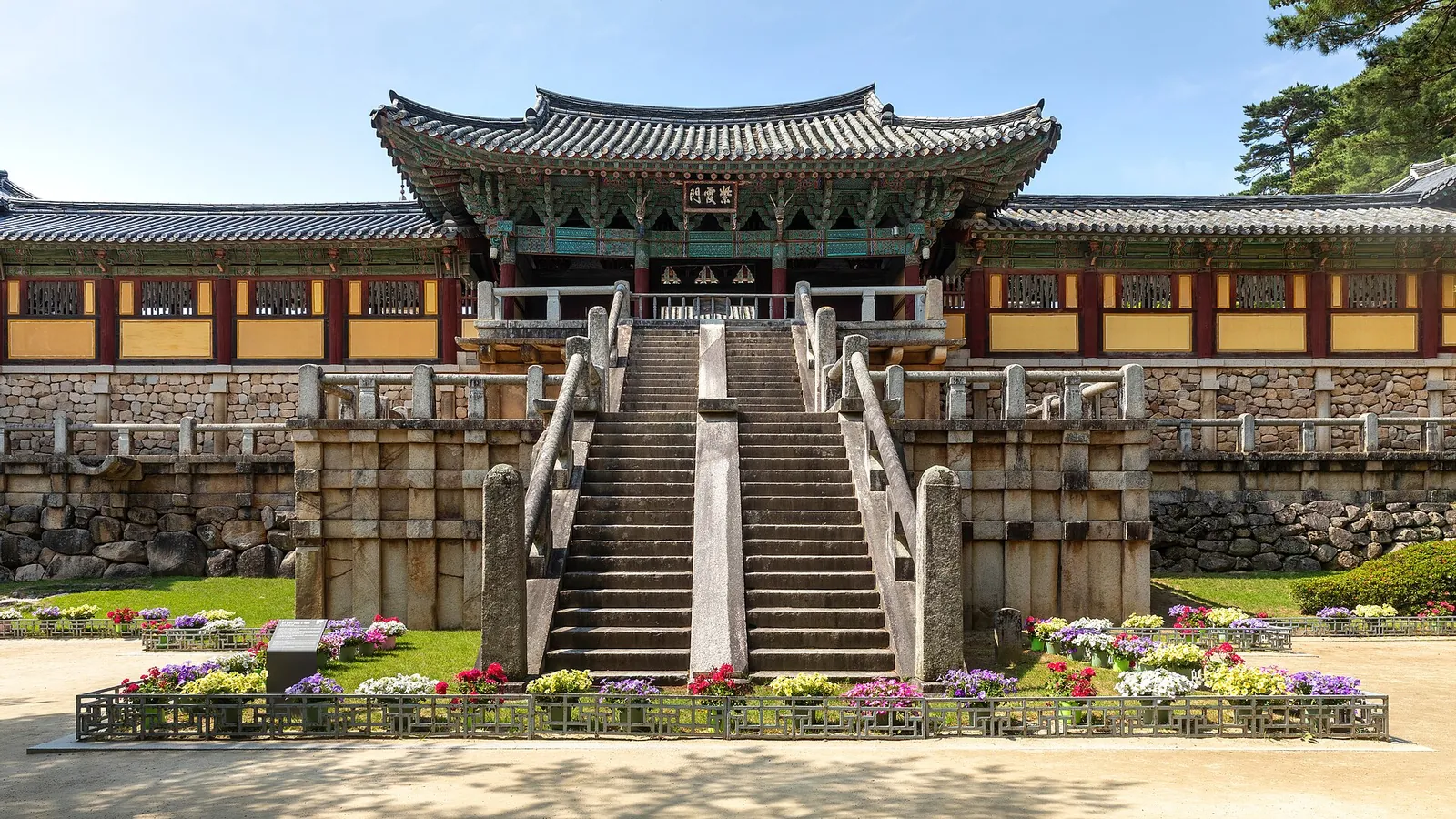
Bulguksa was first built in the reign of King Beopheung and rebuilt in 751 by Kim Dae-seong, according to VisitKorea; it burned in the Imjin War of the 1590s and has been restored since 1920. It holds seven national treasures. Look for the stone stairways of Cheongungyo and Baegungyo leading up to Jahamun Gate, and the two pagodas in front of Daeungjeon Hall: the ornate Dabotap and the plain Seokgatap. VisitKorea also points out the golden pig in front of Geungnakjeon Hall, which visitors touch for luck. When we checked on 3 October 2026, VisitKorea listed Bulguksa as open 09:00–18:00 (exit by 19:00) every day and free.
Seokguram Grotto, also made by Kim Dae-seong under King Gyeongdeok (742–765), is higher up the mountain. VisitKorea gives the distance from Bulguksa as 3 kilometres on the hiking trail or 9 kilometres by road. It is an artificial cave temple built from granite blocks, with a seated Buddha facing the East Sea. VisitKorea's temple feature says shuttle buses run from Bulguksa about every hour and take 20 minutes. Its Seokguram listing gave hours of 09:00–18:00 with viewing until 19:00 and free entry when we checked on 3 October 2026, while VisitKorea's Gyeongju National Park listing gave 09:00–17:00, so check seokguram.org on the day and do not leave Seokguram until late afternoon.
From the centre, VisitKorea gives city bus 10 from Gyeongju Express Bus Terminal to Bulguksa. The simplest order is Seokguram first by shuttle or taxi, then the walk or bus down to Bulguksa, which is larger and takes longer. Allow a half day for both, and more if you walk the trail.
With a third day: Yangdong, Namsan or the coast
Yangdong Village, north of the city, is Korea's largest traditional village and part of the UNESCO list. VisitKorea counts about 160 old houses, 54 of them over 200 years old, set in a valley below Seolchangsan. People still live there, so stay out of houses unless invited. When we checked on 3 October 2026, VisitKorea listed it as open 09:00–18:00 from October to March and 09:00–19:00 from April to September, with last tickets an hour before closing and an adult ticket of 4,000 won.
Namsan (466 metres), just south of the centre, is the Silla people's sacred mountain and part of the historic area, with rock-carved Buddhas and pagodas scattered along its trails. VisitKorea listed it as free and open 06:00–18:00. Bring water and proper shoes; it is a hike, not a park walk.
On the East Sea coast, the Tomb of King Munmu is a rocky islet offshore. VisitKorea explains that the king who unified the Three Kingdoms asked to be buried at sea so he could become a dragon and guard the kingdom; Igyeondae Pavilion overlooks it. VisitKorea's listing for a Bomun resort puts it about 35 minutes away by car, so it works best with a car or taxi. Golgulsa Temple in the same area runs templestays and Seonmudo martial-arts performances.
Getting there and getting around
KTX trains stop at Gyeongju Station: VisitKorea gives about two hours from Seoul Station, about 30 minutes from Busan Station and about 20 minutes from Dongdaegu by KTX or SRT. Express buses from Seoul take about 3 hours 30 minutes to Gyeongju Express Bus Terminal. Gyeongju Station is not in the centre: VisitKorea gives about 30 minutes by taxi from the station to Gyeongju World at Bomun, and with luggage a taxi to your guesthouse is the simplest option.
Flying in, Gimhae International Airport in Busan is the usual international gateway; VisitKorea gives about an hour by intercity bus from the airport to Gyeongju Intercity Bus Terminal. From Incheon, VisitKorea gives about 5 hours by airport limousine bus, or the Airport Railroad to Seoul Station and then the KTX. Pohang Gyeongju Airport is closer but, according to VisitKorea, has only flights to Gimpo and Jeju.
In town, walk or cycle the centre, use buses or taxis for Bulguksa and Bomun, and consider a car or a driver only for Yangdong and the coast. KORAIL's site and app sell KTX tickets; book ahead for weekends in the spring and autumn peak seasons.
Practical questions
How many days do I need in Gyeongju?
Two nights is the sensible minimum: one day for the tombs, Cheomseongdae, the museum and the lit-up sights in the evening, and a second morning for Bulguksa and Seokguram on Tohamsan. Add a third day for Yangdong Village, Namsan or the coast.
Where should I stay in Gyeongju?
Without a car, stay in a hanok guesthouse around Hwangnam-dong, near Daereungwon and Hwangnidan Street, so you can walk to everything in the centre at night. Bomun Tourist Complex, about 10 kilometres east of downtown, has the big resort hotels and suits drivers and families. The Bulguksa area suits an early start on Tohamsan.
Can I cycle around Gyeongju?
Yes, in the centre. VisitKorea's bike route starts from the rental shops near Daereungwon and links the Five Royal Tombs, the Hwangnyongsa Temple History and Culture Hall and the Gyeongju National Museum; bikes are rented by the hour at prices that vary by shop. Bulguksa and Seokguram are uphill and further out, so take a bus or taxi there.
How do I get from Bulguksa to Seokguram?
VisitKorea gives a 3-kilometre hiking trail or 9 kilometres by road, and says shuttle buses run from Bulguksa about every hour, taking around 20 minutes.
Do Bulguksa and Seokguram charge admission?
When we checked on 3 October 2026, VisitKorea listed both as free. Parking is charged.
Is Gyeongju a good day trip from Busan?
It can be done, since VisitKorea gives about 30 minutes by KTX from Busan Station, but you would have to choose between the centre and Tohamsan, and you would miss the evening, when the tombs, Wolji Pond and Woljeonggyo are lit. One or two nights work much better.
Sources and checks before you travel
Reference sources for the version dated 3 October 2026. Confirm opening times, access, transport and conditions for your travel dates.
- VisitKorea: Gyeongju Historic Area [UNESCO World Heritage] ↗ — opens in a new tab
- VisitKorea: Gyeongju Bulguksa Temple [UNESCO World Heritage] ↗ — opens in a new tab
- VisitKorea: Gyeongju Seokguram Grotto [UNESCO World Heritage] ↗ — opens in a new tab
- VisitKorea: Bulguksa Temple and Seokguram Grotto (cruise guide) ↗ — opens in a new tab
- VisitKorea: Korea's most representative temple: Bulguksa Temple and Seokguram Grotto ↗ — opens in a new tab
- VisitKorea: Gyeongju National Park ↗ — opens in a new tab
- VisitKorea: Gyeongju Daereungwon Ancient Tomb Complex ↗ — opens in a new tab
- VisitKorea: Cheonmachong Tomb ↗ — opens in a new tab
- VisitKorea: Cheomseongdae Observatory ↗ — opens in a new tab
- VisitKorea: Donggung Palace and Wolji Pond ↗ — opens in a new tab
- VisitKorea: Woljeonggyo Bridge ↗ — opens in a new tab
- VisitKorea: Gyeongju Gyochon Traditional Village ↗ — opens in a new tab
- VisitKorea: Gyeongju Gyerim Forest ↗ — opens in a new tab
- VisitKorea: Gyeongju National Museum ↗ — opens in a new tab
- VisitKorea: Pedaling Through Time: A Bike Tour Guide to Gyeongju (March 2025) ↗ — opens in a new tab
- VisitKorea: The Ultimate 2-Day Gyeongju Itinerary (March 2025) ↗ — opens in a new tab
- VisitKorea: Gyeongju Reimagined: From Silla's Legacy to Modern Trends (March 2025) ↗ — opens in a new tab
- VisitKorea: Gyeongju Hwangnidan Street ↗ — opens in a new tab
- VisitKorea: Bomun Tourist Complex ↗ — opens in a new tab
- VisitKorea: Explore Beyond Seoul at SONO Hotels & Resorts ↗ — opens in a new tab
- VisitKorea: Fly to Daegu International Airport and Explore Daegu & Gyeongsangbuk-do (May 2026) ↗ — opens in a new tab
- VisitKorea: K-Temple Tours (bus to Bulguksa) ↗ — opens in a new tab
- VisitKorea: Explore Korea's Thrill at Gyeongju World ↗ — opens in a new tab
- VisitKorea: Domestic flights ↗ — opens in a new tab
- VisitKorea: Gyeongju Yangdong Village [UNESCO World Heritage] ↗ — opens in a new tab
- VisitKorea: Gyeongju Namsan Mountain ↗ — opens in a new tab
- VisitKorea: Bulguksa Hanok Dongodang ↗ — opens in a new tab
- VisitKorea: Gyeongju Golgulsa Temple ↗ — opens in a new tab
- VisitKorea: Gyeongju Ssambap Street ↗ — opens in a new tab
- VisitKorea: Ipungnyeo Guro Ssambap ↗ — opens in a new tab
- VisitKorea: Hwangnambbang ↗ — opens in a new tab
- VisitKorea: Cheonnyeonae Gyeongjuppang Chalborippang Chalboritteok ↗ — opens in a new tab
- VisitKorea: 2026 Cherry Blossom Forecast ↗ — opens in a new tab
- VisitKorea: 2026 Fall Foliage Forecast ↗ — opens in a new tab
Does this experience fit your route?
Gyeongju is easy on your own by KTX, bike and city bus. Choose a guided day trip only if you have a single day, and check that it covers both the tombs in the centre and Bulguksa on Tohamsan.
Browse relevant experiences on Viator ↗ — opens in a new tabAffiliate link · Book with ViatorPhoto credits
The stone stairways of Bulguksa Temple on Tohamsan, leading up to its main gate.
Photograph: Basile Morin — opens in a new tab · CC BY-SA 4.0 — opens in a new tab
Changes: Resized and converted to WebP; displayed with responsive crops. · Original photograph and licence details ↗ — opens in a new tab
Grass-covered Silla tombs along the paths of Daereungwon in central Gyeongju.
Photograph: Christophe95 — opens in a new tab · CC BY-SA 4.0 — opens in a new tab
Changes: Resized and converted to WebP; displayed with responsive crops. · Original photograph and licence details ↗ — opens in a new tab
Cheomseongdae, the Silla-era stone observatory a short walk from Daereungwon.
Photograph: Basile Morin — opens in a new tab · CC BY-SA 4.0 — opens in a new tab
Changes: Resized and converted to WebP; displayed with responsive crops. · Original photograph and licence details ↗ — opens in a new tab
Donggung Palace and Wolji Pond after dark, Gyeongju's classic evening view.
Photograph: Basile Morin — opens in a new tab · CC BY-SA 4.0 — opens in a new tab
Changes: Resized and converted to WebP; displayed with responsive crops. · Original photograph and licence details ↗ — opens in a new tab
Woljeonggyo Bridge, rebuilt in 2018, lit up over the Namcheon stream.
Photograph: Basile Morin — opens in a new tab · CC BY-SA 4.0 — opens in a new tab
Changes: Resized and converted to WebP; displayed with responsive crops. · Original photograph and licence details ↗ — opens in a new tab
Hwangnam-ppang, Gyeongju's red bean pastry, first made in Hwangnam-dong in 1939.
Photograph: ecodallaluna — opens in a new tab · CC BY-SA 2.0 — opens in a new tab
Changes: Resized and converted to WebP; displayed with responsive crops. · Original photograph and licence details ↗ — opens in a new tab