Itineraries · South Korea
South Korea in 7 days: Seoul, Gyeongju and Busan by KTX, three hotels
A first week in South Korea works best as a line drawn from north-west to south-east: Seoul for the Joseon palaces and the markets, Gyeongju for the tombs and temples of the old Silla capital, and Busan for the harbour, the hillside villages and the sea. The high-speed KTX links all three, so the week needs only three hotels and two short train rides, and nothing has to be done as a rushed day trip. The plan below is built around the things that actually decide how such a week goes: which day each palace closes, which evenings are worth staying out for, and how to leave the country from the far end without backtracking.
- Suggested time
- 7 days (3 nights Seoul, 2 nights Gyeongju, 2 nights Busan)
- Where to stay
- Jongno or the Seoul Station area in Seoul; Hwangnam-dong near Daereungwon in Gyeongju; Nampo-dong, Seomyeon or Haeundae in Busan
- Season and timing
- Autumn, from September to November, is Seoul's most pleasant season according to the city government, and spring begins in March with blossom in the parks; both are also when KTX seats and Gyeongju rooms go fastest at weekends. Summer is long, hot and humid, with monsoon rain in June and July. Palace and attraction hours are shortest in winter, so plan earlier evenings from November to February.
The short answer
Spend three nights in Seoul, two in Gyeongju and two in Busan. Fly into Incheon, take the AREX airport train to Seoul Station and sleep in Jongno or near Seoul Station. Give Seoul two full days to Gyeongbokgung with Bukchon and to Changdeokgung with its Secret Garden, putting each palace on a day it is open (Gyeongbokgung closes on Tuesdays, Changdeokgung on Mondays). On day 4 take the KTX from Seoul Station to Gyeongju (about 2 hours 10 minutes, according to VisitKorea), stay near Daereungwon and spend the evening at Wolji Pond; give day 5 to Bulguksa and Seokguram. On day 6 take the KTX on to Busan Station (about 30 minutes) for Jagalchi, Gukje Market and Gamcheon, and on day 7 follow the east coast to Haedong Yonggungsa, Blueline Park and Haeundae. Fly home from Gimhae if your route allows, or take the KTX back towards Incheon.
Why three bases, and which part of each city to sleep in
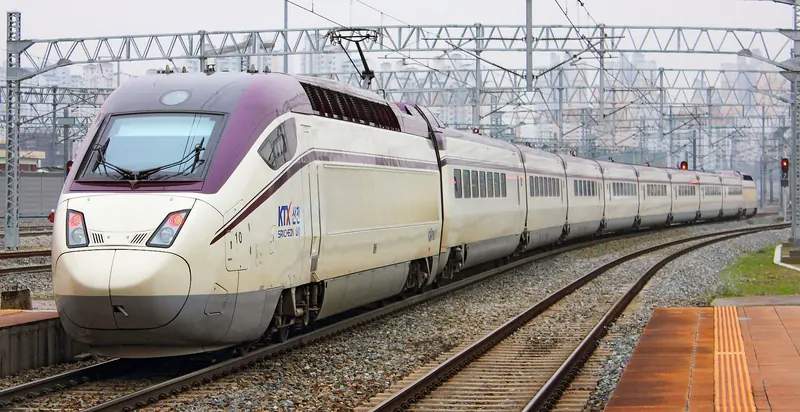
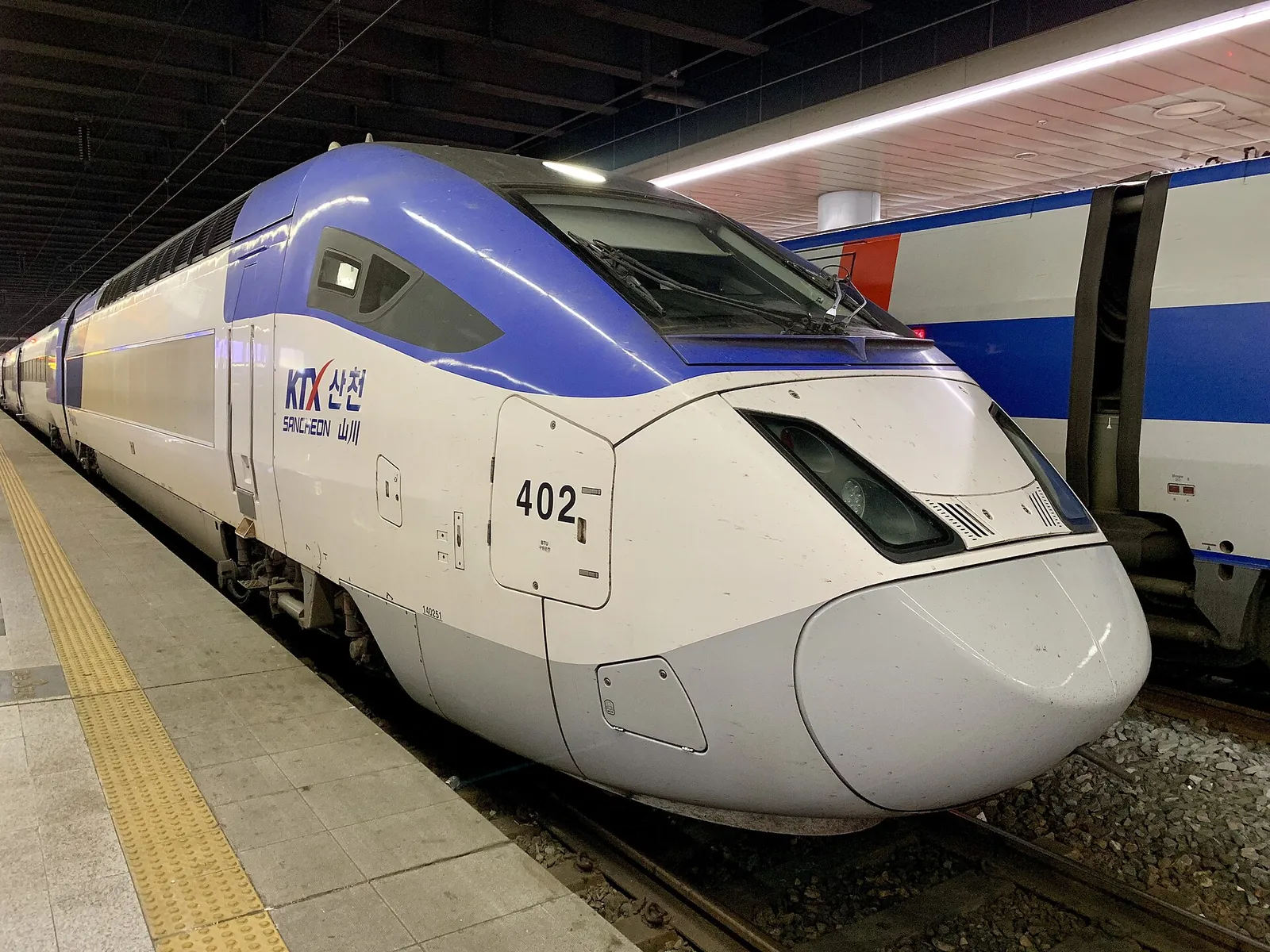
The week is planned so that every move is short and every base earns its nights. Seoul gets three because its two great palaces close on different days and deserve a day each. Gyeongju gets two because its centre and its mountain temples are two separate halves of one visit, and the centre is at its best after dark. Busan gets two because its old port and its east coast are far enough apart to need a day each. The two train legs between them are short: VisitKorea gives about 2 hours 10 minutes by KTX from Seoul Station to Gyeongju Station, and about 30 minutes from Gyeongju Station to Busan Station.
In Seoul, sleep in Jongno, around Anguk, Insa-dong or Jongno 3-ga, if you want to walk to the palace gates at opening time, or near Seoul Station if you would rather have the AREX airport train and the KTX south under one roof; VisitKorea notes that Subway Lines 1 and 4 and the AREX all meet there. On the morning you leave for Gyeongju, a hotel near Seoul Station saves a subway ride with your luggage.
In Gyeongju, the base without a car is Hwangnam-dong, the area around Daereungwon and Hwangnidan Street, from which the tombs, Cheomseongdae and Wolji Pond are all on foot. Check how far your room is from Gyeongju Station, where the KTX stops; with luggage, a taxi is the simplest way to cover that last stretch. In Busan, Nampo-dong puts you next to Jagalchi and Gukje Market and close to Busan Station (VisitKorea says the markets are about 15 minutes from the station); Haeundae is better if the beaches and the east coast matter more; Seomyeon, where Metro Lines 1 and 2 meet, is the compromise between the two.
Days 1–3: Seoul, arranged around the palace closing days
Day 1 — arrival. From Incheon, the AREX Express Train runs non-stop to Seoul Station in about 43 minutes from Terminal 1 and 51 minutes from Terminal 2, according to VisitKorea; the cheaper All-Stop Train takes about 59 and 66 minutes and accepts transport cards. VisitKorea also notes that most public transport from the airport into central Seoul stops at around 23:30. Buy a rechargeable transport card on arrival: VisitSeoul explains that transfer discounts on the subway and buses apply only if you tap the card when you get off. If you land in time, finish the day at Gwangjang Market by Jongno 5-ga station: VisitSeoul listed its food alley as open daily from 09:00 to 23:00 when we checked on 2026-10-03, while the clothing market closes on Sundays.
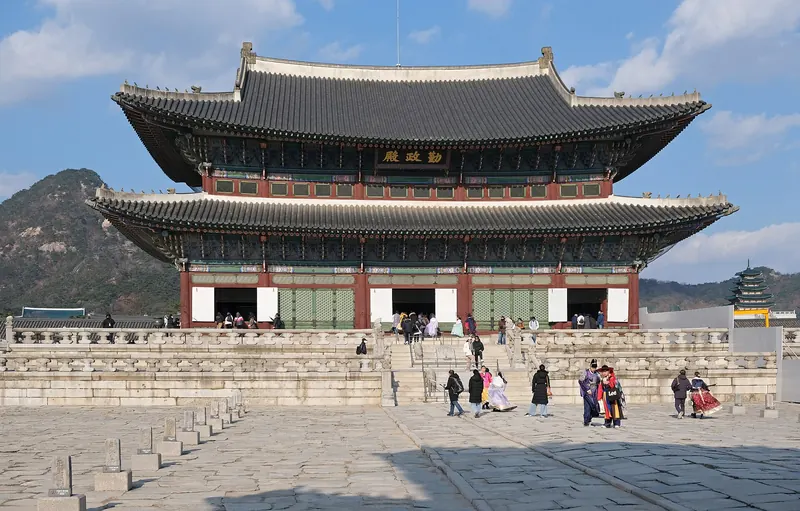
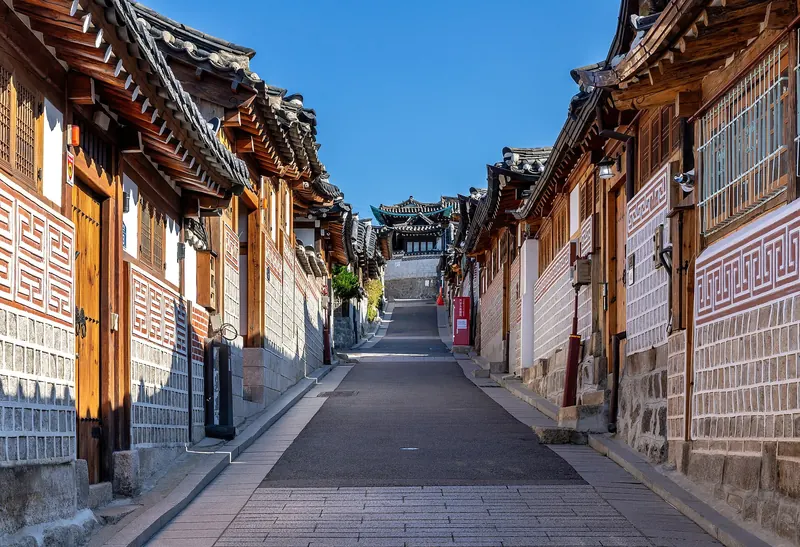
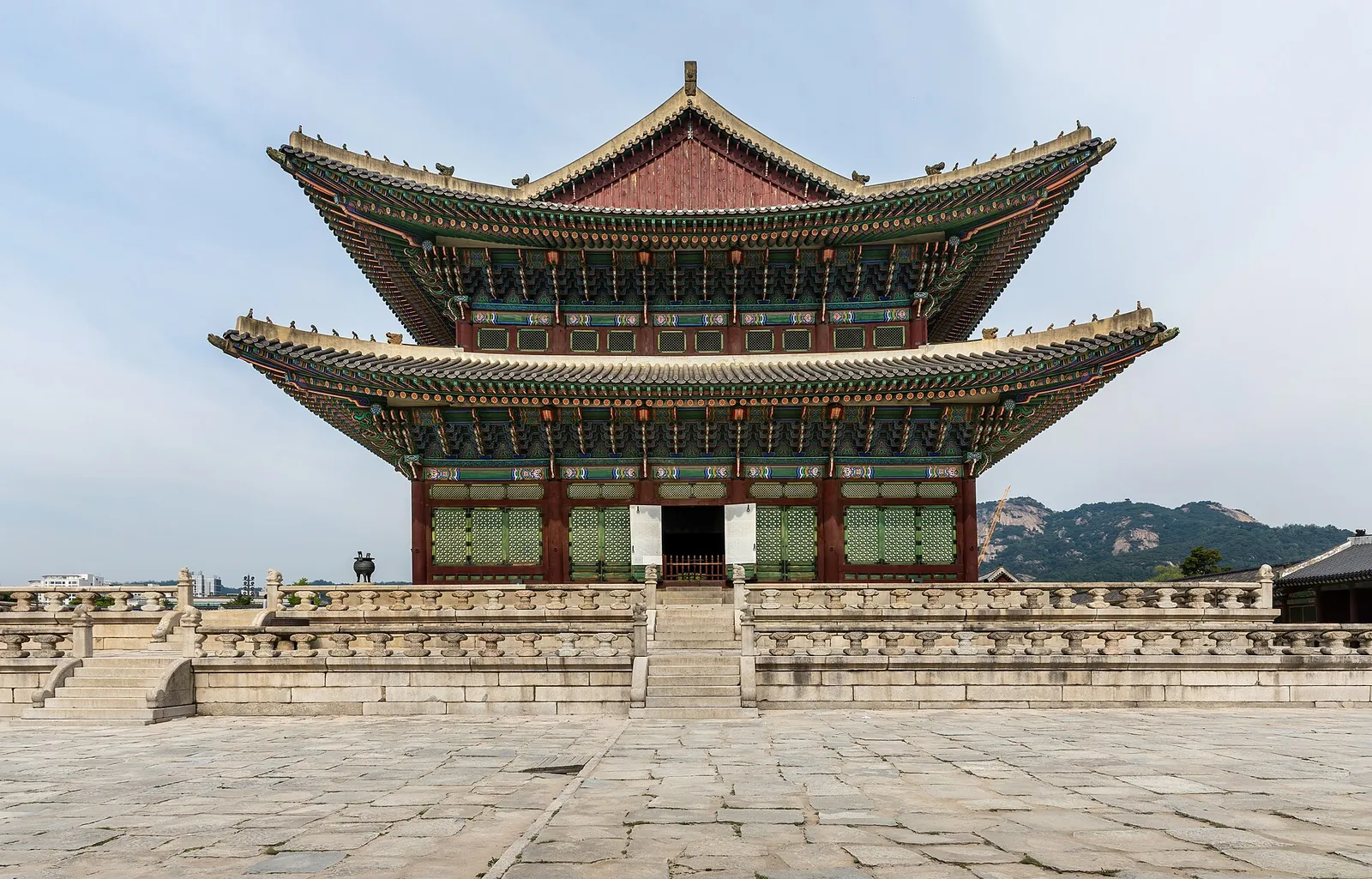
Day 2 — Gyeongbokgung and Bukchon (not a Tuesday). Gyeongbokgung, built in 1395, is the largest of the five Joseon palaces. When we checked on 2026-10-03, VisitKorea listed its hours as 09:00–18:00 from March to May and in September and October, 09:00–18:30 from June to August and 09:00–17:00 from November to February, with last admission an hour before closing, and an adult ticket of 3,000 won; VisitSeoul confirms free entry in a complete hanbok and listed free English guided tours at 11:00, 13:30 and 15:30. Go at opening time, then walk east into Bukchon Hanok Village. It is a residential area under special management: VisitSeoul lists visiting hours of 10:00 to 17:00, with visitors not allowed into the restricted area outside them, so walk it late in the morning and keep your voice down.
Day 3 — Changdeokgung and the Secret Garden (not a Monday). Changdeokgung, built in 1405, is the best preserved of the palaces, and its rear garden, the Huwon or Secret Garden, takes up about sixty percent of the grounds, VisitSeoul notes. The garden is a separate visit: when we checked on 2026-10-03, VisitKorea listed 3,000 won for the palace and 5,000 won for adults for the Secret Garden, and VisitSeoul says Secret Garden viewing is booked through the palaces' Integrated Reservation Service. Book your slot before you fly and build the day around it. The palace is a short walk from Anguk station (Line 3, exit 3). Spend the rest of the day in Insa-dong or on Namsan, and pack that evening: tomorrow is a train day.
If your arrival day makes day 2 a Tuesday or day 3 a Monday, simply swap the two palace days. When a closing day falls on a public holiday, VisitSeoul and VisitKorea say the palace opens and closes on the next working day instead.
Make time for the local food
What to eat and where to look
Bindaetteok (mung bean pancake) at Gwangjang Market
A thick, crisp pancake of ground mung beans fried on a griddle, the dish VisitSeoul lists first among Gwangjang Market's favourites, alongside mayak gimbap, sundae and yukhoe.
- Where to look
- The food alley of Gwangjang Market, by Jongno 5-ga station (Line 1, exit 8), Seoul.
- Fit it into your day
- Arrival-night or day-3 dinner: share a pancake and one or two other dishes at a stall where they are cooked in front of you.
The alley is crowded; check prices before you sit and keep bags closed.
Ssambap (leaf wraps with rice) in Gyeongju
Fresh leaves and vegetables for wrapping rice, served with a spread of side dishes such as fish, meat and doenjang jjigae made with homemade soybean paste. VisitKorea describes a whole street of ssambap restaurants around Daereungwon.
- Where to look
- Gyeongju Ssambap Street, next to the Daereungwon tomb complex in Hwangnam-dong.
- Fit it into your day
- Lunch on day 4 between the tombs and the museum, or dinner before Wolji Pond.
Usually served as a set for two or more; doenjang jjigae and many side dishes contain fish or seafood stock.
Hwangnam ppang (Gyeongju bread)
Baked buns made with flour and red beans, a Gyeongju speciality that VisitKorea lists among the snacks on the streets around Daereungwon and Hwangnidan Street.
- Where to look
- Bakeries and shops around Hwangnidan Street and Daereungwon.
- Fit it into your day
- A snack for the KTX to Busan, or to take home.
Contains wheat; sweet rather than savoury.
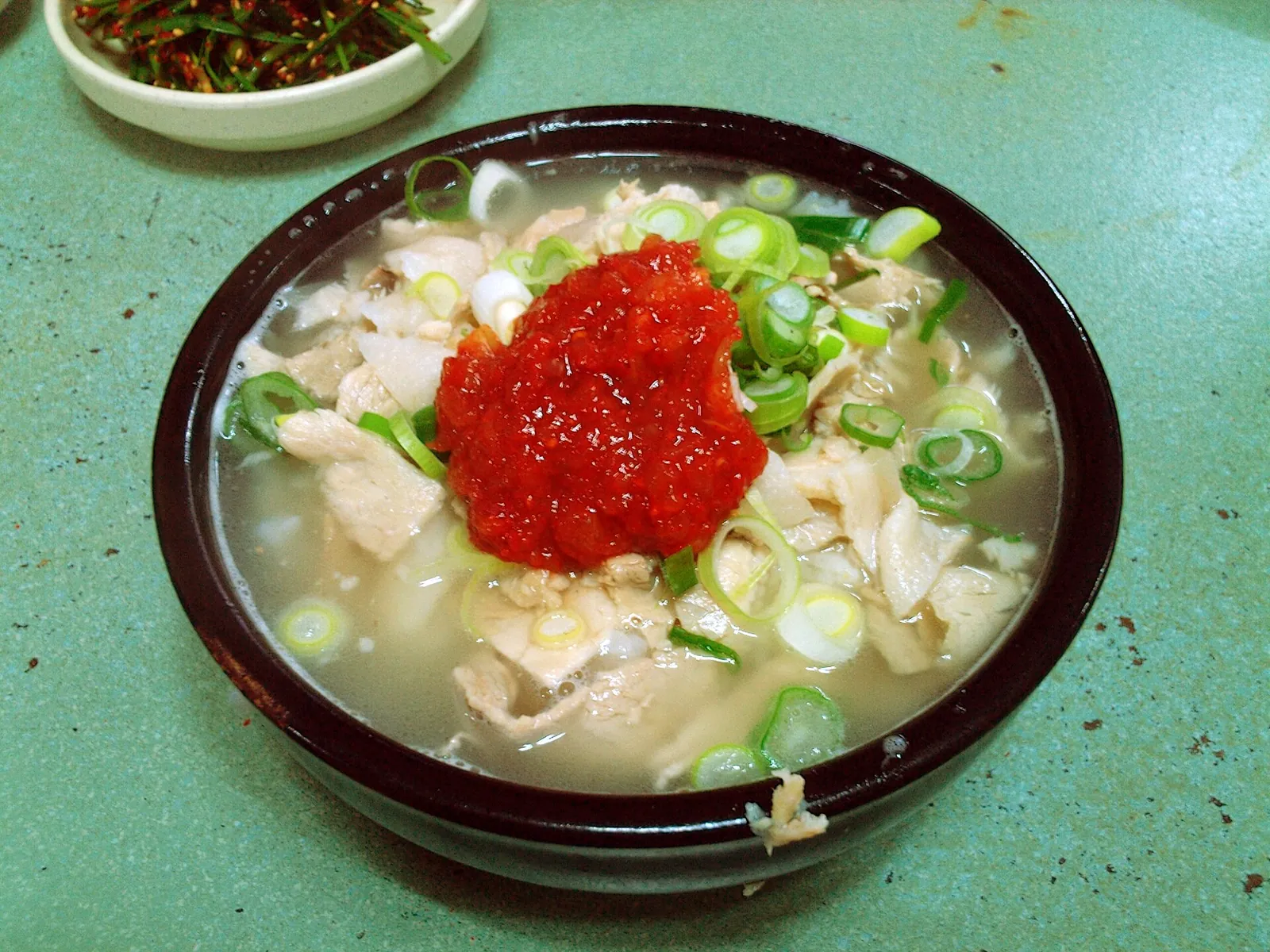
Dwaeji gukbap (pork and rice soup)
A pork soup eaten with rice, the kind of quick, filling gukbap meal that VisitKorea calls Busan's representative local dish.
- Where to look
- Gukbap restaurants across Busan, including around Busan Station and Seomyeon.
- Fit it into your day
- A filling breakfast or lunch on day 6 or 7, before a long walk.
Pork-based, so not one for vegetarians or anyone avoiding pork.
Milmyeon and raw fish in Busan
Milmyeon are cold wheat noodles in a chilled broth, a Busan speciality that VisitKorea traces to the flour provided as US aid during the Korean War. At Jagalchi, VisitKorea notes, you can eat fresh raw fish right in the market.
- Where to look
- Milmyeon shops and Gukje Market's food alleys; Jagalchi Market for seafood.
- Fit it into your day
- Milmyeon for a hot-day lunch, raw fish for the day-6 dinner by the harbour.
Ask the price before fish is prepared; VisitKorea describes milmyeon broth as made with beef, pork or chicken bones.
Days 4–5: Gyeongju, the Silla capital, by day and after dark
Day 4 — KTX to Gyeongju, the centre and the night. Take a morning KTX from Seoul Station; VisitKorea gives about 2 hours 10 minutes to Gyeongju Station. Drop your bags in Hwangnam-dong and start at Daereungwon, the complex of Silla tombs in Hwangnam-dong that includes Cheonmachong, excavated in 1973. When we checked on 2026-10-03, VisitKorea listed Daereungwon as open 09:00–22:00 with an adult ticket of 3,000 won; other VisitKorea pages describe the grounds as free, so check at the gate. Walk on past Cheomseongdae to the Gyeongju National Museum, which VisitKorea listed as open 10:00–18:00 on weekdays and 10:00–19:00 at weekends and on public holidays.
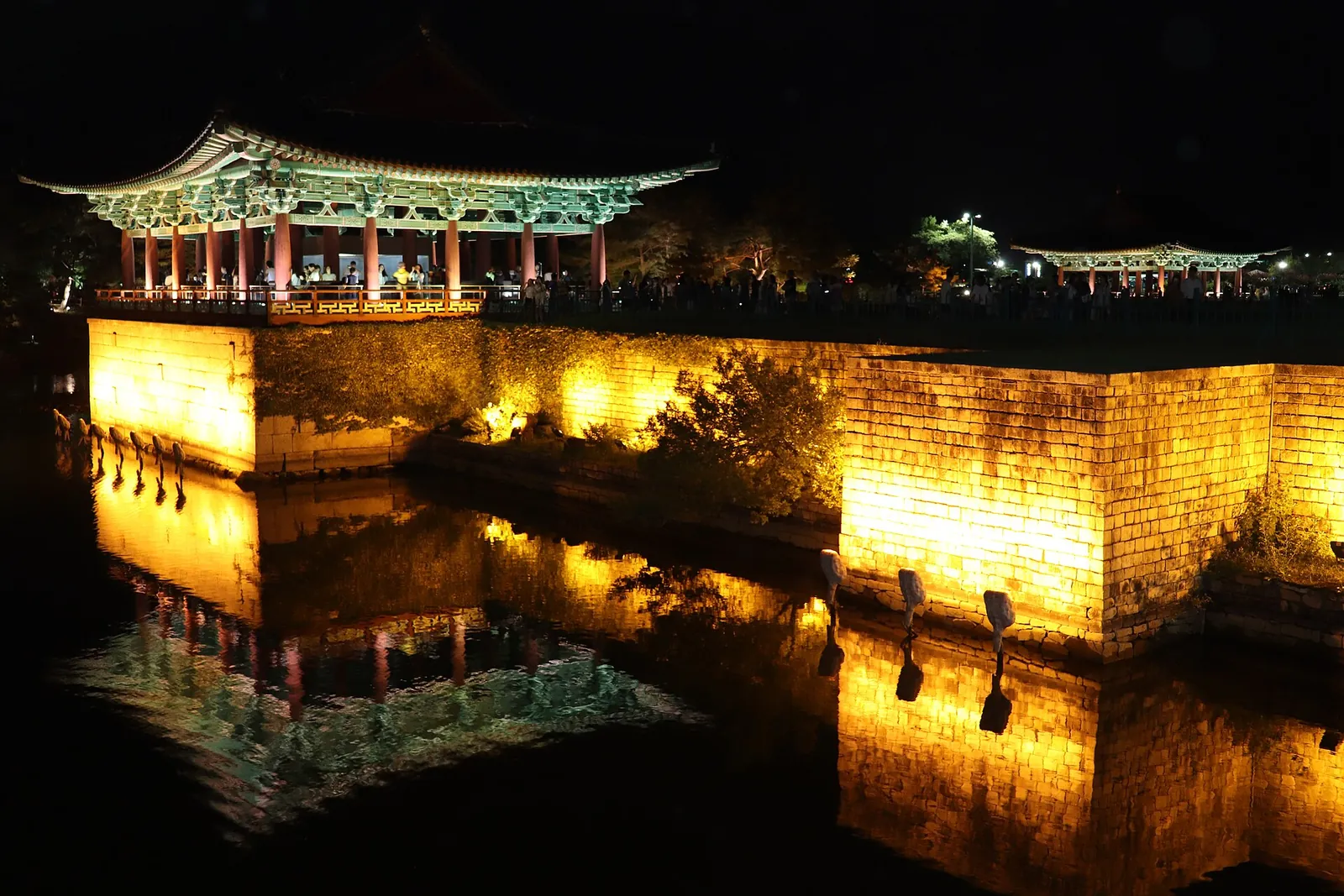
Keep the evening for Donggung Palace and Wolji Pond, the Silla crown prince's palace and banquet pond, which VisitKorea dates to 674. Its rebuilt pavilions reflected in the water are the classic Gyeongju night view. When we checked on 2026-10-03, VisitKorea listed it as open 09:00–22:00, with last ticketing and admission at 21:30, at 3,000 won for adults. Eat around Hwangnidan Street or on the ssambap street by Daereungwon.
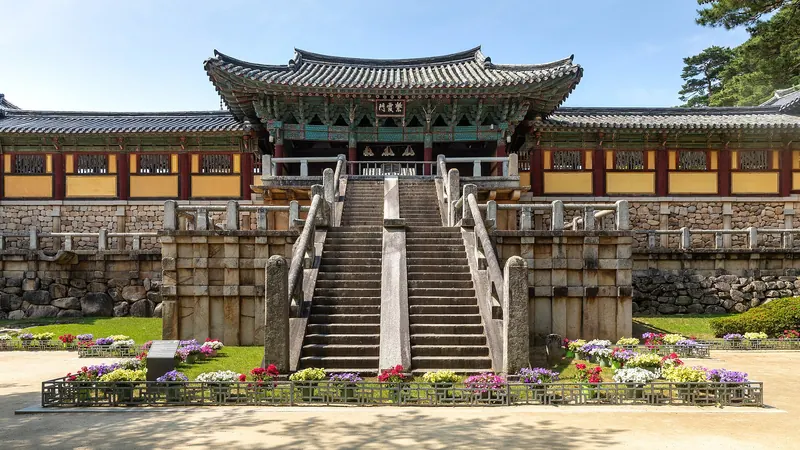
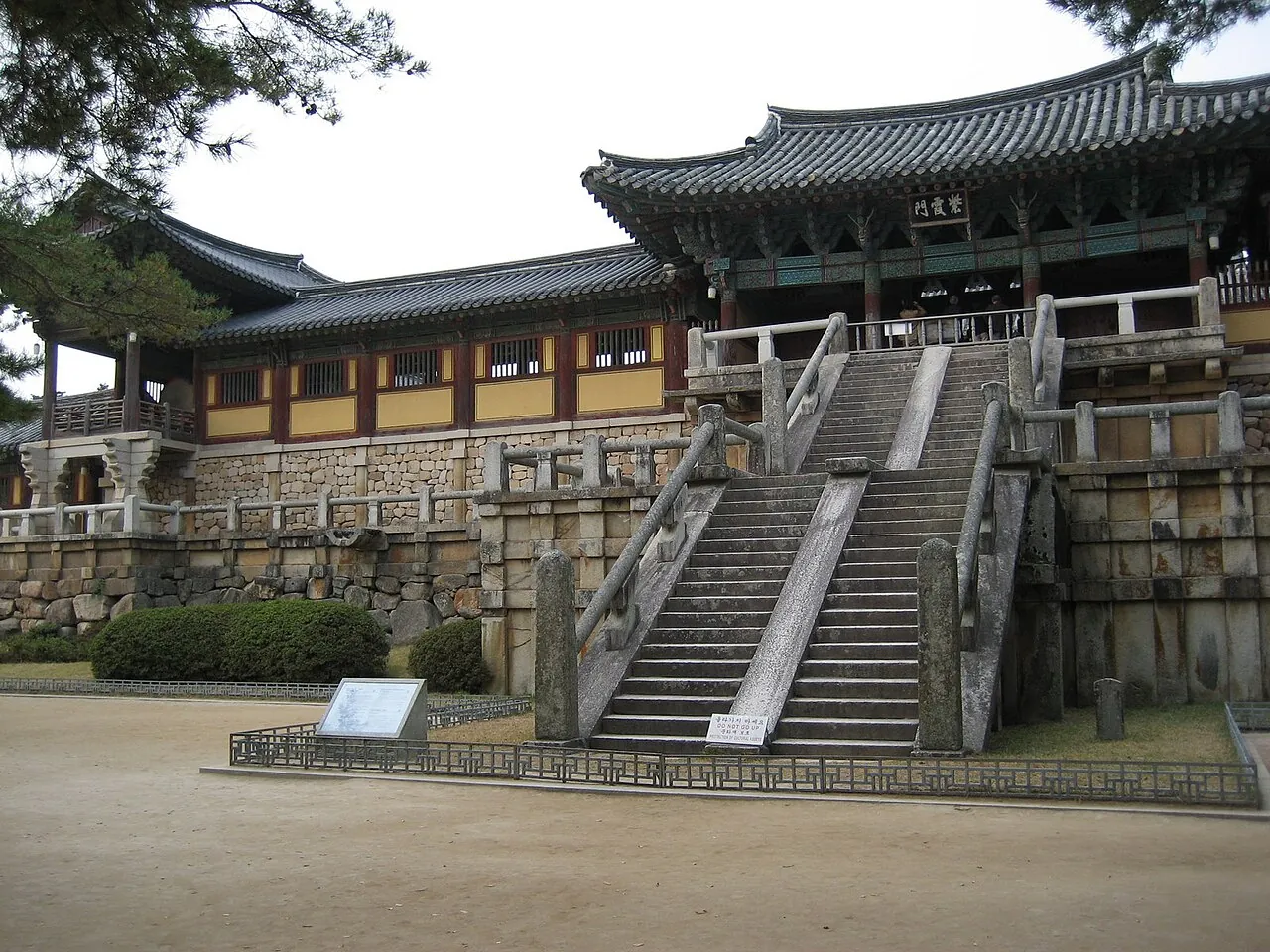
Day 5 — Bulguksa and Seokguram. Bulguksa, a UNESCO World Heritage Site, and Seokguram Grotto stand on Tohamsan, outside the town centre. VisitKorea gives city bus 10 from Gyeongju Express Bus Terminal to Bulguksa, and an hourly shuttle bus from Bulguksa up to Seokguram Grotto, about 20 minutes. When we checked on 2026-10-03, VisitKorea listed Bulguksa as free and open 09:00–18:00, with exit by 19:00. Go up to Seokguram first while you are fresh, then give Bulguksa's stone stairways, the Dabotap and Seokgatap pagodas and its halls the time they need on the way down. Back in town by mid-afternoon, you have time for a second, slower look at the centre.
Days 6–7: Busan, from the old port to the east coast
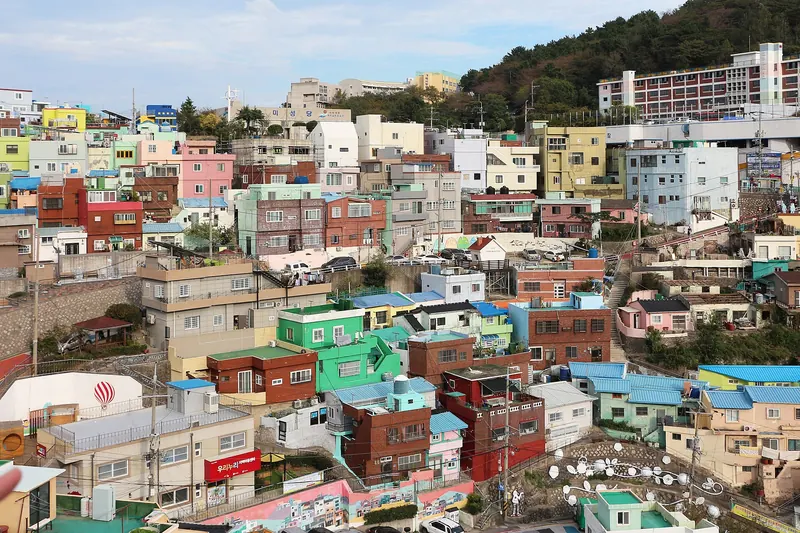
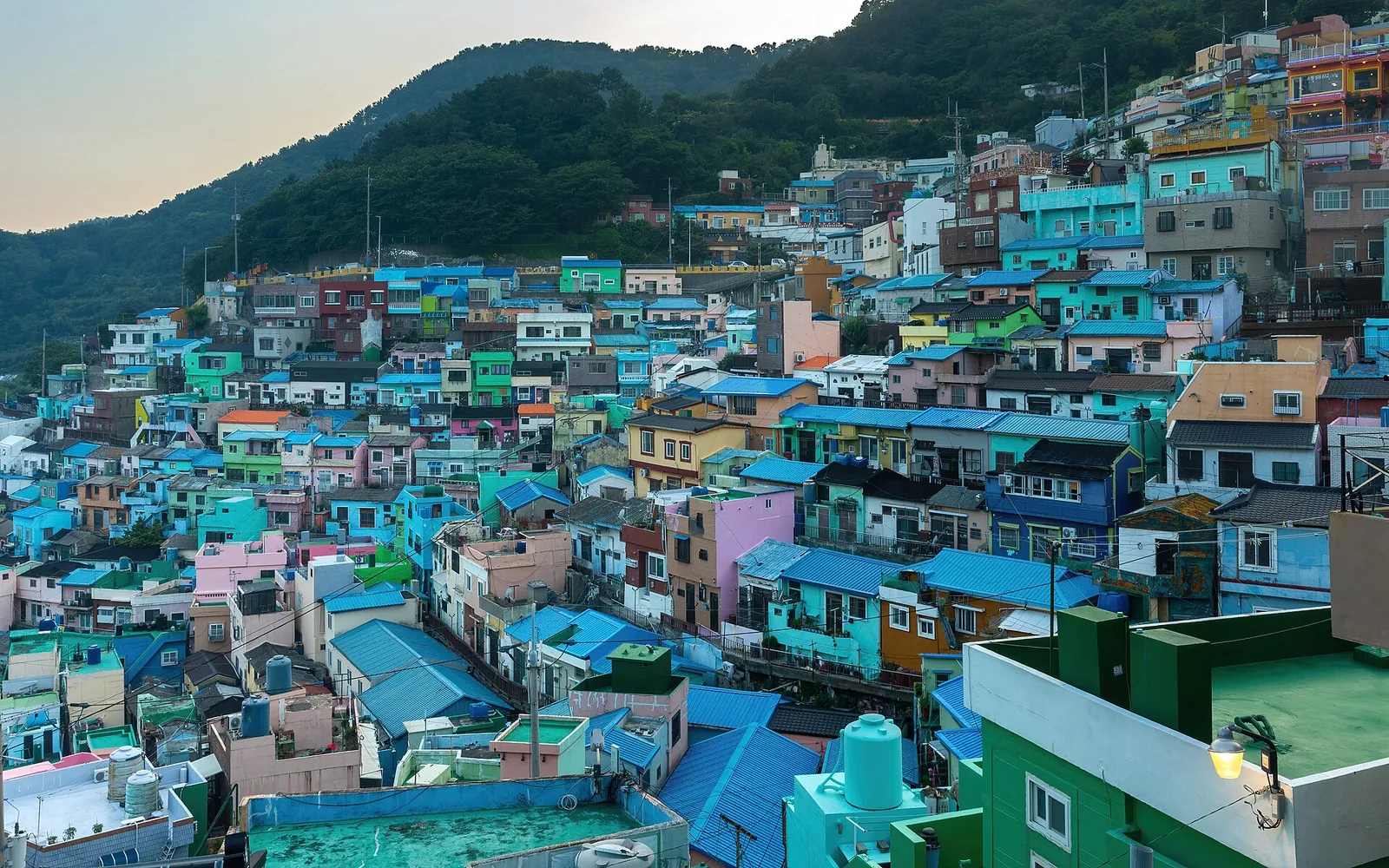
Day 6 — KTX to Busan and the old port. From Gyeongju Station the KTX takes about 30 minutes to Busan Station, according to VisitKorea, and Busan Station is on Metro Line 1 for the old port. If you are staying in Nampo-dong, drop your bags and go up to Gamcheon Culture Village, the hillside of painted houses built by Korean War refugees. Busan has made it a special management zone: VisitKorea's notice lists visiting hours in the residential areas of 09:00 to 18:00, asks visitors not to talk loudly, look into houses or take photos without permission, and restricts tourist vehicles, including taxis, inside the village.
Come down for a late lunch at Jagalchi Market, one of Korea's largest seafood markets, where most sellers are women, the Jagalchi ajumeoni. When we checked on 2026-10-03, VisitKorea listed it as open 05:00–22:00 and closed on the first and third Tuesdays of the month. Gukje Market, next door, grew from refugees' stalls after the war; VisitKorea listed it at 09:00–20:00, varying by shop, and closed on Sundays. If day 6 is a Sunday or one of those Tuesdays, swap it with day 7.
Day 7 — the east coast. Start early at Haedong Yonggungsa, one of the rare Korean temples built on the shore rather than in the mountains, which VisitKorea dates to 1376 and listed as free and open 04:30–19:20 (last admission 18:50). VisitKorea's directions are the Donghae Line to OSIRIA Station, then blue bus 139 or red bus 1001 from exit 1 and a walk of about 15 minutes. Then ride Haeundae Blueline Park, the 4.8-kilometre stretch of old coastal railway between Songjeong, Cheongsapo and Mipo, at the end of Haeundae Beach: when we checked on 2026-10-03, the operator's timetable listed Beach Train departures from 09:00 to 19:30 from both ends in March, April and October, with longer hours in summer and shorter in winter. Finish on Haeundae Beach or across the bay at Gwangalli for the lit-up bridge.
Leaving from Busan without backtracking
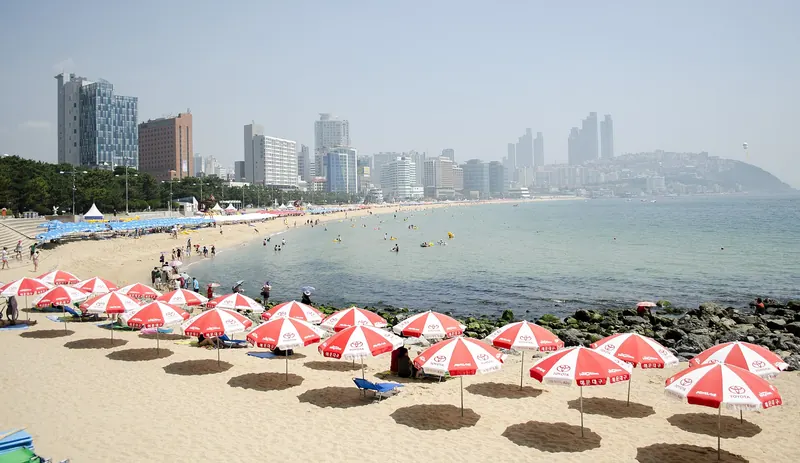
The cleanest ending is an open-jaw ticket: into Incheon, out of Busan. VisitKorea calls Gimhae International Airport Korea's busiest airport for international passengers after Incheon, with nonstop flights in 2026 to 46 cities in 14 countries and regions, including Japan, China, Vietnam, the Philippines and Taiwan. From Airport Station, the Busan–Gimhae Light Rail runs to Sasang for Metro Line 2; VisitKorea gives about 30 minutes to Seomyeon and 70 minutes to Haeundae. Check that your airline actually flies from Gimhae before you book.
If your flight home leaves from Incheon, plan the last morning as a train day. VisitKorea gives about 3 hours 20 minutes by KTX from Busan Station to Seoul Station, or about 2 hours 30 minutes by SRT to Suseo, plus the AREX to the airport, and it describes a bus link of about 50 minutes between Incheon Airport and Gwangmyeong Station, a KTX stop south of Seoul. Leave a wide margin: a late afternoon or evening flight is realistic, a morning one is not.
Booking the two train legs, and a day-by-day summary
When we checked on 2026-10-03, VisitKorea listed the KORAIL website and app, ticket offices, kiosks, NAVER Train Booking and Kakao T as sales channels, with tickets usually on sale from one month before departure at 07:00. You can choose your seat online. Book the Seoul–Gyeongju and Gyeongju–Busan legs as soon as your dates are fixed, especially for weekends in spring and autumn. For two short legs a Korail Pass rarely pays: VisitKorea describes 2- to 5-day flexible passes for international travellers, but price them against the two point-to-point fares on KORAIL before you buy.
This is an editorial suggestion, not a timetable. Check each site's closing day for your dates.
- Day 1 — Arrive in Seoul: AREX to Seoul Station, check in, dinner at Gwangjang Market.
- Day 2 — Gyeongbokgung and Bukchon (not Tuesday): the palace at opening time, Bukchon between 10:00 and 17:00, an evening in Insa-dong.
- Day 3 — Changdeokgung and the Secret Garden (not Monday): a booked Huwon slot, then Namsan or the markets.
- Day 4 — KTX to Gyeongju: Daereungwon, Cheomseongdae and the museum, Wolji Pond after dark.
- Day 5 — Tohamsan: Seokguram by shuttle, Bulguksa on the way down, a slow evening in Hwangnam-dong.
- Day 6 — KTX to Busan: Gamcheon before 18:00, Jagalchi and Gukje Market (check the Tuesday and Sunday closures).
- Day 7 — East coast: Haedong Yonggungsa early, Blueline Park, Haeundae or Gwangalli at night.
- Day 8 — Departure: fly from Gimhae, or take the KTX back towards Incheon.
Practical questions
Is a week enough for Seoul, Gyeongju and Busan?
Yes, if you sleep in each city rather than doing Gyeongju as a day trip. Three nights in Seoul, two in Gyeongju and two in Busan give each place at least one full day, and the train legs between them are short: about 2 hours 10 minutes by KTX from Seoul Station to Gyeongju and about 30 minutes from Gyeongju to Busan, according to VisitKorea.
Should I book KTX tickets in advance?
Yes, as soon as your dates are firm. VisitKorea says tickets usually go on sale a month before departure at 07:00 on the KORAIL website and app. Weekend trains in spring and autumn are the ones that sell out.
Is the Korail Pass worth it for this route?
Usually not for two short legs. Add up the two point-to-point fares on KORAIL for your dates and compare them with the pass. If you return from Busan to Seoul by train as well, recheck the sums; VisitKorea notes that the pass does not cover the SRT.
Which days are the palaces in Seoul closed?
Gyeongbokgung closes on Tuesdays and Changdeokgung on Mondays. When a closing day falls on a public holiday, the palace opens and closes on the next working day instead. Put each palace on its own day and swap them if needed.
Do I need to book the Secret Garden at Changdeokgung?
Plan to. It is a separate visit from the palace, and VisitSeoul says it is booked through the palaces' Integrated Reservation Service. Reserve before you travel and plan the day around your time slot.
Can I fly home from Busan instead of Seoul?
Often, yes. VisitKorea lists nonstop international flights from Gimhae International Airport to 46 cities in 14 countries and regions in 2026, mainly in Asia. For long-haul flights you will usually return to Incheon, so allow most of a day for the KTX and the airport train.
Sources and checks before you travel
Reference sources for the version dated 3 October 2026. Confirm opening times, access, transport and conditions for your travel dates.
- VisitKorea: Incheon Airport transport ↗ — opens in a new tab
- VisitKorea: trains in Korea ↗ — opens in a new tab
- VisitKorea: stays beyond Seoul (KTX access) ↗ — opens in a new tab
- VisitKorea: Gyeongju travel guide ↗ — opens in a new tab
- VisitKorea: Busan travel guide 2026 ↗ — opens in a new tab
- VisitSeoul: Gyeongbokgung Palace ↗ — opens in a new tab
- VisitKorea: Gyeongbokgung Palace ↗ — opens in a new tab
- VisitSeoul: Changdeokgung Palace ↗ — opens in a new tab
- VisitKorea: Changdeokgung Palace ↗ — opens in a new tab
- VisitSeoul: Bukchon Hanok Village ↗ — opens in a new tab
- VisitSeoul: Gwangjang Market ↗ — opens in a new tab
- VisitSeoul: getting around Seoul ↗ — opens in a new tab
- VisitKorea: Daereungwon Ancient Tomb Complex ↗ — opens in a new tab
- VisitKorea: Donggung Palace and Wolji Pond ↗ — opens in a new tab
- VisitKorea: Gyeongju National Museum ↗ — opens in a new tab
- VisitKorea: Bulguksa Temple ↗ — opens in a new tab
- VisitKorea: Bulguksa and Seokguram feature ↗ — opens in a new tab
- VisitKorea: temples feature (getting there) ↗ — opens in a new tab
- VisitKorea: Gamcheon Culture Village special management zone ↗ — opens in a new tab
- VisitKorea: Jagalchi Market ↗ — opens in a new tab
- VisitKorea: Gukje Market ↗ — opens in a new tab
- VisitKorea: Haedong Yonggungsa Temple ↗ — opens in a new tab
- Haeundae Blueline Park: Beach Train timetable (operator) ↗ — opens in a new tab
- VisitKorea: Haeundae Blueline Park ↗ — opens in a new tab
- VisitKorea: fly to Gimhae and explore Busan ↗ — opens in a new tab
- VisitKorea: Busan travel (food and pass) ↗ — opens in a new tab
- VisitKorea: Busan fishcake feature ↗ — opens in a new tab
- VisitKorea: Gyeongju Ssambap Street ↗ — opens in a new tab
- Seoul Metropolitan Government: climate ↗ — opens in a new tab
Does this experience fit your route?
A guided morning at Gyeongbokgung or an evening at Gwangjang Market can make the Seoul days easier. Check the date against the palace closing days and the dietary options before you book.
Check dates and details on Viator ↗ — opens in a new tabAffiliate link · Book with ViatorPhoto credits
Geunjeongjeon throne hall at Gyeongbokgung, Seoul: the first palace morning of the week
Photograph: Basile Morin — opens in a new tab · CC BY-SA 4.0 — opens in a new tab
Changes: Resized and converted to WebP; displayed with responsive crops. · Original photograph and licence details ↗ — opens in a new tab
A KTX train at Seoul Station, where the run south to Gyeongju and Busan begins
Photograph: bryan... — opens in a new tab · CC BY-SA 2.0 — opens in a new tab
Changes: Resized and converted to WebP; displayed with responsive crops. · Original photograph and licence details ↗ — opens in a new tab
The stone stairways of Bulguksa Temple on Tohamsan, Gyeongju
Photograph: Arian Zwegers — opens in a new tab · CC BY 2.0 — opens in a new tab
Changes: Resized and converted to WebP; displayed with responsive crops. · Original photograph and licence details ↗ — opens in a new tab
Donggung Palace and Wolji Pond after dark, Gyeongju's classic evening sight
Photograph: Kouz14 — opens in a new tab · CC BY-SA 4.0 — opens in a new tab
Changes: Resized and converted to WebP; displayed with responsive crops. · Original photograph and licence details ↗ — opens in a new tab
Gamcheon Culture Village in Busan, seen from Okcheon-ro at sunset
Photograph: Basile Morin — opens in a new tab · CC BY-SA 4.0 — opens in a new tab
Changes: Resized and converted to WebP; displayed with responsive crops. · Original photograph and licence details ↗ — opens in a new tab
Dwaeji gukbap, the pork and rice soup Busan is known for
Photograph: Leefect — opens in a new tab · CC BY-SA 3.0 — opens in a new tab
Changes: Resized and converted to WebP; displayed with responsive crops. · Original photograph and licence details ↗ — opens in a new tab