Plan your trip · Japan
Ryokan guide: how a night works, onsen etiquette and where to stay
JNTO says that for some visitors a night at a ryokan, a traditional Japanese inn, is the most anticipated part of the whole trip: an afternoon bath, dinner brought course by course, a futon on the tatami and breakfast before you leave. It is also a different way of staying, with set meal times, shared baths and house rules that are easy to follow once you know them. This guide explains how a night works, how to choose and book an inn, what to tell it in advance and how the baths and tattoos work. It ends with the towns on a typical route where a ryokan night earns its place.
- Suggested time
- One or two nights on a one- to three-week trip; each night runs from an afternoon check-in to a morning check-out
- Where to stay
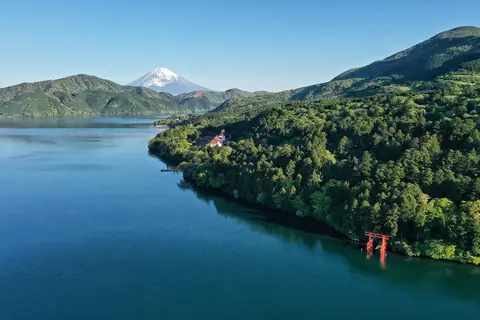
- Hot-spring and temple towns between your city bases: Gora in Hakone, Lake Kawaguchi, Kinugawa Onsen, Hirayu in Okuhida and Koyasan; a Higashiyama ryokan in Kyoto
- Season and timing
- All year. Kyoto's official guide says lodgings fill up in the cherry-blossom and autumn-leaf seasons and around the Gion Matsuri, so book those dates first; winter adds the snow-view outdoor baths JNTO calls yukimi onsen.
The short answer
Plan one ryokan night, or two on a longer trip, in a hot-spring or temple town between city bases, such as Hakone, Lake Kawaguchi, Okuhida, Kinugawa or Koyasan, arriving mid-afternoon to bathe before dinner. Book the plan with dinner and breakfast, which is how most inns price their rooms, per person. Choose a private or in-room bath if you have tattoos or would rather not bathe with strangers. When you book, tell the inn your arrival time, dietary needs and allergies, because dinner is a set menu served at a fixed hour, usually from 18:00. Read the cancellation terms before you pay.
Ryokan or hotel: what you are booking, and where one night fits
JNTO describes ryokan as traditional Japanese inns that range from sprawling resorts and private villas to small inns in town. What they share, in its words, are tatami floors, futon bedding, private baths that are sometimes outdoors, yukata robes, a multi-course kaiseki dinner served in-house and a traditional Japanese breakfast. Most have a hot-spring bath, and JNTO is clear that eating in is part of the point: some inns offer stays without meals, but dining in-house is considered an essential part of the experience.
That makes a ryokan a different kind of booking from a hotel. The Japan Ryokan and Hotel Association explains that ryokan usually charge per person rather than per room, with dinner and breakfast included, so the price for each guest depends on how many share the room; service is normally included in the bill, and there is no need to tip. You are also buying a timetable: you arrive in the afternoon, bathe, eat at a set hour and sleep on futons the staff lay out. That is restful in a hot-spring town and awkward in a city where you want to be out until late.
Choose a ryokan for nights when the bath, the dinner and the setting are the reason to stop: a hot-spring town, a mountain valley, a temple. Choose a hotel for long sightseeing days in Tokyo, Kyoto or Osaka, for evenings eating out, and for families who want beds and a buffet breakfast; JNTO notes that Western-style hotels are often more central than traditional inns, with on-site restaurants and extensive breakfast buffets. On a first two-week trip, one or two ryokan nights is the right dose. Put them between city bases rather than in the middle of one, and travel with an overnight bag: Kyoto's official guide describes a delivery service between Kyoto Station and your accommodation, and Hakone-Yumoto Station has a counter that sends bags up to your inn.
How a ryokan night works, from check-in to breakfast
Every inn sets its own times, so read your confirmation. The sequence below is the one described by JNTO, the Japan Ryokan and Hotel Association and the regional tourism bureaus.
- Arrive from mid-afternoon. Check-in usually opens around 15:00 (between 15:00 and 17:00 at the Koyasan temples), and the Kumano tourism bureau suggests arriving by 17:00 to leave time for a bath before dinner.
- Shoes off at the door. You swap your shoes for slippers at the entrance, although the association notes that many inns now let you keep shoes on as far as your room. Slippers come off before you step on tatami, and the toilet has its own pair, JNTO explains.
- Change into the yukata. The cotton robe in your room is for after the bath and for sleeping, with a padded tanzen jacket in cold months. JNTO says some inns let you wear it outside and some do not; in hot-spring towns, the association notes, guests often stroll the streets in them.
- Bathe, then dinner at a set time. Dinner is served in your room or in a dining room, depending on the inn, usually as a kaiseki meal of many small seasonal courses. Kumano Travel, the bureau's booking service, says evening meals are usually served to all guests between 18:00 and 19:00. Drinks are extra and are paid for when you leave.
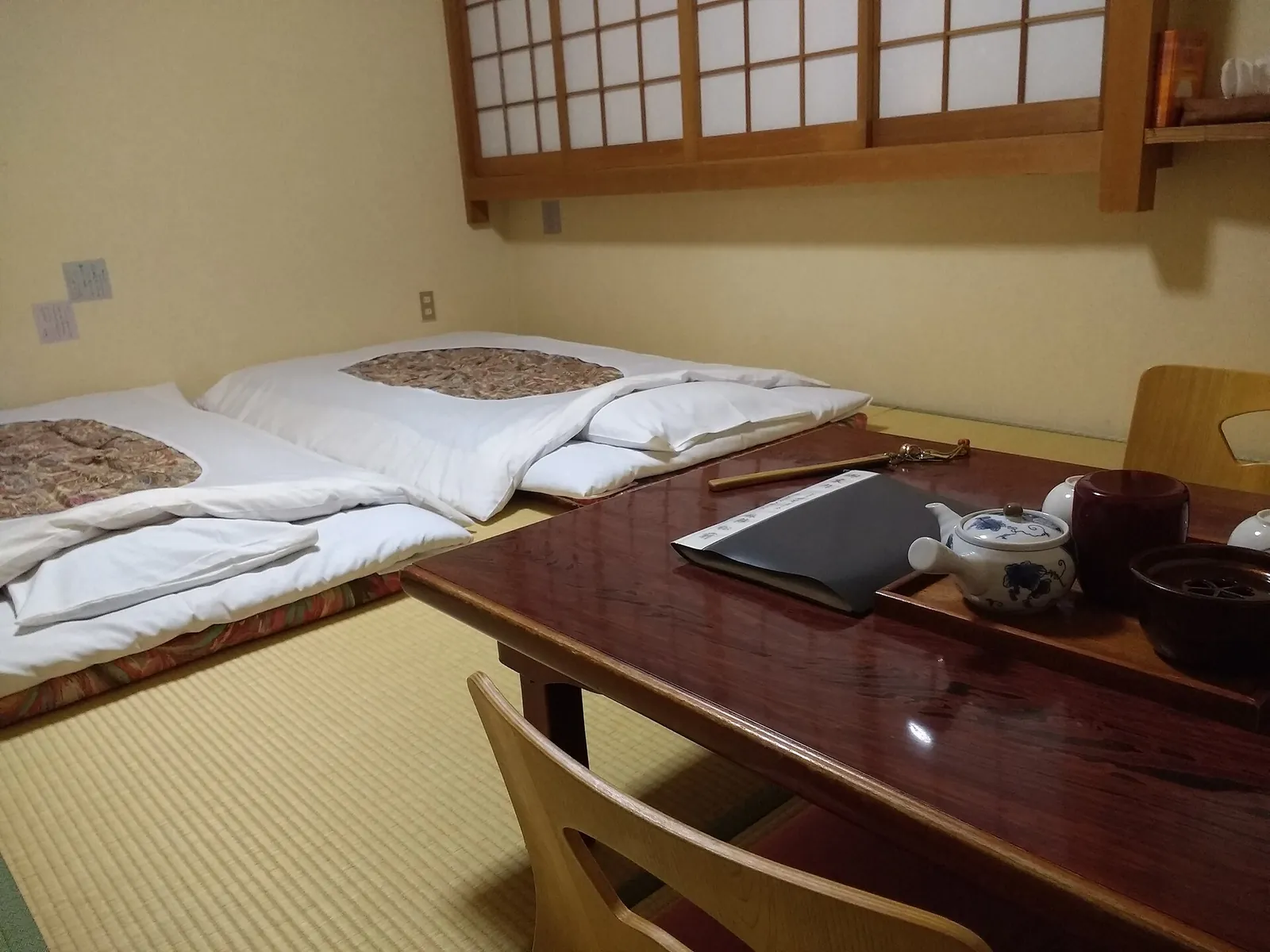
- Futon on the tatami. A traditional room has no beds: staff bring the futon out of the cupboard in the evening and put it away the next morning, so there is nothing to make or fold.
- Breakfast and check-out. Breakfast is usually Japanese, though the association notes that some inns serve a buffet or offer a Western-style meal. Check-out is in the morning, at 10:00 at the Koyasan temples that list it; hand back the key and settle any extras then.
Make time for the local food
What to eat and where to look
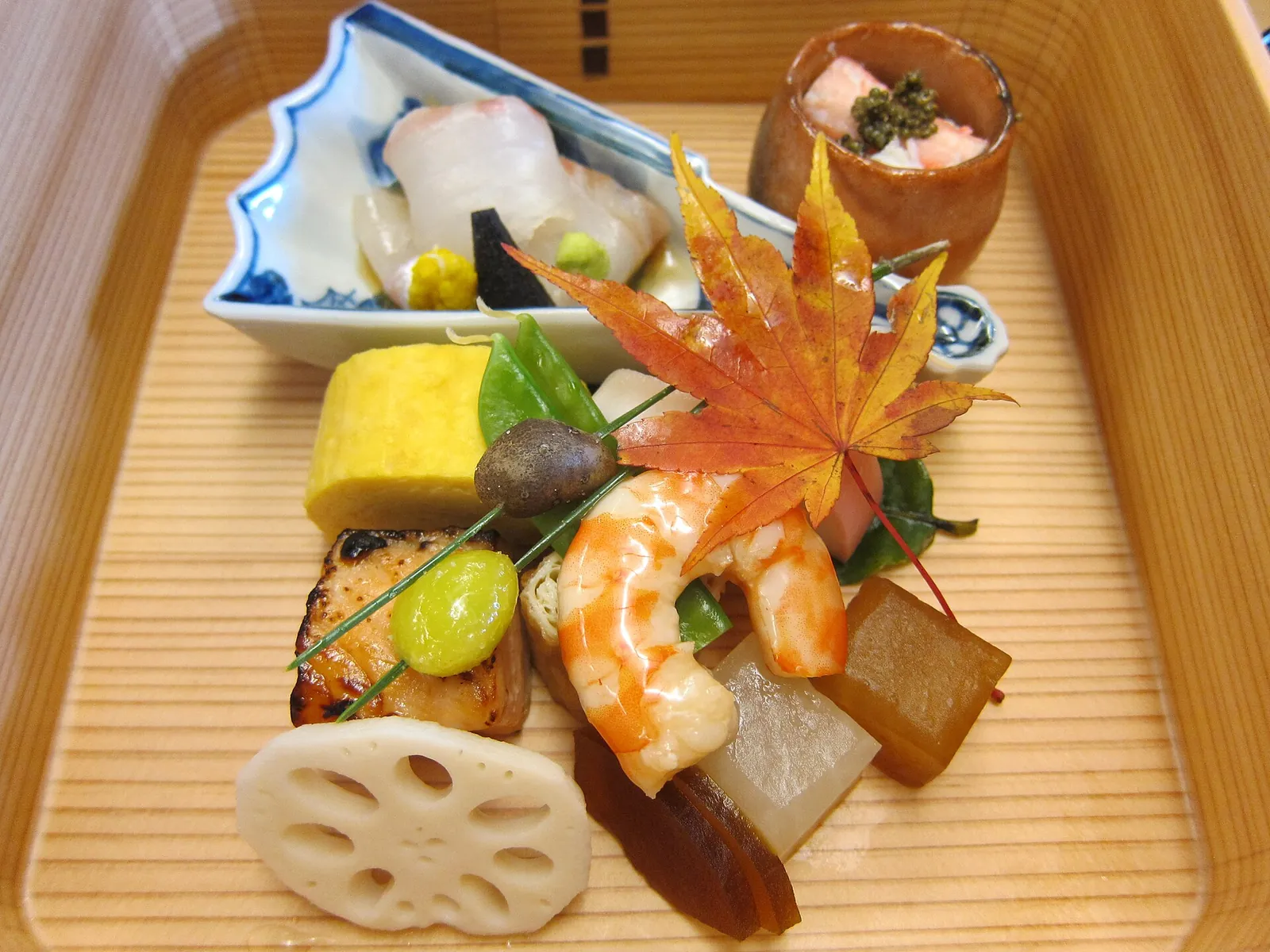
Kaiseki ryori (the ryokan dinner)
A traditional multi-course dinner built on seasonal ingredients and careful presentation, down to the tableware. JNTO names grilled fish, soup and rice as the basic elements, with local seasonal vegetables, and its ryokan guide says the dinner usually comes with the stay, served in your room or in a dining room.
- Where to look
- Included in most ryokan rates as the dinner of a dinner-and-breakfast plan; whether it is served in your room depends on the inn and the room type.
- Fit it into your day
- Arrive by 17:00, bathe, then allow about two hours for dinner.
Expect fish, shellfish and fish-based dashi stock in most courses.
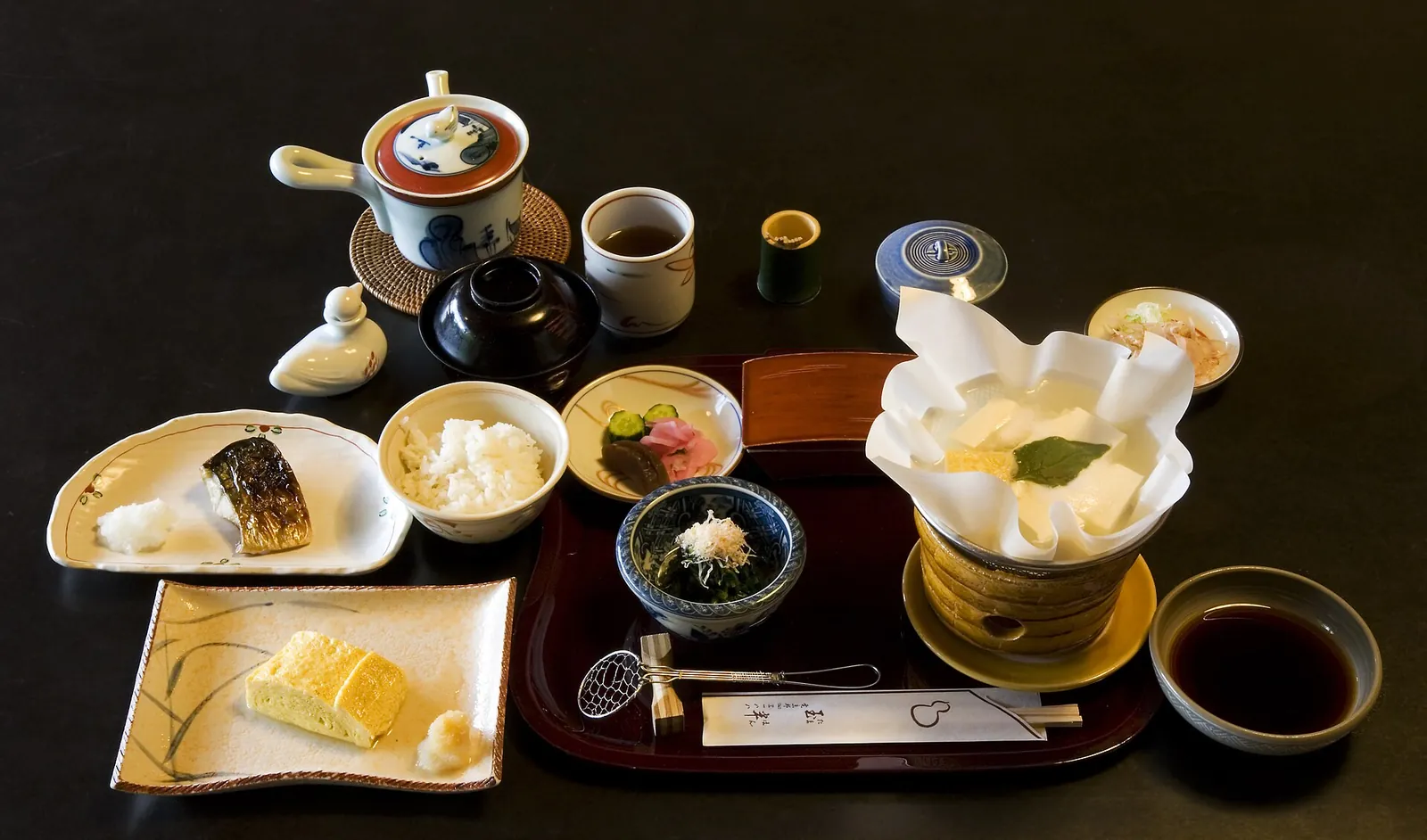
Ryokan breakfast
JNTO's ryokan guide pairs the dinner with a traditional Japanese breakfast the next morning, cooked, like dinner, with local seasonal ingredients. In the Hida mountains around Takayama and Okuhida, look for hoba miso, miso cooked with leeks on a hoba (magnolia) leaf, which Gifu's tourism federation calls a common fixture on traditional inns' menus.
- Where to look
- Served at the inn before check-out, in your room or the dining room. The Japan Ryokan and Hotel Association notes that some inns serve a buffet or offer a Western-style breakfast.
- Fit it into your day
- A full breakfast before check-out means you can skip an early lunch.
Usually includes fish; ask ahead for the Western option if your inn has one.
Onsen tamago (hot-spring eggs)
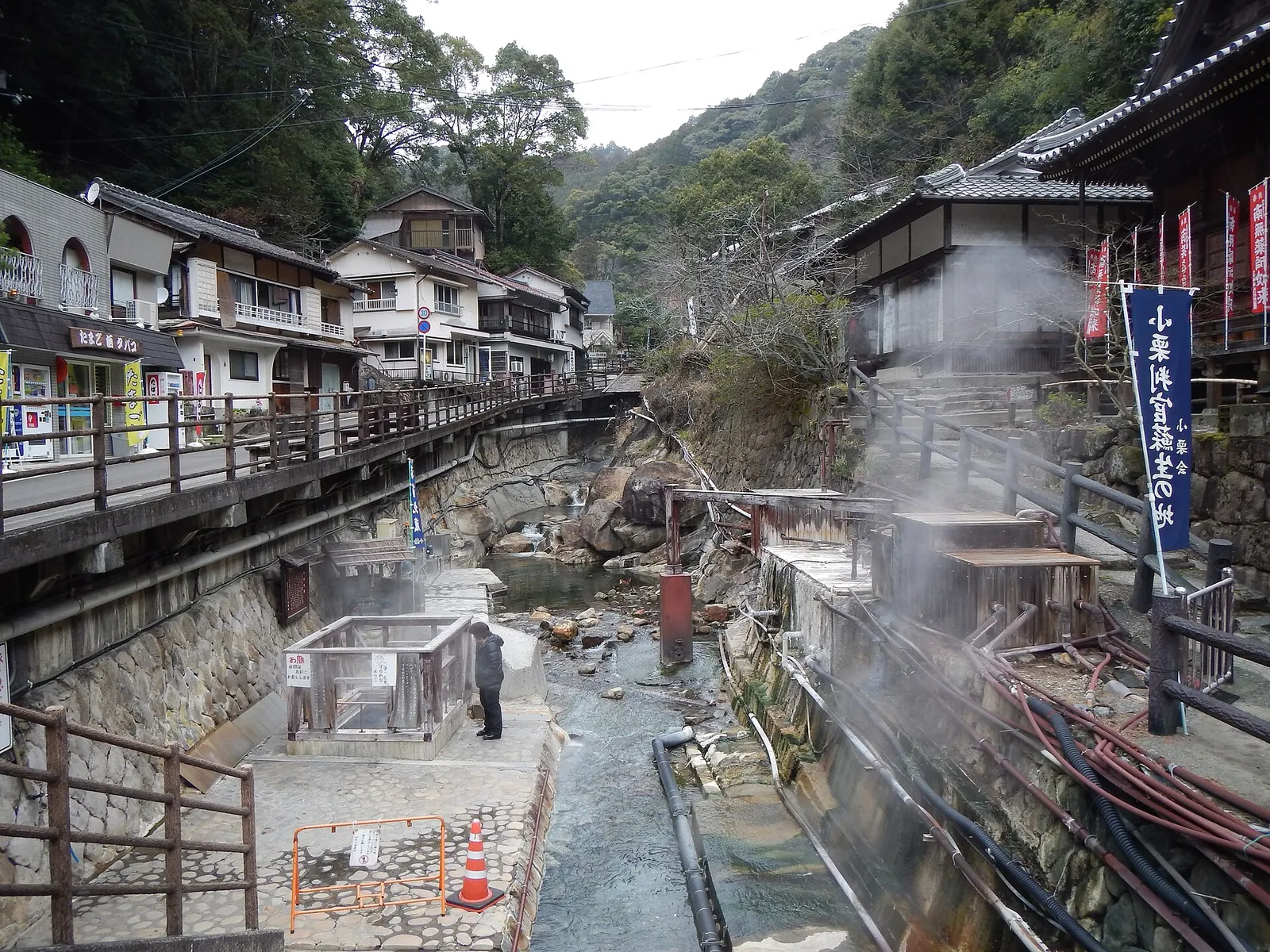
Soft-boiled eggs cooked in hot-spring water, which JNTO's national parks guide calls a popular feature at many hot-spring resorts. At Yunomine Onsen near Kumano Hongu Taisha, you cook them yourself in the village's public basin, the Yuzutsu; Hakone's black eggs from Owakudani, covered in our Hakone guide, are a hard-boiled cousin.
- Where to look
- The Yuzutsu basin in the centre of Yunomine Onsen; shops and inns in many other hot-spring towns.
- Fit it into your day
- A snack on an afternoon walk before you check in.
Contains egg. The spring water is very hot, so keep your hands out of the basin.
Nabe (hot pot)
Ingredients cooked at the table in a shared pot of broth, a winter staple that JNTO says comes in many regional forms, from Kyoto's yudofu, tofu simmered in kelp broth, to sukiyaki, which can also appear within kaiseki set meals, and Hokkaido's salmon-and-miso Ishikari nabe.
- Where to look
- On ryokan dinner menus in the colder months, and at yudofu restaurants in Kyoto.
- Fit it into your day
- A warming dinner after a winter bath.
Sukiyaki is eaten dipped in raw egg, and many broths are made with fish-based dashi.
Shojin ryori at a shukubo
Buddhist temple cooking without meat or fish, served at dinner and breakfast in Koyasan's temple lodgings. JNTO's vegetarian guide says it is traditionally vegan and leaves out pungent flavours such as garlic and onion, though modern monks occasionally use dairy.
- Where to look
- Temple lodgings on Koyasan, booked through the Koyasan Shukubo Association; Kyoto's official guide notes that some temples in the city also offer shukubo stays.
- Fit it into your day
- Dinner at the temple's set hour, and breakfast after the optional morning service.
Vegans should ask about dairy; declare allergies when you book.
The baths: onsen etiquette, tattoos and private baths
The shared baths at an inn are almost always free for overnight guests, JNTO notes, and most are separated for men and women and open at hours the inn sets. The routine is the same everywhere: undress in the changing room, wash your whole body at the seated showers before getting in, keep the small towel out of the water, tie up long hair and do not swim or splash. Nikko's tourism association adds that you should never take photos in the bathing area.
The Kumano tourism bureau offers two more tips: inns sometimes swap the men's and women's baths overnight, so check the curtain each time (blue for men and red for women is common), and the water can be 40–44°C, so stand up slowly. Swimsuits are the exception, worn only in theme-park-style baths, in mixed baths that issue a bathing garment, and in river baths such as Kawayu's.
Tattoos need planning. JNTO's etiquette guide says tattoos are generally not permitted in hot springs and public baths, but that exceptions depend on the type of place and the owner, and that municipal and outdoor-style bathhouses tend to be more tolerant. JNTO adds that many owners overlook small, discreet tattoos and that skin-coloured cover seals help, but the best course is to ask before you go, which a booking platform can do for you. With large tattoos, do not rely on goodwill at the door.
The reliable answer is a private bath. A kashikiri bath is one you reserve for your own party, usually for a fee, in advance or at the front desk, where you collect a key; a room with an en-suite onsen has its own hot-spring bath included in the room rate, JNTO explains. Both suit couples and families, anyone uncomfortable bathing naked with strangers and, as JNTO points out, people who do not fit the men-and-women division of the shared baths. They cost more, so filter for them when you search rather than asking on arrival.
Choosing an inn: meal plans, rooms, a bath with a view and the journey there
Start with the meal plan. The standard rate covers dinner and breakfast; Kyoto's official guide notes that some ryokan offer breakfast-only plans, and the association says room-only stays exist but are few. Kumano Travel points out that the same room can carry several price plans depending on the meals, so compare like with like. Take the dinner plan wherever the inn is the only place to eat: Yunomine Onsen, the Kumano bureau notes, has a single small diner.
Then the room. A Japanese-style room has tatami and futons; JNTO notes that some ryokan also offer Western beds, which matters if getting up from the floor is hard. Check whether the toilet and washbasin are in the room: in the oldest inns, such as the two Go Nagano lists in the Kiso post town of Tsumago, toilets are down the hall. Rooms are also sold by view (river, garden, lake or mountain) and by where dinner is served; Kagaya, for example, offers in-room dining depending on the room type.
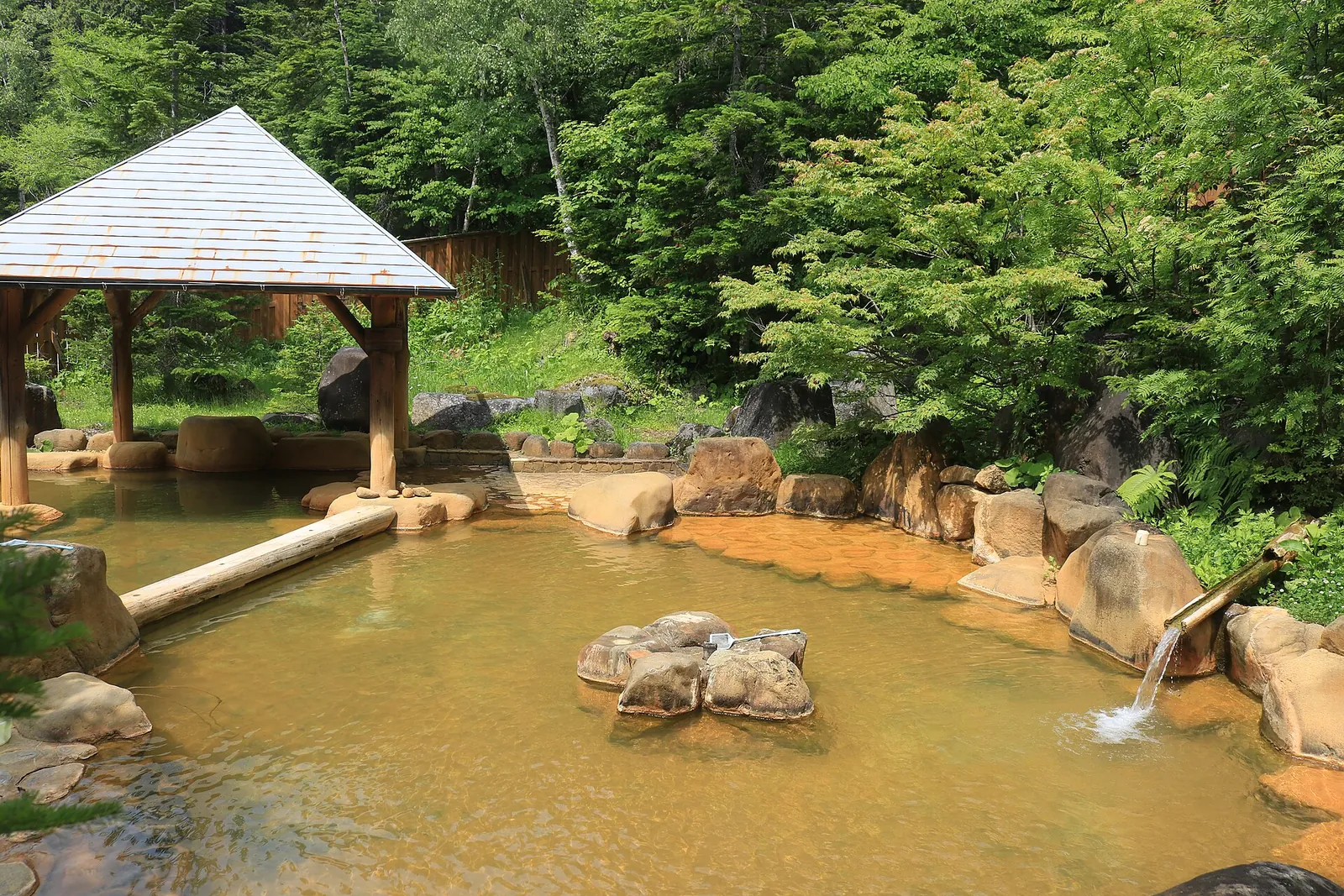
For the bath, look for a rotenburo, an open-air bath, which JNTO says often makes the most memorable soak, and in winter a yukimi bath for watching the snow. Some rooms come with their own outdoor bath, the most private way to have the view, and some inns have private open-air baths for couples and families, as Watarase Onsen near Kumano does.
Finally, check the journey from the station. Many hot-spring inns are a bus or taxi ride from the railway, and some run their own transport. At Hakone-Yumoto, an orange shuttle microbus for the hot-spring ryokan leaves from in front of the station, for ¥200 a ride when we checked on 2026-10-10; and Okukinu Onsen, deep in the Nikko mountains, can be reached only by the inns' shuttle buses or a 90-minute walk, according to Visit Nikko. JNTO's family advice is to ask whether a remote inn runs a shuttle before you book.
Diet, allergies, children and access: what to tell the inn
A ryokan dinner is a set menu prepared for the evening, so changes have to be requested when you book, not at the table. The association says inns will do their best to meet advance requests for religious or health reasons. JNTO's vegetarian guide warns that stocks and sauces often contain meat or bonito flakes even when a dish looks vegetable-only, and recommends sending a ryokan the details of your diet ahead of time; some, it says, are particularly proud of their vegetarian cooking. Small inns have less room to adapt: Kumano Travel notes that not all of them can meet every request, especially at busy times, and that miso and soy sauce make gluten-free meals hard to provide.
For allergies, be specific and get the answer in writing. JNTO notes that allergy information is not always displayed in Japan and advises checking in advance, or confirming with staff, if an allergy is severe; it adds that staff will usually accommodate an allergy or direct you somewhere that can. Name the ingredient, say whether traces matter and ask the inn to confirm by email.
With children, ask about bedding, meals and baths. JNTO's family advice is to check bedding ahead, as many ryokan put the whole family on futons and Western beds or cots may not be available, and to confirm the menu, as ryokan meals are traditional and often fish-heavy; it also suggests asking whether an inn has children's menus and handles food allergies. A private bath makes bathing with small children easier, and since rates are per person, ask how the inn charges for children.
For reduced mobility, the questions are practical. Is there a step-free route from the entrance to the room, the dining room and a bath? Does the room have beds and its own toilet? Are there handrails in the bath, and can meals be served at a table rather than on floor cushions? The Kumano bureau notes that, depending on the inn, guests eat at a table or on the floor. An inn can only prepare if you ask when you book.
Ryokan nights near Tokyo and in the Japan Alps
Hakone is the easiest first ryokan night from Tokyo: Odakyu's Romancecar takes about 80 minutes from Shinjuku to Hakone-Yumoto, and inns run from the valley floor up to Gora and Lake Ashi. For a single night, Gora or Miyanoshita sits in the middle of the sightseeing loop. Our Hakone guide compares the areas and covers the baggage service and this winter's ropeway closures.
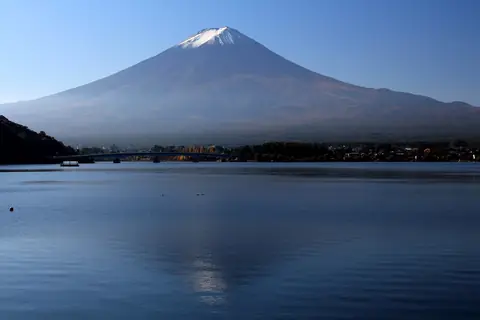
Lake Kawaguchi is the night for Mount Fuji. JNTO suggests staying near the lake and heading to its north side early, as the mountain is clearest in the morning before haze and cloud build, and it notes numerous hot springs in the area. Inns on the north shore look across the water to Fuji, but not every room does, so check which way the room and the outdoor bath face before paying for the view. Our Mount Fuji guide covers the journey and the bases around the lake.
Kinugawa Onsen, about 1 hour 50 minutes from Asakusa by Tobu's direct limited express, has more than 80 hotels and ryokan in styles from traditional to modern, according to Visit Nikko. It suits an onsen night rather than a shrine visit, as Nikko's World Heritage area is a train ride away. To be close to the shrines and Lake Chuzenji, our Nikko guide suggests sleeping in town or by the lake.
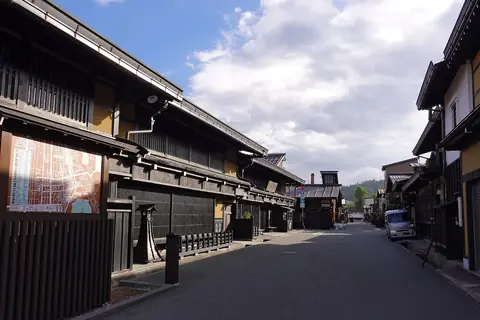
In the Alps, the choice is between an old-town ryokan in Takayama, a few minutes from the morning markets, and the baths of Okuhida Onsen, five hot-spring villages at around 1,000 m. Okuhida's tourism association says its number of open-air baths is one of the largest in Japan, with views of the Northern Alps from the water. Hirayu, the bus hub, is about an hour from Takayama on Nohi Bus, which runs roughly hourly. Our Takayama guide explains why Okuhida fits best before or after your Takayama nights.
Kanazawa's hot-spring retreat is Yuwaku Onsen, a town with 1,300 years of history in the hills about 30 minutes by car from Kanazawa Station, also reached by bus. Visit Kanazawa lists eight ryokan there and a communal bathhouse, Shirasagi no Yu, used by locals and visitors. In the city, the small inns around the Higashi Chaya district give you the teahouse streets after dark; our Kanazawa guide compares the bases.
In the Kiso Valley, a night in a post town is about the evening rather than the bath. Go Nagano says that only after the day-trippers leave and the lanterns come on does the Edo-period atmosphere emerge. Some inns in the valley take booking requests only by email, and Kiso-Fukushima's traditional inns add hot-spring baths. Our Kiso Valley guide covers sending your bags ahead between Magome and Tsumago.
In Shirakawa-go, the farmhouse inns of Ogimachi give you what no day trip can: the village's own travel guide says that only people staying overnight may tour it at night. The inns are small family houses, some taking a single group a day and several serving dinners of wild mountain vegetables and river fish; book well ahead and check the bathroom arrangements. Our Shirakawa-go guide covers the buses and the winter light-up.
Ryokan and temple nights in Kansai and on Miyajima
Kyoto has the widest choice of city ryokan. Its official guide divides them into large inns, many around Kyoto Station and the centre, with big public baths that suit families and groups, and small inns in machiya townhouses that suit small groups and solo travellers. Gion and Higashiyama have many long-established ryokan, and Arashiyama has long-standing hot-spring ryokan, though the guide warns that its restaurants close early. Book early for the cherry blossom, the autumn leaves and the Gion Matsuri, when many places are full; our Kyoto guide covers the city's bases.
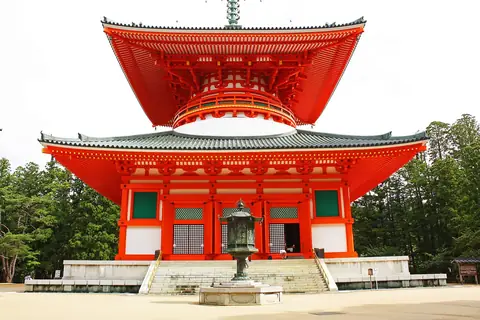
On Koyasan, 51 of the mountain's 117 temples take overnight guests, according to the Koya Town tourism association, serving shojin ryori, Buddhist cooking without meat or fish, at dinner and breakfast; the early-morning service in the main hall is optional. Baths are shared, most temples set a curfew and most expect payment in cash. Our Koyasan guide explains how to book through the Koyasan Shukubo Association and what the night involves.
At the end of the Kumano Kodo, three hot-spring villages lie a short bus ride from Kumano Hongu Taisha. Yunomine is a small valley of ryokan and minshuku around what the Kumano bureau calls one of the oldest hot springs in Japan, with the Tsuboyu cabin bath and a public basin for cooking eggs. Kawayu has inns along a river where hot water bubbles up through the gravel, and most of its rooms look over the water. Watarase is built around large open-air baths, with private ones for couples and families. Book through Kumano Travel, as our Kumano Kodo guide explains.
On Miyajima, a night at an inn gives you the island after the day visitors leave: the tourist association says Itsukushima Shrine, the Great Torii and the five-storey pagoda are lit every evening from 30 minutes after sunset until 23:00. The Miyajima Ryokan Association's members range from inns by the ferry pier to quieter ones behind the shrine and among the maples of Momijidani, several with hot-spring baths or kaiseki dinners. Our Miyajima guide covers the tides, the ferries and where on the island to sleep.
Booking: where, cancellation terms and arriving late
Book the ryokan nights first; they are the hardest to move. In some places the official channel is the best one: the Koyasan Shukubo Association for temple stays, Kumano Travel for the Kumano Kodo villages, and the tourist associations' lists in Shirakawa-go, Miyajima and the Kiso Valley. Elsewhere, booking platforms and the inn's own site work. JNTO also points to the Japan Ryokan and Hotel Association, whose site lists only members certified against its membership criteria.
Read the cancellation terms before you pay, because fees rise as the date approaches. As an example, when we checked on 2026-10-10, Kumano Travel charged nothing for cancellations more than 20 days before arrival, rising in steps to 50% of the total on the day and 100% for a no-show. Inns booked directly or through a platform set their own terms.
Give the inn your arrival time when you book, and phone if your train runs late. Kumano Travel explains why it matters: dinner is served to all guests at once, so the kitchen works to a strict schedule, and in some circumstances guests who arrive late are refused their meal without a refund. If you will reach the inn after about 17:00, book a breakfast-only plan where one exists, or spend that night in a city hotel and move to the ryokan the next day.
Finally, check what the rate includes. JNTO notes a 10% consumption tax, a bathing tax at hot-spring inns of about ¥150 per person per night and, in some cities, a fixed accommodation tax, and says these are usually included in the listed rate; our Kyoto, Takayama and Miyajima guides give the local accommodation taxes. Drinks and other extras are paid when you leave, and Koyasan's temple lodgings usually expect cash.
Practical questions
What is a ryokan?
A ryokan is a traditional Japanese inn. JNTO lists its common elements as tatami floors, futon bedding, yukata robes, baths that are often hot springs, a multi-course kaiseki dinner and a traditional breakfast, and rates are usually per person with both meals included.
What time should I arrive at a ryokan?
Arrive in the afternoon, ideally by 17:00 if dinner is included. Dinner is served to all guests at a set time, usually between 18:00 and 19:00, and late arrivals can lose the meal, so tell the inn your arrival time when you book.
Can I use an onsen if I have tattoos?
Sometimes, but do not count on it. JNTO says tattoos are generally not permitted in shared baths, with exceptions that depend on the owner, and that small tattoos are often overlooked, especially under a skin-coloured seal; the reliable choice is a private kashikiri bath or a room with its own bath.
Do you have to be naked in an onsen?
Yes, in the shared baths: you bathe naked after washing at the showers and keep the small towel out of the water. Swimsuits are worn only in exceptions such as theme-park-style baths and some river baths, so book a private bath if you would rather not bathe with strangers.
Are meals included in a ryokan stay?
Usually, yes. Rates are normally charged per person with dinner and breakfast; some inns offer breakfast-only plans and a few room-only stays, which helps on a night when you arrive late.
Do you tip at a ryokan?
No. The Japan Ryokan and Hotel Association says service is normally included in the bill and there is no need to tip.
Sources and checks before you travel
Reference sources for the version dated 10 October 2026. Confirm opening times, access, transport and conditions for your travel dates.
- JNTO: Japanese ryokan guide ↗ — opens in a new tab
- JNTO: onsen hot springs, on tattoos and etiquette ↗ — opens in a new tab
- JNTO: understanding and mastering Japanese manners and etiquette ↗ — opens in a new tab
- JNTO: accommodation in Japan ↗ — opens in a new tab
- JNTO: an insider's guide to Kagaya Ryokan ↗ — opens in a new tab
- Japan Ryokan and Hotel Association: How to use a Japanese style hotel (PDF) ↗ — opens in a new tab
- JNTO: vegetarian and vegan guide ↗ — opens in a new tab
- JNTO: FAQ on allergy labels ↗ — opens in a new tab
- JNTO: traveling with children ↗ — opens in a new tab
- Kyoto City Tourism Association: choosing accommodation, different types of lodging ↗ — opens in a new tab
- Tanabe City Kumano Tourism Bureau: how to enjoy a Japanese bath ↗ — opens in a new tab
- Kumano Travel (Tanabe City Kumano Tourism Bureau): FAQs ↗ — opens in a new tab
- Visit Nikko (Nikko City Tourism Association): hot springs ↗ — opens in a new tab
- Tobu Railway: access to Kinugawa Onsen ↗ — opens in a new tab
- Odakyu: Hakone Freepass and Romancecar ↗ — opens in a new tab
- Hakone Navi: Hakone-Yumoto Station ↗ — opens in a new tab
- Okuhida Onsenkyo Tourism Association ↗ — opens in a new tab
- Visit Kanazawa: Yuwaku Onsen ↗ — opens in a new tab
- Go Nagano: where to stay while travelling the Nakasendo ↗ — opens in a new tab
- Shirakawa Village: SHIRAKAWA-Going ↗ — opens in a new tab
- Koya Town Tourism Association: staying in a shukubo (Japanese) ↗ — opens in a new tab
- Miyajima Tourist Association: illuminations ↗ — opens in a new tab
- JNTO: Fuji Five Lakes itinerary ↗ — opens in a new tab
- JNTO: kaiseki guide ↗ — opens in a new tab
- JNTO: winter delicacies, all about nabe ↗ — opens in a new tab
- JNTO National Parks: guide to hot springs in Japan's national parks ↗ — opens in a new tab
- Visit Gifu (Gifu Prefecture Tourism Federation): food and drink ↗ — opens in a new tab
- Fujikyu Bus: Haneda Airport and Shinagawa to Kawaguchiko ↗ — opens in a new tab
Does this experience fit your route?
If you would like your first ryokan or temple night arranged for you, a two-day package handles the transport and the booking. Check which inn or temple is used and what the meals include before you book.
Check dates and details on Viator ↗ — opens in a new tabAffiliate link · Book with ViatorPhoto credits
An open-air bath, or rotenburo, the kind of soak worth choosing an inn for
Photograph: Alpsdake — opens in a new tab · CC BY-SA 4.0 — opens in a new tab
Changes: Resized and converted to WebP; displayed with responsive crops. · Original photograph and licence details ↗ — opens in a new tab
A ryokan room at night: staff lay out the futons and clear them away after breakfast
Photograph: Mx. Granger — opens in a new tab · CC0 — opens in a new tab
Changes: Resized and converted to WebP; displayed with responsive crops. · Original photograph and licence details ↗ — opens in a new tab
One course of a kaiseki dinner, dressed for autumn
Photograph: Yuya Tamai — opens in a new tab · CC BY 2.0 — opens in a new tab
Changes: Resized and converted to WebP; displayed with responsive crops. · Original photograph and licence details ↗ — opens in a new tab
Yunomine Onsen near Kumano Hongu Taisha, where you can boil eggs in the village basin
Photograph: Nekosuki — opens in a new tab · CC BY-SA 4.0 — opens in a new tab
Changes: Resized and converted to WebP; displayed with responsive crops. · Original photograph and licence details ↗ — opens in a new tab
Breakfast at a Kyoto ryokan, served before check-out
Photograph: MichaelMaggs — opens in a new tab · CC BY-SA 3.0 — opens in a new tab
Changes: Resized and converted to WebP; displayed with responsive crops. · Original photograph and licence details ↗ — opens in a new tab