Shiga
Otsu and Lake Biwa: a day from Kyoto and Enryaku-ji
Otsu is the city on the south-west shore of Lake Biwa, Japan's largest lake, and the train from Kyoto Station takes about ten minutes. Its city limits climb all the way to the top of Mount Hiei, so Enryaku-ji, the temple where the founders of many later Buddhist schools trained, is an Otsu sight, reached from the lakeside town of Sakamoto by Japan's longest cable car. Below it, Mii-dera rings the bell that the old Eight Views of Omi made famous, Ishiyama-dera stands on the rock where Murasaki Shikibu is said to have begun The Tale of Genji, and Ukimido floats on its own pier at Katata. This guide sorts those sights into one full day from Kyoto, adds a night by the lake for a morning cruise, and prices both.
In this guide
Find the location ↗ — opens in a new tabThe short answer
Give Otsu one full day from Kyoto: take the JR Kosei Line to Hieizan-Sakamoto, ride the Sakamoto cable car up to Enryaku-ji for the morning, eat a temple lunch on the mountain, then come down to Sakamoto and take the Keihan line to Mii-dera and the lakefront at Hama-Otsu, and return on the JR from Otsu, about ten minutes to Kyoto. Add one night at Hama-Otsu if you want the morning Michigan cruise and Ishiyama-dera the next day. Two key prices: the Sakamoto cable car costs ¥1,830 return and Enryaku-ji's ticket for all three areas ¥1,000 (checked on 27 October 2026). The day comes to about ¥13,000 per person, ¥26,000 for two; with the night and the second morning, about ¥43,000 per person, ¥85,000 for two.
- Suggested time
- One full day from Kyoto; one night at Hama-Otsu adds a morning cruise and Ishiyama-dera
- Where to stay
- Kyoto for the day trip; for the optional night, a lakeside hotel at Hama-Otsu, five minutes' walk from Otsu Port
- Season and timing
- Mii-dera's 1,000 cherry trees bloom in spring, and Hiyoshi Taisha's 3,000 maples and Mii-dera turn red in autumn. The Michigan cruise sails daily from April to early December; in winter fewer sailings run and Enryaku-ji's shuttle bus between its three areas stops. The Lake Biwa Great Fireworks Festival is held every August, with the date announced around May.
A day or a night: how Otsu fits around Kyoto
Otsu sits at the southern tip of Lake Biwa, two stops from Kyoto Station on the JR Biwako Line, and the Biwako Visitors Bureau puts the ride at nine minutes. The lake is the reason the city exists: Biwako Kisen, the company that runs its cruises, gives it a deepest point of about 104 metres and an age of over four million years, one of the oldest lakes in the world. Emperor Tenji moved the capital here in the 7th century, and the city now stretches along the shore from the Seta River in the south to Katata in the north, with Mount Hiei on its western edge.
That spread is the one thing to plan around. Enryaku-ji is on the mountain at the northern end, Mii-dera and the port of Hama-Otsu are in the centre, Ishiyama-dera is at the southern end, and Ukimido is farther north at Katata. Two railways tie them together: JR along the lake shore, and Keihan's Ishiyama-Sakamoto Line, which runs from Sakamoto to Ishiyama-dera past almost every sight in this guide.
One full day covers Enryaku-ji, Sakamoto and Mii-dera, with the evening on the lakefront, and you sleep back in Kyoto. A night at Hama-Otsu changes the trip more than the extra hours suggest: you see the lake at sunset and at first light, ride the 09:40 cruise, and give Ishiyama-dera the next morning instead of rushing it. If you are staying in Kyoto anyway, our Kyoto where-to-stay guide shows which areas make the morning trains easy.
Enryaku-ji on Mount Hiei, by the Sakamoto cable car
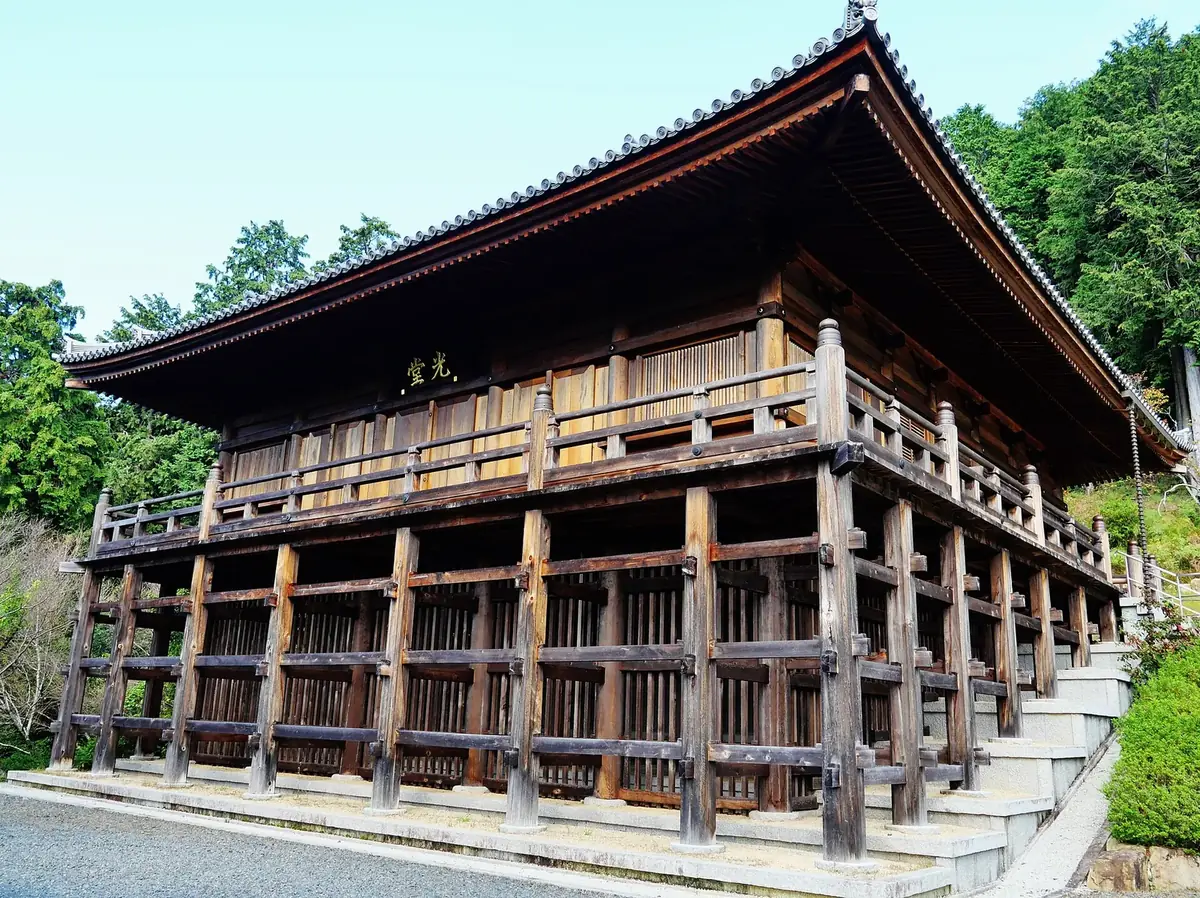
Enryaku-ji is not one building but every hall scattered over the top of Mount Hiei, divided into three areas, Todo, Saito and Yokawa. The temple calls itself the mother mountain of Japanese Buddhism, because so many founders of later schools trained here, and it is a UNESCO World Heritage Site, listed in 1994. From the mountain you look down on Lake Biwa on one side and Kyoto on the other.
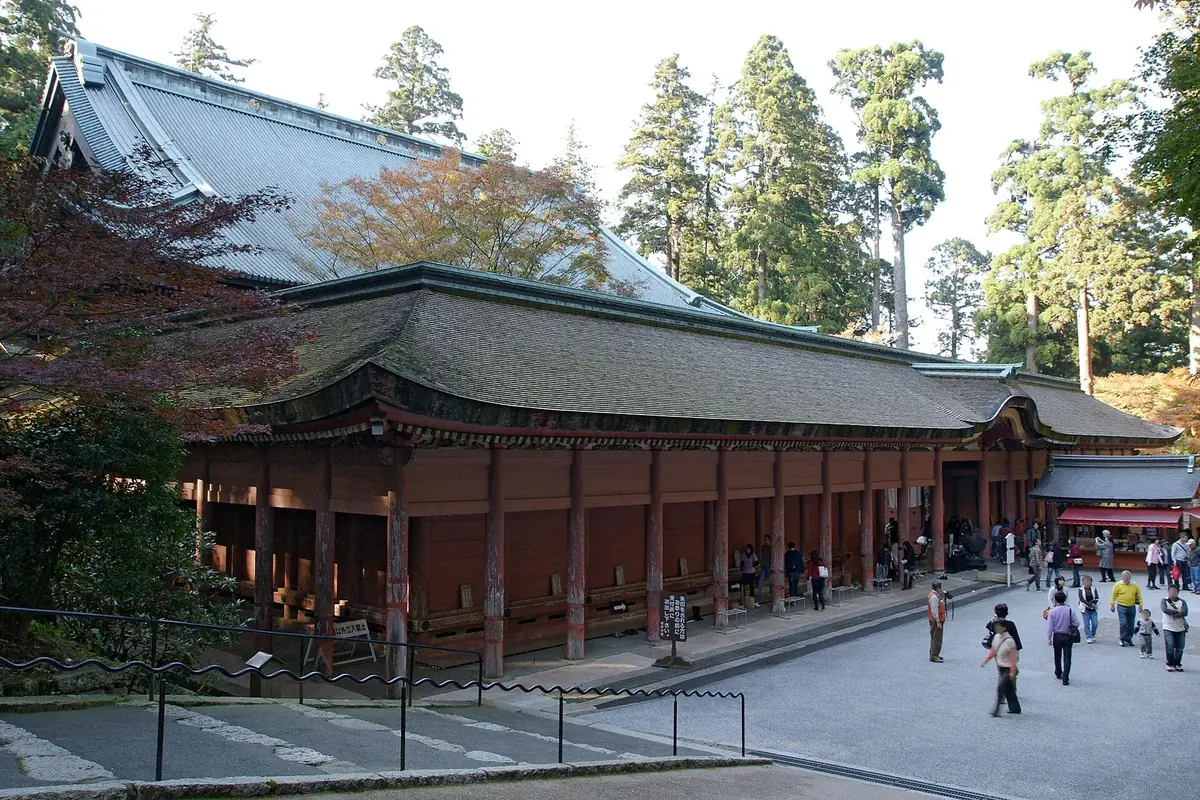
Start at Todo, where Saicho founded the temple. Its main hall, the Konponchudo, was rebuilt by order of the shogun Tokugawa Iemitsu and finished in 1642, and it is a National Treasure. The hall is in the middle of a 15-year restoration that began in 2016, and the temple closed its interior to visitors from January 2026 for about two years. While it is shut, the standing image that represents its hidden Yakushi Buddha and the Fumetsu no Hoto, a lamp the temple says has burned for 1,200 years, are kept in the nearby Manbaido, where you can see them closer than you could inside the main hall. The Konponchudo's twelve guardian generals, Kamakura-period statues restored during the works, stand together in the Kokuhoden treasure hall until December 2027, as planned. From December 2026, dismantling work closes the platform that let visitors watch the roof repairs.
When we checked on 27 October 2026, the temple listed its halls as open from 09:00 to 16:00 all year at Todo, and at Saito and Yokawa from 09:00 between March and November and from 09:30 in December, January and February, with the last tickets at 15:45. One ticket covers all three areas: ¥1,000 for adults, ¥600 for junior and senior high school students and ¥300 for primary school children. The Kokuhoden costs ¥500 more. A shuttle bus links the three areas, except in winter; Todo alone fills a morning, and Saito is a short ride on.
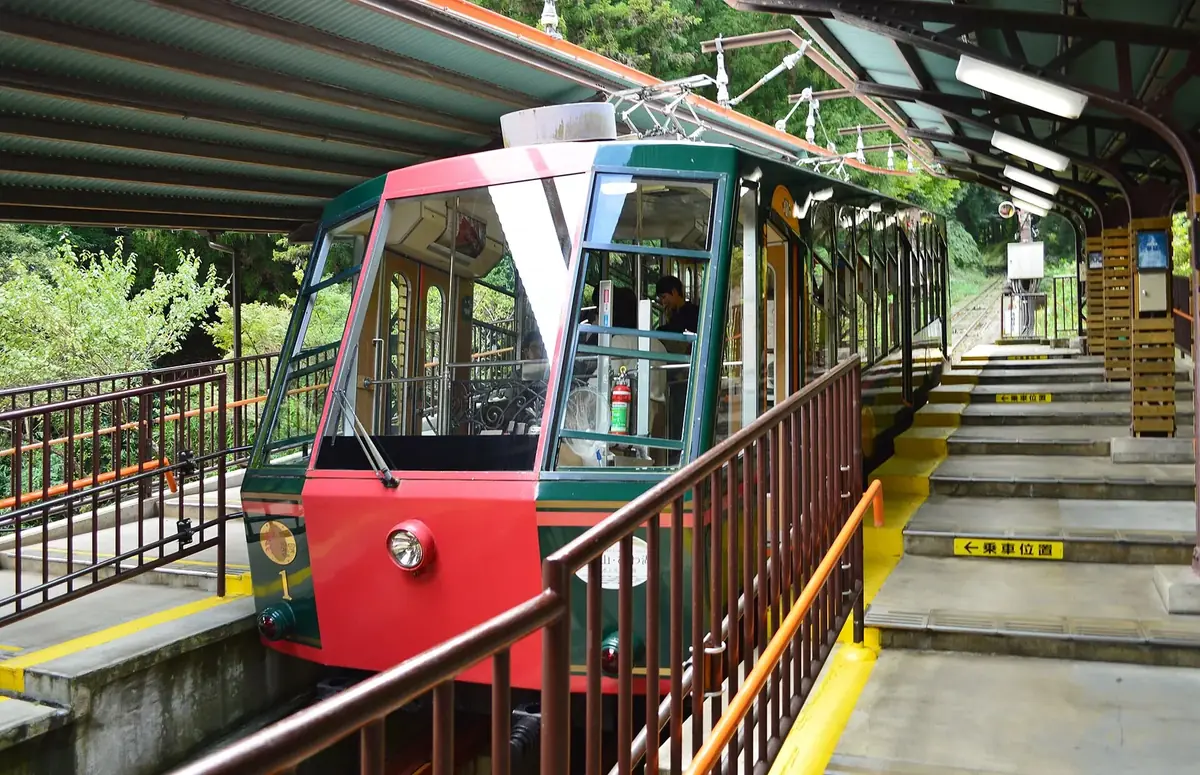
The way up from the lake is the Sakamoto cable car, which the Hieizan Railway calls the longest in Japan: 2,025 m in about 11 minutes, with Lake Biwa below the windows, from a station building of 1927. From March to November cars leave both ends every 30 minutes, from 08:00 to 17:30; the winter timetable is shorter. Since 1 April 2026 the adult fare is ¥960 one way and ¥1,830 return, and children pay ¥480 and ¥920. The lower station is about 10 minutes on foot from Keihan's Sakamoto-hieizanguchi Station, or a 7-minute bus ride from JR Hieizan-Sakamoto Station.
For lunch on the mountain, Enryaku-ji Kaikan's restaurant Bouko serves the vegetarian shojin cooking of Buddhist monks, from 11:30 to 14:00 (last orders 13:30), at about ¥1,100 according to the Otsu City Tourism Association.
Sakamoto: stone walls, soba and Hiyoshi Taisha
Sakamoto, at the foot of the cable car, grew up as the gateway to Enryaku-ji, and it is where Saicho was born. Its lanes are lined with anoshu-zumi, walls of natural stones fitted together without mortar by a guild of 16th-century masons whose technique was later used for castle walls across Japan. Behind them stand the satobo, small temples where Enryaku-ji's monks lived after retirement; the town is a nationally designated preservation district for traditional buildings.
A short walk from the cable car, Hiyoshi Taisha is the head shrine of more than 3,800 Hiyoshi, Hie and Sanno shrines across Japan and has long been worshipped as the protector of Kyoto and of Enryaku-ji. Its grounds are forest and clear streams, with more than 3,000 maple trees that make it one of the region's best-known autumn-colour spots. The shrine's own page lists visiting hours from 09:00 to 16:00 and an entry contribution of ¥500 for adults and ¥300 for junior and senior high school students.
Sakamoto is also a soba town. Monks on the mountain ate buckwheat after fasts and ascetic practices, and Tsuruki Soba, opened in 1716 by a priest who had cooked for Enryaku-ji, still serves the temple; its two-storey wooden building is a registered tangible cultural property.
Mii-dera, Omi Jingu and the lakefront at Hama-Otsu
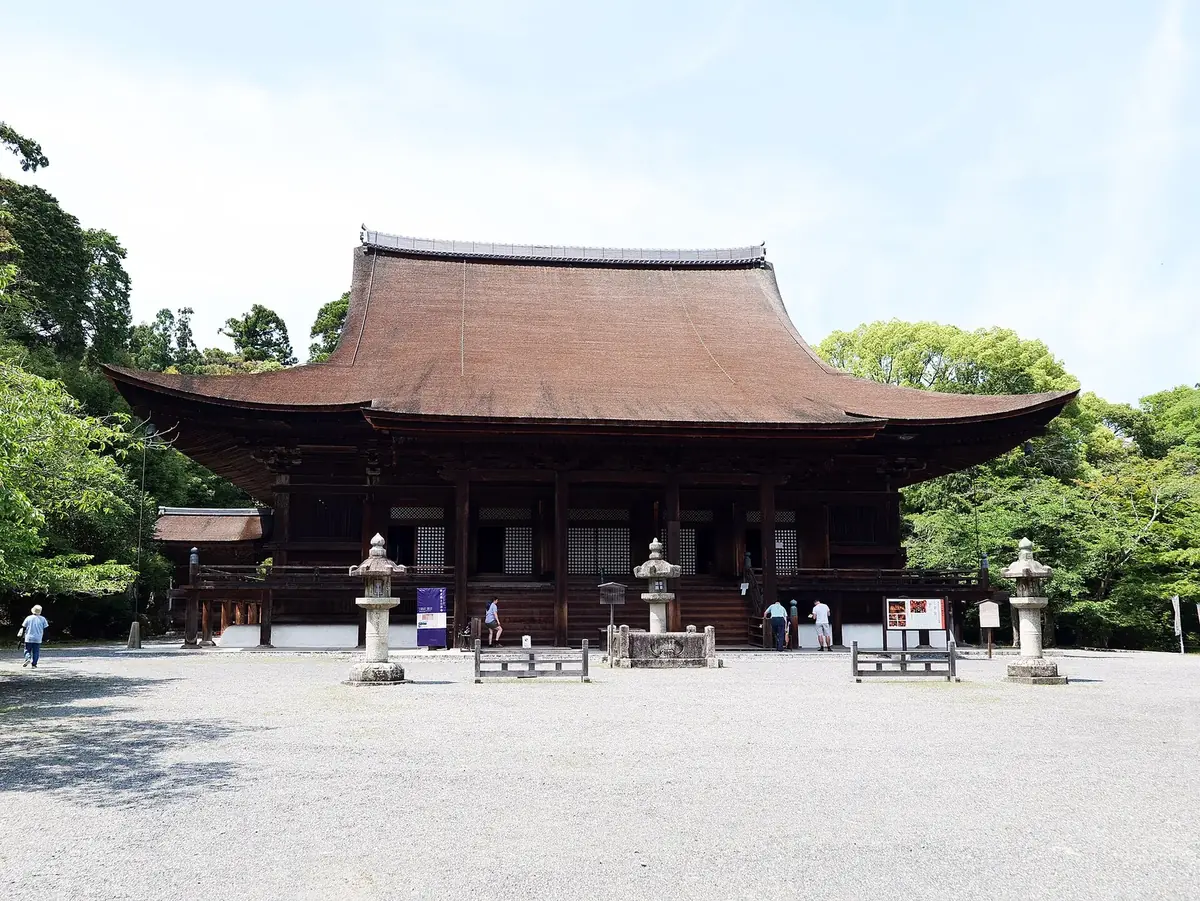
Mii-dera, formally Onjo-ji, covers a whole hillside above central Otsu and is the head temple of the Tendai Jimon school. It survived so many burnings in its long rivalry with Enryaku-ji and in the wars of the Genpei and Northern and Southern Courts periods that it calls itself the phoenix temple. Enter through the Niomon gate, given by Tokugawa Ieyasu, and you reach the Kondo, the main hall, a National Treasure of the Momoyama period. Nearby hangs the Mii evening bell, one of the Eight Views of Omi, prized for its tone, and visitors can strike it. Down the path, the older bell in the Reishodo carries scratches that legend blames on the warrior monk Benkei, who is said to have dragged it up Mount Hiei and thrown it back down the valley. Climb past the Kannon-do, the 14th temple of the Saikoku Kannon pilgrimage, to a viewpoint over the city and the lake.
Mii-dera is open every day from 09:00 to 16:30, with the last entry at 16:00, and since 1 March 2026 it has charged ¥800 for adults, ¥500 for junior and senior high school students and ¥300 for primary school children. The temple puts it seven minutes on foot from Keihan's Miidera Station, along the Lake Biwa Canal, the Meiji-era waterway that still carries the lake's water to Kyoto.
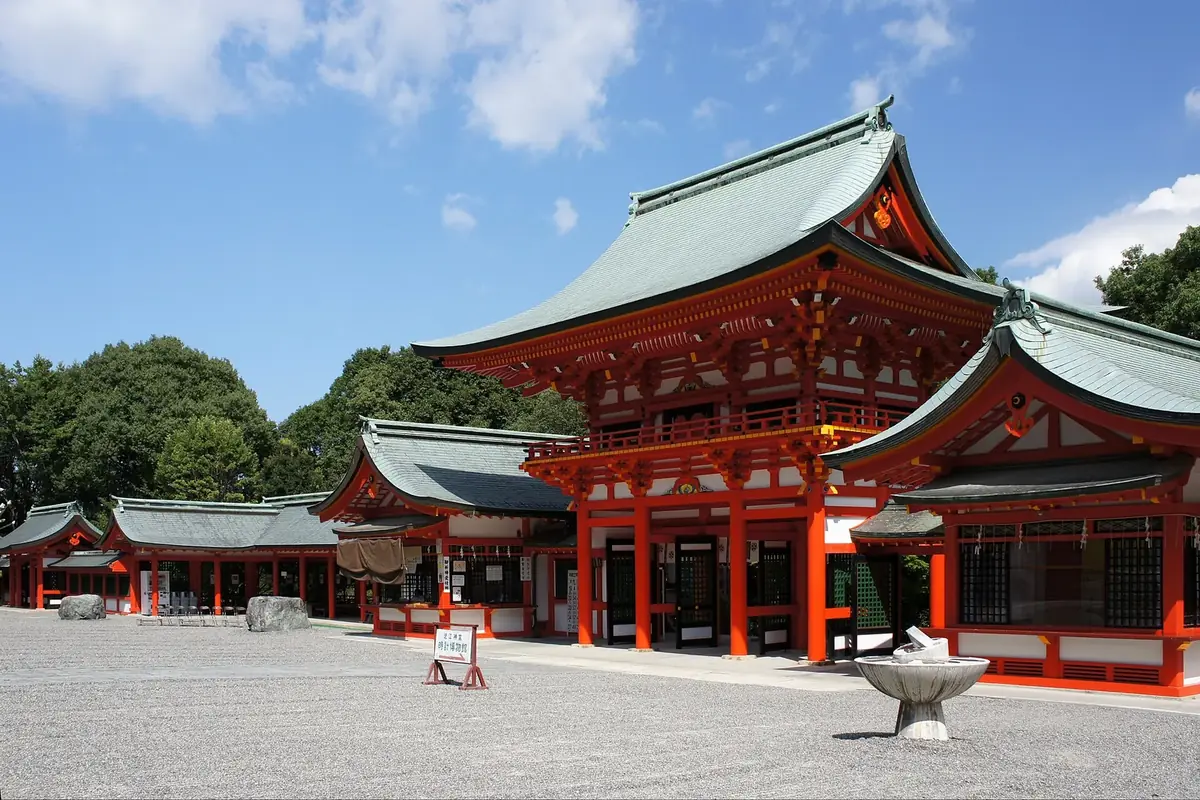
Omi Jingu, three stops north at Omi-jingu-mae and nine minutes' walk from the station, honours Emperor Tenji on the site of his Omi Otsu palace; the shrine itself dates only from 1940, its vermilion gate and halls a registered cultural property. Tenji is said to have set up Japan's first water clock here, and the grounds keep a reconstruction beside a sundial. The Clock Museum shows Japanese and Western clocks old and new and is open from 09:30 to 16:30 (last entry 16:00), closed on Mondays except public holidays, for ¥300. Tenji's poem opens the Hyakunin Isshu anthology, so the shrine hosts the national competitive karuta title matches, usually in early January. The grounds are open from 06:00 to 18:00.
From Mii-dera it is one stop, or a walk down through town, to Hama-Otsu, the old port where the Keihan lines meet and the cruise boats leave from Otsu Port, three minutes on foot from Biwako-hamaotsu Station. The lakefront promenade is the place to watch the evening light on the water before dinner.
Ishiyama-dera and Ukimido: the temples at either end
Ishiyama-dera, at the southern end of the city on the Seta River, was founded in 747 at the wish of Emperor Shomu and stands on a great outcrop of wollastonite, a rare natural monument that gives the temple its name, the temple of stone. It is the 13th temple of the Saikoku Kannon pilgrimage. The temple says Murasaki Shikibu stayed here for seven days in 1004 and, watching the full moon, conceived The Tale of Genji; a room in the main hall recreates the scene. The Hondo, the oldest wooden building in Shiga, and the two-storey Tahoto pagoda of 1194 are National Treasures, and flowers from plum and cherry to azaleas, autumn leaves and camellias give it the name temple of flowers.
The temple is open from 08:00 to 16:30, with the last entry at 16:00. Entry costs ¥600 for adults, ¥350 for junior and senior high school students and ¥250 for primary school children; the inner sanctum of the Hondo is ¥500 more, from 09:00 to 16:00, and closes on several festival days and until noon on the 18th and 28th of each month. From 19 March to 30 June and from 1 September to 30 November, the Hojoden museum shows its exhibition on the temple and Murasaki Shikibu, and a ticket for all three costs ¥1,200. Ishiyama-dera is at the southern end of Keihan's line, at Ishiyamadera Station; from JR Ishiyama Station, which the temple puts 13 minutes from Kyoto by Special Rapid, Kojak Bus routes 1, 4, 14, 52, 54 and 55 take about ten minutes from stop 1 to Ishiyamadera Sanmon-mae.
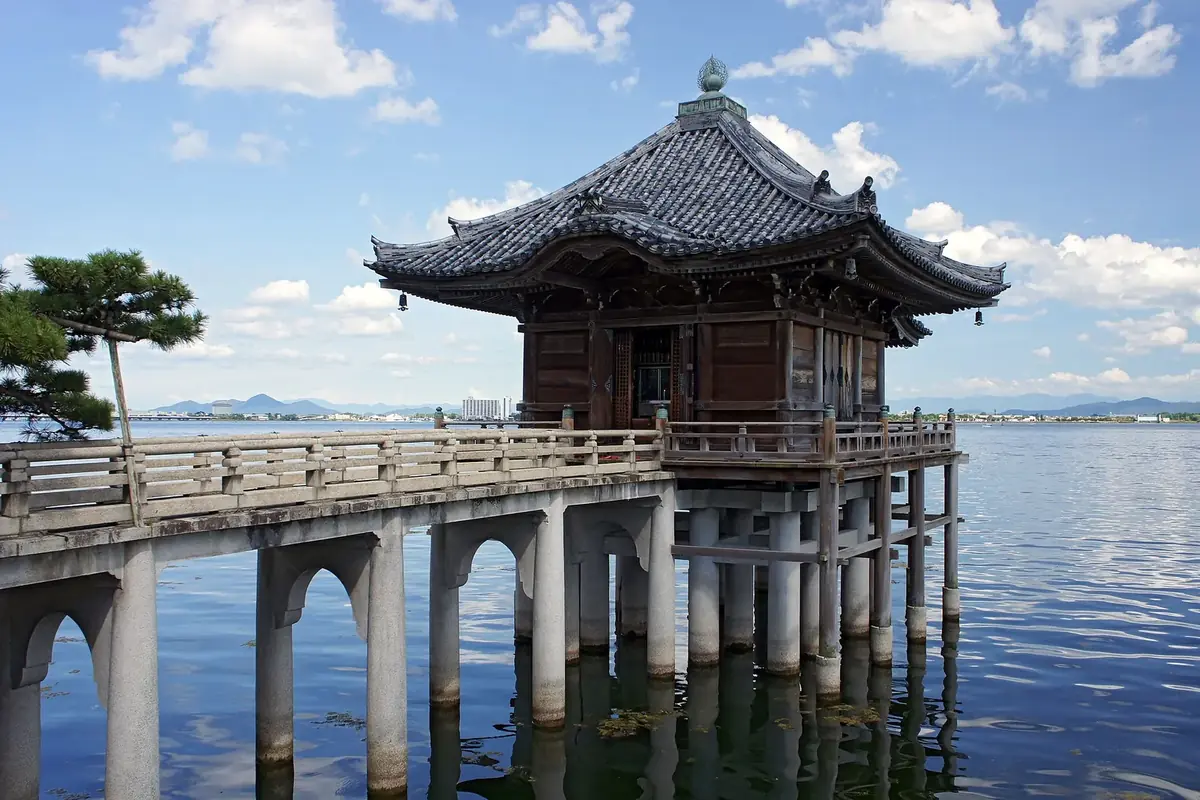
Ukimido, the floating hall of Mangetsu-ji, stands out over the lake at Katata, in the north of the city. The priest Genshin built the first hall in the Heian period to pray for the safety of the people; the present one dates from 1937. Its view is the Eight Views' wild geese returning at Katata, a scene that Matsuo Basho loved. The Otsu City Tourism Association lists it as open from 08:00 to 17:00 (16:30 in December) for ¥300. Take the JR Kosei Line to Katata, then a bus to Katatademachi and walk five minutes. It is a half day on its own, so save it for the second morning if you prefer it to Ishiyama-dera.
Lake Biwa from the water: the Michigan cruise
The Michigan is Biwako Kisen's best-known cruise boat, sailing from Otsu Port with a sky deck on the fourth floor, restaurants on board and live music in the second half of each trip. When we checked on 27 October 2026, the 60-minute cruise left Otsu Port at 09:40 and 15:00 and the 90-minute cruise at 11:00 and 13:00, every day from 1 April to 6 December 2026, again from 26 December 2026 to 3 January 2027, and from 7 March 2027. From 7 to 25 December 2026 and from 4 January to 28 February 2027, only the 90-minute cruise runs, at weekends and on public holidays.
Adults pay ¥2,800 for the 60-minute cruise and ¥3,400 for the 90-minute one, and primary school children half. Book on Biwako Kisen's website, especially for weekends.
Getting there and around: JR or Keihan
Use the JR to get between Kyoto and Otsu and the Keihan line to move between the sights. From Kyoto Station, the JR Biwako Line reaches Otsu in about ten minutes and Ishiyama in 13 minutes by Special Rapid, and the JR Kosei Line reaches Hieizan-Sakamoto in about 20 minutes. From Sanjo Keihan in central Kyoto, the Tozai subway runs straight through onto Keihan's Keishin Line to Biwako-hamaotsu, about 25 minutes without changing.
Keihan's Ishiyama-Sakamoto Line runs the length of the city, and its fares from Biwako-hamaotsu are ¥200 to Miidera and Omi-jingu-mae and ¥280 to Ishiyamadera and Sakamoto-hieizanguchi; Sakamoto to Miidera is also ¥280. Keihan's Otsu Sightseeing Pass gives a day on its Otsu lines (not the Keihan Main Line) for ¥800, sold at Keihan-yamashina and Biwako-hamaotsu stations or as a QR ticket online, so it pays for itself only on a day with four or more rides.
| From Kyoto to | Train | Journey time | Adult fare |
|---|---|---|---|
| Otsu (central Otsu, Hama-Otsu) | JR Biwako Line | about 9–10 minutes | ¥200 |
| Ishiyama (Ishiyama-dera) | JR Biwako Line, Special Rapid | 13 minutes | ¥240 |
| Hieizan-Sakamoto (cable car, Hiyoshi Taisha) | JR Kosei Line | about 20 minutes | ¥320 |
The JR fares in the table come from a route-search listing read on 27 October 2026. From Kansai Airport, the Biwako Visitors Bureau puts Otsu Station about 90 minutes away on the Haruka limited express and the JR line on from Kyoto. Otsu also makes an easy add-on to a western Japan rail trip; our Kansai in 5 days itinerary shows how Kyoto, Osaka and Nara fit together.
One day from Kyoto, and the optional night by the lake
The day runs north to south, so the mountain is done before the afternoon light goes and the evening is on the lake. Leave Kyoto by about 08:30 so that the cable car and Enryaku-ji fill the morning.
- 08:30, Kyoto to Sakamoto: take the JR Kosei Line from Kyoto to Hieizan-Sakamoto, then the bus or the walk up to the cable car's lower station for the 09:00 or 09:30 car.
- Morning, Enryaku-ji: the Todo area, with the Manbaido and its lamp, the Daikodo and the twelve generals in the Kokuhoden; ride the shuttle bus to Saito if you have time.
- 12:00, lunch on the mountain: shojin cooking at Enryaku-ji Kaikan's Bouko, then the cable car down.
- Early afternoon, Sakamoto: walk past the stone walls to Hiyoshi Taisha, then take the Keihan line from Sakamoto-hieizanguchi to Miidera; get off at Omi-jingu-mae on the way if the Clock Museum is open and you are keeping good time.
- 15:00, Mii-dera: the Kondo, the evening bell and the viewpoint, before the last entry at 16:00, then walk down along the canal to Hama-Otsu.
- Evening, the lakefront: sunset from the promenade by Otsu Port, Omi beef or lake fish for dinner, and the JR from Otsu back to Kyoto, or stay the night.
- Optional second morning: the 09:40 Michigan cruise from Otsu Port, back at 10:40, then the Keihan line to Ishiyamadera for Ishiyama-dera and lunch near its gate, and the JR from Ishiyama to Kyoto in the afternoon. In winter, when the morning cruise does not run, take the 11:00 90-minute cruise at a weekend or go straight to Ishiyama-dera.
What to eat and where to look
Sakamoto soba
Buckwheat noodles were a staple of the monks of Enryaku-ji, eaten after fasts and ascetic practices, and the town at the foot of the mountain has served them to pilgrims since the Edo period, cold or hot, sometimes with Lake Biwa fish or made the vegetarian way the monks eat them.
- Where to look
- Tsuruki Soba in Sakamoto, opened in 1716 and still supplying Enryaku-ji, in a wooden building that is a registered cultural property.
- Fit it into your day
- Lunch in Sakamoto, if you come down the mountain before eating.
Shojin ryori (temple vegetarian cooking)
The vegetarian cooking of Buddhist practice, built on tofu, vegetables and grains and served as a balanced set, eaten on the mountain where the monks still train.
- Where to look
- Enryaku-ji Kaikan's restaurant Bouko at Todo, from 11:30 to 14:00, at about ¥1,100.
- Fit it into your day
- Lunch at Enryaku-ji, before the cable car down.
Omi beef
Shiga's wagyu, counted among Japan's top three brands with Kobe and Matsusaka beef and, with a 400-year history, the oldest of them. The cattle are raised on local rice straw, and the meat is known for fine marbling and a sweet, rich taste.
- Where to look
- Kusutaro, five minutes from Biwako-hamaotsu Station, and Kanekichi near Zeze, both listed by the Otsu City Tourism Association.
- Fit it into your day
- Dinner at Hama-Otsu after sunset on the lakefront.
Funazushi
Shiga's fermented sushi, eaten here since the Heian period: round crucian carp from Lake Biwa salted for months, then packed in rice until lactic fermentation softens the bones. It is served cold in slices, stuffed with roe, sharp and sour at first, and goes with sake.
- Where to look
- Funai in Ishiba, central Otsu, which has made funazushi since 1855.
- Fit it into your day
- A few slices with a drink at dinner, or a packet to take home; ask for a taste first.
Lake Biwa fish
Biwa salmon, ayu sweetfish, crucian carp, willow minnow and Seta clams are the lake's best-known catches, eaten grilled, simmered in soy sauce, marinated in vinegar, in miso soup or as sashimi.
- Where to look
- Mameshin, three minutes from Keihan's Miidera Station, serves lake-fish banquets and lunch boxes by reservation at least a day ahead.
- Fit it into your day
- A booked lunch or dinner near Mii-dera.
For the whole list: funazushi and lake fish are fish, and shojin cooking is built on soy; tell the restaurant about any allergy when you order.
Where to sleep by the lake, and what it costs, all in
Hama-Otsu is the base for one night: the lakefront, Otsu Port and the Keihan lines are on the doorstep. Biwako Hotel stands on the shore five minutes' walk from Biwako-hamaotsu Station and ten from JR Otsu Station, with lake views throughout and a natural hot-spring bath with an open-air bath and sauna; a free shuttle runs to JR Otsu Station every 15 minutes from 08:00 to 22:00. For a ryokan, Ogoto Onsen, farther up the west shore, is the hot-spring village closest to Kyoto, with inns that collect guests from JR Ogoto Onsen Station. Rooms in Kyoto itself are covered in our Kyoto where-to-stay guide.
About ¥13,000 per person, ¥26,000 for two, for the day from Kyoto; with the night at Hama-Otsu and the second morning, about ¥43,000 per person, ¥85,000 for two. Trains, the cable car, temple and shrine tickets, lunch, dinner, drinks and a 10% buffer are in, and with the night also the room with breakfast, the cruise, Ishiyama-dera and the second lunch.
| Trip | Per person | Two adults |
|---|---|---|
| One day from Kyoto | ¥13,000 | ¥26,000 |
| Day, one night at Hama-Otsu and the second morning | ¥43,000 | ¥85,000 |
| The day with a London–Kansai return economy flight | ¥213,000–297,000 | ¥425,000–594,000 |
| The day and night with the same flight | ¥243,000–327,000 | ¥485,000–653,000 |
The model is two adults following the plan above on a weekday outside the cherry-blossom and autumn-leaf weeks, leaving their Kyoto hotel after breakfast and returning in the evening, or sharing a twin room at Biwako Hotel for the optional night. Prices were checked on 27 October 2026.
The day, per person: getting around ¥2,800; sights ¥2,800; food ¥6,100; 10% buffer ¥1,200. Getting around is the JR to Hieizan-Sakamoto at ¥320, the cable car return at ¥1,830, Keihan from Sakamoto-hieizanguchi to Miidera at ¥280 and on to Biwako-hamaotsu at ¥200, and the JR from Otsu to Kyoto at ¥200; walk to the cable car. Sights are Enryaku-ji at ¥1,000, the Kokuhoden at ¥500, Hiyoshi Taisha at ¥500 and Mii-dera at ¥800. Food is lunch at Bouko at about ¥1,100, an estimated ¥1,000 for drinks and a teahouse sweet, and dinner at about ¥4,000, an estimate from the prices of the Omi beef and lake-fish restaurants the Otsu City Tourism Association lists, such as Mameshin's lunch boxes from ¥3,780.
The night and second morning, per person: room ¥21,000; food ¥2,000; getting around ¥700; sights and the cruise ¥3,400; 10% buffer ¥2,700. The room is Biwako Hotel's 33 m² lake-view twin with the breakfast buffet, listed on the booking site OZmall from ¥21,000 per person, or ¥42,000 for two. Food is an estimated ¥1,500 for lunch near Ishiyama-dera and ¥500 for drinks. Getting around is Keihan from Biwako-hamaotsu to Ishiyamadera at ¥280 and on to Keihan-Ishiyama at ¥200, and the JR from Ishiyama to Kyoto at ¥240. The cruise is the 60-minute Michigan at ¥2,800 and Ishiyama-dera ¥600; add ¥500 for the Hondo's inner sanctum.
No SIM is counted, because a day out from Kyoto uses the phone plan of the rest of your trip. Flights: Cathay Pacific's fare calendar showed London Heathrow–Kansai economy returns from GBP 946 to GBP 1,331 for dates between late October 2026 and March 2027, so allow about GBP 950–1,350 per person, about ¥200,000–284,000 at the European Central Bank's rates of 27 October 2026, which the totals with flights include.
Practical questions
Is Otsu worth a day trip from Kyoto?
Yes, if you want Enryaku-ji, Lake Biwa and temples with fewer crowds than central Kyoto. The JR from Kyoto Station reaches Otsu in about ten minutes and Hieizan-Sakamoto, for the cable car to Enryaku-ji, in about 20, so one full day covers Enryaku-ji, Sakamoto, Mii-dera and the lakefront.
How do I get from Kyoto to Enryaku-ji?
From the Otsu side, take the JR Kosei Line to Hieizan-Sakamoto, then the bus or the walk up to the Sakamoto cable car, which climbs 2,025 m in about 11 minutes for ¥960 one way or ¥1,830 return. Enryaku-ji's ticket for all three areas costs ¥1,000, and the halls are open from 09:00 to 16:00 at Todo.
Can I see the Konponchudo at Enryaku-ji?
Not inside: the temple closed the hall's interior from January 2026 for about two years during its restoration. The standing Yakushi image and the lamp the temple says has burned for 1,200 years are kept in the nearby Manbaido meanwhile, and the twelve guardian generals are in the Kokuhoden until December 2027, as planned.
Is the Lake Biwa cruise worth it, and when does it run?
The Michigan is the easiest way onto the lake from Otsu Port: the 60-minute cruise costs ¥2,800 and the 90-minute one ¥3,400 for adults. It sails every day from April to 6 December 2026, from 26 December to 3 January and from 7 March 2027; between those dates only the 90-minute cruise runs, at weekends and on public holidays.
Should I stay overnight in Otsu?
Stay one night at Hama-Otsu if you want the lake at sunset and first light, the 09:40 cruise and an unhurried morning at Ishiyama-dera. Otherwise sleep in Kyoto: the JR back from Otsu takes about ten minutes.
What does a day in Otsu cost?
About ¥13,000 per person for the day from Kyoto, with the trains, the cable car, Enryaku-ji, Hiyoshi Taisha and Mii-dera, lunch, dinner and a 10% buffer. With a night at a lakeside hotel, breakfast, the cruise and Ishiyama-dera, about ¥43,000 per person.
Keep planning your trip
Kyoto
How many nights Kyoto needs, where to base yourself, how to group the sights into east, west and south days, and how to beat the crowds and the buses.
Read the guide
Where to stay in Kyoto
Downtown or Kyoto Station? Six Kyoto areas compared by who they suit and their train lines, plus machiya rentals, ryokan, the hotel tax and Osaka as a base.
Read the guide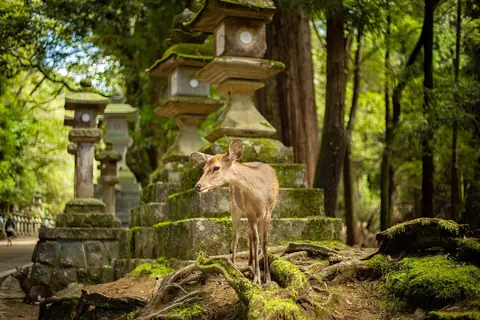
Nara
How long to give Nara from Kyoto or Osaka, Kintetsu or JR, a walking loop through Nara Park, the deer rules, and where to stay for a quiet early start.
Read the guide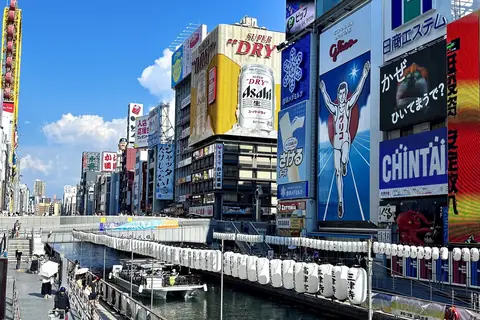
Osaka
How many nights Osaka needs, whether to base here or in Kyoto, Namba vs Umeda vs Shin-Osaka vs Tennoji, what to eat, and trains to Nara, Himeji and Koyasan.
Read the guide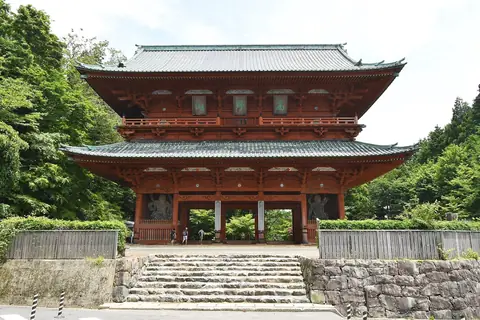
Koyasan
Why a night in a Koyasan temple beats a day trip, how to book a shukubo, what dinner and morning prayers involve, Okunoin's rules and the trip from Osaka.
Read the guideSources and checks before you travel
(47)
- Enryaku-ji: visiting hours and fees ↗ — opens in a new tab
- Enryaku-ji: access ↗ — opens in a new tab
- Enryaku-ji: Todo area ↗ — opens in a new tab
- Enryaku-ji: special enshrinement during the Konponchudo works (22 October 2026) ↗ — opens in a new tab
- Sakamoto Cable: timetable and fares ↗ — opens in a new tab
- Sakamoto Cable: about the line and fare revision of 1 April 2026 ↗ — opens in a new tab
- Keihan: Mount Hiei and Sakamoto itinerary ↗ — opens in a new tab
- Otsu City Tourism Association: Sakamoto Cable ↗ — opens in a new tab
- Otsu City Tourism Association: Hieizan Enryaku-ji ↗ — opens in a new tab
- Otsu City Tourism Association: Enryakuji Kaikan restaurant Bouko ↗ — opens in a new tab
- Hieizan tourism council: Sakamoto ↗ — opens in a new tab
- Hiyoshi Taisha: visiting hours and fees ↗ — opens in a new tab
- Hiyoshi Taisha: access ↗ — opens in a new tab
- Japan Tourism Agency multilingual database: Sakamoto soba and Tsuruki Soba ↗ — opens in a new tab
- Mii-dera: visiting information ↗ — opens in a new tab
- Mii-dera: fee revision from 1 March 2026 ↗ — opens in a new tab
- Mii-dera: recommended route ↗ — opens in a new tab
- Omi Jingu: access ↗ — opens in a new tab
- Omi Jingu: Clock Museum ↗ — opens in a new tab
- Omi Jingu: history ↗ — opens in a new tab
- Omi Jingu: karuta title matches ↗ — opens in a new tab
- Ishiyama-dera: about the temple (English) ↗ — opens in a new tab
- Ishiyama-dera: fees and hours ↗ — opens in a new tab
- Ishiyama-dera: access ↗ — opens in a new tab
- Otsu City Tourism Association: Ukimido (Mangetsu-ji) ↗ — opens in a new tab
- Biwako Kisen: Michigan cruise fares and timetable ↗ — opens in a new tab
- Biwako Kisen: Michigan cruise (English) ↗ — opens in a new tab
- Biwako Kisen: access to Otsu Port ↗ — opens in a new tab
- Keihan: fare table from Biwako-hamaotsu (revised 1 October 2025) ↗ — opens in a new tab
- Keihan: fare table from Sakamoto-hieizanguchi ↗ — opens in a new tab
- Keihan: fare table from Ishiyamadera ↗ — opens in a new tab
- Keihan: Otsu Sightseeing Pass ↗ — opens in a new tab
- Otsu City Tourism Association: access ↗ — opens in a new tab
- Biwako Visitors Bureau: frequently asked questions ↗ — opens in a new tab
- Ekitan route search: JR fares from Kyoto to Otsu, Ishiyama and Hieizan-Sakamoto ↗ — opens in a new tab
- Otsu City Tourism Association: Biwako Hotel ↗ — opens in a new tab
- OZmall: Biwako Hotel plans ↗ — opens in a new tab
- Otsu City Tourism Association: Ogoto Onsen ↗ — opens in a new tab
- Japan Tourism Agency multilingual database: Funazushi ↗ — opens in a new tab
- Otsu City Tourism Association: Funai ↗ — opens in a new tab
- Japan Tourism Agency multilingual database: Omi beef ↗ — opens in a new tab
- Otsu City Tourism Association: Kusutaro ↗ — opens in a new tab
- Otsu City Tourism Association: Omi Beef Kanekichi ↗ — opens in a new tab
- Otsu City Tourism Association: Mameshin ↗ — opens in a new tab
- Shiga Prefecture: the gifts of Lake Biwa ↗ — opens in a new tab
- Cathay Pacific: flights from London to Osaka ↗ — opens in a new tab
- European Central Bank: euro reference rates ↗ — opens in a new tab
Reference sources for the version dated 27 October 2026. Confirm opening times, access, transport and conditions for your travel dates.
Photo credits
(6)
Ukimido at Katata, the hall of Mangetsu-ji that stands out over Lake Biwa
Photograph: 663highland — opens in a new tab · CC BY 2.5 — opens in a new tab
Changes: Resized and converted to WebP; displayed with responsive crops. · Original photograph and licence details ↗ — opens in a new tab
The Kondo of Mii-dera, a National Treasure of the Momoyama period
Photograph: Hyppolyte de Saint-Rambert — opens in a new tab · CC BY 4.0 — opens in a new tab
Changes: Resized and converted to WebP; displayed with responsive crops. · Original photograph and licence details ↗ — opens in a new tab
The Konponchudo at Enryaku-ji, the main hall rebuilt in 1642, before its current restoration
Photograph: 663highland — opens in a new tab · CC BY 2.5 — opens in a new tab
Changes: Resized and converted to WebP; displayed with responsive crops. · Original photograph and licence details ↗ — opens in a new tab
A Sakamoto cable car at the lower station, ready for the 11-minute climb to Enryaku-ji
Photograph: Saigen Jiro — opens in a new tab · CC0 — opens in a new tab
Changes: Resized and converted to WebP; displayed with responsive crops. · Original photograph and licence details ↗ — opens in a new tab
A hall of Ishiyama-dera, the temple on the Seta River at the southern end of Otsu
Photograph: Zairon — opens in a new tab · CC BY 4.0 — opens in a new tab
Changes: Resized and converted to WebP; displayed with responsive crops. · Original photograph and licence details ↗ — opens in a new tab
The vermilion gate of Omi Jingu, the shrine to Emperor Tenji in Otsu
Photograph: 663highland — opens in a new tab · CC BY 2.5 — opens in a new tab
Changes: Resized and converted to WebP; displayed with responsive crops. · Original photograph and licence details ↗ — opens in a new tab