Plan your trip
Getting around China: 12306 trains, flights, metro, airports
Moving between Chinese cities is easy once you know three things: trains are booked by station and by passport name, flights are bought from the airline, and the airport link is often cheaper than the taxi. This guide covers each in the order you will need it.
In this guide
Find the location ↗ — opens in a new tabThe short answer
Register on the 12306 English site at home with your passport details and an email address, and book the Chengdu or Guilin flight to Shanghai first. Trains go on sale up to 15 days ahead, counting the day you buy. You do not need a Chinese SIM card: once your account shows “Verified” and your email is confirmed, buy each train online as soon as its window opens, and if the passport check fails, buy at the first station counter you reach. For 5 November, 12306 listed Beijing West to Xi’an North at CNY 494 to 618 a person in second class (checked on 25 October 2026). The Capital Airport Express costs CNY 25 a person one way.
- Key point
- Plan trains and flights before you book hotels
- Where it applies
- Stations and airports, not city centres
- Timing
- Trains and metros run all year.
Trains for the long legs, flights for the longest
High-speed rail is how most visitors link Beijing, Xi’an, Chengdu and Shanghai, and flights cover the longest legs; our first-trip guide joins Beijing, Xi’an and Shanghai with two trains in a week.
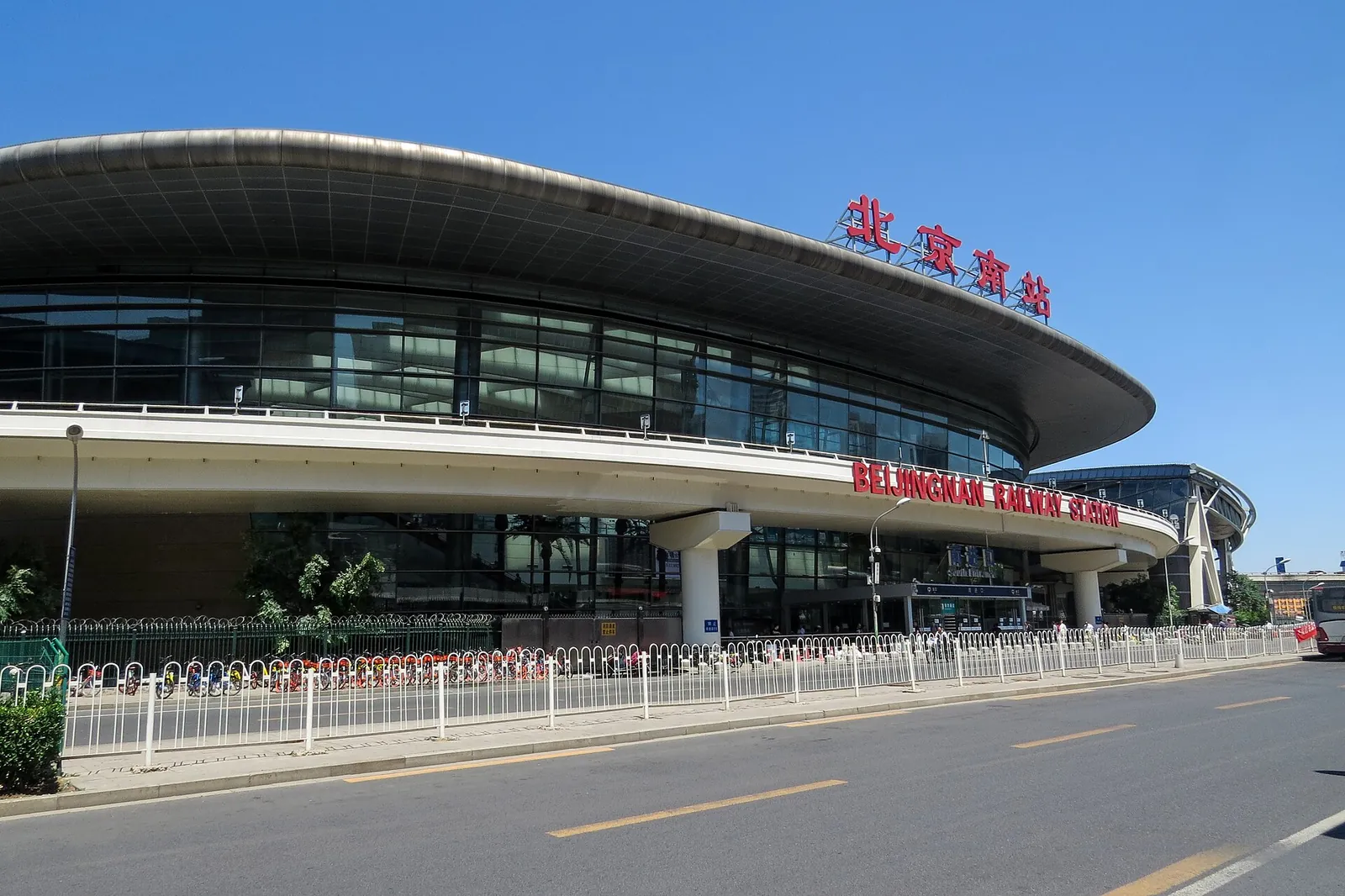
Our itineraries use these rail pairs: Beijing West to Xi’an North, Xi’an North on to Shanghai Hongqiao or to Chengdu East, Chengdu East to Yangshuo (or to Guilin West and on to Yangshuo), and Shanghai Hongqiao to Hangzhou East for the day trip in our Hangzhou and Suzhou guide. Beijing South is the Beijing station for Shanghai.
For a Thursday in early November, the 12306 timetable (checked on 25 October 2026) listed these direct trains for our rail pairs.
| Leg | Direct trains | Journey time | Second class |
|---|---|---|---|
| Beijing West to Xi’an North | 17 | 4 h 10 min to 5 h 58 min | CNY 494 to 618 |
| Xi’an North to Shanghai Hongqiao | 21 | 5 h 50 min to 9 h 1 min | CNY 652 to 782.5 |
| Xi’an North to Chengdu East | 63 | 3 h 5 min to 4 h 21 min | CNY 260 to 316 |
| Chengdu East to Yangshuo | 2 | 6 h 30 min to 7 h 35 min | CNY 432 to 479 |
| Chengdu East to Guilin West | 14 by day | 4 h 58 min to 7 h 30 min | CNY 405 to 538 |
| Guilin West to Yangshuo | 7 | 20 to 24 min | CNY 25 to 29 |
| Shanghai Hongqiao to Hangzhou East | 109 | 0 h 45 min to 1 h 27 min | CNY 57 to 87 |
Yangshuo station stands near Xingping, about 8 km from its old town and not in Yangshuo town, so arrange the transfer with your hotel before you arrive; taxis and ride-hailing cars also run from the station. Our Guilin and Yangshuo guide covers the area.
Xi’an to Shanghai and Chengdu to Guilin each fill most of a day once you add the stations, so treat them as travel days. Fares differ from train to train on the same day, so compare a few departures before you pay. The two day trips most visitors make by public transport, to the Great Wall from Beijing and to the Terracotta Army from Xi’an, are covered in our Great Wall and Xi’an guides.
On our 10-day route the long legs come to about CNY 2,060 a person (CNY 4,120 for two): Beijing West to Xi’an North about CNY 600, Xi’an North to Chengdu East about CNY 300, the Chengdu to Shanghai flight about CNY 1,000, and Shanghai to Hangzhou about CNY 80 each way. Our China trip cost guide adds rooms, food and the rest.
A city can have several large stations, and 12306 lists all of them if you type only the city, so pick the exact station when you search; a wrong pick can leave you on the far side of town:
- Beijing: Beijing West for Xi’an, Beijing South for Shanghai Hongqiao.
- Xi’an: Xi’an North, the high-speed station, not the old Xi’an station. Since 1 July 2026 the railway has moved 54 trains to and from Chengdu, Yan’an and Yinchuan to the new Xi’an East station, so some Chengdu trains now use Xi’an East.
- Shanghai: Shanghai Hongqiao for Hangzhou, Suzhou and trains from Beijing, Xi’an and Chengdu.
- Hangzhou: Hangzhou East, not Hangzhou. Suzhou: Suzhou and Suzhou North are different stations.
- Chengdu: Chengdu East for the Xi’an, Leshan and Guilin West trains; Chengdu South is a different station. Our Chengdu guide covers the city and its two airports.
- Guilin: most trains from Chengdu use Guilin West, on the Guiyang–Guangzhou line, and a few use Guilin North or Guilin; Guilin, Guilin North and Guilin West are three separate stations.
- Zhangjiajie: Zhangjiajie West is the rail station for the parks.
Booking trains on 12306
Book on the 12306 website or app, or at a station counter. Foreign passengers buy real-name tickets with a valid passport, and the name on the booking must match it. 12306’s English registration form accepts foreign passports only and asks for your passport details and an email address; the system can then complete the identity check automatically, or you can upload a photo of the passport page for a manual check. Add your travelling companion under My Passengers to buy two tickets in one booking.
You do not need a Chinese SIM card to buy. 12306 accepts a verified email address as the contact for foreign passengers, and MTR, which runs Hong Kong’s high-speed rail link, says registered users whose identity status shows “Verified” can buy tickets after email verification. Register before you travel, check the status in your account, confirm the email and buy each train as soon as its 15-day window opens, because busy trains sell out. If the status shows “Verification failed”, check the passport details you entered; if that does not help, take the original passport to the ticket counter at the first station you reach and buy the remaining trains there. A local SIM is still handy on the road, and our payments and apps guide covers SIM desks. Book only on 12306 or at a station, because the railway does not handle problems with tickets bought on other sites.
Tickets go on sale up to 15 days ahead, counting the day you buy, and the railway can change this with advance notice. Release times vary by station and train, so there is no single midnight moment to wait for. The website and app sell and change tickets from 05:00 to 01:00 the next day, and on Tuesdays from 05:00 to 23:30. Online sales normally run until 30 minutes before departure, though a mainland station can set its own cut-off.
Keep your booking confirmation and number: the e-ticket is your ticket, and the printable itinerary sheet or a receipt is not. If 12306 shows that your account still needs its identity check, finish it at a station ticket counter before the travel day.
Second class is usually seated 3+2 (seats A, B, C, D, F), first class 2+2 (A, C, D, F) and business class 2+1 or 1+1, depending on the train; A and F are the window seats. Overnight trains have hard-sleeper, soft-sleeper or deluxe soft-sleeper berths, depending on the train. If your train is sold out, look at another departure or class on 12306, or at a flight.
At the station
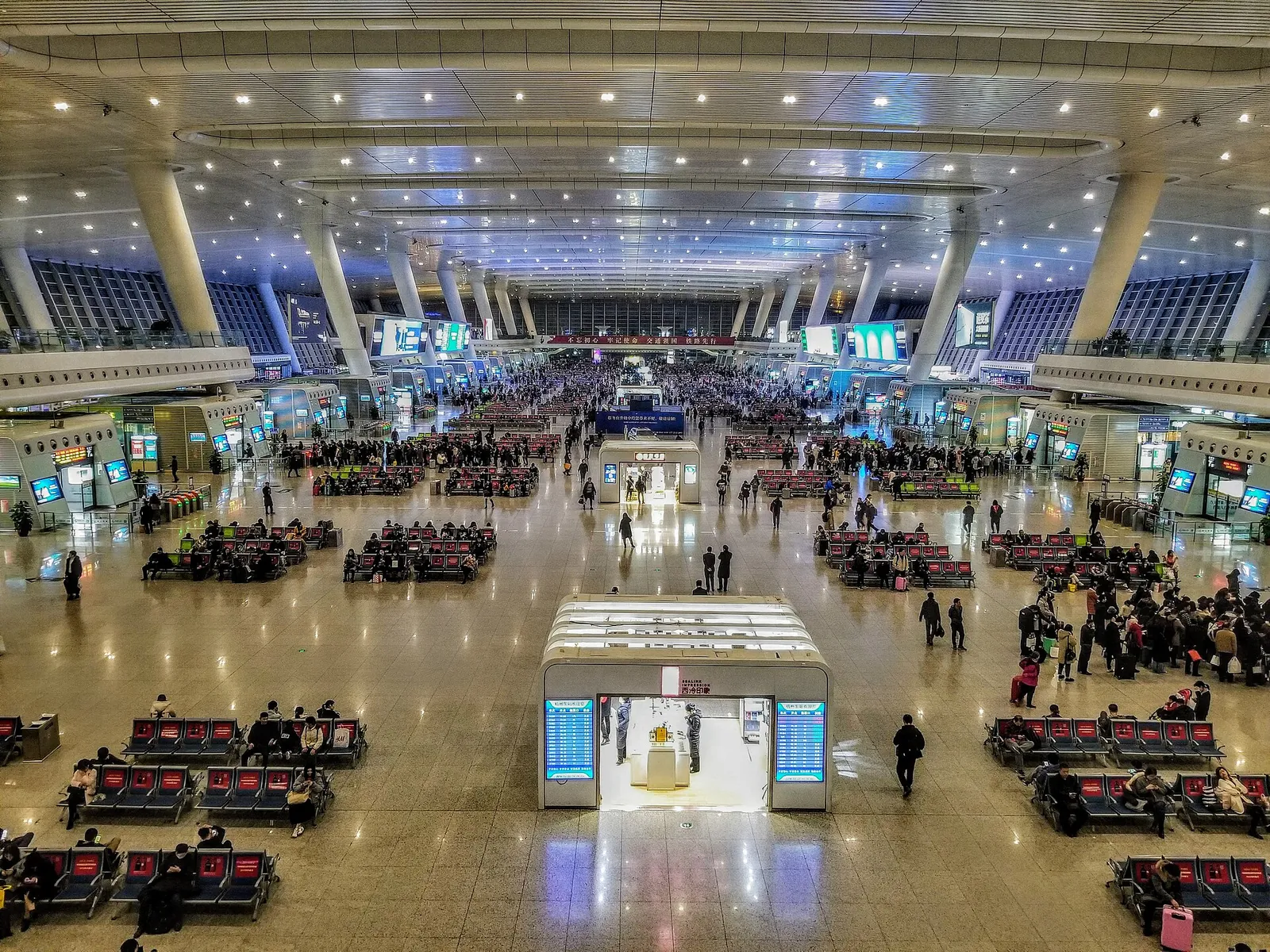
Allow about 60 minutes at a large station you do not know, for the queues at security, the passport check and the gate; each station announces its own cut-off for ticket sales and check-in, so follow that announcement. Everyone and all luggage go through a security screen, and the passport check is a separate step, so take the original passport you booked with. The British government advises carrying your passport at all times in China, because police make random checks and do not accept a printed copy.
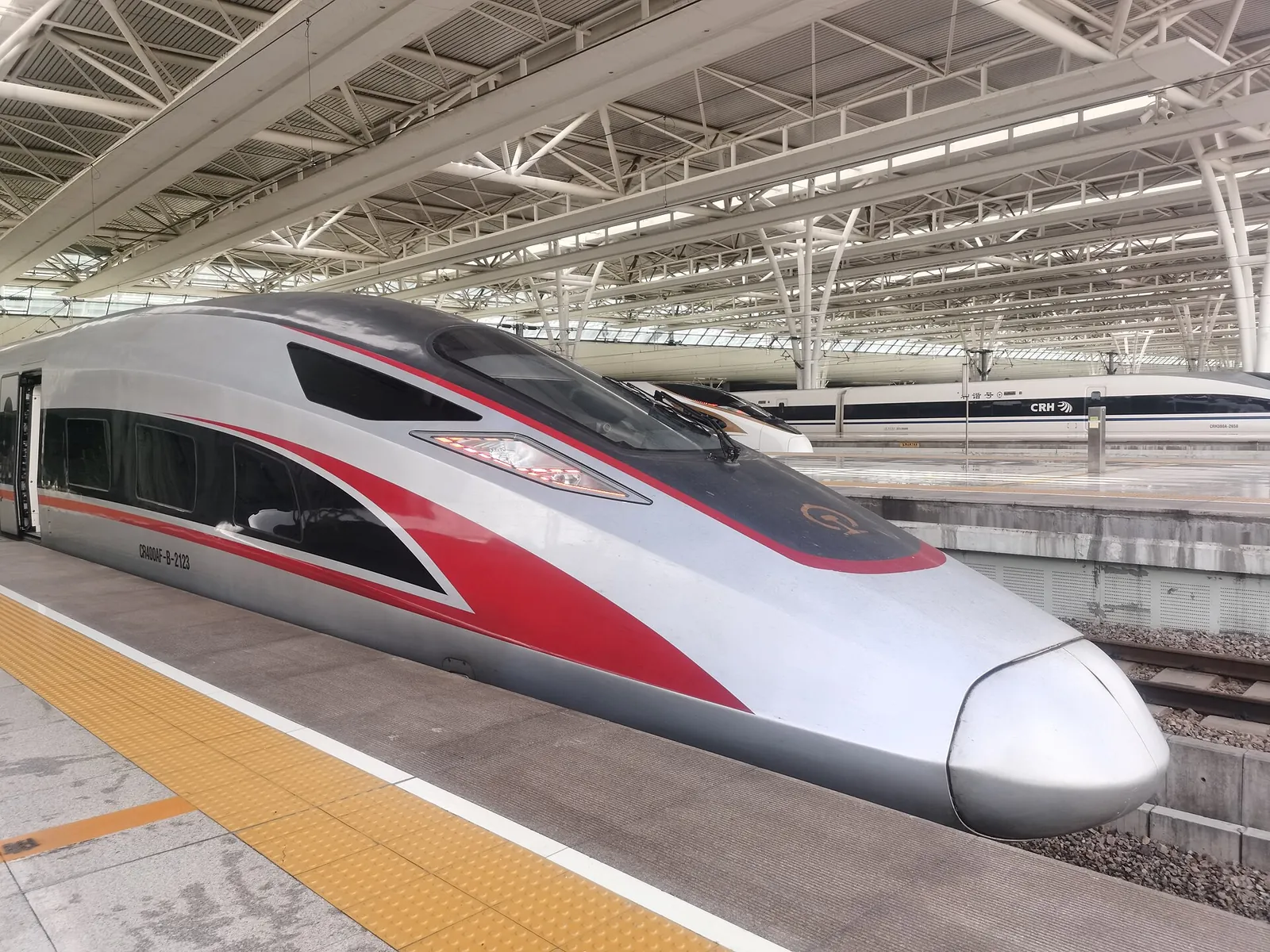
The departure boards and announcements give each train’s waiting room, gate and check-in time. When your gate opens, show your passport at the ticket check, go down to the platform and find the car number on your ticket. On Fuxing and Vibrant Express trains the bags go on racks above the seats; the free luggage limit is 20 kg for each adult, and on high-speed trains no item may measure more than 130 cm in total. Smoking is banned anywhere on a high-speed train.
On the high-speed trains of the Yangtze River Delta, around Shanghai and Hangzhou, you can order food by scanning the QR code beside your seat or by going to the dining car.
At Beijing South, leave the railway station by the lowest level and follow the signs to exit D of Beijing South metro station, on line 4.
At Hong Kong West Kowloon, passengers complete both Hong Kong and mainland immigration before boarding. MTR says this normally takes 30 to 45 minutes, more at weekends, on public holidays, for travellers using a passport rather than a Chinese identity card or travel permit and on the last train, and the real-name check and ticket check close 30 minutes before departure. Mainland entry rules are in our China entry guide.
From West Kowloon, MTR lists trains to 114 mainland stations, among them Beijing West, Shanghai Hongqiao, Xi’an North, Chengdu East, Guilin West, Hangzhou East and Zhangjiajie West. The first train leaves at around 07:00 and the last at around 23:00, with about 25 long-haul round trips a day; journey times vary with the number of stops. Fuxing sleeper trains run overnight to Shanghai Hongqiao every day and to Beijing West from Friday to Monday, in four-berth rooms with free hot water (bring a cup) and a small food counter in car 8.
Domestic flights
Book domestic flights on the airline’s own site or app. You can pay with Alipay, Weixin Pay (WeChat Pay) or a UnionPay card, and airlines that also fly international routes accept foreign bank cards online and at their ticket desks. At the airport desk you can also pay in cash or by Weixin Pay, Alipay or bank card, as the airline allows. Book in the name and number of the passport you travel on, and show that same passport at check-in and at security. Changes and refunds go through the channel you booked with or the airport desk, and any fee follows the airline’s rules. Set up the apps first with our payments and apps guide.
Shanghai has two airports, Pudong (PVG) and Hongqiao (SHA), and so does Chengdu, Tianfu (TFU) and Shuangliu (CTU).
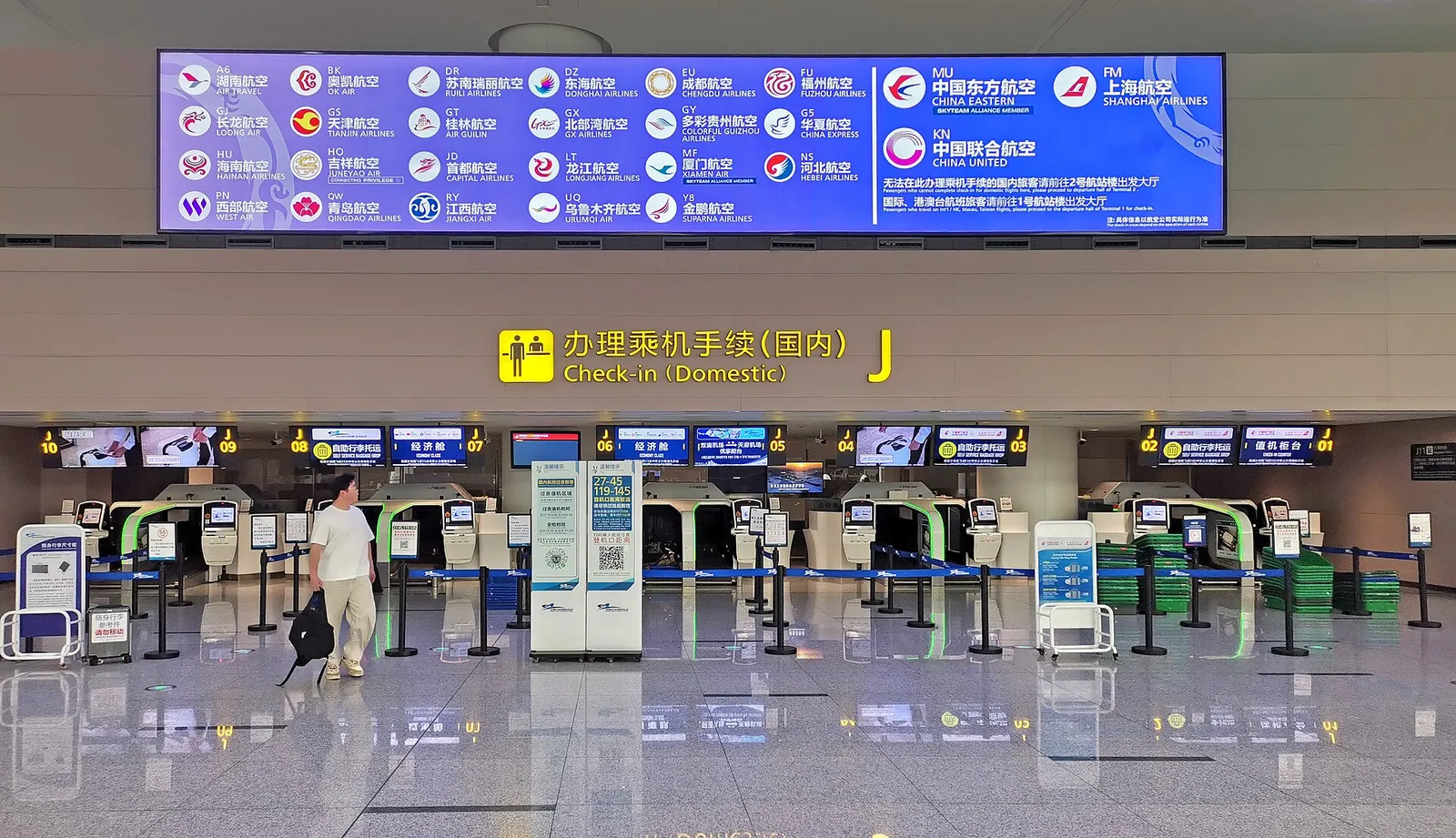
Our 10-day route flies from Chengdu Shuangliu to Shanghai Hongqiao with Air China, whose morning departures appear on Shuangliu’s departure board; the flight takes about two and a half hours. The 14-day route flies from Guilin Liangjiang (KWL) to Shanghai Pudong, which China Southern serves direct; Pudong’s links into the city are in the next section. Expect about CNY 1,000 a person in economy on either leg, a typical fare on these routes.
From the airports and stations into town
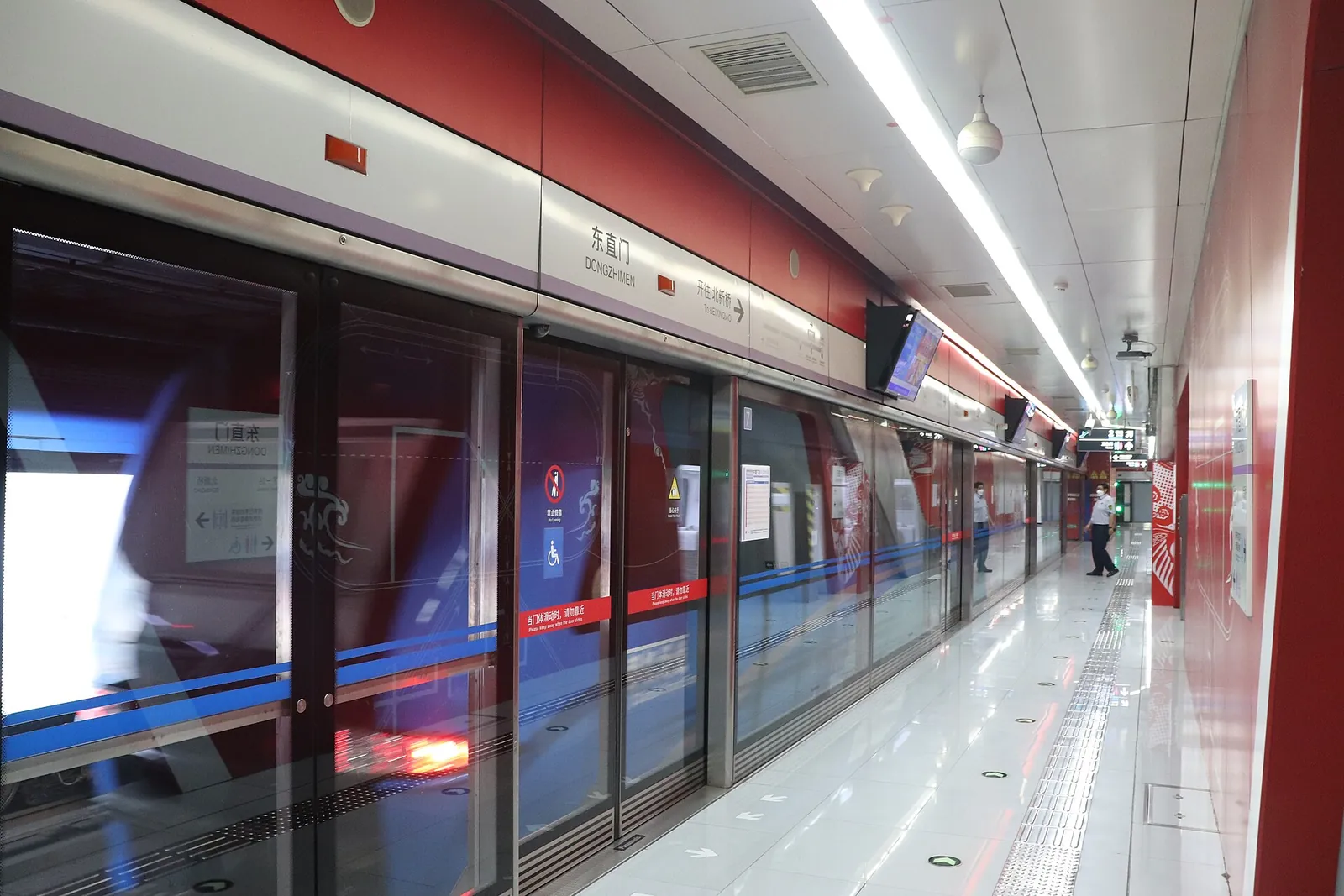
Beijing Capital (PEK) has the Capital Airport Express: CNY 25 a person one way, about every 10 minutes, from Terminals 3 and 2 to Sanyuanqiao (interchange for lines 10 and 12), Dongzhimen (lines 2 and 13) and Beixinqiao (line 5); the onward metro is a separate fare. The airport’s page shows first and last trains at 06:22 and 22:52 from Terminal 3 and at 06:36 and 23:10 from Terminal 2. Beijing Daxing (PKX) has the Daxing Airport Express to Caoqiao (interchange for lines 10 and 19), about CNY 35 a person for the full run in an ordinary carriage or CNY 50 in the business carriage; enter the gates 10 minutes before the last train.
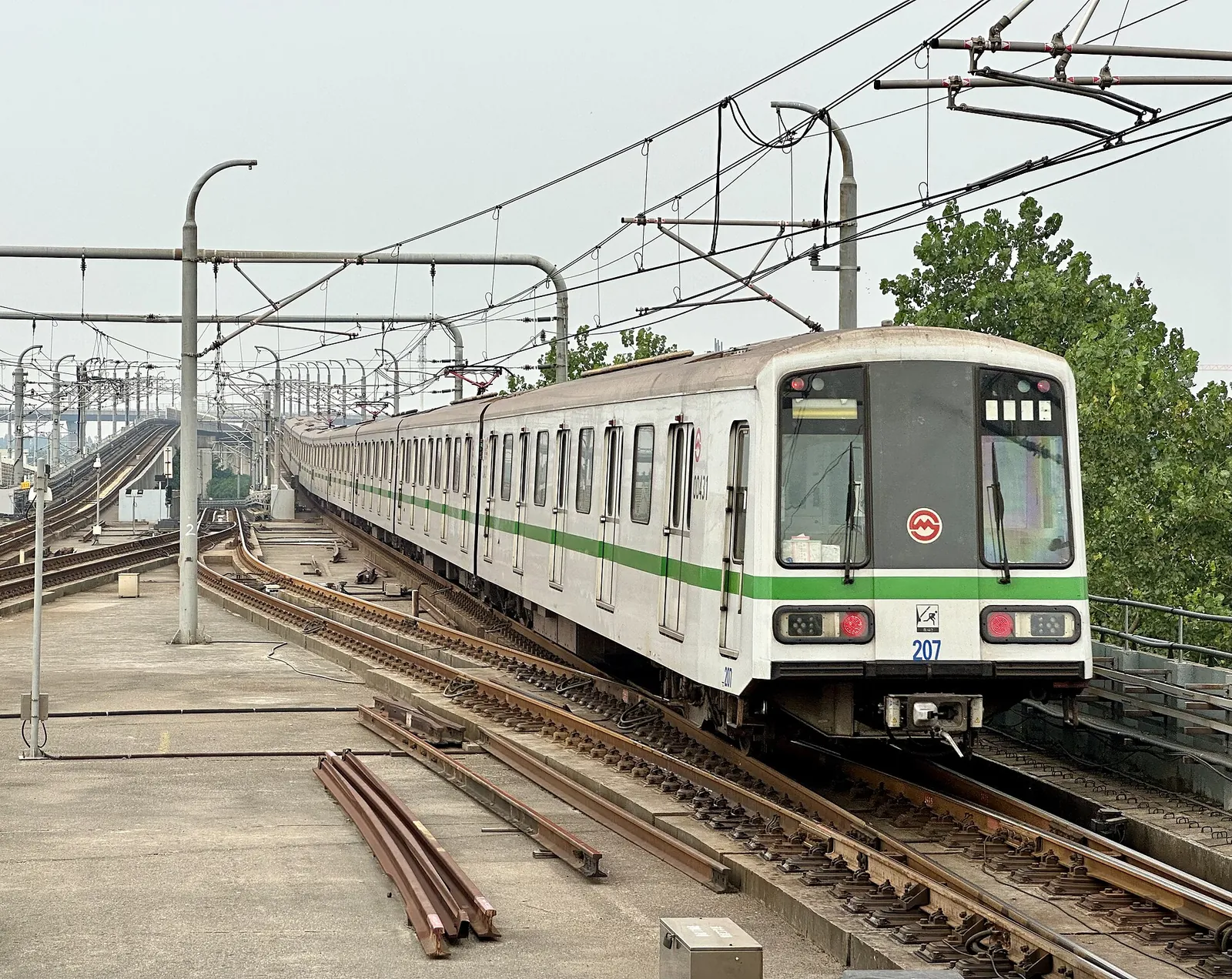
Shanghai Pudong (PVG) is about 30 km from downtown Shanghai. Metro line 2 from Pudong Airport to People’s Square costs about CNY 7 a person and takes about an hour. A taxi to People’s Square costs around CNY 180 a vehicle and takes about 50 minutes; the ranks are outside Arrival Gate 12 at Terminal 1 and Arrival Gate 25 at Terminal 2. The maglev stops at Longyang Road station, where you change to line 2; it does not reach the Bund or People’s Square.
Shanghai Hongqiao (SHA) is about 13 km from the centre, has two terminals and mostly handles domestic and regional flights. Terminal 1 is on metro line 10, and Terminal 2 is on lines 10 and 2. A taxi to the centre typically takes about 30 minutes and costs CNY 100 to 150 a vehicle, from outside Gate 1 at Terminal 1 or Gate 4 at Terminal 2.
The Airport Link Line joins Hongqiao Terminal 2 and Pudong Terminals 1 and 2 in about 40 minutes, with trains every 15 minutes. Fares run from CNY 4 a person for a short ride to CNY 26 a person for the full journey. Since 1 April 2026 the first train from Hongqiao to Pudong leaves at 05:45 and the last from Pudong to Hongqiao at 22:15. Add luggage, walking and check-in time; 40 minutes is the ride, not the connection.
Chengdu Tianfu (TFU), the farther of the city’s two airports from the centre, has Metro Line 18 to Chengdu South railway station from 06:00 to 23:30; the fastest trains take under 40 minutes, and the full fare is about CNY 10 a person. Metro Line 19 links Tianfu with Shuangliu Terminal 2, and the Panda Base gives a reference taxi fare of about CNY 200 a vehicle from Tianfu airport to its gates. Chengdu East, the station for the Xi’an and Guilin trains, is on metro lines 2 and 7.
Chengdu Shuangliu (CTU) is on metro line 10, which runs from Wuhou Ci to both terminals; the first train towards the airport leaves Wuhou Ci at 06:10, and the last trains back leave at 23:12 from Terminal 2 and 23:15 from Terminal 1. Check-in for domestic flights at Shuangliu closes 30 minutes before departure.
At Hangzhou East, metro line 1 runs to Longxiangqiao, the station beside West Lake. Our Xi’an guide covers the ride into the city from Xi’an North and from Xi’an Xianyang International Airport (XIY).
Guilin Liangjiang (KWL) is about 28 km from Guilin, with airport buses, taxis and ride-hailing, and a coach leaves for Yangshuo every 30 minutes from 07:30 to 18:30.
Metros and local transport
In Beijing the metro charges by distance: CNY 3 up to 6 km, CNY 4 up to 12 km, CNY 5 up to 22 km and CNY 6 up to 32 km, then another CNY 1 for each further 20 km. The airport lines have their own fares, given above. Foreign visitors can buy single-journey tickets at a station ticket office or machine, with cash, a Chinese or foreign bank card or a payment app. Some operators and apps also accept a QR code at the gate: in Alipay, choose Transport, then your city, and complete the identity check to receive a metro QR code. A payment QR code is not a metro ticket until you have done that step.
Shanghai’s metro also charges by distance: CNY 3 for up to 6 km and CNY 1 more for each further 10 km; the Airport Link Line has its own fares, given above. To pay by phone, open the Shanghai Metro service in Alipay or WeChat, or the Metro Daduhui app, and scan its QR code at the gate to enter, exit and change lines. Contactless UnionPay, Visa, Mastercard, American Express and JCB cards also work at the gates, and machines sell single tickets.
For taxis and ride-hailing, use Alipay (Transport, then Taxi), WeChat or the DiDi app. DiDi works in English with a foreign number and card, with the same drivers and pricing as the Chinese app.
Weather, connections and advice
The British government says floods and storms are common from May to November, and typhoons hit southern and eastern coasts in the same season, with air and other transport affected; leave slack in any tight connection in those months. Our best time to visit guide covers the weather month by month.
The German government advises refraining from VPN services. Plan on limited access to some overseas apps, and download offline maps and your booking confirmations before you travel. Check your own government’s current travel advice before you book.
Practical questions
Can I buy China train tickets with a foreign passport?
Yes. On 12306 and at station counters foreign passengers buy real-name tickets with a valid passport, and the name on the booking must match it. Register on the English site before you travel.
How far ahead can I book a train in China?
Tickets go on sale up to 15 days ahead, counting the day you buy. Release times vary by station and train, so check 12306 for your date.
How early should I get to a Chinese train station?
Allow about 60 minutes at a large station you do not know, and follow the station’s announcement of when check-in closes.
Do I need to print my train ticket?
No. Keep the e-ticket confirmation and booking number and take the original passport you booked with. A printed itinerary sheet or receipt is not a ticket.
How do I get from Beijing Capital Airport to the city?
Take the Capital Airport Express from Terminal 2 or 3 to Sanyuanqiao, Dongzhimen or Beixinqiao. It costs CNY 25 a person one way and runs about every 10 minutes; change there to the metro for the rest of the journey.
Which Shanghai airport is nearer the centre, and how do I get in?
Hongqiao is nearer, about 13 km from the centre, on metro lines 10 and 2 (Terminal 2). Pudong is about 30 km away; metro line 2 reaches People’s Square in about an hour for about CNY 7 a person.
Keep planning your trip
Entering China
Who can enter China visa-free for 30 days, when the waiver ends, how 240-hour transit works, and the arrival card, hotel registration, customs and safety rules.
Read the guide
Payments and apps in China
How to pay in China with a foreign card on Alipay and Weixin Pay (WeChat Pay): fees, limits, cash, a passport SIM, and the map, ride and translation apps in English.
Read the guide
First trip to China
How long a first China trip should be, then a week in Beijing, Xi’an and Shanghai: what to book first, the trains, entry, paying and the cost per day.
Read the guide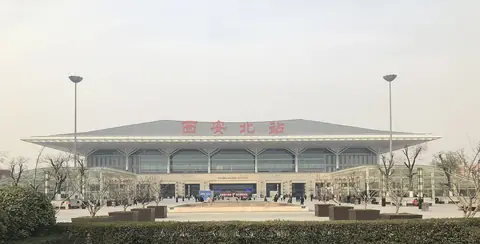
China trip cost
What 10 days in Beijing, Xi’an, Chengdu and Shanghai cost for two sharing a room: about CNY 7,360, 10,140 or 15,950 a person, with every meal, train and ticket.
Read the guide
Getting around Mongolia
Chinggis Khaan airport to Ulaanbaatar, the train from Beijing, flights to the Gobi and Lake Khövsgöl, long-distance buses and hiring a driver-guide.
Read the guide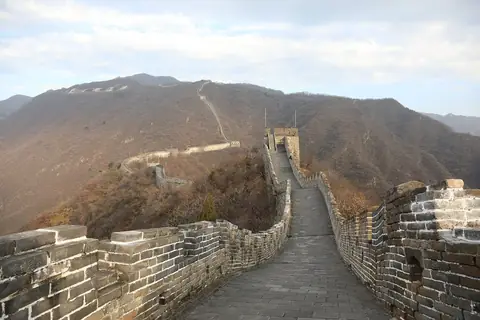
China in seven days
Seven days in China: two nights each in Beijing, Xi’an and Shanghai, the Great Wall, the Terracotta Army and two trains, with a budget for two.
Read the guideSources and checks before you travel
(41)
- China Railway 12306: Frequently asked questions ↗ — opens in a new tab
- China Railway 12306: Create an account (English) ↗ — opens in a new tab
- China Railway: Railway passenger transport rules and Guangzhou-Shenzhen-Hong Kong cross-boundary rules ↗ — opens in a new tab
- China Railway 12306: timetable and fares for a Thursday in early November 2026 ↗ — opens in a new tab
- MTR High Speed: Ticketing via 12306 ↗ — opens in a new tab
- MTR High Speed: 12306 online ticketing platform (FAQ) ↗ — opens in a new tab
- China Railway 12306: reserving contact information (FAQ) ↗ — opens in a new tab
- MTR High Speed: Departure process at West Kowloon ↗ — opens in a new tab
- MTR High Speed: Destinations ↗ — opens in a new tab
- MTR High Speed: Fuxing sleeper train facilities ↗ — opens in a new tab
- MTR High Speed: Vibrant Express train facilities ↗ — opens in a new tab
- Beijing government: Can passengers change seats on high-speed trains? ↗ — opens in a new tab
- Beijing government: Guide to working and living in China, daily life services ↗ — opens in a new tab
- China Southern Airlines: Guilin (Chinese-language page) ↗ — opens in a new tab
- Chengdu Shuangliu International Airport: metro ↗ — opens in a new tab
- Chengdu Shuangliu International Airport: domestic check-in notice (27 March 2026) ↗ — opens in a new tab
- Chengdu Shuangliu International Airport: English home page (departure board) ↗ — opens in a new tab
- Ezhou Airport Economic Zone logistics centre: civil-aviation explainer (7 September 2023) ↗ — opens in a new tab
- Beijing government: Guide to buying train and air tickets ↗ — opens in a new tab
- The Paper: Tianfu airport transport guide (March 2023) ↗ — opens in a new tab
- Chengdu Research Base of Giant Panda Breeding: transportation ↗ — opens in a new tab
- Sichuan Daily (Chuanguan News): Chengdu East on the first day of the National Day holiday (October 2021) ↗ — opens in a new tab
- Li River scenic area: transport ↗ — opens in a new tab
- China News Service: Guiyang–Guangzhou high-speed line at ten years (December 2024) ↗ — opens in a new tab
- Hangzhou news portal: Longxiangqiao metro station crowding (April 2025) ↗ — opens in a new tab
- Hangzhou news portal: Longxiangqiao station (August 2026) ↗ — opens in a new tab
- Beijing Capital International Airport: Airport Express ↗ — opens in a new tab
- Beijing MTR Operation Administration: Daxing Airport Line ticket rules ↗ — opens in a new tab
- Beijing MTR Operation Administration: Daxing Airport Line timetable ↗ — opens in a new tab
- Beijing Daxing district government: Daxing Airport Line ↗ — opens in a new tab
- Beijing MTR Corporation: Frequently asked questions ↗ — opens in a new tab
- Shanghai government: Transportation at Shanghai airports ↗ — opens in a new tab
- Shanghai government: How to take the Airport Link Line ↗ — opens in a new tab
- Shanghai Hongqiao CBD: Airport Link Line extends service hours ↗ — opens in a new tab
- Shanghai government: High-speed trains add 79 new meal options (July 2025) ↗ — opens in a new tab
- Shanghai government: Travel your way, metro ↗ — opens in a new tab
- UK government: China travel advice, safety and security ↗ — opens in a new tab
- German Federal Foreign Office: China, safety ↗ — opens in a new tab
- China Railway: Guilin West station opens (January 2016) ↗ — opens in a new tab
- China Railway: national timetable change of 1 July 2026 ↗ — opens in a new tab
- DiDi: English app ↗ — opens in a new tab
Reference sources for the version dated 29 October 2026. Confirm opening times, access, transport and conditions for your travel dates.
Photo credits
(6)
Beijing South Railway Station, where Shanghai-bound high-speed trains leave
Photograph: N509FZ — opens in a new tab · CC BY-SA 4.0 — opens in a new tab
Changes: Resized and converted to WebP; displayed with responsive crops. · Original photograph and licence details ↗ — opens in a new tab
A Fuxing high-speed train at Shanghai Hongqiao Railway Station
Photograph: Shwangtianyuan This photo was taken with Huawei Mate 30E Pro 5G — opens in a new tab · CC BY-SA 4.0 — opens in a new tab
Changes: Resized and converted to WebP; displayed with responsive crops. · Original photograph and licence details ↗ — opens in a new tab
The waiting hall of Hangzhou East Railway Station at night
Photograph: Staeiou — opens in a new tab · CC BY-SA 4.0 — opens in a new tab
Changes: Resized and converted to WebP; displayed with responsive crops. · Original photograph and licence details ↗ — opens in a new tab
The Capital Airport Express platform at Dongzhimen, where you change to metro lines 2 and 13
Photograph: Andrzej Otrębski — opens in a new tab · CC BY-SA 4.0 — opens in a new tab
Changes: Resized and converted to WebP; displayed with responsive crops. · Original photograph and licence details ↗ — opens in a new tab
A Shanghai Metro Line 2 train on the elevated section at Yuandong Avenue station
Photograph: A Chinese ID — opens in a new tab · CC BY-SA 4.0 — opens in a new tab
Changes: Resized and converted to WebP; displayed with responsive crops. · Original photograph and licence details ↗ — opens in a new tab
Domestic self-service check-in at Chengdu Tianfu International Airport
Photograph: Nord794ub — opens in a new tab · CC BY-SA 4.0 — opens in a new tab
Changes: Resized and converted to WebP; displayed with responsive crops. · Original photograph and licence details ↗ — opens in a new tab