Plan your trip
China visa: 30-day visa-free stay, 240-hour transit
China’s visa-free rule is generous but temporary, and a few conditions decide whether it works for your dates. Check your passport and the end date first, then whether the 240-hour rule fits your route, and what happens at the airport when you land.
In this guide
Find the location ↗ — opens in a new tabThe short answer
Check that your passport is on China’s visa-free list, with six months’ validity after you leave and two blank pages, meeting British and French advice. UK, German, French and other listed ordinary passports allow up to 30 days. The waiver is published until 31 December 2026; if your dates cross it, check with the NIA or a Chinese embassy first, and a 2027 trip needs a published extension or a visa. US and Czech passports need a visa unless they use 240-hour transit. Fill in the free arrival card online before you fly, or at the port; carry no more than CNY 20,000 in renminbi, and declare foreign cash worth more than USD 5,000.
- Key point
- Entry planning before you book flights
- Where it applies
- Airports and border control
- Timing
- Entry rules apply all year; the waiver end date decides any 2027 trip.
Compare all 24 countries: Asia entry requirements at a glance →
Who can enter without a visa
Ordinary-passport holders from Australia, Austria, Belgium, Brazil, Canada, Denmark, Finland, France, Germany, Hungary, Ireland, Italy, the Netherlands, New Zealand, Norway, Poland, Portugal, Romania, Spain, Sweden, Switzerland and the United Kingdom can enter without a visa for tourism, business, visiting family or friends, exchange or transit. This is not China’s full list: the Chinese embassy’s FAQ and the National Immigration Administration (NIA) list name every country on the waiver.
You can stay up to 30 days, counted from the day after you enter. Work, study and news reporting are not covered and need a visa. Only ordinary passports qualify; travel documents and temporary or emergency documents are not accepted. China currently sets no limit on the number of entries or total days under the waiver, but your activities must match your purpose of entry. You do not need to apply to an embassy before a visa-free visit.
The waiver is published until 31 December 2026. No extension into 2027 had been announced by 2 November 2026. If your dates cross the end date, check with the NIA or a Chinese embassy first. The budgets in our China trip cost guide assume the waiver, so add a visa fee if it lapses; fees and processing depend on your nationality and the consulate.
US and Czech citizens need a visa unless they qualify for the 240-hour transit rule below; US citizens cannot get a visa on arrival. For more than 30 days, apply for the right visa in advance. For a holiday, the visa you need is the tourist (L) visa, and you apply where you live. If you live in the UK, fill in the form online through the Chinese Visa Application Service Center, then hand in your passport and documents at the centre; a regular application is ready on the fourth working day; in an EU/EEA country, including the Czech Republic, the Chinese embassy there sets the procedure and processing time. In the US, apply at the Chinese embassy or consulate that covers your state; the Chicago consulate advises applying about a month before you travel. Elsewhere, start with the Chinese embassy in your country.
The 240-hour transit rule
The 240-hour transit rule needs an ordinary passport, a confirmed onward ticket with a date and seat to a third country or region, entry through one of 65 designated ports, and travel only within the permitted area (24 provinces, regions and municipalities). The NIA says it applies to nationals of 57 countries, including every passport named above plus US and Czech passports.
Inside the permitted area you may travel, do business and visit family. You must also meet the entry rules of the country you fly on to.
Hong Kong counts as a third region: Shanghai’s immigration authority says a London to Shanghai to Hong Kong itinerary qualifies, with final approval at the border, and that you need not contact an embassy in advance. London to Beijing to London does not qualify.
You can move between provinces as long as you stay inside the permitted areas. Within them, Beijing, Shanghai and Chongqing count as the whole municipality; Shaanxi (Xi’an), Zhejiang (Hangzhou), Jiangsu (Suzhou) and Hunan (Zhangjiajie) as the whole province; Sichuan as 11 cities including Chengdu and Leshan; and Guangxi as 12 cities including Guilin. Beijing Capital and Daxing, Shanghai Pudong and Hongqiao, Chengdu Tianfu and Shuangliu, Xi’an Xianyang, Chongqing Jiangbei, Hangzhou Xiaoshan, Guilin Liangjiang and Zhangjiajie Hehua are all designated ports.
A separate 24-hour rule lets any nationality pass through an open port with a confirmed onward ticket, but only inside the port’s restricted area unless you obtain a temporary entry permit; it is not a way to see a city.
The clock starts at 00:00 on the day after you land, so if you arrive on day 1 you must leave by 24:00 on day 11. Our 7-day route (Beijing, Xi’an and Shanghai, six nights) and 10-day route (nine nights, adding Chengdu, with Hangzhou as a day trip) both fit, and every stop, Chengdu included, is inside the permitted area above. Both work only if your last flight leaves Shanghai for Hong Kong or another third country or region; flying from Shanghai straight back to the country you came from does not qualify. Our 14-day route has 13 nights, longer than 240 hours, so US and Czech travellers need a visa for it.
Landing: arrival card, immigration and customs
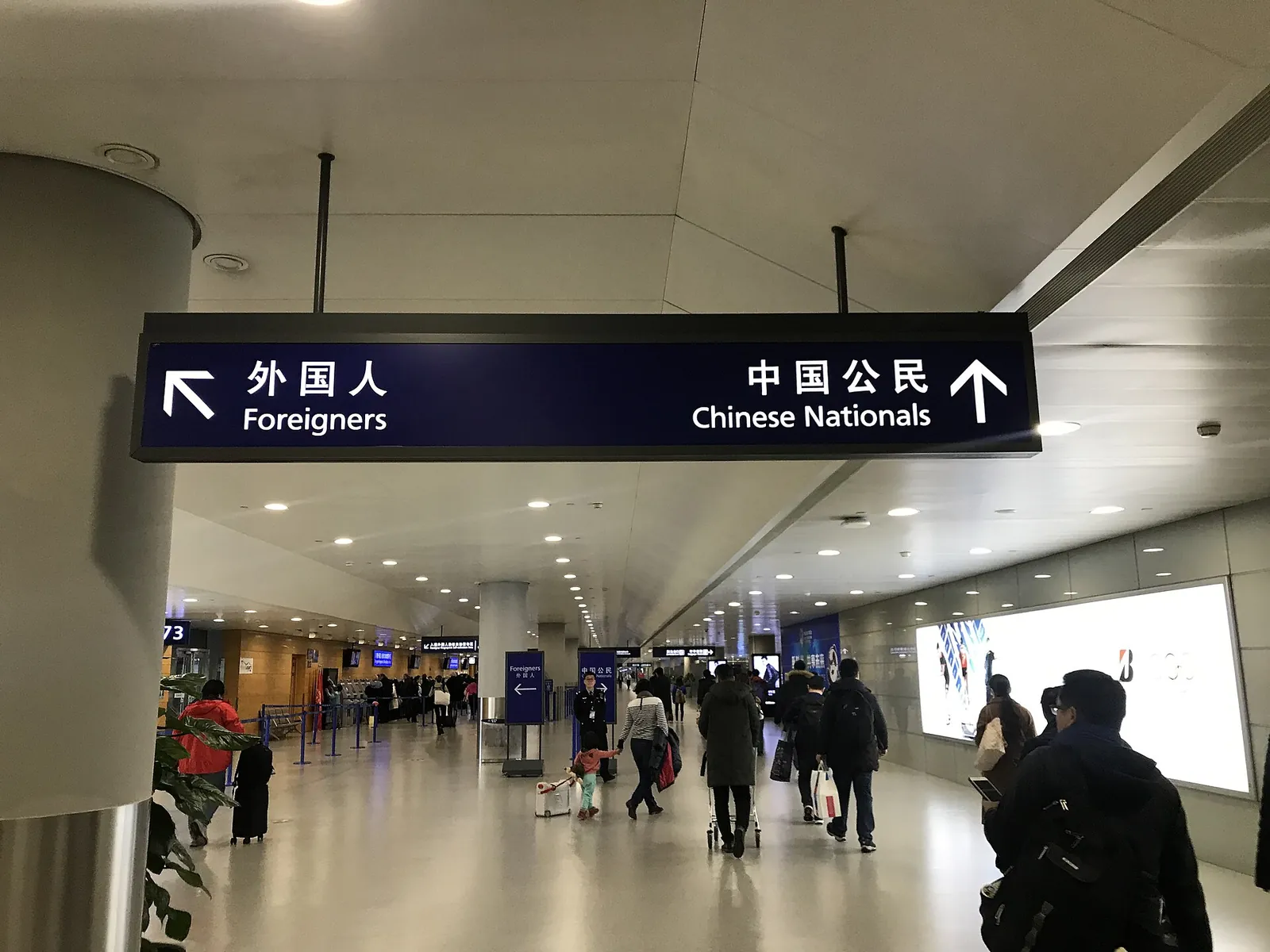
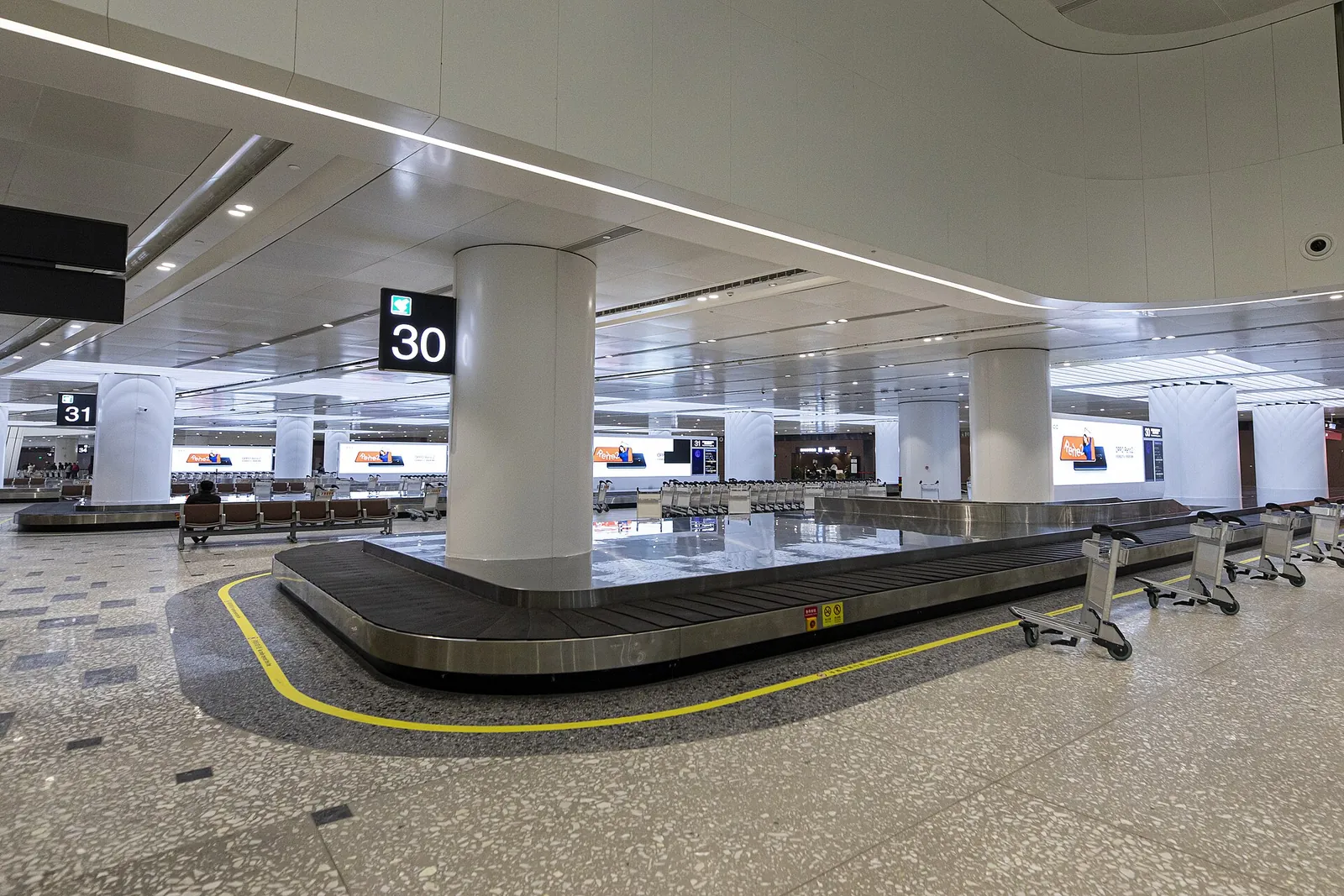
At the airport the order is arrival card, immigration, baggage, then customs. Fill in the arrival card online before you fly, or by QR code or on paper at the port. At the immigration desk, hand over your passport and keep your hotel booking and onward ticket to hand; the Chinese embassy recommends them as proof of your purpose and names no funds amount. The NIA’s visitor guide says foreigners aged 14 to 70 give their fingerprints on entry. If you are using the 240-hour rule, ask here for the temporary-entry permission and fill in the arrival card for temporary-entry foreigners. Then collect your bags and walk through the red or green customs channel.
The arrival card is free. The online channels are the NIA website, the NIA 12367 app and the WeChat or Alipay mini-programme; at the port, smart devices are available as well as QR codes and paper cards. Give the address where you will stay, and for a hotel its full address. The NIA warns that overseas websites charging a fee for the card are fraudulent. Permanent residents, group-visa travellers and a few other groups are exempt, but an independent visa-free traveller fills it in.
If you arrive overland from Hong Kong by high-speed train, you clear Hong Kong and mainland immigration and customs inside West Kowloon station before you board. The real-name check, security check, immigration and boarding normally take 30 to 45 minutes, and MTR asks passport holders to allow extra time, as at weekends and holidays; the real-name check closes 30 minutes before departure. The same visa-free rules and arrival card apply as at an airport, and West Kowloon is also a designated 240-hour port. A side trip to Hong Kong or Macau means a new entry when you come back, and China sets no limit on the number of entries under the waiver. Our transport guide covers the trains from West Kowloon.
China Customs limits renminbi cash to CNY 20,000 a person each time you enter or leave, and asks you to declare in writing foreign currency worth more than USD 5,000. Use the red channel if you must declare something or are unsure; otherwise the green channel. Plants, animals and their products must also be declared in writing.
Some medicines may be unavailable or not allowed into China; check the ingredients with the Chinese embassy or your doctor. No health declaration form has been needed since 1 November 2023, and travellers with symptoms such as fever should say so to customs. China Customs asks for a yellow-fever vaccination certificate from travellers arriving from yellow-fever areas.
Passport, papers and hotel registration
China’s own waiver FAQ asks for a passport valid for your intended stay; the 240-hour transit rule asks for at least three months. The British government advises six months’ validity from the date you arrive and two blank pages; the French government advises six months after you leave China. Plan for six months after departure and two blank pages.
Carry your original passport at all times; a printed copy is not accepted, and police carry out random checks.
Hotels register foreign guests with the police for you. If you stay somewhere that is not a hotel, you or your host must register within 24 hours of arrival. Online registration has been available nationwide since 21 September 2026 (NIA website, 12367 app, WeChat or Alipay) and counts the same as registering in person. Under a 2024 national circular, local authorities and booking platforms should not stop a hotel from taking foreign guests just because it lacks a special licence, but some properties still cannot register foreigners; check this when you book.
Staying safe: detention, protests, photos, drones and VPNs
The British government warns of a risk of arbitrary detention, and British and German advice both warn that exit bans can affect visitors, and the British government says they can last months or years. Avoid demonstrations, large gatherings and any political or activist activity; the French government warns of prison, expulsion and a ban on returning.
The French government advises against photographing military or official sites, or any place where photography is banned; some sites are not signposted, and places of worship can have their own rules. Drones are tightly regulated: declare one at customs and get registration and any local permission before you fly, or leave it at home.
German advice is to refrain from using VPN services. Plan on limited access to some overseas apps and keep offline maps and notes; our payments and apps guide covers what to set up before you fly.
Air pollution in big cities is often high to very high, especially in winter; check live readings. The British government says floods and storms are common from May to November, and typhoons hit southern and eastern coasts in the same season; transport can be disrupted, so see our best time guide when choosing months. Check your own government’s current travel advice before you book.
Practical questions
Do UK and EU/EEA citizens need a visa for China?
UK citizens and most EU/EEA citizens do not, for a stay of up to 30 days for tourism, business, visiting family or friends, exchange or transit, while the waiver lasts; Czech citizens need a visa, so check the NIA list for your passport.
Does the 30-day limit include the day I arrive?
No. The 30 days are counted from the day after you enter, so you can stay 30 calendar days after your arrival day.
Can I travel to China visa-free in 2027?
No extension beyond 31 December 2026 has been announced, so a 2027 trip needs a published extension or a visa.
Can a US citizen visit China without a visa?
Not under the 30-day waiver, and a visa on arrival is not available. Without a visa, a US citizen needs to qualify for 240-hour transit by flying on to a third country or region with a confirmed ticket. Our 7-day and 10-day routes fit inside 240 hours only if the last flight leaves Shanghai for a third country or region.
Do I have to register with the police myself?
Not in a hotel, which registers you. In a private home or other non-hotel stay, you or your host register within 24 hours of arrival, in person or online.
Is the arrival card compulsory, and does it cost anything?
Independent visa-free travellers fill it in, and it is free. Use the NIA channels, because websites charging a fee are fraudulent.
Keep planning your trip
First trip to China
How long a first China trip should be, then a week in Beijing, Xi’an and Shanghai: what to book first, the trains, entry, paying and the cost per day.
Read the guide
Payments and apps in China
How to pay in China with a foreign card on Alipay and Weixin Pay (WeChat Pay): fees, limits, cash, a passport SIM, and the map, ride and translation apps in English.
Read the guide
Getting around China
Book China's high-speed trains on 12306 with a foreign passport, decide when to fly, and get from the airports and stations into town.
Read the guide
Best time to visit China
When to go to China by region and month: spring and autumn for Beijing, Xi’an and Shanghai, rain and typhoon seasons, and the expected 2027 holiday peaks.
Read the guide
China trip cost
What 10 days in Beijing, Xi’an, Chengdu and Shanghai cost for two sharing a room: about CNY 7,360, 10,140 or 15,950 a person, with every meal, train and ticket.
Read the guideSources and checks before you travel
(27)
- Chinese Embassy in Timor-Leste: Frequently Asked Questions on Visa-free Entry into China (updated June 2026) ↗ — opens in a new tab
- Ministry of Foreign Affairs of China: Spokesperson's Remarks on Including Canada and the UK in the Visa-Free Program ↗ — opens in a new tab
- Ministry of Foreign Affairs of China: consular FAQ on the visa-free policy ↗ — opens in a new tab
- National Immigration Administration: List of Countries Covered by Unilateral Visa Exemption Policies ↗ — opens in a new tab
- National Immigration Administration: Visa-Free Transit Policies ↗ — opens in a new tab
- National Immigration Administration: Announcement on Implementing 10 New Measures (3 November 2025) ↗ — opens in a new tab
- Toronto consulate of China: Visa-Free Transit (240-hour) ports and permitted stay areas ↗ — opens in a new tab
- Shanghai government: Does my London-Shanghai-Hong Kong journey qualify for the 240-hr visa-free transit? ↗ — opens in a new tab
- National Immigration Administration: Beware of Fraudulent Websites for Arrival Card Filling ↗ — opens in a new tab
- National Immigration Administration: A Welcome Guide to China (English, 2022 edition), Entry-Exit Border Inspection for Foreigners ↗ — opens in a new tab
- National Immigration Administration: Notice No. 7 of 2026 on accommodation registration ↗ — opens in a new tab
- Shanghai government, reporting China Daily: China to facilitate accommodation for foreign travelers (29 July 2024) ↗ — opens in a new tab
- Chinese Consulate General in Chicago: visa FAQ ↗ — opens in a new tab
- Chinese Embassy in the UK: Part One, Visa for China (Mainland only) ↗ — opens in a new tab
- Chinese Embassy in the UK: Part Two, How to Apply for a Visa for China (Mainland only) ↗ — opens in a new tab
- GOV.UK Foreign Office: China travel advice, entry requirements ↗ — opens in a new tab
- GOV.UK Foreign Office: China travel advice, safety and security ↗ — opens in a new tab
- GOV.UK Foreign Office: China travel advice, health ↗ — opens in a new tab
- Auswaertiges Amt: China, Reise- und Sicherheitshinweise ↗ — opens in a new tab
- France Diplomatie: Chine, conseils aux voyageurs, entree et sejour ↗ — opens in a new tab
- France Diplomatie: Chine, conseils aux voyageurs, informations utiles ↗ — opens in a new tab
- China Customs (Shantou Customs): service guide for passenger baggage control and quarantine (June 2026, in Chinese) ↗ — opens in a new tab
- Ministry of Commerce: General Administration of Customs Order No. 276 (2025) ↗ — opens in a new tab
- Government of China: China drops health declaration requirements for cross-border travelers ↗ — opens in a new tab
- China Customs: entry and exit health quarantine service guide ↗ — opens in a new tab
- MTR High Speed: Departure process at West Kowloon ↗ — opens in a new tab
- Hong Kong government press release: HKSAR and the Mainland signed the Co-operation Arrangement for the XRL co-location arrangement (18 November 2017) ↗ — opens in a new tab
Reference sources for the version dated 3 November 2026. Confirm opening times, access, transport and conditions for your travel dates.
Photo credits
(4)
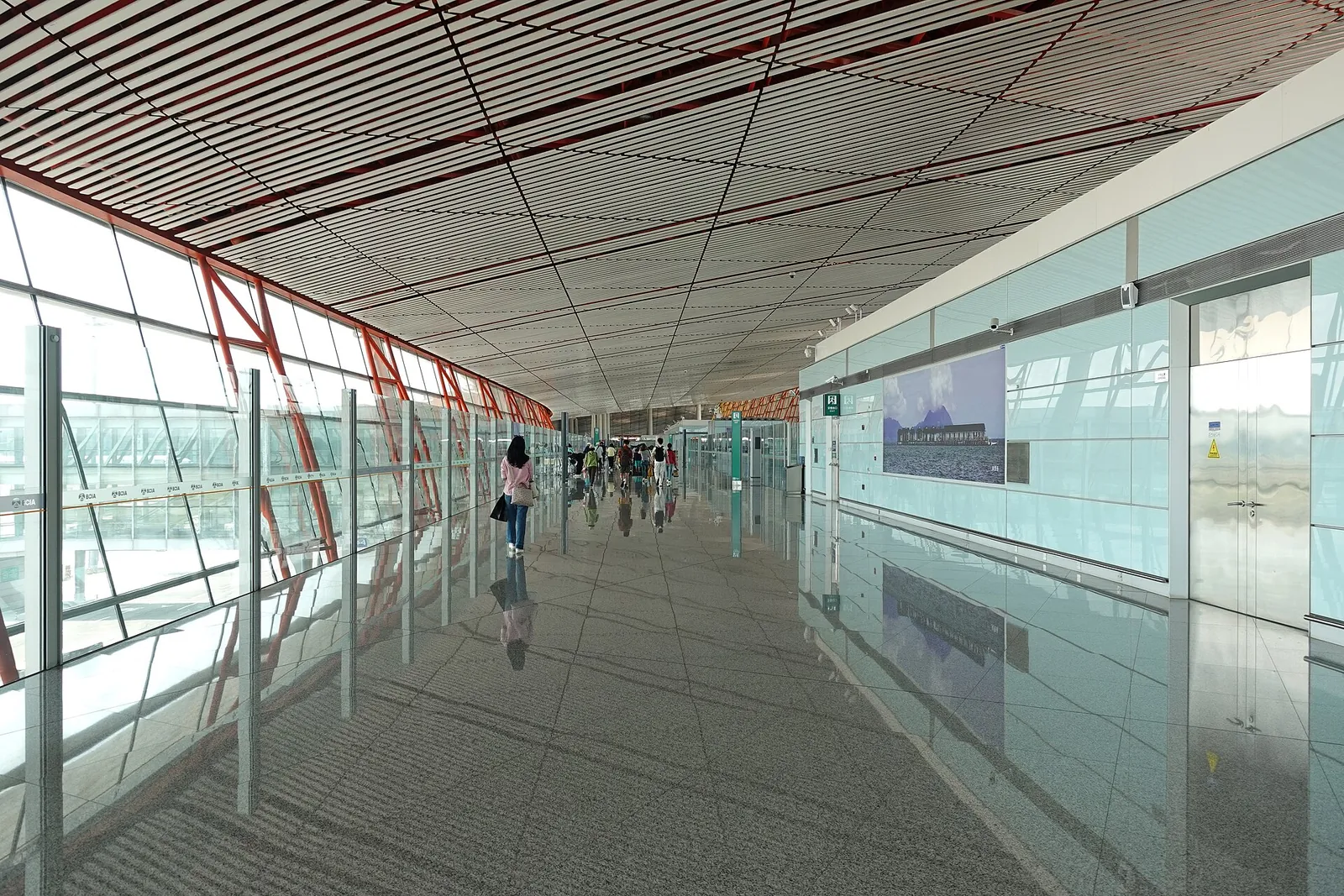
The international arrivals corridor of Terminal 3E at Beijing Capital International Airport. Capital and Daxing are Beijing’s two designated ports for visa-free transit.
Photograph: 颐园居 — opens in a new tab · CC BY-SA 4.0 — opens in a new tab
Changes: Resized and converted to WebP; displayed with responsive crops. · Original photograph and licence details ↗ — opens in a new tab
Signs at Shanghai Pudong International Airport Terminal 2 split the immigration queues: foreigners to the left, Chinese nationals straight on.
Photograph: MNXANL — opens in a new tab · CC BY-SA 4.0 — opens in a new tab
Changes: Resized and converted to WebP; displayed with responsive crops. · Original photograph and licence details ↗ — opens in a new tab
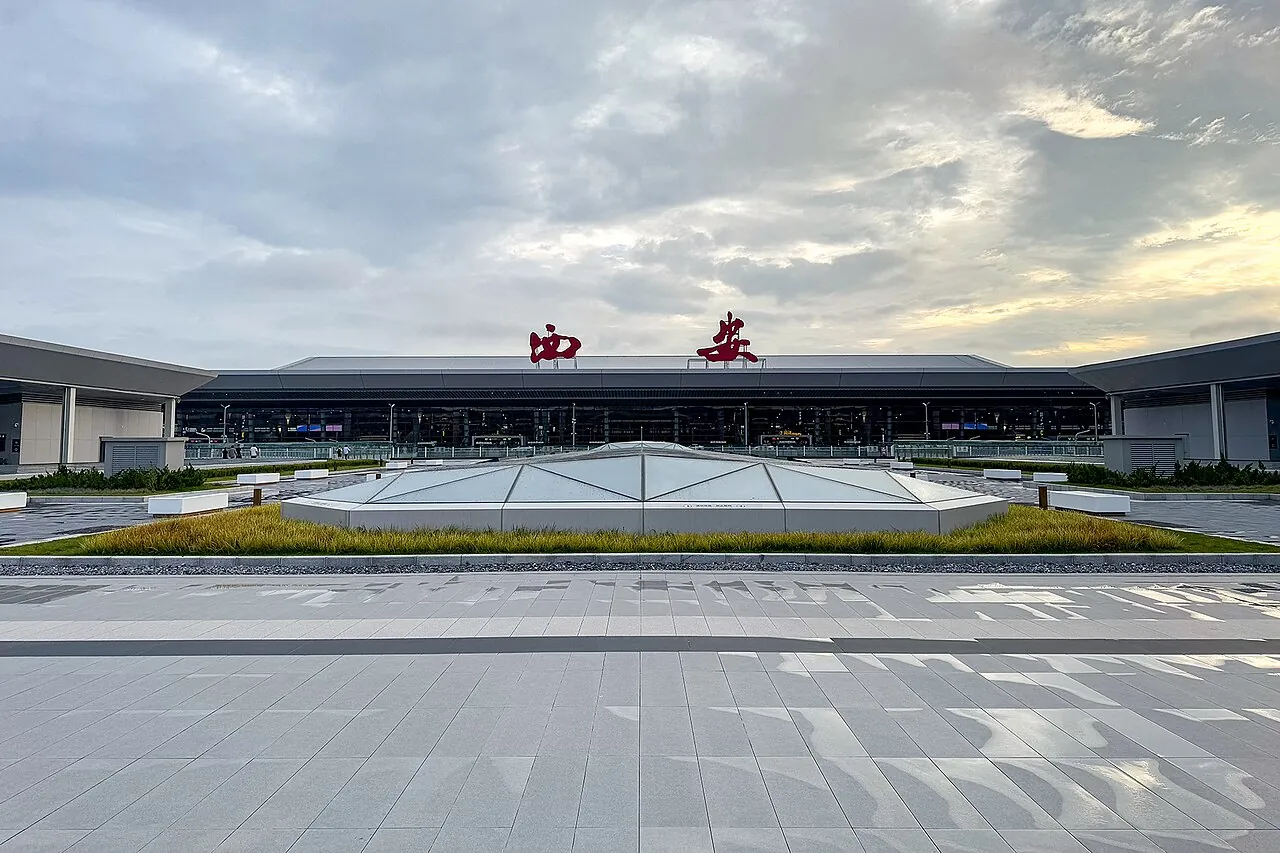
Terminal 5 at Xi’an Xianyang International Airport, photographed in September 2025. Xianyang is Shaanxi’s designated port for visa-free transit.
Photograph: Windmemories — opens in a new tab · CC BY-SA 4.0 — opens in a new tab
Changes: Resized and converted to WebP; displayed with responsive crops. · Original photograph and licence details ↗ — opens in a new tab
A baggage reclaim belt at Beijing Daxing International Airport. On an international arrival you collect your bags after immigration and before the customs channels.
Photograph: Arne Müseler — opens in a new tab · CC BY-SA 3.0 de — opens in a new tab
Changes: Resized and converted to WebP; displayed with responsive crops. · Original photograph and licence details ↗ — opens in a new tab