Beijing in four days: Forbidden City and Temple of Heaven
Beijing is a city of walls, axes and gates, and most of what a first visitor wants sits inside the old imperial plan: the Forbidden City, the Temple of Heaven, the lakeside parks and the hutong lanes in between, with the Summer Palace a metro ride out to the north-west. The difficulty is not choosing sights but ordering them. Several need a named, passport-based reservation, several close one day a week, and the opening hours change on 1 November. Book the palace a week ahead, keep the ticket-free hutong day for whichever date falls on a Monday, and the rest of the city falls into place around it.
In this guide
Find the location ↗ — opens in a new tabThe short answer
Book three nights around Wangfujing or Nanluoguxiang and reserve the Forbidden City first: tickets open seven days ahead at 20:00 China time and are sold only against your passport. Tiananmen Square needs its own reservation, and the palace, the Temple of Heaven monuments and the Summer Palace inner sites close on Mondays. The Forbidden City costs CNY 60 from April to October (CNY 40 from November). Two adults at mid-range prices spend about CNY 5,900 on the ground for four days, CNY 2,950 each, before flights.
- Suggested time
- 4 days / 3 nights
- Where to stay
- Central Beijing, around Wangfujing or Nanluoguxiang
- Season and timing
- The palace and parks use peak hours and prices from 1 April to 31 October and switch to shorter days and lower tickets on 1 November. Air pollution in big cities is often high to very high, especially in winter; check live readings. Demand is heaviest around 1 May and 1 October.
Three nights in the old city
Stay inside the old city, on the east side where the Forbidden City, Wangfujing and the hutongs are close together. Wangfujing puts the palace and Tiananmen Square within reach on foot or by a short metro ride, with plenty of hotels at every price. Nanluoguxiang is the quieter choice: a chessboard of hutong lanes, a metro station of the same name on line 6, and the Drum Tower and the Shichahai lakes a short walk away. A mid-range double costs about CNY 850 a night in either area (about CNY 600 at budget level, CNY 1,300 for comfort), going by the published rate cards of international hotel chains. Either works for three nights, and neither needs a hotel change.
Hotels register foreign guests with the police for you, but not every property can register foreigners, so confirm with yours before you book.
Tiananmen Square and the Forbidden City
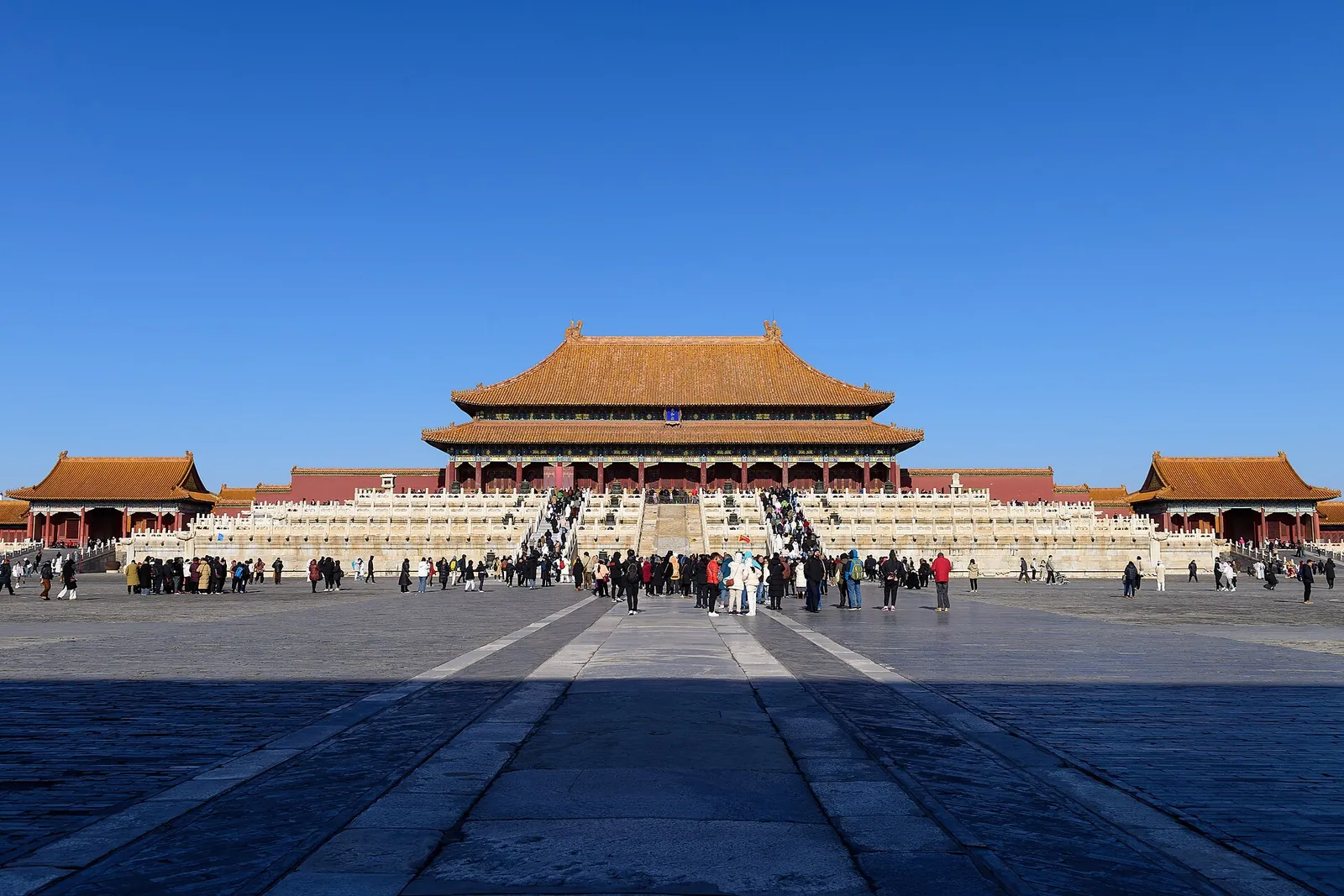
Start with the longest axis in the city. Tiananmen Square is the open space in front of the palace; beyond Tiananmen Gate the Forbidden City runs north through courtyards of red walls and yellow-tiled roofs. The outer court centres on the Hall of Supreme Harmony, the largest hall in the palace: first completed in 1420 and in its present form since a rebuilding in 1695, it stands 35 metres high with its three-tiered white marble terrace, and Ming and Qing emperors were enthroned and received the court there. Beyond the Gate of Heavenly Purity lies the inner court, the living quarters of the emperors and empresses. Allow a full morning for the main halls and the two paid galleries, and the whole day if you also want the Treasure Gallery and the Clocks Gallery without hurrying.
The Palace Museum sells no same-day tickets. Tickets, including the Treasure and Clocks galleries, go on sale seven days before your visit at 20:00 China time, are valid only on that day, and are booked on the official ticket site or the museum’s mini-programme; the museum says it has authorised no third party to sell them. Visitors from outside mainland China book and enter with a passport, one ticket per passport per day, and you must take that original passport to the gate. British government advice is to carry it at all times, not only at the palace: police carry out random checks and do not accept printed copies. You choose a morning or afternoon session when you book: the morning slot admits you until 12:00 at the latest and the afternoon slot from 11:00. The Meridian Gate (Wumen) is the only entrance; you leave by the Gate of Divine Might (Shenwumen) or the Donghua Gate.
The palace is closed every Monday except statutory holidays. From 1 April to 31 October it is open 08:30 to 17:00 with the last admission at 16:00 (the galleries admit until 16:10); from 1 November to 31 March it closes at 16:30 with the last admission at 15:30 (galleries 15:40). The ticket is CNY 60 in the peak season and CNY 40 in the low season, and each gallery is a further CNY 10. The Hall of Martial Valour (Wuying Hall) closed for conservation works from 19 October 2026, with no reopening date announced. Cancel a booking you cannot use before 24:00 on the day before; a cancellation on the day itself still counts as a missed visit, and three missed visits within 180 days block your bookings for 60 days.
- Tiananmen Square needs a real-name reservation one to seven days ahead, using the Tiananmen Square Reservation mini-programme inside Weixin (WeChat). The web portal does not accept non-Chinese phone numbers, but someone else can book for you. One order covers up to seven people, including up to four adults, and each person’s name and passport number is entered. Reserve the square for the day you plan to enter and walk to the palace’s Meridian Gate from there; the route from Tiananmen Gate to the Meridian Gate runs one way, south to north, and is closed on Mondays.
- The flag-raising ceremony is held on the square every day at sunrise, and the flag is lowered at sunset. Your Tiananmen Square reservation for that date is what admits you; without one you cannot attend.
The Temple of Heaven, the hutongs and 798
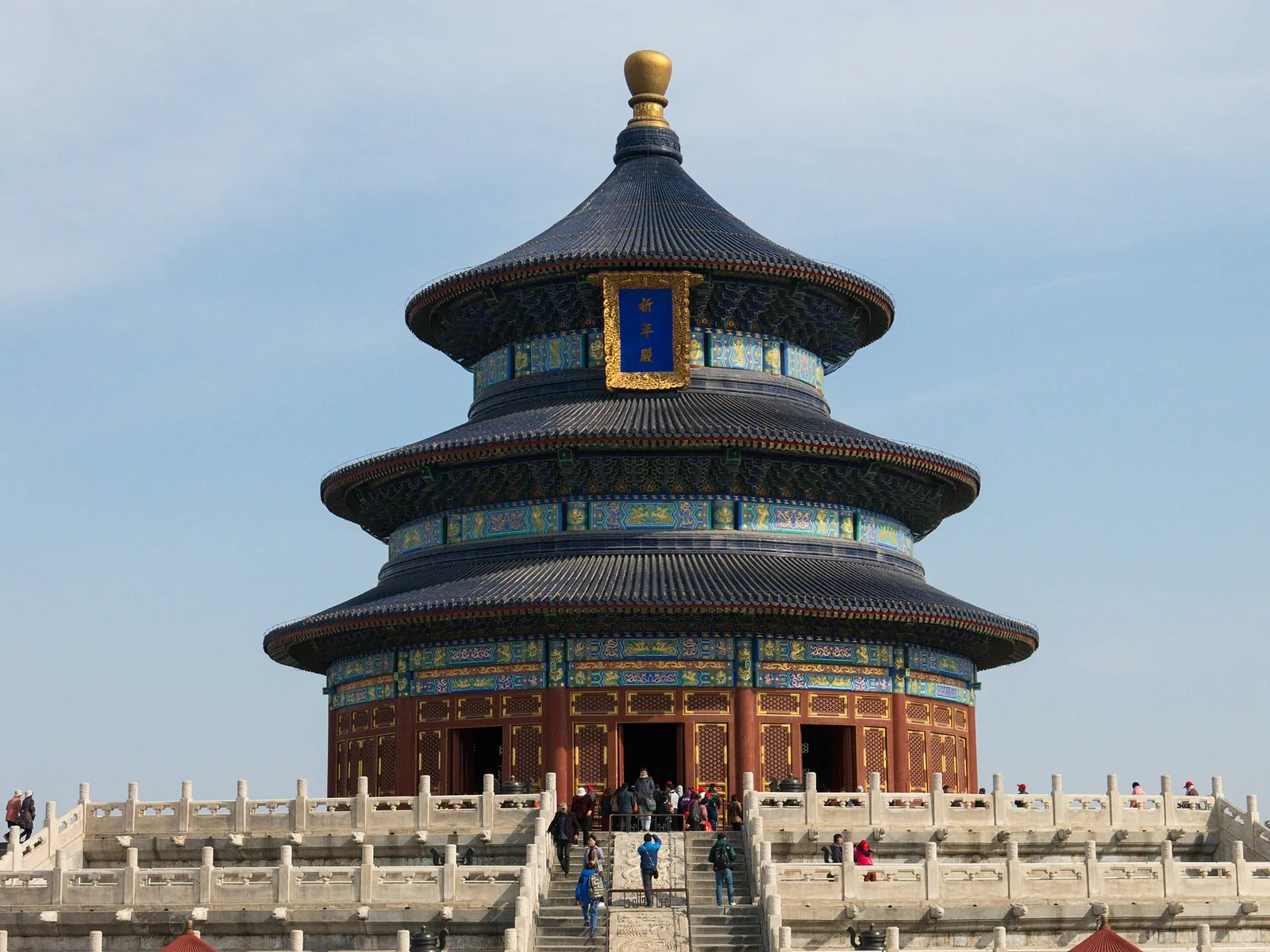
The Temple of Heaven, the last morning in the plan below, is where Ming and Qing emperors offered sacrifices to heaven for a good harvest. The park covers 273 hectares and is laid out with a semicircular north and square south, reflecting the belief that heaven is round and earth square. The Hall of Prayer for Good Harvests, built in 1420, is 38.2 metres high and 24.2 metres across and is the only surviving ancient Mingtang-style building; the Circular Mound Altar repeats the number nine in its stairs and slabs, and the Echo Wall encircles the Imperial Vault of Heaven.
The park gates are open 06:00 to 22:00 from April to October and 06:30 to 22:00 from November to March, with the last entry at 21:00. The monuments, including the Hall of Prayer, the Circular Mound Altar and the Echo Wall, open 08:00 to 18:00 (last entry 17:30) in the peak season and 08:00 to 17:00 (last entry 16:30) in the low season, and are closed on Mondays except statutory holidays. The park ticket is CNY 15 (CNY 10 from November) and the combined ticket CNY 34 (CNY 28). The Hall of Prayer, the Echo Wall and the Circular Mound Altar cost CNY 20 on their own. Foreign visitors can book with a passport on the Temple of Heaven Official Ticketing Platform account on Weixin.
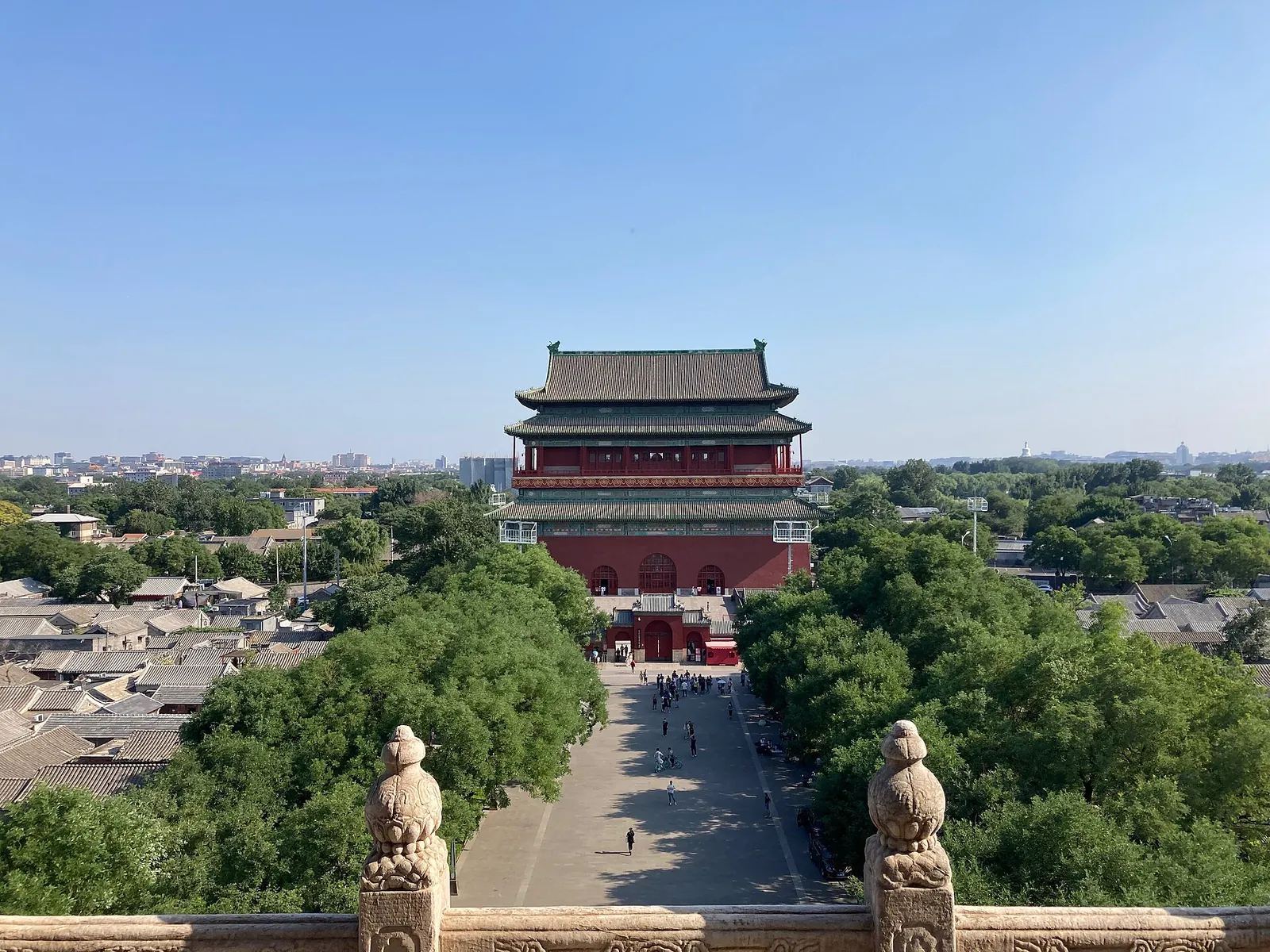
Give day 2 to the hutongs, the lanes of courtyard houses that once formed the heart of the capital. Start at Nanluoguxiang, an 800-metre lane of restored and traditional houses, free to walk and best on foot in the morning, and follow it north to Gulou East Street. Turn left for the Drum and Bell Towers, which stand one behind the other on the city’s north–south axis; seen from the square between them, they cost nothing.
In the afternoon take the metro out to the 798 Art District (Jiangtai or Wangjing South on line 14, Gaojiayuan on line 12). It was built in the 1950s as the North China Wireless Equipment Joint Factory, and its Bauhaus-style workshops, with their serrated roofs and high arched ceilings, have held galleries since the early 2000s; at the artists’ request, the Maoist slogans on the arches were kept. 798 Space sits at the centre of the old Factory 798, and UCCA Center for Contemporary Art, the most visited venue, fills one of the largest factory halls. More than 600 galleries, museums, studios and design businesses from 19 countries and regions now share the site; allow three to four hours. The district is open all day and needs no reservation to enter; it has free as well as paid exhibitions, listed on its mini-programme, and a few need booking. Galleries usually keep 10:00 to 18:00 or 11:00 to 19:00; some exhibitions close on Mondays, but the grounds stay open.
Come back to the Drum Tower for the evening. Just south of it, Yandai Xiejie, a short, crooked hutong named after the tobacco pipes once sold there, runs past small shops and cafés to the Ming-dynasty Yinding Bridge, where Qianhai meets Houhai. These two lakes, part of the Back Lakes (Shichahai), were dug in the 14th century as a harbour for the Grand Canal barges that carried goods to the emperor, and the mansions of princes still stand along their shores. After dark the banks of Houhai fill with people eating and drinking in the bars, cafés and restaurants by the water, which makes it a good place for dinner on day 2.
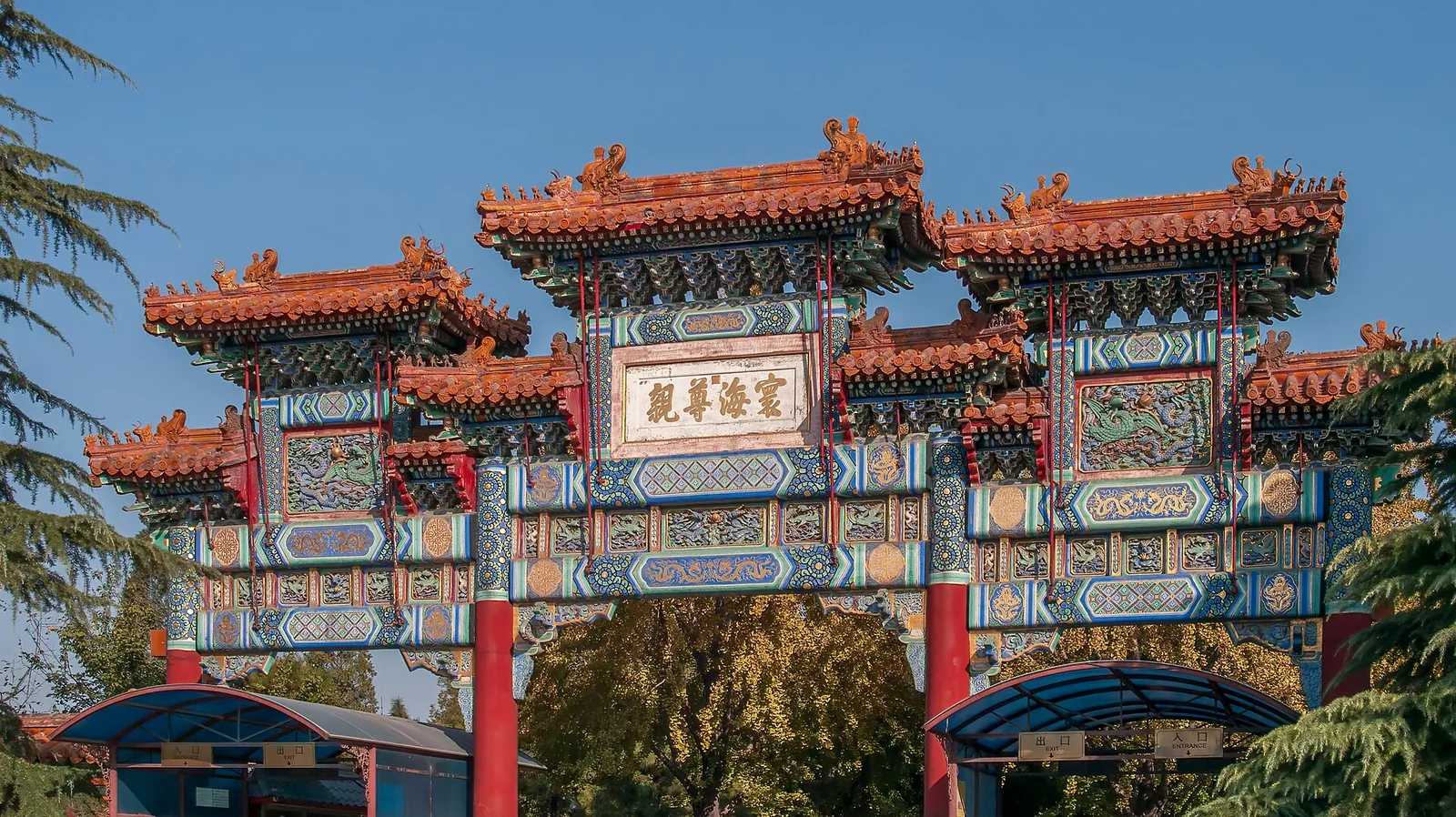
The Lama Temple (Yonghegong), the optional last stop on day 4, began as Prince Yinzhen’s mansion in 1694 and became a Tibetan Buddhist monastery in 1744. Its halls follow a central axis of seven courtyards to the 25-metre Wanfu Pavilion, whose standing Maitreya Buddha was carved from a single white sandalwood tree and rises 18 metres above the floor. Admission is CNY 25, and the published hours are 09:00 to 17:00 from April to October and 09:00 to 16:30 from November to March. Tickets are sold through the temple’s official Weixin account, “雍和宫游客信众服务” (Yonghegong visitor service); check it before you go. Yonghegong station, on metro lines 2 and 5, is at the gate; line 5 also serves Tiantandongmen, the station for the Temple of Heaven.
The Summer Palace and the imperial parks
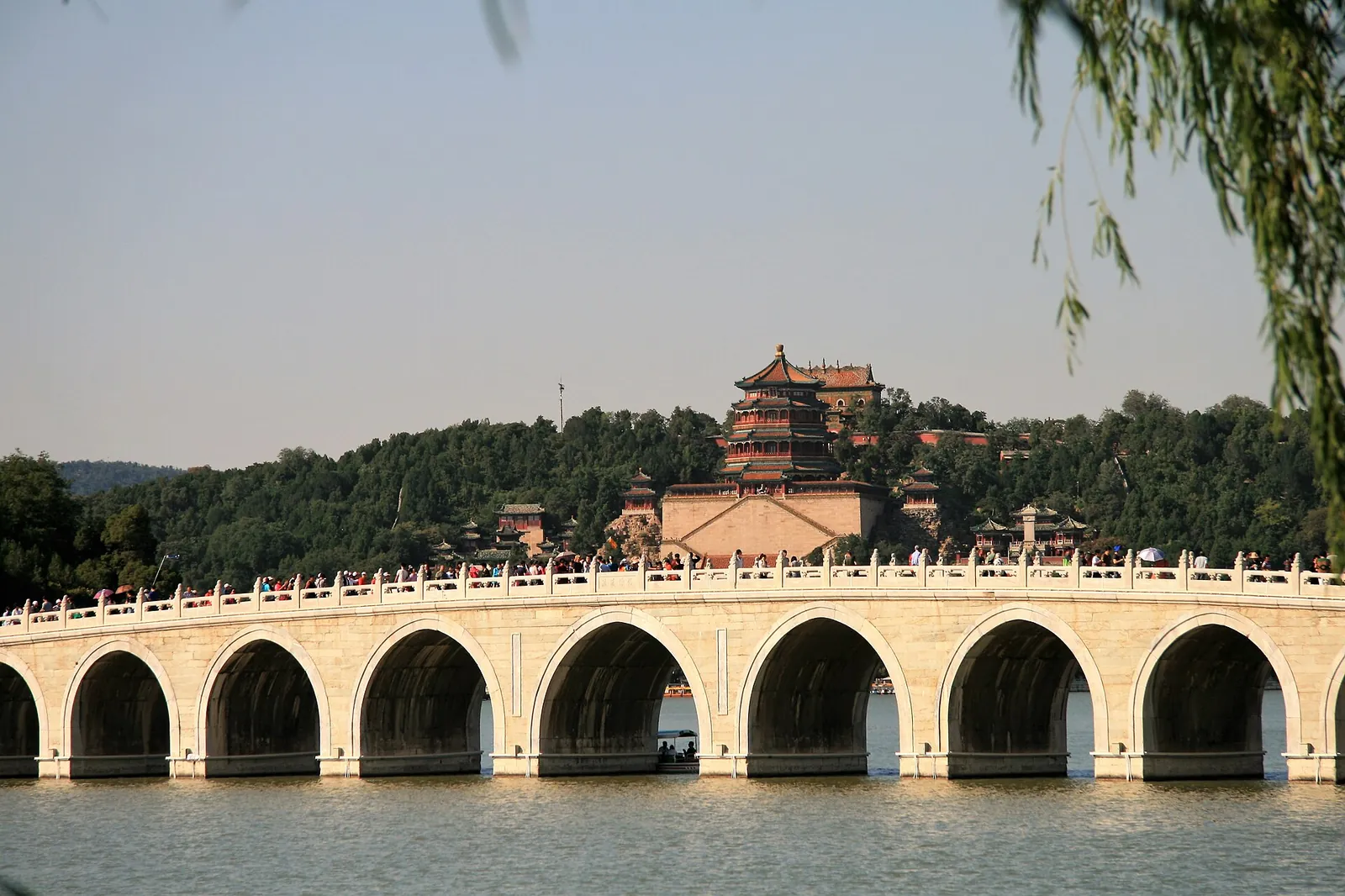
Give day three to the Summer Palace, an imperial garden on the north-western edge of the city, about three quarters of it water, shaped by Longevity Hill and Kunming Lake. The Tower of Buddhist Incense, 36.44 metres high on a 20-metre stone base, is the centrepiece of the hill. Below it the Long Corridor follows the shore for 728 metres, 273 bays with more than 14,000 paintings on its beams, the longest covered walkway in a Chinese classical garden. Kunming Lake covers more than 200 hectares, and the Seventeen-Arch Bridge, built in 1750 and over 150 metres long, links its east shore to South Lake Island; it is the longest surviving bridge in China’s imperial gardens.
From April to October the park is open 06:00 to 20:00 (last entry 19:00), and from November 06:30 to 19:00 (last entry 18:00). The inner sites, including the Tower of Buddhist Incense, Dehe Garden, Suzhou Street and the Summer Palace Museum, open 08:00 to 18:00 (last entry 17:30) in the peak season and 08:30 to 17:00 (last entry 16:30) from November, and are closed on Mondays except key holidays. The park ticket is CNY 30 and the combined ticket, which adds the inner sites, CNY 60; from November they are CNY 20 and CNY 50. Bought separately, the inner sites cost CNY 5 for Dehe Garden, CNY 10 for the Tower of Buddhist Incense, CNY 10 for Suzhou Street and CNY 20 for the museum. Foreign visitors can book with a passport through the park’s official Weixin account, “Summer Palace”. Boats on the lake run on eleven routes at CNY 30 to 40 one way, and stop in strong wind or heavy rain. The East Gate is served by Xiyuan station (lines 4 and 16) and the North Gate by Beigongmen station (line 4).
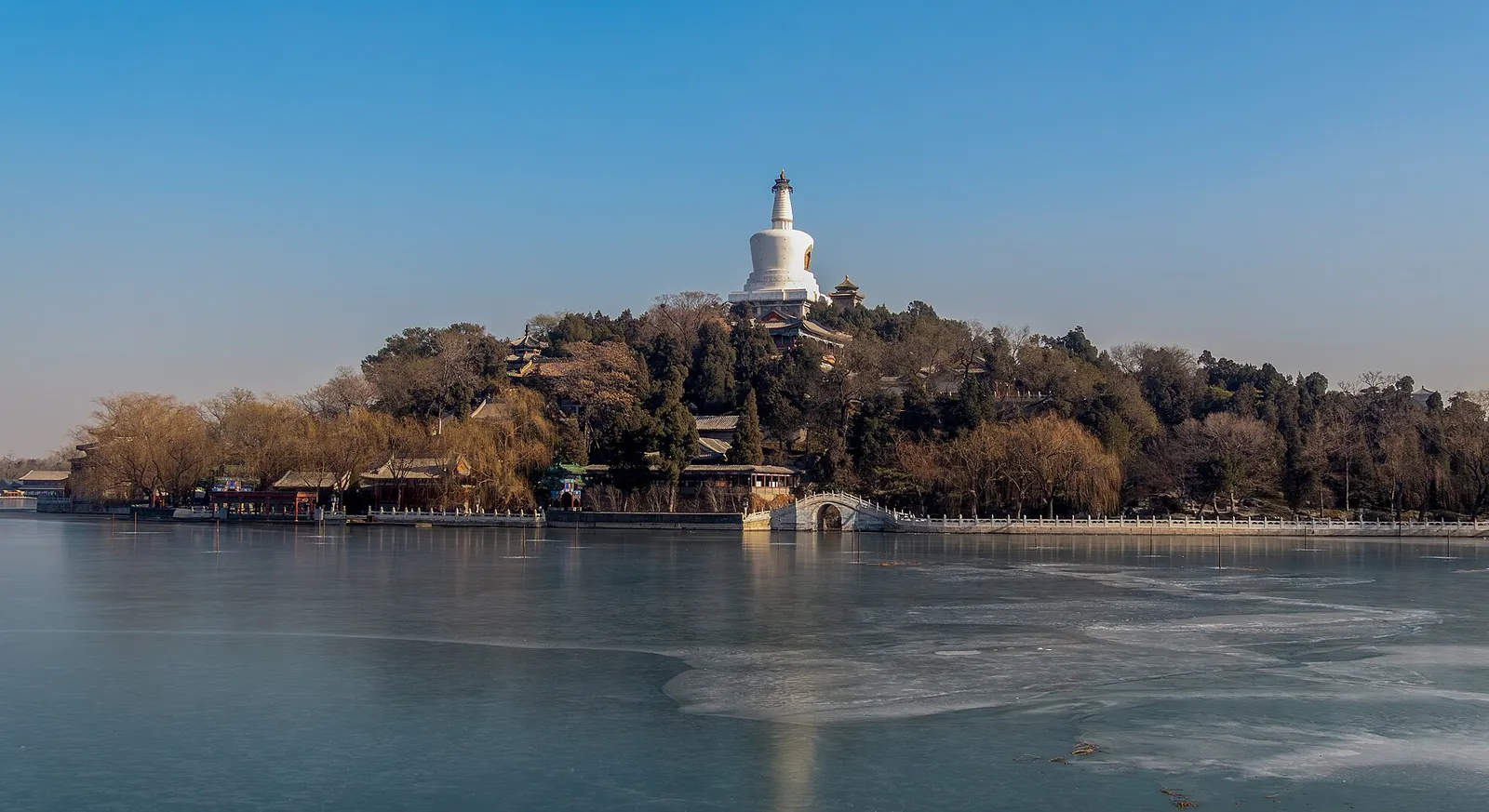
If you have a spare hour or two, two parks sit on the central axis next to the palace. Jingshan Park has the Wanchun Pavilion, the highest point on the axis, with a panoramic view of the Forbidden City; the ticket is CNY 2 (CNY 10 from 14 July to mid-August). Beihai Park has the White Pagoda on Jade Island; admission is CNY 10, or CNY 20 with the scenic spots (CNY 5 and CNY 15 from November), and the scenic spots except the Round City close on Mondays. Both open 06:00 to 21:00 from April to October and 06:30 to 20:00 from November. Foreign visitors must reserve by telephone at least a day ahead, between 09:00 and 16:00 Beijing time, giving name, nationality and passport number: Jingshan on +86 10 6605 5431, Beihai on +86 10 6403 7972. You can make the call before you fly. On the day, buy the ticket at the south-gate information desk with the passport you reserved with; neither park sells on the spot to foreign visitors without a reservation.
Four days in order
Day 2 needs no ticket and no booking, so whichever of your four days falls on a Monday, swap it with day 2, and book the palace and Tiananmen Square for the new date. The Great Wall at Mutianyu is open every day too, so it can take day 2’s place or fill a fourth night: the official bus leaves the Qianmen transport hub between 07:00 and 11:00 and costs CNY 80 return, and admission is CNY 45 on a passport ticket booked with the scenic area. For two, that adds CNY 250 to the costs below, or about CNY 560 with the shuttle and a cable-car return; our Great Wall guide has the routes and timings.
- Day 1: Tiananmen Square and the Forbidden City. Arrive, settle in and spend the morning or afternoon session in the palace; if you land that morning, book the afternoon session, which admits you from 11:00. If you reserved Jingshan Park by phone, leave by the Gate of Divine Might and climb to the Wanchun Pavilion for the view back over the palace roofs. In the evening, share a Peking duck near Qianmen.
- Day 2: the hutongs, 798 and the lakes. A cup of mung bean milk near Nanluoguxiang, then the lane north to the Drum and Bell Towers; zhajiangmian in Fangzhuanchang Hutong for lunch; the afternoon among the factory halls and galleries of 798; and back to Yandai Xiejie, Yinding Bridge and the Houhai shore for the evening and dinner by the water.
- Day 3: Summer Palace. A full day by metro: Longevity Hill, the Long Corridor and a boat or a walk to the Seventeen-Arch Bridge. In the evening, instant-boiled mutton at Dong Lai Shun on Wangfujing or Yi Tiao Long on Qianmen Street; from Qianmen, Dashilar (Dashilanr), a 276-metre shopping street, is a short walk.
- Day 4: Temple of Heaven and departure. The Temple of Heaven monuments when they open at 08:00. Then the Lama Temple, if it is open: take line 5 north to Yonghegong, where the temple opens at 09:00; otherwise walk the rest of the Temple of Heaven park, or climb Jingshan if you reserved it by phone. The Capital Airport Express leaves from Dongzhimen, on line 2 like Yonghegong station.
What to eat and where to look
Peking duck
Roast duck carved at the table and eaten in thin pancakes with sweet bean sauce and spring onion. Quanjude, founded in 1864, is known for its hung-oven roasting.
- Where to look
- Liqun Roast Duck in Beixiangfeng Hutong near Qianmen, or Quanjude’s Qianmen branch.
- Fit it into your day
- One shared dinner on the evening of day 1, near Qianmen; a duck is a meal for several, not one portion each.
Zhajiangmian
Hand-made noodles tossed with fried soybean paste and minced pork, served with a plate of shredded cucumber, bean sprouts and other vegetables. It began as a Beijing speciality and later spread across China in many regional versions.
- Where to look
- No. 69 Fangzhuanchang Hutong Noodles, at No. 1 Fangzhuanchang Hutong near Nanluoguxiang, or Shunxinzhai.
- Fit it into your day
- Lunch on day 2, between the hutong walk and 798.
Mung bean milk (douzhi)
A grey-green, slightly sour and sweet drink made as a by-product of cellophane noodles. Many visitors find the taste unusual; Beijingers drink it especially in spring and winter.
- Where to look
- Old Beijing breakfast shops in the hutongs around Nanluoguxiang.
- Fit it into your day
- One small cup at breakfast on day 2, as a taste of old Beijing.
Instant-boiled mutton (shuan yangrou)
Thin slices of mutton dipped in a copper hotpot of plain water with spring onion, ginger and wolfberry, then in sesame paste. Most Beijingers eat it in winter, and Dong Lai Shun, which cooks it in copper pots over charcoal, is the first name that comes to mind.
- Where to look
- Dong Lai Shun at 198 Wangfujing Street, or Yi Tiao Long at 27 Qianmen Street.
- Fit it into your day
- A shared dinner on day 3, after the Summer Palace, best from late autumn onwards.
Airports, metro and getting around
Beijing has two international airports. Beijing Capital (PEK) is served by the Capital Airport Express from Terminals 2 and 3 to Sanyuanqiao (lines 10 and 12), Dongzhimen (lines 2 and 13) and Beixinqiao (line 5), the stop closest to Nanluoguxiang, for CNY 25 one way, about every 10 minutes. Trains leave Terminal 3 from 06:22 to 22:52 and Terminal 2 from 06:36 to 23:10. Beijing Daxing (PKX) has the Daxing Airport Express to Caoqiao, where you change to line 10 or 19; the fare is about CNY 35 for the full run to Caoqiao (business carriage CNY 50). After the last train, take a licensed taxi: it costs about CNY 200 a car from Daxing, an estimate from the city’s metered fare. Our transport guide covers both airports and the long-distance stations.
Within the city, the metro and walking link every sight above, and you buy metro tickets on the spot. Set up Weixin Pay (WeChat Pay) or Alipay and save addresses in Chinese before you leave; our payments and apps guide explains how.
What four days in Beijing cost
| Level | Per person, about CNY | For two, about CNY |
|---|---|---|
| Budget | 1,970 | 3,940 |
| Mid-range | 2,950 | 5,900 |
| Comfort | 4,950 | 9,900 |
These figures are for two adults sharing one private double for three nights in an ordinary autumn week outside the national holidays, with prices checked on 25 October 2026. It covers rooms, three meals and drinks a day, the airport links and local rides, the sights above, two SIMs and a 10% buffer. The figures assume visa-free entry. Our China trip cost guide prices a ten-day route the same way.
A London return to Beijing costs about GBP 650 to 850 a person (GBP 1,300 to 1,700 for two), an estimate. With it the four days come to about GBP 980 to 1,180 a person at mid-range (GBP 1,960 to 2,360 for two), GBP 870 to 1,070 at budget and GBP 1,200 to 1,400 at comfort, converted at the central parity rate published by the State Administration of Foreign Exchange for 23 October 2026 (GBP 1 = CNY 8.9749). Your bank or card will give a different rate.
- Rooms, about CNY 2,550 for two at mid-range. Three nights at about CNY 850 (budget CNY 600, comfort CNY 1,300), with no breakfast included.
- Food, about CNY 1,440 for two. About CNY 180 a person a day at typical noodle-shop and sit-down restaurant prices: about CNY 30 for breakfast, 60 for lunch, 70 for dinner and 20 for water and snacks (budget CNY 800 for two, comfort CNY 2,800).
- Getting around, about CNY 680 for two. This line assumes the dearer arrival: a taxi each way between Daxing (PKX) and the city at about CNY 200 a car, CNY 400 for the two of you. About CNY 280 of metro and taxi rides in the city. Fly in and out of Capital (PEK) on the Airport Express, as the airport FAQ suggests, and the two airport trips cost CNY 100 for two, CNY 300 less than this line. Budget travellers who take the airport trains spend about CNY 280 for two in total; comfort with private cars about CNY 1,600.
- Sights, about CNY 400 for two. Each person pays CNY 199: the Forbidden City CNY 60 with the Treasure and Clocks galleries at CNY 10 each, the Temple of Heaven combined ticket CNY 34, the Summer Palace combined ticket CNY 60 and the Lama Temple CNY 25. From November the palace, Temple of Heaven and Summer Palace tickets are CNY 36 a person cheaper.
- SIM and extras, about CNY 300 for two. About CNY 150 a person for a roughly 15-day data SIM, an estimate based on China Telecom’s published 15-day visitor card at CNY 125.
- Buffer, about CNY 540. Ten per cent of the subtotal of CNY 5,370.
Practical questions
How many nights should I spend in Beijing?
Three nights give four days: one for Tiananmen Square and the Forbidden City, one for the hutongs, the 798 Art District and the Shichahai lakes, one for the Summer Palace, and a last morning at the Temple of Heaven before your flight.
Do I need Weixin to book?
Not for the Forbidden City, which you can book with your passport on the museum’s official ticket website. You do for Tiananmen Square, because its web portal does not accept non-Chinese phone numbers, unless someone else books for you; the Temple of Heaven, the Summer Palace and the Lama Temple also sell through their official Weixin accounts. Jingshan and Beihai are booked by telephone instead. Have Weixin (WeChat) working before you fly.
Can I add the Great Wall?
Yes. Mutianyu is open every day, so it can replace day 2, the day without tickets, or take a fourth night; the day plan gives the bus, the admission and the extra cost for two. Our Great Wall guide compares Mutianyu, Badaling, Jinshanling and Simatai, with tickets, buses and the cost of the day.
Do I need a visa for Beijing?
Ordinary-passport holders from the United Kingdom, Germany, France, Italy, Spain, the Netherlands and the other countries listed in our entry guide can stay up to 30 days without a visa, counted from the day after you enter. The waiver is published until 31 December 2026. If the waiver is not extended, a 2027 trip needs a visa. US and Czech passports are not on this visa-free list; US and Czech citizens need a visa unless they qualify for the 240-hour transit rule. That rule needs an ordinary passport, a confirmed onward ticket with a date and seat to a third country or region, entry through one of 65 designated ports, and travel only within the permitted area (24 provinces, regions and municipalities); a return to where you started does not count.
Which Beijing airport should I use?
If you have the choice, fly into Capital (PEK): its Airport Express stops at Beixinqiao, the stop closest to Nanluoguxiang, with no change. From Daxing (PKX), the Daxing Airport Express ends at Caoqiao, where you change to line 10 or 19 for the centre.
Is Beijing safe for visitors?
Most visits pass without trouble, but the British government warns of a risk of arbitrary detention, and British and German advice both warn of exit bans, which the British government says can last months or years. Avoid demonstrations, large gatherings and any political or activist activity; the French government warns of prison, expulsion and a ban on returning. French advice also says not to photograph military or official sites, or any place where photography is banned (some sites are not signposted, and places of worship can have their own rules), and that in Beijing unregistered drones may not be used, carried or stored and every flight of a registered drone needs prior permission, so leave yours at home. German advice is to refrain from using VPN services; plan on limited access to some overseas apps and keep offline maps and notes. Check your own government’s current travel advice before you book.
Keep planning your trip
Great Wall
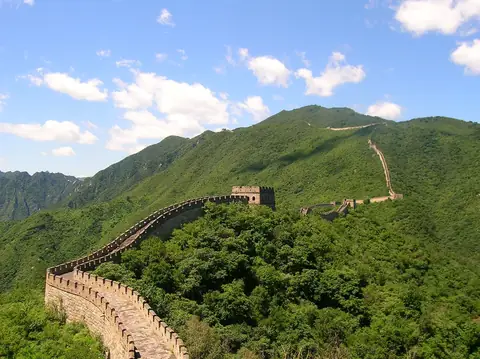
Which Great Wall section to visit from Beijing: Mutianyu, Badaling, Jinshanling or Simatai, with tickets, buses, trains, open sections and costs.
Read the guide
First trip to China
How long a first China trip should be, then a week in Beijing, Xi’an and Shanghai: what to book first, the trains, entry, paying and the cost per day.
Read the guide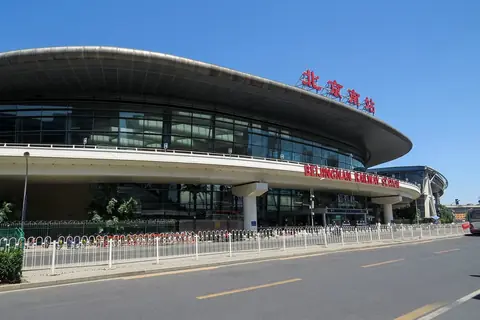
Getting around China
Book China's high-speed trains on 12306 with a foreign passport, decide when to fly, and get from the airports and stations into town.
Read the guide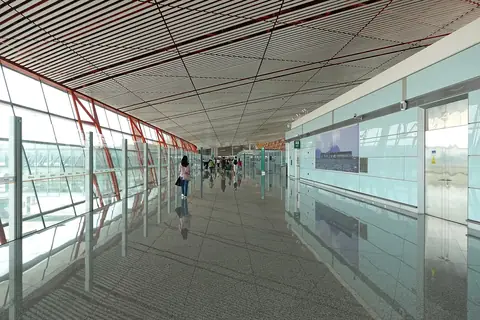
Entering China
Who can enter China visa-free for 30 days, when the waiver ends, how 240-hour transit works, and the arrival card, hotel registration, customs and safety rules.
Read the guide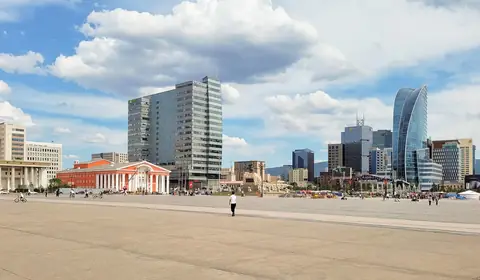
Ulaanbaatar
How many nights Mongolia's capital needs: Sükhbaatar Square, the Chinggis Khaan museum, Gandan and Choijin Lama temples, the Bogd Khan Palace, hotels and costs.
Read the guide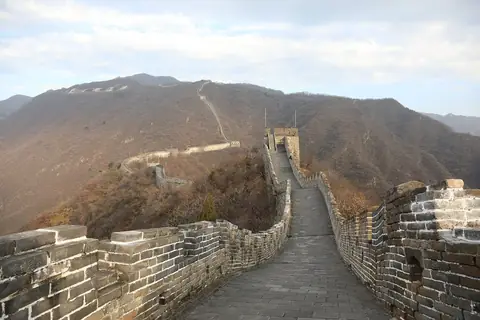
China in seven days
Seven days in China: two nights each in Beijing, Xi’an and Shanghai, the Great Wall, the Terracotta Army and two trains, with a budget for two.
Read the guideSources and checks before you travel
(44)
- Palace Museum: visit information ↗ — opens in a new tab
- Palace Museum: ticket booking ↗ — opens in a new tab
- Palace Museum: reservation notice ↗ — opens in a new tab
- Beijing government: Temple of Heaven ↗ — opens in a new tab
- Summer Palace: visit information ↗ — opens in a new tab
- Beijing government: Tian’anmen Square reservations ↗ — opens in a new tab
- Beijing government: Tian’anmen Square FAQ ↗ — opens in a new tab
- Beijing government: one-day tour in Beijing ↗ — opens in a new tab
- Beijing Tourism: Lama Temple ↗ — opens in a new tab
- Beijing Tourism (Chinese): Lama Temple ↗ — opens in a new tab
- Beijing Daily: Lama Temple notice, Spring Festival 2026 ↗ — opens in a new tab
- 798 Art District: visitor guide and introduction ↗ — opens in a new tab
- Beijing Tourism: Beijing 798 Art Zone ↗ — opens in a new tab
- Beijing Tourism: hutong routes ↗ — opens in a new tab
- Beijing Tourism: Houhai ↗ — opens in a new tab
- Mutianyu Great Wall: recommended transportation routes ↗ — opens in a new tab
- Beijing government: Mutianyu Great Wall ticket listing ↗ — opens in a new tab
- Beijing government: Nanluoguxiang ↗ — opens in a new tab
- Beijing government: Jingshan Park ↗ — opens in a new tab
- Beijing government: Beihai Park ↗ — opens in a new tab
- Beijing Capital International Airport: Airport Express ↗ — opens in a new tab
- Beijing Subway Daxing Airport Line: ticket rules ↗ — opens in a new tab
- Beijing key station area committee: Daxing Airport metro ↗ — opens in a new tab
- Beijing Tourism: Peking duck ↗ — opens in a new tab
- Beijing Tourism: Zha Jiang Mian ↗ — opens in a new tab
- Beijing government: Mung bean milk and zhajiangmian ↗ — opens in a new tab
- Palace Museum: Hall of Supreme Harmony ↗ — opens in a new tab
- Palace Museum: Gate of Heavenly Purity ↗ — opens in a new tab
- Beijing government: Summer Palace ↗ — opens in a new tab
- Summer Palace: Long Corridor ↗ — opens in a new tab
- Summer Palace: Seventeen-Arch Bridge ↗ — opens in a new tab
- Summer Palace: Kunming Lake ↗ — opens in a new tab
- Summer Palace: Tower of Buddhist Incense ↗ — opens in a new tab
- Beijing government: taxi fares ↗ — opens in a new tab
- Beijing Tourism: where to eat instant-boiled mutton ↗ — opens in a new tab
- Beijing Tourism: instant-boiled mutton ↗ — opens in a new tab
- National Immigration Administration: visa-free transit policies ↗ — opens in a new tab
- Chinese Embassy in Timor-Leste: visa-free FAQ ↗ — opens in a new tab
- Ministry of Foreign Affairs of China: visa-free FAQ ↗ — opens in a new tab
- UK government: China safety and security ↗ — opens in a new tab
- German Foreign Office: China safety ↗ — opens in a new tab
- French diplomacy: practical information for China ↗ — opens in a new tab
- State Administration of Foreign Exchange: central parity ↗ — opens in a new tab
- China Telecom: foreign-visitor card tariff ↗ — opens in a new tab
Reference sources for the version dated 26 October 2026. Confirm opening times, access, transport and conditions for your travel dates.
Photo credits
(6)
The Hall of Prayer for Good Harvests at the Temple of Heaven, built in 1420.
Photograph: Bernhard Wintersperger — opens in a new tab · CC BY 2.0 — opens in a new tab
Changes: Resized and converted to WebP; displayed with responsive crops. · Original photograph and licence details ↗ — opens in a new tab
The Hall of Supreme Harmony, the largest hall in the Forbidden City, seen along the palace's main axis.
Photograph: N509FZ — opens in a new tab · CC BY-SA 4.0 — opens in a new tab
Changes: Resized and converted to WebP; displayed with responsive crops. · Original photograph and licence details ↗ — opens in a new tab
The Seventeen-Arch Bridge on Kunming Lake, with Longevity Hill and the Tower of Buddhist Incense behind, at the Summer Palace.
Photograph: Luu — opens in a new tab · CC BY-SA 4.0 — opens in a new tab
Changes: Resized and converted to WebP; displayed with responsive crops. · Original photograph and licence details ↗ — opens in a new tab
The Drum Tower, seen from the neighbouring Bell Tower over the hutong roofs.
Photograph: Toadspike — opens in a new tab · CC BY-SA 4.0 — opens in a new tab
Changes: Resized and converted to WebP; displayed with responsive crops. · Original photograph and licence details ↗ — opens in a new tab
The White Pagoda on Jade Island, Beihai Park, across the lake in winter.
Photograph: Reinhold Möller Ermell — opens in a new tab · CC BY-SA 4.0 — opens in a new tab
Changes: Resized and converted to WebP; displayed with responsive crops. · Original photograph and licence details ↗ — opens in a new tab
A memorial archway in the forecourt of the Lama Temple (Yonghegong).
Photograph: Ermell — opens in a new tab · CC BY-SA 4.0 — opens in a new tab
Changes: Resized and converted to WebP; displayed with responsive crops. · Original photograph and licence details ↗ — opens in a new tab