Shanghai in four days: the Bund, Yu Garden, museums and Zhujiajiao
Shanghai rewards a first visit with contrast: the stone banks of the Bund facing the glass towers of Pudong, a Ming-era garden beside a shopping bazaar, plane-tree streets in the former French Concession, and a canal town an hour from the centre by metro. Most of it is linked by metro or on foot, and the river is at its best after dark, when both banks are lit.
In this guide
Find the location ↗ — opens in a new tabThe short answer
Book three nights in central Shanghai, around People’s Square or the former French Concession, for the Bund, Yu Garden, Pudong, Shanghai Museum East and a day in the water town of Zhujiajiao. Book the room first, then choose your tower and river-cruise tickets; the museum’s two interactive spaces need reservations. Yu Garden costs CNY 40 from April to June and September to November and closes on Mondays, and Zhujiajiao’s three paid sights cost CNY 60 together. Two adults at mid-range prices spend about CNY 6,910 on the ground for four days, CNY 3,450 each, before flights.
- Suggested time
- 4 days / 3 nights
- Where to stay
- Central Shanghai, around People’s Square and the Bund, or the former French Concession
- Season and timing
- Spring and autumn are Shanghai’s best seasons, March to May and September to November. The plum rain brings wet, changeable weather from mid-June to early July. The British government says floods and storms are common from May to November, and typhoons hit southern and eastern coasts in the same season; transport can be disrupted. Air pollution in big cities is often high to very high, especially in winter. Demand is heaviest around 1 May and 1 October.
Three nights in the middle of the city
For a first visit, sleep near People’s Square or the Bund. People’s Square is on metro lines 1, 2 and 8, the Bund and Yu Garden are a short ride east, and the museum, Hongqiao and both airports connect without a change of hotel. The alternative is the former French Concession in Xuhui and Jing’an: quieter, lined with plane trees, a good fit if you plan to spend evenings around Wukang Road. Either works for three nights.
Hotels register foreign guests with the police for you. Chinese policy says hotels should not turn foreign guests away for lacking a licence, but not every property can register foreigners, so confirm with the hotel before you book. If you stay somewhere that is not a hotel, you or your host must register within 24 hours of arrival; online registration has been available nationwide since 21 September 2026 and counts the same as registering in person.
Nanjing Road, the Bund, the river and Yu Garden
On the first evening, walk from People’s Square to the river along Nanjing Road East, a pedestrian shopping street where Lao Xiang Zhai, at No. 720, sells butterfly crackers (hudie su), Shanghai’s buttery take on the palmier. It ends at the Bund, so you reach the water as the lights come on, and it is an easy first outing after a long flight.
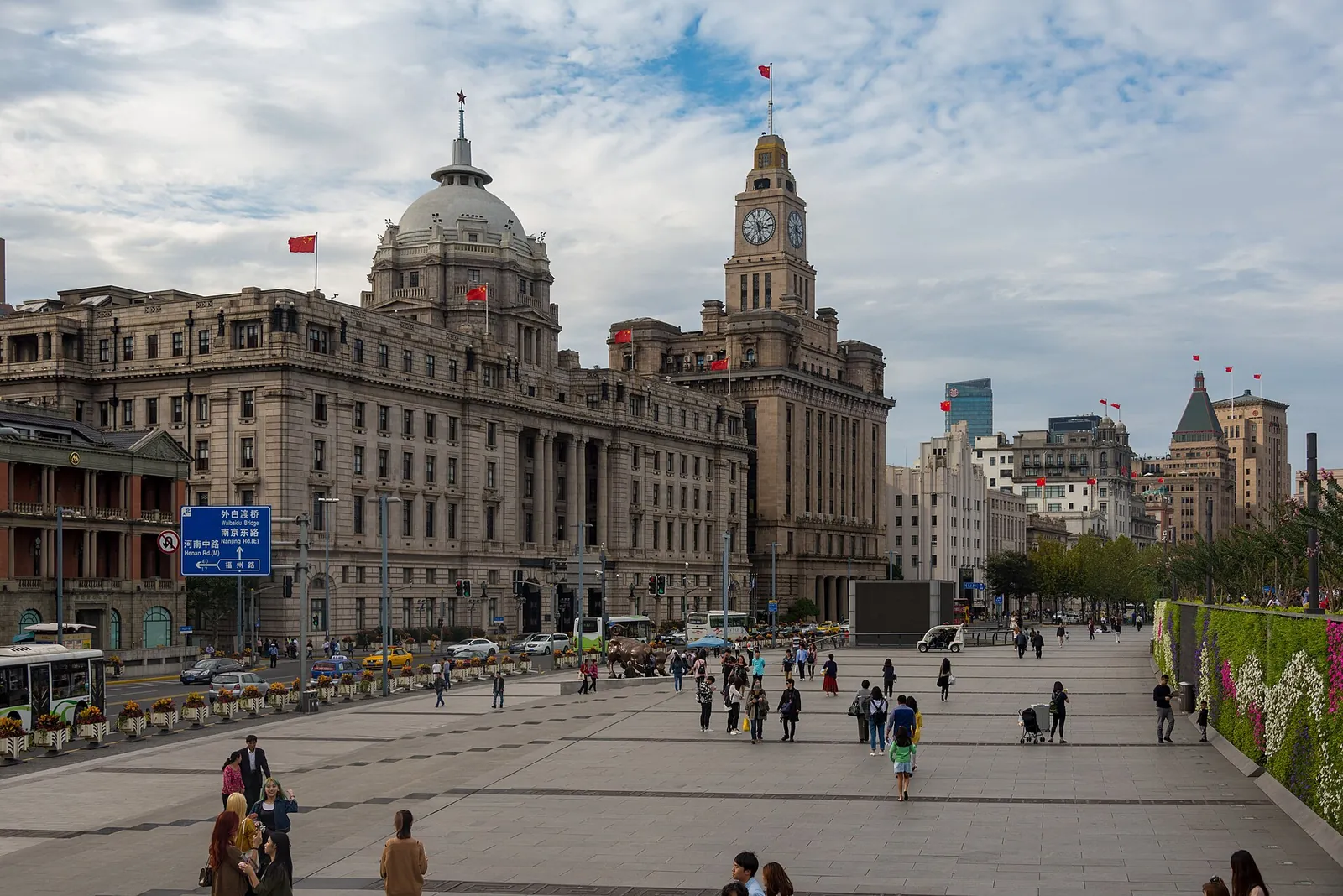
The Bund was the financial centre of old Shanghai and is still known as China’s Wall Street. Its riverfront buildings mix Baroque, Gothic and Ancient Greek styles, so the whole row reads like an exhibition of world architecture; four bridges cross Suzhou Creek here, and three of them, Waibaidu Bridge (the Garden Bridge) among them, are listed as excellent historical buildings. The promenade is a public walk, so go for the view of Pudong across the river and stay after dark, when the façades are lit.
Finish the first evening on the water. The Huangpu River cruise leaves from Shiliupu Wharf on the Bund (ticket office at B1, 491 East Zhongshan Road No. 2) and runs downriver towards the Yangpu Bridge and back, about 50 minutes in all, with Waibaidu Bridge and the lit façades of the Bund on one side and the Oriental Pearl, Jin Mao, the Shanghai World Financial Center and the Shanghai Tower on the other. When we checked on 26 October 2026, the city government’s boat guide listed the night sailing at CNY 150 a person from 26 February to 25 November and CNY 120 from 26 November to 25 February (day sailings CNY 120 and CNY 100), with CNY 150 on public holidays. Children under 1.3 metres go free, and children from 1.3 to 1.5 metres and visitors aged 70 or over pay half.
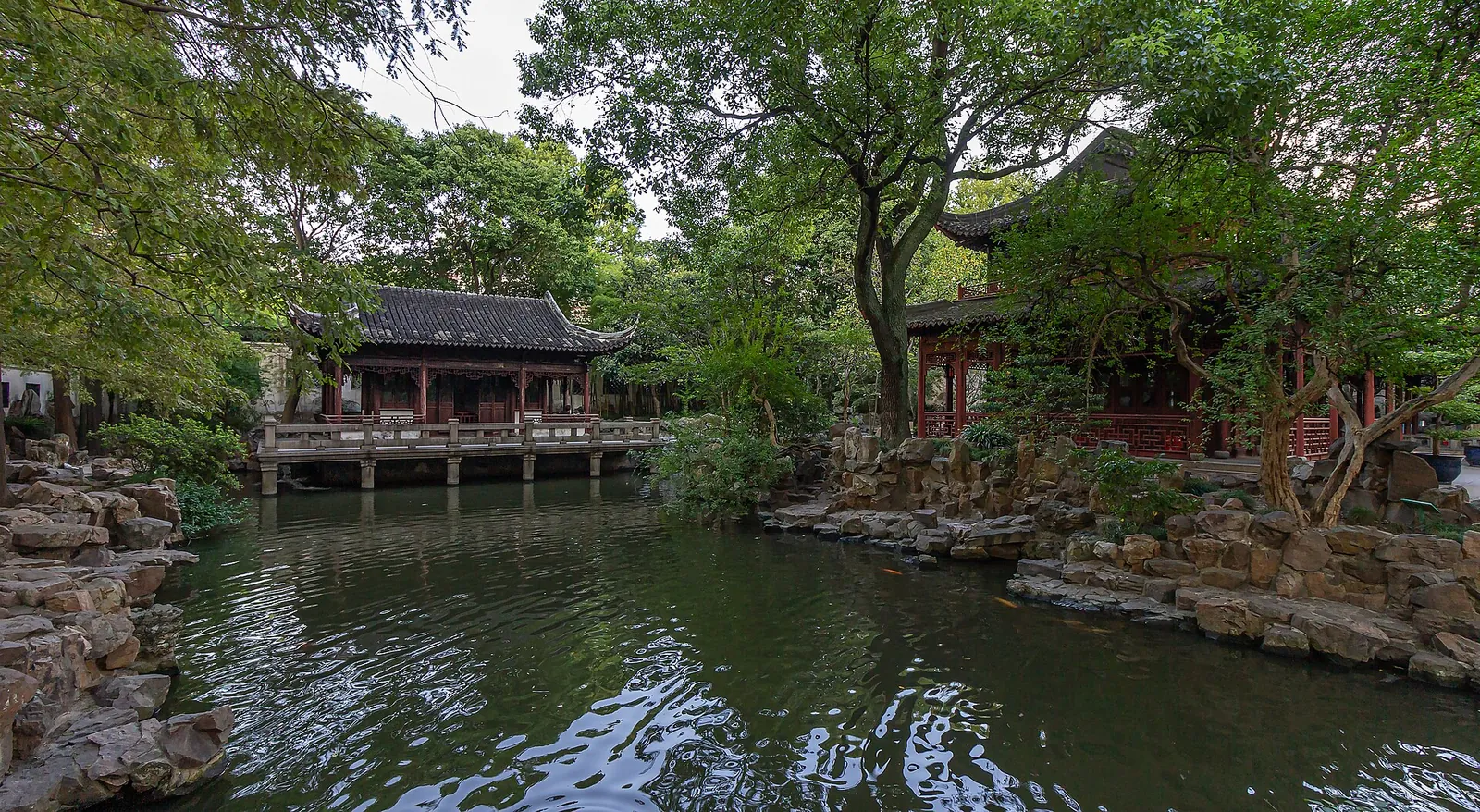
Start the next morning at Yu Garden, a short walk or ride inland from the Bund; metro lines 10 and 14 stop at Yuyuan Garden station. Pan Yunduan, a Ming official, began it in 1559 as a private garden for his elderly father and spent more than 20 years building it; badly damaged in the 19th century, it was restored from 1956 and reopened in 1961. Its halls, ponds and rockeries show the Jiangnan garden style of the Ming and Qing dynasties. The Great Rockery, a 14-metre hill of piled stone with peaks, cliffs and winding steps, was laid out by the Ming rock-builder Zhang Nanyang. The Exquisite Jade Rock, a slender, wrinkled stone pierced with holes, is the garden’s prize: it is said to come from the Song emperor Huizong’s palace garden about 1,000 years ago and counts as one of the three great rocks of the Jiangnan region. In the Inner Garden, a garden within the garden laid out in 1709, the gilded opera stage has a domed ceiling of 22 carved rings set with 28 golden birds.
As checked on 26 October 2026, the garden is open 09:00 to 16:30, with the last entry at 16:00, and closed on Mondays except national statutory holidays; Spring Festival hours follow a separate notice. The adult ticket is CNY 40 from 1 April to 30 June and 1 September to 30 November, and CNY 30 from 1 July to 31 August and 1 December to 31 March. Visitors older than 6 up to and including 18, full-time undergraduates and other qualifying students, and visitors aged 60 or over pay half with valid ID or student documents. Children aged 6 or under, or up to 1.3 metres tall, enter free with an adult; one adult may accompany up to three children. Buy at the windows of the north gate (168 Fuyou Road) or the south gate (279 Yuyuan Old Street, at the foot of the zigzag bridge, individuals only), or in the garden’s own mini-programme. Allow one to two hours; the bazaar of teahouses and shops outside the gates is free to walk.
Xintiandi, Tianzifang and Pudong
From Yu Garden, head west into the lanes of the former French Concession. One of the city’s own walking routes runs about 3.6 kilometres from Madang Road along Middle Huaihai Road, Sinan Road and Middle Jianguo Road to Taikang Road, linking Xintiandi and Tianzifang. Xintiandi, completed in 2001, restored a block of shikumen, Shanghai’s stone-gated lane houses, and filled it with restaurants, shops and cultural venues. Tianzifang keeps its shikumen alleys, now a maze of small craft shops, with a visitor service centre at 200 Taikang Road.
End day 2 in Pudong, across the river. The ferry fares and hours checked on 26 October 2026 make it the cheapest crossing: the Dongfu Line runs from Fuxing Road Ferry Pier, at 1 East Fuxing Road, to Dongchang Road on the Pudong bank from 07:00 to 21:00 for CNY 2. From the pier, walk along Binjiang Avenue, the riverside road of the Pudong bank, towards the towers of Lujiazui. Its cafés and terraces look straight across at the Bund, the reverse of the previous evening’s view, with the stone banks and the Custom House clock tower lit after dark. The walk costs nothing.
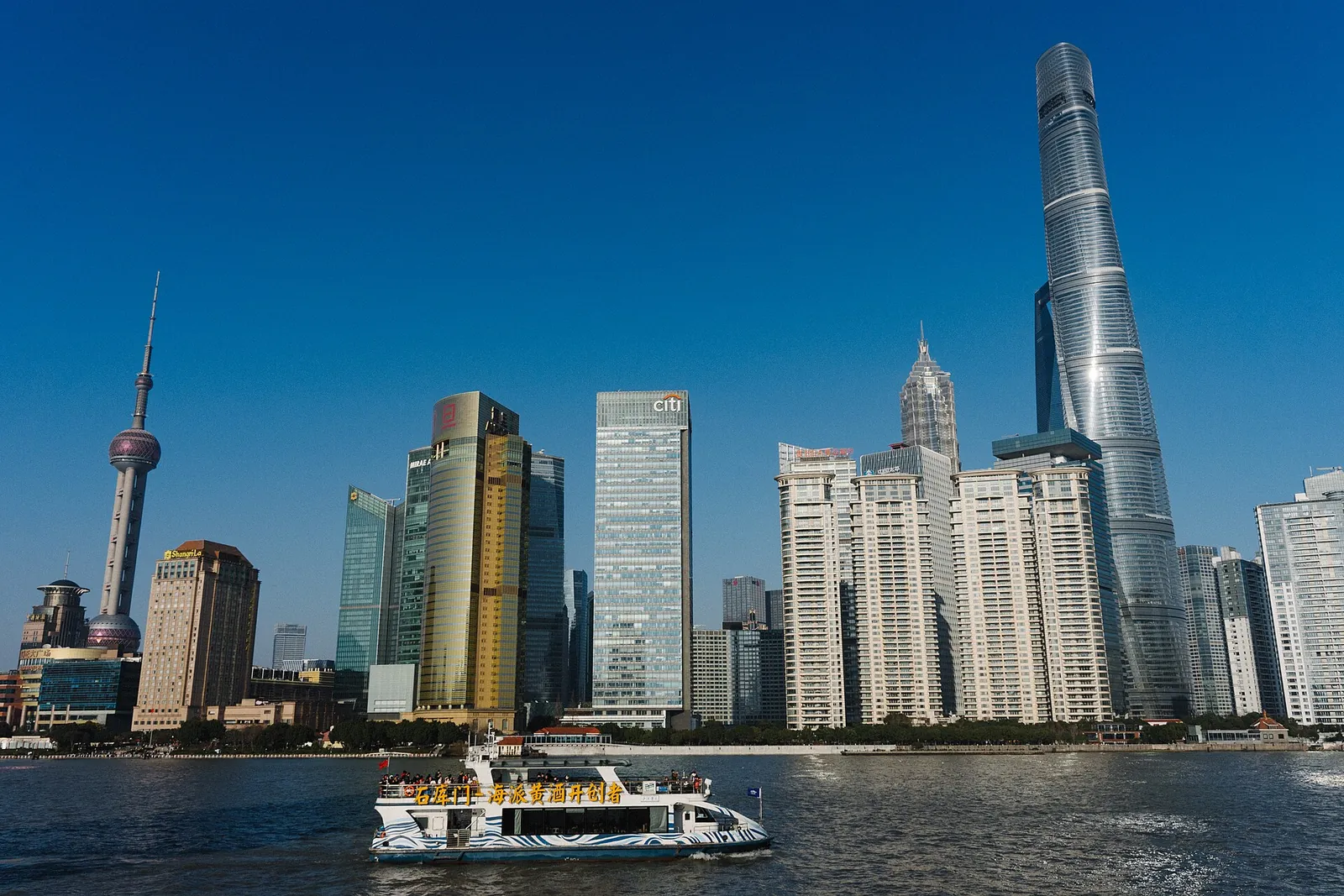
Then choose one tower. The Shanghai Tower, the tallest building in China, has its Top of Shanghai observatory on the 118th floor, 546 metres up; from there the Oriental Pearl and the Bund lie far below and the Huangpu curves away through the city. Tickets are real-name, so take your passport, and the ticket office is at 501 Middle Yincheng Road. Expect about CNY 180 an adult, a historical comparison from the city government’s November 2024 listing. The Oriental Pearl Tower, the pink-sphered landmark by the river, is the alternative, but it is the one tower you want in your photographs, and it is just as striking from the Lujiazui streets for nothing.
Zhujiajiao and Wukang Road
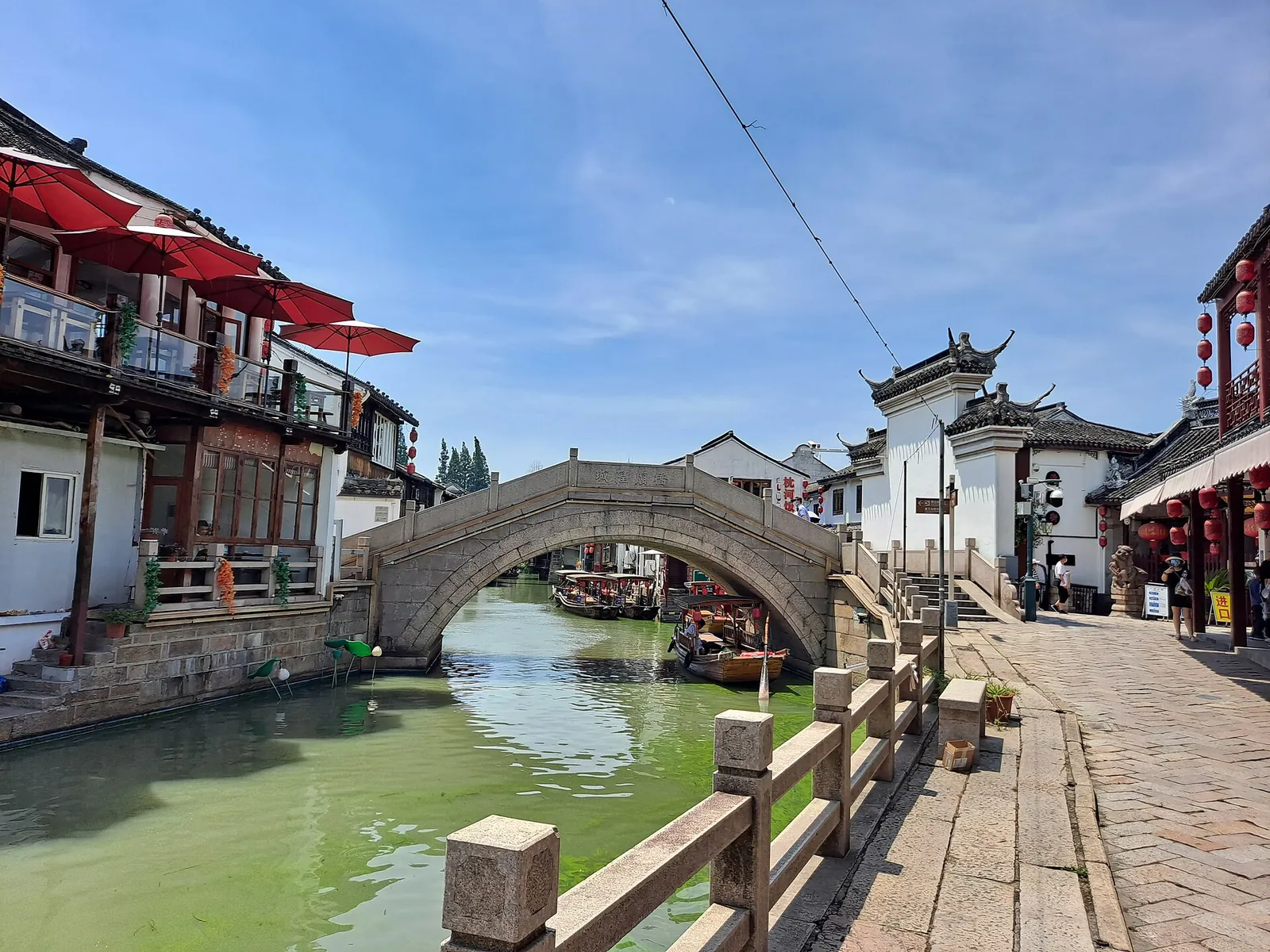
Zhujiajiao is a canal town in Qingpu, in the south-west of Shanghai, with Ming and Qing streets, stone bridges and tea houses along its waterways. The old town is free to enter. The most photographed sight is Fangsheng Bridge, which the town’s operator calls the largest five-arch stone bridge in the Jiangnan region; North Street, a lane of old shops often only two to four metres wide, is the place to wander. The operator’s visitor information, checked on 26 October 2026, lists three sights with admission charges: Kezhi Garden (CNY 20), a manor garden built in 1912, Hexin Garden (CNY 30), whose pavilion was moved here from the upper Yangtze when the Three Gorges project flooded its site, and the Helong Art Museum (CNY 20), which shows Shanghai-school painting. The three together cost CNY 60, are open 08:30 to 17:00 daily, and tickets are one person, one ticket, bought at the visitor centre, the service stations or each sight.
Take metro line 17 from Hongqiao Railway Station to Zhujiajiao for CNY 6; the town lists trains about every 10 minutes, from 06:00 to 23:00 outbound and 05:43 to 22:33 on the way back, and the town is about 30 kilometres from the station. From the metro station, bus 1510 to the visitor centre costs CNY 1 and runs every 15 to 30 minutes, and a scenic boat to Fangsheng Bridge costs CNY 40 between 09:00 and 16:20. A direct bus from Pu’an Road, off Yan’an East Road, costs CNY 12 and runs hourly. Start by 09:30 and you can see the town at an easy pace and be back in the city by late afternoon.
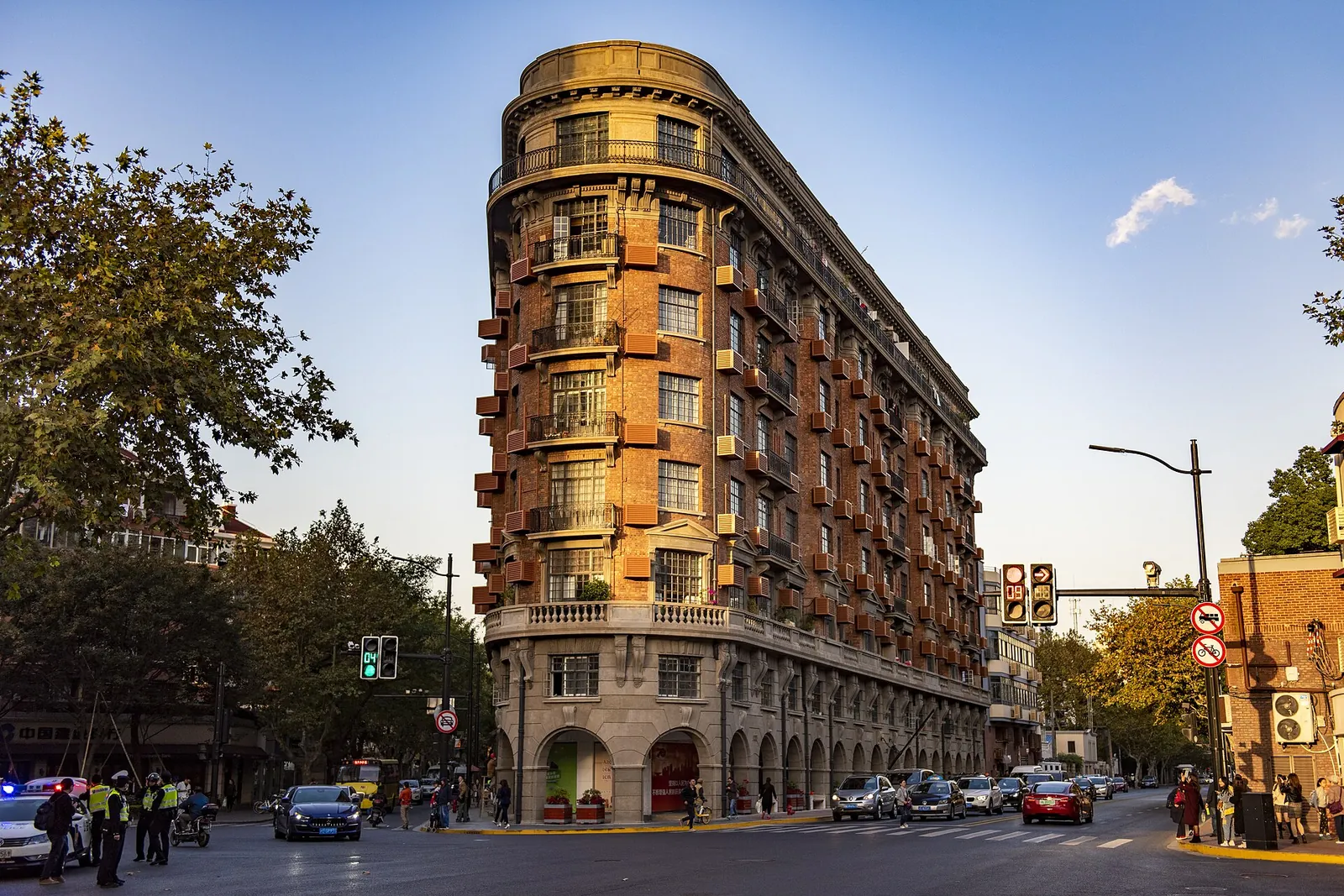
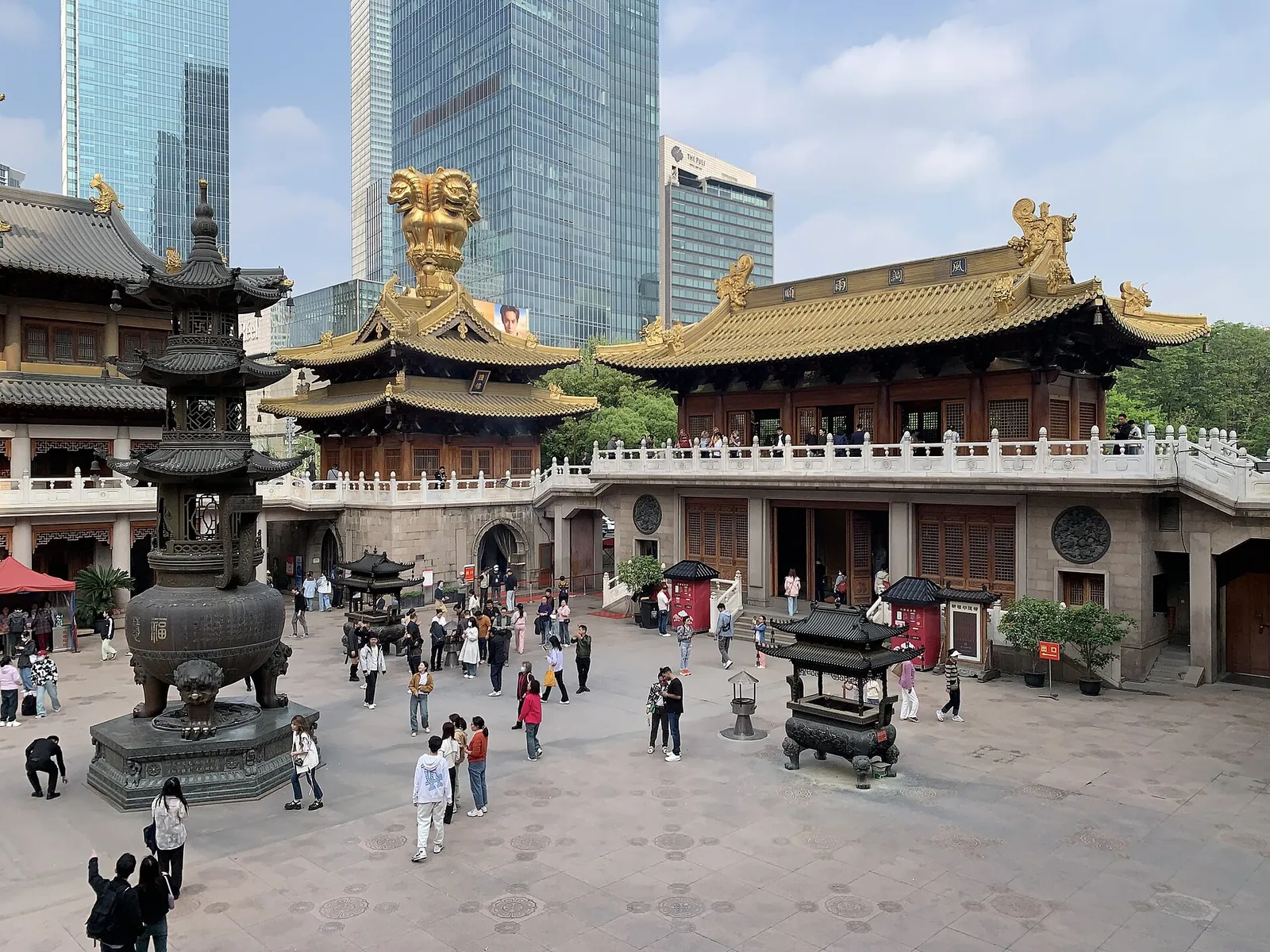
Back in the city, end day 3 on Wukang Road in Xuhui, at its best in the late afternoon and evening. Wukang Mansion, designed by László Hudec and completed in 1924, rises like the bow of a ship where Wukang Road meets Middle Huaihai Road and draws about 40,000 visitors a day; the same block holds Soong Ching Ling’s former residence and Ba Jin’s former residence. It is a neighbourhood walk of cafés, boutiques and plane trees rather than a ticketed sight, and the houses are private homes, so photograph them from the street. If you have an hour to spare, Fuxing Park, with its formal flowerbeds, and Jing’an Temple, a gold-roofed temple among office towers, are a short ride away.
Shanghai Museum East and People’s Square
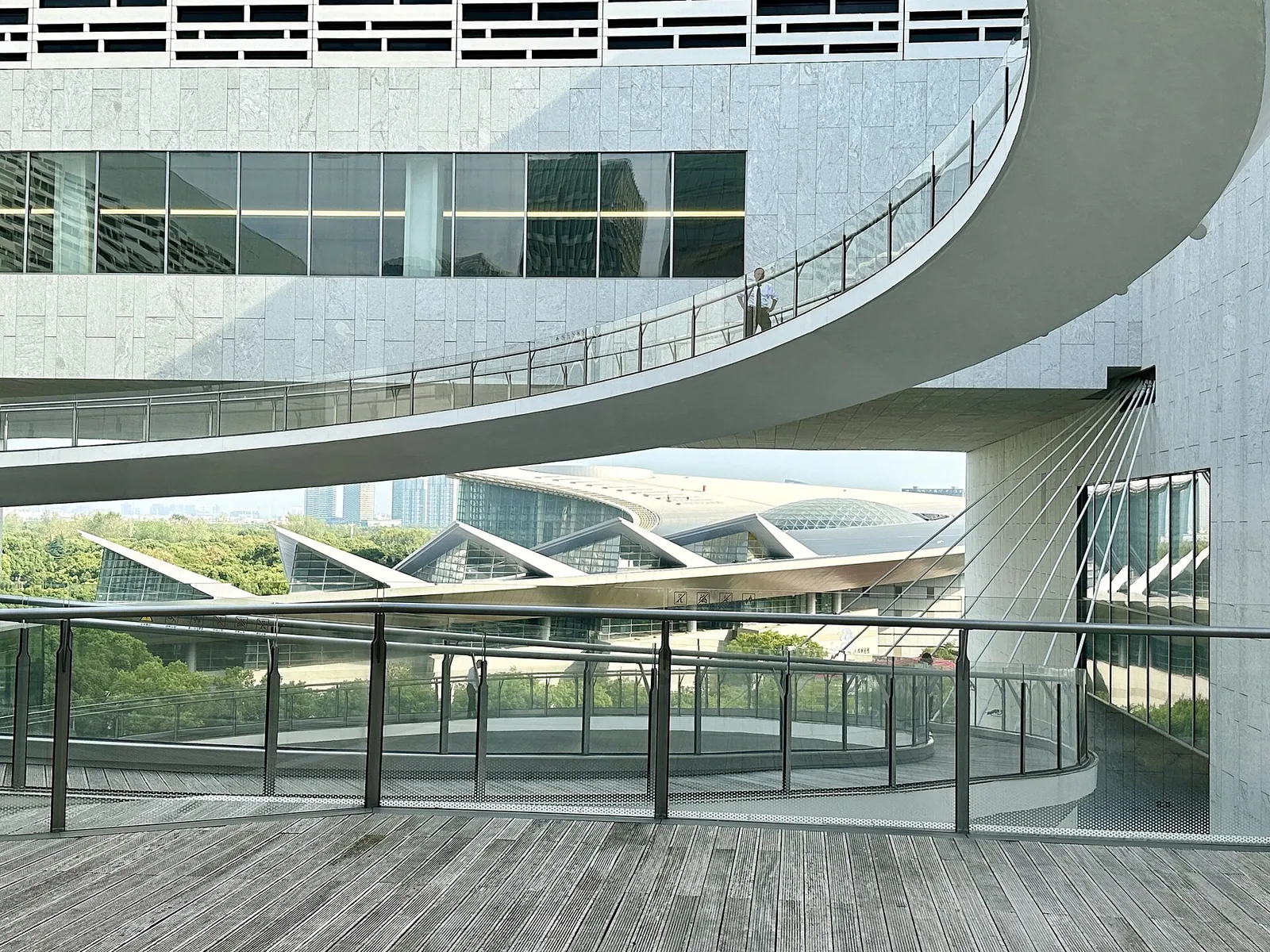
The Shanghai Museum’s permanent collections are now at its East building at 1952 Century Avenue in Pudong, opened in 2024, and it is the better museum day: bronzes, ceramics, painting and calligraphy in a building whose curving walkways are worth a look in themselves. The museum opens from 10:00 to 18:00, with last entry at 17:00, and closes on Tuesdays except national public holidays (hours checked on 26 October 2026). Since 15 September 2024 individuals can walk in without a reservation, showing a valid original ID (a passport for visitors from abroad) at the B1-level east gate on the Dingxiang Road side. The Ancient Civilizations Exploration Palace and the Digital Gallery still need a reservation through the museum’s mini-programme, entry is limited when the building is full, and the museum charges only for special exhibitions it marks as paid.
Until 14 November 2027 the museum’s original building on People’s Square shows only the paid exhibition World Tree: Ancient Civilizations of the Americas, not the permanent collection, so treat it as an optional swap for the East building rather than an addition. Reserve and buy the ticket in the museum’s mini-programme or, from abroad, on Trip.com, where the price is shown; the building is open 09:00 to 17:00 (last entry 15:00) and closed on Mondays except national public holidays, and you enter with your original ID at the south gate on Wusheng Road.
Four days in order
Yu Garden closes on Mondays and Shanghai Museum East on Tuesdays, so check the weekdays of your stay against the plan below. If day 2 falls on a Monday, swap days 2 and 3 so Yu Garden is open; if your last day is a Tuesday, see the museum on day 2 while you are in Pudong and walk Xintiandi and Tianzifang on day 4 instead. Nanjing Road, the Bund, Zhujiajiao and the French Concession streets are open every day. For a longer step out of the city, see our Hangzhou and Suzhou guide.
- Day 1: Nanjing Road East, the Bund and the river cruise. Arrive and check in, walk from People’s Square to the Bund for the river at dusk, then take the night cruise from Shiliupu Wharf.
- Day 2: Yu Garden, Xintiandi, Tianzifang and Pudong. Yu Garden when it opens at 09:00, the lane walk from Madang Road to Taikang Road, then the Dongfu Line ferry to Pudong, the Binjiang Avenue riverside at dusk and the Shanghai Tower observatory after dark.
- Day 3: Zhujiajiao and Wukang Road. Metro line 17 from Hongqiao Railway Station, the three paid sights and the canals, then Wukang Road in the evening.
- Day 4: Shanghai Museum East and departure. Visit when it opens at 10:00 only with an afternoon or evening flight that leaves enough time for the airport journey and your airline’s check-in deadline. For a morning flight, move the museum to day 2 and leave the final morning for departure.
What to eat and where to look
Xiaolongbao
Soup dumplings: thin skins around pork and a spoonful of hot broth, eaten from a bamboo steamer with vinegar. They are made all year, and autumn is the season for crab roe xiaolongbao.
- Where to look
- Nanxiang Steam Bun Restaurant, 87 Yuyuan Road, open 07:30 to 20:30, about CNY 93 a person; pork and crab roe fillings are its specialty.
- Fit it into your day
- Breakfast on day 2, before Yu Garden opens at 09:00.
Shengjian (pan-fried pork buns)
Buns fried in a pan until the base is crisp, ordered by the liang: one liang is four buns. The qingshui style, pleated face-up with fully leavened dough, is soft and airy and leans on the meat’s own juices rather than aspic.
- Where to look
- Da Hu Chun, 136 Middle Sichuan Road, founded in 1932 and listed at CNY 11 for four.
- Fit it into your day
- A light supper near the Bund on day 1, before or after the river walk.
Scallion oil noodles
Noodles tossed in fried scallion oil and light and dark soy sauce, often with dried shrimp. It is a comfort dish of Shanghai home cooking.
- Where to look
- Huxi Laolongtang Noodle Shop, 685 Dingxi Road, about CNY 7 a serving; or Cang Lang Ting, 8 Sinan Road, CNY 25 with dried shrimp.
- Fit it into your day
- Lunch on the day-2 lane walk, which passes Sinan Road.
Red-braised pork belly (hong shao rou)
Cubes of pork belly braised in dark soy and rock sugar until the skin is soft and the sauce glossy, sweet and savoury at once.
- Where to look
- Lyceum, 130 Jinxian Road, a neighbourhood restaurant that takes no reservations, so expect a queue; about CNY 92 a person.
- Fit it into your day
- The main dinner of the trip, shared between two.
Butterfly crackers (hudie su)
Shanghai’s palmier: puff pastry folded with butter into many thin layers and baked with sugar until crisp. Shanghai bakeries make it less sweet than the French original so the butter comes through, and it is sold all year.
- Where to look
- Park Hotel bakery, 170 West Nanjing Road, 08:00 to 22:00, about CNY 30 a bag; or Lao Xiang Zhai, 720 East Nanjing Road, 09:30 to 22:00, about CNY 110 to 130 for 500 grams.
- Fit it into your day
- A bag for the Nanjing Road walk on day 1, or to take home.
Airports and getting around
Airport connections below were checked on 26 October 2026. Pudong (PVG) is about 30 kilometres from downtown and handles international and domestic flights. Metro line 2 from Pudong Terminal 1&2 station reaches People’s Square in about an hour for about CNY 7, and a taxi to People’s Square costs around CNY 180 a vehicle and takes about 50 minutes; taxis leave from outside Arrival Gate 12 at Terminal 1 and Arrival Gate 25 at Terminal 2. The maglev runs between the airport and Longyang Road at up to 300 km/h, from 07:02 to 21:42 out of the airport and 06:45 to 21:40 towards it; at Longyang Road you change to metro line 2. Hongqiao (SHA) is 13 kilometres from the centre and mainly serves domestic and regional flights; a taxi takes about 30 minutes and costs CNY 100 to 150 a vehicle, depending on traffic, and Terminal 1 is on metro line 10, Terminal 2 on lines 10 and 2. The Airport Link Line takes about 40 minutes between the two airports. Our transport guide covers the long-distance stations.
Within the city, metro and walking link every sight above. Metro fares checked on 26 October 2026 go by distance, CNY 3 for up to 6 kilometres and CNY 1 for each further 10 kilometres; you can tap an eligible contactless Visa, Mastercard, American Express, JCB or UnionPay card at the gates if small-transaction password-free payment is enabled, or buy a single ticket from the machines. Set up Weixin Pay (also called WeChat Pay) or Alipay and save addresses in Chinese before you leave; our payments and apps guide explains how. German advice is to refrain from using VPN services; plan on limited access to some overseas apps and keep offline maps and notes.
What four days in Shanghai cost
| Level | Per person, about CNY | For two, about CNY |
|---|---|---|
| Budget | 2,190 | 4,380 |
| Mid-range | 3,450 | 6,910 |
| Comfort | 5,810 | 11,620 |
These figures are for two adults sharing one private double for three nights in an ordinary week outside the national holidays, with prices checked on 25 October 2026. It covers rooms, three meals and drinks a day, the airport links and local rides, the paid sights and the day-1 night cruise listed below, two SIMs and a 10% buffer. Room figures are full-double estimates based on late-November rate cards of international hotel chains, including estimated taxes and service charges; a hotel’s own two-adult price and terms for your dates will differ. This is a stand-alone Shanghai stay, separate from the route totals in our China trip cost guide.
A London return to Shanghai costs about GBP 650 to 850 a person (GBP 1,300 to 1,700 for two), an estimate based on Etihad’s displayed return economy fares from GBP 563, read on 26 October 2026. With it the four days come to about GBP 1,030 to 1,230 a person at mid-range (GBP 2,070 to 2,470 for two), GBP 890 to 1,090 at budget and GBP 1,300 to 1,500 at comfort, converted at the official central parity rate of 23 October 2026 (GBP 1 = CNY 8.9749). Your bank or card will give a different rate.
- Rooms, about CNY 3,000 for two at mid-range. Three nights at about CNY 1,000 (budget CNY 600, comfort CNY 1,700); these are full double-room estimates for two including estimated taxes and service charges; the food line covers every meal.
- Food, about CNY 1,440 for two. About CNY 180 a person a day on average: CNY 30 for breakfast, 60 for lunch, 70 for dinner and 20 for water and snacks (budget CNY 800 for two, comfort CNY 2,800). The xiaolongbao breakfast at Nanxiang (about CNY 93 a person) and the Lyceum dinner (about CNY 92 a person) cost more than that; the scallion oil noodle lunch on Sinan Road (CNY 25) and a shengjian supper by the Bund (CNY 11 for four buns) cost less.
- Getting around, about CNY 680 for two. Airport taxis at about CNY 180 a vehicle, one vehicle each way, CNY 360 for both journeys; about CNY 270 of metro, ferry and taxi rides in the city, CNY 28 for the Zhujiajiao metro and bus returns and about CNY 20 for line 2 between People’s Square and Hongqiao Railway Station and back, at about CNY 5 a ride on the distance fare. At budget level the airport metro and metro day passes bring this to about CNY 220 for two. Comfort is about CNY 1,500 for two: the same airport taxis, about CNY 340 of city taxis and a car and driver for the Zhujiajiao day at about CNY 800 a vehicle, an estimate for a full day with the driver waiting, not a quoted fare.
- Sights, about CNY 860 for two. Each person pays about CNY 430: Yu Garden CNY 40, the Shanghai Tower observatory about CNY 180, the three Zhujiajiao sights CNY 60 and the day-1 night cruise CNY 150. Shanghai Museum East is free when no paid special exhibition is chosen. The budget uses the CNY 40 garden season and CNY 150 cruise season; the seasonal prices above can lower your actual bill.
- SIM and extras, about CNY 300 for two. About CNY 150 a person is an estimate based on China Telecom’s published 15-day visitor card at CNY 125 (30 GB, on sale until 30 November 2026). The tariff does not guarantee airport stock or the same offer in Shanghai; take your passport.
- Buffer, about CNY 630. Ten per cent of the subtotal of CNY 6,280.
Practical questions
How many nights should I spend in Shanghai?
Three nights give four days: an arrival evening on Nanjing Road, the Bund and the river, a day for Yu Garden, Xintiandi, Tianzifang and Pudong, a day in Zhujiajiao with Wukang Road in the evening, and a morning for Shanghai Museum East before your flight. Add a night if you want to take Hangzhou as a day trip; see our Hangzhou and Suzhou guide.
Do I need to book Shanghai Museum East in advance?
Not to walk in: individuals enter with a valid original ID, which is your passport. The Ancient Civilizations Exploration Palace and the Digital Gallery need a reservation through the museum’s mini-programme.
How do I get to Zhujiajiao?
Take metro line 17 from Hongqiao Railway Station to Zhujiajiao for CNY 6, then bus 1510 to the visitor centre for CNY 1. A direct bus from Pu’an Road costs CNY 12.
Do I need a visa for Shanghai?
Ordinary-passport holders from Australia, Austria, Belgium, Brazil, Canada, Denmark, Finland, France, Germany, Hungary, Ireland, Italy, the Netherlands, New Zealand, Norway, Poland, Portugal, Romania, Spain, Sweden, Switzerland and the United Kingdom can enter without a visa for tourism, business, visiting family or friends, exchange or transit, and stay up to 30 days, counted from the day after you enter. The waiver is published until 31 December 2026; if it is not extended, a 2027 trip needs a visa. US and Czech passports are not on this visa-free list. US and Czech citizens need a visa unless they qualify for the 240-hour transit rule, which needs a confirmed onward ticket to a third country or region: London to Shanghai to Hong Kong qualifies, a return to where you started does not. Our entry guide has the other conditions.
Is Shanghai safe for visitors?
The British government warns of a risk of arbitrary detention, and British and German advice both warn that exit bans can affect visitors, and the British government says they can last months or years. Carry your original passport at all times, because a printed copy is not accepted, and avoid demonstrations and political activity. French advice is not to photograph military or official sites or any place where photography is banned. Check your own government’s current travel advice before you book.
Keep planning your trip
First trip to China
How long a first China trip should be, then a week in Beijing, Xi’an and Shanghai: what to book first, the trains, entry, paying and the cost per day.
Read the guide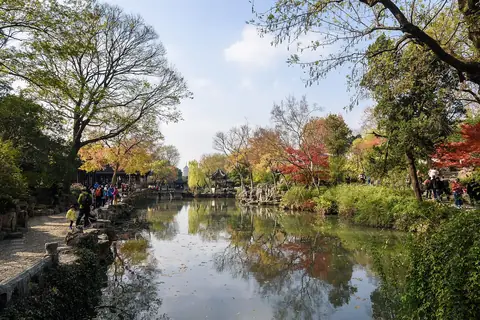
Hangzhou and Suzhou
Two nights by train from Shanghai: West Lake and Lingyin Temple in Hangzhou, then the Humble Administrator’s Garden in Suzhou, with bookings and costs.
Read the guide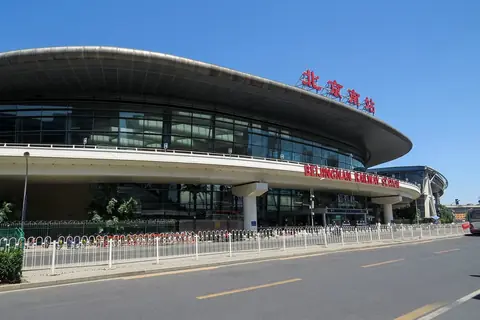
Getting around China
Book China's high-speed trains on 12306 with a foreign passport, decide when to fly, and get from the airports and stations into town.
Read the guide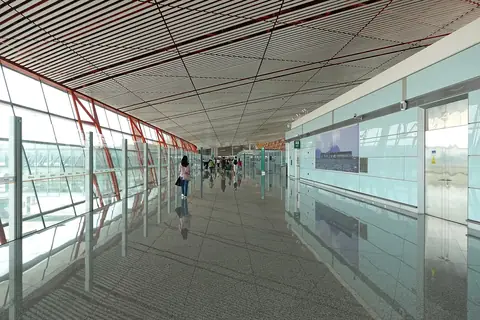
Entering China
Who can enter China visa-free for 30 days, when the waiver ends, how 240-hour transit works, and the arrival card, hotel registration, customs and safety rules.
Read the guide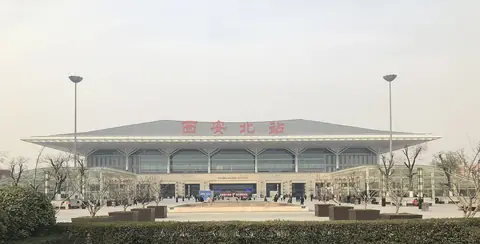
China trip cost
What 10 days in Beijing, Xi’an, Chengdu and Shanghai cost for two sharing a room: about CNY 7,360, 10,140 or 15,950 a person, with every meal, train and ticket.
Read the guide
China in seven days
Seven days in China: two nights each in Beijing, Xi’an and Shanghai, the Great Wall, the Terracotta Army and two trains, with a budget for two.
Read the guideSources and checks before you travel
(44)
- Yu Garden: visit information ↗ — opens in a new tab
- Yu Garden: history ↗ — opens in a new tab
- Yu Garden: Sansui Hall area (Great Rockery) ↗ — opens in a new tab
- Yu Garden: Yuhua Hall area (Exquisite Jade Rock) ↗ — opens in a new tab
- Yu Garden: Inner Garden area ↗ — opens in a new tab
- Yu Garden: transport ↗ — opens in a new tab
- Shanghai Museum: East building visit information ↗ — opens in a new tab
- Shanghai Museum: People’s Square visit information ↗ — opens in a new tab
- Shanghai Museum: visit notice ↗ — opens in a new tab
- Zhujiajiao Ancient Town: FAQ ↗ — opens in a new tab
- Zhujiajiao Ancient Town: visitor notice ↗ — opens in a new tab
- Shanghai Tower: Top of Shanghai observatory ↗ — opens in a new tab
- Shanghai government: CIIE tourism offers (November 2024) ↗ — opens in a new tab
- Shanghai government: exploring Shanghai by boat (September 2025) ↗ — opens in a new tab
- Shanghai government: riverside dining destinations ↗ — opens in a new tab
- Shanghai government: taking the metro (2025) ↗ — opens in a new tab
- Shanghai government: the Bund ↗ — opens in a new tab
- Shanghai government: Wukang Road-Anfu Road ↗ — opens in a new tab
- Shanghai government: transport at Shanghai airports ↗ — opens in a new tab
- Shanghai government: scallion oil noodles ↗ — opens in a new tab
- Shanghai government: yanduxian (restaurant prices) ↗ — opens in a new tab
- Shanghai government: pan-fried pork buns ↗ — opens in a new tab
- Shanghai government: red-braised pork belly ↗ — opens in a new tab
- Shanghai government: foreign guests in hotels ↗ — opens in a new tab
- National Immigration Administration: accommodation registration ↗ — opens in a new tab
- Chinese Embassy in Timor-Leste: visa-free FAQ ↗ — opens in a new tab
- Ministry of Foreign Affairs of China: visa-free FAQ ↗ — opens in a new tab
- Shanghai government: London-Shanghai-Hong Kong transit question ↗ — opens in a new tab
- Chinese Consulate General in Toronto: visa-free transit ↗ — opens in a new tab
- Shanghai government: xiaolongbao ↗ — opens in a new tab
- Shanghai government: butterfly crackers ↗ — opens in a new tab
- Shanghai government: city walk routes ↗ — opens in a new tab
- Shanghai government: themed city walks (May 2024) ↗ — opens in a new tab
- Shanghai government: Xintiandi Shikumen Block ↗ — opens in a new tab
- Shanghai government: tourist information and service centres ↗ — opens in a new tab
- Shanghai government: Tianzifang ↗ — opens in a new tab
- UK government: China safety and security ↗ — opens in a new tab
- German Foreign Office: China safety ↗ — opens in a new tab
- French diplomacy: practical information for China ↗ — opens in a new tab
- State Administration of Foreign Exchange: RMB central parity ↗ — opens in a new tab
- Shanghai Municipal Administration of Culture and Tourism: Shanghai climate and travel seasons ↗ — opens in a new tab
- China Telecom: foreign-visitor card tariff ↗ — opens in a new tab
- Etihad Airways: London to Shanghai economy returns ↗ — opens in a new tab
- State Administration of Foreign Exchange: central parity table ↗ — opens in a new tab
Reference sources for the version dated 26 October 2026. Confirm opening times, access, transport and conditions for your travel dates.
Photo credits
(7)
Wukang Mansion (the former Normandie Apartments, designed by László Hudec) on Wukang Road in the former French Concession.
Photograph: N509FZ — opens in a new tab · CC BY-SA 4.0 — opens in a new tab
Changes: Resized and converted to WebP; displayed with responsive crops. · Original photograph and licence details ↗ — opens in a new tab
The Bund: the domed former HSBC Building and the Custom House clock tower above the riverside promenade.
Photograph: xiquinhosilva — opens in a new tab · CC BY 2.0 — opens in a new tab
Changes: Resized and converted to WebP; displayed with responsive crops. · Original photograph and licence details ↗ — opens in a new tab
The pond, pavilions and rockery of Yu Garden in the old city.
Photograph: Stefan Fussan — opens in a new tab · CC BY-SA 3.0 — opens in a new tab
Changes: Resized and converted to WebP; displayed with responsive crops. · Original photograph and licence details ↗ — opens in a new tab
Lujiazui from the Huangpu River: the Shanghai Tower on the right, Jin Mao Tower beside it and the Oriental Pearl Tower on the left.
Photograph: Lloyd Tudor — opens in a new tab · CC BY-SA 4.0 — opens in a new tab
Changes: Resized and converted to WebP; displayed with responsive crops. · Original photograph and licence details ↗ — opens in a new tab
The stone arch bridge over the canal in Zhujiajiao, a water town in Shanghai's Qingpu district.
Photograph: 钉钉 — opens in a new tab · CC BY-SA 4.0 — opens in a new tab
Changes: Resized and converted to WebP; displayed with responsive crops. · Original photograph and licence details ↗ — opens in a new tab
Jing'an Temple: gold-roofed halls and incense burners in front of the towers of the city centre.
Photograph: Chainwit. — opens in a new tab · CC BY 4.0 — opens in a new tab
Changes: Resized and converted to WebP; displayed with responsive crops. · Original photograph and licence details ↗ — opens in a new tab
The curving walkway and balcony of Shanghai Museum East in Pudong, opened in 2024.
Photograph: Alexey Yakovlev — opens in a new tab · CC0 — opens in a new tab
Changes: Resized and converted to WebP; displayed with responsive crops. · Original photograph and licence details ↗ — opens in a new tab