Plan your trip
What to eat in China: regional dishes, places and food costs
China’s food changes every few hundred kilometres, so the useful question is what to eat in each city on your route and what it will cost. This guide takes the classic Beijing, Xi’an, Chengdu and Shanghai loop dish by dish, names places to try each one, and prices a food day at three levels.
In this guide
Find the location ↗ — opens in a new tabThe short answer
Eat one regional dish in each city: roast duck in Beijing, bread soup or belt noodles in Xi’an, mapo tofu in Chengdu and soup dumplings in Shanghai. On the Shanghai government’s 2026 listings, a soup-dumpling meal at Nanxiang averages about CNY 93 a person and four pan-fried buns cost CNY 11 at Da Hu Chun. Estimate a food day at about CNY 100 a person on a budget, CNY 180 mid-range and CNY 350 in comfort. Check your chosen duck restaurant’s current booking channel before going.
- Key point
- A food plan for ten days and four cities
- Where it applies
- Beijing, Xi’an, Chengdu and Shanghai, with Guangzhou as an option
- Timing
- Crab-roe soup dumplings peak in autumn in Shanghai, and yanduxian is a spring soup; the other dishes in this guide have no season.
One dish for each city on the classic route
Beijing, Xi’an, Chengdu and Shanghai each have a dish that belongs to the city, and eating it is the easiest way to feel the change from one stop to the next.
| City | The dish | How it is eaten | Where to try it |
|---|---|---|---|
| Beijing | Peking duck and zhajiangmian | Carved duck shared by the table, with pancakes and sauce; noodles in soybean paste by the bowl | Quanjude or Liqun, both near Qianmen; Fangzhuanchang Hutong |
| Xi’an | Paomo, roujiamo and biangbiang noodles | Bread soaked in soup; meat in a baked bun; wide noodles by the bowl | Lao Sun Jia and the Muslim Quarter; Yongxingfang |
| Chengdu | Mapo tofu, fuqi feipian and long chao shou | Tofu in a hot, numbing sauce, shared with rice; cold sliced beef in chilli oil for the table; wontons in broth by the bowl | Chen Mapo Tofu; Fuqi Feipian on Zongfu Road; the snack restaurants around Chunxi Road |
| Shanghai | Soup dumplings, pan-fried buns, scallion-oil noodles | Steamed dumplings, buns by the four, noodles by the bowl | Nanxiang, Da Hu Chun, Huxi Laolongtang |
| Guangzhou (optional) | Dim sum with tea | Small dishes shared over tea | Tao Tao Ju |
Our first trip guide puts the four cities in order, and the trip cost guide prices the whole route.
Beijing: roast duck, hutong noodles and mutton hotpot
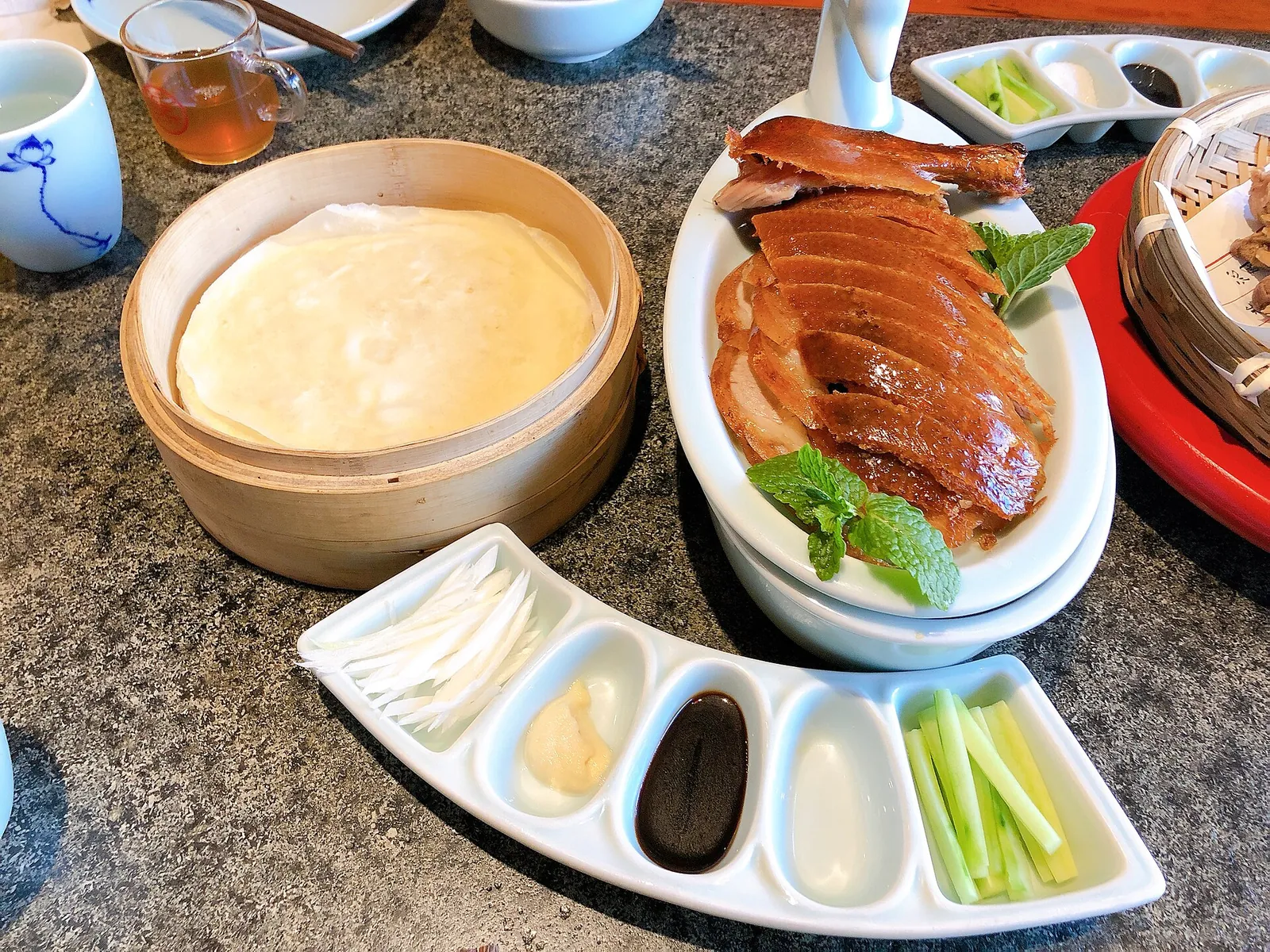
Peking duck is the one dish most visitors plan a dinner around. The duck is roasted until the skin is crisp, carved into thin slices and brought with a steamer of thin pancakes, a dark soybean sauce and strips of cucumber and spring onion, and you fill each pancake yourself. Order the duck first and choose the rest of the meal around it.
Two houses define the dish. Quanjude, founded in 1864, is known for hung-oven roasting, a technique on China’s national list of intangible cultural heritage. Bianyifang, set up in 1416, roasts in a closed stove so the duck is never exposed to the flame; the method, known as “green roast duck”, sits on the same list. Quanjude is at 30 Qianmen Street (全聚德, 前门大街30号) and Bianyifang in Xianyukou food street on the east side of Qianmen Street (便宜坊, 鲜鱼口). Qianmen is at the southern end of Tiananmen Square, so a duck dinner fits an evening after the sights in our Beijing guide.
For a first duck dinner, Quanjude or Liqun Roast Duck is the easy choice. Liqun, at No. 11 Beixiangfeng Hutong near Qianmen Street, is a hole-in-the-wall house reached through a narrow passage hung with photographs. For historical comparison, Visit Beijing’s 2018 guide listed average spending of CNY 133 a person at Bianyifang, CNY 160 at Liqun, CNY 192 at Quanjude and CNY 300 at Da Dong, at Nanxincang International Plaza, 22A Dongsishitiao. These are older average bills, not current duck-menu prices; use the restaurant’s menu to price a duck and side dishes for two.
Two other Beijing dishes fill the rest of your days. Zhajiangmian, hand-made noodles tossed with fried soybean paste and minced pork and served with shredded cucumber, bean sprouts and other vegetables, makes the lunch on a hutong walk: guests queue for it at No. 69 Fangzhuanchang Hutong Noodles, at No. 1 Fangzhuanchang Hutong near Nanluoguxiang. From late autumn through winter, plan a dinner of instant-boiled mutton (shuan yangrou): thin slices of mutton dipped in a copper hotpot of plain water with spring onion and ginger, then in sesame paste. Dong Lai Shun, at 198 Wangfujing Street, cooks it in copper pots over charcoal.
Xi’an: bread soup, the Muslim Quarter and belt noodles
Xi’an cooks with wheat, and its best-known meal is paomo: pita-style bread soaked in a soup of beef and lamb. Lao Sun Jia, at the southern end of Huimin Street, is the paomo house to look for. You crumble the bread yourself, the kitchen adds it to the hot soup, and the bowl is eaten with chilli sauce, fresh coriander and sweet garlic. Most Shaanxi restaurants charge around CNY 30 for a bowl of mutton paomo (yangrou paomo), a price given in December 2025.
The Muslim Quarter, also called Huimin Street, lies by the Drum Tower and is the place to eat on a Xi’an evening. Some 300 snack shops and restaurants, most of them run by Hui families, line its 600 metres, selling roujiamo, peanut pastries and paomo. Roujiamo is the quick meal: chopped meat stuffed into a baked bun, and here the meat is beef. Beiyuanmen Street, which locals call Fangshang, adds cured beef and mutton and guantang baozi, the soup buns that count among the city’s famous Muslim snacks; Jiasan is the best-known name for them.
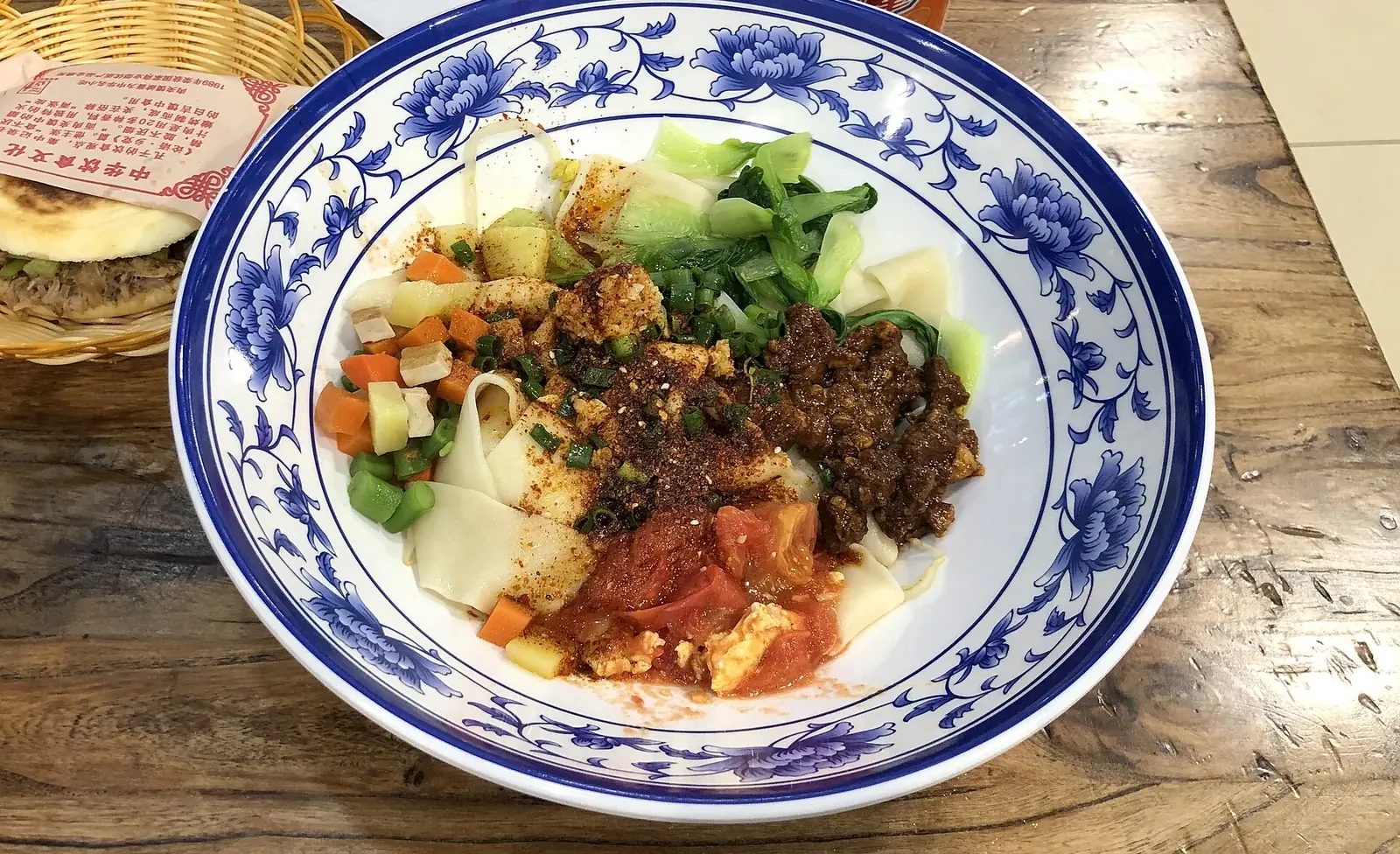
Biangbiang noodles are the other signature dish: wide, hand-pulled belts of dough served by the bowl with vegetables, sauce and chilli. Youpo mian, the oil-splashed version, has hot oil poured over the chilli and garlic on top. Yongxingfang, a food street in Xincheng district that keeps the layout of an old lane, is known for youpo noodles and other Shaanxi dishes, among them potato and glutinous rice cakes, Zichang pancakes and gourd-shaped chicken.
For a sit-down meal, look to the main streets of the Bell and Drum Tower shopping district. Defachang, on West Street (Xi Dajie), serves dumpling feasts, with dumplings in many shapes and colours. On East Avenue (Dong Dajie), Baiyunzhang is a Muslim dumpling restaurant known for dumplings in sour soup, and Xi’an Restaurant, at No 298, has the broadest menu: gourd-shaped fried chicken, a milky white fish soup and a cold dish of sliced pork skin, chicken skin and jellyfish skin are among its popular dishes. Our Xi’an guide sets out the sights these meals fit between.
Chengdu: mapo tofu, hotpot, and the difference between heat and numbness
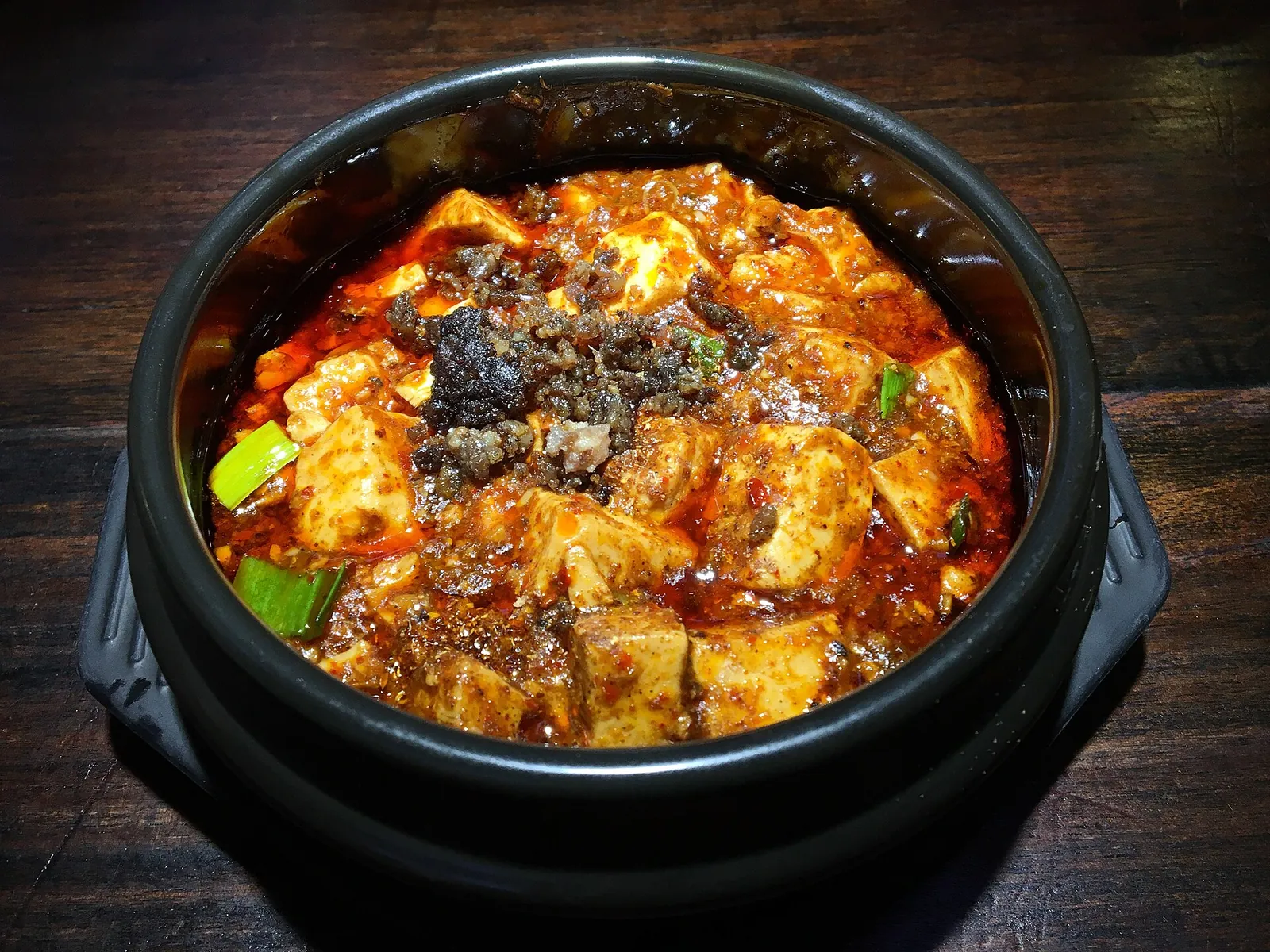
Mapo tofu is Chengdu’s calling card. It dates from 1862, from a small restaurant beside Wanfu Bridge at the city’s north gate, whose customers were porters who brought their own cooking oil; they praised the tofu as numbing, hot and scalding at once. The classic version uses soft gypsum-set tofu, minced beef stir-fried until crisp, a meat stock and garlic shoots, in a thickened sauce finished with red oil and Sichuan pepper powder.
The heat and the numbness come from different ingredients. The heat is chilli, from Pixian chilli bean paste and erjingtiao chillies; the numbness is Sichuan pepper, here the Hanyuan variety, ground and sprinkled over the dish at the end.
Chen Mapo Tofu, a China time-honoured brand, runs three restaurants of its own in Chengdu, and franchised shops in China and abroad carry the name too. Share the dish with plain rice, which takes the edge off the chilli. For a quick lunch, look for long chao shou, Chengdu’s name for wontons: minced pork in thin wrappers, served in a bowl of broth, with red chilli oil if you want the heat. Long Chao Shou (龙抄手), a time-honoured snack restaurant founded in 1941, runs three restaurants of its own in the city, and the snack restaurants on and around Chunxi Road, the shopping street in Jinjiang District on Metro Line 2, serve them beside lai tang yuan, the city’s rice dumplings.
Fuqi feipian, “husband-and-wife lung slices”, is the cold dish to share: beef, ox heart, tongue, tripe and head skin, braised, sliced thin and dressed with red chilli oil and ground Sichuan pepper. A married couple, Guo Chaohua and Zhang Tianzheng, created it in Chengdu in the early 1930s, and Fuqi Feipian’s main restaurant is on Zongfu Road, beside Chunxi Road.
Hotpot is the other Chengdu meal to plan an evening around. A pot of broth boils in the middle of the table, plates of raw ingredients arrive, and everyone cooks their own: thinly sliced meat, leafy vegetables, mushrooms, tofu, wontons and seafood are typical, each dipped in a sauce before eating. Order the yuanyang pot for a first time: it is divided into a spicy broth and a plain one, so each diner can choose the heat. The restaurants on and around Chunxi Road are the easiest place to find a hotpot house in the centre. Our Chengdu guide covers the rest of the city.
Shanghai: soup dumplings, pan-fried buns and a bowl of noodles
Soup dumplings come first in Shanghai; the prices below were checked on 26 October 2026. Xiaolongbao in the Nanxiang style date from 1871, when a pastry-shop owner in Nanxiang, now part of Shanghai’s Jiading district, made the bun smaller and thinner and added meat jelly to the filling; the jelly melts into soup when the dumplings are steamed. The filling is usually minced pork, and the soup inside is scalding: bite a small hole first. For the original style, eat at Nanxiang Steam Bun Restaurant (南翔馒头店), founded in 1900, inside the Yuyuan Garden Malls at 87 Yuyuan Road. It opens at 07:30, so a dumpling breakfast fits before a morning at Yu Garden, and the average bill is about CNY 93 a person. For crab-roe dumplings, made with fresh crab each day and at their best in autumn, go to Lai Lai Xiao Long at 506 Tianjin Road, where the average bill is about CNY 58 a person; it closes between 14:00 and 15:00.
Shengjian, the pan-fried buns, are a different dish: where xiaolongbao are steamed, shengjian are fried in a pan until the base is crisp. They are ordered by the liang, which means four buns. The soup-filled style, hunshui, uses a semi-leavened dough and pork mixed with aspic that melts in the pan; the style called qingshui uses fully leavened dough and no added aspic, relying on the meat’s own juices. Order qingshui buns at Da Hu Chun (大壶春), 136 Middle Sichuan Road, at CNY 11 for four; Lao Zheng He, at 11 South Sichuan Road, makes a slightly juicier qingshui bun at the same price, and Dong Tai Xiang, at 188 North Chongqing Road, sells semi-leavened buns at CNY 13 for four.
Scallion-oil noodles, tossed in fragrant scallion oil and soy sauce, are Shanghai’s signature bowl. Huxi Laolongtang Noodle Shop (沪西老弄堂面馆), in Room 101 at 685 Dingxi Road, piles on dried shrimp for CNY 7 a serving; Cang Lang Ting (沧浪亭), at 8 Sinan Road, serves a more refined bowl, also with dried shrimp, for CNY 25.
For a sit-down dinner, Lyceum (兰心餐厅), at 130 Jinxian Road, cooks home-style dishes, including the spring soup yanduxian of pork, salted pork and bamboo shoots, for an average bill of about CNY 92 a person. Dinner there runs only from 19:00 to 21:00 and it takes no reservations, so expect a queue. Lao Zheng Xing (老正兴), at 556 Fuzhou Road, is the more formal choice at about CNY 153 a person. Our Shanghai guide shows where these streets sit.
Cantonese tea and dim sum, if you add Guangzhou
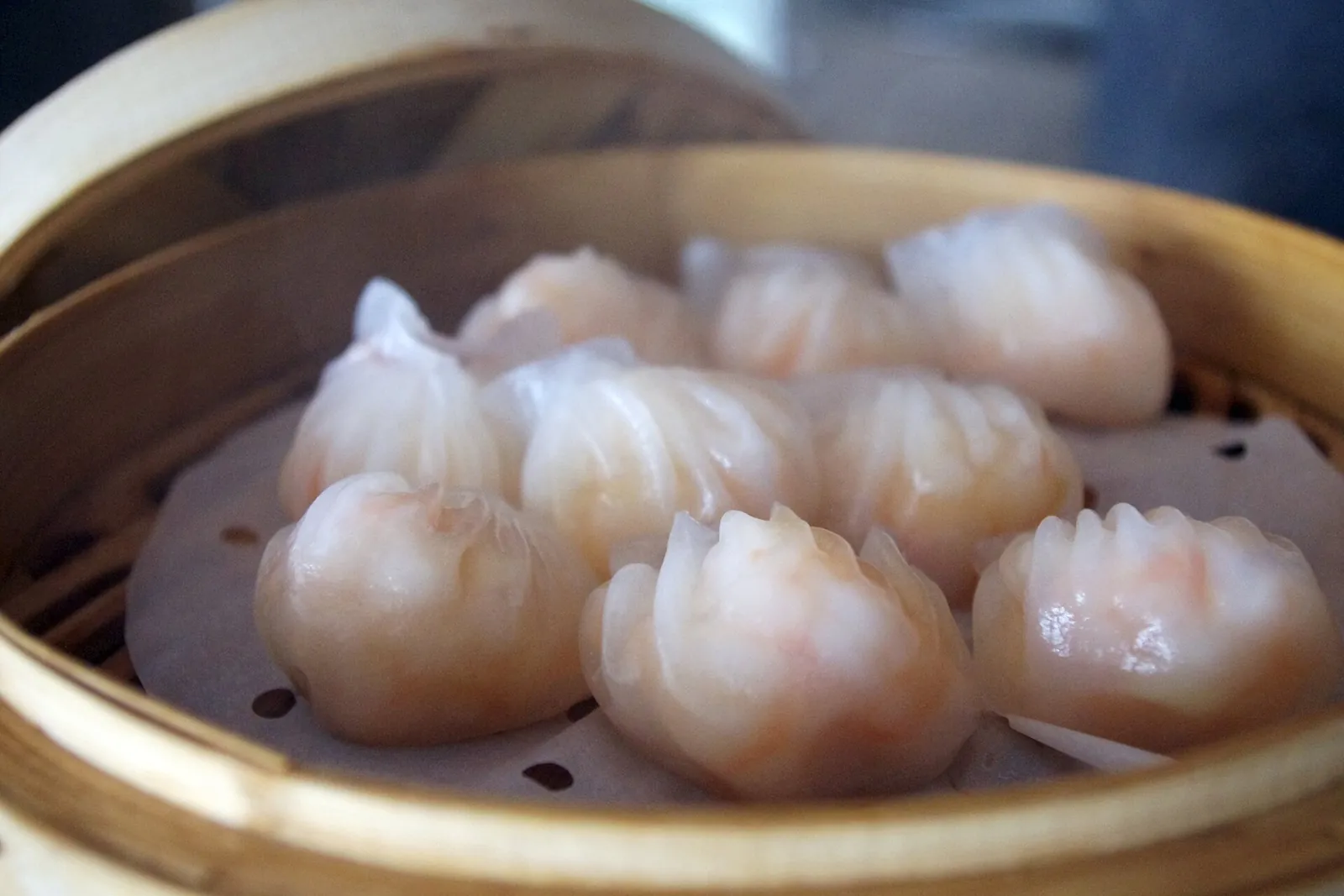
Dim sum is the Cantonese way of eating: small dishes, shared across the table over pots of tea, with shrimp dumplings (har gow) among the first to order. Guangzhou is not on the classic four-city route, but it is a gateway for some trips, and the tea houses there are worth a morning.
Tao Tao Ju (陶陶居), founded in 1880, is one of Guangzhou’s well-known tea houses, and its original address is 20 Dishifu Road in Liwan District (广州市荔湾区第十甫路20号). Since 2015 its owner, Guangzhou Restaurant Group, has opened new-style Tao Tao Ju tea houses in Beijing, Shanghai, Shenzhen and Xiamen. Check the branch’s menu for tea, rice and service charges before ordering.
What to eat and where to look
Peking duck
Duck roasted until the skin is crisp, carved into thin slices and eaten with thin pancakes, sauce, cucumber and spring onion. Quanjude, founded in 1864, roasts in a hung oven.
- Where to look
- Quanjude (全聚德), 30 Qianmen Street, Xicheng District; Bianyifang (便宜坊), Xianyukou food street, east side of Qianmen Street; Liqun Roast Duck (利群烤鸭), No. 11 Beixiangfeng Hutong, near Qianmen, Beijing.
- Fit it into your day
- Beijing dinner, one duck shared by the table; choose side dishes from the current menu and price the complete order for two.
Zhajiangmian, noodles with soybean paste
Hand-made noodles tossed with fried soybean paste and minced pork, served with shredded cucumber, bean sprouts and other vegetables; a Beijing speciality that later spread across China.
- Where to look
- No. 69 Fangzhuanchang Hutong Noodles, No. 1 Fangzhuanchang Hutong, near Nanluoguxiang, Beijing.
- Fit it into your day
- Beijing lunch on a hutong walk, one bowl a person.
Paomo, bread in beef-and-lamb soup
Pita-style bread soaked in a soup of beef and lamb, the dish of Xi’an’s old Muslim and Shaanxi kitchens.
- Where to look
- Lao Sun Jia, at the southern end of Huimin Street (the Muslim Quarter), Xi’an.
- Fit it into your day
- Xi’an lunch, ordered by the bowl; around CNY 30 for mutton paomo (December 2025).
Roujiamo, beef in a baked bun
Chopped meat stuffed into a baked bun, Xi’an’s quick meal; in the Muslim Quarter the meat is beef.
- Where to look
- Snack shops along Huimin Street, the Muslim Quarter, by the Drum Tower, Xi’an.
- Fit it into your day
- Xi’an evening snack in the Muslim Quarter, one bun a person.
Biangbiang and youpo noodles
Wide, hand-pulled biangbiang noodles served by the bowl with vegetables, sauce and chilli; youpo mian has hot oil poured over chilli and garlic on top.
- Where to look
- Yongxingfang food street, Xincheng district, Xi’an, known for youpo noodles and other Shaanxi dishes.
- Fit it into your day
- Xi’an lunch, one bowl a person.
Mapo tofu
Soft tofu with minced beef in a red sauce, hot from chilli and numbing from Sichuan pepper.
- Where to look
- Chen Mapo Tofu (陈麻婆豆腐), which runs three restaurants of its own in Chengdu.
- Fit it into your day
- Chengdu lunch or dinner, shared with rice.
Fuqi feipian, beef and offal in chilli sauce
Beef, ox heart, tongue, tripe and head skin, braised, sliced thin and dressed with red chilli oil and ground Sichuan pepper, served cold; a married couple created it in Chengdu in the early 1930s.
- Where to look
- Fuqi Feipian’s main restaurant on Zongfu Road, Jinjiang District, beside Chunxi Road, Chengdu.
- Fit it into your day
- A cold dish for the table at a Chengdu lunch or dinner.
Long chao shou, Chengdu wontons
Chengdu’s name for wontons: minced pork in thin wrappers, served in a bowl of broth, with red chilli oil if you want the heat.
- Where to look
- Long Chao Shou (龙抄手), founded in 1941, with three restaurants of its own in Chengdu, and the snack restaurants on and around Chunxi Road, Jinjiang District.
- Fit it into your day
- Chengdu lunch, one bowl a person.
Sichuan hotpot
A pot of broth kept boiling at the table, in which everyone cooks thin slices of meat, leafy vegetables, mushrooms, tofu and wontons before dipping them in sauce; a yuanyang pot splits a spicy broth from a plain one.
- Where to look
- The restaurants on and around Chunxi Road, Jinjiang District, Chengdu.
- Fit it into your day
- Chengdu dinner for the table; plan on about CNY 140 a person, the comfort-level dinner in the food-day table.
Xiaolongbao, soup dumplings
Thin-skinned steamed dumplings filled with pork and a spoonful of hot soup, with crab-roe versions in autumn.
- Where to look
- Nanxiang Steam Bun Restaurant (南翔馒头店), 87 Yuyuan Road, Yuyuan Garden Malls; Lai Lai Xiao Long, 506 Tianjin Road, Shanghai.
- Fit it into your day
- Shanghai lunch; about CNY 93 a person at Nanxiang and about CNY 58 at Lai Lai Xiao Long.
Shengjian, pan-fried pork buns
Pork buns fried in a pan until the base is crisp, ordered by the liang, which means four buns.
- Where to look
- Da Hu Chun (大壶春), 136 Middle Sichuan Road, Shanghai.
- Fit it into your day
- Shanghai breakfast; CNY 11 for four buns.
Scallion-oil noodles
Noodles tossed in fragrant scallion oil and soy sauce, with dried shrimp in many shops.
- Where to look
- Huxi Laolongtang Noodle Shop (沪西老弄堂面馆), Room 101, 685 Dingxi Road, Shanghai.
- Fit it into your day
- Shanghai lunch; CNY 7 a serving.
Dim sum with tea
Small steamed and fried dishes, shrimp dumplings among them, shared over pots of tea.
- Where to look
- Tao Tao Ju (陶陶居), 20 Dishifu Road, Liwan District, Guangzhou; the group has also opened tea houses in Beijing and Shanghai.
- Fit it into your day
- An optional Guangzhou morning, for a late breakfast or lunch.
Ordering, paying and eating with a diet
Duck, mapo tofu, fuqi feipian, both kinds of hotpot and dim sum are dishes for the table, ordered to share; noodles, paomo, roujiamo and shengjian are ordered per person. Pay with Alipay or Weixin Pay (also called WeChat Pay). Carry some renminbi. Since 1 February 2026 face-to-face businesses must generally accept cash. Unattended services must offer a way to meet cash-payment needs in special circumstances; wholly online transactions can specify their payment methods. Our payments guide covers setting up both apps.
Dishes that look plain can contain animal products: the scallion-oil noodles come with dried shrimp at Huxi Laolongtang and Cang Lang Ting, mapo tofu is made with minced beef and meat stock, and xiaolongbao and shengjian are filled with pork. If you follow a halal, vegetarian or allergy diet, write what you cannot eat in Chinese on your phone and show it when you order; sauces and stocks are shared between dishes, so no dish can be promised free of a trace.
What food costs a day
| Level | Food per person a day, about CNY | For two a day, about CNY |
|---|---|---|
| Budget | 100 | 200 |
| Mid-range | 180 | 360 |
| Comfort | 350 | 700 |
These are food-day estimates based on the Shanghai price comparisons checked on 26 October 2026, not national tariffs. Each day covers breakfast, lunch, dinner, drinking water and snacks for one adult, with no alcohol and no hotel breakfast counted. In Shanghai terms, a budget day runs on the CNY 7 to 25 noodle bowls and the CNY 11 buns, a mid-range day mixes those with sit-down meals priced between the CNY 25 noodle bowl and Lyceum’s CNY 92 average, and a comfort day puts most dinners near Lao Zheng Xing’s CNY 153 average. Allow about CNY 30 for a simple lunch; prices for a specific noodle or wonton order depend on the menu. For duck and hotpot evenings, replace that day’s dinner estimate with the actual order and add any difference; the 2018 duck comparisons above are not current quotations.
| Meal, per person, about CNY | Budget | Mid-range | Comfort |
|---|---|---|---|
| Breakfast | 15 | 30 | 60 |
| Lunch | 30 | 60 | 110 |
| Dinner | 40 | 70 | 140 |
| Water and snacks | 15 | 20 | 40 |
| Day | 100 | 180 | 350 |
Over the ten days of our trip cost guide, food comes to about CNY 2,000 for two on a budget, CNY 3,600 mid-range and CNY 7,000 in comfort; that guide sets it beside rooms, trains and flights.
Practical questions
How much duck do two people order, and can we walk in?
Start with one duck between two and a vegetable dish or two, rather than a duck each; choose the portion from the current menu. Check the selected restaurant’s current booking arrangements. Plan the duck evening with our Beijing guide.
How spicy is Sichuan food, and can I ask for less?
Mapo tofu and a spicy hotpot broth are both hot and numbing. Ask for less chilli (bù yào tài là, 不要太辣), but check whether the kitchen can adjust the sauce; less chilli is not a promise of mild food or less Sichuan pepper. At hotpot, choose a plain broth if you want to avoid the spicy one.
Where can I eat without pork?
Look at the named Hui restaurants in Xi’an’s Muslim Quarter, then check the specific menu and ingredients; a neighbourhood or an owner’s background does not guarantee that every stall is pork-free or halal-certified. Dumplings, buns and wontons elsewhere often contain pork, so ask before ordering.
Can I pay with a foreign card in a restaurant?
Card terminals that show your card network’s logo may accept a card issued outside mainland China; where no logo is shown, ask the cashier. Our payments guide explains how to link a card to the apps.
Keep planning your trip
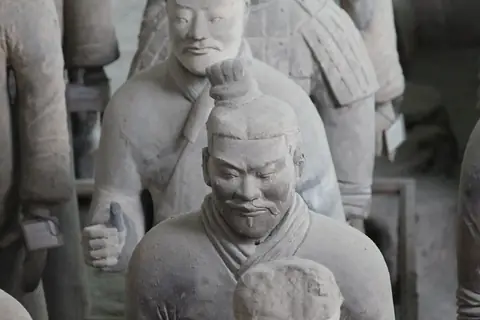
First trip to China
How long a first China trip should be, then a week in Beijing, Xi’an and Shanghai: what to book first, the trains, entry, paying and the cost per day.
Read the guide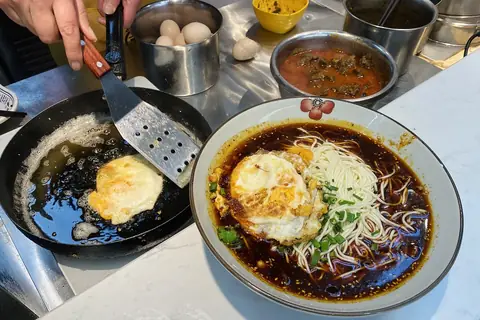
Chongqing and the Yangtze
Two nights in Chongqing, three on a Yangtze cruise to Yichang, a night train to Shanghai: the 2027 fares, life on board, booking and the week's cost.
Read the guide
Payments and apps in China
How to pay in China with a foreign card on Alipay and Weixin Pay (WeChat Pay): fees, limits, cash, a passport SIM, and the map, ride and translation apps in English.
Read the guide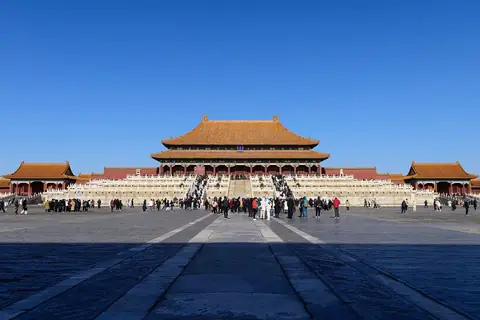
Beijing
Three nights in Beijing: which imperial sights to book first, how passport tickets and Monday closures shape the days, where to stay, airport links and what it all costs.
Read the guide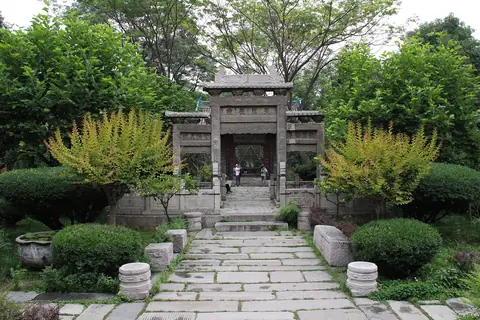
Xi’an
Two nights in Xi’an: booking the Terracotta Army and the Shaanxi History Museum with a passport, the City Wall, where to stay and what it costs.
Read the guide
Shanghai
Three nights in Shanghai: the Bund and a river cruise, Yu Garden, the French Concession, Pudong, Shanghai Museum East, Zhujiajiao, airports and costs.
Read the guideSources and checks before you travel
(22)
- Visit Beijing: Eating Peking Ducks during End of Heat (21 August 2018) ↗ — opens in a new tab
- Visit Beijing: Zha Jiang Mian ↗ — opens in a new tab
- Visit Beijing: where to eat instant-boiled mutton ↗ — opens in a new tab
- Ministry of Commerce time-honoured brand museum: Chen Mapo ↗ — opens in a new tab
- China Daily government portal: Hotpot (17 June 2019) ↗ — opens in a new tab
- China Daily government portal: Sichuan hotpot (29 May 2019) ↗ — opens in a new tab
- China Daily government portal: Chunxi Road, Chengdu (24 July 2019) ↗ — opens in a new tab
- Ministry of Commerce time-honoured brand museum: Fuqi Feipian ↗ — opens in a new tab
- Ministry of Commerce time-honoured brand museum: Long Chao Shou ↗ — opens in a new tab
- Xi’an Municipal Government: Time-honored brands in Xi’an (China Daily, 31 January 2019) ↗ — opens in a new tab
- China Daily government portal: Xi’an Bell and Drum Tower Commercial Center (12 February 2019) ↗ — opens in a new tab
- China Daily government portal: Landmark food street recovers its appetite (9 October 2020) ↗ — opens in a new tab
- Xi’an Municipal Government: two districts among China’s top 100 for specialty foods (26 March 2021) ↗ — opens in a new tab
- China Daily government portal: Tastes and traditions of the Yellow River, Shaanxi (19 December 2025) ↗ — opens in a new tab
- Shanghai Municipal Government: Xiaolongbao (16 March 2026) ↗ — opens in a new tab
- Shanghai Municipal Government: Pan-fried pork buns (30 April 2026) ↗ — opens in a new tab
- Shanghai Municipal Government: Scallion oil noodles (24 April 2026) ↗ — opens in a new tab
- Shanghai Municipal Government: Yanduxian (10 April 2026) ↗ — opens in a new tab
- Shanghai Municipal Government: Red-braised pork belly (9 May 2026) ↗ — opens in a new tab
- Guangzhou Restaurant Group: Tao Tao Ju ↗ — opens in a new tab
- Shanghai Municipal Government: pay with overseas bank cards (21 September 2026) ↗ — opens in a new tab
- State Council Gazette: rules on RMB cash payment and services ↗ — opens in a new tab
Reference sources for the version dated 26 October 2026. Confirm opening times, access, transport and conditions for your travel dates.
Photo credits
(5)
Sliced Peking duck with pancakes, sweet bean sauce, cucumber and spring onion, as served at Bianyifang Restaurant in Beijing.
Photograph: Daifawei — opens in a new tab · CC BY-SA 4.0 — opens in a new tab
Changes: Resized and converted to WebP; displayed with responsive crops. · Original photograph and licence details ↗ — opens in a new tab
Mapo tofu: soft tofu in a red chilli sauce with minced beef, finished with Sichuan pepper.
Photograph: ZhengZhou — opens in a new tab · CC BY-SA 4.0 — opens in a new tab
Changes: Resized and converted to WebP; displayed with responsive crops. · Original photograph and licence details ↗ — opens in a new tab
Biangbiang noodles, the wide Shaanxi belt noodles, in a blue-and-white bowl at a Shaanxi-style restaurant in Beijing.
Photograph: N509FZ — opens in a new tab · CC BY-SA 4.0 — opens in a new tab
Changes: Resized and converted to WebP; top edge cropped to remove a branded drink bottle; displayed with responsive crops. · Original photograph and licence details ↗ — opens in a new tab
Har gow, translucent shrimp dumplings, in a bamboo steamer: often among the first dishes ordered at a Cantonese dim sum meal. Photographed at a Guangzhou hotel.
Photograph: Matt @ PEK — opens in a new tab · CC BY-SA 2.0 — opens in a new tab
Changes: Resized and converted to WebP; displayed with responsive crops. · Original photograph and licence details ↗ — opens in a new tab
A spicy hotpot on a restaurant table in Shenzhen, with dipping sauces, lettuce and side dishes
Photo: Koutaro Furuno