Plan your trip
China festivals and holidays in 2027: dates, crowds and side trips
China's calendar decides how crowded the trains, museums and old towns are, more than any season does. Some dates are fixed by law, some follow the lunar calendar, and the long breaks that Chinese families actually take are announced only about a year at a time. This guide separates the three, so you know which dates to avoid and which festivals are worth building a trip around.
In this guide
Find the location ↗ — opens in a new tabThe short answer
China's 2027 peaks are the New Year travel rush, 22 January to 2 March, and breaks of 1 to 5 May and 1 to 7 October, all expected but not yet confirmed. Chinese New Year is 6 February. For Harbin's Ice and Snow World and Sun Island, stay two nights between late December, when Sun Island opens, and 21 January, before the rush; 2025-26 tickets were CNY 328 and 198. Xishuangbanna's Water-Splashing is 13 to 15 April. A 2027 trip needs a visa unless the waiver is extended. Book cancellable rooms first, then trains the day sales open: 12306 sells up to 15 days ahead, counting the day you buy.
- Key point
- Two nights in Harbin in January; four nights in Xishuangbanna, 12 to 16 April.
- Where it applies
- Harbin for the ice festival in January, Jinghong in Xishuangbanna for Water-Splashing in April, Beijing for the Spring Festival temple fairs.
- Timing
- The busiest periods in 2027 are expected to be the Spring Festival travel rush, 22 January to 2 March, and the breaks of 1 to 5 May and 1 to 7 October.
All 24 countries in one place: the Asia festival calendar 2027 →
The 2027 calendar: festival dates, statutory days and breaks
A festival date is a calendar fact, a statutory day is a legal right to leave, and a break is the longer block the government builds by moving working days around. Under China's holiday rules in force since 1 January 2025, Spring Festival is four statutory days (the lunar New Year's Eve and the first three days of the new year), Labour Day two (1 and 2 May) and National Day three (1 to 3 October). Qingming, Dragon Boat and Mid-Autumn are one day each, and New Year's Day is 1 January. In 2027 Dragon Boat and Mid-Autumn both fall on a Wednesday, so each is a single day off, not a long weekend. Golden Week is therefore adjusted leave, not seven statutory days.
The State Council sets the adjusted breaks and make-up working days a year at a time, and the 2026 swaps, including that year's nine-day Spring Festival break, do not carry over. For 2027, the adjusted breaks, the travel-rush dates and the Harbin opening below are expected but not yet confirmed.
- New Year's Day: Friday 1 January, one statutory day.
- Harbin Ice and Snow Festival: opening ceremony in early January.
- Chunyun, the Spring Festival travel rush: 22 January to 2 March, 40 days.
- Spring Festival Eve: Friday 5 February. Chinese New Year: Saturday 6 February. Statutory days 5 to 8 February; break 5 to 12 February.
- Lantern Festival: Saturday 20 February, not a public holiday.
- Qingming: Monday 5 April, one statutory day; break expected 3 to 5 April.
- Water-Splashing Festival, Xishuangbanna: 13 to 15 April, the same dates every year.
- Labour Day: statutory days Saturday 1 and Sunday 2 May; break 1 to 5 May.
- Dragon Boat: Wednesday 9 June, one statutory day.
- Mid-Autumn: Wednesday 15 September, one statutory day.
- National Day: statutory days 1 to 3 October; Golden Week 1 to 7 October.
Chinese New Year and the travel rush
Spring Festival is the one holiday when a large part of the country is on the move at once. The travel rush, Chunyun, is expected from 22 January to 2 March 2027. Intercity trains and flights are in the heaviest demand of the year in the days before the break and again as it ends, when people head home and then back to work.
The festival itself is a family occasion, and its public face is the temple fair. In Beijing the Ditan fair, in the park of the Temple of Earth, ran from the first to the seventh day of the new year in 2026, 08:30 to 17:00. It had lion dances, stages for acrobatics, magic, face-changing and Peking opera, a re-enacted ancient rite at the Fangze Altar from 09:00 to 09:30 each morning, and stalls of old Beijing brands, crafts and snacks. Tickets cost CNY 30 (CNY 15 for students and visitors over 60, free for children up to 1.2 metres tall); in 2026 they were sold online and scanned at the gate. The Longtan fair and the Changdian fair around Liulichang opened on the same day. The first seven days of the 2027 New Year are 6 to 12 February, in the middle of the travel rush: arrive in Beijing before the busiest travel days just ahead of the break, and stay in the city for the fair days rather than moving on.
Many small restaurants and snack shops close for several days around the festival. In Hangzhou, many snack and noodle shops reopened only between the sixth and eleventh day of the 2025 New Year, while some larger and well-known restaurants stayed open, so book those for the first days of the holiday.
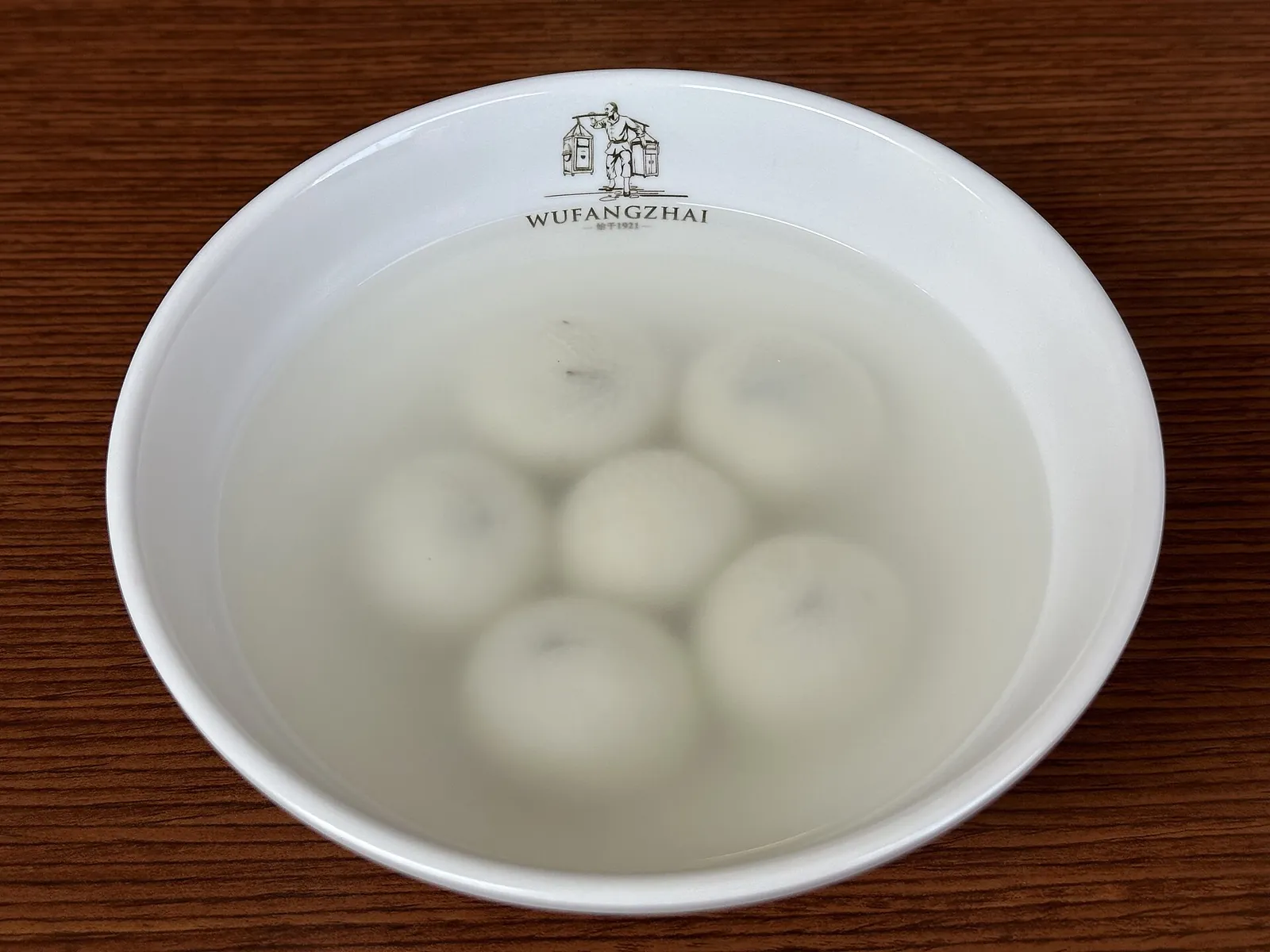
The Lantern Festival closes the New Year season on the 15th day of the first lunar month, Saturday 20 February 2027. People traditionally eat sweet glutinous-rice dumplings, tangyuan, and it is not a public holiday. Shanghai's Yuyuan Lantern Festival is the big one on the usual route. Its dates change each year, and the 2026 programme was announced on 16 January, about ten days before opening. In 2026 it ran for 36 nights, from 26 January to 3 March, with horse-themed lanterns over the streets around Yu Garden and on the Jiuqu Bridge. The main folk-art zone was ticketed at CNY 80 per adult and CNY 50 per child, sold through the Yuyuan Garden Malls account on Weixin (WeChat) and ticket platforms, and five other lantern zones, one of them on the Bund, were free.
Harbin in winter
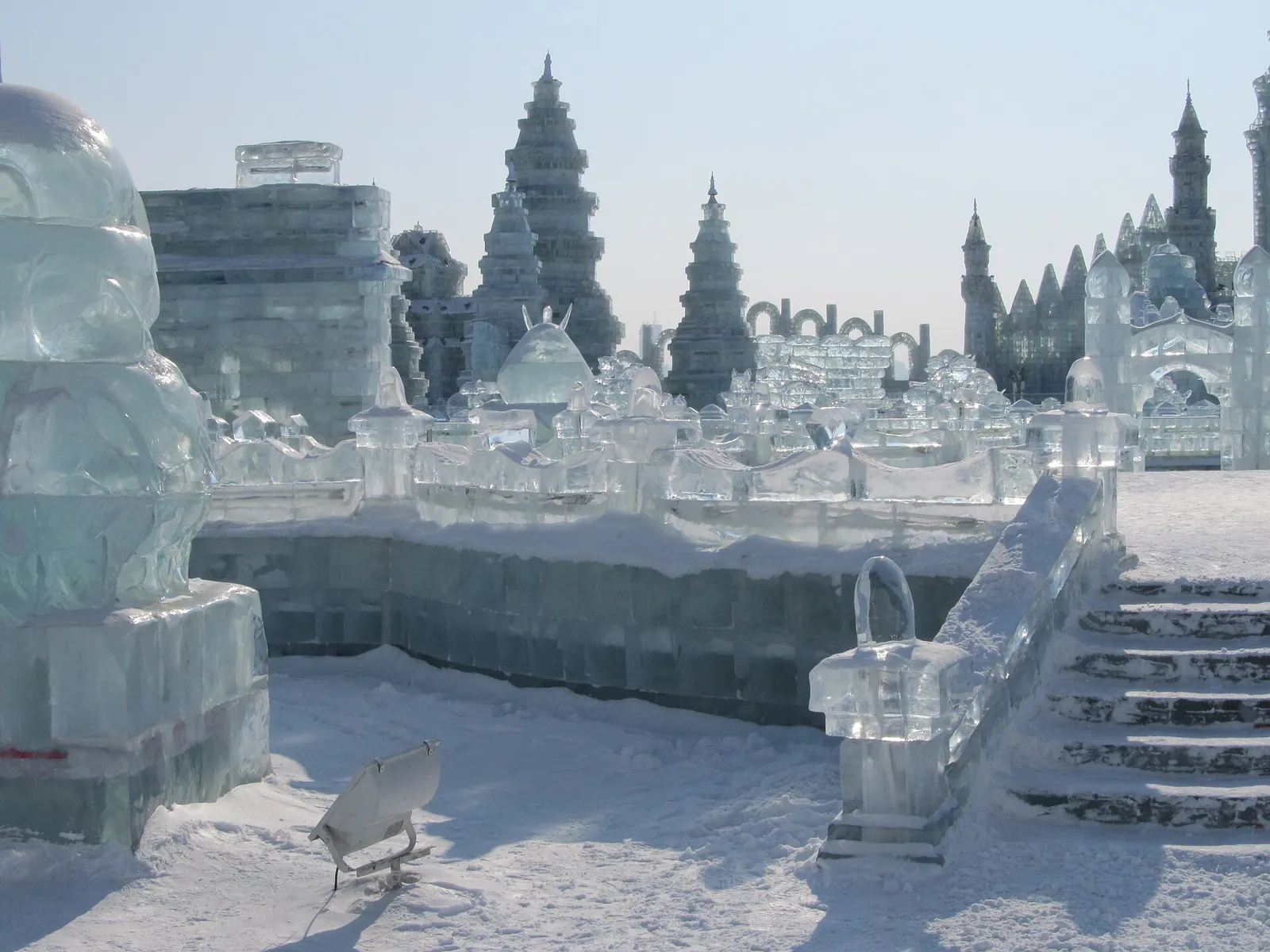
The Harbin International Ice and Snow Festival is the reason to go to the far north in winter. Its centrepiece, Harbin Ice and Snow World, is a park of buildings carved from ice. In the 2025-26 season it had a main ice tower, a fairy-tale castle, an ice copy of Wuhan's Yellow Crane Tower, Harbin's old railway station as the entrance gate, a giant ice slide and a snowflake Ferris wheel. It is grand by day and colourful after dark, and many visitors stay from morning into the night. The park opened that season on 17 December 2025 at 10:00, and a standard adult ticket cost CNY 328 per person (CNY 298 in the opening week), sold in advance through the park's official Weixin account and on Ctrip, Douyin, Meituan and Alipay. The park stays open into the evening; check the day's closing time on its official Weixin account before you go.
On Sun Island nearby, the Snow Sculpture Expo is the daytime half of a visit. It opened later than the ice park, on 31 December in 2025, and that season it showed more than 260 snow sculptures across 150 hectares, open 09:00 to 17:00 (last tickets 16:00), for CNY 198 per person. That makes a natural day: Sun Island in daylight, then Ice and Snow World from late afternoon into the evening; Heilongjiang's tourism department suggests entering the ice park at 15:30 to 16:00 to see the carvings by daylight and the lights come on. A walk on the frozen Songhua River fits into the same day.
The festival's opening ceremony comes in early January; in 2026 it was held on 5 January at Ice and Snow World, with fireworks and a drone show. The park's season ends with the thaw: in 2026 it closed on 21 February after record warm days melted the ice. The window for both sights runs from late December, once Sun Island opens, to 21 January, before the Spring Festival rush begins. Plan Harbin as a winter add-on of two nights, not as a stop on the usual Beijing, Xi’an and Shanghai route: arrive on day one, spend day two on Sun Island and at Ice and Snow World, and leave on day three. Book cancellable rooms in Harbin as soon as your dates are fixed. The fastest high-speed trains from Beijing Chaoyang to Harbin West take 4 h 33 min, with second class at CNY 605 to 634 on most trains (12306, checked for 5 November 2026). In the city, metro line 2 stops at both Sun Island and Ice and Snow World; from Harbin West, take line 3 to Zhujiang Road and change to line 2.
January in Harbin averages highs of about -13°C and lows of about -25°C, so bring thermal layers, a hat that covers your ears, insulated boots and gloves, and plan warm indoor breaks.
Qingming and the Water-Splashing Festival, April
Qingming, also called Pure Brightness Day, falls around 5 April and is traditionally the day for honouring ancestors at their graves. Many families also go out to the edge of the city to walk on the grass and fly kites, which is why it is sometimes called Walking amid Greenery Day. In 2027 it falls on Monday 5 April, and a break of 3 to 5 April, with the weekend, is expected.
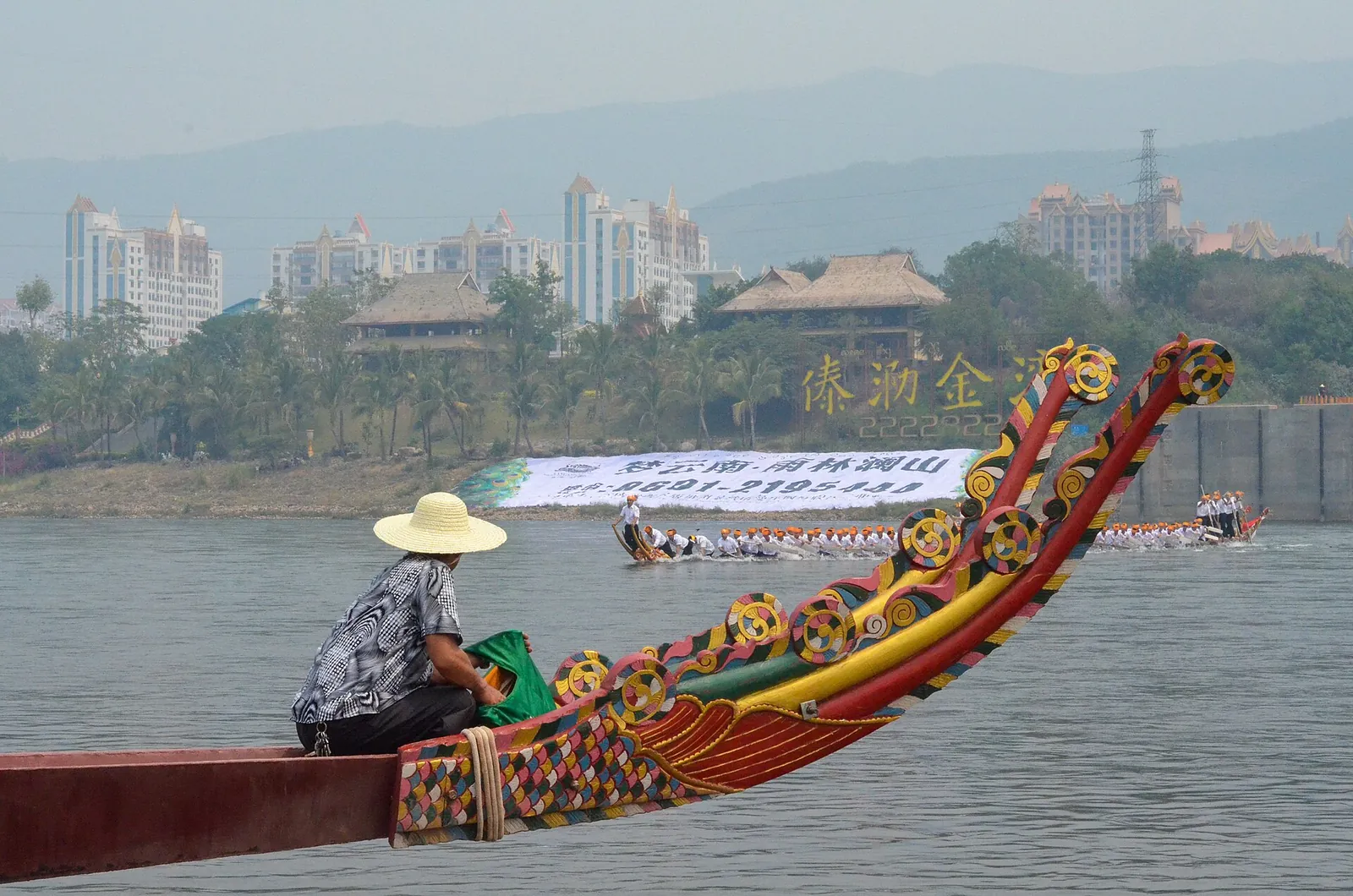
The Dai people's New Year, the Water-Splashing Festival, is the festival most worth a dedicated trip to Yunnan. It is celebrated on 13 to 15 April every year. In 2026 the opening ceremony took place on the bank of the Lancang River at Xishuangbanna with dance and music, a dragon-boat demonstration race between 12 township teams, a market and a mass release of sky lanterns. The prefecture publishes each year's programme and splashing venues nearer the time, so book cancellable rooms for 12 to 16 April as soon as your dates are fixed, rather than for the splashing days alone. Bullet trains on the China–Laos Railway run from Kunming South to Xishuangbanna station, in Jinghong, in 3 h 10 min to 3 h 32 min, with second class at CNY 198 to 239 on the same 12306 check; the flight option is Xishuangbanna Gasa International Airport.
The mass splashing comes on the last day, 15 April. In both 2024 and 2026 it began at the Water-Splashing Square in Jinghong, and in 2024 tens of thousands of residents and visitors carried it into the streets and lanes, throwing water over everyone as a blessing for the new year. Expect to be drenched, and keep your phone and passport in a waterproof bag.
Dragon Boat, June
Dragon Boat falls on Wednesday 9 June, the fifth day of the fifth lunar month. It commemorates the poet Qu Yuan, and the food of the day is zongzi, pyramid-shaped dumplings of glutinous rice wrapped in leaves.
Races are announced city by city, often for days around the festival rather than the day itself. Guangzhou has held its international invitation race on the Pearl River since 1985. In 2026 the date was announced on 11 June: the race was held on Saturday 20 June, the day after the festival, with heats from 09:00 to 12:00 and finals from 14:00 to 16:00 between the Sun Yat-sen University north gate and Guangzhou Bridge; spectators watch from the south bank. Miluo in Hunan, on the river where Qu Yuan drowned, held the finals of the provincial dragon-boat league on 17 and 18 June 2026 at its international racing centre, with tickets on sale.
Mid-Autumn and the Qiantang tide, September
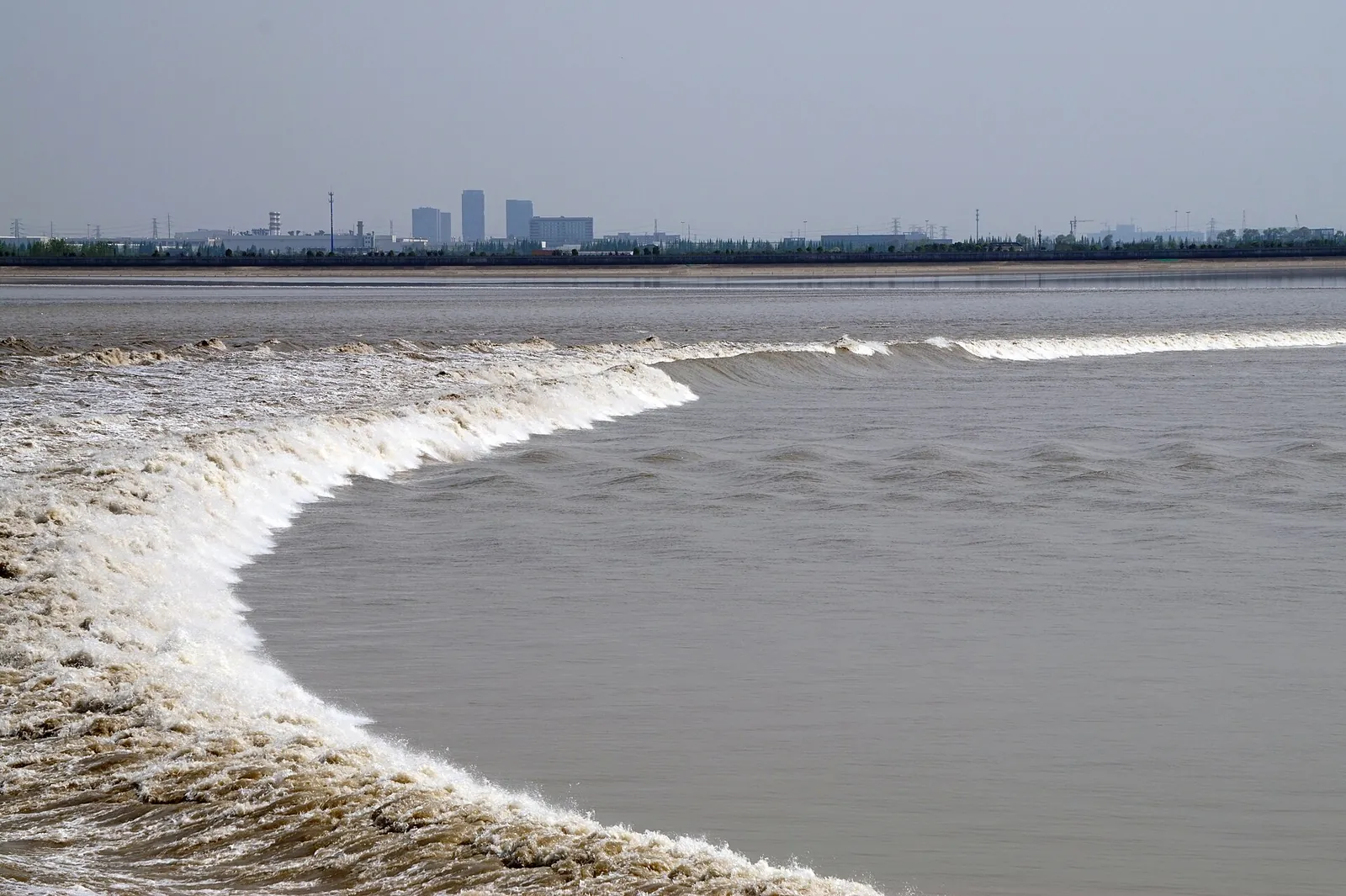
Mid-Autumn, on Wednesday 15 September, is a festival of family reunion, when people traditionally eat moon cakes. Three days later, on Saturday 18 September 2027, the 18th day of the eighth lunar month, the tidal bore on the Qiantang River is traditionally at its strongest. Zhejiang's river experts recommend Yanguan in Haining, east of Hangzhou, for the 'single-line' tide, a wall of water advancing across the river; the scenic area there has protective barriers and an open view. From Hangzhou, the Hangzhou–Haining intercity line runs to Yanguan station, where buses and taxis go on to the scenic area; from Haining West on the high-speed line, a taxi takes 20 to 30 minutes. The tide-viewing park charged CNY 30 a person in June 2026, best bought in advance through the Yanguan Ancient Town mini-programme. Check the day's tide time before you go and arrive about an hour early to find a place on the bank.
Labour Day and Golden Week, May and October
These are the two long breaks outside the New Year. By law, 1 and 2 May and 1 to 3 October are days off; with moved working days, breaks of 1 to 5 May and 1 to 7 October 2027 (Golden Week) are expected. Families travel across the country, so the trains are fullest on the days either side of each break, and the big sights are at their busiest during it. National Day on Friday 1 October opens Golden Week; if you can, avoid the whole week.
Timed tickets go first. The Forbidden City opens each day’s tickets seven days ahead at 20:00 China time and sells none on the day; the Great Wall at Mutianyu sells named tickets up to 30 days ahead, one per passport per day. West Lake in Hangzhou is free and needs no ticket, so nothing caps the crowds on its shores; Leifeng Pagoda above it sells tickets on official platforms up to 7 days ahead. Rooms and flights cost more for the whole break, so if your dates touch one, book cancellable rooms as soon as they are fixed, or travel the week before or after.
Regional festivals worth a side trip
Zigong Lantern Festival, January to March. The Zigong International Dinosaur Lantern Festival in southern Sichuan opens in January, before the New Year. In 2026 it lit up on 23 January at the Chinese Lantern World park, with 11 giant lantern groups and more than 200 smaller ones; adult tickets were CNY 118, rising to CNY 168 from 15 February to 3 March, the Spring Festival weeks, and the park closed on New Year’s Eve. The fastest trains from Chengdu East to Zigong take 50 minutes, so it works as an evening out from Chengdu.
Luoyang Peony Festival, April. The China Luoyang Peony Culture Festival in Henan usually runs in April: in 2024 its events ran from 1 to 15 April, and the flowers lasted into early May in gardens such as the National Peony Garden and Wangcheng Park. The fastest trains from Xi’an North to Luoyang Longmen take 1 h 15 min, an easy day or overnight from Xi’an.
Yi Torch Festival, summer. The Yi people’s Torch Festival falls on the 24th day of the sixth lunar month, which is 27 July in 2027, and is celebrated across the Liangshan prefecture of southern Sichuan, where people carry torches round the fields at night and dance round bonfires. In 2026 Xichang’s festival opened on 6 August. The fastest trains from Chengdu South to Xichang West take 2 h 55 min.
Booking around a holiday
Book cancellable rooms first, and flights if you need them, as soon as your dates are fixed. Train tickets go on sale up to 15 days ahead, counting the day you buy, and the railway can change that with advance notice, so a ticket for a peak travel day cannot be bought months in advance: buy it on the day sales open. Our transport guide explains the 12306 app and passport ticketing.
Most tickets in this guide sell mainly through Chinese apps: Ice and Snow World through its official Weixin account, Ctrip and Alipay, Sun Island and the Yuyuan folk-art zone through their Weixin accounts, the Yanguan tide park through a mini-programme and the Ditan fair online. Before you travel, set up Weixin, verify it with your passport and link a card, as our payments guide explains.
The weeks just after Golden Week are the strongest window of the year for the Beijing, Xi’an and Shanghai route; see our best time guide for the weather behind that.
The Palace Museum is closed all day on Mondays except public holidays and changes its hours around them; check each venue's own notices for the break you are travelling in. Our trip cost guide prices an ordinary date.
Guangzhou, the Dragon Boat city above, also hosts the Canton Fair (China Import and Export Fair) twice a year, in spring and autumn, each session in three five-day phases; the 2026 sessions were scheduled for 15 April to 5 May and 15 October to 4 November. The organisers announce each session’s dates, so if your trip passes through Guangzhou in late April, early May, late October or early November, book cancellable rooms early.
The British government says floods and storms are common from May to November, and that typhoons hit southern and eastern coasts in the same season; keep a spare day around any outdoor event in those months.
The 30-day visa-free entry for the nationalities listed in our entry guide runs to 31 December 2026; no extension has been published. US and Czech passports are not covered. A 2027 trip therefore needs a published extension or a visa, unless you qualify for the 240-hour transit rule: an ordinary passport, a confirmed onward ticket with a date and seat to a third country or region, entry through one of 65 designated ports and travel only within the permitted area. A return to where you started does not count. Harbin and Xishuangbanna are both inside the permitted area.
Rules at crowded events
Carry your original passport at all times; a printed copy is not accepted. The British government says police carry out random checks, especially during periods of heightened security and major sporting or political events. At any festival, follow the organisers' admission and crowd instructions, and avoid demonstrations, political gatherings and any activist activity; the French government warns of prison, expulsion and a ban on returning.
Temples and other places of worship can set their own photography rules, so follow the signs or ask; never photograph military or official sites, some of which are not signposted. Check your own government’s current travel advice before you book.
Practical questions
When is Chinese New Year in 2027?
Saturday 6 February 2027, the first day of the first lunar month. New Year's Eve is Friday 5 February, and the four statutory days are 5 to 8 February.
Has China announced its 2027 public holiday breaks?
Not as of 26 October 2026. The State Council publishes the adjusted breaks and make-up working days for the year ahead, usually in November: the 2026 notice was dated 4 November 2025, so look for the 2027 notice on gov.cn in November 2026.
When is Golden Week in 2027?
The expected dates are 1 to 7 October 2027, a seven-day break. Only 1 to 3 October are statutory days, and the rest is made up by moving working days.
When is the Chinese New Year travel rush in 2027?
Expected for 40 days, from 22 January to 2 March 2027; the dates are not yet announced. Trains and flights are busiest just before the break and again as it ends.
When is the Water-Splashing Festival in Xishuangbanna?
It is celebrated on 13 to 15 April every year, so 13 to 15 April 2027. The mass splashing is on the last day; in 2024 and 2026 it began at the Water-Splashing Square in Jinghong.
When does the Harbin Ice and Snow Festival open in 2027?
The opening ceremony is held in early January; the 2026 festival opened on 5 January. Ice and Snow World opens its own season earlier, on 17 December in 2025, and closes when the ice melts; Sun Island's snow sculptures opened on 31 December 2025.
Keep planning your trip

Best time to visit China
When to go to China by region and month: spring and autumn for Beijing, Xi’an and Shanghai, rain and typhoon seasons, and the expected 2027 holiday peaks.
Read the guide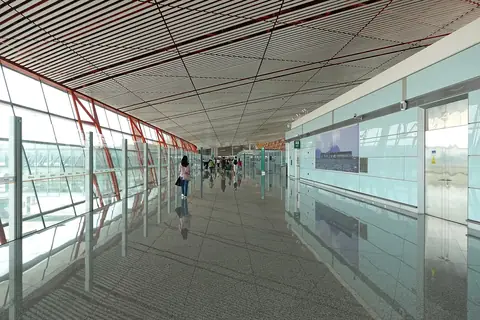
Entering China
Who can enter China visa-free for 30 days, when the waiver ends, how 240-hour transit works, and the arrival card, hotel registration, customs and safety rules.
Read the guide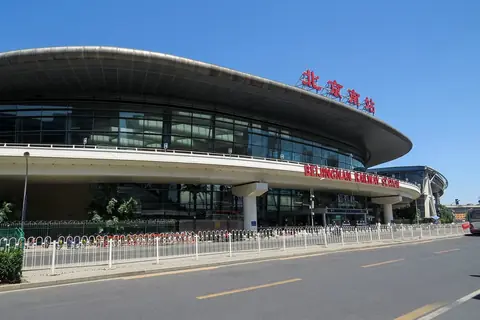
Getting around China
Book China's high-speed trains on 12306 with a foreign passport, decide when to fly, and get from the airports and stations into town.
Read the guide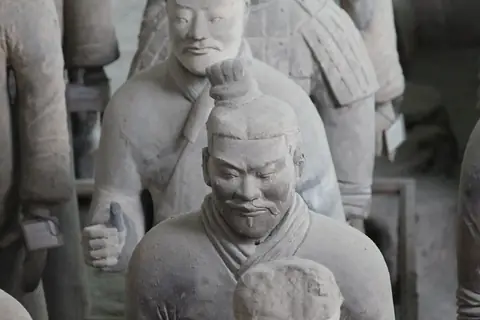
First trip to China
How long a first China trip should be, then a week in Beijing, Xi’an and Shanghai: what to book first, the trains, entry, paying and the cost per day.
Read the guide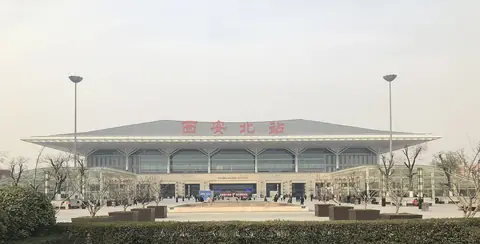
China trip cost
What 10 days in Beijing, Xi’an, Chengdu and Shanghai cost for two sharing a room: about CNY 7,360, 10,140 or 15,950 a person, with every meal, train and ticket.
Read the guide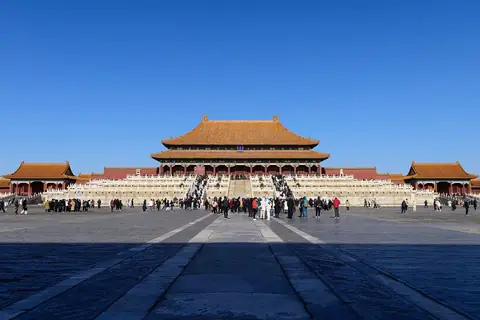
Beijing
Three nights in Beijing: which imperial sights to book first, how passport tickets and Monday closures shape the days, where to stay, airport links and what it all costs.
Read the guideSources and checks before you travel
(45)
- State Council: decision amending the national holiday rules (November 2024) ↗ — opens in a new tab
- State Council: 2026 holiday arrangements notice ↗ — opens in a new tab
- China Foreign Exchange Trade System: preset 2027 holidays for the local-currency trading system ↗ — opens in a new tab
- Hong Kong Observatory: 2027 lunar calendar table ↗ — opens in a new tab
- Hong Kong Government: general holidays for 2027 ↗ — opens in a new tab
- Ministry of Transport: Spring Festival travel rush briefing (January 2026) ↗ — opens in a new tab
- Ministry of Culture and Tourism: 42nd Harbin International Ice and Snow Festival opens ↗ — opens in a new tab
- Heilongjiang Department of Culture and Tourism: 27th Harbin Ice and Snow World opens on 17 December ↗ — opens in a new tab
- Heilongjiang Department of Culture and Tourism: Ice and Snow World opening day report ↗ — opens in a new tab
- Heilongjiang Provincial Government: 27th Harbin Ice and Snow World closes ↗ — opens in a new tab
- Heilongjiang Department of Culture and Tourism: 38th Sun Island International Snow Sculpture Art Expo ↗ — opens in a new tab
- China Railway 12306: timetable and fare query ↗ — opens in a new tab
- Heilongjiang Department of Culture and Tourism: Harbin Ice and Snow World with children in the winter holiday (January 2026) ↗ — opens in a new tab
- Heilongjiang Department of Culture and Tourism: Sun Island Snow Sculpture Expo visitor guide (December 2024) ↗ — opens in a new tab
- World Meteorological Organization: Harbin climatological information ↗ — opens in a new tab
- Yunnan Publicity Network: Xishuangbanna Dai New Year celebration ↗ — opens in a new tab
- Yunnan Publicity Network: Xishuangbanna celebrates the 2024 Water-Splashing Festival ↗ — opens in a new tab
- Xinhua News Agency: Xishuangbanna celebrates the Water-Splashing Festival (April 2026) ↗ — opens in a new tab
- National Development and Reform Commission: Xishuangbanna station on the China-Laos Railway (October 2021) ↗ — opens in a new tab
- Beijing Municipal Government: five temple fairs open on the first day of the 2026 New Year ↗ — opens in a new tab
- Beijing Dongcheng District Development and Reform Commission: Ditan and Longtan temple fair ticket prices ↗ — opens in a new tab
- Hangzhou CPPCC: which Hangzhou restaurants close over Spring Festival (January 2025) ↗ — opens in a new tab
- Shanghai Municipal Government: 2026 Yuyuan Lantern Festival tickets ↗ — opens in a new tab
- Guangzhou Sports Bureau: 2026 Guangzhou International Dragon Boat Invitational on 20 June ↗ — opens in a new tab
- Hunan Provincial Government: 2026 Hunan Dragon Boat Super League finals at Miluo ↗ — opens in a new tab
- China Internet Information Center: Chinese traditional festivals ↗ — opens in a new tab
- Xinhua News Agency: where to watch the Qiantang tide (October 2023) ↗ — opens in a new tab
- People's Daily photo service: Yanguan, an underrated ancient town (June 2026) ↗ — opens in a new tab
- China Railway: ticket sales rules ↗ — opens in a new tab
- Palace Museum: visiting information ↗ — opens in a new tab
- Ministry of Foreign Affairs: visa-free policy FAQ ↗ — opens in a new tab
- UK Foreign, Commonwealth and Development Office: China entry requirements ↗ — opens in a new tab
- Chinese Consulate General in Toronto: visa-free transit policy and the 65-port table ↗ — opens in a new tab
- IATA: airport code search, Harbin ↗ — opens in a new tab
- UK Foreign, Commonwealth and Development Office: China safety and security ↗ — opens in a new tab
- French Ministry for Europe and Foreign Affairs: China useful information ↗ — opens in a new tab
- Palace Museum: visitor notice ↗ — opens in a new tab
- Mutianyu Great Wall: visitor notice and ticket rules (Chinese) ↗ — opens in a new tab
- Ministry of Culture and Tourism (Travel China): West Lake in Hangzhou ↗ — opens in a new tab
- Ministry of Commerce: 139th Canton Fair (spring 2026) ↗ — opens in a new tab
- Chinese Consulate General in Toronto: 140th Canton Fair (autumn 2026) ↗ — opens in a new tab
- Xinhua News Agency (Sichuan): 32nd Zigong International Dinosaur Lantern Festival (January 2026) ↗ — opens in a new tab
- People's Daily: Luoyang peonies draw crowds (April 2024) ↗ — opens in a new tab
- Xinhua News Agency: the Yi Torch Festival in Liangshan (August 2026) ↗ — opens in a new tab
- Xinhua News Agency (Sichuan): 2026 Xichang Yi Torch Festival opens on 6 August ↗ — opens in a new tab
Reference sources for the version dated 26 October 2026. Confirm opening times, access, transport and conditions for your travel dates.
Photo credits
(4)
Harbin Ice and Snow World by day during the festival, photographed in January 2013.
Photograph: Tracy Hunter — opens in a new tab · CC BY 2.0 — opens in a new tab
Changes: Resized and converted to WebP; displayed with responsive crops. · Original photograph and licence details ↗ — opens in a new tab
Tangyuan, the glutinous-rice dumplings eaten at the Lantern Festival, in a bowl at Wufangzhai in Wuhan.
Photograph: Zheng Zhou — opens in a new tab · CC BY-SA 4.0 — opens in a new tab
Changes: Resized and converted to WebP; displayed with responsive crops. · Original photograph and licence details ↗ — opens in a new tab
Dragon-boat racing on the Lancang (Mekong) at Jinghong, Xishuangbanna, during Water-Splashing celebrations. Photographed in April 2013.
Photograph: Peter Olshevsky — opens in a new tab · CC BY-SA 4.0 — opens in a new tab
Changes: Resized and converted to WebP; displayed with responsive crops. · Original photograph and licence details ↗ — opens in a new tab
The tidal bore on the Qiantang River at Yanguan, Haining, photographed in April 2017; the strongest tides come around the 18th day of the eighth lunar month
Photograph: 三猎 — opens in a new tab · CC BY-SA 4.0 — opens in a new tab
Changes: Resized and converted to WebP; displayed with responsive crops. · Original photograph and licence details ↗ — opens in a new tab