Itineraries
China in 14 days: Beijing, Xi’an, Chengdu, Yangshuo and Shanghai
Fourteen days lets you add what a one-week trip cannot: the pandas of Chengdu and three slow nights among the karst hills of Yangshuo, between the imperial sights of the north and the river city in the east. The route covers five bases with three long train rides and a single flight, and it asks for planning rather than stamina. The Forbidden City, the Terracotta Army, the Great Wall and the Panda Base open their ticket sales on different days, so the booking order matters more than the packing list.
In this guide
Find the location ↗ — opens in a new tabThe short answer
Book thirteen nights: three in Beijing, two in Xi’an, two in Chengdu, three in Yangshuo and three in Shanghai, flying into Beijing and home from Shanghai. Arrive on a Saturday, Monday, Tuesday or Wednesday so the Forbidden City and day 12’s garden and museum are open. Book in the order sales open: Mutianyu up to 30 days ahead, each train up to 15 days ahead counting the day you buy, the Panda Base at 14 days and the Forbidden City (CNY 40 from November, CNY 60 April to October) at 20:00 seven days ahead. Two people at mid-range spend about CNY 27,520 on the ground (CNY 13,760 each) before flights.
- Suggested time
- 14 days / 13 nights: Beijing 3, Xi’an 2, Chengdu 2, Yangshuo 3, Shanghai 3
- Route
- Beijing 3 nights
- Xi’an 2 nights
- Chengdu 2 nights
- Yangshuo 3 nights
- Shanghai 3 nights
- All-in budget on the ground
- About CNY 13,760 a person, CNY 27,520 for two, at mid-range Full breakdown ↓
- Season and timing
- Autumn and spring are the easiest months for walking the Wall and the cities. Avoid the national holidays, when trains and sights are crowded: Chinese New Year falls on 6 February 2027, and the 2027 breaks are expected to be 5 to 12 February, 1 to 5 May and Golden Week, 1 to 7 October, until the State Council publishes them. The British government says floods and storms are common from May to November, and typhoons hit southern and eastern coasts in the same season, so transport can be disrupted. Guilin’s rainiest months are April to July, according to China Weather, and Yulong rafts and Li River boats can be suspended after heavy rain.
- Day by day
- The 14 days at a glance ↓
The 14 days at a glance
One line per day, with where you sleep each night. Times, prices and bookings are in the day sections below.
- Day 1
Arrive in Beijing
the airport express into town. Night: Beijing.
- Day 2
The Forbidden City
Night: Beijing.
- Day 3
Mutianyu
a day on the Great Wall. Night: Beijing.
- Day 4
Train to Xi'an
high-speed rail from Beijing West to Xi'an North. Night: Xi'an.
- Day 5
The Terracotta Army
Night: Xi'an.
- Day 6
Train to Chengdu
Xi'an North to Chengdu East. Night: Chengdu.
- Day 7
The Panda Base
Night: Chengdu.
- Day 8
Chengdu to Yangshuo
the longest day, by high-speed train via Guilin West. Night: Yangshuo.
- Day 9
The Yulong River
by bicycle and bamboo raft. Night: Yangshuo.
- Day 10
Xingping and the Li River
Night: Yangshuo.
- Day 11
Fly to Shanghai
from Guilin Liangjiang airport. Night: Shanghai.
- Day 12
Shanghai
Yu Garden and the Shanghai Museum. Night: Shanghai.
- Day 13
Hangzhou
a day trip to West Lake. Night: Shanghai.
- Day 14
Fly home
from Shanghai.
Thirteen nights, five bases and one flight
Book three nights in Beijing, two in Xi’an, two in Chengdu, three in Yangshuo and three in Shanghai, flying into Beijing and home from Shanghai. Day 1 is arrival and day 14 is the flight home, so the route needs thirteen hotel nights. Arrive on a Saturday, Monday, Tuesday or Wednesday: the Forbidden City (day 2) closes on Mondays, and on day 12 Yu Garden closes on Mondays and the Shanghai Museum East on Tuesdays, so any other arrival day loses one of them. The day headings below follow a Saturday arrival. Four days are mostly travel: day 4 (Beijing to Xi’an by train), day 6 (Xi’an to Chengdu by train), day 8 (Chengdu to Yangshuo by train and car) and day 11 (Yangshuo to Shanghai by car and plane). The four extra days over our ten-day route buy three slow nights among the karst hills of Yangshuo and a third night in Shanghai, so the city gets a full day of its own besides the Hangzhou trip.
Why Chengdu and not another southern city? It sits on the railway south from Xi’an, it has the Panda Base for a morning, and it is the only place on the route where Sichuan food gets a full evening. Why a flight at the end? The direct high-speed trains from Guilin to Shanghai Hongqiao take 7 hours 25 minutes to 9 hours 25 minutes and leave around midday, after a drive from Yangshuo to the station; one domestic flight from Guilin Liangjiang (KWL) to Shanghai Pudong (PVG) gives you most of that day back.
Each base is picked for the next morning’s start: the Beijing hotel in the business district is a metro ride from the Qianmen bus hub, the Xi’an and Chengdu hotels sit south of their centres on the metro, the Yangshuo lodge stands on the Yulong River where the cycling begins, and the Shanghai hotel is a few minutes from Hanzhong Road station. Hotels register foreign guests with the police for you.
Book in the order the sales open. Mutianyu sells wall tickets up to 30 days ahead, so reserve the day 3 visit about four weeks before you land. Train tickets go on sale up to 15 days ahead, counting the day you buy: Beijing West to Xi’an North opens about 11 days before you land, and the later legs follow as their days come round. The Panda Base takes reservations up to 14 days ahead, and the Forbidden City opens its tickets at 20:00 China time seven days ahead and sells none on the day. Reserve the Terracotta Army as soon as its booking opens, and the flight whenever the fare suits you. Li River boats, including day 10’s boat from Xingping, are sold online in your own name through the scenic area’s official WeChat account, and the piers sell few tickets on the day, so book that boat ahead too; the lodge can book it for you. Yulong River rafts are sold real-name through the Yulong River scenic area’s WeChat mini-programme, and the popular piers sell out, so ask the lodge’s front desk on day 8 to book day 9’s raft as early as it can. The operator sets age, health and weight limits (no riders aged 70 or over or under 1 metre tall, among others), so check them before you book. The Forbidden City, the Mutianyu wall, the Terracotta Army, the Panda Base, the river boats and rafts and the trains all sell real-name tickets: book with the passport you travel on and bring the original to the gate.
Days 1–3, Saturday–Monday: Beijing, the palace and the Great Wall
Day 1, Saturday: arrive in Beijing. From Capital Airport (PEK) the Capital Airport Express runs from Terminals 2 and 3 to Dongzhimen and Sanyuanqiao for CNY 25 a person one way, about every 10 minutes. From Daxing (PKX) the Daxing Airport Express runs to Caoqiao, where you change to line 10 or 19, and the ordinary fare for the full run is about CNY 35. Keep the first evening light: a walk through the hutongs around Nanluoguxiang and an early night suit a long flight better than a sight.
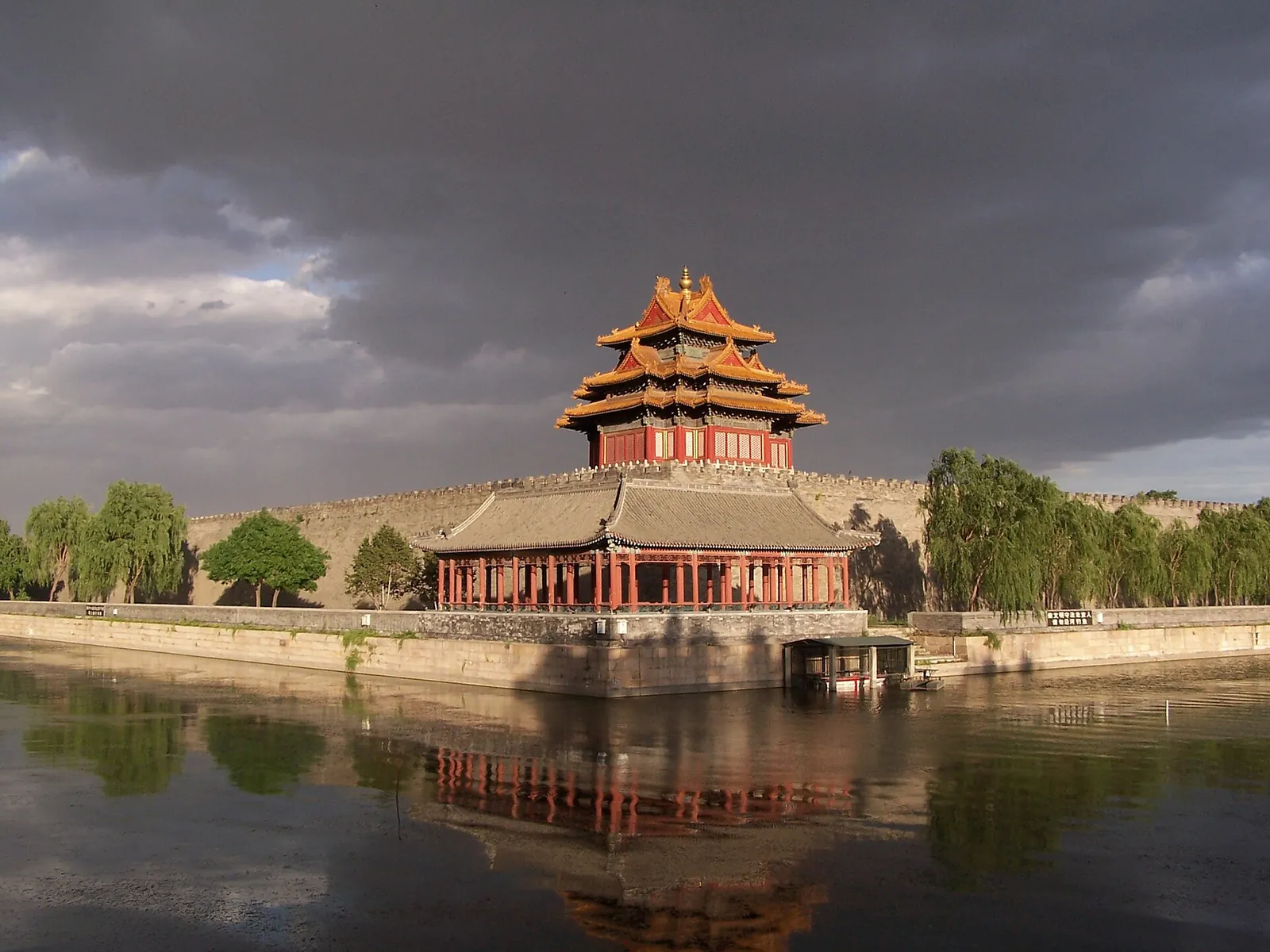
Day 2, Sunday: the Forbidden City. The palace is the largest of Beijing’s imperial sights, a walled city of courtyards and gilded halls that you cross from the Meridian Gate in the south to the Gate of Divine Prowess in the north. You enter by the Meridian Gate, and the palace is closed on Mondays except statutory holidays. It costs CNY 60 from April to October and CNY 40 from November, and the Treasure Gallery and the Clocks Gallery are CNY 10 each. It opens at 08:30 and closes at 17:00, with the last admission at 16:00 (closing 16:30 and last admission 15:30 from 1 November). The Hall of Martial Valour (Wuying Hall) has been closed since 19 October 2026 for conservation and exhibition works. Allow most of the day, then spend the evening on the lanes east of the palace; our Beijing guide covers the Temple of Heaven and the Summer Palace.
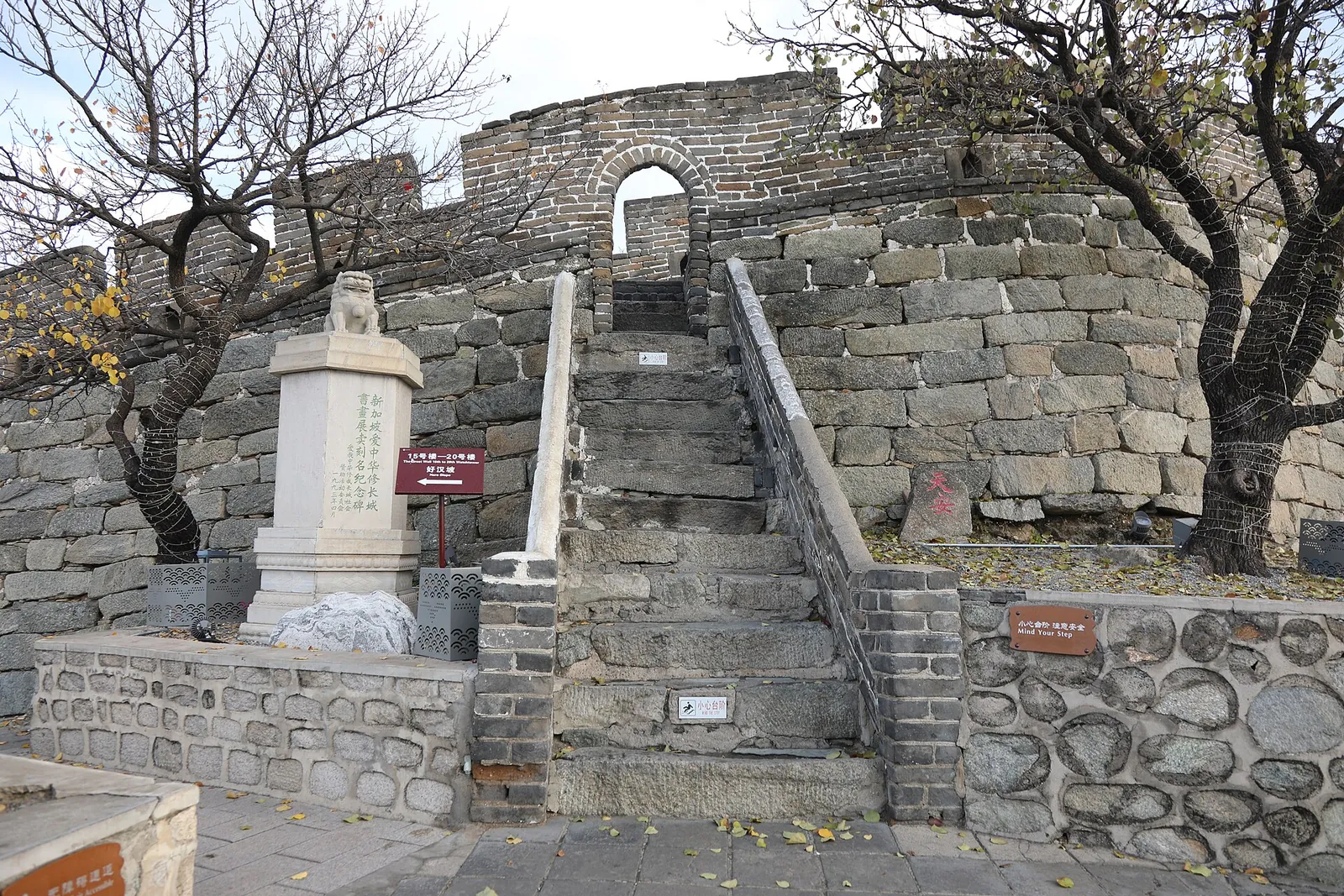
Day 3, Monday: Mutianyu. Mutianyu is a restored stretch of the Great Wall in Huairou District, 70 km from the centre of Beijing: a line of watchtowers on forested ridges that is quieter and greener than Badaling; our Great Wall guide compares the sections. The official tourist bus leaves the Qianmen Transportation Hub between 07:00 and 11:00 and costs CNY 80 a person return, sold on the bus from 30 minutes before departure until it is full. For one of the first buses, take a taxi from the hotel to the Qianmen hub. Return buses leave car park P4 between 13:00 and 16:00, so take an early departure and keep the middle of the day for the wall.
Tickets are real-name, sold on the Mutianyu website or its official WeChat account up to 30 days ahead, one per passport per day, and you pass the gate by showing your passport. Admission is CNY 45. In the main season, 16 March to 15 November, the wall opens at 07:30 and closes at 18:00 on weekdays and 18:30 at weekends; from 16 November to 15 March it opens at 08:00 and closes at 17:30. Ticket sales stop one hour before closing and entry half an hour before. The shuttle bus from the entrance (CNY 15 a person) and the cable car (CNY 140 return, CNY 100 one way) are sold separately from the wall ticket. For an easy visit, ride the cable car from the North Gate to the tower 14 viewing platform and walk on to tower 15. For a longer walk, climb the path to tower 10 and walk along the wall; towers 1 to 20 are open by day, but while the repair between towers 16 and 17 lasts (since 26 May 2026; the inside of tower 16 stays open), turn at tower 16 and walk back to tower 14 for the cable car. Have dinner near Qianmen when the bus returns.
Days 4–5, Tuesday–Wednesday: Xi’an by train, then the Terracotta Army
Day 4, Tuesday: train to Xi’an. Take a high-speed train from Beijing West to Xi’an North, the high-speed station, not the old Xi’an station. For 5 November 2026, the date in the table below, 12306 listed 17 direct trains leaving Beijing West between 07:00 and 19:00, so one leaving by 09:00 reaches Xi’an North by about 15:00. Metro line 2 runs from Xi’an North to TV Tower, near the hotel. After checking in, climb the City Wall if you have the daylight. It runs for 13.74 kilometres around the old city, and the city government calls it the largest and best-preserved ancient city wall in China, with a history of some 1,400 years. The full ticket is CNY 54, a government-set price. Xi’an’s old centre inside the wall is compact, with the Bell and Drum Towers and the Muslim Quarter food streets a short walk apart; our Xi’an guide has the detail.
Day 5, Wednesday: the Terracotta Army. Give the whole day to Lintong, east of the city. The museum’s ticket costs CNY 120 all year, and everyone, foreign visitors included, must reserve a ticket on the museum’s website or its official WeChat account. The museum sells time-slot tickets and asks you to arrive half an hour before your slot. One ticket covers the pits and the Lishan Garden, which the museum says take about 1.5 hours each, joined by a free shuttle. Farmers digging a well in March 1974 found the first pit. Start with Pit 1, the great one: 14,260 square metres under one roof, with about 6,000 clay soldiers and horses standing in long earth-walled trenches, of which more than 500 figures and 24 horses have been cleared. Pit 2 holds crossbowmen, cavalry and chariots, and Pit 3, the only pit that was not burned, kept the most original paint. Lishan Garden, on the mausoleum grounds, shows two half-size bronze chariots found in 1980 beside the burial mound. Electric carts inside the sites cost CNY 5 a person at Pit 1 and CNY 15 at the garden.
From 16 March to 15 November tickets are checked from 08:30 to 17:00 and the museum closes at 18:30; from 16 November to 15 March they are checked from 08:30 to 16:30 and it closes at 18:00. By public transport, take metro line 2 from TV Tower to Beidajie, line 1 to Fangzhicheng and line 9 to Huaqingchi, then the Lintong You 613 or Lintong 602 bus, the museum’s own route. Lintong is east of the city, so plan about 1 hour 30 minutes each way from the hotel. The metro and bus cost about CNY 50 for two there and back, an estimate from Xi’an’s distance-based metro fares and a bus fare of a few yuan. A car with a driver who waits is easier, at about CNY 500 a car for the return trip, which adds about CNY 450 for two. Return for dinner in the Muslim Quarter.
Days 6–7, Thursday–Friday: Chengdu and the Panda Base
Day 6, Thursday: train to Chengdu. Take a high-speed train from Xi’an North to Chengdu East. For 5 November 2026, 12306 listed 63 direct trains leaving Xi’an North between 05:13 and 19:58, so one leaving by 10:00 reaches Chengdu East by about 14:30. Since 1 July 2026 the railway has moved 54 trains to and from Chengdu, Yan’an and Yinchuan to the new Xi’an East station, so check which Xi’an station your Chengdu ticket names. Chengdu East, where the long train on day 8 also starts, is on metro lines 2 and 7: take line 2 to Tianfu Square and change to line 1 for Tongzilin, near the hotel. Spend the evening on a Sichuan dinner.
Day 7, Friday: the Panda Base. The Chengdu Research Base of Giant Panda Breeding covers about 238 hectares of bamboo and parkland 10 km from Tianfu Square in the city centre, and breeds red pandas as well as giant pandas. Paths run between the giant panda and red panda enclosures, and the Giant Panda Theme Museum, opened in 2021, explains the breeding and research work. Go on a morning slot, when it is cooler and the visit is longest. Every visitor needs an online reservation, and sales end when the daily quota of 85,000 is sold out. In March to October the morning entry runs from 07:30 to 12:00 and in November to February from 08:00 to 12:00. Admission is CNY 55 a person, and the optional tour bus is CNY 30 more. A taxi or ride-hailing car from the city centre around Chunxi Road takes 25 to 35 minutes and costs about CNY 40 a vehicle; the Wuhou hotel is further south, so leave about 45 minutes before the morning entry opens. Book only through the base’s official channels, and ignore paid “fast-track entry” services. Spend the afternoon on foot in the old lanes around Wenshu Monastery or Kuanzhai Alley, or rest before tomorrow’s journey; our Chengdu guide adds a day trip to Leshan.
Days 8–10, Saturday–Monday: Yangshuo by train, then three nights by the Yulong River
Day 8, Saturday: Chengdu to Yangshuo. This is the longest day. For trains on 5 November 2026, 12306 listed two direct high-speed trains from Chengdu East to Yangshuo station, on the line through Guiyang and Guilin West, leaving at 07:41 and 10:05 and arriving at 15:16 and 16:35. Yangshuo station stands near Xingping, and the Yangshuo Mountain Retreat’s car meets you there for CNY 180 a car, about 40 minutes for the 42 km, so you reach the Yulong River between about 16:15 and 17:30; give the train number when you book the car. If both trains are full, take one of the more frequent trains to Guilin West and change there to a train to Yangshuo, 20 to 24 minutes and CNY 25 to 29 in second class; the lodge also collects guests in Guilin for CNY 300 a car, about 1.5 hours by road. From another Yangshuo hotel, buses, taxis and ride-hailing cars run on from the station.
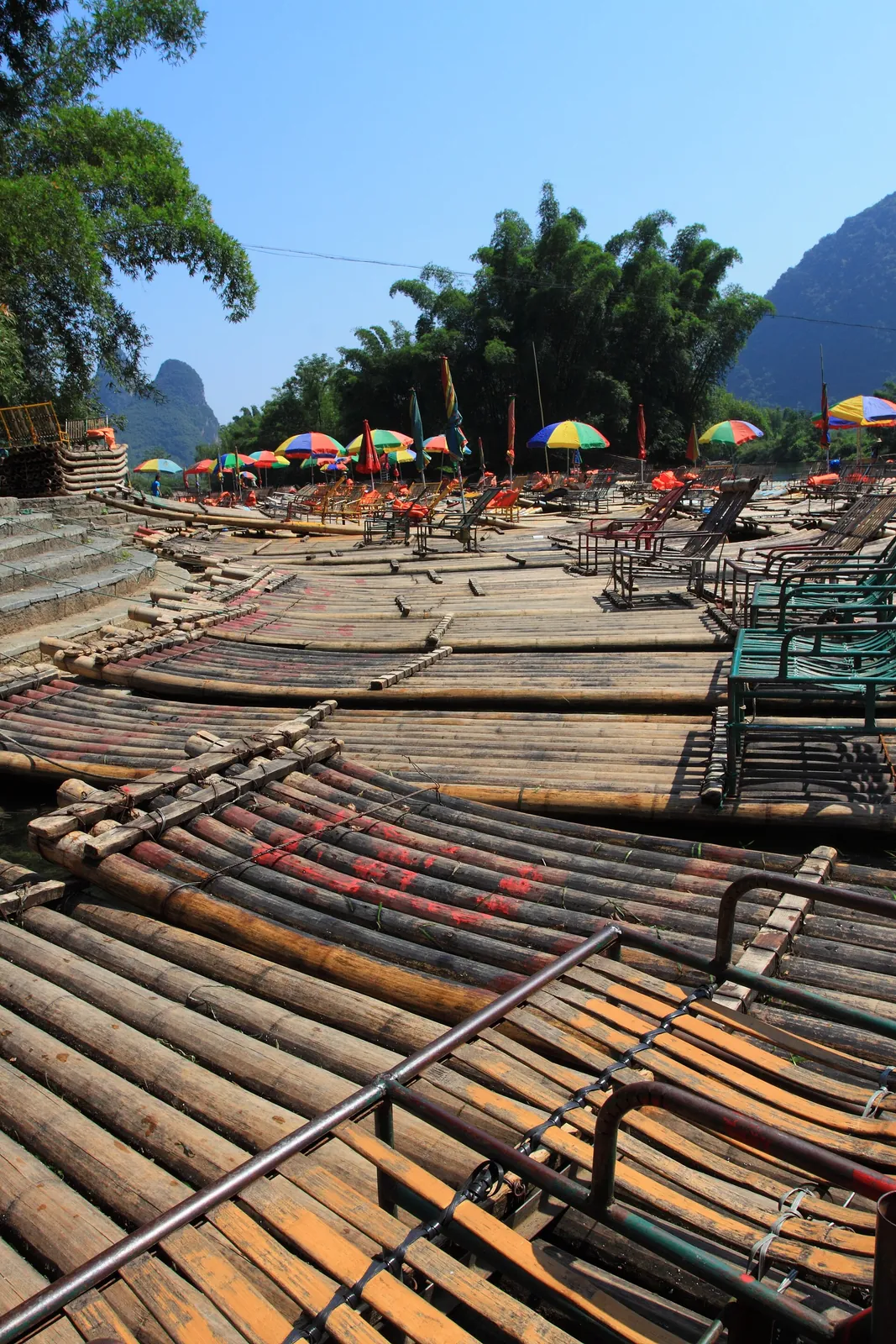
Day 9, Sunday: the Yulong River by bicycle and raft. Yangshuo is a small town among steep green hills, and its pleasure is the land around it. The Yulong River winds through villages and rice fields, and quiet lanes beside it are the best bicycle rides in the area. The Yangshuo Mountain Retreat stands on the river in the Ten-Mile Gallery scenic area in Gaotian Town, 15 minutes from Yangshuo town, and lends its guests bicycles free of charge. Ride out in the morning and stop at a village for lunch, then bring the bicycles back, because they are not allowed on the rafts. In the afternoon the lodge arranges the ride to Jima pier, and a two-person bamboo raft drifts down to the Gongnong Bridge landing in about 90 minutes, at CNY 320 a raft in 2026; from the bridge it is a 20-minute walk back to the lodge. The lodge books the raft the evening before, as set out in the first section. The Yulong can flood quickly, so after dark or in heavy rain use the hotel’s car rather than a bicycle. For the beer-fish dinner, go into Yangshuo town by the lodge’s free shuttle or car; its car back from the town bus station is CNY 40 a car.
Day 10, Monday: Xingping and the Li River. Xingping is an old river town on the Li River, ringed by karst peaks, and the boat trip from its pier passes the view printed on the 20-yuan note. Take the lodge’s free shuttle into Yangshuo town, 15 minutes, then the coach or the bus: coaches leave Yangshuo for Xingping every 15 minutes from 06:30 to 19:20, and bus 802 runs to Xingping pier from 07:30 to 17:40. Allow about CNY 10 a person each way. Come back the same way; the lodge’s car from Yangshuo bus station is CNY 40 a car if the shuttle does not suit. The easier option is the lodge’s car all the way, at its Yangshuo station fare of CNY 180 a car each way. Walk the lanes of the old town, then take the scenic area’s boat from Xingping to the Fishing Village and back, a riverside village of Ming- and Qing-era houses with grey tiles and stepped gable walls. The scenic area’s price table of June 2024, still the latest on its website when we checked on 26 October 2026, lists the boat at CNY 115 a person; book it ahead, as set out in the first section. The full Li River cruise from Guilin needs a different plan and an extra night; our Guilin and Yangshuo guide prices it.
Days 11–14, Tuesday–Friday: Shanghai, Hangzhou and the flight home
Day 11, Tuesday: fly to Shanghai. The lodge’s sedan takes you from Yangshuo to Guilin Liangjiang airport (KWL) for CNY 300 a car, a drive of about 70 minutes. Without it, the Li River scenic area lists a coach from Yangshuo to the airport every 30 minutes from 09:00 to 20:30. China Southern flies direct from Guilin to Shanghai Pudong (PVG); book on the airline’s own site or app, and expect about two and a half hours in the air. Leave the lodge at about 10:00 and choose a flight that departs between about 13:00 and 15:00: the earlier time still leaves nearly two hours at the airport, and a 15:00 departure lands at Pudong at about 17:30. At Pudong, metro line 2 reaches People’s Square in about an hour for about CNY 7, and a taxi costs around CNY 180 a vehicle and takes about 50 minutes. If you land in time, take a short ride to the Bund, the financial centre of old Shanghai, whose Baroque, Gothic and Ancient Greek-style buildings the city government calls an exhibition of world architecture. Stay after dark, when the façades are lit and the Pudong towers shine across the river.
Day 12, Wednesday: Yu Garden and the Shanghai Museum. Yu Garden is a walled garden of ponds, pavilions and rockeries in the old city, surrounded by a bazaar you can walk through free. It is open 09:00 to 16:30 with the last entry at 16:00 and closed on Mondays except national statutory holidays. The adult ticket is CNY 40 from 1 April to 30 June and 1 September to 30 November, and CNY 30 from 1 July to 31 August and 1 December to 31 March. Allow one to two hours. In the afternoon cross the river to the Shanghai Museum East at 1952 Century Avenue in Pudong (metro line 2 to Shanghai Science and Technology Museum, exit 8), where 20 galleries show the museum’s ancient Chinese bronzes, ceramics, jade, calligraphy, paintings, seals and coins. It opens 10:00 to 18:00, with the last entry at 17:00, and closes on Tuesdays except national holidays. Individual visitors need no reservation: show your passport at the B1 East Gate. Only ticketed special exhibitions and the interactive galleries are booked separately. Our Shanghai guide covers the Bund and the former French Concession.
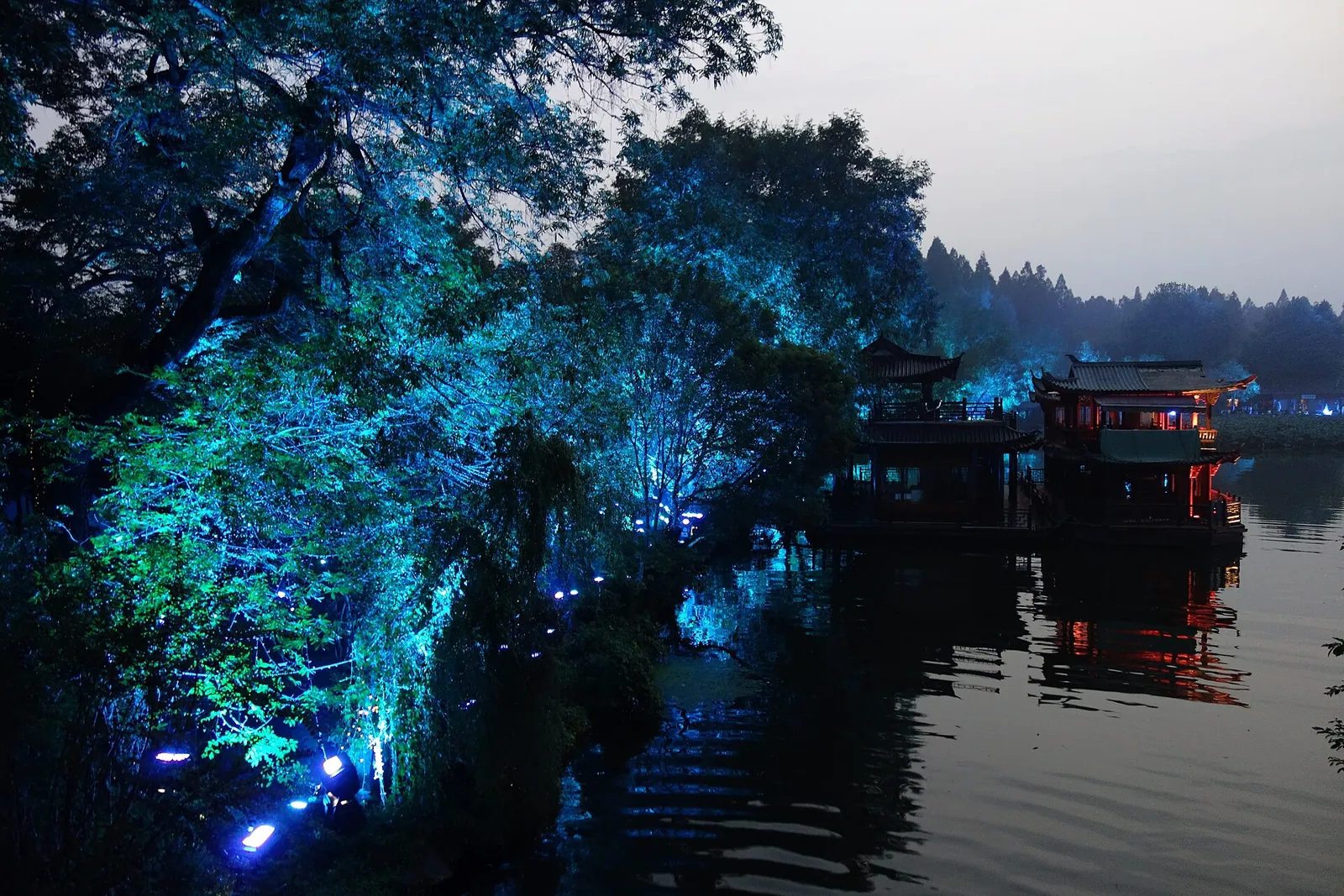
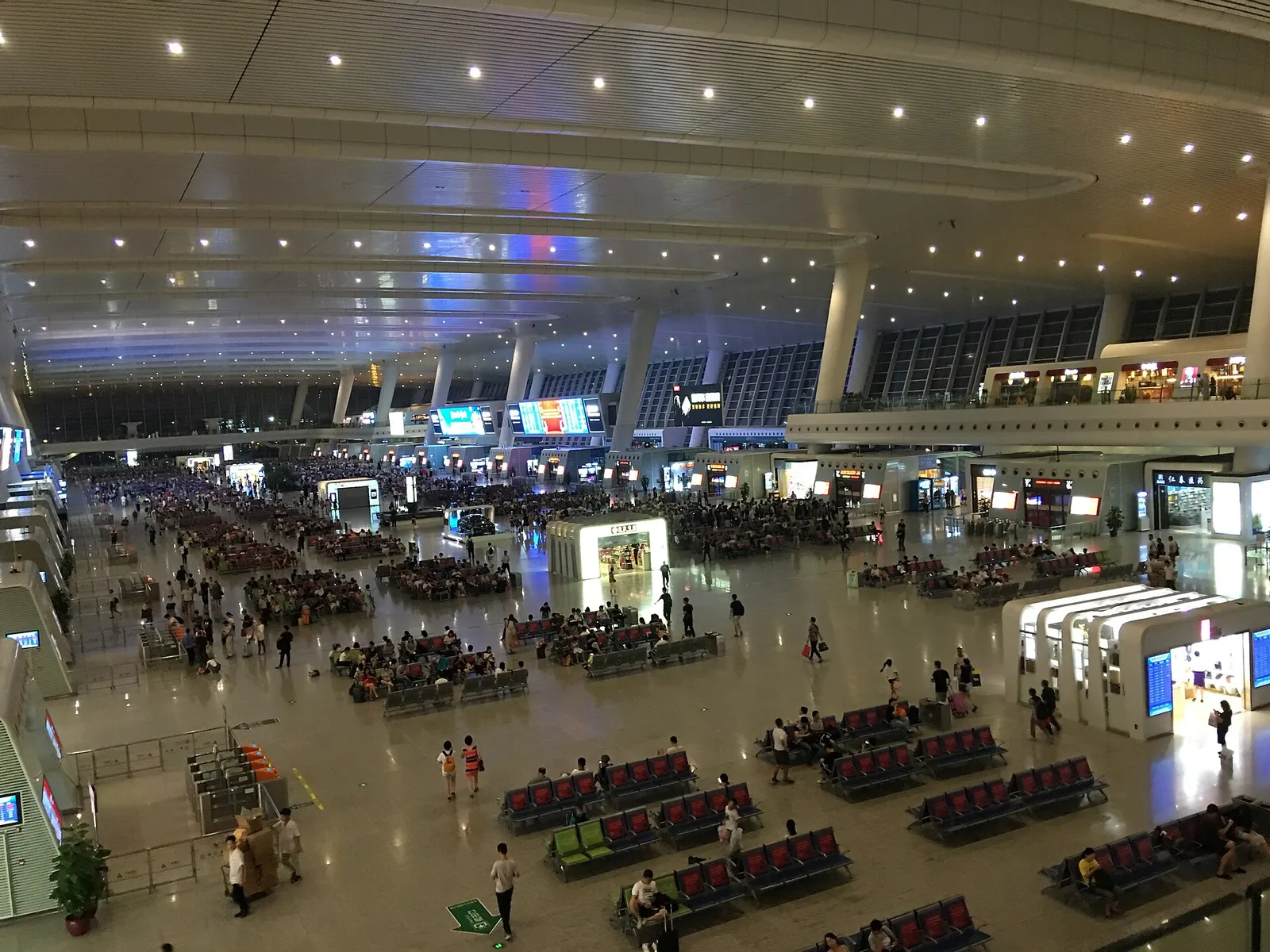
Day 13, Thursday: Hangzhou and West Lake. Take a high-speed train from Shanghai Hongqiao to Hangzhou East: about an hour (45 minutes to 1 hour 27 minutes), with second-class fares of about CNY 57 to 87. Buy the evening return when you buy the outbound ticket: on 5 November 2026 the last direct train back to Shanghai Hongqiao left Hangzhou East at 22:51. From Hangzhou East, metro line 1 runs towards Longxiangqiao, the stop for the lake; on busy days trains announce that West Lake passengers should get off earlier, at Fengqi Road or Ding’an Road. West Lake has been free to walk round since 2002, when Hangzhou took down the fences under the slogan “Return West Lake to the People”, and it was inscribed on the UNESCO World Heritage List in 2011. The shore is a long loop of paths, willows and causeways, with wooded hills to the west and the city to the east; start at the Broken Bridge on the northern shore, where the Bai Causeway begins, and walk out along the causeway. Boats, pagodas and museums by the lake sell their own tickets, so choose one or two.
Day 14, Friday: fly home. Pudong (PVG) takes the international flights, and the airport links are the ones in day 11. The maglev ends at Longyang Road, where you change to line 2, not at the Bund. If your flight leaves late in the day, spend the morning in the plane-tree streets of the former French Concession around Wukang Road in Xuhui, where Wukang Mansion rises like the bow of a ship at the corner of Middle Huaihai Road and the same streets hold the former residences of Soong Ching Ling and Ba Jin.
Trains, flights and paying your way
Book the trains on the 12306 website or app, or at a station counter; the railway does not handle problems with other sites. The English site accepts valid foreign passports only, and the name on the booking must match the passport. Online sales run until 30 minutes before departure, from 05:00 to 01:00 the next day (Tuesdays 05:00 to 23:30). If 12306 asks you to verify your passport, take it to a station ticket counter before the travel day. Use the exact station names, Beijing West, Xi’an North, Chengdu East and Hangzhou East, because each city has another station with a similar name (Guilin has three, if you change there); check the name on every ticket. Allow about 60 minutes at a large, unfamiliar station for security, the passport check and queues.
For trains on Thursday 5 November 2026, 12306 listed these direct services. Read them as a guide to what runs, not as a timetable: times and fares change with the date and the train, so search your own day. | Leg | Direct trains | Journey time | Second class | | --- | ---: | --- | --- | | Beijing West to Xi’an North | 17 | 4 h 10 min to 5 h 58 min | CNY 494 to 618 | | Xi’an North to Chengdu East | 63 | 3 h 5 min to 4 h 21 min | CNY 260 to 316 | | Chengdu East to Yangshuo | 2 | 6 h 30 min to 7 h 35 min | CNY 432 to 479 | | Chengdu East to Guilin West | 14 by day | 4 h 58 min to 7 h 30 min | CNY 405 to 538 | | Guilin West to Yangshuo | 7 | 20 to 24 min | CNY 25 to 29 | The Guilin to Shanghai flight costs about CNY 1,000 a person, a typical economy fare. Our transport guide covers flights, other corridors and the airports in full.
Set up Alipay and Weixin Pay (also called WeChat Pay) before you leave, test both with a small payment and keep a second card and some renminbi, because shops must generally accept cash. Our payments and apps guide has the set-up, the fees and the SIM options; budget about CNY 150 a person for a roughly 15-day data SIM.
Entry, passport and safety
Ordinary-passport holders from Australia, Austria, Belgium, Brazil, Canada, Denmark, Finland, France, Germany, Hungary, Ireland, Italy, the Netherlands, New Zealand, Norway, Poland, Portugal, Romania, Spain, Sweden, Switzerland and the United Kingdom can enter without a visa for tourism, business, visiting family or friends, exchange or transit, for up to 30 days counted from the day after entry. The waiver is published until 31 December 2026, and no extension into 2027 has been announced, so a 2027 trip needs a published extension or a visa. If your dates cross the end date, check with the National Immigration Administration or a Chinese embassy first. US and Czech passports are not on this visa-free list. US and Czech citizens need a visa unless they qualify for the 240-hour transit rule, and this 14-day route is longer than 240 hours. Our entry guide has the full rules.
China’s own waiver FAQ asks for a passport valid for your intended stay, the British government advises six months from arrival with two blank pages, and the French government advises six months after you leave China. Plan for six months after departure and two blank pages. The arrival card is free. You can fill it in online, on the National Immigration Administration’s website, its app or the WeChat or Alipay mini-programme, or on paper or by QR code at the border; beware of sites that charge.
Carry your original passport at all times; a printed copy is not accepted. The British government warns of a risk of arbitrary detention, and British and German advice both warn that exit bans can affect visitors, and the British government says they can last months or years. Avoid demonstrations, large gatherings and any political or activist activity; the French government warns of prison, expulsion and a ban on returning. It also advises against photographing military or official sites, or any place where photography is banned; some are not signposted, and places of worship can have their own rules. French advice says that in Beijing, unregistered drones may not be used, carried or stored, and every flight of a registered drone needs prior permission.
German advice is to refrain from using VPN services, so plan on limited access to some overseas apps and keep offline maps and notes. Air pollution in big cities is often high to very high, especially in winter; check live readings. Check your own government’s current travel advice before you book.
Meals along the route
The dishes below cover four dinners and one breakfast; on the other evenings eat near the hotel or wherever the day ends. On the long train days (4, 6 and 8) carry water and snacks, and plan a proper meal once you arrive. Tell restaurants about allergies when you order, ideally with a note written in Chinese.
What to eat and where to look
Peking duck
Roast duck carved at the table and eaten in thin pancakes with sweet bean sauce and spring onion. Beijing’s tourism site names Quanjude, founded in 1864 and known for its hung-oven roasting, and Liqun Roast Duck, in a hutong beside Qianmen.
- Where to look
- Liqun Roast Duck, No. 11 Beixiangfeng Hutong near Qianmen, or Quanjude.
- Fit it into your day
- Dinner on day 3, after the bus from Mutianyu brings you back to Qianmen.
Yangrou paomo
Lamb soup poured over flatbread that you crumble into the bowl yourself, eaten with chilli sauce and sweet garlic. A bowl is a full meal, and Lao Sun Jia on Huimin Street is known for it.
- Where to look
- Lao Sun Jia, at the southern end of Huimin Street in the Muslim Quarter, near the Drum Tower.
- Fit it into your day
- Dinner on day 5, after the Terracotta Army.
Mapo tofu
Soft tofu in a red, glossy sauce of minced beef, chilli and fermented bean paste, finished with ground Sichuan pepper. The chilli burns and the pepper numbs, and the dish is not vegetarian. Chen Mapo Tofu, founded in 1862, is a China Time-honoured Brand with three directly run shops.
- Where to look
- Chen Mapo Tofu, the long-established Chengdu restaurant that gave the dish its name.
- Fit it into your day
- Dinner on day 6, after the train from Xi’an.
Beer fish (pijiu yu)
Yangshuo’s famous local dish: a river fish, usually carp from the local rivers, braised with beer and brought whole to the table.
- Where to look
- The riverside restaurants of Yangshuo town; the Yangshuo Cooking School, about 3 km from the Yangshuo Mountain Retreat, teaches it in its Monday, Wednesday and Friday class, booked at the lodge’s reception.
- Fit it into your day
- Dinner on day 9, after the bicycle ride; order one fish for the table.
Xiaolongbao
Soup dumplings: thin skins around pork and a spoonful of hot broth, eaten from a bamboo steamer with vinegar. The Shanghai government names Nanxiang Steamed Bun Restaurant, open 07:30 to 20:30.
- Where to look
- Nanxiang Steamed Bun Restaurant, 87 Yuyuan Road, beside Yu Garden.
- Fit it into your day
- Breakfast or an early lunch on day 12, before the garden.
What fourteen days in China cost, all in
About CNY 13,760 a person, CNY 27,520 for two, at mid-range, for fourteen days and thirteen nights on the ground. Rooms, every meal, the trains and the flight, airport and local rides, the sights, the raft and the Li River boat above, two SIMs and a 10% buffer are all in.
| Level | Per person, about CNY | For two, about CNY |
|---|---|---|
| Budget | 9,910 | 19,820 |
| Mid-range | 13,760 | 27,520 |
| Comfort | 21,720 | 43,440 |
The budget assumes two adults sharing one private double for thirteen nights, in an ordinary autumn week outside the national holidays, with prices checked on 25 and 26 October 2026. It assumes visa-free entry. Rooms are estimates: for a late-November night Marriott’s listings showed about CNY 920 for the Renaissance Beijing Capital, 570 for the Renaissance Xi’an, 570 for the Renaissance Chengdu and 1,000 for the Courtyard Shanghai Central, and the Yangshuo Mountain Retreat’s 2026 rate page lists riverview doubles such as the Superior Queen from USD 100 a night (about CNY 670), with breakfast free on direct stays of three nights or more. The train fares sit within the second-class fares in the 12306 table above, the flight is a typical economy fare, and taxi and car figures without a listed price are estimates.
For two at mid-range: rooms CNY 10,150 (CNY 850, 600, 650, 700 and 1,000 a night for 3, 2, 2, 3 and 3 nights in Beijing, Xi’an, Chengdu, Yangshuo and Shanghai); food CNY 5,040 (CNY 180 a person a day: breakfast 30, lunch 60, dinner 70, water and snacks 20); getting around CNY 7,780 (trains and the flight 5,020, and 2,760 for the rest: the lodge’s cars CNY 560, that is CNY 180 from Yangshuo station, CNY 300 to the airport and CNY 40 twice back from the Yangshuo bus station; the Mutianyu bus CNY 160; about CNY 50 for the metro and bus to the Terracotta Army; about CNY 40 for the coach or bus between Yangshuo and Xingping; and about CNY 1,950 for the other airport links, station rides and city rides); sights and tours about CNY 1,750; SIMs about CNY 300; and a 10% buffer of about CNY 2,500.
Sights for two are CNY 160 for the Forbidden City with both galleries, CNY 400 for Mutianyu (CNY 45 admission, CNY 15 for the shuttle and CNY 140 for the cable-car return, each a person), CNY 280 for the Terracotta Army with carts, CNY 108 for the City Wall, CNY 80 for Yu Garden and CNY 170 for the Panda Base with the tour bus, CNY 230 for the boat from Xingping to the Fishing Village and back, and CNY 320 for the two-person bamboo raft from Jima to Gongnong Bridge: about CNY 1,750 in all. The Shanghai Museum East asks only for your passport at the gate, and West Lake is free. The budget level uses rooms of about CNY 600, 350, 450, 400 and 600 a night and CNY 100 a person a day for food. Comfort uses about CNY 1,300, 1,100, 1,000, 900 and 1,700 a night, CNY 350 a person a day for food, first-class trains and a private car to Mutianyu.
Flights: a London return to Beijing, flying home from Shanghai, costs about GBP 650 to 850 a person (GBP 1,300 to 1,700 for two). That is an estimate, not a quote for the two-city ticket. With it the fortnight comes to about GBP 1,750 to 1,950 a person at budget, GBP 2,180 to 2,380 at mid-range and GBP 3,070 to 3,270 at comfort (GBP 3,510 to 3,910, GBP 4,370 to 4,770 and GBP 6,140 to 6,540 for two). Conversions use the State Administration of Foreign Exchange central parity rate of 23 October 2026: USD 1 = CNY 6.7180, EUR 1 = CNY 7.5140 and GBP 1 = CNY 8.9749; your bank or card will give a different rate.
Practical questions
Is fourteen days enough for China?
It is enough for a first look at five places: Beijing with the Great Wall, Xi’an with the Terracotta Army, Chengdu’s pandas, three slow nights in Yangshuo and Shanghai with a day in Hangzhou. Four of the fourteen days are mostly travel. If you want less moving about, the ten-day route drops Yangshuo.
Why thirteen nights for a fourteen-day trip?
Day 1 is arrival and day 14 is the flight home, so the route needs thirteen hotel nights: three in Beijing, two in Xi’an, two in Chengdu, three in Yangshuo and three in Shanghai.
Why fly from Guilin to Shanghai instead of taking the train?
The direct high-speed trains from Guilin to Shanghai Hongqiao take seven hours or more and leave around midday. One domestic flight from Guilin Liangjiang (KWL) to Shanghai Pudong (PVG), about two and a half hours in the air, keeps day 11 for travel and an evening in Shanghai. Book it on the airline’s own site or app; expect about CNY 1,000 a person in economy.
Do I have to book the sights and trains in advance?
Yes. The Forbidden City, Mutianyu, the Terracotta Army, the Panda Base, the Li River boats, the Yulong rafts and every train sell real-name tickets ahead, and the Forbidden City sells none on the day. Book them in the order their sales open, set out in the first section of this guide, with the passport you travel on; the trains, including the Hangzhou day trip, are on the 12306 website or app.
Is Hangzhou worth a day trip from Shanghai?
Yes if you want West Lake, a public lakeshore with no entrance fee since 2002. The train ride is short, so most of the day is spent by the lake. Lingyin Temple and Suzhou each need a day of their own.
Do I need a visa for this route?
Not for up to 30 days if you hold an ordinary passport from the UK, Ireland, Germany, France, Italy, Spain or another listed country, and only while the waiver lasts: it is published to 31 December 2026. US and Czech travellers need a visa for this route. Our entry guide has the full list.
Keep planning your trip
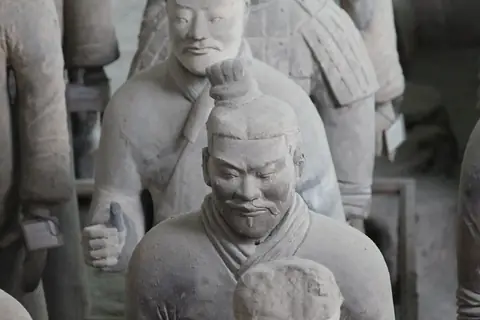
First trip to China
How long a first China trip should be, then a week in Beijing, Xi’an and Shanghai: what to book first, the trains, entry, paying and the cost per day.
Read the guide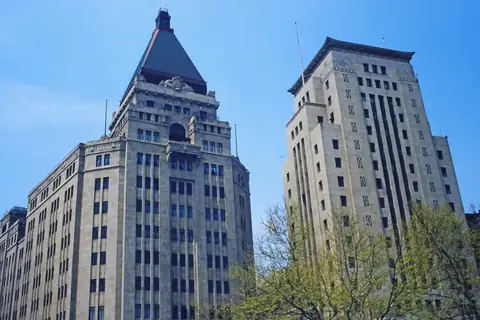
China in ten days
A ten-day China itinerary with nine nights in Beijing, Xi’an, Chengdu and Shanghai, a Hangzhou day trip, timed-ticket booking, rail and flight legs and an all-in budget.
Read the guide
Guilin and Yangshuo
One night in Guilin and two in Yangshuo: how to buy the Li River cruise, where the countryside rides and the Longji terraces fit, and what four days cost.
Read the guide
Chengdu
Two nights in Chengdu: booking the Panda Base with a passport, Wenshu Monastery, Kuanzhai Alley, the Leshan Giant Buddha by train, where to stay and what it costs.
Read the guide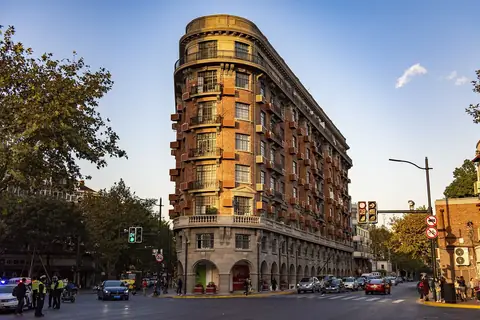
Shanghai
Three nights in Shanghai: the Bund and a river cruise, Yu Garden, the French Concession, Pudong, Shanghai Museum East, Zhujiajiao, airports and costs.
Read the guide
Mongolia in ten days
Three nights in Ulaanbaatar, a Terelj day and a six-camp loop through the Gobi to Kharkhorin with a private driver and guide: drive times, camps and an all-in budget.
Read the guideSources and checks before you travel
(70)
- Palace Museum: visit information ↗ — opens in a new tab
- Palace Museum: reservation notice ↗ — opens in a new tab
- Mutianyu Great Wall: official site ↗ — opens in a new tab
- Mutianyu Great Wall: home page (English) ↗ — opens in a new tab
- Mutianyu Great Wall: recommended transportation routes ↗ — opens in a new tab
- Mutianyu Great Wall: visitor notice and ticket rules (Chinese) ↗ — opens in a new tab
- Mutianyu Great Wall: tickets (5 August 2026) ↗ — opens in a new tab
- Mutianyu Great Wall: repair notice (Chinese) ↗ — opens in a new tab
- Visit Beijing: Mutianyu Great Wall ↗ — opens in a new tab
- Beijing government: Mutianyu Great Wall ticket listing ↗ — opens in a new tab
- Terracotta Army museum: ticketing instructions ↗ — opens in a new tab
- Terracotta Army museum: visitor guide ↗ — opens in a new tab
- Terracotta Army museum: transport routes ↗ — opens in a new tab
- Qujiang New Area government: City Wall ticket reply ↗ — opens in a new tab
- Xi’an government: efforts to protect the City Wall (22 December 2023) ↗ — opens in a new tab
- Renaissance Xi’an Hotel: hotel page (Chinese) ↗ — opens in a new tab
- China Railway: national timetable change of 1 July 2026 ↗ — opens in a new tab
- Sichuan Daily (Chuanguan News): Chengdu East on the first day of the National Day holiday (October 2021) ↗ — opens in a new tab
- Tianfu Morning News: Chengdu Metro Line 2 interchanges (September 2012) ↗ — opens in a new tab
- Renaissance Chengdu Hotel: hotel page (Chinese) ↗ — opens in a new tab
- Chengdu Research Base of Giant Panda Breeding: tickets and reservation ↗ — opens in a new tab
- Chengdu Research Base of Giant Panda Breeding: home page ↗ — opens in a new tab
- Chengdu Research Base of Giant Panda Breeding: introduction ↗ — opens in a new tab
- Chengdu Research Base of Giant Panda Breeding: transportation ↗ — opens in a new tab
- Yu Garden: visit information ↗ — opens in a new tab
- Shanghai Museum: visiting the Shanghai Museum East ↗ — opens in a new tab
- Shanghai government: a comprehensive guide to the Shanghai Museum ↗ — opens in a new tab
- Hangzhou government: free admission and West Lake ↗ — opens in a new tab
- Hangzhou news portal: Longxiangqiao metro station crowding (April 2025) ↗ — opens in a new tab
- Shanghai government: the Bund ↗ — opens in a new tab
- Shanghai government: Wukang Road-Anfu Road block ↗ — opens in a new tab
- China Railway 12306: FAQ ↗ — opens in a new tab
- China Railway 12306: ticket sales rules ↗ — opens in a new tab
- China Railway 12306: timetable and fares for 5 November 2026 ↗ — opens in a new tab
- MTR High Speed: ticketing via 12306 ↗ — opens in a new tab
- Beijing Capital International Airport: Airport Express ↗ — opens in a new tab
- Beijing MTR Operation Administration: Daxing Airport Line ticket rules ↗ — opens in a new tab
- Shanghai government: getting from Pudong Airport to the city ↗ — opens in a new tab
- Yangshuo Mountain Retreat: location ↗ — opens in a new tab
- Yangshuo Mountain Retreat: rooms and rates 2026 ↗ — opens in a new tab
- Yangshuo Mountain Retreat: getting here ↗ — opens in a new tab
- Yangshuo Mountain Retreat: outdoor activities ↗ — opens in a new tab
- Yangshuo Mountain Retreat: bamboo rafting guide 2026 ↗ — opens in a new tab
- Sina Travel: booking Yulong River bamboo rafts (26 June 2026) ↗ — opens in a new tab
- Yangshuo Mountain Retreat: things to do ↗ — opens in a new tab
- Yangshuo Mountain Retreat: culture and activities ↗ — opens in a new tab
- China Southern Airlines: Guilin travel guide ↗ — opens in a new tab
- Li River scenic area: transport ↗ — opens in a new tab
- Li River scenic area: segmented tours ↗ — opens in a new tab
- Li River scenic area: price table ↗ — opens in a new tab
- Li River scenic area: ticket warning ↗ — opens in a new tab
- China Weather: Guilin city climate ↗ — opens in a new tab
- Beijing tourism: Peking duck ↗ — opens in a new tab
- China Daily government portal: landmark food street recovers its appetite (9 October 2020) ↗ — opens in a new tab
- Ministry of Commerce: Chen Mapo, China Time-honoured Brand ↗ — opens in a new tab
- Shanghai government: yanduxian and Nanxiang ↗ — opens in a new tab
- Ministry of Foreign Affairs of China: consular FAQ on the visa-free policy ↗ — opens in a new tab
- National Immigration Administration: Visa-Free Transit Policies ↗ — opens in a new tab
- National Immigration Administration: Beware of Fraudulent Websites for Arrival Card Filling ↗ — opens in a new tab
- GOV.UK Foreign Office: China travel advice, entry requirements ↗ — opens in a new tab
- GOV.UK Foreign Office: China travel advice, safety and security ↗ — opens in a new tab
- Hong Kong Observatory: 2027 lunar calendar table ↗ — opens in a new tab
- China Foreign Exchange Trade System: preset 2027 holidays ↗ — opens in a new tab
- Auswaertiges Amt: China, Reise- und Sicherheitshinweise ↗ — opens in a new tab
- France Diplomatie: Chine, entrée et séjour ↗ — opens in a new tab
- France Diplomatie: Chine, informations utiles ↗ — opens in a new tab
- State Administration of Foreign Exchange: RMB central parity rates ↗ — opens in a new tab
- Yulong River operator: Jima route ↗ — opens in a new tab
- Yulong River operator: raft listings ↗ — opens in a new tab
- Yulong River operator: visitor restrictions ↗ — opens in a new tab
Reference sources for the version dated 9 November 2026. Confirm opening times, access, transport and conditions for your travel dates.
Photo credits
(5)
Bamboo-raft landing on the Yulong River near Yangshuo, where day 9 of the route is spent.
Photograph: Zhangzhugang — opens in a new tab · CC BY-SA 3.0 — opens in a new tab
Changes: Resized and converted to WebP; displayed with responsive crops. · Original photograph and licence details ↗ — opens in a new tab
The north-west corner tower and moat of the Forbidden City in Beijing, the subject of day 2.
Photograph: User:kallgan — opens in a new tab · CC BY-SA 3.0 — opens in a new tab
Changes: Resized and converted to WebP; displayed with responsive crops. · Original photograph and licence details ↗ — opens in a new tab
The entrance gateway to the restored Great Wall at Mutianyu, the day 3 excursion from Beijing.
Photograph: Francesco Bini — opens in a new tab · CC BY-SA 4.0 — opens in a new tab
Changes: Resized and converted to WebP; displayed with responsive crops. · Original photograph and licence details ↗ — opens in a new tab
West Lake in Hangzhou at dusk, the focus of the day 13 trip from Shanghai.
Photograph: Joaquín Salido — opens in a new tab · CC BY-SA 4.0 — opens in a new tab
Changes: Resized and converted to WebP; displayed with responsive crops. · Original photograph and licence details ↗ — opens in a new tab
The waiting hall at Hangzhou East, the station for the Shanghai day trip on day 13.
Photograph: Bjoertvedt — opens in a new tab · CC BY-SA 4.0 — opens in a new tab
Changes: Resized and converted to WebP; displayed with responsive crops. · Original photograph and licence details ↗ — opens in a new tab