Plan your trip
Best time to visit China: a month-by-month regional guide for 2027
China is too large for one best month, so the answer depends on which regions your route crosses and which holiday weeks you can avoid. Start with the season for your cities, then check the expected 2027 peaks before you book trains and rooms.
In this guide
Find the location ↗ — opens in a new tabThe short answer
For a first route through Beijing, Xi’an and Shanghai, aim for April to May or mid-September to October. Avoid the expected 2027 peaks of 22 January to 2 March, 1 to 5 May and 1 to 7 October. Book cancellable rooms first, then trains the day sales open: 12306 sells up to 15 days ahead, counting the day you buy. The Forbidden City adult ticket is CNY 60 from April to October and CNY 40 from November to March; the Great Wall at Mutianyu costs CNY 45 for an adult.
- Key point
- 10 to 14 days on Beijing, Xi’an and Shanghai in April–May or mid-September–October
- Where it applies
- Beijing, Xi’an and Shanghai for a first route; Chengdu, Guilin and Yunnan each in their own season
- Timing
- April to May and mid-September to October suit a first route; avoid the expected holiday peaks of 22 January to 2 March, 1 to 5 May and 1 to 7 October 2027.
Which months suit a first route
For the usual first route through Beijing, Xi’an and Shanghai, the most comfortable months are April to May and mid-September to October. Demand is heaviest around the 1 May and 1 October holidays, so the best weeks sit either side of them.
Cheapest and quietest. For thinner crowds and lower prices, go in early March, once the Spring Festival rush ends on 2 March; from November to mid-December; or in the weeks after Golden Week. Rooms and flights cost more during the holiday breaks and the July–August school holidays, so book cancellable rooms as soon as your dates are fixed. Some fares drop with the season: the Forbidden City ticket falls from CNY 60 to CNY 40 on 1 November, and Century Cruises’ 2027 Yangtze fare is about USD 1,049 a person in a deluxe cabin on the November sailings, against USD 1,349 in October.
Guilin, Chengdu and Yunnan keep their own seasons, set out region by region below; Tibet and Xinjiang are outside this guide.
Month by month at a glance
Average temperatures and the best months for each city come first, then the usual weather and crowds month by month.
| City | January average | July average | Best months |
|---|---|---|---|
| Beijing | about −4°C | about 26°C | April to May, mid-September to October |
| Xi’an | about 0°C | about 26°C | April to May, mid-September to October |
| Shanghai | about 5°C | about 28°C | March to May, September to November |
| Guilin | about 8 to 9°C | about 28°C | September to October |
| Chengdu | about 6°C | about 25°C | spring and autumn |
| Kunming | about 8°C | about 20°C | November to April (dry season) |
| Zhangjiajie | about 4°C | about 27°C | late October to mid-November |
*Long-term monthly means from the China Meteorological Administration (Beijing and Shanghai: 1971 to 2000).*
| Month | Beijing and Xi’an | Shanghai, Hangzhou and Suzhou | Guilin | Chengdu | Crowds |
|---|---|---|---|---|---|
| January | cold, dry | damp cold | cool | coldest, driest | Spring Festival rush from 22 Jan |
| February | cold, dry | damp cold | cool | cool | Spring Festival rush all month; New Year 6 Feb |
| March | windy, warming | mild | mild | mild | Spring Festival rush to 2 Mar |
| April | windy, warm | mild | wet | mild | Qingming break expected 3 to 5 Apr |
| May | warm | warm, rain builds | wet | warm | 1 to 5 May break |
| June | hot | plum rain from mid-June | wet | warm | Dragon Boat 9 Jun |
| July | hot, rainiest | hot | hot, wet | hottest, wettest | school holidays: domestic peak |
| August | hot, rainy | hot, typhoons late | hot | hottest, wettest | school holidays: domestic peak |
| September | fine, cooling | typhoons early, then mild | drier | mild | Mid-Autumn 15 Sep |
| October | fine, dry | mild, drier | drier | mild | Golden Week 1 to 7 Oct |
| November | cold sets in | cool | cool | cool | quiet |
| December | cold, dry | cool | cool | driest | quiet to mid-month |
Yunnan is left out of the month table because it runs on its own wet and dry seasons, set out under the Southwest below.
Four regions, four climates
North (Beijing and Xi’an). Beijing’s spring is changeable, with wind and dust; summer is hot and rainy, autumn fine with little rain, and winter cold, dry and windy with little snow. Rain is concentrated in July and August, which matters for the Great Wall and other outdoor days. Beijing averages about −4°C in January and about 26°C in July, so pack for real cold in winter. Xi’an follows the same shape with a warm, dry, windy spring, thunderstorms in summer and a noticeable cooling in autumn; the city averages about 0°C in January and about 26°C in July.
Lower Yangtze (Shanghai, Hangzhou, Suzhou). Spring and autumn are Shanghai’s best seasons, March to May and September to November. Shanghai averages about 5°C in January and about 28°C in July. Rain falls mostly from May to September, the plum-rain season runs from mid-June to early July (the normal start is about 19 June), and July and August bring about ten days above 35°C. Typhoons are most frequent from late August to early or mid-September, and the damp cold peaks in late January and early February.
South (Guangdong and Guilin). On the coast, Shenzhen’s summer is hot and rainy with occasional tropical cyclones, while the other seasons are drier; cold snaps can still reach it in late February in some years. Inland Guilin and Yangshuo average about 19°C a year, with the rainiest season from April to July and mild winters of 8 to 9°C in January and February.
Southwest (Chengdu, Chongqing and Yunnan). Chengdu is hottest and wettest in July and August, coldest in January (a monthly mean of 5.6°C) and driest in December and January. Chongqing, where the Yangtze cruises start, is one of the river’s three “furnaces”: summer is hot and close, July and August often bring dry spells of 30 to 50 days, autumn is often overcast and wet, winter foggy, and January averages about 8°C. Yunnan runs on a different clock: May to October is the wetter monsoon half of the year, and November to April is dry and warm, especially in the central and western parts. In Kunming, the provincial capital, the rainy months bring about 85% of the year’s rain, but summer has no fierce heat: July averages about 20°C and January about 8°C. Treat Chengdu and Yunnan as separate trips when you pick dates.
Winter, December to February
Winter is the quiet season in the north, with short outdoor blocks, warm layers and indoor museums doing most of the work. It is also when the Spring Festival rush falls.
- January. The Spring Festival rush begins on 22 January, and Beijing’s schools are on their winter holiday from 18 January.
- Harbin. In the far north-east, the Ice and Snow Festival is expected to open in early January; our festivals guide suggests two nights between late December and 21 January, while Ice and Snow World and Sun Island are both open and before the rush.
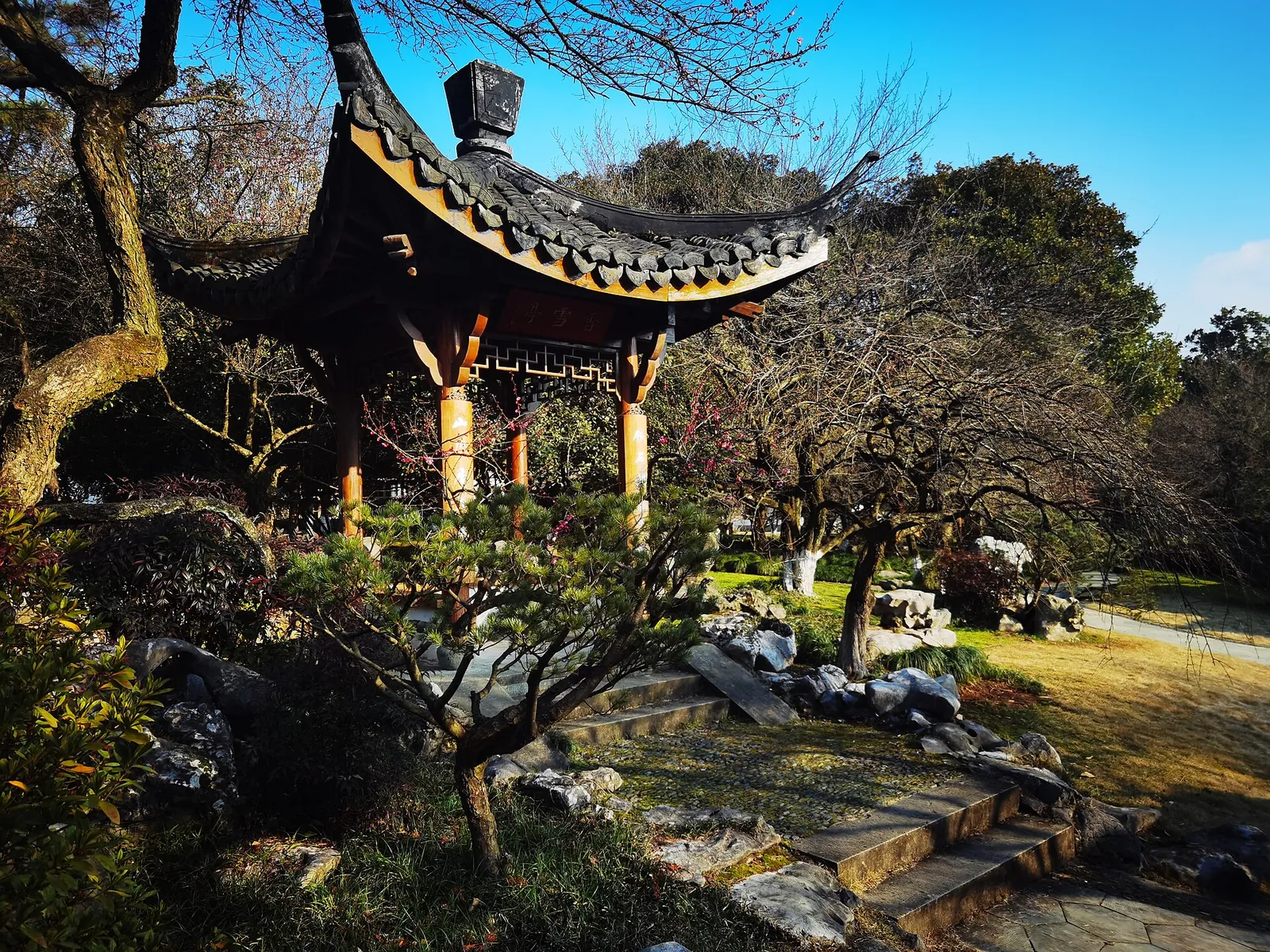
- February. In Hangzhou, February tends to be the best month for the plum blossom at Lingfeng Mountain, where about 5,000 trees of more than 100 varieties grow. Chinese New Year falls on 6 February 2027, inside the Spring Festival rush, so the plum blossom and the Luoping canola share their weeks with the busiest travel of the year.
- Winter sun. For warmth, go south: Hainan has no real winter, with Haikou averaging about 18°C from December to February; Xishuangbanna runs from about 13°C to 30°C in December; and central and western Yunnan, Kunming included, are dry and sunny from November to April.
Spring, March to May
Spring is the first of the two sweet spots, with the north warming and Shanghai and Hangzhou at their most comfortable. It is also when the south starts to turn wet.
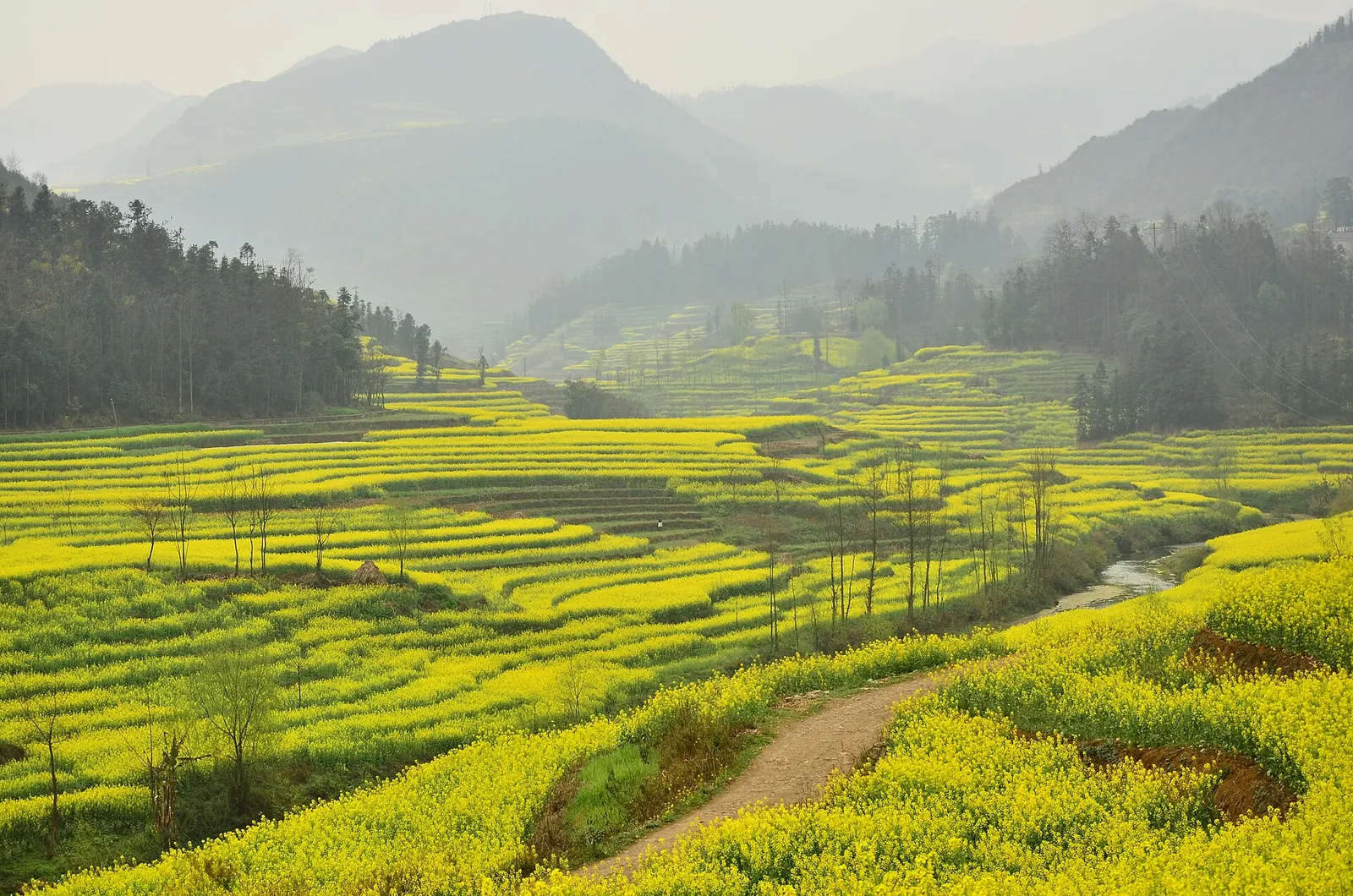
- March. Once the Spring Festival rush is over, the Yangtze delta enters its best season. In Shanghai, more than 16,000 cherry trees flower at Gucun Park; the 2026 festival ran from 9 March to 9 April, peaking from 21 March. Peach blossom and fresh willow line West Lake in Hangzhou from mid-March into early April, at their showiest along the Bai Causeway. In Xi’an, cherry trees flower beside the Small Wild Goose Pagoda and at Qinglong Temple by late March. In eastern Yunnan the canola fields of Luoping are usually in full bloom around February and March.
- April. Beijing’s parks are in flower from March to May; at Yuyuantan Park the cherry season runs from mid or late March to mid or late May, early varieties first. Qingming falls on Monday 5 April; with the weekend, a break of 3 to 5 April is expected. Xishuangbanna’s Water-Splashing Festival, the Dai New Year, is celebrated on 13 to 15 April every year.
- May. The 1 to 5 May break is the one spring week to avoid. After it come the last weeks of the spring window: Beijing and Xi’an are warm, and Shanghai’s rain builds towards the plum-rain season, which normally starts about 19 June, so plan to finish the Shanghai end of the route by mid-June.
Summer, June to August
Summer is hot and wet in nearly every region, so carry rain gear and plan outdoor days loosely.
- June. Dragon Boat is one statutory day on 9 June, a Wednesday, so do not count on a long weekend.
- July and August. The domestic school holidays make these the peak months at the big sights: Beijing’s schools, for example, are off from 6 July to 31 August 2027. Book timed tickets the moment sales open. The Forbidden City opens each day’s tickets seven days ahead at 20:00 China time and sells none on the day; the Great Wall at Mutianyu sells named tickets up to 30 days ahead, one per passport per day.
- June to August. The cheaper season on the Yangtze, and the hottest in Chongqing: Century Cruises prices its 2027 downstream sailings from Chongqing at about CNY 7,050 (USD 1,049) a person, two sharing a deluxe cabin, from June to August, against about CNY 9,060 (USD 1,349) from April to May and September to October; the lower fare returns for the November sailings.
Autumn, September to November
Autumn is the second sweet spot for the Beijing, Xi’an and Shanghai route, either side of Golden Week, and the season for Guilin and Zhangjiajie.
- September. From the middle of the month the main route comes into its own: Beijing’s autumn is fine with little rain, Xi’an cools noticeably, and Shanghai’s typhoon weeks usually end by mid-September, opening its September to November season. Mid-Autumn is one statutory day on 15 September, a Wednesday. Plan the train legs for the second half of the month and stop before 1 October, when demand is heaviest.
- October. The weeks after Golden Week are the strongest window of the year for the first-trip route. Near Beijing, the oak woods along the Great Wall at Mutianyu turn red and gold. Go to Guilin and Yangshuo in September or October, once the April-to-July rains have passed.
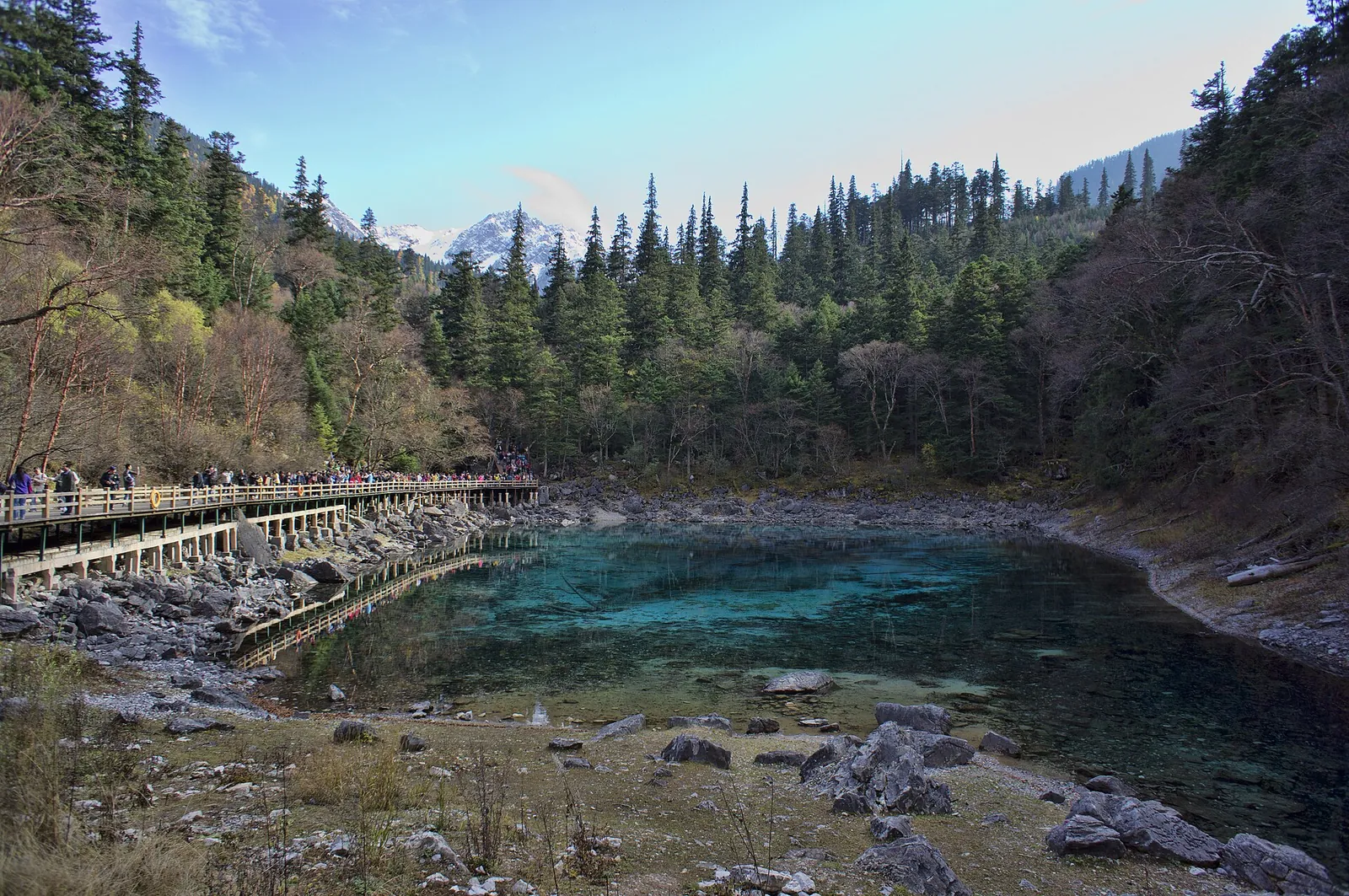
- Side trip: Jiuzhaigou. Jiuzhaigou, in Sichuan’s Aba prefecture, is a separate trip from Chengdu. Its autumn forests draw the year’s biggest crowds, up to the park’s limit of 41,000 visitors a day (reached on 23 October 2026, at the height of the colour). From Chengdu East, the fastest trains reach Huanglong Jiuzhai station in 1 hour 39 minutes; the park gate is about 93 km further, about two hours by road, with direct coaches from the station. Book in advance through the park’s official Jiuzhaigou account on Weixin (WeChat): tickets are real-name, so bring the original passport you booked with. Admission is CNY 190, plus CNY 90 for the sightseeing bus, from 1 April to 15 November, and CNY 80 plus CNY 80 from 16 November to 31 March.
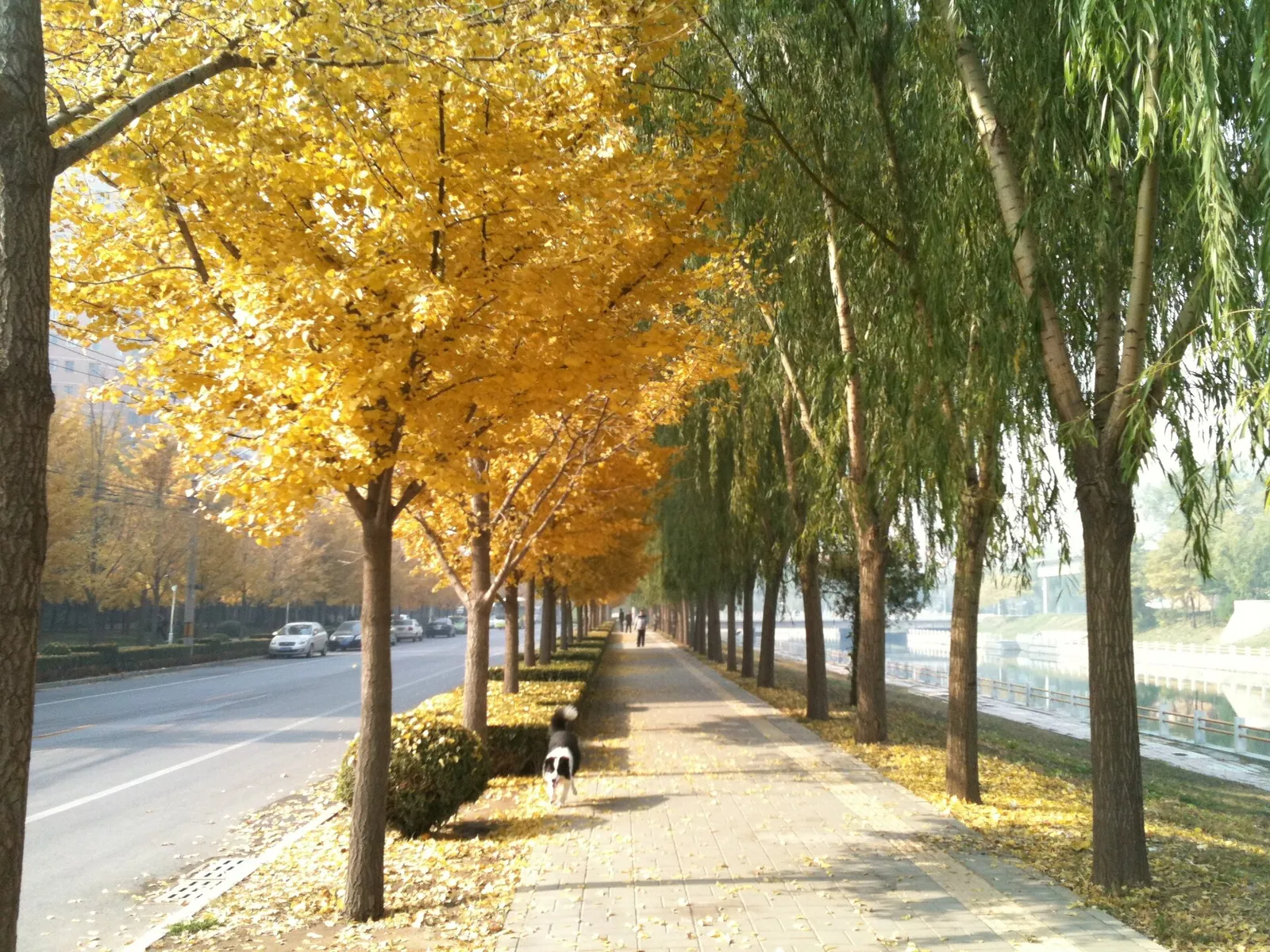
- November. Beijing’s ginkgo avenues turn gold from late October: inside the second north gate of the Temple of Heaven they are at their best into early November, and in Jingshan Park until mid-November. The Forbidden City’s low-season CNY 40 ticket starts on 1 November. For Zhangjiajie, go from late October to mid-November, between the summer heat (July averages about 27°C) and the winter cold (January about 4°C), and before rime forms on Tianmen Mountain above 1,500 metres (it first did on 17 November in 2025).
2027 holidays and crowd dates
Demand for trains, flights and rooms is heaviest around Chinese public holidays. By law, Spring Festival has four days off (5 to 8 February 2027), Labour Day two (1 and 2 May) and National Day three (1 to 3 October). The State Council had not published its 2027 holiday notice, which sets the longer breaks and the make-up working days, by 26 October 2026; breaks of 5 to 12 February, 1 to 5 May and 1 to 7 October (Golden Week) are expected but not confirmed.
Spring Festival. Chinese New Year falls on 6 February 2027, a Saturday. The travel rush (Chunyun) is expected to run for 40 days, from 22 January to 2 March.
1 May and Golden Week. Treat each expected break as peak from its first day to its last, and travel the week before or after instead. Compare cancellable rates for your dates; our trip cost guide prices the same route on ordinary dates.
Entry in 2027. Our entry guide lists the nationalities that can visit for up to 30 days without a visa. The waiver is published until 31 December 2026. A 2027 trip therefore needs a published extension or a visa. US and Czech passports are not on this list, so their holders need a visa unless they qualify for the 240-hour transit rule.
Weather and air risks to plan around
The British government says floods and storms are common from May to November, and that typhoons hit southern and eastern coasts in the same season; transport can be disrupted. German advice adds that heavy rain from June to October in the mountains can bring landslides and flash floods, so keep a spare day around mountain stops such as Zhangjiajie.
Much of China is seismically active; this matters most for Sichuan itineraries. Air pollution in big cities is often high to very high, especially in winter; check live readings. Check your own government’s current travel advice before you book.
Practical questions
What is the best month to visit China for a first trip?
For Beijing, Xi’an and Shanghai, April to May and mid-September to October are the most comfortable, as long as you avoid the 1 May break and Golden Week.
When are the busiest travel weeks in China in 2027?
The Spring Festival rush is expected from 22 January to 2 March, with Chinese New Year on 6 February, then the 1 to 5 May break and the 1 to 7 October Golden Week.
Is winter a bad time to visit China?
Not necessarily. Winter in Beijing and Xi’an is cold and dry, which suits short outdoor visits and museums, and Chengdu and Yunnan’s central and western parts are among the drier options. The catch is the Spring Festival rush; the 2027 holidays section gives the dates.
When is the rainy season in China?
It depends on the region. Shanghai’s plum rain runs from mid-June to early July, Guilin is wettest from April to July, Chengdu from July to August and Beijing in July and August, while Yunnan is wet from May to October.
Do typhoons affect a trip to Shanghai?
They can. Typhoons reach Shanghai most often from late August to early or mid-September, so if you travel then, leave a spare day in Shanghai before your onward train or flight.
Keep planning your trip
First trip to China
How long a first China trip should be, then a week in Beijing, Xi’an and Shanghai: what to book first, the trains, entry, paying and the cost per day.
Read the guide
China festivals and events 2027
China's 2027 festivals and holidays: Chinese New Year, Golden Week, Qingming, Dragon Boat, Harbin ice and Water-Splashing, and which dates are still unconfirmed.
Read the guide
China trip cost
What 10 days in Beijing, Xi’an, Chengdu and Shanghai cost for two sharing a room: about CNY 7,360, 10,140 or 15,950 a person, with every meal, train and ticket.
Read the guide
Entering China
Who can enter China visa-free for 30 days, when the waiver ends, how 240-hour transit works, and the arrival card, hotel registration, customs and safety rules.
Read the guide
Where to go in Asia in May
May is late spring in Japan, Korea, northern China and the Silk Road, and dry season in Bali. Six trips with daily costs, the holidays to plan around and places to skip.
Read the guide
Where to go in Asia in October
October is Asia's best month for the Himalaya, Japan, Korea and north India. Six trips with daily costs, the festivals to plan around and places to skip.
Read the guideSources and checks before you travel
(47)
- China Weather: Beijing climate overview ↗ — opens in a new tab
- China Weather (China Meteorological Administration): Beijing city climate ↗ — opens in a new tab
- China Weather: Xi’an city climate ↗ — opens in a new tab
- China Weather (China Meteorological Administration): Shanghai city climate ↗ — opens in a new tab
- Shanghai Municipal Administration of Culture and Tourism: Shanghai climate and travel seasons ↗ — opens in a new tab
- Shanghai Meteorological Service (China Weather Shanghai): plum-rain onset notice ↗ — opens in a new tab
- China Weather: Shenzhen city climate ↗ — opens in a new tab
- China Weather: Guilin city climate ↗ — opens in a new tab
- China Weather: Chengdu city climate ↗ — opens in a new tab
- China Weather (China Meteorological Administration): Chongqing city climate ↗ — opens in a new tab
- China Weather Yunnan: dry and wet seasons ↗ — opens in a new tab
- China Weather (China Meteorological Administration): Kunming city climate ↗ — opens in a new tab
- Beijing Municipal Bureau of Culture and Tourism (Visit Beijing): autumn colour guide to the city parks (30 October 2025) ↗ — opens in a new tab
- Beijing Municipal Bureau of Culture and Tourism (Visit Beijing): flower guide to Yuyuantan Park (22 March 2024) ↗ — opens in a new tab
- Beijing government English portal: Mutianyu Great Wall tickets ↗ — opens in a new tab
- Shanghai government English portal: Shanghai Cherry Blossom Festival 2026 at Gucun Park (4 March 2026) ↗ — opens in a new tab
- State Council English portal: Xi’an spring blossoms (Xinhua, 14 April 2024) ↗ — opens in a new tab
- Yunnan Provincial Department of Culture and Tourism (Visit Yunnan): the sea of rape flowers in Luoping ↗ — opens in a new tab
- Hangzhou government portal (eHangzhou): plum blossoms at Lingfeng Mountain (February 2025) ↗ — opens in a new tab
- Hangzhou government portal (eHangzhou): spring arrives at West Lake (14 March 2025) ↗ — opens in a new tab
- Hangzhou government portal (eHangzhou): peach blossoms and willows on the Bai Causeway (2 April 2026) ↗ — opens in a new tab
- Jiuzhaigou Administration: autumn colours and peak visitor numbers (23 October 2026) ↗ — opens in a new tab
- Jiuzhaigou Administration: how to get there ↗ — opens in a new tab
- Jiuzhaigou Administration: ticket information ↗ — opens in a new tab
- Yunnan Publicity Network: Xishuangbanna Dai New Year celebration (April 2026) ↗ — opens in a new tab
- State Council: decision amending the national holiday rules (November 2024) ↗ — opens in a new tab
- Hong Kong Observatory: 2027 lunar calendar table ↗ — opens in a new tab
- Hong Kong Government: general holidays for 2027 ↗ — opens in a new tab
- Ministry of Transport: Spring Festival travel rush briefing (January 2026) ↗ — opens in a new tab
- China Foreign Exchange Trade System: preset 2027 holidays for the local-currency trading system ↗ — opens in a new tab
- Palace Museum: visiting information ↗ — opens in a new tab
- UK Foreign, Commonwealth and Development Office: China safety and security ↗ — opens in a new tab
- Chinese Embassy in Timor-Leste: FAQ on visa-free entry into China (updated June 2026) ↗ — opens in a new tab
- German Federal Foreign Office: China travel and safety advice ↗ — opens in a new tab
- National Immigration Administration: List of Countries Covered by Unilateral Visa Exemption Policies ↗ — opens in a new tab
- National Immigration Administration: Visa-Free Transit Policies ↗ — opens in a new tab
- China Railway 12306: ticket sales rules ↗ — opens in a new tab
- Century Cruises: Chongqing to Yichang 3-night Yangtze Signature cruise ↗ — opens in a new tab
- Mutianyu Great Wall: home page (English) ↗ — opens in a new tab
- China Weather (China Meteorological Administration): Zhangjiajie city climate ↗ — opens in a new tab
- Hunan government international site: Tianmen Mountain rime (November 2025) ↗ — opens in a new tab
- World Meteorological Organization: Kunming climatological information (data from the China Meteorological Administration) ↗ — opens in a new tab
- China Weather (China Meteorological Administration): Haikou city climate ↗ — opens in a new tab
- Yunnan Provincial Department of Culture and Tourism (Visit Yunnan): Xishuangbanna in December ↗ — opens in a new tab
- Beijing Municipal Education Commission: 2026–2027 school calendar ↗ — opens in a new tab
- Palace Museum: visitor notice ↗ — opens in a new tab
- Mutianyu Great Wall: visitor notice and ticket rules (Chinese) ↗ — opens in a new tab
Reference sources for the version dated 2 November 2026. Confirm opening times, access, transport and conditions for your travel dates.
Photo credits
(5)
Ginkgo trees turn yellow beside the Xiba River in Beijing in autumn
Photograph: wangxinic — opens in a new tab · CC BY-SA 3.0 — opens in a new tab
Changes: Resized and converted to WebP; displayed with responsive crops. · Original photograph and licence details ↗ — opens in a new tab
Canola fields in flower at Luoping, Yunnan
Photograph: Fanghong — opens in a new tab · CC BY-SA 3.0 — opens in a new tab
Changes: Resized and converted to WebP; displayed with responsive crops. · Original photograph and licence details ↗ — opens in a new tab
The Five Colour Pond at Jiuzhaigou, Sichuan, in late autumn
Photograph: chensiyuan — opens in a new tab · CC BY-SA 4.0 — opens in a new tab
Changes: Resized and converted to WebP; displayed with responsive crops. · Original photograph and licence details ↗ — opens in a new tab
The Pavilion of Fragrant Snow among bare trees and rockery at Lingfeng, Hangzhou
Photograph: User:CatOnMars — opens in a new tab · CC BY-SA 4.0 — opens in a new tab
Changes: Resized and converted to WebP; displayed with responsive crops. · Original photograph and licence details ↗ — opens in a new tab
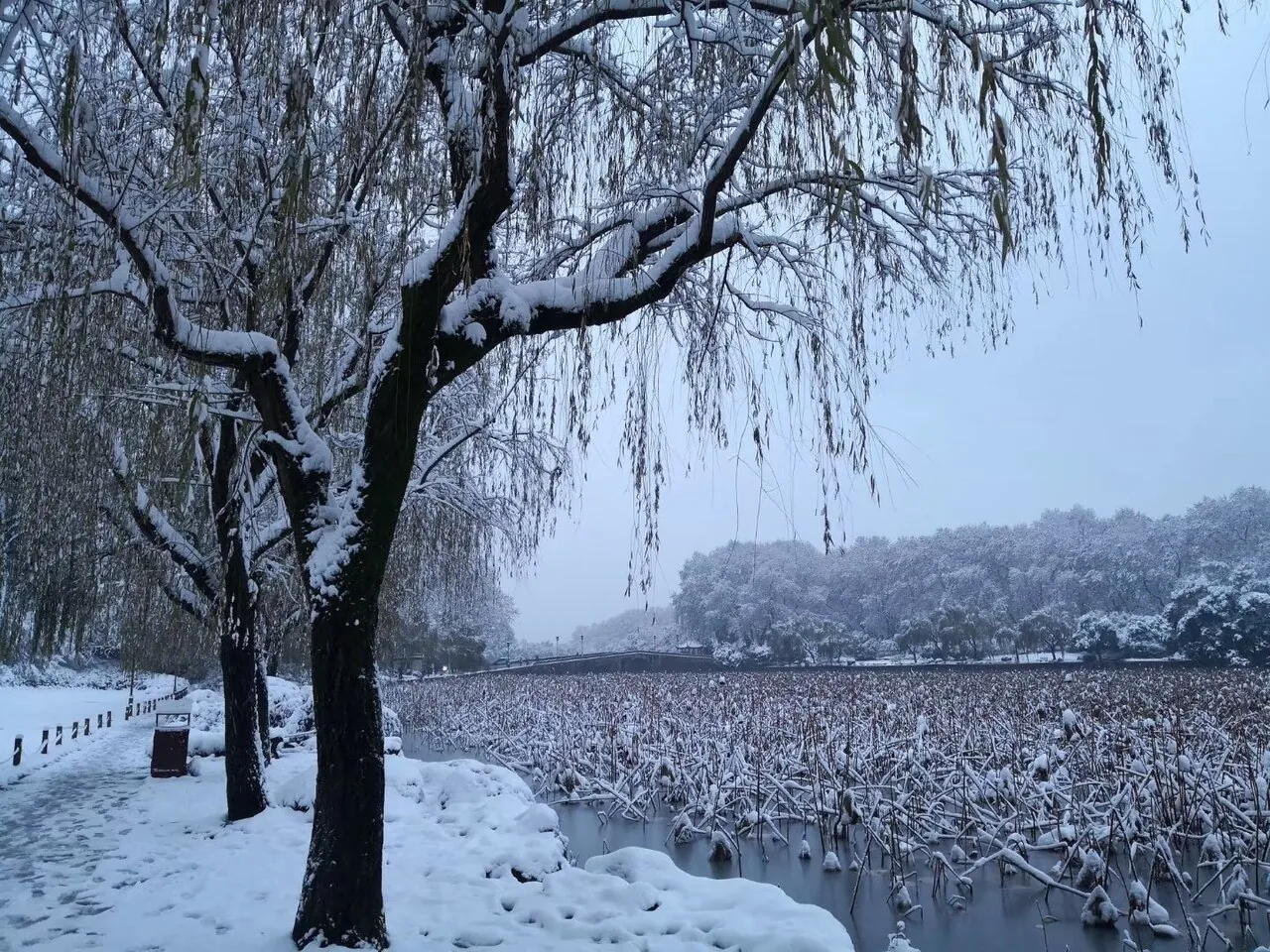
The snowy West Lake shore in Hangzhou on a December day
Photograph: 94rain — opens in a new tab · CC BY-SA 4.0 — opens in a new tab
Changes: Resized and converted to WebP; displayed with responsive crops. · Original photograph and licence details ↗ — opens in a new tab